Key Takeaways
- The deadliest animal in Africa by a vast margin is the mosquito — malaria it carries is linked to hundreds of thousands of deaths a year across the continent.
- Among the animals people actually picture, the hippopotamus and the Nile crocodile take far more lives than lions, leopards or sharks.
- The lion and the great white shark — the two that dominate our fears — are near the bottom of the real death toll.
- Almost every serious incident involves people on foot, after dark, or too close to water — not people on a properly run game drive.
- A good guide manages all of this for you. On a vehicle safari with an experienced ranger, the risk from Africa's wildlife is very low.
The Animals That Frighten Us Are Rarely the Ones That Hurt Us
There is a gap between the animals we fear in Africa and the animals that actually do us harm, and that gap is one of the most useful things a first-time safari-goer can understand. We arrive picturing the lion's charge and the shark's fin. We leave having learned that the real danger was quieter — a mosquito at dusk, a hippo between the water and the grass, a buffalo bull standing alone where we did not expect him.
This guide ranks Africa's most dangerous animals honestly: by the lives they take, not the posters they sell. Some of it will surprise you. All of it is the same briefing a good guide gives, in one form or another, on the first evening of a safari — because fear pointed at the wrong animal is useless, and respect pointed at the right one keeps you safe.
The figures below are drawn from long-standing health and wildlife records. Exact counts vary from source to source and year to year, so treat them as honest estimates rather than precise tallies — the order matters more than the decimal point.
The Honest Ranking
This is how Africa's dangerous animals actually line up when you measure them by human deaths per year. Keep this table in mind as you read — it rearranges almost everything most people believe.
| Rank | Animal | Estimated human deaths / year | Why |
|---|---|---|---|
| 1 | Mosquito | Hundreds of thousands | Carries malaria |
| 2 | Snakes | Tens of thousands | Venom, mostly rural bites |
| 3 | Nile crocodile | Hundreds | Ambush at the water's edge |
| 4 | Hippopotamus | Hundreds | Defends water and young |
| 5 | African elephant | Hundreds | Size, and crop-raiding conflict |
| 6 | Cape buffalo | ~200 | Charges when wounded or cornered |
| 7 | Lion | Tens to ~200 | Rare, mostly people on foot |
| 8 | Tsetse fly | Thousands (historically) | Sleeping sickness, now much reduced |
| 9 | Rhinoceros | A handful | Poor eyesight, powerful charge |
| 10 | Great white shark | ~1 | Attacks very rare, rarely fatal |
Read that top line again. The single most dangerous animal in Africa is one you can swat. Now let us take them one at a time.
1. The Mosquito — The Deadliest Animal on Earth
It weighs almost nothing and it kills more people than every other animal on this list combined, many times over. The mosquito itself is harmless; what it carries is not. A single bite from an infected Anopheles mosquito can pass on the malaria parasite, and malaria remains one of the leading causes of death across large parts of Africa, linked to hundreds of thousands of lives lost every year — most of them young children.
For a traveller, the good news is that this is also the most manageable risk on the whole list. Much of the classic safari map — the private reserves of the Eastern Cape, the Waterberg, the Kalahari and most of the Cape — is malaria-free or very low risk. In malaria areas such as the Kruger and the great parks of East Africa, modern prevention is simple and highly effective: antimalarial tablets prescribed by a travel clinic, repellent at dawn and dusk, long sleeves in the evening, and a mosquito net over the bed. Follow the routine and the real risk drops away.
We cover this in full in our malaria-free family safari guide, and any good operator will tell you honestly if your route needs tablets. It is the single most important health conversation to have before you travel — far more so than anything with teeth.
2. Snakes — Quiet, Common, and Easy to Avoid
Africa is home to some of the most venomous snakes on earth, and across the continent snakebite causes tens of thousands of deaths a year — again, almost entirely among rural people working barefoot in fields, far from a safari vehicle. The puff adder is responsible for more serious bites than any other African snake, not because it is aggressive but because it is superbly camouflaged, lies still on warm paths and relies on you not seeing it. The black mamba is the one that fills the nightmares: fast, long, and carrying a potent neurotoxic venom. Its fearsome reputation is real, but mambas want nothing to do with people and will flee given any chance at all.
For a safari-goer the practical risk is tiny. Snakes feel your footfall long before you arrive and move away. The sensible rules are old and simple: watch where you put your hands and feet, never step over a log without looking at the far side, use a torch walking to your tent at night, and never try to handle or kill a snake — most bites happen to people who corner one. See a snake on a drive and you are watching one of the bush's great rarities; your guide will be delighted, not alarmed.
3. The Nile Crocodile — Africa's Perfect Ambush
Of the animals most people picture when they think of Africa, the Nile crocodile is the one that takes the most lives — likely several hundred a year, though the true figure is hard to count in the remote places where it happens. A large crocodile is a four-metre, several-hundred-kilogram ambush predator that has barely changed in a hundred million years because the design is close to perfect. It lies invisible at the water's edge, explodes upward in a fraction of a second, and drags its prey under in a death roll. Nothing about the attack gives you time to react.
The danger is almost entirely about the water's edge. Crocodiles take people who are collecting water, washing, fishing or wading at the same quiet spots, day after day. On safari the rule is absolute and the guides never bend it: stay back from the bank, never dangle hands or feet from a boat, and never wade or swim in rivers or still water unless a guide has told you a specific spot is safe. Keep that single discipline and the crocodile becomes what it should be — one of the most compelling animals you will ever watch. For the full natural history, see our Nile crocodile field guide.
4. The Hippopotamus — The One the Guides Respect Most
Ask an experienced guide which animal they treat with the most caution and a great many will say the hippo. It is widely held to be the deadliest large land animal in Africa, taking a similar toll to the crocodile and for a related reason: it lives where people and water meet. A hippo looks comical wallowing in a pod, but it is a three-tonne animal that can run faster than you over short distances, has enormous tusks, and is fiercely protective of its stretch of water and its calves.
Almost every hippo tragedy follows the same pattern. Someone comes between a hippo and the water, or between a mother and her calf, or surprises one grazing on land after dark — hippos leave the water at night to feed, often along the very paths that run through camps. The danger is not malice; it is a large, short-tempered animal defending itself where it did not expect to meet a person. On safari you keep your distance on the water, you never walk unescorted between tents and the river at night, and you treat a hippo on a path with the seriousness it deserves. Our hippopotamus field guide tells the fuller story of Africa's most underestimated heavyweight.


5. The African Elephant — Gentle Until It Isn't
The largest land animal on earth is, most of the time, calm, intelligent and astonishingly gentle for its size. But an adult elephant weighs up to six tonnes, and when one decides to make its point there is nothing on the savanna that can stop it. Elephant-related deaths run into the hundreds a year across Africa, the majority arising from conflict where elephants raid crops and villages push into elephant range — not from safari encounters.
On a game drive, elephants are usually the easiest of the big animals to read, because they tell you clearly how they feel. A relaxed herd feeds and moves around a vehicle without concern. A warning comes with spread ears, a raised trunk, a head shake or a mock charge with plenty of noise. A guide knows the difference between a bluff and the real thing, and knows to give a musth bull, a nervous breeding herd or a lone, grumpy individual a wide, respectful berth. Follow your guide's lead, keep the vehicle still and quiet when told to, and the elephant stays what it should be — the most moving animal in Africa to sit with.
6. The Cape Buffalo — The Big Five's Unpredictable Heavyweight
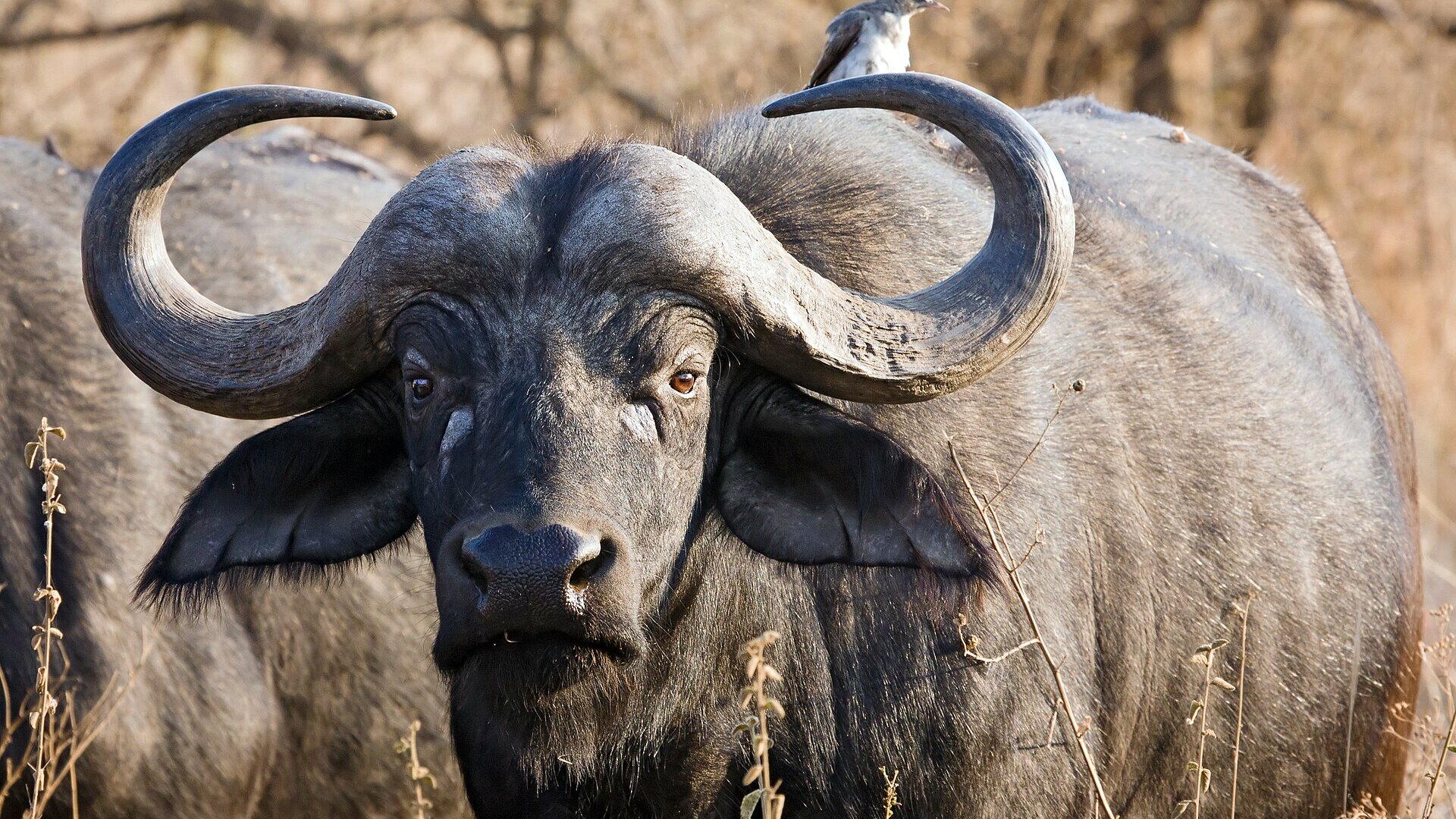
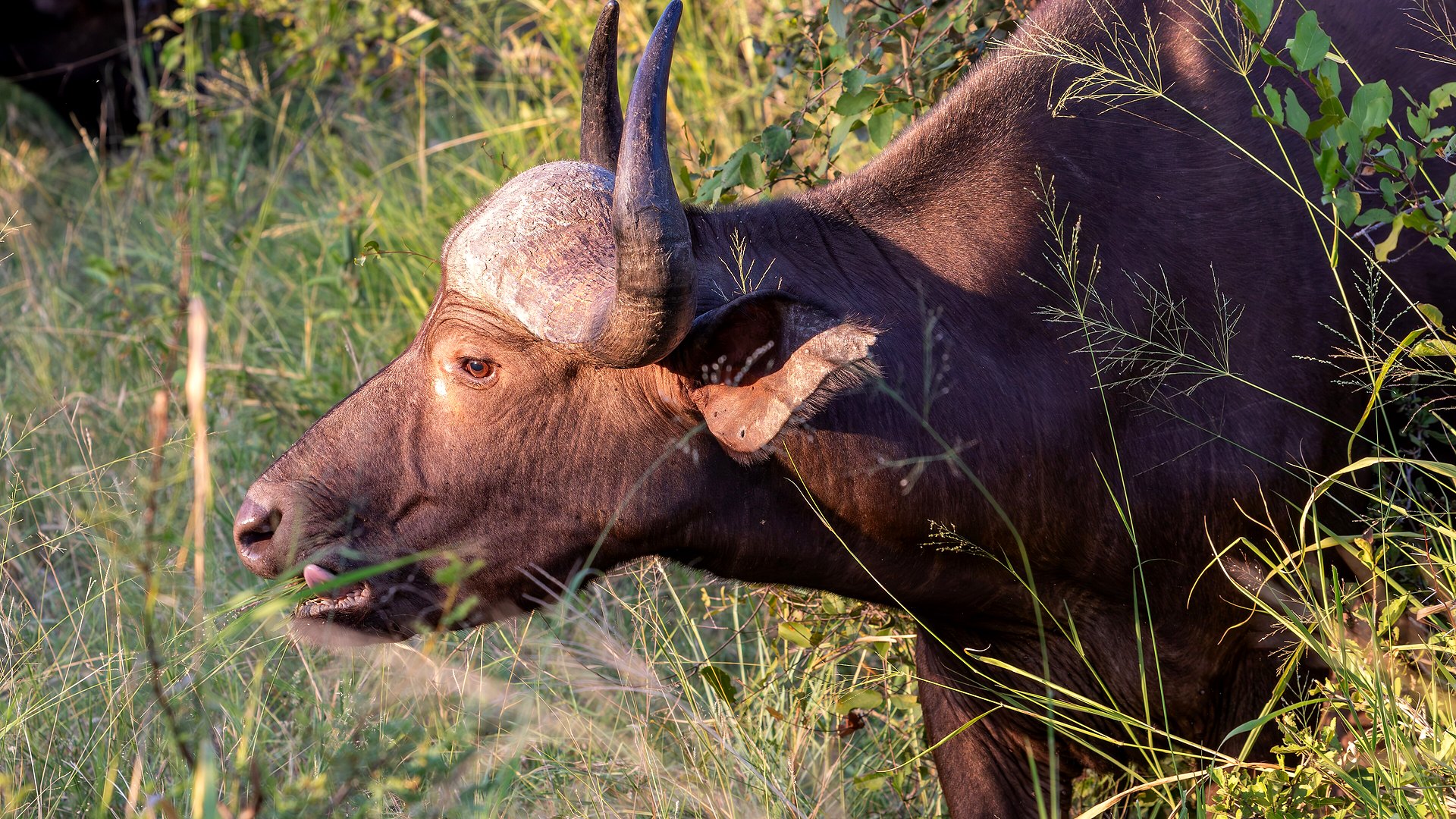
Among big-game hunters the buffalo earned the nickname "the Black Death," and the reputation has carried into the safari world. A Cape buffalo is around 700 kilograms of muscle topped with a heavy boss of fused horn, and it is genuinely unpredictable — especially an old bull past his breeding years, pushed out of the herd, living alone or in small bachelor groups in thick cover. These "dagga boys" are tense, hard to see until you are close, and quick to charge. A wounded buffalo is famous for circling back to ambush whatever is following it.
Buffalo cause roughly a couple of hundred deaths a year, most of them involving hunters or people on foot who stumble into one at close range in dense bush. On a vehicle safari a herd of buffalo is a magnificent, placid sight — hundreds of animals moving together in a cloud of dust and oxpeckers. The caution comes on walking safaris, where a good guide moves carefully through thick riverine cover precisely because he knows a dagga boy may be lying in it. You can read the full picture in our Cape buffalo safari guide.
7. The Lion — The One We Fear, Far Down the List
This is the reframe at the centre of this whole guide. The lion is the animal that sells the safari, fills the posters and stars in every childhood story about Africa — and it is nowhere near the top of the danger list. Lions kill somewhere from a few dozen to around two hundred people a year, overwhelmingly in rural areas at night, and almost never on a game drive. The reason is simple and worth understanding: a lion does not see a person in an open safari vehicle as prey, or even as a separate animal. To a lion, the vehicle and everyone in it read as one large, uninteresting shape. That is why you can sit a few metres from a pride at dawn in complete safety.
The rules that preserve that safety are the ones your guide enforces without exception: stay seated, keep your arms and silhouette inside the vehicle, do not stand up, and do not make sudden movements — because the moment a human shape separates from the vehicle, the spell breaks. Respect that, and time with lions becomes exactly what you came for: close, calm and humbling. The fear we carry about lions is almost entirely misplaced; the respect we owe the rules around them is absolute.
8. The Tsetse Fly — A Historic Killer, Much Diminished
Less famous than the mosquito but from the same mould, the tsetse fly transmits trypanosomiasis — sleeping sickness — which once devastated huge regions of Africa and still causes illness in parts of the continent, though cases have fallen dramatically thanks to decades of control work. For travellers the tsetse is mostly a nuisance rather than a serious threat: its bite is painful, it is drawn to dark blue and black, and it haunts certain woodland belts in East and Central Africa. The practical advice is minor — wear neutral colours, use repellent in known tsetse areas, and mention any lingering fever to a doctor after you travel. It earns its place on this list for history more than for the risk it poses to a modern safari.
9. The Rhinoceros — Powerful, Short-Sighted, Rarely a Threat
A rhino is a tank with poor eyesight, and that combination is the whole story of its danger. Both black and white rhino can charge when startled, and a black rhino in particular has a reputation for a hot temper. But rhino-related human deaths are very rare — a handful a year at most — and the animal's real tragedy is the other way around: rhinos are being killed by people, not the reverse, hunted for their horn to the brink. On safari the caution is straightforward. Give rhino space, especially a cow with a calf, keep noise down, and let your guide position the vehicle. The privilege of sitting quietly with an animal this ancient and this threatened far outweighs the small risk of being near it.
10. The Great White Shark — The Fear That Doesn't Match the Facts
No animal carries a scarier reputation on less evidence. Along South Africa's coast the great white is a genuine apex predator, and the cold waters off Gansbaai and Mossel Bay are among the best places on earth to see one. Yet fatal shark attacks in African waters average around one a year — you are, by any honest measure, in vastly more danger driving to the coast than swimming at it. Sensible ocean caution applies: swim at patrolled beaches, heed shark spotters and flags, avoid dawn and dusk in known shark areas, and stay out of murky water near seal colonies. Want to meet one on its own terms? A cage-diving trip off Gansbaai puts you face to face in complete safety, and our great white shark guide shows you how and when.


Why the Lion Isn't the One to Fear
Step back from the ranking and a clear pattern appears. The animals at the top of the real death toll — mosquito, snakes, crocodile, hippo — are the ones we barely think about, while the animals that dominate our imagination — lion, shark — sit near the bottom. There is a human reason for that. We are wired to fear teeth, size and speed, the drama of the chase. We are not wired to fear a bite we cannot feel or an animal that looks harmless wallowing in a pool. Our instincts evolved for a different world, and in Africa they point in the wrong direction.
The lesson is not to be afraid of more things. It is to be afraid of the right ones, lightly, and to let that free you to enjoy the rest. Once you understand that the lion is not hunting you and the mosquito is the thing to plan around, the whole safari relaxes into what it is meant to be — one of the most rewarding wildlife experiences on earth.
How a Real Guide Keeps You Safe
Everything above is managed, quietly and expertly, by the people who do this for a living. A professional field guide is not just a driver who knows where the animals are. They are reading the bush constantly — the body language of every animal you approach, the wind, the light, the escape routes, the mood of a herd — and making a hundred small decisions an hour that you never notice because nothing ever goes wrong. That is the whole point of a good guide: the safety is invisible.
The core rules that protect every guest are simple, and they are the same across every reputable operator in Africa:
- Stay in the vehicle unless your guide says otherwise, and stay seated with arms and silhouette inside it near big animals.
- Keep your voice low and your movements slow around wildlife — sudden noise and standing up are what change an animal's behaviour.
- Never walk alone, especially at night. In unfenced camps an armed guide or escort walks you between tents after dark, because this is when hippo, buffalo, elephant and the cats move through.
- Keep well back from water, and never swim or wade unless a guide confirms a spot is safe.
- On walking safaris, do exactly as the lead guide says — single file, quiet, and stop when told. Walking safaris are superb and safe precisely because they are run with total discipline.
- Plan for the mosquito, not just the lion: get malaria advice before you travel, or choose a malaria-free reserve.
This is why who you travel with matters more than where you go. The difference between a safe safari and a risky one is almost never the animals — it is the quality of the guiding and the standards of the camp. That is the part we take most seriously.
So, Is an African Safari Dangerous?
Honestly? No — not in the way people fear. A well-run vehicle safari with an experienced guide is one of the safest adventures you can have, and the genuine risks are the manageable, unglamorous ones: a mosquito bite you prevent with a tablet, a bank you stay back from, a rule you follow around water and after dark. Tens of thousands of guests do this every year and go home with nothing worse than a tan and a full memory card.
The animals on this list are not reasons to stay away. They are reasons to travel well — with the right guide, the right camp and the right briefing — so that respect, not fear, is what you carry into the bush. Get that right, and Africa gives you the most extraordinary wildlife on the planet from exactly the right distance.
Plan Your Safari With Beyond Africa
We build private, expertly guided safaris across Southern and East Africa — from malaria-free family reserves to the great predator country of the Kruger, the Serengeti and the Mara — and we match every guest to guides and camps we know and trust. Tell us where you want to go and we will handle the rest, safety included.
Ready to plan a safari that is as safe as it is wild? 👉 Request a safari quote → 👉 Browse our safari packages → 👉 WhatsApp us: +27 78 471 4852