Key Takeaways
- The Cape buffalo is the fifth member of the Big Five and one of the most respected animals in the bush.
- It is widely considered the most dangerous of the Big Five — powerful, herd-loyal and famously unpredictable.
- Buffalo are easy to find and thrilling to watch: herds can number over a thousand, making for spectacular sightings.
- The finest destinations are the Greater Kruger, Chobe, the Serengeti, Mana Pools, Lake Manyara and the Okavango.
- The dry season (May–October) concentrates buffalo at water, creating dramatic, dust-filled herd sightings.
Why the Cape Buffalo Commands Such Respect
Lions get the glory, but ask any guide about the animal they respect most and the answer is often the buffalo. It is the member of the Big Five that has changed the fewest habits for humans — a tonne of muscle topped with a helmet of solid horn, an animal that stands its ground and never forgets a threat.
Yet the buffalo is also endlessly watchable. Great herds move across the plains like a slow dark tide, calves tucked in the middle, oxpeckers riding their backs. And then there is the "dagga boy" — an old bull, caked in dried mud, ejected from the herd, standing alone with a stare that seems to weigh you up. Few sightings on safari are as charged.
What makes buffalo so special to see:
- Completes the Big Five — lion, leopard, elephant, rhino and buffalo.
- Spectacular herds — groups can exceed a thousand animals, an unforgettable sight.
- Raw drama — buffalo and lion are ancient enemies; a herd defending a calf is pure theatre.
- Formidable reputation — often called the most dangerous of the great five, and rightly respected.
Where to See Cape Buffalo in Africa — The Best Places
1. Greater Kruger & Sabi Sand, South Africa
Why it's world-class: The Kruger ecosystem holds huge buffalo populations, and the private reserves of the Sabi Sand and Timbavati deliver superb sightings — including the electric drama of buffalo-versus-lion — with off-road access, world-class guiding and luxury lodges, all door-to-door from Johannesburg.
Best time: May–September (dry season, herds gather at water).
Bonus: the full Big Five in one reserve, plus the finest luxury lodges.
2. Chobe National Park, Botswana
Why it's world-class: Chobe is legendary for its enormous herds, which pour down to the Chobe River in the dry season in their hundreds — even thousands. A boat safari puts you at eye level with buffalo drinking at the water's edge, alongside vast elephant herds.
Best time: June–October (dry season, riverfront concentrations).
Bonus: spectacular boat safaris and the largest elephant population in Africa.
3. Serengeti & Ngorongoro, Tanzania
Why it's world-class: Big buffalo herds roam the Serengeti's woodlands and plains, and the Ngorongoro Crater holds some of the largest, most impressive old bulls on the continent within its natural amphitheatre — often at close range.
Best time: Year-round; June–October for dry-season visibility.
Bonus: the Great Migration and the full Big Five in the Crater.
4. Mana Pools & Hwange, Zimbabwe
Why it's world-class: Along the Zambezi at Mana Pools, big buffalo herds draw lions and offer the rare chance to watch on foot with expert guides, while Hwange's waterholes concentrate buffalo and elephant in the dry season.
Best time: June–October (dry season).
Bonus: walking safaris, canoeing and easy pairing with Victoria Falls.
5. Okavango Delta & Linyanti, Botswana
Why it's world-class: The Okavango's floodplains support large, healthy buffalo herds, and the private concessions offer off-road viewing with very few other vehicles — plus the ever-present chance of the ancient buffalo-and-lion struggle playing out at close range.
Best time: May–October (dry season, herds on the floodplains).
Bonus: big cats, wild dogs and the water-world of the Delta.
6. Lake Manyara & Katavi, Tanzania
Why it's world-class: Lake Manyara is known for large buffalo herds against a backdrop of the Rift Valley escarpment, while remote Katavi hosts some of the most enormous dry-season buffalo gatherings anywhere in Africa — thousands of animals in true wilderness.
Best time: June–October (dry season, spectacular concentrations).
Bonus: tree-climbing lions at Manyara and raw, uncrowded wilderness at Katavi.
Buffalo Safari: Quick Comparison
| Destination | Best Time | Why Go |
|---|---|---|
| Greater Kruger / Sabi Sand (SA) | May–Sep | Big Five + buffalo-vs-lion drama |
| Chobe (Botswana) | Jun–Oct | Huge riverfront herds by boat |
| Serengeti / Ngorongoro (TZ) | Jun–Oct | Giant old bulls + the Migration |
| Mana Pools / Hwange (Zim) | Jun–Oct | Watch on foot, waterhole herds |
| Okavango & Linyanti (Botswana) | May–Oct | Off-road, big cats and wild dogs |
| Katavi / Lake Manyara (TZ) | Jun–Oct | Thousand-strong dry-season herds |
How to Photograph Buffalo (and a Herd)
- Shoot the scale — a wide frame of a huge herd crossing a plain or riverbank captures the drama numbers create.
- Fill the frame with a bull — a tight portrait of an old dagga boy, boss and horns dominant, is a classic and powerful image.
- Use the dust and light — a herd moving to water in late afternoon kicks up backlit dust; expose for the highlights for atmosphere.
- Watch for the eyes and oxpeckers — the detail of a bird on the muzzle or a wet, mud-rimmed eye rewards a longer lens.
- Respect the danger — buffalo are unpredictable; keep quiet, stay in the vehicle and let your guide set a safe distance.
10 Cape Buffalo Facts That Make Every Sighting Better
- One of the Big Five: a term coined by hunters for the five most dangerous animals to pursue on foot — buffalo among them.
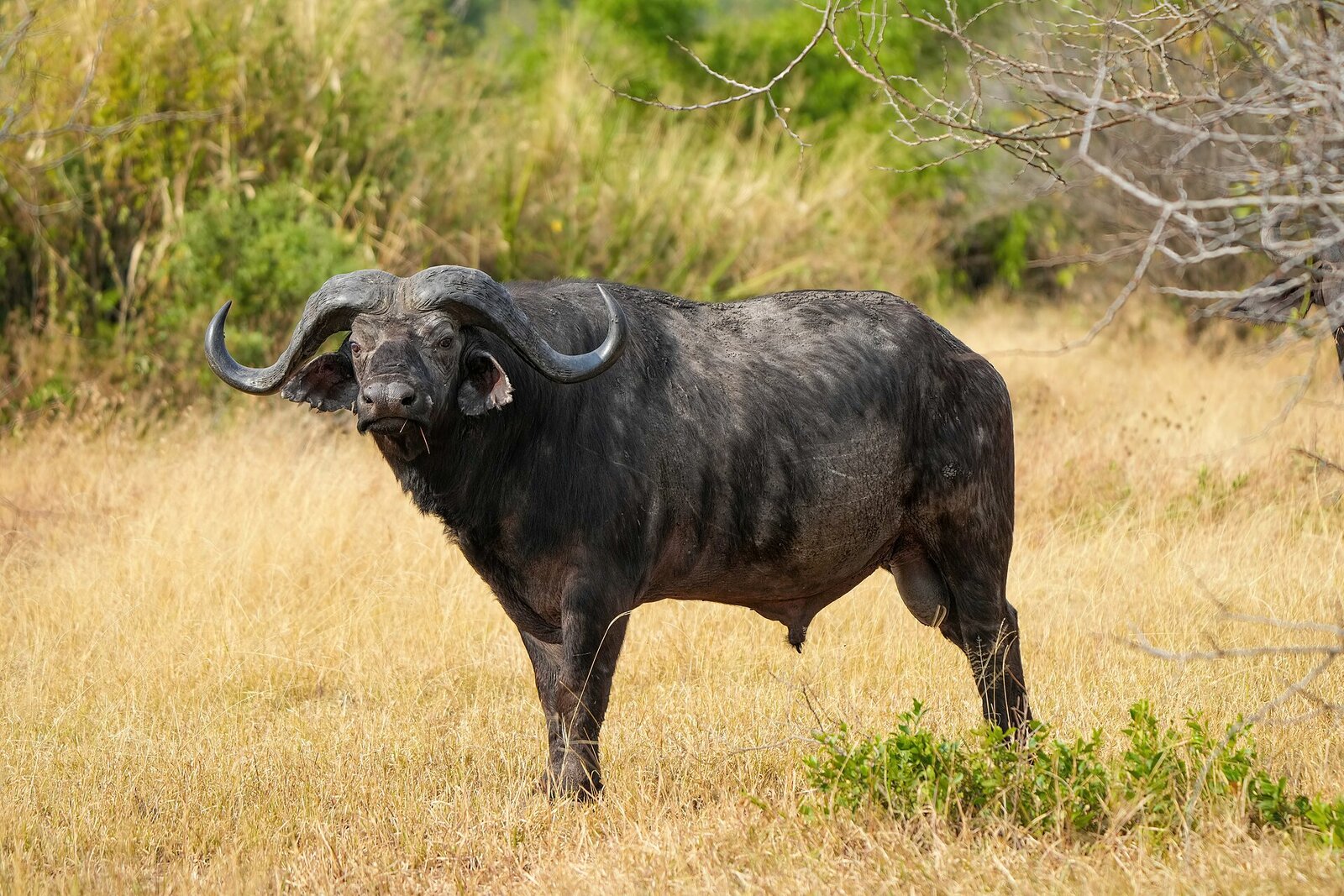
- Heavyweight: a big bull can weigh over 800kg and stand 1.7m at the shoulder.
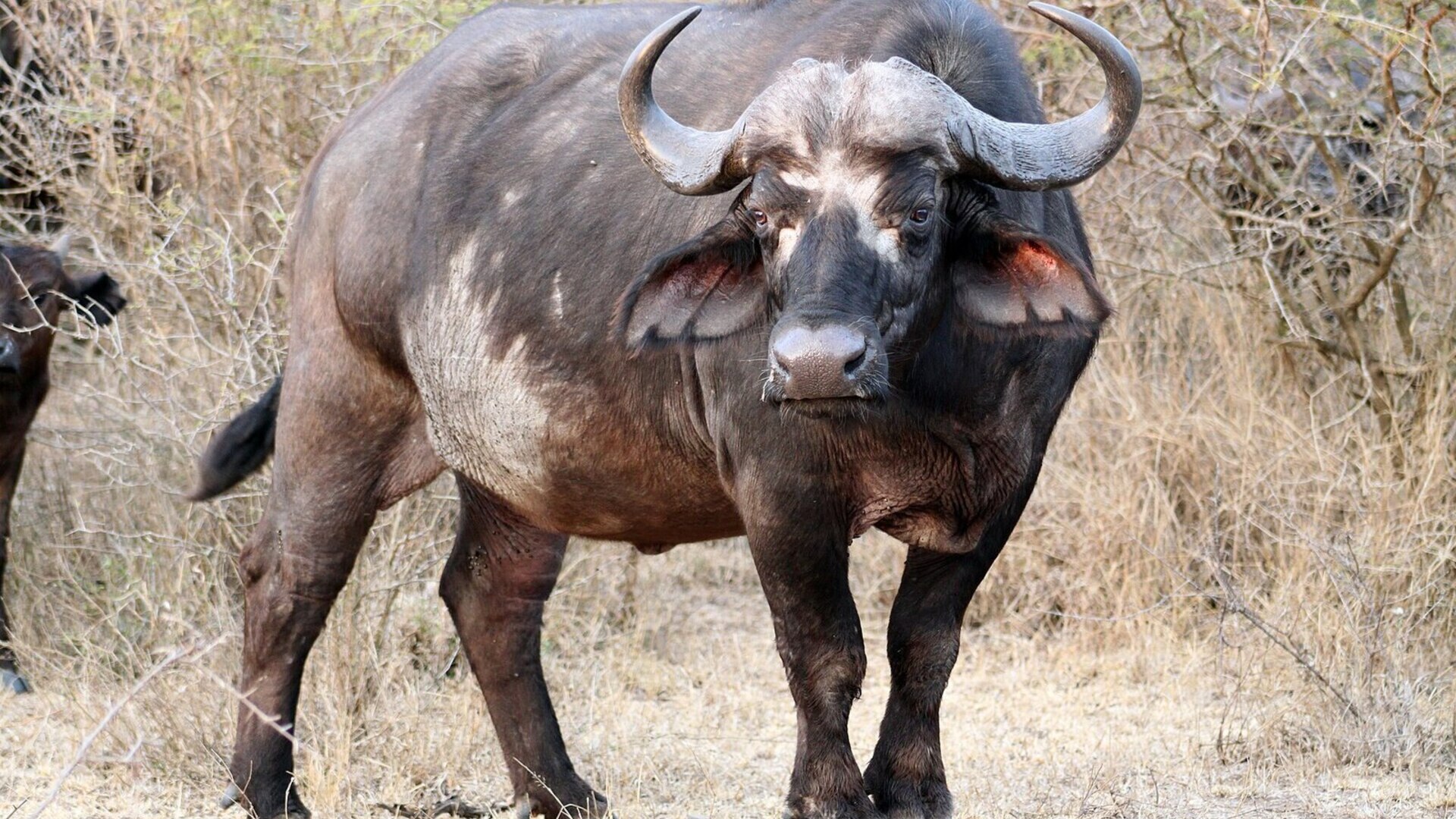
- The "boss": mature bulls' horns fuse into a solid shield of bone across the forehead — nearly impenetrable.
- "Black Death": their fearsome reputation for defending themselves has earned buffalo this nickname among hunters.
- They never forget: buffalo are said to remember and even ambush those that have threatened them.
- Strength in numbers: herds can exceed a thousand animals, and they defend calves collectively against lions.
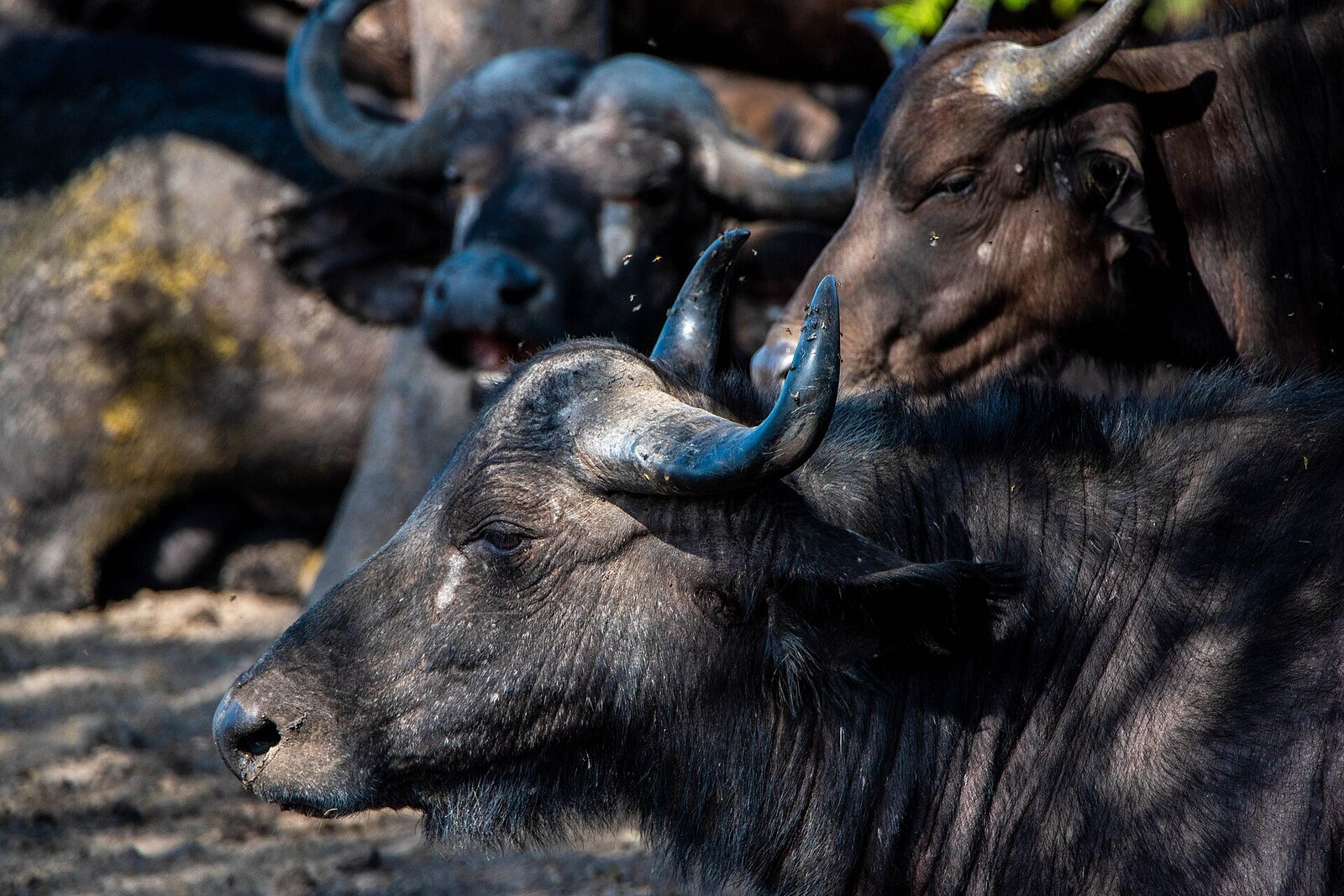
- Dagga boys: old bulls pushed out of the breeding herd wallow in mud ("dagga") and are often the most dangerous.
- Democratic movers: resting herds appear to "vote" on which direction to travel by the way individuals stand and gaze.
- Water-dependent: they must drink daily, which is why the dry season concentrates them so reliably at rivers and pans.
- Not a wild ox you can tame: unlike the Asian water buffalo, the African buffalo has never been domesticated.
Buffalo & Conservation
Cape buffalo are not endangered, but healthy buffalo herds are a vital sign of a functioning ecosystem — they are prime prey for lion and a keystone grazer that shapes the grasslands. We favour private reserves and conservancies with well-managed herds and strong anti-poaching, where your presence helps fund the protection of the whole landscape. A thriving buffalo population usually means thriving predators, and that means a richer safari for everyone.
Plan Your Buffalo & Big Five Safari With Beyond Africa
We are a Cape Town-based, tailor-made safari house. Buffalo are the most reliable of the Big Five to find — the real art is placing you where the drama is richest, whether that is a boat among the Chobe herds, the buffalo-and-lion theatre of the Sabi Sand, or the thousand-strong gatherings of Katavi. We build the full Big Five journey (and beach or Cape Town) around your priorities.
Ready to complete your Big Five? 👉 Request a buffalo & Big Five safari quote → 👉 Browse our safari packages → 👉 WhatsApp us: +27 78 471 4852