🦁 Key Takeaways
- Where the signal really drops: Botswana's Okavango, Linyanti, Makgadikgadi and Kalahari, plus Mana Pools in Zimbabwe and the South Luangwa bush camps in Zambia — fly-in, remote, and off the grid by design.
- Where it does not: Most South African reserves — Sabi Sand, the Greater Kruger lodges, Madikwe — now run Wi-Fi, because they sit close to town and towers.
- How long to switch off: The itch to check your phone usually fades by day two or three, so plan six nights or more in one or two camps rather than hopping around.
- You are off-grid, not out of reach: Every remote camp keeps a satellite phone or radio, and we book medical-evacuation cover on every trip.
- Best time: Dry season (roughly June–October) for the Delta, Zambezi and Luangwa; the green months (December–March) for the Makgadikgadi and Kalahari.
Why Switch Off on Safari
There is a particular moment on a good safari that no amount of signal can improve. The vehicle is still, a leopard is draped along a branch forty metres off, and the only sound is your own breathing and the click of someone's shutter. A phone buzzing in that moment does not add to it. It takes something away.
More and more of the people we send into the bush ask for the same thing now: somewhere the phone simply stops working, so the decision to put it down is made for them. It is not about punishing yourself. It is about handing your attention back to the thing in front of you — the herd, the river, the person across the fire — instead of the small rectangle that has quietly taken it over at home.
There is some honest science behind the feeling, too. The constant low hum of notifications keeps the body in a mild state of alert; take it away and, after a day or two, sleep deepens, attention lengthens and the restless need to check things fades. Most people report the shift somewhere around the second or third day off the grid. That is the whole reason this guide pushes you toward longer stays in genuinely remote camps rather than a token night without Wi-Fi.
What follows is the straight version: where the signal actually drops in Africa, where it does not, and the specific regions and camps built for going properly off the grid.
Where the Signal Really Drops
Here is the part the glossy brochures skip: a lot of famous safari lodges have perfectly good Wi-Fi. If a reserve is a few hours' drive from a city, it almost certainly sits within reach of a cell tower, and the lodge will offer a connection because most guests want one. That is true of the big South African names most people picture when they think safari.
Going properly off-grid means choosing a region, not just a lodge. The camps that are truly disconnected are the ones you can only reach by light aircraft or a long drive on dirt — in private concessions, running on solar and generators, far from any town. That is where the signal genuinely stops. The table below is the honest map of it.
| Region | Typical connectivity | For switching off |
|---|---|---|
| Sabi Sand & Greater Kruger (South Africa) | Wi-Fi in most rooms and main areas | Partial — easy to stay connected |
| Madikwe & Waterberg (South Africa) | Wi-Fi in main areas, patchy in rooms | Partial |
| Okavango Delta & Linyanti (Botswana) | Little to none; fly-in only | Full off-grid |
| Makgadikgadi & Central Kalahari (Botswana) | None at most camps | Full off-grid |
| Mana Pools (Zimbabwe) | None; satellite only for staff | Full off-grid |
| South Luangwa bush camps (Zambia) | None at the walking camps | Full off-grid |
| Damaraland & Skeleton Coast (Namibia) | None to very limited | Full off-grid |
| Laikipia & northern Kenya | Limited; some conservancy camps have Wi-Fi | Mostly off-grid |
Okavango Delta, Botswana
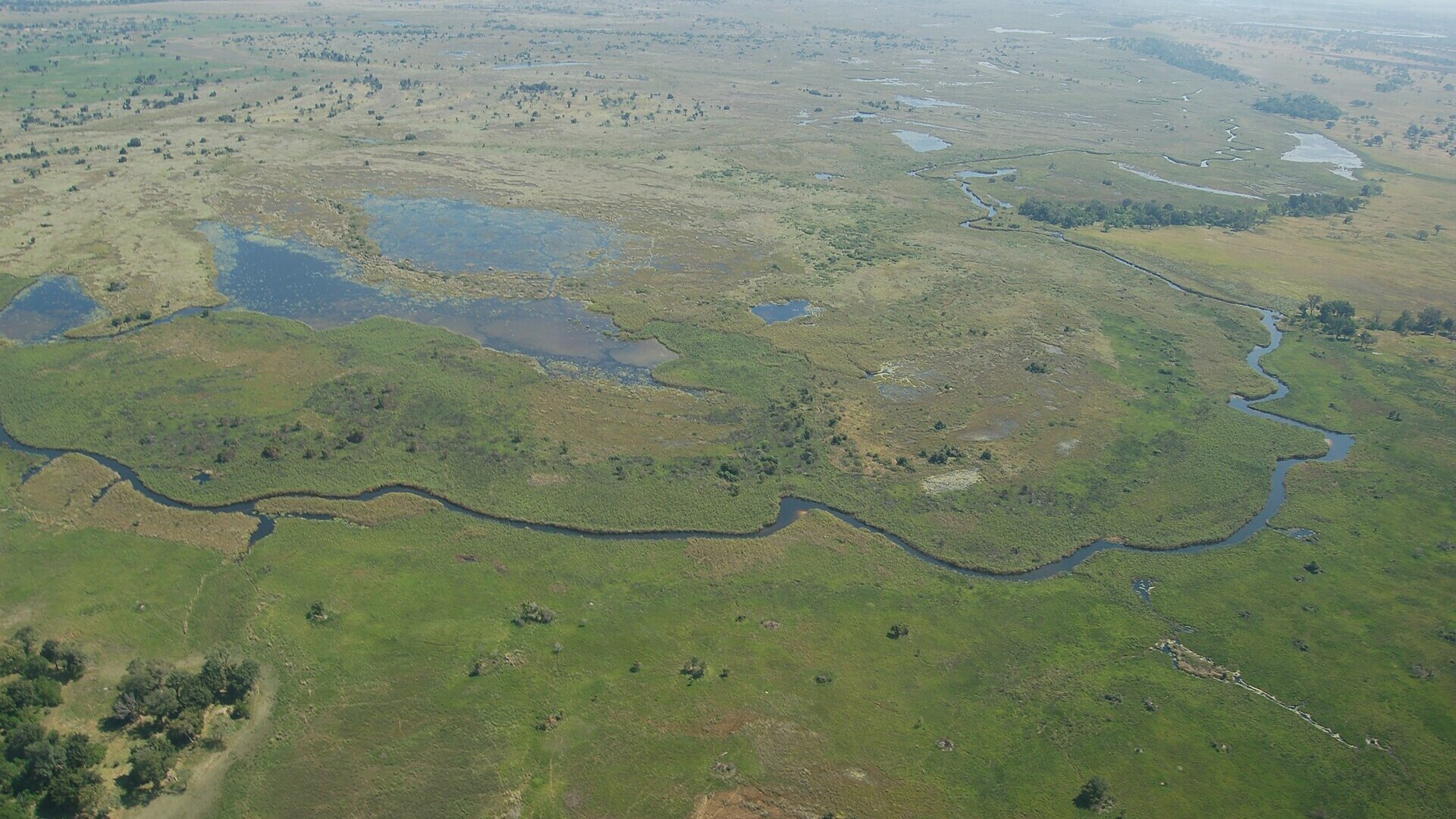
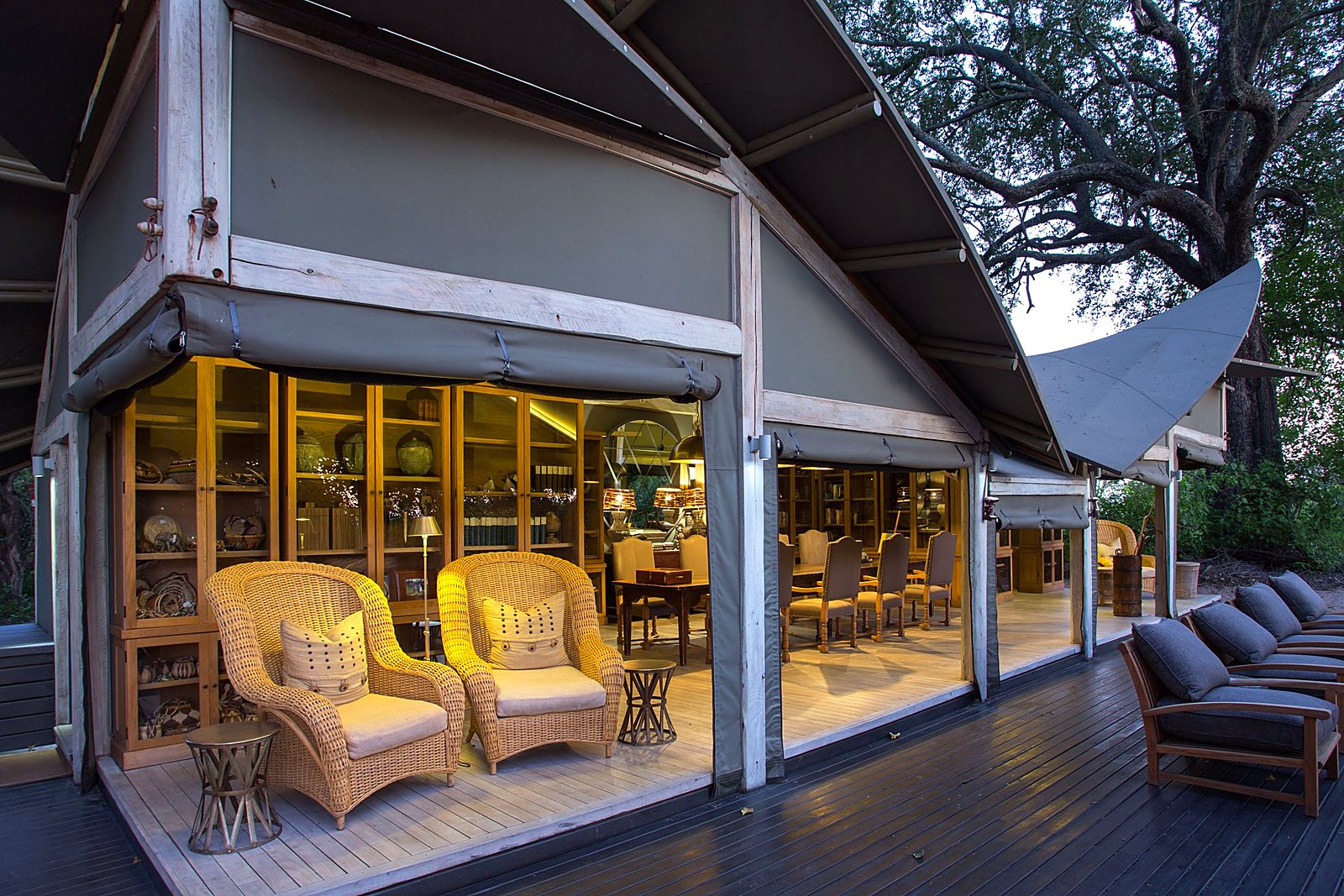
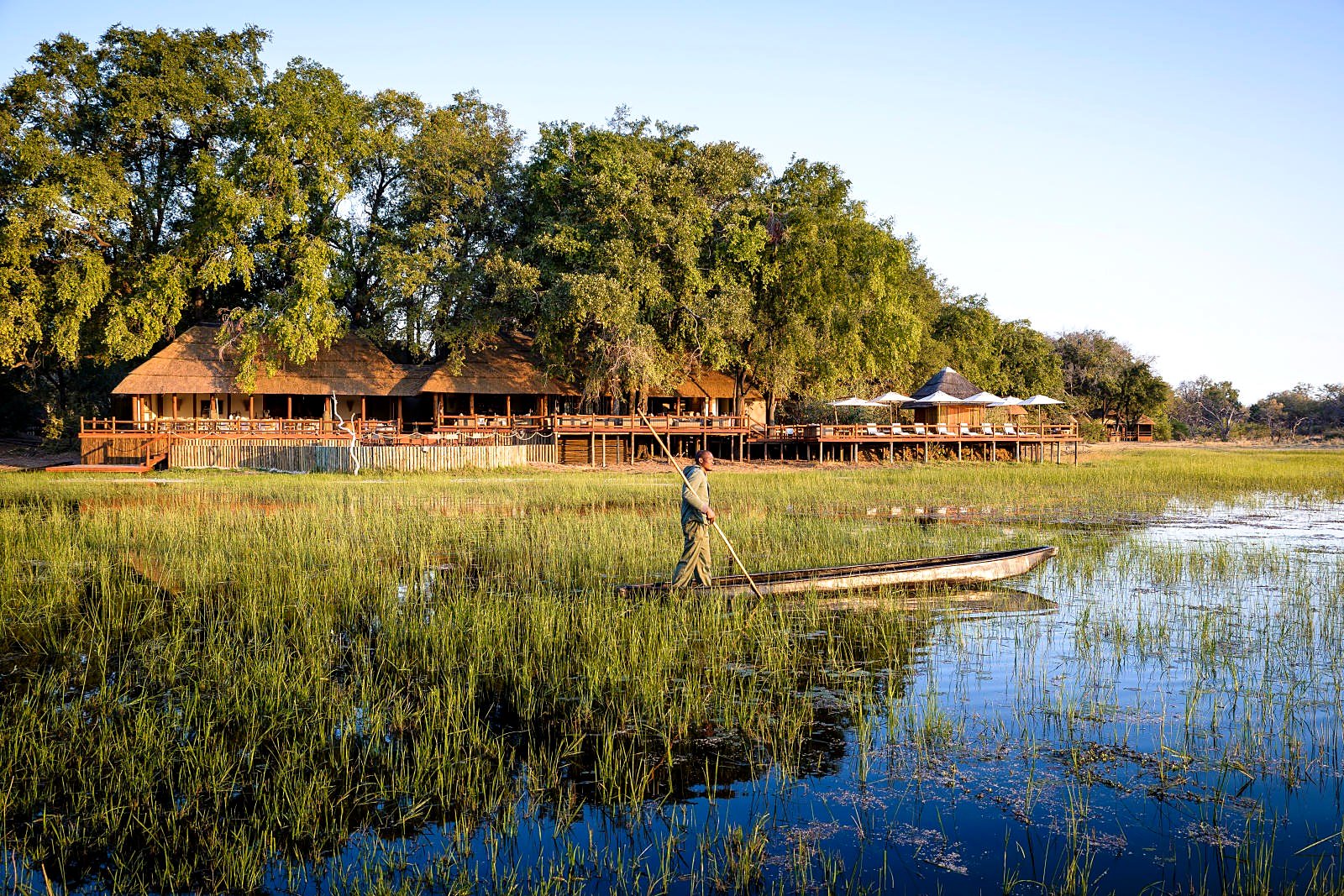
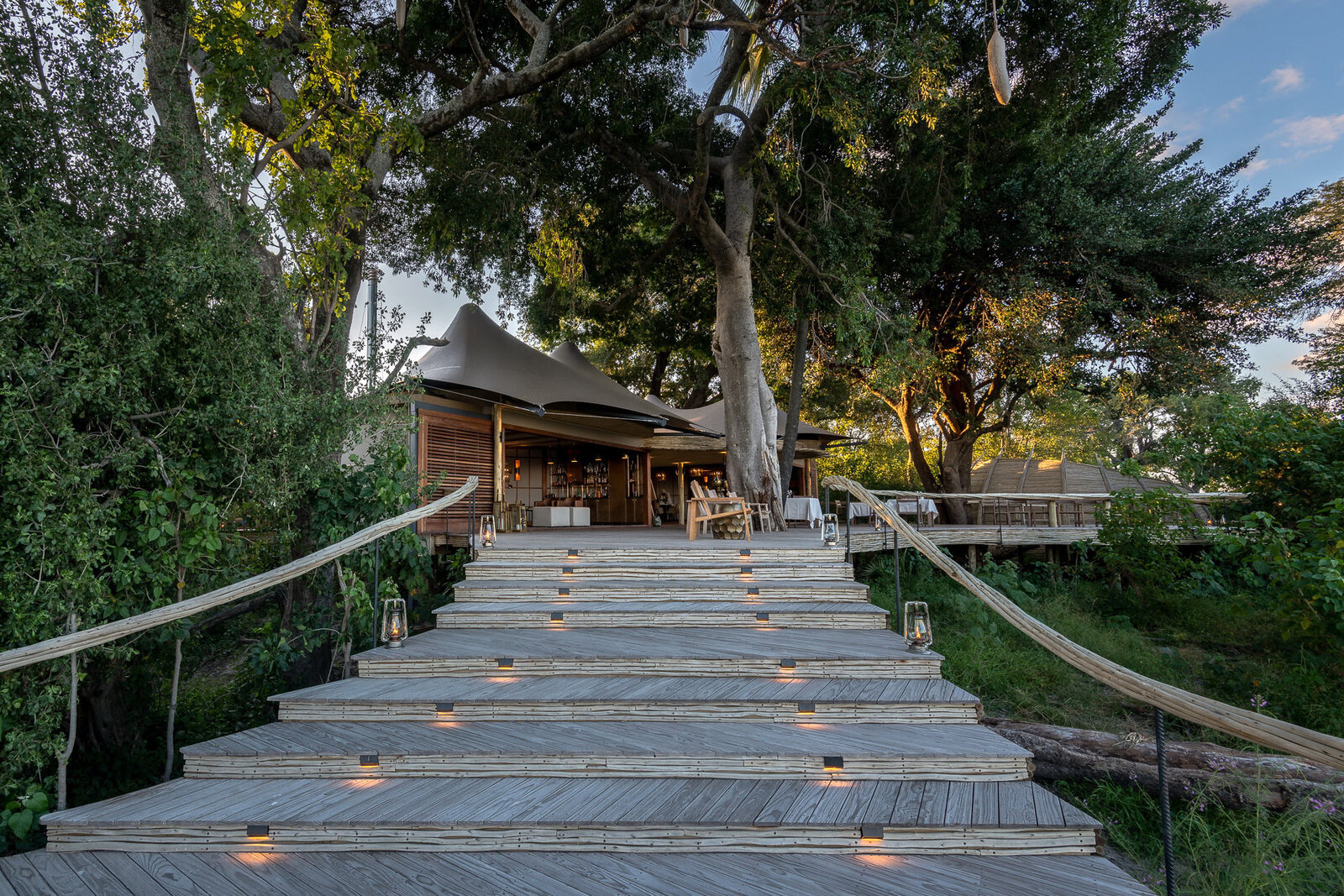
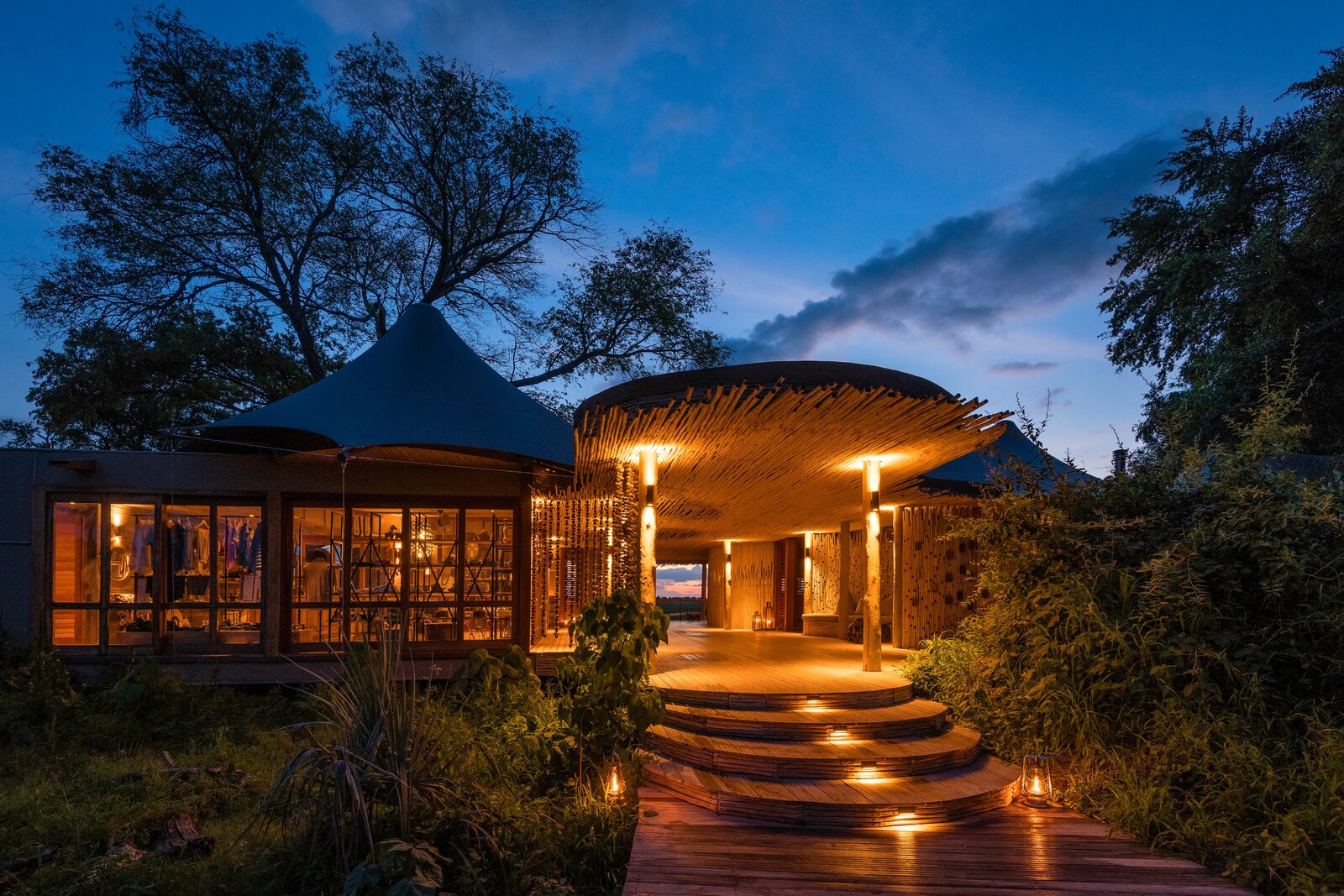
If you want one region that gets off-grid exactly right, start here. The Okavango is a vast inland delta with no roads in — you fly in by light aircraft onto a grass or dirt strip, and from the moment that little plane lifts off and the pilot banks over the floodplains, the outside world is gone. Camps sit on private islands and concessions, run on solar and quiet generators, and most keep no guest Wi-Fi at all.
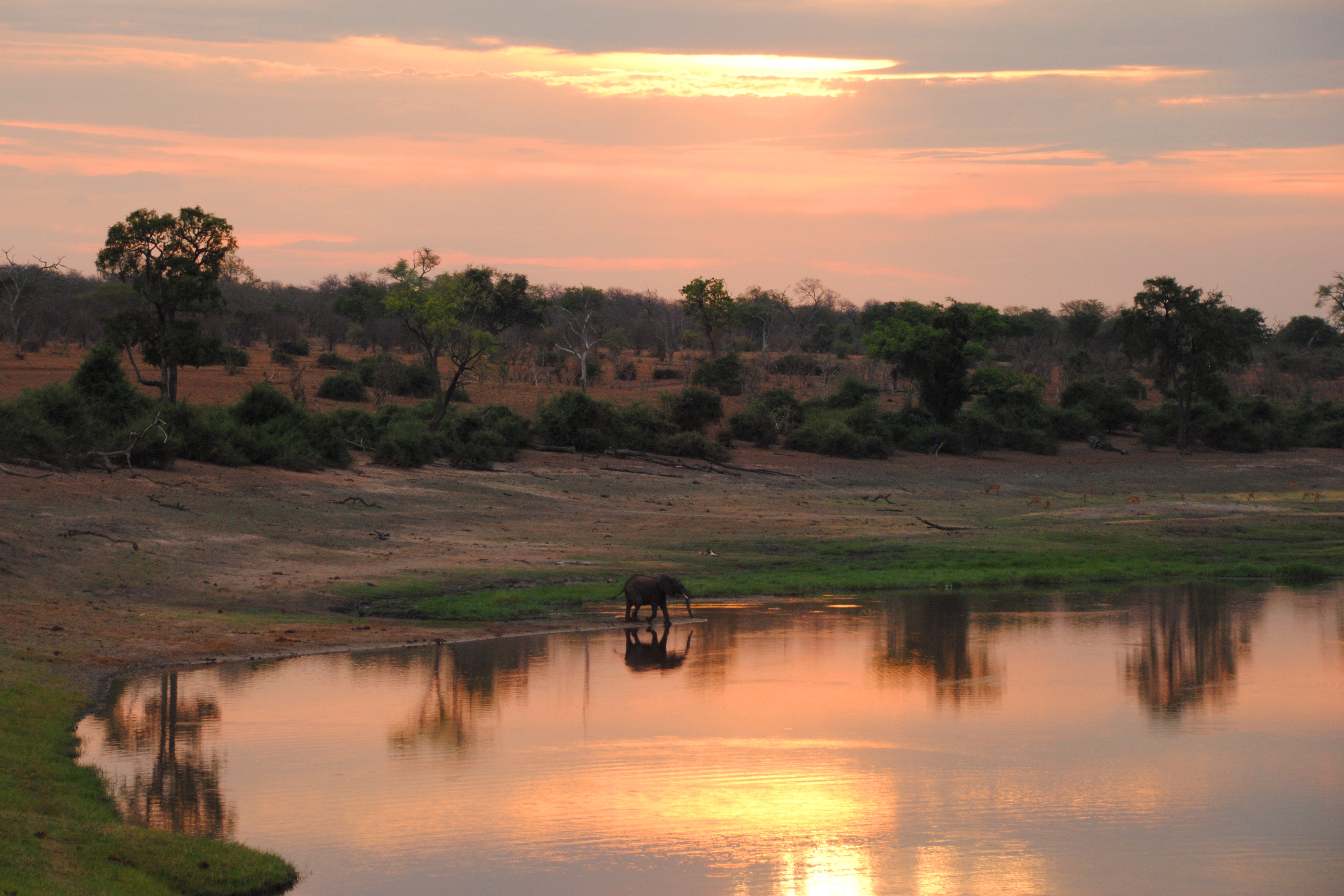
The days here are water and land in equal measure. Morning game drives for lion, elephant and wild dog; afternoons poled through the reed channels in a mokoro, the traditional dugout canoe, so slow and silent you hear frogs and the wingbeat of a fish eagle. Linyanti, just to the north, is drier, wilder and even more private — some of the best elephant and predator country in Africa, with a fraction of the vehicles.
This is the heart of our Botswana lodge collection, and the full camp-by-camp rundown lives in our guide to the best Okavango Delta camps. For most people building a first off-grid trip, a few nights in the Delta paired with Linyanti is the whole holiday.
Makgadikgadi and the Kalahari
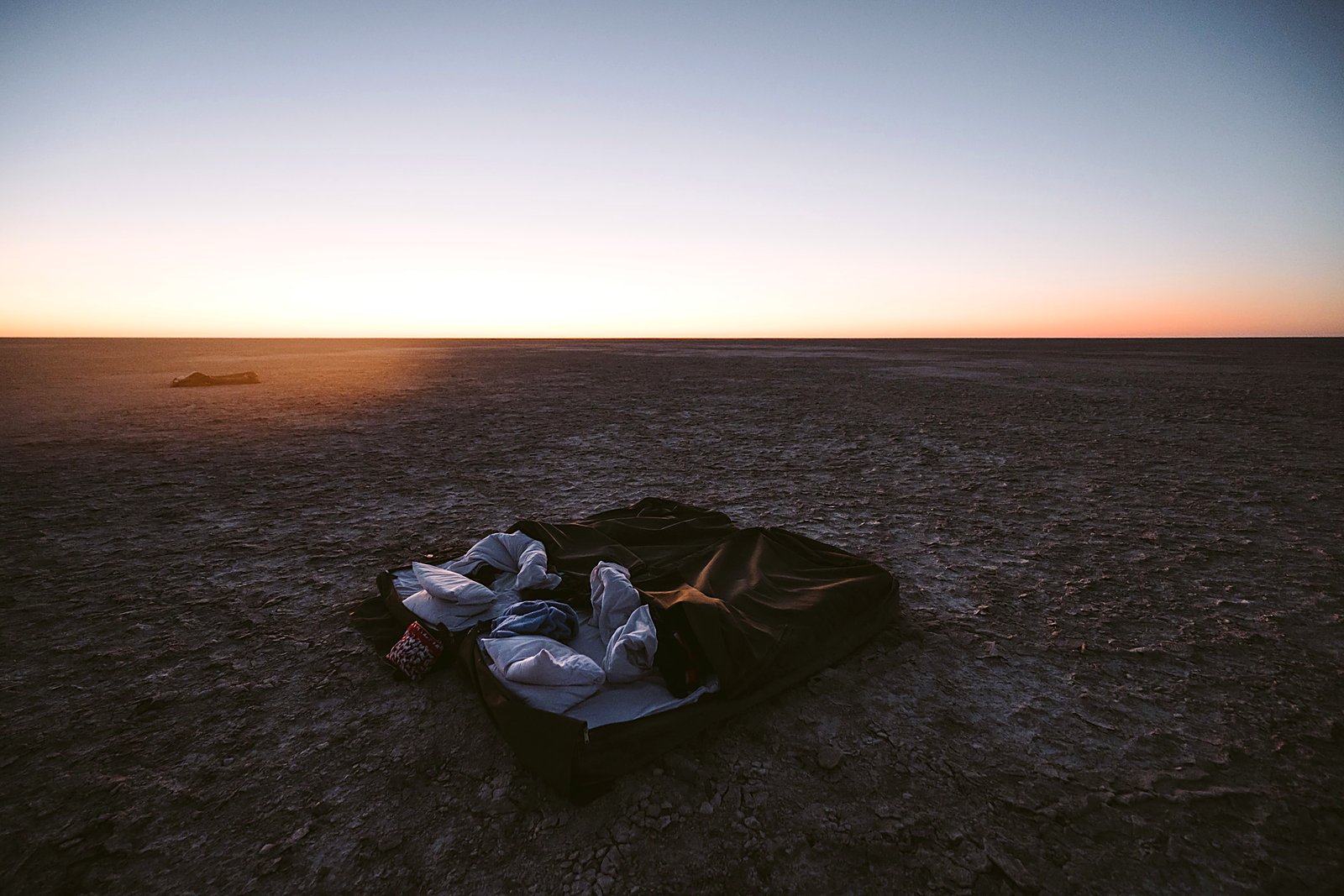
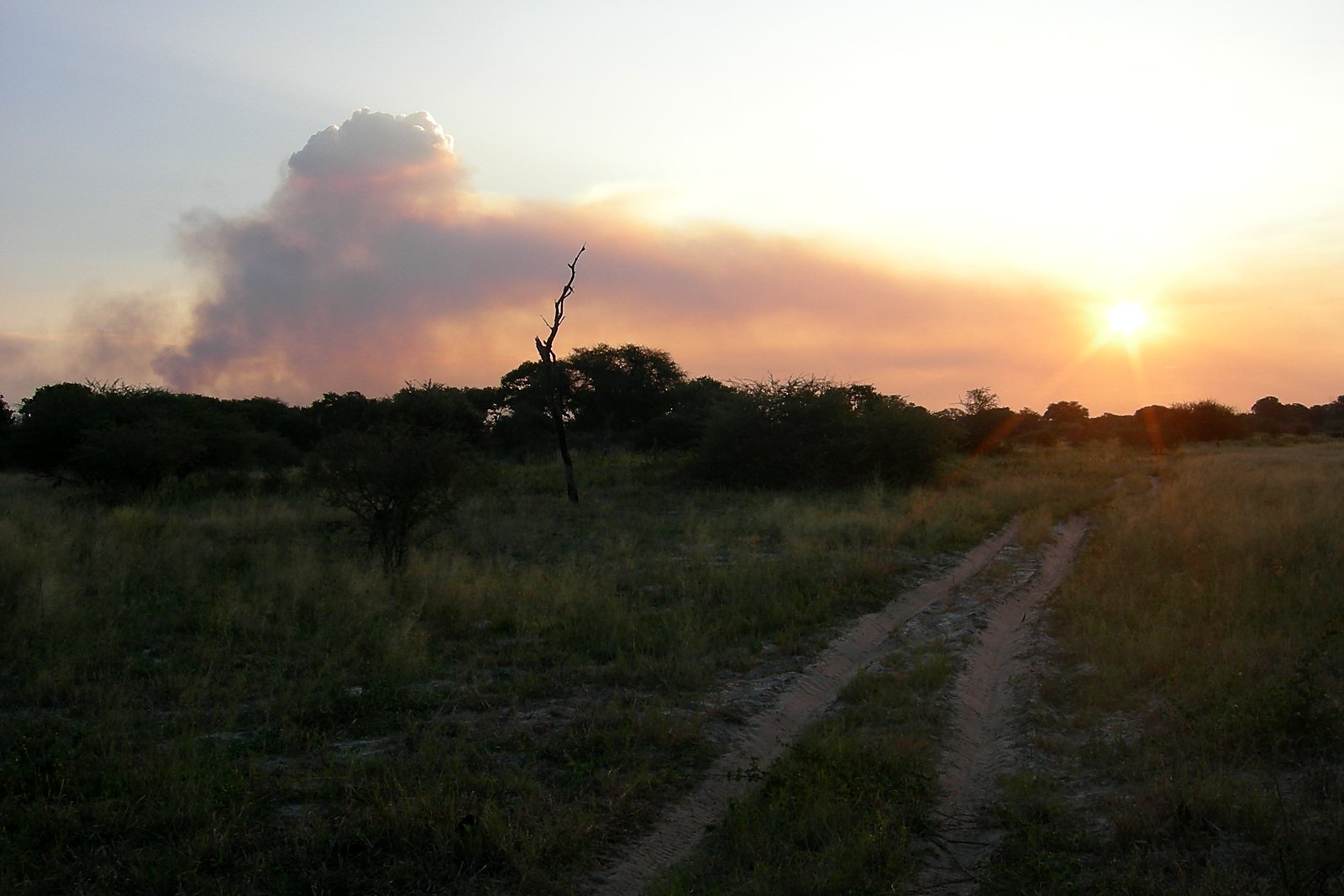
For a different kind of silence, head south to the salt pans and the desert. The Makgadikgadi is one of the largest salt-pan systems on earth — in the dry season an endless white horizon that bends the light and plays tricks with distance. The Central Kalahari is raw, open semi-desert where black-maned lions pad across red sand. Both run on the same off-grid logic: remote camps, solar power, and nothing to pull your eyes to a screen.
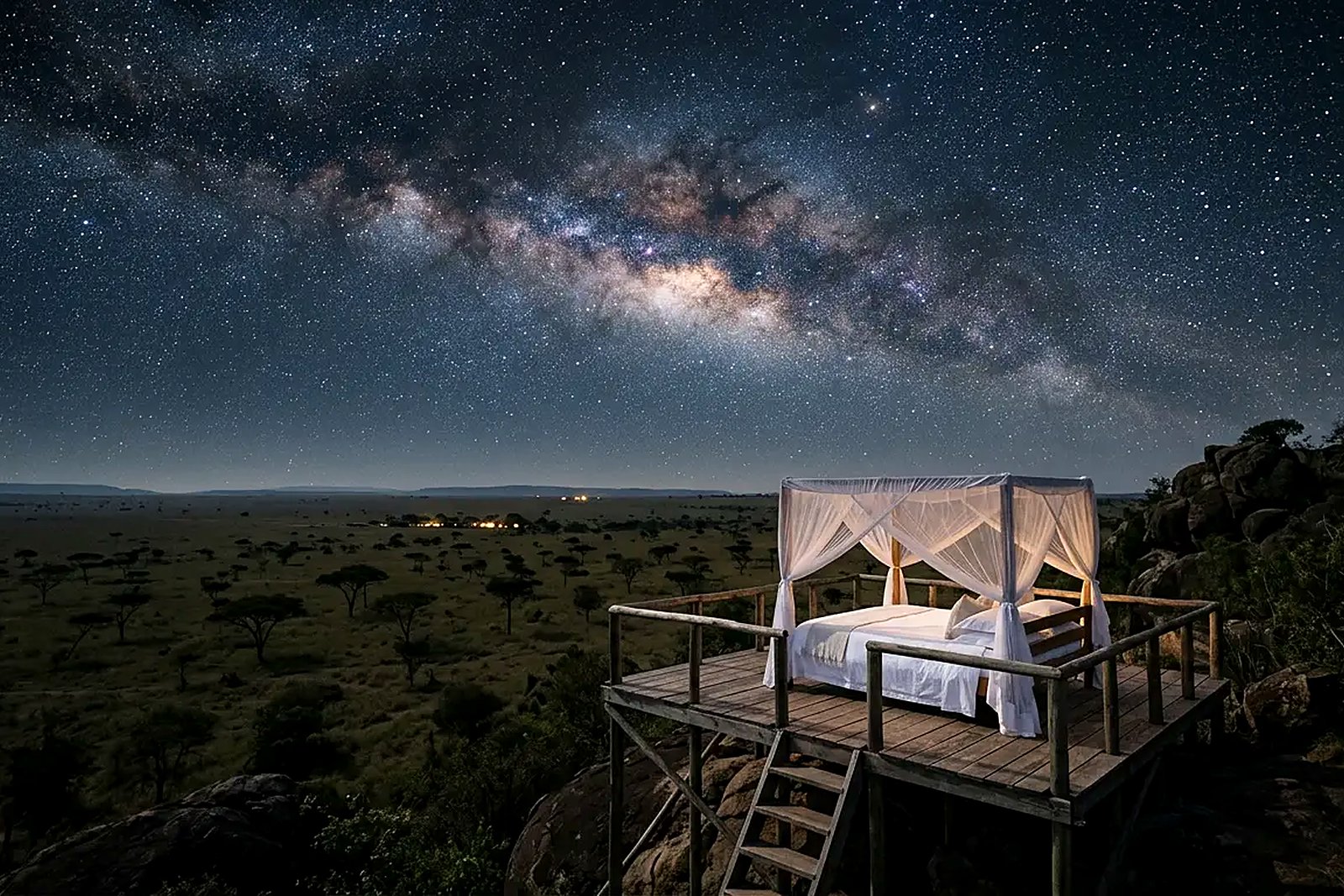
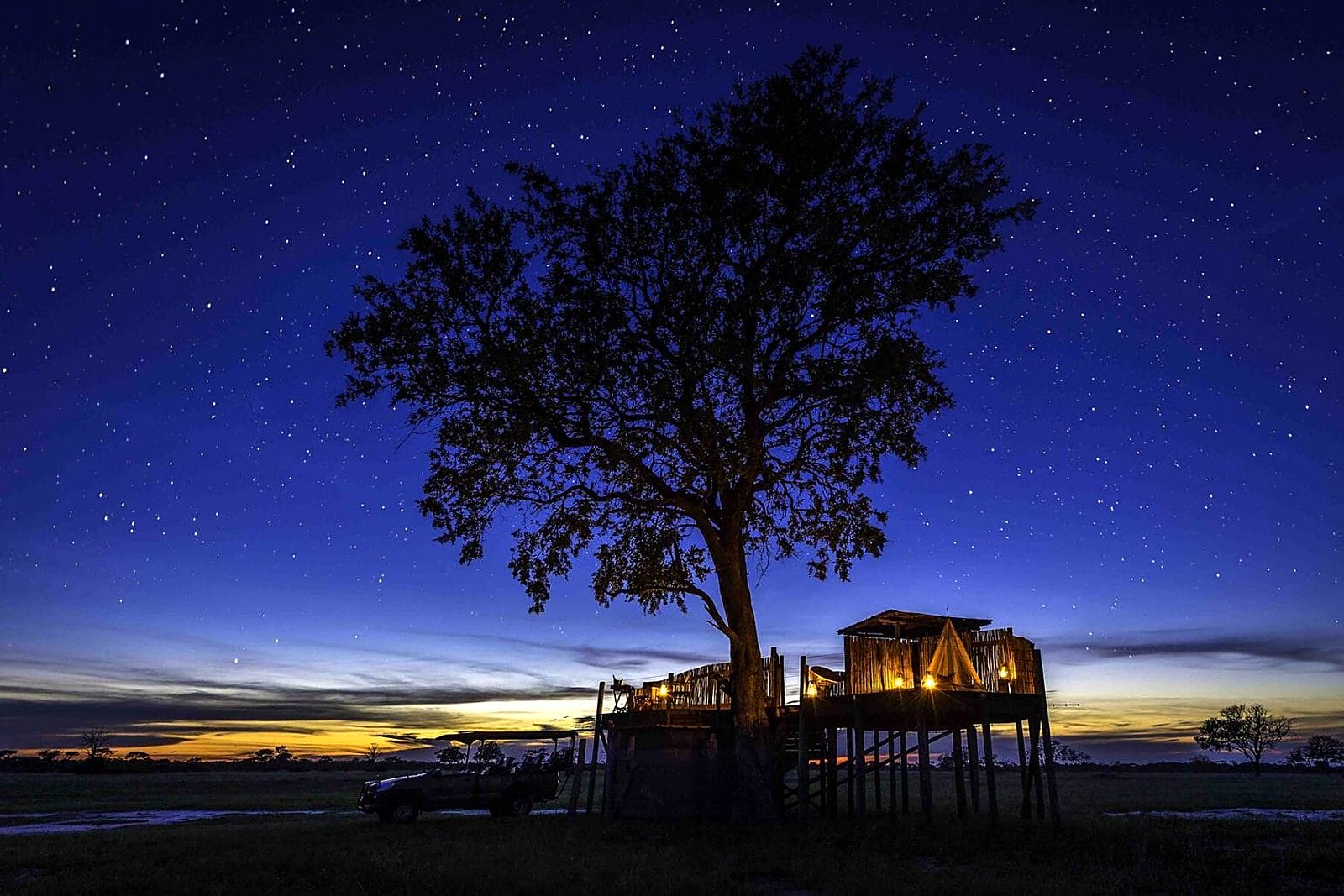
This is star-bed country. Several camps here will set up a simple raised platform out on the pans so you can sleep under the full sweep of the Milky Way, with no light pollution and no signal — just the dark and the quiet. By day there are quad-bike rides across the crust, visits to habituated meerkat colonies, and walks with the San people whose knowledge of this land runs back thousands of years. Our full write-up of these open-sky nights is in the star-bed safari guide.
Mana Pools and the Lower Zambezi
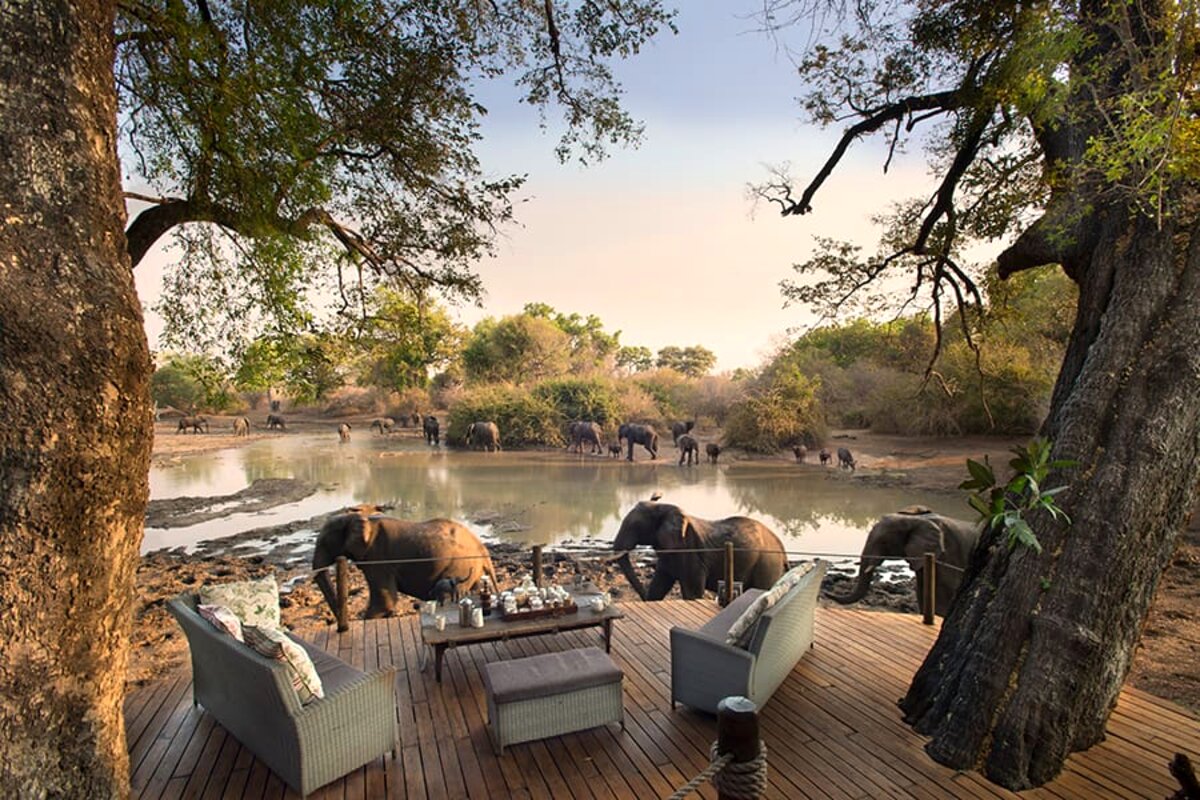
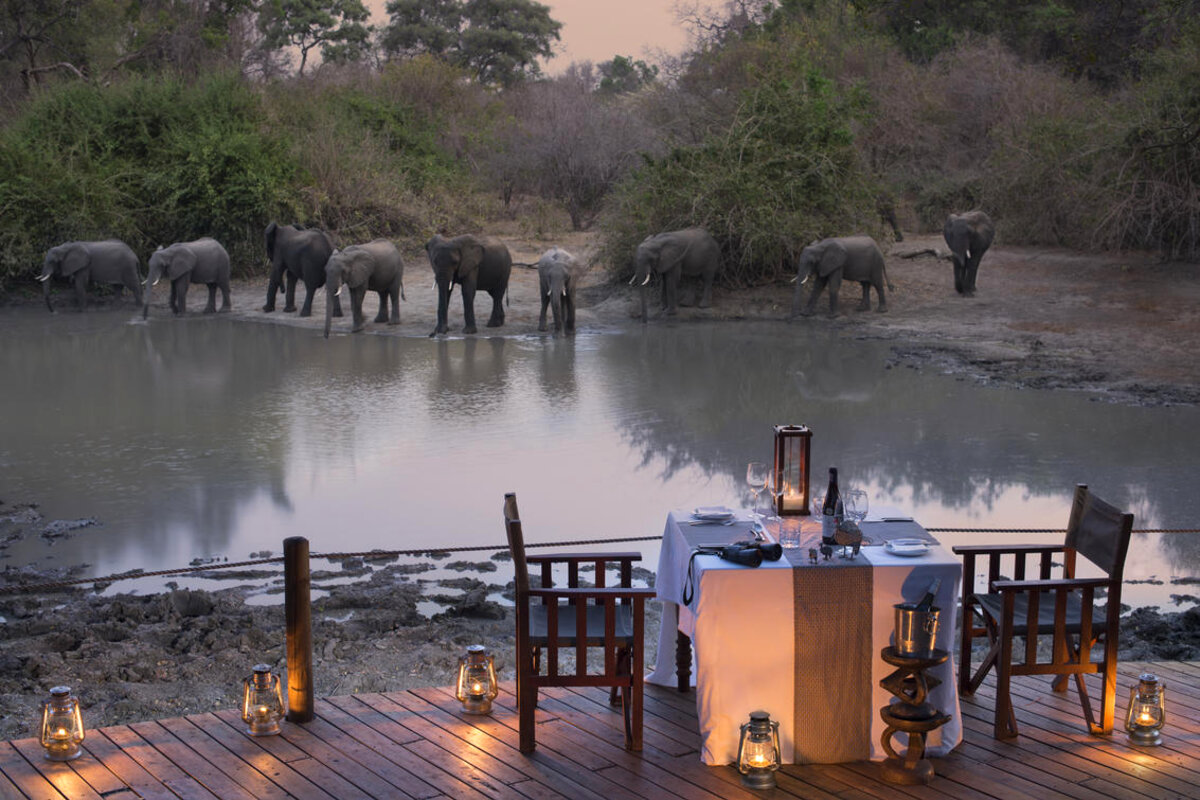
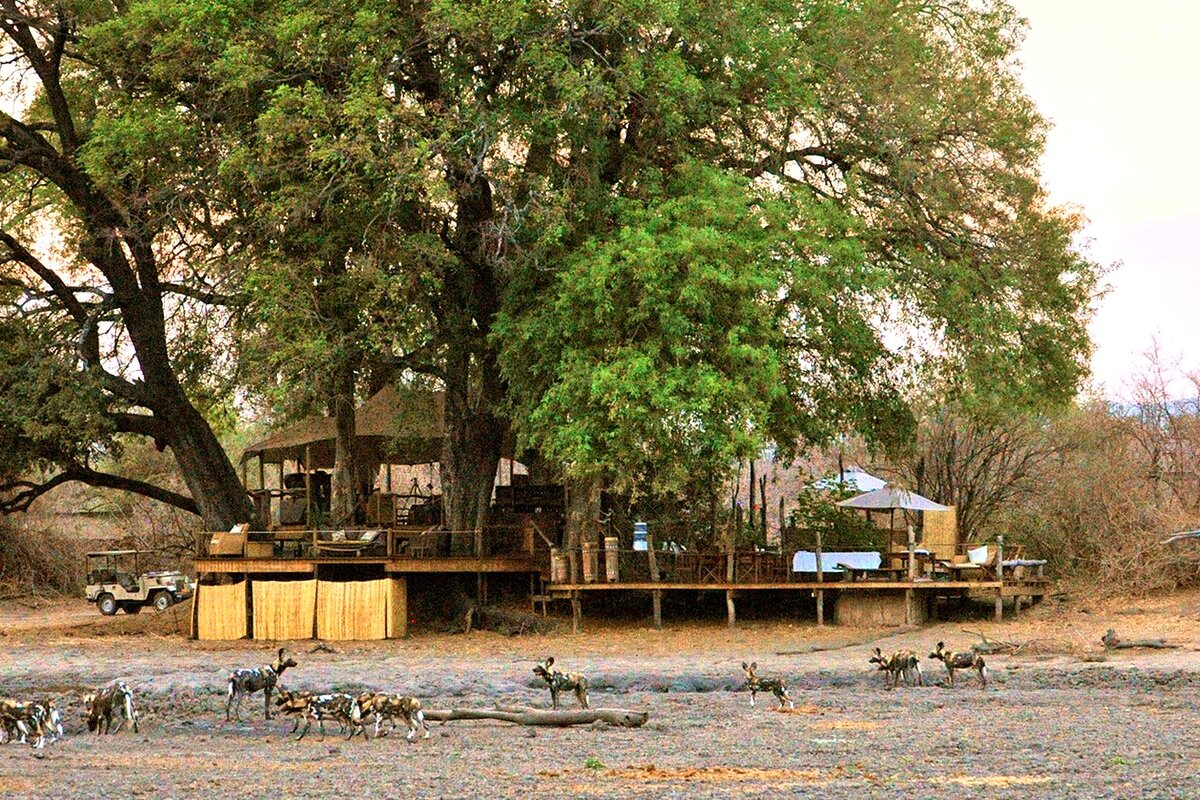
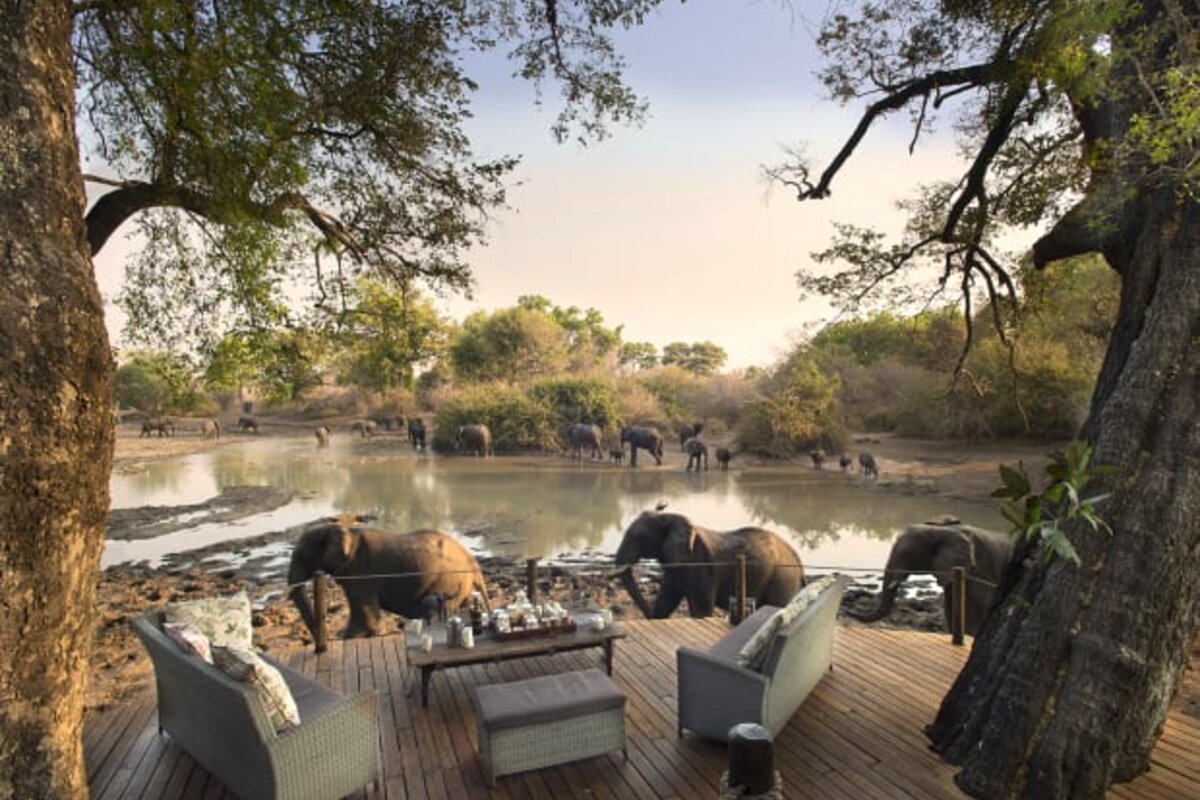
Mana Pools, on the Zimbabwean bank of the Zambezi, is one of the few places left where you can walk unfenced among elephant and buffalo with a licensed guide, and where lions still hunt along the river at first light. It is a UNESCO World Heritage Site, deliberately kept wild, and the camps here are small, seasonal and completely off the grid — satellite communication for the staff, and nothing for guests but the river and the forest.
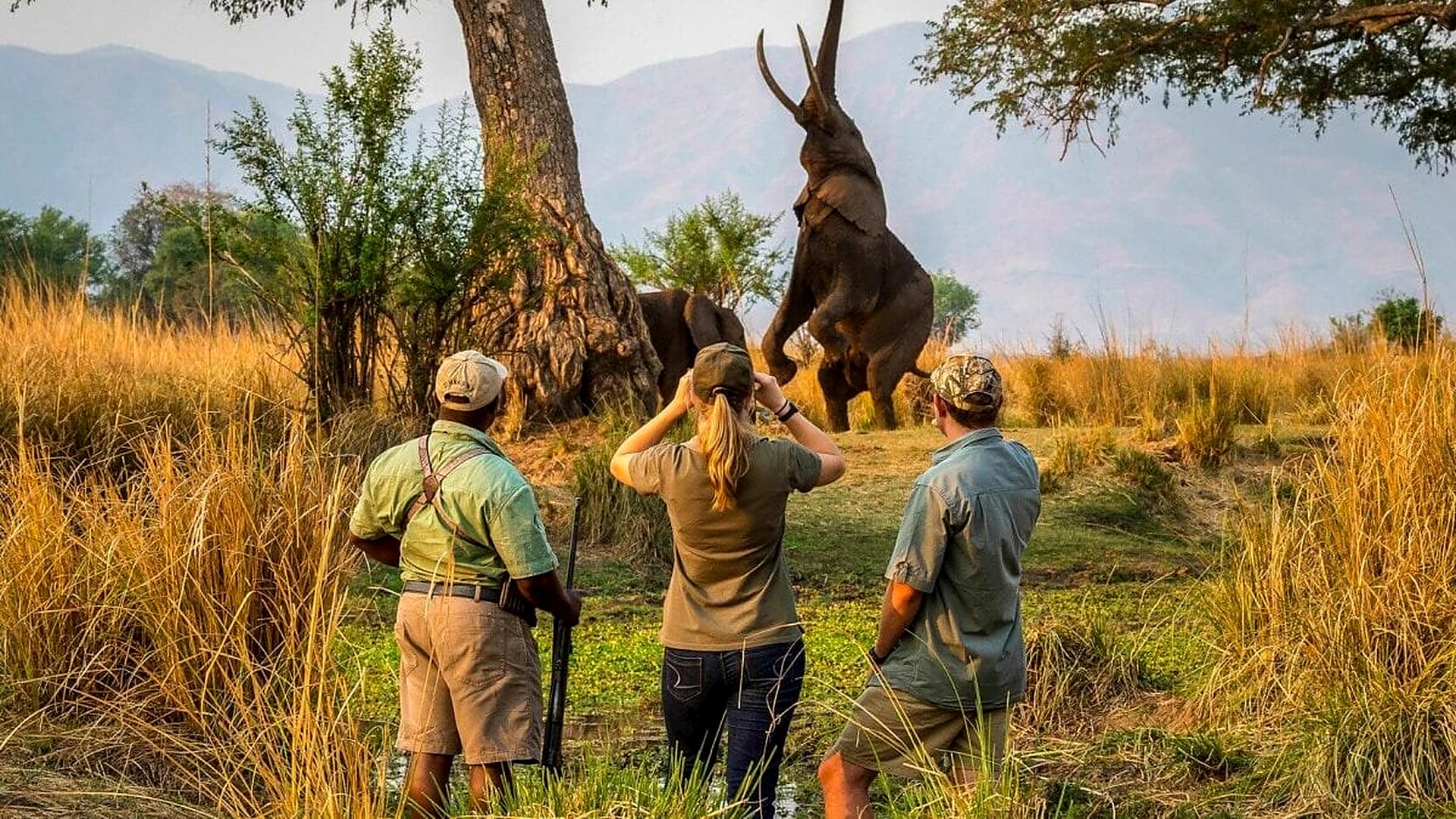
Mornings are often on foot, reading tracks in the dust; afternoons can be spent drifting the Zambezi by canoe past pods of hippo, with the hills of Zambia on the far bank. It is a region for people who already love safari and want it stripped back to its oldest form. If walking draws you, read our guide to walking safaris to understand how these on-foot days are run and guided.
South Luangwa, Zambia
The walking safari was more or less invented in Zambia's South Luangwa, and the valley still does it better than anywhere. Beyond the main lodges sits a string of tiny seasonal bush camps, reached on foot or by a long drive, built from thatch and canvas and taken down again when the rains come. They hold a handful of guests, run on solar, and have no signal whatsoever.
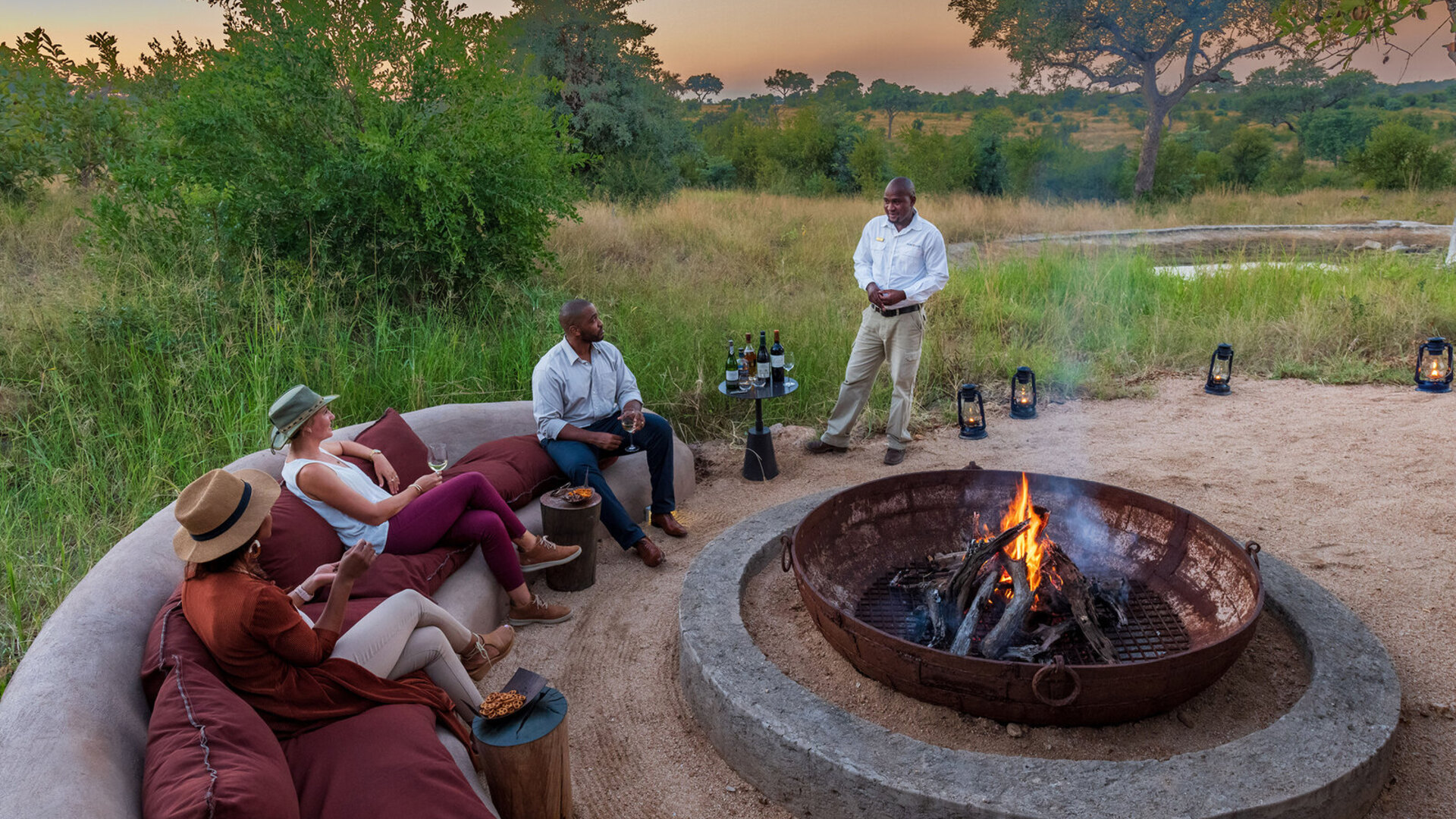
Days move at walking pace with an armed scout and a guide who grew up reading this bush — not chasing the Big Five in a vehicle, but learning the small things: the alarm calls, the dung, the way a herd moves. Nights are around the fire, then the deep sleep that only comes when nothing can wake you but a lion calling across the river. For a first off-grid week, pairing one of these bush camps with a comfortable main lodge is a gentle, honest way in.
More Corners Off the Grid
Botswana, Zimbabwe and Zambia carry most of the off-grid weight, but they are not the only options. A few more places where the signal thins to nothing:
- Damaraland and the Skeleton Coast, Namibia. Desert-adapted elephant and lion, ancient rock art and some of the emptiest horizons on earth. Camps here are remote, solar-run and far from any tower.
- Laikipia and northern Kenya. Vast private conservancies where you can walk, ride horses or track on foot. Some conservancy camps do offer Wi-Fi, so this one needs choosing with care if full disconnection is the goal.
- Mahale and the Mahale Mountains, Tanzania. Reached by light aircraft and boat on the shore of Lake Tanganyika, for chimpanzee tracking in forest with no road access at all.
- Kidepo Valley, Uganda. One of Africa's most isolated parks, tucked in the far northeast against the South Sudan border, rarely visited and genuinely remote.
Each of these can be built into a longer itinerary, and we match them to the right season and the right traveller rather than treating off-grid as one-size-fits-all.
Staying Reachable in an Emergency
Off the grid does not mean out of touch when it counts, and this is the part worth getting right. Every remote camp we use keeps a satellite phone or an HF radio at the management office and holds a scheduled daily check-in with its head office and the airstrip. If an urgent message needs to reach you, it goes through that channel and the camp brings it to you, usually within hours.
Two things we put in place on every off-grid trip: a medical-evacuation membership, so a flying-doctor aircraft can be called to the nearest strip if it is ever needed, and a comprehensive travel-insurance policy that covers remote-area rescue. We also leave your family with the camp's name and the emergency contact — ours or the camp's — before you fly. The sensible rule to agree before you go: no news means all is well, and a message only comes if it genuinely matters. With that in place, you can let go completely, which is the entire point.
How to Prepare for a Week Unplugged
A little preparation makes the switch-off painless. Do these before you fly:
- Download everything. Offline maps, your reading, playlists and any boarding passes — do it on the hotel Wi-Fi the night before you go remote, not when you are already standing on a dirt strip.
- Print the key documents. Flight details, camp names, insurance and evacuation membership numbers on paper, in your day bag. Screens fail; paper does not.
- Tell the people who matter. Leave your itinerary and the camp emergency contact with family, and set an auto-reply on your email so work is not left wondering.
- Pack for no power. A good power bank, spare camera batteries, a head torch and your charging cables. Many camps charge devices from a central solar point rather than in the rooms, so plan for slow, shared charging.
- Bring the analogue things. A paper book, a notebook, a proper camera if you have one. They fill the space the phone used to, and they are better company around a fire.
The first evening can feel strange — a reflex reach for a pocket that has nothing to give. By the second or third day that reflex is gone, and what replaces it is the reason people book these trips again and again.
Planning Your Off-Grid Safari
The two decisions that make or break an off-grid trip are how long you stay and how you string the camps together. Our honest advice: give it six nights or more, and keep the moves few. Two remote camps over a week beats four camps in four nights, where you spend the holiday packing and flying rather than settling into the quiet. Fly-in logistics in Botswana, Zambia and Zimbabwe run on small aircraft with tight baggage limits, so a soft bag and a short list of camps keep everything smooth.
On timing, follow the season of the region. The Okavango, Linyanti, Mana Pools and South Luangwa peak from roughly June to October, when the dry bush concentrates the game and the walking is at its best. The Makgadikgadi and Kalahari come alive in the green months of December to March. On cost, a fully remote fly-in safari sits at the upper end — the flights, the small camps and the private concessions are what buy the silence — and we quote every trip clearly, per person, in your currency, before you commit to anything.
🦁 Plan Your Off-Grid Safari With Us
Tell us how long you have, how far off the grid you want to go and the season that suits you, and we will build a fully costed itinerary — the right remote camps, the fly-in legs, and the satellite and evacuation cover handled, so you can switch off completely.
Get My Off-Grid Safari Plan →A Week Where the World Cannot Reach You
An off-grid safari is not about doing without. It is about trading the small screen for the biggest one there is — the Delta from a mokoro, the Milky Way over the pans, an elephant at twenty paces on a morning walk. The signal drops, the noise stops, and after a day or two the part of you that was always half-checking finally lets go.
Pick the region first — Botswana for the Delta and the desert, Zimbabwe for Mana Pools, Zambia for the Luangwa bush camps — give it a full week, and let the logistics be handled. Start with our best Okavango Delta camps and best Botswana lodges, or just tell us your dates and we will take it from there. You can also message us on WhatsApp for a quick answer.