Udzungwa Mountains National Park is Tanzania's ONLY park with zero game drives — a pure foot-safari wilderness where ancient rainforest trails lead to thundering waterfalls, endemic primates found nowhere else on Earth, and biodiversity so extraordinary it's earned the nickname "the Galápagos of Africa." Trek to the towering 170-meter Sanje Waterfall, encounter the Iringa red colobus and Sanje crested mangabey (both endemic), and immerse yourself in one of the world's most important biodiversity hotspots — accessible only on foot, guided through roadless forest that harbours 2,500+ plant species, 11 primate species, and 400+ birds.
Why Udzungwa Mountains Is Special — Tanzania's Foot-Safari Rainforest Wilderness
Udzungwa Mountains National Park stands completely apart from Tanzania's famous savanna parks. Established in 1992 and spanning 1,990 km² of the Eastern Arc Mountains, this is a hikers' paradise — there are no roads inside the park, no game-drive circuits, and no traditional lodge-and-vehicle safaris. Instead, you explore on foot, guided through pristine tropical rainforest that rises from 250 meters to 2,576 meters at Luhombero Peak.
The park's biodiversity is globally significant: nearly 30% of its 2,500+ plant species are endemic (found nowhere else), and it's home to two primate species that exist only in these mountains — the Iringa red colobus and the Sanje crested mangabey. Birdwatchers record over 400 species here, including the endemic Udzungwa forest partridge and Rufous-winged sunbird. The forest shelters elephants, leopards, duikers, and an astonishing array of butterflies, amphibians, and reptiles — many of which are found only in the Eastern Arc.
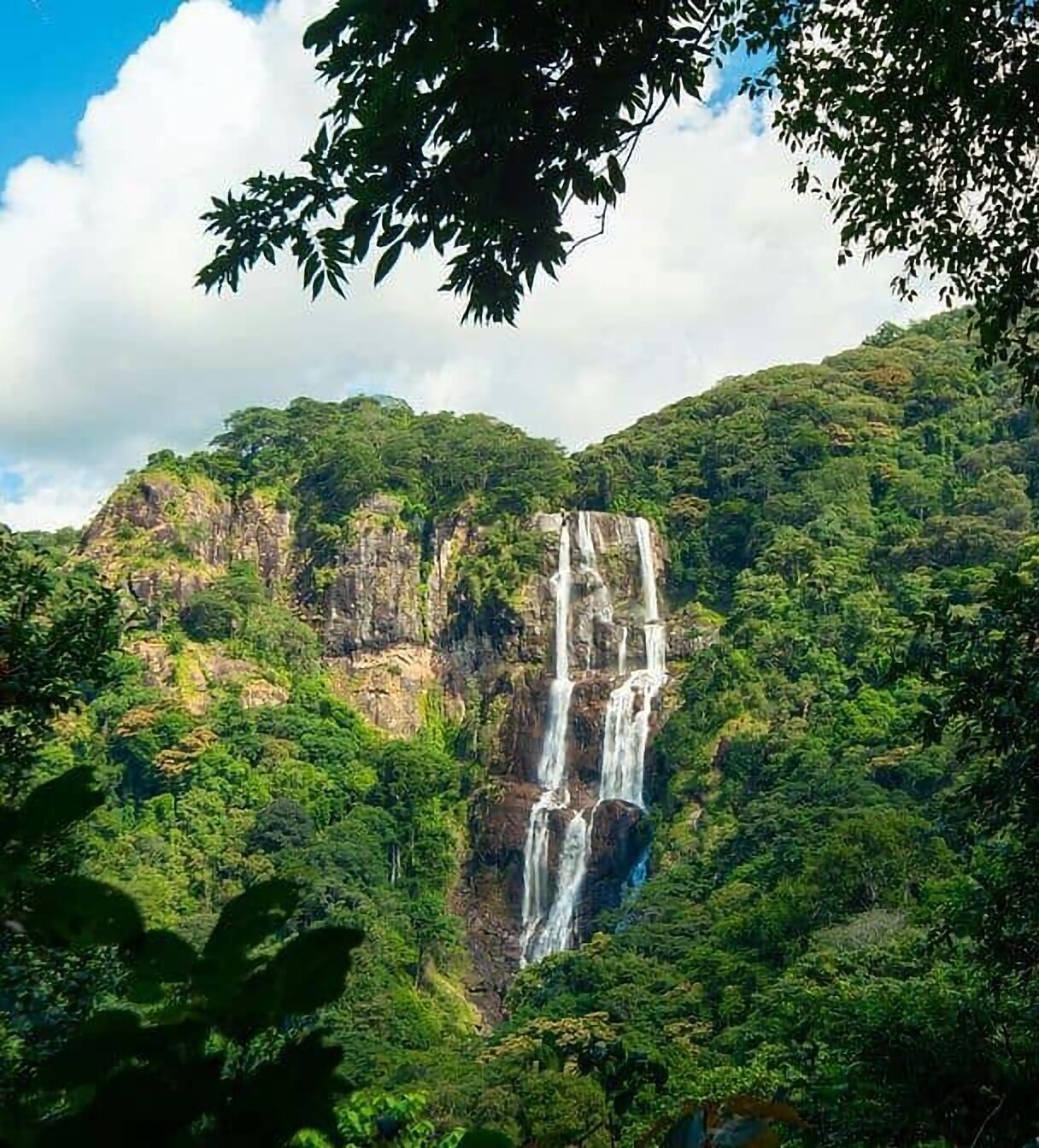
The park's crown jewel is Sanje Waterfall, a three-tiered cascade plunging 170 meters (the tallest waterfall in any Tanzanian national park), with a swimmable plunge pool at the upper tier. But Udzungwa is more than one trail — it offers everything from short afternoon walks to multi-day expeditions into remote valleys where few travellers venture.
Where Is Udzungwa Mountains — Location & How to Get There
Udzungwa Mountains National Park is in south-central Tanzania, part of the Southern Circuit. It's approximately 350–380 km from Dar es Salaam (about 7 hours by road) and often combined with Mikumi National Park (60 km to the northeast) and Ruaha National Park (further west) for a comprehensive Southern Circuit safari.
Access options:
- By Road: Drive from Dar es Salaam via Morogoro and Mikumi along the A7 highway. The park entrance is at Mang'ula village. Most visitors arrive by private safari vehicle or with a tour operator.
- By Rail: The TAZARA (Tanzania-Zambia Railway) connects Dar es Salaam to Mang'ula Station, located just a few kilometres from the park entrance. This is a scenic and affordable option for independent travellers.
- By Air: Charter flights from Dar es Salaam, Zanzibar, or Arusha land at Mikumi Airstrip or Kilombero Airstrip, followed by a short road transfer to the park.
The main park entrance and headquarters are at Mang'ula, where you'll register, pay entrance fees, and meet your mandatory guide for all hikes.
The Trails — From Half-Day Walks to Multi-Day Expeditions
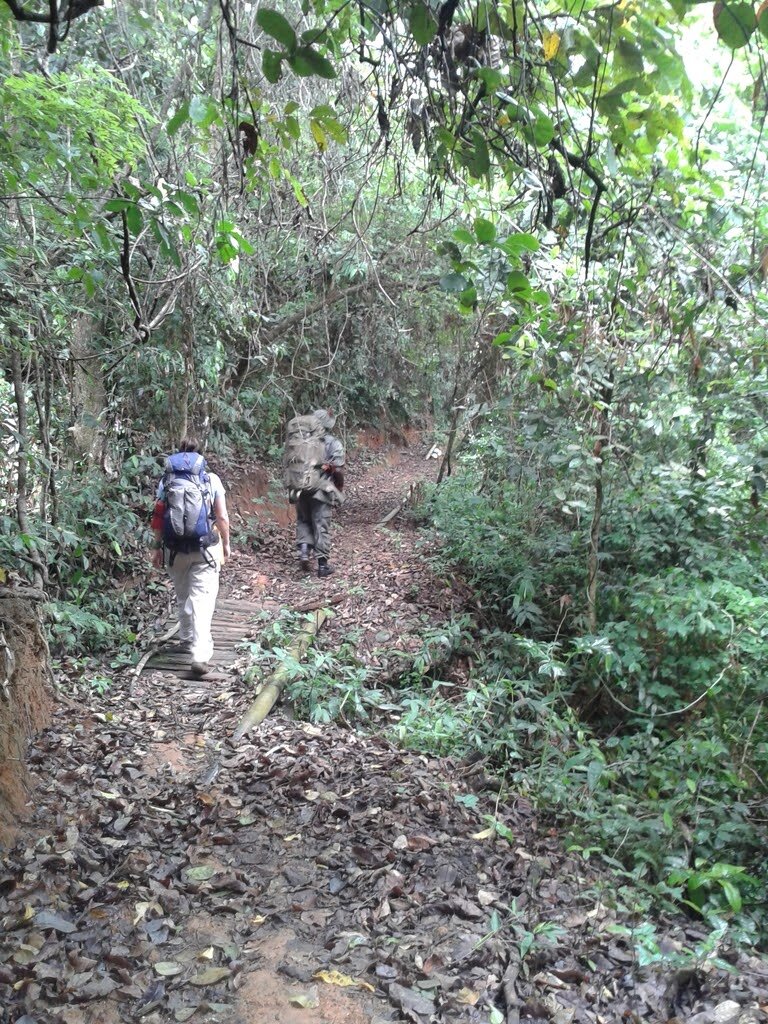
Because Udzungwa has no roads, exploration is entirely foot-based. The park offers a range of trails, from easy afternoon walks to challenging multi-day treks that require camping gear and armed rangers. All hikes require a licensed park guide, who will be assigned at the Mang'ula gate upon registration.
Day Trails
Multi-Day Trails
For serious hikers, Udzungwa offers multi-day expeditions that require camping gear, porters, and advance planning:
- Mwanihana Trail (38 km, 3 days): Summit Mwanihana Peak (2,150 meters) for panoramic views over the Kilombero Valley and the Great Ruaha River. Camp overnight in the forest. This is the most popular multi-day hike.
- Lumemo Trail (65 km, 4–5 days): The longest and most remote trek, traversing deep valleys and untouched rainforest. Physically demanding and suitable only for experienced trekkers.
- Mbatwa Trail (2–3 days): Explores the western slopes of the mountains, characterized by drier miombo woodland and baobab trees.
The Endemic Primates — Species Found Nowhere Else on Earth
Udzungwa Mountains is one of the few places on the planet where you can see primate species that exist in this forest only. The park's global conservation importance rests heavily on these two endemics:
1. Iringa Red Colobus (Udzungwa Red Colobus)
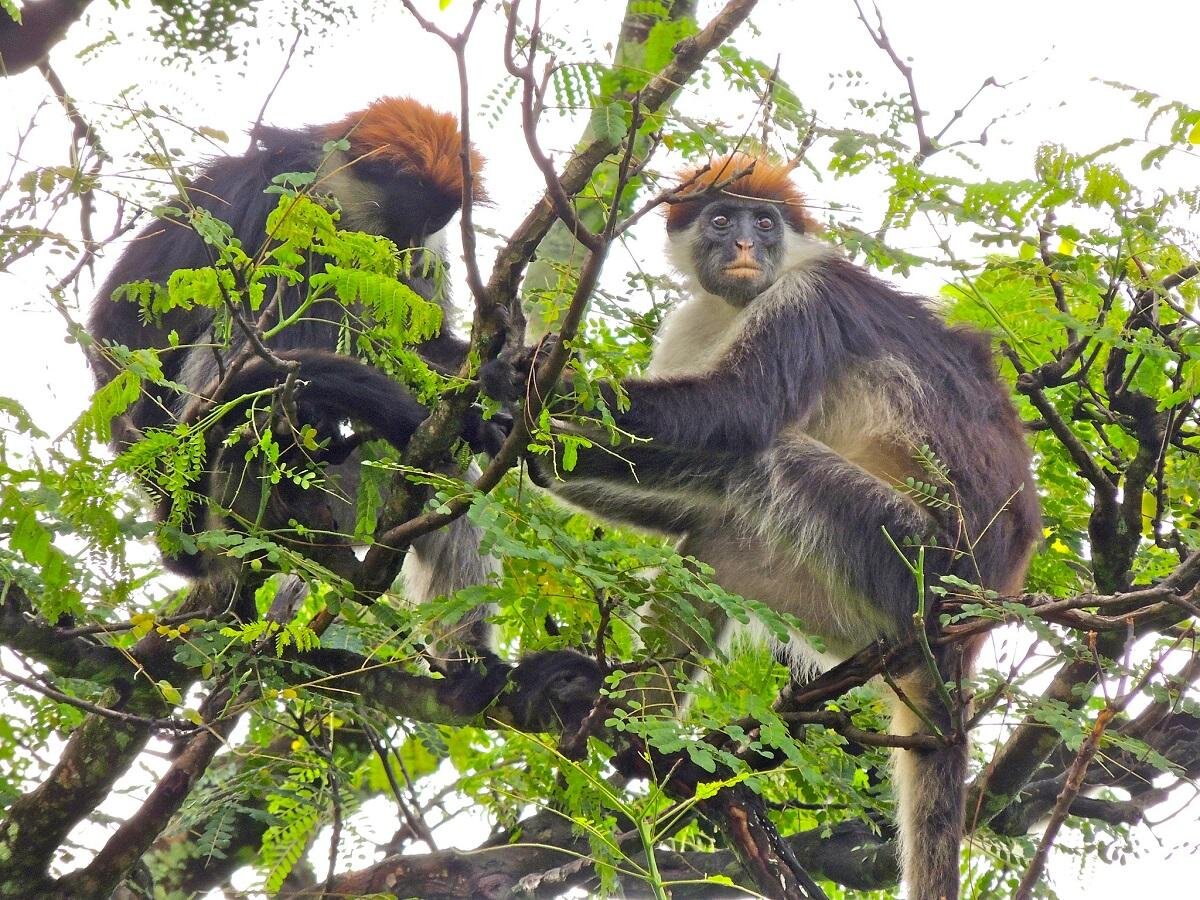
The Iringa red colobus (Piliocolobus gordonorum) is a striking monkey with a distinctive reddish-orange crown, black dorsal fur, and white facial markings. Classified as Endangered, the global population is estimated at 25,000–50,000 individuals, all confined to the Udzungwa Mountains and nearby forests.
These monkeys are highly arboreal and folivorous (leaf-eaters), living in multi-male, multi-female troops of 20–40 individuals. They inhabit a range of elevations from lowland riverine forest to montane forest at 2,200 meters. Unlike many primates, males often remain in their natal groups while females disperse. You'll likely encounter them on most trails, their loud calls echoing through the canopy.
2. Sanje Crested Mangabey
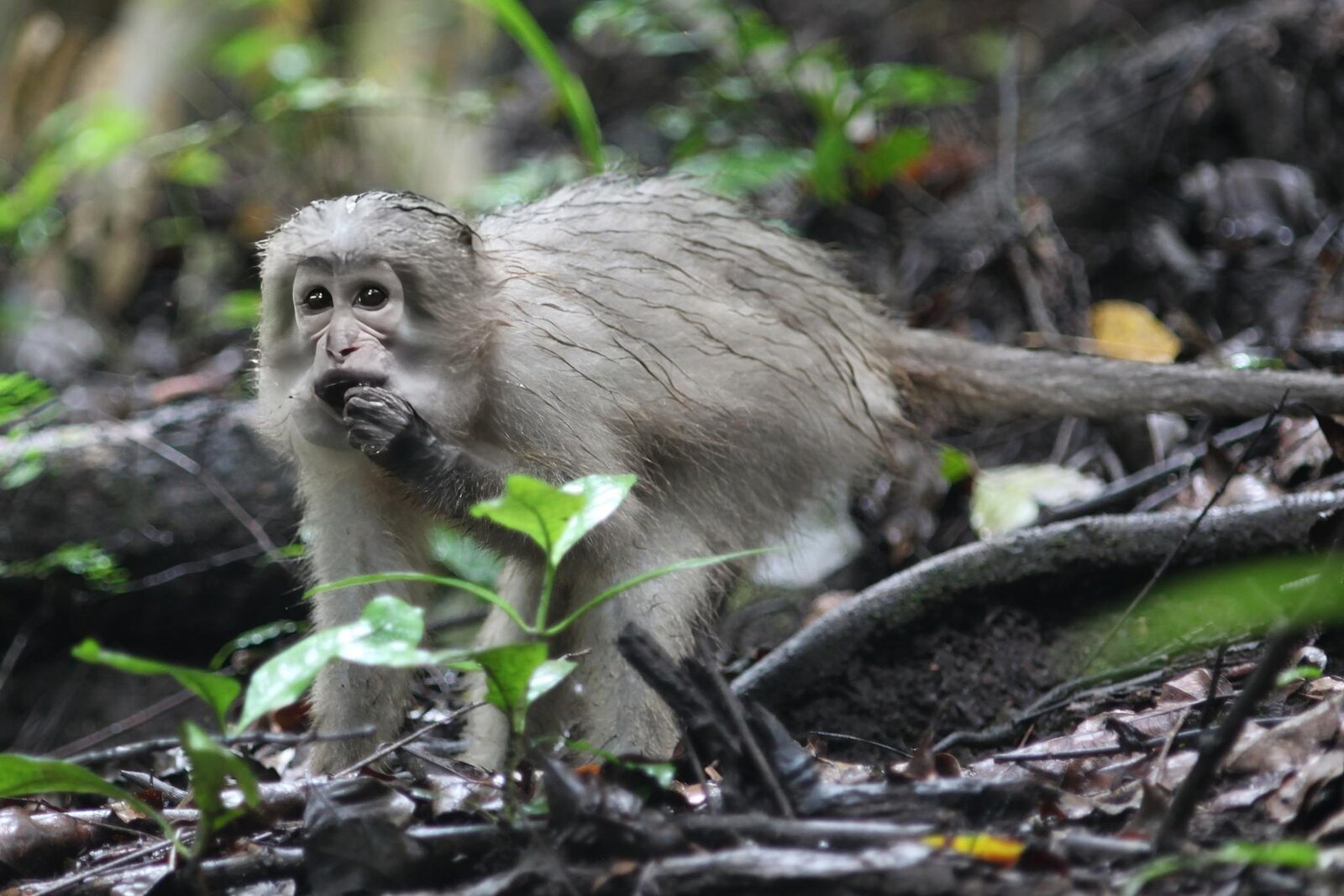
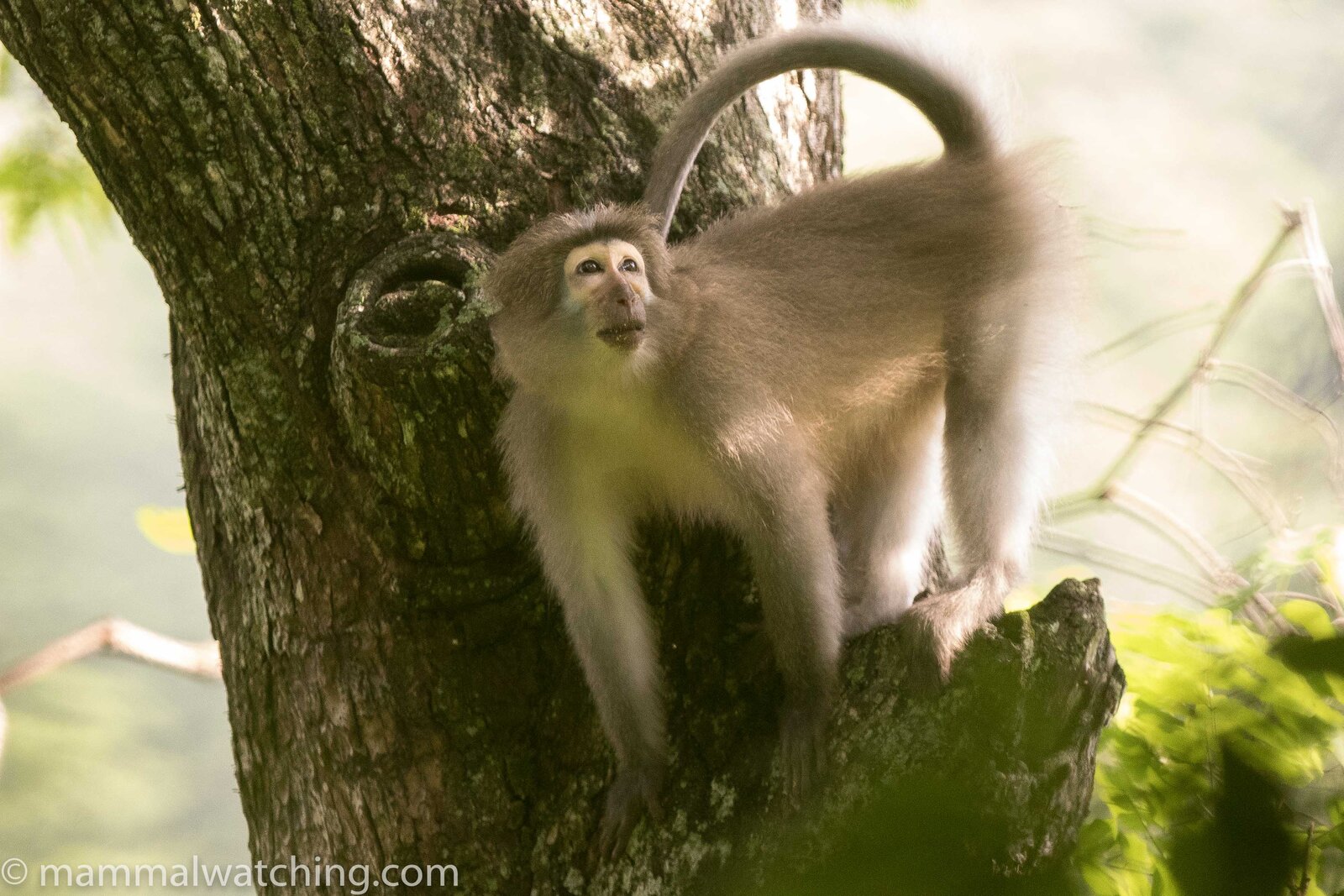
The Sanje crested mangabey (Cercocebus sanjei) is the second endemic primate, also classified as Endangered. It was scientifically described only in 1979, making it one of Africa's most recently discovered monkey species. It's distinguished by its upright crest of hair, grey-brown coat, and semi-terrestrial behaviour (it spends more time on the ground than the red colobus).
Mangabeys are highly social, travelling in groups of 10–20, and are often seen foraging for fruit, seeds, and invertebrates. The Njokamoni Waterfall Trail is your best bet for sightings, though they range across the park's lower-altitude forests.
Beyond the endemics, Udzungwa is home to nine other primate species, including black-and-white colobus, blue monkeys, yellow baboons, vervet monkeys, and greater galagos (bushbabies). An 11-primate assemblage is rare in Africa and reflects the park's status as a biodiversity hotspot.
Birdwatching — 400+ Species, Including Endemics
Udzungwa is a world-class birding destination. Over 400 species have been recorded, with several endemics and near-endemics that draw birdwatchers from around the globe:
- Udzungwa Forest Partridge — Endemic to these mountains and discovered only in 1991.
- Rufous-winged Sunbird — A striking endemic found in montane forest.
- Dappled Mountain Robin, Iringa Akalat, Moreau's Sunbird — Eastern Arc endemics and near-endemics.
- Forest specialists like Green-headed Oriole, White-chested Alethe, Forest Batis, and Livingstone's Turaco.
The Sonje Waterfall Trail and the Mwanihana Trail are particularly rewarding for birders, with montane species at higher elevations and forest specialists throughout.
What You Won't See — Honest Expectations
Udzungwa is not a Big Five destination and should not be approached as such. While elephants and leopards inhabit the park (especially the western slopes), they are rarely seen due to the dense forest and the fact that you're on foot, moving slowly and often making noise.
There are no lions, no rhinos, no large herds of plains game. The park's magic lies in its primates, birds, waterfalls, and the sheer immersive experience of walking through ancient rainforest that predates human civilization. If your priority is classic game drives and the Big Five, visit Serengeti, Ruaha, or Mikumi. If you want a different kind of safari — contemplative, challenging, biologically profound — Udzungwa delivers in ways few parks can.
Costs — What It Really Costs to Visit Udzungwa
| Item | Cost (USD) |
|---|---|
| Park entrance fee (foreign non-resident, 24 hours) | $30 |
| Guide fee (short day trail) | $10–20 |
| Guide fee (full-day or multi-day trail) | $20–50 |
| Armed ranger (for Hidden Valley, Lumemo, etc.) | $20+ |
| Camping fee (if applicable) | $20–30 per person per night |
| Porters (for multi-day hikes) | $10–15 per porter per day |
| Accommodation (guesthouse/eco-camp outside park) | $30–150 per night |
CRITICAL: Park fees must be paid by credit card (Visa or Mastercard) at the entrance gate. Cash is generally not accepted. You must also obtain an exit stamp from park authorities when you leave — failure to do so can result in significant overstay fines, as rangers will assume you are still inside the park.
A typical budget for a 2-day/1-night Udzungwa visit (Sanje Waterfall hike, one night at an eco-camp, meals, guide, transport from Mikumi) is approximately $300–500 per person, excluding transport from Dar es Salaam.
When to Visit — Seasons & Trail Conditions
| Season | Months | Conditions | Best For |
|---|---|---|---|
| Dry Season (Best) | June–October | Trails are firm and manageable, skies are clear, and views over the Kilombero Valley are superb. Waterfalls are less powerful but still beautiful. Wildlife is easier to spot near water sources. | Hiking comfort, multi-day treks, photography |
| Short Dry Season | January–February | Another good window with less rain and clear skies. | Hiking, primate spotting |
| Long Rains | March–May | Heavy rainfall, trails become slippery, muddy, and challenging. Waterfalls are at full roar. Lush, green forest. Fewer visitors. | Waterfalls at peak flow, birds, butterflies (for experienced hikers who don't mind mud) |
| Short Rains | November–December | Moderate rain, trails manageable with care. Forest is vibrant green. | Birding, fewer crowds |
Our recommendation: Visit during the dry season (June–October) for the most comfortable hiking conditions, especially if attempting multi-day treks. If you're an experienced hiker and want to see the waterfalls at their most powerful, the wet season offers a dramatic spectacle — just be prepared for slippery, muddy trails and pack waterproof gear.
Where to Stay — Accommodation Options
There are no lodges or camps inside the park. All accommodation is located outside the park boundaries, primarily in the Mang'ula and Kilombero areas near the entrance gates.
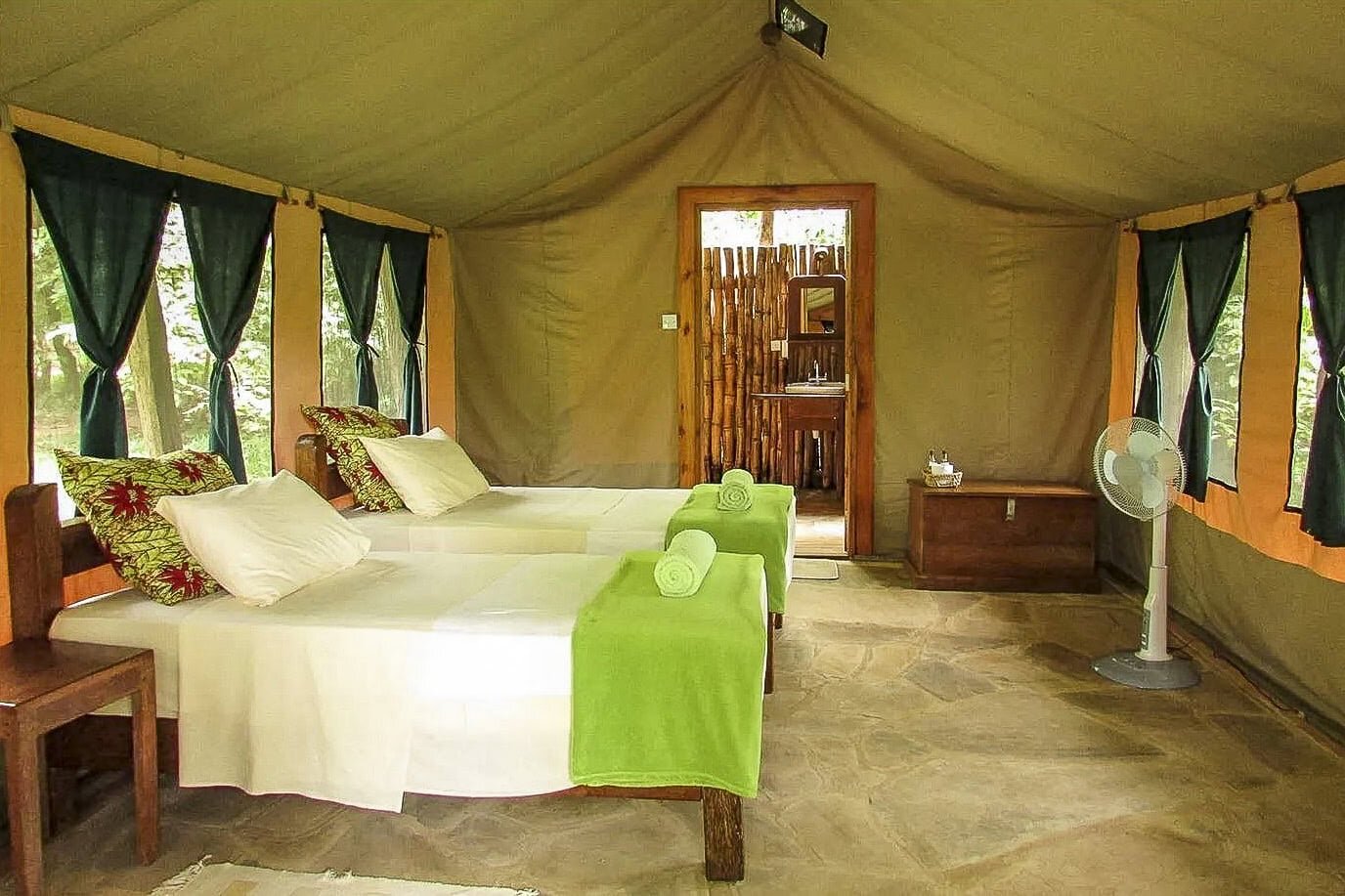
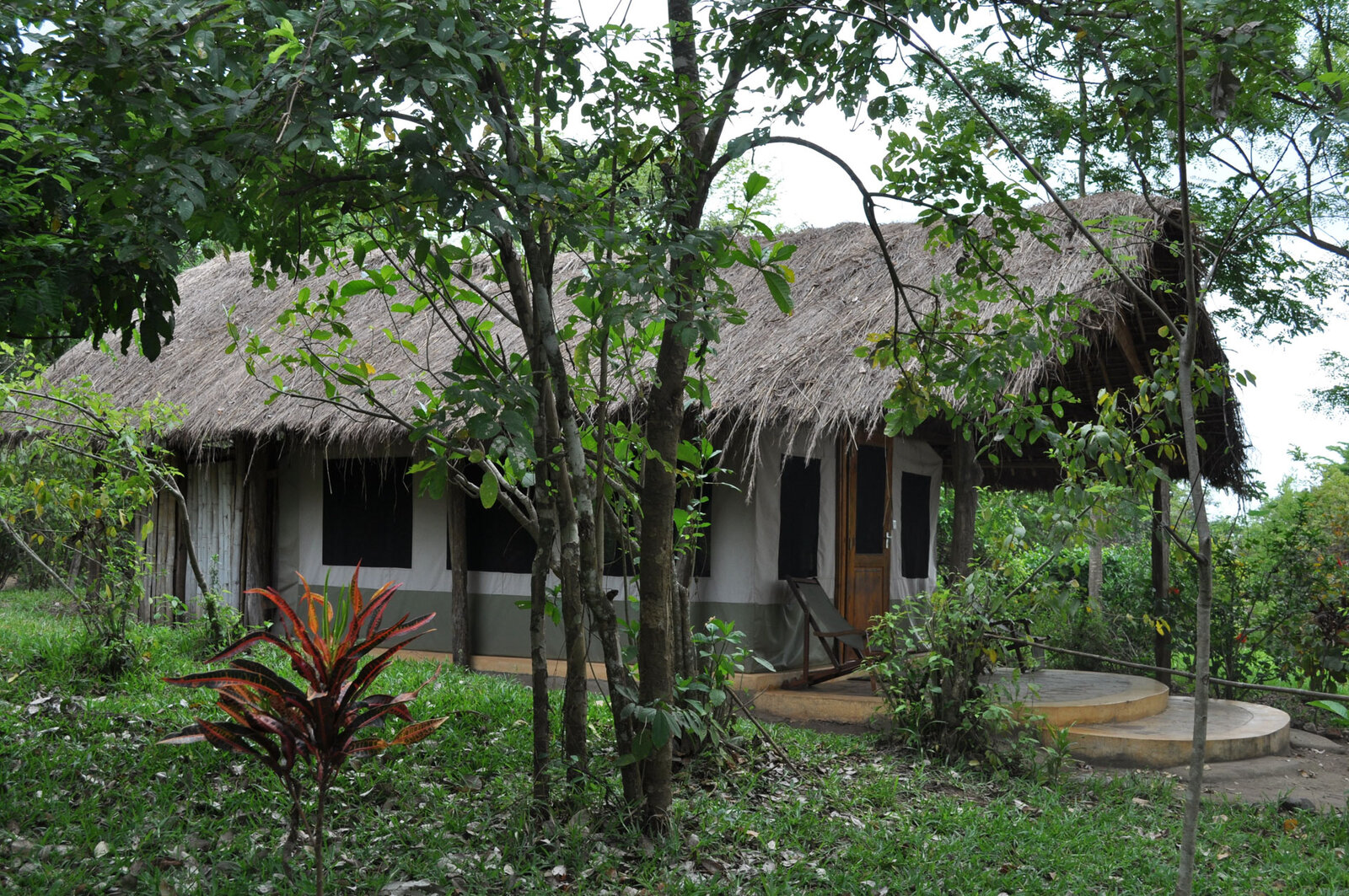
For multi-day treks, you'll camp at designated forest campsites. Camping gear can be rented from tour operators, or bring your own. Porters can carry gear for around $10–15 per porter per day.
Combining Udzungwa with the Southern Circuit
Udzungwa is rarely visited as a standalone destination. It's most often combined with other Southern Circuit parks to create a diverse safari that contrasts savanna wildlife with rainforest biodiversity:
Classic Southern Circuit Combinations
| Itinerary | Parks Included | Duration | Best For |
|---|---|---|---|
| Mikumi + Udzungwa | Mikumi NP (game drives), Udzungwa (hiking) | 3–4 days | Short Southern Circuit sampler: savanna + rainforest |
| Udzungwa + Ruaha | Udzungwa (hiking), Ruaha NP (game drives) | 5–7 days | Biodiversity immersion: rainforest + wild savanna |
| Full Southern Circuit | Mikumi, Udzungwa, Ruaha, Nyerere | 7–10 days | Comprehensive southern Tanzania safari |
| Udzungwa + Zanzibar | Udzungwa (hiking), Zanzibar (beach) | 5–7 days | Bush-and-beach: rainforest immersion + Indian Ocean relaxation |
Our Tanzania Safari Packages include Southern Circuit itineraries that incorporate Udzungwa. We can also design a private, customized Southern Circuit safari tailored to your hiking ability and wildlife interests.
Practical Tips for Visiting Udzungwa
- Fitness level: The Sanje Waterfall trail is steep and humid. A moderate level of fitness is required. Multi-day treks require good fitness and hiking experience.
- Footwear: Sturdy, waterproof hiking boots with good ankle support and grip are essential. Trails can be muddy and slippery.
- Water: Bring at least 2 litres per person for day hikes. Refill at your accommodation, not in the park.
- Clothing: Long sleeves and trousers to protect against thorns, nettles, and insects. Lightweight, quick-dry fabric. A waterproof jacket is essential during the wet season.
- Insect repellent: Udzungwa is in a malaria zone. Use a strong DEET-based repellent. Antimalarial prophylaxis is recommended.
- Swimwear: Pack a swimsuit and towel if you plan to swim in the plunge pools at Sanje or other waterfalls.
- Camera gear: Protect cameras in waterproof bags. The forest is dark — a lens with a wide aperture (f/2.8 or better) helps for primate and bird photography.
- Guides are mandatory: All hikes require a licensed guide, assigned at the park gate. This is for your safety and to support local livelihoods.
- Respect the forest: Stay on trails, do not litter, and follow your guide's instructions regarding wildlife encounters (especially with elephants and buffaloes on remote trails).
Conservation & the Importance of Udzungwa
The Eastern Arc Mountains, of which Udzungwa is a part, are among the world's most important biodiversity hotspots. These ancient forests are older than the Congo Basin and harbour levels of endemism comparable to the Galápagos Islands or Madagascar.
Udzungwa faces ongoing conservation challenges: habitat loss from logging, charcoal production, and agricultural encroachment; human-wildlife conflict (especially with elephants); and the isolation of primate populations due to forest fragmentation. The two endemic primates — the Iringa red colobus and the Sanje mangabey — are both classified as Endangered, and their survival depends on the protection of large, intact blocks of forest.
Your visit directly supports conservation. Park fees fund ranger patrols, anti-poaching efforts, and community outreach programs. Hiring local guides and staying at nearby eco-camps provides income to communities living adjacent to the park, reducing pressure on the forest.
Udzungwa vs. Other Tanzania Parks — When to Choose Udzungwa
Choose Udzungwa if:
- You want a safari experience that's active, immersive, and contemplative — not just passive game-drive viewing.
- You're a hiker, birder, or wildlife enthusiast fascinated by primates, biodiversity, and endemic species.
- You've already experienced the classic Northern or Southern Circuit savanna parks and want something completely different.
- You're comfortable with steep, humid trails and the absence of luxury infrastructure.
Skip Udzungwa if:
- You want classic Big Five game drives and large mammal sightings.
- You have mobility limitations or aren't comfortable with strenuous hiking.
- You prefer vehicle-based safaris and don't want to walk for hours.
- You want luxury lodges and amenities — Udzungwa is rustic and off-the-beaten-path.
The Verdict — A Different Kind of Safari
Udzungwa Mountains National Park is not for everyone — and that's precisely what makes it special. This is a park that demands effort: you must walk, sweat, and navigate steep, sometimes muddy trails. There are no air-conditioned Land Cruisers, no sundowner cocktails overlooking the plains, no luxury tented camps inside the park.
What you get instead is immersion — the chance to walk quietly through ancient rainforest that predates the Great Rift Valley, to stand beneath a 170-meter waterfall that roars or whispers depending on the season, to lock eyes with a red colobus monkey that exists nowhere else on the planet, and to know that you are walking through one of the most biologically important places on Earth.
If that sounds compelling, Udzungwa will be one of the most memorable experiences of your time in Tanzania. If it sounds daunting, stick to the savanna parks — there's no shame in that. But for those who answer the call, Udzungwa offers something rare: a true wilderness pilgrimage, earned step by step, breath by breath, in the company of species that belong only to these mountains.
Ready to experience Tanzania's rainforest wilderness? Explore our Tanzania Safari Packages or contact us to design a private Southern Circuit safari that includes Udzungwa Mountains.