Key Takeaways
- A small group safari means a set departure date shared with a handful of other travellers — on our Kenya-and-Tanzania trips, a maximum of twelve people, most often six to eight.
- The number that matters is not the group size but the seats per vehicle. Ask it before you book: a guaranteed window seat is the difference between a good trip and a cramped one.
- Fixed departures run whether the group fills or not, so your dates are certain the moment you book — you give up date flexibility in return for a lower per-person price.
- The classic route pairs Kenya's Masai Mara with Tanzania's Serengeti and Ngorongoro Crater, linked either by a short bush flight or by the Namanga land border.
- A shared trip across both countries generally runs ten to fourteen days and costs meaningfully less per person than the same route run privately.
What "Small Group" Actually Means
"Small group" is one of the most stretched phrases in safari marketing. One operator uses it for six travellers in a single vehicle; another prints it on a brochure for a trip of eighteen people moving in a convoy of three. Both are technically correct, and the two trips feel nothing alike. So before anything else, pin the number down. On our Kenya-and-Tanzania departures a small group means a maximum of twelve travellers, and in practice most run at six to eight. That size is deliberate: large enough to share the cost of the guide and the vehicle, small enough that camps still feel personal and the whole group fits around one dinner table.
The size shapes everything downstream. A group of six moves quickly — one vehicle, one set of decisions, an easy change of plan when a leopard is called in on the radio. A group of sixteen is a different animal: more vehicles, slower starts, a fixed pace set by the slowest bag at reception. Neither is wrong, but they are not the same holiday, and the word on the brochure will not tell you which one you are buying. The only way to know is to ask the maximum group size and the maximum per vehicle, and to get both in writing.
The Window-Seat Truth About Vehicles
Here is the single most useful thing in this guide. On a game drive, the group size barely matters — what matters is how many people share your vehicle. A Land Cruiser or minibus built for seven can legally and comfortably carry seven, but seven people means someone is sitting in the middle, away from a window, craning past shoulders for a photograph. Pack the same vehicle with four or five and everyone has a window, a clear line for a camera, and room to stand up through the pop-top roof when the sighting is good.
So the question to ask is not "how big is the group" but "how many guests per vehicle, guaranteed?" On our Kenya-and-Tanzania departures the answer is a maximum of six per vehicle with a guaranteed window seat for everyone, and that single promise does more for the quality of your days than almost anything else. It is also where cut-price group trips quietly cut corners: they fill every seat to keep the price down, and you only find out on the first morning when you are the one in the middle. Get the per-vehicle number in writing, the same way you get the group size.
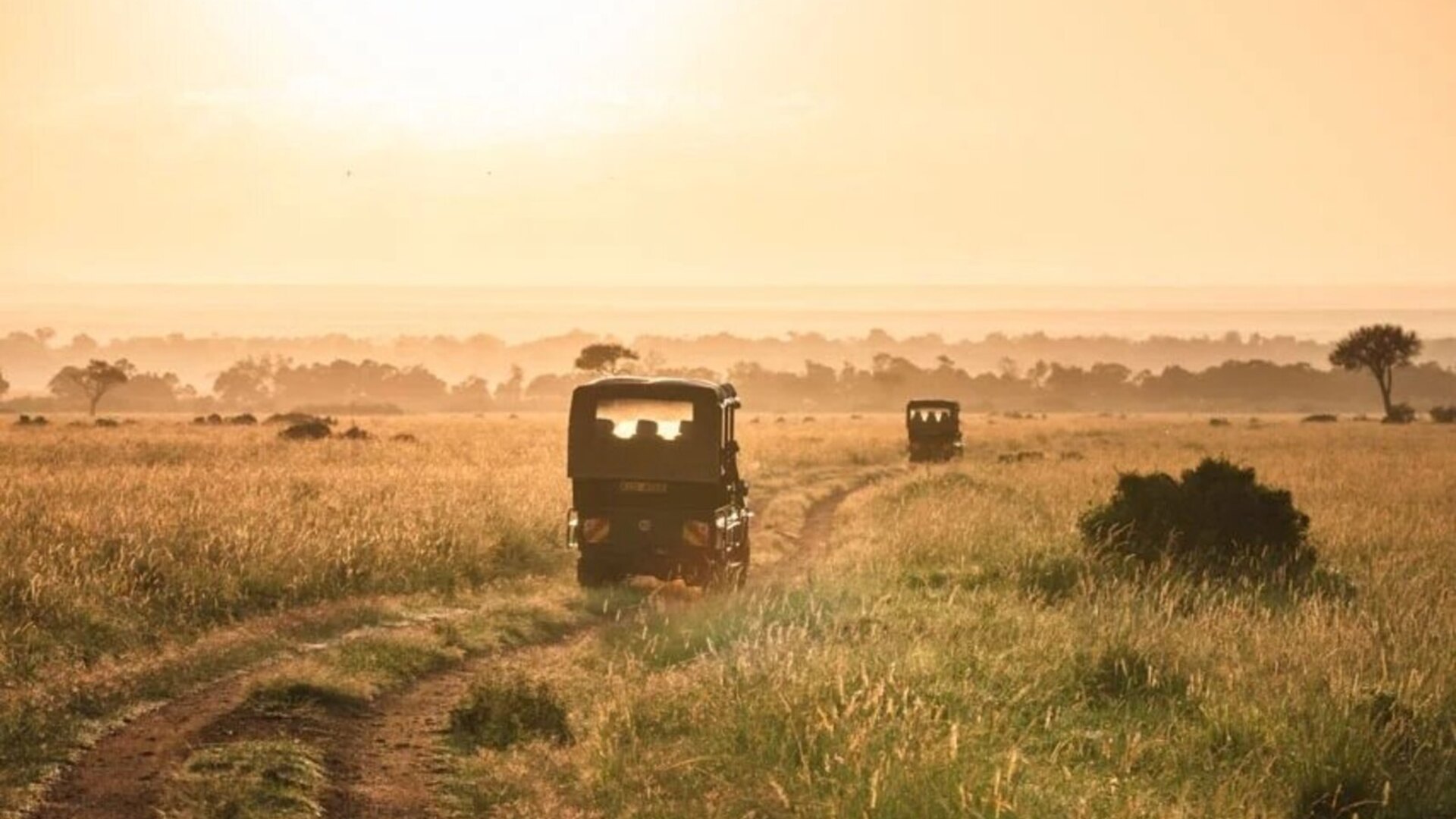
Two other vehicle details are worth knowing. In Kenya's Masai Mara and Tanzania's northern parks, the standard safari vehicle has a pop-top roof you stand up through rather than open sides, which is both the rule and the sensible choice around big game. And you will usually have the same guide and vehicle for the length of each country rather than a new face each morning — continuity that means your guide learns what you most want to see and builds the days around it.
Fixed Departures: How a Set Date Works
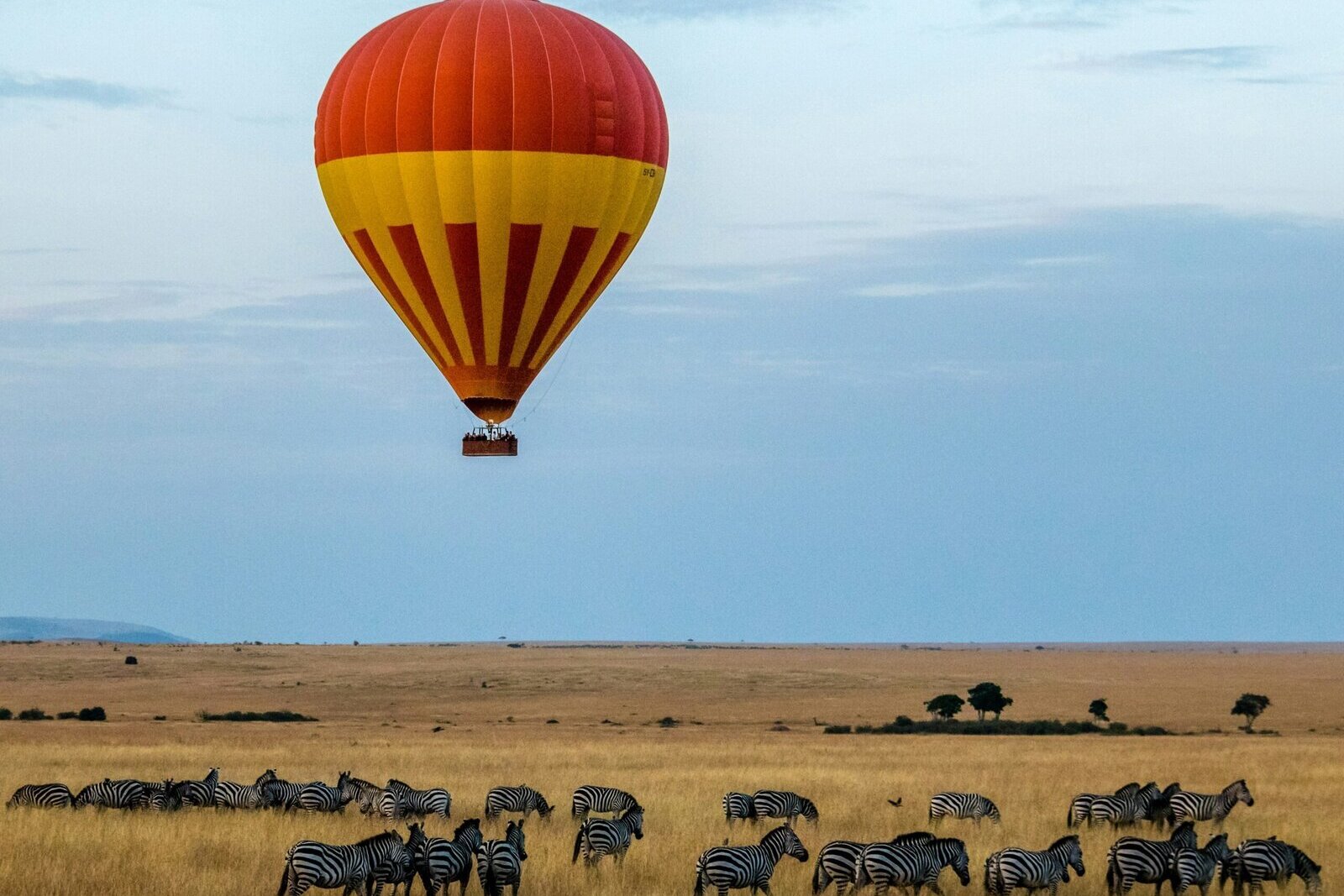
A fixed, or scheduled, departure is a trip that runs on set dates published in advance. You book onto a date rather than naming your own, and you travel alongside whoever else has booked that same departure. The key promise is that a guaranteed departure runs whether or not the group fills — once the date is confirmed, it is going, even if only two of you are on it. That certainty is the whole point: you can book flights and time off the day you commit, without waiting to see if enough people sign up.
What you give up is flexibility. The dates are fixed, the broad route is fixed, and the pace is shared with the group, so a fixed departure suits travellers who are happy to slot into a well-built plan rather than redesign it. What you gain is the price. Because the cost of the guide, the vehicle and the ground logistics is split across the group, a shared departure comes in well below the same trip run just for you. For a great many travellers — couples, solos, friends — that trade is an easy yes: you want the Mara and the Serengeti done well, you do not need to invent the route from scratch, and you would rather put the saving toward a better camp or an extra night.
One note for solo travellers, because group trips suit you especially well. A fixed departure is the easiest way to travel alone without paying the full single-room premium that a private trip forces on you, and you arrive into a ready-made group of people who chose the same journey. Ask whether the departure carries a single supplement and whether a willing-to-share option is available, as both change the solo maths considerably.
The Route: Masai Mara to Serengeti
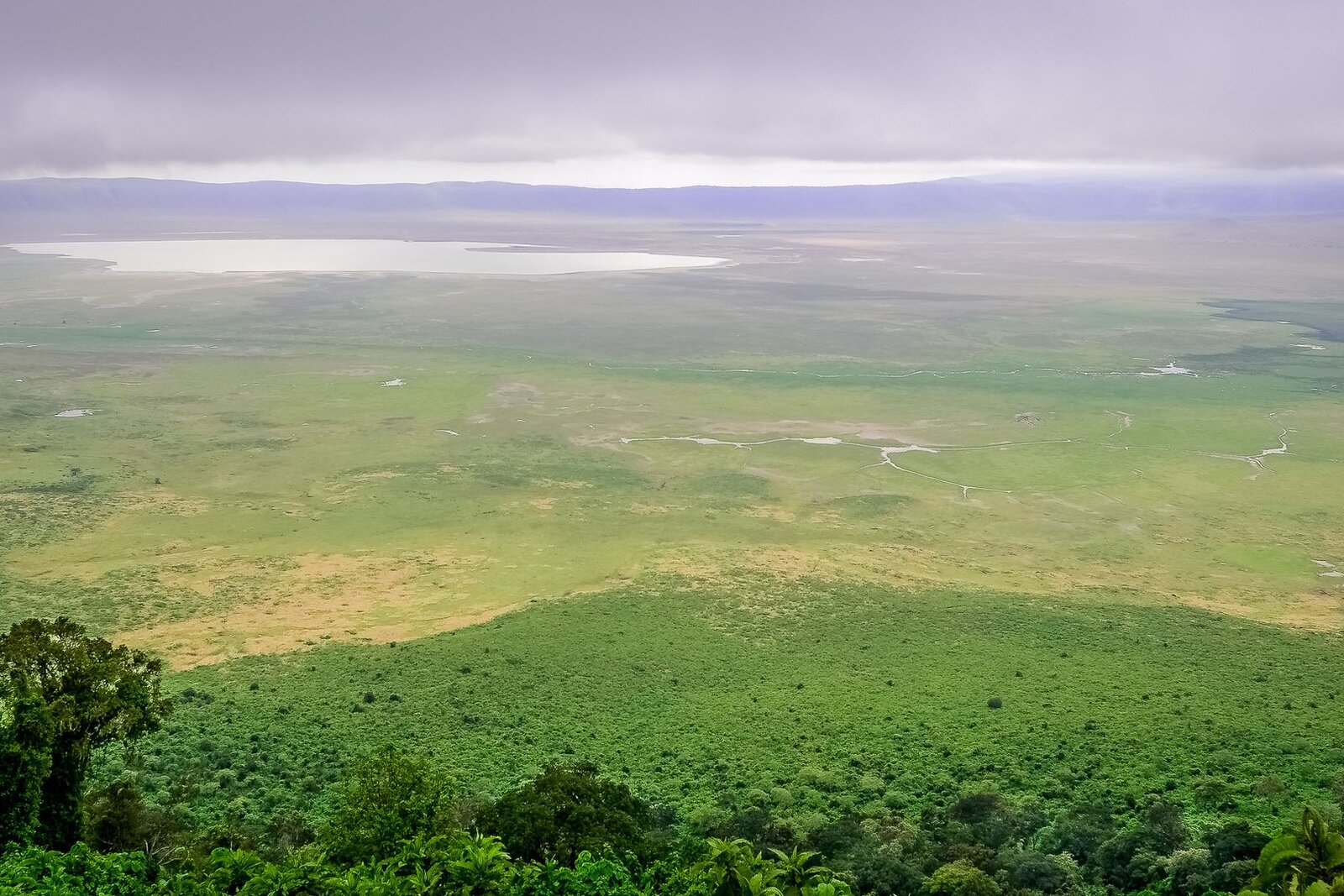
A Kenya-and-Tanzania group safari is built around one of the great wildlife routes on earth: the Masai Mara in the south of Kenya and, directly across the border, the Serengeti and the Ngorongoro Crater in the north of Tanzania. The two reserves are halves of the same ecosystem — the animals cross the border freely; only people need paperwork — so putting both on one trip is less a compromise than the natural shape of the journey. A typical group route starts in Nairobi, spends its first nights in the Masai Mara, then moves south into Tanzania for the Serengeti and the Crater, often adding Amboseli beneath Kilimanjaro or Lake Nakuru along the way.
There are two ways to cross between the countries, and a well-run group trip picks the right one for the itinerary. The first is a short bush flight — a light aircraft from a Mara airstrip to a Serengeti one — which turns what would be a long day on the road into under two hours in the air and is the usual choice on flying group departures. The second is the land border at Namanga or Isebania, where you change from your Kenyan vehicle and guide to your Tanzanian ones and carry on by road; it costs less and shows you more of the country between the parks, at the price of a longer travel day. Both work. What matters is that the crossing is planned, the border formalities are handled for you, and the handover between the two countries' teams is arranged in advance rather than something you sort out yourself at a frontier post.
When to Travel for the Migration
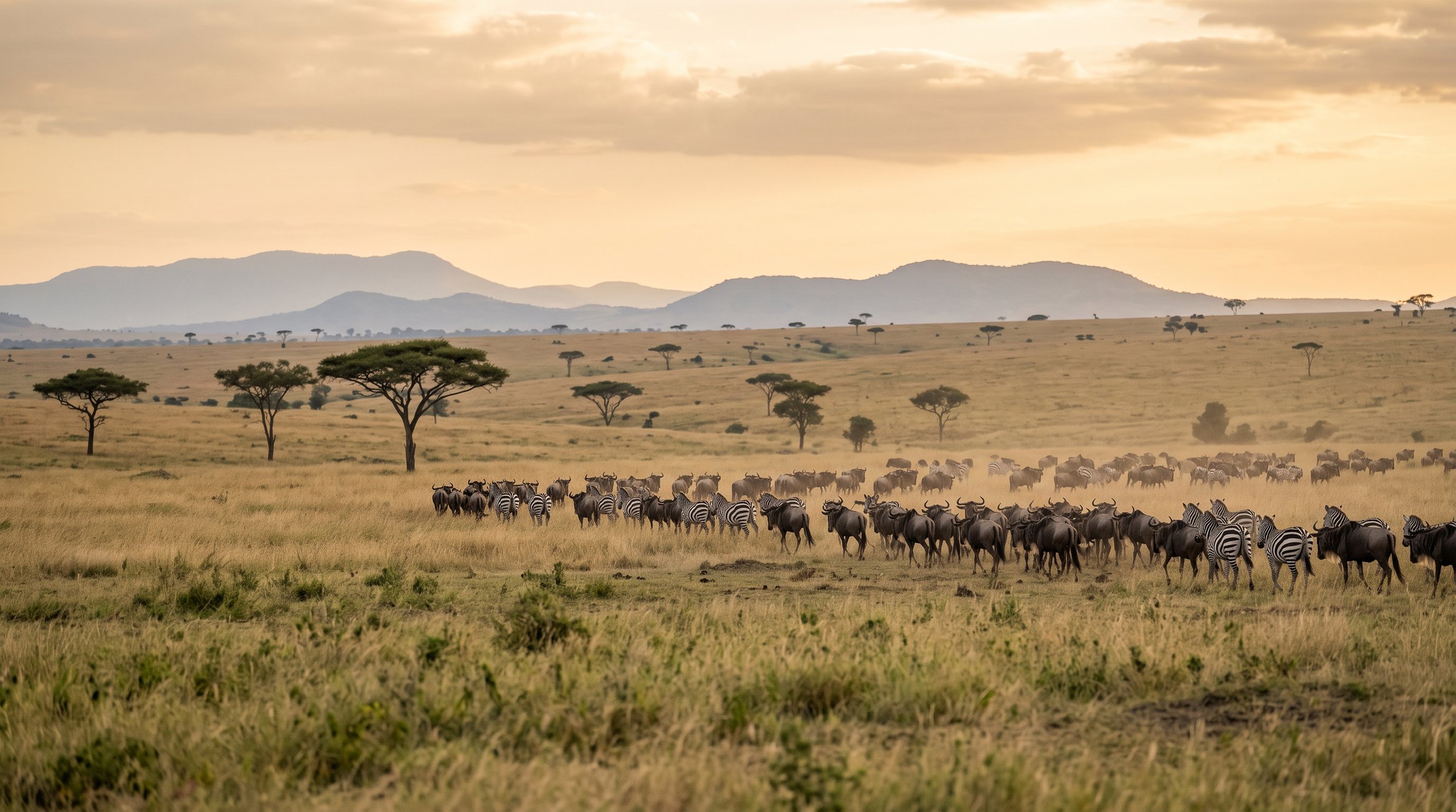
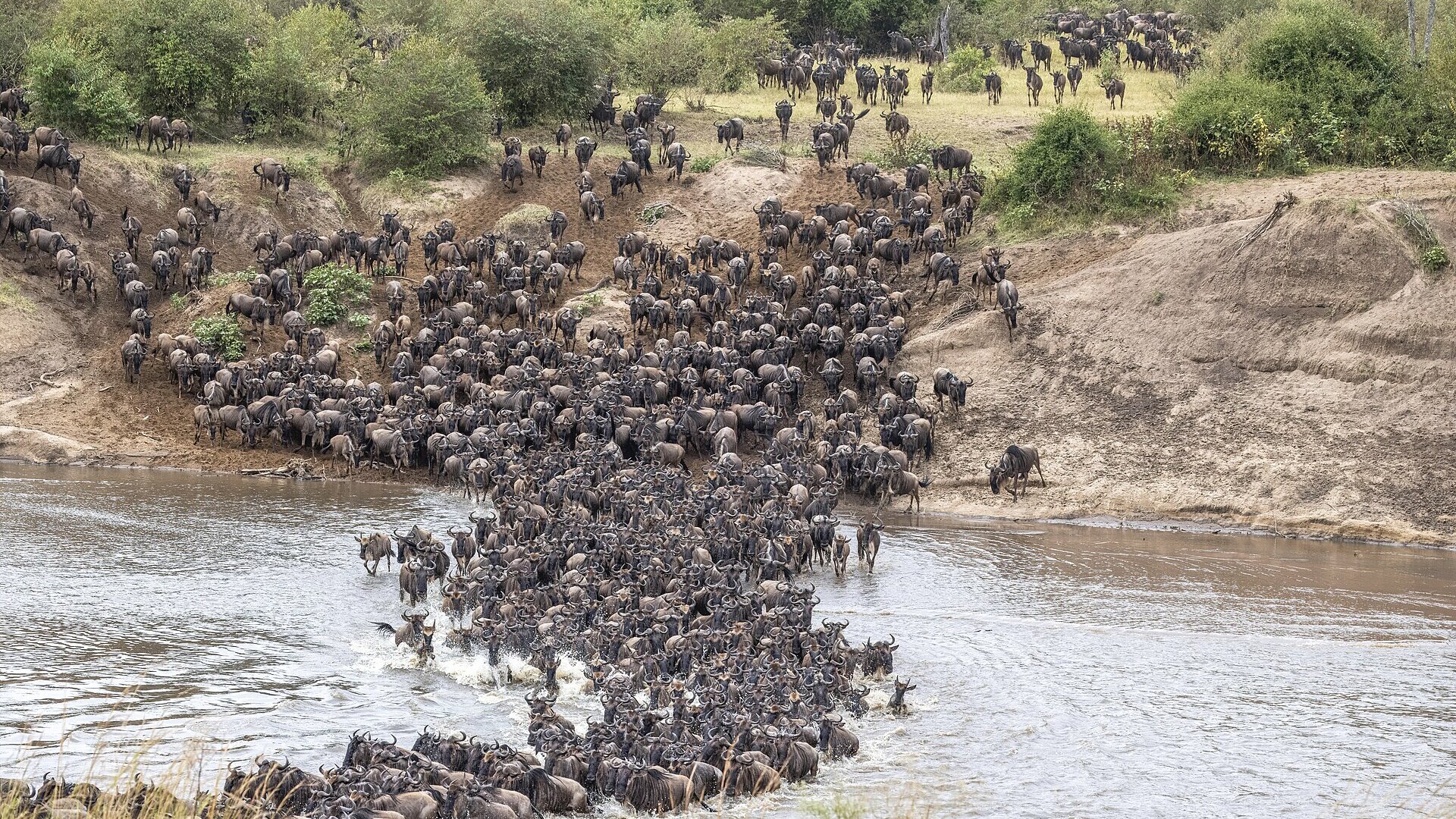
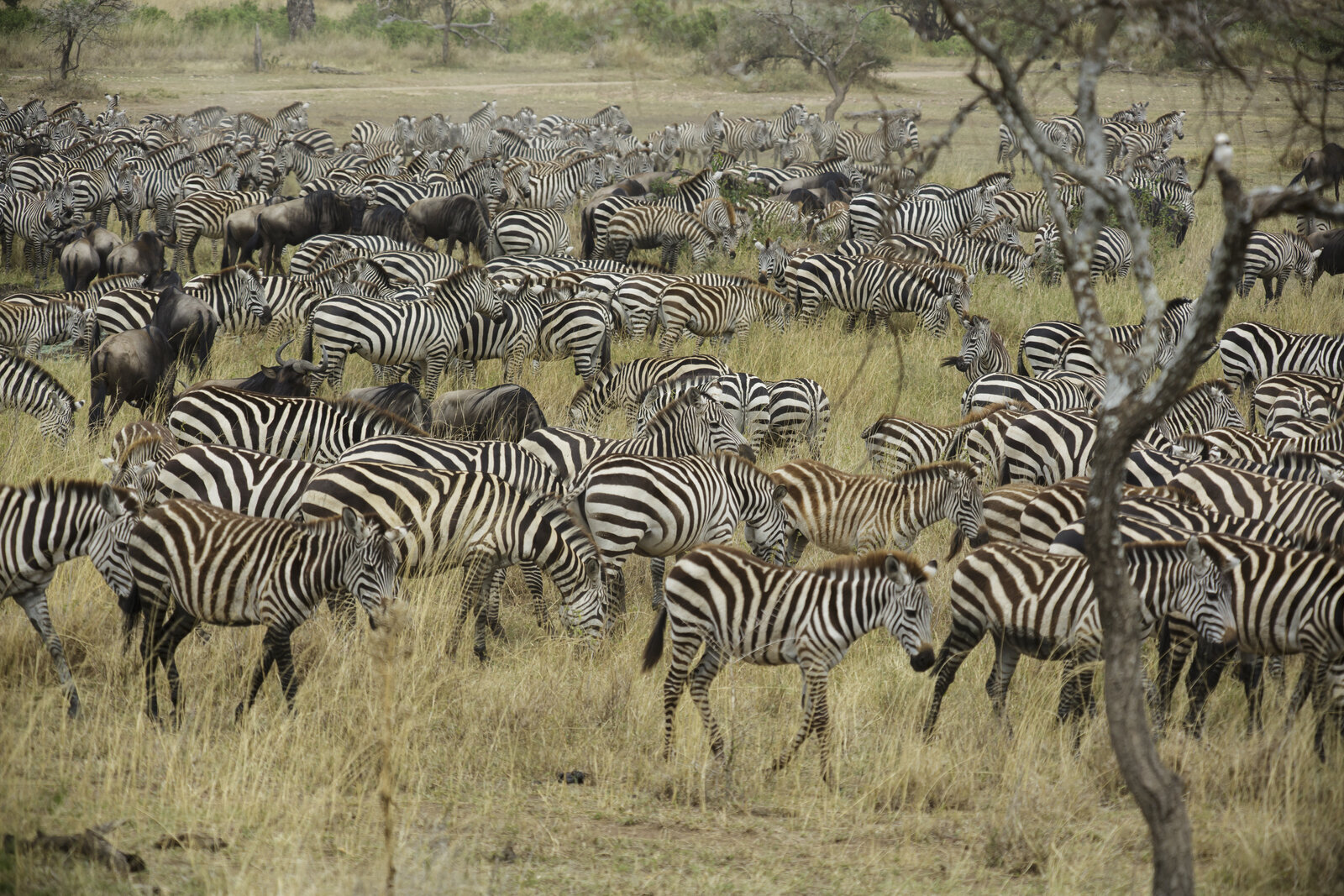
The Great Migration is the reason most people want both countries, and because group departures run on set dates, you choose your date to match where the herds will be. The migration is not an event on a calendar; it is a year-round loop of around two million wildebeest, zebra and gazelle moving between the Serengeti and the Mara in search of grass and water. The table below shows, in broad terms, where the herds sit through the year and which park a group date lands you in.
| Months | Where the Herds Are | Which Park a Group Date Lands You In |
|---|---|---|
| Jan – Mar | Calving on the southern Serengeti short-grass plains (Ndutu) | Tanzania — newborns and the predators that follow them |
| Apr – May | Herds moving through the central Serengeti; long rains | Tanzania; green plains, fewer travellers, lower rates |
| Jun | Herds pushing north and west toward the Grumeti | Tanzania; the rut and the western corridor |
| Jul – Oct | Mara River crossings into Kenya's Masai Mara | Kenya — the river crossings, the peak group season |
| Nov | Herds turning back south; short rains | Either side, with thinner crowds and green country |
| Dec | Herds gathering on the southern plains before calving | Tanzania, as the plains fill for the new season |
If your dates are open, the July-to-October departures are the ones travellers ask for most, because that is when the Mara River crossings run and both parks are dry and busy with game. If you would rather trade the crowds for newborns and green plains, the January-to-March calving departures put you in the southern Serengeti at the quietest, most dramatic time of the year. For the finer detail of month-by-month timing across both countries, our separate guide on the best time to visit Kenya and Tanzania goes deeper than there is room for here.
Who It Suits — and Who Should Go Private
A small group departure is the right call for more travellers than you would think. It suits couples who want the trip handled and the price shared; solo travellers who would rather join a ready-made group than pay a private premium; first-time safari-goers who want a well-worn, well-run route rather than a blank page; and anyone who simply likes the company of a few like-minded people at the end of a long day in the field. On a good group trip the other travellers become part of the memory, not a compromise.
It is the wrong call in a few clear cases, and we will tell you so. Families travelling with young children are usually happier private, where the pace, the early starts and the dinner times bend around the kids. Keen photographers who need to sit on one sighting for an hour, or be out before the light, should go private, because a shared vehicle moves at the group's pace. Travellers who want to name their own dates, change the plan mid-trip, or build an unusual route will find a fixed departure too rigid. And anyone wanting complete privacy — a vehicle, a guide and a plan that are theirs alone — is describing a private safari, not a group one. If that is you, the same Kenya-and-Tanzania route runs beautifully as a private trip, and we build those too.
What It Costs and How Long You Need
On length, a two-country group trip wants ten to fourteen days. Much less and the border eats a day you cannot spare and one park gets short-changed; the sweet spot gives the Masai Mara three or four nights, the Serengeti three or four, the Ngorongoro Crater one, and the travel between them its own room rather than stealing from your game time. Shorter single-country group trips exist — a week in Kenya alone, for instance — but if you have come this far, both parks on one trip is the journey worth making.
On cost, the shared model is exactly what brings the two countries within reach. A mid-range small group safari across Kenya and Tanzania generally runs from around 4,500 to 7,000 US dollars per person for ten to twelve days, with budget camping departures below that and luxury, fly-everywhere departures well above. The spread comes down to your camps, whether you fly or drive the border, and the season you travel. The point of the group format is that the biggest fixed costs — the guide, the vehicle, the ground team — are divided among you rather than carried alone, which is why the same route can cost a group traveller thousands less than a private one. For a full, itemised breakdown of where every dollar goes, our honest value guide to an affordable Kenya and Tanzania safari lays out the numbers in detail.
Want to Join a Departure?
Tell us your rough dates and how many of you are travelling, and we will send the next group departures that match — with the group size, the guaranteed per-vehicle number, and the price all laid out plainly. If a private version suits you better, we will say so.
Want to see a set itinerary? View our Great Migration Masai Mara & Serengeti Safari →