The Republic of Congo — Africa’s Last Rainforest Frontier
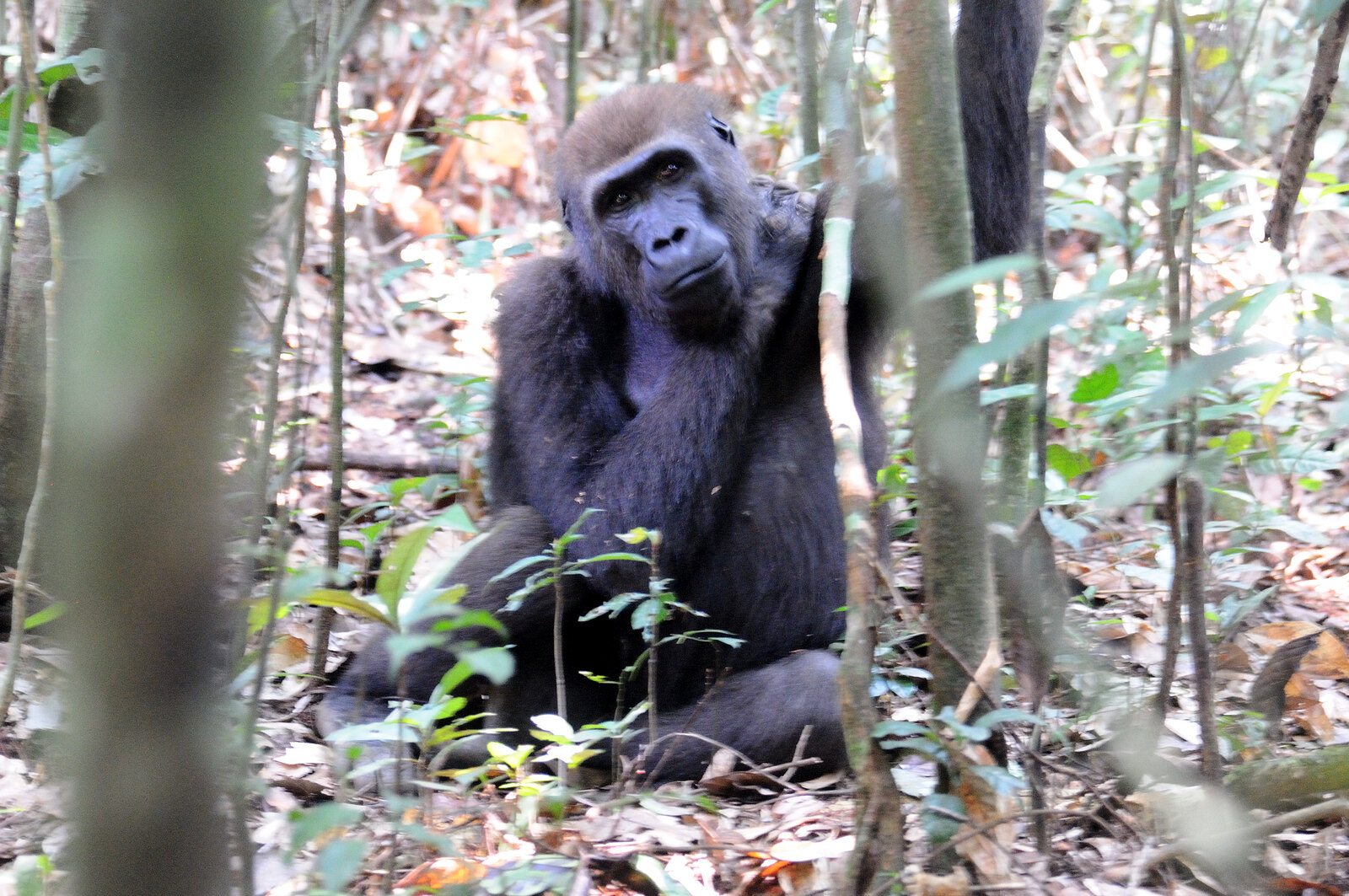
Some safaris are about ticking off the Big Five from a vehicle. The Republic of Congo is not one of them. This is a country that asks you to walk — into the green half-light of the Congo Basin, along elephant trails, through swamps and cathedral stands of hardwood, until the forest goes silent and a silverback gorilla lifts his head to watch you back. It is the most immersive, least-crowded and most genuinely wild safari left on the African continent.
The Republic of Congo — often called Congo-Brazzaville after its capital — protects a vast slice of the Congo Basin, the second-largest tropical rainforest on Earth after the Amazon. Its northern national parks shelter western lowland gorillas, forest elephants, chimpanzees, forest buffalo, bongo antelope and more than 400 species of birds. Yet fewer people visit its flagship gorilla park in an entire year than walk into some East African parks in a single morning. That scarcity is the whole point.
This guide is everything you need to plan the journey properly: how the country differs from its famous neighbour, where to go, when to travel, what it honestly costs, how you actually get there, where you sleep, and the health, visa and safety details that make or break a Congo Basin trip.
Republic of Congo vs the DRC — Know the Difference
The single most important thing to understand before you book: the Republic of Congo (Congo-Brazzaville) is a completely separate country from the Democratic Republic of the Congo (the DRC, capital Kinshasa). They face each other across the Congo River, they share a colonial-era name, and they are constantly confused — but they are not the same place.
The Republic of Congo is the smaller of the two, politically stable, and set up for organised, high-end safari tourism through a handful of professional operators and conservation partners. Its wildlife heartland is the northern rainforest — Odzala-Kokoua and Nouabalé-Ndoki — reached by charter flight and managed to a very high standard. When travel advisories mention instability in “the Congo,” they almost always mean parts of the eastern DRC, not the Republic of Congo’s tourism circuit. Booking through a reputable operator, flying in, and staying within the established camp network keeps you firmly on the safe, well-trodden path.
Where to Go — The Top Safari Areas
1. Odzala-Kokoua National Park — the crown jewel
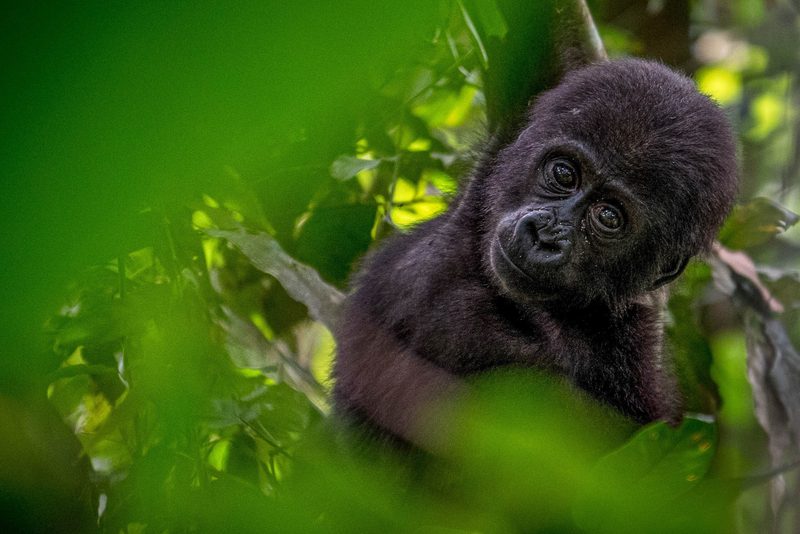
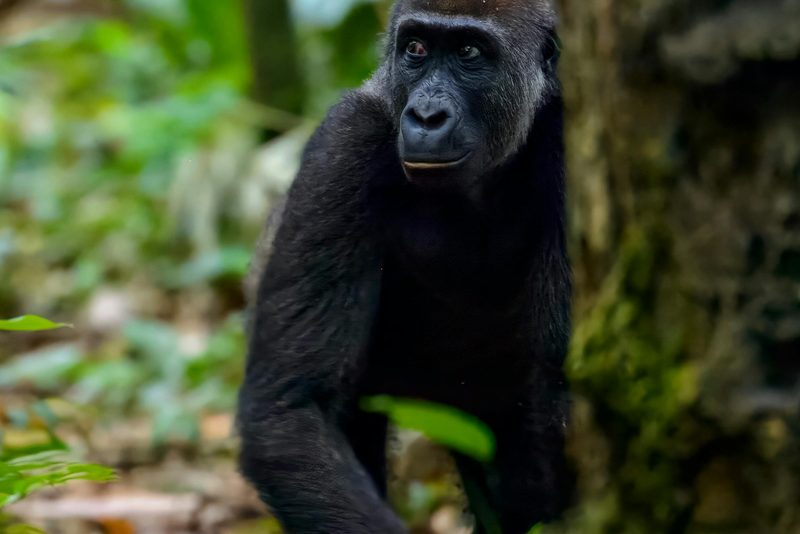
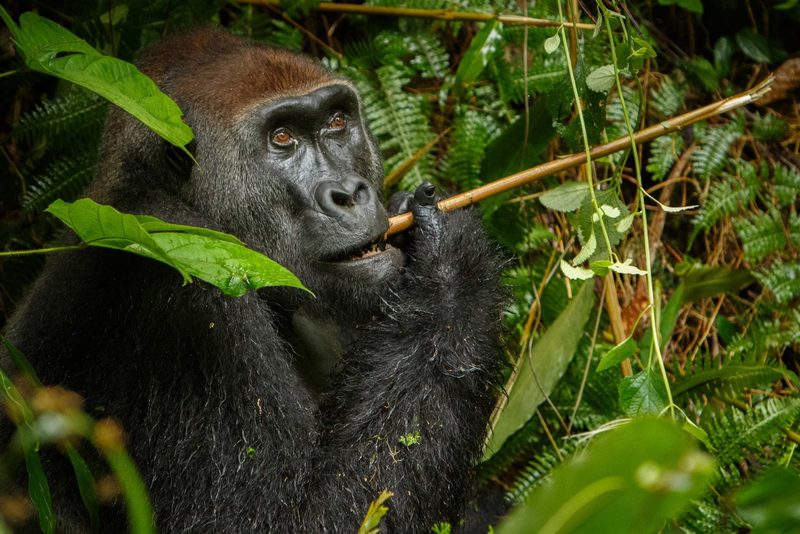
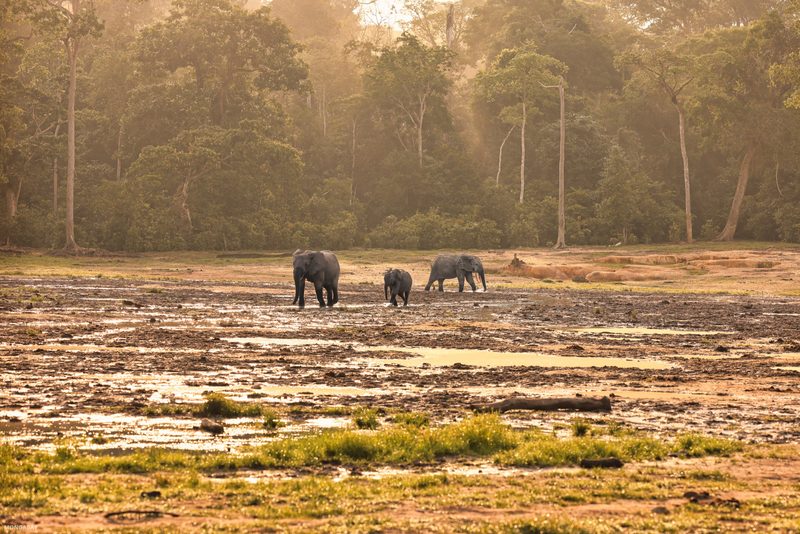
If you visit only one place, make it Odzala-Kokoua. This 13,600-square-kilometre wilderness in the northwest is one of Africa’s oldest national parks and the country’s premier destination for western lowland gorilla trekking. It is a landscape of primary rainforest, black-water rivers, savanna-forest mosaics and mineral-rich clearings called baïs where wildlife gathers in the open. Read our dedicated deep-dive in the Odzala-Kokoua National Park guide.
2. Nouabalé-Ndoki National Park — the untouched north
Deeper into the far north, on the border with Cameroon and the Central African Republic, Nouabalé-Ndoki is one of the most pristine forest ecosystems on the planet — large tracts have never been logged and some wildlife has genuinely never learned to fear people. Managed by the Wildlife Conservation Society, it is famous for the Mbeli Baï clearing, where researchers have studied forest elephants and gorillas for decades, and for Mondika, a serious gorilla-habituation site. Access is even more remote and expedition-focused than Odzala; it is the choice for travellers who want the rawest, most scientific-feeling forest experience.
3. Lesio-Louna Gorilla Reserve — the accessible add-on
Just a few hours from Brazzaville, the Lesio-Louna reserve protects a rewilding population of western lowland gorillas across a mosaic of savanna, gallery forest and lakes. It is the easiest gorilla-focused experience to reach — doable as a day trip or short add-on — and a meaningful conservation story, though it does not replace the wild trekking of Odzala.
4. Conkouati-Douli National Park — where forest meets the Atlantic
On the Atlantic coast, Conkouati-Douli is the country’s most biodiverse park, spanning ocean, lagoon, mangrove, savanna and rainforest. It is known for nesting sea turtles, chimpanzee rehabilitation, manatees, and the rare meeting of coastal and forest species. It suits adventurous travellers building a longer, more varied itinerary.
5. Brazzaville & the Congo River — the cultural gateway
Almost every trip begins and ends in Brazzaville, a relaxed riverside capital worth a day of its own. Watch the Congo River — the deepest in the world — slide past toward Kinshasa on the far bank, visit the Basilique Sainte-Anne, meet the city’s famously elegant Sapeurs in their tailored finery, and enjoy the markets and music. A night here also lets you acclimatise before the charter flight north.
Signature Safari Experiences
A Republic of Congo safari is built from experiences you simply cannot have anywhere else in Africa:
- Western lowland gorilla trekking — tracking habituated families on foot with expert guides and Ba’Aka trackers who read the forest like a page.
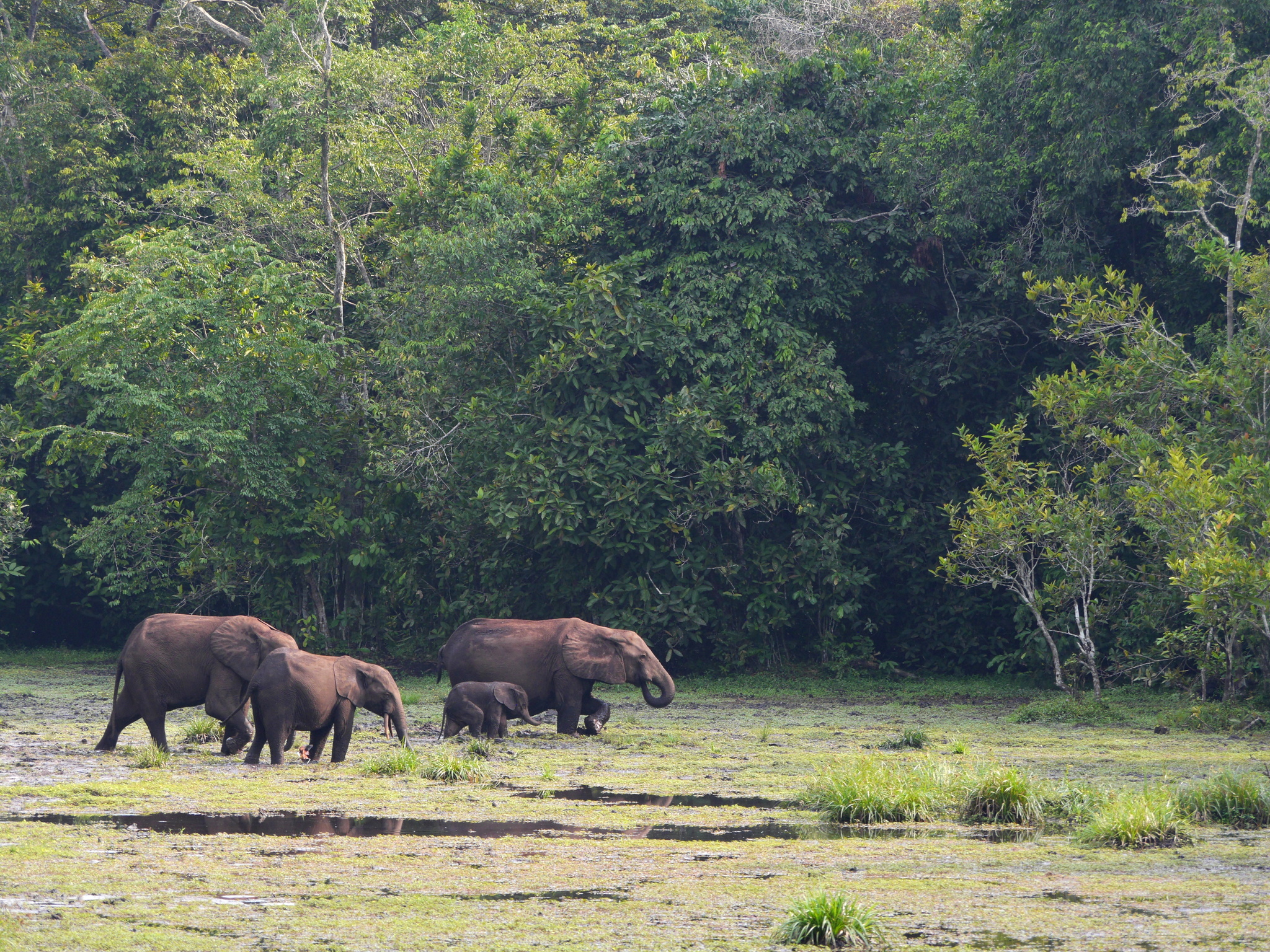
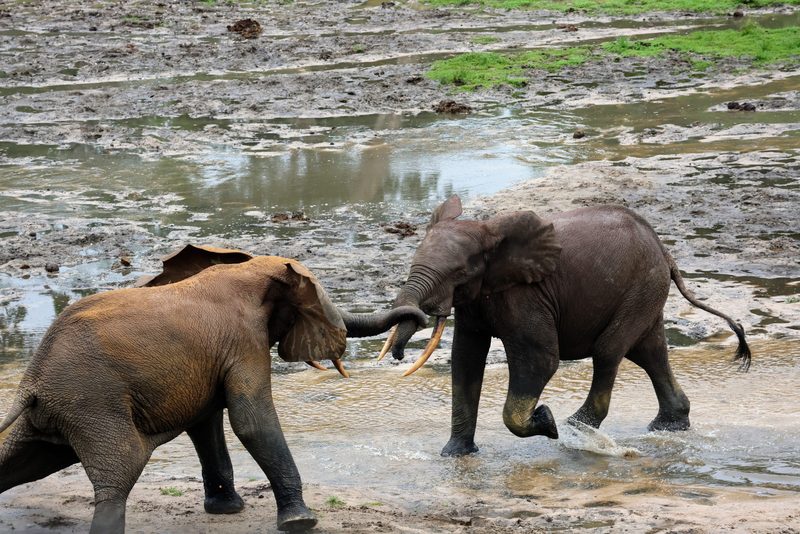
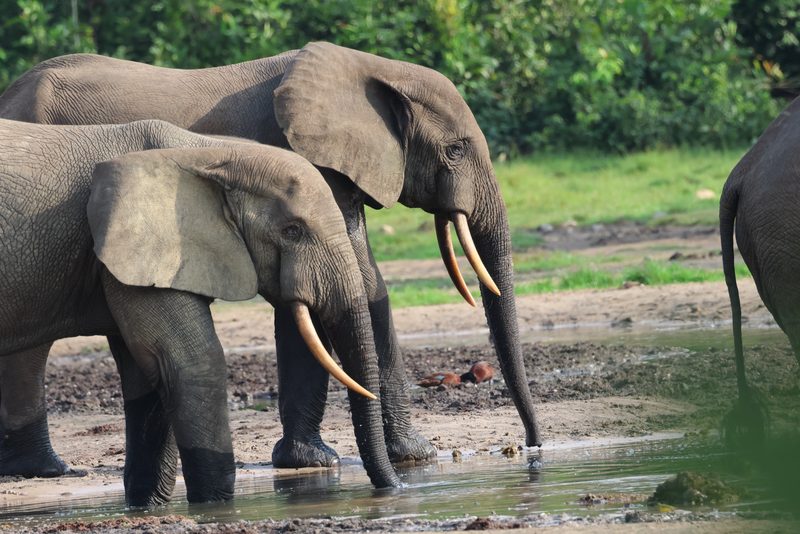
- Baï wildlife viewing — sitting on raised platforms above forest clearings as forest elephants, buffalo, bongo and sitatunga emerge to feed on mineral-rich sedges.
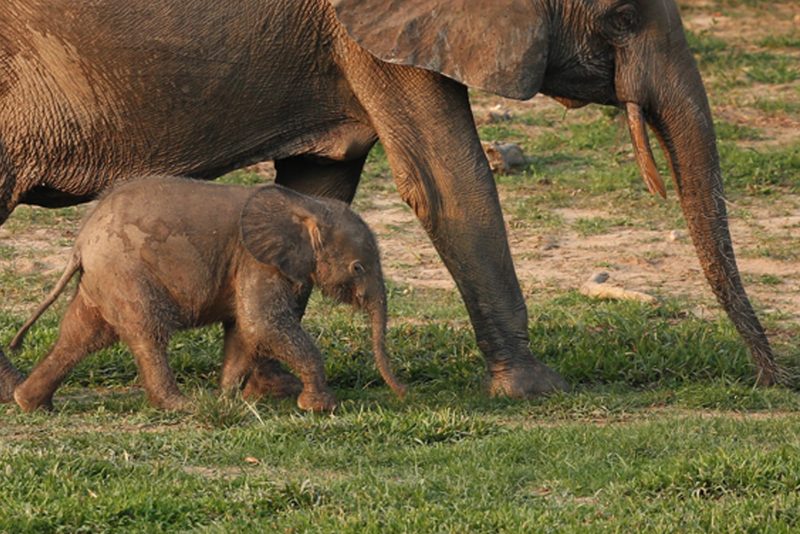
- Forest elephants — the smaller, straight-tusked cousins of savanna elephants, often stained red with baï mud.
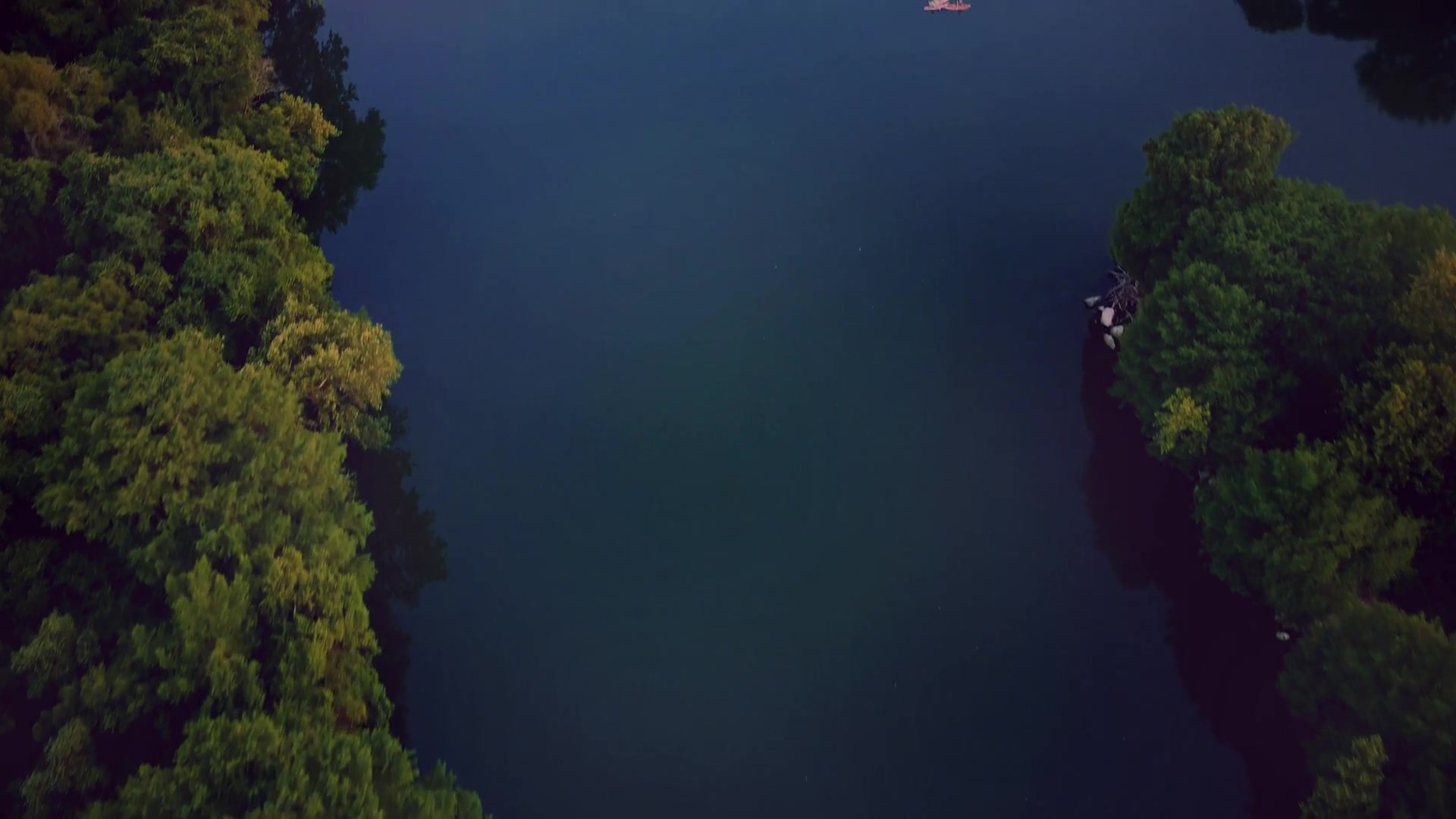
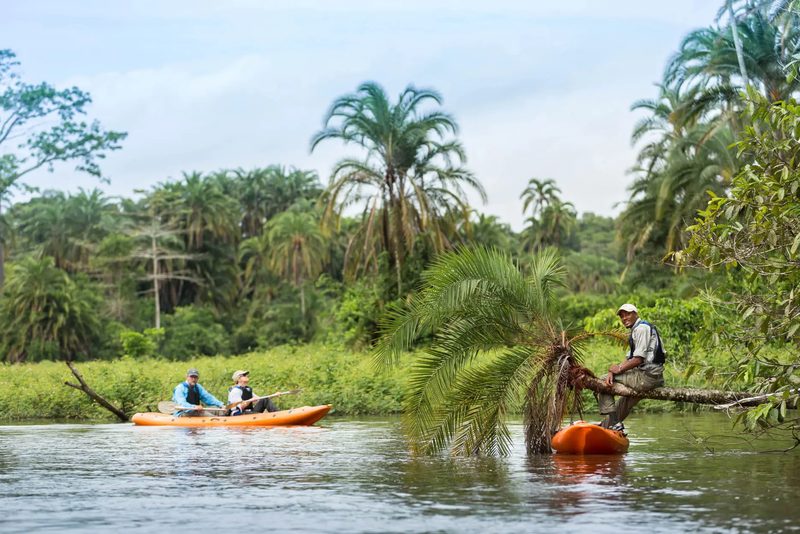
- River & kayak safaris — paddling black-water channels and cruising the Lekoli and Mambili rivers past kingfishers, palm-nut vultures and basking crocodiles.
- Birding — more than 400 species, including African grey parrots wheeling over the canopy, Pel’s fishing owl and rockfowl.
- Ba’Aka culture — respectful encounters with the forest communities whose knowledge underpins the whole experience.
- Night walks & drives — among the few places in the Congo Basin where guided nocturnal activity reveals servals, genets and porcupines.
Where to Stay — The Luxury Forest Camps
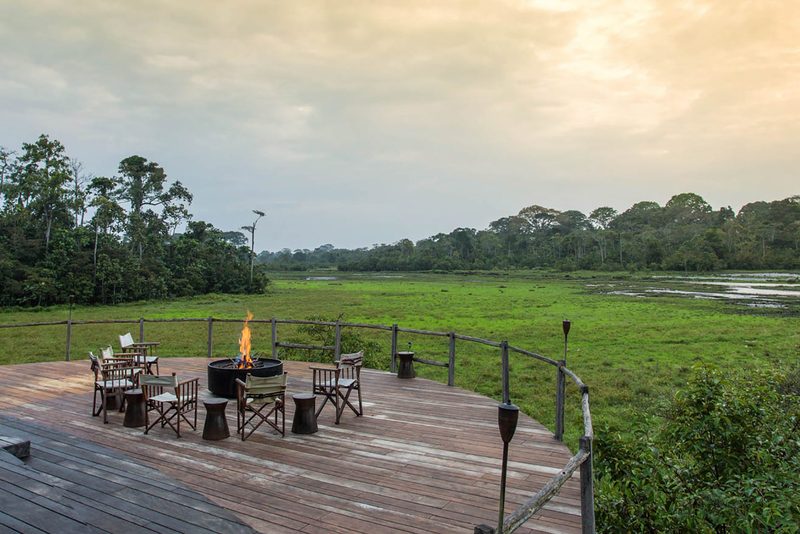
The classic Odzala circuit links three intimate, design-led camps, each built for a different chapter of the safari. Most journeys combine all three:
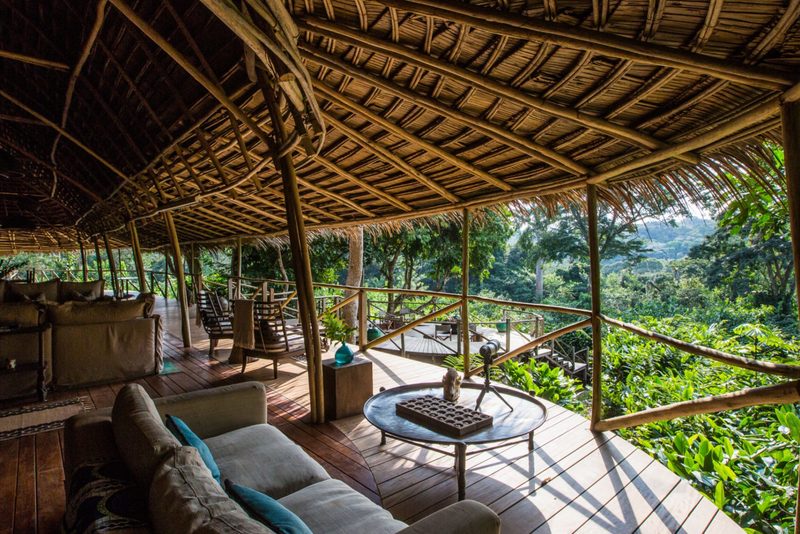
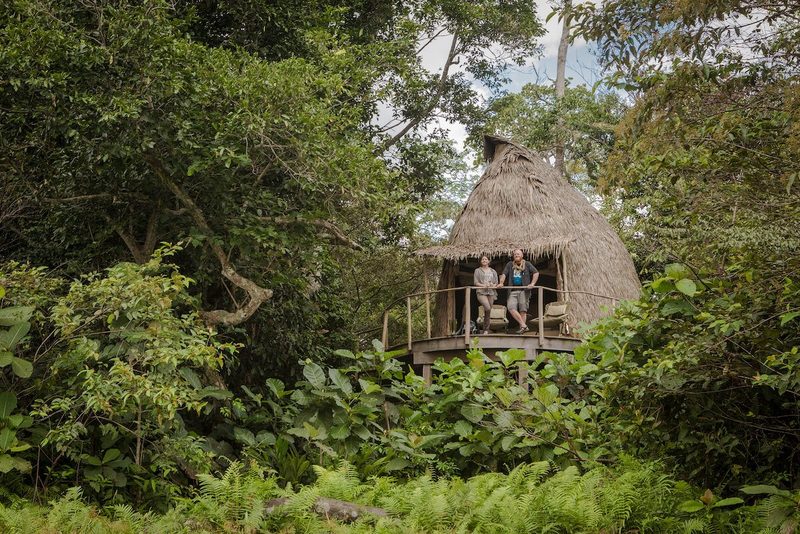
- Ngaga Camp — the gorilla-trekking base, a cluster of stilted timber-and-thatch rooms tucked into the Ngaga forest. This is where you set out each morning to track habituated gorilla families.
- Lango Camp — a raised, treehouse-like lodge overlooking Lango Baï. Wake to forest elephants and buffalo below the deck; explore the baï on foot and by water.
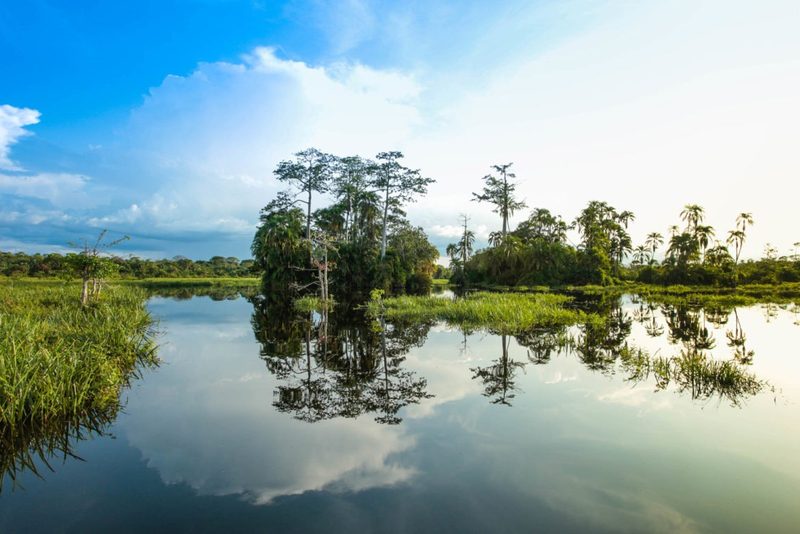
- Mboko Camp — set where the Lekoli and Mambili rivers meet forest and savanna, the base for kayaking, boat safaris and the region’s rare night activities.
- Camp Imbalanga — a more modular, flexible option for tailored or research-linked itineraries.
Sample Itineraries
Because access is by scheduled charter, Congo journeys come in fairly fixed lengths. These are the three that work best:
7 Nights — Odzala Discovery
The essential introduction: Brazzaville, then Ngaga for gorilla trekking, Lango for baï wildlife and Mboko for rivers. The ideal first Congo safari. See our Odzala Discovery 7-night package.
10 Nights — Odzala Odyssey
More time in each camp for extra gorilla treks, longer baï sessions and deeper river exploration — the sweet spot for photographers and serious wildlife travellers. See the Odzala Odyssey 10-night package.
12 Nights — Congo Immersion
The full expedition, adding remote extensions and maximum time in the forest for travellers who want to go as deep as the Congo Basin allows. See the Congo Immersion 12-night package.
How Much Does a Republic of Congo Safari Cost?
A Congo Basin safari is a premium, expedition-grade product, and the price reflects charter aircraft, tiny guest numbers and world-class conservation. As a realistic 2026 guide:
- 7 nights — from around USD 10,500 per person sharing.
- 10 nights — from around USD 14,700 per person sharing.
- 12 nights — from around USD 19,700 per person sharing.
- Gorilla permits — roughly USD 350–750, usually bundled into the package.
Typically included: return charter flights from Brazzaville, all camp accommodation, all meals and house drinks, guided activities, gorilla permits, park and conservation fees, and expert guiding. Typically excluded: international flights to Brazzaville, the Congo visa (around USD 100), Brazzaville hotel nights, premium drinks, tips and travel insurance. Prices vary by operator and season — always confirm exactly what a quote covers.
Best Time to Visit
The Congo Basin is equatorial — warm and humid year-round — but two drier windows stand out for safari:
- Long dry season (June–September): the classic peak window. Firmer trails, lower humidity and easier trekking; wildlife concentrates near water.
- Short dry season (December–February): excellent for the northern parks, with good trail conditions and comfortable primate tracking.
- Wet seasons (March–May, October–November): lush, green and quiet, with superb birding and migratory species — but muddier, more demanding trails. Gorilla trekking still runs.
Getting There & Around
Fly internationally into Brazzaville (Maya-Maya Airport, BZV), usually via Addis Ababa, Paris, Casablanca or Istanbul. Overnight in the city, then connect onto a scheduled charter flight north to the airstrip serving Odzala-Kokoua, followed by a short road-and-boat transfer to camp. That charter is almost always part of the package and departs on set days, which is why itineraries have fixed lengths. Independent overland travel to the northern parks is not practical for visitors — the fly-in model is both the norm and the safe, sensible way to go.
Visas, Health & Practicalities
- Visa: most nationalities need one, arranged in advance via a Congolese embassy or e-visa where offered; your operator supplies the invitation letter.
- Yellow fever: a vaccination certificate is mandatory for entry — carry the physical card.
- Malaria: the region is high-risk; take prophylaxis and use repellent, long sleeves and treated clothing.
- Insurance: comprehensive travel insurance with medical evacuation cover is essential given the remoteness.
- Fitness: you need to be able to walk several hours over uneven, wet forest terrain.
- Money: the currency is the Central African CFA franc; carry cash for Brazzaville and tips, as cards are of limited use once you leave the city.
What to Pack
Pack light, neutral and quick-drying. Essentials include lightweight long-sleeved shirts and trousers in muted colours, waterproof hiking boots with good grip, gaiters, a packable rain jacket or poncho, strong insect repellent, a dry bag for cameras, gardening-style gloves for gripping vegetation on gorilla treks, a headtorch, and binoculars. Soft-sided luggage is required for the charter flights’ strict weight limits — your operator will confirm the allowance.
Responsible Travel & Conservation
Tourism is not a side note in the Republic of Congo — it is a frontline conservation tool. Visitor revenue and the presence of camps fund anti-poaching patrols, support organisations such as African Parks and the Wildlife Conservation Society, and give local communities a tangible economic stake in keeping the forest and its gorillas alive rather than surrendering them to the bushmeat trade and logging. Travel with an operator that maintains strict gorilla-viewing rules — keep your distance, wear a mask near primates when required, never visit if unwell, and keep group sizes small. Done right, your trip is one of the most directly beneficial things a traveller can do for the Congo Basin.
Our Honest Take
The Republic of Congo is not for everyone, and we would rather you knew that up front. It is expensive, it takes real effort to reach, the humidity is relentless, and gorilla sightings — while very likely — are never guaranteed. If you want lions on an open plain from the comfort of a vehicle, choose the Serengeti or the Kruger. But if you want to stand, heart pounding, a few metres from a wild western lowland gorilla in a forest almost no one else will ever see — to feel what Africa was before roads — there is nowhere on Earth quite like it. For the right traveller, it is the single most profound safari on the continent.
Frequently Asked Questions
Is the Republic of Congo the same as the DRC?
No. The Republic of Congo (Congo-Brazzaville) is a separate, smaller and stable country across the river from the Democratic Republic of the Congo (DRC, capital Kinshasa). This guide covers Congo-Brazzaville, whose safari circuit is considered safe when travelling with a reputable operator.
When is the best time to visit?
The dry seasons — June to September and December to February — offer firmer trails and lower humidity for gorilla trekking and baï viewing. Gorilla trekking runs year-round; the wetter months are lush and great for birding but muddier underfoot.
How much should I budget?
Roughly USD 10,500 to USD 20,000 per person for a 7 to 12-night all-inclusive fly-in safari, plus international flights, the visa (around USD 100) and tips. Gorilla permits run about USD 350–750 and are usually bundled into the package.
Do I need a visa and vaccinations?
Most travellers need a visa arranged in advance, and a yellow fever certificate is mandatory. Malaria prophylaxis and medical-evacuation insurance are strongly recommended. Confirm the latest requirements with your operator before travelling.