Where to Trek Western Lowland Gorillas in Africa
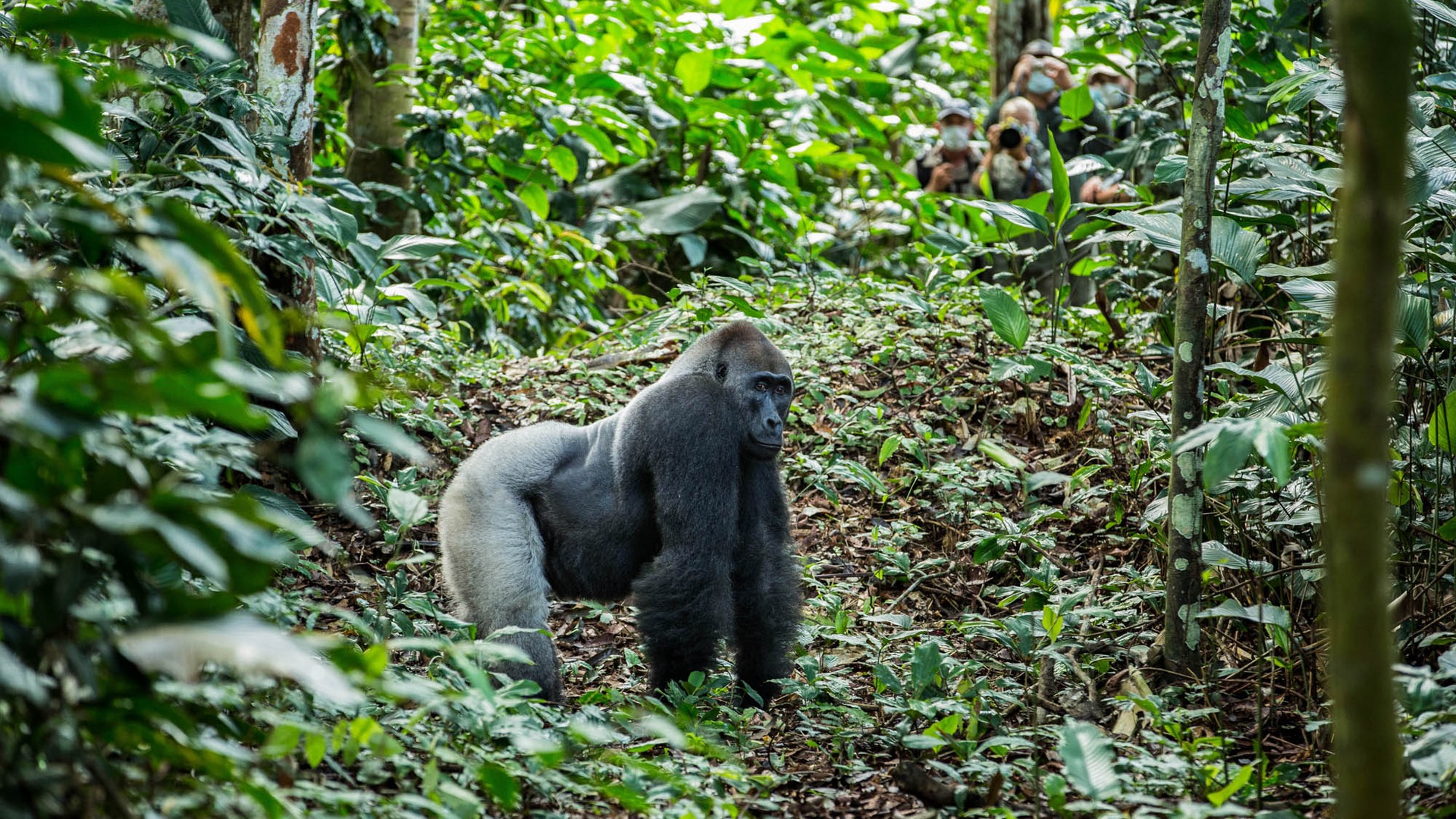
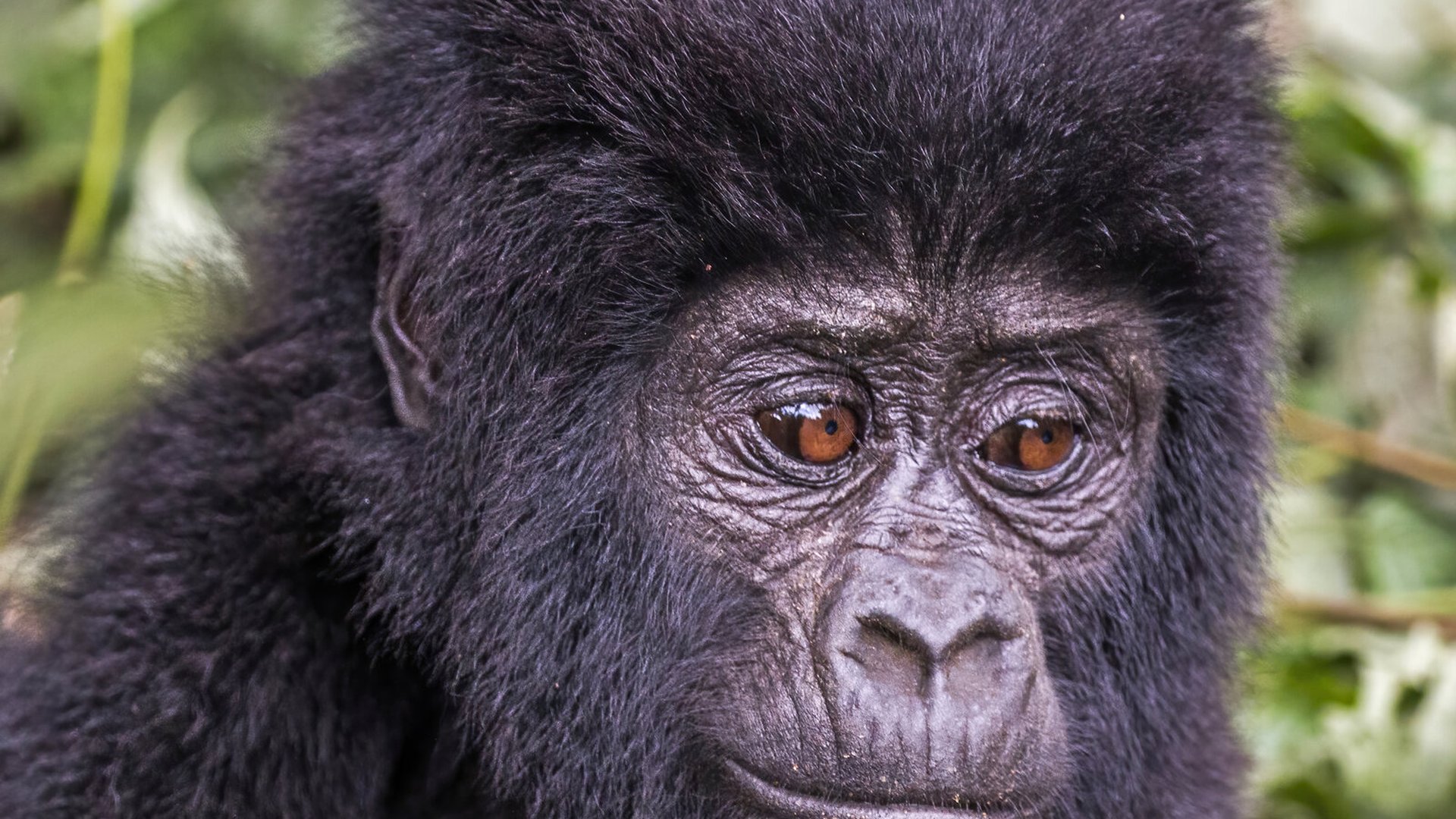
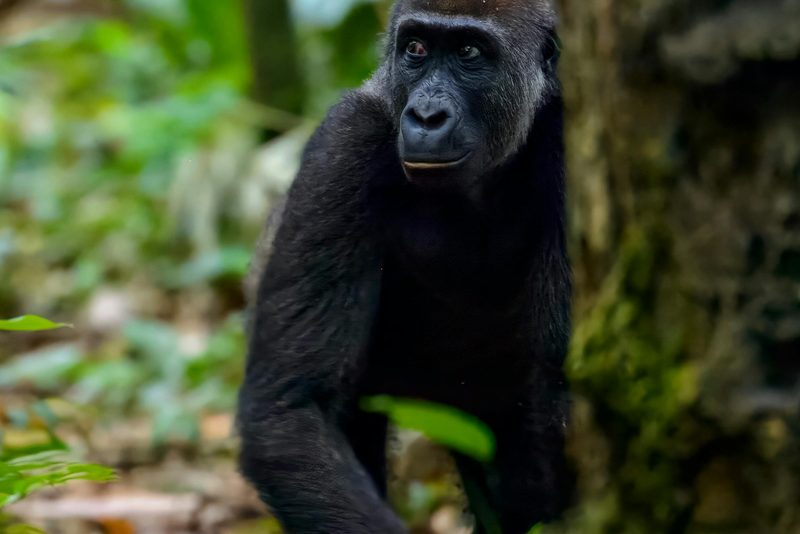
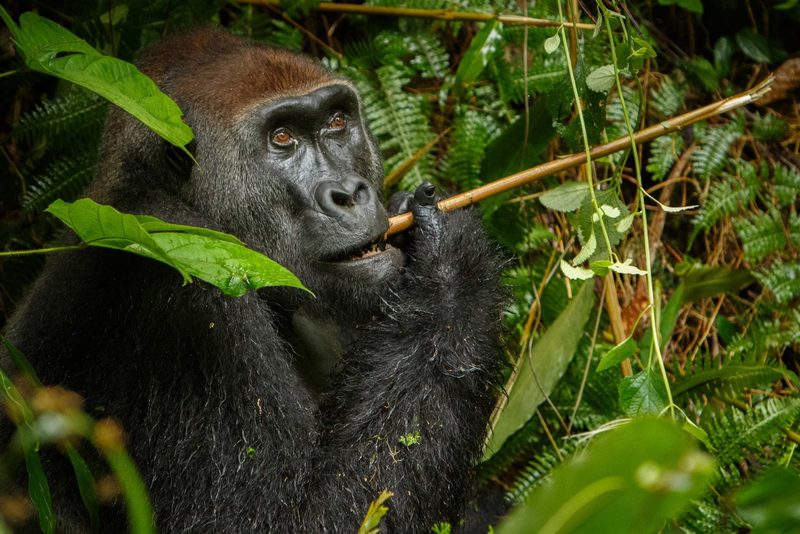
Western lowland gorillas (Gorilla gorilla gorilla) inhabit the dense equatorial rainforests of Central Africa. Unlike mountain gorillas, which are restricted to the high-altitude Virunga and Bwindi forests of Rwanda, Uganda, and the DRC, western lowland gorillas roam the lowland Congo Basin — a vast, remote wilderness that remains one of the least-visited corners of the continent.
Only two destinations offer habituated western lowland gorilla trekking to travellers:
1. Republic of the Congo (Odzala-Kokoua National Park)
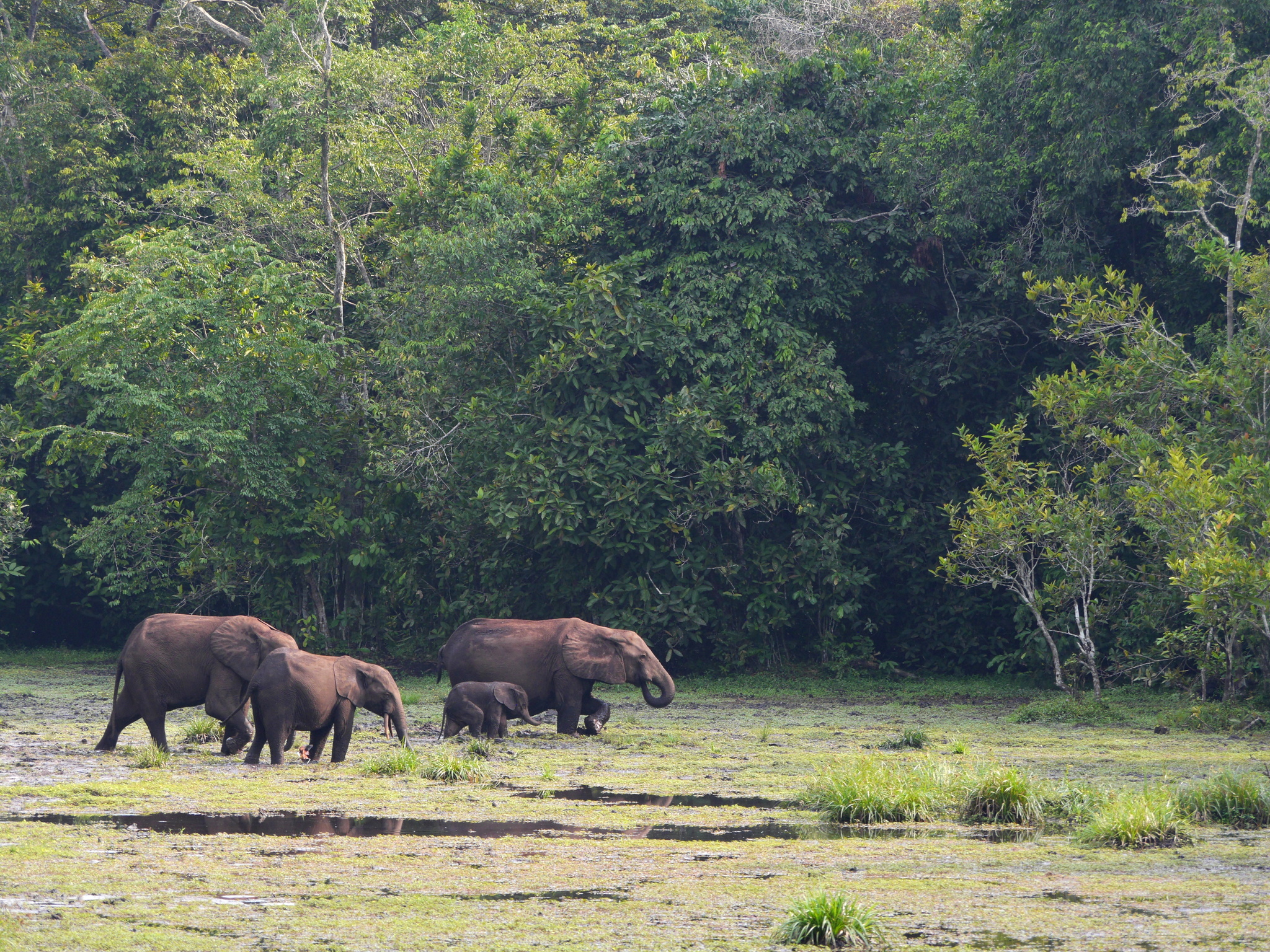
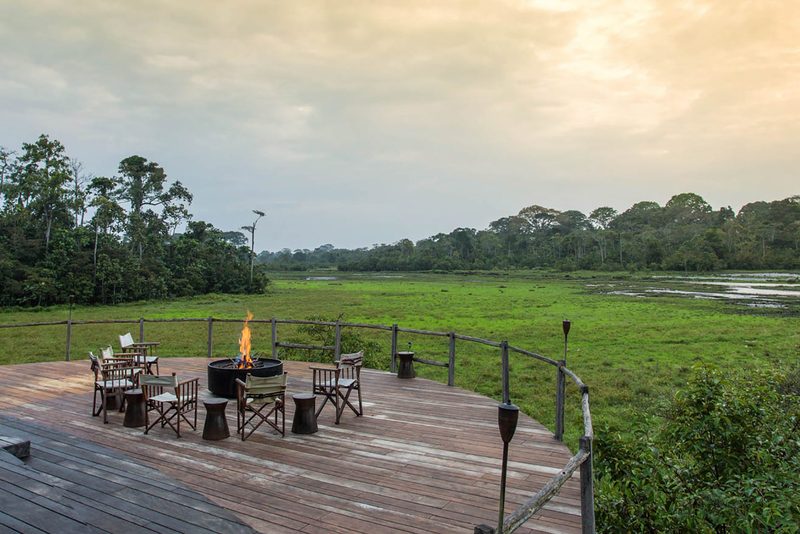
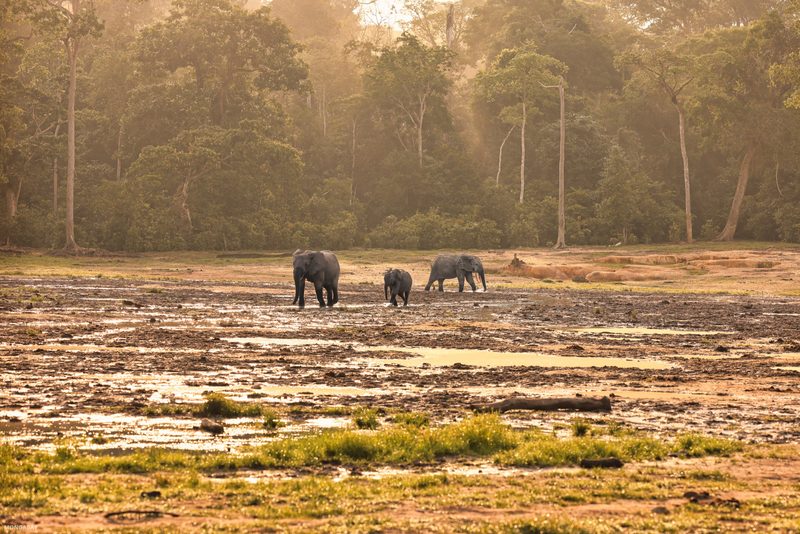
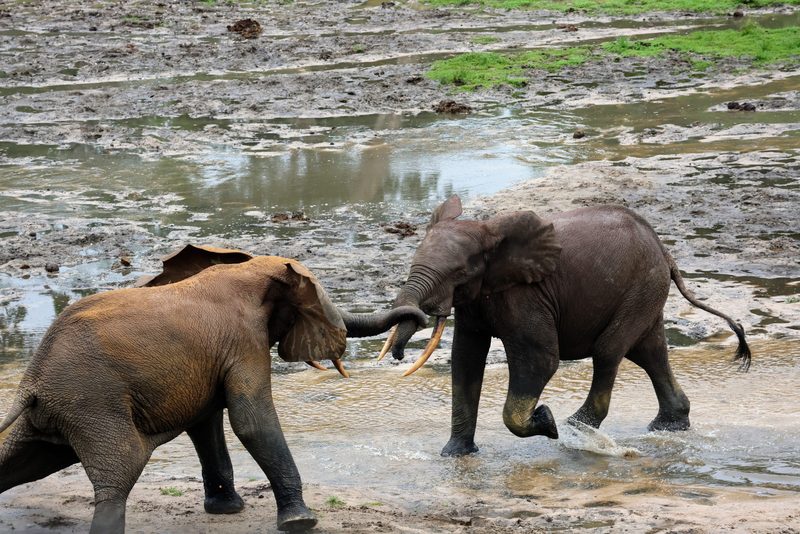
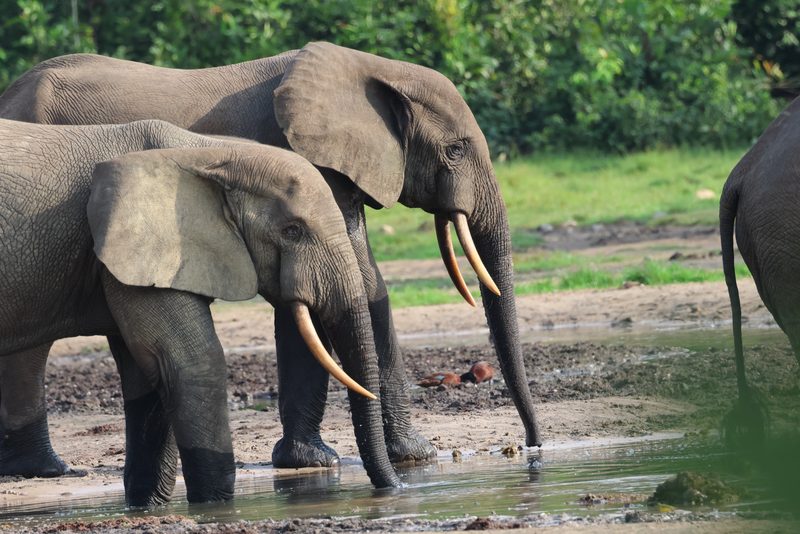
Odzala-Kokoua National Park is the premier destination for western lowland gorilla trekking. Established in 1935, it’s one of Africa’s oldest protected areas and covers 13,500 km² of primary rainforest, savannah clearings, and mineral-rich swampy baïs (forest clearings where elephants and buffalo congregate).
What makes Odzala special:
- Habituated gorilla families: Ngaga Camp serves as the base for tracking two habituated groups — the Jupiter and Saturn families — monitored daily by researchers and expert trackers
- Pristine forest environment: Dense, cathedral-like rainforest with towering mahoganies, swamp forest, and vast baïs teeming with forest elephants, buffalo, sitatunga, and bongo
- Expert-led treks: Small groups (maximum 4 guests per trek) accompanied by primate researchers and local Ba’Aka trackers who know every gorilla by name
- Accessible logistics: Fly from Brazzaville (Maya-Maya Airport) to Mboko airstrip (1.5-hour charter), then a 4x4 transfer through the forest to Ngaga Camp
- Established infrastructure: Three luxury forest camps (Ngaga, Lango, Mboko) operated by Kamba African Rainforest Experiences, ensuring seamless logistics and world-class guiding
Verdict: Odzala is the most reliable and established western lowland gorilla trekking destination, ideal for first-timers and those seeking guaranteed encounters with habituated groups.
2. Gabon (Loango National Park)
Loango National Park offers a unique twist: gorillas in coastal rainforest. Known as “Africa’s Last Eden,” Loango is the only place on Earth where you can see forest elephants, buffalo, hippos, and gorillas on the Atlantic beach.
What makes Loango special:
- Coastal jungle setting: Dense equatorial rainforest meets white-sand beaches and lagoons — a completely different ecosystem from Odzala’s interior forests
- Yatouga Research Camp base: Gorilla trekking operates from a research camp; encounters are less frequent and more exploratory than Odzala’s established circuits
- Multi-species experience: Combine gorilla trekking with beach safaris (surfing hippos, forest elephants on the shore), mangrove kayaking, and whale-watching (July–September)
- Higher adventure factor: Loango is more experimental; gorilla sightings are not guaranteed, and logistics are more complex (fly to Port-Gentil, then 4x4 and boat transfers)
Verdict: Loango is best for experienced safari-goers seeking a multi-faceted wilderness adventure beyond just gorilla encounters. If gorillas are your sole focus, Odzala is the safer bet.
The Western Lowland Gorilla Trekking Experience
Western lowland gorilla trekking is fundamentally different from the mountain gorilla experience in Rwanda and Uganda. Here’s what to expect:
The Trek Itself
Terrain: Dense, humid primary rainforest — think towering canopy, lianas, buttress roots, and thick undergrowth. The forest floor is often swampy, especially near baïs, requiring waterproof boots and gaiters. Unlike the steep volcanic slopes of Bwindi or Virunga, Odzala’s terrain is relatively flat but navigationally complex.
Duration: Treks last 45 minutes to 4 hours depending on the gorillas’ location. Because western lowland gorillas have larger home ranges than mountain gorillas and are constantly foraging for fruit, they move frequently. Your guides and trackers will have located the family earlier that morning via radio.
Group size: Maximum 4 guests per trek (versus 8 for mountain gorillas). This intimacy transforms the encounter into something personal, almost meditative.
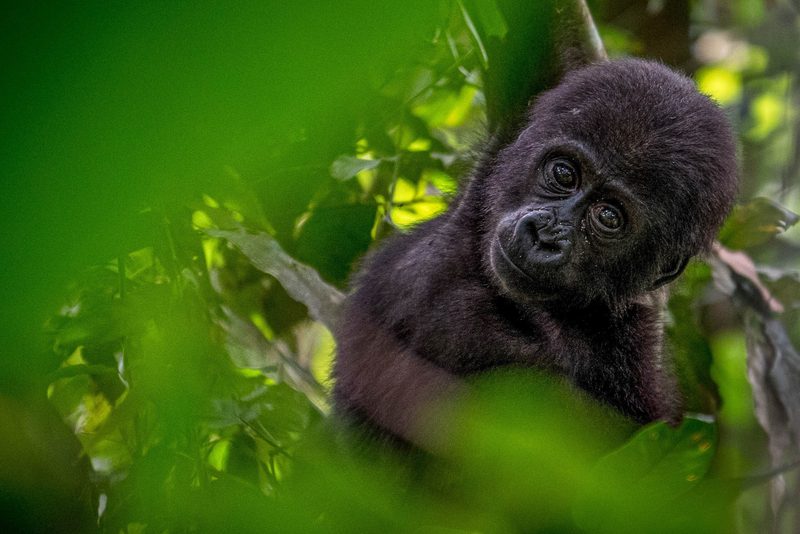
The encounter: Once you locate the family, you spend one hour observing them. Western lowland gorillas are more arboreal than their mountain cousins — expect to see them feeding in trees, swinging between branches, and exhibiting playful, acrobatic behaviour. Silverbacks are smaller and less habituated to humans, so encounters feel wilder, more unpredictable.
What You’ll See
A typical habituated family in Odzala comprises:
- 1 dominant silverback (the patriarch, often resting or quietly watching over the group)
- 2–3 adult females (mothers with infants clinging to their backs)
- 2–4 juveniles and subadults (endlessly entertaining, wrestling, swinging, and exploring)
You’ll witness natural behaviours: feeding (leaves, fruit, bark), grooming rituals, play-fighting between juveniles, and the silverback’s low rumbles of contentment (a sign the group feels safe).
The magic: Unlike the structured, almost theatrical feel of mountain gorilla treks, western lowland encounters are raw. You’re deep in primary rainforest, surrounded by the sounds of hornbills, forest elephants crashing through the undergrowth, and the humid stillness of the Congo Basin. It feels like a reunion with something ancient.
Gorilla Trekking Permits, Costs & Booking
Permits
Western lowland gorilla trekking permits are included in your safari package cost — you do not purchase them separately like mountain gorilla permits in Rwanda ($1,500 USD) or Uganda ($700 USD).
Permit costs (estimated per person per trek):
- Republic of Congo (Odzala-Kokoua): $350–$500 per trek (included in Kamba packages)
- Gabon (Loango): $750 per trek (higher due to scarcity and research camp access)
Most itineraries include one gorilla trek; additional treks can be arranged for an extra fee, subject to availability.
Full Safari Package Costs
Western lowland gorilla trekking is sold as all-inclusive multi-day safaris rather than standalone day permits. Costs include:
- Return charter flights from Brazzaville (or Port-Gentil for Gabon) to the park
- All accommodation in luxury forest camps
- All meals, premium drinks, and laundry
- Gorilla trekking permits and expert guides
- Additional activities (baï wildlife viewing, forest walks, night drives, kayaking)
Typical pricing (per person, based on double occupancy):
- 7-night Odzala Discovery (Congo): $10,575 (2 nights Ngaga gorilla camp + 2 nights Lango baï camp + 2 nights Mboko savannah camp)
- 10-night Odzala Odyssey (Congo): $14,730 (extended time at each camp, multiple gorilla treks)
- 12-night Congo Immersion: $19,745 (the ultimate deep-forest expedition, combining Odzala with Noubale-Ndoki)
- 10-night Loango Explorer (Gabon): $18,000–$22,000 (gorilla trekking + beach safaris + whale-watching)
Note: These are luxury safaris operated by specialist companies like Kamba African Rainforest Experiences (Congo) and Wilderness Safaris (Gabon). There are no budget options — the remoteness, charter flights, and conservation levies make this an inherently high-end experience.
How to Book
Do NOT attempt to book directly. Western lowland gorilla trekking requires:
- Charter flight coordination (limited seat inventory)
- Republic of Congo visa and Letter of Invitation (arranged by operators)
- Yellow fever vaccination certificate
- Specialist guides and trackers embedded in research programmes
Book through:
- Kamba African Rainforest Experiences (primary Odzala operator; manages Ngaga, Lango, Mboko)
- Yellow Zebra Safaris (Congo multi-destination itineraries)
- Natural World Safaris (Congo and Gabon combinations)
- Wilderness Safaris (Gabon specialist)
Lead time: Book 6–12 months in advance for peak season (June–September).
Best Time to Visit for Gorilla Trekking
Western lowland gorilla trekking operates year-round, but seasonality affects forest conditions, gorilla movements, and overall comfort.
Dry Seasons (Best Time): June–September & December–February
Why this is ideal:
- Easier trekking conditions: Less rain means drier forest trails, fewer leeches, and more comfortable hiking
- Gorilla proximity: During dry months, gorillas concentrate around permanent fruit sources near established trails, making encounters more predictable and treks shorter
- Baï wildlife viewing peaks: Forest elephants, buffalo, and sitatunga congregate at baïs as water sources dry up elsewhere — a spectacular bonus to gorilla trekking
- Better photography: Lower humidity and softer light filtering through the canopy
Peak season: June–September is the busiest period; book 12 months ahead.
Green Season (Wet): March–May & October–November
Challenges:
- Heavier rainfall: Daily afternoon thunderstorms; trails can be muddy, slippery, and waterlogged
- Longer treks: Gorillas disperse deeper into the forest as fruit becomes abundant everywhere, meaning longer, more strenuous searches
- Higher humidity: Trekking in 90%+ humidity is exhausting; pack moisture-wicking layers
Advantages:
- Fewer visitors: Quieter camps, more personalised guiding, and a true wilderness solitude
- Lower costs: Some operators offer 10–15% discounts during green season
- Lush, cinematic forest: The rainforest is at its most verdant, waterfalls are roaring, and photography (if you can keep your lens dry) is stunning
Verdict: If you’re fit, comfortable with rain, and seeking solitude, the green season is magical. If this is your only gorilla trek, stick to the dry season for guaranteed comfort and shorter walks.
Where to Stay: Luxury Forest Camps
Republic of Congo (Odzala-Kokoua)
1. Ngaga Camp (Gorilla Trekking Base)
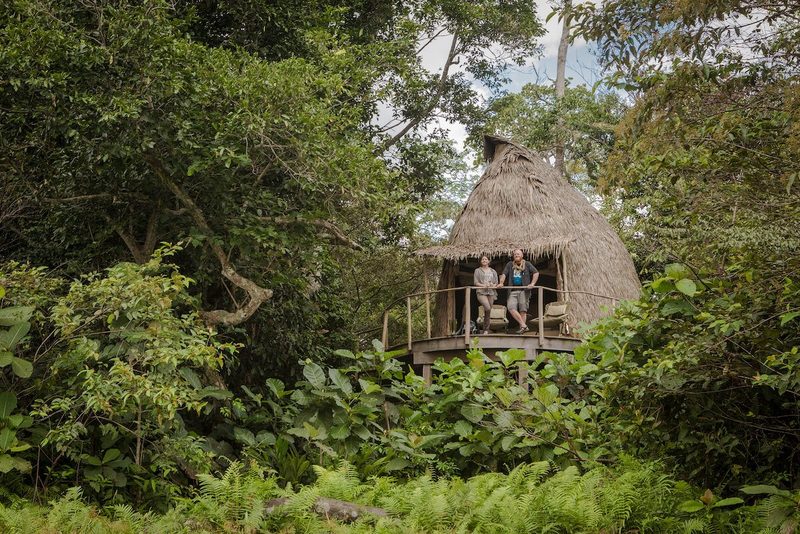
The gorilla headquarters. Ngaga is a six-suite tented camp deep in primary rainforest, positioned within the home range of the habituated Jupiter and Saturn gorilla families.
Why stay here:
- Daily gorilla trekking (one trek included; additional treks available)
- Expert primate guides and Ba’Aka trackers who live and breathe these forests
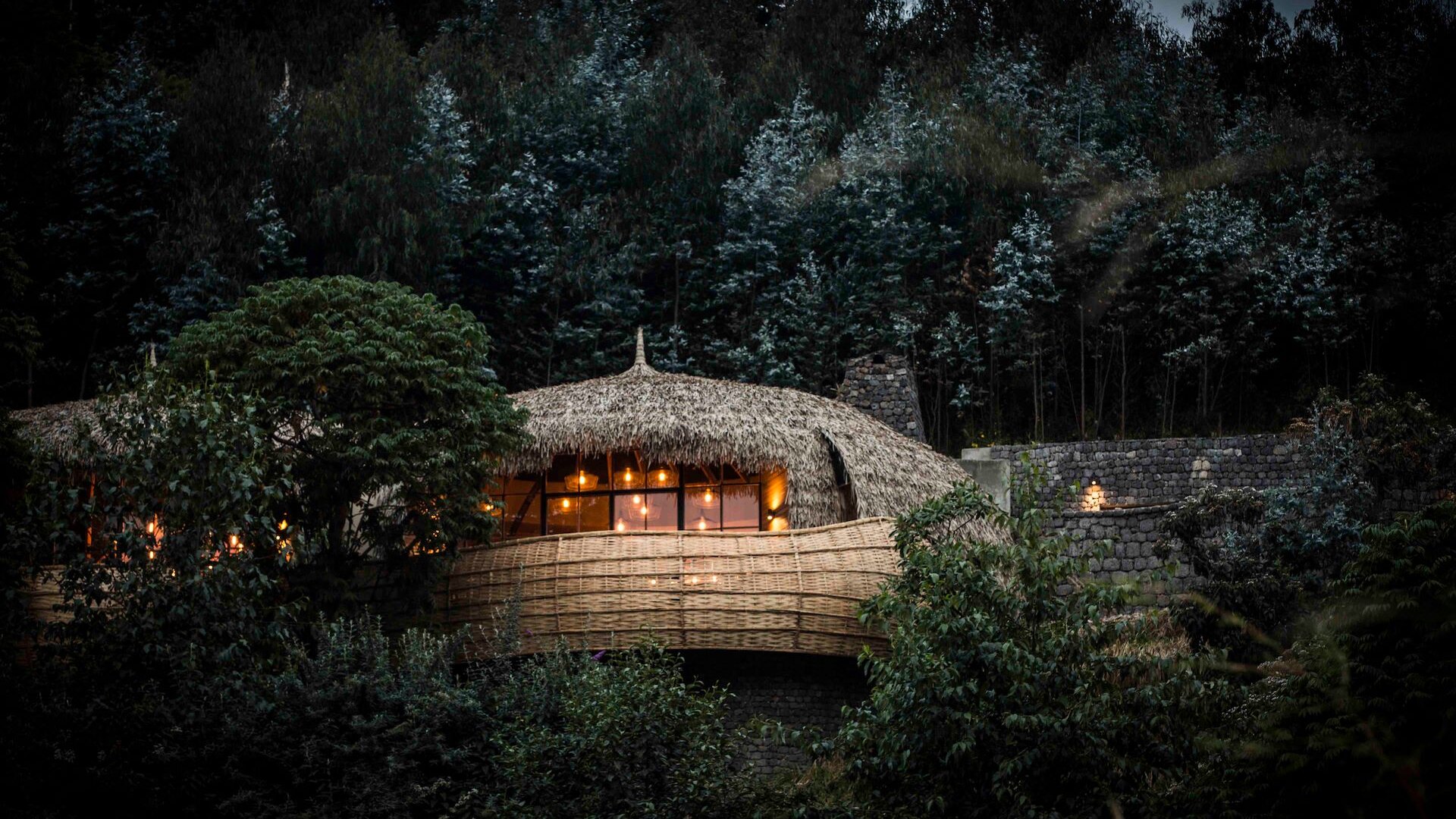
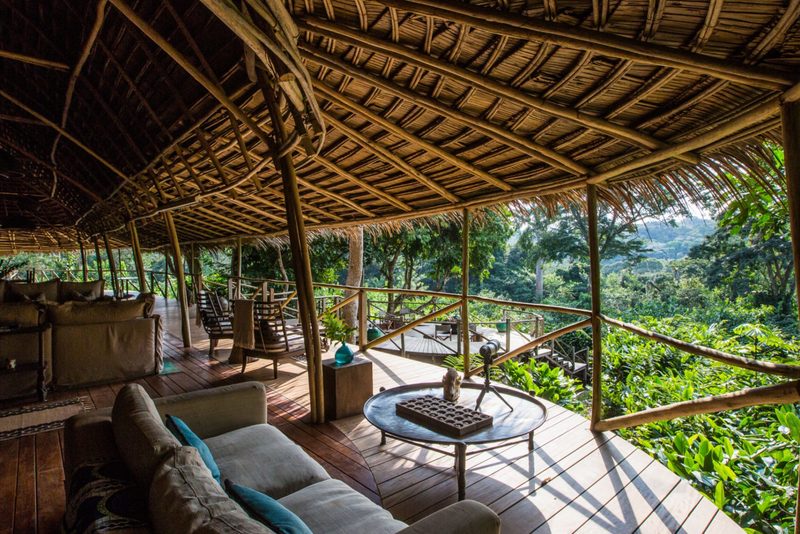
- Intimate camp design: elevated wooden decks, canvas-and-thatch suites, open-air showers, and a central lounge overlooking the forest
- Night walks to spot pottos, galagos, and nocturnal forest life
Best for: Gorilla purists who want to maximise time in the forest and minimise travel between camps.
2. Lango Camp (Baï Wildlife Viewing)
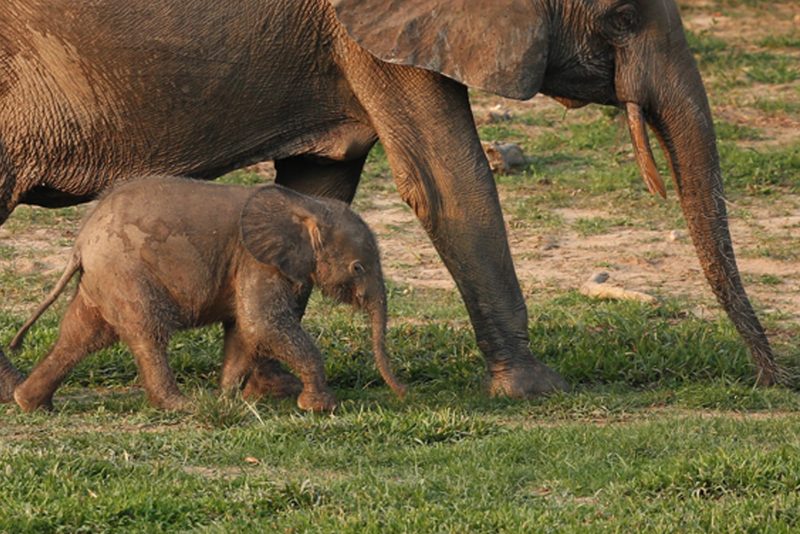
The elephant theatre. Lango overlooks Lango Baï, a vast mineral-rich clearing where forest elephants, buffalo, sitatunga, and red river hogs gather daily to drink and mineral-lick.
Why stay here:
- Treehouse suites with floor-to-ceiling windows facing the baï — wildlife viewing from your bed
- Walking safaris into the baï at dawn to stand among elephants (surreal)
- Birdwatching paradise: African grey parrots, black-casqued hornbills, Congo serpent eagles
- Sunset platform with gin & tonics as elephants emerge from the forest
Best for: Photographers and wildlife enthusiasts seeking the quintessential Congo Basin experience.
3. Mboko Camp (Savannah & Rivers)
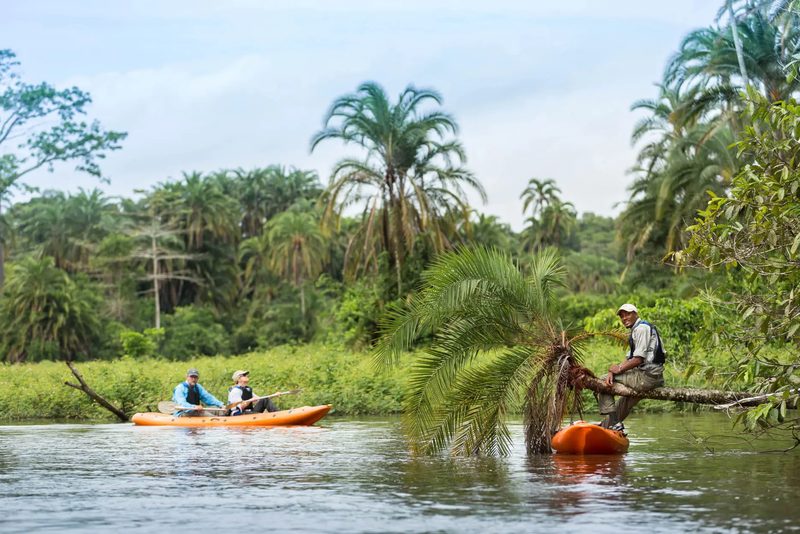
The adventure base. Mboko sits on the edge of forest and savannah, offering access to the Lekoli River for kayaking, fishing, and riverine wildlife (hippos, crocodiles, otters).
Why stay here:
- Night drives into savannah clearings for aardvarks, servals, and leopards
- Kayaking safaris down the Lekoli River
- Forest walks to track chimpanzees, red colobus monkeys, and crowned eagles
- The most diverse ecosystem of the three camps
Best for: Active travellers who want variety beyond gorillas.
Gabon (Loango National Park)
Loango Lodge
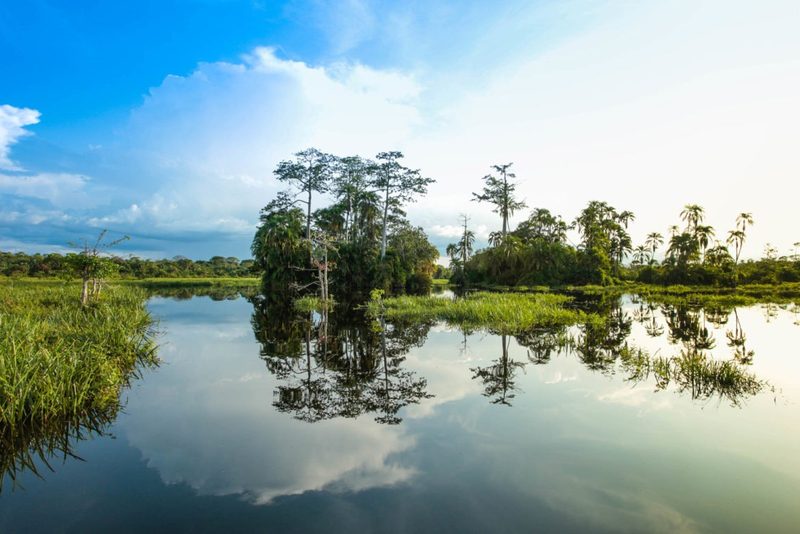
The beach-and-jungle hybrid. Loango Lodge is the only permanent lodge in the park, set on a lagoon with access to both coastal and inland rainforest.
Why stay here:
- Gorilla trekking from Yatouga Research Camp (boat transfer to the forest)
- Beach safaris: forest elephants, buffalo, and hippos on the Atlantic shore
- Whale-watching (July–September): humpback whales breaching offshore
- Mangrove kayaking and surf fishing for tarpon
Best for: Adventurers who want gorillas and a completely unique coastal wilderness experience.
Western Lowland Gorillas vs Mountain Gorillas: The Honest Comparison
If you’ve trekked mountain gorillas in Rwanda or Uganda, here’s how the western lowland experience differs:
| Aspect | Western Lowland Gorillas (Congo/Gabon) | Mountain Gorillas (Rwanda/Uganda) |
|---|---|---|
| Habitat | Dense equatorial rainforest, swamp forest, baïs | High-altitude montane forest, bamboo zones, volcanic slopes |
| Terrain | Flat to gently rolling; navigationally complex; often swampy | Steep, high-altitude (2,400–3,800m); muddy slopes |
| Gorilla behaviour | More arboreal, playful, mobile; larger home ranges | More terrestrial, sedentary, predictable |
| Trek difficulty | Moderate; shorter vertical but hotter, more humid, swampier | Strenuous; steep climbs, high altitude, cooler |
| Group size | Maximum 4 guests per trek | Maximum 8 guests per trek |
| Encounter feel | Wild, unpredictable, raw; feels like true exploration | Structured, reliable, intimate; feels more “managed” |
| Photography | Challenging (dense forest, low light, gorillas often in trees) | Easier (open clearings, gorillas often on the ground) |
| Permit cost | $350–$750 (included in multi-day safaris) | $700 (Uganda) – $1,500 (Rwanda) |
| Total safari cost | $10,500–$20,000 (7–12 nights, all-inclusive) | $3,000–$8,000 (3–7 nights, gorilla permit separate) |
| Remoteness | Extremely remote; fly-in only; true wilderness immersion | Accessible by road; lodges near park gates |
| Additional wildlife | Forest elephants, buffalo, sitatunga, bongo, 400+ bird species | Golden monkeys, forest duikers, occasional forest elephants |
| Best for | Experienced safari-goers seeking the ultimate primate adventure | First-time gorilla trekkers or those on tighter budgets |
The bottom line: If you want guaranteed, easy-to-reach, highly habituated gorilla encounters on a standalone trip, choose Rwanda or Uganda. If you want the wildest, most immersive rainforest expedition where gorillas are part of a broader Congo Basin odyssey, choose western lowland trekking in Odzala.
Packing List for Western Lowland Gorilla Trekking
The Congo Basin is hot, humid, and unpredictable. Pack smart:
Essential Gear
- Waterproof hiking boots (ankle support, good tread; you’ll be wading through mud and shallow swamps)
- Gaiters (essential for keeping mud, leeches, and ants out of your boots)
- Long-sleeved shirts & trousers (lightweight, moisture-wicking, neutral colours — no black, no bright patterns)
- Rain jacket (packable, breathable; rain can hit any time)
- Daypack (20–30L; you’ll carry water, camera, rain gear, snacks)
- Wide-brimmed hat (sun protection in baïs and clearings)
- Leather gardening gloves (for gripping vines and thorny undergrowth)
Photography & Tech
- Camera with fast autofocus (mirrorless or DSLR; the forest is dark, gorillas are fast)
- 70–200mm or 100–400mm lens (ideal range for gorillas in trees)
- Spare batteries (humidity drains batteries faster; bring 3–4)
- Silica gel packs (keep camera gear dry in humid forest)
- Binoculars (8x42 or 10x42 for baï wildlife viewing)
Health & Comfort
- Yellow fever vaccination certificate (mandatory for entry; carry laminated copy)
- Malaria prophylaxis (consult your doctor; the Congo Basin is high-risk)
- Insect repellent (50% DEET minimum; for mosquitoes, tsetse flies, and forest bees)
- Antihistamine cream (for ant bites and stings)
- Electrolyte sachets (rehydration after long, sweaty treks)
- Face mask (some operators require masks during gorilla encounters to protect the apes from human pathogens)
What NOT to Bring
- Perfume, cologne, or scented lotions (can disturb gorillas and attract insects)
- Trekking poles with metal tips (not allowed; they damage forest floor ecology)
- Drones (illegal in national parks)
- Camo clothing (can be mistaken for military; stick to khaki, olive, or beige)
Visas, Health & Practical Information
Visas
Republic of Congo: You need a visa in advance (no visa on arrival). Most tour operators arrange a Letter of Invitation, which you submit to the Congolese embassy in your home country along with your passport, yellow fever certificate, and visa fee (~$150 USD). Processing takes 2–4 weeks.
Gabon: E-visa available online (apply 2 weeks before travel; ~$100 USD).
Yellow Fever
Mandatory. You must have a valid yellow fever vaccination certificate to enter both the Republic of Congo and Gabon. Get vaccinated at least 10 days before travel (it takes time to become effective). Carry laminated copies — you’ll show it at immigration, at lodges, and sometimes on charter flights.
Malaria
The Congo Basin is a high-risk malaria zone. Consult a travel medicine specialist for prophylaxis (Malarone, doxycycline, or Atovaquone-Proguanil). Pair medication with 50% DEET repellent, long sleeves at dawn/dusk, and sleeping under mosquito nets (provided at all camps).
Travel Insurance
Essential. Choose a policy that covers:
- Medical evacuation (the nearest advanced hospital is in Johannesburg or Nairobi, requiring air ambulance)
- Trip cancellation (if gorilla permits are non-refundable)
- Adventure activities (some policies exclude “trekking”)
We recommend World Nomads or IMG Global for specialist adventure coverage.
Getting There
Republic of Congo (Odzala):
- Fly internationally to Brazzaville (Maya-Maya Airport, BZV) via Paris (Air France), Addis Ababa (Ethiopian Airlines), or Nairobi (Kenya Airways)
- Overnight in Brazzaville (visa permitting)
- Charter flight to Mboko airstrip (1.5 hours; arranged by Kamba)
- 4x4 transfer to your camp
Gabon (Loango):
- Fly to Port-Gentil (POG) via Libreville
- 4x4 transfer to Loango (4–5 hours on rough roads)
- Boat transfer to lodge
Conservation & Responsible Travel
Western lowland gorillas are Critically Endangered. The wild population has declined by more than 60% over the past 25 years due to poaching, habitat loss, and Ebola outbreaks.
Tourism matters. Every dollar spent on gorilla trekking funds:
- Anti-poaching patrols and ranger salaries
- Veterinary care for injured or orphaned gorillas
- Community employment (trackers, guides, camp staff are local)
- Research programmes that monitor habituated families and protect unhabituated groups
African Parks (which manages Odzala-Kokoua in partnership with the Congolese government) and the Wildlife Conservation Society (WCS) are the leading forces behind western lowland gorilla recovery. Your visit directly supports their work.
How to trek responsibly:
- Maintain a 7–8-metre distance from gorillas (they may approach you; stand still and avoid eye contact)
- Never eat, drink, or smoke near gorillas (human food can transmit diseases)
- If you’re sick (cold, flu, stomach bug), postpone your trek — gorillas share 98% of our DNA and are vulnerable to human illnesses
- Follow your guide’s instructions without question (they know each gorilla’s temperament and will keep you safe)
The Honest Take: Is Western Lowland Gorilla Trekking Worth It?
Yes — if you meet these criteria:
- You’ve already done mountain gorilla trekking (or you’re specifically seeking the wildest, least-touristed primate experience on Earth)
- You’re comfortable with true remoteness (fly-in access, no phone signal, days deep in primary rainforest)
- You have the budget ($10,500+ per person is non-negotiable for a proper 7-night safari)
- You’re moderately fit (treks are easier than mountain gorillas altitude-wise, but the heat and humidity are relentless)
It’s not for you if:
- This is your first-ever gorilla trek and you want guaranteed, easy encounters (do Rwanda’s Volcanoes National Park instead)
- You’re on a tight budget (there are no budget options for western lowland trekking)
- You have mobility issues (the forest floor is uneven, swampy, and requires scrambling over roots and logs)
The magic: Western lowland gorilla trekking is the ultimate primate pilgrimage. It’s not about ticking a box — it’s about standing silently in cathedral rainforest, watching a silverback cradle his infant, hearing the low rumble of contentment, and realising you’re witnessing something ancient, fragile, and profoundly sacred.
If you seek that — this is it.
Frequently Asked Questions
How physically demanding is western lowland gorilla trekking compared to mountain gorilla trekking?
Western lowland gorilla trekking is generally less strenuous in terms of altitude and vertical climb (the Congo Basin is lowland, so you’re trekking at 400–600m elevation versus 2,400–3,800m for mountain gorillas). However, the heat and humidity are far more intense — expect 85–95% humidity and temperatures of 25–30°C even in the forest shade. The terrain is also navigationally complex, with dense undergrowth, tangled roots, and swampy patches that require wading through ankle-deep water. Most people find mountain gorilla treks more exhausting due to altitude, but western lowland treks are more uncomfortable due to humidity, heat, and leeches. If you can hike for 2–3 hours in humid conditions, you’ll be fine.
Are western lowland gorilla sightings guaranteed?
In Odzala-Kokoua (Republic of Congo): Yes, virtually guaranteed — the habituated Jupiter and Saturn families are monitored daily by trackers who know their movements. Your guides will have located them earlier in the morning via radio. Success rate is 95%+. In Gabon (Loango): No — gorilla trekking at Loango is more exploratory, operating from a research camp. Sightings are less predictable (60–70% success rate). If guaranteed encounters are critical, choose Odzala.
Can I do western lowland gorilla trekking on a budget?
No. There are no budget options. The remoteness (charter flights from Brazzaville), limited infrastructure (only luxury camps operate in Odzala), and conservation levies make this an inherently high-end experience. Expect to pay $10,500–$20,000 per person for a 7–12-night all-inclusive safari. If budget is a concern, mountain gorilla trekking in Uganda offers a cheaper alternative (3-day permits + mid-range lodges for ~$2,500–4,000 total).
What is the best age for western lowland gorilla trekking?
Minimum age: 15 years old (same as mountain gorilla trekking). Most operators enforce this strictly for safety and to minimise disturbance to the gorillas. Upper age: No formal limit, but you must be able to hike for 2–4 hours in hot, humid conditions over uneven, sometimes swampy terrain. We’ve seen fit 70-year-olds complete treks comfortably. If you have mobility concerns, discuss with your operator in advance — some camps can arrange shorter, less strenuous treks depending on where the gorillas are that day.
Is it safe to travel to the Republic of the Congo for gorilla trekking?
Yes. The Republic of the Congo (Congo-Brazzaville) is distinct from the Democratic Republic of the Congo (DRC) and is considered stable and safe for tourism, particularly in Odzala-Kokoua National Park. There has been no tourist incident in Odzala in over 20 years. That said, this is a remote, fly-in wilderness — you’re far from hospitals, and communication is limited (no phone signal in the forest). Travel with a reputable operator (like Kamba), ensure you have comprehensive medical evacuation insurance, and follow your guides’ instructions. Solo independent travel is not advisable; book through a specialist tour operator.
What vaccinations do I need for western lowland gorilla trekking?
Mandatory: Yellow fever vaccination (required for entry to both Republic of Congo and Gabon; must be done at least 10 days before travel). Strongly recommended: Hepatitis A, Hepatitis B, Typhoid, Tetanus, Polio (booster if last dose was over 10 years ago), and Rabies (if you’ll be in remote areas far from medical care). Malaria prophylaxis is essential — consult a travel medicine specialist for Malarone, doxycycline, or Atovaquone-Proguanil. Start medication 1–2 days before arrival and continue for 7 days after leaving. Some operators also require proof of measles and COVID-19 vaccination to protect the gorillas (they share 98% of our DNA and are vulnerable to human pathogens).
How does western lowland gorilla trekking compare to chimpanzee tracking?
Gorilla trekking (western lowland or mountain) is more sedentary and intimate — once you locate a habituated family, you spend a full hour observing them feeding, grooming, and resting, often at close range (7–8 metres). Chimpanzee tracking is more dynamic and unpredictable — chimps are faster, more vocal, and more arboreal, so encounters can involve following them through the canopy, hearing pant-hoots and drumming, and brief glimpses rather than sustained observation. Many travellers find gorilla encounters more emotional (the eye contact, the calmness, the sense of kinship), while chimp tracking is more exhilarating (the noise, the speed, the chaos). If you can, do both — Odzala safaris often include forest walks where you may encounter wild (unhabituated) chimps, red colobus monkeys, and crowned eagles.
Can I combine western lowland gorilla trekking with mountain gorilla trekking in one trip?
Yes, but it requires serious planning and budget. A classic combination is: 7 nights in Odzala (Republic of Congo) for western lowland gorillas + 3 nights in Rwanda (Volcanoes National Park) or Uganda (Bwindi) for mountain gorillas. Logistics: Fly Brazzaville → Nairobi or Addis Ababa → Kigali or Entebbe. Total trip length: 12–14 days. Total cost: $15,000–$30,000 per person depending on camps and permits. This is the ultimate gorilla pilgrimage — you’ll have trekked both subspecies in their wild habitats. Book through a specialist operator (Yellow Zebra, Natural World Safaris, or Ker & Downey) who can coordinate the complex logistics.