Key Takeaways
- Bisate Lodge is an eco-luxury lodge on the edge of Rwanda's Volcanoes National Park, minutes from the mountain-gorilla trailheads — built as six nest-like forest villas within an eroded volcanic amphitheatre.
- There are six forest villas in total, each with a fireplace, king-sized bed, en-suite bathroom and a private deck framing the Virunga volcanoes.
- Rates in 2026 run from roughly US$2,000 per person per night (green season) to approximately US$2,600 per person per night (peak season), fully inclusive of meals, drinks, guiding and transfers — gorilla permits are additional at US$1,500 per person per trek.
- Bisate is a working conservation project — over 120,000 indigenous trees planted to rebuild gorilla habitat, and guests are invited to plant their own.
- Every stay is private and tailor-made — we handle permits, flights, transfers and the wider itinerary, door to door.
Why Bisate Lodge Is Unlike Any Other Safari Lodge
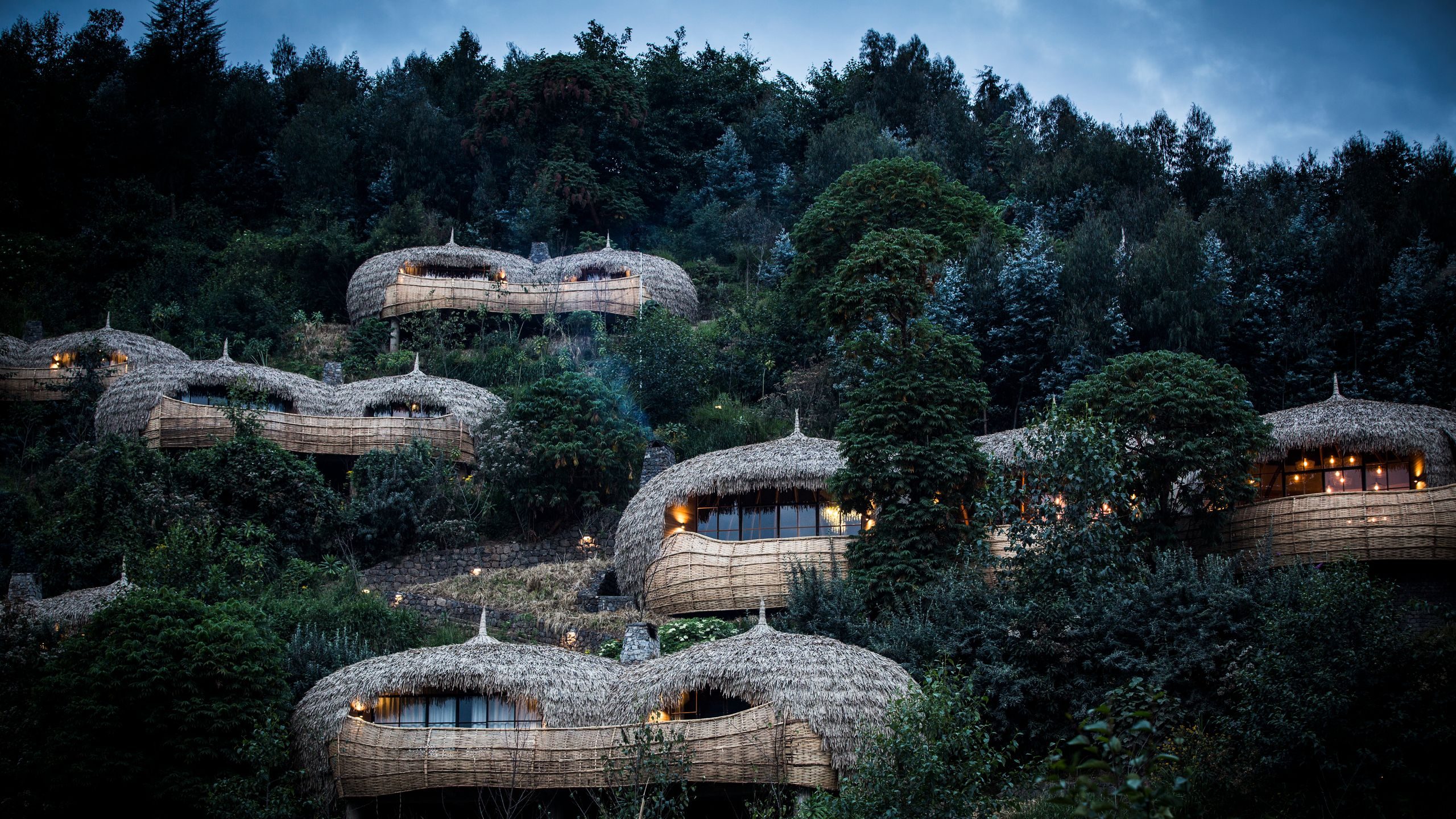
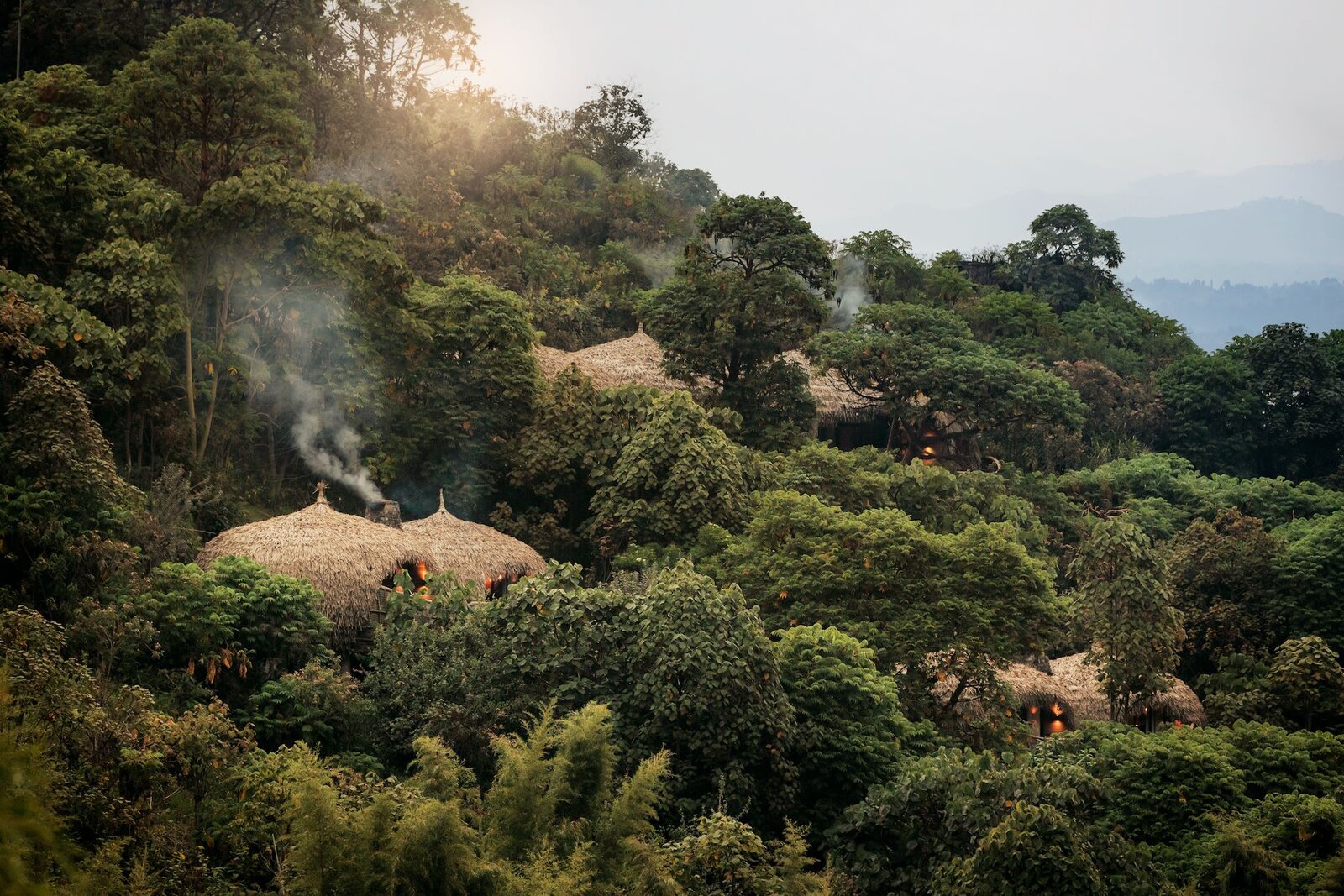
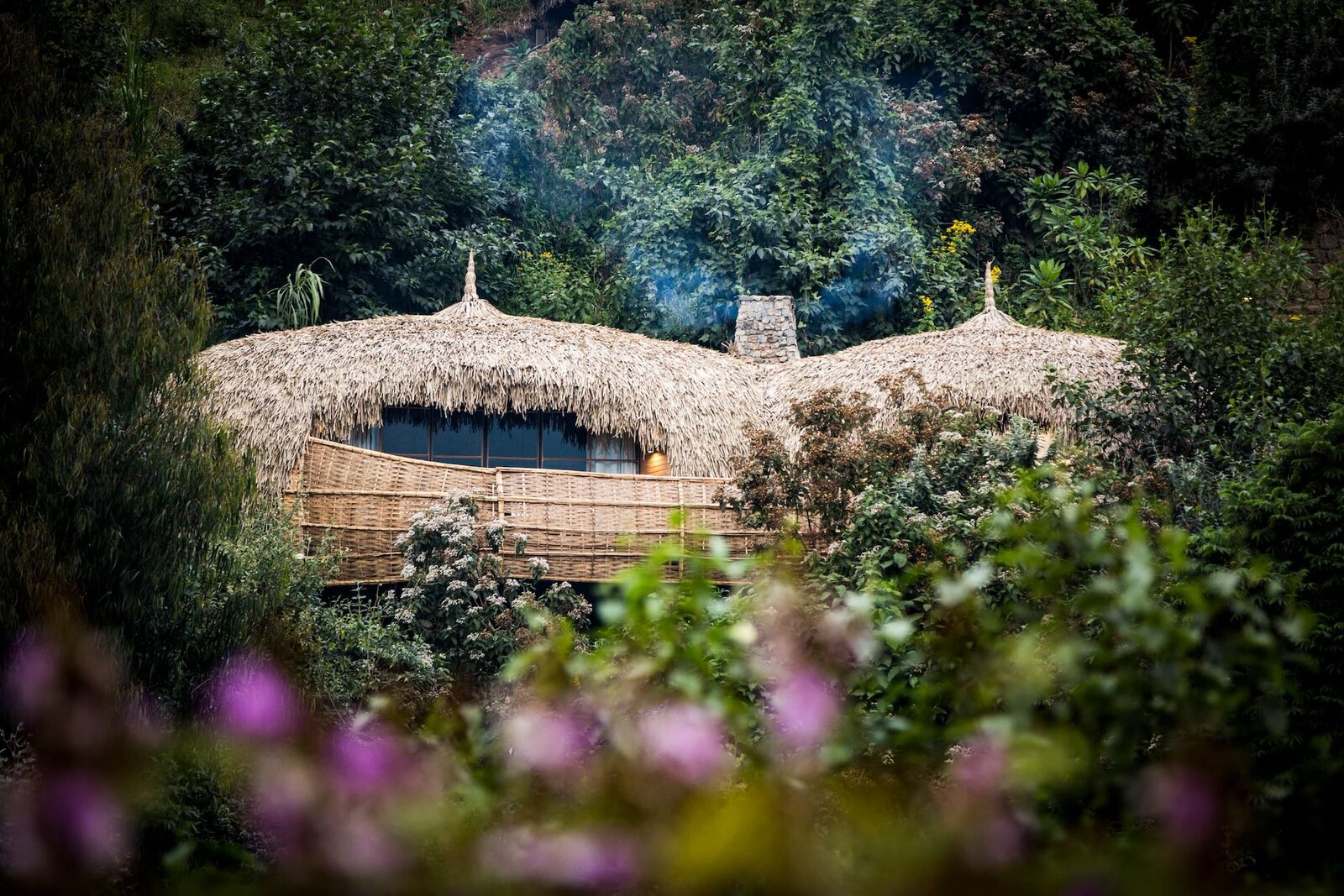
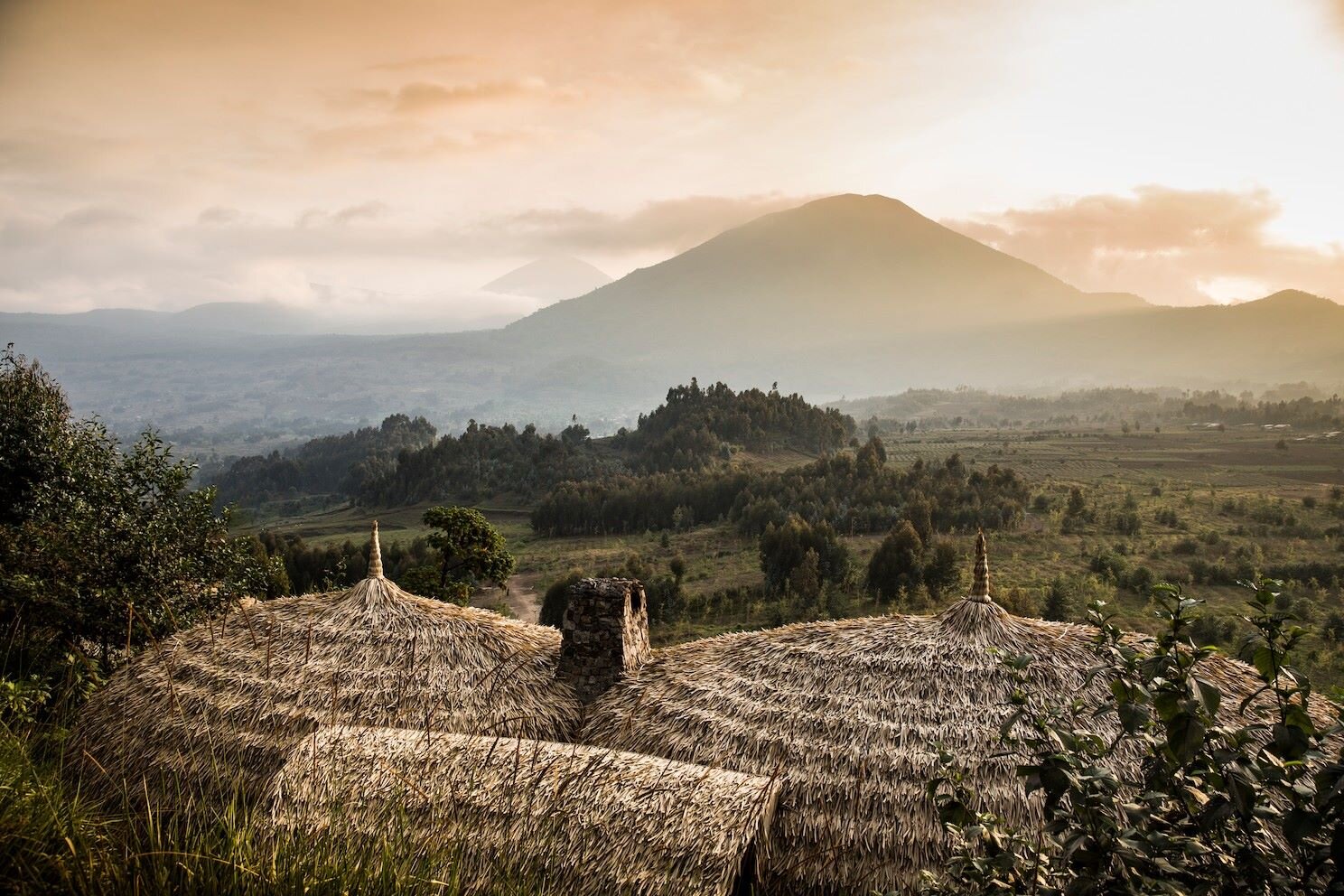
Bisate is not built to stand out against the land — it is built to rise from it. Set within the natural amphitheatre of an eroded volcanic cone, its six elevated villas were designed to resemble giant birds' nests, their spherical thatched forms echoing the circular shape of the traditional Rwandan royal palace at Nyanza. The name Bisate means "pieces" in Kinyarwanda — a reference to the shards of volcanic rock scattered across the site, which the builders wove into the pathways, walls and fireplaces. From the forest below, the villas look like something the mountain itself grew.
Opened in 2017 by Wilderness — one of Africa's most respected conservation-tourism companies — Bisate was conceived as far more than a beautiful place to sleep before a gorilla trek. It was designed as a living restoration project. The land the lodge sits on was once degraded farmland at the park's edge; today it is being returned to indigenous forest, one planted tree at a time. Bisate has been named a National Geographic Unique Lodge of the World, has featured on nearly every "best lodge on earth" list published since it opened, and remains the definitive luxury base for trekking to the mountain gorillas of Volcanoes National Park. It is, quite simply, the most architecturally distinctive and conservation-driven lodge on Rwanda's gorilla frontier.
The Forest Villas & Experiences at Bisate Lodge
Bisate is a small, intimate lodge — just six villas — and its magic lies as much in what you do from it as where you sleep. Here are the three experiences that define a stay: the forest villas themselves, the primate trekking, and the reforestation-and-wellness story that sets Bisate apart from every other lodge on the gorilla circuit.
1. Forest Villas
The signature Bisate experience, and the reason the lodge has become an icon. Each of the six forest villas is a spherical, thatched structure elevated on a platform, reached by a raised walkway through the regenerating forest. Inside, the domed ceiling soars overhead, woven from natural fibres and local craft; a fireplace anchors the room against the cool mountain air; and a king-sized bed faces a wall of glass framing Mounts Bisoke, Karisimbi and Mikeno. The en-suite bathroom is generous and warm, the deck private, and the whole villa is finished in earthy textiles, volcanic stone and Rwandan artistry. It is the choice for couples, honeymooners and anyone who wants the full drama of Bisate's architecture — a room that feels like a nest suspended between the forest and the volcanoes.
2. Gorilla & Golden Monkey Trekking
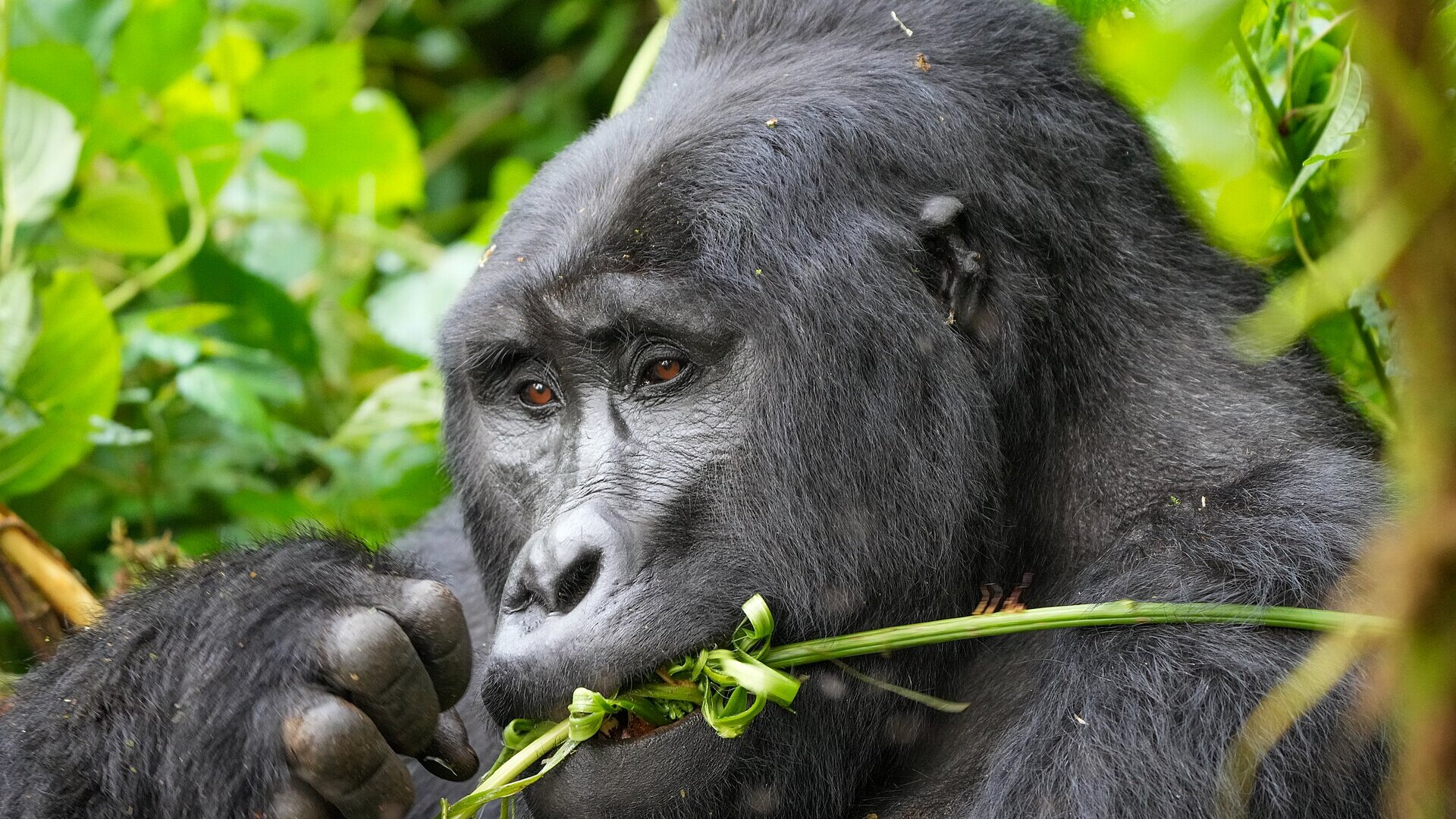
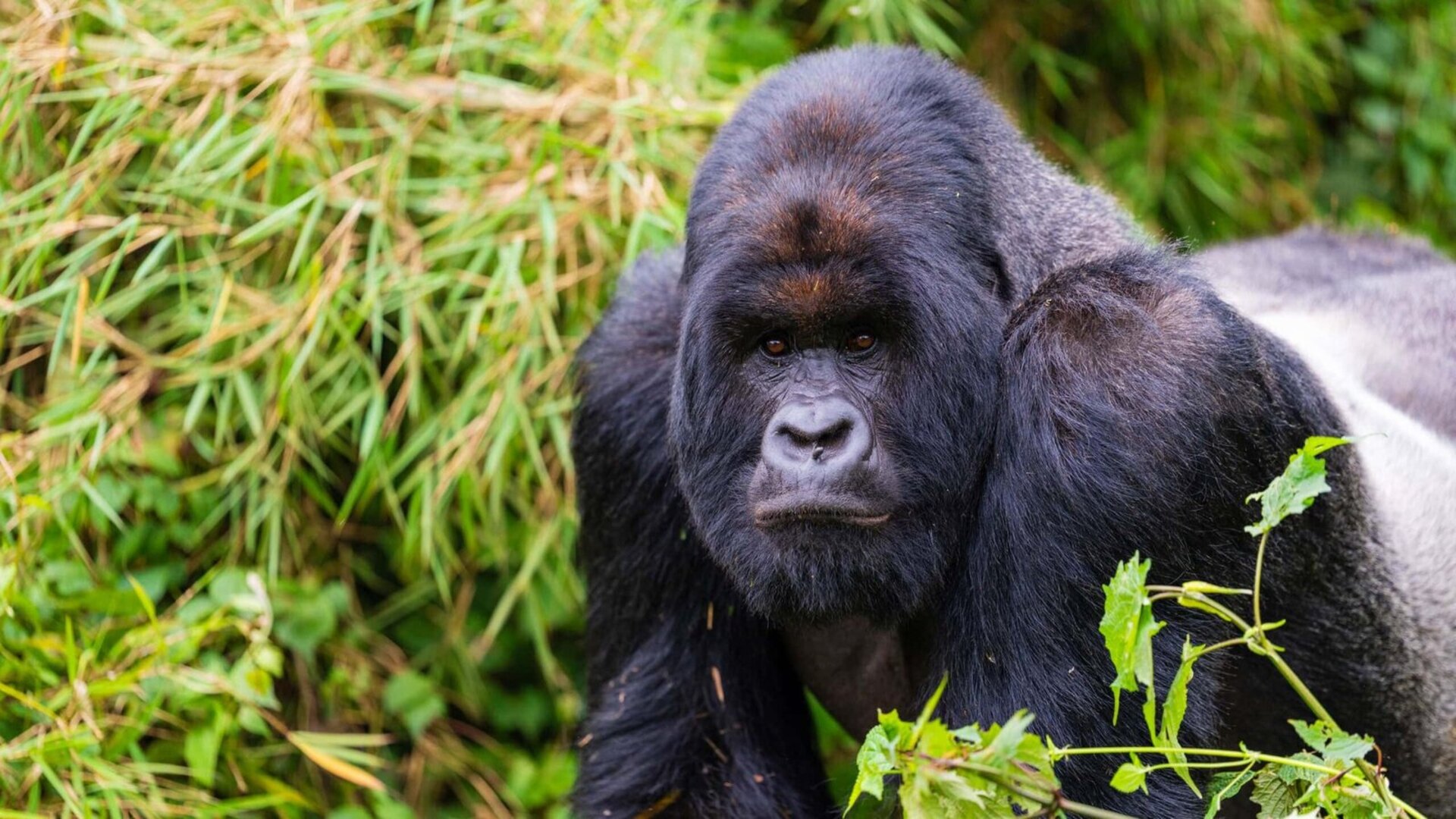
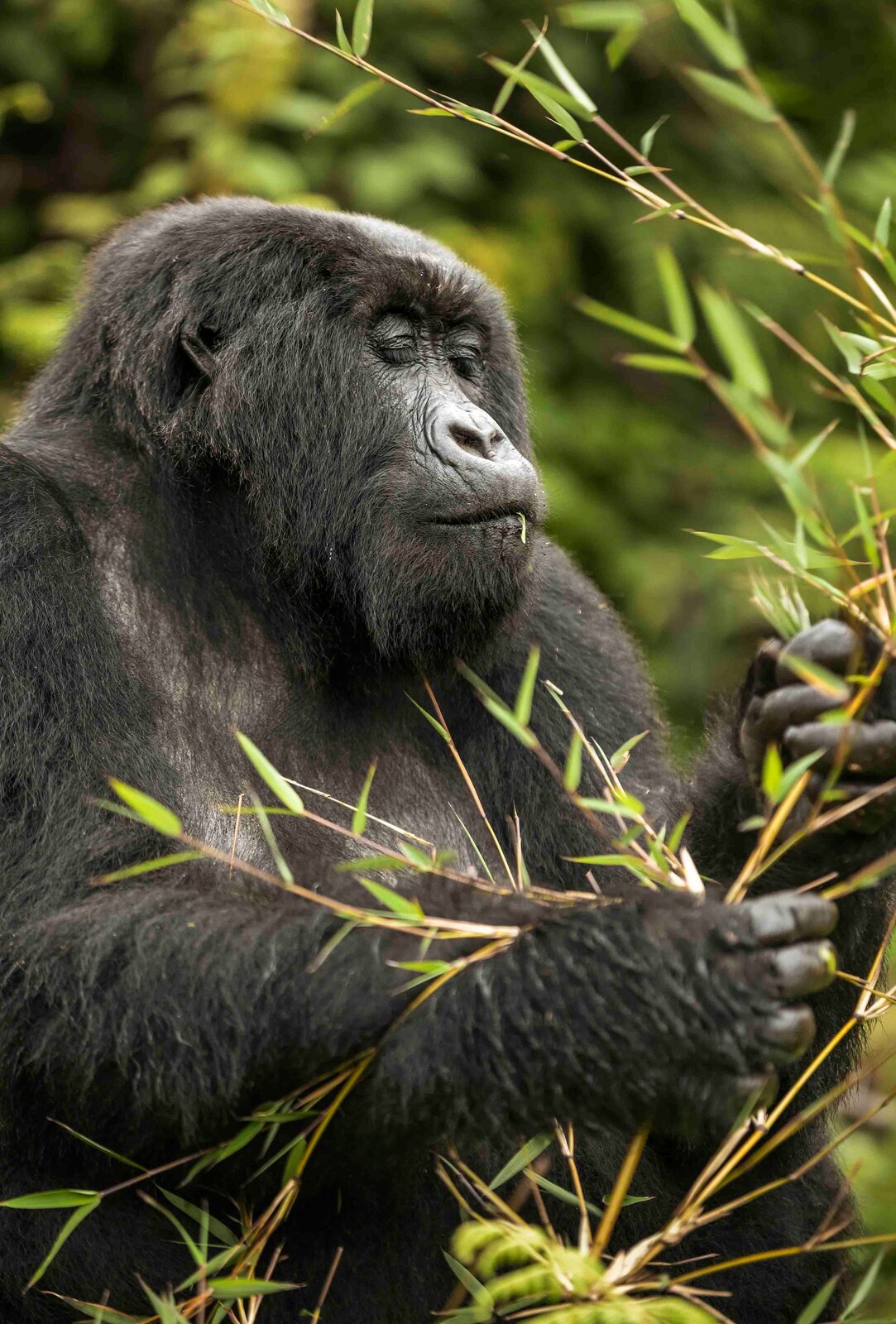
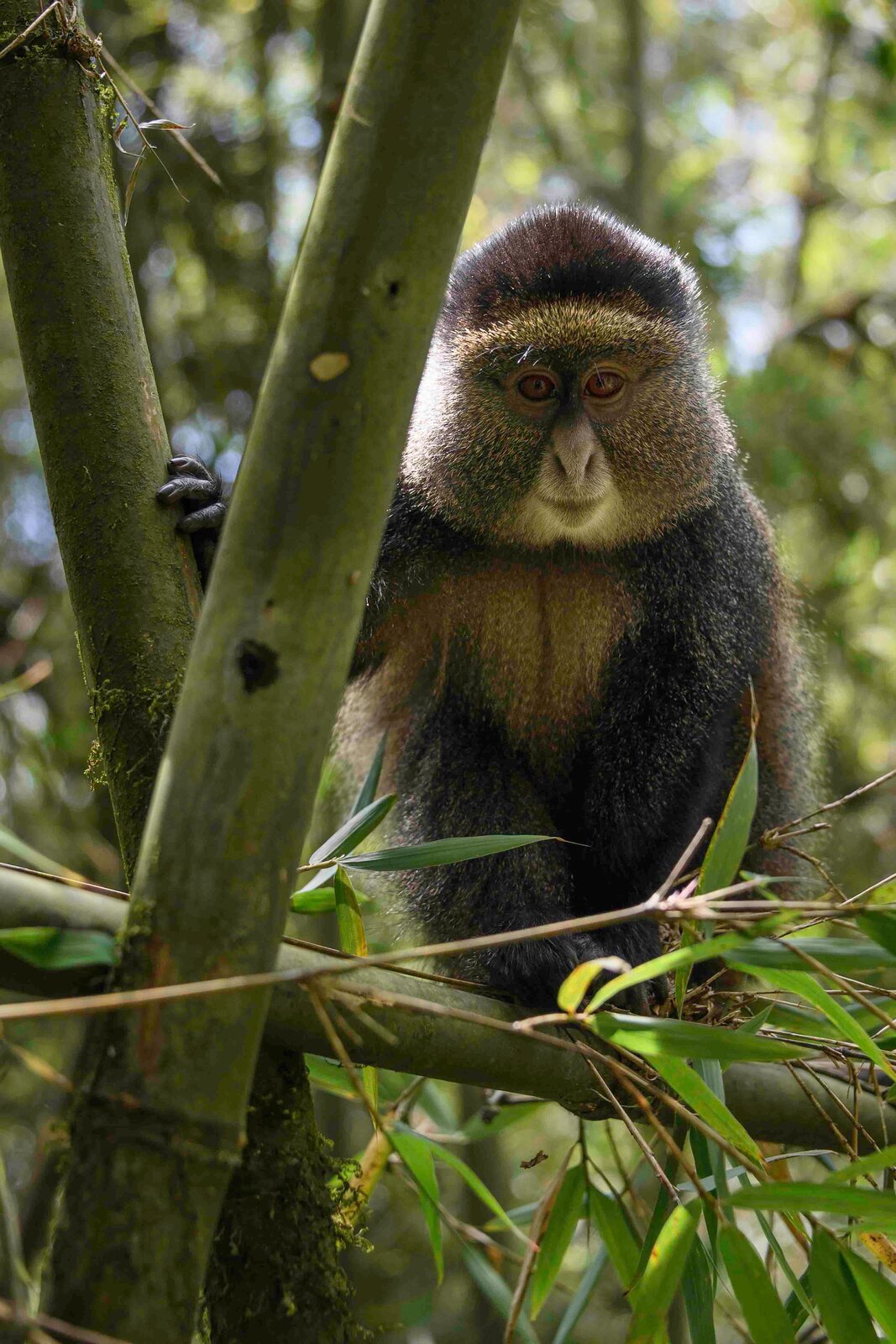
The reason most guests come to Rwanda, and Bisate's greatest advantage. The lodge sits minutes from the trailheads of Volcanoes National Park — the shortest transfer of any luxury lodge on the mountain — so mornings begin not with a long drive but with a short one to the park briefing point, coffee in hand. From there, guided by park rangers and trackers, you climb through farmland and into the misted bamboo and Hagenia forest to spend one profound, permitted hour in the presence of a mountain-gorilla family. It is, without exaggeration, one of the most moving wildlife encounters on earth. Bisate also offers golden monkey trekking — a lighter, faster trek to see troops of the endangered, russet-and-gold primates leaping through the bamboo — plus guided hikes to the Dian Fossey research grave site, summit climbs of Mount Bisoke, and birding across the forest edge.
3. The Reforestation Project & The Sanctuary
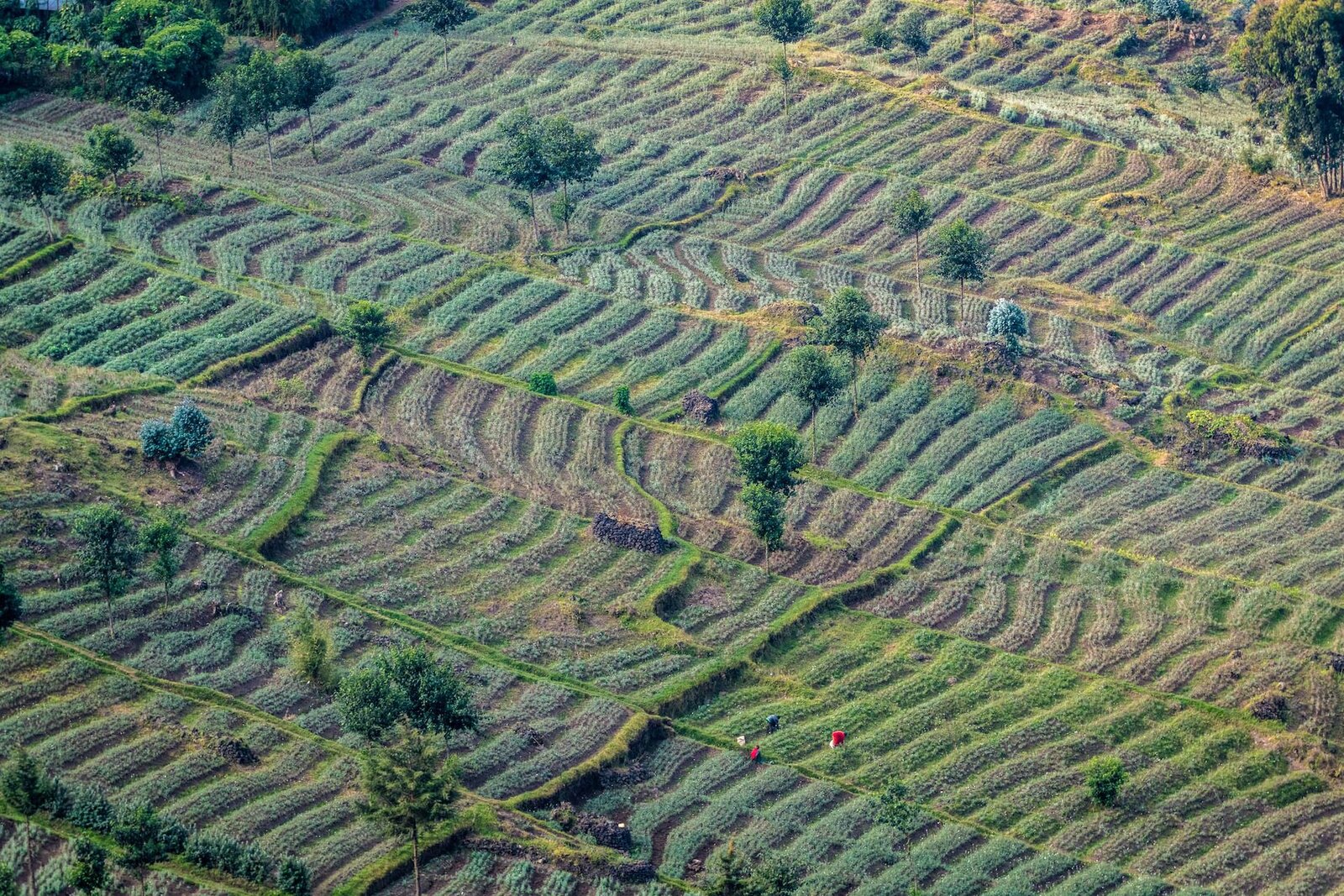
Bisate's unique indulgences — experiences you will not find at any other gorilla lodge. The land beneath the lodge was once eroded farmland; today it is one of Africa's most visible habitat-restoration stories. Guests are invited to plant their own indigenous sapling and receive a certificate with its GPS coordinates, adding to the more than 120,000 trees already planted to rebuild forest for the gorillas and golden monkeys. Walking the reforestation terraces with a Bisate guide — learning which species were chosen, and why — is one of the most quietly powerful hours of any stay. After the mountain, guests recover at The Sanctuary, Bisate's dedicated wellness space, where treatments, warmth and stillness soothe legs tired from the trek. Together, the reforestation project and The Sanctuary give Bisate a sense of purpose that turns a luxury stay into something closer to a pilgrimage.
Bisate Lodge Rates at a Glance
| Option | Style | Best for | Approximate Rate (2026) |
|---|---|---|---|
| Forest Villa — Green Season | Nest-like thatched villa with fireplace & volcano views | Couples, honeymooners, photographers | ~US$2,000 pp/night (fully inclusive) |
| Forest Villa — Peak Season | Same villa, high-demand dry-season dates | Prime trekking conditions, guaranteed sightings | ~US$2,600 pp/night (fully inclusive) |
All rates above are estimates for 2026 and include accommodation, all meals, selected beverages, laundry, guided activities and transfers from the Musanze area. Gorilla trekking permits are not included and are set by the Rwanda Development Board at US$1,500 per person per trek; golden monkey permits are approximately US$100 per person. A three-night minimum stay is recommended to allow for at least two treks.
The Gorilla-Trekking Experience from Bisate
Bisate sits at the very edge of Volcanoes National Park, the Rwandan sector of the transboundary Virunga Massif that straddles Rwanda, Uganda and the Democratic Republic of Congo. The park protects a significant share of the world's roughly 1,000 remaining mountain gorillas — the population made famous by Dian Fossey, whose research base lay high on these slopes. Trekking is strictly managed: a limited number of permits are issued each day, groups are small, and time with a habituated family is capped at one hour to protect the animals. Treks range from an easy hour to a strenuous half-day climb depending on where the gorillas have moved, and Bisate's team matches guests to a family suited to their fitness. Beyond the gorillas, the park is alive with golden monkeys, forest elephant sign, buffalo, and more than 200 bird species, while the emerald cones of Bisoke, Karisimbi and Mikeno provide one of the most dramatic backdrops in African travel.
The Architecture & the Philosophy Behind It
The defining feature of Bisate — the reason it has become one of the most photographed lodges in Africa — is its nest-inspired architecture. The villas draw on ihumure, the circular, thatched form of the traditional Rwandan royal palace, reimagined as elevated spheres woven from natural materials. Each sits lightly on the land, raised on a platform so the forest can grow beneath it, its domed interior warmed by a fireplace and opened to the volcanoes by a wall of glass. Volcanic rock — the "pieces" that give Bisate its name — is set into pathways, walls and hearths, tying the buildings to the ground they rose from.
But the architecture is only half the story. Bisate was built on a philosophy that a lodge should give more to the land than it takes. The reforestation project restores degraded farmland to indigenous forest, extending habitat for gorillas and golden monkeys and drawing back servals, bushbuck and dozens of bird species. The lodge employs and trains local people, buys from surrounding communities, and channels tourism revenue directly into conservation. It is a model that Wilderness has since carried across the continent, but Bisate remains its most complete expression — a place where luxury, design and conservation are not competing priorities but a single, seamless idea.
Dining, Wellness & the Daily Rhythm at Bisate
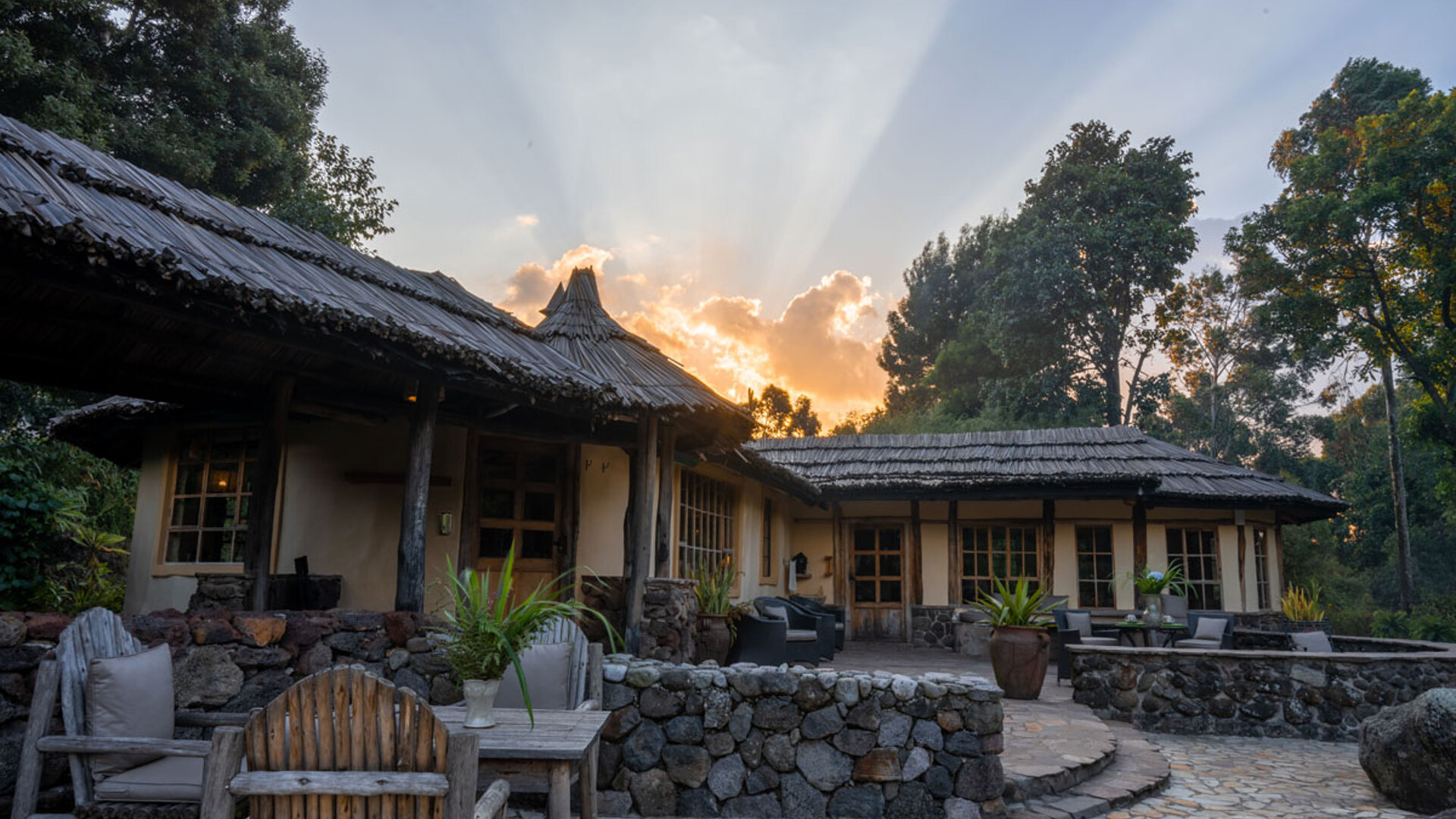
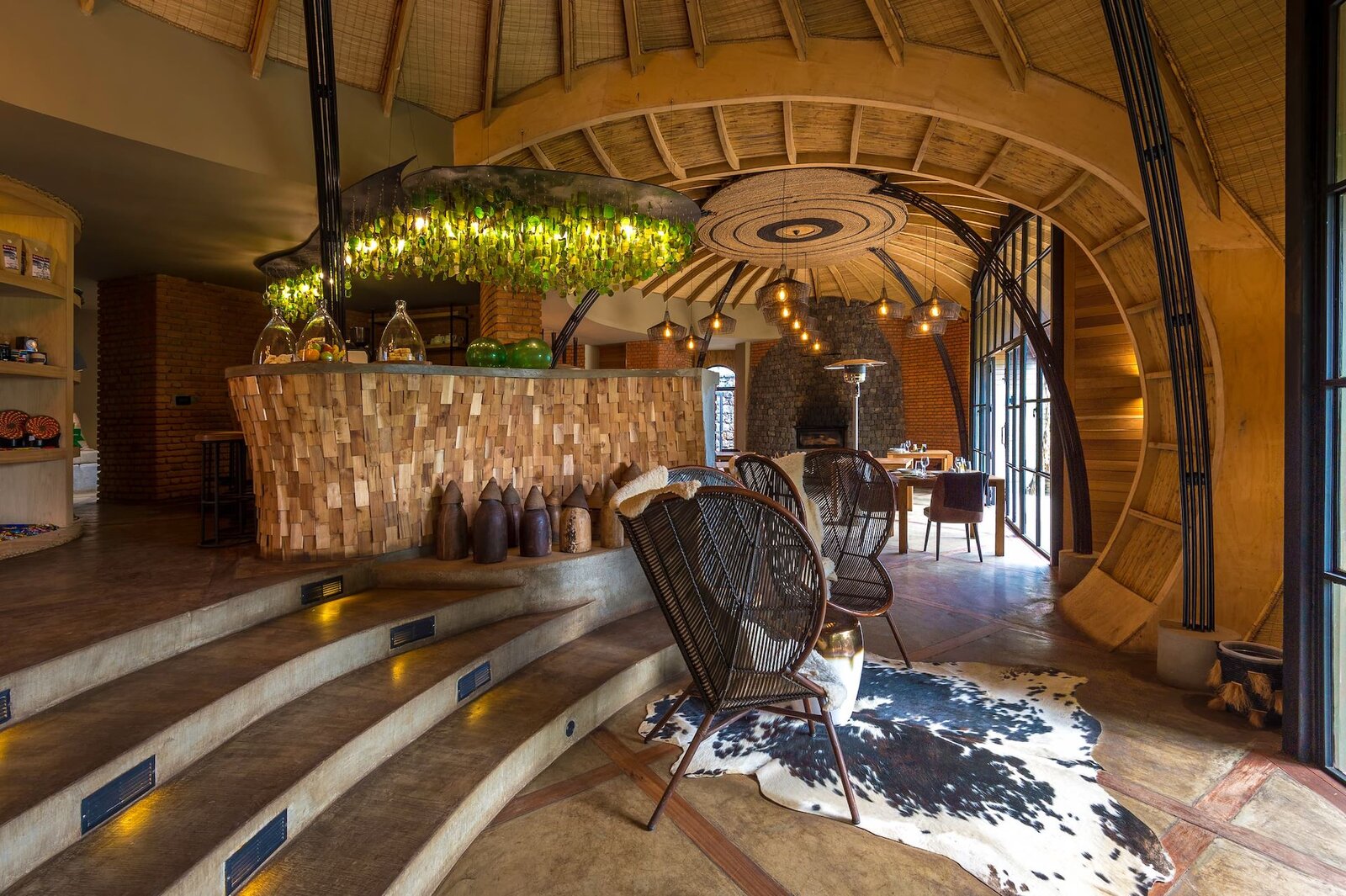
Meals at Bisate celebrate Rwandan produce — much of it grown in the lodge's own gardens and sourced from surrounding farms — prepared with a light, contemporary hand. Breakfast is hearty and early, timed to the trek; a warm packed lunch or a leisurely lunch back at the lodge follows the mountain; and dinner is a convivial affair by the fire, with Rwandan and international dishes and a genuinely good cellar. The famous Kwanda day lounge means guests arriving before check-in, or departing after a final trek, always have a warm, comfortable place to shower, eat and rest — a small touch that matters enormously after a muddy climb.
The daily rhythm follows the mountain. You rise in the dark, gather for coffee and a briefing, and transfer the short distance to the park headquarters, where treks are allocated at first light. The morning belongs to the forest — to the climb, the tracking, the hour with the gorillas or golden monkeys. Afternoons are yours: for a treatment at The Sanctuary, for a walk through the reforestation terraces, for planting your tree, for a village visit, or simply for sinking into a chair by your villa fire as the mist rolls down the volcanoes. Evenings close around the fire with sundowners and the day's stories. It is a slower, more contemplative rhythm than a Big Five safari — and for many guests, all the more moving for it.
Getting There & Combining Bisate with the Rest of Africa
Bisate Lodge lies in northwestern Rwanda, near the town of Musanze on the edge of Volcanoes National Park. Most guests fly into Kigali International Airport, then transfer to the lodge by road — a scenic drive of roughly two-and-a-half to three hours through Rwanda's famous terraced hills — or by helicopter for those who prefer to save time. The road journey is part of the experience, winding past markets, tea estates and the country's extraordinarily clean, orderly landscapes.
Because a gorilla trek is intense but short, Bisate combines beautifully with the rest of the continent. We most often pair it with a Big Five safari — three nights at Bisate for the gorillas, then onward to the plains of the Serengeti or Masai Mara, or south to South Africa's Sabi Sand — so guests experience both the forest and the savannah. Within Rwanda, Bisate links naturally to Akagera National Park for classic game viewing and Nyungwe Forest for chimpanzee trekking, or to the beaches of Lake Kivu to decompress. We handle all permits, flights, transfers, lodges and the tailor-made itinerary from door to door — including the notoriously time-sensitive gorilla-permit booking, which we secure the moment your dates are confirmed.
What We Tell Our Clients — The Honest Take
Bisate Lodge is one of the most special places we send guests anywhere in Africa — but it is worth being clear about what it is and is not. It is not a Big Five safari: you will not tick off lion, elephant and buffalo from a game vehicle here. It is a forest lodge built around a single, extraordinary purpose — coming face to face with mountain gorillas — wrapped in some of the most beautiful architecture and sincere conservation on the continent. The villas are magical. The setting, inside a volcanic amphitheatre with the Virungas beyond, is unmatched. The reforestation story gives the stay a depth that pure luxury cannot. And the trekking itself is a life-list experience that guests describe, without hyperbole, as one of the great hours of their lives.
We recommend Bisate most often to couples and honeymooners seeking a profound, design-led experience, to photographers and conservation-minded travellers, and to anyone building a gorilla-and-savannah combination across East or Southern Africa. It is less suited to guests seeking a classic Big Five safari as their only destination, to those unwilling to undertake a physically demanding trek at altitude, or to travellers on a tight budget — between the lodge rate and the US$1,500 permit, Rwanda is a premium destination, and Bisate sits at the top of it. But for those who connect with its vision, Bisate is not just a lodge — it is the finest possible base for one of the most moving journeys in all of wildlife travel.
Frequently Asked Questions
1. How much does a stay at Bisate Lodge cost?
Rates in 2026 run from approximately US$2,000 per person per night in the green season to around US$2,600 per person per night in peak dry-season months, on a sharing basis. Rates are fully inclusive of accommodation, all meals, selected beverages, laundry, guided activities and transfers from the Musanze area. Gorilla trekking permits are additional and are set by the Rwanda Development Board at US$1,500 per person per trek; golden monkey permits are approximately US$100 per person. A three-night minimum stay is recommended so you can undertake at least two treks and enjoy the reforestation and wellness experiences.
2. How close is Bisate to the gorilla trailheads?
Bisate is one of the closest luxury lodges to Volcanoes National Park — the transfer from the lodge to the park briefing point takes only a short drive, typically 20 to 30 minutes depending on the trailhead assigned that morning. This proximity is one of Bisate's greatest practical advantages: mornings begin with coffee and an unhurried departure rather than a long pre-dawn drive, leaving you fresher for the climb ahead.
3. How physically demanding is gorilla trekking from Bisate?
Gorilla trekking ranges from a gentle one-hour walk to a strenuous half-day climb, depending on where the gorilla family has moved that day and which family you are allocated. The terrain is steep, muddy and at altitude (roughly 2,500 metres and above), so a reasonable level of fitness helps. However, treks are matched to ability wherever possible, porters are available to carry bags and assist on tricky sections, and guests of a wide range of ages and fitness levels complete the trek successfully every day. We advise clients to arrive with sturdy waterproof boots, rain gear and gaiters — much of which the lodge can also provide.
4. How does Bisate compare to gorilla lodges in Uganda?
Rwanda and Uganda both offer world-class mountain-gorilla trekking, but the experiences differ. Rwanda — and Bisate specifically — offers the shortest, most polished journey: a quick flight to Kigali, a scenic drive, and a lodge minutes from the trailheads, with a US$1,500 permit. Uganda's Bwindi Impenetrable Forest offers a more rugged, forest-immersed trek and a lower permit price (around US$800), but longer travel times and more basic infrastructure at most lodges. For guests who value comfort, design and efficiency — and who are combining the gorillas with a wider luxury itinerary — Bisate and Rwanda are usually the better fit. For adventurous travellers prioritising cost and wilderness feel, Uganda has its own strong case. We plan both and will advise honestly based on your priorities.
5. What else can I do at Bisate besides gorilla trekking?
Plenty. Golden monkey trekking is a lighter, faster trek to see troops of the endangered golden monkey leaping through the bamboo — a favourite with photographers. You can hike to the Dian Fossey grave site and former research camp, climb Mount Bisoke to its crater lake, go birding along the forest edge, visit surrounding villages and community projects, and — uniquely to Bisate — plant your own indigenous tree in the reforestation project, receiving a certificate with its GPS coordinates. The Sanctuary wellness space offers treatments to soothe tired legs, and the lodge's guides lead walks through the regenerating forest that are as informative as they are beautiful.
6. When is the best time to visit Bisate Lodge?
Gorilla trekking is possible year-round, but conditions vary. The long dry season (June to September) and the short dry season (December to February) offer the most comfortable trekking, with firmer trails and clearer views of the volcanoes — these are peak periods, with higher rates and permits that book out far in advance. The wetter months (March to May and October to November) bring muddier, more challenging trails but lush green landscapes, fewer visitors and often greater lodge availability. Because permit numbers are strictly capped, we recommend booking your dates — and therefore your permits — as far ahead as possible, whatever the season.