Congo vs Rwanda Gorilla Trekking — Why the Choice Matters
If you type “gorilla trekking” into a search bar, Rwanda usually fills the first page. Mountain gorillas. Volcanoes National Park. A USD 1,500 permit. Lodges with volcano views. It is a brilliant product — polished, accessible and justifiably famous.
What that search rarely surfaces is the other great gorilla experience on the continent: western lowland gorilla trekking in the Republic of Congo (Congo-Brazzaville), centred on Odzala-Kokoua National Park. Same genus. Different subspecies. Different forest. Different logistics. Different price architecture. And, for many travellers who have done both, a completely different emotional register.
This is not a contest to crown a single winner. It is a decision framework. Rwanda is the right answer for many first-time trekkers, shorter itineraries and guests who want near-certain sightings without a multi-week expedition. Congo is the right answer for travellers who want exclusivity, rainforest immersion and a full safari that happens to include gorillas rather than a gorilla day bolted onto a city break. The honest travellers often end up wanting both.
Use this guide alongside our deep dives: the western lowland gorilla trekking guide, the Volcanoes National Park gorilla trekking guide, the Republic of Congo safari cost breakdown and the Rwanda gorilla trekking cost guide.
Key Differences at a Glance
Before the long-form breakdown, here is the comparison table most travellers need on a first pass. Figures are indicative 2026 ranges and move with season, lodge tier and package structure.
| Factor | Congo (ROC) — Western Lowland | Rwanda — Mountain Gorilla |
|---|---|---|
| Subspecies | Western lowland gorilla (Gorilla gorilla gorilla) | Mountain gorilla (Gorilla beringei beringei) |
| Setting | Odzala-Kokoua primary rainforest, marantaceae understorey, baïs & rivers | Volcanoes National Park bamboo & montane forest on Virunga volcanoes |
| Trek difficulty | Lower altitude, high heat/humidity, muddy, navigationally complex | Higher altitude climb, steeper slopes, cooler air, variable length |
| Encounter style | More natural, arboreal, less staged; groups often more mobile | Fully habituated, calmer framing, more predictable behaviour |
| Habituation | Semi- to well-habituated families (e.g. Jupiter, Saturn sectors) | Fully habituated families with decades of visitor contact |
| Time with gorillas | Typically up to ~2 hours once located | Strict 1-hour limit once with the family |
| Group size | Very small — often max 4 guests per trek | Up to 8 visitors per habituated family (plus guides/trackers) |
| Permit cost | USD 400–750 (often bundled in camp packages) | USD 1,500 per person per trek |
| Typical trip cost | USD 10,575–19,745 for 7–12 nights incl. charters | USD 3,000–8,000 for 3–5 nights (excl. international flights) |
| Accommodation | Luxury forest camps: Ngaga, Lango, Mboko (tiny room counts) | Wide range: Bisate, Singita Kwitonda, One&Only, Sabyinyo to mid-range |
| Accessibility | International flight to Brazzaville + charter into Odzala | ~2.5-hour road transfer from Kigali to Volcanoes NP |
| Exclusivity | Extremely high — few camps, few guests, deep wilderness | Moderate — popular circuit, more lodges, more concurrent trekkers |
| Best time | Jun–Sep & Dec–Feb dry seasons (year-round possible) | Year-round; Jun–Sep & Dec–Feb preferred for drier trails |
| Beyond gorillas | Forest elephants, bongo, forest buffalo, baï & river safari | Golden monkeys; easy add-ons to Akagera, Nyungwe, Kigali |
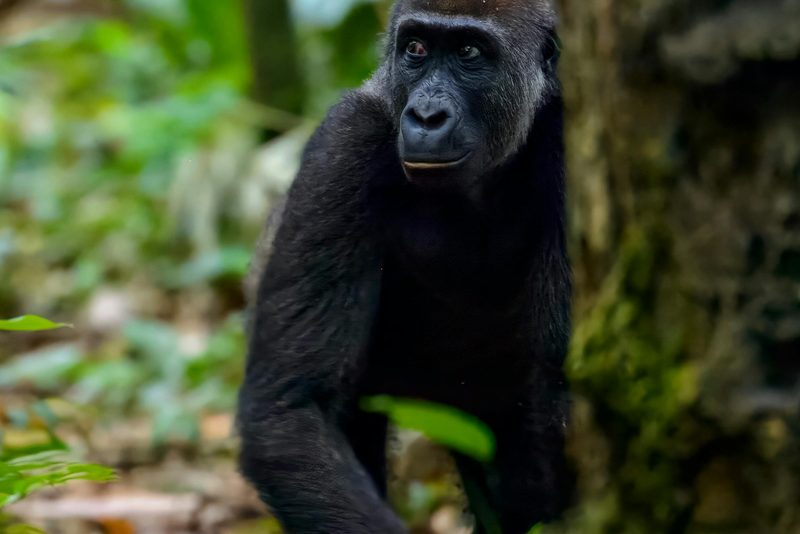
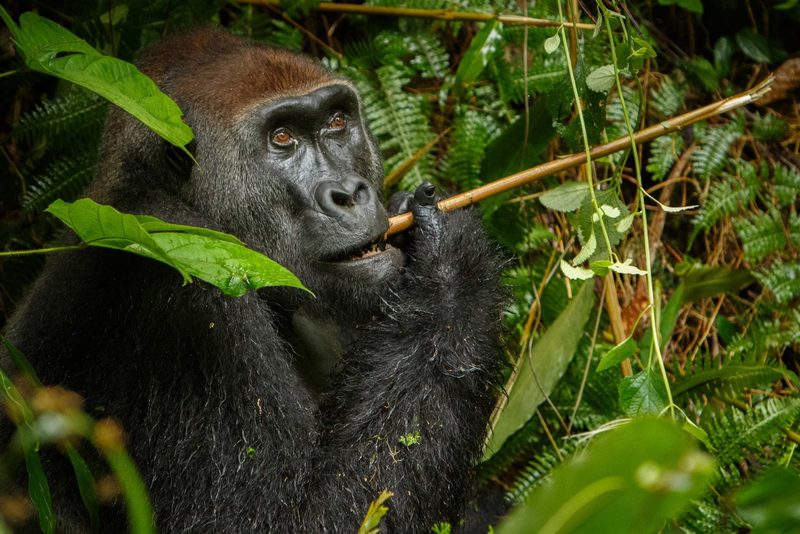
Congo (ROC) — Western Lowland Gorillas in Odzala-Kokoua
The setting: marantaceae forest and the Ndzehi sector
Odzala-Kokoua National Park covers roughly 13,500–13,600 square kilometres of Congo Basin rainforest in the Republic of Congo, co-managed with African Parks. This is not montane bamboo. It is lowland equatorial forest — hot, humid, layered, and thick with marantaceae, the broad-leafed understorey plants western lowland gorillas favour for food and cover.
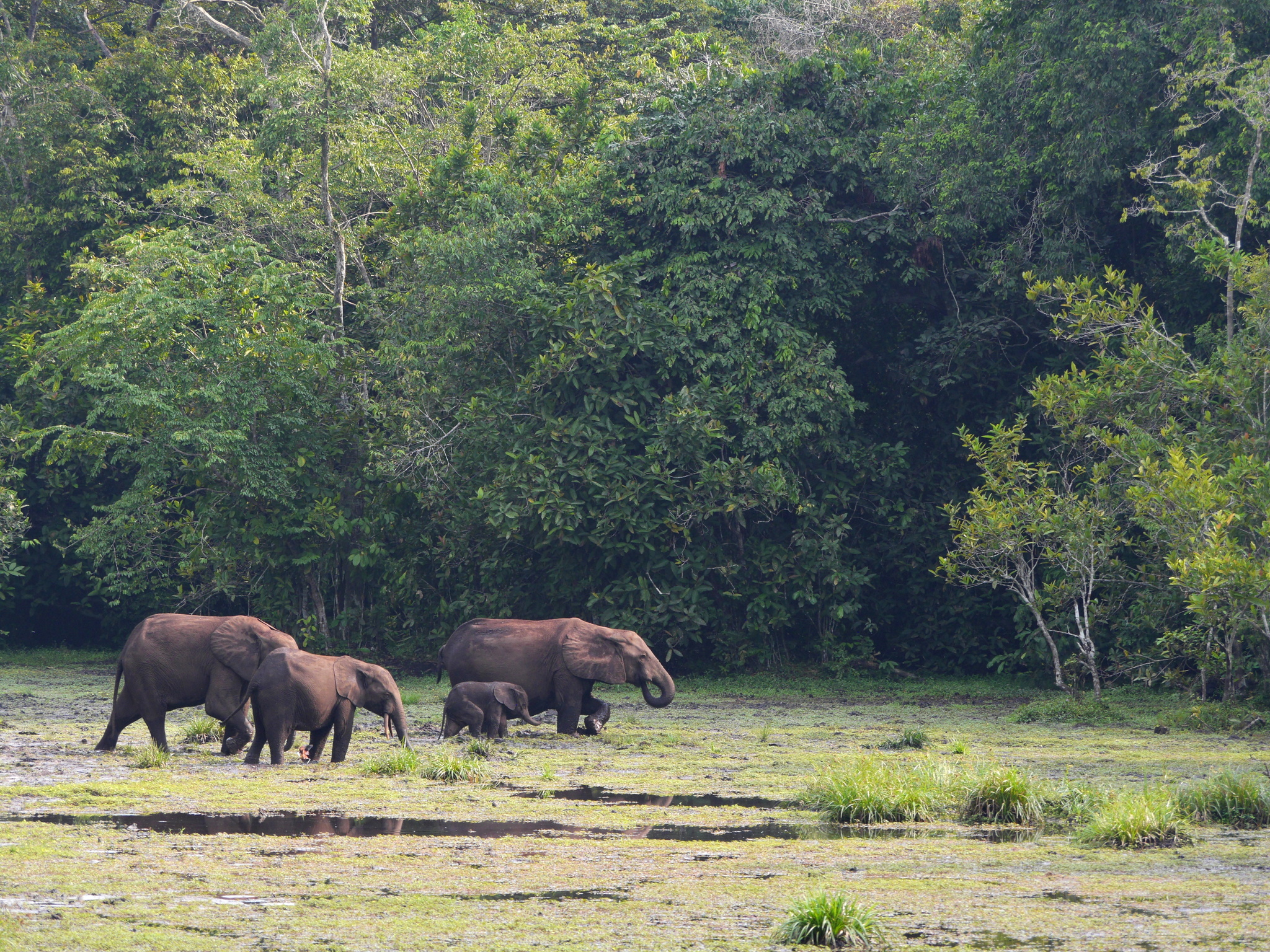
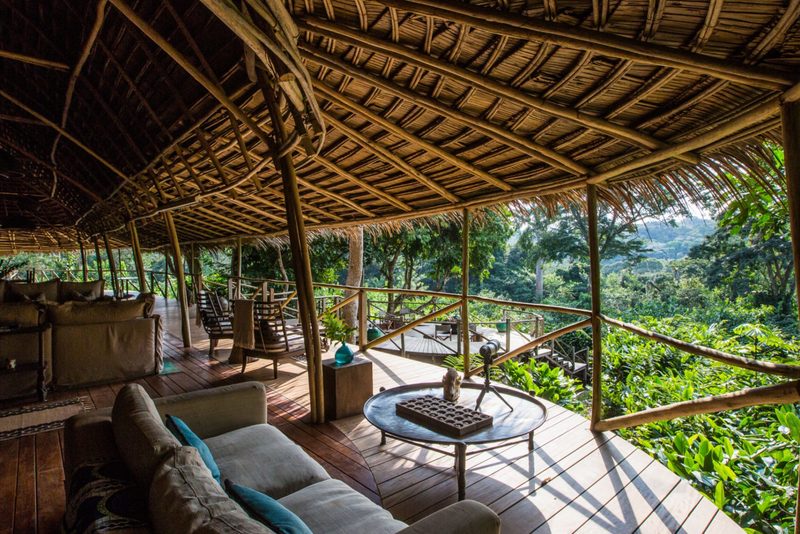
The gorilla-tracking epicentre is the Ndzehi sector, where Ngaga Camp sits on stilts in the canopy. From here, Ba’Aka trackers lead tiny guest groups — typically a maximum of four — into the forest each morning. The park is also a multi-habitat product: mineral-rich baïs (forest clearings) around Lango Camp draw forest elephants, bongo and buffalo; the Lekoli and Mambili rivers around Mboko Camp open pirogue time, night drives and savanna-edge wildlife. Gorillas are the headline. They are not the whole story. See where to stay in Odzala and our Top 10 Congo safari lodges ranking.
The experience: semi-habituated, natural, unpredictable
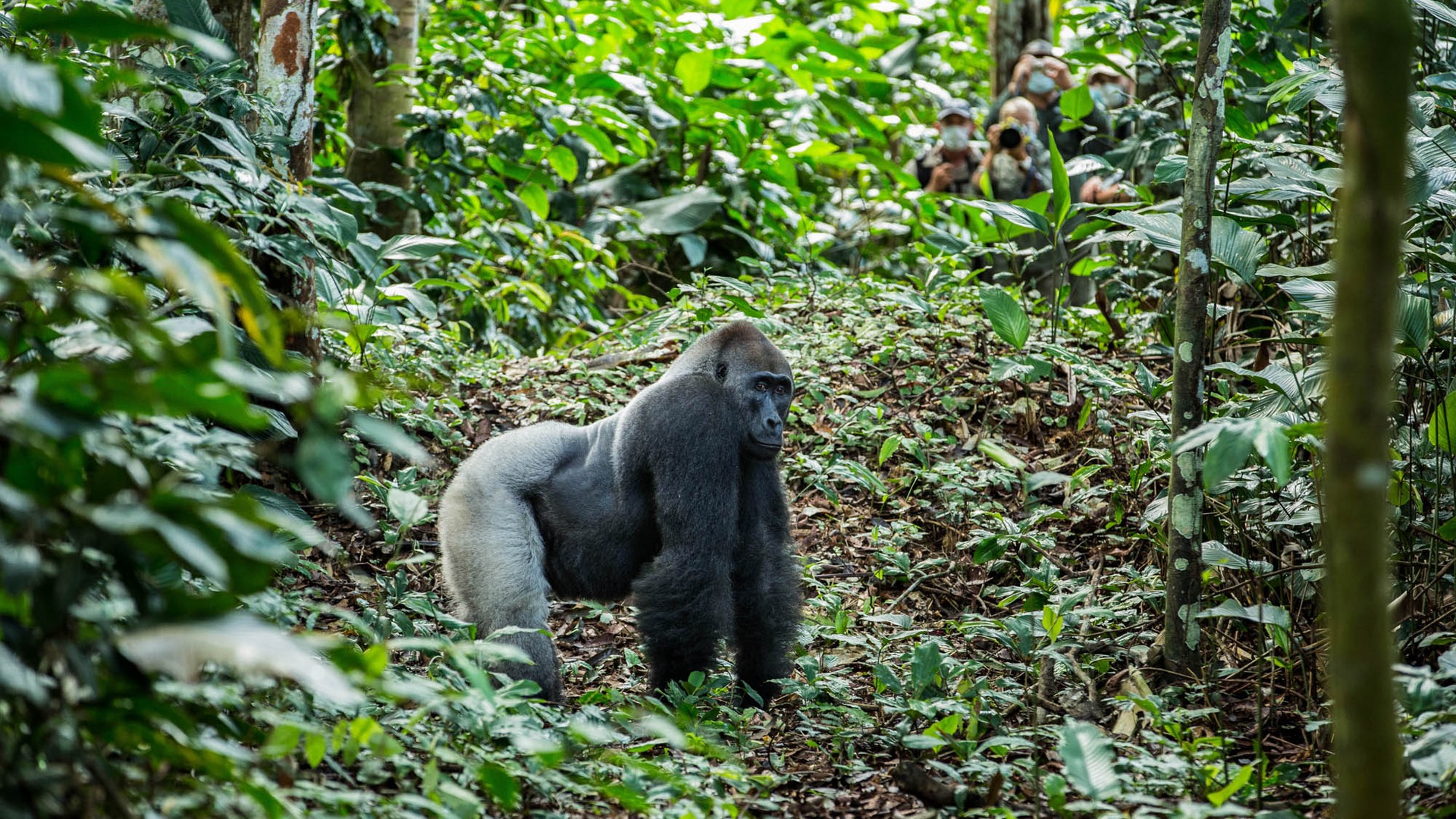
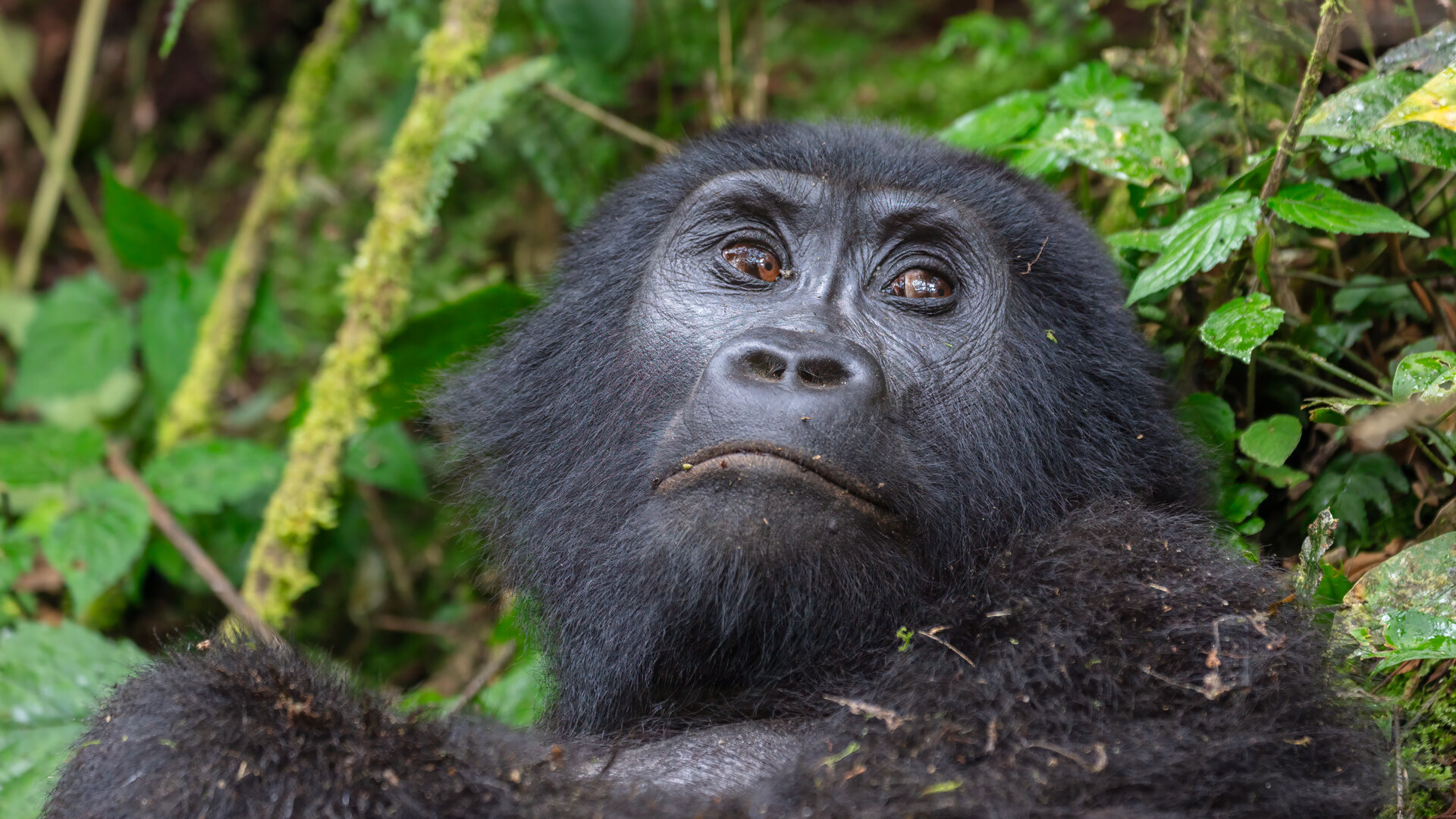
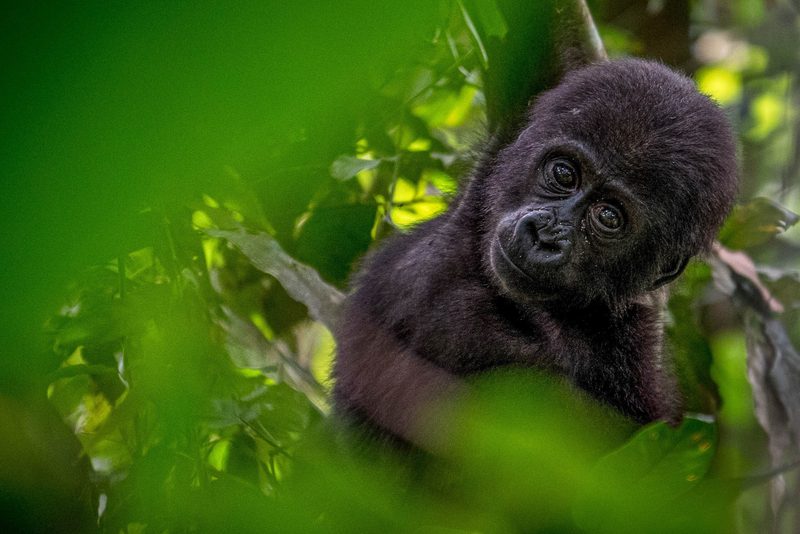
Western lowland gorilla families in Odzala are habituated enough for ethical, close encounters — and wild enough that the day still feels like tracking, not a scheduled viewing. Families can be more arboreal than mountain gorillas. Light is lower under the canopy. The forest floor can turn to mud and ankle-deep water. A trek may resolve in under an hour or stretch past five as trackers read fresh trails through elephant paths and swampy patches.
Once with the family, time limits are typically more generous than Rwanda’s strict one hour — often up to around two hours, subject to guide judgement and animal comfort. The emotional texture many guests describe is intimacy without a crowd: fewer people, denser forest, animals that still move like free forest dwellers rather than a daily parade. Sightings across a multi-night Ngaga stay are very likely; a single day is never a guarantee. That is why two or three nights at Ngaga is the standard recommendation in our trekking guide.
Permits, costs and what the money actually buys
Western lowland gorilla permits in Odzala typically run USD 400–750 per trek and are often bundled into all-inclusive Ngaga packages when trekking is scheduled. Do not confuse the lower permit with a cheaper trip. The landed cost of a Congo gorilla safari is driven by charter aircraft, remote logistics and multi-night camp circuits, not by the permit line item.
Expect roughly USD 10,575–19,745 per person for classic 7–12 night packages including park camps, guiding, most meals and drinks, park fees and the Brazzaville–Odzala charter network. Nightly camp rates sit around USD 800–1,200 per person sharing all-inclusive. Full money detail lives in the Republic of Congo safari cost guide. Packages to start with: Odzala Discovery (7 nights), Odzala Odyssey (10 nights) and Congo Immersion (12 nights).
Logistics: Brazzaville, charters and minimum nights
Access is expedition-shaped. Fly internationally into Maya-Maya Airport, Brazzaville, clear immigration (yellow fever certificate mandatory), overnight in the capital if needed, then take a light-aircraft charter north into Odzala. There is no practical self-drive product. Operators hold the charter seats and camp allocations; walk-in tourism does not exist here.
Minimum sensible park time is about six to seven nights to justify the charter — ideally weighted across Ngaga (gorillas), Lango (baï) and Mboko (river). Best trail and wildlife conditions cluster in the long dry season June–September and short dry December–February; gorilla trekking runs year-round. Month-by-month detail: best time to visit Republic of Congo. Country frame: Ultimate Republic of Congo Safari & Travel Guide.
Wildlife beyond gorillas
This is where Congo pulls ahead of a pure gorilla day-trip. At Lango, forest elephants and forest buffalo work the mineral baï at dawn and dusk; bongo and sitatunga appear for patient watchers; African grey parrots fill the air. At Mboko, pirogues open river birds, fishing and occasional elephant at the water’s edge, with night drives for genets and other nocturnal species. The multi-camp circuit is not padding. It is the reason Odzala is a safari destination rather than a single-species tick.
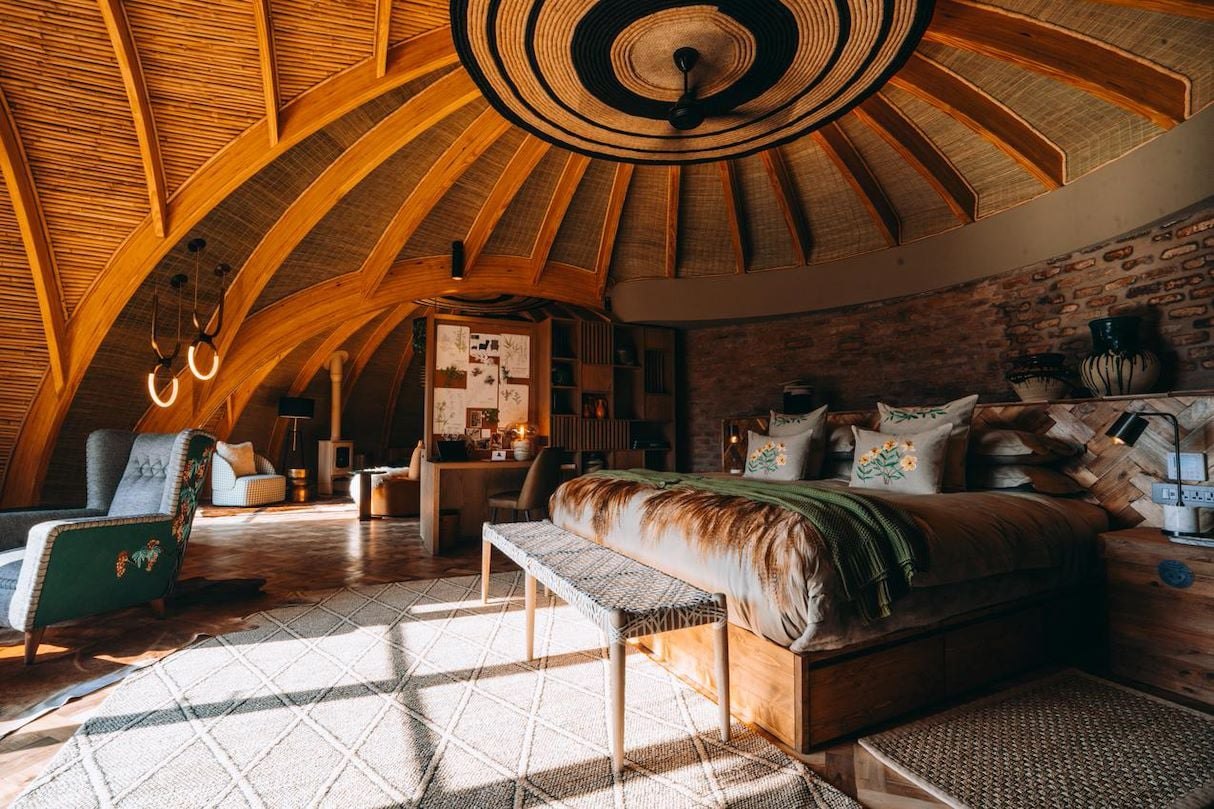
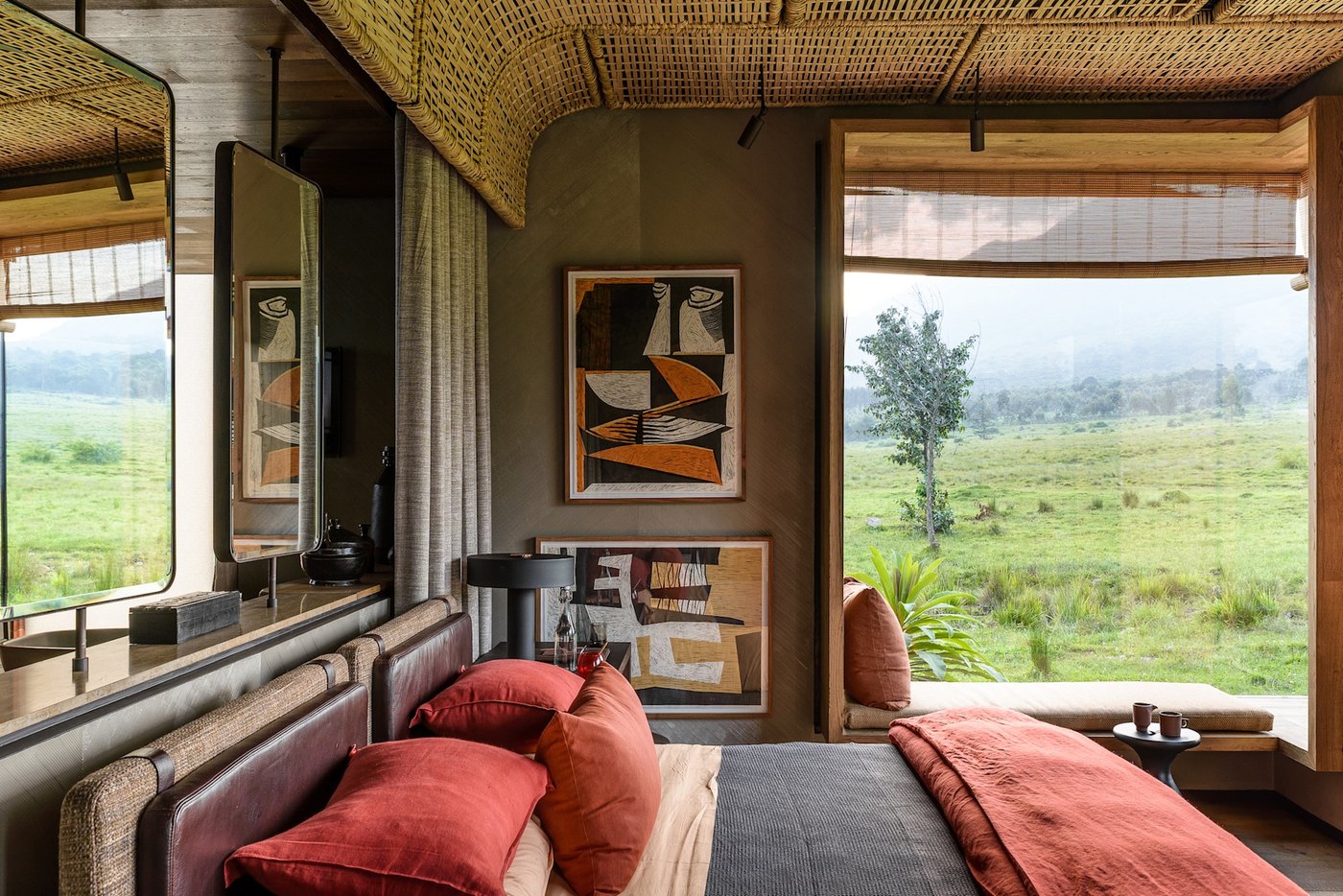
Rwanda — Mountain Gorillas in Volcanoes National Park
The setting: bamboo forest on the Virunga volcanoes
Volcanoes National Park protects the Rwandan sector of the Virunga massif — a chain of volcanoes shared with Uganda and the DRC, cloaked in bamboo, Hagenia forest and open meadows at elevations that can push past 3,000 metres. This is the landscape that made mountain gorilla tourism famous: cooler air than the Congo Basin, steeper approaches, and lodges strung along the park edge with views toward Karisimbi, Bisoke and the surrounding peaks.
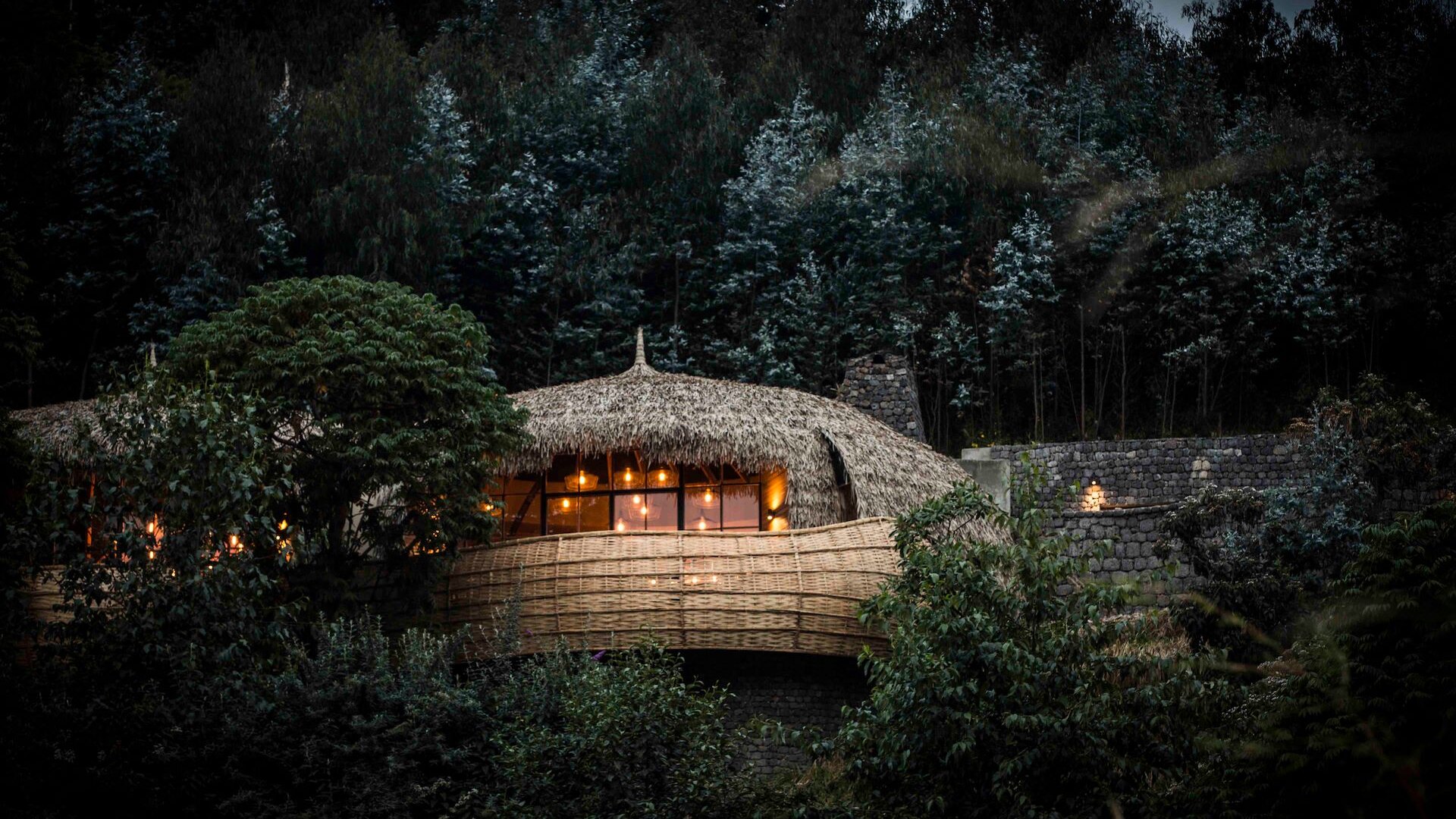
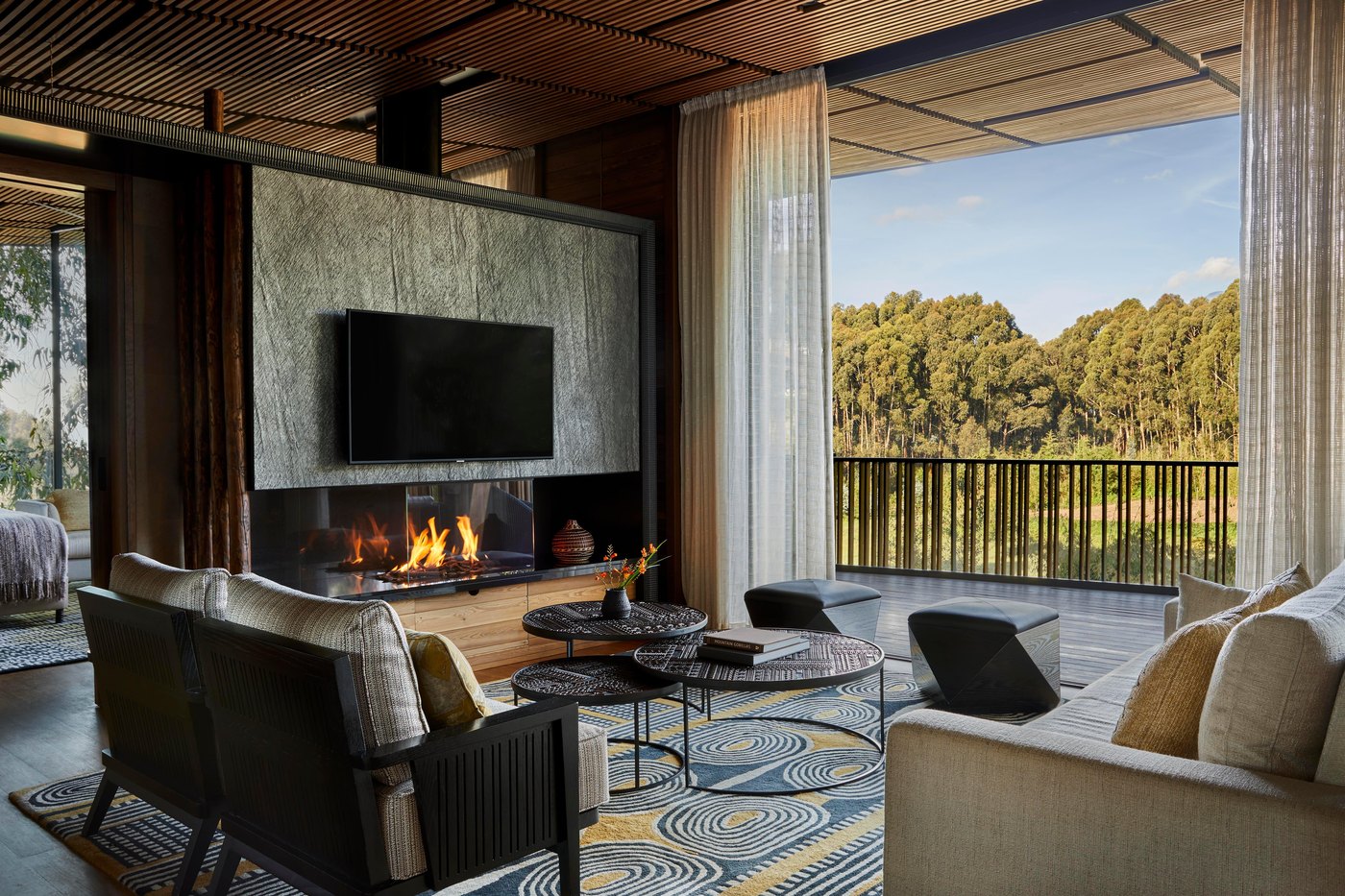
The lodge strip is one of Africa’s densest luxury clusters for a single activity. Bisate Lodge (Wilderness) is the design icon set into reforestation amphitheatres. Singita Kwitonda brings Singita’s conservation-and-cuisine standard to the volcanoes. One&Only Gorilla’s Nest, Sabyinyo Silverback Lodge, Five Volcanoes and a ladder of mid-range properties give first-timers real choice on budget and style. Full lodge context: best luxury gorilla lodges in Rwanda and the Ultimate Rwanda Travel Guide.
The experience: fully habituated, predictable, one-hour limit
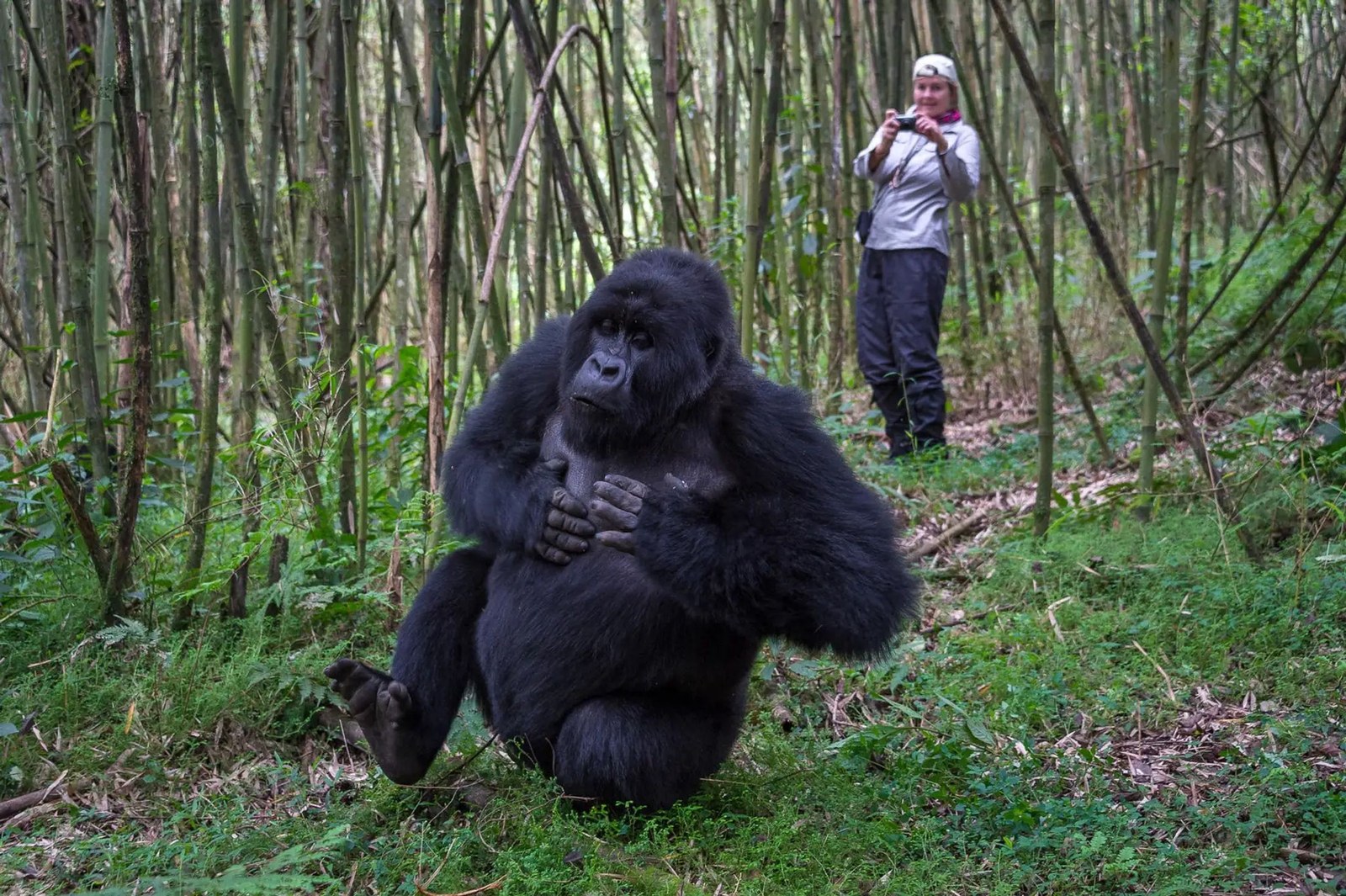
Mountain gorilla families in Volcanoes are among the most carefully managed wildlife tourism products on Earth. Decades of habituation mean families tolerate visitor groups with remarkable calm. On a booked permit day, sightings are effectively near-certain. You are briefed at the park headquarters, assigned a family based on fitness and preference, then driven to a trailhead where trackers who left at dawn radio the family’s location.
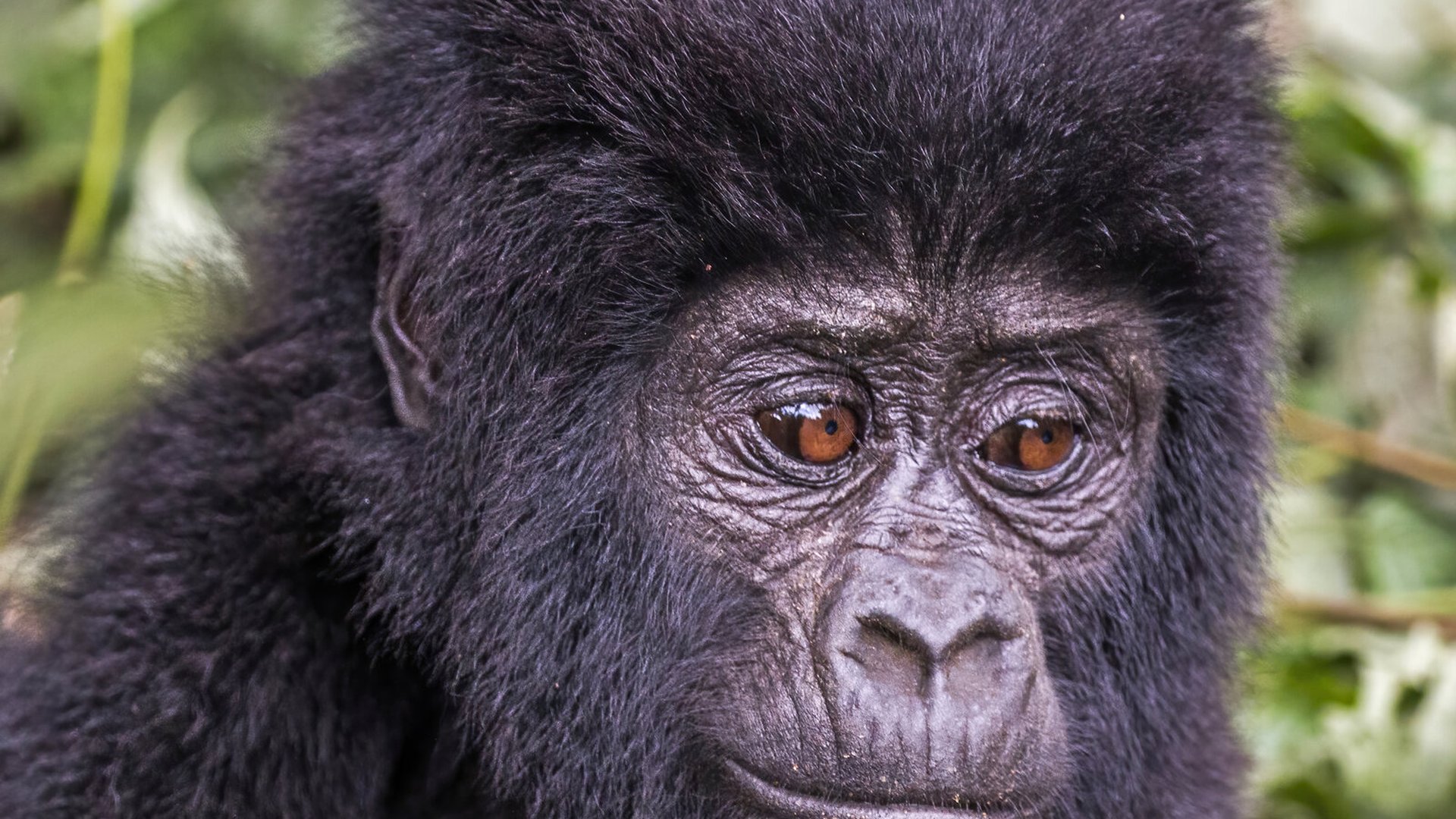
The climb can be short or long depending on where the family slept. Terrain is steeper than Odzala; altitude is higher; mud is real in the rains. Once with the gorillas, the clock is strict: one hour. Groups are larger than Congo — up to eight visitors per family plus guides and trackers — so the social atmosphere is busier. For many guests that trade-off is acceptable: the animals are close, the behaviour is readable, and the photographs come home. For others who later visit Odzala, the Congo forest feels emptier and more primal by comparison.
Permits, costs and short-trip economics
The Rwanda mountain gorilla permit is USD 1,500 per person — one of the most expensive single wildlife permits in Africa, and a deliberate conservation-and-tourism pricing tool. Lodge nights range from mid-range hundreds of dollars to ultra-luxury well over USD 1,500–2,000+ per person. A focused 3–5 night gorilla trip often lands in the USD 3,000–8,000 band per person excluding international flights, depending on lodge tier, number of treks and whether you add golden monkeys or Kigali nights.
That is still serious money — but it is a shorter, more modular spend than a Congo circuit. You can do a standalone gorilla weekend without buying a multi-week rainforest expedition. Cost detail: how much does Rwanda gorilla trekking cost. Broader East Africa gorilla context: Rwanda vs Uganda gorilla trekking.
Logistics: Kigali road access and combo options
Fly into Kigali International Airport, clear a straightforward visa process, and drive roughly 2.5 hours northwest to the Volcanoes lodge strip. No charter required. No multi-day positioning. Many travellers trek one morning, recover, optionally add a second permit or golden monkey trek, then continue to Akagera for Big Five savanna, Nyungwe for chimpanzees, or fly onward to Uganda’s Bwindi for a second mountain gorilla park. See private safari tours in Rwanda and when to visit Rwanda and Uganda for gorilla trekking.
This accessibility is Rwanda’s structural advantage. It is also why the circuit feels more “touristed” than Odzala: more lodges, more concurrent groups, more vehicles on the park road at dawn. The product remains excellent. It is simply a different density of human presence.
A Day on Trek — Side by Side
Understanding the emotional difference is easier if you walk through a typical day in each destination.
Odzala morning (Congo): You wake in an elevated tent at Ngaga under a dripping canopy. Breakfast is early. Ba’Aka trackers and a Kamba guide brief the group — often just two, three or four guests. You leave on foot into marantaceae, following fresh dung, broken stems and the low talk of trackers who read the forest the way a river guide reads current. There may be wading. There will be heat. When the family is found — silverback, females, juveniles moving through mid-storey and undergrowth — you settle in for up to around two hours. The light is green and filtered. Nobody else is there. Afternoon might mean a second forest walk, or simply the long quiet of camp while hornbills work the canopy.
Volcanoes morning (Rwanda): You wake with volcano silhouettes on the horizon. Transfer to park headquarters for the public briefing and family allocation. Porters are available. The trail climbs through farmland into bamboo and Hagenia. Trackers radio ahead. When you reach the family, the hour begins — calm animals, clear viewing protocols, a group that may include travellers from several lodges. Photographs come easily. By early afternoon you are often back at the lodge for lunch, a massage, or a golden-monkey booking the next day. The day is structured, efficient and deeply satisfying in a different register.
Neither day is “better.” One is expedition rainforest. The other is classic montane primate tourism executed at a very high standard. Your preference usually tracks how you travel everywhere else: do you want the empty place, or the polished certainty?
Practical Checklist Before You Book Either
- Health: Yellow fever certificate is mandatory for the Republic of Congo and often required or checked on regional itineraries. Malaria prophylaxis is essential for Odzala and still relevant for Rwanda’s lower elevations and travel days. Travel insurance must include medical evacuation — non-negotiable for Congo charters.
- Fitness honesty: If steep climbs at altitude worry you more than heat and mud, lean Rwanda and request a closer family allocation. If you dislike crowds and humidity more than hills, lean Congo and pack seriously for wet underfoot conditions.
- Lead time: Congo dry-season camps and charters: 6–12 months. Rwanda peak permits and top lodges: similar lead time, sometimes tighter around high season and holidays.
- Minimum ages: Mountain gorilla trekking in Rwanda is typically 15+. Congo gorilla trekking is generally oriented to adults; confirm operator policy for older teens.
- Photography kit: Fast primes or a bright zoom help in Congo’s canopy gloom; rain covers are mandatory in both. Rwanda often allows cleaner portraits; Congo rewards atmospheric, behavioural frames.
- Ethics: Stay the distance your guide sets. No flash. Masks may be required when close to great apes. Turn back if you are unwell — gorillas have no spare immune system for human respiratory viruses.
For the wider Congo Basin frame, return to the country pillar. For Rwanda beyond the volcanoes — lakes, cities, secondary parks — see the Land of a Thousand Hills guide and Rwanda safari tours guide 2026.
Who Should Choose Congo — and Who Should Choose Rwanda
Choose the Republic of Congo if you are…
- An adventurer seeking exclusivity — tiny camps, few guests, forests that still feel empty at dawn.
- A rainforest lover — primary Congo Basin jungle, marantaceae understorey, baïs and black-water rivers as the daily stage.
- Someone who wants a full safari beyond gorillas — forest elephants at Lango, river days at Mboko, multi-habitat circuits rather than a single trek day.
- A photographer chasing natural encounters — wilder behaviour, denser atmosphere, fewer competing lenses in the frame.
- Willing to invest in remote access — charter logistics, 7–12 night minimums, and budgets in the USD 10,500–20,000 band.
- A return visitor who has already done mountain gorillas — and wants the other subspecies and a different emotional register.
Choose Rwanda if you are…
- A first-time gorilla trekker — wanting the classic mountain gorilla experience with maximum predictability.
- Prioritising guaranteed sightings — fully habituated families and near-certain permit-day success.
- Working a shorter trip budget or timeline — 3–5 nights from Kigali without a multi-week expedition.
- Needing easier accessibility — road transfer from an international airport, no charter dependency.
- Travelling with family or less mobile companions — clearer age rules, wider lodge choice, gentler overall logistics (treks themselves still demand fitness).
- Building a multi-country East Africa itinerary — easy links to Uganda Bwindi, Akagera, Nyungwe or a Kenya/Tanzania extension.
Can You Do Both? The Ultimate Gorilla Odyssey
Yes — and for serious primate travellers it is the correct long-game answer. Western lowland and mountain gorillas are not interchangeable. Doing both is the only way to understand the full African gorilla story: lowland rainforest versus montane bamboo, semi-wild tracking versus fully habituated calm, expedition exclusivity versus accessible classic.
A practical combination looks like this:
- 7–10 nights Odzala (Ngaga + Lango + optionally Mboko) for western lowland gorillas and Congo Basin wilderness.
- Transit via Brazzaville, then fly to Kigali.
- 3 nights Volcanoes National Park for one or two mountain gorilla permits, optionally golden monkeys.
- Total trip length: roughly 12–16 days including positioning nights.
- Total budget: roughly USD 15,000–30,000 per person depending on lodge tier, season and number of permits — see cost guides for Congo and Rwanda.
Book 9–12 months ahead. Hold Congo charters and Ngaga nights first — they are the scarcer inventory — then lock Rwanda permits and lodge dates around the Brazzaville–Kigali connection. We design these combinations regularly for clients who refuse to choose.
Our Honest Take
The Republic of Congo is more exclusive, more expensive in total trip cost, and more remote — and it offers wilder western lowland encounters inside a multi-habitat rainforest safari that East Africa cannot replicate. The humidity is real. The mud is real. A single trek day can miss. The reward is emptiness, intimacy and a forest that still feels like wilderness rather than a product line.
Rwanda is more accessible, more predictable and more “touristed” — and it remains one of the finest wildlife experiences on Earth. The mountain gorilla hour is unforgettable. The logistics are clean. The lodge choice is superb. If you have one short window and one gorilla dream, Rwanda is the rational first move.
If you have the time, the budget and the appetite for two subspecies, do not force a false binary. Start with whichever matches your current constraints — then plan the other. The travellers who return from both rarely regret the second ticket.
Ready to match destination to dates? Explore Odzala Discovery, Odzala Odyssey and Congo Immersion for the western lowland circuit, or browse Rwanda and multi-country gorilla packages. Read the park deep-dives for Odzala and Volcanoes, compare Congo camps in Best Congo Safari Lodges, and pressure-test seasons with best time Congo and when to visit Rwanda/Uganda. We hold the charter logic, the permit timing and the night-weighting so you can keep your attention where it belongs — on the path the trackers are reading through the forest.
Frequently Asked Questions
Which is better for gorilla trekking — Congo or Rwanda?
Neither is universally better. Rwanda wins for first-timers who want accessible, predictable mountain gorilla encounters. Congo wins for travellers seeking exclusive western lowland encounters inside a full rainforest safari. Many serious primate travellers eventually do both.
How fit do I need to be for each destination?
Rwanda involves higher-altitude climbs on volcanic slopes; Congo is lower elevation but hotter, more humid and muddier. Both need reasonable fitness. Congo rewards heat tolerance; Rwanda rewards climbing stamina. Discuss mobility limits with your operator before booking either.
What are the sighting success rates?
Rwanda mountain gorilla sightings on habituated families are near-certain on a booked permit day. Odzala western lowland success is very high across a multi-night Ngaga stay (often 90%+), but individual days can miss — plan two or three gorilla nights.
When is the best time for both destinations?
June–September and December–February are the preferred dry windows for both. Gorilla trekking runs year-round. Green season means muddier trails, fewer guests and sometimes softer rates.
How big is the cost difference?
Rwanda permits are higher (USD 1,500) but short trips can land USD 3,000–8,000 for 3–5 nights. Congo permits are lower (USD 400–750) but full 7–12 night circuits with charters typically run USD 10,575–19,745 because remoteness drives the budget.
Can I combine Congo and Rwanda on one trip?
Yes. Pair 7–10 nights Odzala with 3 nights Volcanoes for the ultimate western lowland + mountain gorilla odyssey. Allow 12–16 days and budget roughly USD 15,000–30,000 per person depending on lodges and season.
Which is more family-friendly?
Rwanda, generally. Shorter logistics, wider lodge choice and clearer minimum-age rules (usually 15 for mountain gorilla trekking). Congo is adult-oriented expedition travel better suited to older teens and adults comfortable with remote wilderness.
Which is better for photography?
Rwanda offers more predictable light and calmer, fully habituated subjects. Congo offers wilder behaviour, denser forest atmosphere and fewer competing guests. Serious photographers often value both for different portfolios.
Is either destination good for solo travellers?
Both welcome solo travellers. Rwanda is easier logistically. Congo’s intimate camps suit solo guests socially, with single supplements and higher total trip cost. Book either through a specialist holding permits and allocations.
How does rainy season affect the treks?
Trails get muddier and more demanding in both destinations, but trekking continues year-round. Rwanda’s slopes become slippery; Congo’s forest floor turns swampier. Bring serious waterproof kit and expect dramatic light and fewer crowds.