Key Takeaways
- Gorilla and chimpanzee trekking are both encounters with our closest relatives, but they feel completely different — gorillas are calm and weighty, chimps are fast, loud and dynamic.
- Gorilla trekking is the tougher climb, through steep high-altitude forest; chimpanzee trekking is usually shorter and flatter, but you move quickly to keep up.
- Gorillas are far pricier — permits around US$1,500 (Rwanda) or US$800 (Uganda) — versus about US$250 for a chimpanzee permit in Uganda.
- Gorillas are trekked in Rwanda's Volcanoes and Uganda's Bwindi; chimps in Uganda's Kibale Forest above all, plus Rwanda's Nyungwe.
- Choose gorillas for a slow, profound encounter; choose chimps for a livelier, more affordable forest adventure.
- Uganda is the perfect one-country base to do both, often combined with a savanna safari in Queen Elizabeth National Park.
Meet the Two Great Apes
Africa is the only place on earth where you can walk into a forest and meet two of humankind's closest living relatives in the wild. Mountain gorillas and chimpanzees both share the vast majority of our DNA, both live in complex social families, and both look back at you with a gaze that feels startlingly familiar. Yet the two encounters could hardly be more different in character, and understanding that difference is the key to choosing the trek that is right for you — or deciding, as many do, to experience both.
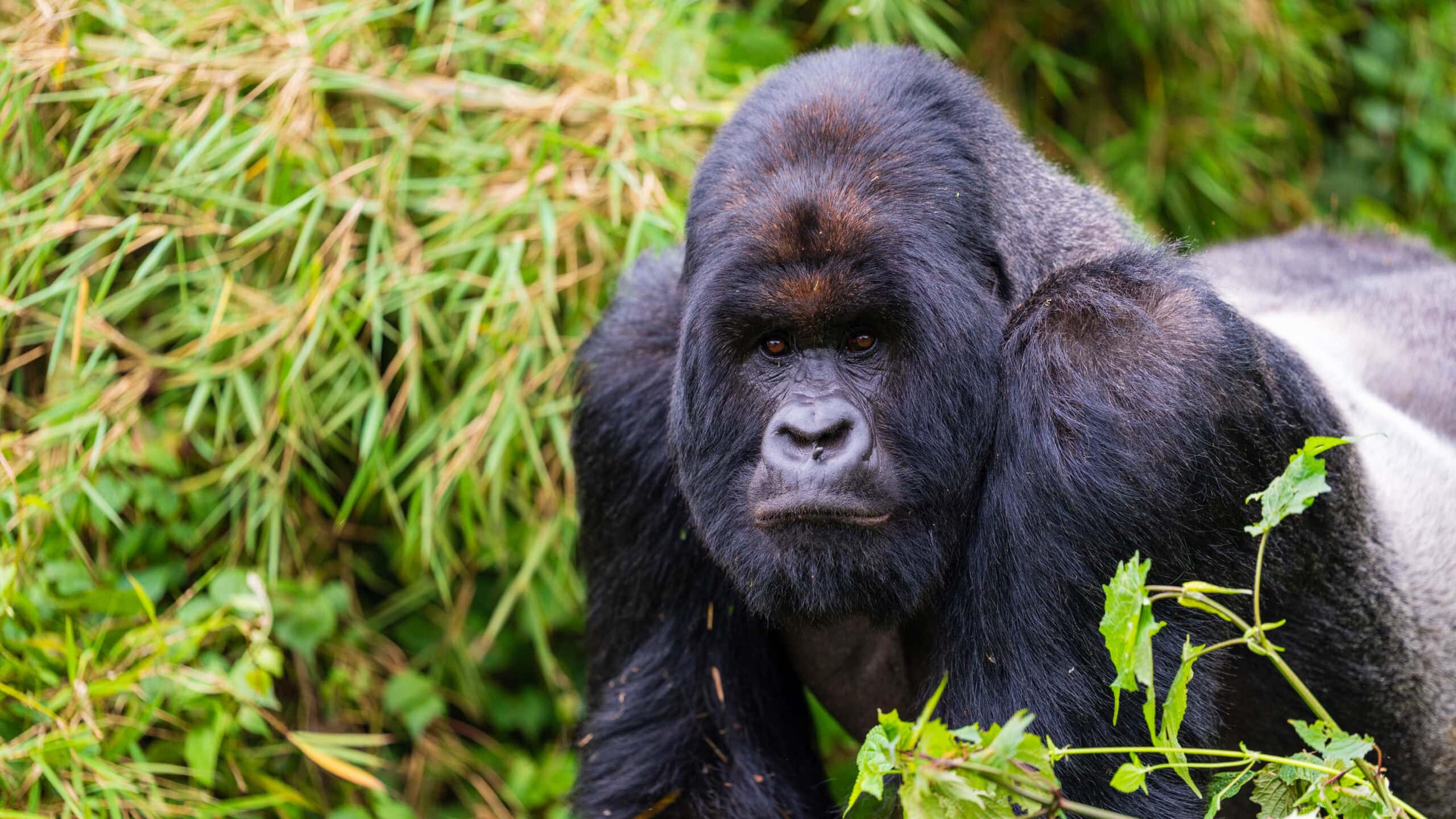
In the simplest terms, gorillas are the gentle giants and chimpanzees are the exuberant acrobats. A mountain gorilla family is a study in calm: massive, unhurried, mostly grounded, radiating a peaceful authority. A chimpanzee community is a riot of energy: fast, vocal, endlessly social, forever swinging, drumming, hooting and moving through the forest. One encounter tends to move people with its stillness; the other thrills them with its pace. Here is how each one actually unfolds.
The Gorilla Trekking Experience
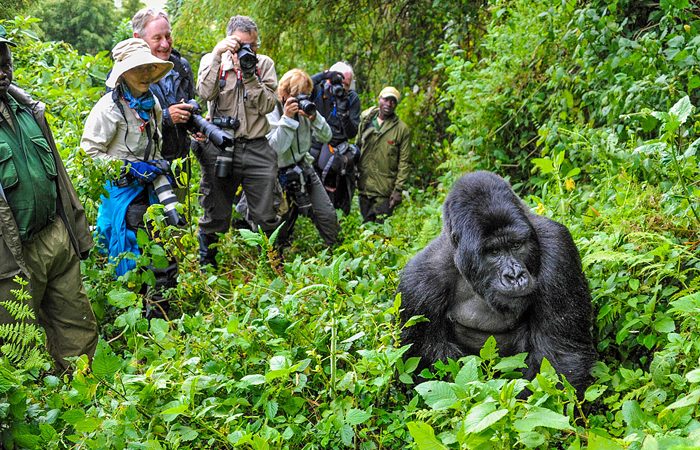
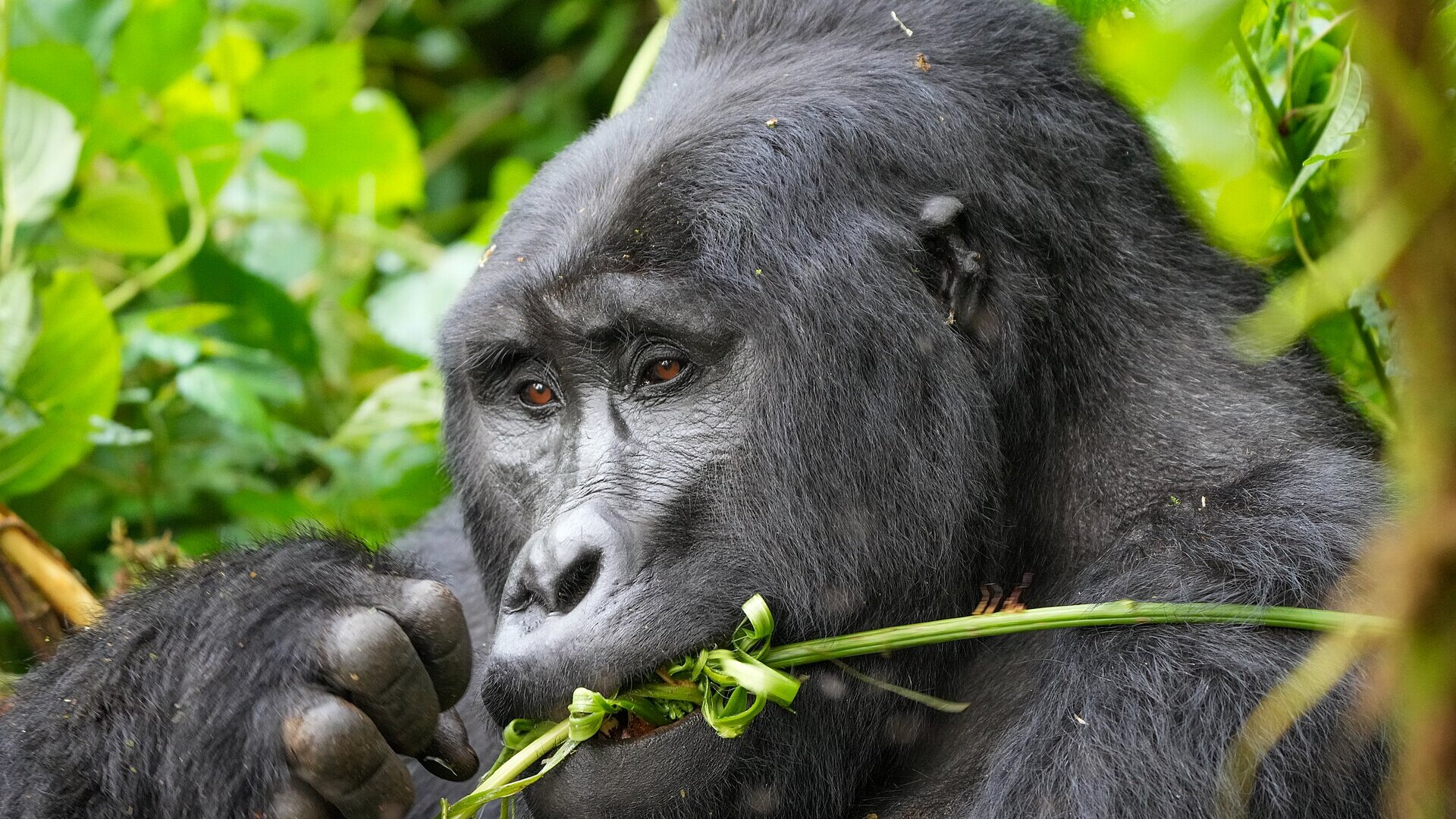
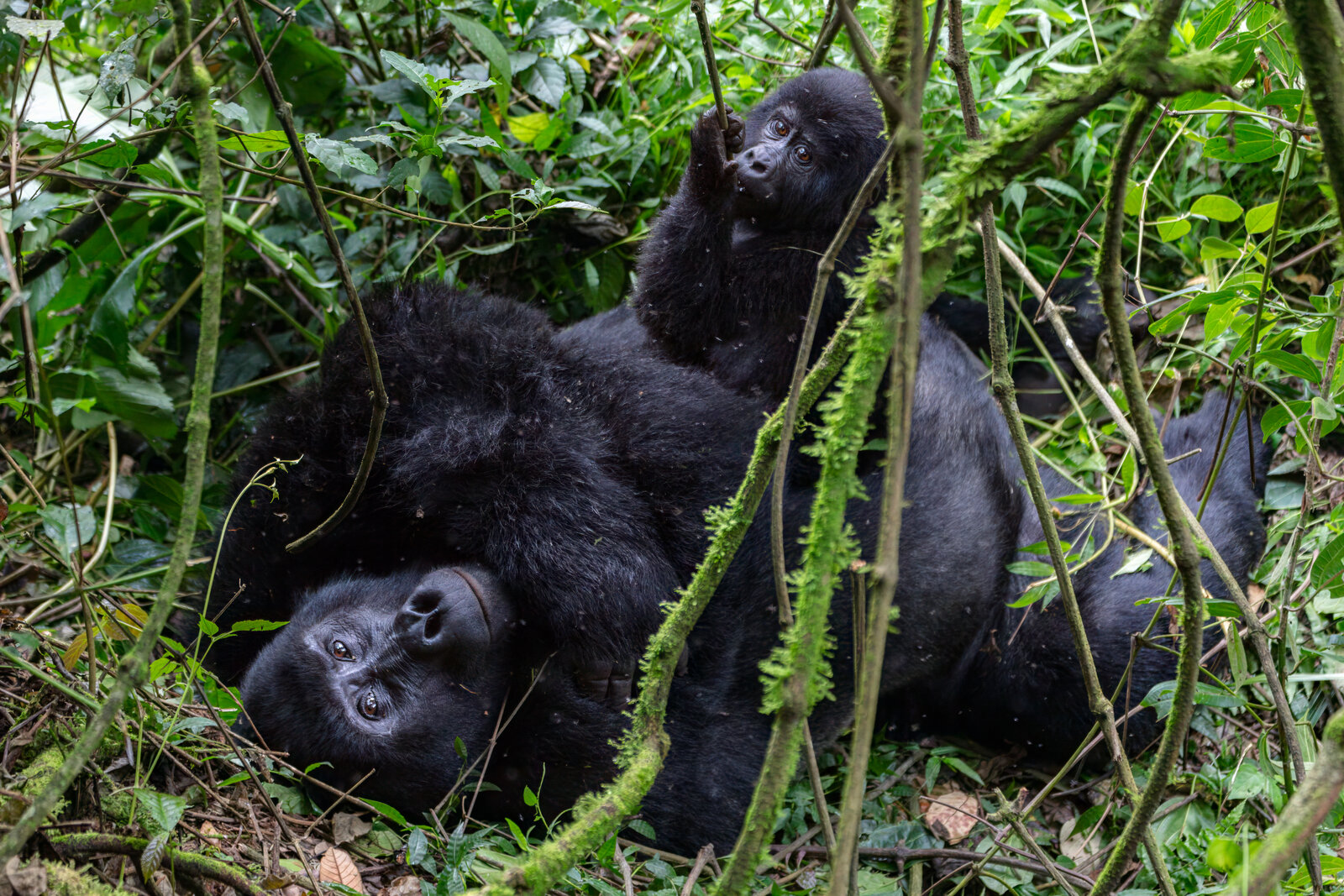
Gorilla trekking is a pilgrimage. It begins with an early briefing at the park headquarters, then a walk that can last anywhere from one to six hours, climbing through dense, steep, high-altitude rainforest on the flanks of ancient volcanoes. The effort is part of the magic — by the time the trackers signal that the family is near, you have earned the encounter. Then the forest falls quiet, and there they are: a silverback reclining like a king, females grooming, infants clambering over sleeping giants.
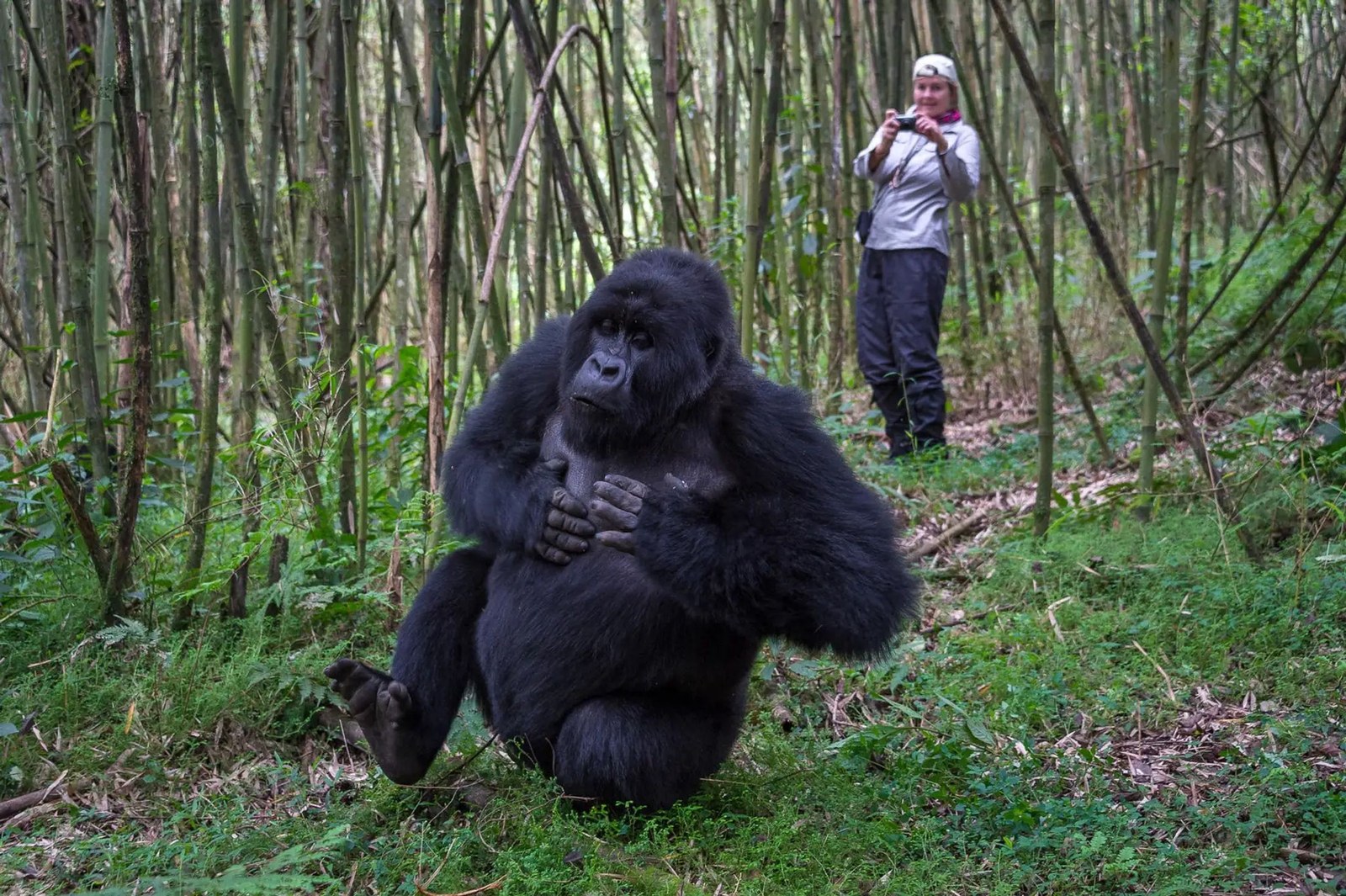
You are granted exactly one hour, and it passes both slowly and far too fast. Mountain gorillas are largely peaceful and habituated to human visitors, so they feed, doze and interact only metres away while you watch, spellbound. There is a weight to the experience — a sense of being quietly accepted into a world far older than our own. Most people come away moved to their core. It is the more demanding and expensive of the two treks, but for many it is the single most profound wildlife encounter of their lives.
The Chimpanzee Trekking Experience
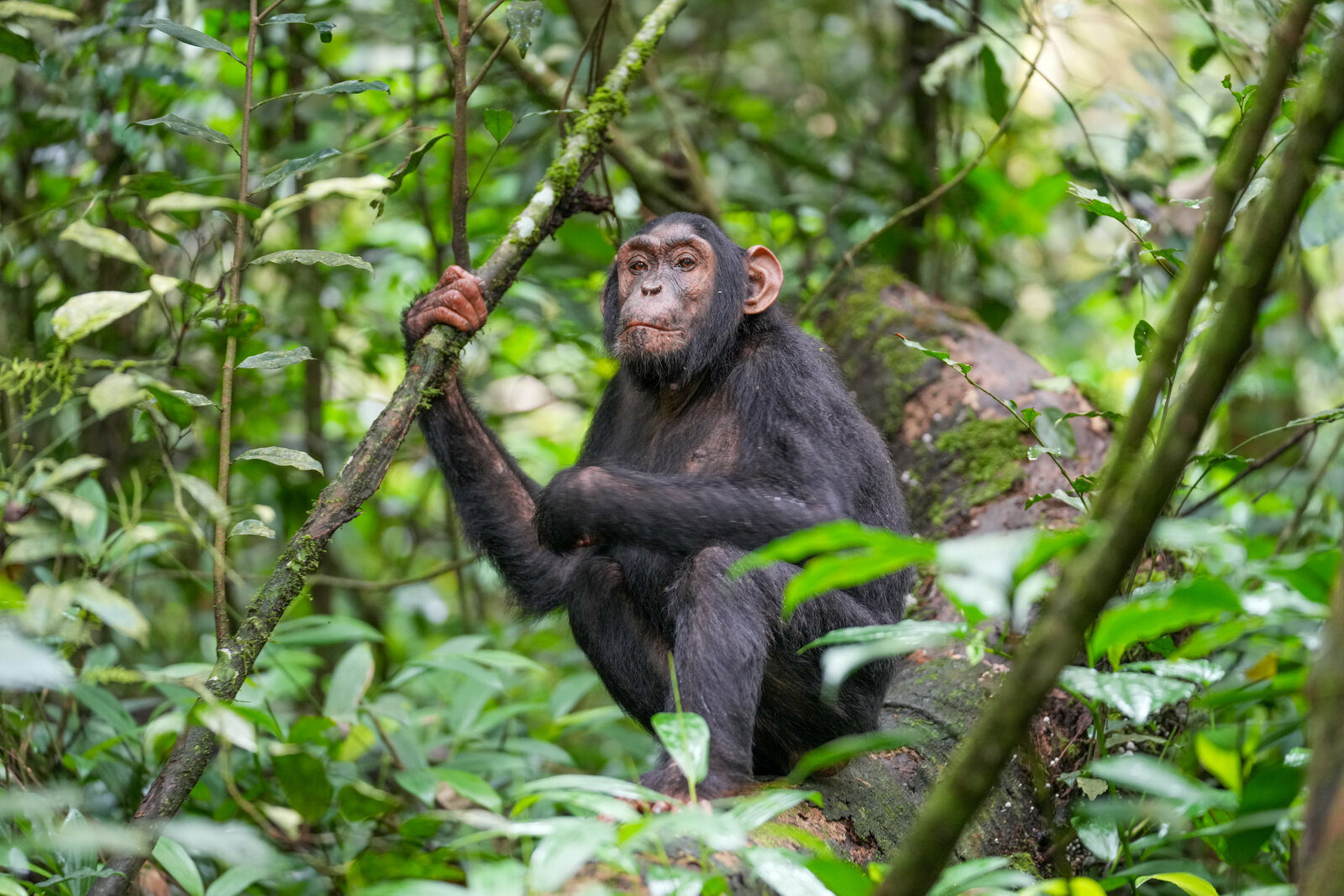
Chimpanzee trekking is a completely different kind of thrill. The walk is usually shorter and over gentler terrain — often one to three hours — but the moment you find the community, the pace changes entirely. Chimpanzees are loud, fast and constantly on the move: they hoot and scream in choruses that carry through the forest, drum on the buttress roots of great trees, swing through the canopy overhead and travel quickly along the ground, so you often find yourself walking briskly to keep up as the group moves.
It is exhilarating and endlessly entertaining. You watch them groom, squabble, feed on figs, cradle their young and problem-solve with tools, their expressive faces and gestures uncannily human. Where a gorilla encounter is contemplative, a chimp encounter is dynamic and full of drama — no two minutes are the same. It is more affordable, generally a little easier underfoot, and a brilliant way to add a second great-ape experience, especially in Uganda's Kibale Forest, the finest chimpanzee destination in Africa.
Difficulty, Cost & Permits Compared
On difficulty, gorillas demand more. Their forests are higher, steeper and muddier, and treks can be long, whereas chimpanzee trekking is typically shorter and flatter — though the chimps' speed means you may still cover ground quickly once you reach them. On cost, the gap is wide: a gorilla permit runs around 1,500 US dollars in Rwanda and 800 in Uganda, while a chimpanzee permit in Uganda is around 250 US dollars. The gorilla premium reflects how few remain and the intensive conservation that protects them.
Location matters too. Mountain gorillas are trekked only in Rwanda's Volcanoes National Park and Uganda's Bwindi Impenetrable Forest (plus the DRC). Chimpanzees are far more widespread, with Uganda's Kibale Forest the standout, alongside Queen Elizabeth's Kyambura Gorge, Rwanda's Nyungwe Forest and Tanzania's remote Mahale and Gombe. Both treks require a permit booked well in advance, both limit the number of visitors per group, and both grant a strictly protected visit — the animals' welfare always comes first.
| Factor | Gorilla Trekking vs Chimpanzee Trekking |
|---|---|
| Feeling | Gorillas: calm, weighty, profound / Chimps: fast, loud, dynamic |
| Difficulty | Gorillas: steep, high, 1-6 hrs / Chimps: flatter, 1-3 hrs but quick |
| Permit cost | Gorillas: ~US$1,500 (Rwanda), US$800 (Uganda) / Chimps: ~US$250 (Uganda) |
| Where | Gorillas: Volcanoes, Bwindi / Chimps: Kibale, Nyungwe, Kyambura |
| Time with them | Both grant a strictly managed visit of about one hour |
| Best for | Gorillas: a once-in-a-lifetime pilgrimage / Chimps: a livelier, better-value adventure |
Which Should You Choose?
If you can only do one, let three things guide you: feeling, fitness and budget. Choose gorilla trekking if you want the slower, more profound, bucket-list encounter and you are happy to tackle a tougher climb and a higher price for it — it is, for most people, the more transcendent of the two. Choose chimpanzee trekking if you want a livelier, more affordable and slightly gentler forest adventure full of movement, sound and personality, or if a long steep climb at altitude is not for you.
Think, too, about what kind of traveller you are. Photographers and quiet contemplatives often fall hardest for the gorillas' stillness; families with energetic teenagers and anyone who loves fast-paced wildlife drama frequently prefer the chimps. There is no wrong answer — both are extraordinary privileges — but matching the trek to your temperament and body makes the day everything it should be.
Why Not Do Both?
Here is the happy secret: you do not have to choose. The two encounters are so different that doing both in a single trip is one of the most rewarding pairings in all of African travel — the gorilla's deep stillness and the chimp's electric energy playing off one another in your memory for years. And geographically it is easy to arrange, because the great primate countries hold both.
Uganda is the classic one-country base: trek chimpanzees in Kibale Forest, enjoy a Big Five-style savanna safari and boat cruise in Queen Elizabeth National Park, then finish with mountain gorillas in Bwindi — a single, superbly varied route. Rwanda offers a more compact version, with gorillas in Volcanoes and chimps in Nyungwe. We build these primate combos all the time, securing every permit and stitching the transfers together, so all you have to do is walk into the forest and be amazed — twice.
Let Us Plan Your Great-Ape Adventure
Whether you have your heart set on the gorillas, want the thrill of the chimps, or dream of doing both, we will design the trip around you — the right forests, the right lodges, the permits secured early, and a savanna safari folded in if you want the full East African experience. Tell us how you like to travel and we will craft the perfect primate journey.
Ready to Meet Our Closest Relatives?
Our specialists design tailor-made gorilla and chimpanzee trekking trips across Uganda and Rwanda — one great ape or both, with permits, lodges and every transfer handled, and a savanna safari added if you wish.
Ready to explore? Browse our safari tours and packages →