Ngaga Camp — Odzala’s Flagship Gorilla Lodge
There are lodges that sit near gorillas, and there are lodges built for the sole purpose of finding them. Ngaga Camp belongs firmly in the second category. Raised on stilts in the marantaceae understorey of the Ndzehi sector of Odzala-Kokoua National Park, this six-tent flagship of Kamba African Rainforest Experiences is the gorilla-tracking epicentre of the Republic of Congo — and, for many travellers who have done both, the most intimate western lowland gorilla experience on the continent.
This is not a savanna camp with a forest day-trip bolted on. You sleep inside the same green cathedral the gorillas use. You wake to hornbills and the drip of overnight rain off giant leaves. You leave on foot with Ba’Aka trackers who read broken stems the way a tracker on the plains reads spoor. When contact comes — a silverback against a trunk, juveniles in the mid-canopy, a mother nursing in filtered light — the forest does not feel like a product. It feels like a privilege you have been allowed into for a measured stretch of time.
This review is the practical, honest map of Ngaga in 2026: where it sits, how you reach it, what the tents and dining are actually like, what a gorilla day delivers and what it does not guarantee, how the camp fits the wider three-camp circuit, what it costs, and who should choose it over a mountain-gorilla lodge in Rwanda or a coastal forest stay in Gabon. For the country-wide picture start with our Ultimate Republic of Congo Safari & Travel Guide; for the full lodge menu see Where to Stay in Odzala-Kokoua; for the money side use the Republic of Congo safari cost guide.
Setting & Access — Deep Forest, Charter Only
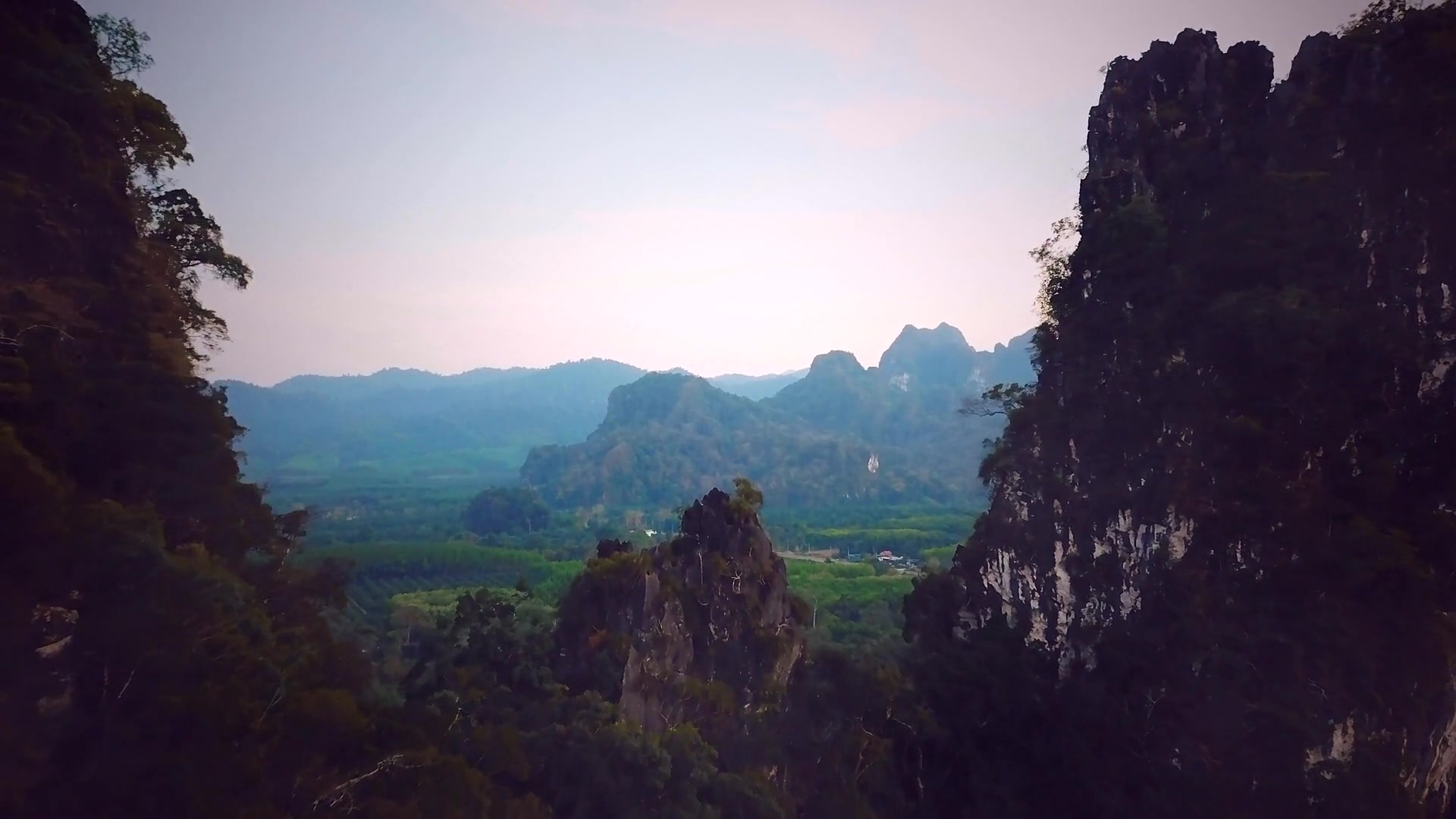
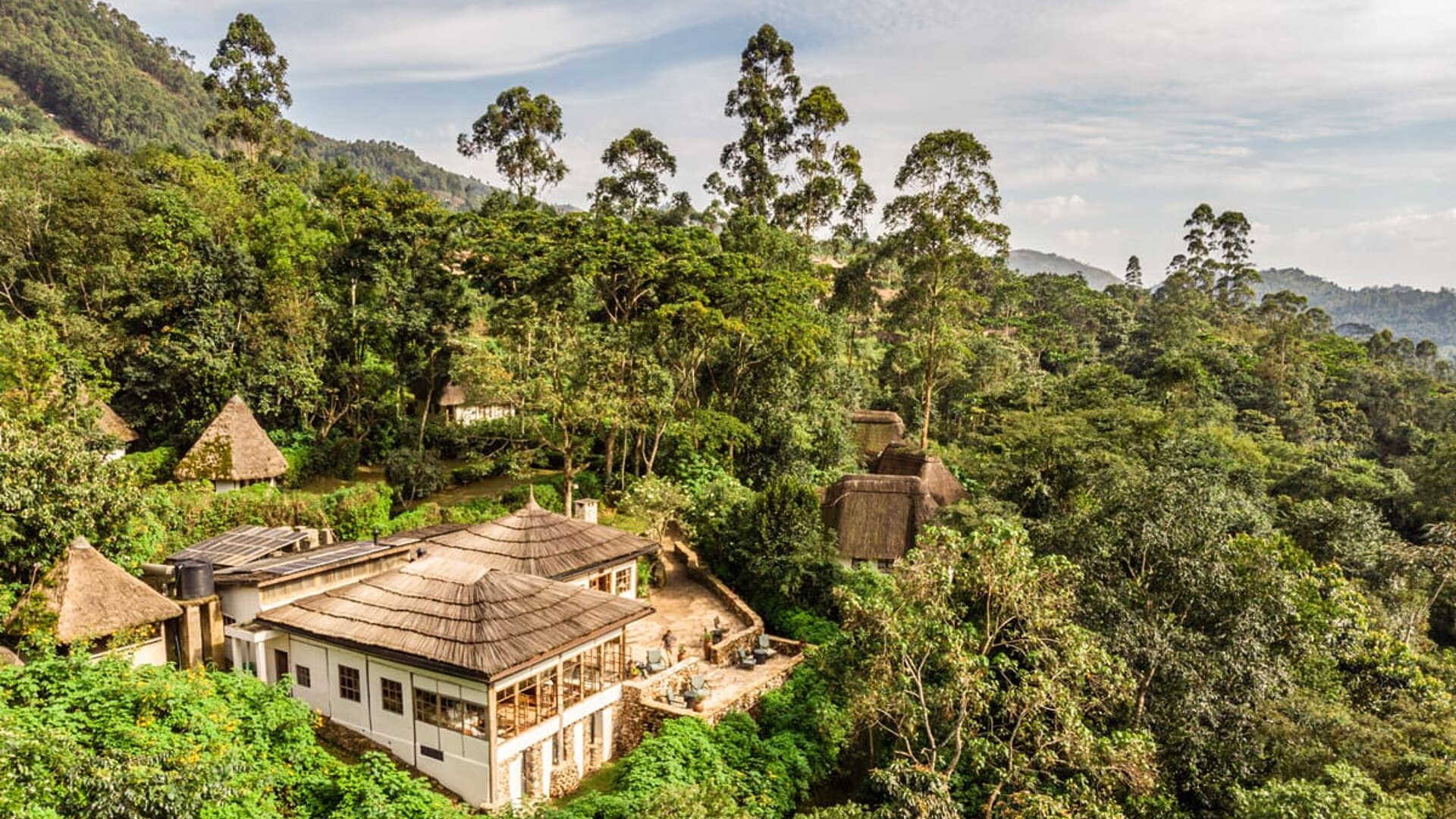
Ngaga sits in the Ndzehi Forest sector of Odzala-Kokoua, a 13,600-square-kilometre protected wilderness in the north-west of the Republic of Congo (Congo-Brazzaville — not to be confused with the DRC). The habitat is classic Congo Basin: closed-canopy rainforest with a dense marantaceae understorey — the broad-leaved, stemmy plants western lowland gorillas favour for food and cover. There is no sweeping vista from the main deck. The view is vertical green, shafts of light, and the occasional flash of a great blue turaco.
Getting there is part of the exclusivity tax. You fly internationally into Brazzaville (Maya-Maya, BZV), usually via Addis Ababa, Paris, Casablanca or Istanbul. You overnight in the capital because the northbound light-aircraft charter leaves on set days. From the Odzala airstrip a road and short transfer deliver you into camp. Self-driving is not a realistic visitor option. The charter is almost always bundled into the safari package, which is why Ngaga nights are sold inside fixed-length circuits — typically 7, 10 or 12 nights across the park — rather than as loose hotel bookings.
Minimum stay: operators strongly recommend at least two nights, ideally three at Ngaga if gorillas are your priority. A single night gives you one trek window and no buffer for a long search, weather, or a family that has moved deep. Three nights usually means two or three trek attempts and a far calmer psychological pace. For seasonality detail see our best time to visit Republic of Congo guide.
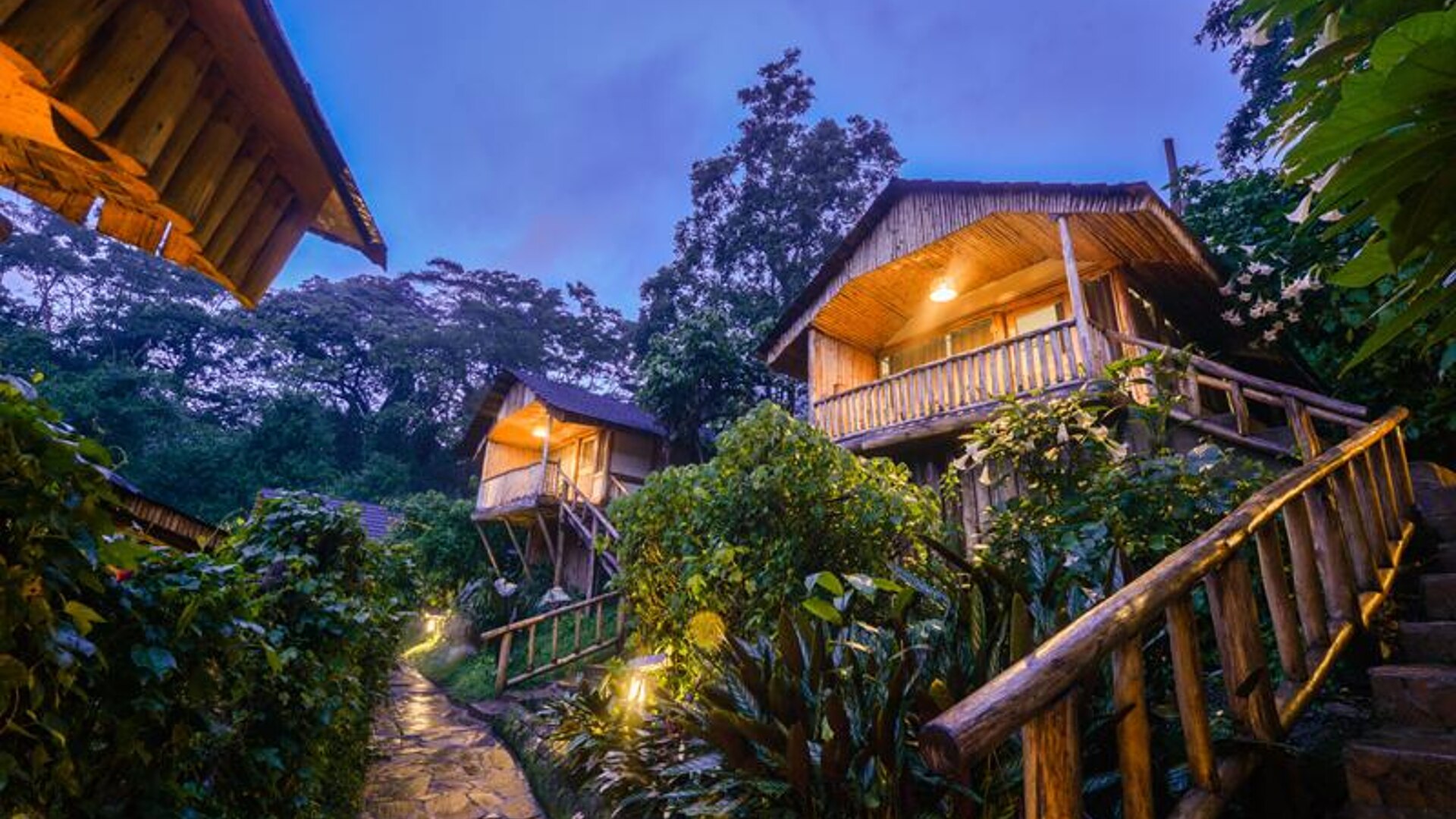
Accommodation — Six Elevated Tents in the Canopy
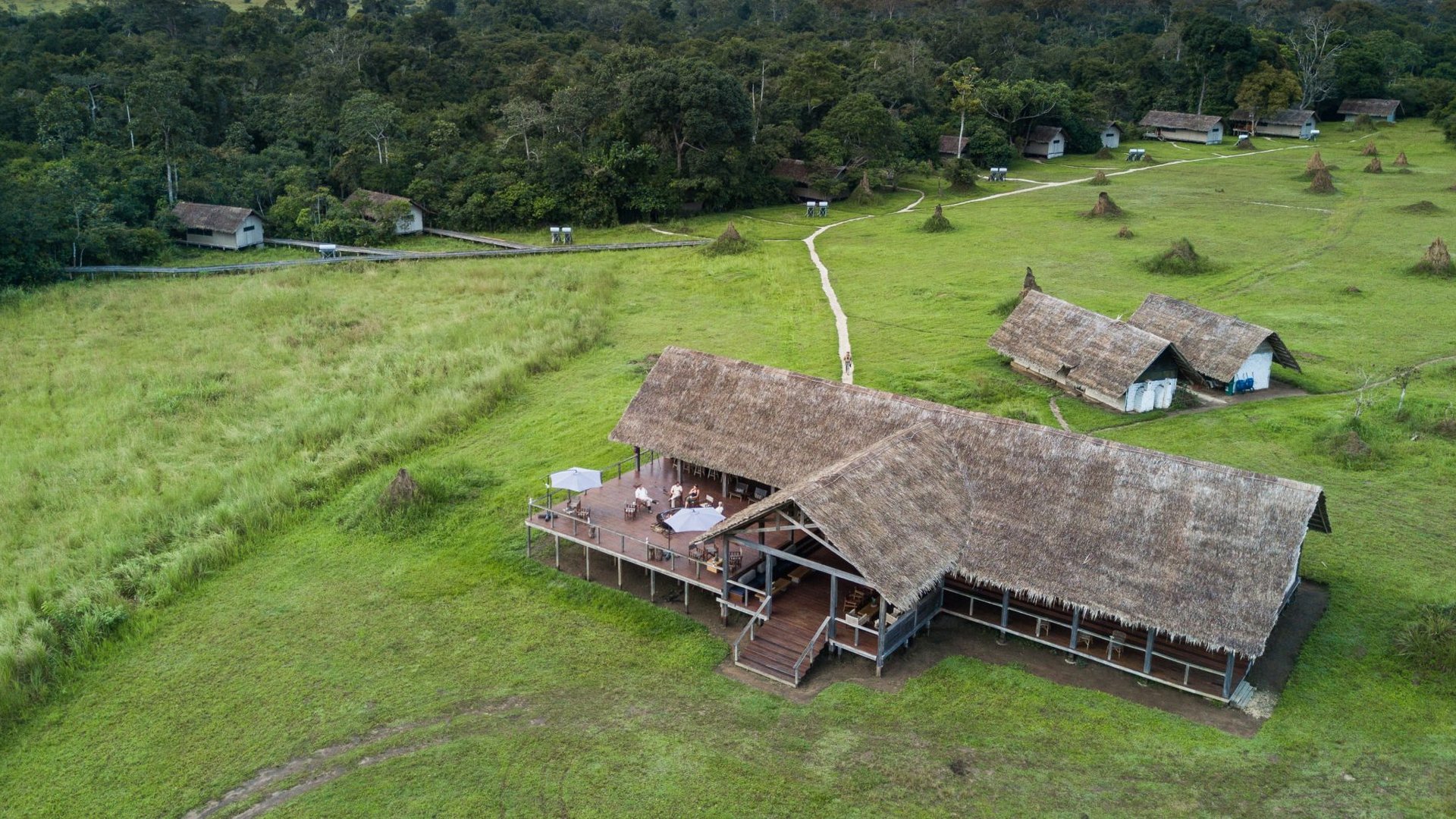
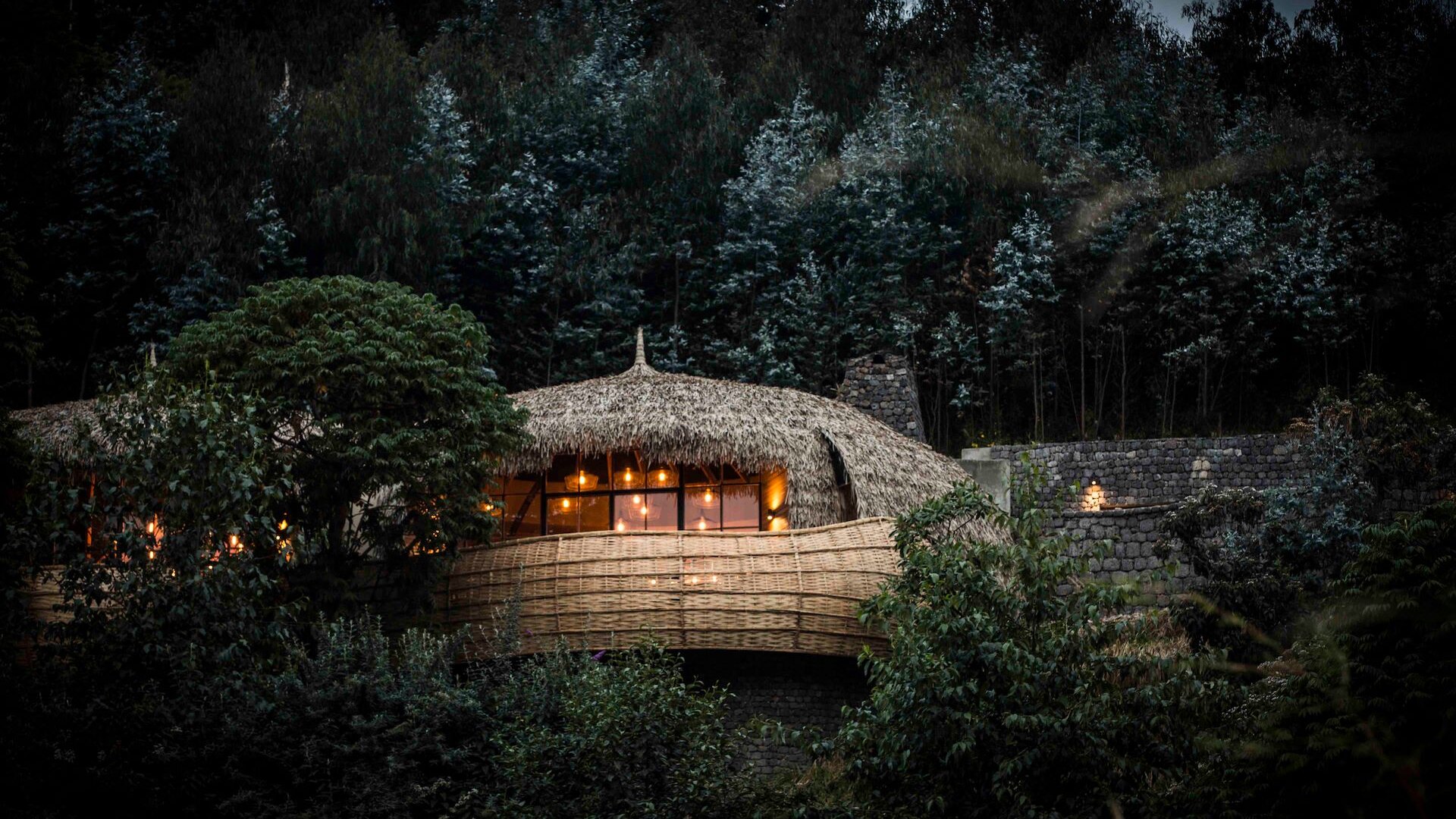
Ngaga is deliberately tiny. Six wood-and-thatch rooms stand on stilts among the trees, connected by raised walkways that keep you above the wetter ground and the things that move through it at night. The aesthetic is rainforest modern rather than colonial pastiche: natural timber, canvas and thatch, mosquito-netted beds, en-suite bathrooms with hot water, and private decks that look straight into foliage. You will not find a infinity pool or a spa wing. You will find silence broken by insects, the creak of the walkway, and the occasional crash of a branch when something large feeds nearby.


Dining is communal and surprisingly polished for a camp this remote. Expect three-course dinners, fresh baking, and a house-drinks selection that covers wine, beer, spirits and soft drinks without a constant extras bill. Meals are timed around the trek schedule — early coffee and a proper breakfast before departure, a flexible lunch on return, sundowners and dinner when the forest darkens. Special diets are handled if flagged at booking. Laundry is typically included or easily arranged, which matters when every trek leaves boots and trousers muddy.
Amenities in plain language: comfortable beds with quality linen, en-suite hot showers, solar and generator power sufficient for lights and device charging (do not expect hotel-grade air-conditioning in every corner), a main lounge and dining area, guiding desk, and the intangible amenity that actually sells the place — almost nobody else. With six rooms, even a full house is a small house. Conversations at dinner are with people who walked the same trails that morning, not a rotating coach group.
The Gorilla Experience — Why Ngaga Exists
Everything else at Ngaga is scaffolding for this. Western lowland gorillas (Gorilla gorilla gorilla) are the more numerous but far less visited cousins of the mountain gorillas of Rwanda and Uganda. Habituation programmes in Odzala have brought a handful of families to a tolerance of small human groups. From Ngaga, Ba’Aka trackers and Kamba naturalists lead morning departures into the surrounding forest to find them. Full trekking context lives in our western lowland gorilla trekking guide.
Habituation, not a guarantee
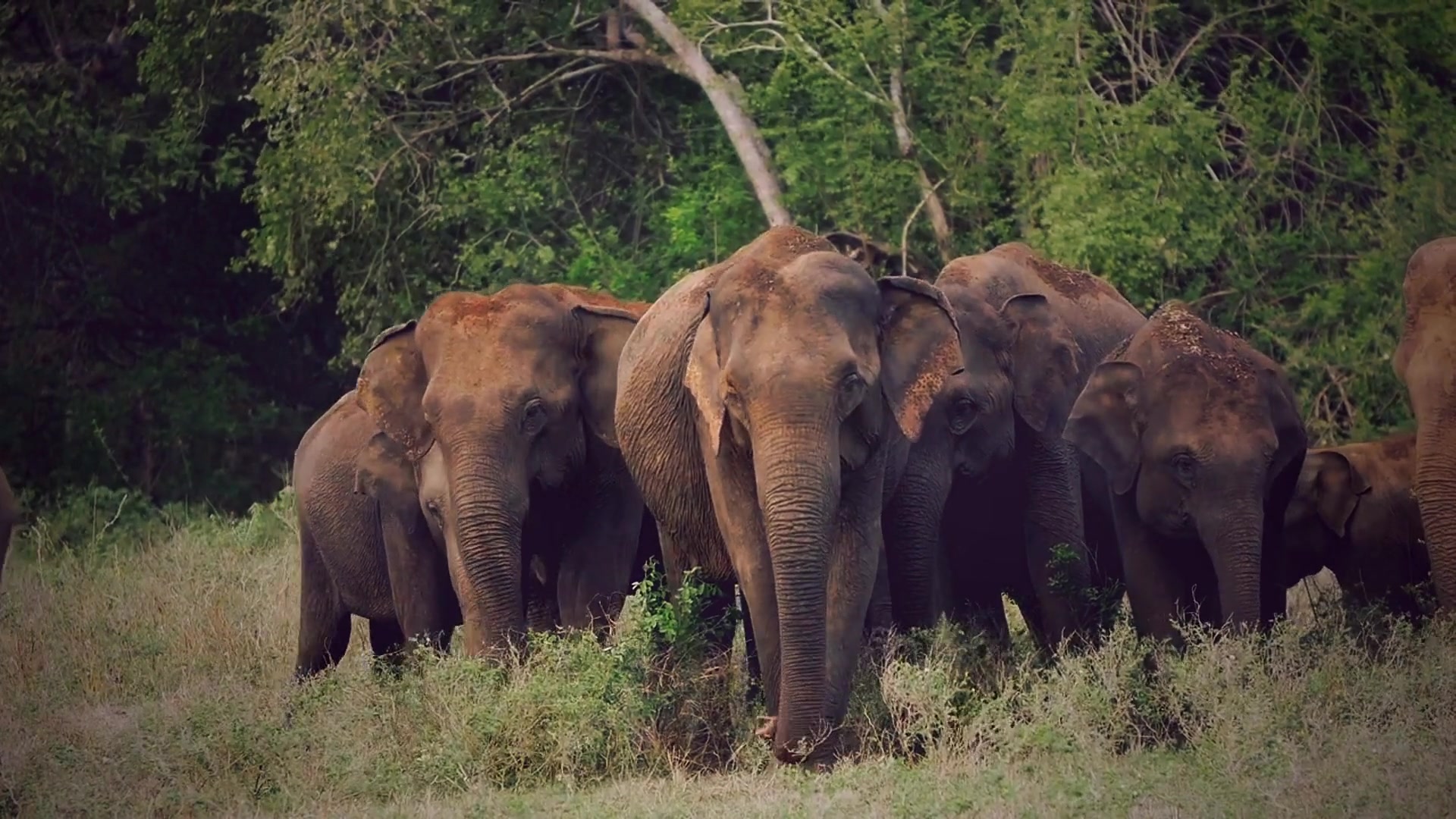
These are habituated animals, not tame ones. Trackers leave before or with guests, reading nest sites, dung, feeding sign and vocalisations. Some mornings contact comes in under an hour. Other mornings stretch to four or five hours of pushing through stems, skirting swampy patches, and backtracking when a family has moved. Across a two- or three-night stay, sighting probability is high. It is not the near-certainty of a well-run Volcanoes National Park day. That difference is the point for some travellers and a frustration for others. Go in with eyes open.
Trek difficulty — flatter than Rwanda, harder in other ways
There are no 3,000-metre volcano slopes. The ground is relatively flat. What replaces altitude is density: marantaceae that grabs at legs, mud that steals boots, heat and humidity that drain faster than dry highland air, and the mental load of moving quietly for hours. Moderate fitness, honest self-assessment, and a willingness to get dirty matter more than gym numbers. Walking poles help some guests; gaiters help almost everyone in the wetter months.
The encounter — smaller groups, more arboreal animals, ~2-hour limit
Guest numbers on a trek are typically capped around four — half the size of many mountain-gorilla permits. When the family is found, you usually have up to about two hours in their presence, subject to the animals’ comfort and your guide’s call. Western lowland gorillas use the trees more than mountain gorillas; juveniles especially may feed and play well above head height. Silverbacks can be imposing at close range and surprisingly calm when habituation is solid. The emotional register is different from Rwanda: less amphitheatre, more being allowed into someone else’s house.


Photography tips from the forest floor
- No flash — non-negotiable for the animals and for your guide’s patience.
- Fast glass — f/2.8 or wider earns its keep under canopy; ISO will climb.
- Quiet bodies — mechanical clatter unsettles; electronic shutter helps.
- Distance — stay where the guide places you, usually seven metres or more; never cut off an animal’s path.
- Rain covers and dry bags — humidity and sudden showers punish unprotected kit.
- Shoot the context — the broken light, the trackers’ hands, the wall of green are part of the story, not distractions from the portrait.
Beyond Gorillas — Forest Walks, Baïs & Culture
Ngaga is a gorilla camp first, but days that are not on a full trek still earn their keep. Guided forest walks peel back the smaller layers — medicinal plants, insect architecture, duiker tracks, the difference between elephant and gorilla feeding sign. Birding in the canopy and mid-storey is rich for anyone willing to stand still and listen; African grey parrots, hornbills and a long list of forest specialists keep binoculars busy.
Depending on itinerary length and how the circuit is built, guests often combine Ngaga with visits to nearby baïs — mineral-rich clearings where forest elephants, buffalo, bongo and sitatunga emerge. The classic baï immersion, though, belongs to Lango Camp, which is why almost every strong Odzala itinerary pairs the two. Night activity from Ngaga is more limited than at Mboko; if night drives and walks are high on your list, weight nights toward the river camp later in the circuit.
Cultural contact with Ba’Aka communities is handled carefully and should stay that way — tracking partnerships and interpretive time that respect people as colleagues in the forest, not as a performance. Ask your operator how community benefit is structured on your specific departure; the best trips make that thread visible without turning it into theatre.
Guides & Service — Kamba Standards in the Deep Forest
The soft product at Ngaga is the hard product. Kamba’s model leans on specialist naturalists paired with Ba’Aka trackers whose forest literacy is generational. Briefings are serious. Safety around gorillas, elephants and the simple logistics of not getting lost is non-negotiable. Service in camp is warm without being fussy — drinks appear, laundry disappears, dietary notes are remembered — but nobody is trying to recreate a city five-star in the middle of primary rainforest. Guests who want white-glove theatre every hour will be happier in a different product category. Guests who want competence, calm and deep knowledge tend to leave Ngaga ranking the guiding among the best they have experienced in Africa.
Seasons & Best Time to Stay
Gorilla tracking from Ngaga runs year-round. The easiest physical conditions fall in the two dry seasons:
- Long dry — June to September: firmer trails, lower humidity, peak demand, book earliest.
- Short dry — December to February: also excellent for tracking; popular with travellers combining Congo with southern-Africa summer plans.
The long rains (roughly March–May) and short rains (October–November) mean muddier treks, more leeches, heavier air and occasionally dramatic light. Birding and photography can be outstanding; guest numbers drop; rates sometimes soften. First-timers who dislike sustained wet walking should aim dry. Return visitors and photographers who want empty forest often deliberately choose green. Full month-by-month detail sits in the seasons guide.
Costs — What Ngaga Actually Runs
Indicative 2026 figures, always confirm on quote:
- Nightly rate: roughly USD 800–1,200 per person sharing, all-inclusive, peaking toward the top of that band in high season and for the most inclusive packages.
- Typically included: tented suite, all meals, house drinks, laundry at many stays, guided activities, park and conservation fees, and gorilla permits when trekking is scheduled.
- Gorilla permits: commonly USD 400–750 per trek if itemised; on packaged Ngaga stays they are usually bundled. Confirm how many trek attempts your nights include.
- Usually extra: international flights to Brazzaville, Congo visa (about USD 100–150), Brazzaville hotel nights, the park charter (often package-bundled), premium spirits, tips (guideline USD 50–100 per guest per day across the circuit), and comprehensive insurance with medical evacuation.
A realistic landed budget for a multi-camp Odzala journey that includes Ngaga sits in the same bands as our cost guide: on the order of USD 10,500+ per person for a 7-night discovery circuit, higher for 10- and 12-night odysseys. Ngaga is not a bargain lodge. It is a scarce, high-fixed-cost product whose price reflects aircraft seats, tiny room counts, habituation programmes and the simple fact that very few places on Earth offer this encounter. Transparent breakdowns live in the Republic of Congo safari cost article.
How Ngaga Fits Multi-Camp Itineraries
Almost nobody should fly all the way to Odzala for Ngaga alone — not because the camp fails, but because the park’s genius is habitat contrast. The classic Kamba circuit is:
- Ngaga — gorilla forest (2–3 nights)
- Lango — baï elephants, buffalo, platform light (2–3 nights)
- Mboko — Lekoli–Mambili rivers, kayaks, night drives, savanna-forest edge (2–3 nights)
Ready-built packages that already weight Ngaga correctly:
- Odzala Discovery — 7 nights — the essential first Congo safari
- Odzala Odyssey — 10 nights — extra trek and baï time for photographers and serious wildlife travellers
- Congo Immersion — 12 nights — maximum forest depth and room for remote extensions
Gorilla-priority travellers should ask us to weight nights toward Ngaga inside those frames — three nights here, then Lango, with Mboko shortened or kept as a soft landing. River-priority or family groups reverse the emphasis. The full where-to-stay guide unpacks each camp’s role in more depth.
Ngaga vs Other Gorilla Lodges
| Dimension | Ngaga (Odzala) | Rwanda mountain gorilla lodges | Gabon / Loango-style |
|---|---|---|---|
| Species | Western lowland | Mountain gorilla | Western lowland (plus beach/forest mix) |
| Terrain | Flat, dense, humid forest | Steep volcano slopes | Coastal forest, lagoon, surf |
| Group size | ~4 guests | Up to ~8 | Small; programme-dependent |
| Sighting certainty | High over multi-night stay; not guaranteed | Very high on permit day | Variable; often part of broader wildlife mix |
| Feel | Remote expedition, pure forest | Polished, high-demand, scenic highlands | Surf-and-forest hybrid safari |
| Best for | Travellers who want wilder, rarer lowland encounters | First gorilla trek, higher certainty, easier logistics | Combining primates with beach and lagoon wildlife |
Many serious safari travellers eventually do both mountain and lowland experiences. They are not substitutes; they are different chapters. If you can only choose one and you need a high-probability single-day encounter inside a polished East African itinerary, Rwanda wins. If you want the deeper forest, the smaller group, and a multi-day immersion that also includes baïs and rivers, Ngaga and the Odzala circuit win.
Honest Take — Pros, Cons & Who It Is For
Pros
- Among the most intimate western lowland gorilla encounters available to travellers anywhere.
- Genuine primary-forest setting — you live inside the habitat, not on its edge.
- Expert Ba’Aka trackers and Kamba naturalist guiding at a very high standard.
- Only six tents: true exclusivity without needing a full buy-out.
- Natural anchor for the three-camp Odzala circuit with Lango and Mboko.
- All-inclusive rates that usually fold in permits, drinks and activities — fewer nasty surprises at checkout.
Cons
- High cost, driven by charter logistics and tiny capacity.
- Remote access — Brazzaville overnight plus scheduled charter; last-minute changes are painful.
- Rainy-season mud, humidity and leeches are real, not brochure poetry.
- Habituation means sightings are likely across a multi-night stay but never Rwanda-level guaranteed on any single morning.
- No big savanna game drive menu; if you need lions on the plains, pair Congo with East or Southern Africa rather than expecting Ngaga to be both.
Who thrives here: wildlife travellers who have already done a classic savanna safari and want the forest chapter; photographers willing to work low light; couples and small groups who value silence over facilities lists; anyone who understands that “wilder” sometimes means “less certain.”
Who should choose differently: travellers who need a near-guaranteed gorilla sighting on a fixed morning; families with children under the trek minimum age; guests who want spa menus, large pools and dress-code dining; anyone unwilling to sit in a small aircraft or walk several hours in heat.
Ngaga is not trying to be the most luxurious room in Africa. It is trying to be the most honest base for one of the last great primate experiences left. On that brief, in our view, it succeeds.
Plan Your Ngaga Stay
Ready to place Ngaga inside a real itinerary? Start with the 7-night Odzala Discovery, step up to the 10-night Odyssey, or go deep on the 12-night Congo Immersion. Read the park overview in our Odzala-Kokoua National Park guide, compare all camps in Where to Stay in Odzala, and pressure-test the budget with the cost guide. We hold the charter logic, the permit timing and the night-weighting so you can keep your attention where it belongs — on the path the trackers are reading through the marantaceae.
Frequently Asked Questions
How do I book Ngaga Camp?
Through a specialist operator who holds Kamba allocations and the Brazzaville charter. Ngaga is almost never a standalone hotel booking. Plan six to twelve months ahead for June–September and December–February; six tents and capped gorilla groups mean peak dates sell out.
Are gorilla permits included in the Ngaga rate?
On most packaged stays, yes. Standalone permit values are typically USD 400–750 per trek. Always confirm how many trek attempts your nights include and whether permits are itemised or bundled.
What should I pack for Ngaga?
Muted long sleeves and trousers, broken-in grip boots, gaiters, rain jacket, soft-sided duffel, binoculars, fast low-light lens, repellent, headlamp, malaria prophylaxis, and a yellow-fever certificate in your hand luggage. Laundry reduces how many changes you need.
How fit do I need to be?
Moderate fitness for uneven, rooty, sometimes swampy walking of one to five hours in heat and humidity. No volcano altitude like Rwanda, but density and mud compensate. Flag any health limits to your guide before departure.
What should I expect from a gorilla encounter?
A foot trek with Ba’Aka trackers and a naturalist, groups of about four guests, and up to roughly two hours with the family once found. Animals are more arboreal and mobile than mountain gorillas. Sightings are likely across a multi-night stay but not guaranteed on any single morning.
What are the photography rules?
No flash, maintain the distance your guide sets, move slowly, stay quiet, and never block a path. Fast lenses help in dim canopy light. Your guide will end the encounter if the family becomes unsettled.
Is the rainy season workable?
Yes if you accept mud, humidity and longer wet treks. Tracking continues year-round; green season brings lush forest, strong birding, fewer guests and sometimes softer rates. Dry seasons remain easiest for first-timers.
Can solo travellers stay at Ngaga?
Yes. Solos join shared treks and fit the communal dining culture easily. Budget for a single supplement unless paired. Charter seat availability is the tighter constraint than camp policy.
Is Ngaga suitable for families?
For fit teens at or above the trek minimum age (typically 15 — confirm current rules), yes. Younger children can stay in camp but will not trek. Families with small children usually weight nights toward Mboko and keep Ngaga focused on one carefully paced gorilla day.
How does Ngaga compare to mountain gorilla lodges in Rwanda?
Rwanda: higher sighting certainty, steeper terrain, larger groups, polished high-volume product. Ngaga: denser flat forest, ~4 guests, more arboreal western lowland gorillas, wilder remote feel. Different experiences — many travellers eventually do both.