Key Takeaways
- Sunrise (5:30-7:00am) is the consensus best time: soft golden light, long shadows, cooler temps
- Blue hour (pre-sunrise, 5:00-5:30am) delivers pastel hues and gentle, even light for minimalist compositions
- Golden hour (first & last hour of daylight) is when dune shadows are longest and warmest
- Midday (10am-3pm) is harsh and high-contrast — avoid for grand landscapes, use for abstract close-ups
- Best months: May–October (dry season, clear skies, crisp air); November–March (green season, dramatic storms, softer light)
- Winter (May–August) offers the clearest skies & Milky Way; summer (Dec–Feb) risks heat & occasional rain
Why Timing Matters at Sossusvlei & Deadvlei
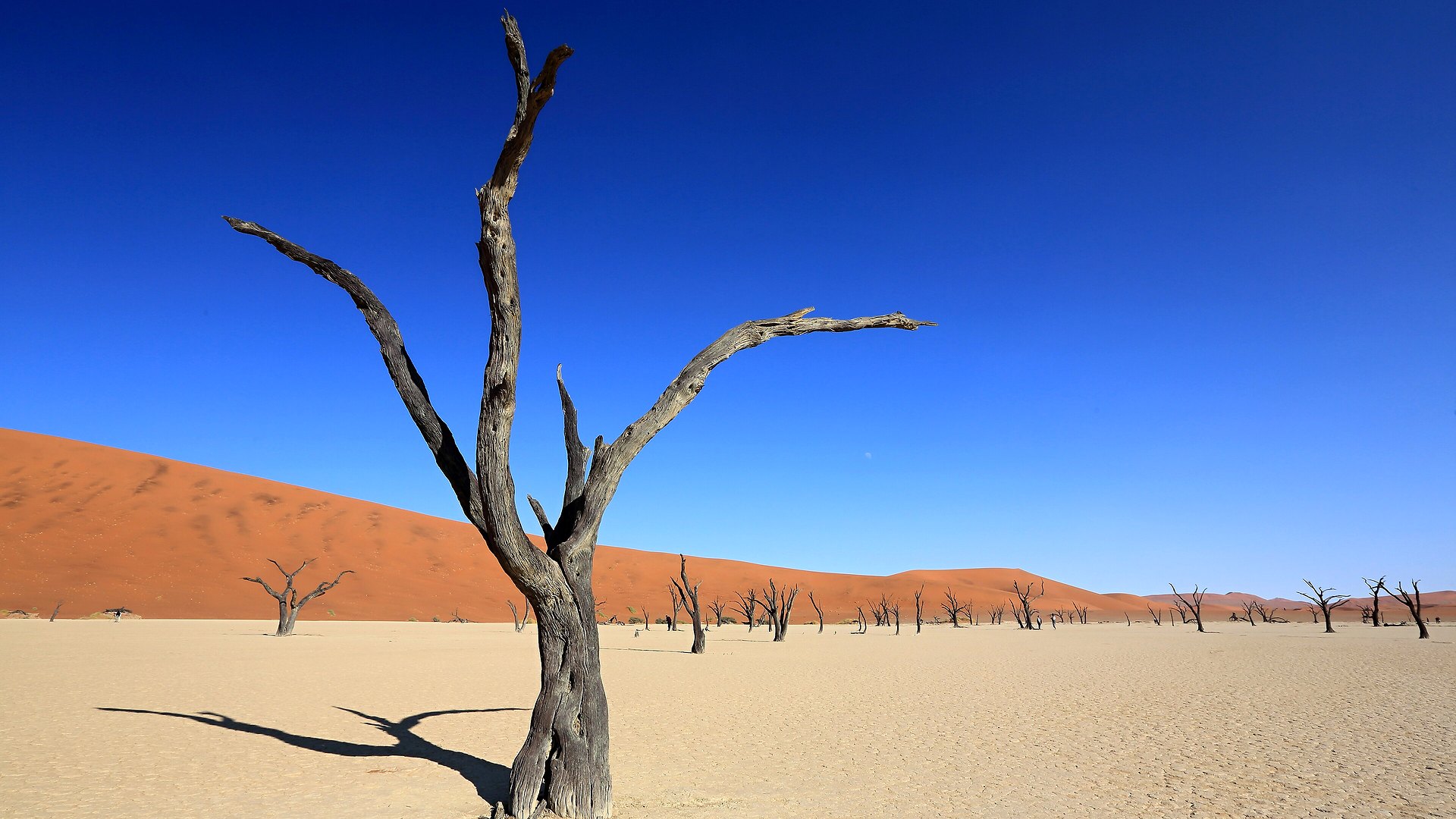
Deadvlei — the white clay pan surrounded by 300-metre dunes and dotted with the skeletons of 900-year-old camel thorn trees — is one of the most photographed locations on Earth. The composition is iconic: orange dunes, white pan, black trees, blue sky. But what separates a snapshot from a masterpiece is light, and light at Deadvlei changes dramatically throughout the day and across the seasons. Arrive at midday and the contrast is overwhelming, the shadows harsh, and the colours washed out. Arrive at sunrise and the light is soft, golden, and constantly shifting, revealing textures and tones that disappear within an hour.
Understanding when to shoot is as important as understanding how to shoot. This guide breaks down the daily and seasonal rhythms of light at Sossusvlei and Deadvlei, explains what each type of light offers (and what it costs), and provides practical advice on camera settings, timing, and logistics. Whether you are a professional landscape photographer planning a dedicated shoot or a traveler with one morning to get the shot, knowing when the light is best will make or break your images.
The Daily Arc of Light: Hour by Hour
Blue Hour (Pre-Sunrise, 5:00-5:30am): Pastel Minimalism
The blue hour — the period just before sunrise when the sky glows deep blue but the sun has not yet touched the horizon — is the quietest, most contemplative light at Deadvlei. The sky is even, the shadows are soft, and the dunes take on pastel hues: pale orange, pink, lavender. The dead trees stand out as stark silhouettes, and the contrast is gentle enough that your camera's sensor can capture detail in both the bright pan and the shadowed dunes without clipping highlights or crushing blacks.
This is the light for minimalist compositions: a single tree against an empty sky, the curve of a dune fading into the distance, the play of subtle tones across the pan. It is not dramatic, but it is beautiful, and for photographers who value subtlety over spectacle, the blue hour delivers. You need to arrive early (which means leaving your lodge by 4:30am at the latest), and you will have perhaps 20-30 minutes of usable light before the sun rises and the golden hour begins.
Camera settings for blue hour: Use a tripod (essential for the longer exposures). Shoot at f/11-16 for depth of field, ISO 100-200, and bracket your exposures (±1 stop). Shutter speeds will be slower (1/15s to 1 second or longer, depending on the available light), so a remote shutter release or the camera's timer helps avoid shake. Shoot RAW for maximum post-processing latitude.
Golden Hour — Sunrise (5:30-7:00am): The Consensus Best
Sunrise is the golden hour at Deadvlei, and it is the consensus favourite among photographers. The sun rises behind Big Daddy dune, backlighting it and casting long, dramatic shadows across the pan. The dead trees are silhouetted against the glowing dune face, and as the sun climbs, their shadows stretch and shift. The light is warm (2,500-3,500K colour temperature), soft, and constantly changing. You have perhaps 60-90 minutes of prime light — from the first touch of sunlight on the dunes to the moment the sun climbs high enough that the contrast becomes harsh.
This is when the best images happen. The shadows define the dunes' shapes, the warm light saturates the orange sand, and the blue sky deepens as the sun rises. You can shoot wide (capturing the full sweep of dunes and trees) or tight (isolating a single tree, a section of dune, the interplay of light and shadow). The light rewards both grand landscapes and intimate details, and the constantly changing angle of the sun means you can shoot the same composition multiple times and get different results.
Camera settings for sunrise: Start at f/11-16, ISO 100-200. Bracket ±1-2 stops to ensure you capture detail in both the bright dunes and the shadowed pan. As the sun rises, watch your histogram — the contrast will increase, and you may need to widen your bracketing range or use a graduated ND filter to balance sky and foreground. Shoot in manual mode for consistency, and adjust as the light changes. A polarizing filter can deepen the blue sky, but use it carefully — over-polarization can create unnatural gradients.
Midday (10am-3pm): Harsh Light, Abstract Opportunities
Midday light at Deadvlei is brutal. The sun is directly overhead, shadows disappear, and the contrast between the bright white pan and the deep shadow of the dunes exceeds most cameras' dynamic range. The pan becomes a furnace of reflected glare, and the quality of light is flat, harsh, and unforgiving. For grand landscapes, midday is a write-off. Most photographers retreat to their lodges, review the morning's work, and rest before the afternoon shoot.
But midday light has its uses. This is the time for abstract close-ups: the textures of weathered wood, the ripples of wind-sculpted sand, the patterns of cracked clay on the pan. The harsh light creates strong shadows that emphasize texture, and the high sun allows you to shoot straight down (a perspective that works well for patterns and abstractions). If you have the energy and the tolerance for heat (midday temps can reach 35-40°C), midday offers creative opportunities — just not for the classic Deadvlei shot.
Camera settings for midday: For close-ups and abstractions, shoot at f/8-11 (you don't need extreme depth of field), ISO 100, and expose for the highlights (let the shadows go dark — that contrast is part of the aesthetic). Use a lens hood to minimize flare, and consider a polarizing filter to cut glare on the sand. Hydrate, wear sun protection, and keep your shooting sessions short — heat exhaustion is a real risk.
Golden Hour — Sunset (4:30-6:00pm): Beautiful but Logistically Trickier
Sunset at Deadvlei offers light similar to sunrise: warm, golden, and dramatic. But there is a logistical problem: Sesriem Gate (the entrance to Sossusvlei-Deadvlei) closes at sunset, and you must be out by then. That means you have less time to work, you cannot linger as the light fades, and you risk being rushed. Many photographers prioritize sunrise for this reason, though some lodges (those with private gates, like Little Kulala) can arrange sunset access.
If you can shoot sunset, the light is worth it. The sun sets in the opposite direction from sunrise, so the shadows and composition are different. The dunes glow warm orange and red, and the sky often develops richer colours (reds, purples, golds) than at sunrise. The temperature is cooler than midday but warmer than dawn, and the wind (which often picks up in the afternoon) can create atmospheric dust and haze that adds drama to the sky.
Camera settings for sunset: Same as sunrise — f/11-16, ISO 100-200, bracket ±1-2 stops. Watch for dust in the air (it can soften the light and add a warm glow, but it also reduces contrast and clarity). If the wind is strong, use a faster shutter speed to avoid motion blur from shifting sand or swaying tripod legs.
The Seasonal Arc: When to Visit
May to October (Dry Season): Clear Skies, Crisp Air, Best Light
The Namibian winter and early spring — May to October — is the consensus best time for photography at Sossusvlei and Deadvlei. The air is dry and stable, skies are almost always clear, and the quality of light is exceptional. Days are mild (20-25°C), nights are cold (often near freezing), and rain is virtually unknown. The cold nights create crisp, clear mornings, and the low humidity means the air is transparent — colours are saturated, contrast is high, and sharpness is extraordinary.
This is also the best time for astrophotography. The Milky Way is visible year-round, but May to August offers the galactic core at its highest and clearest. The dry air and lack of cloud cover mean you can shoot the night sky almost every night, and the cold temperatures keep sensor noise low. If you want the classic Deadvlei shot and the Milky Way in one trip, May to October is the window.
Downside: This is peak season. Lodges are busier, prices are higher, and Deadvlei can be crowded at sunrise (30-50 people is not unusual). If you want solitude, consider the shoulder months (May, September) or the green season.
November to March (Green Season): Dramatic Storms, Softer Light, Fewer Crowds
The Namibian summer — November to March — is hotter (30-40°C during the day), more humid, and prone to occasional thunderstorms. Rain is rare (Sossusvlei averages less than 100mm per year), but when it comes, it is dramatic: towering cumulonimbus clouds, lightning, brief downpours that turn the pan into a shallow lake. For photographers, this is both a challenge and an opportunity.
The soft, diffused light under overcast skies can be beautiful — no harsh shadows, gentle tones, and even exposure across the frame. Storm clouds add drama and texture to the sky, and the occasional rain can leave the dunes wet and dark, creating moody, atmospheric images that are impossible during the dry season. The downside is unpredictability: you may get perfect light, or you may get cloud cover that blocks the sunrise entirely. You are gambling on weather, and that gamble does not always pay off.
Upside: Far fewer tourists (Deadvlei can be almost empty), lower lodge rates, and the occasional "green flush" when rain brings life to the desert — wildflowers, grasses, and animals drawn to the brief bounty. If you want solitude and are willing to accept the risk of imperfect weather, the green season has its rewards.
Pro Tips for Sossusvlei & Deadvlei Photography
- Arrive the evening before: If possible, visit Deadvlei the afternoon before your sunrise shoot. Scout your composition, note where the sun will rise, and mark your spot. Knowing exactly where to set up saves precious minutes in the pre-dawn dark.
- Start in the dark: Gate opens at sunrise, but by then the best light is already happening. Stay at a lodge with early access (e.g. Little Kulala with private gate access) or inside Sesriem Camp to minimize drive time.
- Bring a headlamp: The walk from the parking area to Deadvlei is ~1km across soft sand, and you will be doing it in the dark. A headlamp with a red-light mode preserves your night vision and lights your path.
- Pack light for the walk: Carrying a full camera bag across soft sand in the dark is exhausting. Bring one body, one or two lenses (wide-angle for landscapes, mid-zoom for flexibility), a tripod, water, and snacks. Leave the rest in the vehicle.
- Bracket everything: The contrast between bright sand and deep shadow can exceed your camera's dynamic range. Bracket ±1-2 stops (or use HDR mode if your camera has it) and blend exposures in post if needed.
- Wait for the crowd to thin: If Deadvlei is crowded at sunrise, wait. Most tourists take a few snapshots and leave within 30 minutes. If you stay, you often have the place almost to yourself by 7:30-8:00am, and the light is still usable.
- Shoot the dunes, not just the pan: Deadvlei is iconic, but the surrounding dunes (Big Daddy, Dune 45, the ridges and valleys of the sand sea) offer equally stunning compositions. Do not fixate on one location — explore.