Key Takeaways
- Sossusvlei sits inside the Namib-Naukluft National Park in the Namib Sand Sea — a UNESCO World Heritage Site and the oldest desert on Earth at 55 million years.
- The dunes are the tallest on the planet — Big Daddy rises around 325 metres, and their apricot-red colour comes from iron oxide in the ancient sand.
- Deadvlei is a white clay pan studded with camel-thorn trees that died around 900 years ago and were preserved, not petrified, by the bone-dry air.
- Sunrise is everything — enter at the Sesriem gate at first light so the low sun sculpts the dunes into ridges of fire and shadow.
- Staying inside the park or on a private reserve with its own gate gets you to the dunes before the public road opens and the crowds arrive.
- Pair Sossusvlei with Etosha, Damaraland or the Skeleton Coast for a complete Namibia safari, or with Cape Town for a two-country grand tour.
Why Sossusvlei Is Namibia’s Icon
Some landscapes have to be earned with a long drive and an early alarm, and Sossusvlei is one of them. Deep inside the Namib-Naukluft National Park, in the heart of the Namib Sand Sea, a river of apricot-red dunes rolls to every horizon — the tallest sand mountains on Earth, standing over the oldest desert on the planet. The Namib has been arid for some 55 million years, and its sand, coloured by iron oxide, deepens from pale gold to burning red the older it gets.
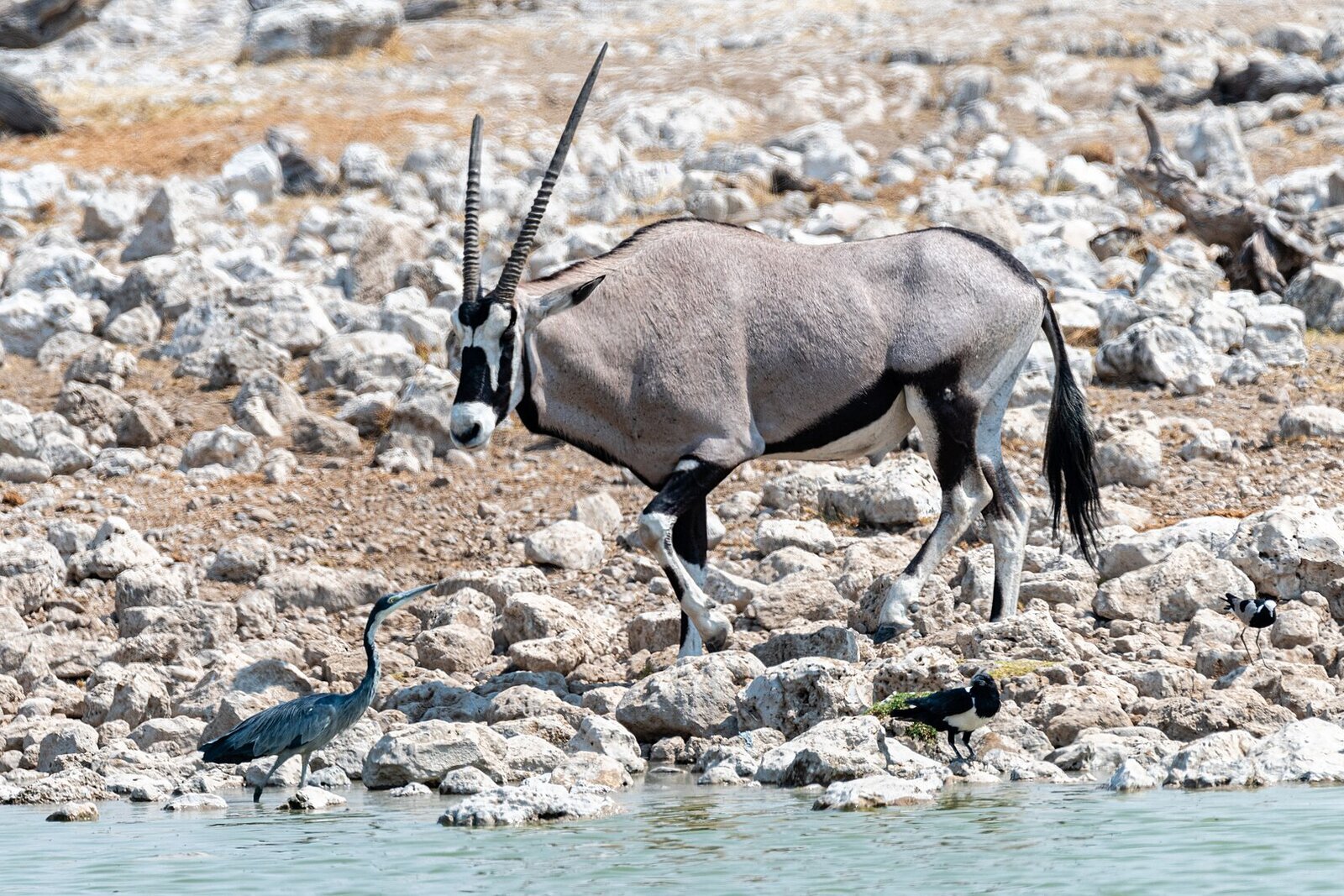
Sossusvlei itself is a clay pan at the end of the Tsauchab River, which only reaches this far in the rarest of flood years. For most of time it is dry, cracked and silent, ringed by dunes with names that travellers whisper like landmarks — Big Daddy, Big Mama, Dune 45. This is the image that put Namibia on the world’s bucket list: a lone oryx crossing a knife-edge ridge, a sky turning from violet to gold, and sand that seems to glow from within.
The Oldest Desert, the Tallest Dunes
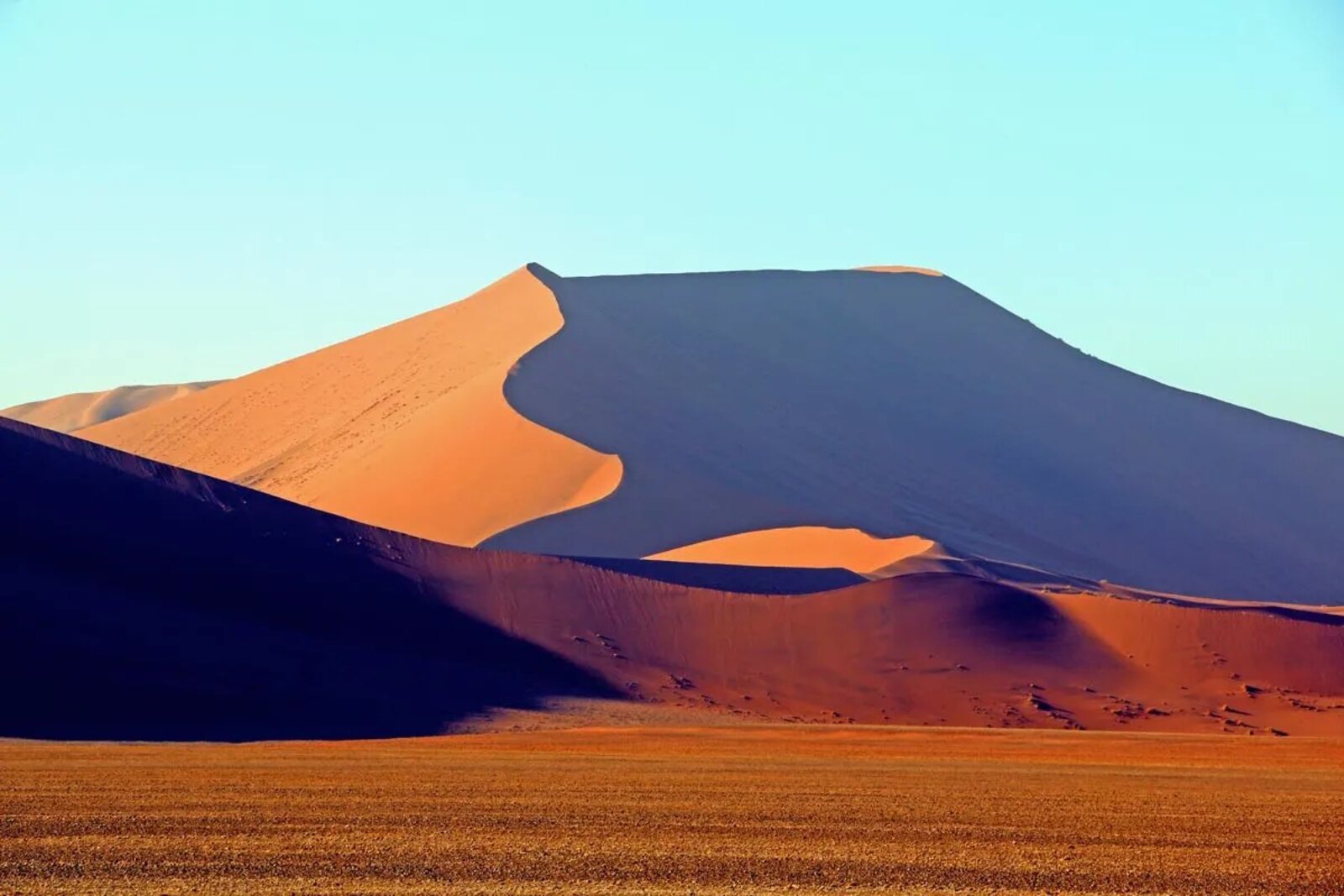
The scale of the place is hard to grasp until you stand beneath it. The dunes here are true giants: Big Daddy tops out at roughly 325 metres, and Dune 7, near the coast, is often cited as one of the world’s tallest. They are star dunes and linear dunes, shaped over millennia by winds arriving from opposite directions, so their crests hold a razor-sharp line that divides sunlit face from deep-shadow flank.
Their colour is the signature. The oldest sand, richest in oxidised iron, burns a deep brick-red, while younger sand blown in from the Atlantic stays pale and pinkish. At sunrise and sunset the low light rakes across the ridges and the whole sand sea seems to catch fire — the single reason photographers travel from every continent to be here for that first hour.
Deadvlei — The Petrified White Pan
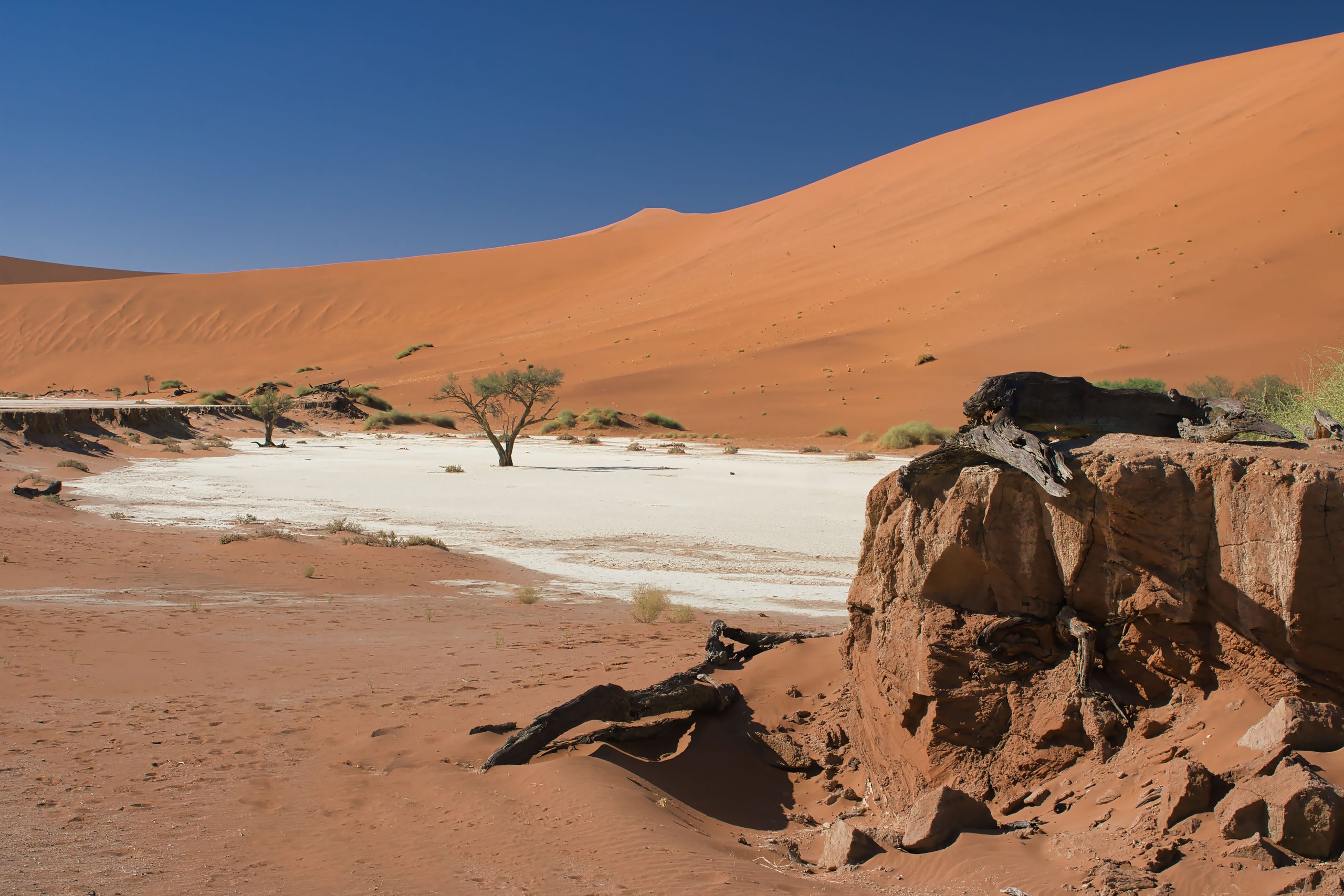
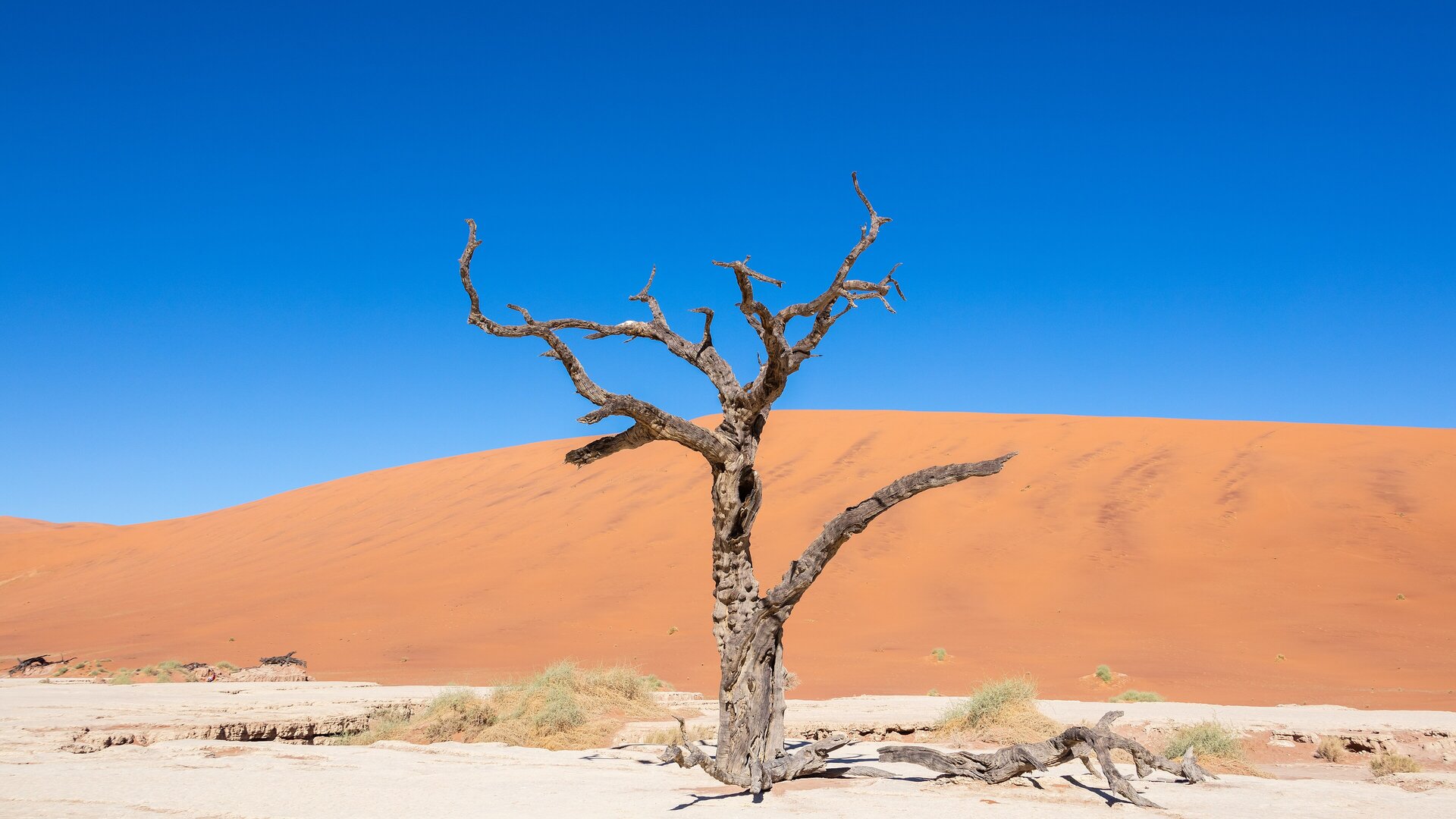
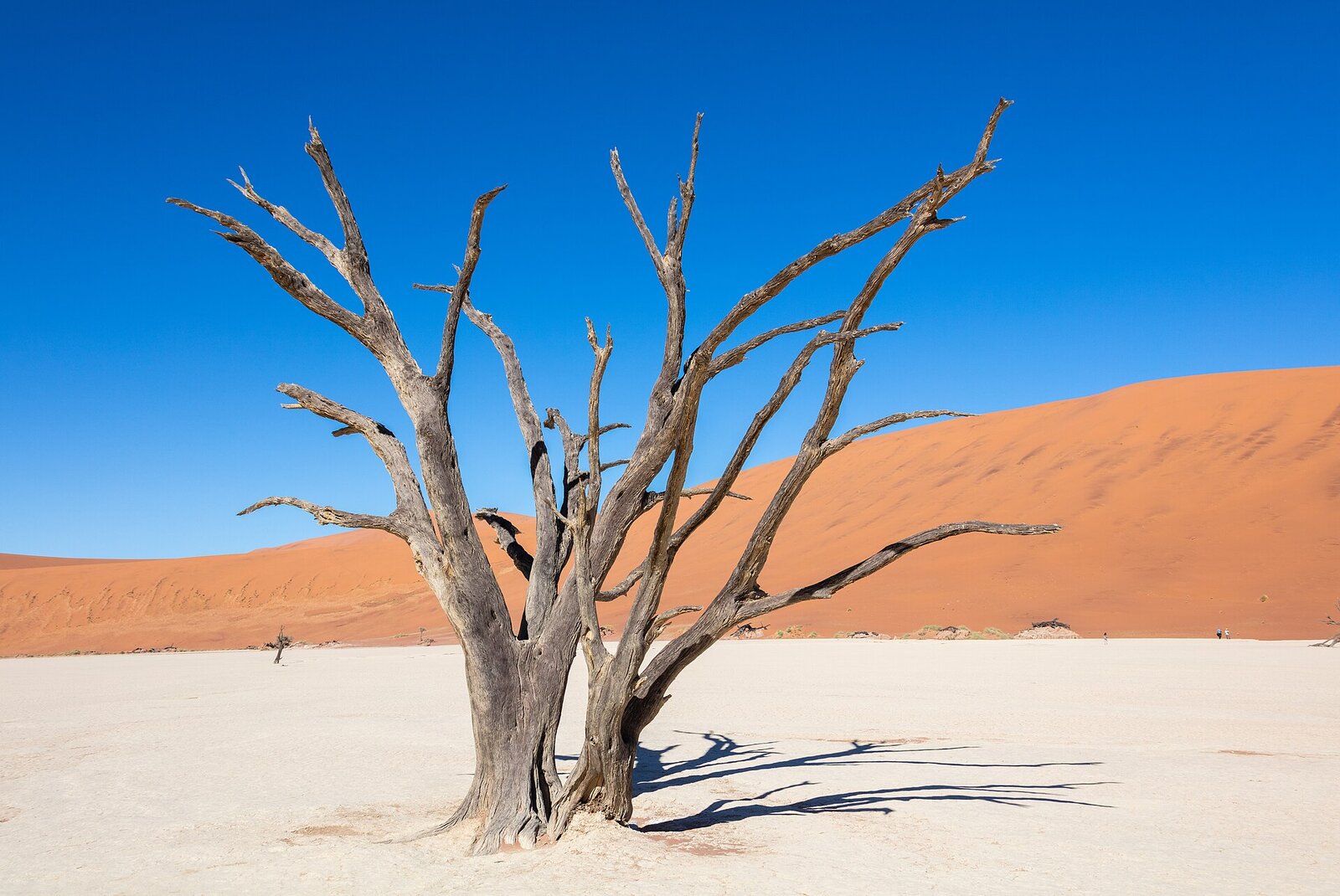
If Sossusvlei is the headline, Deadvlei is the masterpiece. A short walk over a dune saddle from the Sossusvlei car park brings you to a startling white clay pan, cracked into a mosaic and dotted with the blackened skeletons of camel-thorn trees. The trees died around 900 years ago when the Tsauchab River changed course and the marsh dried out. They did not rot and they did not petrify — the air is simply too dry for them to decompose, so they still stand, scorched black by the sun, against the white floor and the towering orange wall of Big Daddy behind.
The contrast is almost unreal: black trees, white pan, red dune, blue sky, four hard bands of colour with no gradient between them. It is the most photographed scene in Africa and, in person, one of the most serene. Arrive early, before the pan fills with day-trippers, and the silence is total.
Related journey: Sossusvlei & Sand Sea Luxury Escape — 5 Days →
Climbing the Dunes — Big Daddy & Dune 45
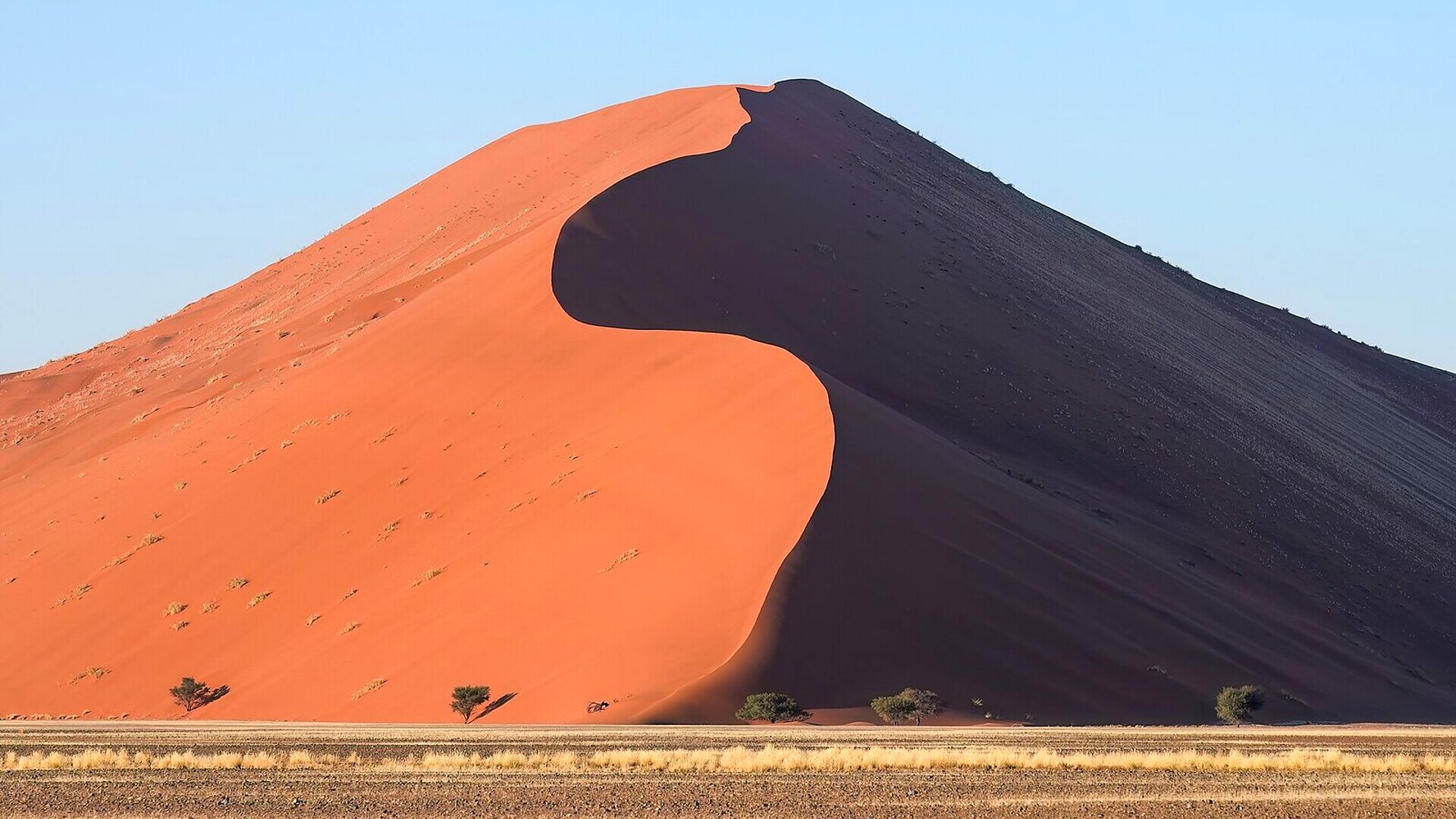
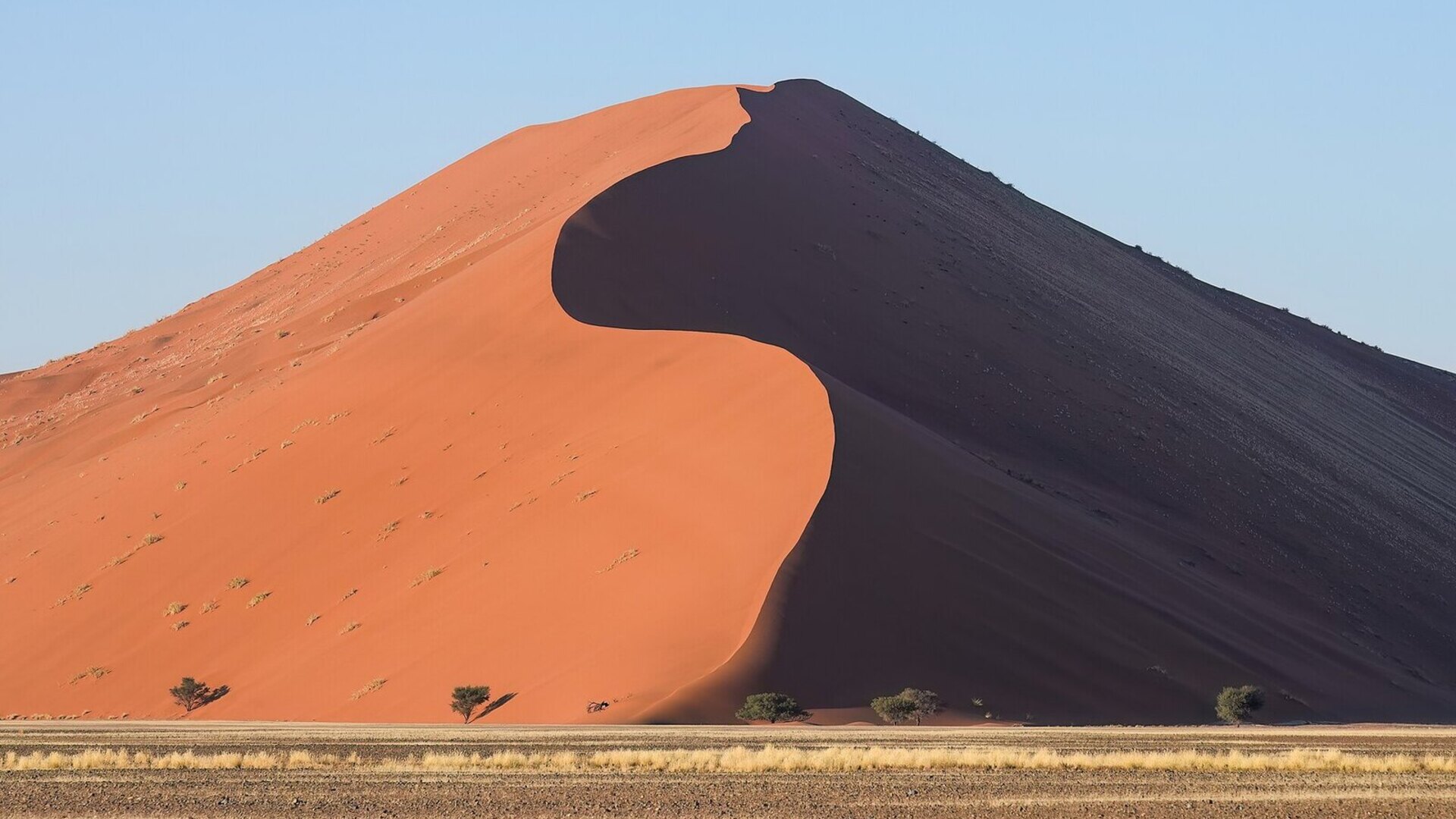
Two dunes draw the most feet, and they suit very different travellers. Dune 45, named for its position 45 kilometres from the Sesriem gate, is the classic. At around 80 metres it is a manageable climb up a graceful S-shaped ridge, perfect for catching sunrise without a punishing effort, and it stands right beside the road. It is the dune most people picture when they picture Namibia.
Big Daddy is the challenge. Rising some 325 metres above the Deadvlei pan, the climb up its spine takes 45 minutes to over an hour in soft, giving sand, and the reward at the top is a view across an ocean of dunes. The best part comes on the way down — you simply run and leap straight off the face, sinking to your ankles, reaching the floor of Deadvlei in a few exhilarating minutes. Start early: by mid-morning the sand is too hot and the sun too harsh.
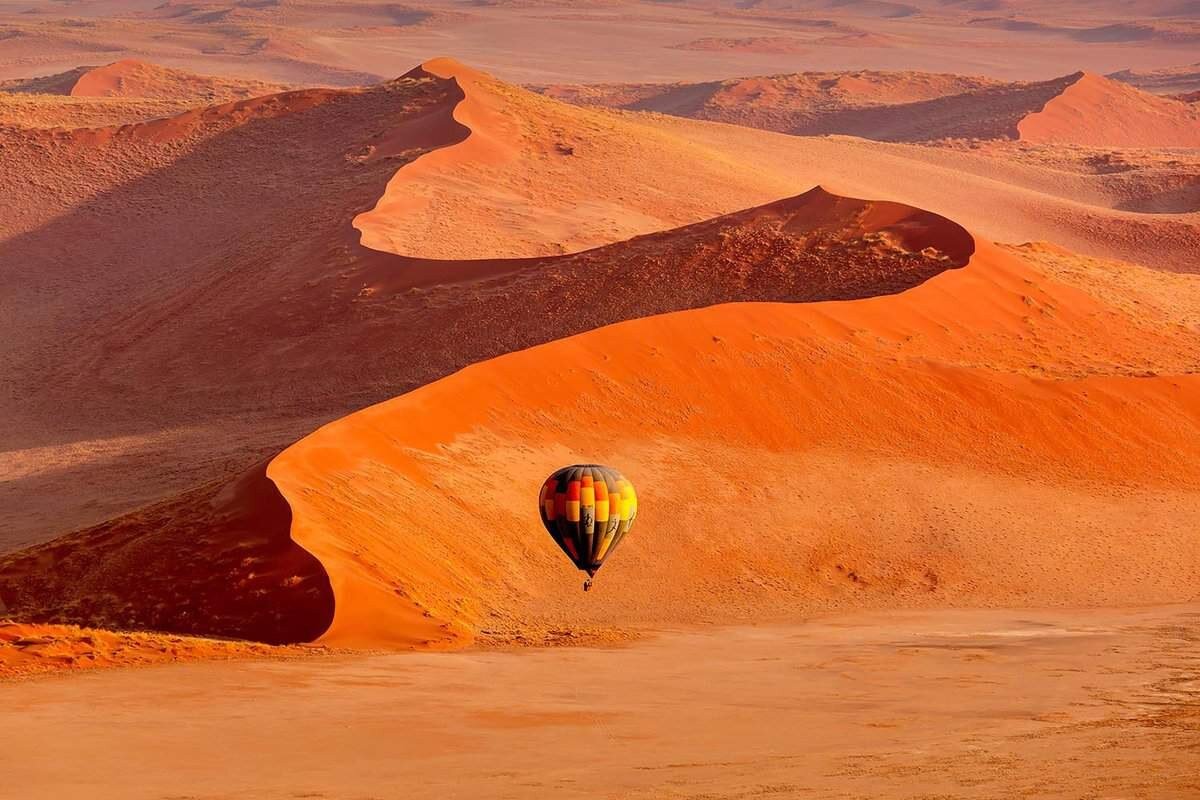
Between the two sits Sesriem Canyon, a narrow one-kilometre gorge carved by the Tsauchab over millions of years, cool and shaded and perfect for the heat of the afternoon. And for the ultimate perspective, a dawn hot-air balloon flight over the Namib drifts silently above the whole sand sea before a champagne breakfast in the dunes — one of the great travel experiences on the continent.
Best Time to Visit & the Sunrise Secret
Sossusvlei is a year-round destination, but the seasons change the experience. May to October is the dry, cooler season — clear skies, comfortable days, cold desert nights and the most reliable sunrises, which is why it is peak season. November to April is hotter, with the small chance of dramatic summer thunderstorms that can, very rarely, bring water to the pan and a reflection you will never forget. Even in the green season, days are hot and photography is superb.
| Season | Months | Conditions | Best For |
|---|---|---|---|
| Peak Dry | May – Oct | Clear skies, cool days, cold nights, reliable sunrises | Dune climbs, photography, ballooning. Book lodges early. |
| Shoulder | Apr & Nov | Warm, quieter, good light, fewer crowds | Value, flexibility, easier lodge availability. |
| Green Season | Dec – Mar | Hot days, dramatic skies, rare pan flooding | Photography, storms, the slim chance of a flooded vlei. |
The single most important tip: be first through the gate. The outer Sesriem gate opens at sunrise, but the golden light lasts barely an hour before the dunes flatten out under a high sun. Guests staying inside the park gate — or on a private reserve with its own access — leave earliest and reach Deadvlei while it is still cool, empty and glowing. It is the difference between a photograph and the photograph.
The Finest Desert Lodges
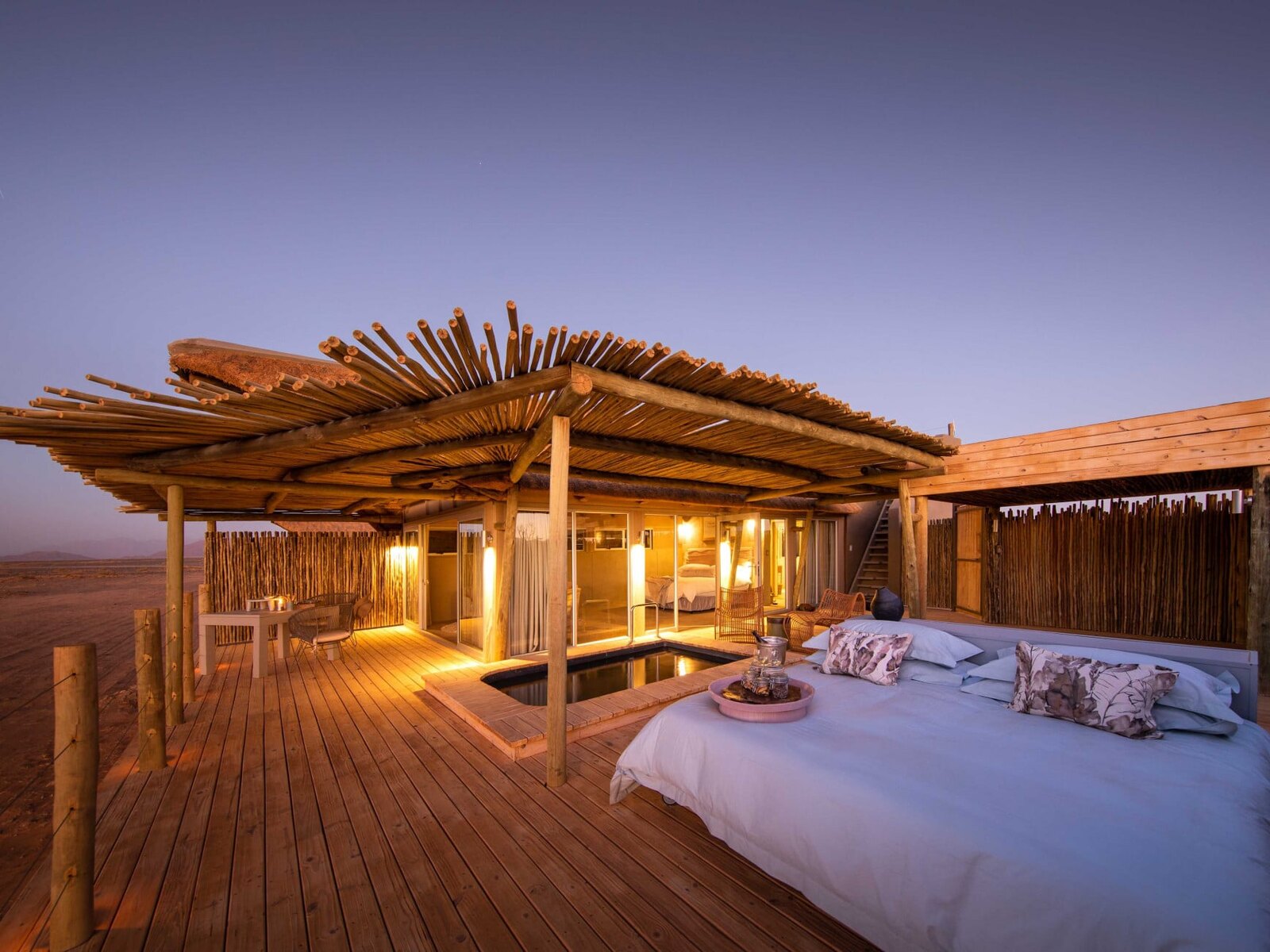
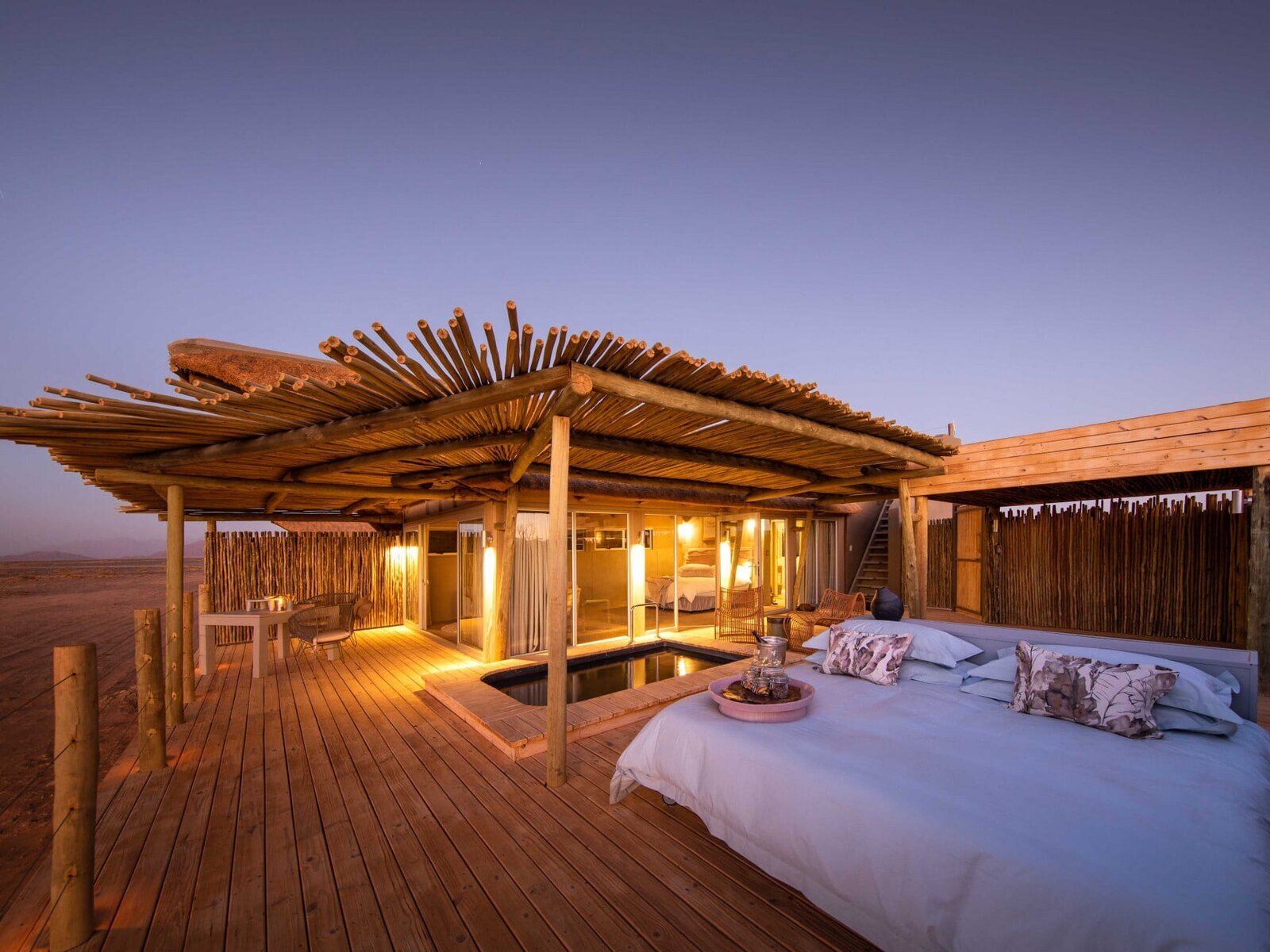
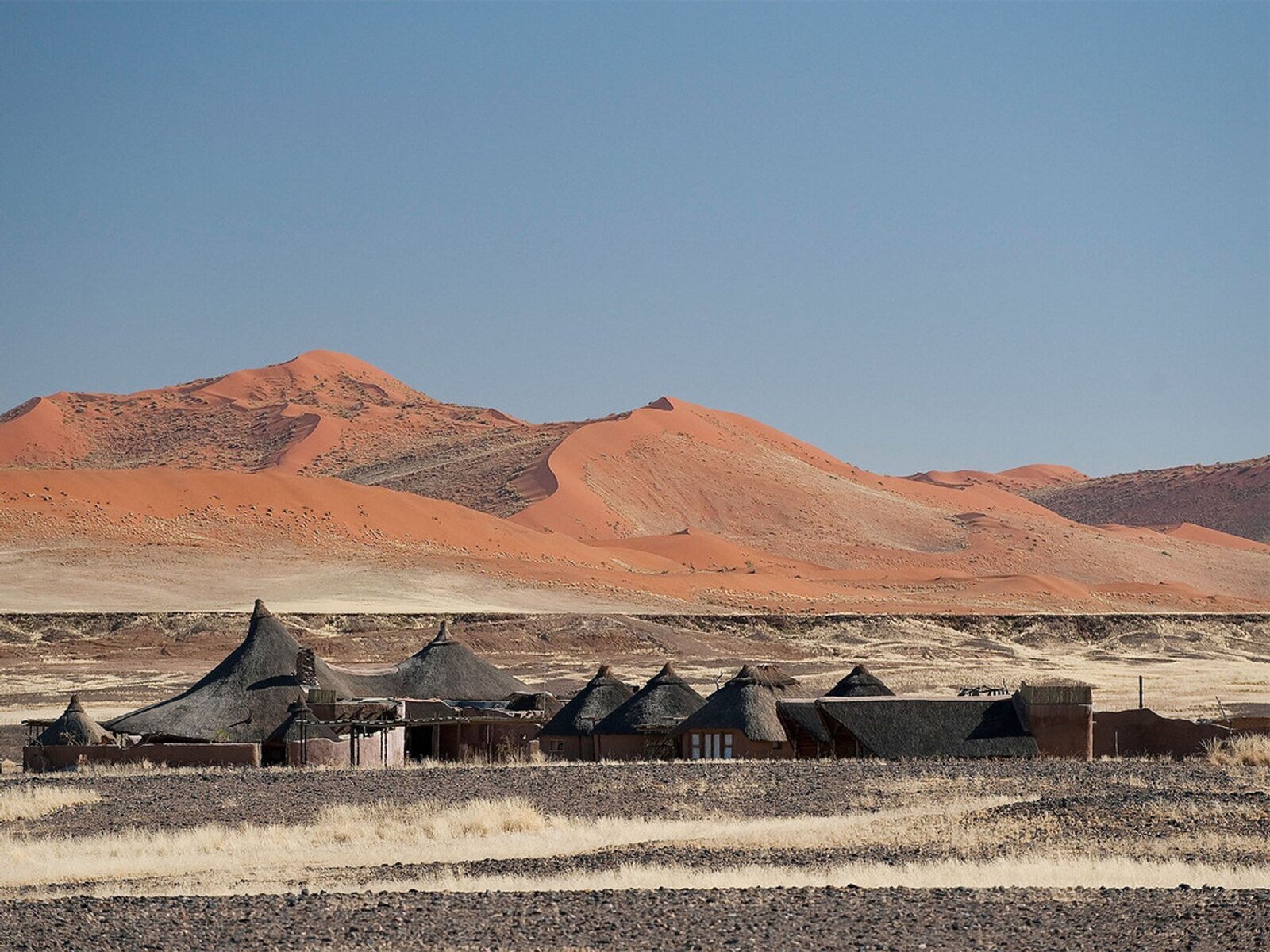
Where you sleep decides how you experience Sossusvlei, because it decides how early you reach the dunes. The most coveted addresses hold their own gate into the sand sea. Little Kulala, a design-led retreat of private suites with plunge pools and rooftop sky-beds, and Kulala Desert Lodge, with its thatched chalets and star-bed rooftops, both sit on the Kulala Wilderness Reserve with a private gate — so you reach Sossusvlei before the public road even opens.
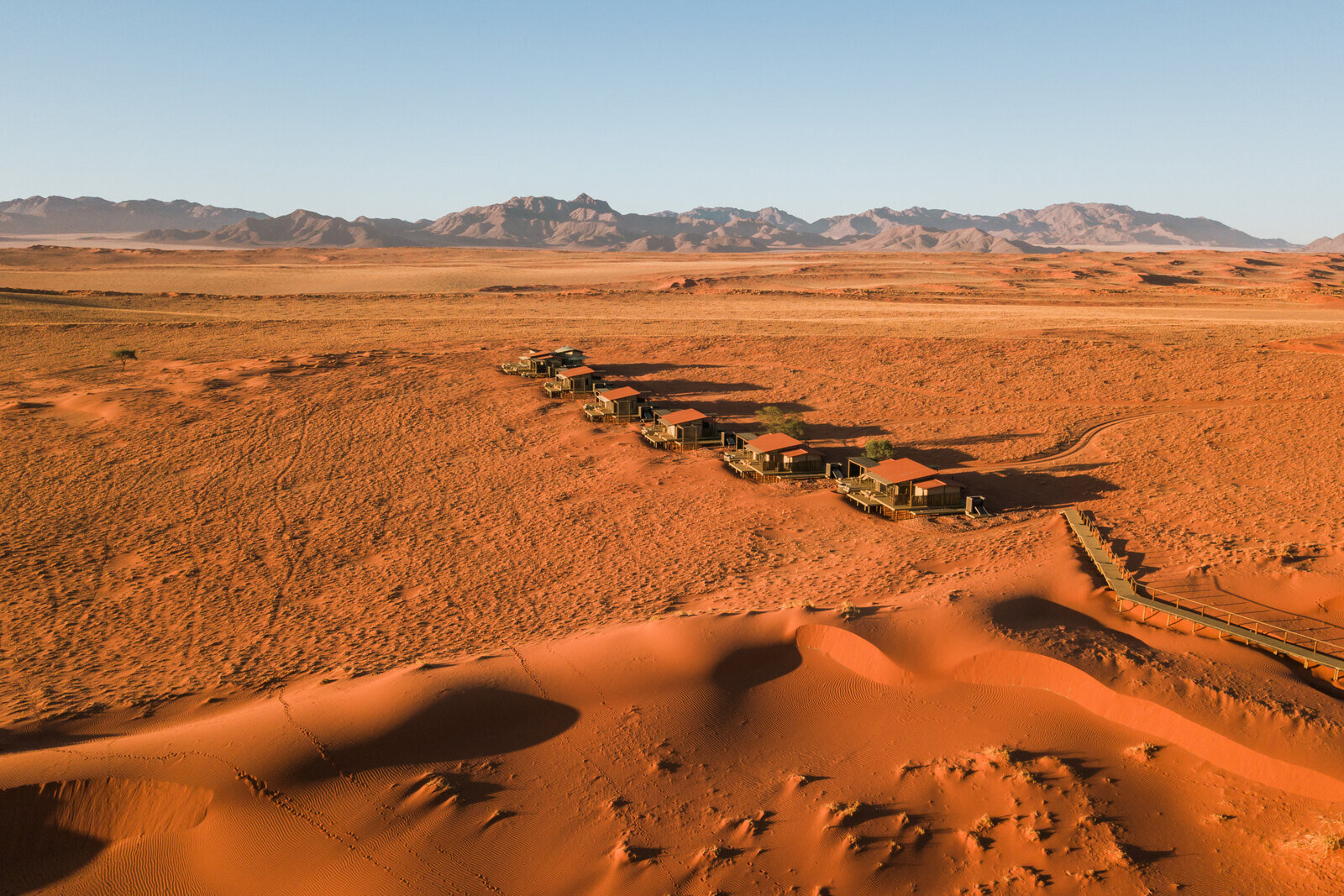
Deeper south, Wolwedans Dunes Lodge in the private NamibRand Nature Reserve offers open-fronted chalets on a dune plateau in one of the darkest night skies on Earth — a place for slow days and infinite stars rather than the busy Sossusvlei run. Inside the park itself, lodges at Sesriem give the shortest possible sunrise drive to the dunes. Whichever you choose, we book the room and the timing that gets you to the sand first.
Related journey: Luxury Namibia Highlights — 8 Days →
Planning Your Sossusvlei Journey
Getting there is part of the adventure. Sossusvlei is around a five- to six-hour drive from Windhoek through the Naukluft mountains, or a short, spectacular light-aircraft flight that lands beside your lodge and turns the transfer itself into a scenic highlight. Most travellers spend two to three nights in the dunes — enough for a sunrise at Deadvlei, a dune climb, Sesriem Canyon and, ideally, a dawn balloon flight.
From here the classic Namibia circuit continues: north to the wildlife of Etosha, into the ancient valleys and desert elephants of Damaraland, or west to the eerie Skeleton Coast. Sossusvlei also pairs beautifully with Cape Town for a two-country grand tour of Southern Africa’s greatest landscapes.
Why Book Your Sossusvlei Safari With Us
We plan Namibia the way we would want our own family to travel — matched to the right lodge, the right gate and the right season, with the sunrise timing that gets you to Deadvlei first, and every flight, transfer and dune experience arranged. We book direct with the finest desert lodges, secure the private-gate suites that sell out first, and stitch Sossusvlei seamlessly into a wider Namibia or Southern Africa journey.
Ready to Plan Your Sossusvlei & Namib Desert Journey?
Our specialists design tailor-made Namibia safaris — matched to the finest desert lodges, the earliest gate access and your own pace. We book direct, secure the private-reserve suites that sell out first, and handle every flight, transfer and sunrise so all you do is arrive and be moved.