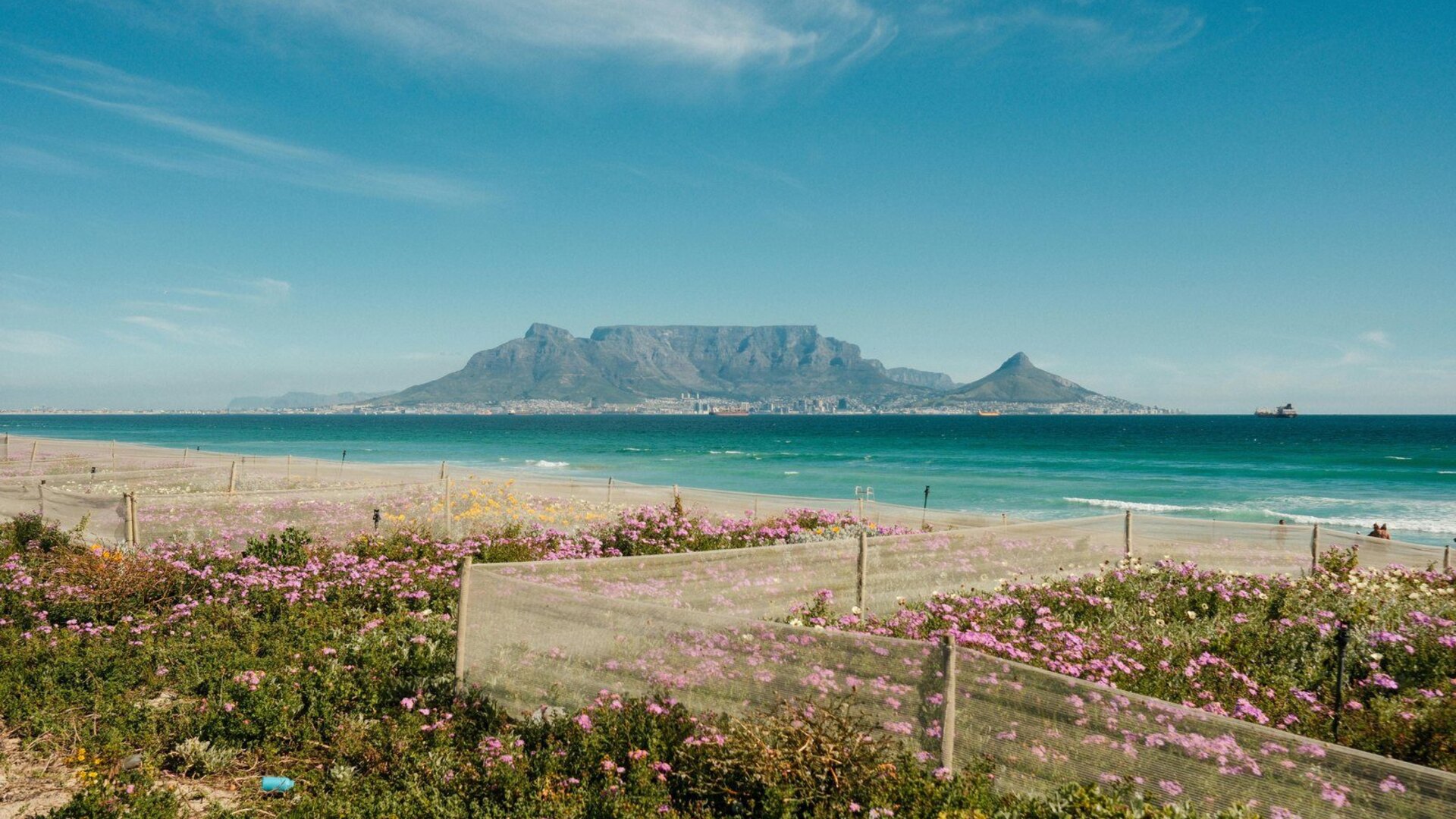
Key Takeaways
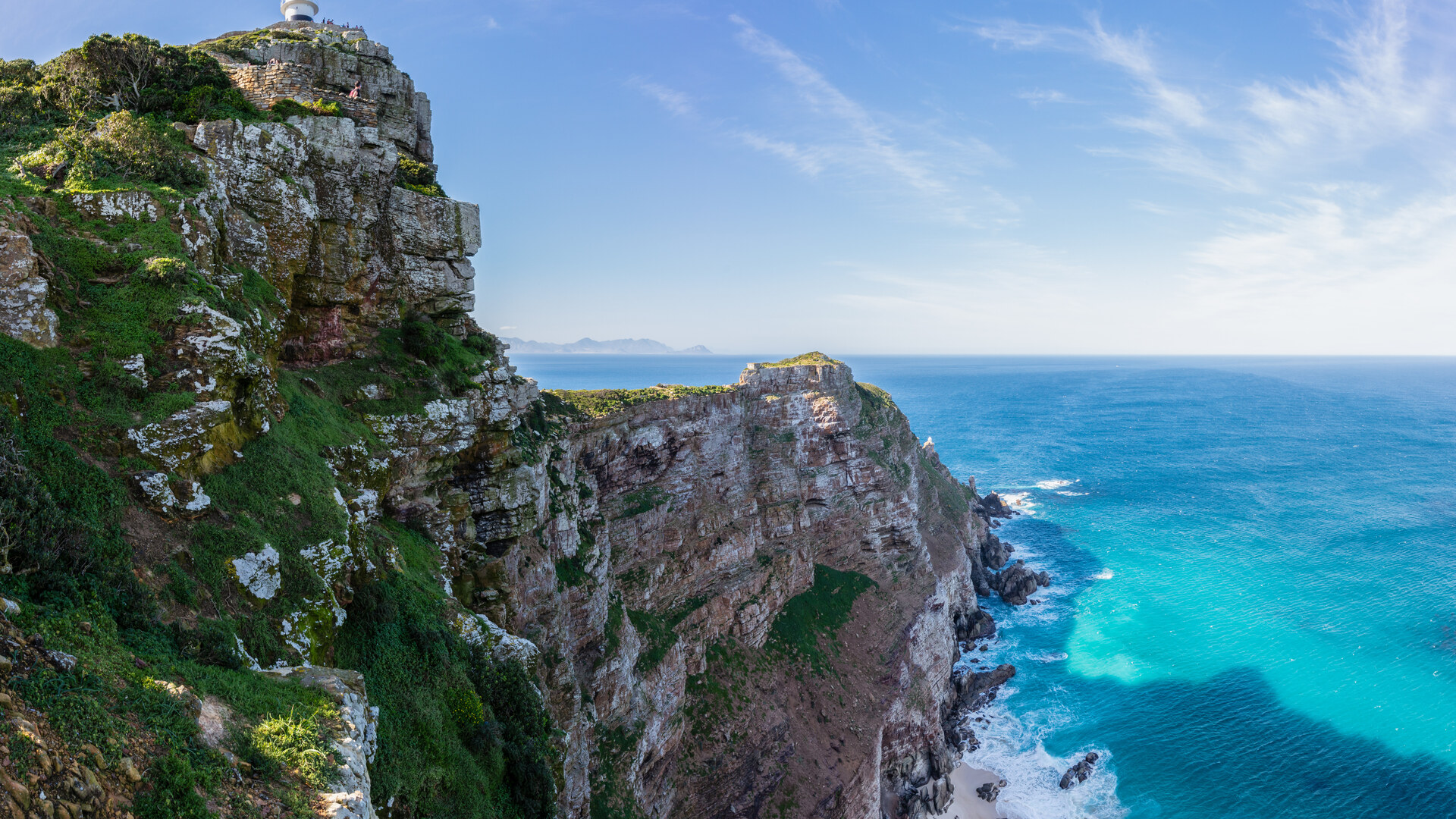
- This is the real tip. Cape Agulhas (34°49′58″S, 20°00′E) is the southernmost point of the African continent — not Cape Point or the Cape of Good Hope, which lie ~150 km north-west on the Cape Peninsula.
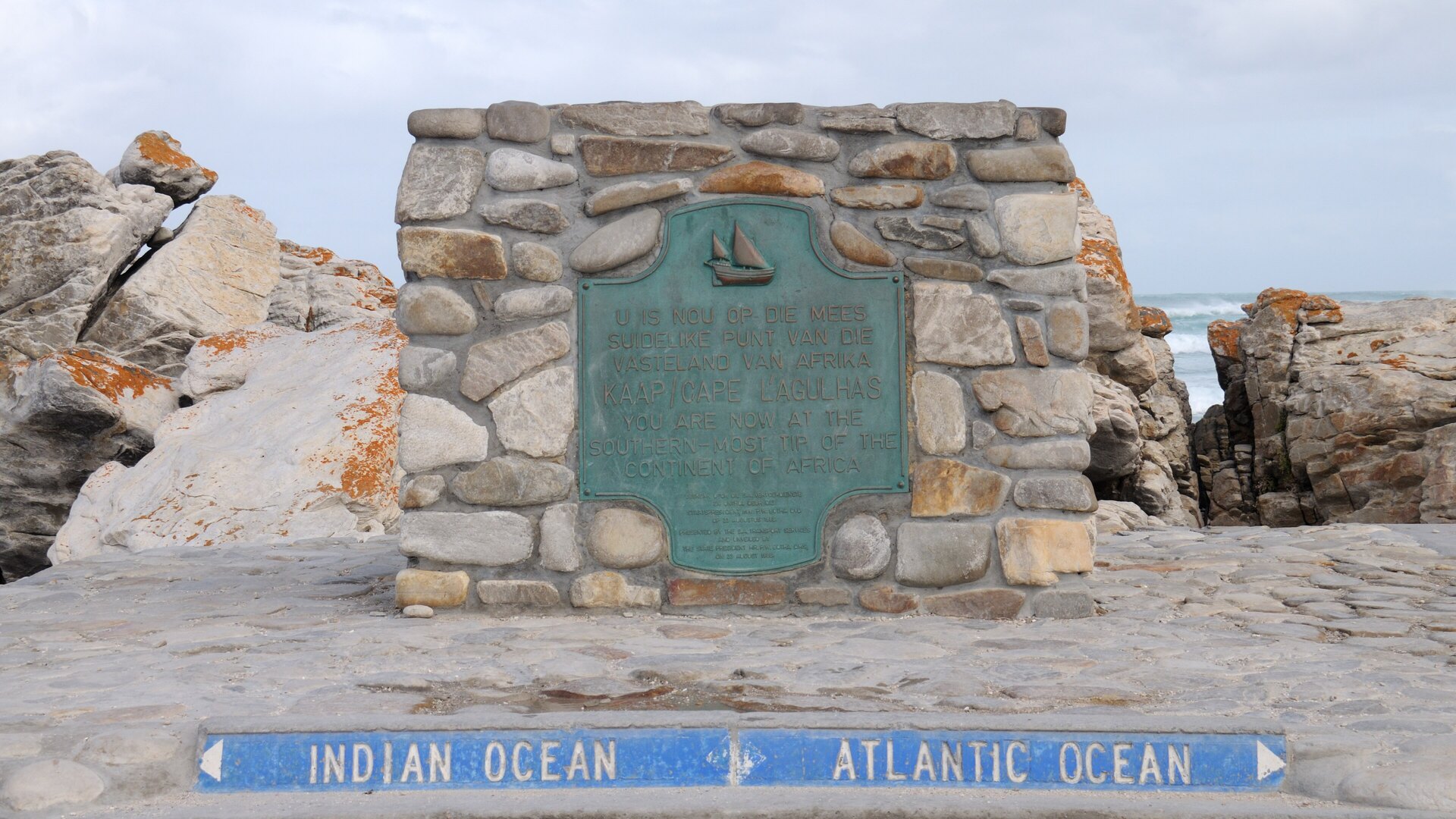
- The oceans officially meet here. The recognised boundary between the Atlantic and Indian Oceans runs due south along the 20°E meridian through Cape Agulhas, marked by the famous ocean signpost.
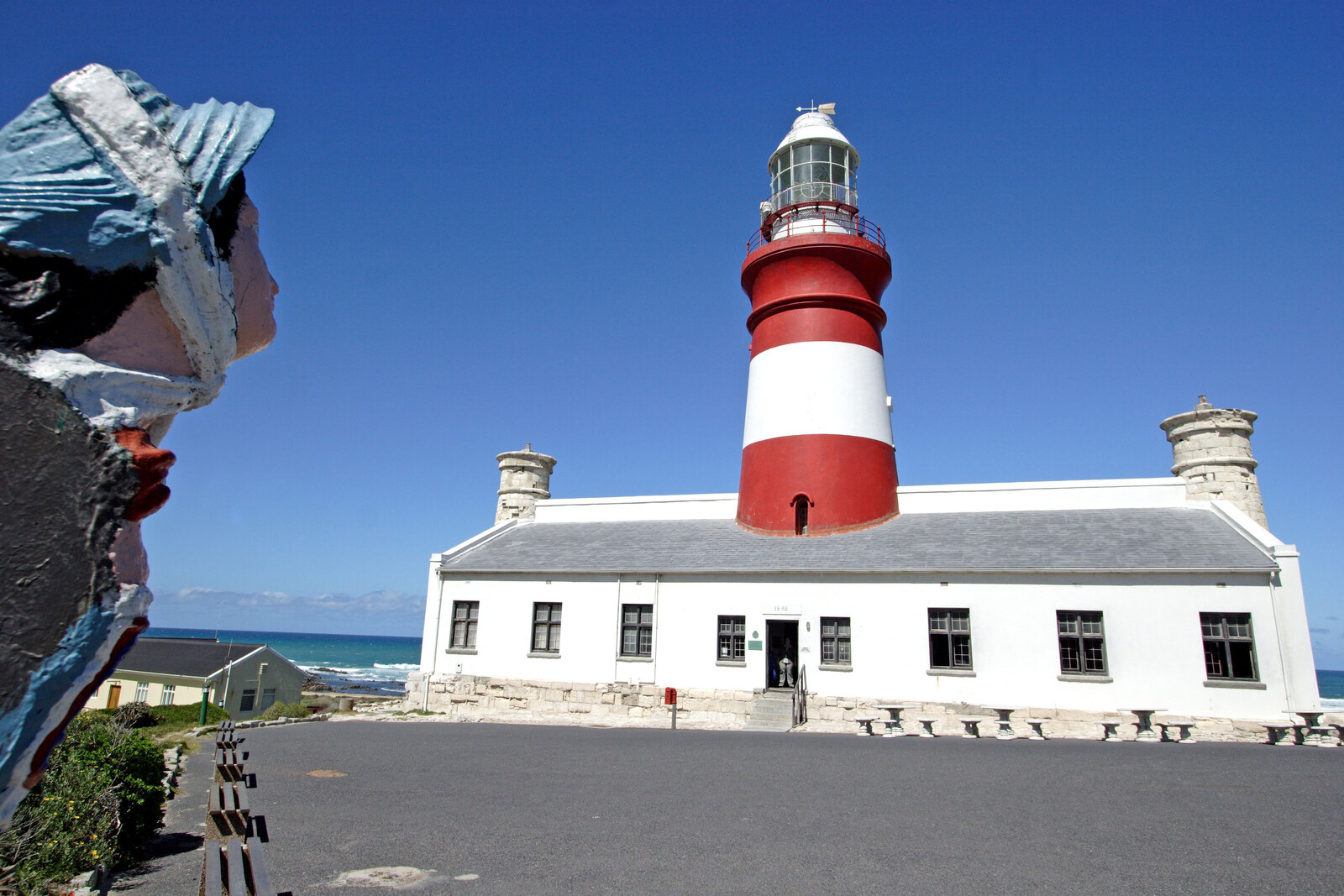
- Two icons: the southernmost monument (with its newer relief-map sculpture of Africa) and the red-and-white 1849 lighthouse, the second-oldest working lighthouse in South Africa.
- It is a full day from Cape Town — about 200–225 km and 2.5–3 hours each way through the Overberg — best enjoyed as a long day trip or an overnight.
- More than the tip: Agulhas National Park's fynbos and boardwalks, the Meisho Maru shipwreck, and the nearby villages of Struisbaai and Arniston make it a rewarding Overberg escape.
There is a particular feeling that comes over you at Cape Agulhas that you do not get at the more famous capes near Cape Town. There is no towering cliff, no funicular, no jostling crowd — just a low shelf of rock, a great deal of wind, and the plain, quietly astonishing fact that there is no more Africa south of where you are standing. This is the southernmost tip of the African continent, and the officially recognised point where the Atlantic and Indian Oceans meet.
Most visitors to the Western Cape never make it here, because Cape Point and the Cape of Good Hope — an hour from the city — soak up the attention and, unfairly, the "tip of Africa" reputation. But for travellers who want the genuine article rather than the postcard, the run south to Agulhas is one of the most quietly satisfying journeys in the country. This guide covers everything: the facts and history, the lighthouse, the national park, the best time to go, what it costs in 2026, and how to visit. If you are still deciding between the capes, start with our Cape of Good Hope vs Cape Agulhas comparison.
Where Cape Agulhas Is & Why It Matters
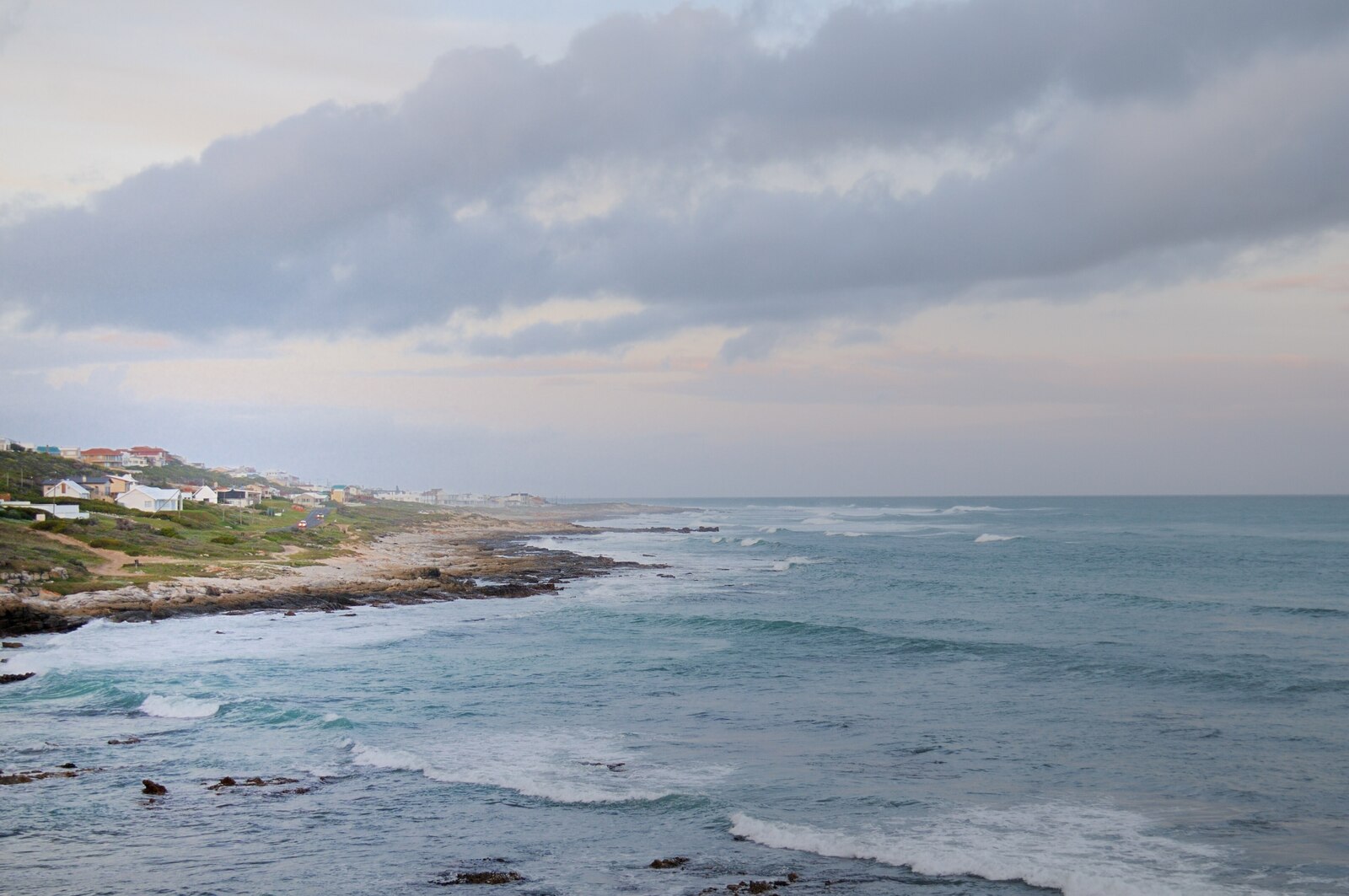
Cape Agulhas sits in the Overberg region of the Western Cape, beside the small holiday village of L'Agulhas, about 200–225 km south-east of Cape Town. The name comes from the Portuguese Cabo das Agulhas — "Cape of Needles" — given by early navigators who, around 1500, noticed their compass needles pointing to true north here with no magnetic deviation, and who feared the needle-sharp reefs just offshore.
Its importance is twofold. First, it is the southernmost point of Africa, a genuine geographic superlative. Second, it is the official dividing line between the Atlantic and Indian Oceans: by the widely used convention, that boundary runs due south along the 20° East meridian, which passes right through the cape. Both facts are marked on the ground, which is exactly why people make the pilgrimage.
Getting there
From Cape Town, the drive takes about 2.5 to 3 hours each way: head east on the N2 over Sir Lowry's Pass, through Caledon, then turn south via Bredasdorp to Struisbaai and L'Agulhas. It is an easy, scenic self-drive through wheatlands and fynbos, or a relaxed guided day where the distance and timing are handled for you. Because of that distance, treat Agulhas as a full-day trip or an overnight — not a quick add-on to a Cape Peninsula day.
The Southernmost Tip & the Ocean Marker
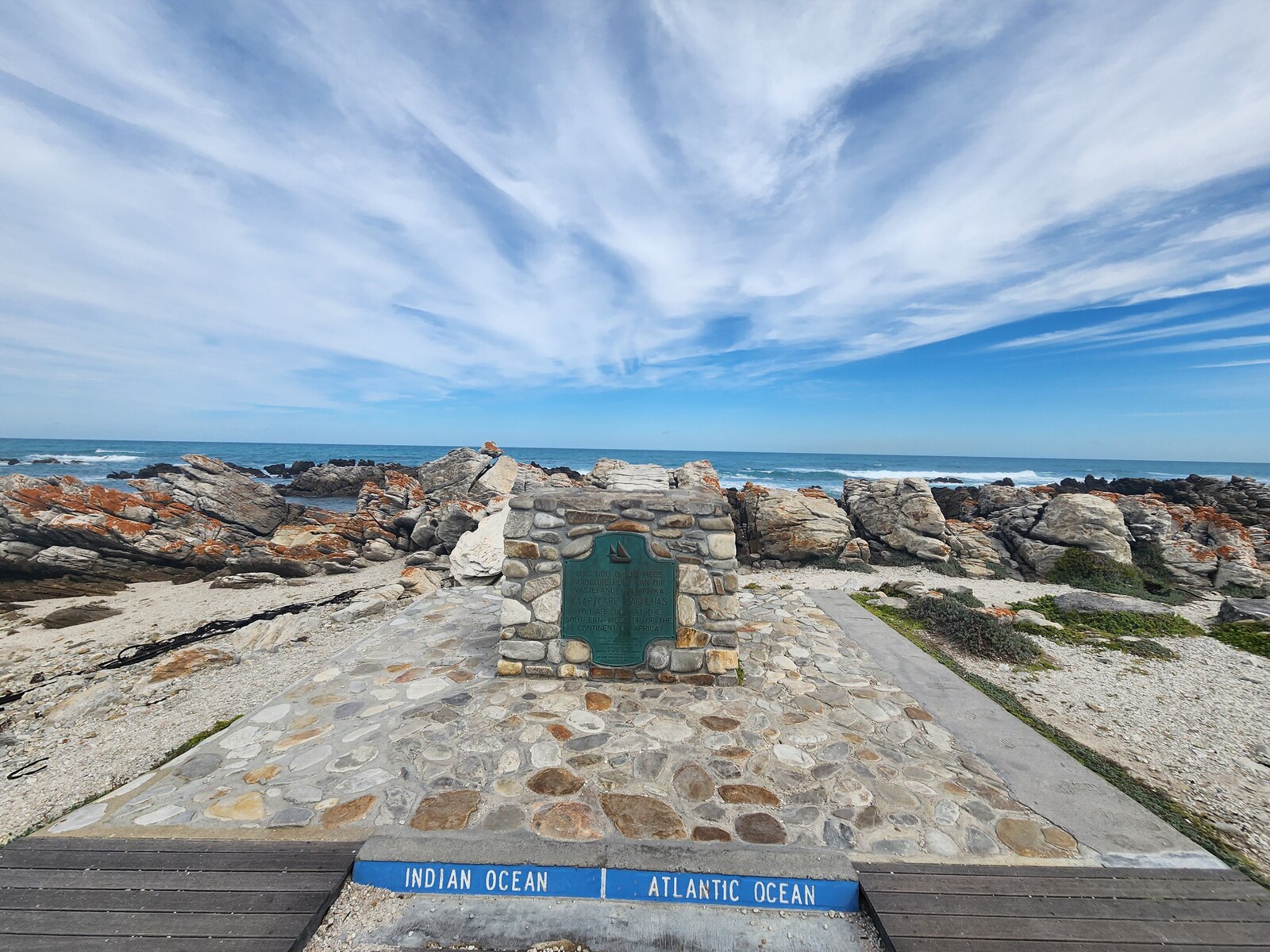
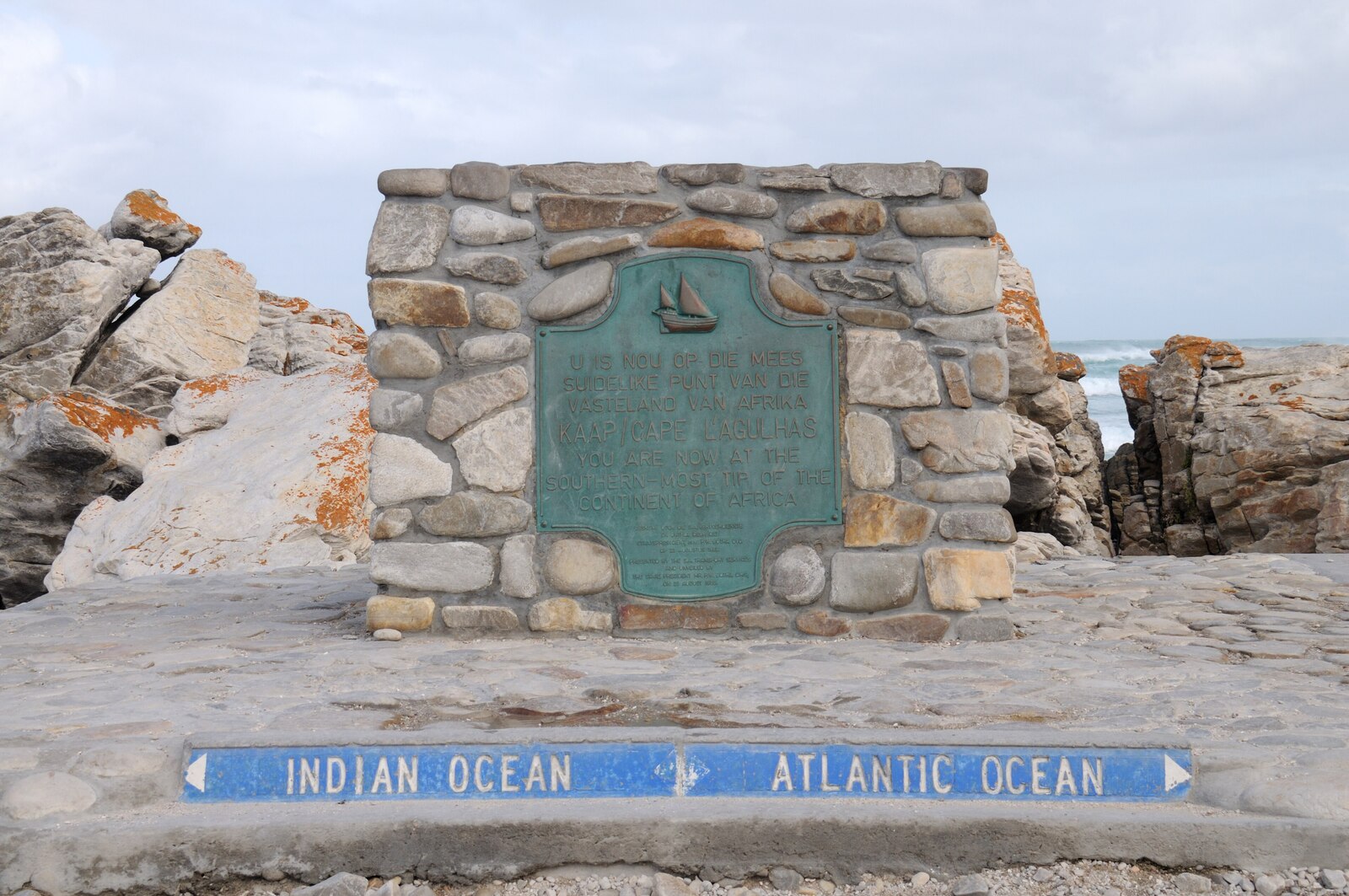
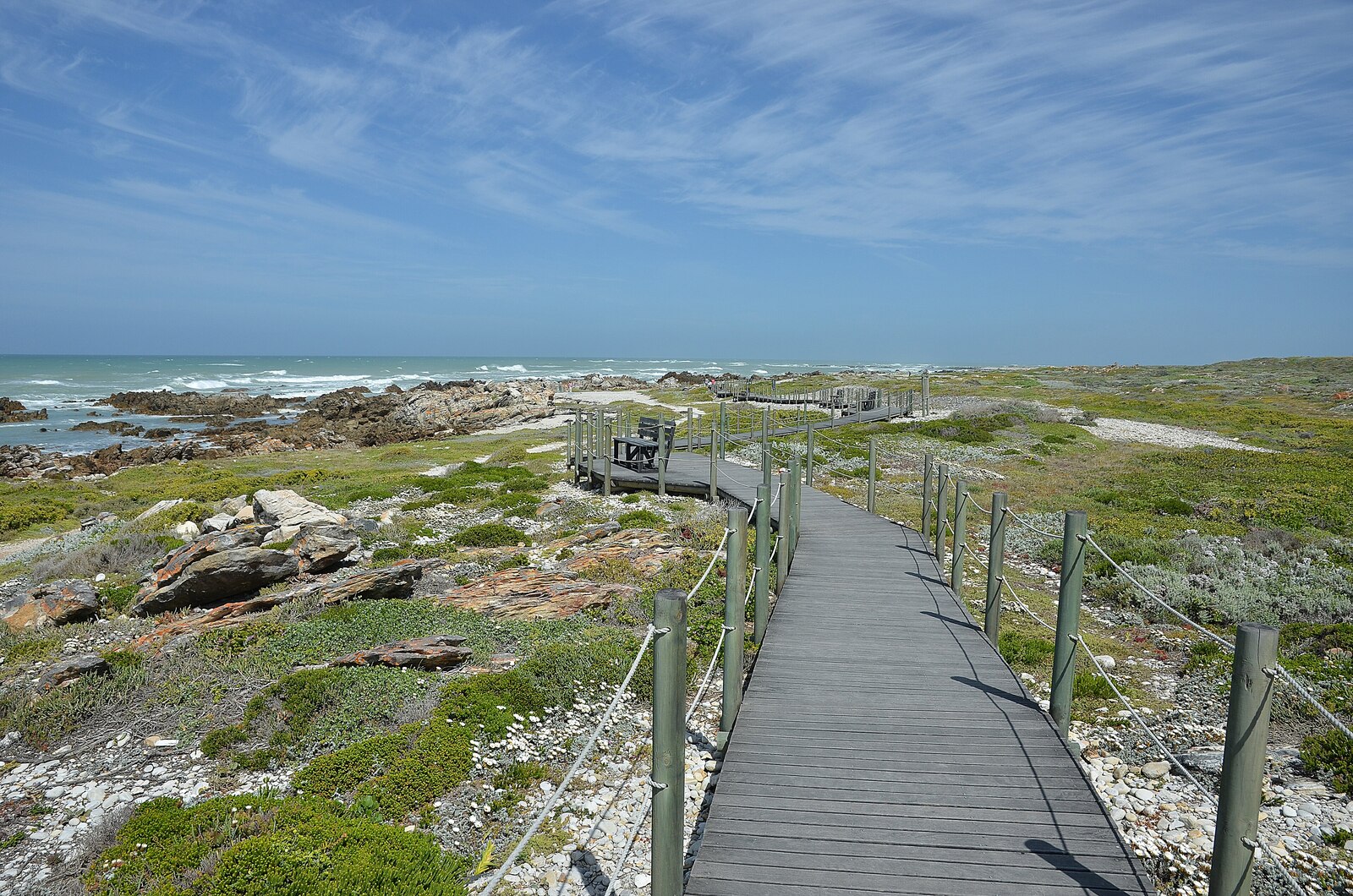
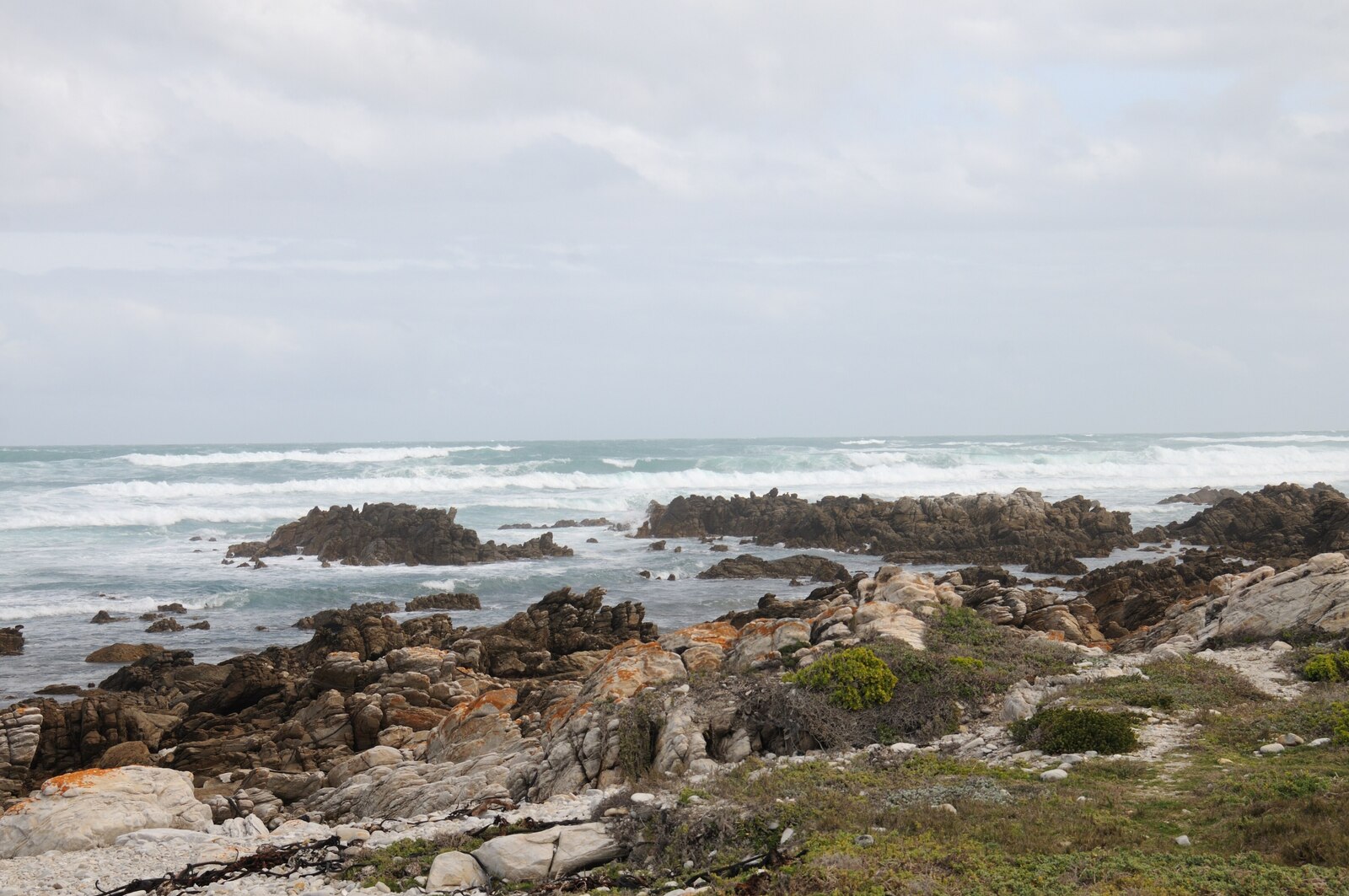
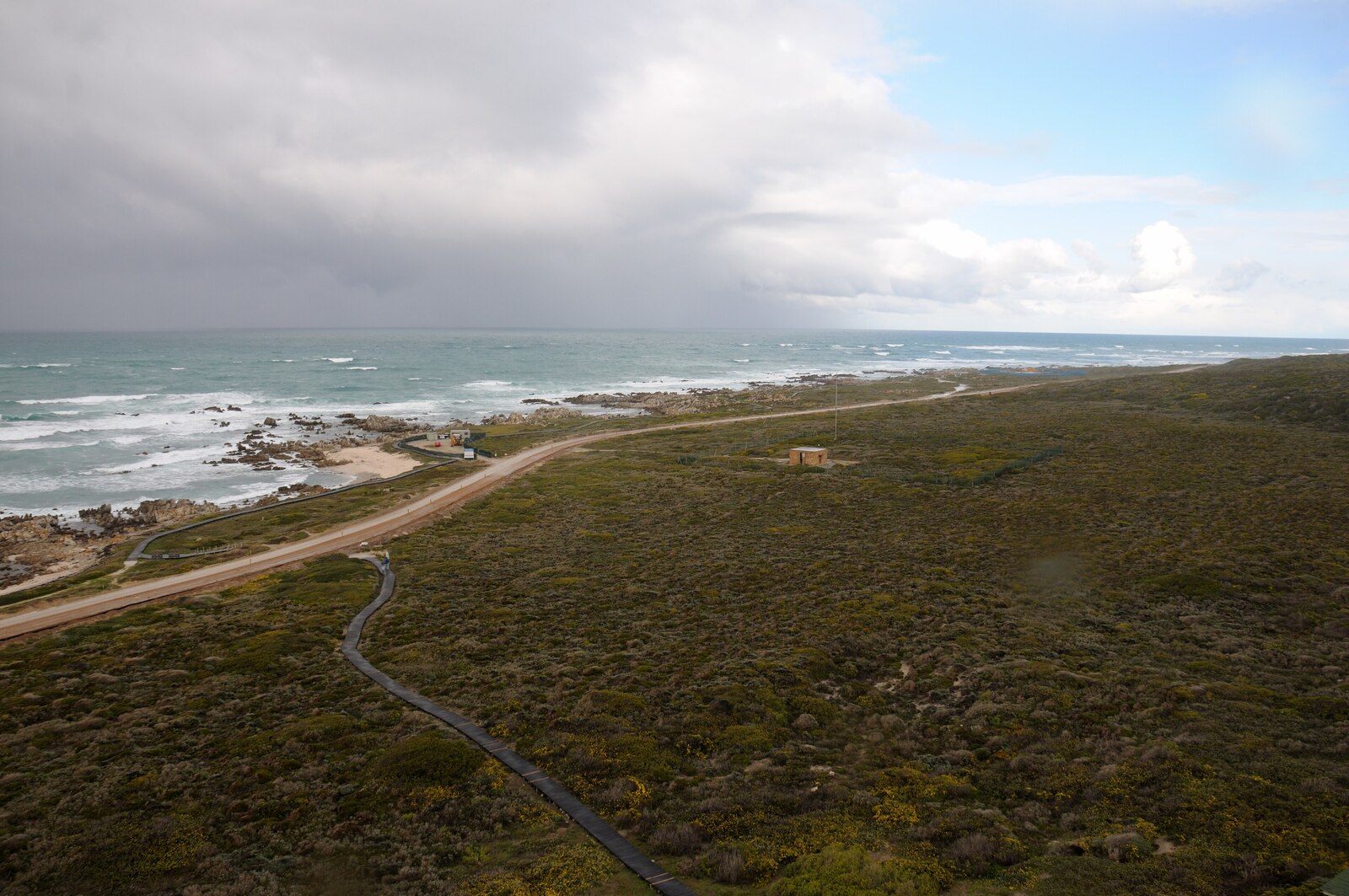
The tip itself is refreshingly unpretentious. A short boardwalk leads across the rocks to the official monument — a stone cairn and plaque declaring this the southernmost point of Africa — and, nearby, the much-photographed Atlantic/Indian Ocean marker with its "Indian Ocean" and "Atlantic Ocean" arrows pointing east and west. In recent years a striking relief-map sculpture of Africa was added, so you can photograph yourself standing at the bottom of a giant bronze-and-stone map of the continent.
It is worth being clear about the "two oceans" claim, because it is so often muddled. Oceans do not collide in a visible line anywhere on Earth; what Agulhas offers is the officially recognised boundary, the 20°E line, made tangible with a marker you can stand beside. The colourful "two oceans crashing together" story you may hear attached to Cape Point is a myth — the real, mapped division is here. For the full myth-busting, see our Cape of Good Hope vs Cape Agulhas guide.
The Cape Agulhas Lighthouse
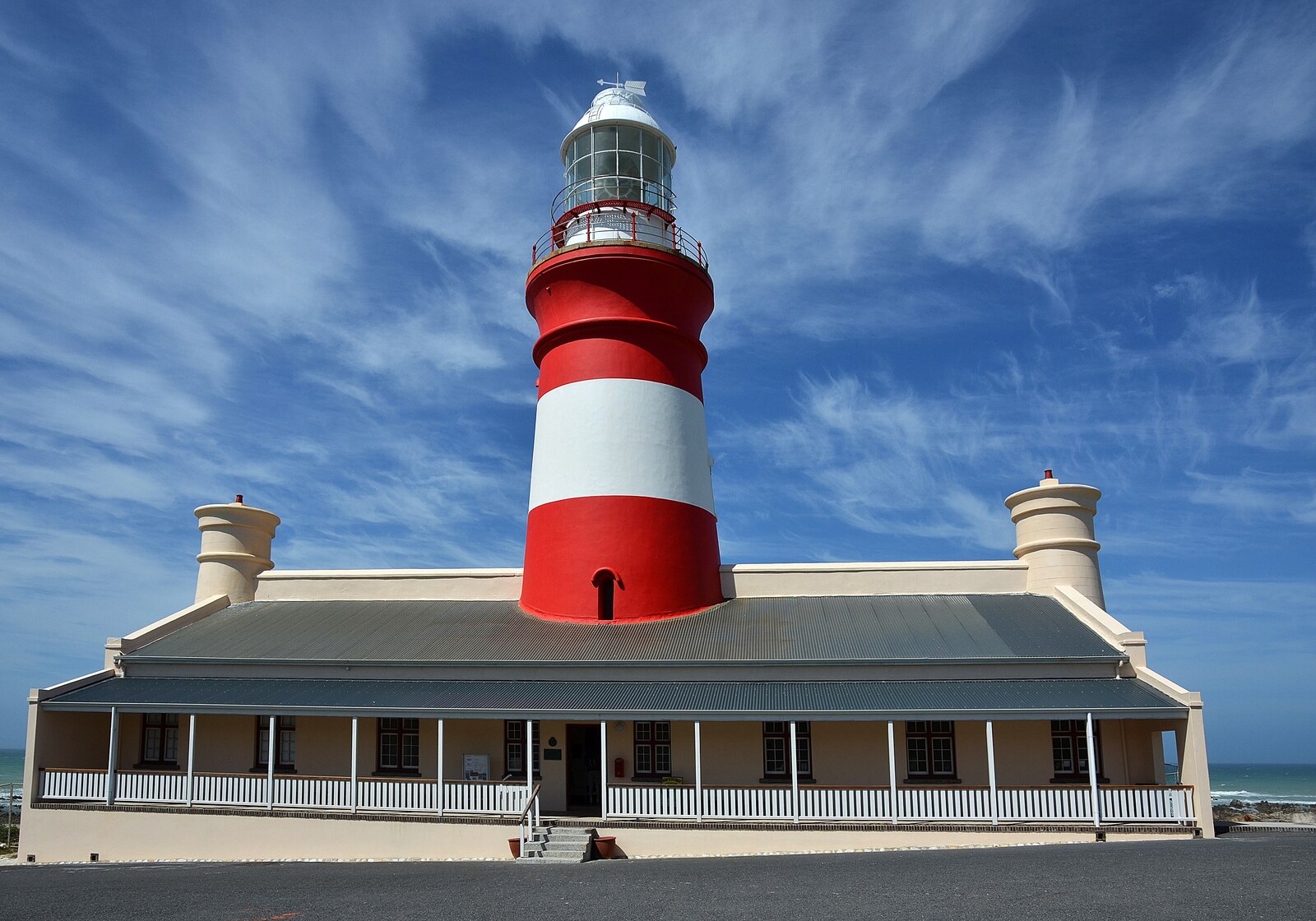
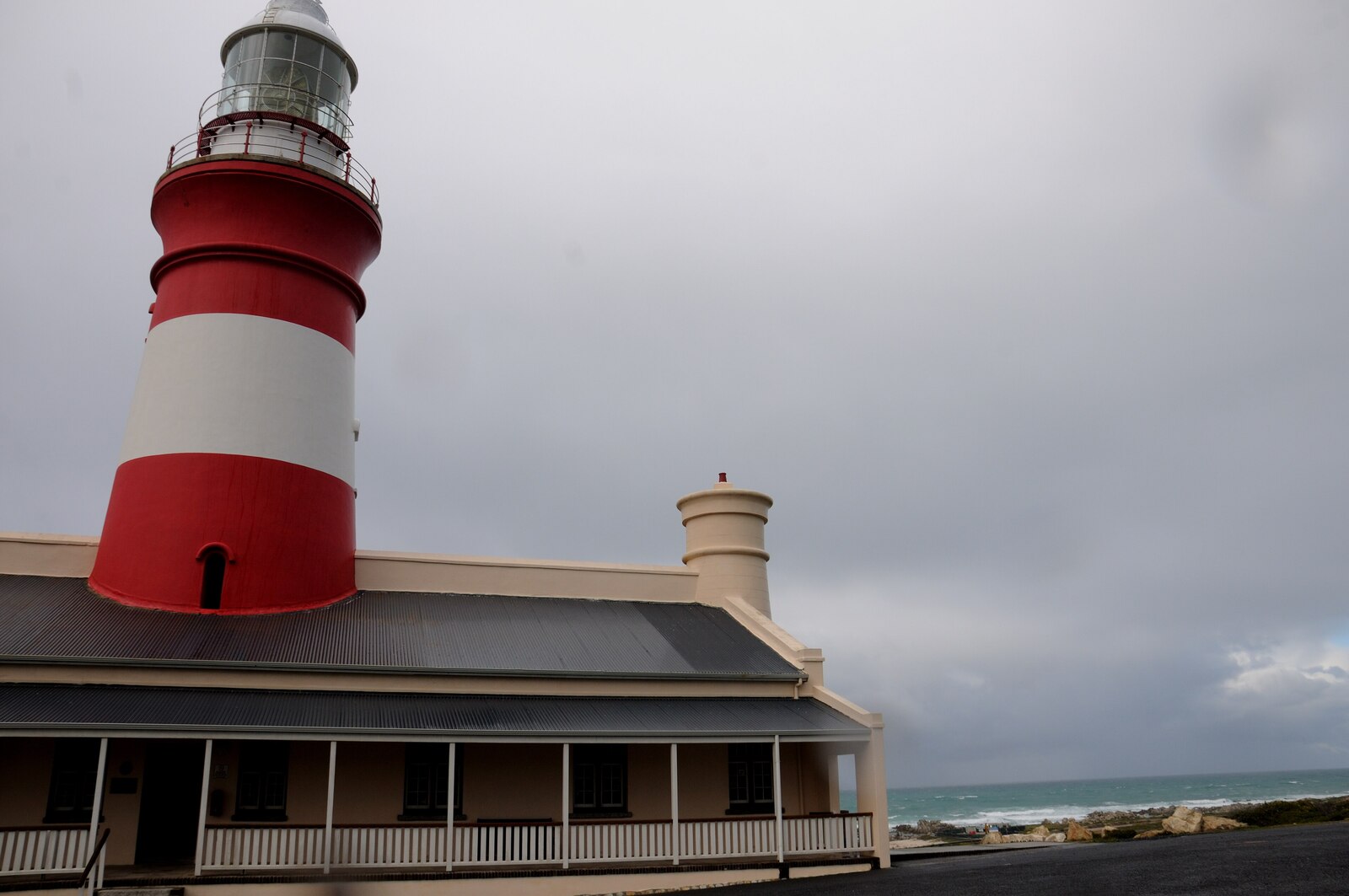
Rising above the village in bold red-and-white stripes, the Cape Agulhas Lighthouse is the cape's other great icon. Commissioned in 1849, it is the second-oldest working lighthouse in South Africa (after Green Point in Cape Town) and one of the oldest on the continent. Its design was inspired by the ancient Pharos of Alexandria, and for more than 170 years its light has warned ships off the deadly Agulhas reefs.
Today the lighthouse houses a small museum telling the story of the coast and its wrecks, and you can climb the tower for a sweeping view over the tip, the ocean and the fynbos plains. It is an inexpensive, atmospheric stop and the classic Cape Agulhas photograph. Allow half an hour to an hour here.
Agulhas National Park & the Shipwreck Coast
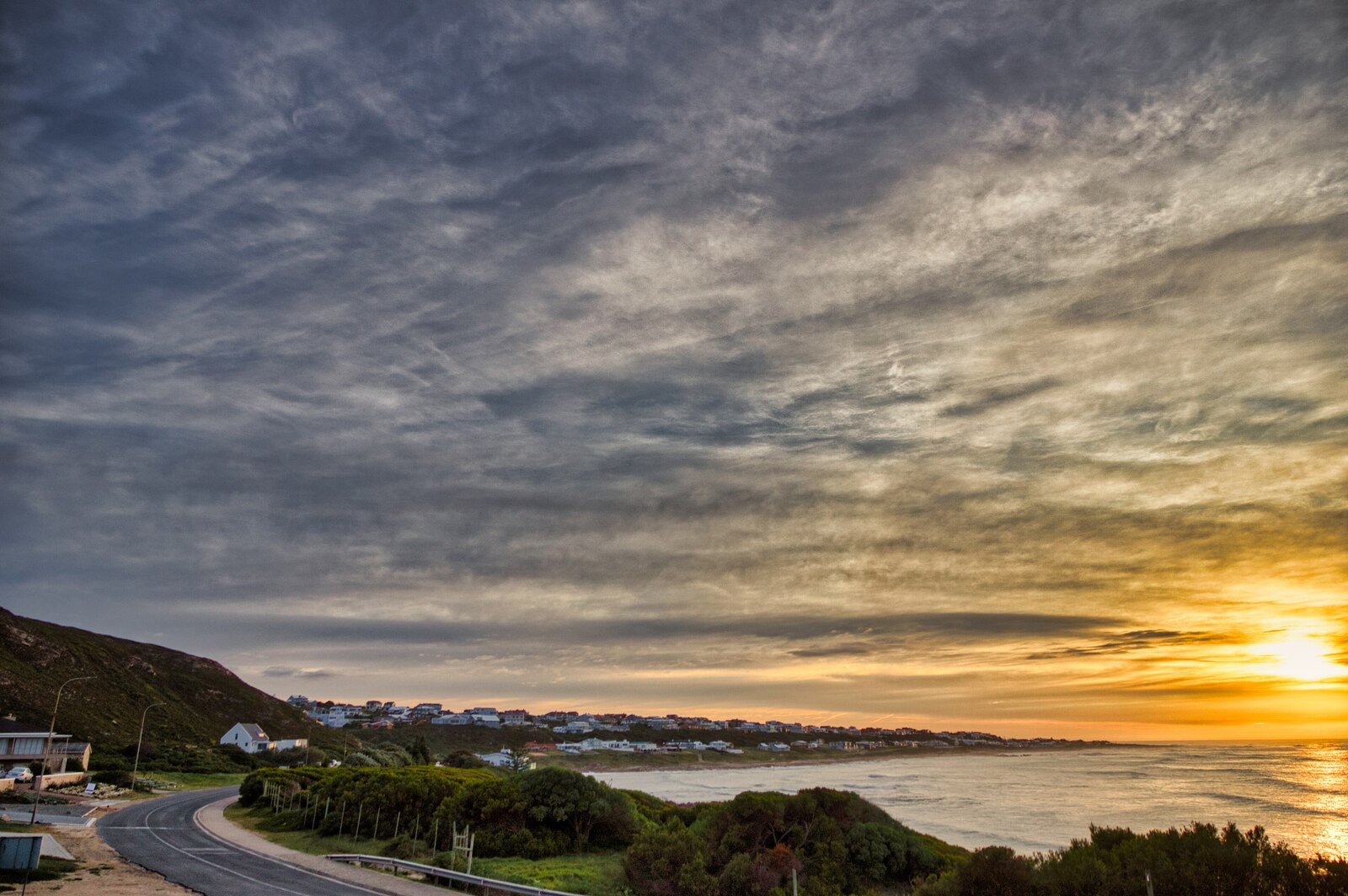
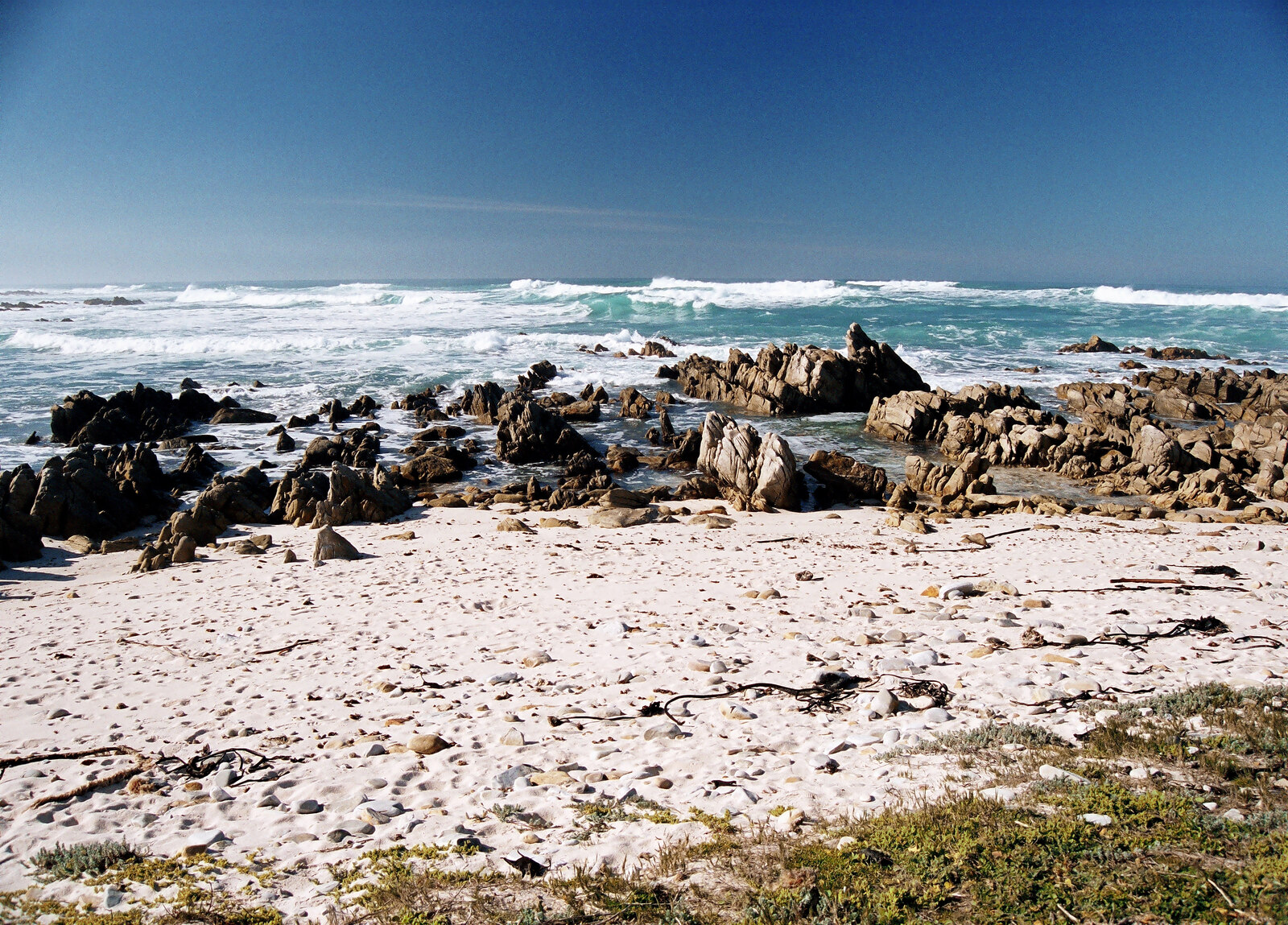
The whole tip is embraced by Agulhas National Park, proclaimed in 1999 to protect one of the richest and most threatened habitats on Earth: the lowland fynbos of the Cape Floral Kingdom, along with wetlands, limestone hills and a wild, low coastline. It is a paradise for slow exploration — boardwalks and short trails, superb birdlife (including the rare Cape endemic species of the strandveld), tidal pools, and vast skies over the wheatlands.
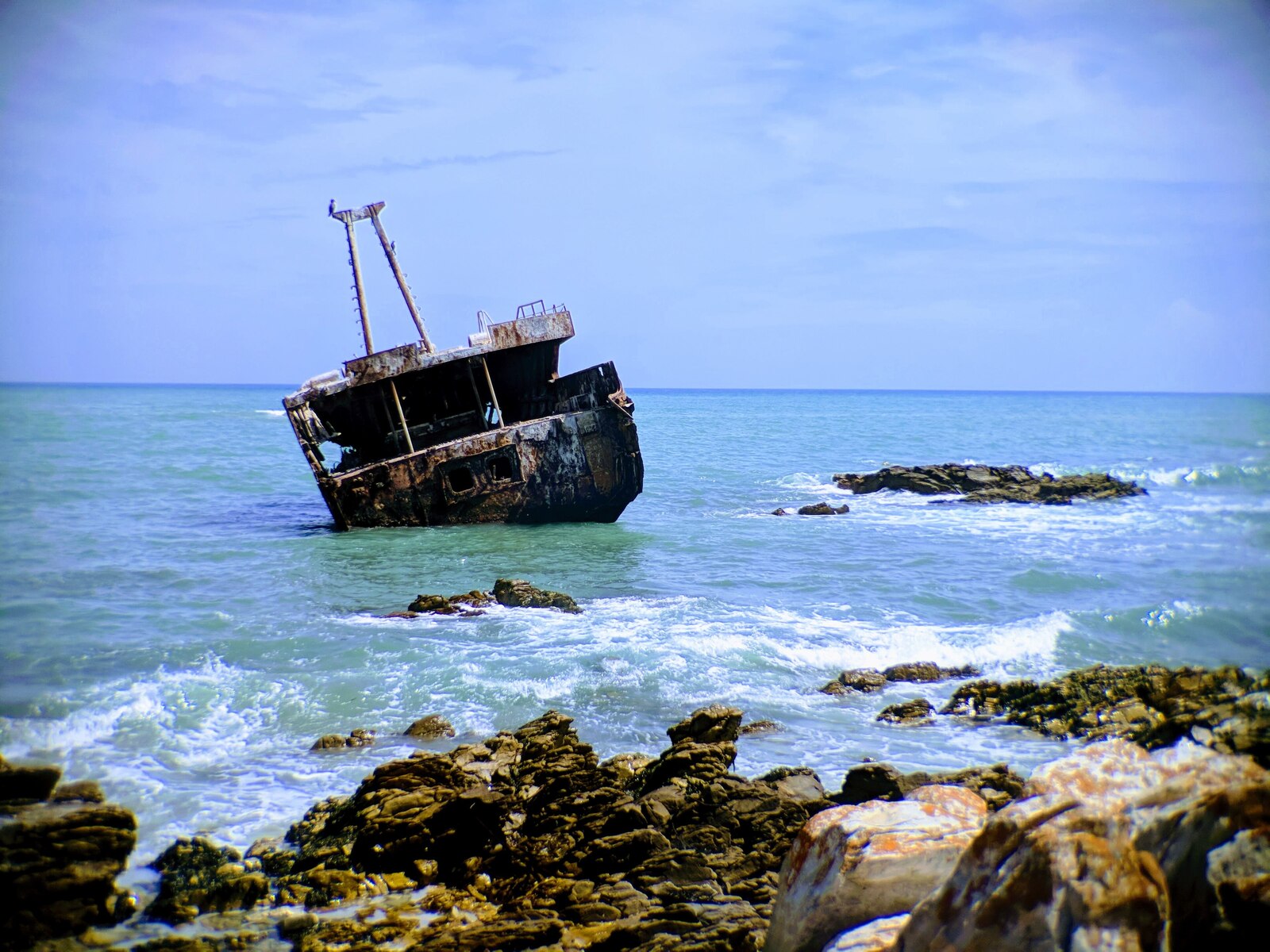
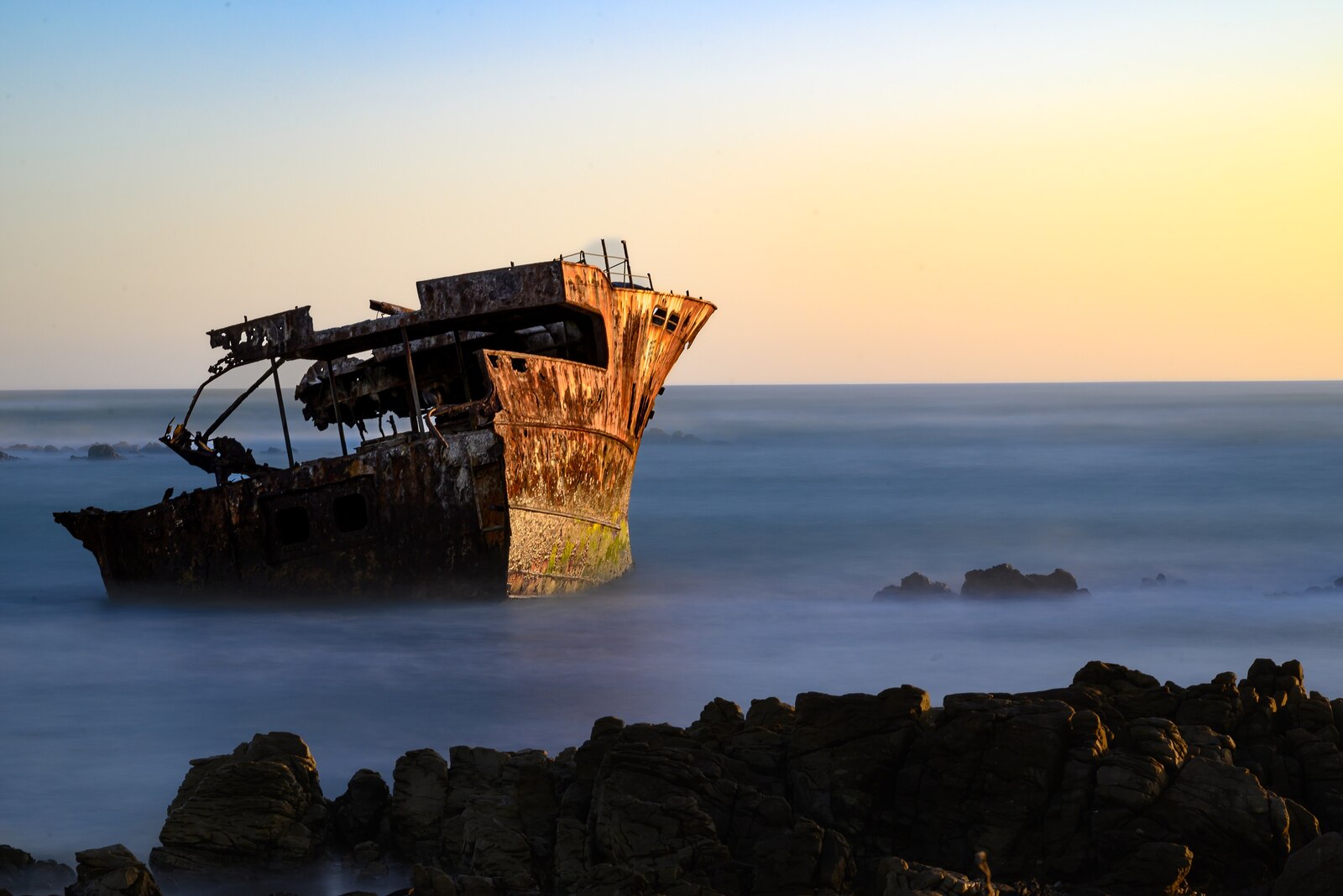
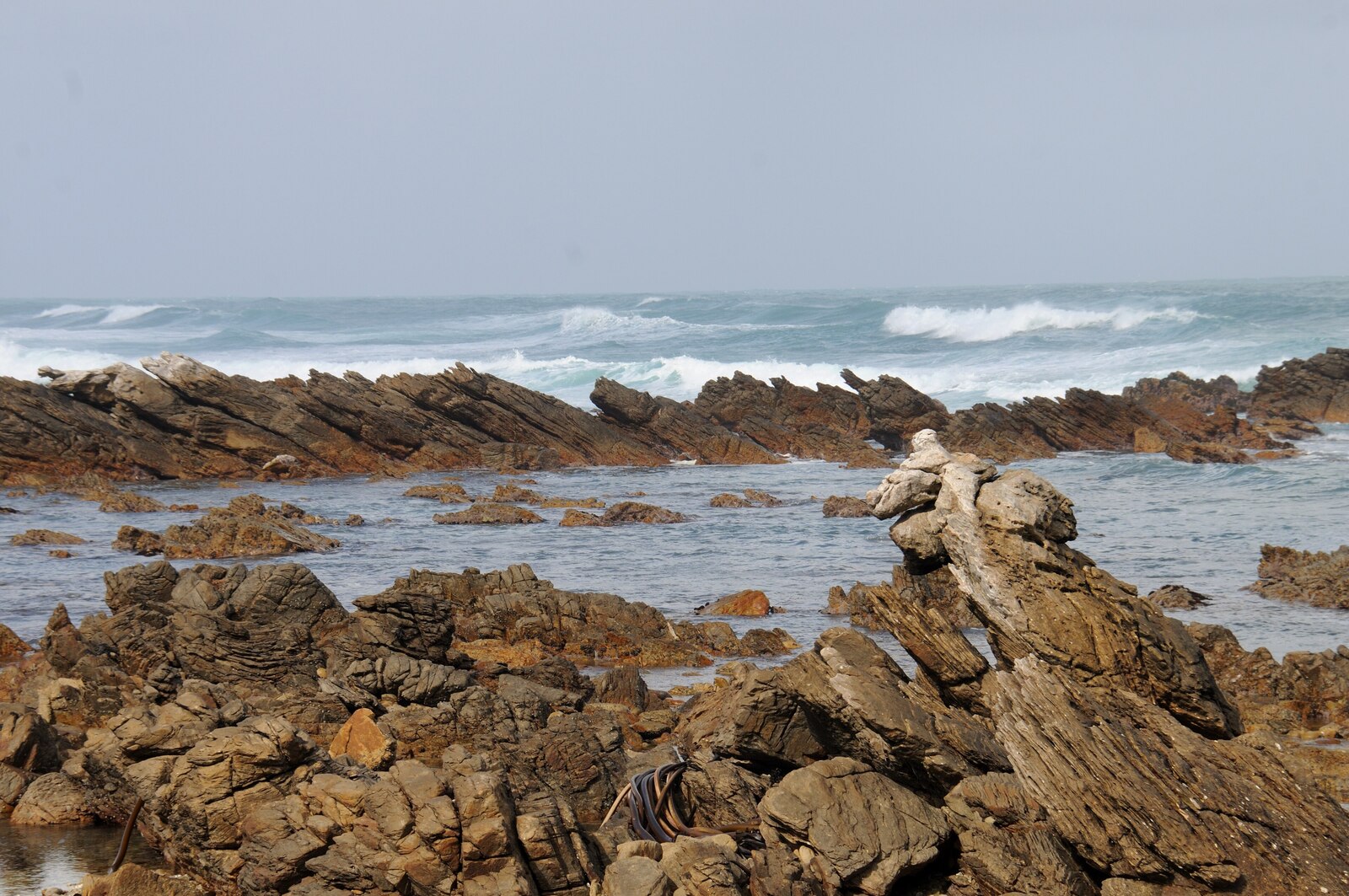
This is also the shipwreck coast. The reefs off Agulhas have claimed well over a hundred vessels across the centuries, and the coast's most famous casualty — the HMS Birkenhead, wrecked in 1852 — gave the world the "women and children first" tradition of the sea. The most visible and photographed wreck today is the Meisho Maru 38, a Japanese fishing vessel that ran aground in 1982 and still lies rusting in the surf just west of the tip, one of the most striking sights on the whole coast.
Best Time to Visit Cape Agulhas
Cape Agulhas can be visited year-round, but each season has its character. The one constant is wind — this is among the windiest corners of South Africa, so pack a windproof layer whatever the month.
| Season | What it's like | Highlights |
|---|---|---|
| Spring (Sep–Nov) | Mild, flowers out, freshening winds | Fynbos in bloom, tail of whale season, best all-round window |
| Summer (Dec–Feb) | Warm and dry but often very windy | Long days, swimming at Struisbaai, holiday buzz |
| Autumn (Mar–May) | Calm, clear and mild — often the quietest wind | Gentle weather, fewer crowds, superb light |
| Winter (Jun–Aug) | Cool, some rain, dramatic storm seas | Start of whale season, moody skies, big surf |
Whale watching along the Overberg coast runs roughly from June to November, when southern right whales come inshore to calve — spectacular near Hermanus, De Hoop and Struisbaai. For the wider picture see the best time to visit South Africa and Cape whale-watching season.
Things to Do & Nearby
- Stand on the tip & the ocean marker — the boardwalk, the monument, the relief map of Africa and the Atlantic/Indian marker.
- Climb the lighthouse & museum — the 1849 tower and its shipwreck-coast exhibits.
- See the Meisho Maru wreck — a short walk west of the tip; best at low light.
- Explore Agulhas National Park — fynbos boardwalks, birding, tidal pools and the Rasperpunt trail.
- Struisbaai — a classic fishing harbour with a long white beach and its friendly resident stingrays; a 10-minute drive away.
- Arniston (Waenhuiskrans) — one of the Cape's most beautiful fishing villages, with the historic Kassiesbaai cottages and a huge sea cave you can enter at low tide.
- De Hoop Nature Reserve — further east, a world-class whale-watching and fynbos reserve with towering dunes.
Together these turn a "tick the tip" visit into a genuine Overberg mini-break, and they connect naturally onward to the Garden Route. Deciding between the coastal whale route and the classic Garden Route? See Garden Route vs Whale Route.
2026 Costs & Prices
| What | Approx. 2026 cost |
|---|---|
| Agulhas National Park conservation fee | Nominal daily fee (SANParks; confirm current rate) |
| Cape Agulhas Lighthouse & museum | ~R30–R60 per adult |
| Southernmost monument & ocean marker | Free |
| Fuel from Cape Town (return, one long day) | ~R600–R900 depending on vehicle |
| Overnight in L'Agulhas / Struisbaai (guesthouse) | From ~R900–R2,000+ per room |
| Private guided day from Cape Town | From ~US$155 pp (group-size dependent) |
Prices are indicative for 2026 and reviewed periodically — always confirm on the day. Bring a card; many sites are cash-free.
Tours & How to Visit Cape Agulhas
Because of the distance, most travellers visit Cape Agulhas in one of three ways:
- A private guided day from Cape Town — the easiest option: an early start, the tip, the lighthouse, the wreck and a village lunch, with all the driving and timing handled.
- An overnight in L'Agulhas or Struisbaai — the most rewarding: catch sunrise and sunset at the tip, and add Arniston and De Hoop at a gentle pace.
- As part of a Garden Route / Whale Coast road trip — fold Agulhas in as you head east from Cape Town toward Hermanus, De Hoop and the Garden Route proper.
Whichever you choose, a private, tailor-made trip means the day is built around the light, the tides and your interests — not a bus schedule.
Stand on the Southernmost Tip of Africa
Beyond Africa Safaris designs private, unhurried journeys to Cape Agulhas — the tip, the ocean marker, the 1849 lighthouse and the shipwreck coast — as a day from Cape Town, an Overberg overnight, or the opening act of a Garden Route adventure. Fees and logistics handled; the day built around you.
Plan My Agulhas Trip Browse Cape Journeys WhatsApp UsBeyond Africa Safaris crafts private journeys across the Western Cape — from Table Mountain and the Cape Peninsula to the true tip of Africa at Cape Agulhas and on into the Garden Route. Tell us what draws you south and we'll build the perfect day around it.