Key Takeaways
- The NamibRand Nature Reserve is a certified Gold Tier International Dark Sky Reserve — the first in Africa
- Zero light pollution for over 200 kilometres, revealing stars invisible from any city or town
- The Milky Way, Magellanic Clouds, Andromeda, zodiacal light and countless meteors are visible year-round
- Several luxury lodges offer astronomy-minded guides, telescopes and the option to sleep under the stars
- Best months are April to October when skies are driest and nights are coldest and clearest
- Combine with desert wildlife, dune drives and hot-air ballooning for a complete Namib experience
The NamibRand: Africa's First Dark Sky Reserve
In 2012, the NamibRand Nature Reserve in southern Namibia became the first place in Africa — and only the third on the continent of any kind — to earn Gold Tier certification as an International Dark Sky Reserve. That title is not marketing; it is recognition by the International Dark-Sky Association that the reserve protects one of the last truly pristine night skies on Earth. Covering more than 200,000 hectares of private wilderness on the eastern flank of the Namib Desert, the NamibRand has no towns, no roads and almost no artificial light. The nearest settlement lies 60 kilometres away. The result is a sky so dark, so clear, that the Milky Way casts shadows.
For anyone who has only ever seen stars from a city — or even a rural town — the first night under the NamibRand sky is a revelation. The density of stars becomes overwhelming. The Milky Way does not appear as a faint smudge but as a river of light splitting the heavens, its dust lanes and star clouds visible to the naked eye. The Magellanic Clouds glow like torn pieces of the galaxy itself. On moonless nights you can see zodiacal light — a pyramid of glow caused by sunlight reflecting off interplanetary dust — and meteors streak overhead every few minutes. It is the sky as it was for all of human history before electric light, and seeing it is profoundly moving.
What You Will See: The Southern Night Sky Unpacked
The southern hemisphere's night sky is different from the north, and from the NamibRand — sitting at 25° south latitude — you get the best of it. The Milky Way stretches from horizon to horizon, brightest in the direction of the galactic core (which sits in Sagittarius and Scorpius and is highest during the southern winter months of May to August). The Large and Small Magellanic Clouds — satellite galaxies of our own Milky Way — appear as faint glowing patches, visible all year. On very dark, clear nights the Andromeda Galaxy, two and a half million light years away, can be spotted with the naked eye, though it rewards binoculars.
The Southern Cross, invisible from the northern hemisphere, is the signature constellation of the African night and a reliable pointer to the south celestial pole. Nearby, the brilliant stars Rigel Kentaurus (Alpha Centauri) and Hadar mark the foot of Centaurus, while the red glow of Antares anchors Scorpius. And threading through it all are the planets — Venus and Jupiter often brilliant enough to cast faint shadows, Mars glowing rust-red, and Saturn offering its rings through even a modest telescope.
Beyond the grand architecture of the sky, there is motion. The NamibRand lies far from the jet-stream, so the air is extraordinarily stable and stars do not twinkle as they do in more turbulent atmospheres. Meteors are frequent — the Perseids, Geminids and other major showers can deliver dozens per hour, and on any clear night you will see several sporadics. Satellites cross silently overhead (the International Space Station is often visible), and very occasionally you may catch an iridium flare — a brief, dazzling reflection off a satellite's antenna that can outshine Venus.
Where to Stay: Lodges Built for the Night Sky
Several luxury lodges in and around the NamibRand have embraced their status as gateways to the cosmos. Wolwedans, the reserve's most celebrated retreat, offers astronomy-minded guides, open-air star beds where you can sleep under the Milky Way, and unobstructed views from every deck and veranda. Kwessi Dunes, just outside the reserve boundary, has its own observatory with a powerful telescope and runs regular stargazing sessions. Sossusvlei Desert Lodge, further west near the famous dune fields, features a private observatory and resident astronomer. All three properties understand that the night sky is as important as the desert itself, and their guiding reflects it.
The lodges themselves are deliberately dark-sky compliant: outdoor lighting is minimal, downward-facing and warm-toned to preserve night vision. Many offer the option to have dinner served outdoors under lanterns, followed by a guided sky tour where knowledgeable hosts walk you through the constellations, the mythology of the southern cross, and the science of what you are seeing. For photographers, some properties lend tripods and offer guidance on long-exposure settings, and the absence of ambient light means even a smartphone can capture the Milky Way with surprising clarity.
When to Go: Seasons, Moon Phases and the Milky Way Core
The NamibRand's night sky is extraordinary year-round, but timing does matter. The clearest, driest skies come during Namibia's cooler months — April to October — when humidity drops, the air is still and cold, and clouds are rare. Nights can be bitterly cold (bring layers), but the clarity is unmatched. The hotter, wetter months (November to March) can bring afternoon thunderstorms and more atmospheric haze, though the green season has its own appeal and the stars still shine brightly once the clouds clear.
Moon phase is the other critical variable. The Milky Way and faint deep-sky objects are best seen around the new moon, when the sky is at its darkest. A full moon is bright enough to wash out all but the brightest stars and planets, though it does cast the desert in an eerie silver glow that has its own magic. Many lodges time their astronomy-focused stays around new-moon windows, and it is worth checking the lunar calendar when booking. The brightest, most photogenic portion of the Milky Way — the galactic core — is highest in the sky during the southern winter months of May to August, making this the peak season for astrophotography.
Astrophotography: Gear, Settings and Composition
The NamibRand is one of the best places on Earth to photograph the night sky, and you do not need expensive gear to get results. A modern smartphone with a night mode can capture the Milky Way; a mirrorless camera or DSLR with a wide, fast lens (f/2.8 or wider) and a sturdy tripod will deliver stunning images. Typical settings are ISO 3200–6400, shutter speed 15–25 seconds (any longer and stars begin to trail), and aperture wide open. Manual focus is essential — set it to infinity using a bright star or the moon during the day, then tape it in place.
Composition is where the NamibRand truly shines. Framing the Milky Way above a dune ridge, a lone camelthorn tree or the silhouette of a lodge creates images with real depth and drama. Many lodges will help you scout locations and even provide a ranger with a red headlamp to illuminate foreground elements. Patience rewards: wait for the right alignment of the galactic core with your chosen foreground, bracket your exposures, and if you know how to stack images in post-processing, you can pull astonishing detail out of the data. For those serious about astrophotography, the NamibRand is a bucket-list destination.
Beyond Stargazing: Desert Wildlife and Dune Adventures
A stargazing safari is not only about the night. Days in the NamibRand are filled with the drama of the desert itself: nature drives in search of oryx, springbok, Hartmann's mountain zebra, giraffe and the elusive brown hyena; guided walks across the fairy circles that stipple the plains; sundowners atop towering dunes as the light turns from gold to violet. Hot-air balloon flights drift silently over the sand at dawn, and the lodges themselves — with their pools, libraries and unhurried rhythms — are destinations in their own right.
The point is that the NamibRand offers a complete desert experience, not a single-note astronomy retreat. The night sky is the headline, but it sits within a wider story of adaptation, silence, scale and beauty. Many guests find that the days slow them down and the nights open them up, and the combination is more powerful than either alone. For context on the reserve's finest stays, see our guide to the best luxury lodges in the NamibRand Reserve.
Why the NamibRand Matters: Conservation and Light Pollution
Earning and maintaining Dark Sky Reserve status is not a passive achievement. It requires active management: all lighting within the reserve must be strictly controlled, with fixtures that minimize skyglow and light trespass. New development is subject to stringent design standards, and ongoing monitoring ensures compliance. The NamibRand's commitment to this is part of a broader conservation ethic that has pooled former livestock farms back into a single, restored wilderness and turned the reserve into one of southern Africa's most important private conservation areas.
The wider lesson is sobering. Light pollution is one of the fastest-growing forms of environmental degradation, and most of the world's population now lives under skies so bright that the Milky Way is invisible. The NamibRand is one of the last places where the night sky remains as it was for all of human history, and protecting it is an act of cultural and natural preservation. Staying here, and supporting the lodges and the reserve that safeguard it, is a way of voting for that protection.
Practical Details: Getting There and What to Bring
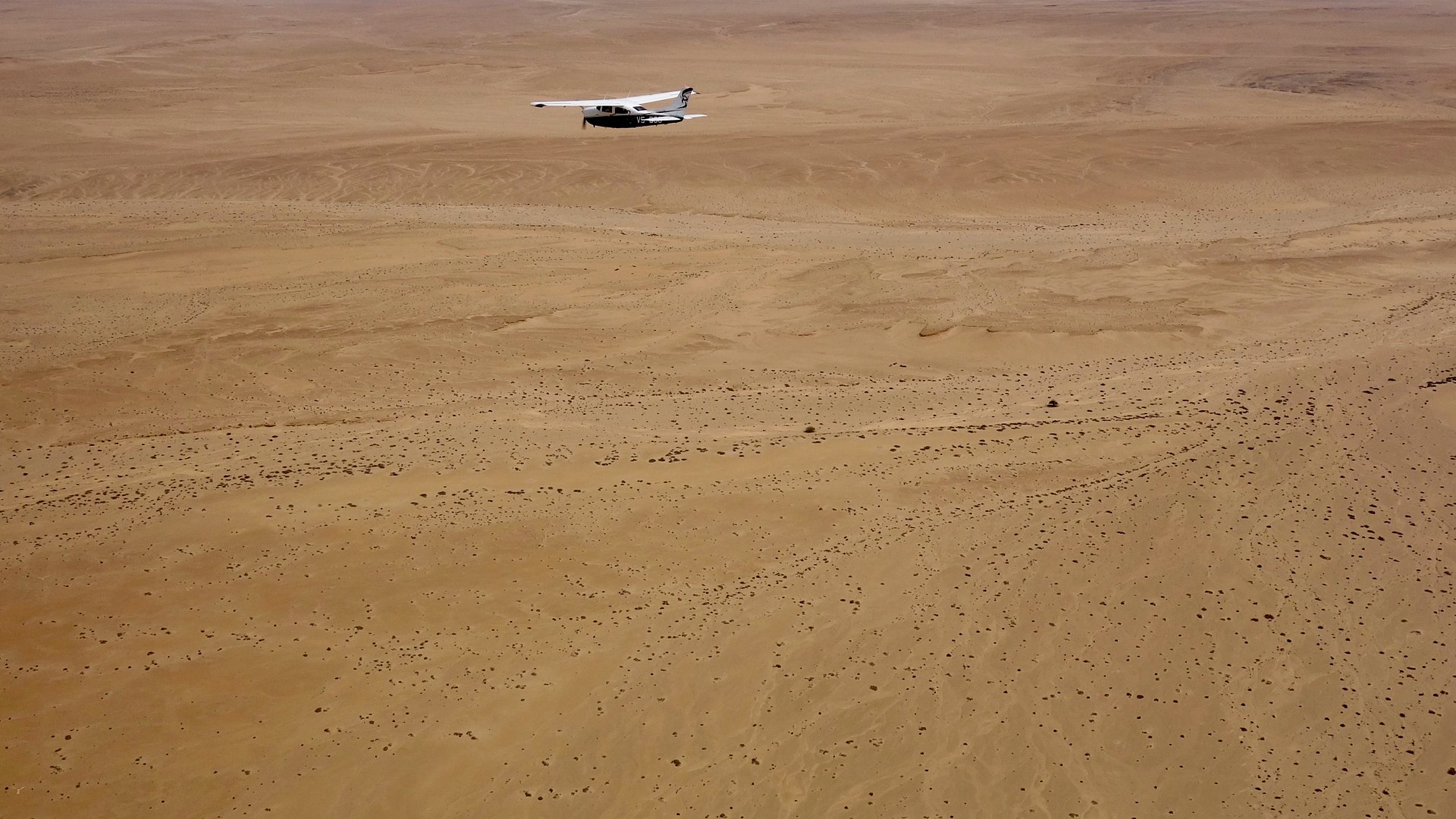
The NamibRand is reached by light-aircraft transfer to the airstrips at Wolwedans, Kwessi or other properties — the most seamless option and spectacular in its own right — or by a scenic self-drive along gravel roads from Sesriem or Maltahöhe. Most guests combine the reserve with the towering dunes of Sossusvlei, roughly two to three hours to the northwest, and the wildlife of Etosha further north, building a classic Namibian loop. Three to four nights in the NamibRand is ideal for savouring the experience without feeling rushed.
Pack warm layers — desert nights can drop below freezing in winter, even if the days are warm — and bring a red headlamp to preserve your night vision. Binoculars add immensely to the experience, as do a star map or astronomy app (many work offline). If you are serious about photography, bring a wide-angle lens, spare batteries (the cold drains them fast) and a cable release or intervalometer. Sunscreen and a hat are essential for the days, and a sense of patience and wonder will serve you better than any gadget.
We arrange every detail of a NamibRand stargazing safari — the light-aircraft flights, the finest dark-sky lodges, the timing around the new moon, and seamless pairings with Sossusvlei, Etosha and the Skeleton Coast. Tell us your dates and we will build the perfect itinerary, with the universe waiting overhead.
Private Tours Cape Town designs stargazing safaris across the NamibRand Nature Reserve, pairing Africa's darkest skies with the Namib's finest lodges and unforgettable desert adventures.