Key Takeaways
- Walking Safari Capital: South Luangwa is the birthplace of the walking safari, pioneered by Norman Carr in 1950 — walk among lions, elephants, and leopards with armed guides.
- Leopard Density: South Luangwa has Africa's highest leopard density — sightings are virtually guaranteed on night drives.
- Pristine Canoeing: Lower Zambezi National Park offers multi-day canoeing expeditions past hippos, crocodiles, and elephants in untouched wilderness.
- Africa's Second-Largest Park: Kafue National Park spans 22,400 km² — larger than Slovenia — yet receives fewer than 5,000 visitors annually.
- Authentic & Uncrowded: Zambia's parks see 1/10th the tourist numbers of Tanzania/Kenya — expect exclusive game viewing and zero vehicle congestion.
- Conservation Pioneer: Zambia dedicates 30% of its land to national parks and game management areas — one of Africa's highest conservation commitments.
Why Zambia Is the Real Africa
Zambia offers what East Africa has lost: authenticity, wilderness, and space. While Tanzania's Serengeti hosts 350,000 annual visitors, Zambia's South Luangwa — equally spectacular for leopards and walking safaris — sees just 15,000. Kafue National Park, Africa's second-largest (22,400 km²), receives fewer tourists in a year than Kruger gets in a week.
This is the Africa of Hemingway and Livingstone: vast unfenced landscapes where you're the only vehicle at a lion kill, walking safaris through mopane woodland accompanied by armed scouts, and multi-day canoe expeditions camping on Zambezi islands with only the sounds of hippos and fish eagles.
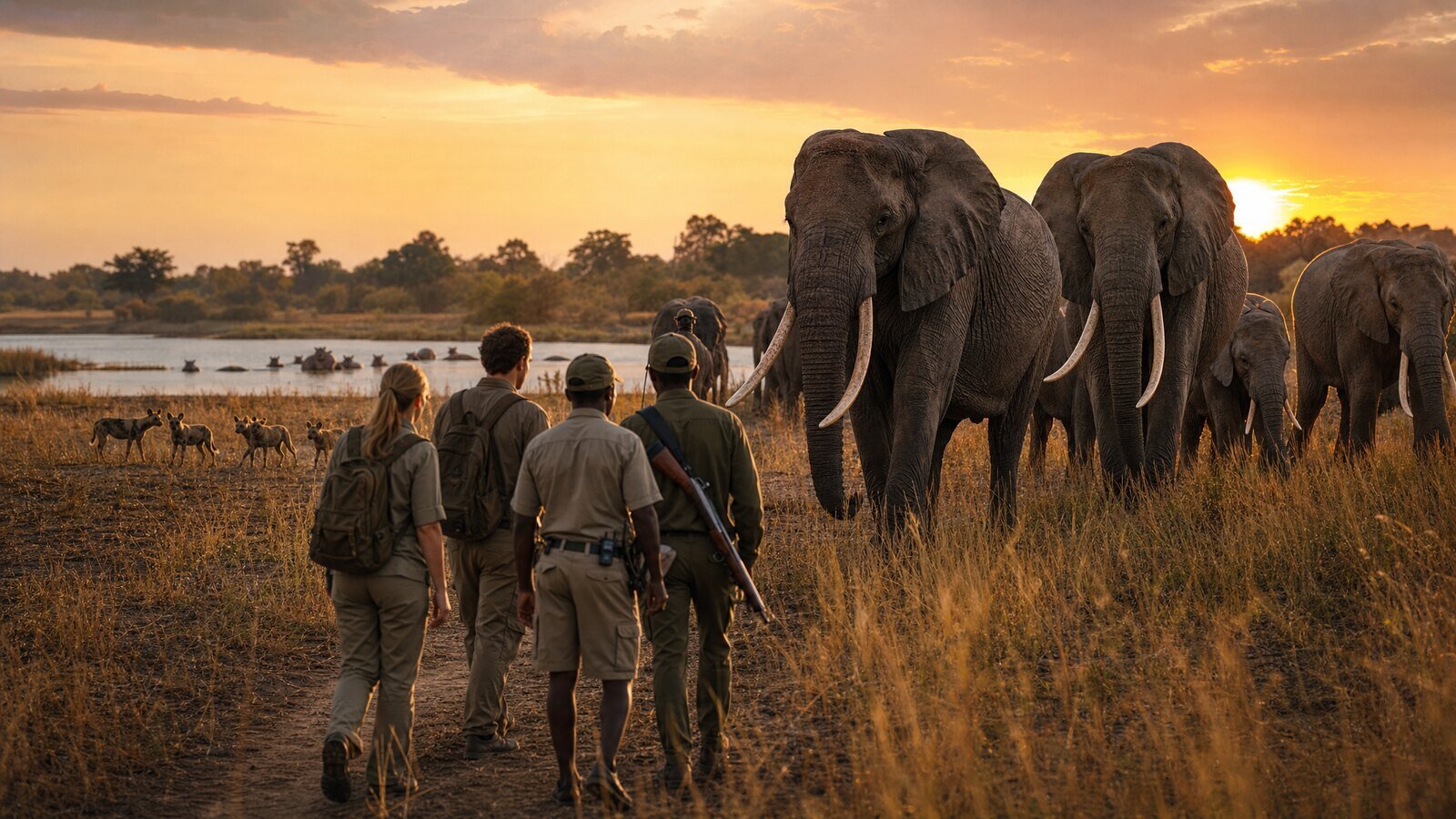
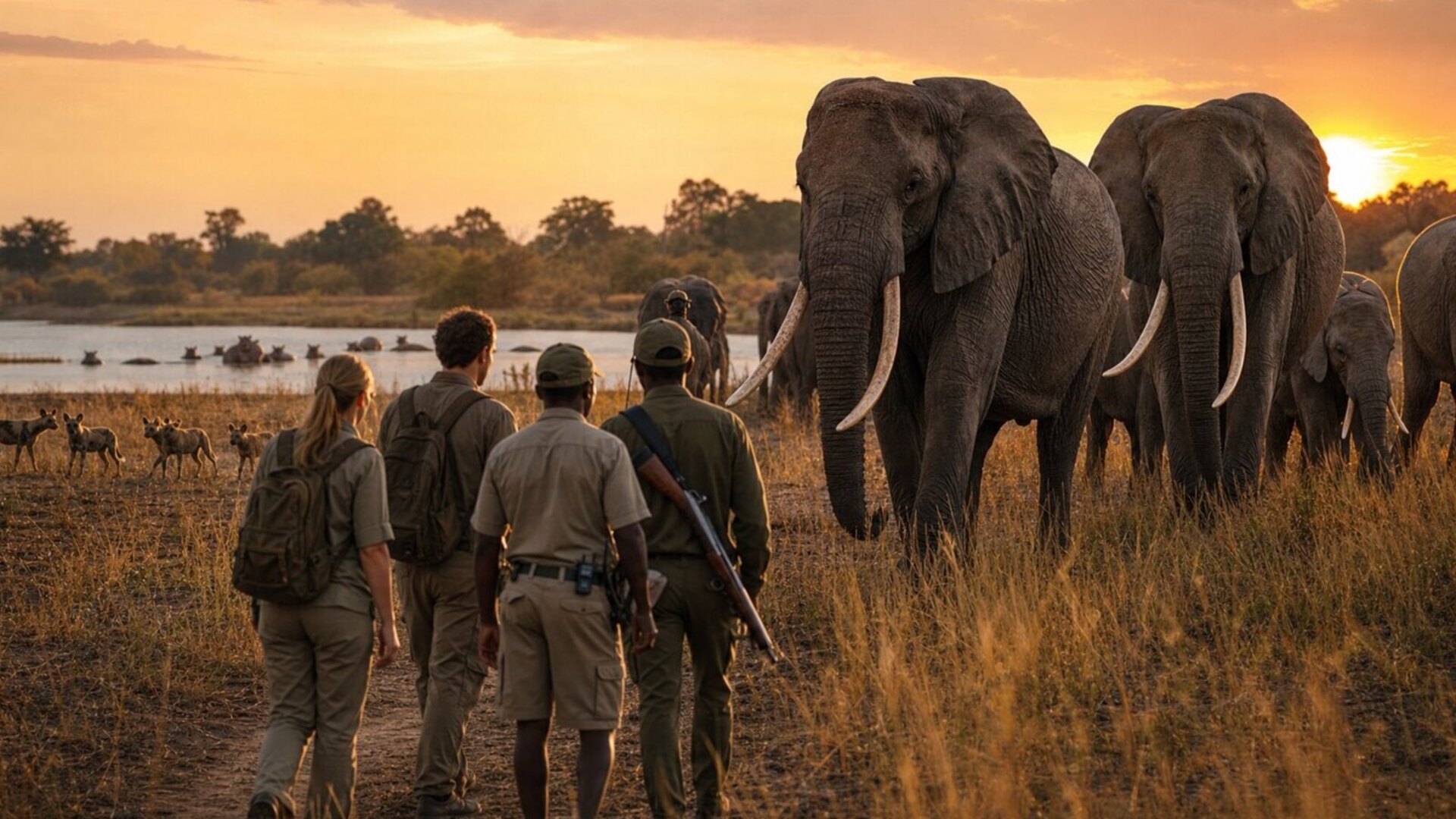
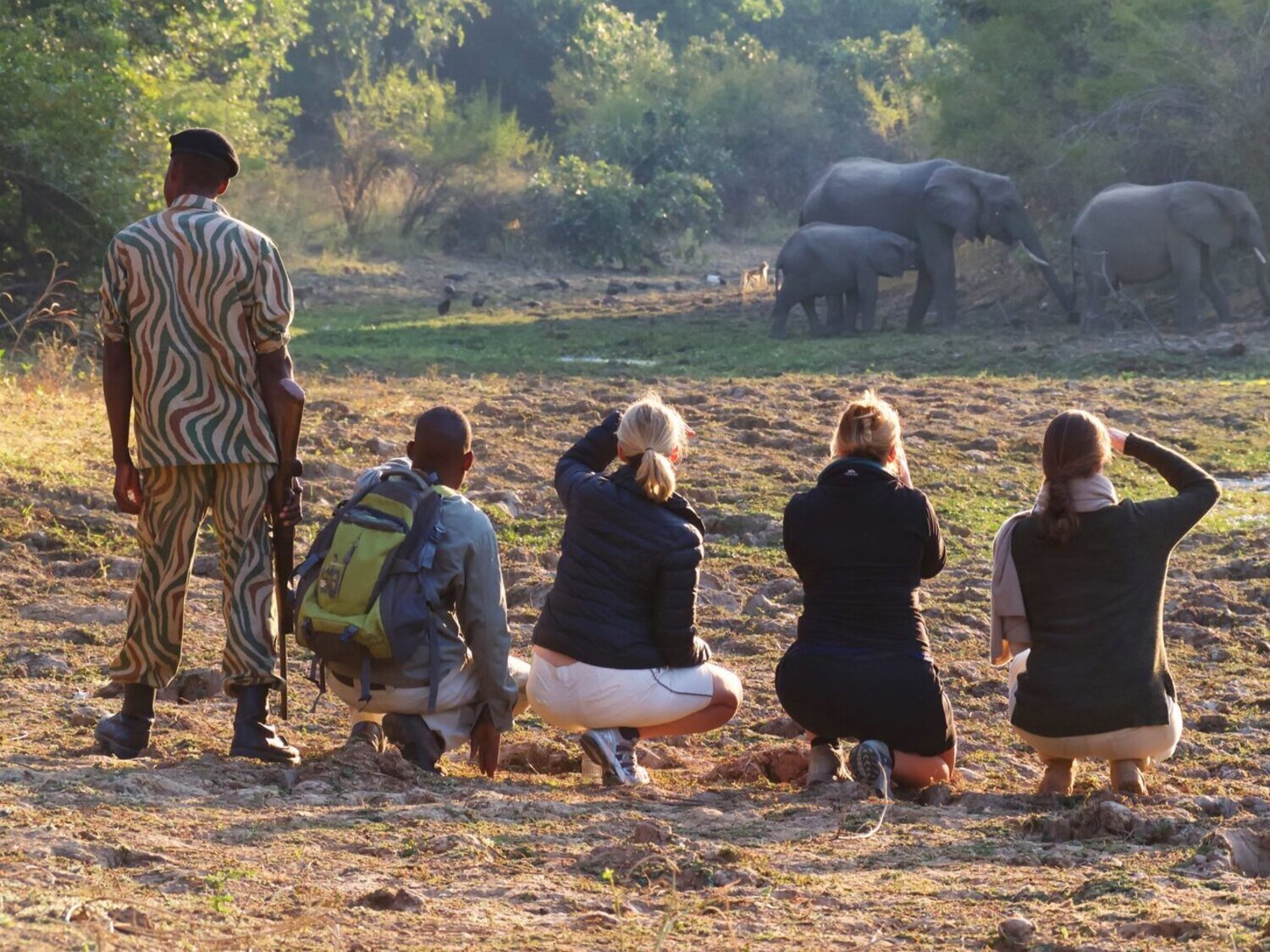
South Luangwa National Park is the birthplace of the walking safari, pioneered by conservation legend Norman Carr in 1950. Here you walk on foot with professional guides (armed with .458 rifles) for 2-4 hours at dawn, approaching elephants feeding on pods, giraffes browsing acacias, and hippos wallowing in lagoons. The adrenaline of being on foot in big-cat territory is unmatched.
Lower Zambezi National Park protects 4,092 km² of pristine wilderness along the Zambezi River, directly opposite Zimbabwe's Mana Pools. Multi-day canoeing safaris glide 60-80 kilometres past herds of 500+ buffalo, elephants wading to islands, and crocodiles over 5 metres long. You'll camp on sandbars under ancient mahogany trees, falling asleep to the grunts of hippos.
Kafue National Park is Africa's third-oldest (established 1924) and second-largest park, spanning 22,400 km² — yet it's Zambia's best-kept secret. The northern Busanga Plains flood annually, creating a seasonal wetland ecosystem that attracts thousands of red lechwe, puku, and predators including lions, cheetahs, and the rare sitatunga antelope.
Zambia dedicates 30% of its territory to protected areas — one of the world's highest conservation commitments. This is authentic Africa: no mass tourism, no traffic jams, no fences. Just you, the wildlife, and the wilderness.
South Luangwa National Park — Walking Safari Birthplace & Leopard Capital
South Luangwa National Park (9,050 km²) in eastern Zambia is the country's flagship reserve, renowned for two superlatives: the highest concentration of leopards in Africa and the birthplace of the walking safari. The Luangwa River meanders through the park, creating oxbow lagoons and riverine forest that support extraordinary wildlife densities.
Norman Carr, a British game ranger, pioneered the walking safari here in 1950. His vision: experience wildlife on foot as our ancestors did, with all senses heightened. Today, walking safaris are South Luangwa's signature experience. Departures at 6:00 AM (coolest hours) cover 6-10 kilometres over 2-4 hours, guided by two professionals: a lead guide and an armed scout with a .458 Magnum rifle.
You'll walk in single file through mopane woodland, Jesse bush, and riverine forest, tracking lion spoor, approaching elephants feeding on seed pods, and freezing as a giraffe bull towers 5 metres away. The guide reads animal behaviour constantly, adjusting the route if a buffalo herd blocks the path or a lion pride lounges ahead. When a herd of 30+ elephants crosses your track, you step behind a termite mound and wait, heart pounding, as matriarchs trumpet warnings.
Walking safari etiquette: no bright colours (khaki/olive/brown), no talking, single-file formation, freeze when guide raises a fist. Distances to wildlife vary: 50 metres to lions, 30 metres to elephants, 10 metres to antelope. The experience is visceral — you smell the musky scent of buffalo, hear the crack of an elephant snapping branches, and feel the thrill of being prey.
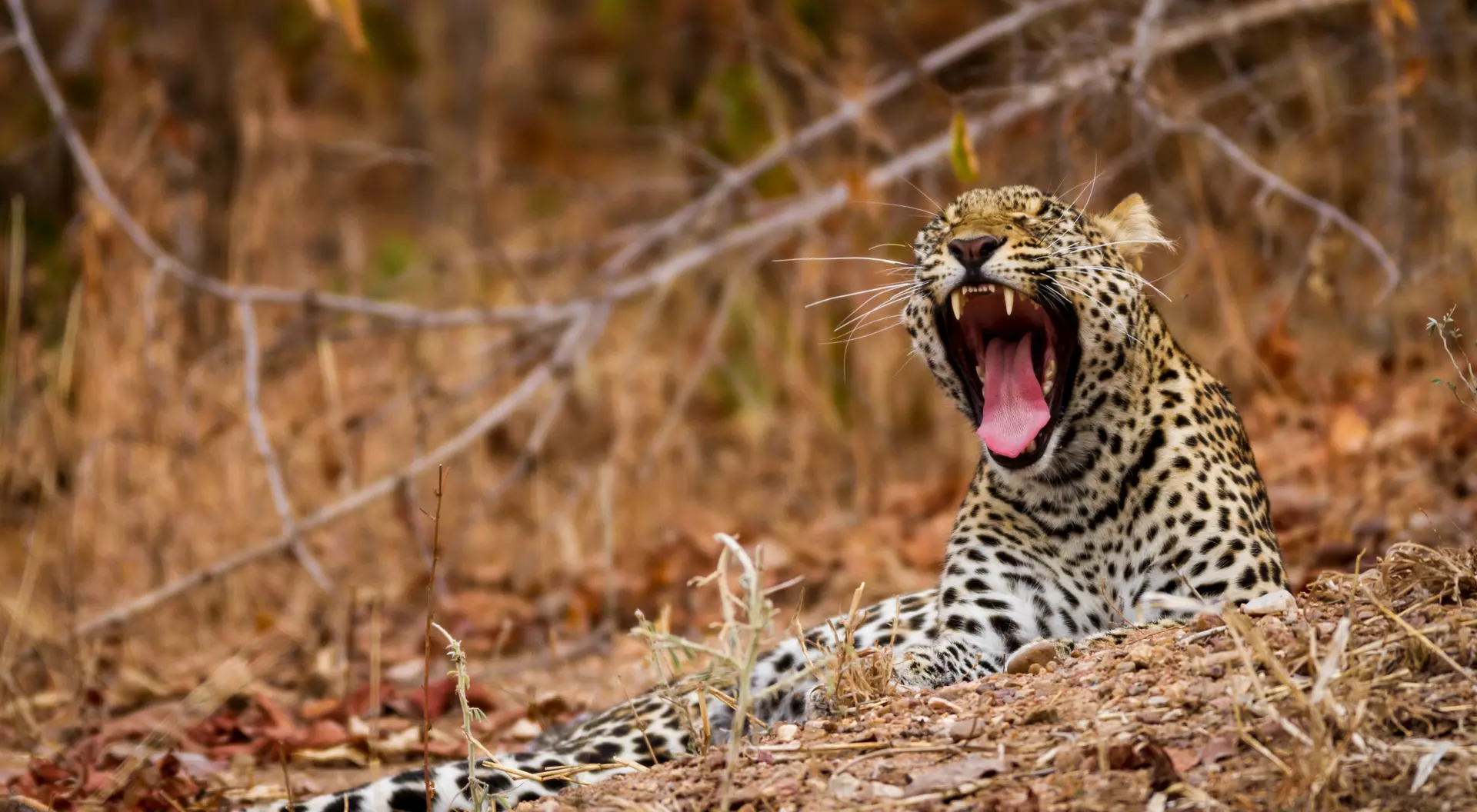
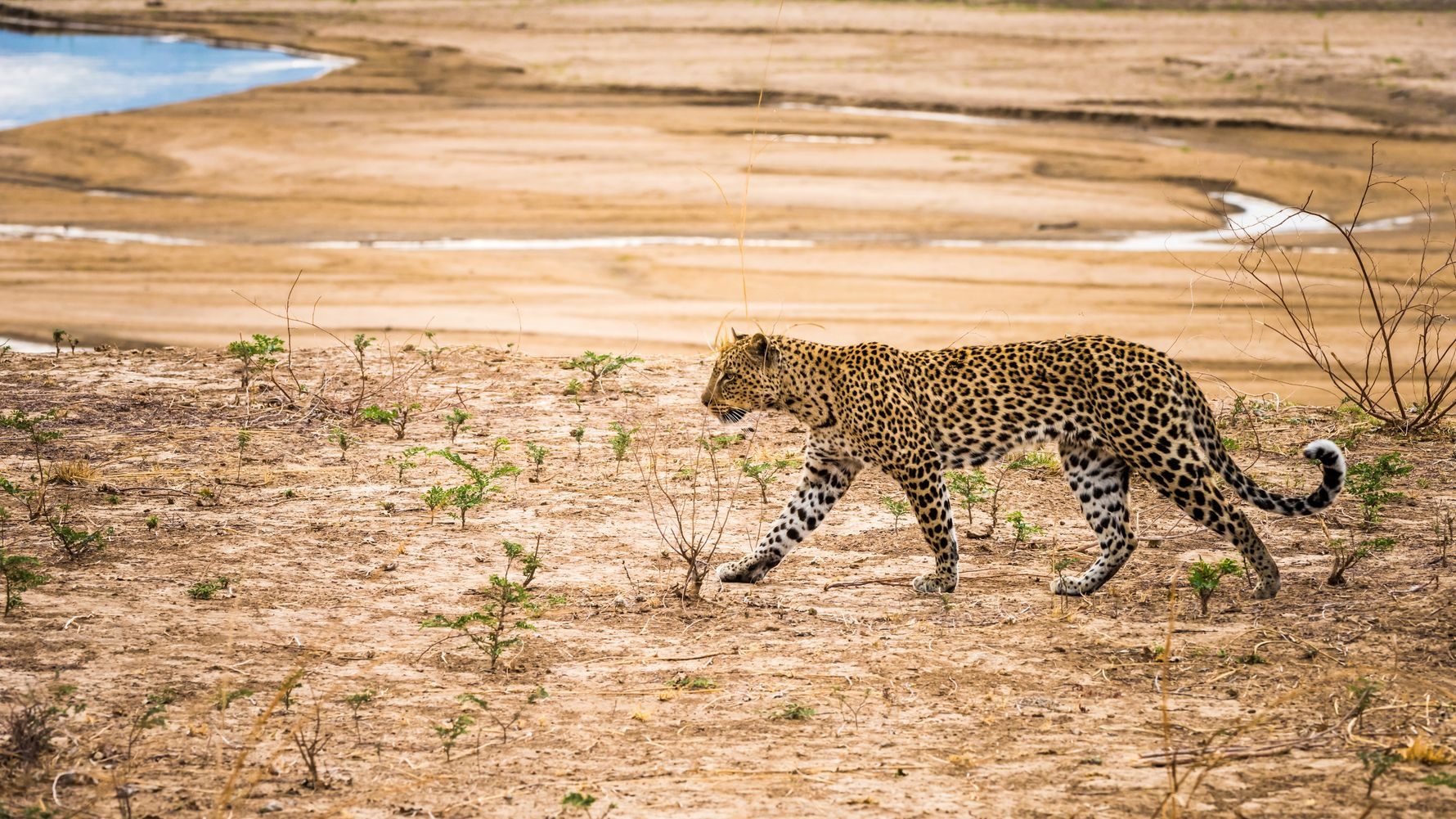
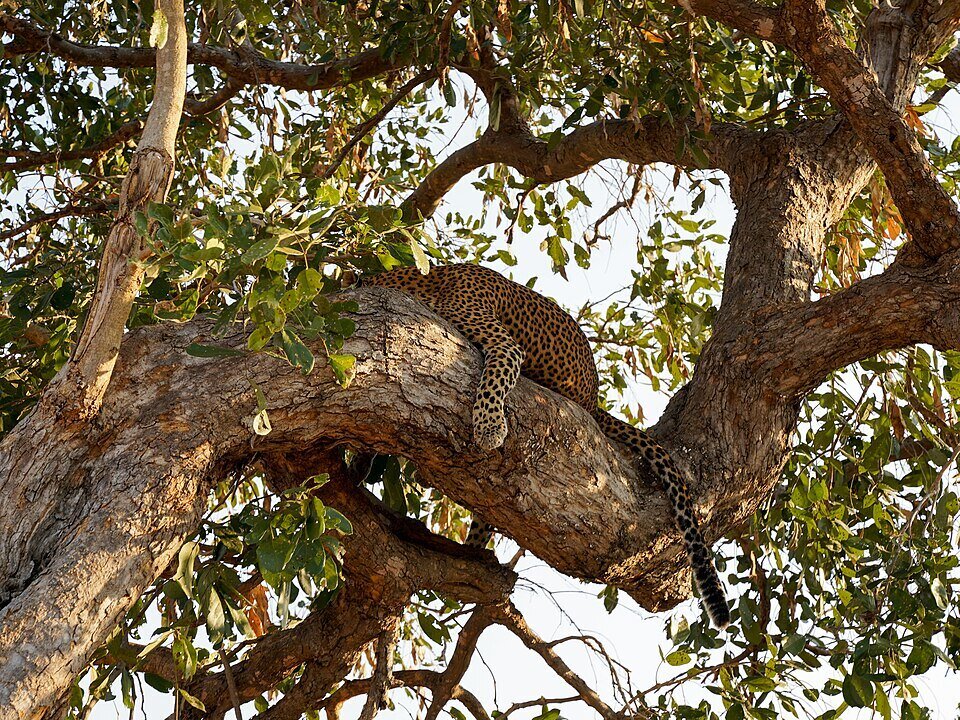
Leopard capital: South Luangwa's leopard density is unmatched. Night drives (permitted in Zambia, unlike many parks) deliver near-guaranteed leopard sightings — these solitary predators hunt impala and puku after dark, and Luangwa's guides know every individual's territory. You'll watch leopards drag kills into trees, mothers escort cubs through tall grass, and males patrol boundaries marking territory.
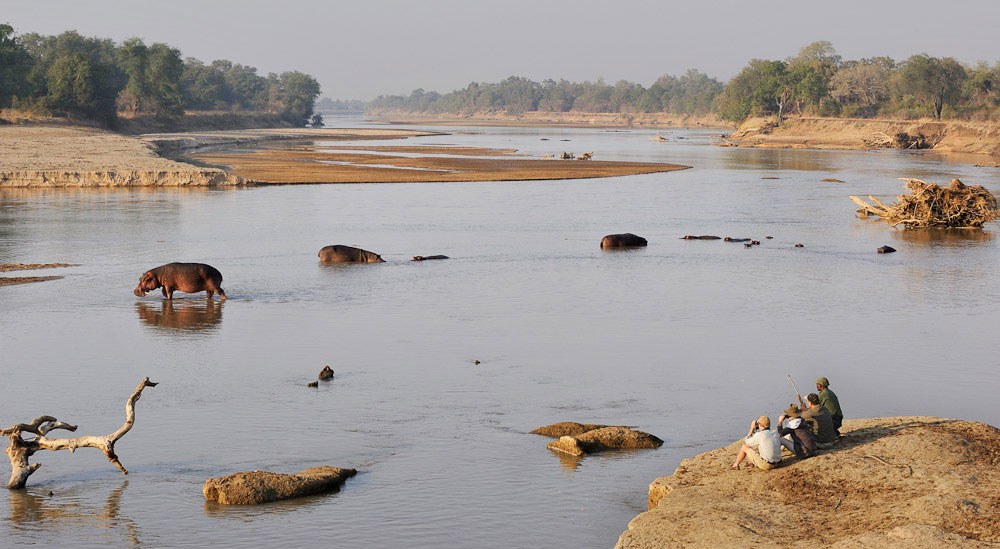
Other highlights: 14,000+ hippos (one of Africa's densest populations), Thornicroft's giraffes (endemic subspecies found only here), Cookson's wildebeest (endemic), 400+ bird species including crowned cranes and carmine bee-eaters, and lion prides that hunt buffalo nightly.
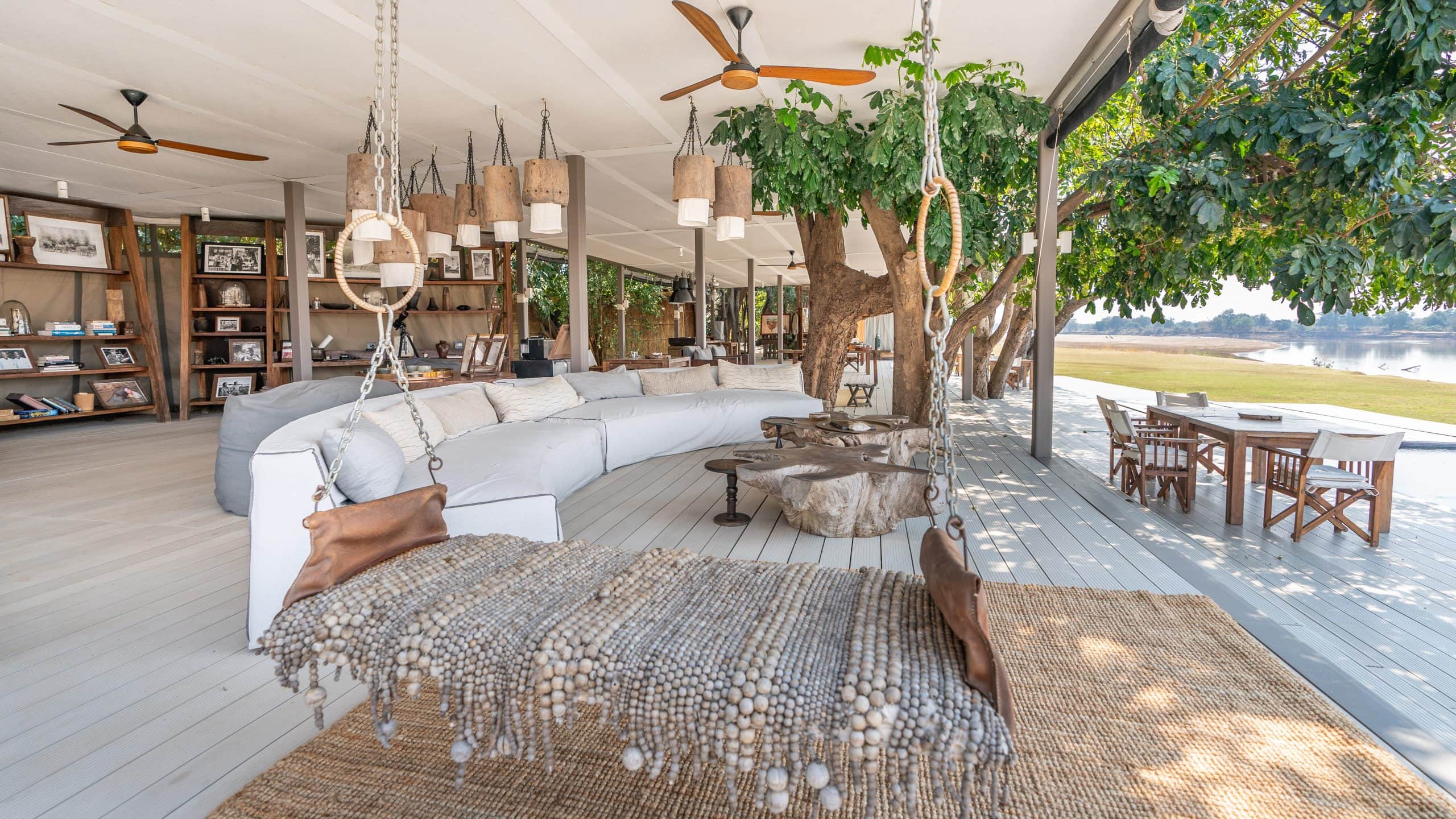
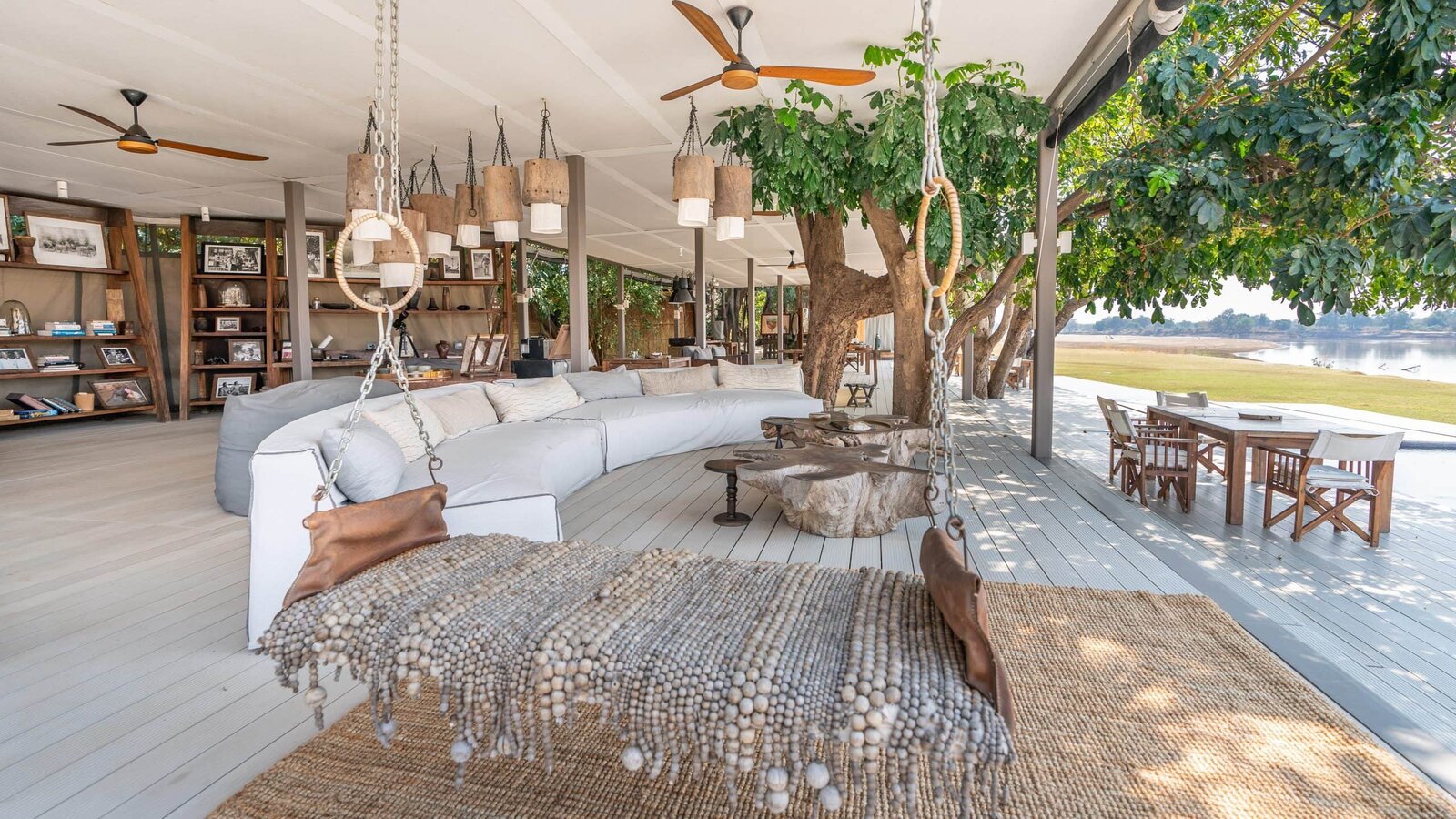
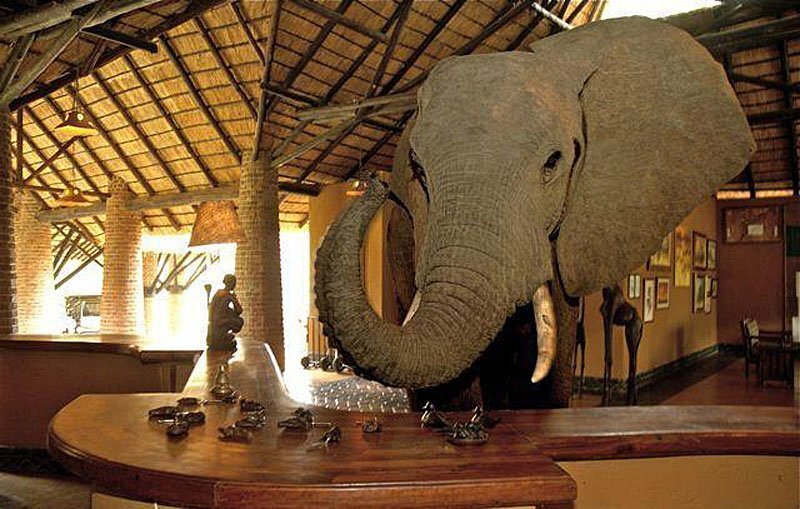
Best camps: Chinzombo (Norman Carr Safaris flagship), Mfuwe Lodge (wild elephants walk through lobby during mango season), Puku Ridge (Sanctuary Retreats), and Tena Tena (remote bushcamp). Budget 4-5 nights for full immersion: walking safaris, game drives, night drives, and hide visits.
Lower Zambezi National Park — Canoeing & Riverside Wilderness
Lower Zambezi National Park (4,092 km²) lies on the northern bank of the Zambezi River, directly opposite Zimbabwe's Mana Pools, forming a continuous transfrontier ecosystem. The park protects floodplains, channels, and escarpment slopes rising 1,000 metres behind the river.
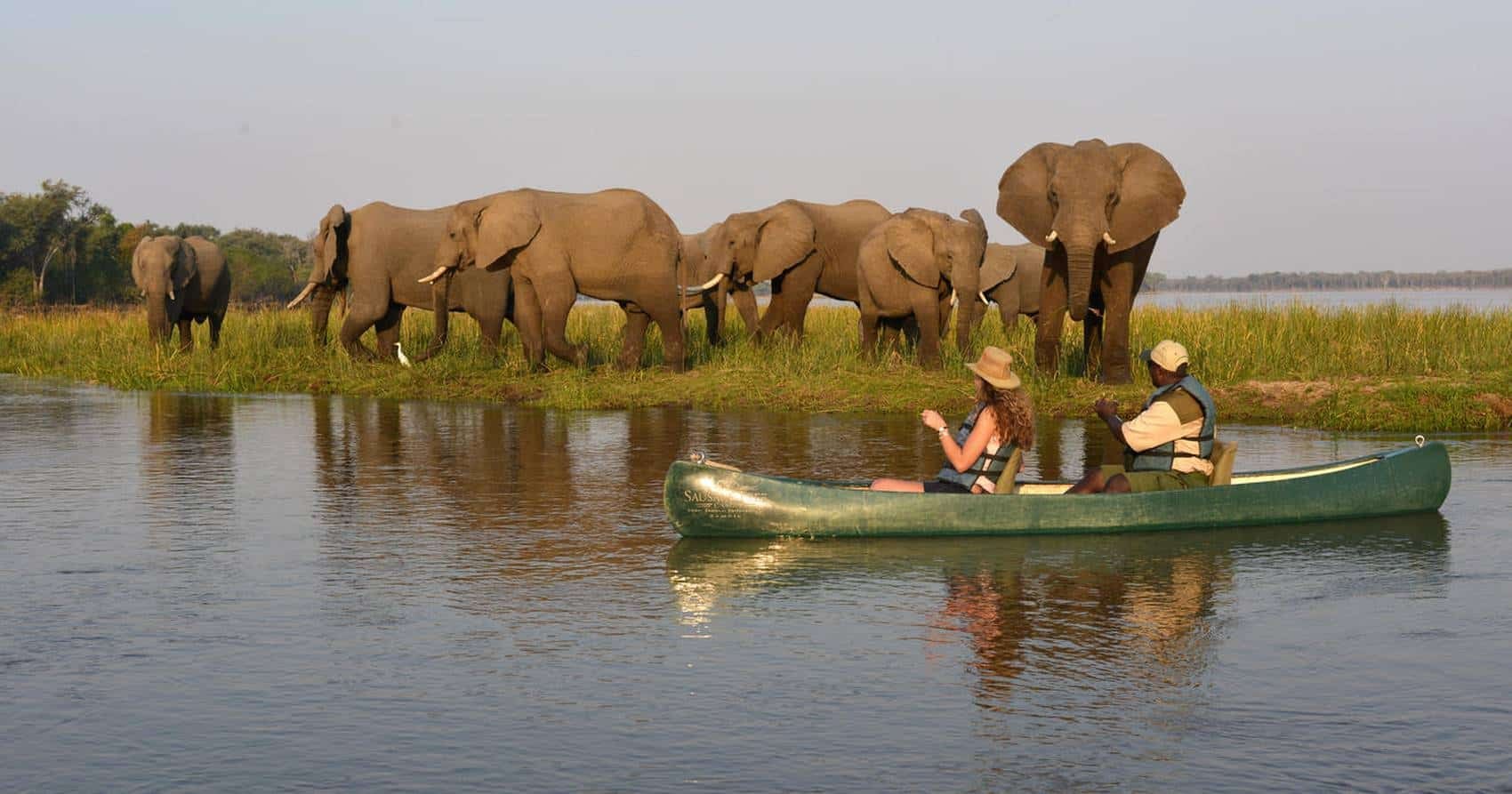
Lower Zambezi's signature experience is multi-day canoeing safaris. Trips run 3-5 days, paddling 60-80 kilometres downstream in stable 2-person Canadian canoes. You'll glide silently past hippos (sometimes 2 metres away), crocodiles basking on sandbars (5+ metres long), and elephant herds wading to drink. African fish eagles and Pel's fishing owls perch in trees lining the banks.
Canoe safaris are fully supported: guides lead, a backup boat carries camping gear, and a chef team prepares three-course meals on portable grills. Camps are set up on islands or sandbars — canvas dome tents, camp chairs, and bucket showers. You fall asleep to hippos grunting 50 metres away and wake to fish eagles calling at dawn.
Days follow a rhythm: paddle 4-6 hours with breaks for wildlife photography (elephants crossing channels, buffalo herds on floodplains), arrive at camp mid-afternoon, swim in safe channels (guides check for crocs), sundowner drinks on the sandbar, three-course dinner under stars, sleep to the soundscape of Africa's night.
Game drives and walks: Lower Zambezi also offers traditional 4x4 game drives and walking safaris. The park protects large elephant herds (6,000+), buffalo super-herds (1,000+ strong), lions, leopards, and wild dogs. The Jeki and Chifungulu channels are prime game-viewing areas where predators hunt at dawn and dusk.
Lower Zambezi is accessed by light aircraft to Royal or Jeki airstrip (1 hour from Lusaka). Top camps: Chiawa Camp (pioneering operator), Anabezi (Wilderness Safaris luxury), Sausage Tree Camp (classic tented camp), and Old Mondoro (intimate bushcamp). Season: May-November (park closes December-April for rains).
Kafue National Park — Zambia's Vast Untouched Wilderness
Kafue National Park is Africa's second-largest protected area (22,400 km²) after Tanzania's Selous, yet it remains Zambia's least-visited major park — fewer than 5,000 visitors annually. The park spans diverse habitats: the seasonal Busanga Plains in the north, miombo woodland in the central zone, and rocky kopjes and rivers in the south.
The Busanga Plains (750 km² of floodplain) are Kafue's crown jewel. From November to April, the Lufupa River floods the plains, creating a shallow wetland. As waters recede (May-November), thousands of red lechwe, puku, wildebeest, and zebra converge on the grasslands. Predators follow: lion prides, cheetahs (rare elsewhere in Zambia), wild dogs, and leopards.
Busanga Plains offer exclusive game viewing — you might be the only vehicle in 750 km². The landscape resembles Botswana's Okavango Delta: shallow water dotted with islands, termite mounds, and sausage trees. Hot-air balloon safaris over Busanga at dawn are one of Africa's most spectacular experiences: float silently above herds of 500+ puku, lion prides stalking prey, and floodplains glowing pink-gold in first light.
Kafue protects 158 mammal species — more than any other African park. Highlights include sitatunga antelope (semi-aquatic, seen in Busanga swamps), roan and sable antelope (both endangered), hippos and crocodiles in the Kafue River, and over 500 bird species including wattled cranes and African skimmers.
The park's southern sector around Ngoma and Nanzhila Plains offers different scenery: rocky outcrops, riverine forest, and Kalahari sandveld. This area sees even fewer visitors but delivers excellent leopard, lion, and wild dog sightings.
Top camps: Busanga Bush Camp (Wilderness Safaris flagship, seasonal May-Nov only), Shumba Camp (luxury Busanga camp), Mukambi Safari Lodge (mid-range, central Kafue), and Musekese Camp (remote fly-camp). Access: fly to Lusaka then charter to Busanga (1.5 hours), or drive from Lusaka (6-7 hours).
Victoria Falls (Zambian Side), Liuwa Plain & Other Highlights
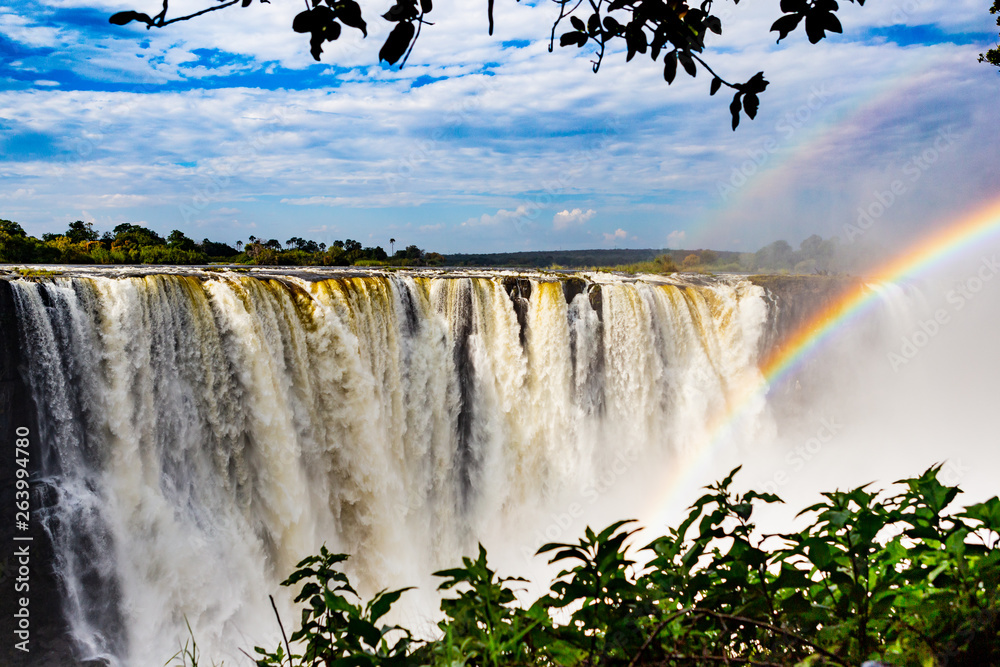
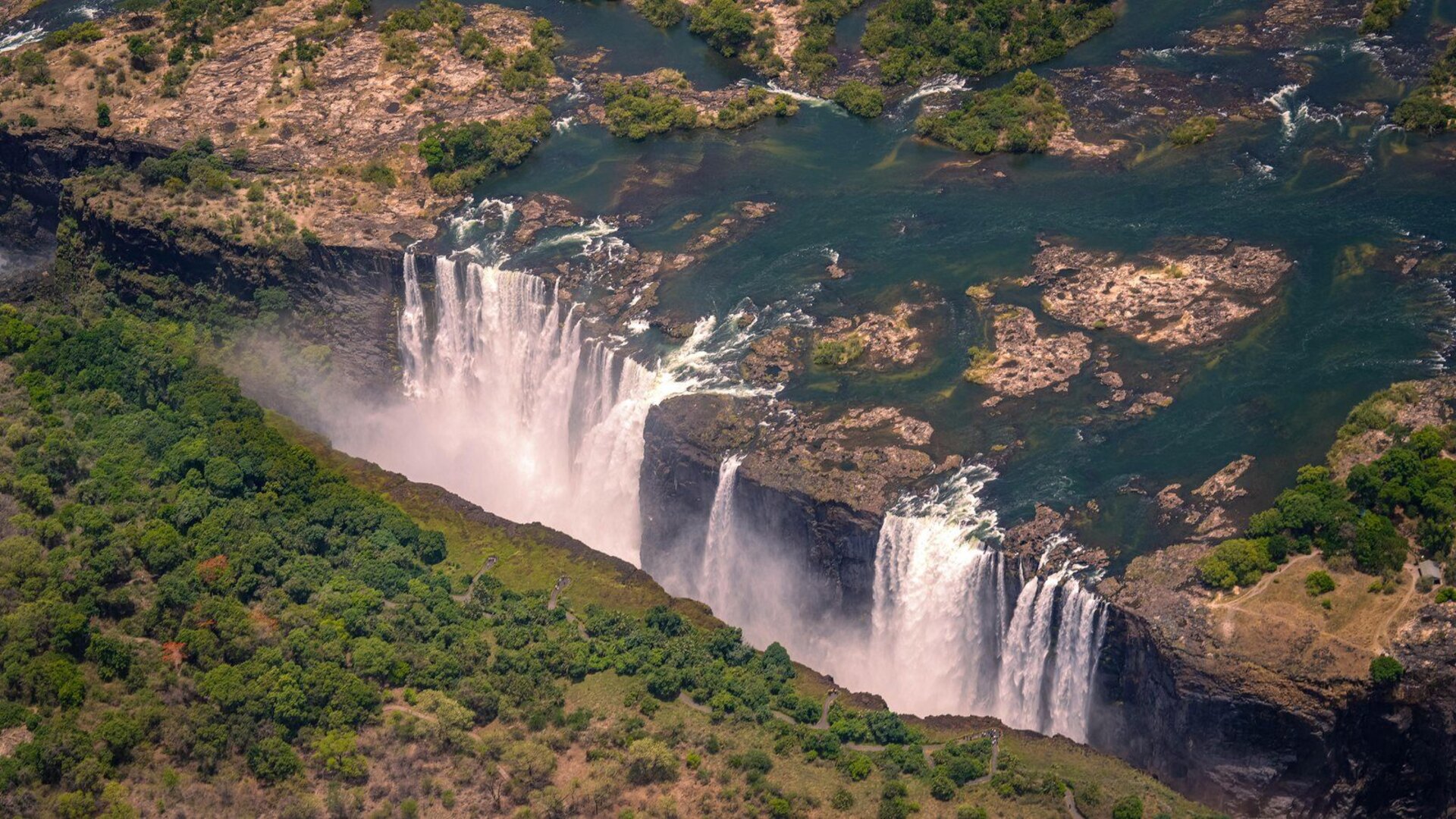
Victoria Falls (Zambian side): The Zambian side of Victoria Falls offers a different perspective than Zimbabwe. The Eastern Cataract viewpoint provides the closest approach to the falls' edge, and Knife-Edge Bridge extends over the gorge for dramatic spray-soaked views. The Zambian side is quieter, with fewer tourists, and offers access to Devil's Pool (August-January when water is low) — swim to the edge of the falls in a natural rock pool.
Livingstone town is the Zambian base, 10 km from the falls. Activities include white-water rafting (Grade 5 rapids in Batoka Gorge), helicopter "Flight of Angels," bungee jumping from the bridge, and sunset cruises on the upper Zambezi. The Livingstone Museum documents explorer David Livingstone's expeditions.
Liuwa Plain National Park in western Zambia is one of Africa's last true wildernesses. The park protects the second-largest wildebeest migration (40,000+) after Tanzania's Serengeti. Migrations occur November-December as wildebeest calve on the plain, then return June-August. Liuwa also shelters one of Africa's last intact hyena populations and the famous "Lady Liuwa" — a lone lioness who was the park's only lion until a pride was reintroduced in 2011.
Access is challenging: fly Lusaka to Kalabo, then 4x4 transfer (2 hours). King Lewanika Lodge is the only permanent camp. Liuwa is for adventurous travelers seeking remote, crowd-free wilderness.
North Luangwa National Park is South Luangwa's wild northern sibling — pristine, roadless, and accessible only on foot. Multi-day walking expeditions camp in mobile tented camps, covering 60-80 kilometres over 5-7 days. Buffalo herds here number 3,000+, and black rhinos were reintroduced in 2003. Ultra-exclusive: fewer than 500 visitors per year.
Kasanka National Park (420 km²) hosts the world's largest mammal migration: 10 million straw-coloured fruit bats converge on a 2-hectare swamp forest (October-December) to feed on wild fruits. The spectacle at dusk — millions of bats streaming out in dark clouds — is surreal. Kasanka also offers canoeing, walking, and tree-hide platforms.
Best Time to Visit Zambia & Practical Planning
Zambia's safari season follows the dry season (May-November) when wildlife concentrates around permanent water sources and bush is sparse for game viewing.
| Season | Months | Weather & Conditions | Best For |
|---|---|---|---|
| Dry Season (Peak) | June – Oct | No rain, 20-30°C days, cool nights (10-15°C), best game viewing | Walking safaris, canoeing, all parks. Sept-Oct hottest (35°C+) but best predator action. |
| Emerald Season (Wet) | Nov – April | Afternoon storms, lush green, 25-35°C, Victoria Falls peak flow | Birding, photography, newborn animals, low rates. Many camps close Nov-April. |
| Shoulder Season | May, early Nov | Transition months, intermittent rain, fewer tourists | Best value, decent game viewing, Liuwa migration (Nov), Kasanka bats (Oct-Dec). |
Walking safari season: June-October is ideal — cool mornings (10-15°C perfect for hiking), dry ground, sparse vegetation for animal spotting. September-October is hottest (35-38°C) but delivers peak predator activity and spectacular sunsets.
Visa: Zambia offers e-visas (US$50 single-entry, US$80 multiple-entry). The KAZA UniVisa (US$50) covers Zambia + Zimbabwe for 30 days — ideal for combining Vic Falls with safaris. Apply online or obtain on arrival at Lusaka/Livingstone airports. Vaccinations: Yellow fever not mandatory unless arriving from endemic countries. Malaria prophylaxis essential. Typhoid, hepatitis A/B recommended.
Getting there: Kenneth Kaunda International Airport (Lusaka) is the gateway. Regional flights: South African Airways, Kenya Airways, Ethiopian Airlines. Livingstone Airport (LVI) serves Victoria Falls. Domestic: Proflight connects Lusaka to South Luangwa (Mfuwe), Lower Zambezi (Royal), and Livingstone. Charter flights reach Busanga, Liuwa, North Luangwa.
Sample 10-day itinerary: Lusaka (1 night) → South Luangwa (4 nights: walking safaris, night drives, leopards) → Lower Zambezi (3 nights: canoeing, game drives) → Victoria Falls/Livingstone (2 nights: falls, helicopter, activities) → depart.
Zambia Safari Costs, Lodges & Booking Tips
Zambia is excellent value for luxury safaris. Top camps cost US$500-900 per person per night (full-board, activities, guiding) — comparable to Botswana but with far fewer tourists. Mid-range lodges start at US$300 per night.
Package safaris including South Luangwa, Lower Zambezi, and Victoria Falls start at US$3,400 per person for 8 days (mid-range lodges, shared flights) and reach US$8,000+ for ultra-luxury fly-in safaris. Our Zambia walking and canoeing safari packages include all internal flights, walking safaris, canoe trips, game drives, and full-board accommodation.
Top luxury lodges:
- Chinzombo (South Luangwa) — Norman Carr Safaris flagship, 6 villas, infinity pool overlooking Luangwa River.
- Mfuwe Lodge (South Luangwa) — iconic lodge where elephants walk through reception to reach mango grove (Oct-Nov).
- Chiawa Camp (Lower Zambezi) — pioneering operator since 1989, luxury tents, canoeing and walking specialists.
- Busanga Bush Camp (Kafue Busanga Plains) — seasonal May-Nov only, 4 tents, hot-air balloon safaris.
- Royal Livingstone (Victoria Falls) — 5-star hotel on Zambezi banks, views of falls spray, zebras graze lawns.
- Toka Leya Camp (Livingstone) — luxury tented camp, 15 minutes from falls, elephant interactions.
Booking tips: South Luangwa and Lower Zambezi camps book out 6-9 months ahead for peak season (July-October). Green season (November-April) sees 30-40% discounts, but many camps close. Busanga Bush Camp operates May-November only (seasonal flooding). Walking safaris minimum age is typically 12-16 years depending on camp. Night drives are included at most Zambian camps (unlike Kenya/Tanzania where they're restricted).
Canoeing safaris require moderate fitness and comfort with water. Guides paddle lead and sweep canoes; no prior canoeing experience needed. Swimming ability recommended but not mandatory (life jackets provided).
Contact us on WhatsApp (+27 74 315 5782) or request a custom itinerary — we'll design your authentic Zambia walking and canoeing safari.
South Luangwa National Park
Best for: Walking safaris (birthplace 1950), highest leopard density in Africa, night drives, 14,000 hippos, Thornicroft's giraffe endemic subspecies. 4-5 nights ideal. Season May-Nov. View walking safari packages.
Lower Zambezi National Park
Best for: Multi-day canoeing safaris (3-5 days), game drives, walking safaris, elephants, buffalo, wild dogs. Opposite Mana Pools (Zimbabwe). 3-4 nights recommended. Season May-Nov (closed Dec-April).
Kafue National Park
Best for: Busanga Plains seasonal floodplains, hot-air balloon safaris, cheetahs, wild dogs, sitatunga, 158 mammal species. Africa's 2nd-largest park (22,400 km²), <5,000 visitors/year. 3-4 nights Busanga. Season May-Nov.
Victoria Falls (Zambian Side)
Best for: Eastern Cataract viewpoint, Knife-Edge Bridge, Devil's Pool (Aug-Jan low water), white-water rafting, helicopter flights, quieter than Zimbabwe side. 2-3 nights Livingstone. Year-round access.
Liuwa Plain National Park
Best for: Africa's 2nd-largest wildebeest migration (40,000), remote wilderness, hyena populations, "Lady Liuwa" pride. Ultra-exclusive (<1,000 visitors/year). 2-3 nights King Lewanika Lodge. Migration Nov-Dec, Jun-Aug.
North Luangwa National Park
Best for: Multi-day walking expeditions (5-7 days), roadless wilderness, buffalo super-herds (3,000+), black rhino reintroduction. Ultra-remote (<500 visitors/year). Fly-in walking safaris only. Season Jun-Oct.