Key Takeaways
- Bwindi = Uganda's ancient 'impenetrable' rainforest sheltering almost half of all mountain gorillas on Earth; wilder, steeper trekking with a lower $800 permit and more habituated groups across four sectors
- Volcanoes = Rwanda's accessible volcano-slope park, just 2–3 hours from Kigali; a polished, $1,500-permit experience with world-class luxury lodges, golden monkeys and Dian Fossey's legacy
- Bwindi wins on price ($800 vs $1,500 permit), sheer gorilla numbers, more groups/sectors, and a vast safari beyond — chimps, tree-climbing lions, Big Game and hippos across Uganda
- Volcanoes wins on accessibility (short drive from Kigali, no long transfer), the world's finest gorilla lodges (Bisate, Singita Kwitonda, Virunga Lodge), golden monkeys and effortless logistics
- Trek difficulty: Bwindi is famously steep, muddy and dense; Volcanoes' bamboo slopes are generally more open and often (not always) a gentler climb — both range from easy to very demanding depending on the gorilla family
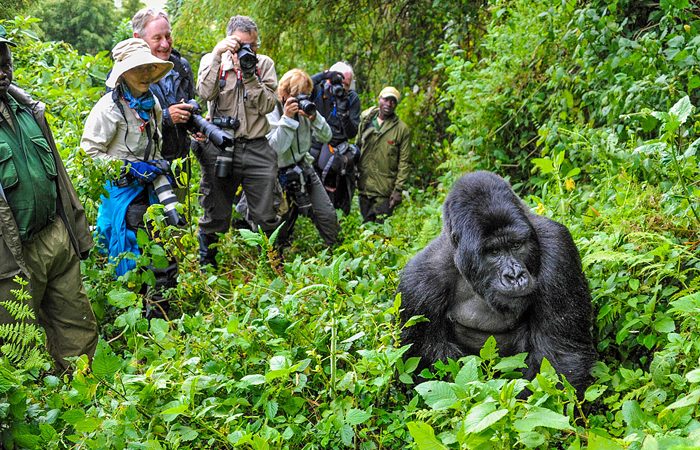
- Both deliver the same core miracle: a permitted hour, on foot, within about seven metres of a wild mountain gorilla family — one of the greatest wildlife encounters on Earth
- Best time: both peak in the two dry seasons (June–September and December–February), when forest trails are firmer and trekking is easier
- The ultimate answer for many: trek in both — Bwindi and Volcanoes on one Uganda–Rwanda journey, or pair a gorilla trek with a classic Kenya or Tanzania savanna safari
The Impenetrable Forest Meets the Volcano Kingdom
It is the question at the heart of every mountain gorilla dream. Bwindi, or Volcanoes? Uganda's tangled, primeval rainforest — so dense the early explorers named it 'impenetrable' — where almost half the mountain gorillas left on Earth live among ancient hardwoods and hanging vines, or Rwanda's string of towering volcano slopes, cloaked in bamboo and rising from tidy tea fields just a couple of hours from a modern capital.
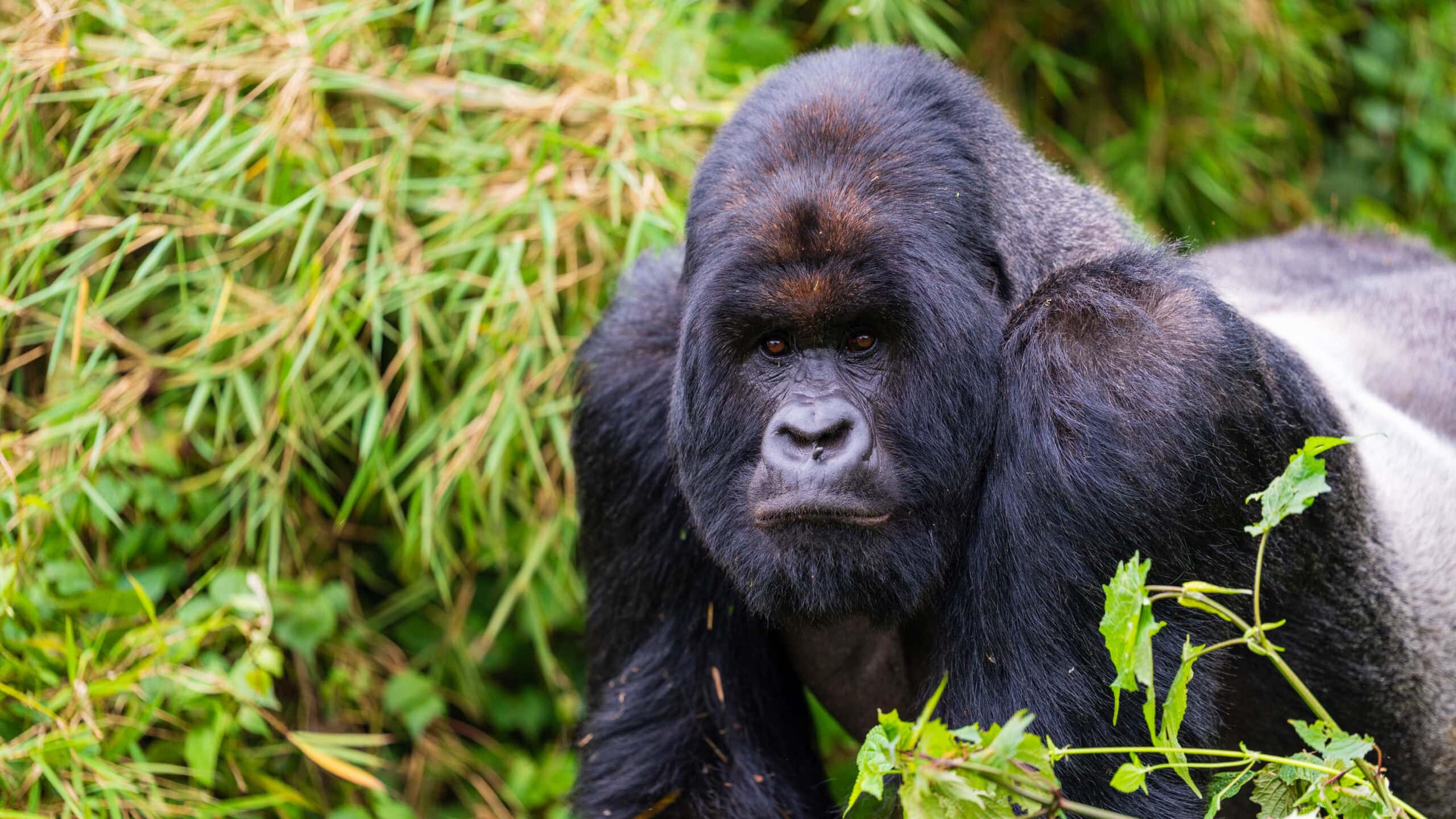
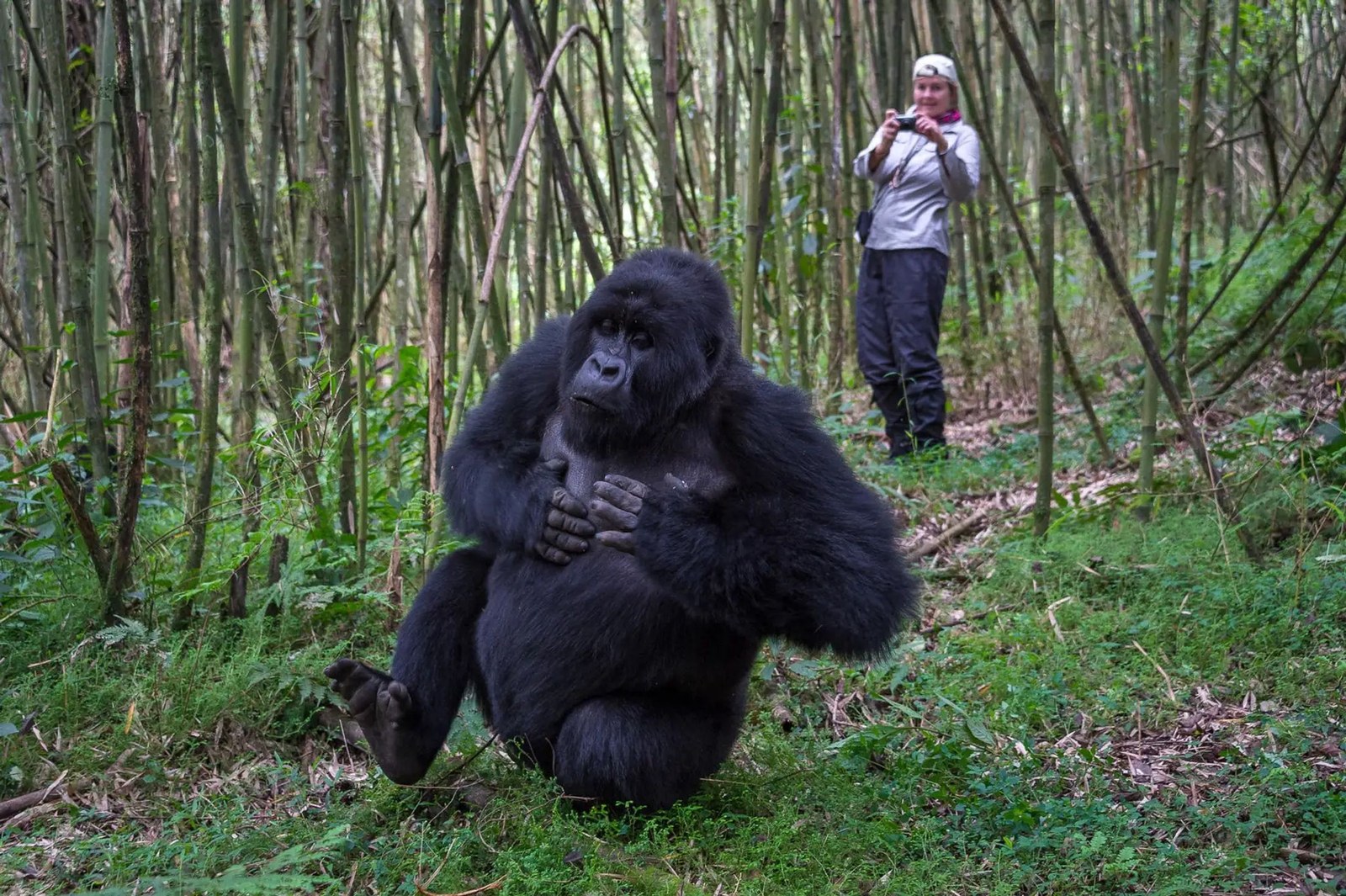
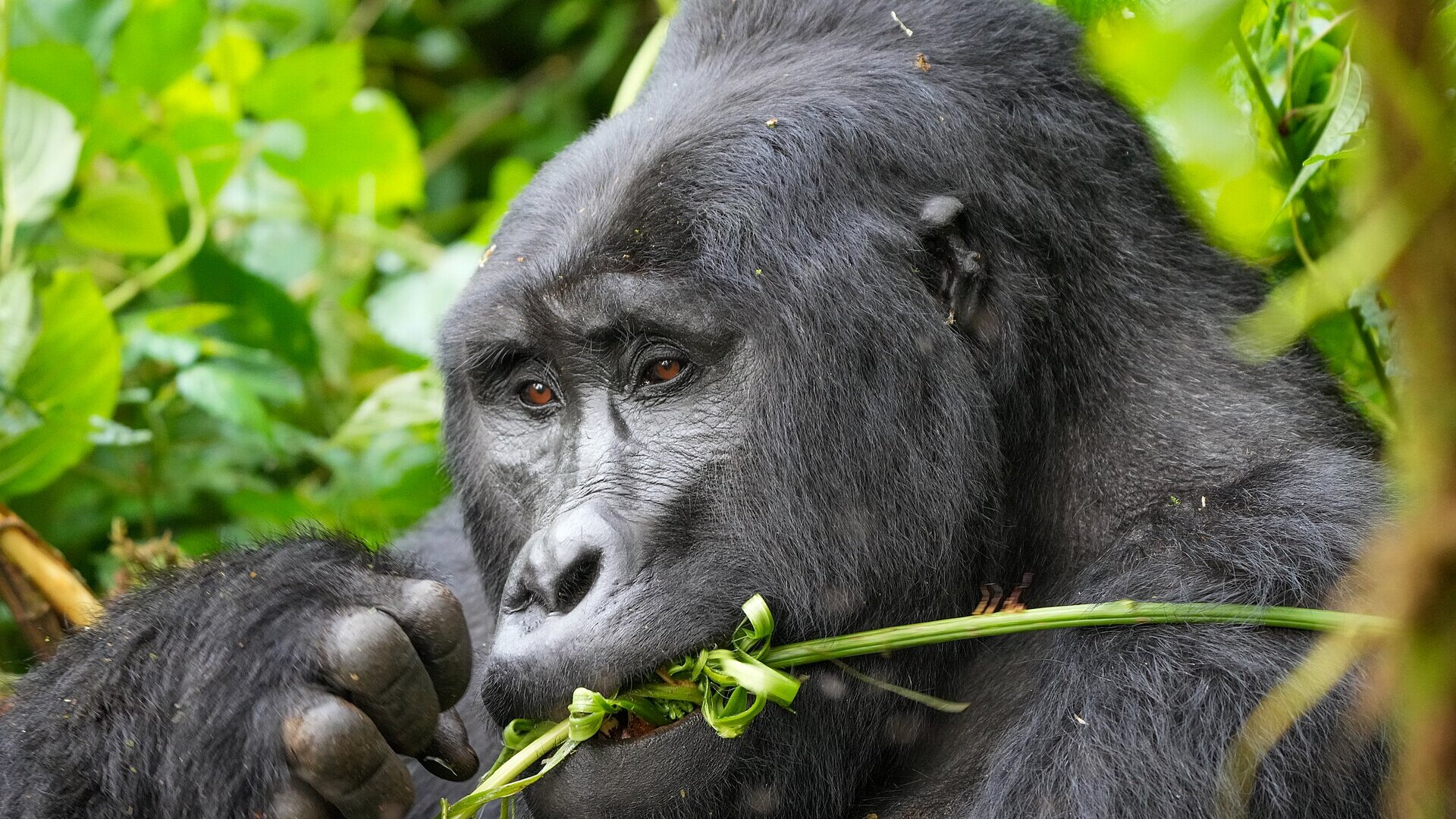
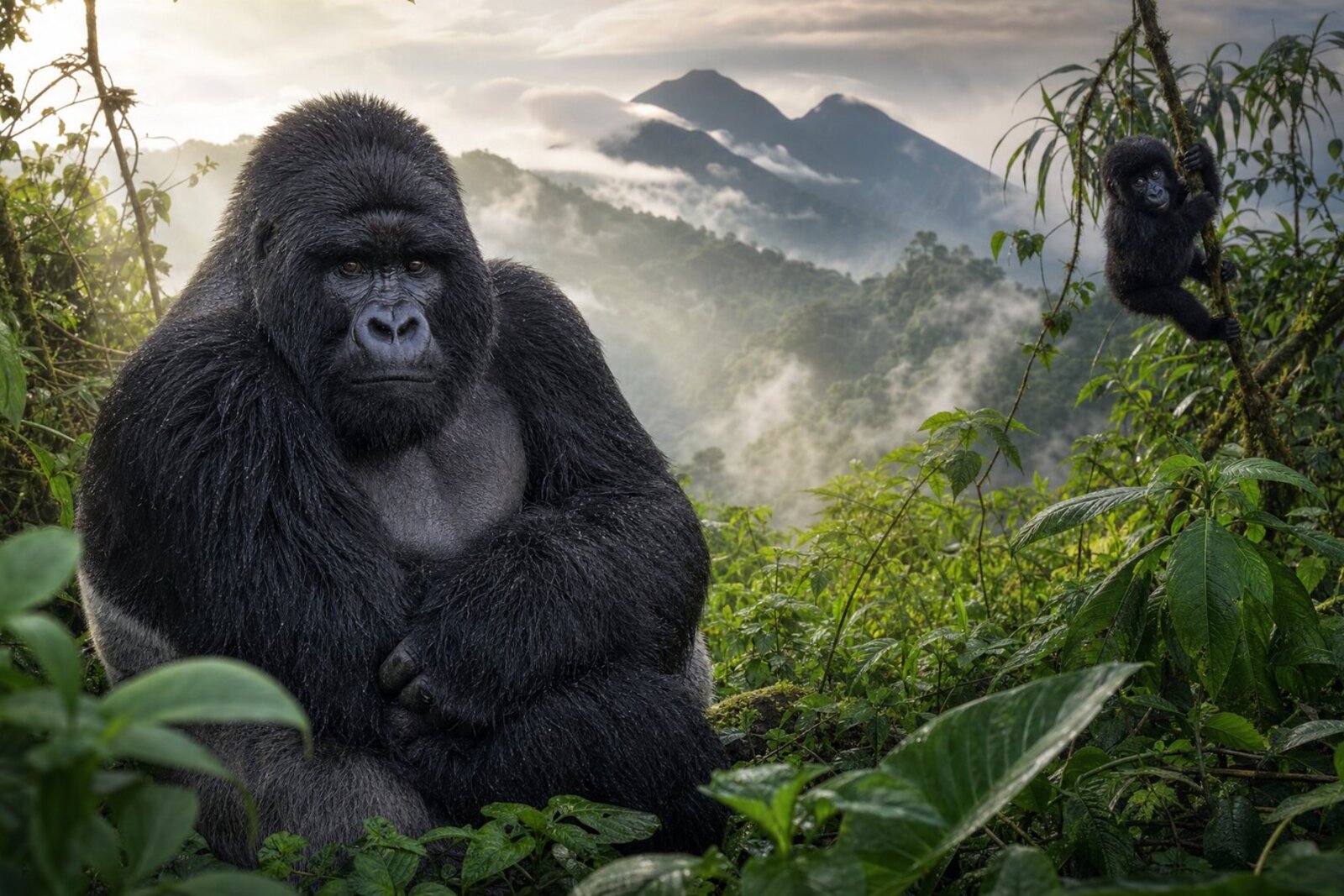
Both parks belong to the same rare and magical world: they are two of only four places on the planet (with Uganda's Mgahinga and DR Congo's Virunga) where you can trek to see wild mountain gorillas, a species that exists nowhere in captivity. In both, the core experience is identical and utterly unforgettable — after a guided hike through misty forest, you spend one carefully protected hour on foot, within about seven metres of a wild gorilla family: a colossal silverback, playful youngsters, mothers cradling infants. It is, for almost everyone who does it, the single greatest wildlife encounter of their lives.
Yet the two parks wrap that miracle in strikingly different packages. Bwindi Impenetrable National Park, in south-western Uganda, is the wilder, more adventurous and more affordable of the two: a UNESCO-listed ancient rainforest of some 32,000 years' standing, home to over 20 habituated gorilla families across four trekking sectors, reached on an $800 permit — and it sits within one of Africa's most complete safari countries, where you can add chimpanzees, tree-climbing lions, elephants, hippos and Big Game to your trip. Volcanoes National Park, in north-western Rwanda, is the accessible, polished, luxurious one: part of the great Virunga Massif, just two to three hours from Kigali's international airport, with a $1,500 permit, golden monkeys, the legacy of Dian Fossey — and some of the most extraordinary safari lodges on Earth.
So which is better? Neither. They deliver the same breathtaking encounter but suit different priorities — budget, adventure, luxury, accessibility, time — and lie in two different, easily combined countries. And many of our travellers don't choose at all: they trek in both, or pair a gorilla trek with a classic savanna safari next door. Let's break it down, round by round.
Round 1: The Gorilla Encounter Itself
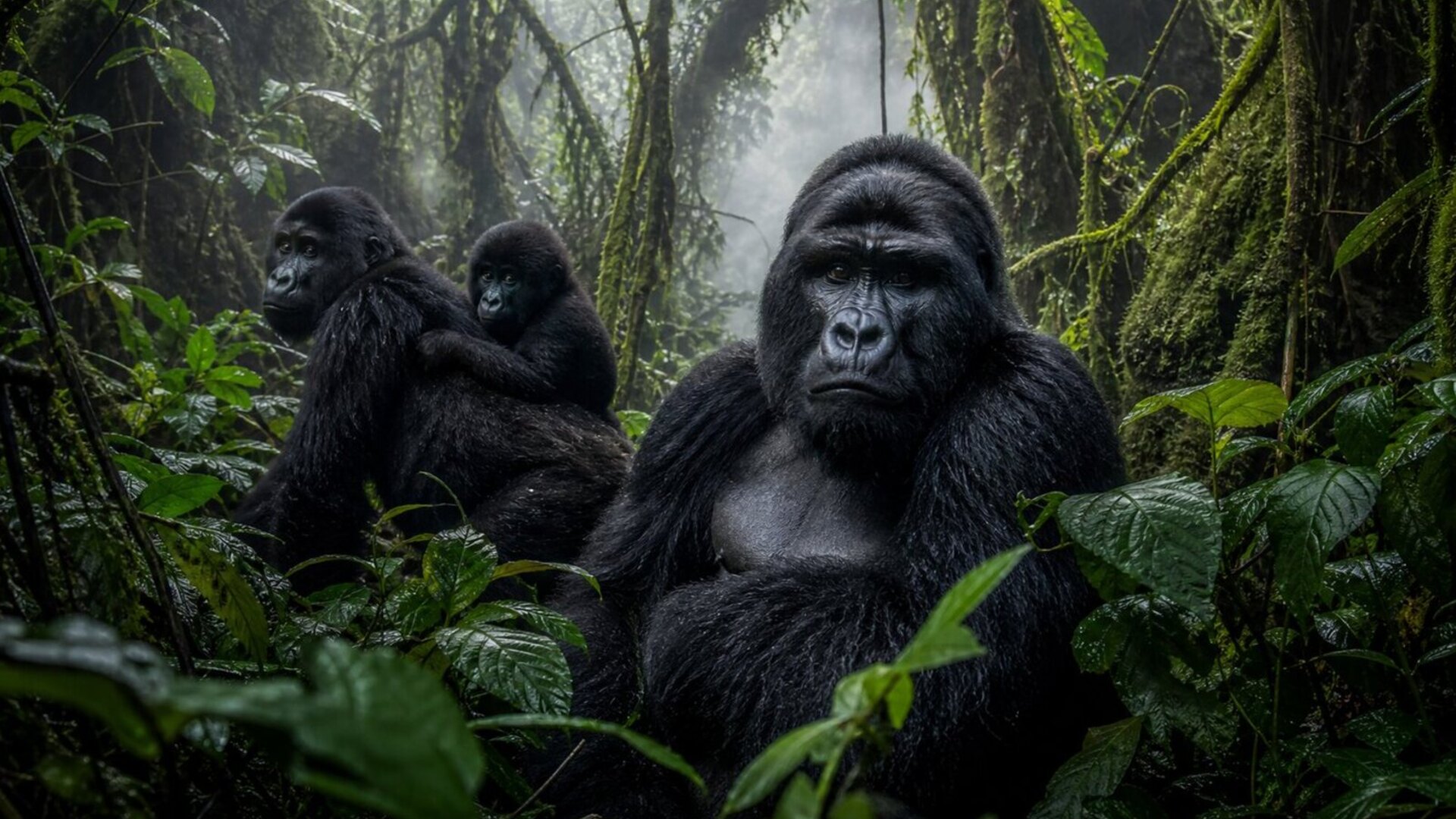
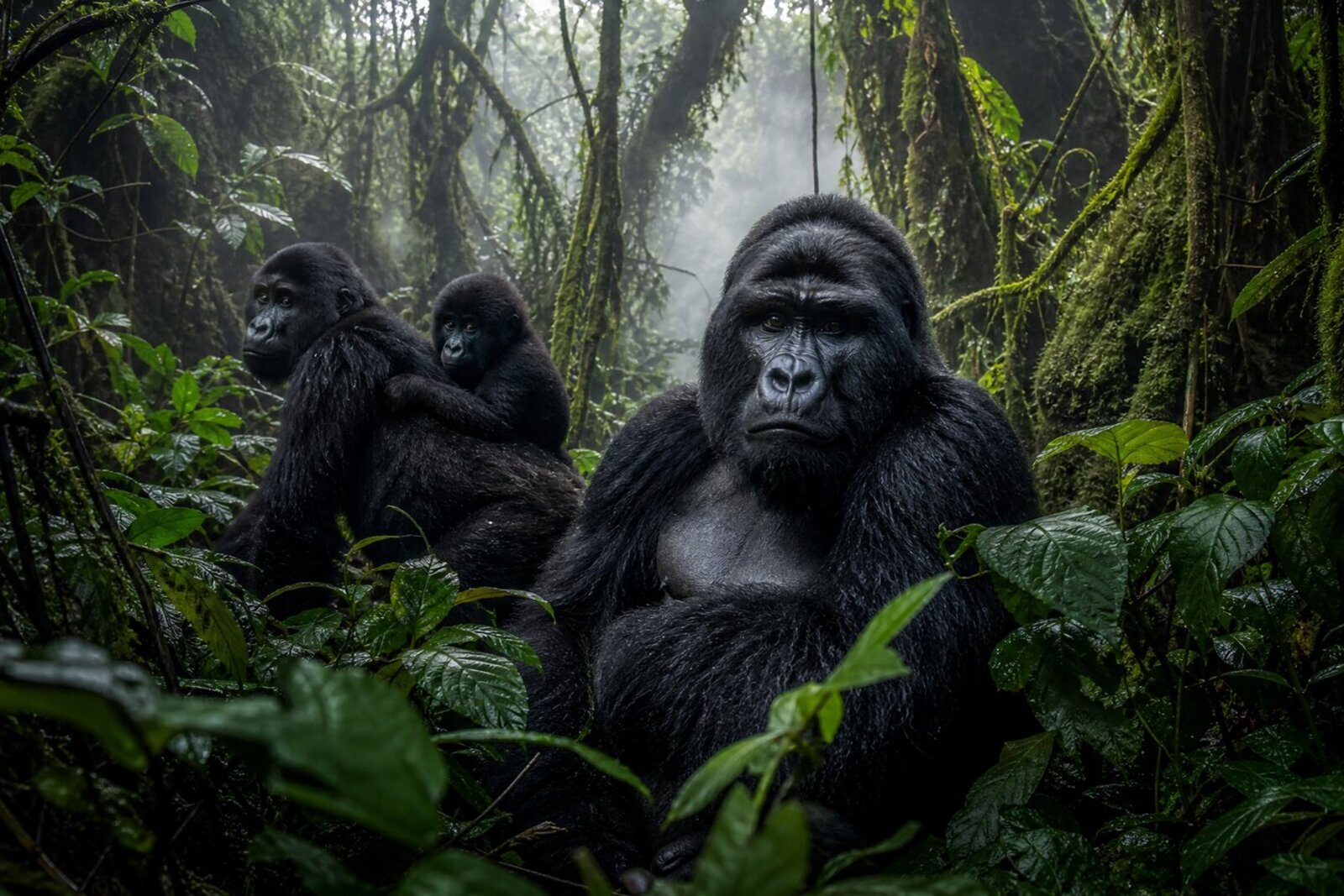
Let's start with what actually matters most: the hour with the gorillas. In both parks the fundamentals are the same and are governed by identical, strict conservation rules — small groups of up to eight trekkers, a maximum of one hour with the family once found, a roughly seven-metre distance, and no visits if you are ill. What differs is the setting, and it is a real difference. In Bwindi, you meet the gorillas deep in a tangled, multi-layered rainforest — a cathedral of ancient trees, dripping vines, ferns and filtered green light. It feels primeval and wild, and because the vegetation is so dense, encounters can feel astonishingly intimate: a silverback materialising a few metres away through the leaves.
In Volcanoes, the gorillas live higher up, on the slopes of dormant volcanoes among bamboo and more open montane vegetation. The backdrop is spectacular in a completely different way — the great peaks of the Virungas rising behind, sweeping views down over the forest, and often a more open sightline that photographers adore. Neither encounter is 'better'; Bwindi's is denser, greener and wilder, Volcanoes' is loftier, more scenic and often more open. Both put you face to face with the same magnificent animal.
Round 1 verdict: A tie of atmospheres. Bwindi wins for wild, dense, intimate ancient-rainforest immersion; Volcanoes wins for lofty, open, volcano-backed grandeur and photography. The gorillas themselves are equally unforgettable in both.
Round 2: Permit Cost — $800 vs $1,500
This is the round that decides many trips. A gorilla trekking permit in Bwindi (Uganda) costs USD $800 per person per trek; the same permit in Volcanoes (Rwanda) costs USD $1,500. That is a $700-per-person difference for what is, at its core, the same one-hour encounter — and for couples or families it adds up fast (a family of four saves $2,800 by trekking in Uganda). Uganda's lower price is a major, and entirely legitimate, reason many travellers choose Bwindi: you are not paying for a lesser experience, simply a different national pricing strategy.
Rwanda's higher price is a deliberate policy of 'high-value, low-impact' tourism: fewer permits, a premium positioning, and revenue funnelled into conservation and community projects. What you get for it is not a better gorilla, but a more polished, exclusive and effortless overall experience — shorter transfers, superb infrastructure and the option of the world's finest lodges. Uganda also offers a rare bonus for the truly committed: a gorilla habituation experience in Bwindi's Rushaga sector, where a limited number of permits buy a remarkable four hours with a semi-habituated family — an option Rwanda does not offer.
Round 2 verdict: Bwindi wins clearly on cost — $800 vs $1,500, plus the unique four-hour habituation option. Rwanda's premium buys polish and exclusivity, not a superior gorilla encounter.
Round 3: Trek Difficulty & Terrain
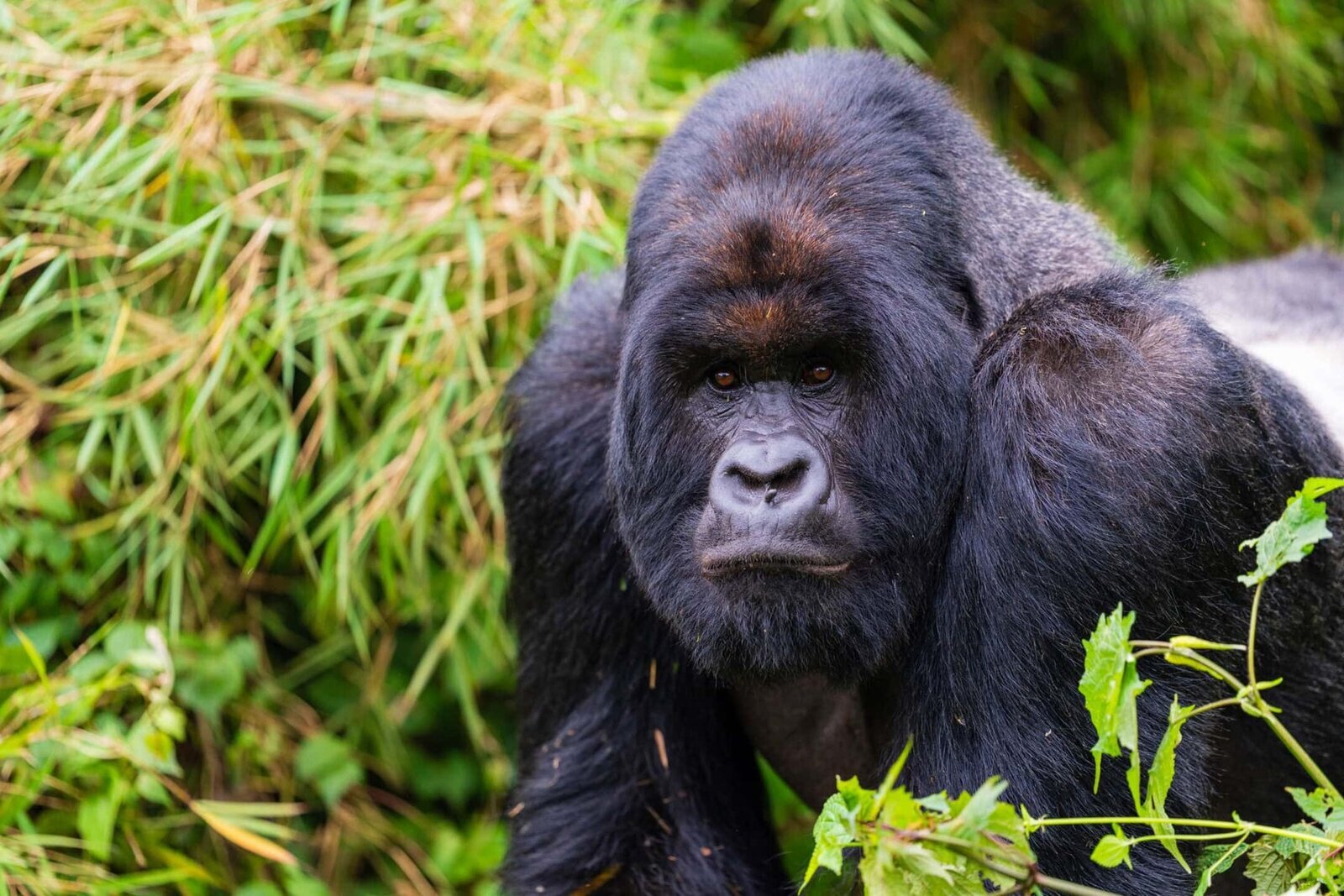
The name says it all: Bwindi Impenetrable Forest is famously demanding. The terrain is steep, the vegetation is dense and frequently has to be cut through, and the trails can be very muddy and slippery, especially after rain. Treks range from around one hour to a full, strenuous eight-hour round trip depending on where the assigned gorilla family is that morning — you don't choose, and you must be prepared for a real hike. A reasonable level of fitness helps enormously, and hiring a porter (highly recommended, and a wonderful way to support the local community) makes a huge difference.
Volcanoes is often — though not always — a somewhat gentler proposition. The gorillas live on volcano slopes among bamboo and more open vegetation, and while the climbs can still be steep and the altitude (frequently above 2,500 m) is a genuine factor, the terrain tends to be less of a claustrophobic scramble than Bwindi's densest sectors. Here too, though, difficulty depends entirely on which family you're allocated: some are close and easy, others require a long, hard climb. Both parks thoughtfully try to match trekkers' fitness to gorilla families, and porters are available in both.
Round 3 verdict: Volcanoes edges it for those wanting the (potentially) easier, more accessible trek, though altitude bites. Bwindi wins for travellers who want a wilder, more adventurous hike through genuinely impenetrable forest. In both, luck of the draw matters — come fit.
Round 4: Getting There & Accessibility
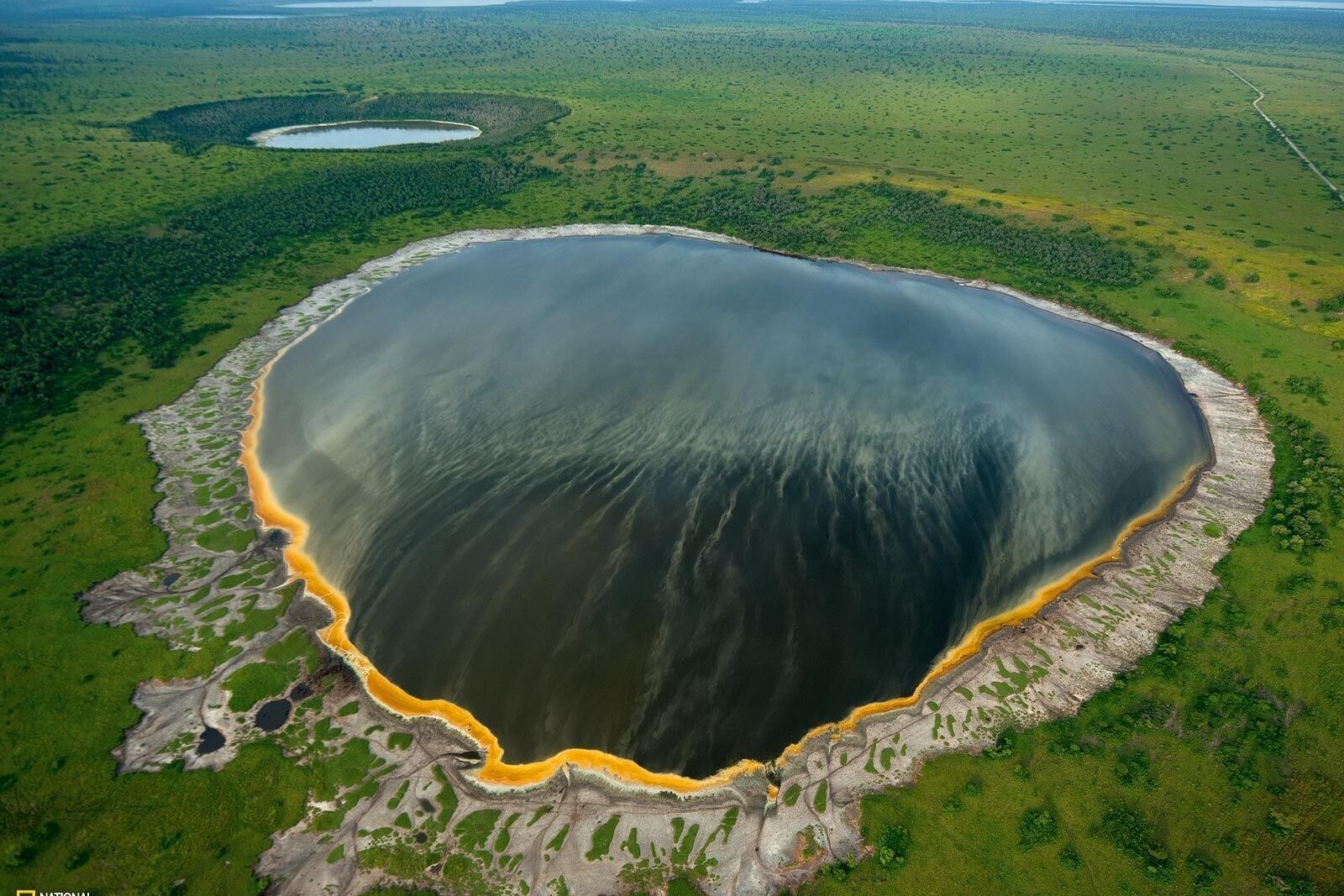
This is one of Volcanoes' strongest cards. Rwanda's Volcanoes National Park sits just a two-to-three-hour drive from Kigali International Airport on excellent tarred roads. You can fly into Kigali (a clean, modern, well-connected hub), transfer the same afternoon, sleep near the park and be trekking gorillas the very next morning. For travellers short on time — or adding gorillas to a business trip or a wider East African route — this ease is genuinely hard to beat, and it makes even a three-day Rwanda gorilla trip completely feasible.
Bwindi takes more effort to reach, and that is part of its wilder character. From Entebbe/Kampala it is a long (roughly 8–10 hour) scenic drive through Uganda's beautiful hills, usually broken over two days and often combined with other parks along the way — or you can take a short scheduled flight to an airstrip near the park (Kihihi or Kisoro) and drive from there. Interestingly, some travellers even fly into Kigali and drive 3–4 hours to Bwindi's southern sectors, as it can be the quickest route. The upshot: Volcanoes is the plug-and-play choice, while Bwindi rewards those with a little more time and a taste for the journey.
Round 4 verdict: Volcanoes wins decisively on accessibility — a short, smooth transfer from a modern capital. Bwindi asks for more travel time, which suits a longer, more adventurous Uganda itinerary.
Round 5: Beyond the Gorillas — Uganda's Full Safari vs Rwanda's Compact Gems
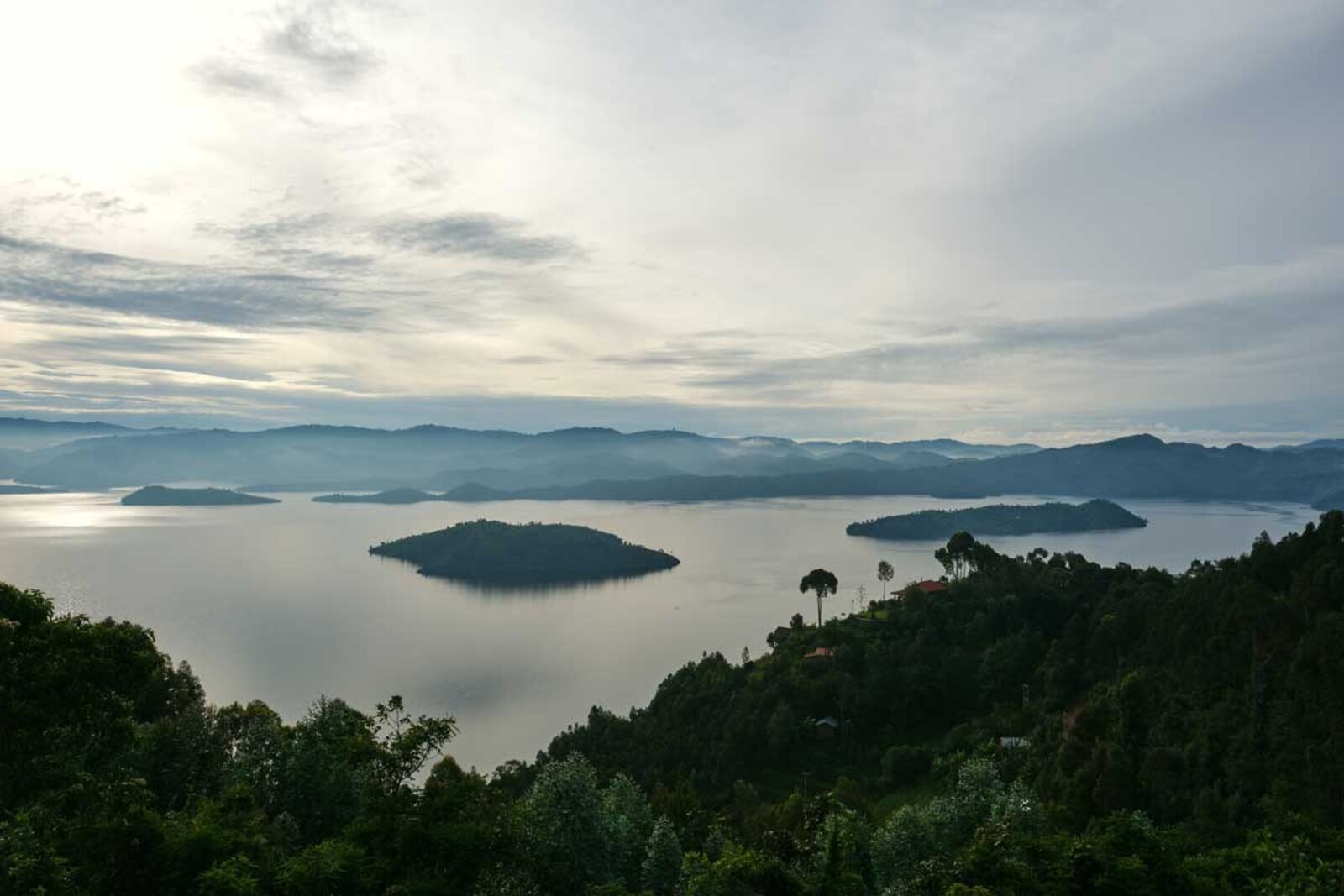
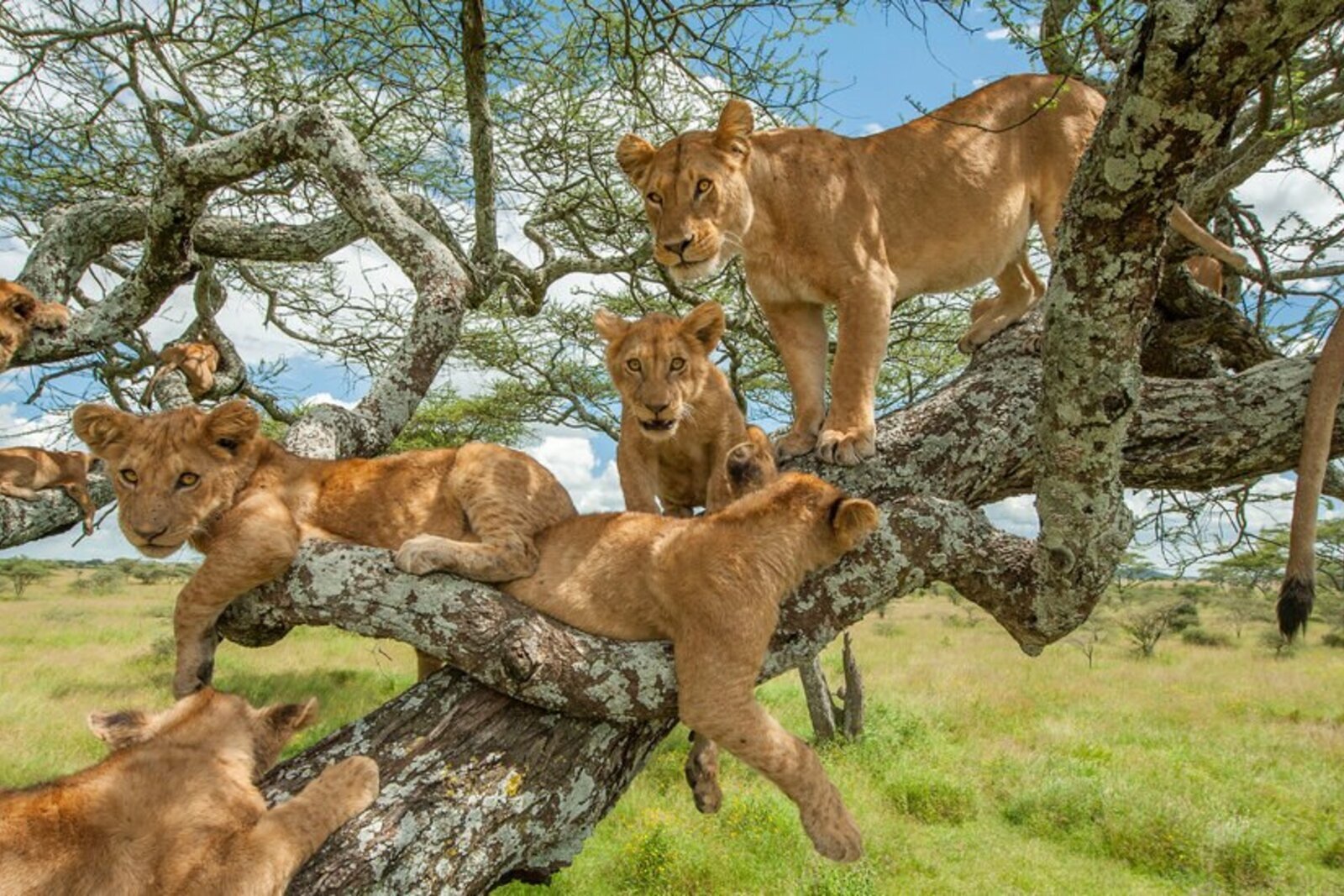
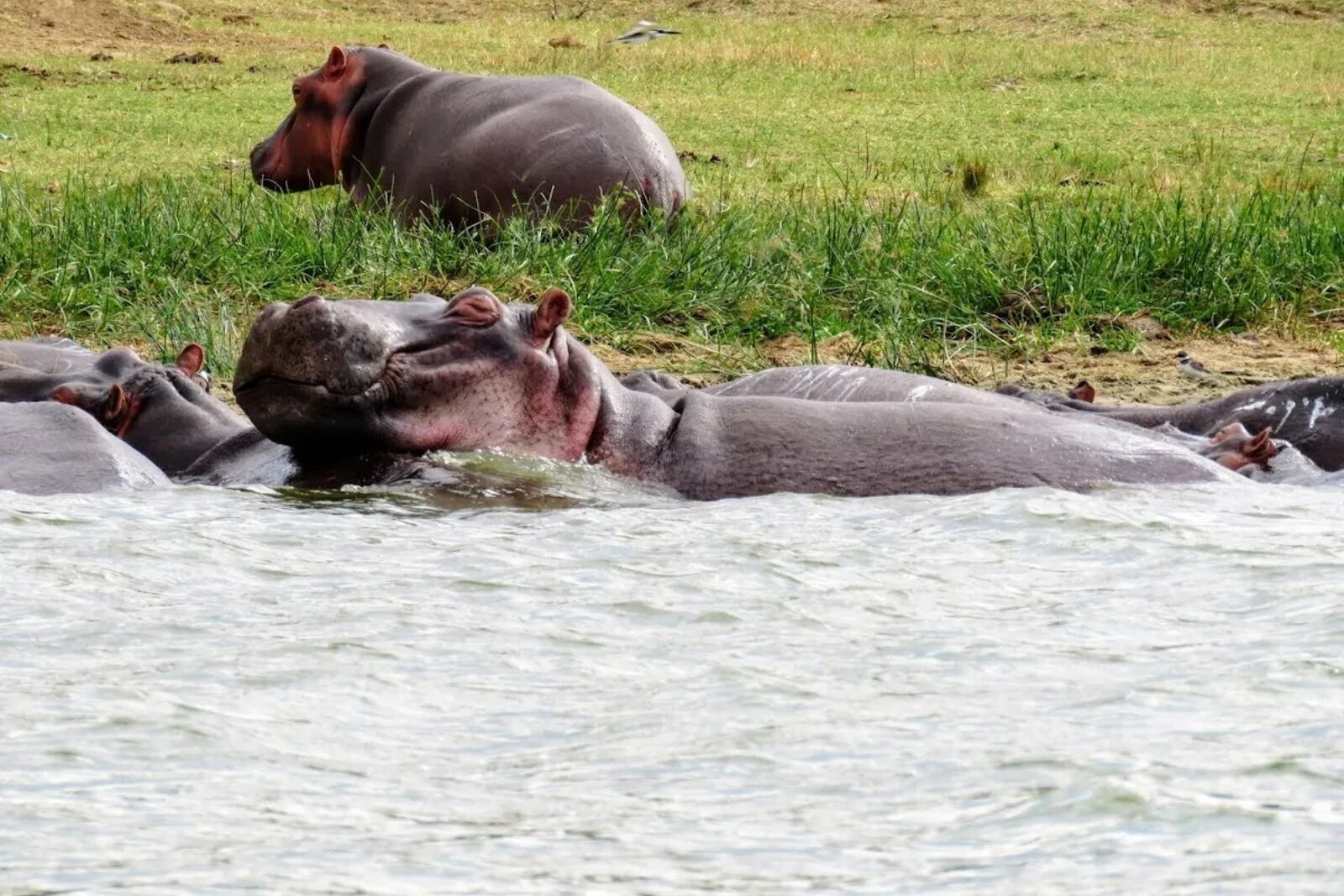
This round is where Bwindi's country flexes its muscles. A gorilla trek in Bwindi opens the door to one of Africa's most complete and underrated safari nations. Within a single Ugandan itinerary you can add: chimpanzee tracking in Kibale Forest (the primate capital of East Africa); the famous tree-climbing lions and boat cruises of Queen Elizabeth National Park; the thundering Murchison Falls with its Nile boat safaris, elephants and hippos; and remote, wildlife-rich Kidepo Valley. Uganda genuinely offers the classic Big Game safari and world-class primates in one country — a combination almost nowhere else can match.
Rwanda's offering beyond gorillas is more compact but increasingly impressive. Volcanoes itself adds golden monkeys and the moving hike to Dian Fossey's tomb. Elsewhere, Akagera National Park has been restored into a genuine Big Five savanna reserve (lion and rhino reintroduced), Nyungwe Forest offers chimps and a spectacular canopy walkway, and Lake Kivu provides a beautiful beach-and-boat interlude. It is a tidy, high-quality circuit — but it doesn't yet have the sheer scale and variety of Uganda's wildlife menu.
Round 5 verdict: Bwindi/Uganda wins clearly for anyone wanting a full safari beyond the gorillas — chimps, tree-climbing lions, Big Game and hippos in one country. Rwanda counters with a compact, high-quality circuit (golden monkeys, Akagera, Nyungwe, Kivu).
Round 6: Luxury & Lodges
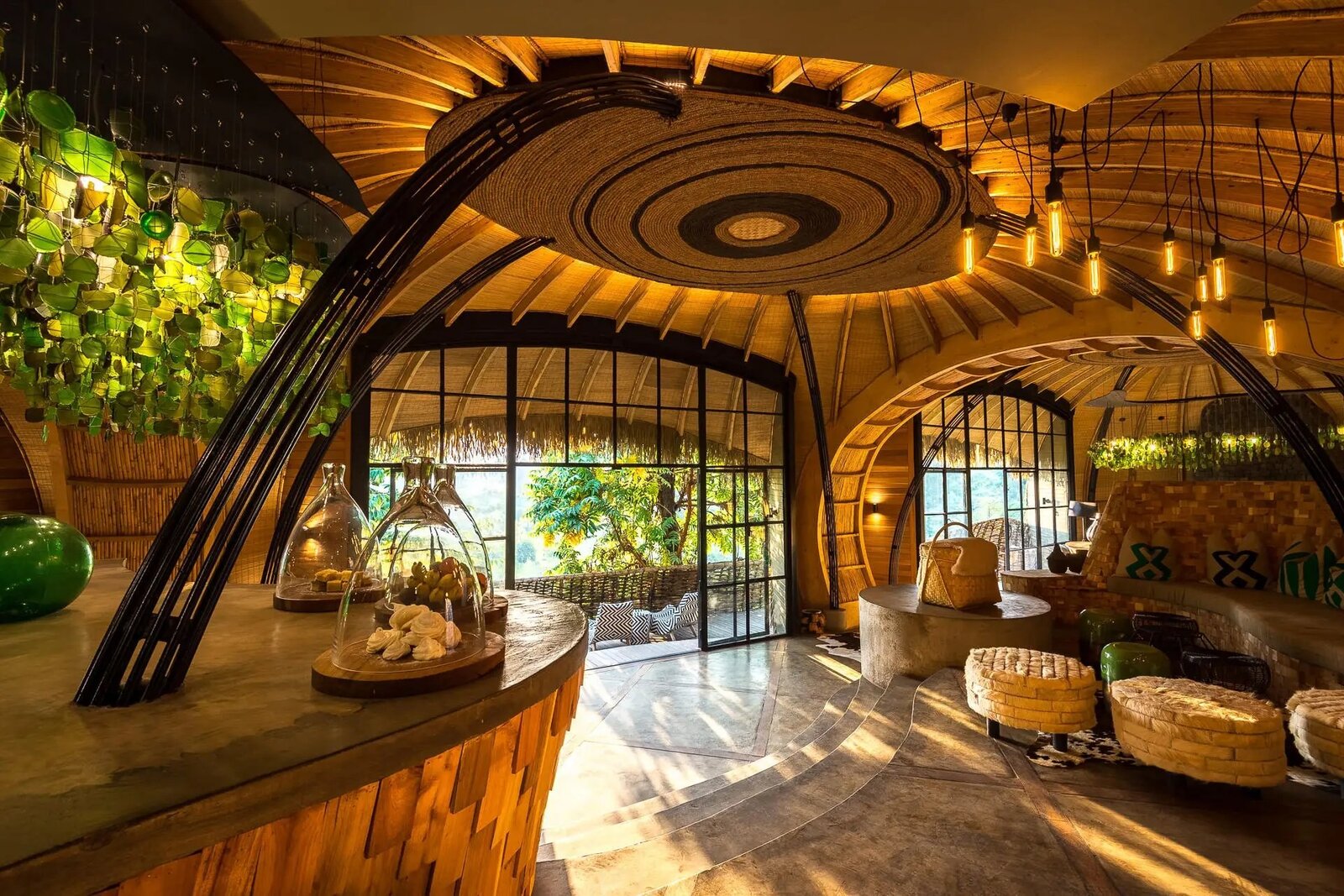
If ultra-luxury is your priority, Rwanda wins, and it isn't especially close. Volcanoes National Park has, in the last decade, become the most glamorous gorilla-trekking destination on Earth. Its collection of lodges reads like a who's-who of high-end safari: Bisate Lodge (Wilderness), with its extraordinary forest-dome villas and reforestation story; Singita Kwitonda, all volcanic-stone elegance and views to the peaks; One&Only Gorilla's Nest; the classic hilltop Virunga Lodge; and Sabyinyo Silverback Lodge. These are destinations in their own right, and they make Rwanda the obvious choice for honeymooners and luxury travellers who want the gorilla trek wrapped in world-class comfort.
Bwindi is no longer the rustic option it once was — and this is a real and welcome development. It now offers genuinely excellent lodges, led by the superb Bwindi Lodge (Volcanoes Safaris) and a growing range of very comfortable mid-range and boutique options across its four sectors. What Bwindi delivers is outstanding value: beautiful, characterful lodges at prices well below Rwanda's top tier, leaving budget for a longer, richer Ugandan safari. For most travellers, Bwindi's accommodation is more than comfortable enough; for those chasing the absolute pinnacle of design-led luxury, Rwanda still sets the standard.
Round 6 verdict: Volcanoes wins for the world's finest gorilla lodges and pure luxury. Bwindi wins on value — excellent, characterful lodges at friendlier prices, freeing budget for a bigger trip.
Round 7: Scenery & Landscapes
Both parks sit in gloriously beautiful country, but of very different kinds. Volcanoes is defined by the drama of the Virunga Massif — a chain of eight great volcanoes, five of them in Rwanda (Karisimbi, Bisoke, Sabyinyo, Gahinga and Muhabura), rising steeply from a patchwork of emerald tea plantations, terraced hills and twin crater lakes. It is spectacular, orderly and photogenic, the sort of scenery that makes you stop the car every few minutes. Rwanda's nickname — the Land of a Thousand Hills — is well earned, and the volcano views on a clear morning are simply superb.
Bwindi is a different, wilder kind of beauty: a vast, unbroken blanket of ancient rainforest tumbling over steep ridges and deep valleys, perpetually wrapped in mist and birdsong. It is one of the most biodiverse forests in Africa — over 350 bird species, including many Albertine Rift endemics, plus butterflies, chameleons and other primates. Nearby, the highlands hold gems like the exquisite Lake Bunyonyi, one of the loveliest lakes on the continent and a perfect post-trek unwind. Bwindi's scenery is less about grand vistas and more about deep, green, primeval immersion.
Round 7 verdict: A tie of beauty. Volcanoes wins for sweeping, dramatic volcano-and-lake vistas; Bwindi wins for deep, misty, biodiverse ancient-rainforest atmosphere. Both are among the most beautiful places in East Africa.
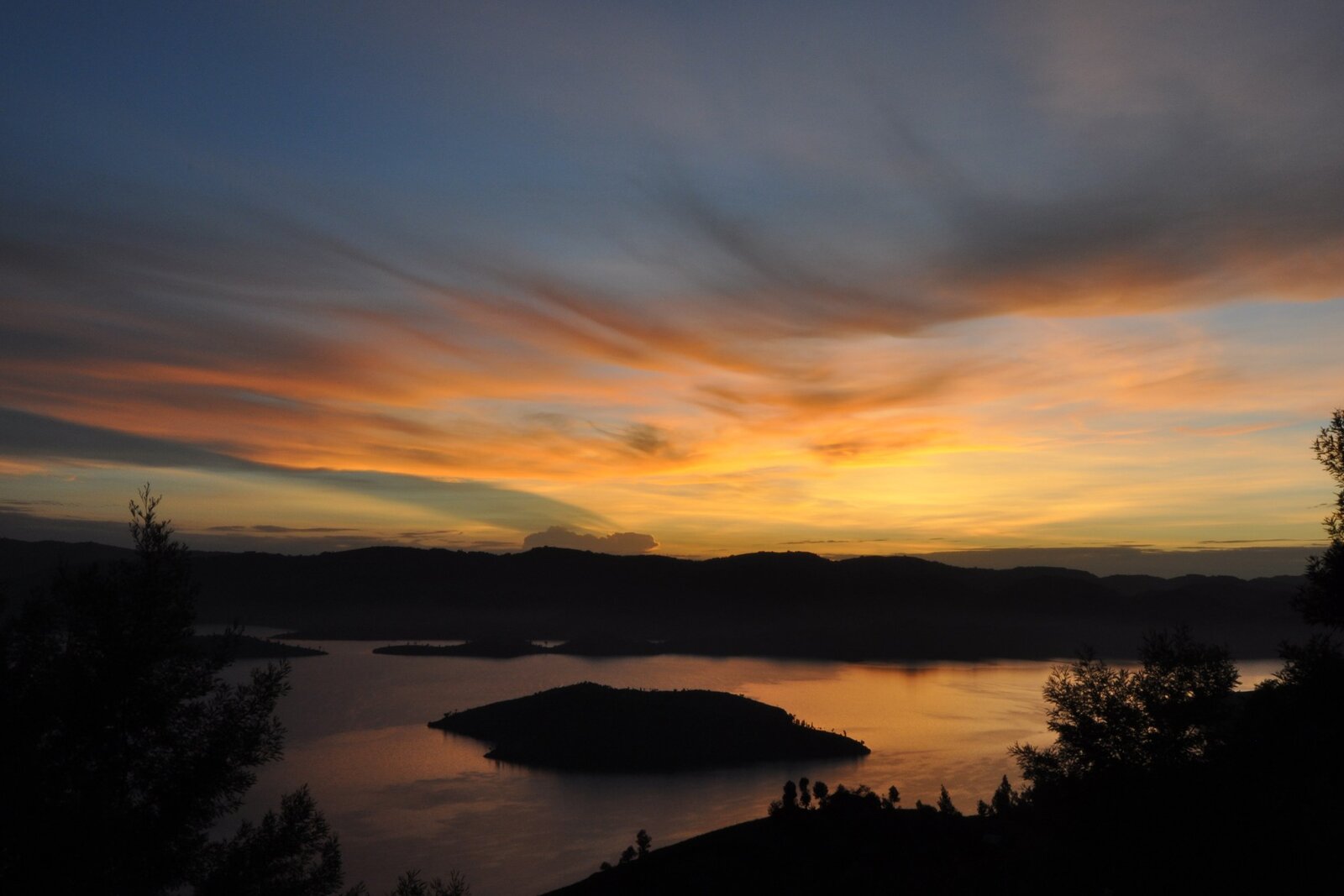
Round 8: Golden Monkeys, Chimps & Other Primates
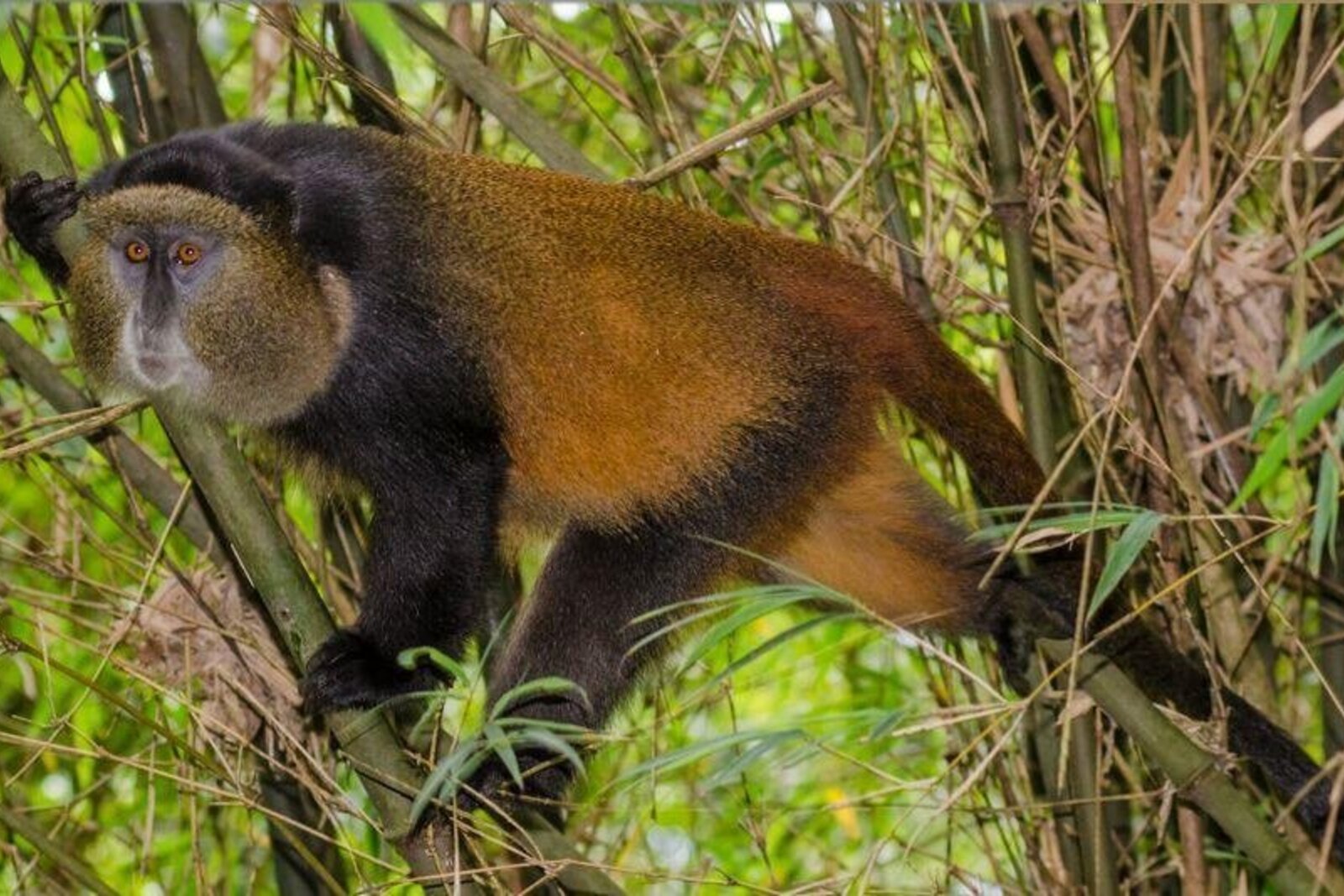
Gorillas may be the headline, but both destinations are extraordinary primate country. Volcanoes offers a wonderful bonus trek to see the endangered golden monkeys — endemic to the Virungas — bounding through the bamboo in large, acrobatic troops. It is a cheaper, easier, joyful half-day add-on that pairs beautifully with the gorilla trek, and it is one of the reasons a two- or three-day Volcanoes stay is so rewarding.
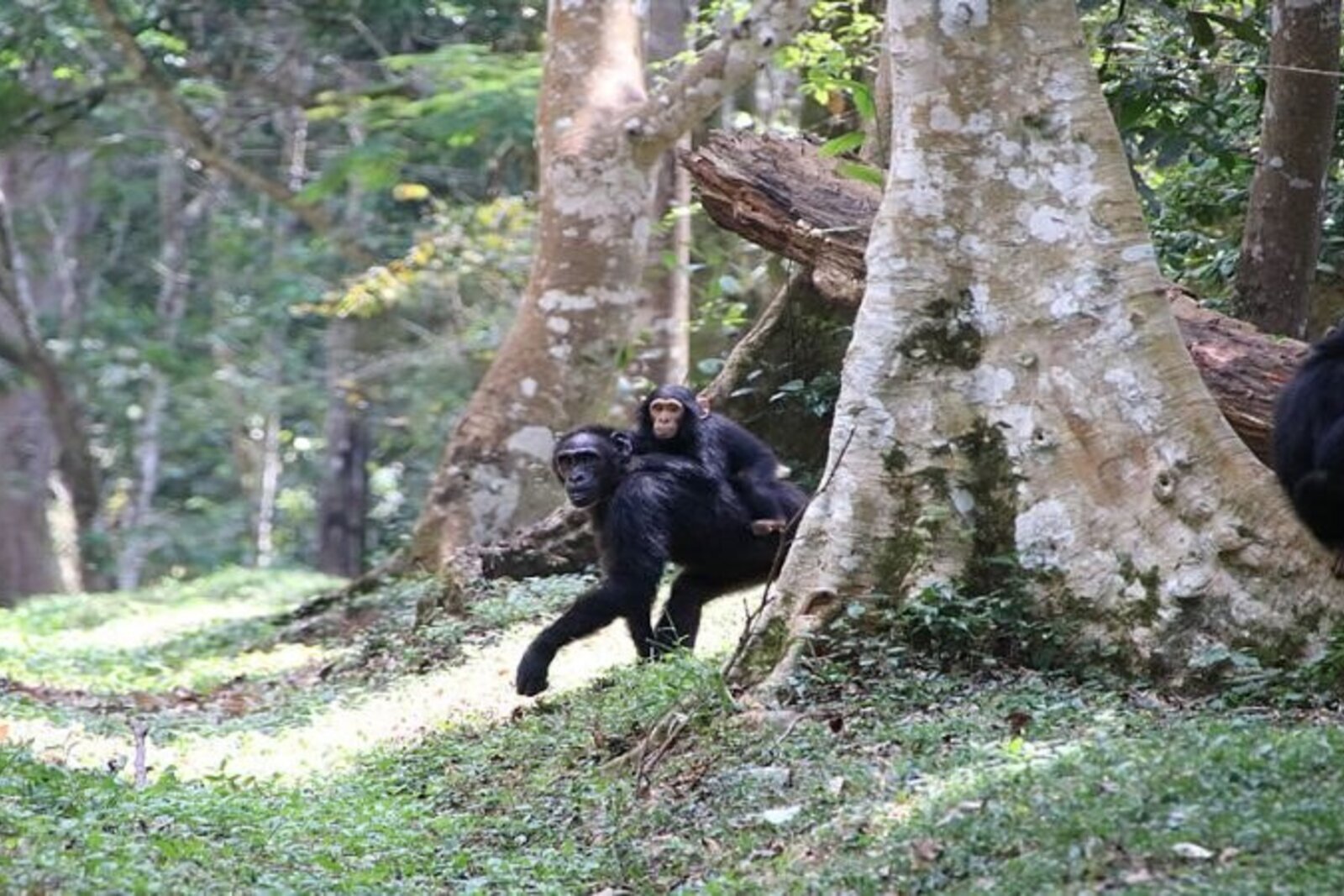
Uganda, through Bwindi and its wider circuit, is arguably the greater primate destination overall. Bwindi itself shelters several other primate species, and a short hop away lies Kibale Forest — the finest chimpanzee-tracking destination in East Africa, where habituated chimp communities can be followed on foot. Add the golden monkeys of neighbouring Mgahinga, the vervets and baboons of the savanna parks, and the chimps of Queen Elizabeth's Kyambura Gorge, and Uganda offers one of the richest primate line-ups on the continent — gorillas and chimps in a single trip.
Round 8 verdict: Uganda/Bwindi wins for overall primate diversity — gorillas plus world-class chimpanzee tracking in Kibale. Volcanoes counters with its lovely, easy golden monkey trek right beside the gorillas.
Round 9: Conservation & the Dian Fossey Legacy
Here both destinations are, together, one of conservation's greatest good-news stories. Mountain gorillas are the only great ape whose numbers are increasing — from a low of around 250 in the 1980s to over 1,000 today — thanks to the shared, cross-border protection of Uganda, Rwanda and the DRC, funded in large part by trekking permits. Every permit you buy in either park directly pays for the rangers, veterinarians and community programmes that made this recovery possible.
Rwanda wears its conservation story especially prominently. Volcanoes is the home of the legendary Dian Fossey and her Karisoke Research Center; you can hike to her tomb and the graves of the gorillas she studied and died protecting, and the country's annual Kwita Izina gorilla-naming ceremony is a genuine national celebration. Uganda's Bwindi is an equally vital stronghold — home to almost half the world's mountain gorillas — with deeply rooted community conservation and the moving story of the Batwa, the forest's original people, whose cultural experiences you can share. Both put your money to magnificent work.
Round 9 verdict: A tie, and a joyful one. Rwanda wins for the powerful, tangible Dian Fossey heritage; Bwindi wins for sheltering the single largest gorilla population and its rich Batwa cultural story. Either way, your permit funds a conservation triumph.
Round 10: Best Time to Go
Both Bwindi and Volcanoes lie close to the equator in high, forested country, so they are green, lush and trekkable all year round — but they share the same seasonal rhythm. The two dry seasons — June to September and December to February — are the prime windows: forest trails are firmer and less muddy, hiking is easier, and photography is better. These are also the busiest and most in-demand periods, so permits (especially Rwanda's limited allocation) should be secured well ahead.
The two wetter seasons (March–May and October–November) bring heavier rain, muddier and more slippery trails, and tougher going underfoot — but also lush scenery, fewer trekkers and, in Uganda, sometimes easier permit availability. Crucially, the gorillas are always there: this is not a migration, and a well-planned trek succeeds in any month. As a rule, if trekking comfort is your priority, aim for the dry seasons; if value and solitude appeal, the green seasons can be wonderful.
Round 10 verdict: A tie — both peak in the same dry seasons (June–September and December–February). The shared calendar is a gift: it means Bwindi and Volcanoes can be trekked back-to-back on one perfectly-timed trip.
Round 11: The Do-Both Verdict — Two Treks, One Journey
Here is the secret the debate so often misses: you don't have to choose. Bwindi and Volcanoes are near neighbours in the same gorilla-rich corner of Africa, peak in the same dry seasons, and connect easily — the southern sectors of Bwindi are only a few hours' drive from Rwanda's Volcanoes, and many travellers cross the border to experience both. Trekking twice, in two different parks and two different countries, is the ultimate mountain gorilla pilgrimage — and seeing a second, different family in a completely different setting is astonishingly rewarding.
A classic route we build looks like this: fly into Kigali, trek the volcano slopes of Volcanoes (perhaps adding golden monkeys and Dian Fossey's tomb), then drive across the border into Uganda for a second, wilder trek in Bwindi — and, if time allows, continue north through Queen Elizabeth's tree-climbing lions, Kibale's chimps and beyond. Alternatively, many travellers pair a single gorilla trek with a classic savanna safari next door — the Masai Mara in Kenya or the Serengeti in Tanzania — for the ultimate forest-and-plains combination: gorillas one week, the Great Migration the next.
If you'd like to go deeper on the individual parks first, our Bwindi gorilla trekking guide covers everything Uganda, while our Volcanoes National Park gorilla trekking guide unpacks the Rwanda experience in full. For a country-level view, see our Rwanda vs Uganda gorilla trekking comparison, and to time it perfectly, our guide to when to visit for gorilla trekking.
Related journey: Ultimate Gorilla & Wildlife Uganda (8 days) — Bwindi gorillas, chimps and Big Game in one trip →
Round 11 verdict: The most magical answer of all — trek in both, on one Uganda–Rwanda journey, or pair a single trek with a classic savanna safari next door. It is a pilgrimage we craft constantly, and it is one of the greatest wildlife journeys on Earth.
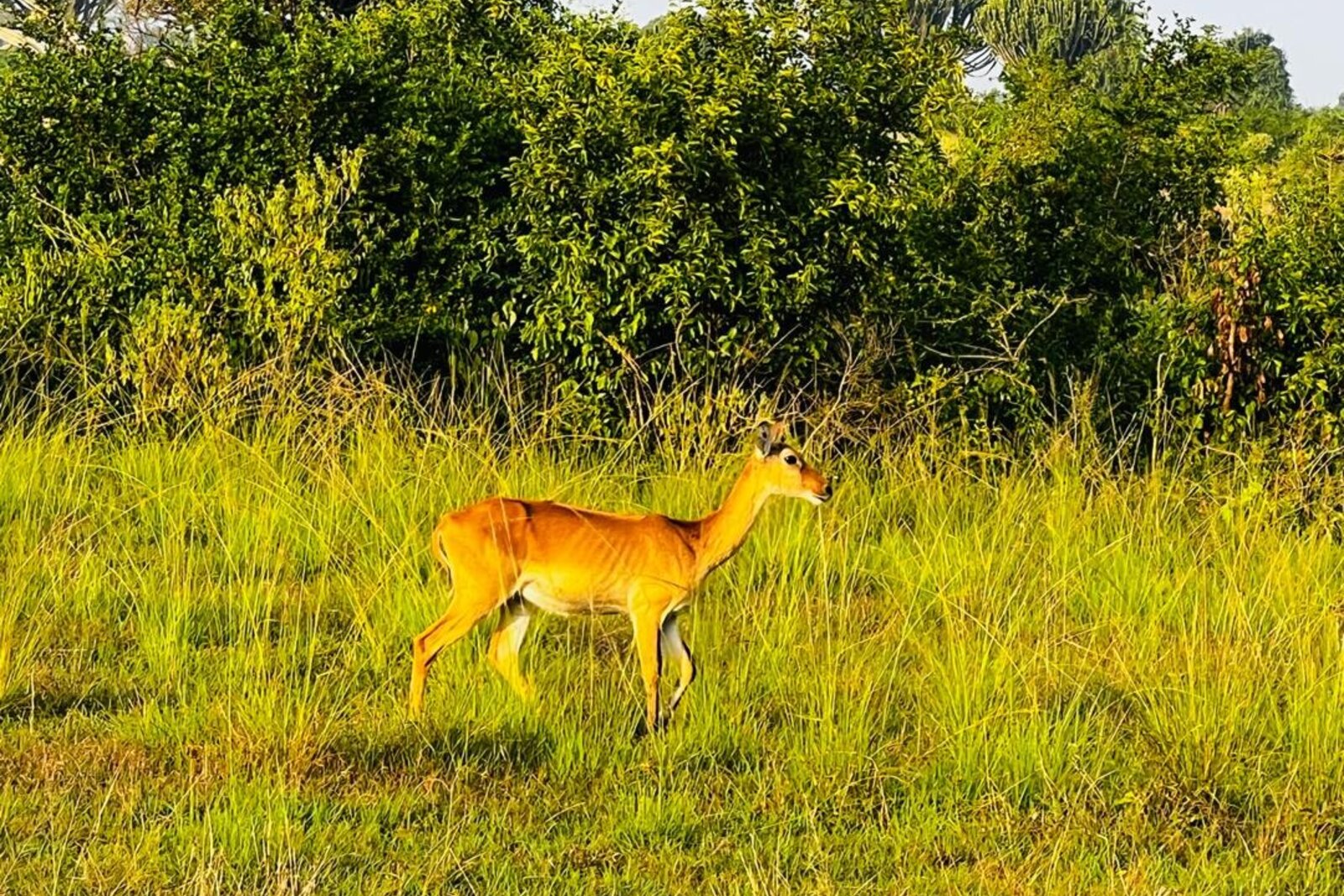
| Aspect | Bwindi (Uganda) | Volcanoes (Rwanda) |
|---|---|---|
| Location | South-western Uganda | North-western Rwanda (Virunga Massif) |
| Habitat | Ancient, dense 'impenetrable' rainforest | Bamboo & montane forest on volcano slopes |
| Gorilla Permit | USD $800 | USD $1,500 |
| Habituated Groups | 20+ across four sectors | ~12 families |
| Gorilla Population | Almost half of all mountain gorillas on Earth | Rwandan side of the shared Virunga population |
| Trek Difficulty | Steep, muddy, dense — genuinely adventurous | Often gentler terrain, but real altitude (2,500 m+) |
| Access | Long scenic drive or flight from Entebbe (or drive from Kigali) | Just 2–3 hours from Kigali airport |
| Special Option | 4-hour gorilla habituation experience (Rushaga) | Golden monkeys; Dian Fossey tomb hike |
| Beyond Gorillas | Full safari — chimps, tree-climbing lions, Big Game, hippos | Compact circuit — Akagera, Nyungwe, Lake Kivu |
| Lodges | Excellent value; Bwindi Lodge & growing range | World-class luxury — Bisate, Singita, Virunga Lodge |
| Scenery | Deep misty ancient rainforest; Lake Bunyonyi nearby | Dramatic volcanoes, tea fields & crater lakes |
| Best Time | Dry seasons Jun–Sep & Dec–Feb | Dry seasons Jun–Sep & Dec–Feb |
| Best For | Value, adventure, a full safari country | Accessibility, luxury, short trips, effortless logistics |
| Verdict | Cheaper, wilder, more to do beyond gorillas | Easier, more luxurious, quicker to reach |
Which wins? Neither. Bwindi wins on permit cost ($800 vs $1,500), sheer gorilla numbers, adventurous trekking and a vast Ugandan safari beyond the gorillas. Volcanoes wins on accessibility, effortless logistics, golden monkeys and the world's finest gorilla lodges. Both deliver the identical, life-changing core encounter — so the ultimate answer, for those with the time, is to trek in both.
When to Go: Bwindi vs Volcanoes
Both parks share the same seasonal rhythm, as they sit close together in high, equatorial forest. The two dry seasons — June to September and December to February — are the prime windows: trails are firmer and less muddy, trekking is easier and photography is better. These are also the busiest periods, so permits (particularly Rwanda's limited allocation) must be booked well in advance.
The wetter seasons (March–May and October–November) bring heavier rain and muddier, more demanding trails, but also lush scenery, fewer visitors and, in Uganda especially, easier permit availability. The gorillas are present every month of the year — this is not a migration — so a well-planned trek succeeds whenever you go.
Because both parks peak in exactly the same window, they combine perfectly: a single dry-season trip can deliver a Volcanoes trek and a Bwindi trek back-to-back, or a gorilla trek timed to dovetail with the Great Migration on the plains of Kenya or Tanzania next door.
Why Book Your Gorilla Trek with Beyond Africa Safaris
We have spent decades crafting gorilla-trekking journeys across Uganda and Rwanda, and we know both parks intimately — every sector of Bwindi, from Buhoma to Rushaga and Nkuringo, and every lodge on the slopes of Rwanda's Volcanoes. Whether you want the wild adventure and value of Bwindi, the effortless luxury of Volcanoes, or a trek in both, we secure your permits early (they are strictly limited), match you to the right sector and gorilla family for your fitness, and handle every flight, transfer, border crossing and detail.
Many of our travellers don't choose between Bwindi and Volcanoes — they trek in both, or pair a single gorilla trek with a classic Kenyan or Tanzanian savanna safari for the ultimate forest-and-plains adventure. We time every leg to the dry-season peak, arrange porters and expert guides, and make the whole journey — including the notoriously precious permits — completely seamless.
And because we are African-owned and operated from Cape Town, you plan directly with the experts who live and breathe this continent — not a distant middleman. Get in touch, and let's build your perfect mountain gorilla adventure, in Bwindi, in Volcanoes, or across both.
Ready to Trek the Mountain Gorillas?
Whether it's the wild, affordable adventure of Bwindi, the accessible luxury of Volcanoes, or the ultimate do-both gorilla pilgrimage across Uganda and Rwanda, we'll build it perfectly — permits secured, every detail handled. Reach out now.