Key Takeaways
- Malaria-free advantage: The Eastern Cape is completely malaria-free — no prophylaxis, no side effects, safe for pregnant women, babies and young children. Kruger sits in a malaria-risk zone (year-round, peaking November–April), requiring antimalarial medication that typically costs $50–150 per person.
- Big Five in both: Both systems deliver reliable Big Five sightings. Kruger/Sabi Sand leads on predator density — the highest leopard sighting rate in Africa and excellent wild dog and lion prides. Eastern Cape leads on elephant and rhino intimacy, particularly Addo (600+ elephants) and Shamwari.
- Cost delta: Eastern Cape luxury lodges run $400–650 pp/night all-inclusive. Kruger ranges from $350 SANParks camps to $900+ ultra-luxury Sabi Sand lodges. Factor in malaria-drug savings (~$100/person), shorter transfers from Cape Town, and Eastern Cape often comes out more cost-effective for families.
- Cape Town connection: Eastern Cape reserves are 60–90 min from Port Elizabeth airport, which is a 75-min flight from Cape Town. Kruger's main gates are 4–5 hours by road from Johannesburg, or a 1-hour flight to KMIA/Skukuza.
- Family winner: The Eastern Cape is South Africa's premier family safari destination — malaria-free, most lodges accept all ages, drives are shorter, and the reserves pair naturally with the Garden Route and Cape Town.
- Year-round vs seasonal: The Eastern Cape's temperate climate makes it a year-round destination. Kruger's peak safari season is the dry winter (May–October); the wet summer brings denser vegetation and higher malaria risk.
- Best for predators: If leopard, wild dog and large lion-pride sightings are your priority, Kruger's private concessions (Sabi Sand, Timbavati, Klaserie) are unmatched in Southern Africa.
TL;DR: Eastern Cape = malaria-free, family-first, close to Cape Town, excellent Big Five in intimate reserves like Shamwari and Kwandwe, $400–650/night, year-round. Kruger/Greater Kruger = unrivalled wildlife density, legendary predators (Sabi Sand leopard, wild dog packs), vast wilderness, $350–900/night, peak May–October. Families with young children, malaria-averse travellers and Cape Town–based itineraries → Eastern Cape. Hardcore wildlife enthusiasts, predator photographers and Johannesburg-based travellers → Kruger. Many safari-goers combine both in a 10–14 day South Africa itinerary.
South Africa is the only country on Earth where you can choose between two genuinely world-class, completely independent Big Five safari systems — one in the subtropical lowveld of the northeast, the other in the temperate valley bushveld of the southeast — and the decision between them shapes your entire trip. Get it right and you'll have one of the great wildlife experiences of your life. Get it wrong and you'll spend weeks thinking about the one you should have booked.
This is not a question with a single correct answer. Eastern Cape safari vs Kruger is a question about you — your travel companions, your tolerance for malaria medication, where you're flying in from, what wildlife moments matter most to you, and how much time you have. We run private safaris in both systems and send guests to both regularly, so this comparison comes from operational experience, not armchair research. What follows is the honest, number-backed breakdown.
The Malaria Question: The Single Biggest Differentiator
If there is one factor that tips the Eastern Cape vs Kruger decision more than any other, it is malaria. The Eastern Cape's private game reserves — Shamwari, Kwandwe, Pumba, Amakhala, Kariega, Lalibela, Sibuya, and the greater Addo area — sit entirely outside South Africa's malaria zone. There is zero malaria risk, which means:
- No antimalarial prophylaxis required — no Malarone, no doxycycline, no mefloquine
- No side effects (Malarone can cause nausea and vivid dreams; doxycycline increases sun sensitivity; mefloquine carries neuropsychiatric warnings)
- Safe for pregnant women and nursing mothers, who are generally advised against travel to malaria zones
- Safe for infants and toddlers, for whom antimalarial dosing is more complex and concerning for many parents
- No need to continue medication for 1–4 weeks after your trip (depending on the drug)
- A savings of roughly $50–150 per person on medication costs alone
Kruger National Park and its surrounding private reserves (Sabi Sand, Timbavati, Klaserie, Manyeleti, Thornybush, Balule) sit in Limpopo and Mpumalanga provinces, both of which are classified as malaria-risk areas. The risk is present year-round but peaks during the wet summer months from November to April, when mosquito populations explode. The dry winter season (May–September) carries lower risk, and many seasoned safari travellers accept that reduced risk without undue worry — but the medical advice remains: prophylaxis is recommended for all visitors to the greater Kruger area.
For families with children under six, pregnant women, or travellers who simply don't want to deal with antimalarial medication, this single factor often makes the decision for them. The Eastern Cape removes the issue entirely.
| Factor | Eastern Cape | Kruger / Greater Kruger |
|---|---|---|
| Malaria status | Malaria-free ✓ | Malaria risk zone |
| Prophylaxis needed | None | Recommended (Malarone/doxycycline) |
| Medication cost saved | $50–150 per person | — |
| Big Five | Yes — all major reserves | Yes — higher predator density |
| Luxury lodge cost | $400–650 pp/night | $350–900+ pp/night |
| Nearest airport (from CPT) | PE/PLZ — 75 min flight | KMIA/MQP — 2 hr flight |
| Nearest airport (from JNB) | PE/PLZ — 90 min flight | KMIA/MQP — 1 hr flight / 4-5 hr drive |
| Transfer to lodge | 60–90 min from PE airport | Direct charter, or 30–90 min from KMIA |
| Best season | Year-round | May–October (dry season) |
| Children policy | Most lodges: all ages | Many lodges: 6+ or 12+ |
| Pairs best with | Cape Town, Garden Route | Johannesburg, Panorama Route |
Big Five & Wildlife Density: Where the Sightings Stack Up
Both the Eastern Cape and Kruger deliver the Big Five — lion, leopard, elephant, rhino and buffalo — but the character of the wildlife experience is markedly different.
Eastern Cape Wildlife
The Eastern Cape's private reserves are relatively compact — Shamwari spans 25,000 hectares, Kwandwe 22,000, Pumba 6,000, Amakhala 7,500, Kariega 10,000 — but they are intensively managed and stocked. Because the reserves are smaller and guest numbers are low (typically 20–40 guests across an entire reserve), game drives feel intimate and exclusive. You are unlikely to share a sighting with more than one or two other vehicles, and your guide will know individual animals by name.
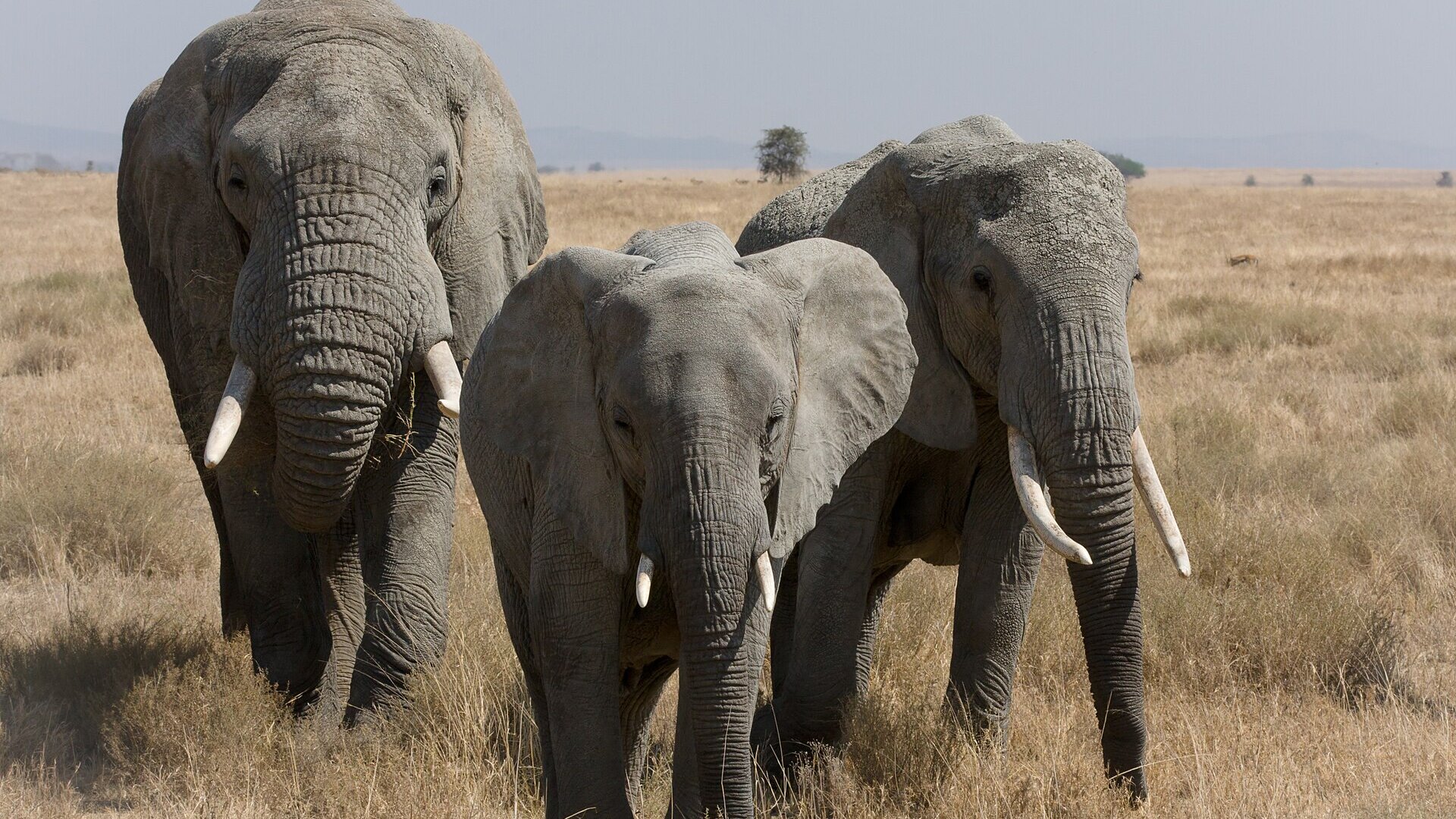
Addo Elephant National Park is the anchor of Eastern Cape wildlife. Home to over 600 elephants, it is one of the densest elephant populations in Africa, and the park's waterhole game-viewing is genuinely spectacular — 50 or 60 elephants drinking at once is not unusual. Addo has expanded to Big Five status and also hosts the unique flightless dung beetle, found nowhere else.
The Eastern Cape's lion and leopard populations are smaller and more managed than Kruger's. You will see lion on most two-night stays at Shamwari, Kwandwe or Pumba, and leopard sightings have improved significantly in recent years — particularly at Kwandwe and Kariega — but the predator density does not match the Greater Kruger's private concessions. Pumba famously hosts free-roaming white lions, a genuine rarity.
Kruger & Greater Kruger Wildlife
Kruger National Park and its adjacent private reserves cover nearly two million hectares — roughly the size of Wales or Israel. The park alone hosts approximately 1,500 lions, 1,000 leopards, 2,500 buffalo herds, 17,000 elephants and around 5,000 rhino (the exact rhino figure is no longer published for security reasons). The Greater Kruger's wildlife density is among the highest of any savannah ecosystem on Earth.
Sabi Sand Game Reserve is widely considered the best place in Africa for leopard sightings. Its leopards have been habituated to vehicles over decades, and sightings of 2–3 different leopards per day are not unusual during peak season. Wild dog packs roam the northern concessions (Timbavati, Klaserie), and large lion prides — 15 to 20 strong — are a regular feature of the central and southern Kruger.
The trade-off: Kruger's public roads can be busy, especially during South African school holidays, and popular sighting spots attract clusters of 10–15 vehicles. The private concessions (Sabi Sand, Timbavati, Klaserie, Thornybush) solve this with limited vehicle numbers and off-road driving privileges, but they come at a premium price.
Cost Comparison: The Real Numbers for 2026
Cost is where the Eastern Cape vs Kruger decision gets nuanced, because the headline rates don't tell the full story.
Eastern Cape Costs
- Luxury all-inclusive lodges (Shamwari, Kwandwe, Kariega, Pumba): $400–650 per person per night sharing, including meals, drinks, two game drives daily, and often a guided walk
- Mid-range lodges (Amakhala, Lalibela, Sibuya): $280–400 pp/night all-inclusive
- Addo self-drive + SANParks camp: from $80–120 per couple per night for a self-catering chalet, plus park entry of ~R460/adult
- No malaria prophylaxis cost: save $50–150 per person
- Transfer from PE airport: typically included or $50–100 one way
- Flight CPT→PE: from R800–1,500 ($45–85) one way
Kruger / Greater Kruger Costs
- Ultra-luxury Sabi Sand lodges (Londolozi, Singita, &Beyond Kirkman's/Exeter): $700–1,500+ pp/night all-inclusive
- Premium private lodges (Lion Sands, Savanna, Dulini, Chitwa Chitwa): $500–800 pp/night
- Mid-range private reserves (Thornybush, Kapama, Klaserie camps): $350–550 pp/night
- SANParks rest camps (Kruger self-drive): from $60–150 per couple per night for a bungalow, plus daily conservation fee ~R460/adult
- Malaria prophylaxis: ~$50–150 per person (Malarone for 7–10 days)
- Flight JNB→KMIA/Skukuza: from R1,800–3,500 ($100–195) one way; charter flights to private lodges $300–600 pp
When you compare apples to apples — a three-night luxury Big Five safari with all-inclusive meals, drinks, game drives, transfers and flights — the Eastern Cape typically comes in $500–1,500 cheaper per couple than an equivalent Sabi Sand experience, once you factor in shorter flights from Cape Town, no malaria medication, and the generally lower lodge rates. Against Kruger's SANParks camps (self-drive), however, Kruger wins on pure budget.
Accessibility & Travel Times
Where you are flying in from fundamentally shapes which system makes logistical sense.
From Cape Town
The Eastern Cape wins decisively. Cape Town (CPT) to Port Elizabeth (PLZ) is a 75-minute flight, with multiple daily departures on FlySafair, Airlink and CemAir. From PE airport, most reserves (Shamwari, Amakhala, Addo, Pumba) are 60–90 minutes by road. You can leave your Cape Town hotel after breakfast and be on an afternoon game drive the same day.
Kruger from Cape Town requires either a 2-hour flight to Kruger Mpumalanga International Airport (KMIA) or to Hoedspruit (HDS), or a connecting flight via Johannesburg. The total door-to-lodge time is typically 5–7 hours.
From Johannesburg
Kruger wins here. Johannesburg to KMIA is a 1-hour flight, and many private lodges offer direct charter flights (45 minutes) or road transfers (4–5 hours via the N4 or N12). The well-maintained Panorama Route (Blyde River Canyon, God's Window, Bourke's Luck Potholes) makes the drive a destination in itself.
Johannesburg to Port Elizabeth is a 90-minute flight, so the Eastern Cape is still accessible from JNB — it just takes slightly longer and doesn't pair as naturally with the Johannesburg–Mpumalanga touring corridor.
Combining with Other Destinations
Eastern Cape + Cape Town + Garden Route is the classic Cape-and-safari combination — fly into Cape Town, spend 3–4 days in the city and Winelands, drive or fly to the Eastern Cape for 2–3 nights of Big Five, then continue along the Garden Route. This is comfortably the most popular itinerary for international visitors, particularly families.
Kruger + Johannesburg + Victoria Falls is the classic northern circuit — fly into Johannesburg, transfer to Kruger or Sabi Sand for 3–4 nights, then fly north to Victoria Falls for 2 nights. This is the power combination for wildlife-focused travellers.
Seasons & Best Time to Visit
Season matters more for Kruger than for the Eastern Cape.
Eastern Cape: Year-Round
The Eastern Cape's temperate coastal climate means comfortable safari temperatures in every month. Winter (June–August) days are mild and clear (15–22°C), perfect for game viewing as animals congregate around water sources. Summer (December–February) brings warmer temperatures (25–35°C) and occasional afternoon thunderstorms, but the bush is green and birdlife peaks. There is no season in which the Eastern Cape is a bad choice — it delivers consistently all year.
Kruger: Dry Season Peak (May–October)
Kruger's dry winter season (May–October) is universally regarded as the best time for game viewing. The bush thins out, water sources shrink, and animals concentrate along rivers and around waterholes, making sightings easier and more dramatic. Temperatures are pleasant (daytime 22–28°C, mornings can dip to 5–10°C). This is also when malaria risk is at its lowest.
The wet summer (November–March) brings lush, green landscapes and spectacular birdlife (including migrant species), but the dense foliage makes spotting game harder, and temperatures soar above 35°C. This is also when malaria risk peaks. Many visitors avoid Kruger in the wet season for this dual reason.
Family-Friendliness: A Clear Winner
For families with children, the Eastern Cape is the clear winner. The combination of malaria-free status, all-ages lodge policies, shorter drives, and the ability to combine with Cape Town and the Garden Route makes it South Africa's premier family safari destination.
Most Eastern Cape lodges accept children of all ages:
- Shamwari: Born Free Centre for big cats, Explorer Camp, children's programme from age 4, dedicated family lodges
- Kariega: All ages welcome, dedicated family river lodge, children's activities, canoeing, fishing
- Pumba: All ages, children's programme, babysitting, family suites
- Amakhala: Family-friendly tented camps and lodges, children from all ages at selected properties
- Kwandwe: All ages at the private villas (Uplands Homestead, Melton Manor), children's safari programme
In the Greater Kruger, many luxury lodges have age restrictions — typically 6+, 12+ or even 16+ — because unfenced camps and open game-drive vehicles pose genuine safety risks for very young children. The lodges that do accept younger children (Thornybush, some Kapama properties, Lion Sands Ivory Lodge family suite) tend to be the exception rather than the rule in the ultra-luxury tier.
The shorter total travel time from Cape Town (75-minute flight + 60-minute transfer vs 2-hour flight + 90-minute transfer for Kruger) also makes a meaningful difference for families with young children — less time in transit means happier kids and more time in the bush.
The Verdict: Which is Better For You?
Choose Eastern Cape If…
- You're travelling with children under 6
- Anyone in your group is pregnant or breastfeeding
- You want to avoid malaria prophylaxis entirely
- Your trip is Cape Town–based and you want a 2–3 night safari add-on
- You're combining with the Garden Route
- You prioritise intimate, exclusive game viewing with very few other vehicles
- You want year-round reliability without worrying about seasonal windows
- Elephants and rhino are your top wildlife priorities
Choose Kruger If…
- You're a serious wildlife enthusiast or photographer
- Leopard, wild dog and big lion prides are your priority
- You want the vast, unfenced wilderness experience
- You're already in Johannesburg and want the shortest transfer
- You're combining with Victoria Falls or Mozambique
- You want the widest range of budget options (SANParks self-drive to ultra-luxury)
- You're visiting during May–September (peak dry season)
- You want night drives and walking safaris in vast private concessions
The Best of Both Worlds
Many of our guests choose both. A 10–14 day South Africa itinerary that starts with Cape Town, adds 2–3 nights in the Eastern Cape, continues along the Garden Route, then flies to Kruger or Sabi Sand for 3–4 nights of predator-focused game viewing is arguably the ultimate South African safari experience. You get the malaria-free family ease of the Eastern Cape and the predator density of the Greater Kruger, bookended by one of the world's most beautiful cities.
For more on structuring a multi-region South Africa trip, see our South Africa private tours guide, our luxury safari South Africa guide for 2026, and the best 5-star game lodges in the Eastern Cape for detailed lodge recommendations. If Kruger's private concessions interest you, our Kruger National Park day safari guide covers the essentials, and the family safari South Africa guide maps out the best child-friendly options in both systems. For a broader look at how the Eastern Cape fits into malaria-free safari options nationwide, see our malaria-free safari South Africa guide.
Plan Your South Africa Safari — Eastern Cape, Kruger or Both
Beyond Africa Safaris builds private safaris across both the Eastern Cape and Greater Kruger — and we'll help you decide which is right for your group, your timeline and your budget. Whether it's a malaria-free family escape at Shamwari, a predator-photography immersion in Sabi Sand, or a 14-day itinerary that combines both, we'll design it around you.