Key Takeaways — Botswana Family Safari
- Africa's most exclusive wilderness safari — remote fly-in camps, low tourist density, pristine ecosystems where families experience the bush as it was centuries ago
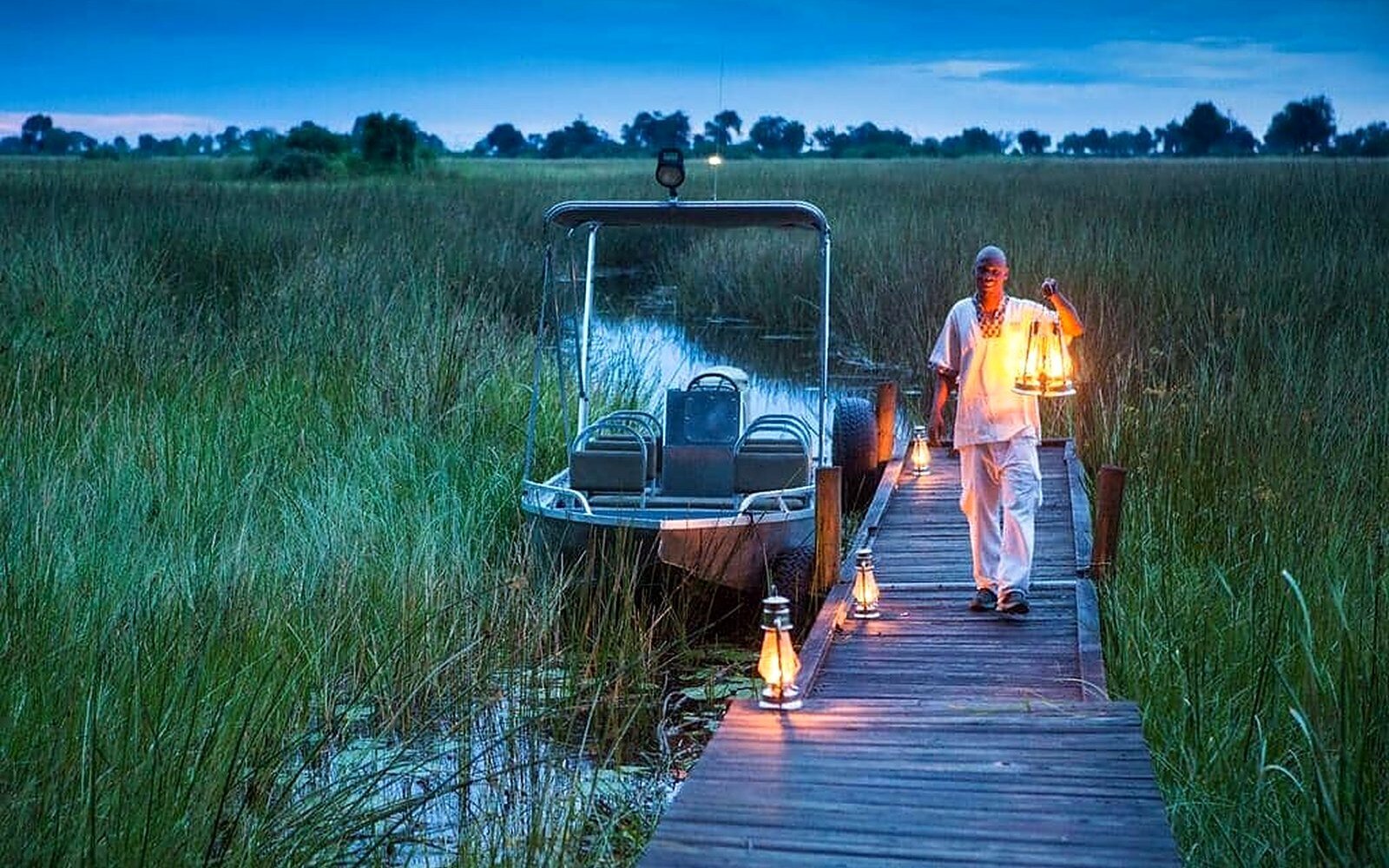
- Water-based magic in the Okavango Delta — glide through crystal channels in traditional mokoro canoes, a peaceful safari experience unlike anywhere else
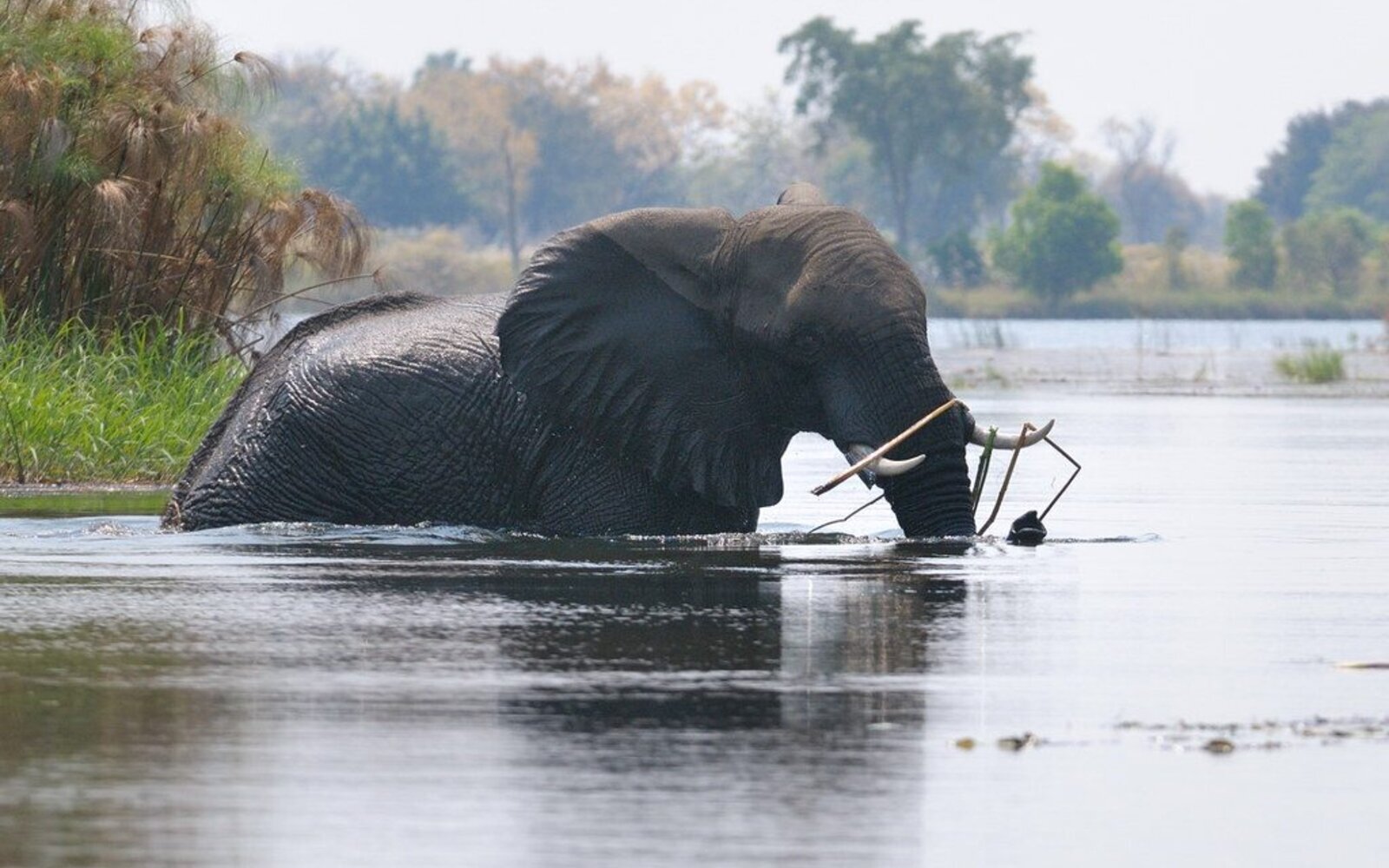
- Elephant paradise at Chobe — witness thousands of elephants (the densest population on Earth) drinking at Chobe riverfront from boat and land safaris
- Premium = expensive — Botswana is Africa's priciest safari destination (low-volume, high-value conservation model), but the experience justifies the investment
- Combine with Victoria Falls — Chobe is 1 hour from the Falls, making Botswana + Vic Falls one of the continent's best family safari combinations
Why Botswana Is Special for Family Safaris
Botswana doesn't compete on price or accessibility — it competes on pristine wilderness, low tourist density, and exclusive safari experiences your family won't find anywhere else. Where Kenya offers the Great Migration's drama and South Africa provides malaria-free convenience, Botswana delivers something rarer: remoteness, silence, and the feeling that your family is exploring the African wild as it existed before tourism arrived.
The country's conservation model is "low-volume, high-value" — fewer lodges, higher park fees, strict environmental standards. This means you'll rarely see another vehicle at game sightings, children can walk the bush with armed guides learning to track leopards, and your family glides through the Okavango Delta in traditional mokoro canoes with only the sound of water, reeds, and bird calls.
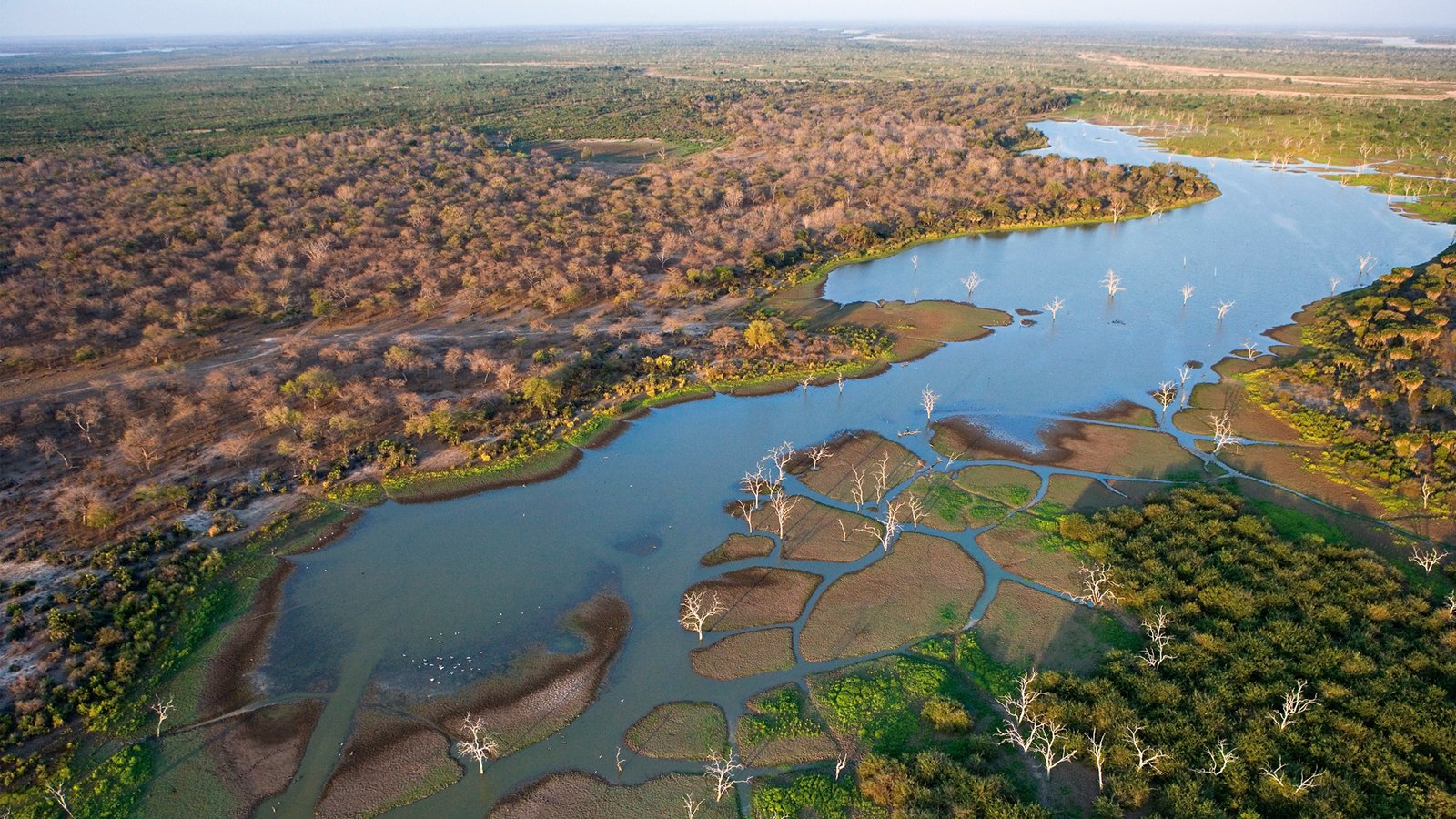
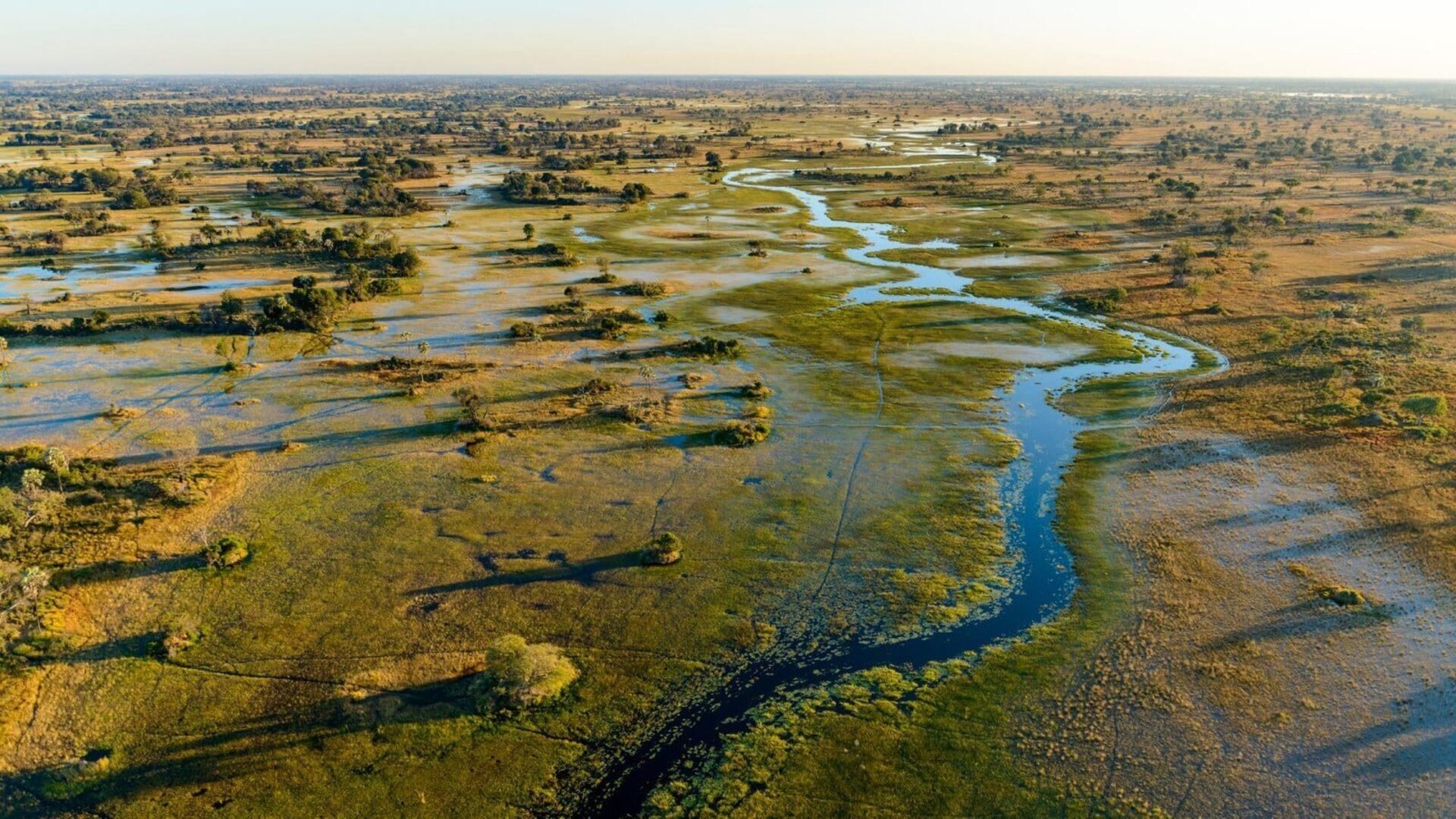
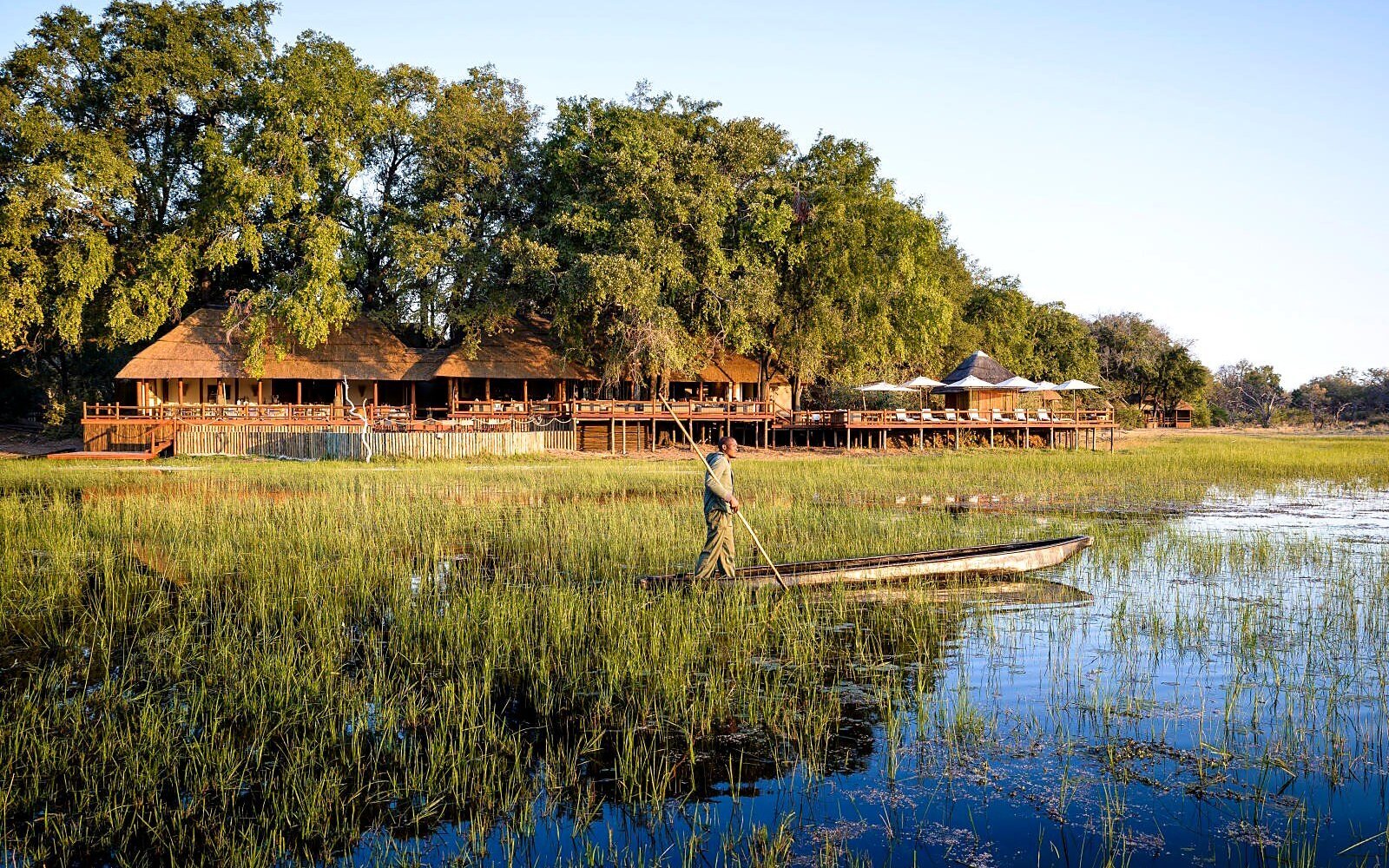
Botswana excels at water-based family safaris. The Okavango Delta — the world's largest inland delta — floods from May to October, creating thousands of channels, lagoons, and islands. Families pole through these waterways in mokoro (dugout canoes), spotting elephants crossing channels, hippos wallowing in lagoons, and sitatunga antelope (rare, semi-aquatic) feeding in reed beds. It's peaceful, magical, and completely different from vehicle-based game drives.
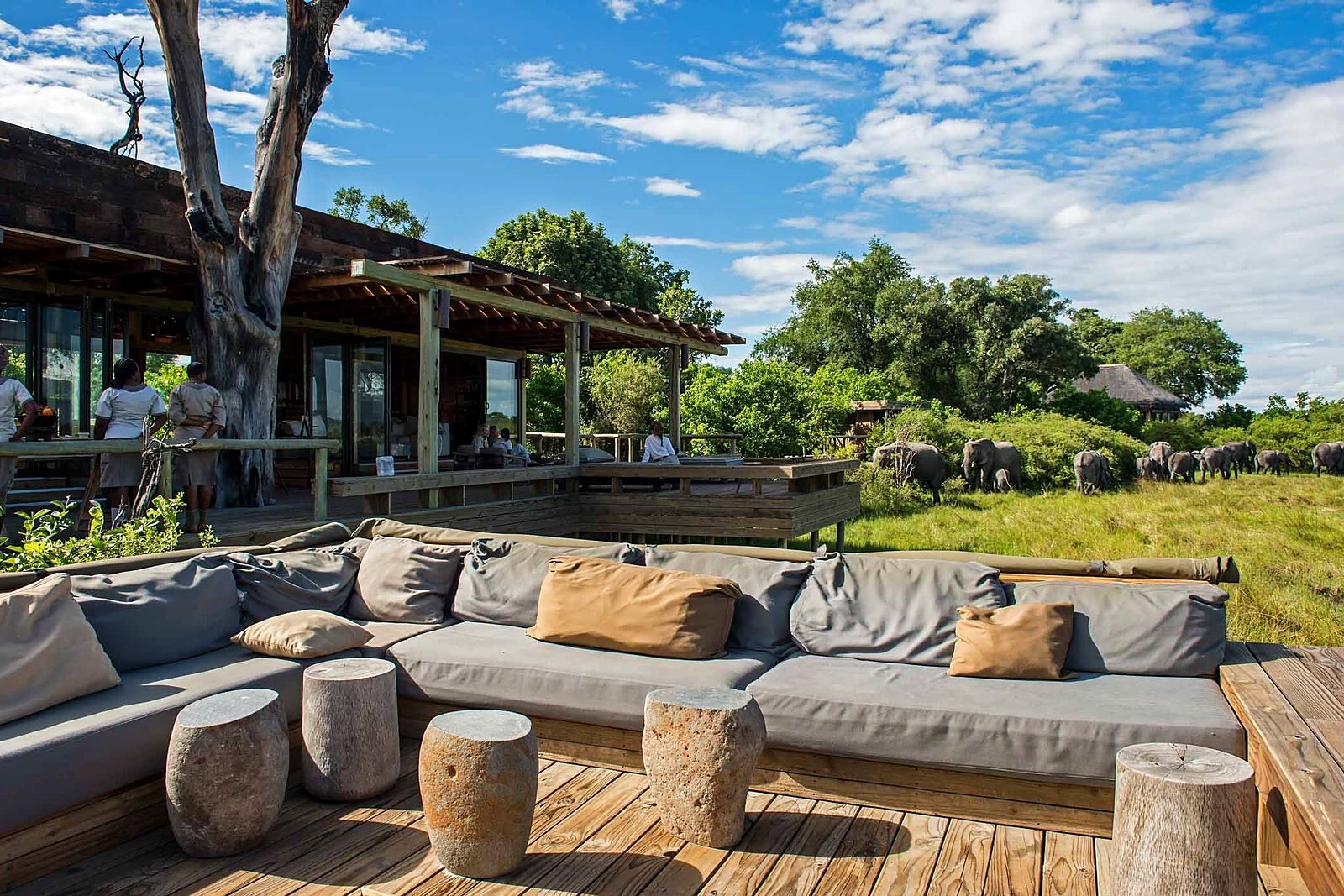
Chobe National Park has the highest concentration of elephants on Earth — estimates exceed 120,000 animals. During dry season (May–October), tens of thousands gather at the Chobe riverfront to drink, creating one of Africa's most spectacular wildlife scenes. Families watch from boat safaris (perfect for younger kids) and land game drives.
Okavango Delta — Water-Based Family Safari
The Okavango Delta is one of Africa's Seven Natural Wonders and the centrepiece of any Botswana family safari. Unlike most rivers that flow to the ocean, the Okavango flows inland from Angola into the Kalahari Desert, creating a vast wetland oasis (15,000 square kilometres at peak flood) that supports extraordinary wildlife.
The Delta floods between May and October (peak June–August), fed by Angola's rainy season. Permanent channels flow year-round, but seasonal floodwaters transform dry islands into aquatic wonderlands accessible only by mokoro or boat.
Mokoro Safaris — The Delta's Signature Experience
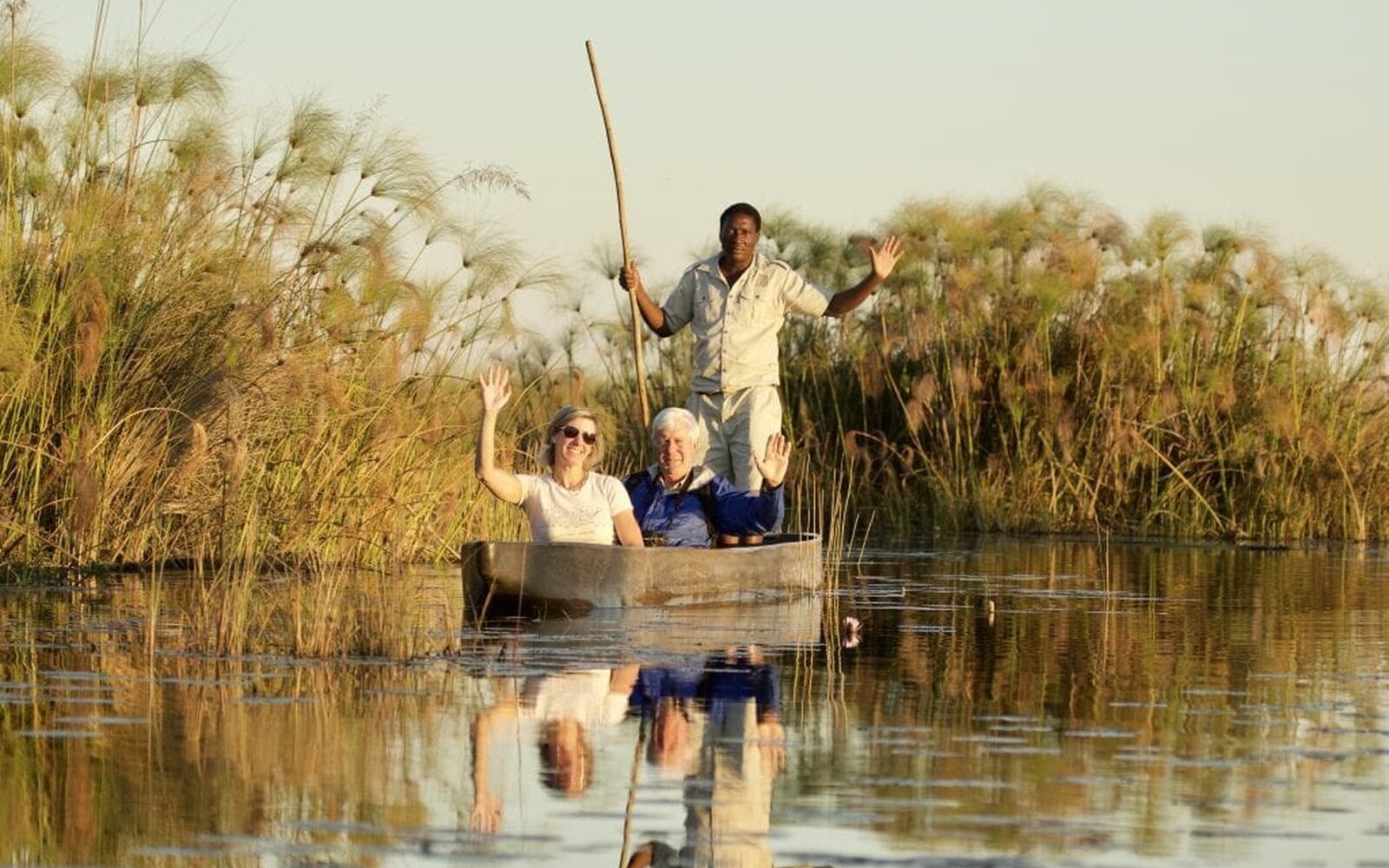
A mokoro is a traditional dugout canoe poled by an expert guide (most are from local Bayei or Hambukushu communities who've navigated these channels for generations). Families sit low in the mokoro — typically 2 adults and 1–2 small children per canoe — gliding silently through reed-lined channels barely wide enough for the craft.
It's completely different from vehicle-based game viewing. You move at walking pace, low to the water, hearing every sound — fish jumping, frogs calling, reeds rustling, elephants rumbling in the distance. Children spot tiny reed frogs, water lilies, kingfishers darting overhead, and if you're lucky, a lechwe antelope leaping through the shallows or a hippo surfacing nearby (guides keep a safe distance).
Mokoro safaris work brilliantly for families because they're peaceful and engaging (no engine noise, lots to see at close range) and flexible (trips last 1–3 hours, easily adjusted for children's attention spans). Most camps offer morning and afternoon mokoro excursions, often combined with island walks where guides teach children to identify animal tracks, spot birds, and understand the Delta's ecosystem.
Top Family Lodges in the Okavango Delta
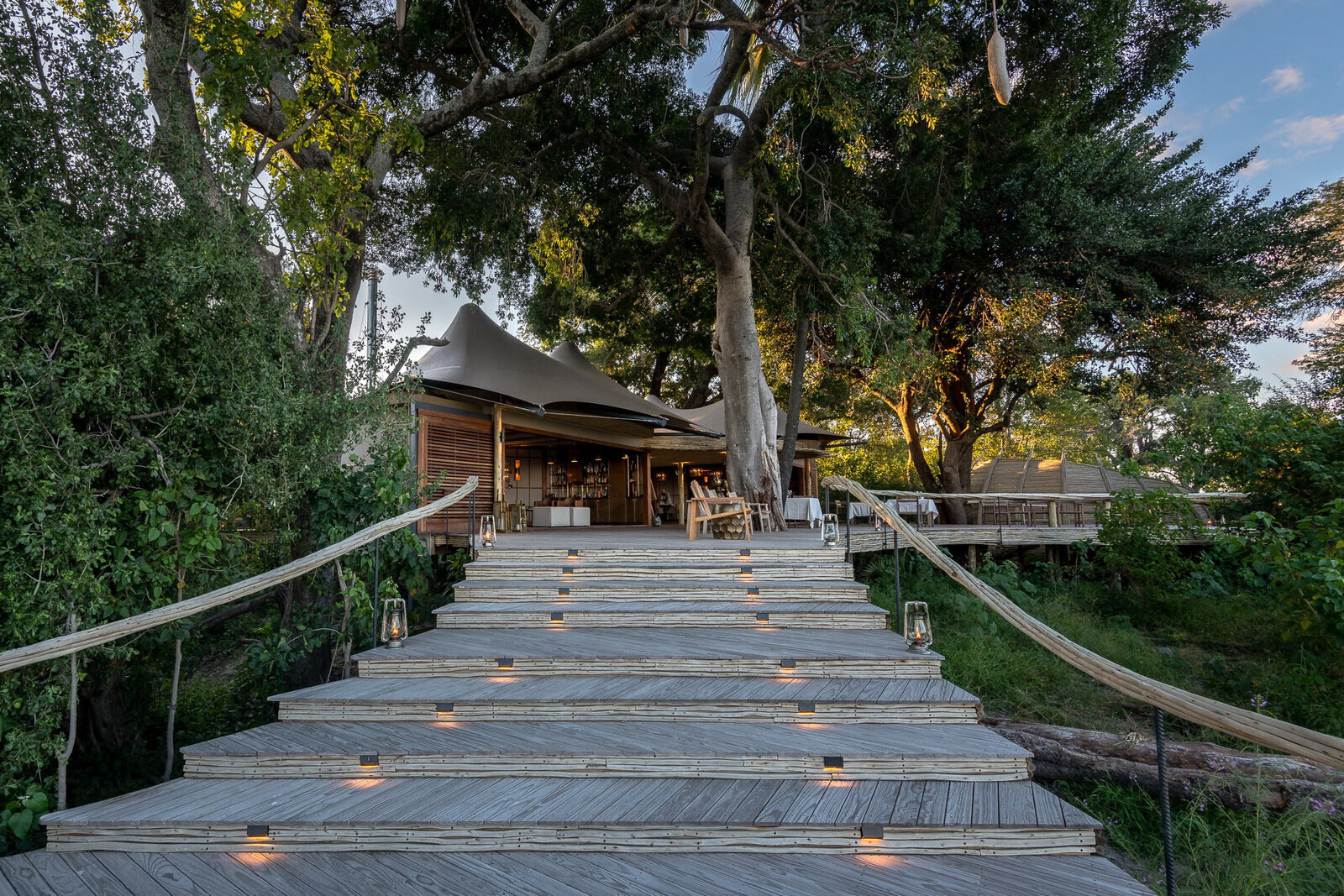
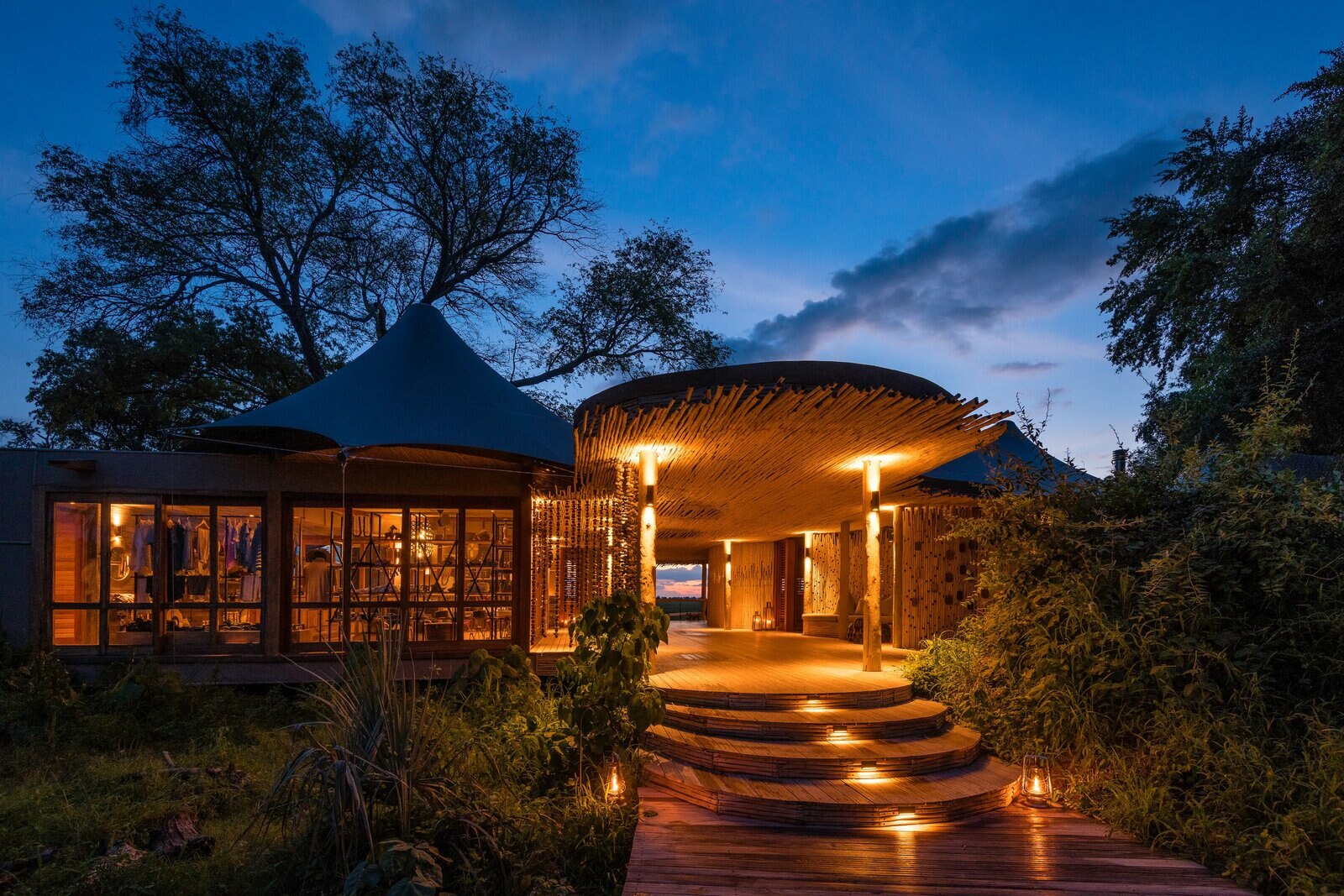
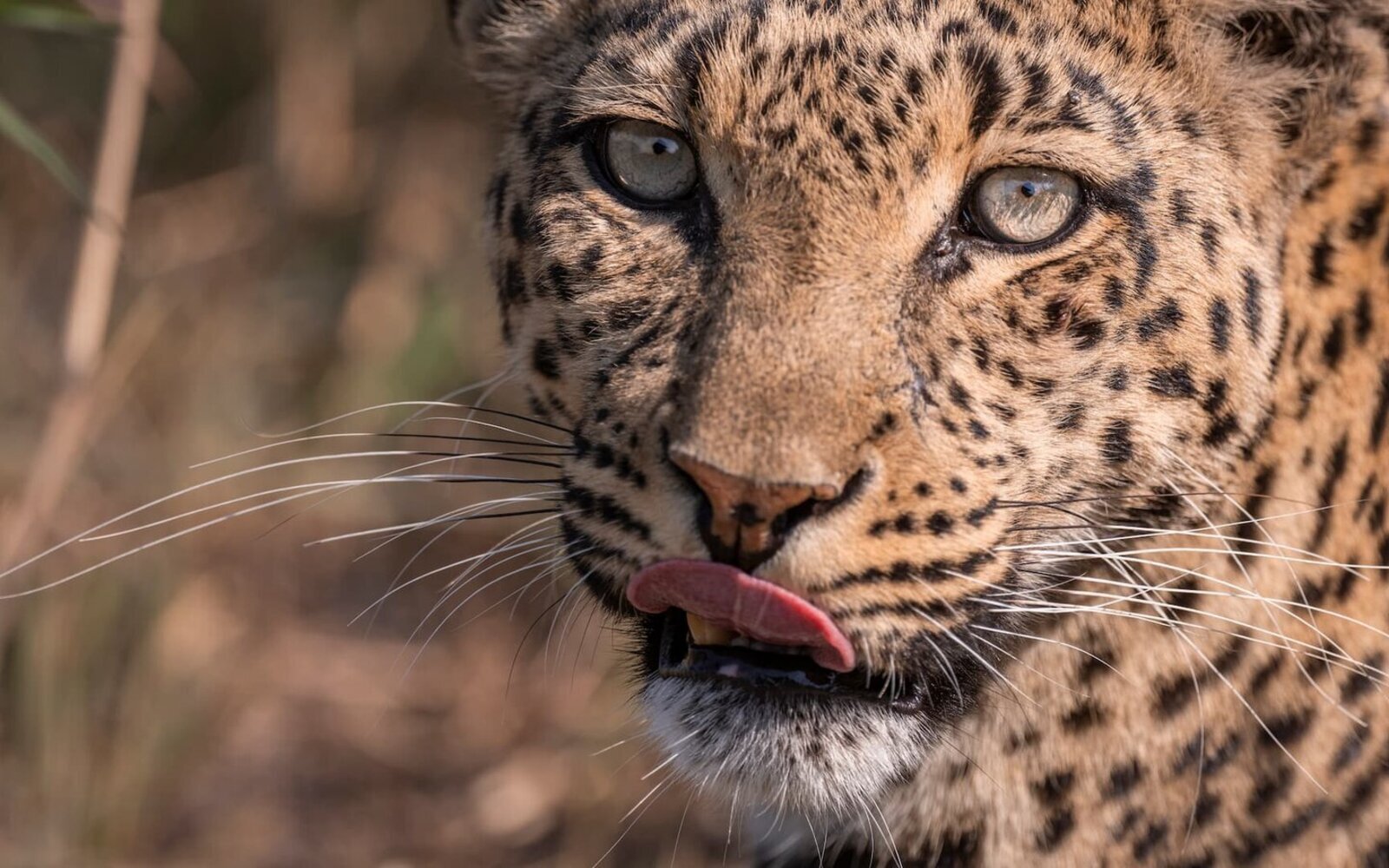
Mombo Camp (Wilderness Safaris) — Often rated Africa's best safari camp, Mombo sits on Chief's Island in the Moremi Game Reserve section of the Delta. It offers family tents (interconnecting rooms), private game drives, mokoro excursions, and exceptional wildlife (this area has the highest predator density in the Delta — lions, leopards, wild dogs, cheetahs). Expensive but absolutely spectacular. Children ages 6+ welcome.
Chief's Camp (Wilderness Safaris) — Also on Chief's Island, Chief's provides a slightly more relaxed (and marginally less expensive) alternative to Mombo. Family tents overlook floodplains where elephants, buffaloes, and antelopes graze. Excellent mix of water and land game drives. Children 6+ welcome.
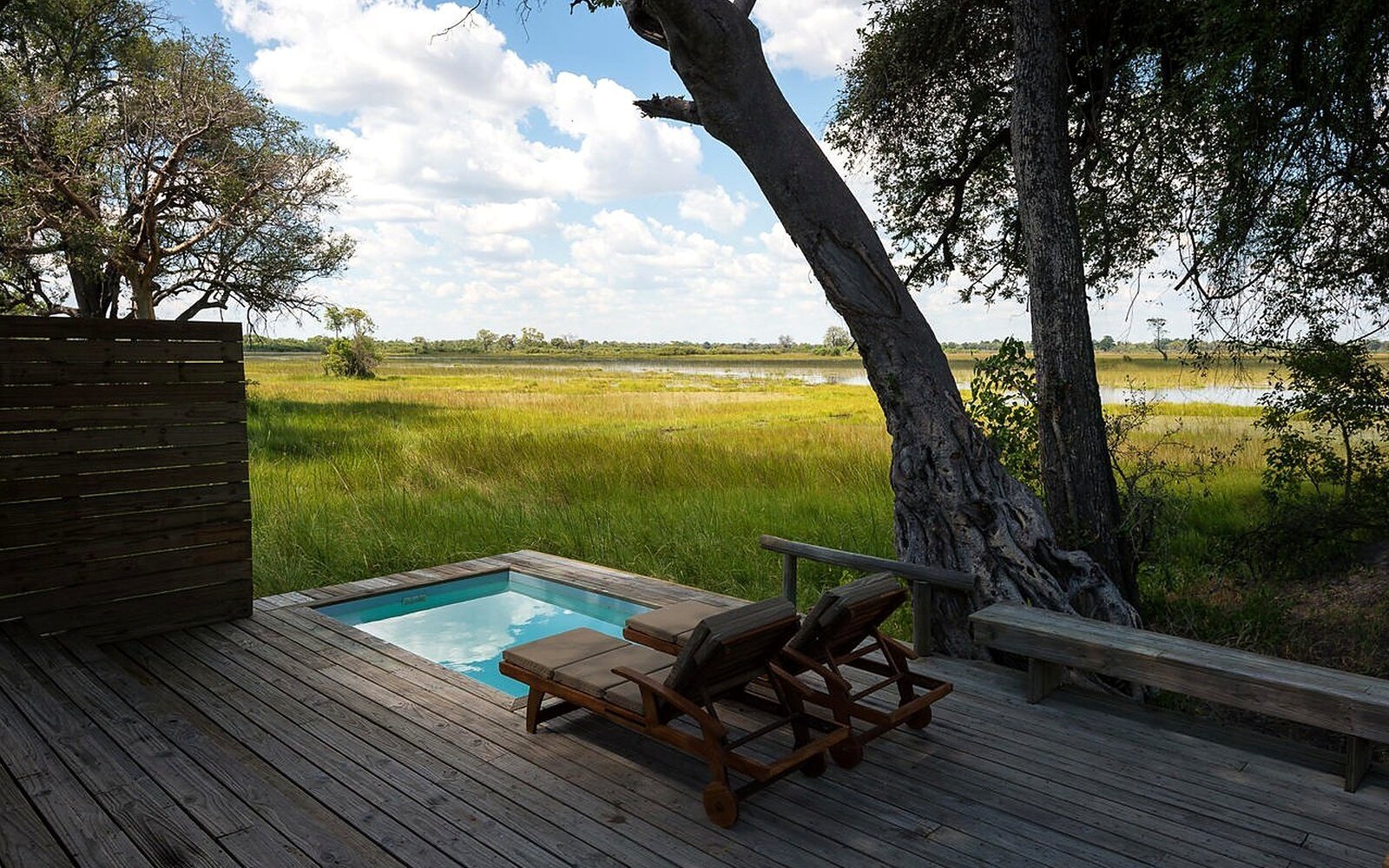
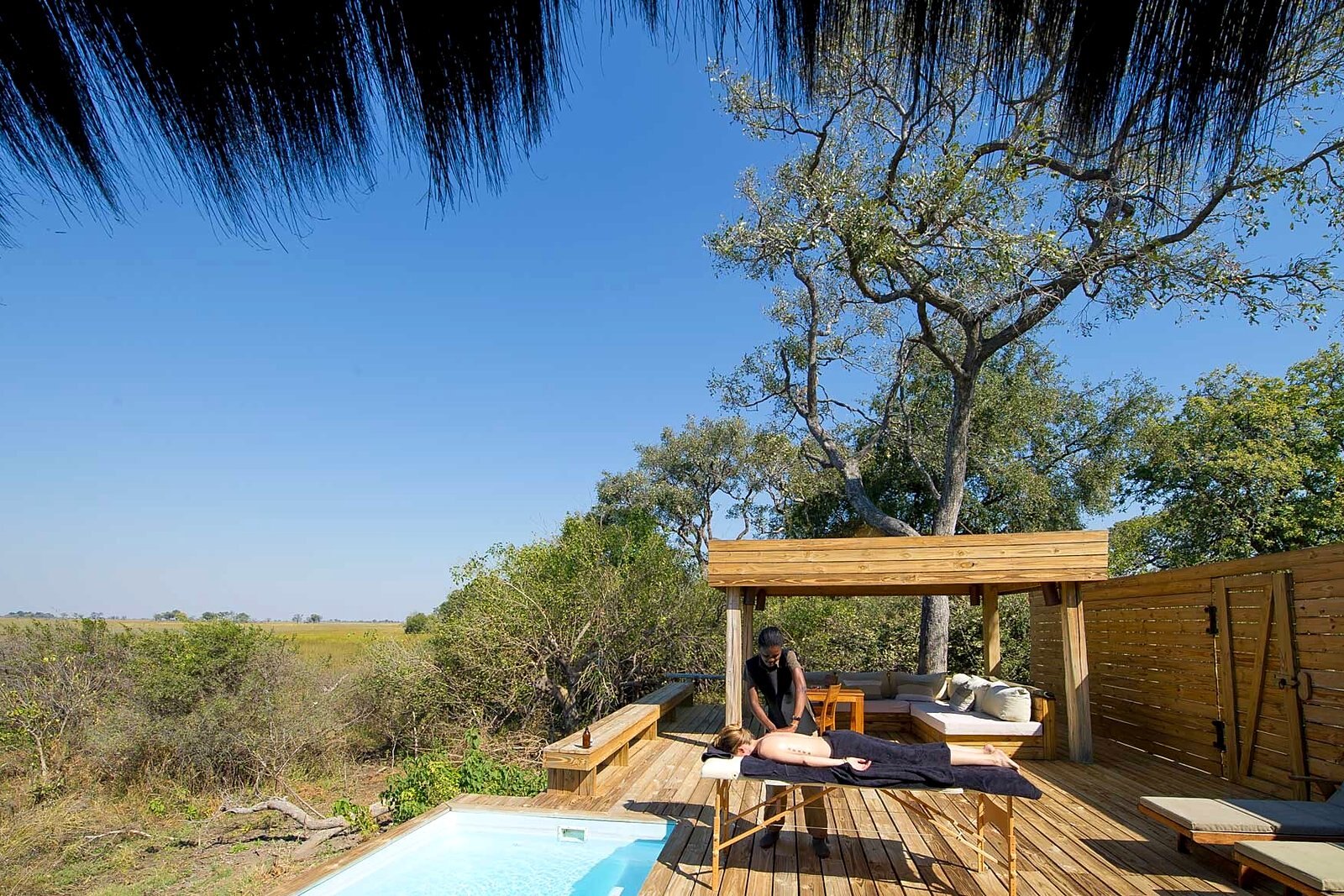
Vumbura Plains (Wilderness Safaris) — Northern Delta camp with family rooms, swimming pool (rare in the Delta), tree-deck dining, and a good balance of water activities (mokoro, boat) and land game drives. Less exclusive than Mombo/Chief's but still excellent wildlife. Children 6+ welcome.
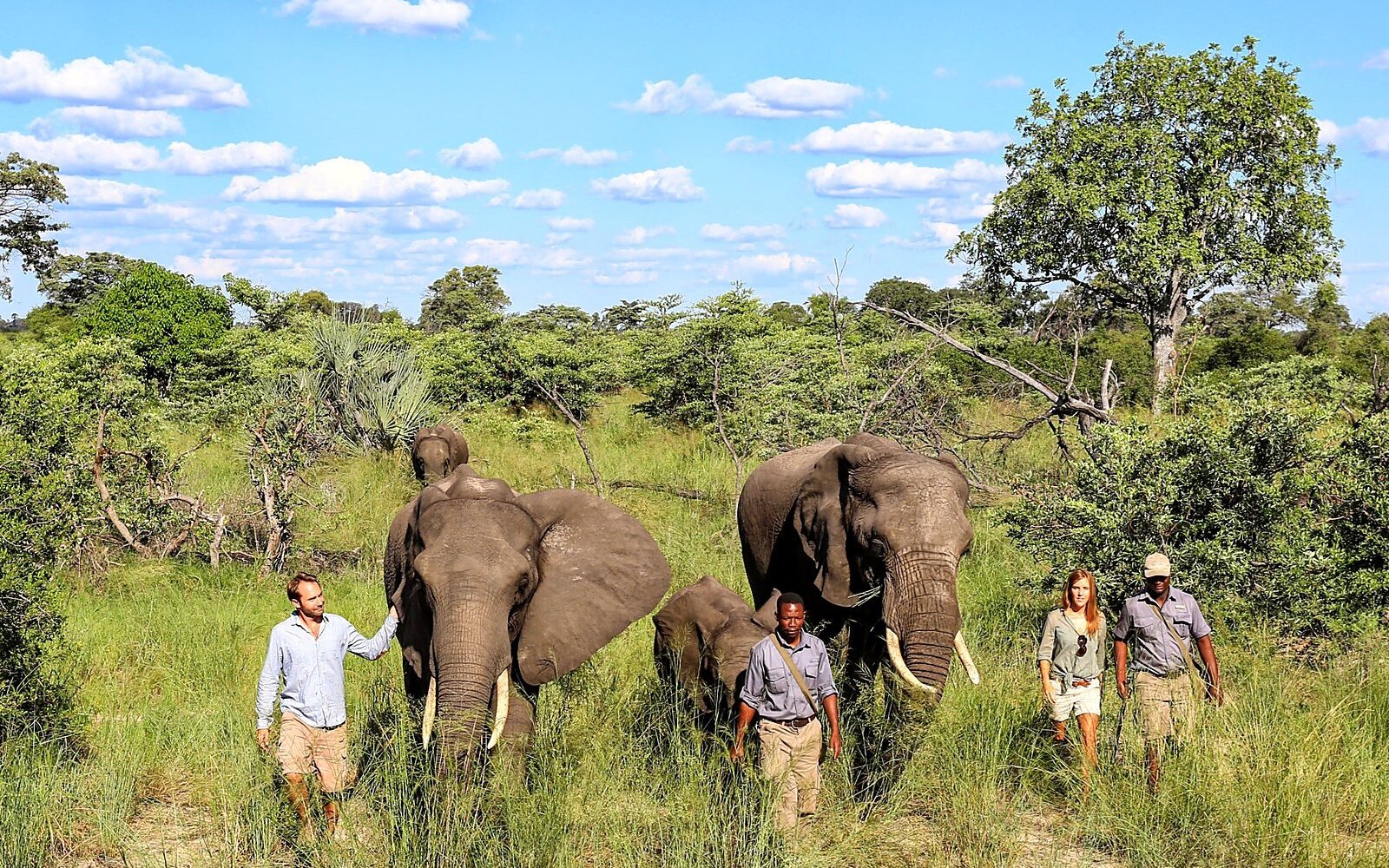
Abu Camp (Wilderness Safaris) — Famous for its resident elephants (rescued/habituated), Abu offers unique elephant interactions (walking with elephants, learning about their behaviour) alongside traditional game drives and mokoro. Perfect for elephant-obsessed kids. Family suites available. Children 6+ welcome.
Exploring Family Safari Beyond Botswana?
Botswana's wilderness is unmatched, but Africa offers diverse family experiences. South Africa provides malaria-free Big Five reserves, Kenya the Great Migration's drama, Tanzania the Serengeti–Ngorongoro–Zanzibar combination. Explore our complete family safari guides:
Chobe National Park — Elephant Paradise
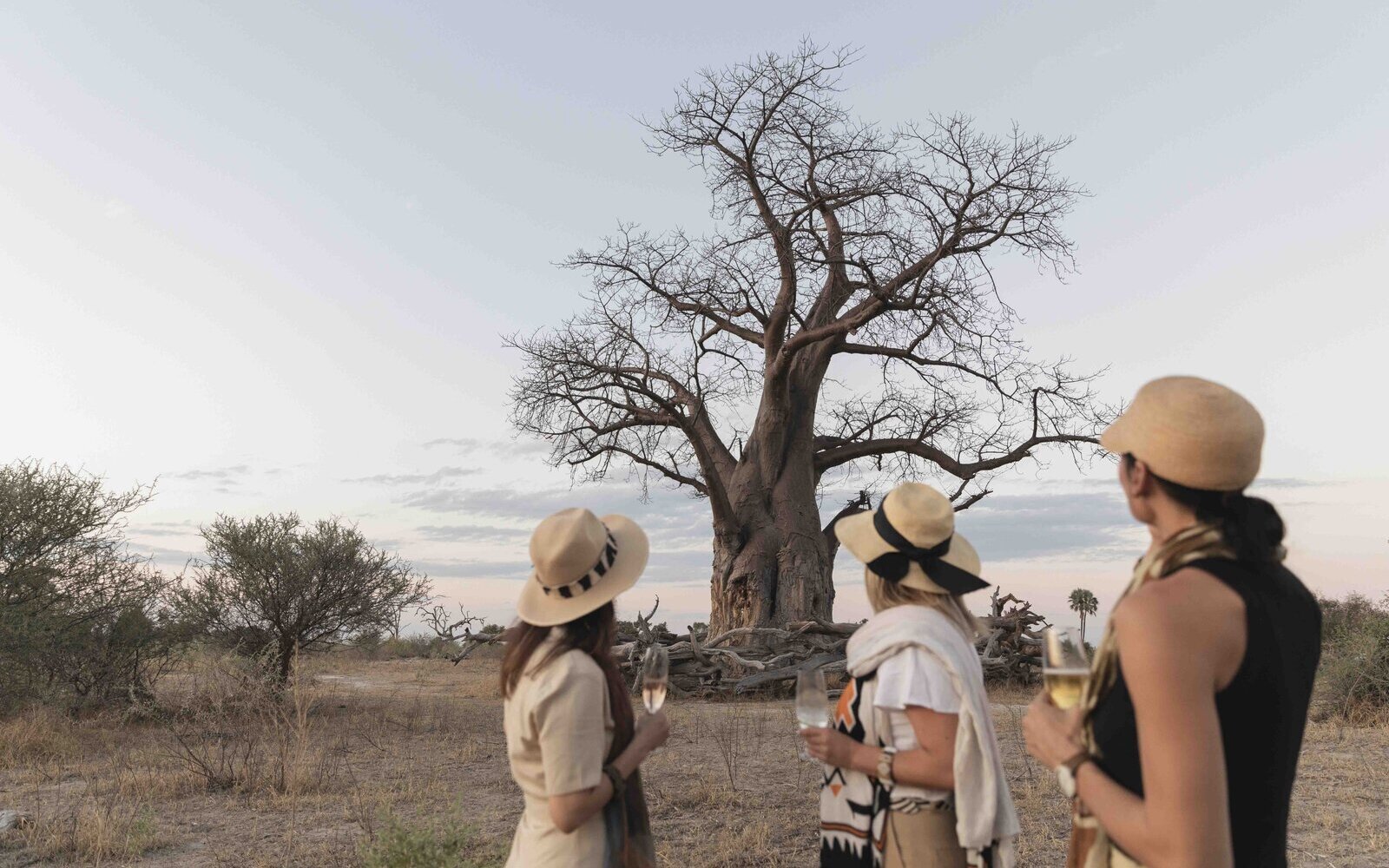
Chobe National Park has the highest concentration of elephants on Earth — over 120,000 animals, with tens of thousands gathering at the Chobe riverfront during dry season (May–October) to drink. The scene is breathtaking: hundreds of elephants lining the riverbank as far as you can see, bulls drinking shoulder-to-shoulder, calves playing in the shallows, matriarchs leading herds across the river to islands.
Chobe offers two distinct safari experiences:
Chobe Riverfront (Kasane Area)
The riverfront section near Kasane town is Botswana's most accessible safari area (road access, no fly-in required) and perfect for families. Lodges here offer boat safaris on the Chobe River — incredibly productive for wildlife and ideal for younger children who struggle with long game drives.
Boat safaris last 2.5–3 hours (vs. 3–4 hours land drives), you can move around the boat (unlike vehicles where you stay seated), wildlife approaches close to the water's edge (elephants drinking, hippos surfacing, crocodiles basking), and the river creates a natural barrier so predators don't charge boats (children feel safer).
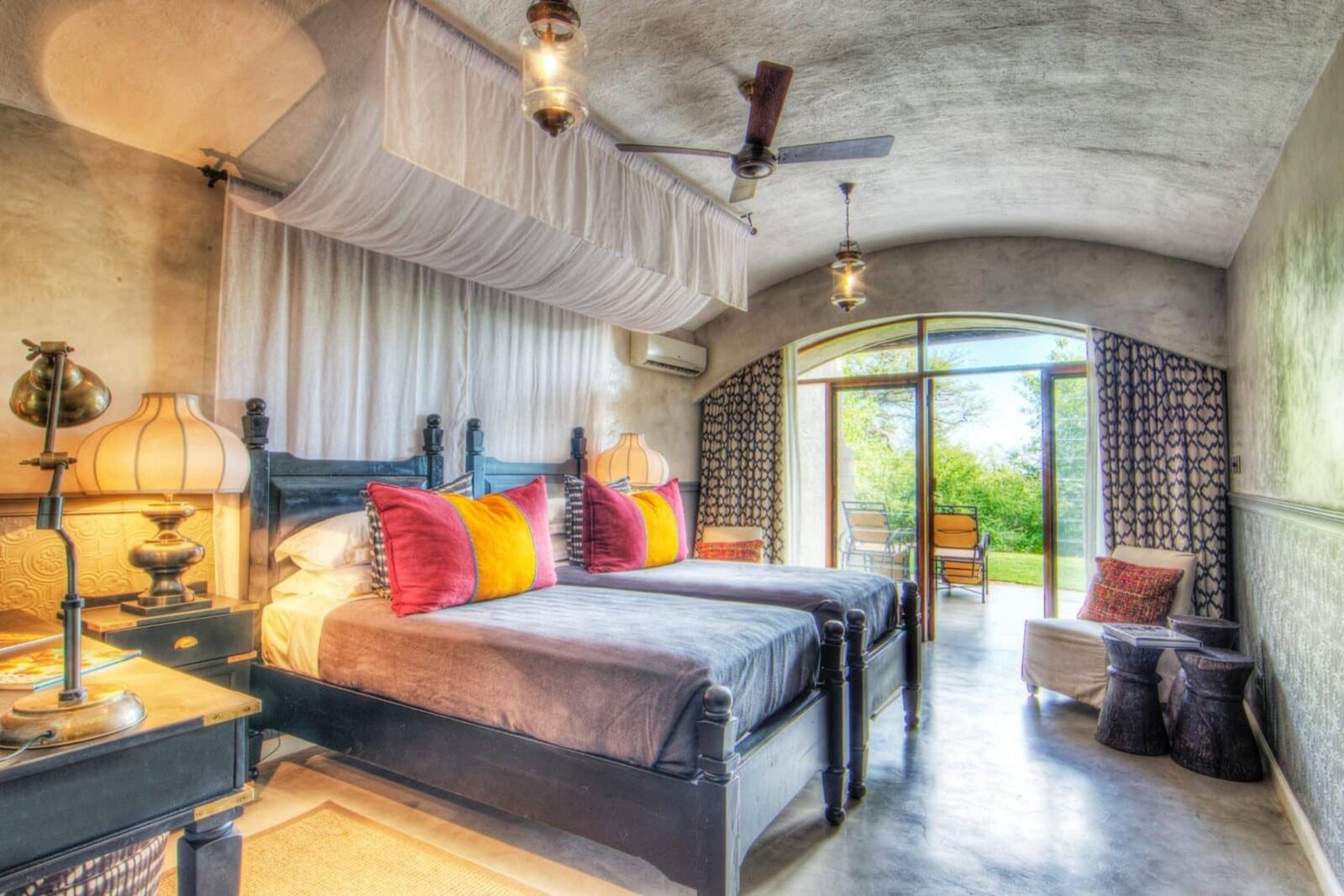
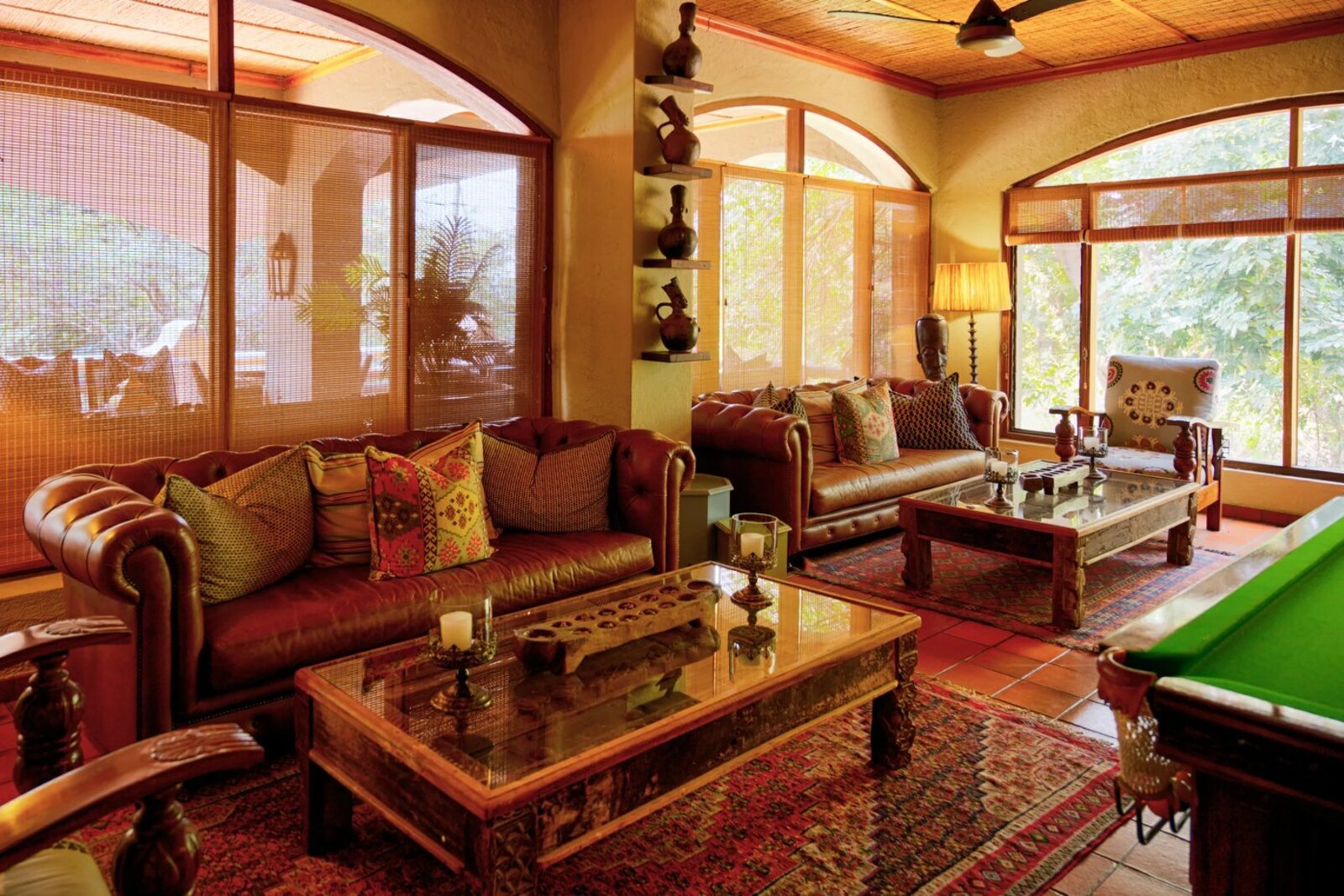
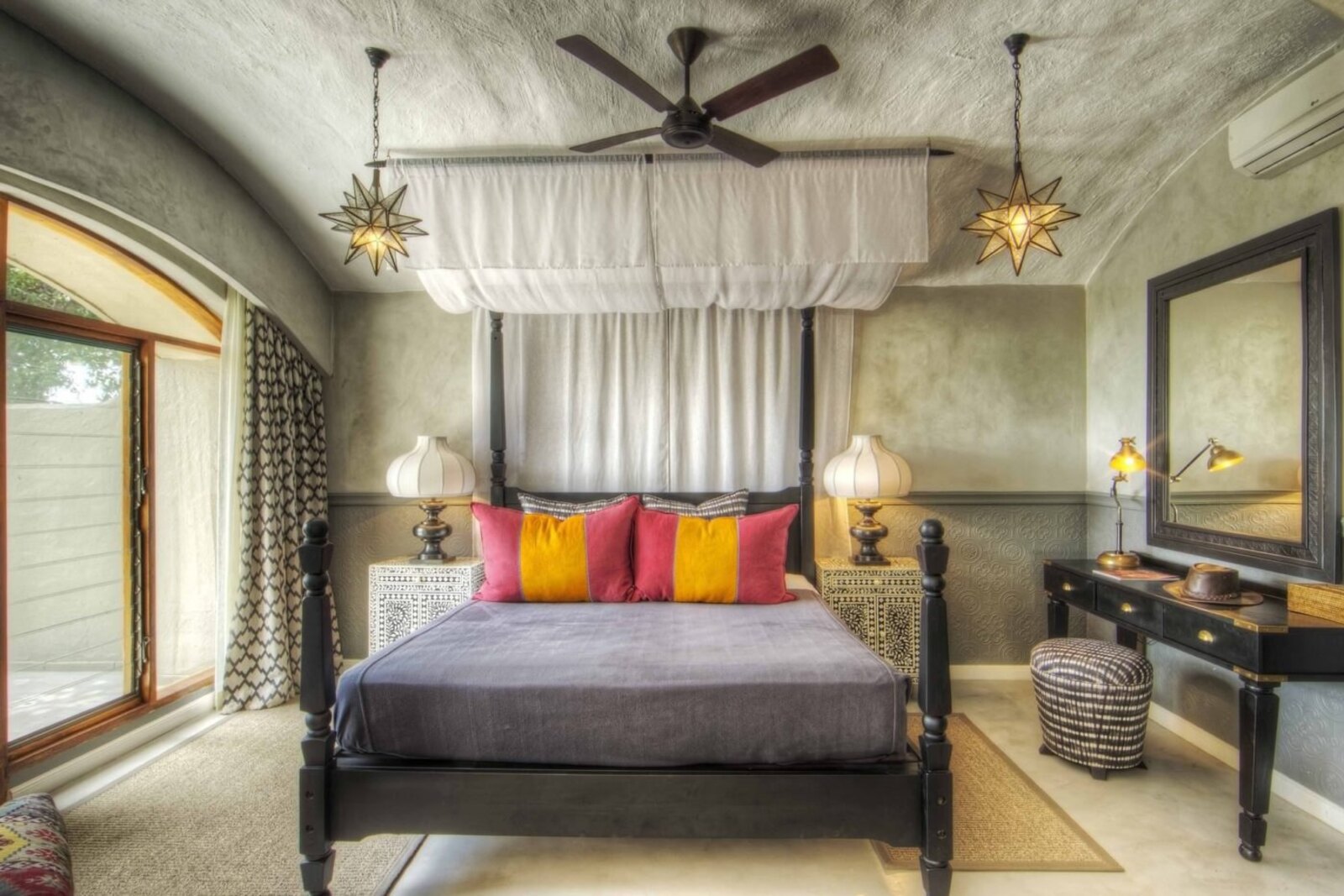
Top family lodges Chobe riverfront: Chobe Game Lodge (only lodge inside the park, pool, riverfront location, boat and land safaris), Chobe Savanna Lodge (luxury tented camp, family tents, private concession with exclusive game viewing), Mowana Safari Resort (large family-friendly resort, multiple pools, good value).
Chobe Inland (Savuti & Linyanti)
The remote inland sections of Chobe — Savuti (famous for lion prides that hunt elephants) and Linyanti (water-rich private concession) — offer more exclusive safari experiences with fewer tourists. These areas require light-aircraft access and cost significantly more, but wildlife density rivals the Delta.
Savuti is best for older children (12+) interested in predator behaviour and dramatic landscapes (the Savuti Channel floods and dries unpredictably, creating feast-or-famine conditions that concentrate predators). Linyanti suits families wanting water activities (boat safaris on Linyanti River) with excellent game viewing and lower tourist density than Chobe riverfront.
Moremi Game Reserve
Moremi occupies the eastern Delta and is considered Botswana's best wildlife destination — it combines permanent Delta channels (water activities year-round) with dry-land game viewing (Big Five including endangered wild dogs). Moremi is where most top Delta camps are located (Mombo, Chief's, Xigera, Xakanaxa).
For families, Moremi offers the best of both worlds: mokoro and boat safaris through lily-covered channels, and land game drives across mopane woodlands and floodplain edges where lions, leopards, cheetahs, and wild dogs hunt. The diversity of habitats (permanent swamp, seasonal floodplains, dry islands, woodland) supports exceptional bird life (over 500 species) and rare antelope species (sitatunga, red lechwe, roan, sable).
Which Botswana Safari Area Suits Your Family?
The three headline regions each suit a different family profile. Use this matrix to match the area to your children’s ages, your budget, and the style of safari you want.
Rule of thumb: families with children under 8 should anchor the trip on the Chobe riverfront (easy access, forgiving boat safaris) and add one Delta or Moremi camp for the fly-in wilderness experience. Families with teenagers can go deeper into Moremi, Savuti or Linyanti, where walking safaris, night drives and predator sightings reward older kids.
Sample 10-Day Botswana Family Safari Itinerary
Day 1: Arrive Maun
Fly into Maun (gateway to the Okavango Delta). Overnight at a Maun lodge (rest, recover from flights). Brief city orientation if time allows.
Days 2–4: Okavango Delta (3 Nights)
Morning light-aircraft flight from Maun to your Delta camp (30–45 minutes, scenic). Three nights at a family-friendly camp (Vumbura Plains, Chief's Camp, or Abu Camp). Daily activities: morning and afternoon mokoro excursions through channels, island walks with guides (learn tracking, plant identification), boat safaris (if water levels allow), traditional land game drives, night drives (spotlighting), fishing (catch-and-release), stargazing. Witness the Delta's unique wildlife: elephants crossing channels, hippos in lagoons, sitatunga antelope, lechwe, rare birds.
Day 5: Fly to Chobe
Morning mokoro or game drive, then light-aircraft flight from Delta to Kasane/Chobe (1 hour). Afternoon arrival, settle into Chobe riverfront lodge. Evening boat safari on the Chobe River (elephants drinking at sunset).
Days 6–7: Chobe National Park (2 Nights)
Two full days combining boat safaris (morning and afternoon on Chobe River) and land game drives (into Chobe National Park). Witness thousands of elephants at the riverfront, hippos, crocodiles, buffaloes, and if lucky, lions coming to drink. Boat safaris are particularly good for younger children (shorter duration, mobile, wildlife close to water).
Day 8: Transfer to Victoria Falls
Morning game drive or boat safari, then road transfer to Victoria Falls, Zimbabwe (1 hour drive). Check into family-friendly hotel (Victoria Falls Hotel, Elephant Camp). Afternoon visit to the Falls viewpoints (kids love the rainforest walk and Devil's Pool if brave enough — age/height restrictions apply).
Days 9–10: Victoria Falls
Two days exploring the Falls and activities: Zambezi sunset cruise (hippos, crocodiles, sundowners), Flight of Angels scenic helicopter (13-minute flight over the Falls — spectacular), adventure activities for older kids (bungee jump 111m, white-water rafting, zip-lining), Livingstone Island guided tour (walk to the edge of the Falls), village cultural tour, craft markets. Combine adrenaline with relaxation before departure.
Day 11: Depart
Morning at leisure, then transfer to Victoria Falls Airport for onward flights.
Budget Planning for Botswana Family Safaris
Why so expensive? Botswana's conservation model limits lodge numbers and beds (protecting wilderness), charges high park fees (funding conservation), and requires light-aircraft access to remote camps (expensive). The result: fewer tourists, pristine ecosystems, exclusive safari experiences — but premium prices. Green season (November–March) costs 30–40% less.
Best Time for a Botswana Family Safari — Month by Month
Botswana’s two seasons deliver very different family safaris. The dry winter (May–October) is peak game viewing with peak prices; the green summer (November–April) trades some access for lush scenery, baby animals and far lower rates. This month-by-month guide helps you time the trip around school holidays and budget.
Essential Family Safari Tips for Botswana
- Book far in advance — Botswana's top camps have limited family tents (typically 2–4 per camp) and fill 6–12 months ahead for peak season (June–October). Book 9–12 months out.
- Malaria prophylaxis essential — All Botswana safari areas are malaria zones year-round. Consult your doctor, bring repellent, wear long sleeves at dusk, sleep under nets.
- Light-aircraft flights are part of the adventure — Small planes (6–12 passengers) fly low over the Delta, offering spectacular aerial views. Kids love them. Luggage limits are strict (10–12kg soft bags only) — pack light.
- Chobe riverfront is best for younger kids — More accessible (road access), boat safaris work better for short attention spans, less expensive than fly-in Delta camps.
- Combine Botswana with Victoria Falls — Chobe is just 1 hour from the Falls, making this combination logical, affordable, and unforgettable.
- Private vehicles worth the investment — Botswana camps often charge for private vehicles/guides (vs. shared). For families, it's worth it — flexibility, pace control, bathroom breaks.
- Green season offers value — November–March costs 30–40% less, fewer tourists, lush landscapes, baby animals. Trade-off: afternoon thunderstorms, some Delta areas inaccessible by water (low flood).
Ready to Plan Your Botswana Family Safari?
We design tailor-made Botswana family safaris combining the Okavango Delta's water-based magic, Chobe's elephant herds, and Victoria Falls' drama. Tell us your children's ages, budget, and travel dates — we'll create an exclusive wilderness itinerary your family will treasure forever.
Start Planning Your Botswana Safari →"There's something profoundly peaceful about gliding through the Okavango Delta in a mokoro with your children. No engine, no rush, no other tourists — just water, reeds, bird calls, and the occasional elephant trumpeting in the distance. It's the Africa families dream of experiencing together, and Botswana delivers it."