Key Takeaways
- Kinara, A Luxury Collection Safari Camp opened in September 2026 — the first safari camp anywhere to carry Marriott's Luxury Collection name — on a forested bend of the Mara River inside Kenya's Masai Mara National Reserve.
- There are 21 tented suites: nineteen one-bedroom suites of about 137 square metres, a two-bedroom family suite, and an 848-square-metre three-bedroom signature villa. Every suite has a private, temperature-controlled plunge pool and a river-facing deck.
- The name Kinara means "bearer of light" in Maa, and the camp was rebuilt on the site of the former Mara Eden Safari Camp using reclaimed and locally sourced materials.
- Rates are all-inclusive — meals, selected drinks, daytime game drives, airstrip transfers, laundry and the wellness facilities — and it is part of Marriott Bonvoy, so nights can be earned or paid with points, in the region of 275,000 a night.
- 2026 all-inclusive rates run from roughly US$2,530 per adult sharing, per night. Every stay we book is private and tailor-made, door to door.
Why a Luxury Collection Camp on the Mara Is Worth Knowing About
When Marriott puts its Luxury Collection name on a tent for the first time anywhere in the world, and the tent sits on a bend of the Mara River, the safari market takes note — and so should a traveller weighing where to spend a once-in-a-decade trip. Kinara opened in September 2026, the first safari camp in the Luxury Collection portfolio, built on the site of the old Mara Eden Safari Camp and rebuilt from the ground up with reclaimed and locally sourced materials. The name means "bearer of light" in the Maa language, and the camp is a serious piece of design: twenty-one suites along the river, each with its own plunge pool and river deck, and a standard of finish that sits at the top of what the Mara offers.
What that buys a traveller is a particular thing. You get the river, the plains and the game of the Masai Mara — the same country the great camps have worked for decades — delivered to a design-led luxury standard, with a loyalty programme attached that many American families have been paying into for years. For a couple marking a milestone, or a family that wants the reassurance of a known name on the river, that combination is the whole appeal. The honest question this review answers is whether the camp earns its place — and its price — against the Mara's established names, and how to think about a brand-new permanent camp built inside the national reserve itself. For the right guest, with eyes open, it is a remarkable place to stay.
The Tented Suites — Twenty-One Rooms on the River
The camp has twenty-one suites in all, raised on timber decks along the river so each one looks out over the Mara and the forested bank. They are tents in the safari sense only — canvas roofs and walls, yes, but set on solid platforms, with proper beds, a plunge pool and the finish of a top city hotel. Here is the honest detail of what the suites are like, how the larger family suite and the villa work, and what every suite gives you.
1. The Kinara Tented Suites
The standard room here is a one-bedroom tented suite of about 137 square metres — larger than many apartments, and built around the view of the river. A bed sits facing the Mara through glass and gauze, with a lounge and a dressing area behind it, and a bathroom with a deep tub and both indoor and outdoor showers. The front of the suite opens onto a private timber deck with its own temperature-controlled plunge pool, set over the water so you watch the bank while you float. The styling is restrained and rooted in place — warm earth tones, timber, Maasai beadwork and weaving used as accents rather than theme-park decoration — and the standard is as high as the Mara goes: proper linen, strong cooling for the hot middle of the day, and the small comforts the brand is known for. Nineteen of the twenty-one suites are built to this one-bedroom pattern.
2. The Two-Bedroom Suite & the Signature Villa
Two of the twenty-one are built larger, for families and for guests who want to take a whole wing. The two-bedroom tented suite runs to about 247 square metres, with two interconnecting bedrooms off a shared lounge and dining area — the sensible shape for a family, where parents and children have their own rooms and bathrooms while sharing the pool and the view. At the top sits the signature villa: an 848-square-metre, three-bedroom private residence with its own wine cellar, gym, spa area, kitchen, dedicated staff quarters and a private safari vehicle, taken on an exclusive-use basis by families or small groups who want the camp's service with complete privacy. For either of these we arrange a private vehicle and guide as a matter of course, so the group drives at its own pace rather than on a shared schedule.
3. What Every Suite Includes
Whichever suite you take, the kit is the same: a bed under canvas, cooling for the hot hours, a temperature-controlled plunge pool on the deck, a lounge, an en-suite with tub and both indoor and outdoor showers, a stocked minibar, a safe and wifi that works for messages and email. Because the camp sits inside the reserve and is unfenced, a member of staff walks you between your suite and the main areas after dark — a normal part of staying on open ground in the Mara, and a quiet reminder that the bush starts at your deck. The service runs to the standard the name promises, with a high ratio of staff to guests across a camp of only twenty-one suites, so your days are run around you rather than a timetable.


Dining — Asili, Under the Acacia & the Farm
The food matches the room, which at this end of the market it has to. The signature restaurant, Asili, runs the main meals over the Mara River, with cooking that leans on the seasons and on Maasai culinary tradition alongside international dishes. Under the Acacia is the poolside bar and kitchen for something lighter — wood-fired pizzas, a long lunch in the shade, a drink as the heat goes out of the day. Much of what reaches the table comes from Kinara Farm, the camp's own kitchen garden, which is the kind of detail that shows up on the plate. Beyond the fixed venues the camp does what the best Mara camps do: a bush breakfast laid out on the plains after an early drive, sundowners on a rise as the light goes, and a private dinner set on your own deck or out in the bush.
Because the rate is all-inclusive, the meals, the selected wines, spirits and beers, the soft drinks and the bush dining are all covered — you are not signing for every round, which changes the feel of a stay. A private dinner for two, set by the river or out on the plains, is the one thing worth planning in advance for a honeymoon or an anniversary.


Olgilai Wellness
The camp runs Olgilai Wellness, a spa built around Kenyan botanicals and Organic Savanna products, where you can book a massage between drives — a civilised way to spend the hot hours when the game has gone quiet. The hub rounds it out with a gym, a sauna, a steam room and a hydrotherapy circuit, and there is a pool deck, a Discovery Lounge for conservation talks and storytelling, and space for outdoor yoga. It is a camp that is easy to simply be at, which matters more than it sounds on a trip built around early mornings.
The Game — the Mara River, the Big Five & the Crossings
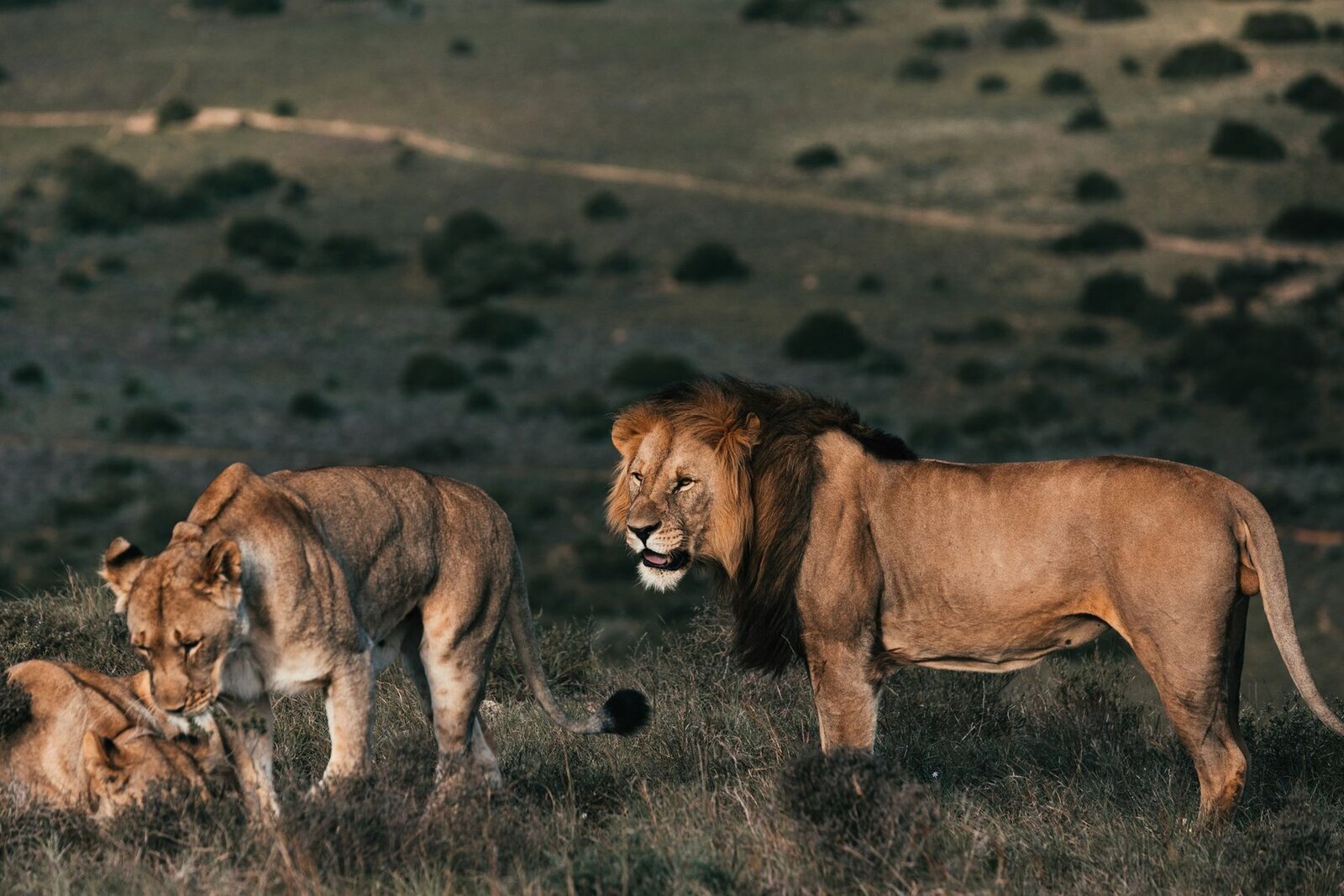
The camp's ground is proper Masai Mara, on the Mara River inside the national reserve, and the game is the reason you come. Drives run twice a day in open vehicles, each with a driver-guide, and this country holds the full cast — lion in resident prides, leopard along the riverine bush, elephant and buffalo, and cheetah out on the open plains. Over a three- to four-night stay the full Big Five is a realistic ambition. Being on the river itself means game comes to you between drives too, down to the water through the day within sight of your deck.
Then there is the migration. From roughly July to October the wildebeest herds move up from the Serengeti into the Mara, and the Mara River is where they cross — the lines of animals piling down a bank into the water, the crocodiles waiting, the dust and the noise. The camp's position on the river puts it close to the action in season. Outside those months the Mara is quieter and in some ways better: resident game is easy to find, the grass is shorter after the rains, and you share the sightings with fewer people. A dawn balloon flight over the plains, arranged through the camp, is the one add-on worth the money whatever the season.


For how the season shapes a Mara trip, our guide to the best time to visit the Masai Mara sets out month by month, and the wildebeest migration in Kenya covers the crossings in detail.
The Honest Part — Building Inside the Reserve
A straight review has to deal with the thing a thoughtful traveller will ask about. Kinara sits inside the Masai Mara National Reserve itself, rather than in one of the community conservancies that ring it, and it was rebuilt on the footprint of an existing camp, Mara Eden, rather than on fresh ground. Both of those matter. New permanent, high-end building inside the reserve — as opposed to the surrounding conservancies, which were set up partly to take the pressure off the core — is a live and healthy debate in the Mara, about vehicle numbers, footprint and who benefits. Reusing an existing site and building with reclaimed, locally sourced materials is the better end of that story; a larger, more serviced camp on the river is the part reasonable people question.
We tell guests the plain version of this because it is the right thing to do, not because it need stop a booking. The camp employs Maasai staff, runs its service around Maasai culture and sources from its own farm, and the wider question of where luxury tourism should build in the Mara ecosystem is one worth thinking about with a clear head. Our job is to give you the facts and let you decide. If a camp inside the reserve is exactly what you want — on the river, with the game at the door — Kinara delivers it to a very high standard. If you would rather your money sat with a long-established community-conservancy camp, with fewer vehicles and a direct community lease, we are glad to place you there instead. Either way, you choose knowing what is true.
2026 Rates & What the All-Inclusive Covers
Kinara is sold as an all-inclusive rate rather than room-only, and it sits near the top of the Mara market. As a working guide for 2026, nightly rates run roughly as below — we quote your exact dates, as the figure moves with season, occupancy and availability.
| Period | Indicative 2026 rate (all-inclusive) |
|---|---|
| One-bedroom tented suite (16 Oct – 19 Dec 2026) | from about US$2,530 per adult sharing / night |
| One-bedroom tented suite (festive, 20 Dec 2026 – 5 Jan 2027) | from about US$3,163 per adult sharing / night |
| Two-bedroom suite (247 m²) & signature villa (848 m²) | quoted on application (family / exclusive-use) |
The rate takes in your suite, all meals, soft drinks, selected wines, spirits and beers, daytime game drives in the reserve, bush breakfasts and sundowners, return transfers from the airstrip, the use of the gym, pool and hydrotherapy facilities, wifi and laundry. Planned on top are the Masai Mara National Reserve conservation and entrance fees, a guaranteed private vehicle, the dawn balloon flight, spa treatments, premium cellar wines and champagne, gratuities and your flights. We set out the full inclusions against your dates when we quote, so there are no surprises on the bill.
Paying With Marriott Bonvoy Points — How It Actually Works
This is the part that sets the camp apart from almost every other property on the Mara, and the reason so many of our American guests ask about it. Because Kinara is part of Marriott's Luxury Collection, the nights sit inside Marriott Bonvoy, so you can earn points on a paid stay and, where availability allows, book nights with points instead of cash. Reported award pricing has run in the region of 275,000 points a night, and the standard Bonvoy benefit applies — book five award nights and the fifth comes free on points, which on a rate this high is a real saving.
The honest caveats matter. Award availability on a camp of only twenty-one suites is very limited, so points nights need booking a long way ahead, and the points cover the suite and its all-inclusive element — the reserve fees, the private vehicle, the balloon and your flights are still paid in cash. For a family that has banked points over years of work travel, though, it is one of the rare chances to turn a loyalty balance into time at the top of the Mara, and we are happy to work alongside a points booking: you hold the suite on Bonvoy, and we build the flights, the transfers and the rest of the Kenya trip around it. Our reviews of the JW Marriott Masai Mara Lodge and The Ritz-Carlton Masai Mara Safari Camp cover the other two Bonvoy options on the same reserve, if points are the main reason you are looking.
Who Kinara Suits — and Who It Does Not
We book this camp for a particular kind of traveller, and it is worth being straight about the fit. It suits a milestone trip — a big anniversary, a landmark birthday, a honeymoon — where the room, the plunge pool and the river deck are part of the point. It suits families and groups who can take the two-bedroom suite or the villa and want space, privacy and service in one place. It suits couples who want a design-led camp at the top of the all-inclusive market, on the river inside the reserve. And it suits anyone holding a Marriott Bonvoy balance who wants to spend it somewhere that matters.
It is less the right call for a traveller whose whole aim is the smallest, owner-run six-tent camp, or a specialist walking or photographic operation — the Mara has those, and they are a different kind of trip. It is also priced near the very top, so for a first safari on a sensible budget we would point you to a camp that gives more nights for the money and say so plainly. And if you would rather your stay sat with a long-established community conservancy than inside the reserve, we will place you there without hesitation. For the right guest, though, it is about as good as a new river camp on the Mara gets.
To see how it compares with the rest of the field, our roundup of the best luxury safari camps in the Masai Mara puts it in context, and how much a Kenya safari costs explains where the money goes.
Getting There, and Building the Rest of the Trip
Most guests fly in. The usual routing is a scheduled light-aircraft flight of about 45 minutes from Nairobi's Wilson Airport to the Ol Kiombo or Musiara airstrip, followed by a short game-drive transfer to the camp, with the airstrip transfers included in the rate; a road transfer from Nairobi takes around five to six hours for those who prefer it. Luggage on the bush flights is limited to soft bags, which we brief you on. From the United States or Europe you connect through Nairobi; we handle the international flights, the bush hop and the transfers as one door-to-door journey.
The Mara pairs naturally with the rest of Kenya and beyond. A few nights on the Kenyan coast after the bush is the classic finish, and the Mara sits a short flight from the Serengeti across the border in Tanzania for travellers who want to follow the migration both ways. Tell us the shape you want and we build the order around the seasons and the flights. Our five-day Masai Mara itinerary and Kenya safari packages are good starting points.
Thinking about Kinara — in cash or in points?
We book the suites, time your stay to the game, and build the flights and the rest of the Kenya trip around it — including alongside a Marriott Bonvoy points booking. Speak to Remondy and the team directly.
Further Reading
A note on the photography: the images in this review are representative of the river-suite style, dining and Mara game experience rather than photographs of specific rooms at the camp. We show the actual property's own imagery when we quote your dates.