In the heart of Botswana, the Okavango Delta performs one of nature's great paradoxes: a river that never reaches the sea. Each year the Okavango River spills out of the Angolan highlands and fans across the Kalahari sands, creating a vast, shimmering inland delta of channels, lagoons and palm-fringed islands — a green oasis in the desert that draws wildlife from hundreds of kilometres around. A UNESCO World Heritage Site and one of Africa's last truly pristine wildernesses, the Delta offers a safari unlike any other. This is the definitive, specialist-written planning guide for 2026 and 2027 — how it works, when to go, where to stay, what it costs, and how to build the perfect Delta journey.
Planning an Okavango Delta Safari — At a Glance
If you are planning in a hurry, use this table. The full breakdown follows below.
| Your question | Short answer | Why |
|---|---|---|
| Best time to go | June – October | The flood is high and the surrounding Kalahari is dry, concentrating wildlife around permanent water for superb game viewing and mokoro safaris |
| Green-season value | November – March | Quieter and cheaper, with lush scenery, newborn animals and exceptional birding; some camps close in the heaviest rains |
| How long to stay | 3 – 4 nights minimum | Enough for both water and land activities; combine with a second region for a week-long trip |
| Signature experience | Mokoro water safari | Gliding silently through the channels in a traditional dugout canoe — the Delta's defining moment |
| How you get there | Light aircraft from Maun | Short scenic flights land on bush airstrips near each camp; the flight itself is part of the experience |
| Typical cost | USD 800 – 2,500+ pppn | A premium, low-volume destination; rates are all-inclusive of meals, drinks, activities and light-aircraft transfers |
| Can you see the Big Five | Four of five, reliably | Elephant, buffalo, lion and leopard are common; rhino present in a few areas, plus wild dog, hippo and cheetah |
| Best combination | Delta + Chobe + Victoria Falls | The classic southern African circuit, linked by short light-aircraft hops |
What Is the Okavango Delta — and Why the Flood Matters
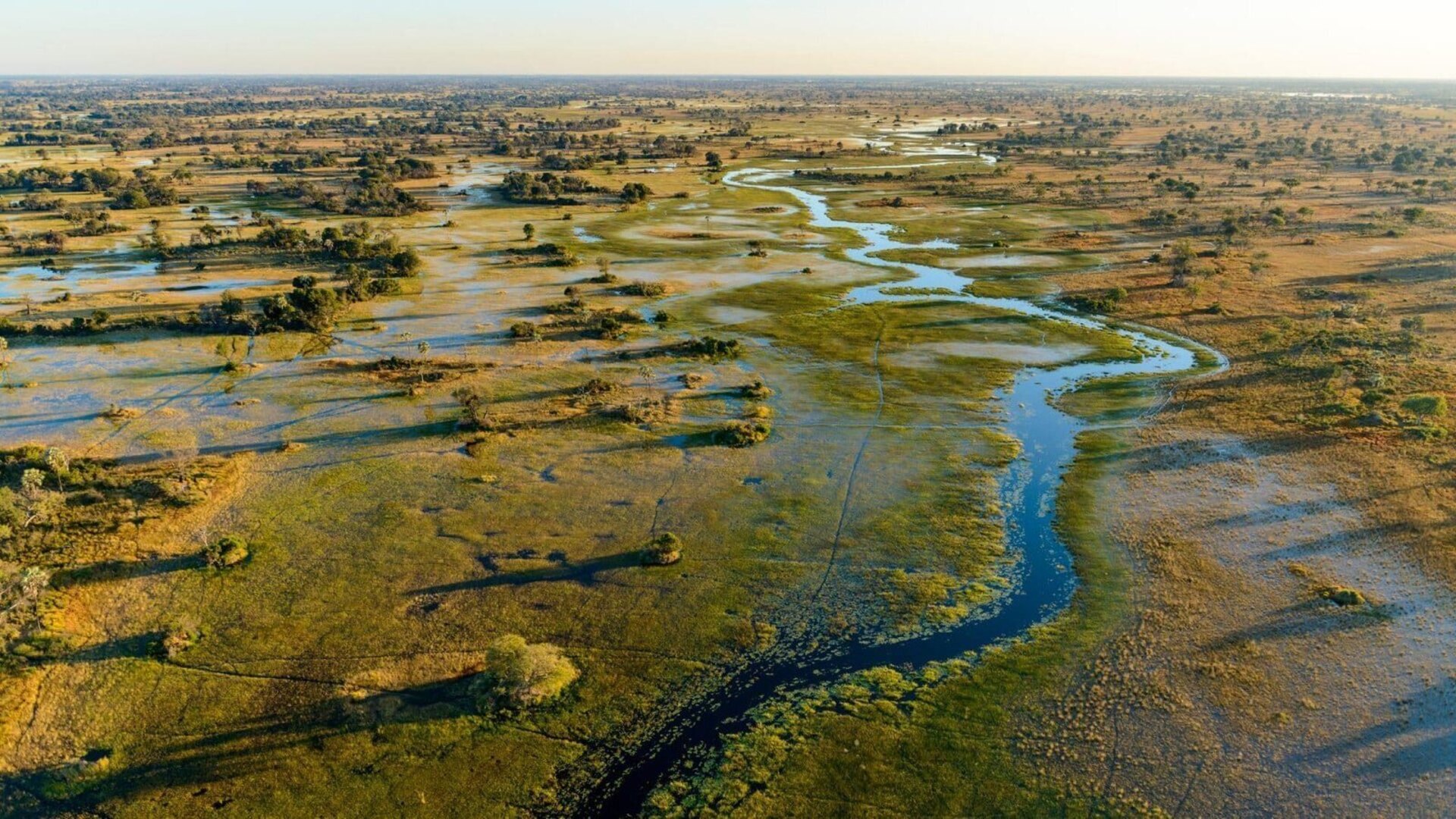
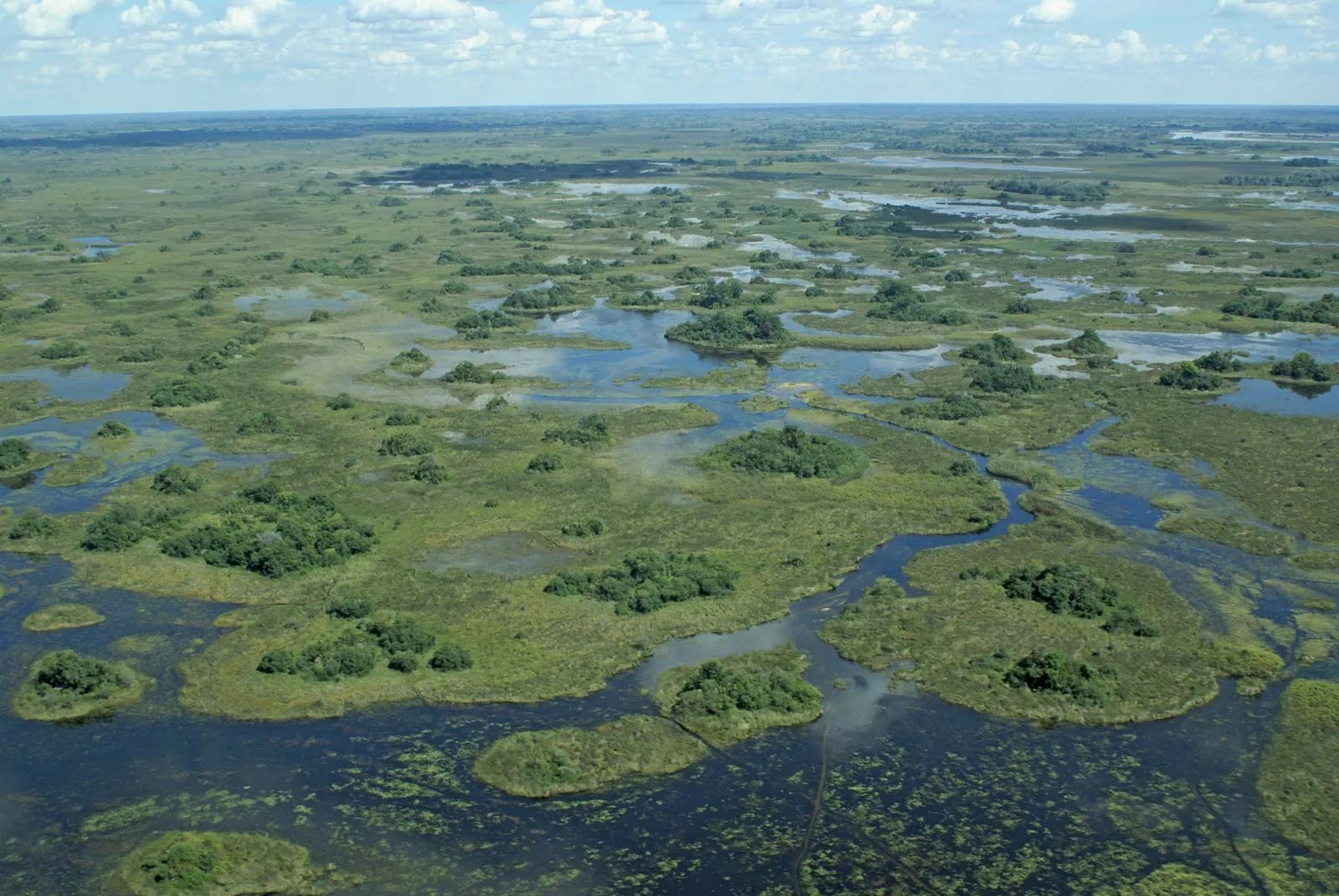
The Okavango is an inland delta, not a river delta that empties into an ocean. Rain that falls on the Angolan highlands between November and April drains into the Okavango River, which flows south-east into Botswana and spreads out across the flat Kalahari basin, where it is eventually lost to evaporation and transpiration. The result is a seasonally pulsing wetland of roughly 15,000 square kilometres at full flood — a mosaic of permanent channels, seasonal floodplains, reed beds, lagoons and thousands of islands, from tiny termite-mound islets to large forested land masses.
The crucial thing for planning is the timing of the flood. Because the water travels slowly across such flat terrain, the flood that falls in Angola in summer does not reach the Delta until the following dry winter — roughly May to August. This is the great paradox that makes the Okavango so special: the water arrives at the very moment the surrounding land is at its driest. As the Kalahari bakes and its seasonal pans dry up, the Delta fills, and wildlife funnels in from the arid hinterland to drink, feed and breed. For a visitor, that means the best water levels and the best game concentrations line up in the same window.
Water levels vary from year to year depending on the Angolan rains, and different parts of the Delta flood to different depths — which is why some camps are 'water camps' (reached and explored largely by boat and mokoro), some are 'land camps' (game drives on larger islands), and many are 'mixed' camps that offer both depending on the season. A good specialist matches your camp to the water level in your travel month; that is exactly what we do at Beyond Africa Safaris.
Water Safaris vs Land Safaris — the Two Faces of the Delta
The Okavango's great appeal is that it offers two completely different kinds of safari, often from the same camp. Understanding the difference is the key to choosing where to stay and when to go.
The Mokoro — the Delta's Signature Experience
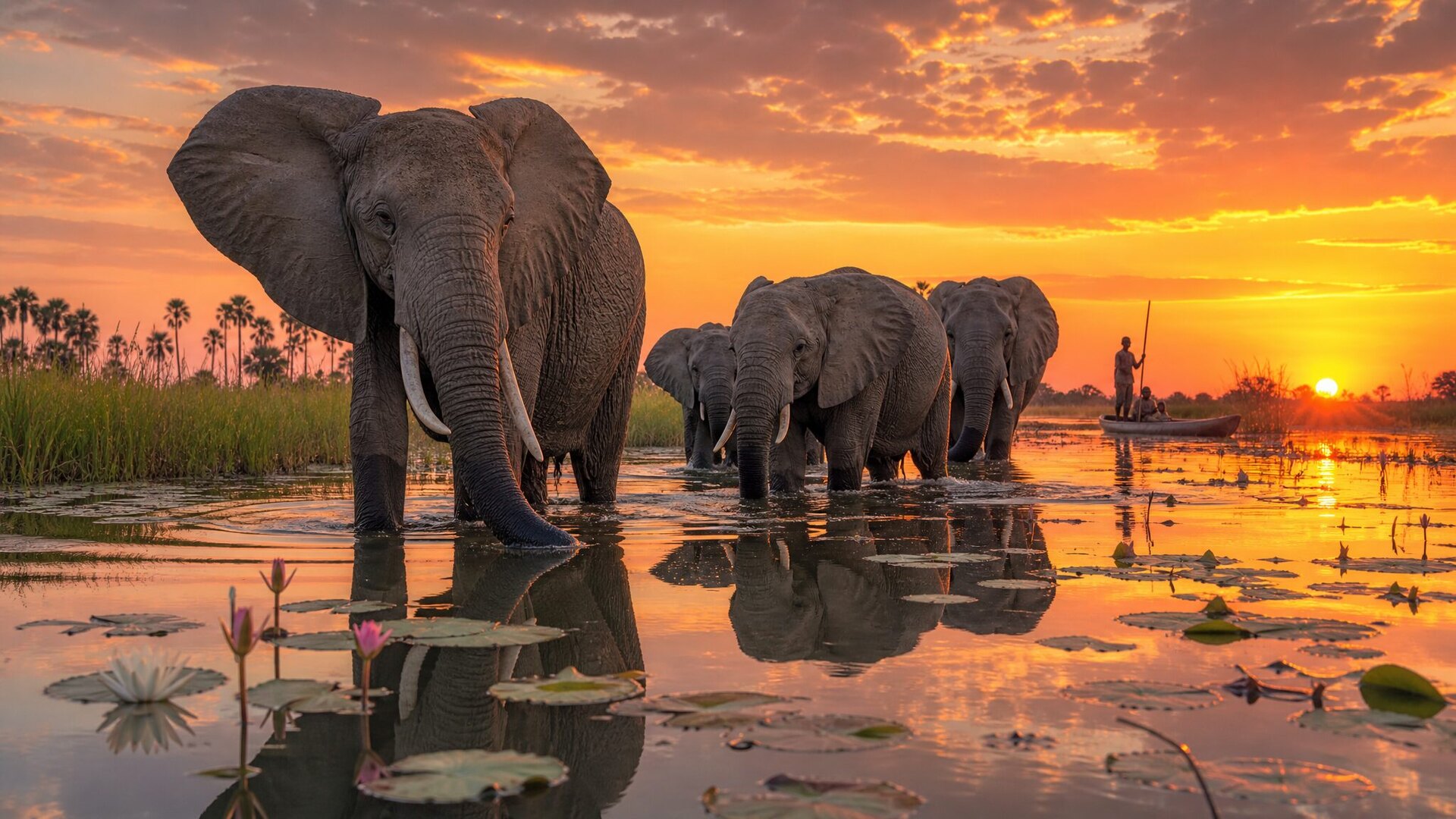
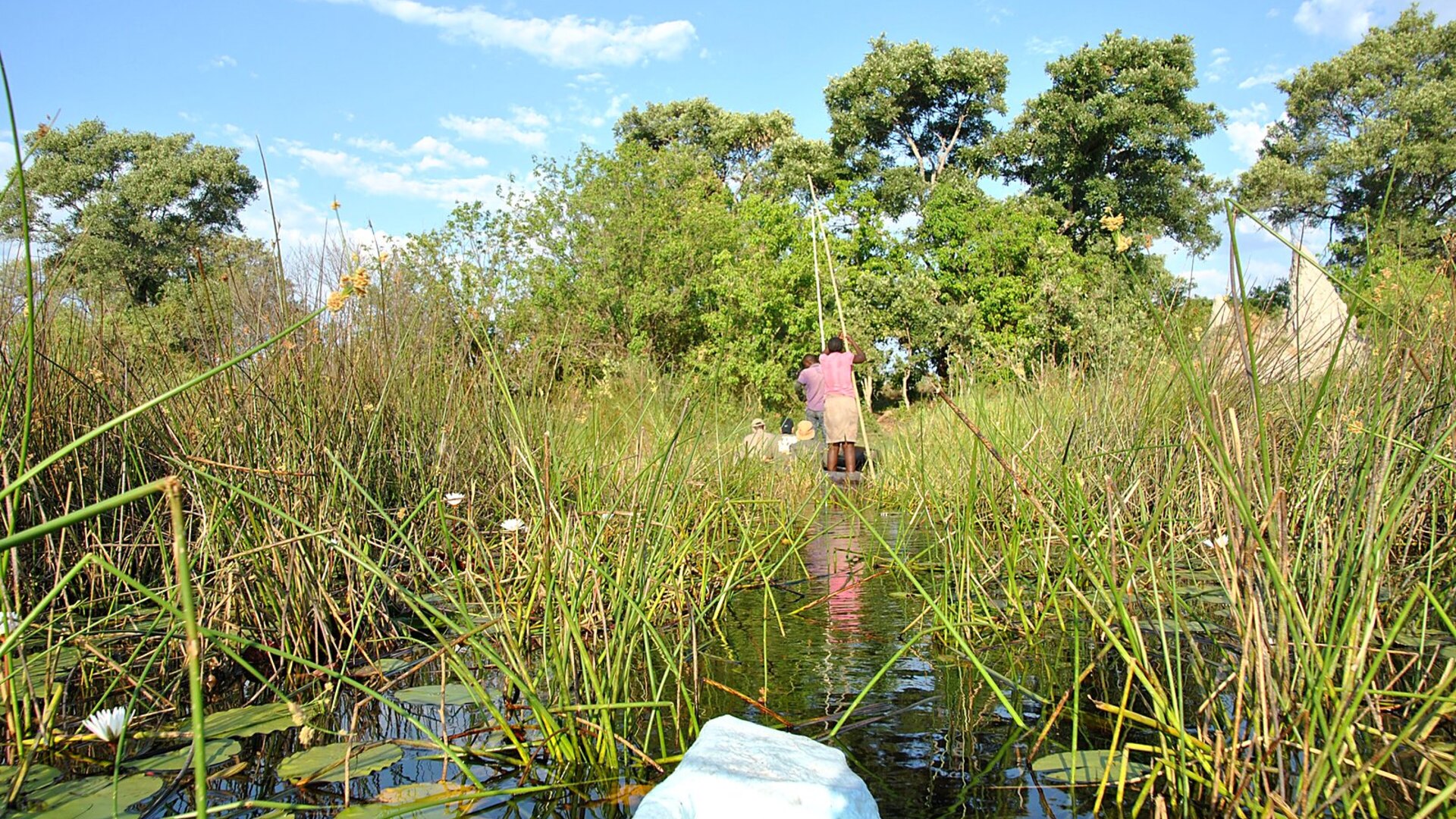
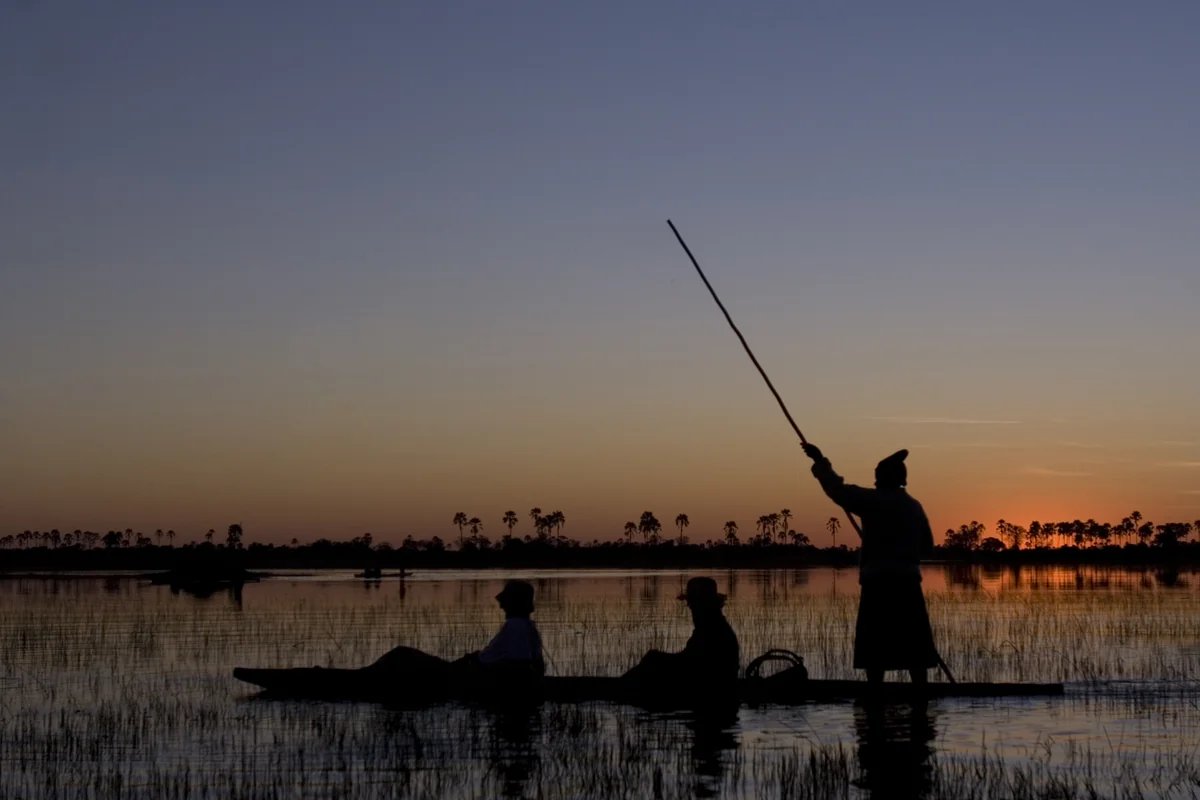
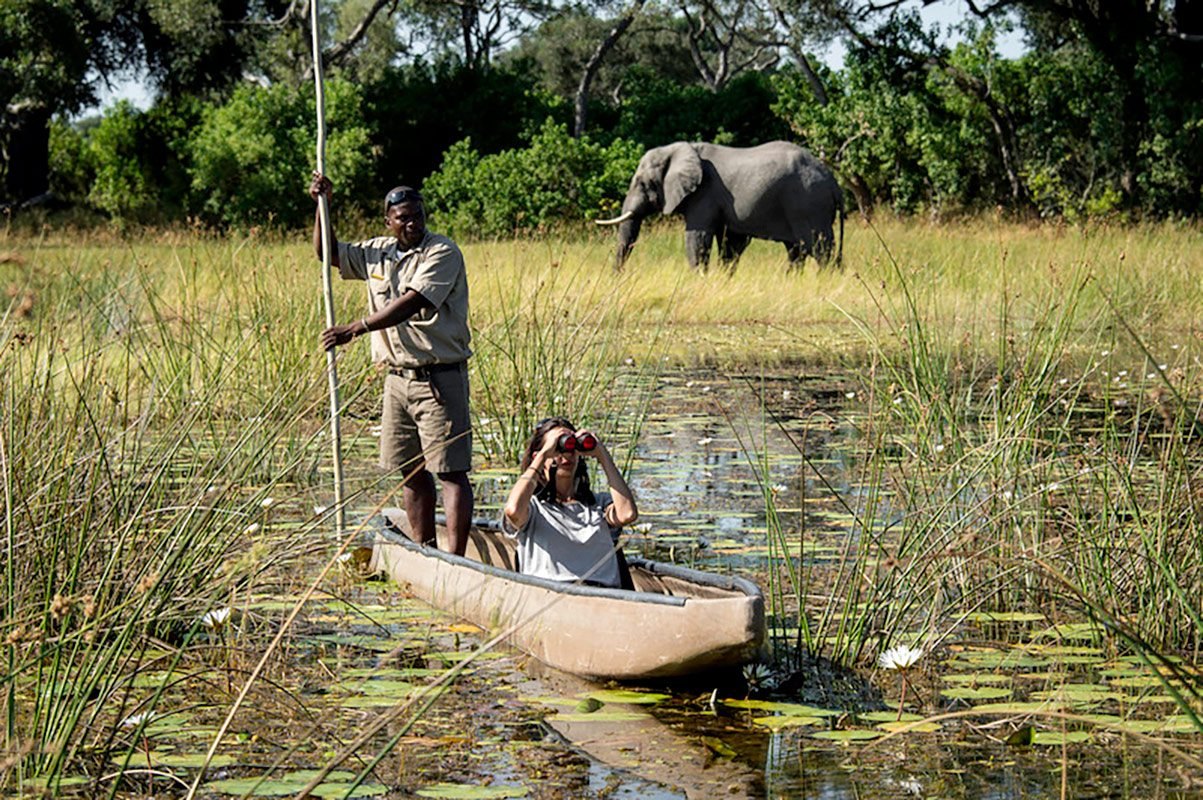
A mokoro is a traditional dugout canoe, poled silently through the shallow channels by an expert guide standing at the stern. Gliding just above the waterline, you drift past lily-covered lagoons, reed beds alive with frogs and birds, and grazing animals on the banks — in near-total silence. It is an utterly peaceful, intimate way to experience the Delta, completely different from a vehicle game drive, and for many travellers it is the single most memorable part of the trip. Mokoro excursions depend on sufficient water, so they are best from around June to October in most of the Delta.
Boat Safaris and Fishing
In the deeper, permanent waterways, motorboat safaris let you cover more ground, reach distant lagoons and islands, and get close to hippos, crocodiles and superb waterbirds. Catch-and-release fishing for tigerfish and bream is also popular in the permanent channels. Boating is most reliable in the higher-water camps and months.
Game Drives
On the larger islands and in the drier land concessions and Moremi Game Reserve, open-vehicle game drives deliver classic Big Five and predator viewing. In the private concessions, guides can go off-road, conduct night drives and follow sightings in ways not permitted inside the national reserve — a major advantage for close predator encounters.
Walking Safaris
Many camps offer guided walking safaris on the islands, led by armed, expert guides. On foot you tune into the smaller details of the bush — tracks, birds, insects, plants — and experience the thrill of approaching big game on its own terms. Walking is typically available year-round where terrain allows, and is a wonderful complement to water and vehicle activities.
The ideal Delta trip combines all four: a mokoro at dawn, a boat cruise in the permanent channels, a vehicle game drive on the islands, and a walk with a guide — which is why 3 to 4 nights is the sensible minimum, and why camp choice and water level matter so much.
The Best Time to Visit the Okavango Delta
The headline answer is June to October — the dry winter months when the flood is high, the surrounding bush is dry, and wildlife concentrates around the Delta's permanent water. But the green season has its own rewards, and the right month depends on what you want.
June to October — Peak Season
This is the classic Okavango window. The flood is at or near its peak, water levels are high enough for excellent mokoro and boat safaris, and the dry Kalahari pushes animals toward the Delta in growing numbers. Skies are clear, there are very few mosquitoes, and game viewing is at its best — predators are active and concentrations build steadily toward September and October, which are the driest, most intense game-viewing months. Nights and early mornings are cold in June and July (pack warm layers for dawn activities); October is hot and dry. This is peak season, so camps are at their highest rates and the best ones book up a long way ahead.
November to March — Green Season
The summer rains bring a transformation. The landscape turns a lush, vivid green, migratory birds arrive in spectacular numbers, and the plains fill with newborn animals and the predators that follow them. Photography is wonderful in the dramatic storm light, rates are significantly lower, and the camps are quiet. The trade-offs are higher daytime heat and humidity, afternoon thunderstorms, taller grass and more spread-out water that can make big game harder to spot, and a higher mosquito (and malaria) presence. Water levels are actually lower in the Delta during the rains — the flood has not yet arrived — so some water activities are reduced and a few seasonal camps close. For birders, photographers and value-seekers, however, the green season is a genuine highlight.
April and May — the Shoulder
These transitional months can be excellent value. The rains are ending, the bush is still green and beautiful, and the flood is beginning to arrive — water levels are rising through May. Game viewing is improving and crowds are low. For travellers who want a balance of green scenery, building water levels and softer rates before the peak, the shoulder is an underrated window.
Okavango Delta Month by Month — 2026/2027
| Month | Season | Conditions | Highlights | Rating |
|---|---|---|---|---|
| January | Green (rains) | Hot, humid; afternoon storms; lower water | Lush scenery, newborns, superb birding; quiet camps and low rates | ★★★ (birding ★★★★★) |
| February | Green (rains) | Hot, humid; storms; peak greenery | Dramatic skies, migrant birds, predators on young prey; best value | ★★★ |
| March | Green, easing | Warm; rains tapering; green bush | Beautiful landscapes, good resident game, birding still excellent | ★★★½ |
| April | Shoulder | Mild, drying; flood beginning | Green scenery with rising water; low crowds and soft rates | ★★★★ |
| May | Early dry | Cool, clear; flood arriving | Water levels rising, game concentrating; superb value before peak | ★★★★½ |
| June | Peak dry | Cold nights, sunny days; high water | Excellent mokoro and boating; game building; pack warm layers | ★★★★★ |
| July | Peak dry | Cold nights; clear; peak flood | Classic Okavango — high water, strong game, few mosquitoes | ★★★★★ |
| August | Peak dry | Warming days; high water | Prime game viewing; superb water and land activities combined | ★★★★★ |
| September | Peak dry | Warm, dry; water receding slowly | Peak concentrations, intense predator action; one of the best months | ★★★★★ |
| October | Late dry | Hot; lowest surrounding water | Maximum game concentration before the rains; outstanding viewing | ★★★★★ |
| November | First rains | Hot; first storms; greening | Dramatic skies, arriving migrants, newborns; value before peak | ★★★½ |
| December | Green (rains) | Hot, humid; storms | Lush green Delta, superb birding, festive-season quiet; low rates | ★★★ |
Where to Stay — the Okavango Delta's Regions
The Delta is not a single place but a patchwork of a national reserve and dozens of private concessions, each with its own character, water level and activity mix. Here is how the main areas line up — and for the full lodge-by-lodge detail, see our dedicated guides linked throughout.
Moremi Game Reserve
The Moremi protects the central and eastern Delta and is the only formally proclaimed reserve within it. It combines permanent water with large dry-land areas, so it offers both water activities and classic game drives, and it is renowned for leopard, lion and endangered wild dog. Because it is a national reserve, off-road driving and night drives are not permitted inside its boundaries, but the game viewing is superb and it is more accessible — and often more affordable — than the deep-water private concessions.
The Inner Delta & Private Concessions
The private concessions surrounding Moremi — areas such as the Jao, Vumbura, Kwando, Nxabega, Chitabe and Abu concessions, among others — are where the Okavango's most exclusive camps sit. Here you have exclusive traverse, few other vehicles, and the freedom for off-road driving, night drives and walking. Water camps in the permanent channels offer the quintessential mokoro-and-boat experience; others blend water and land. This is the heart of the luxury Delta. For the definitive ranking of the finest camps, read our guide to the best Okavango Delta safari lodges.
Khwai & the North-East
The Khwai area on the Delta's north-eastern edge, bordering Moremi, is famous for excellent year-round game and a mix of community and private concessions offering good value alongside premium camps. Its riverine setting delivers reliable elephant, lion, leopard and wild dog sightings and the flexibility of a private concession.
Linyanti, Selinda & Kwando (the Far North)
North of the Delta proper, the Linyanti, Selinda and Kwando concessions share Botswana's water-rich far north with Chobe. These areas are celebrated for huge dry-season elephant numbers, big prides of lion and some of Africa's best wild-dog viewing — and they combine beautifully with a Delta stay. For a Botswana-wide view of the finest camps across all these regions, see our guide to the best safari lodges in Botswana.
For costs, inclusions and ready-made itineraries, our Okavango Delta safari packages guide breaks down what to budget; budget-conscious travellers should read affordable Okavango Delta lodges; and for the camps specifically, see the best Okavango Delta camps.



The Wildlife of the Okavango Delta
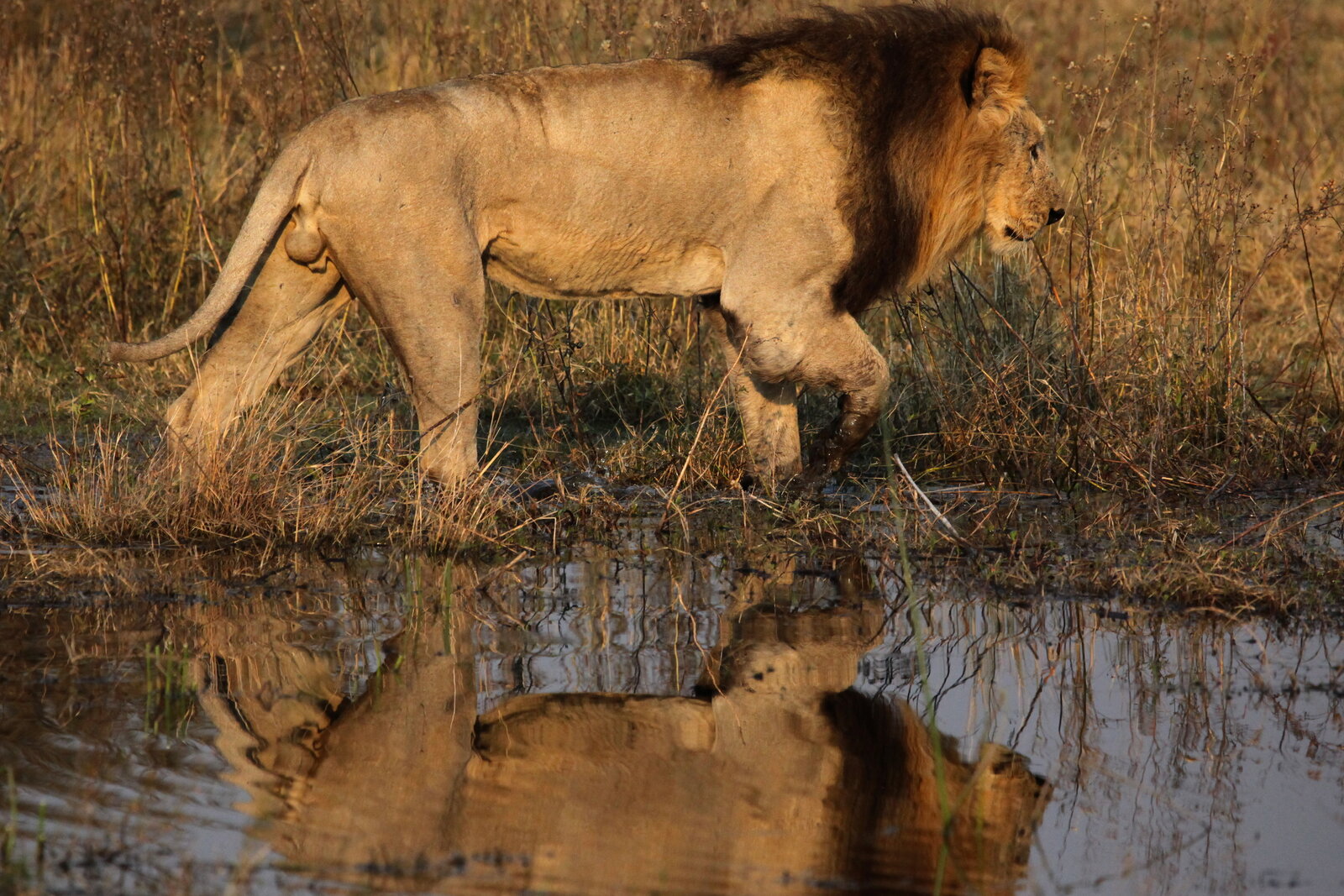
The Delta's mix of permanent water, seasonal floodplain and dry island supports an extraordinary diversity of wildlife year-round. It is one of the few places where you can watch lions wade through water, elephants swim between islands, and antelope that have evolved specifically for a flooded world.
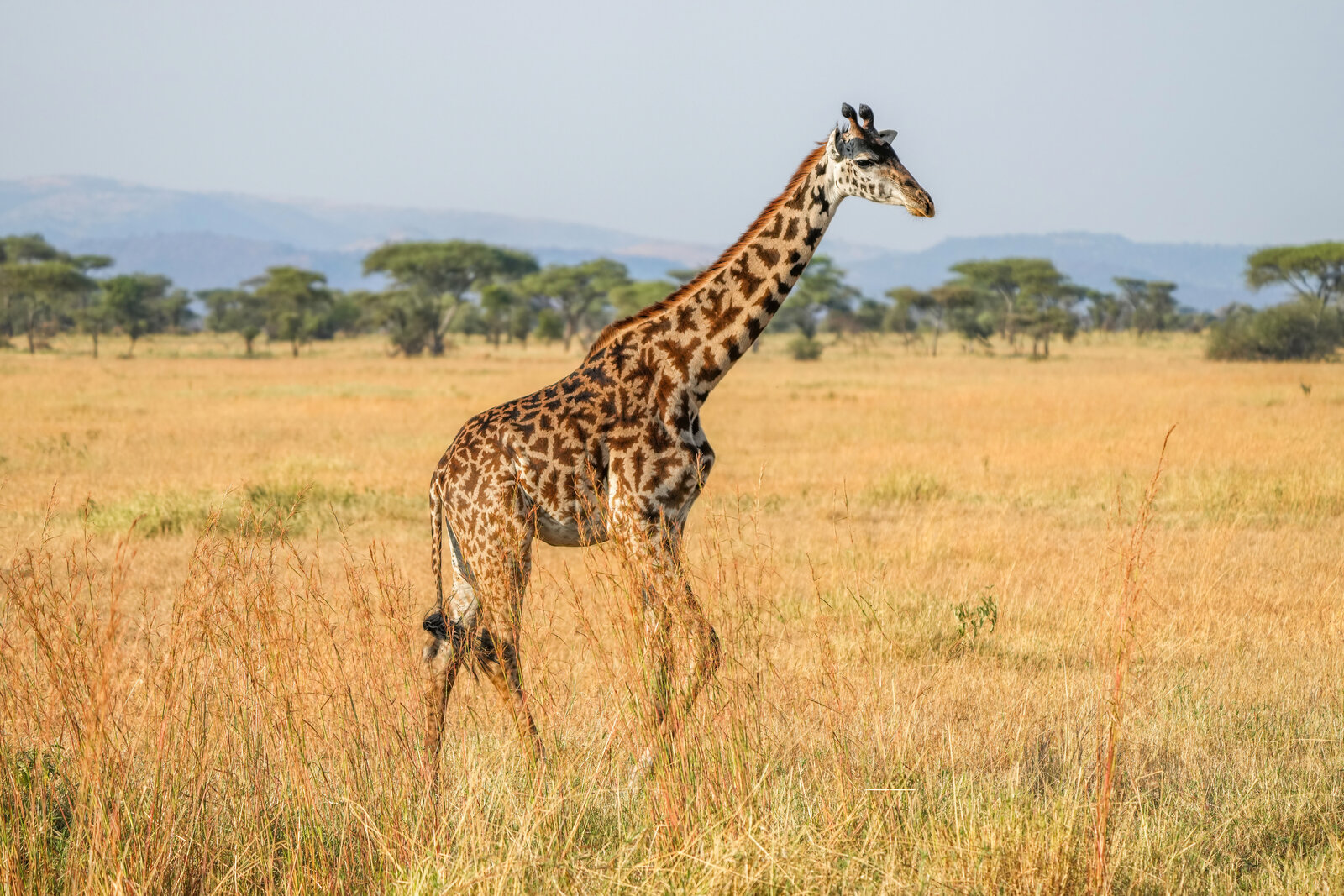
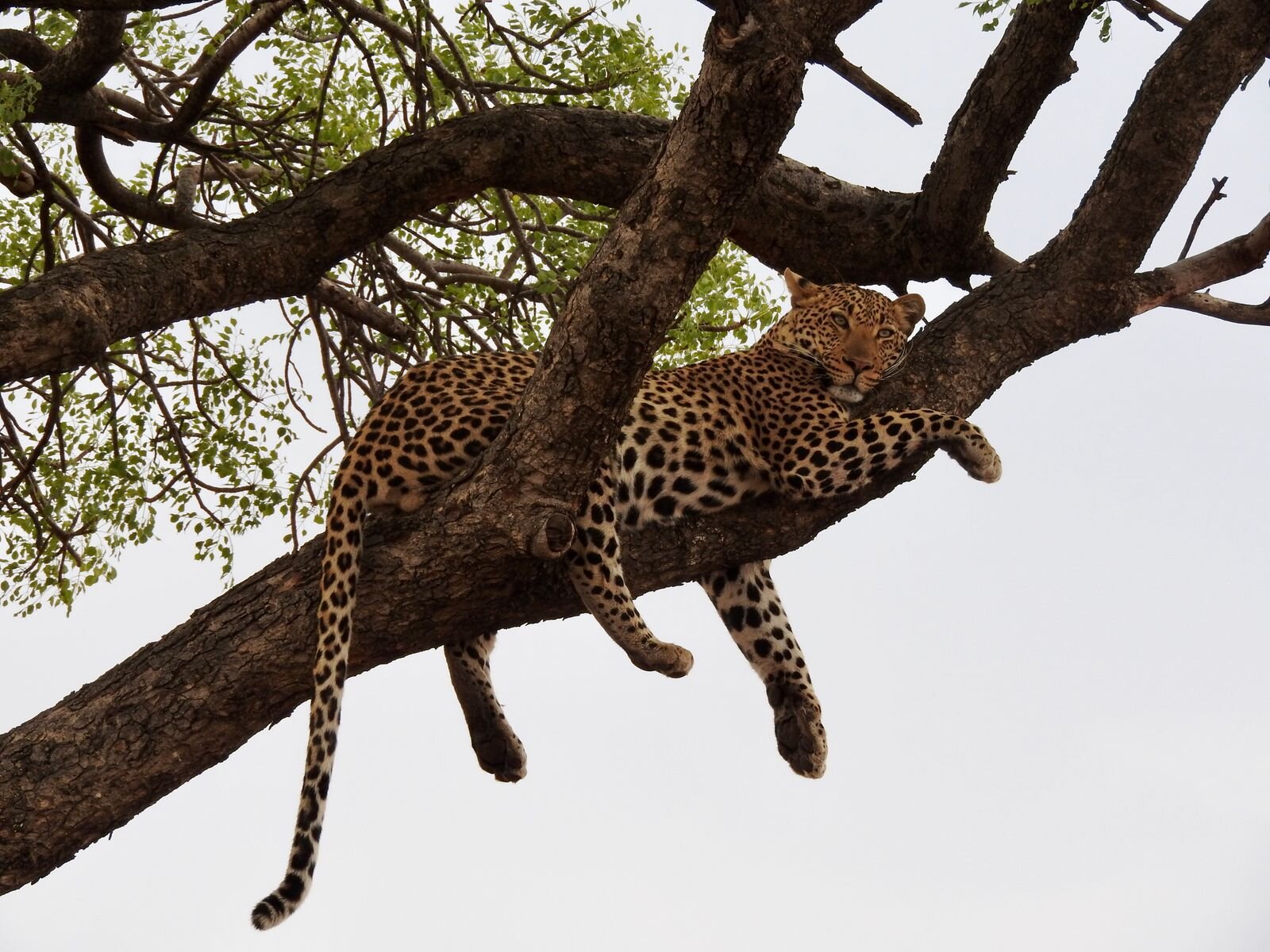
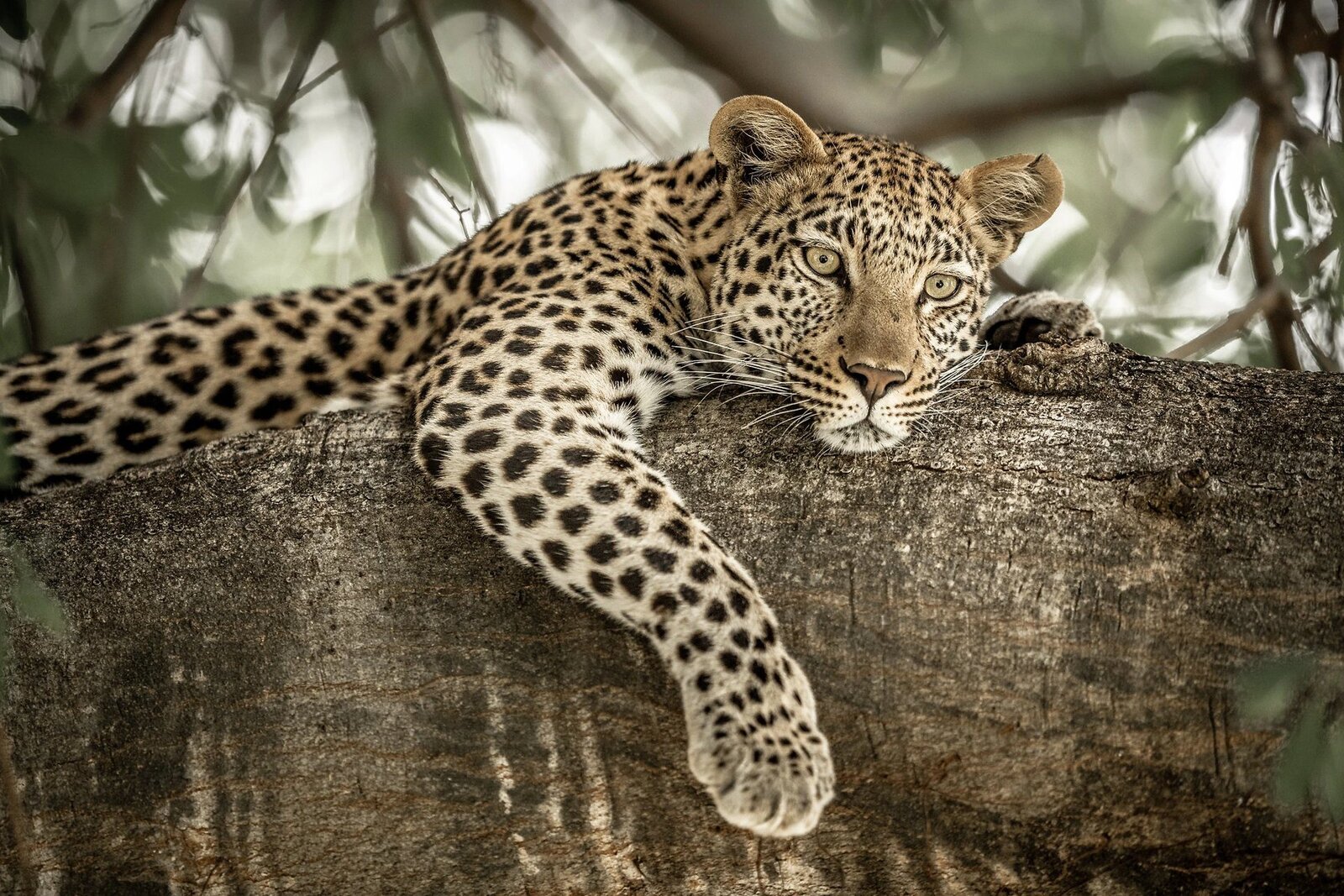
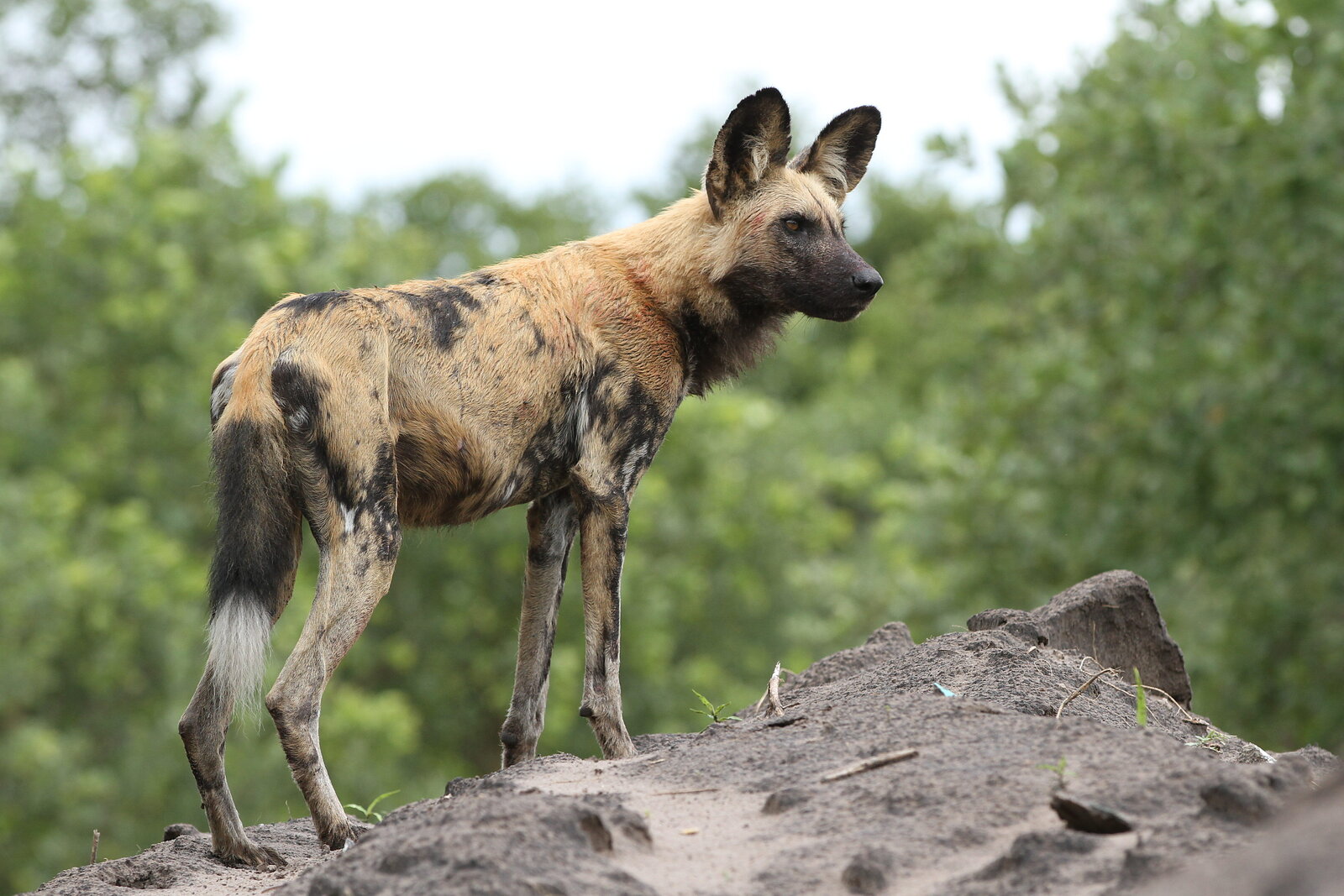
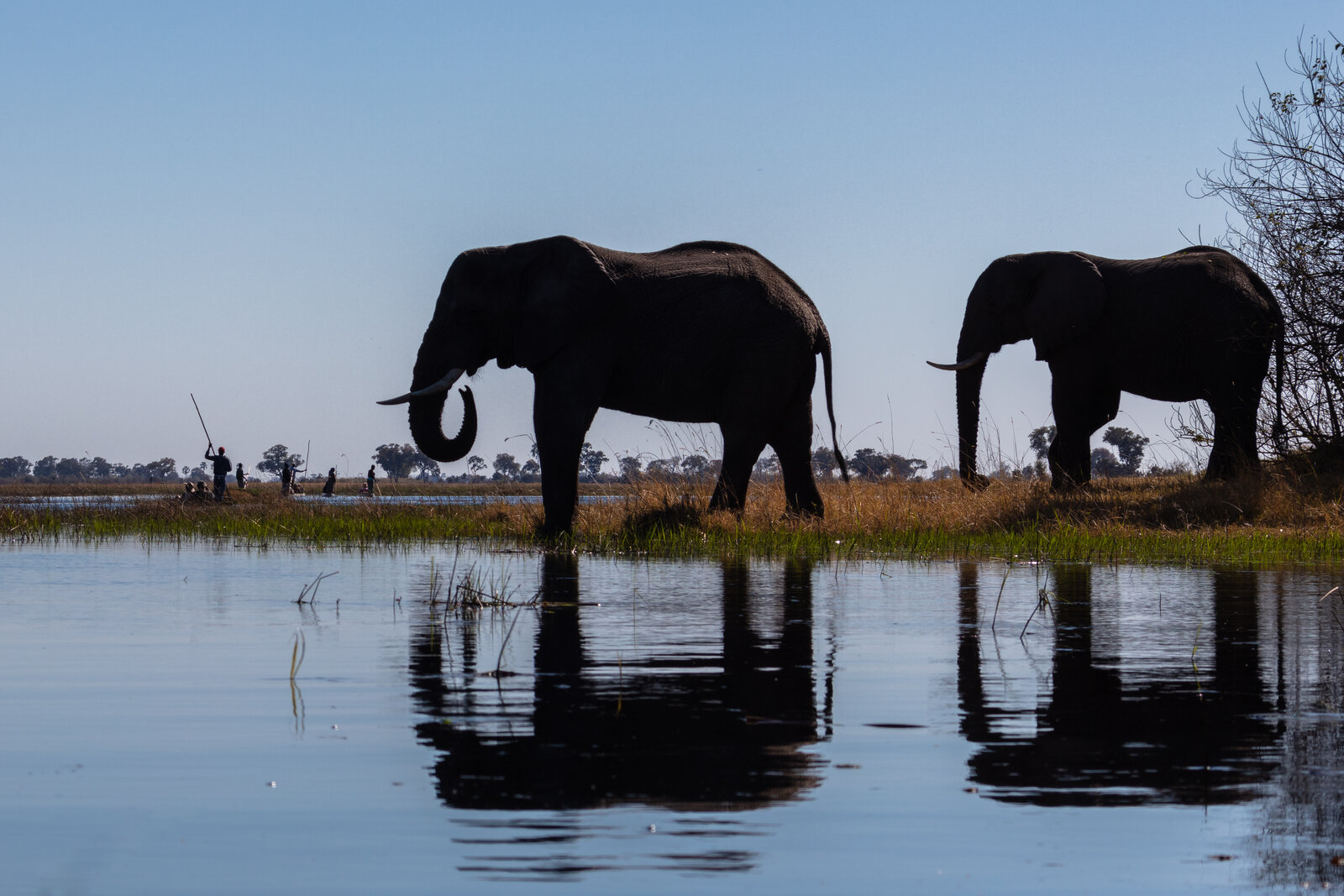
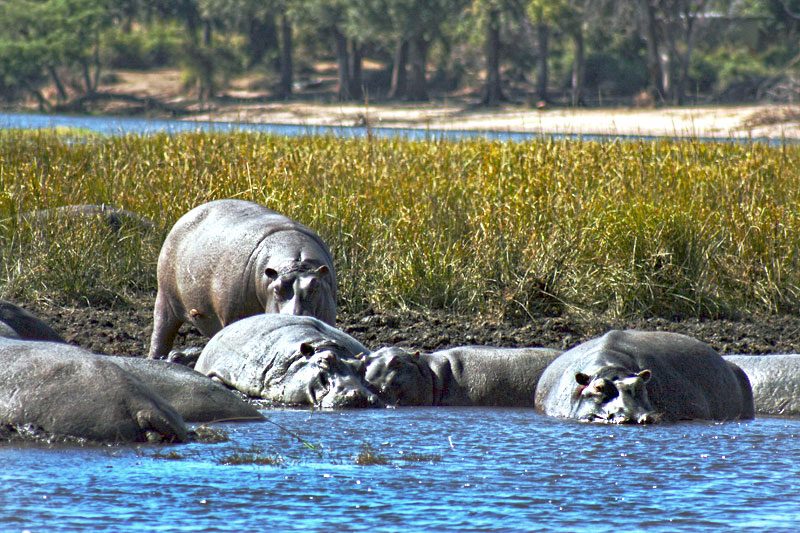
The Big Five are well represented: elephant and buffalo are abundant, lion and leopard are commonly and superbly seen (especially in Moremi and the private concessions), and rhino have been reintroduced to some areas. Beyond the Big Five, the Okavango is one of Africa's last great strongholds of the endangered African wild dog, with several resident packs, and holds excellent numbers of cheetah, spotted hyena and the smaller predators. The red lechwe, a water-adapted antelope, splashes across the floodplains in their thousands, alongside sitatunga, tsessebe, impala, giraffe, zebra and wildebeest. Hippo and crocodile fill the permanent channels and lagoons.
For birders, the Delta is paradise: well over 400 species have been recorded, from African fish eagles and Pel's fishing owls to wattled cranes, carmine bee-eaters, saddle-billed storks and vast breeding colonies in the green season. November to March is the peak birding window, when migrants arrive and residents are in breeding plumage.
How to Get to the Okavango Delta
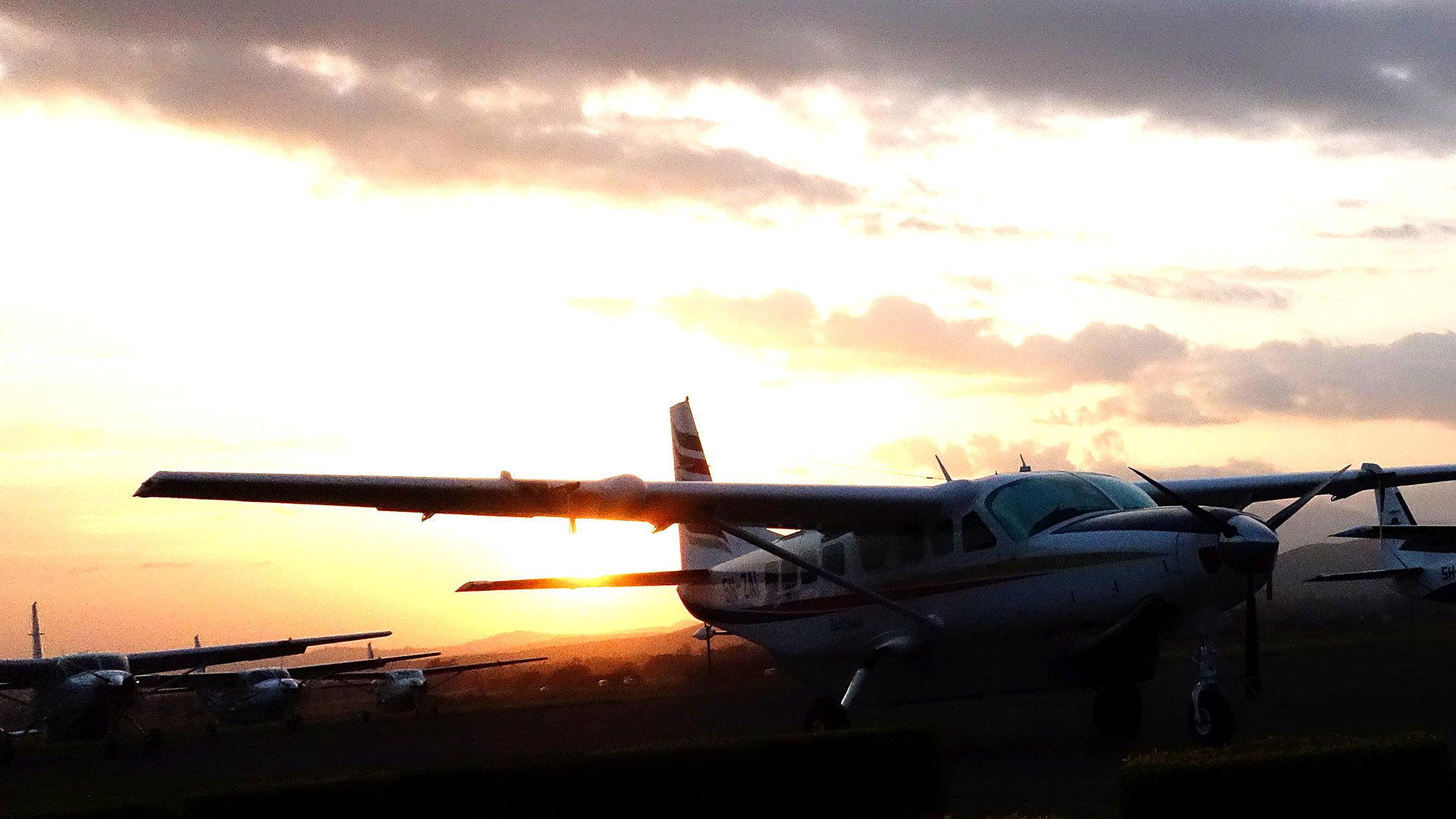
Almost all Delta camps are reached by light aircraft from Maun, the gateway town on the Delta's southern edge. Maun has a busy airport served by scheduled flights from Johannesburg, Gaborone, Kasane (for Chobe) and Victoria Falls. From Maun, small Cessna and Caravan aircraft make short scenic hops — typically 20 to 45 minutes — to the bush airstrips that serve each camp, and the flight is a highlight in its own right, revealing the Delta's channels, islands and wildlife from above. From the airstrip, a short transfer by vehicle, boat or mokoro brings you to camp depending on the water level.
Because of the light-aircraft logistics, most Delta safaris are sold as all-inclusive packages that bundle the inter-camp flights, and there are strict soft-bag luggage limits (usually around 20kg in a soft-sided bag) on the small planes. A smaller number of mobile and self-drive safaris access the Delta's fringes and Moremi by 4x4 from Maun, but the fly-in experience is the norm and, for most travellers, the most rewarding. We handle all the flight scheduling and luggage logistics as part of every itinerary.
What an Okavango Delta Safari Costs
Botswana follows a deliberate high-value, low-impact tourism model: visitor numbers are kept low and camps are small and exclusive, which keeps the wilderness pristine but makes the Delta a premium destination. Expect to pay more here than in many other safari regions — but for a genuinely uncrowded, world-class experience.
| Tier | Per person per night (all-inclusive) | What you get |
|---|---|---|
| Entry / value | USD 600 – 900 | Smaller camps, community and Khwai concessions, green-season rates; excellent guiding, simpler comforts |
| Classic premium | USD 1,000 – 1,800 | The core of the Delta — comfortable to luxurious camps, private concessions, full activity range |
| Ultra-luxury | USD 1,900 – 3,000+ | The flagship water and land camps, exclusive traverse, private guides and the finest lodges in Africa |
Rates are typically all-inclusive of accommodation, all meals, drinks, game activities, park and concession fees and the light-aircraft transfers between camps — so the headline figure covers far more than it first appears. The biggest levers on cost are the season (green-season rates can be 30–40% lower than peak), the region (Moremi and community concessions are more accessible than the deep-water private concessions), and the length of stay. For a full breakdown with sample itineraries, see our Okavango Delta safari packages and costs guide.
The Okavango Delta by Traveller Type
| Traveller | Best approach | Notes |
|---|---|---|
| First-time safari-goer | June–October, mixed water-and-land camp | Peak game, high water and all four activity types in one stay |
| Honeymooners | Private water camp, dry season | Intimate, exclusive and romantic; see our Okavango honeymoon guide |
| Families | Khwai or Moremi land camps, Jun–Aug | Larger vehicles and boats, flexible activities; check minimum-age policies carefully |
| Photographers | September–October or green season | Peak concentrations in the dry; dramatic storm light and birds in the green season |
| Birders | November–March | Migrants arrive, residents in breeding plumage, breeding colonies active |
| Value seekers | April–May shoulder or green season | Rising water and soft rates in the shoulder; lowest prices in the rains |
| Mokoro & water purists | July–September, deep-water camp | Highest water levels for the classic channel experience; see our mokoro safari guide |
Combining the Okavango with Chobe, Victoria Falls & the Kalahari
Few people fly all the way to Botswana for the Delta alone, and the Okavango combines superbly with the region's other great destinations — all linked by short light-aircraft hops.
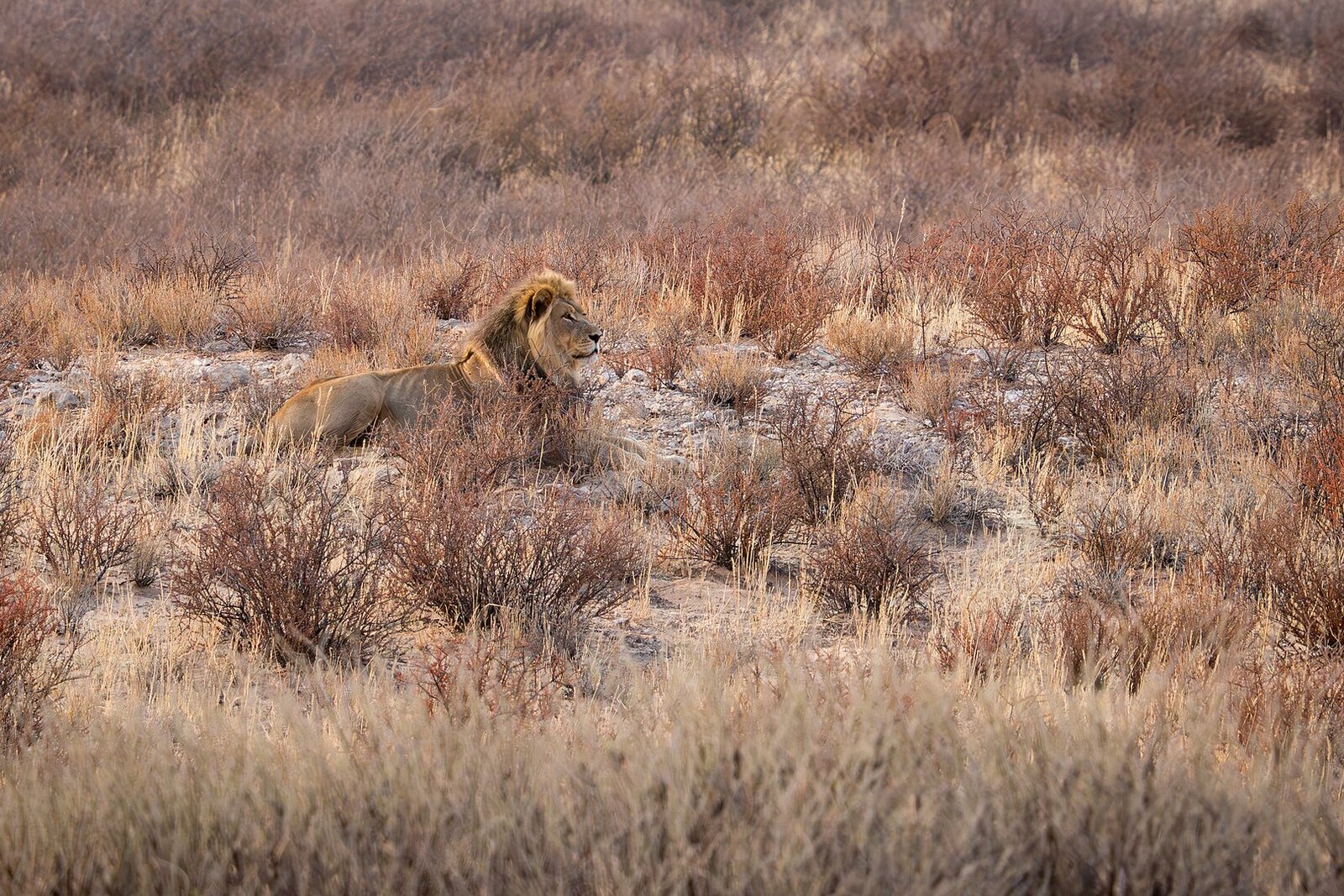
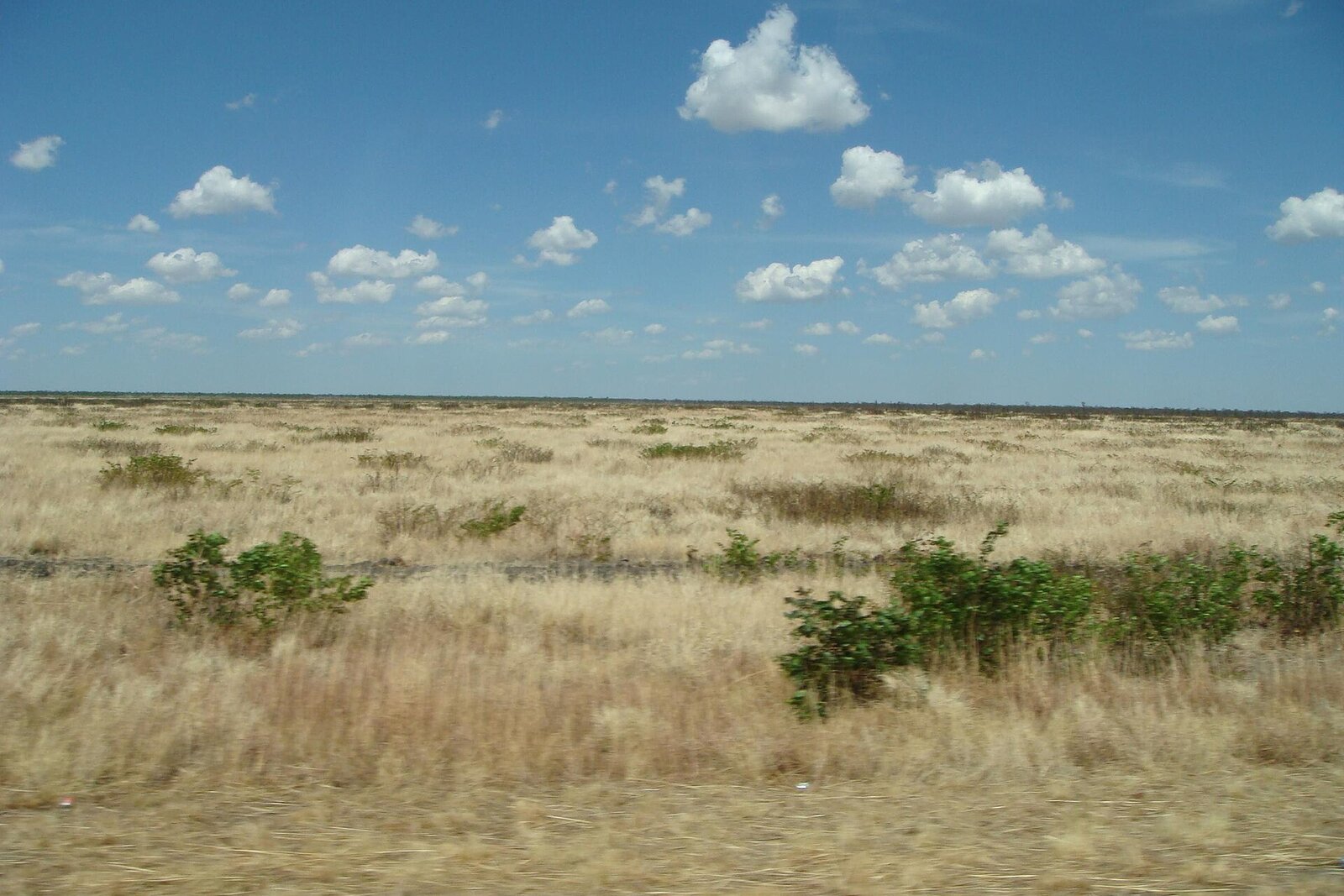
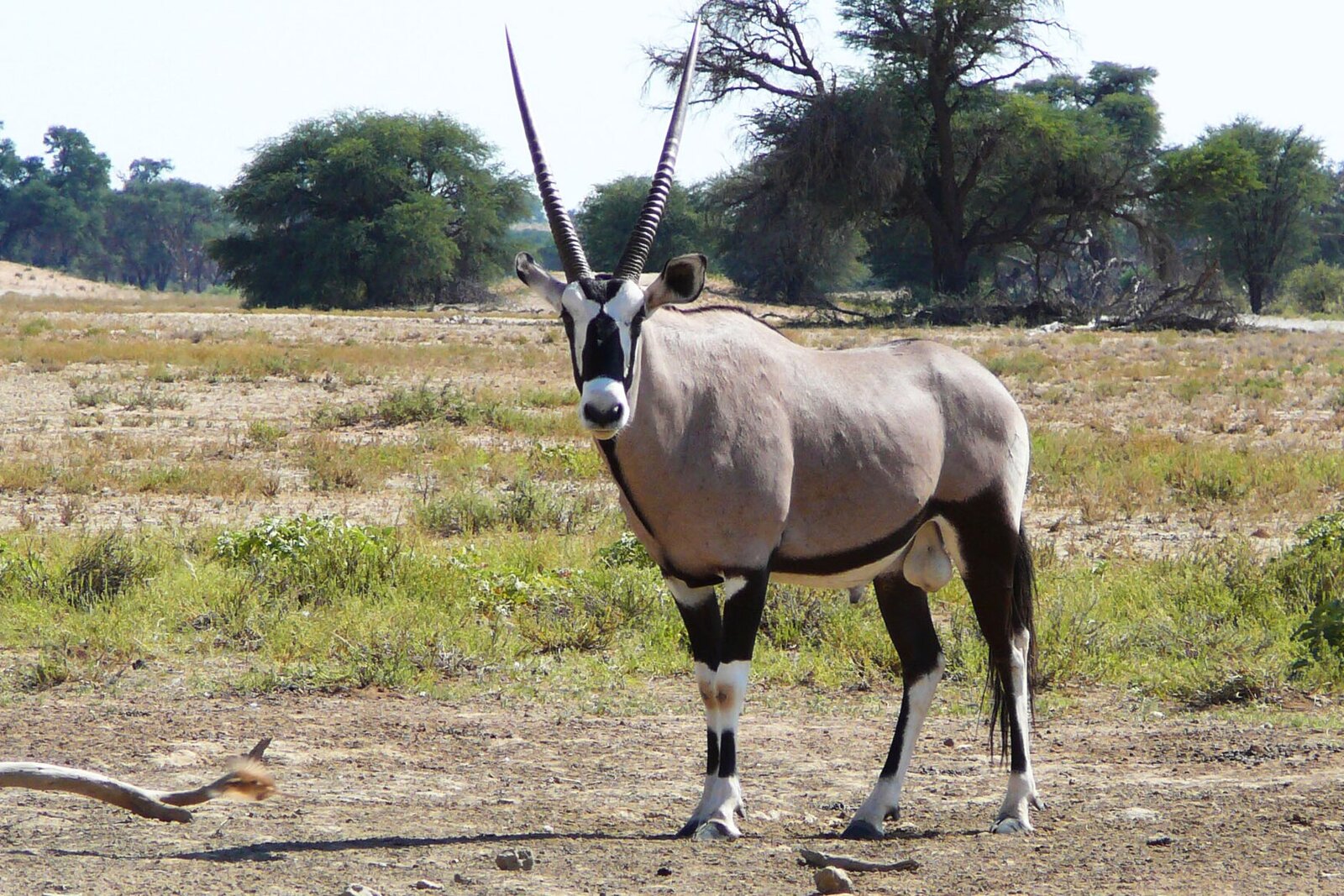
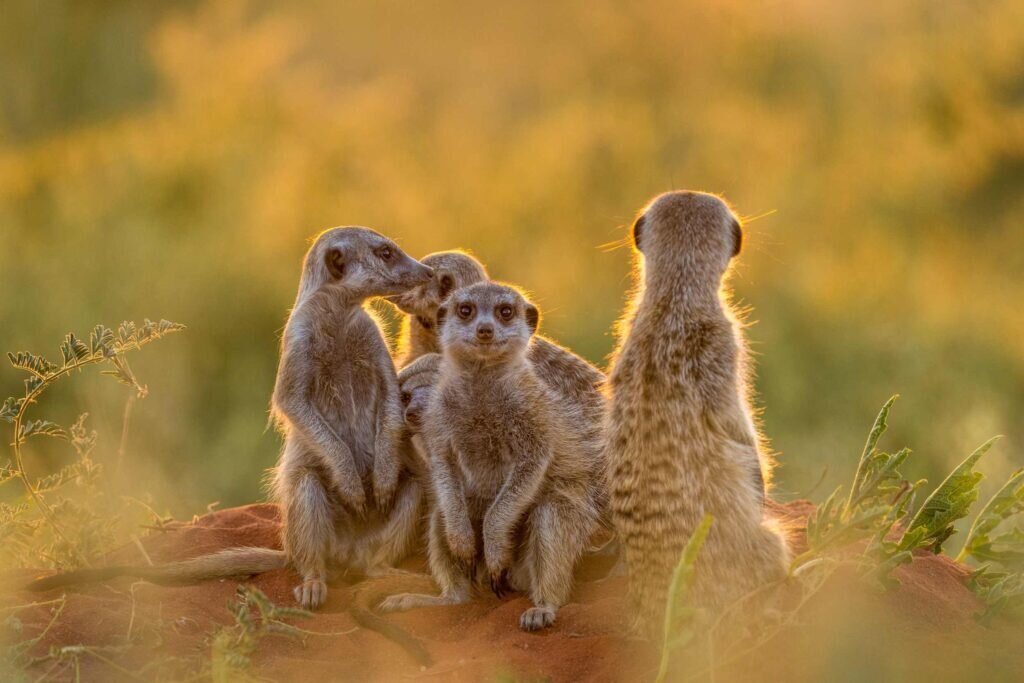
The classic pairing is the Delta and Chobe National Park: 3–4 nights of intimate water safari in the Okavango followed by 2–3 nights on the elephant-packed Chobe River, where river cruises deliver some of Africa's densest elephant and hippo viewing. From Chobe (via Kasane) it is a short transfer to Victoria Falls, one of the seven natural wonders of the world — making the Delta–Chobe–Falls circuit the definitive southern African safari. Travellers with more time can add the Central Kalahari or Makgadikgadi salt pans for a completely different desert dimension — black-maned lions, meerkats and the vast, shimmering emptiness of the pans. We build all of these combinations as seamless, fully transferred itineraries.
Okavango Delta Trip Planning Calendar — 2026 & 2027
Planning your 2026 or 2027 Delta trip? Here is what to expect season by season across the two years. The patterns are consistent — the key variables are the timing and height of the Angolan flood and the peak-season booking crunch.
| Season window | 2026 / 2027 planning notes | Book by |
|---|---|---|
| Oct–Nov 2026 | Peak game then first rains: maximum concentrations in October, dramatic greening and birds from November; value building before December | Book now — October fills early |
| Dec 2026 – Mar 2027 | Green season: lush Delta, superb birding, newborns, quiet camps and the lowest rates; some seasonal camps closed in the heaviest rains | 2–4 months ahead |
| Apr – May 2027 | Shoulder: green scenery with the flood arriving and rising; low crowds, soft rates — an underrated window | 3–5 months ahead |
| Jun – Aug 2027 | Peak dry: high flood, prime water safaris, strong game, cold nights; the premier Okavango window — book the best camps far ahead | 9–12 months for top camps |
| Sep – Oct 2027 | Peak concentration: the driest, most intense game viewing before the rains; outstanding predator action | 9–12 months ahead |
Okavango Weather and What to Pack
| Season | Temperatures | Conditions | What to Pack |
|---|---|---|---|
| Dry winter (Jun–Aug) | Days 22–27°C; nights 4–10°C | Dry, sunny, clear; cold dawns on the water | Warm fleece, beanie and gloves for dawn mokoro and drives; light layers for midday; neutral earth tones; sunhat and SPF |
| Late dry (Sep–Oct) | Days 30–38°C; mild nights | Hot and dry; building toward the rains | Light breathable clothing, sunhat, high SPF, plenty of water; a light layer for early activities |
| Green season (Nov–Mar) | Days 28–35°C; warm nights | Hot, humid; afternoon thunderstorms | Light clothing, light rain jacket, strong insect repellent, binoculars for birding, waterproof cover for camera gear |
| Shoulder (Apr–May) | Mild 20–30°C | Drying; flood arriving; pleasant | Versatile layers, a light jacket for cool evenings, repellent, neutral safari colours |
On safari, wear neutral earth tones (khaki, olive, sand — avoid white and bright colours). Remember the strict soft-bag luggage limit on the light aircraft (usually around 20kg in a soft-sided bag). A good telephoto lens (at least 300mm) and binoculars will transform your wildlife and birding; a waterproof bag protects gear on mokoro and boat outings. Most camps provide laundry, so you can pack light.
Health & Practical Notes
- Malaria: The Okavango Delta is a malaria area year-round, with the highest risk in the wet green season (November–April). Consult a travel health clinic at least 4 weeks before departure about prophylaxis, use repellent, wear long sleeves and trousers at dawn and dusk, and sleep under the nets provided at camp.
- Visas: Many nationalities — including US, UK, EU and Australian passport holders — do not require a visa for Botswana for short tourist stays. Check current requirements before travel and ensure your passport has at least six months' validity and blank pages.
- Yellow fever: A yellow fever certificate is required if you are arriving from or transiting through a yellow-fever endemic country; it is not required for travellers arriving directly from Europe, North America or Australia.
- Children: Many Delta camps have minimum-age policies (often 6+ for game drives and 12+ for mokoro and walking). Family-friendly camps with larger boats and flexible activities exist — always check when booking.
The Verdict — Planning Your Okavango Delta Safari
The Okavango Delta is, quite simply, one of the greatest wilderness experiences on earth — a place where water and desert meet to create a wildlife spectacle found nowhere else. For most travellers, the ideal trip is 3 to 4 nights in the dry season, June to October, in a camp that offers both water and land activities, combined with a second region such as Chobe and, ideally, Victoria Falls. Green-season travellers are rewarded with lush beauty, extraordinary birding and the lowest rates, while the April–May shoulder offers a sweet spot of rising water and soft prices.
Because camp choice, water level and the timing of the flood matter so much — and vary year to year — the Okavango rewards expert planning more than almost any destination in Africa. Tell us how you like to travel and what you most want to see, and we will match you to the right region, the right camp and the right month.
Ready to plan your Okavango Delta safari? Speak to a Beyond Africa Safaris specialist or explore our private Botswana safari packages — every journey is tailor-made to the perfect camp and season for you. You can also read our full guide to Okavango Delta safari packages and costs, discover the best Okavango Delta safari lodges, and plan your timing with our best time to visit the Okavango Delta guide.