Key Takeaways
- The Okavango's flood peaks in the dry season (roughly June–August) — the opposite of the rains — filling the delta just as the land dries out.
- The dry, high-water months (May–September) are the classic time: mokoro water safaris, concentrated game and the best weather.
- July and August are the peak — highest water, superb game viewing and the highest prices; camps book out far ahead.
- The green season (November–March) is lush, quiet and great value, with newborn game, spectacular birding and dramatic skies.
- Water levels vary by where you are in the delta, so matching the camp to the season matters as much as the month.
The Flood That Breaks Every Rule
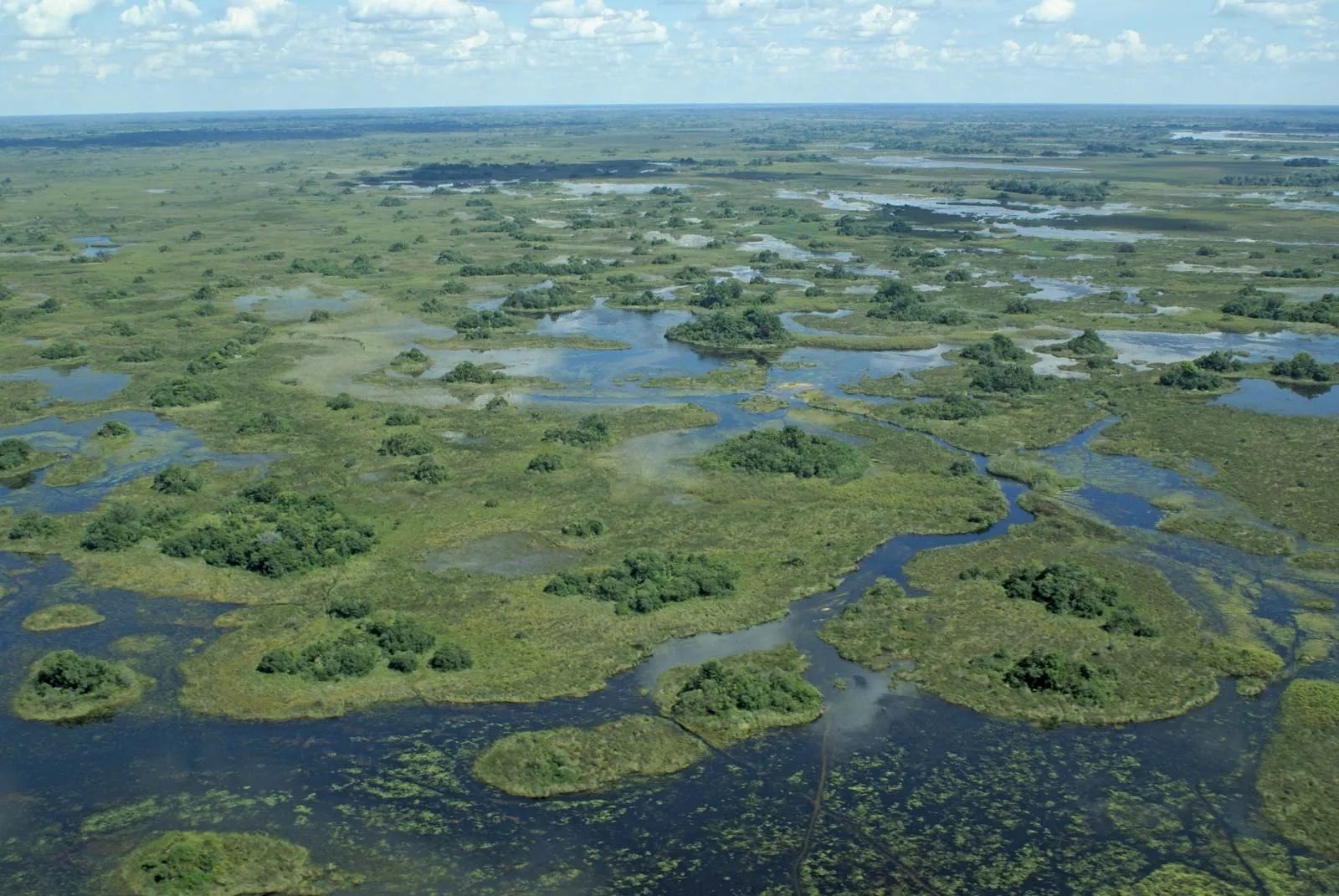
To time an Okavango safari, you have to understand its remarkable, counter-intuitive flood. Unlike anywhere else in Africa, the water that defines the delta does not come from local rain. It falls as summer rain on the Angolan highlands, hundreds of kilometres to the north, then takes months to travel down the Okavango River and spread across the flat Kalahari sands of northern Botswana.
The result is a beautiful paradox: the flood arrives and peaks during the dry winter — roughly May to August, reaching its fullest around June to August — exactly when the surrounding bush has dried to dust and there has been no rain for months. So the delta is at its most watery, its channels brimming and its lagoons full, precisely when the rest of the region is at its thirstiest. That is what draws the wildlife in, and what makes the classic Okavango water safari possible.
The Okavango's two water rhythms:
- The flood (May–September) — Angolan rainwater fills the delta in the dry season; high water, mokoro safaris, concentrated game.
- The local rains (November–March) — Botswana's own summer rain greens the land; lower delta water, dispersed game, superb birding.
The Dry Season & the Flood (May–September): Peak Okavango
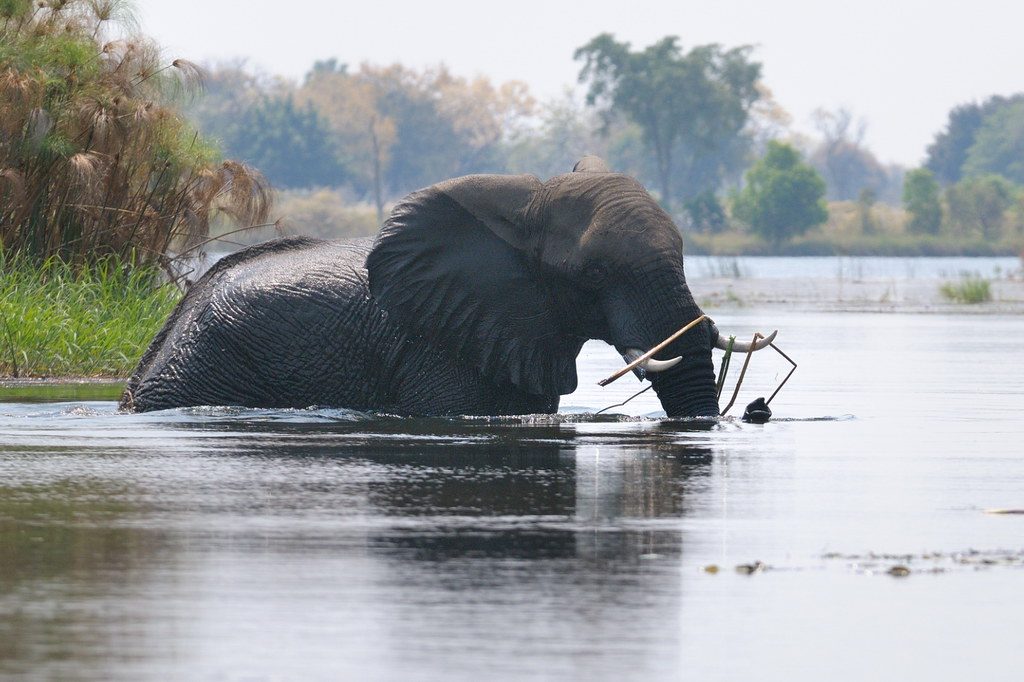
This is the classic, postcard Okavango, and for most travellers the best time to visit. With the flood high and the surrounding land parched, the delta becomes a magnet: elephant, buffalo, lion, leopard, wild dog and huge herds of plains game concentrate on the islands and channels, drawn to the only water for miles. Game viewing is at its most rewarding, and the wildlife densities can be breathtaking.
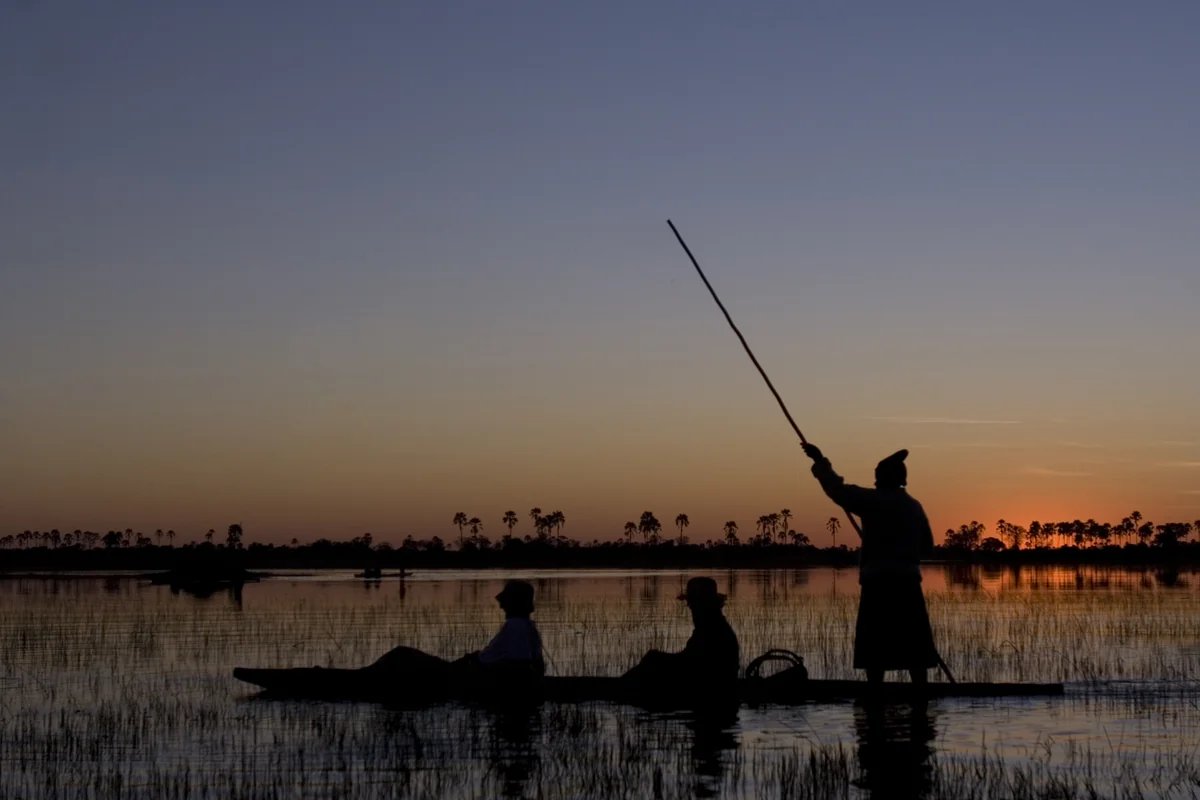
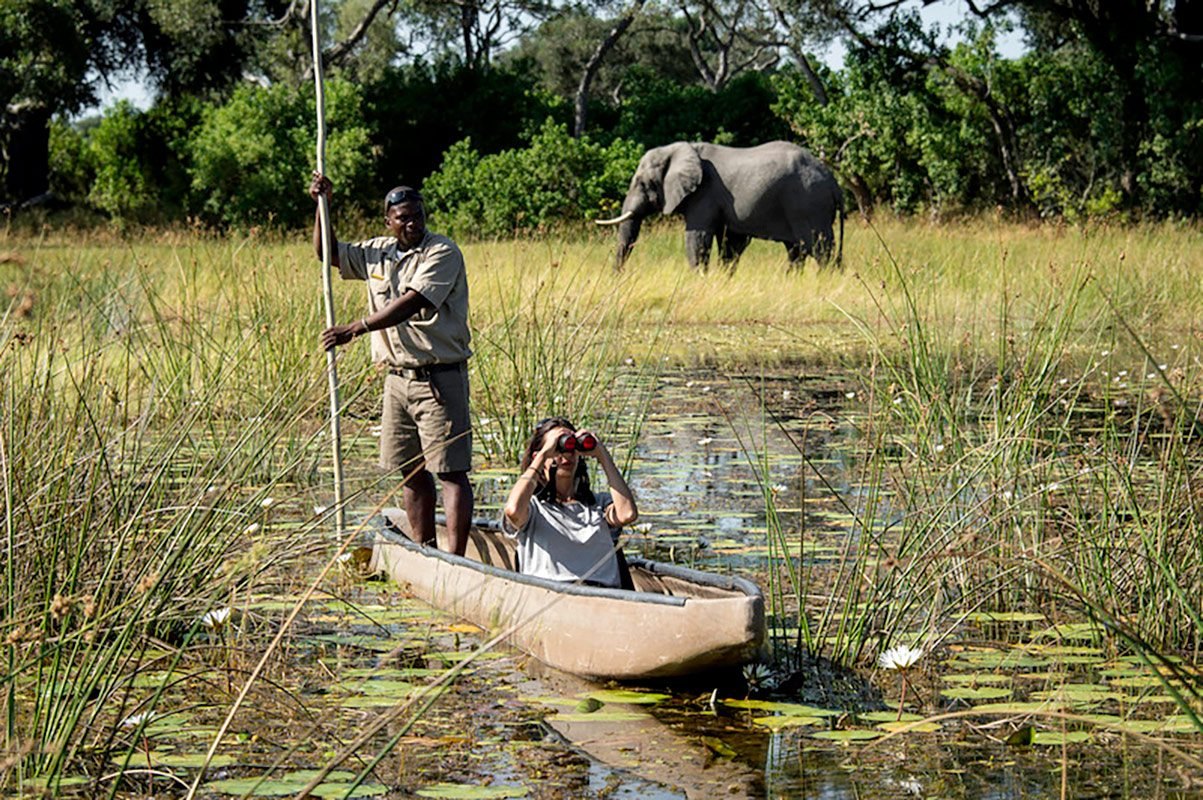
The high water also unlocks the delta's signature experiences — the silent glide of the mokoro dugout canoe through the reed channels, and boat safaris along the deeper waterways — alongside classic game drives on the islands. The weather is glorious: warm, dry, cloudless days and cool, crisp nights (pack a fleece for the dawn boat trips). It is the peak season, so July and August are the busiest and most expensive months, and the delta's small, exclusive camps book out a year ahead.
The Green Season (November–March): Birds, Newborns & Value
When Botswana's own summer rains arrive, the Okavango turns lush and quiet. From November the land greens, the pans and floodplains fill with fresh rainwater, and the wildlife — no longer tied to the delta's channels — disperses across a landscape rich in grazing. Game viewing takes more patience than in the flood season, but the delta is at its most beautiful, and the experience is far more exclusive and affordable.
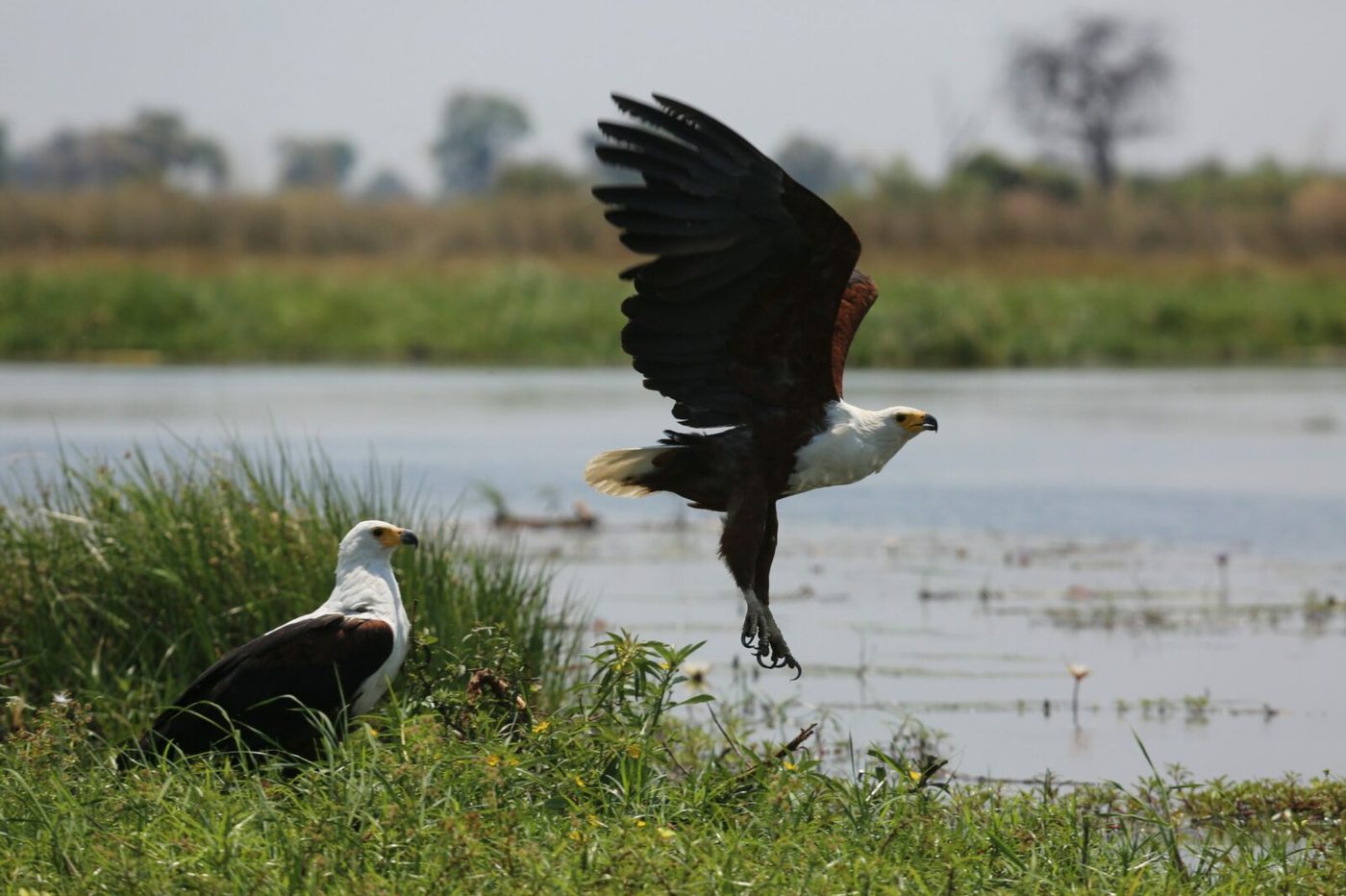
This is the finest time for two things in particular. First, birding: the summer migrants arrive in breeding plumage, the herons and storks nest, and the delta becomes one of the great birding destinations on Earth. Second, newborn game: the impala and other antelope drop their young, and the predators follow. Days are hot and humid with dramatic afternoon storms, prices are at their lowest, and you often have the wilderness almost to yourself.
The Okavango Delta Month by Month
Here is the delta's year at a glance — the water, the weather and what to expect.
| Month | Water & season | What to expect |
|---|---|---|
| Jan–Mar | Green (local rains) | Lush, hot; newborns & superb birding; lowest prices |
| Apr–May | Flood rising, drying out | Water arriving, bush thinning; great value shoulder |
| Jun–Aug | Flood peak, dry (peak) | Highest water, mokoro safaris, concentrated game; busiest & priciest |
| Sep–Oct | Water dropping, dry & hot | Superb game viewing, warming up; a top shoulder time |
| Nov–Dec | Green (rains begin) | Bush greens, migrants arrive; festive season busy late Dec |
The Okavango Delta: A Deeper Month-by-Month Breakdown
For a more granular view of what each month offers — the water levels, the wildlife, the weather, and the value — here is the delta's calendar in detail.
| Month | Water Level | Wildlife & Activities | Weather | Crowds & Value |
|---|---|---|---|---|
| January | Low | Peak green season; newborn impala; superb birding | Hot (30–35°C), humid, afternoon storms | Quiet; excellent value |
| February | Low | Green season continues; migrants; newborns | Hot (28–34°C), humid, storms | Quiet; excellent value |
| March | Low | Rains taper; bush still lush; good birding | Warm (26–32°C), less humid | Quiet; good value |
| April | Rising | Flood arriving; bush drying; game concentrating | Warm (24–30°C), dry, clear skies | Shoulder season; great value |
| May | Rising | Water rising fast; mokoro starting; excellent game | Warm days (22–28°C), cool nights | Shoulder season; good value |
| June | High | Peak flood begins; superb mokoro & game drives | Warm days (20–26°C), cold mornings | Busy; high season pricing |
| July | Peak | Highest water; peak game viewing; best mokoro | Dry, warm days (20–26°C), very cold nights | Peak season; highest prices |
| August | Peak | Still peak flood; superb water & land safaris | Warming up (22–28°C), dry, clear | Peak season; highest prices |
| September | Dropping | Water receding; concentrated game; great viewing | Hot (26–34°C), dry | Busy shoulder; good value |
| October | Low | Very low water; intense game drives; predators active | Very hot (30–40°C), dry | Shoulder season; good value |
| November | Low | Rains begin; bush greens; migrants arrive | Hot (28–36°C), humid, sporadic storms | Quiet; excellent value |
| December | Low | Green season peak; superb birding; newborns | Hot (30–35°C), humid, afternoon storms | Festive period busy late Dec |
Water Safari or Game Drive? Match the Camp to the Season
The Okavango is not one uniform place, and this is the key to timing it well. The delta ranges from permanently flooded channels in its heart to seasonal floodplains and drier islands at its edges, and how much water any camp has depends on both the season and its location. A camp deep in the permanent delta offers mokoro and boat safaris even in low-water months; a camp on a drier concession focuses on game drives and comes into its own when the flood recedes.
That is why we match the camp to the experience you want. If your heart is set on gliding through the reeds in a mokoro, we place you where the water is highest at your time of year — the flood months, in a water-based camp. If you want the best big-game drives, we choose a camp and a season where the wildlife concentrates on the land. Get this pairing right and the Okavango delivers the safari of a lifetime whatever month you travel.
Camps Built for the Flood: Where the Water Never Leaves
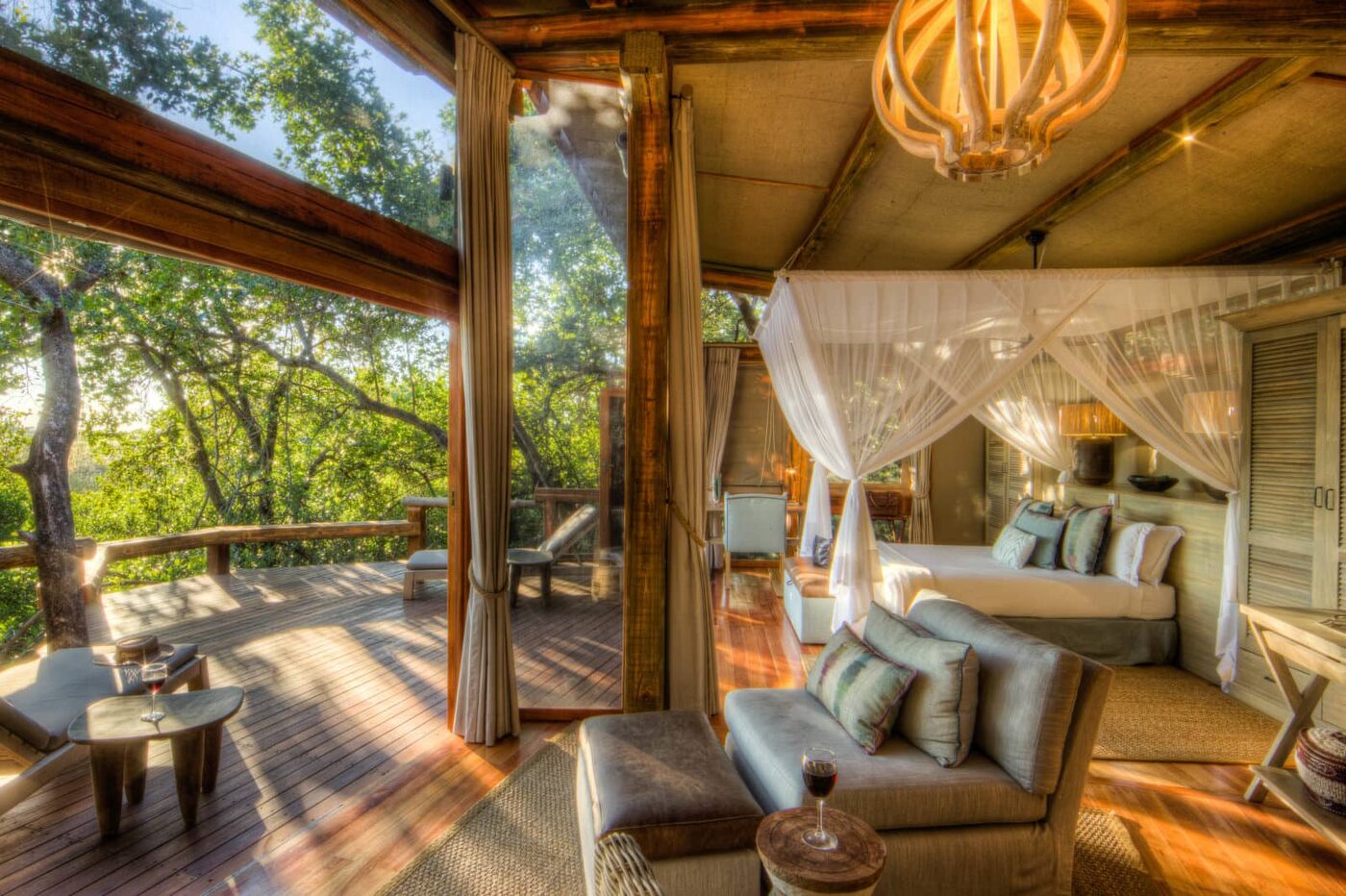
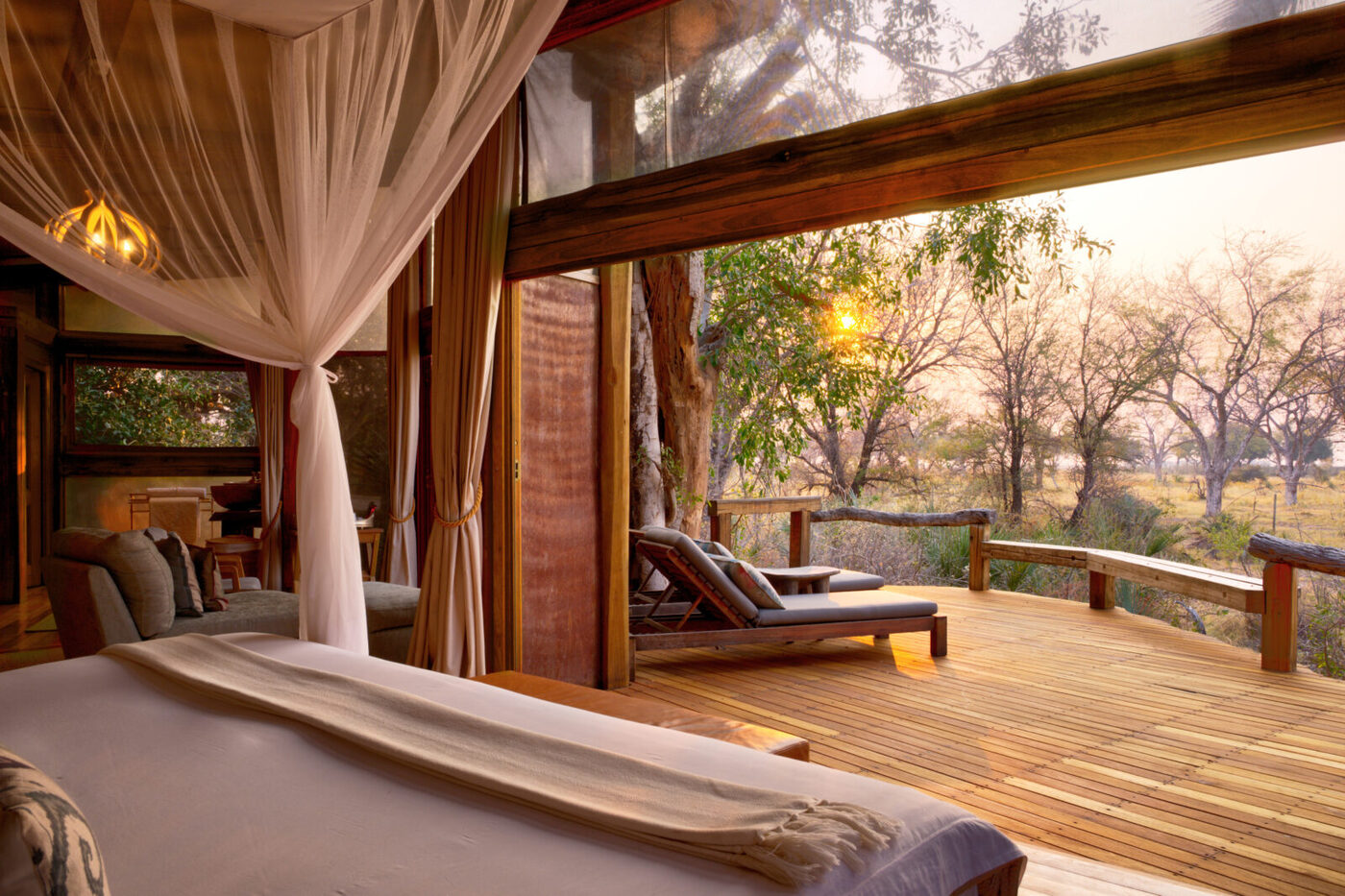
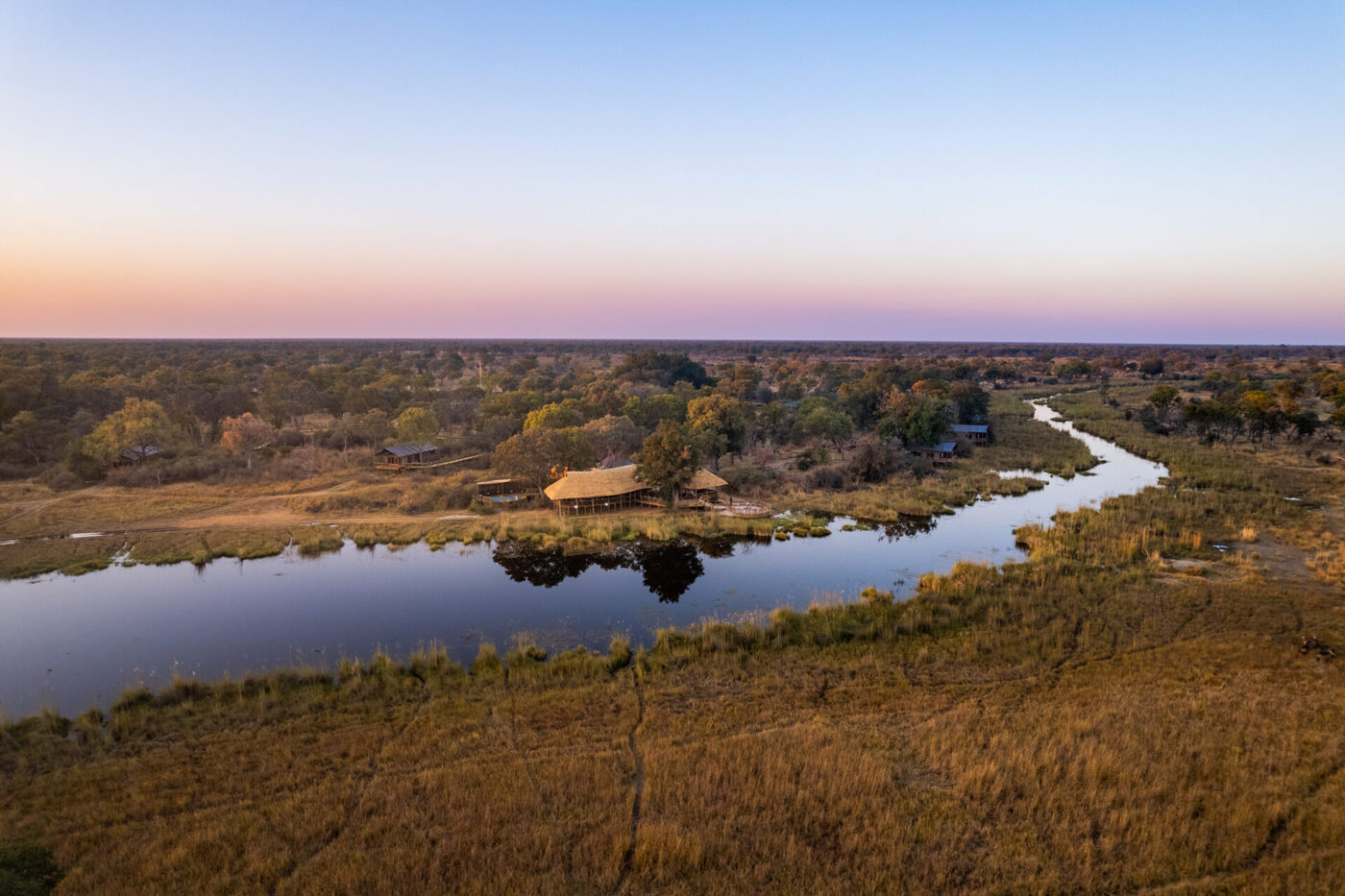
Camp Okavango is a Wilderness Safaris classic, built on stilted decks deep in the permanent delta where the water is reliable year-round. Mokoro glides, boat safaris, and island game drives are offered in every season, making it a superb choice if water-based activities are your priority — even in the lower-water green season, the channels here still flow.


Eagle Island Lodge (a Belmond property) is the Okavango's most luxurious water camp, recently renovated with contemporary suites, private plunge pools, and a spa. Positioned on an island in the heart of the delta, it offers water-based safaris, helicopter flights, and horseback rides — an all-season water experience with five-star comfort.
Water Camps vs Land Camps: Choosing Your Okavango Experience
Not all Okavango camps are created equal when it comes to water-based activities. Some are built deep in the permanent delta where mokoro and boat safaris are reliable year-round; others sit on drier concessions and focus on game drives. Here is how to match the camp to your priorities and travel dates.
| Camp Type | Best Time to Visit | Activities | Examples |
|---|---|---|---|
| Permanent Water Camps | Year-round, especially May–Sep | Mokoro safaris, boat safaris, island walks, birdwatching | Camp Okavango, Eagle Island, Jao, Xigera, Vumbura, Chief's |
| Seasonal Water Camps | May–Sep (flood season) | Mokoro (seasonal), game drives, walking safaris | Kwara, Sandibe, Nxabega, Tubu Tree |
| Dry-Land Game Drive Camps | Apr–Oct (dry season) | Game drives, walking safaris, predator tracking | Duba Plains, Mombo, Abu Camp, Chitwa Chitwa |
Okavango Delta Pricing by Season (2026 Guide)
Okavango camp rates vary dramatically by season, reflecting water levels, game viewing quality, and demand. Here is a general pricing guide for luxury camps in 2026.
| Season | Months | Luxury Camp Rate (pp/night) | Value |
|---|---|---|---|
| Peak (High Water) | Jul–Aug | $1,200–$2,500 | Highest rates; book 9–12 months ahead |
| High Season (Flood) | Jun, Sep | $1,000–$2,200 | High demand; excellent game & water |
| Shoulder Season | May, Oct | $800–$1,600 | Great value; good availability & weather |
| Green Season | Nov–Mar | $600–$1,200 | Best value; superb birding, quiet camps |
| Early/Late Dry | Apr, Nov | $700–$1,400 | Transition months; good value & weather |
Rates shown are fully inclusive (accommodation, meals, activities, park fees, transfers) per person per night sharing. Exclude flights. Festive season (mid-Dec to mid-Jan) often carries peak pricing. Rates vary by specific camp and are indicative only.
Sample 5-Night Okavango Safari Costs (2 Guests)
To illustrate the seasonal price difference, here is what a 5-night Okavango safari for two guests might cost in different seasons (luxury camp, fully inclusive, excluding flights).
| Season | Camp Tier | Total Cost (2 guests, 5 nights) | Per Person |
|---|---|---|---|
| Peak (Jul–Aug) | Luxury (e.g., Vumbura, Mombo) | $20,000–$25,000 | $10,000–$12,500 |
| High Season (Jun, Sep) | Luxury (e.g., Chief's, Jao) | $16,000–$22,000 | $8,000–$11,000 |
| Shoulder (May, Oct) | Classic (e.g., Camp Okavango, Xudum) | $12,000–$16,000 | $6,000–$8,000 |
| Green Season (Nov–Mar) | Classic (e.g., Nxabega, Sandibe) | $8,000–$12,000 | $4,000–$6,000 |
Plan Your Okavango Safari With Beyond Africa
Plan Your Okavango Safari With Beyond Africa
We are a Cape Town-based, tailor-made safari house, and the Okavango is one of our great specialities — a destination where knowing the flood and the camps intimately makes all the difference. Tell us whether you dream of the mokoro and the water, the best big-game drives, or a green-season birding escape, and we place you in exactly the right camp for your dates, secure it before it sells out, and build the light-aircraft flights and every transfer around it.
Ready to choose your season in the Okavango? 👉 Request a tailor-made Okavango quote → 👉 Browse our Okavango safari packages → 👉 WhatsApp us: +27 74 315 5782