Key Takeaways — Ethiopia in 60 Seconds
- ◆A different kind of safari: not the Big Five, but endemic wildlife found nowhere else on earth — the Ethiopian wolf, the gelada, the Walia ibex and the mountain nyala.
- ◆Two great mountain parks: the Simien Mountains (gelada & Walia ibex) and the Bale Mountains (the world's best place to see the Ethiopian wolf).
- ◆Living history: the 12th-century rock-hewn churches of Lalibela, the castles of Gondar, the stelae of Axum, and the surreal Danakil Depression.
- ◆Best time: the dry season October to March for trekking and touring, with the great festivals of Meskel (Sep) and Timkat (Jan).
- ◆Plan with a specialist: Ethiopia rewards careful, expert planning — domestic flights, local guides and current security knowledge are essential.
Why Ethiopia Is a Different Kind of Safari
Most safaris follow a familiar script: golden savanna, acacia trees, the Big Five, a sundowner as the sky turns to fire. Ethiopia tears up that script and writes its own. There are no lions stalking the plains here, no wildebeest crossings, no dawn balloon over the Serengeti. What Ethiopia offers instead is something that no other African country can: a wilderness of high mountains and endemic species that exist nowhere else on the planet, wrapped around a civilisation as old as any on earth.
This is the land often called the Roof of Africa — a vast highland plateau split by the Great Rift Valley, rising to peaks above 4,500 metres. That altitude created a series of "sky islands", ecosystems isolated for millennia in which unique creatures evolved: the Ethiopian wolf, the rarest canid on earth; the gelada, the world's only grass-eating primate, with its shaggy cape and the crimson "bleeding heart" patch on its chest; the Walia ibex, a mountain goat clinging to cliffs found only in the Simien Mountains; the mountain nyala, a spiral-horned antelope of the southern highlands. To seek these animals is a more intimate, more specialised pursuit than a savanna game drive — and for the traveller who has already ticked off the Migration, it is thrilling in an entirely different way.
And then there is the human story. Ethiopia was never colonised. It has its own alphabet, its own calendar, its own church, and a history stretching back to the Kingdom of Axum and, in legend, to the Queen of Sheba. You can stand inside a church carved downward into solid rock nine hundred years ago and still filled with the chant of Orthodox priests; you can watch a Timkat procession of thousands in white robes; you can meet cultures in the Omo Valley living much as they have for centuries. Ethiopia is not a safari in the ordinary sense. It is a journey into the deep past and the wild heart of the continent at once.
Ethiopia's Endemic Wildlife
Ethiopia's wild appeal rests on its endemics — the species that evolved here and exist nowhere else. Understanding them is the key to understanding why this country is such a prize for the discerning wildlife traveller.
The Ethiopian Wolf — the Rarest Canid on Earth
Slender, russet-red and impossibly elegant, the Ethiopian wolf is Africa's most endangered carnivore and the rarest member of the dog family on the planet — fewer than five hundred survive. Unlike its pack-hunting cousins, it hunts alone, trotting across the high Afro-alpine moorland in search of the giant mole-rats and grass rats that make up most of its diet. The Bale Mountains hold roughly half the world's population, and the Sanetti Plateau offers what is, quite simply, the best chance anywhere on earth to see one in the wild. To watch a wolf pause, ears pricked, against a backdrop of giant lobelia and silver everlasting flowers is one of the great wildlife encounters in Africa.
The Gelada — the Grass-Eating Primate of the Cliffs
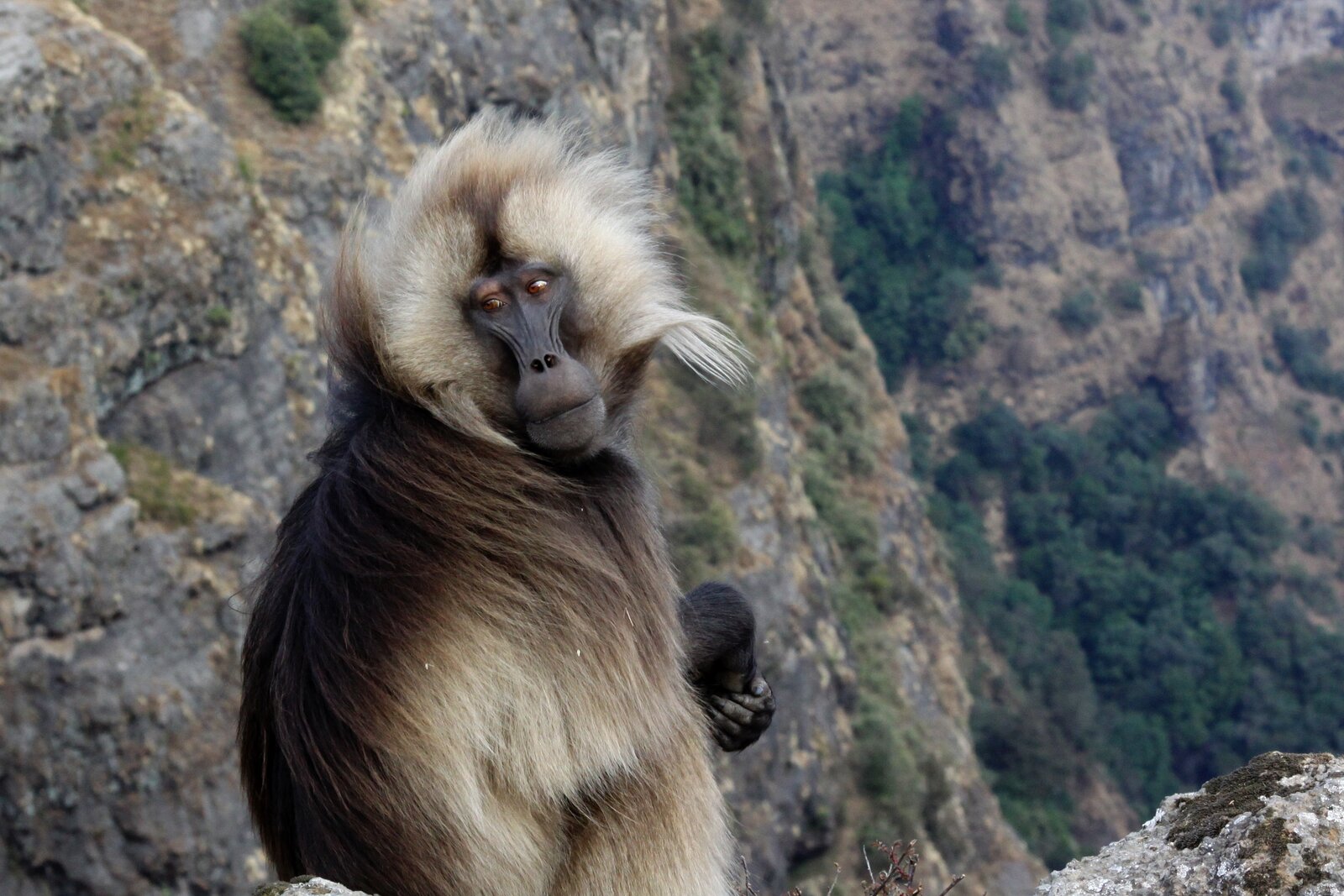
Found only in the Ethiopian highlands, the gelada is one of the most extraordinary primates alive. Often called the "bleeding-heart monkey" for the vivid patch on its chest, it is the last surviving species of a once-widespread group of grazing primates, and the only primate in the world to live primarily on grass. Geladas gather in some of the largest primate congregations on earth — troops can number several hundred — grazing the grasslands by day and retreating over the edge of the Simien escarpment to sleep on the cliffs at night. They are remarkably tolerant of respectful human presence, allowing sightings among the most intimate you will ever have with a wild primate.
The Walia Ibex & the Mountain Nyala
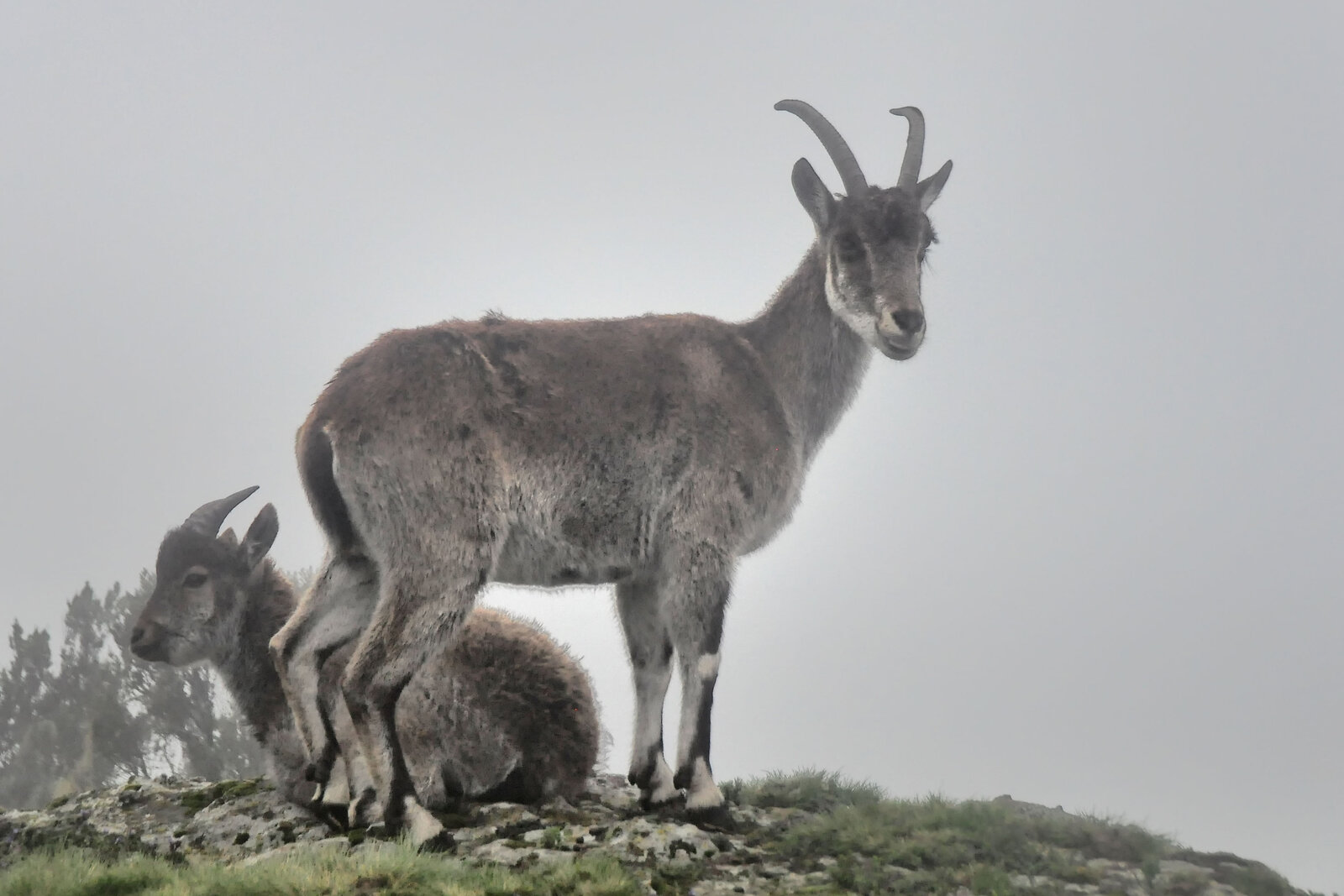
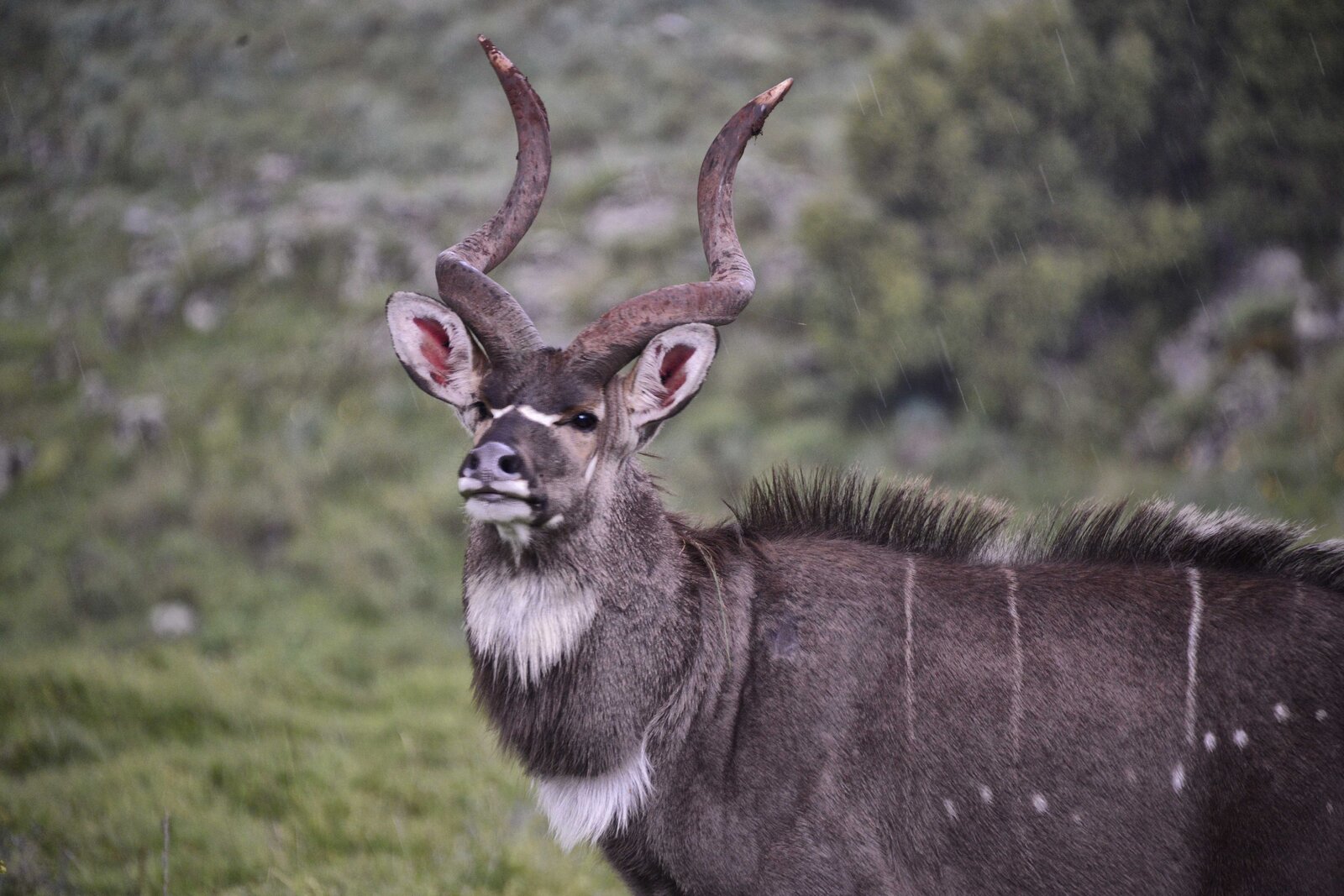
The Walia ibex, a magnificent wild goat with sweeping scimitar horns, exists in the wild only in the Simien Mountains, where it picks its way along cliff ledges above two-kilometre drops. In the south, the mountain nyala — a large, shaggy, spiral-horned antelope — is endemic to the Bale highlands, alongside Menelik's bushbuck. Together with the wolf and gelada, these four species form the "big four" of Ethiopian endemic mammals, and seeing all of them is the goal of any dedicated wildlife itinerary. Add to this Ethiopia's status as a world-class birding destination — over 850 species and around 18 endemics — and the country's wild credentials are beyond question.
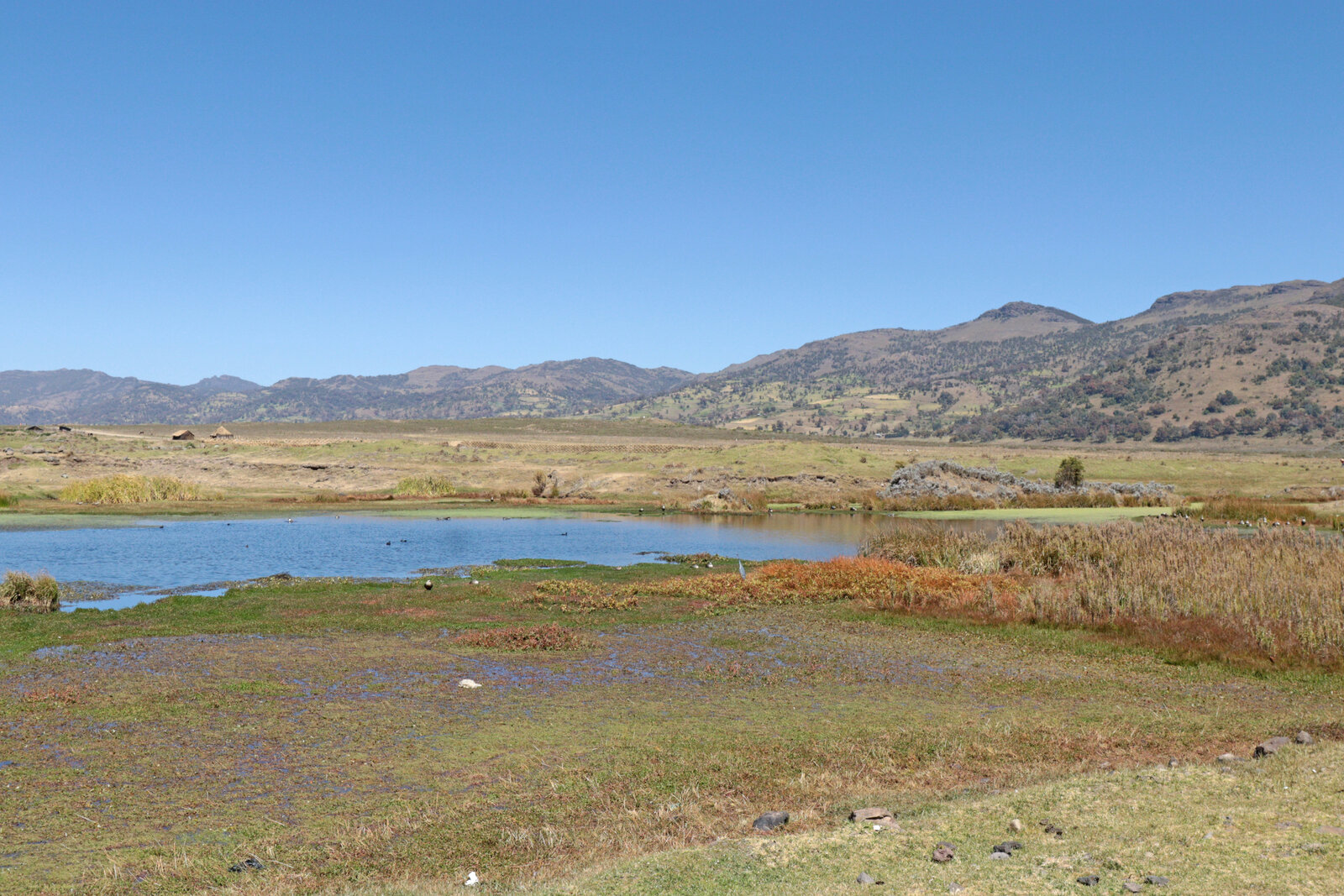
Simien Mountains National Park
A UNESCO World Heritage Site in the north of the country, the Simien Mountains are among the most dramatic landscapes in Africa — a shattered escarpment of pinnacles, buttresses and gorges dropping in sheer cliffs from a high plateau, the eroded remnants of an ancient volcanic massif. They are frequently, and rightly, compared to the Grand Canyon, though the Simien have something the Grand Canyon lacks: wildlife on every ridge.
This is the realm of the gelada, which graze the high grasslands in vast, relaxed troops, and of the endemic Walia ibex, most often seen around the cliffs near Chennek. The park is explored on foot, on multi-day treks between community lodges and camps, or as day walks from a comfortable base — either way, the walking is spectacular, with the escarpment falling away beneath your boots and lammergeier vultures wheeling on the thermals. For trekkers, the ascent of Ras Dashen, Ethiopia's highest peak at 4,550 metres, is a serious multi-day undertaking; for most travellers, two to three days of day-walks delivers the wildlife, the views and the sheer scale without the full expedition.
The best time to visit is the dry season, roughly October to March, when the trails are firm and the air crystal clear. September and October are especially beautiful, with the post-rains meadows carpeted in wildflowers. Even in the dry season the nights are cold at altitude, so warm layers are essential.
Bale Mountains National Park
If the Simien are Ethiopia's showpiece landscape, the Bale Mountains in the south are its wildlife crown. This is the single best place on earth to see the Ethiopian wolf, and a day on the Sanetti Plateau — a vast, otherworldly Afro-alpine moorland above 4,000 metres, studded with giant lobelia and glacial tarns — is the highlight of many an Ethiopian journey. Here, in the largest expanse of Afro-alpine habitat on the continent, the wolves hunt in the open, and sightings are genuine and regular rather than a matter of luck.
The Bale offer far more than the wolf. The Harenna Forest on the southern slopes is a lush, mist-shrouded cloud forest — one of Africa's largest — where wild coffee grows in the understorey and the endemic Bale monkey lives among the bamboo. The Gaysay Grasslands around park headquarters are the reliable place to see the endemic mountain nyala and Menelik's bushbuck, along with warthog, bohor reedbuck and grey duiker. And for birders, the Bale are a pilgrimage: this is one of the great endemic-birding sites in Africa, with the blue-winged goose, the wattled ibis, the Rouget's rail and many more.
Beyond the Highlands: Awash, the Rift Valley Lakes & Remote Parks
Ethiopia's wild landscapes extend well beyond the two great mountain parks. In the Rift Valley, a chain of lakes — Chamo, Abaya, Ziway, Langano and others — draws huge concentrations of birdlife and, on Lake Chamo, some of the largest Nile crocodiles in Africa alongside pods of hippo. Nearby Nechisar National Park, on the isthmus between Lakes Abaya and Chamo, protects Burchell's zebra, greater kudu, Grant's gazelle and the endemic Nechisar nightjar.
Awash National Park, on the road east towards the Danakil, is a lower, hotter landscape of acacia savanna and volcanic scenery around the Awash Falls, home to beisa oryx, Soemmerring's gazelle, kudu, hamadryas baboon and a rich birdlife — the closest Ethiopia comes to a classic savanna game park. Far to the west, remote Gambella National Park hosts one of Africa's great and least-known wildlife spectacles: the seasonal migration of white-eared kob and other antelope in their hundreds of thousands across the Sudanese borderlands — a genuine frontier destination reached only by charter and expedition-style logistics, for the most adventurous travellers.
The Historic North: Lalibela, Gondar & Axum
No journey to Ethiopia is complete without its historic north — the cradle of one of the oldest Christian civilisations on earth, and home to some of the most astonishing man-made wonders in Africa.
Lalibela — the Rock-Hewn Churches
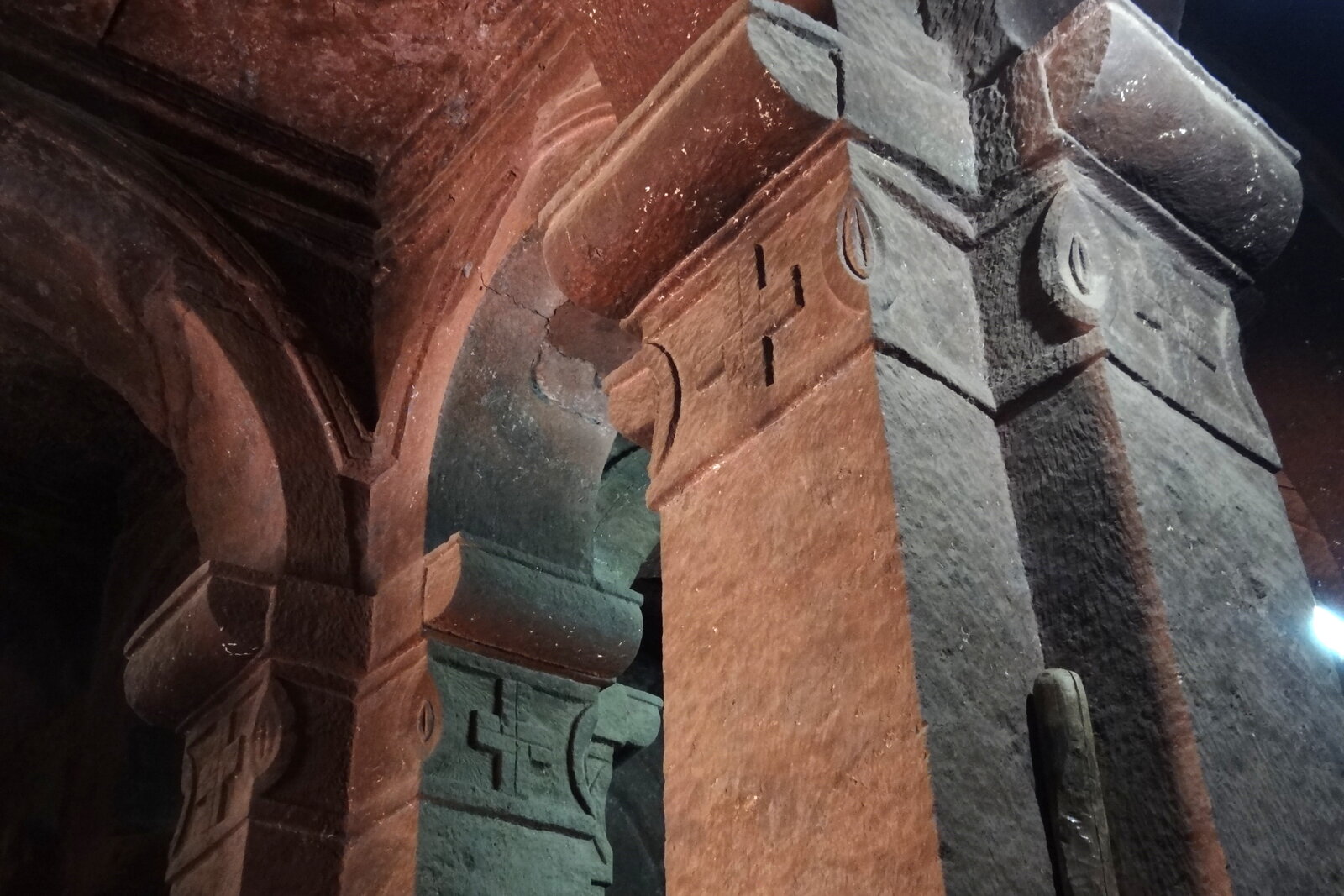
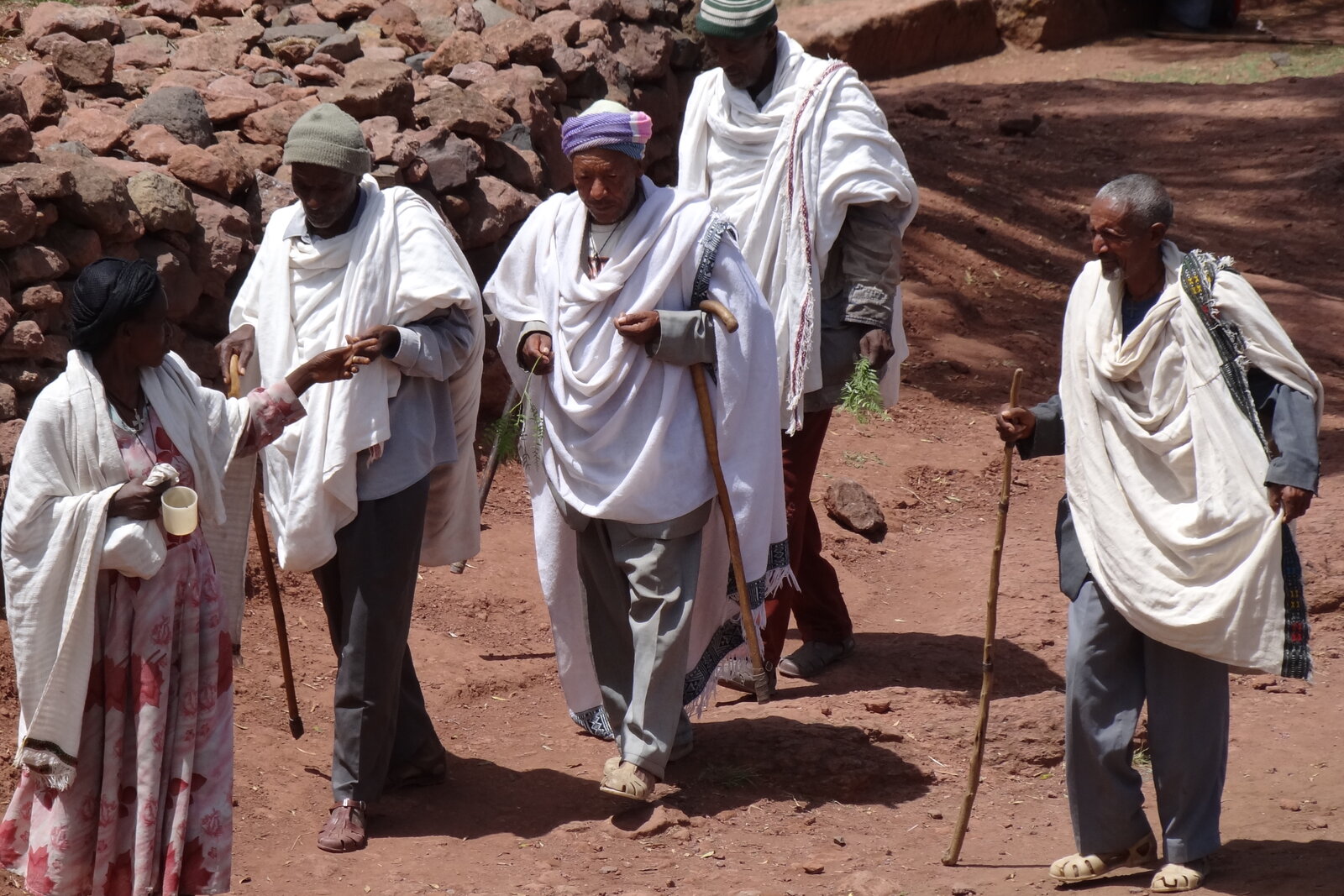
The eleven medieval churches of Lalibela, carved downward into the living rock in the 12th and 13th centuries, are among the greatest architectural achievements of the ancient world — and, unlike so many ancient sites, they are not ruins but a living place of worship, still filled with the chant of priests and the prayers of pilgrims. Each church was hewn as a single monolith, cut down into the earth and then hollowed out, connected by a labyrinth of trenches and tunnels. The most famous, Bete Giyorgis (the Church of St George), is carved in the shape of a perfect cross, sunk into a deep pit in the red rock. To visit at dawn, as white-robed worshippers gather and the sound of ancient liturgy drifts up from the stone, is one of the most moving experiences travel can offer.
Gondar & Axum
Gondar, the 17th-century imperial capital, is often called the "Camelot of Africa" for its remarkable Fasil Ghebbi — a walled royal compound of castles, palaces and churches that blends Ethiopian, Portuguese and Indian influences, another UNESCO World Heritage Site. Nearby, the church of Debre Berhan Selassie is famous for its ceiling of painted angel faces. Further north, Axum was the heart of one of the ancient world's great trading empires, and its field of towering carved granite stelae — the tallest standing over 20 metres — marks the tombs of its kings; Ethiopian tradition also holds Axum to be the resting place of the Ark of the Covenant. Together, Lalibela, Gondar and Axum form the classic "historic route" of the north.
The Danakil Depression
For the truly adventurous, the Danakil Depression in the far northeast is one of the most extraordinary places on Earth — and one of the most extreme. Lying more than 100 metres below sea level, it is among the hottest inhabited places on the planet, a geological wonderland where three tectonic plates pull apart and the earth's molten heart shows through.
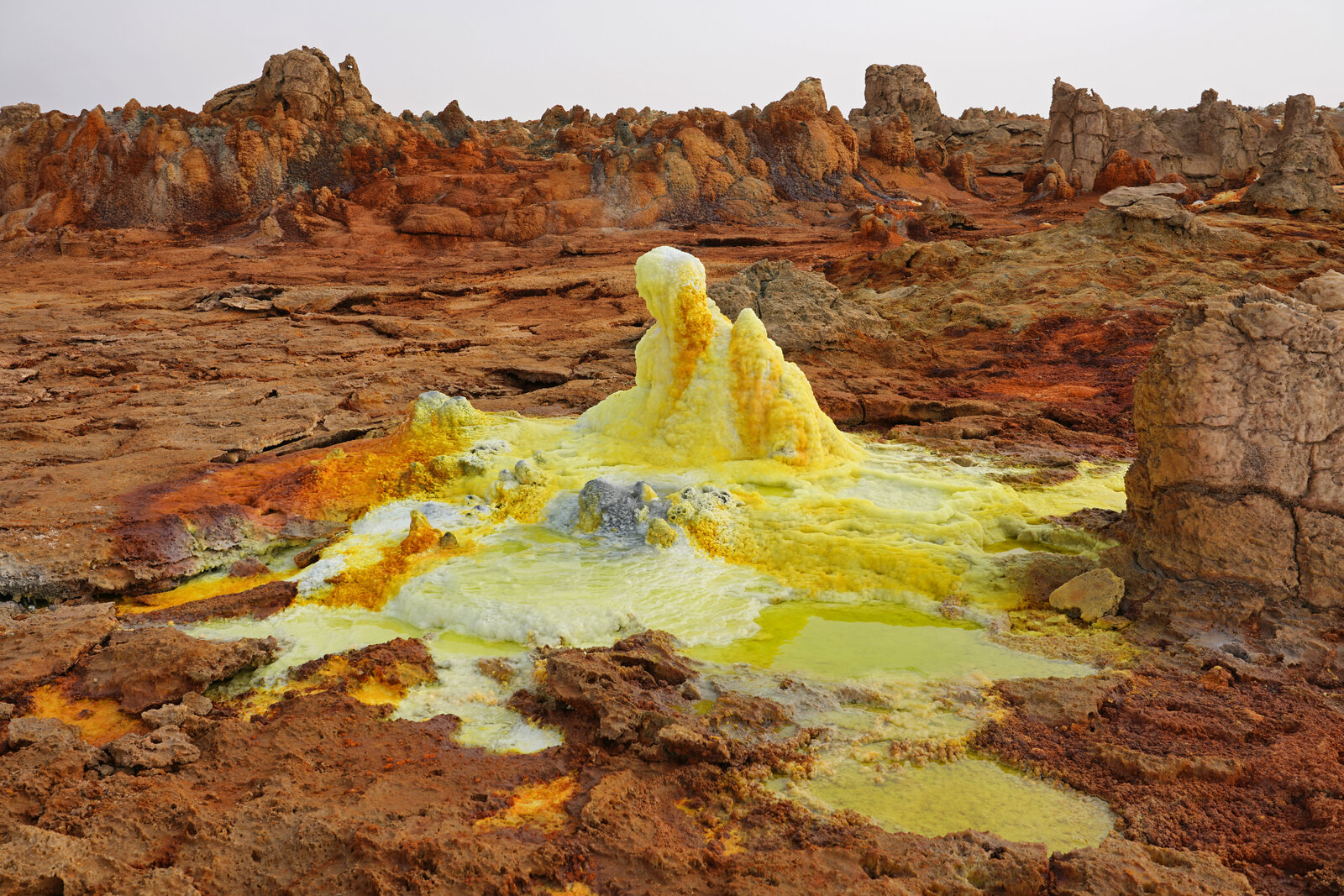
Its two great sights are almost unreal. Erta Ale is one of the world's very few permanent lava lakes — a bubbling, glowing cauldron of molten rock, best witnessed at night when the darkness turns the crater into a scene from the dawn of the world. Dallol is a hydrothermal field of surreal beauty: neon-yellow sulphur springs, acid pools, salt towers and mineral terraces in greens, oranges and whites that look like nothing else on the planet. Across the salt flats you will still see the camel caravans of the Afar people, cutting and carrying blocks of salt as they have for centuries. The Danakil is a specialist expedition — visited only in the cooler months of November to February, with proper logistics, local guides and support — and it is unforgettable.
The Omo Valley & Ethiopia's Living Cultures
In the far south, the Lower Omo Valley — a UNESCO World Heritage Site — is home to some of the most culturally distinct communities left on the African continent. This is one of the last places on earth where a number of peoples continue to live largely according to their own long-standing traditions, and a respectful visit here is among the most profound cultural experiences in travel.
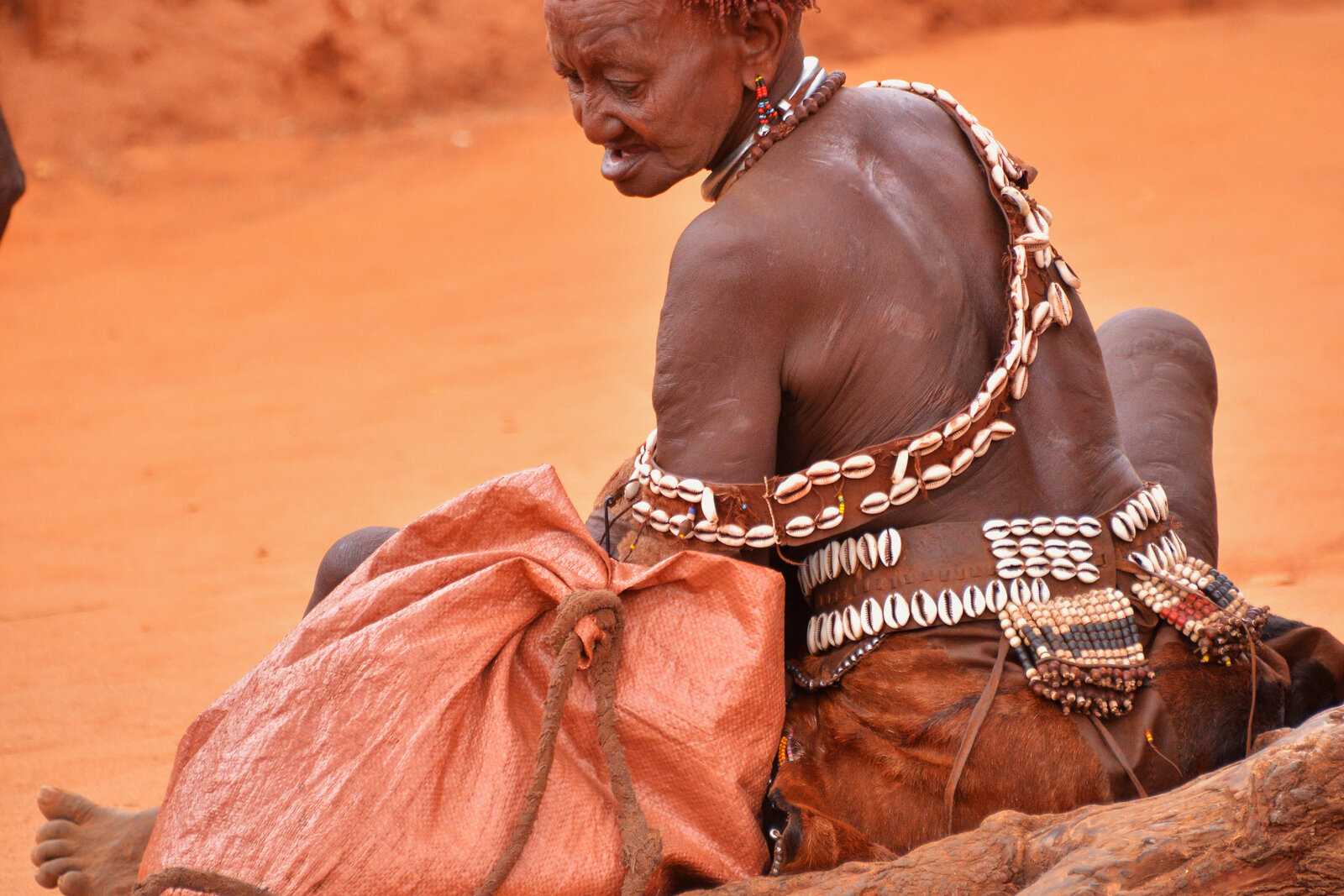
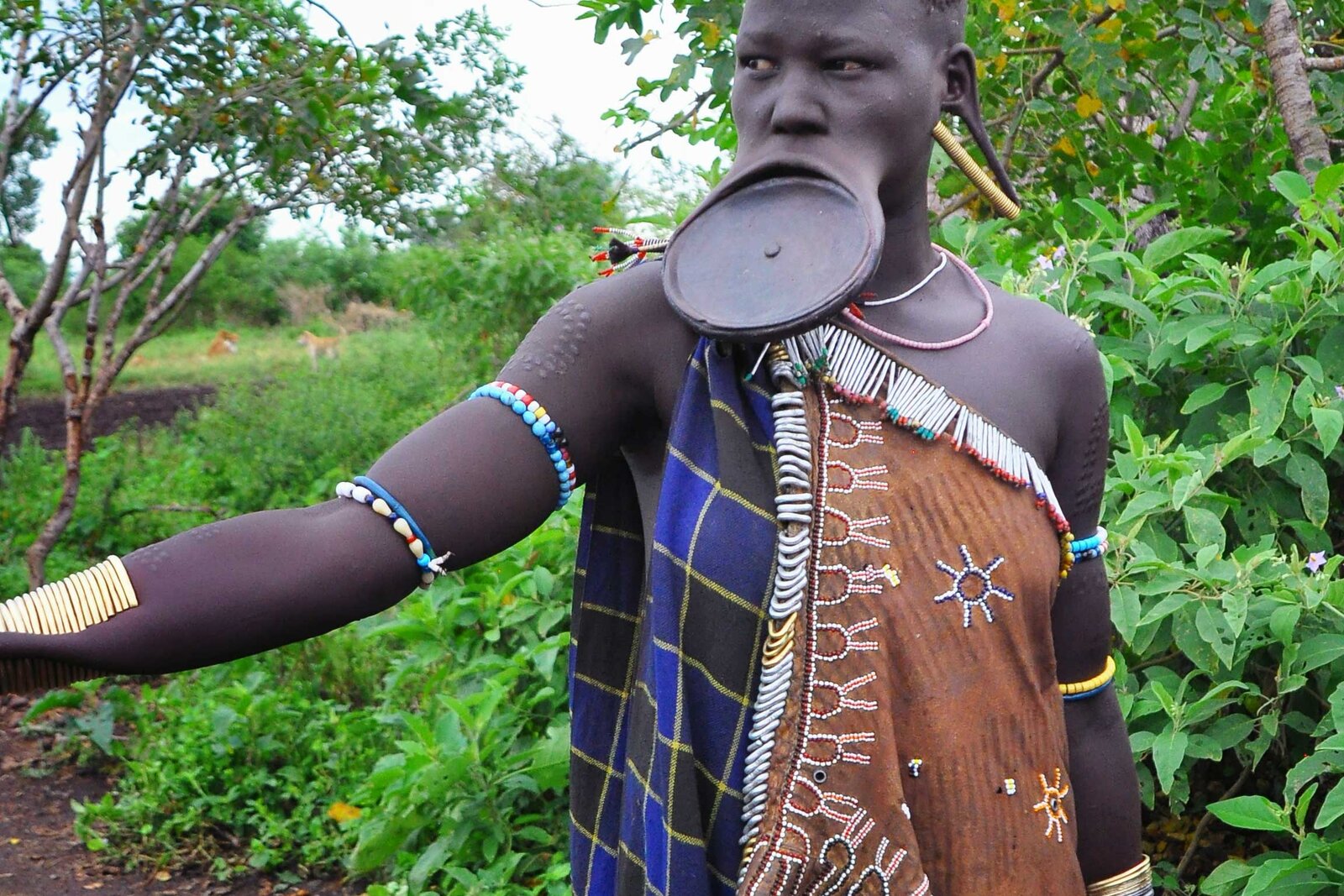
The valley's peoples include the Mursi, renowned for the clay lip-plates worn by their women and for their fierce independence; the Hamer, known for their ochre-styled hair, elaborate beadwork and the famous bull-jumping ceremony that marks a young man's passage to adulthood; the Karo, master body-painters of the Omo River banks; the Dorze, celebrated weavers who live in towering beehive-shaped bamboo houses in the highlands above; and the Konso, whose intricately terraced landscapes and carved wooden waka memorial statues form their own UNESCO-listed cultural landscape.
Cultural travel of this kind must be undertaken thoughtfully and ethically — with local guides, fair arrangements that benefit the communities, and genuine respect for people who are hosts, not exhibits. We plan Omo Valley journeys with exactly this care, working with trusted local partners so that your visit is meaningful for you and beneficial for the communities you meet.
Best Time to Visit Ethiopia
Ethiopia's highland climate means the seasons matter enormously, and the best window depends on what you most want to do. Here is the year at a glance:
| Period | Season | Best For |
|---|---|---|
| Oct–Nov | Early dry season, post-rains | ★ Wildflowers in the mountains, lush landscapes, superb trekking; Meskel festival (late Sep) |
| Dec–Feb | Peak dry season | ★ Best all-round: Simien & Bale trekking, historic north, wildlife, and the Danakil; Timkat (Jan) |
| Mar–May | Late dry / short rains | Good early in the period; birding excellent; the Danakil becomes too hot from March |
| Jun–Sep | Main rains (kiremt) | Historic sites remain accessible; highland trekking and remote travel difficult; greenest scenery |
In short: October to March is the prime window for almost every kind of Ethiopian journey, and December to February is the sweet spot when you can combine mountain wildlife, the historic route and even the Danakil in a single trip. Time your visit around Timkat in January — the Orthodox celebration of Epiphany, with its dawn processions, chanting and mass baptisms — and you will witness one of the most spectacular religious festivals in Africa. Remember that even in the dry season, highland nights are cold and altitude is real, so pack warm layers and allow time to acclimatise.
What an Ethiopia Trip Costs & Sample Itineraries
Ethiopia is a country of great distances, and serious itineraries rely on domestic flights, guides and proper logistics — so it is not a shoestring destination once you travel it well. That said, the value for the depth of experience is exceptional. Here is an honest guide, per person and excluding international flights:
| Tier | Indicative Cost (per person) | What You Get |
|---|---|---|
| Value / Group | US$1,500–2,800 (shorter trips) | Small-group departures, simpler hotels, shared touring — a focused historic-north or southern loop |
| Mid-Range Private | US$3,500–5,500 (7–10 days) | Private driver-guide, better lodges, domestic flights, historic north or Omo Valley in comfort |
| Comprehensive / Luxury | US$5,300–6,700+ (12–14 days) | The full country — Bale & Simien wildlife, historic north and southern cultures, best available lodges, private guiding |
A crucial money-saving tip: domestic flights on Ethiopian Airlines are substantially cheaper when booked together with an Ethiopian Airlines international ticket — a saving we build into planning wherever possible. Below are three of our most popular itinerary frameworks; each is a starting point we tailor entirely to your dates, interests and pace.
Itinerary 1: The Historic North (7 Days)
- 1. Day 1: Arrive Addis Ababa — city tour, National Museum (home of "Lucy") and Mount Entoto.
- 2. Days 2–3: Fly to Gondar — the royal castles and Debre Berhan Selassie — then on to Bahir Dar and the monasteries of Lake Tana.
- 3. Days 4–5: Fly to Axum — the great stelae field and ancient ruins of the Axumite empire.
- 4. Days 6–7: Fly to Lalibela — two days among the rock-hewn churches, including dawn at Bete Giyorgis — then return to Addis and onward flights.
Itinerary 2: Endemic Wildlife & the South (9 Days)
- 1. Day 1: Arrive Addis Ababa; overnight and briefing.
- 2. Days 2–4: Travel to the Bale Mountains — the Sanetti Plateau for the Ethiopian wolf, the Gaysay Grasslands for mountain nyala, and the Harenna cloud forest.
- 3. Days 5–8: Continue south to the Omo Valley and Rift Valley lakes — the Dorze highlands, Konso terraces, and respectful visits to Hamer, Mursi and Karo communities.
- 4. Day 9: Fly from Arba Minch back to Addis for onward connections.
Itinerary 3: The Grand Ethiopia (14 Days)
- 1. Days 1–5: The historic north — Gondar, the Simien Mountains (gelada & Walia ibex), Axum and Lalibela.
- 2. Days 6–9: Fly south to the Bale Mountains for the Ethiopian wolf and the Afro-alpine plateau.
- 3. Days 10–13: The Omo Valley and Rift Valley lakes — the great living cultures of the south.
- 4. Day 14: Return to Addis Ababa — farewell dinner and departure. (A Danakil extension can be added in the cooler months.)
Is Ethiopia Safe? An Honest Word
Travel with a specialist, and travel the right regions
Ethiopia's security picture varies by region, and honesty matters here. Some areas — including parts of the Tigray, Amhara and Oromia regions — have seen conflict and are not suitable for travel; several governments maintain advisories for these specific zones, which we avoid entirely.
The established circuits — Addis Ababa, Lalibela, Gondar, the Simien and Bale Mountains, the southern Rift Valley and the Omo Valley — are travelled safely with a reputable operator who monitors conditions in real time, uses trusted local guides and plans routing accordingly. This is not a destination for improvised, independent travel; it is one where expert planning is the difference. We build every Ethiopian journey around current, verified conditions and put your safety first at every stage.
How We Plan Your Ethiopia Journey — Book Direct
We are Beyond Africa Safaris — a specialist operator that plans and books each journey direct on the ground, working with trusted Ethiopian guides, lodges and pilots. There is no middleman, no reseller mark-up, and no generic package pulled from a brochure. Ethiopia, more than almost any destination, rewards this approach: its scale, its logistics and its security picture all demand local knowledge and careful, current planning.
Here is how it works:
- Consultation: We start by understanding what draws you — the endemic wildlife, the rock churches, the Omo Valley, the Danakil, or the full sweep of the country — along with your dates, pace and budget.
- Bespoke itinerary: A detailed, day-by-day plan with the right lodges, internal Ethiopian Airlines flights, driver-guides and activities, sequenced to make the country's scale work for you rather than against you.
- Refinement: We adjust until it is exactly right — add the Simien, extend the Omo, build in Timkat, or attach a Danakil expedition in the cool season.
- Booking & logistics: We book every component direct, confirm in writing, and handle the flights, permits, local guides and transfers end to end.
- Pre-departure & on the ground: A full pack with eVisa guidance, health and altitude advice, packing lists and a day-by-day briefing — and real support throughout your journey.
Start Planning Your Ethiopian Journey
Ethiopia is the safari for travellers who want more than the savanna — the rarest wolf on earth against a backdrop of giant lobelia, a troop of gelada grazing the edge of a two-kilometre cliff, a church carved from living rock and still echoing with ancient chant, a sulphur field glowing yellow below sea level, and cultures that carry the deep past into the present day. It is one of the most rewarding journeys on the continent, and one that demands to be planned with real care.
Tell us what calls to you and when you would like to travel. We will design a journey that takes in the very best of the Roof of Africa — planned direct, guided by trusted locals, routed around current conditions, and supported every step of the way.
Contact Beyond Africa Safaris today and start planning your Ethiopian journey.