Key Takeaways
- 🐘 Zakouma lost around 90% of its elephants to poaching between 2002 and 2010. Under African Parks the killing stopped, and the herd is now growing again, calves and all.
- 🦒 More than nine in ten of Chad's Kordofan giraffe live in Zakouma, roughly 1,500 animals of a subspecies that is Critically Endangered.
- 🦅 Late in the dry season the Rigueik pan draws tens of thousands of black-crowned cranes, pelicans and storks, with clouds of red-billed quelea overhead.
- 📅 The park is only open from late November to May. March to May is the peak for game at the water, and the heat often goes past 40°C.
- 🏕️ There are two ways to stay: Camp Nomade, a small mobile tented camp booked as a package, or Tinga Camp, the park's chalet camp, from about US$155 per person a night.
- ⚠️ The UK and US both advise strongly against travel to most of Chad. The park itself is well guarded, but you need specialist insurance and a planner who knows the ground. We set that out in full below.
Why Zakouma, and why now
Most people who go on safari never hear the name. Chad does not come up when friends compare the Mara with the Serengeti or Kruger with the Okavango, and the country's reputation, fairly or not, keeps most travellers away. That is part of what makes Zakouma what it is. There are no lines of vehicles at a lion sighting here, no lodges on every ridge. On a good morning in March you can sit at the edge of a pan with buffalo, hartebeest and roan spread out in front of you, and the only engine you hear is your own.
The park sits in the far south-east of Chad, on the flat floodplain country where the Sahara gives way to the Sahel and then to the wooded savanna of Central Africa. It is about 3,000 square kilometres on its own, and the centre of a far bigger protected block, the Greater Zakouma Ecosystem, which takes in Siniaka-Minia National Park and the Bahr Salamat Faunal Reserve and runs to more than 28,000 square kilometres. Ecologists call it the last intact example of the Sudano-Sahelian savanna. In plain terms, it is what this whole belt of Africa used to look like before guns, cattle and drought took most of it.
The reason to go now is the story. Fifteen years ago this park was written off. Today it is one of the clearest proofs on the continent that a protected area can be brought back, and the people doing the work welcome a small number of visitors because the money keeps the rangers paid.

The comeback: from 4,000 elephants to 450, and back
In 2002 there were thought to be close to 4,000 elephants in Zakouma. By 2010 there were around 450. Armed groups on horseback, many coming over the borders from Sudan, shot them for ivory in raids that sometimes killed dozens of animals in an afternoon. Rangers were killed too. Six members of the park's own guard force were murdered in 2012 in one attack near the park. For a few years nobody saw a single elephant calf, because the herds were too frightened to breed.
In 2010 the Chadian government signed the park over to African Parks, a non-profit that runs protected areas on long-term agreements, to manage alongside it. What changed was not one clever idea but a lot of hard, unglamorous work: a properly trained and paid ranger force, a mounted unit that could patrol where vehicles could not, radio networks, an airstrip and a plane for surveillance, and GPS collars on the elephants so the team always knew where the herds were moving in the wet season, when they leave the park and are most at risk. Just as important, the park brought the communities around it in: schools, jobs and a seat at the table for the people who live on its edges.
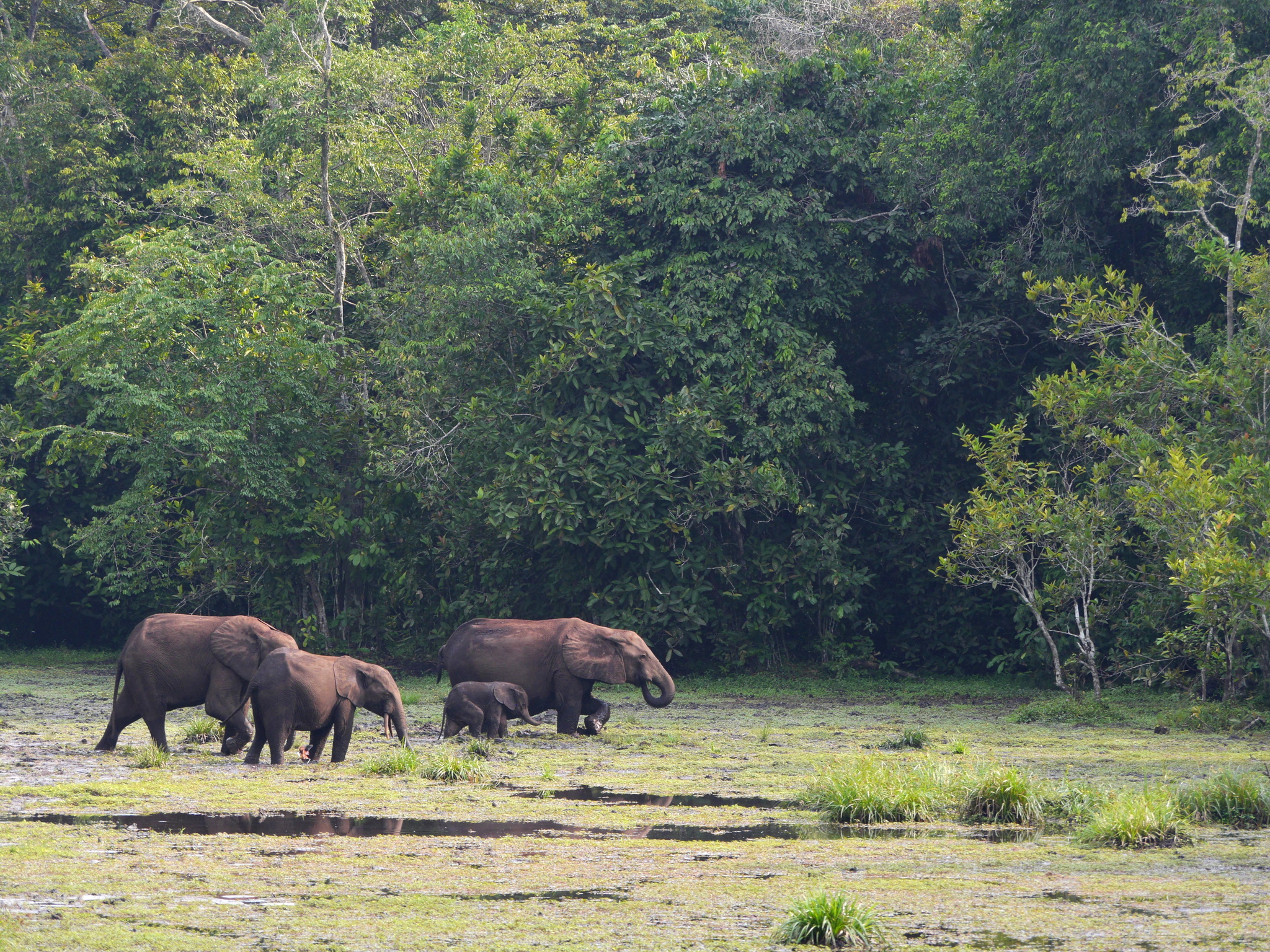
It worked. Elephant poaching inside Zakouma all but stopped. The first calves appeared again around 2014, and the herd has been growing since. Counts now sit at well over 550, and some recent estimates put the population higher. You notice the young ones straight away: little calves tucked under their mothers in the middle of the herd, which is the best sign there is that the animals feel safe.
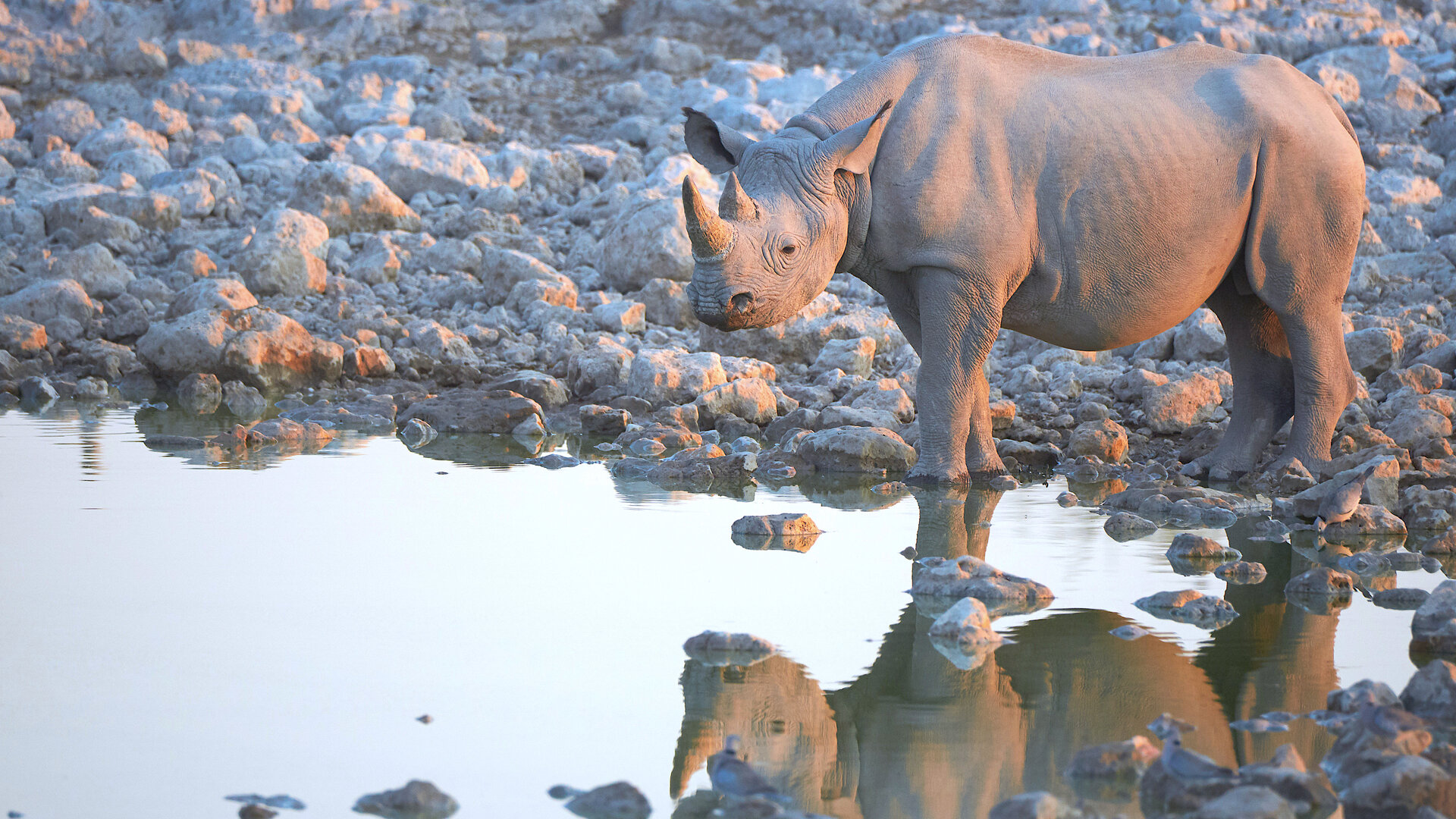
The rest of the wildlife followed. Buffalo numbers climbed into the thousands. Black rhino, gone from Chad for decades, were flown in from South Africa in 2018 to start a new population. That part of the story has not been simple. Some of those animals died, and poaching in the wider Bahr Salamat reserve took several giraffe and two rhinos in 2025, a reminder that the work is never finished. We would rather tell you that than pretend the job is done.
The elephants of Zakouma
The elephants here do not behave like the ones you may have met in Kruger or Chobe. Years of being hunted taught them to stay together, and in the dry season they often gather in one great herd, sometimes several hundred strong, that moves across the park as a single body. Watching that herd come down to water, dust rising behind it, is the image most people take home.
They are still wary. The guides keep a respectful distance and let the elephants set the pace, which is how it should be. You will not get the close, relaxed encounters of a well-habituated private reserve in South Africa, and you should not want them here. What you get is something rarer: a wild herd in its own country, recovering, on its own terms.
When the rains come in June the elephants leave Zakouma and walk north and west into the Bahr Salamat floodplains, where the grass is new. They come back as the country dries. That movement is why the park only opens for the dry season, and why the elephants are easiest to find from about February onward, when they are drawn back to the permanent water.


Kordofan giraffe: the last stronghold
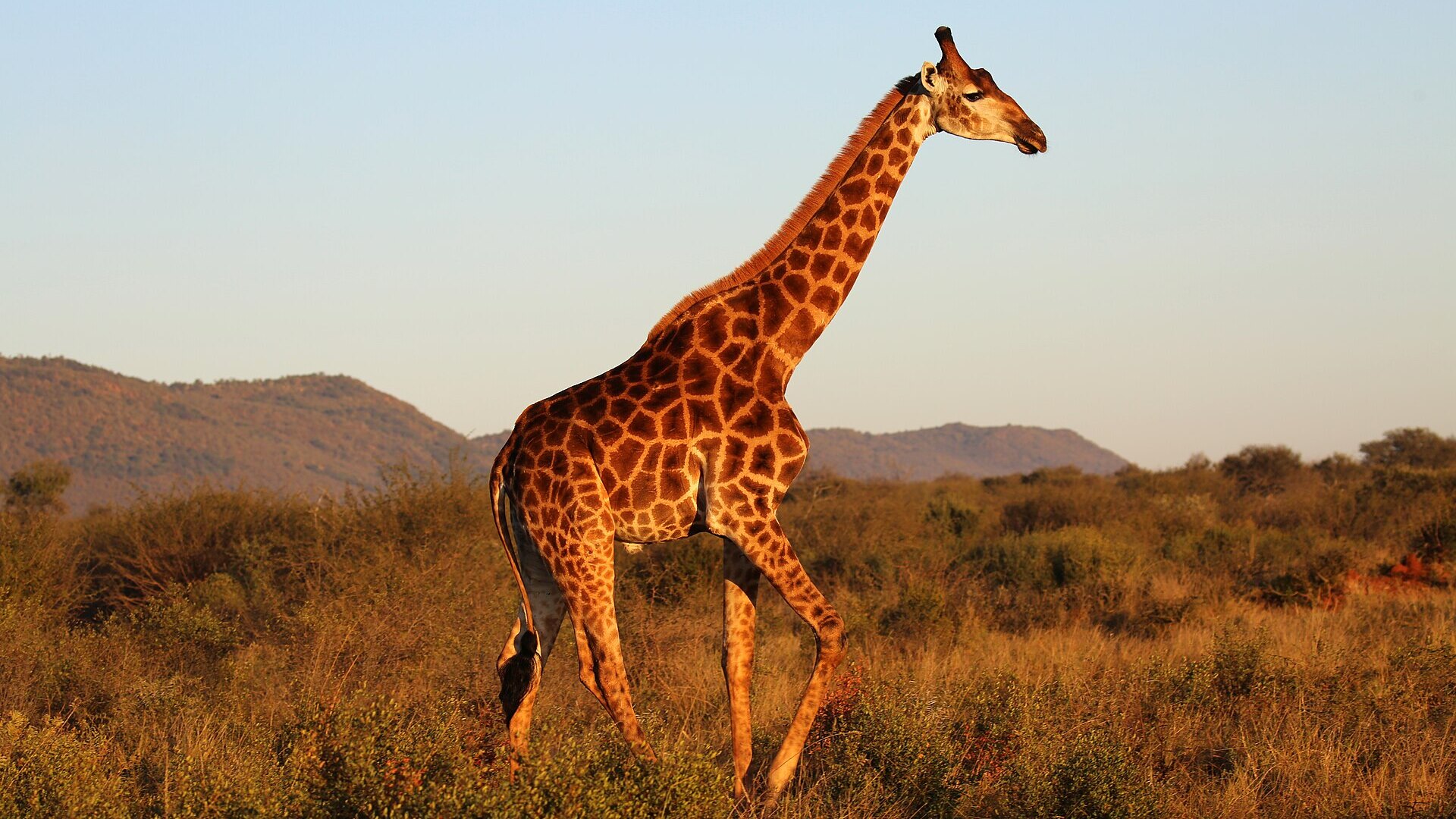
If the elephants are the headline, the giraffe are the quiet reason a lot of serious wildlife people come. The Kordofan giraffe is one of the rarest giraffe forms in Africa, paler than the reticulated giraffe of northern Kenya, with patches that run down below the knee. Across its whole range it has dwindled to a few scattered populations in Chad, the Central African Republic, Cameroon, South Sudan and the DRC, and the IUCN lists it as Critically Endangered.
Chad holds roughly 1,600 of them, and about 1,500 of those live in Zakouma. That makes this one park home to the large majority of the subspecies left in the wild. You do not have to work hard to see them. They are common along the woodland edges and around the pans, often in loose groups of ten or twenty, and in the low light of late afternoon they are as fine a sight as anything in Africa.
In early 2025 the Giraffe Conservation Foundation and African Parks fitted GPS units to sixteen of them, to learn how they use the wider ecosystem and where they cross into less protected ground. If you visit in the right weeks, your guide may be able to tell you which animals carry the tags and what the team has learned from them.

Lions, leopards and the antelope of the Sahel
Zakouma has a healthy lion population, and the prides around the pans are seen often in the late dry season, when the prey is concentrated. Leopard are here and turn up now and then, usually along the wooded drainage lines. Cheetah are rare. Spotted hyena, serval, caracal, side-striped jackal, honey badger and civet make up the rest of the predator list, and a night drive or a bush dinner back at camp is often accompanied by hyenas whooping somewhere out on the floodplain.
The antelope are what make the game viewing feel different from East or southern Africa. You will see species that most safari-goers have never heard of:
- Lelwel hartebeest, tall and rust-coloured, in herds that can number in the hundreds on the open grass.
- Tiang, the Central African form of the topi, with its glossy coat and dark blazes.
- Roan antelope, big, horse-like and fairly easy to see here, which is not true of most parks.
- Buffon's kob around the wetter ground, and Defassa waterbuck, bohor reedbuck and oribi.
- Red-fronted gazelle, a Sahel specialist, on the drier plains.
- Central African buffalo, in herds that can run into the hundreds by the end of the season.
There are no hippos to speak of in the park itself, no zebra and no wildebeest. If that sounds like a list of what is missing, think of it the other way round: almost everything you see here is something you will not see on the usual circuit.

The birds of the Rigueik pan
Zakouma has more than 370 recorded bird species, and you do not need to be a birder to feel the pull of it. As the dry season goes on and the floodplain shrinks to a handful of pans, the birds pile in. The most famous of these pans is Rigueik, where Camp Nomade usually sets up.
By March the pan can hold tens of thousands of black-crowned cranes, the golden-crested crane of the Sahel, standing in lines along the water. With them come pelicans, marabou and saddle-billed storks, spoonbills, open-billed storks, whistling ducks by the thousand and every kind of heron and egret. Overhead, at dusk, flocks of red-billed quelea wheel and turn in clouds so big they look like smoke. The noise, when the cranes all call at once, stays with you.
The early season, from late November into December, suits keen birders best. The country is still green, the Palaearctic migrants are arriving from Europe and Asia, and the resident species are in breeding colours. Carmine bee-eaters, Abyssinian ground hornbills, Abyssinian rollers and the northern specialists of the Sahel are all on the list.
When to go: the Zakouma season month by month
Zakouma is a dry-season park. The rains from June to October turn the floodplain into a sea of mud and water, the roads go under, and the park closes. It opens again in late November or early December as the ground dries out.
| Months | Weather | What you see | Our view |
|---|---|---|---|
| Late Nov to Dec | Warm, green, still some surface water | Best birding, migrants arriving, game more spread out | For birders and photographers who want green backdrops |
| Jan to Feb | The coolest months, dry, pleasant days | Game starting to gather, elephants returning, giraffe easy | The most comfortable time, good all-round viewing |
| Mar to Apr | Hot, very dry, 35-42°C | Peak game at the pans, huge buffalo herds, the elephant super-herd, cranes at Rigueik | The best game viewing of the year, if you can take the heat |
| May | Hottest, often above 40°C, first storms late in the month | Still excellent, animals tied to the last water | Strong for the hardy; Tinga closes mid-May |
| Jun to Oct/Nov | Rainy season, floods | Park closed, elephants away in Bahr Salamat | Not possible |
If you want the classic Zakouma, with the herds and the cranes at full strength, go in March or early April and be ready for the heat. Camp Nomade is built for it, with shade, cool water and a slow middle of the day. If you would rather be comfortable and still see plenty, late January and February are hard to beat.
Where to stay: Camp Nomade or Tinga Camp
There are only two real choices inside the park, and they suit very different trips.
Camp Nomade is a small mobile tented camp run by African Parks, open from about mid-December to April. It moves to follow the water and usually sits out on the edge of the floodplain near Rigueik, so the game comes to you. It takes very few guests, often one group at a time on an exclusive basis, and it is simple in the best sense: canvas tents, proper beds, bucket showers, good food, and a bush crew who know the park inside out. You go out in an open vehicle with a guide and, often, a ranger. Rates are not published. It is sold as a package, with the charter flight from N'Djamena, and quoted on request.
Tinga Camp is the park's permanent camp, on the Salamat river near park headquarters, open from early December to mid-May. It has stone and thatch chalets with en-suite bathrooms, a restaurant and bar, and a pool. It is the better choice for travellers on a tighter budget, for families, and for anyone who would rather have walls and a fan than canvas. Game drives go out from camp in park vehicles, with a private vehicle available for a fee.


What it costs
Here are the numbers as we have them for the 2025-26 season, plus our planning estimates. Treat them as a guide. The charter flight is the biggest single cost and depends on how many people share the plane.
| Item | Cost (USD) | Notes |
|---|---|---|
| Tinga Camp, standard chalet | from $155 pp per night | Sharing; single from $200 |
| Tinga Camp, superior chalet | from $195 pp per night | Sharing; single from $250 |
| Camp Nomade | on request | Sold as a package; plan on several times the Tinga rate |
| Park fee | $30 pp per day | Plus small tourism and travel taxes |
| Game drive from Tinga | $30 pp | Or a private vehicle at about $300 per group per day |
| Charter, N'Djamena to Zakouma return | roughly $1,200-2,000 pp | Our estimate; depends on group size and dates |
| Night under the stars / bush dinner | $150 / $60 pp | Optional extras at Tinga |
Put together, a Tinga-based trip of four nights in the park, with the charter, a private vehicle and a night in N'Djamena on arrival, lands from about US$4,850 per person for two people sharing. A Camp Nomade trip with five nights on the floodplain starts from about US$7,900 per person. Both are set out day by day in the packages further down.
Getting there: N'Djamena, the charter, the visa
Every trip starts in N'Djamena, Chad's capital, which you reach on scheduled flights through Paris, Addis Ababa, Istanbul or Casablanca. Most people spend a night there before and after the park.
From N'Djamena there are two ways in. The sensible one is a charter flight of about an hour and a half to the park's own airstrip. The other is the road: a long day, twelve to fourteen hours, on tar and then dirt, usually broken with a night near Mongo. It is a real Chadian journey through villages and past nomad caravans moving their cattle and camels, and some travellers love it. Most, with limited days, take the plane.
- Visa. Almost everyone needs one, applied for in advance through the official e-visa site. You need an invitation letter, which the park or your operator issues once your booking is confirmed. Allow several weeks.
- Yellow fever. A vaccination certificate is required on arrival. Malaria is present, so talk to a travel clinic about prophylaxis.
- Photography. Taking pictures in public places in N'Djamena, of government buildings, the airport or soldiers, is not allowed and can land you in real trouble. In the park you are free to photograph as much as you like.
- Dress and manners. Chad is a mainly Muslim country with conservative habits. Cover shoulders and knees in town and in villages, and ask before photographing anyone.
- Language. French and Arabic are the official languages. The camp teams speak some English, but a little French helps.

Is it safe? The honest answer
We will not dress this up, because you deserve the truth before you spend this kind of money.
As of November 2026, the UK Foreign Office advises against all but essential travel to most of Chad, and against all travel to the north, to the border areas and to the Lake Chad region. The US State Department rates Chad at Level 4, Do Not Travel. Other governments say much the same. Those warnings come from real risks in parts of the country: armed groups in the north and along the borders, the spillover of the war in Sudan in the east, crime and the chance of unrest in the capital.
Zakouma itself is a different picture. The park has one of the best trained ranger forces in Africa, guarding it day and night, and African Parks has hosted visitors for years without incident to guests. Movement between N'Djamena and the park is handled by people who do it every week. But we are not going to tell you the risk is zero, because nobody honestly can.
What that means in practice:
- Your normal travel insurance may well be void if your government advises against travel. You need specialist cover that includes Chad and medical evacuation. We can point you to insurers who write it.
- Fly in to the park rather than drive, unless you have a particular reason to go by road.
- Keep your time in N'Djamena short and arranged, with transfers met at the airport.
- Check the latest advice from your own government before you book and again before you travel, and accept that a trip may have to move dates if things change.
If, having read all of that, Zakouma still calls to you, then you are exactly the kind of traveller this park is for. If it gives you pause, that is a perfectly sensible reaction, and we will happily point you instead to somewhere like Odzala in the Republic of Congo for the same frontier feeling with less paperwork.
Ennedi: the Sahara extension, and why we treat it with care
Far to the north-east of Zakouma, in the Sahara, lies the Ennedi Massif: a UNESCO World Heritage site of sandstone arches, towers and canyons that looks like nowhere else on earth. In its gorges are gueltas, permanent pools of water where camel herders bring their animals to drink and where a handful of desert crocodiles held on into living memory. The rock walls carry thousands of paintings and engravings, some of them many thousands of years old, of cattle, giraffe and people from the time when the Sahara was green.
It is one of the great desert journeys in the world. It is also squarely inside the zone where the UK advises against all travel, and getting there means long days in 4x4s across open desert or a costly charter. A few specialist expedition outfits still run trips with full security arrangements. We do not sell Ennedi as a standard add-on. If you want it, we will talk it through with you properly, with the current advice on the table, and build it only if it makes sense at the time.


Conservation and the people around the park
Zakouma is not run as a fortress. A large share of the park's work goes into the communities around it: schools built and supported with the park, an environmental education programme that brings local children into the park on the same game drives visitors take, and jobs, since most of the rangers and camp staff come from nearby villages. The nomadic herders who move their cattle through the wider ecosystem every year are part of the plan too, with corridors agreed so that livestock and wildlife can share the ground without conflict.
The money from your stay goes straight back into that. Park fees, camp revenue and the goodwill of visitors who go home and tell the story all help keep the rangers paid and the trucks running. In a park where losing the guard force once meant losing the elephants, that is not a small thing. If you would like to go further, African Parks welcomes donations, and we are glad to put you in touch.
The same model now runs across much of the continent, from gorilla country in the eastern DRC to the rhino work covered in our guide to Africa's endangered animals on safari. Zakouma is where it was first proved to work in the Sahel.

How we plan a Zakouma safari
We build two kinds of trip, both set out in full on their own pages:
- 6-Day Zakouma Safari at Tinga Camp: four nights in the park's chalet camp with a private vehicle, plus a night in N'Djamena on arrival. From about US$4,850 per person sharing, charter included.
- 7-Day Zakouma Fly-In Safari at Camp Nomade: five nights in the mobile camp on the floodplain, timed for the best of the dry season. From about US$7,900 per person sharing, charter included.
Both are starting points. We will adjust the nights, the month and the camp to what you want from the trip, check the charter against your dates, sort the invitation letter for your visa and line up the insurance you need. Before anything is paid, you will get the current travel advice from us in writing, so you decide with your eyes open.
Zakouma also pairs well with a second, easier safari. Plenty of our guests go on afterwards to the best places to travel in Africa in 2027, or finish with a few days in Cape Town to rest. For the bigger picture of where travel on the continent is heading, our piece on African travel trends for 2027 puts parks like this in context, and if you love giraffe, our giraffe safari guide covers the other subspecies and where to see them.
When you are ready to talk it through, write to us at res@privatetourscapetown.com, send a message on WhatsApp, or use our contact page. A real person who knows this park will answer.
Photo Credits
Hero and Rigueik frame: “Lelwel hartebeest & tiang at Rigueik in Zakouma National Park in Chad” and “Tiang at Rigueik in Zakouma National Park in Chad” by inyathi (CC BY-SA 2.0). Giraffe herd, elephant, roan, hartebeest herd, Tinga Camp, Tinga chalet, camp from above and nomad caravan: Yacoub Doungous (CC BY-SA 4.0). Single giraffe, buffalo and safari vehicle: Fatakaya (CC BY-SA 4.0). Tiang: John Weir (CC BY-SA 2.0). Guelta Maya: Sven.oehm (CC BY-SA 4.0). Ennedi camels: Valerian Guillot (CC BY 2.0). Ennedi sunset: anmede (CC BY-SA 2.0). All via Wikimedia Commons.
Every photograph on this page was taken in Zakouma National Park or the Ennedi Massif, Chad, and is used under its Creative Commons licence with credit to the photographer. No image on this page is AI-generated.