Key Takeaways
- The dry winter (May–October) is the best time for waterhole game viewing — wildlife gathers at the remaining water in spectacular numbers.
- June to September is the peak: cool, dry, and the best waterhole action — including floodlit night viewing at Okaukuejo and Halali.
- The green summer (November–April) brings lush grass, newborn game and migrant birds — but game disperses to seasonal pans.
- The shoulder months — May and October — offer excellent waterhole sightings, softer prices and thinner crowds.
- Etosha is a superb self-drive destination; the dry season makes navigation and game spotting easiest.
The Two Seasons That Define Etosha
Etosha has two faces, and everything about your safari flows from which one you visit. The park sits in northern Namibia, centered around the vast Etosha Pan — a dry salt pan for most of the year — and its year divides cleanly into a long dry winter and a warm, wet summer. Understanding the difference is the single most useful thing you can do before you book.
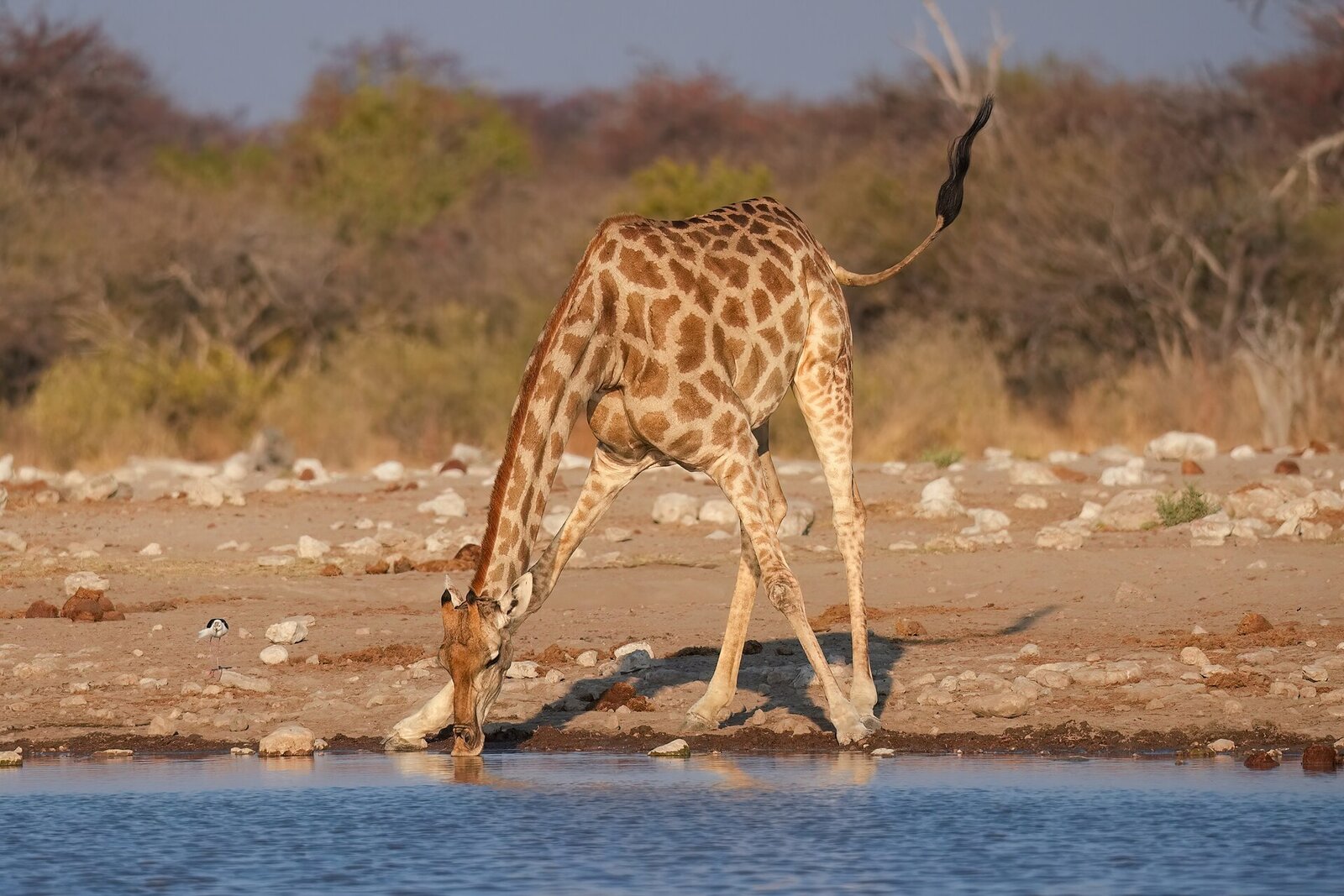
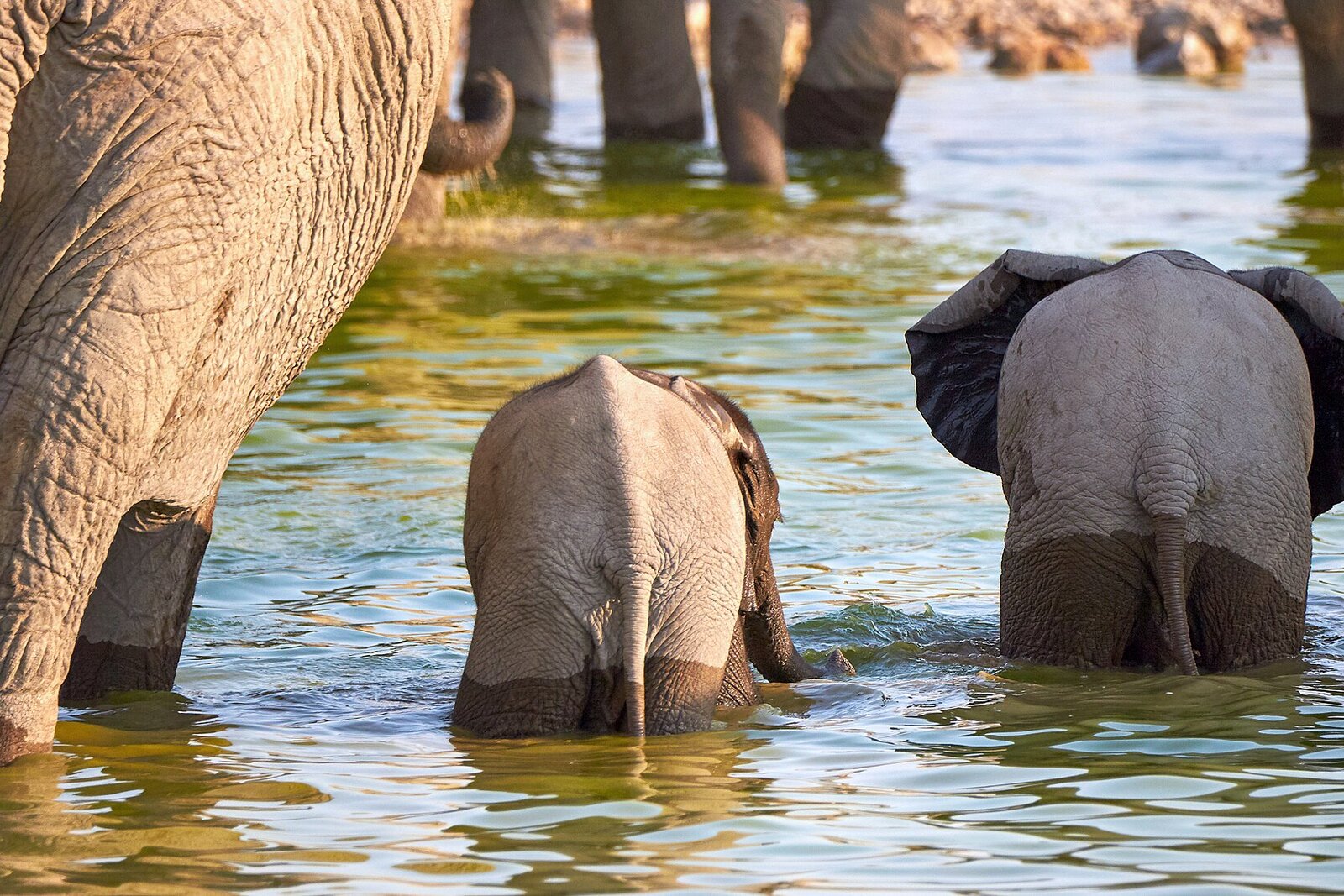
In the dry season, from May to October, months pass without rain. The grasslands dry to gold, the seasonal pans vanish, and the only water left is at the park's artificial waterholes, which are maintained year-round. Animals have nowhere else to drink, so they concentrate around these waterholes — and game viewing becomes a matter of finding a good spot and waiting for the parade: elephant, giraffe, zebra, springbok, oryx, lion, rhino and sometimes leopard, all coming to the same pools.
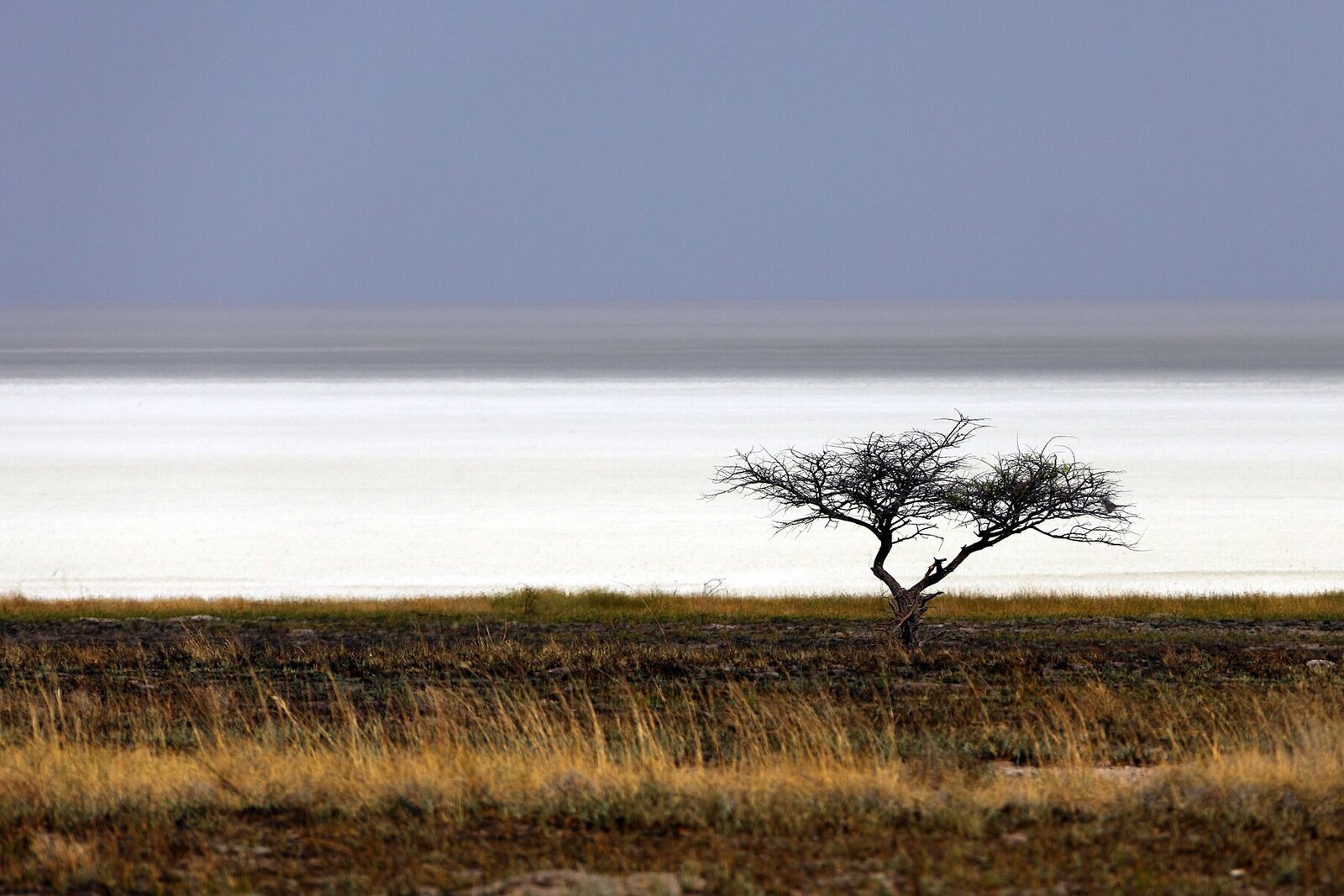
In the green season, from November to April, the summer rains transform Etosha. The grass grows thick and green, the seasonal pans fill, and the wildlife scatters across a landscape suddenly rich in water and grazing. The salt pan itself can fill with shallow water, creating mirror-like reflections and drawing flamingo flocks. The birding is superb, newborn game fills the plains, but waterhole sightings thin dramatically as animals no longer need them.
The Dry Season (May–October): Peak Waterhole Viewing
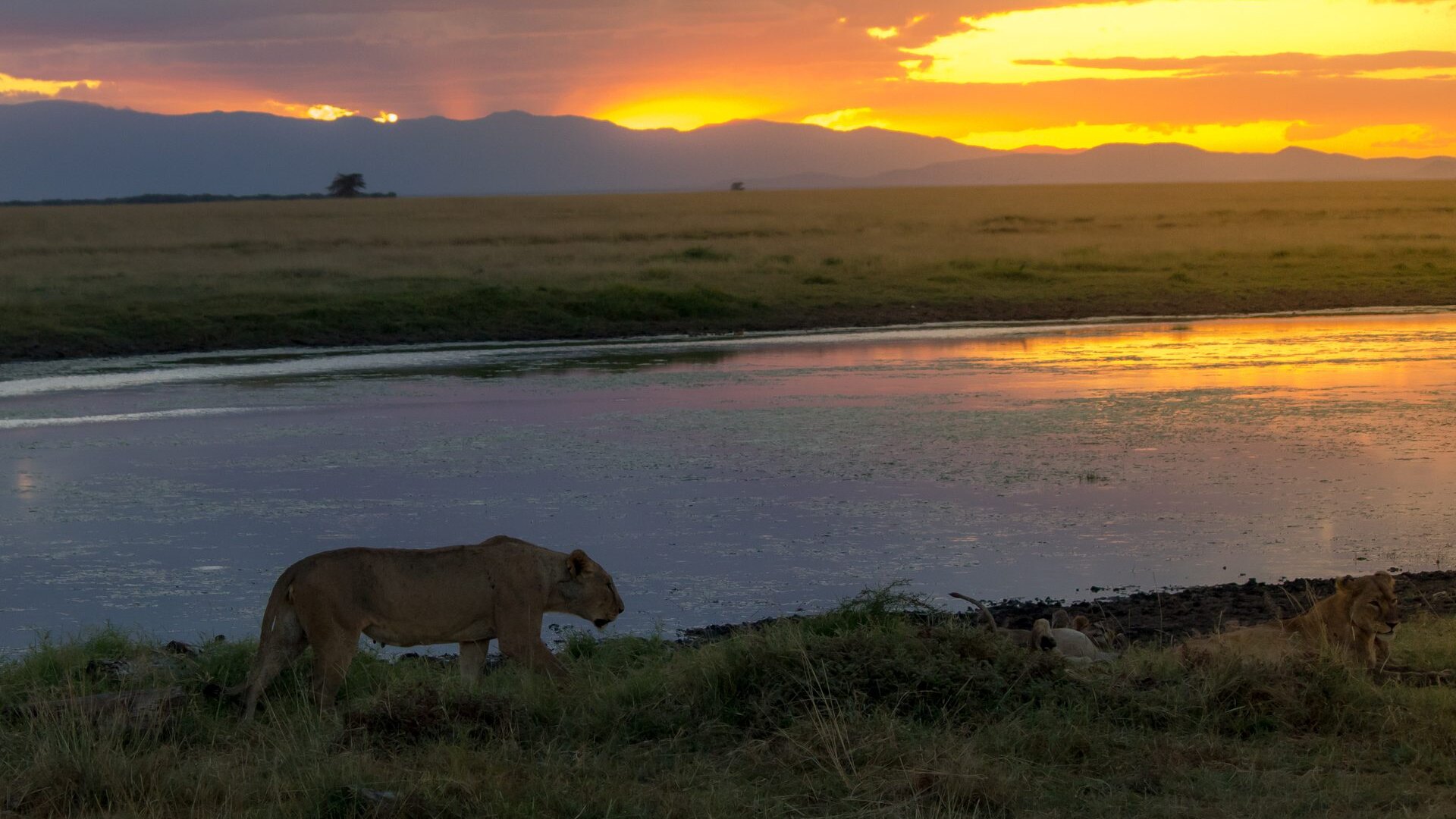
If your priority is seeing game in spectacular numbers, come in the dry winter. This is Etosha at its most reliable. With water scarce and the artificial waterholes the only source, animals come to drink morning, midday and evening — and if you position yourself at the right waterhole, you can watch the whole ecosystem parade past. Okaukuejo and Halali camps both have floodlit waterholes, so the show continues after dark: black rhino, elephant, lion and hyena all come to drink under the lights.
The weather helps too. Winter days are warm and dry — usually 24–27°C — while nights and dawn drives are cold, sometimes near freezing in June and July, so you will want a fleece and a beanie for the early starts. The air is clear, the skies cloudless, and the light at sunset over the salt pan is breathtaking. Crucially, this is also when malaria risk falls to its lowest, which makes the dry season the natural choice for families and self-drivers.
Why the dry season wins for game viewing:
- Concentrated game — animals gather at the waterholes in spectacular numbers.
- Floodlit night viewing — Okaukuejo and Halali's waterholes are lit after dark, perfect for rhino and lion.
- Cool, clear weather — comfortable drives and dust-free skies.
- Lowest malaria risk of the year — reassuring for families.
- Easiest self-drive conditions — dry roads, short grass, and predictable game.
The trade-off is simple: the dry season is the busy season. June, July and August are the most popular and most expensive months, rest camps book out far ahead, and the waterholes can get crowded with vehicles at peak hours. If that matters to you, the shoulder months are the answer.
The Green Season (November–April): Birth, Birds & the Salt Pan Transformed
The green season is Etosha for the connoisseur. When the first rains break the heat in November, the park transforms. The grass grows thick and green, the seasonal pans fill, and the wildlife disperses across the landscape where water is suddenly plentiful. The salt pan itself can fill with shallow water, creating mirror-like reflections at sunrise and sunset, and drawing flamingo flocks to breed.
It is also the finest time for birding. From November to March the resident species are joined by migrant birds in their breeding plumage — European rollers, abdim's storks, raptors and countless others — and the dawn chorus is extraordinary. The green season is also the calving season: springbok, wildebeest and zebra drop their young, and predators follow the easy meals. Photographers love the season too: the light is dramatic, the skies are piled with cloud, and the green backdrops are far more beautiful than winter's dust.
The catch is that the wildlife disperses. With water everywhere, animals no longer need the artificial waterholes, and the tall grass makes spotting them harder. Days are hot and humid — often above 32°C — with spectacular afternoon thunderstorms, and this is the higher-risk malaria period, so prophylaxis is essential. In return, you get lower prices, thinner crowds and an Etosha that feels wonderfully, wildly alive.
Etosha Month by Month
Here is Etosha's year at a glance — the weather, the wildlife and what to expect each month, so you can match the season to the safari you want.
| Month | Season | What to expect |
|---|---|---|
| Jan–Feb | Green (peak wet) | Hot, humid, lush; superb birding & newborn game; salt pan flooded |
| Mar–Apr | Green (late wet) | Bush still green, cooling down; good value; game begins gathering |
| May | Shoulder (early dry) | The sweet spot — waterhole action building, fewer crowds, excellent value |
| Jun–Sep | Dry (peak) | Best waterhole viewing, cool & dry, lowest malaria risk; busiest & priciest |
| Oct | Shoulder (late dry) | Excellent sightings, warming up, thinning crowds — a top month |
| Nov | Shoulder (rains starting) | Hot, first rains break; game begins dispersing; migrant birds arrive |
| Dec | Green (early wet) | Green-up begins, birding superb; festive season busy |
Plan Your Etosha Safari With Beyond Africa
We are a Cape Town-based, tailor-made safari house, and Etosha is one of our core Southern African destinations. Once you know the season you want, we build the whole trip around it — the right rest camp or luxury lodge, the best rooms before they vanish, guided drives or a supported self-drive, and a route that puts you at the right waterholes at the right hour. You travel in exactly the Etosha you came for, whether that is the waterhole theatre of the dry season or the lush, bird-filled green summer.
Ready to choose your season in Etosha? 👉 Request a tailor-made Etosha quote → 👉 Browse our Etosha safari packages → 👉 WhatsApp us: +27 78 471 4852