Key Takeaways
- The best time to visit Seychelles is the calm transition period around April and October — light winds, warm, glassy seas, the clearest underwater visibility of the year and superb diving and snorkelling
- The southeast trades (May to September) are cooler, drier and breezier, with lower humidity and firmer beaches — the best window for hiking, sailing and active days, though exposed coasts can be choppy and weedy
- The northwest monsoon (November to March) is hot, humid and greener, with more rain (heaviest December to January) but warm, calm seas on the sheltered coasts and the lowest crowds outside the festive weeks
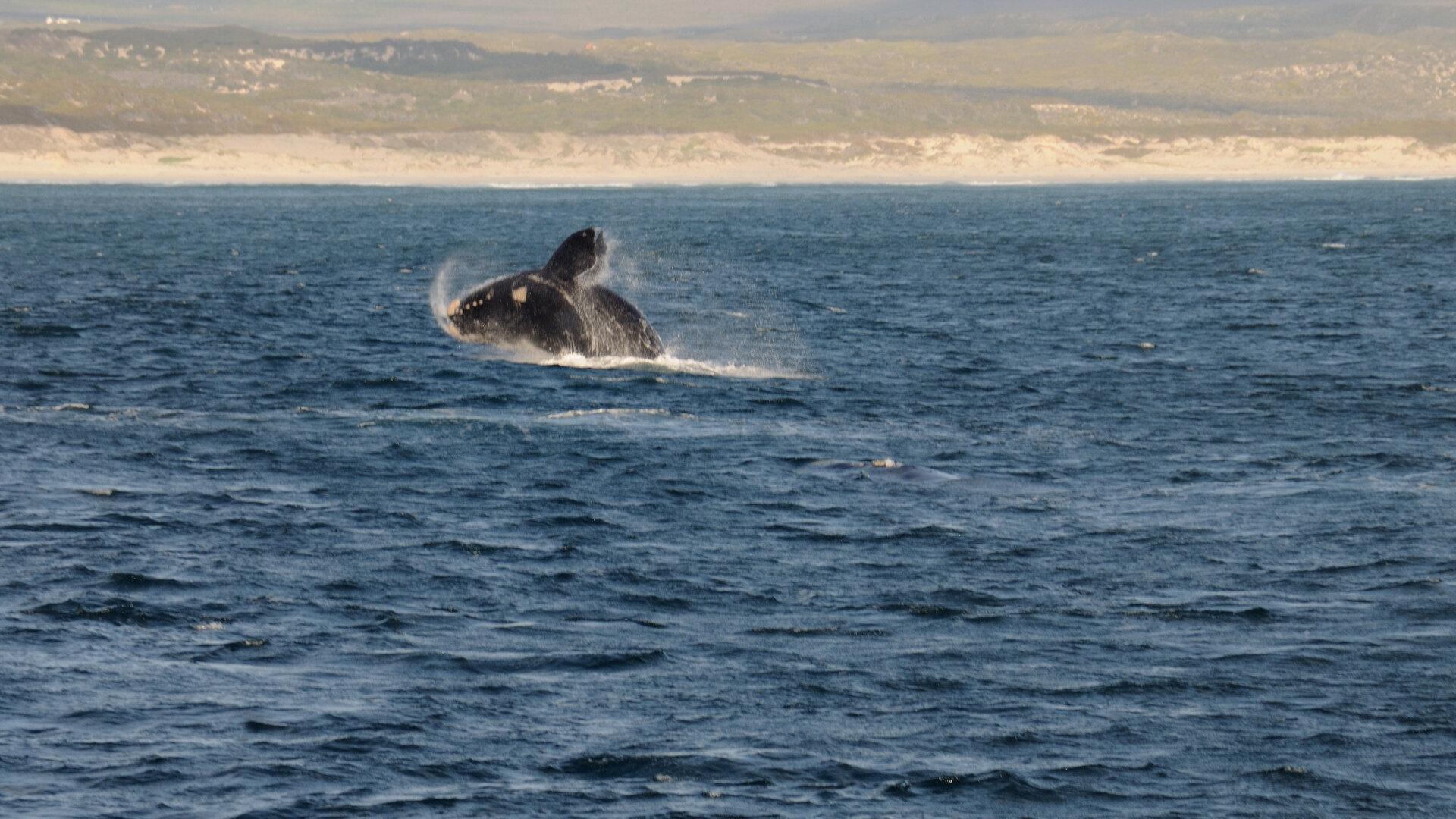
- Whale sharks pass Mahé from August to October, peaking September to October; hawksbill turtles nest mainly October to February, and green turtles year-round on the outer atolls
- Seychelles sits just south of the equator and has no cold season — air stays around 24–32°C and the sea in the high twenties all year, so timing is about wind, rain and the sea rather than temperature
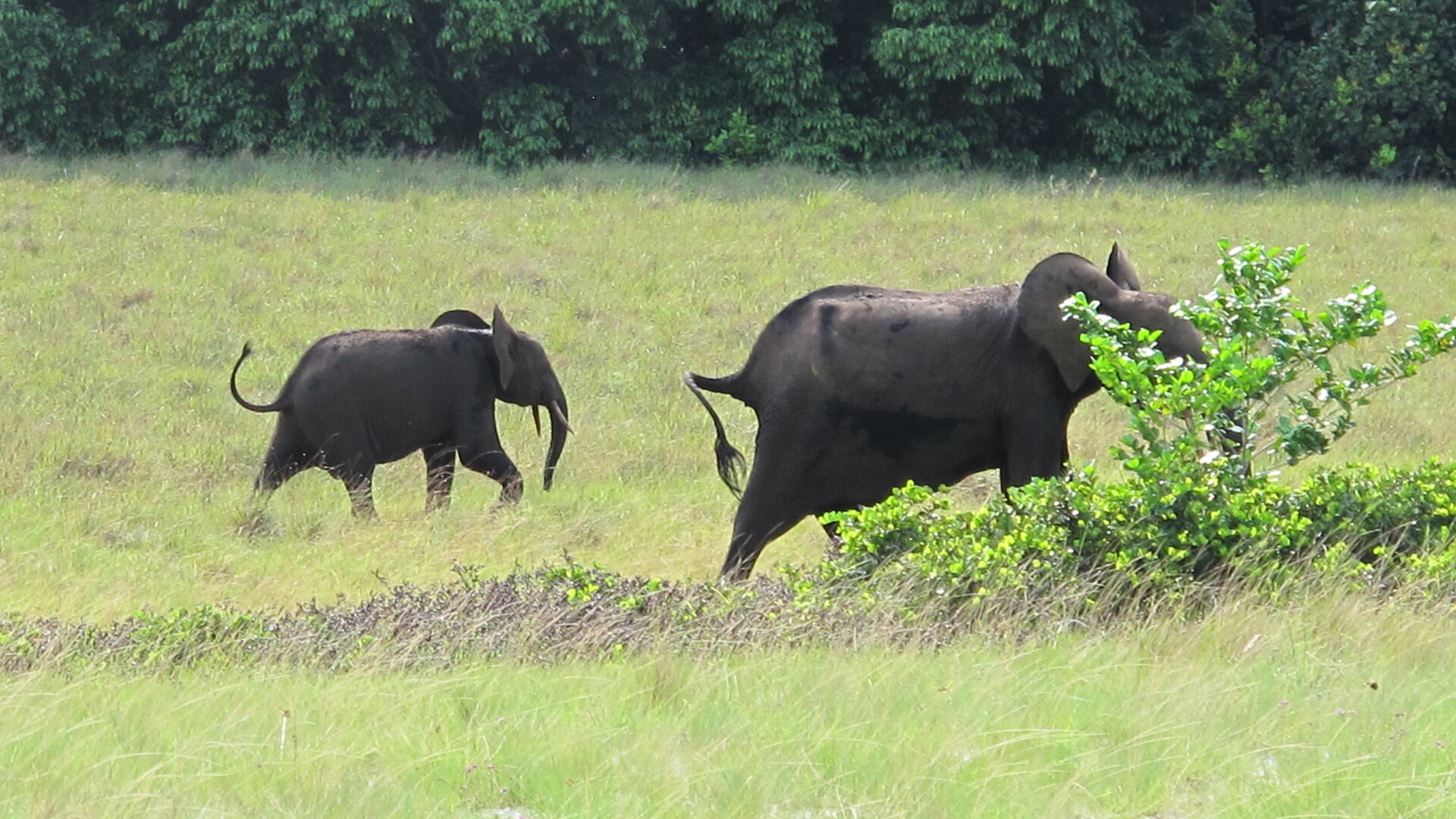
- These islands are the perfect beach finish to an African safari; see how we pair them in our Indian Ocean islands comparison and the journeys below
TL;DR: The best time to visit Seychelles is the calm transition around April and October, when the trade winds ease, the sea turns clear and glassy and diving and snorkelling peak. The southeast trades (May–September) are cooler, drier and breezier — ideal for walking and sailing — while the northwest monsoon (November–March) is hot, humid, green and quiet, with more rain but calm, warm seas on sheltered beaches. Whale sharks appear off Mahé from August to October; turtles nest mainly October to February. There is no cold season, so timing is about wind, rain and the sea, not temperature. Below is a full month-by-month guide, a sea-and-wildlife calendar, island-by-island timing, weather and packing notes, and when to book.
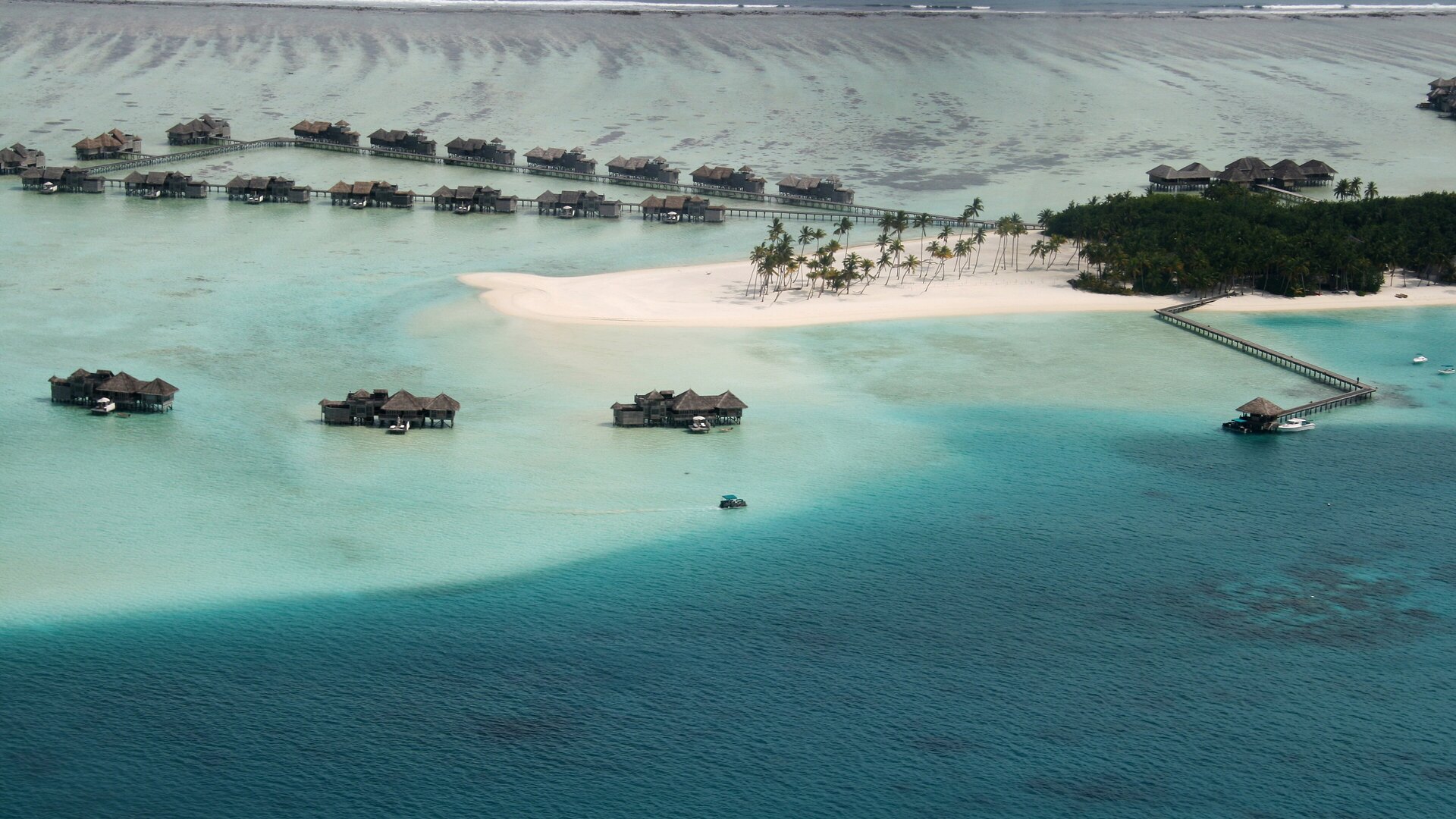
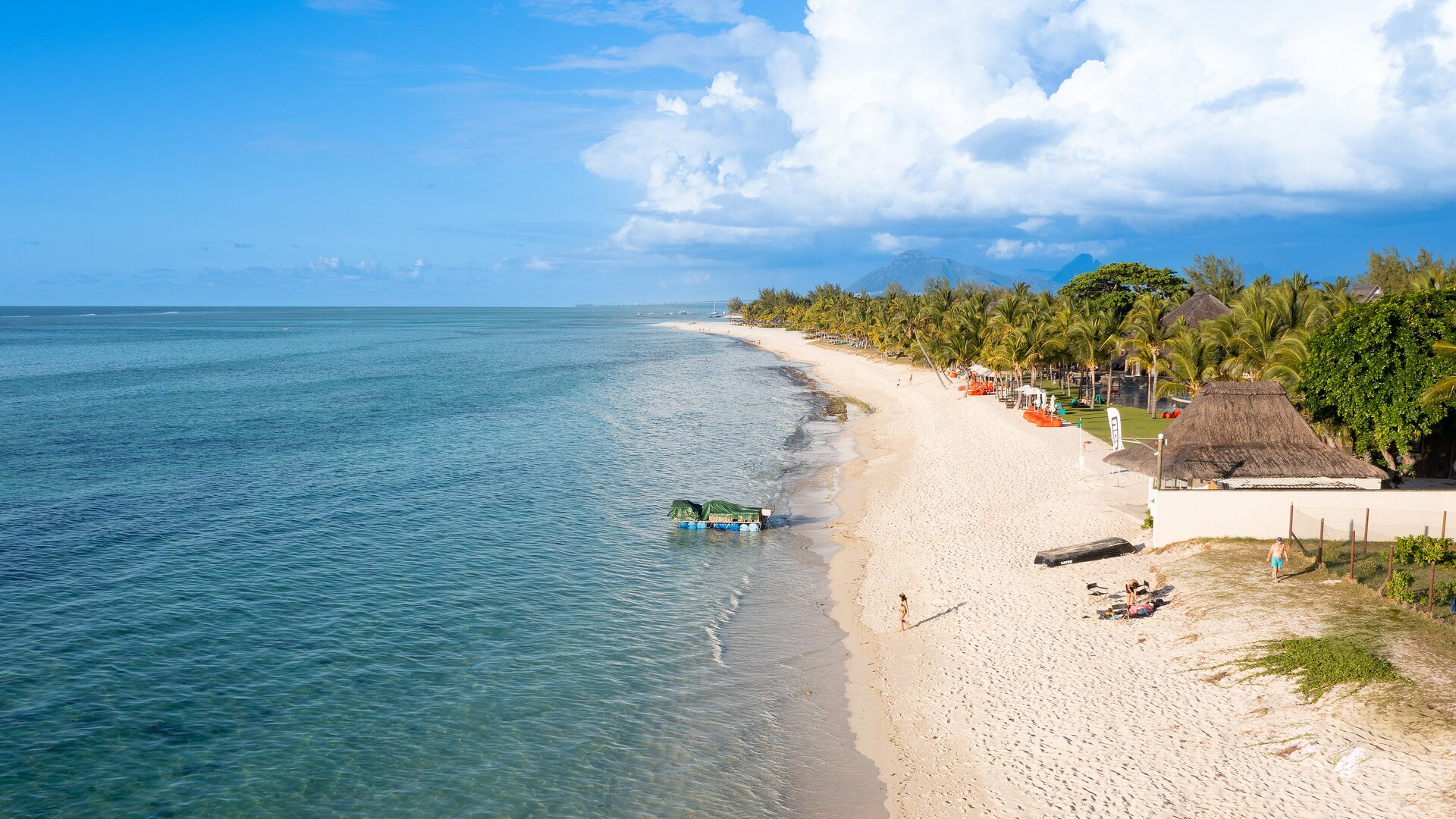
The Seychelles are a scatter of granite and coral islands in the western Indian Ocean, a little south of the equator and about a thousand miles off the East African coast. They are famous for pink-granite beaches, warm turquoise lagoons, palm forests and some of the finest snorkelling and diving in the region — and, because they sit so close to the equator, they enjoy warm, tropical weather every month of the year. There is no cold season here: air temperatures hold between about 24 and 32 degrees Celsius, and the sea stays in the high twenties whenever you come.
What changes through the year is not the temperature but the wind and the sea. The Seychelles' climate is governed by two trade-wind seasons — the cooler, drier southeast trades from May to September, and the hotter, wetter northwest monsoon from November to March — separated by two calm transition periods around April and October. Those calm windows, when the wind drops and the sea turns glassy, are when the islands are at their most flawless for time in and under the water.
In short: the best time to visit Seychelles is the calm transition period around April and October, for the warmest, clearest, calmest seas and the best diving and snorkelling of the year. But every season has its case — the breezy southeast trades for active, lower-humidity days, and the green northwest monsoon for warmth, low crowds and value. This guide walks you through the whole calendar so you can choose the Seychelles that is right for you, whether as a stand-alone island escape or the beach finish to an African safari.
The Short Answer: Best Time to Visit Seychelles by Priority
| If your priority is... | Best months | Why |
|---|---|---|
| Best overall (sea + weather) | April & October (calm transition) | Light winds, warm glassy seas, clearest water, superb diving |
| Diving & snorkelling | April & October | Best visibility of the year; calm crossings to dive sites |
| Whale sharks & mantas | August – October (peak Sep–Oct) | Plankton blooms draw them past Mahé and the inner islands |
| Hiking, sailing & active days | May – September (southeast trades) | Cooler, drier, lower humidity, breezy for sailing |
| Turtle nesting | October – February | Hawksbills nest by day on inner-island beaches |
| Value & fewest crowds | November & May (shoulder months) | Lower rates, quiet beaches, still warm seas |
Keep this table in mind as you read on. Below we unpack the two trade-wind seasons and the calm windows between them, lay out the sea-and-wildlife calendar, then break the year down month by month so you can lock your dates with confidence.
The Calm Transition (April & October): Seychelles at Its Best
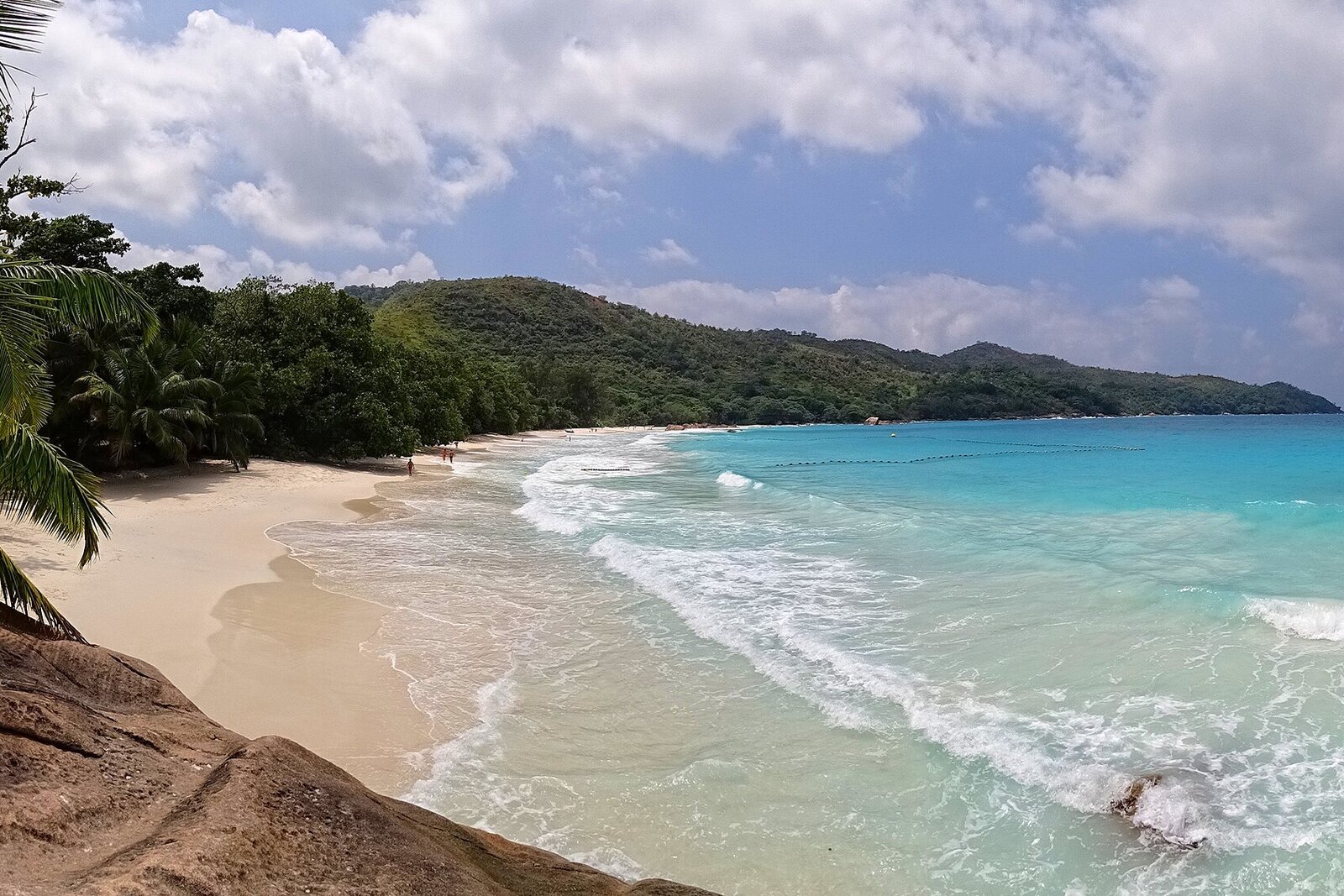
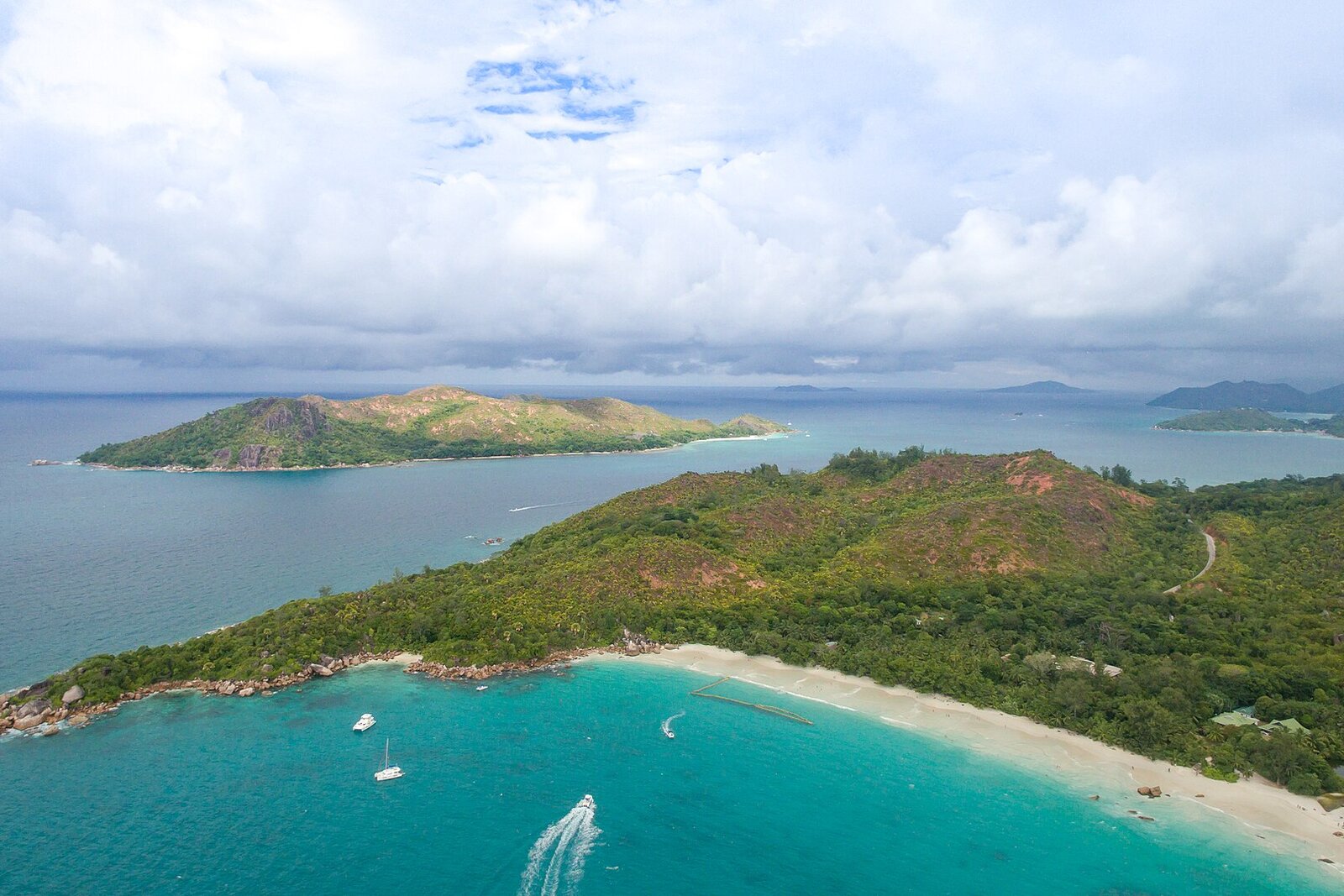
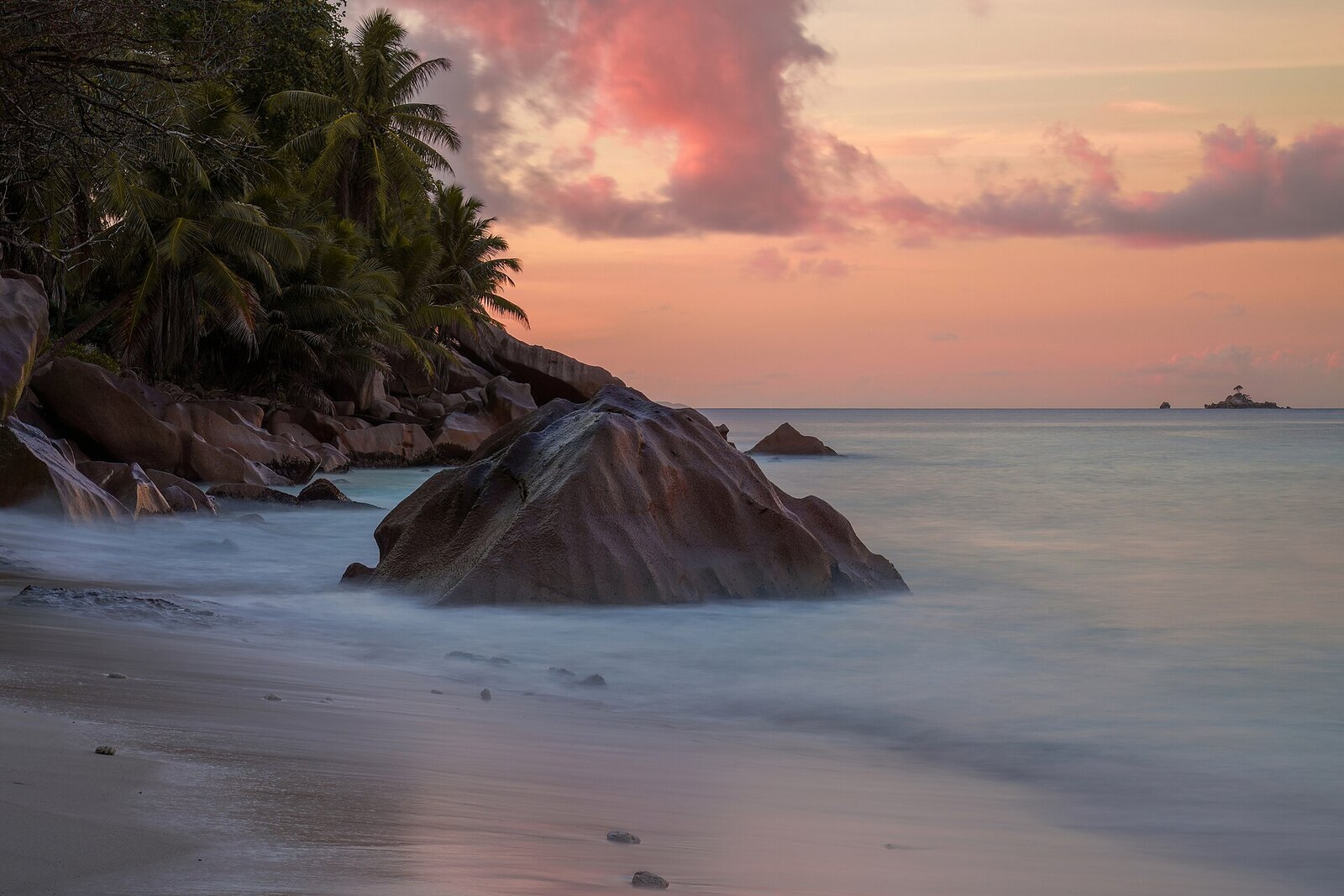
If there is a single best time to visit Seychelles, it is the two short calm windows that fall between the trade-wind seasons, around April and October. In these weeks the wind that drives the sea for most of the year falls away, the ocean settles to a warm, glassy calm, and underwater visibility climbs to its best of the year. For anyone who has come for the water — and most people do — this is the sweet spot.
April closes the northwest monsoon and October closes the southeast trades, and both share the same magic: light winds, warm air and sea, and long, still days that make the lagoons look like glass. This is prime time for diving and snorkelling, with clear water over the reefs and easy, comfortable boat crossings to sites around Mahé, Praslin and the marine parks. It is also lovely for island-hopping, sailing and simply swimming from beaches that can be breezy or weedy at other times of year.
The trade-off is popularity and price: these are among the most sought-after weeks in the Seychelles calendar, so the best villas and live-aboard dive boats book out early and rates are firm. October has a further draw — it sits at the tail of the whale-shark season — while April tends to be a touch warmer and more humid as the monsoon fades. Either way, for the finest all-round conditions in and on the water, the calm transition is the window to aim for.
The Southeast Trades (May–September): Cooler, Drier & Breezy
From around May to September the southeast trade winds settle in, and they bring the Seychelles' coolest, driest and freshest weather. Humidity drops, skies are often bright, rainfall eases — especially on the drier islands of Praslin and La Digue — and the steady breeze takes the edge off the tropical heat. For travellers who find equatorial humidity tiring, this is the most comfortable time to be on the islands.
These are the active months. The wind and firmer, drier conditions make it the best season for hiking the granite trails of Mahé and the Vallée de Mai on Praslin, for sailing and catamaran charters through the inner islands, and for wind-driven watersports. The breeze also keeps beaches cool and mosquitoes down. Because it lines up with the northern-hemisphere summer holidays, July and August are busy, so book ahead for those weeks.
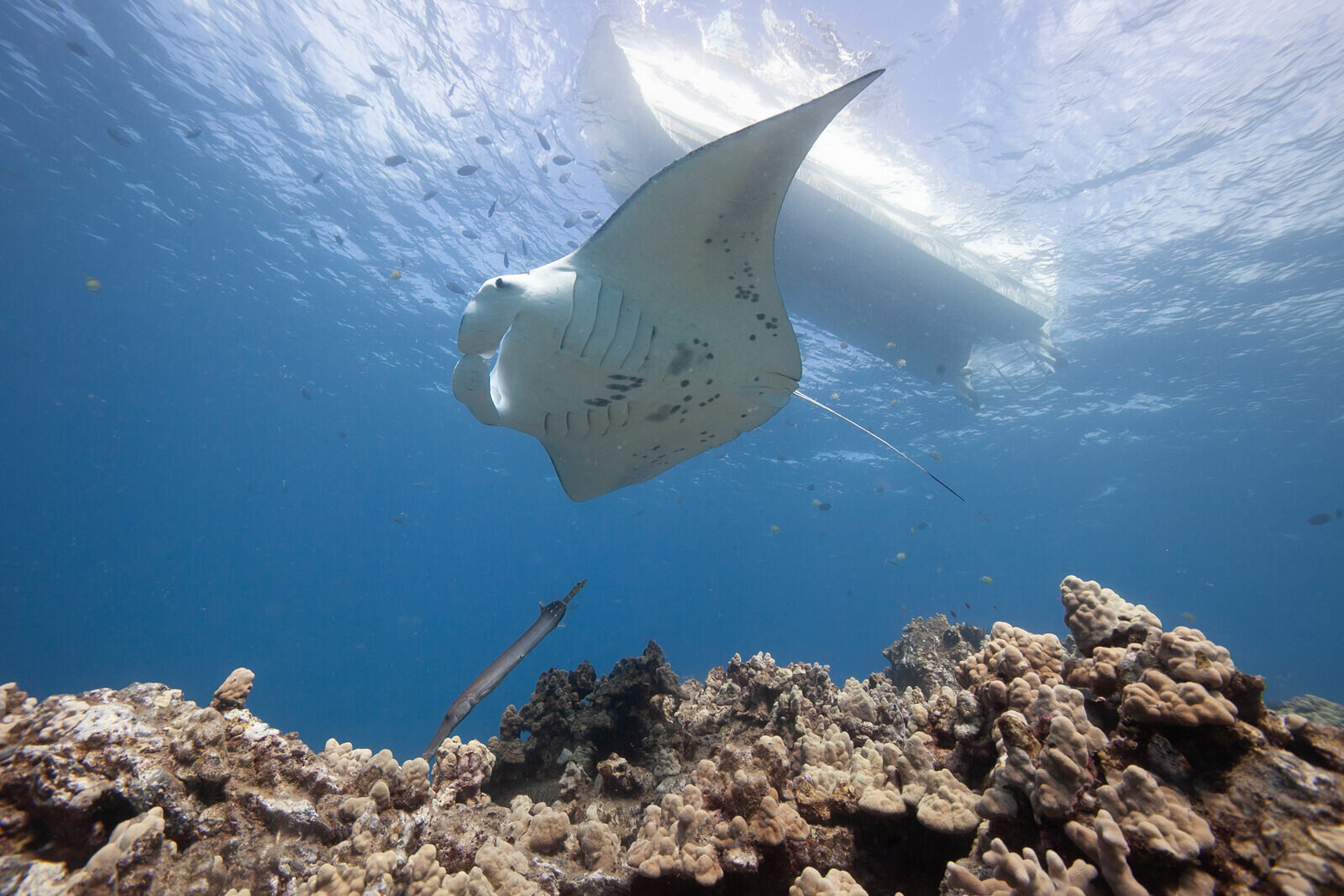
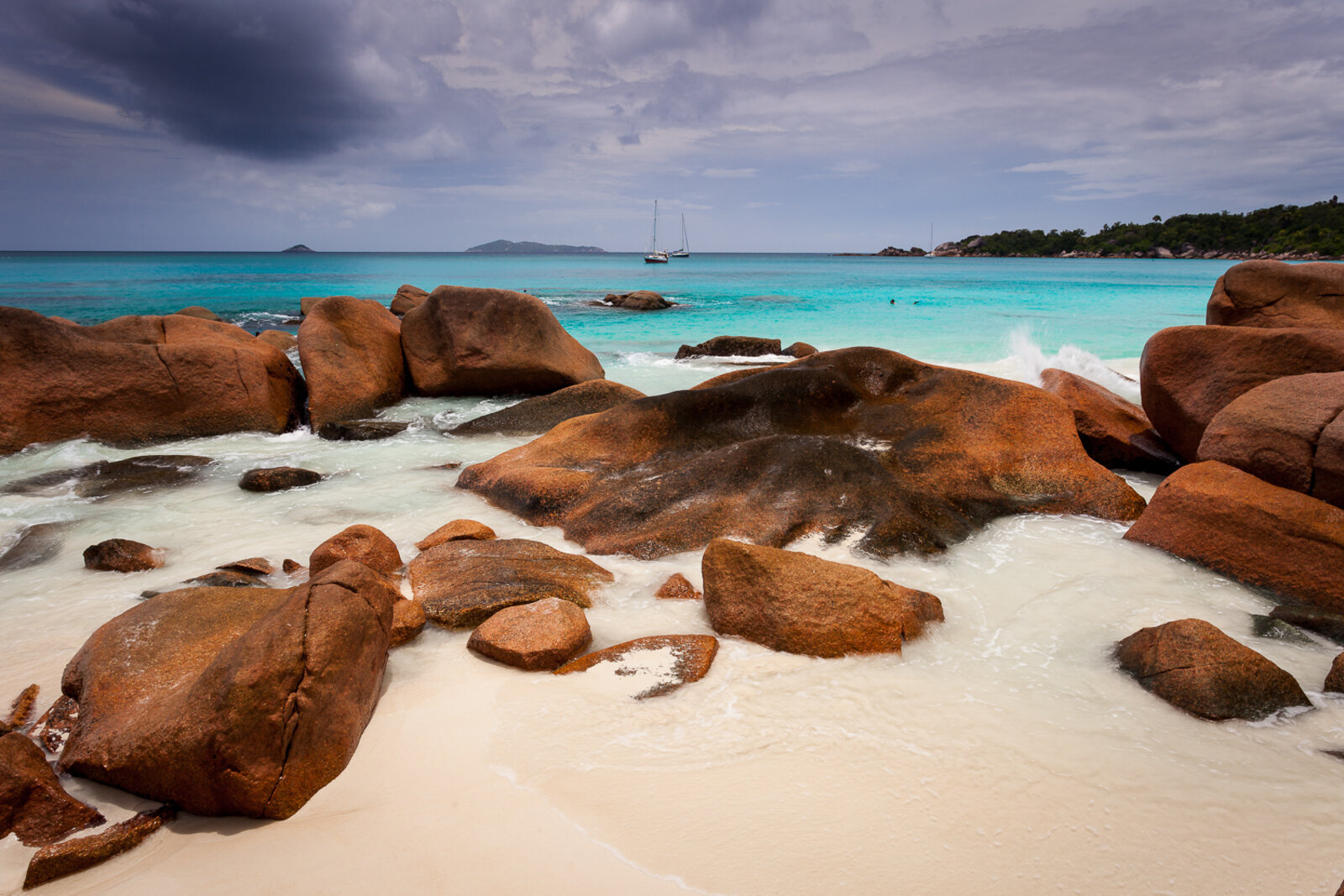
The trade-off is the wind itself. On southeast-facing beaches the trades push in swell and seaweed and can stir up the water, so snorkelling straight off some shores is less clear than in the calm months; sheltered, northwest-facing bays such as Anse Lazio and Beau Vallon stay more swimmable. The great reward comes at the end of the season: from August to October, plankton blooms draw whale sharks and mantas past Mahé and the inner islands, one of the Seychelles' finest marine spectacles, peaking in September and October as the trades fade into the calm window.
The Northwest Monsoon (November–March): Hot, Green & Quiet
From around November to March the wind swings round to the northwest and the islands enter their hot, humid, greener season. This is the wettest part of the year, with the heaviest rain usually falling in December and January, though even then it tends to come as short, warm downpours — often overnight or in heavy afternoon bursts — rather than all-day grey. Plenty of sunshine still breaks through, and the forests and gardens are at their lushest.
Because the wind comes from the northwest, the sea state flips: the southeast-facing beaches that were choppy in the trade season now lie sheltered and calm, so there is always a swimmable, snorkel-friendly coast somewhere on each island. Seas are warm and generally gentle away from the odd squall. Outside the busy festive fortnight around Christmas and New Year, these are among the quietest months on the islands, with lower rates and easy availability — good value for a warm-water escape.
The northwest monsoon also has its own wildlife: this is the main turtle-nesting season, with hawksbills coming ashore by day on inner-island beaches from October into February, and green turtles nesting year-round on the outer atolls. Humidity is high and rain can interrupt a day, so it suits travellers who want warmth, greenery, value and quiet over guaranteed dry skies — and who do not mind picking their beach to match the wind.
The Sea & Wildlife Calendar
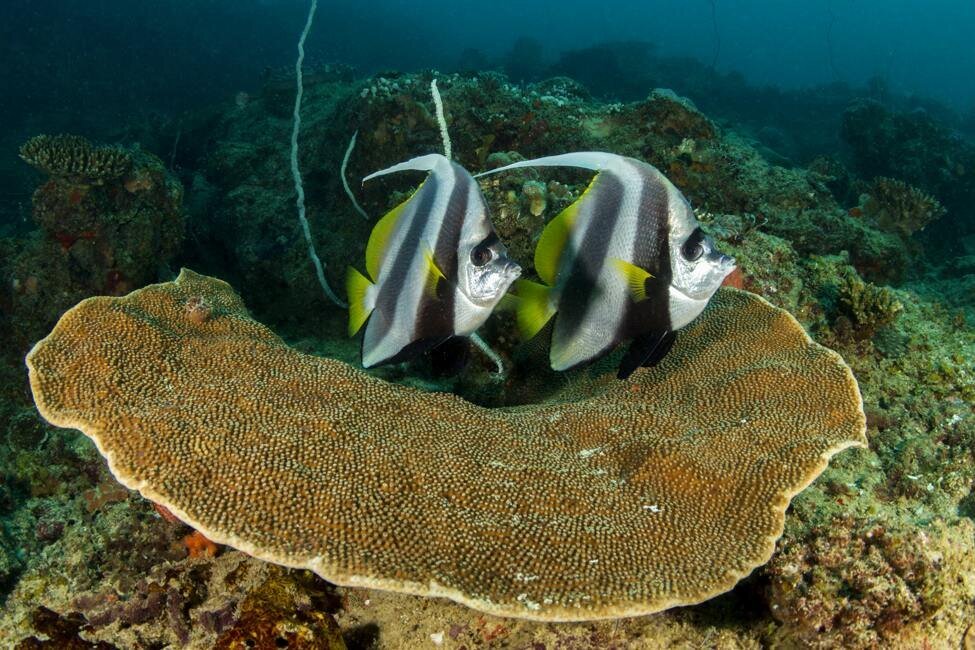
Much of the Seychelles' appeal is in and under the water, and several highlights have their own season. If one of these is the reason for your trip, use this calendar to pin your dates.
| Highlight | Best months | Where & notes |
|---|---|---|
| Diving & snorkelling visibility | April & October | Calm, clear water around Mahé, Praslin & the marine parks |
| Whale sharks | Aug – Oct (peak Sep–Oct) | Off Mahé & the inner islands on plankton blooms |
| Manta rays | Aug – Nov | Reef cleaning stations; often with the whale sharks |
| Hawksbill turtles (nesting) | Oct – Feb | By day on inner-island beaches (Cousine, North, Frégate) |
| Green turtles (nesting) | Year-round (peak on Aldabra) | Mainly the outer atolls, above all Aldabra |
| Seabird colonies | Apr – Oct | Sooty terns breed in their millions on Bird Island |
| Sailing & charters | May – Sep & the calm windows | Steady trades for sailing; glassy calm for gentle cruising |
The key insight is that the Seychelles' water is best in the calm windows of April and October, its marine giants arrive from August to October, and its turtles nest through the warmer monsoon months — so a little timing lets you build the trip around whatever you most want to see.
Seychelles Month by Month
Here is the year in detail, so you can match your available dates to the wind, the rain and the sea.
| Month | Season & sea | Rain | Good for |
|---|---|---|---|
| Jan | NW monsoon; calm SE coasts | Wettest | Warm seas, greenery, turtles, value |
| Feb | NW monsoon; warm, humid | Wet | Quiet beaches, turtles, warm water |
| Mar | Monsoon easing; seas settling | Moderate | Value, warm calm seas late month |
| Apr | Calm transition; glassy | Low | Best diving/snorkelling; all-round peak |
| May | SE trades begin; breezy | Low | Value shoulder, hiking, drier air |
| Jun | SE trades; cool, dry | Low | Hiking, sailing, comfortable days |
| Jul | SE trades; windiest | Low | Sailing, active days; book ahead (peak) |
| Aug | SE trades; breezy | Low | Whale sharks begin; sailing (peak) |
| Sep | Trades easing | Low | Whale sharks peak; seas calming |
| Oct | Calm transition; glassy | Low–mod | Best diving; whale sharks; turtles start |
| Nov | Monsoon begins; warm | Moderate | Value shoulder, turtles, warm seas |
| Dec | NW monsoon; calm SE coasts | Wettest | Festive escape, turtles (book early) |
January & February
The heart of the northwest monsoon: hot, humid and the wettest weeks of the year, though rain usually falls in warm, short bursts rather than all day. Southeast-facing beaches lie sheltered and calm, the islands are lush and green, turtles are nesting, and outside the festive fortnight the beaches are quiet and rates lower. A warm, value-friendly time if you do not mind humidity and a passing squall.
March
The monsoon begins to ease and the sea settles as the month goes on. Still warm and fairly humid, with moderating rain, March is a good-value bridge into the superb calm window that follows, and late in the month the water starts to clear.
April
One of the two finest months of the year. The winds drop, the sea turns warm and glassy, and underwater visibility is at its best — prime time for diving, snorkelling and island-hopping. Warm, largely dry and calm; book well ahead, as this is a peak window.
May
The southeast trades set in, bringing cooler, drier, fresher air and lower humidity. A lovely, good-value shoulder month for hiking and active days, with the breeze keeping things comfortable and the crowds still thin before the summer peak.
June, July & August
The core of the southeast trade season: cool by tropical standards, dry and breezy, with bright skies and low humidity — the most comfortable weather of the year and the best for hiking and sailing. July and August are busy with northern-summer visitors, so book ahead. Exposed southeast beaches can be choppy and weedy, but sheltered northwest bays stay swimmable, and by August the first whale sharks appear off Mahé.
September
The trades begin to fade and the sea calms. This is the peak of the whale-shark season off Mahé and the inner islands, with mantas often about too — an outstanding month for the water as conditions shift towards the October calm.
October
The second great calm window and, for many, the best month of all: light winds, warm glassy seas, top underwater visibility, the tail of the whale-shark season and the start of hawksbill nesting on the inner islands. Superb all round; a peak window, so book early.
November
The northwest monsoon returns gently, warm and increasingly humid with building rain. A good-value shoulder month with warm seas, nesting turtles and quiet beaches before the festive rush.
December
Firmly into the monsoon, hot and among the wettest months, but with warm, calm seas on sheltered coasts and lush, green islands. The festive fortnight around Christmas and New Year is busy and books out far ahead; either side of it, December is warm, green and quieter.
Best Time by Island & Region
The Seychelles' three main inner islands each have their own character, and the outer atolls follow their own rhythm. Here is how the timing shifts.
Mahé
The main island and gateway, with the airport, the capital Victoria and the long sweep of Beau Vallon. Mahé is the wettest of the inner islands but also the base for the whale-shark season (August to October) and for diving, which is best in the calm windows of April and October. Beau Vallon, on the northwest coast, is sheltered and swimmable through the southeast trade season.
Praslin
Home of Anse Lazio and the Vallée de Mai, Praslin is drier than Mahé and a superb all-year base. Its northwest-facing beaches stay calm during the trades, while April and October bring the clearest water for the reefs around nearby Curieuse and St Pierre. The Vallée de Mai's coco de mer palms are walkable in any month.
La Digue
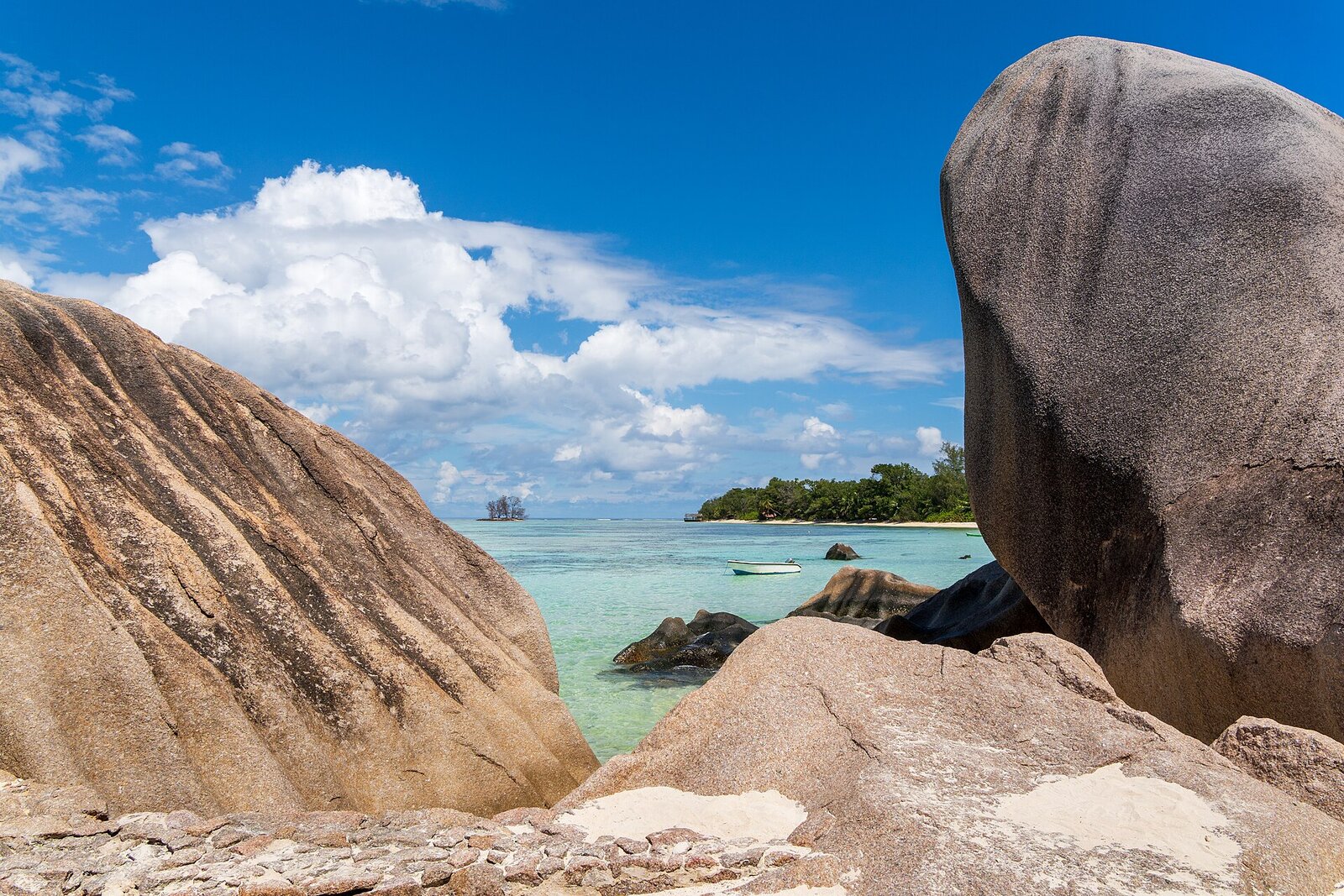
The postcard island, where Anse Source d'Argent's granite boulders draw photographers year-round. Small and low-key, La Digue is best enjoyed on the same calendar as Praslin — glassy and clear in the transition months, breezy and fresh in the trades, warm and green in the monsoon. The famous beach is at its most photogenic in the calm, clear light of April and October.
The outer islands & Aldabra
The remote outer atolls, above all the UNESCO-listed Aldabra, are a world apart, reached by live-aboard or private charter. Green turtles nest there year-round and the diving is exceptional, with the calmer transition months and the shoulders of the trade season generally offering the best sea conditions for the long crossings. These trips are specialist and must be arranged well in advance.
Best Time for Specific Travellers
For divers & snorkellers
April and October, without question, for the calmest seas and the clearest water of the year, with September and October adding whale sharks off Mahé. The trade season still dives well on sheltered sites, but visibility is at its finest in the calm windows.
For honeymooners & beach time
April, May, October and November hit the sweet spot of warm, calm seas, good weather and, in the shoulders, better value. As the ideal beach finish to an African safari, the Seychelles work year-round — simply choose an island and a beach that suit the season's wind.
For hikers & active travellers
May to September, the cooler, drier, breezier southeast trade season, for comfortable walking on Mahé and Praslin, sailing among the inner islands and lower humidity all round.
For families & value
May and November, the shoulder months, for warm seas, quieter beaches and softer rates, avoiding the July–August and festive peaks. Sheltered bays keep swimming easy for children whatever the wind is doing elsewhere.
Weather & What to Pack by Season
The Seychelles' equatorial climate keeps it warm and humid all year, so packing is about sun, rain, the sea and a little wind rather than temperature.
| Season | Typical temps | Conditions | Pack essentials |
|---|---|---|---|
| Calm transition (Apr & Oct) |
Night 25°C; day 30–31°C | Light winds, warm calm seas, clear water | Snorkel/dive kit, reef-safe sunblock, light layers, dry bag |
| Southeast trades (May–Sep) |
Night 24°C; day 28–29°C | Cooler, drier, breezy; choppier exposed coasts | Walking shoes, light windbreaker, sun protection, hat |
| Northwest monsoon (Nov–Mar) |
Night 25°C; day 30–32°C | Hot, humid, wettest; calm sheltered seas | Light rain layer, quick-dry clothing, insect repellent, sandals |
Year-round, pack for a warm tropical beach and reef trip: light, breathable clothing, swimwear, reef-safe sunscreen, a sun hat and sunglasses, and sandals or reef shoes for the granite and coral. Bring your own mask and snorkel if you can, a light rain layer for the monsoon months, and sturdier shoes if you plan to hike Mahé or Praslin in the trade season. A dry bag protects cameras and phones on boat trips, and light insect repellent is useful in the humid months. The Seychelles are malaria-free, which makes them a wonderfully easy, family-friendly beach add-on to a safari.
When to Book — and How Season Affects a Trip
The Seychelles are compact and exclusive, with a limited number of villas, resorts and live-aboard dive boats, so the best places fill early for the prime dates. Getting your dates and rooms locked in ahead of time protects the whole trip.
The calm windows of April and October and the northern-summer peak of July and August are the busiest and priciest, and the festive fortnight around Christmas and New Year books out furthest ahead — secure those dates six to nine months out where you can. The shoulder months of May and November offer the best mix of warm seas, quiet beaches and softer rates, while the wetter monsoon weeks (outside the festive period) are the quietest and best value of all. Whale-shark trips in September and October, and any outer-island or Aldabra voyage, should be booked well in advance.
Because so much depends on inter-island flights, ferries and the wind-driven sea state, the Seychelles reward being planned as a tailored trip — matching your islands and beaches to the season. They also make the ideal, malaria-free beach finish to an African safari; see how we combine bush and beach in our Indian Ocean islands comparison, explore the journeys below, or contact our team to plan the perfect pairing.
The Verdict: So When Should You Go?
There is no wrong time to visit the Seychelles — only the right time for you. If you want the finest all-round conditions, the calmest, clearest seas and the best diving and snorkelling, aim for the calm transition months of April and October, with October adding the tail of the whale-shark season. This is the Seychelles at its glassy, flawless best.
If you prefer cooler, drier, fresher days for hiking and sailing, come in the southeast trades from May to September, and choose sheltered northwest-facing beaches for swimming. If you want warmth, greenery, quiet and value — and do not mind humidity and the odd downpour — the northwest monsoon from November to March delivers calm sheltered seas, nesting turtles and the lowest rates outside the festive weeks.
Whichever season calls to you, these islands will reward you with warm water and pink-granite beaches like nowhere else. When you are ready to turn a date into a journey — whether a stand-alone island escape or the perfect beach finish to a safari — read our Indian Ocean islands comparison, browse the journeys below, or contact our team to plan a tailor-made trip built around the perfect time for you.