Key Takeaways
- The best time to visit Mozambique is the dry season, April to November — warm sunny days, calm seas, low humidity and superb diving and beach weather across the islands and coast
- September and October are the all-round sweet spot: peak dry-season sunshine on the beaches, excellent diving visibility, and the height of the humpback whale season all at once
- Humpback whales migrate past Mozambique from June to November (peaking August–October), while whale sharks and manta rays are best from around October to March — the two great marine spectacles sit at opposite ends of the year
- The wet season (December to March) is hot, humid and green with heavy afternoon downpours, plus a real cyclone risk in January–February, especially in central and southern Mozambique — but it brings whale sharks, turtle nesting and the lowest rates
- For a bush-and-beach safari combining Gorongosa or Kruger with the islands, the dry months of July to October line up the best game viewing with the best beach weather
- Mozambique is a malaria area — take prophylaxis year-round, but mosquito activity is highest in the warm, wet summer months
TL;DR: The best time to visit Mozambique is the dry season, April to November, when the islands and coast enjoy warm, sunny, low-humidity days and calm, clear seas — ideal for beaches, diving and dhow safaris. September and October are the finest all-round months, combining peak beach weather, superb underwater visibility and the height of the humpback whale season. Time your trip to the marine calendar: humpback whales June–November, whale sharks and manta rays October–March, turtle nesting November–March. The wet summer (December–March) is hot, green and cheapest but brings heavy rain and a January–February cyclone risk. For a bush-and-beach combination, July–October aligns the best safari and beach conditions. Below you will find a full month-by-month guide, a Marine Big Five season calendar, region-by-region timing, best-time-by-traveller-type advice, weather and packing notes, and exactly when to book. Read this alongside our ultimate Mozambique travel guide.
Ask anyone who has fallen for Mozambique when you should go, and the honest answer is that it depends on what you are chasing beneath, on and beside the water. This is a country of two coasts in one — powder-white island beaches and coral reefs on one side, wild bushveld national parks on the other — and it wears two very different faces across the year. Get the timing right and you can line up flat, glassy seas, humpback whales breaching offshore and warm cloudless days on the sand. Get it wrong and you can find yourself dodging tropical downpours or a cyclone warning.
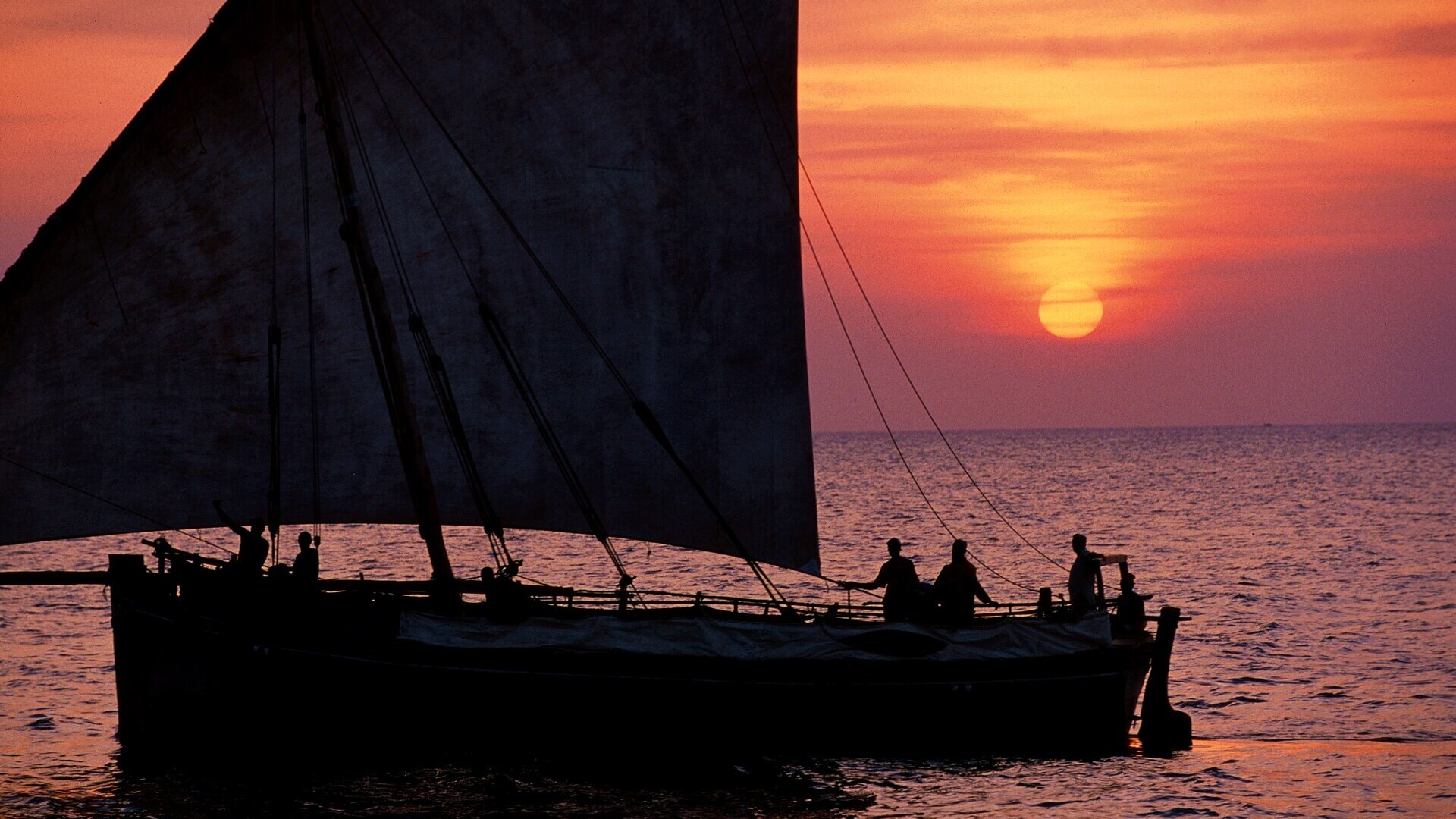
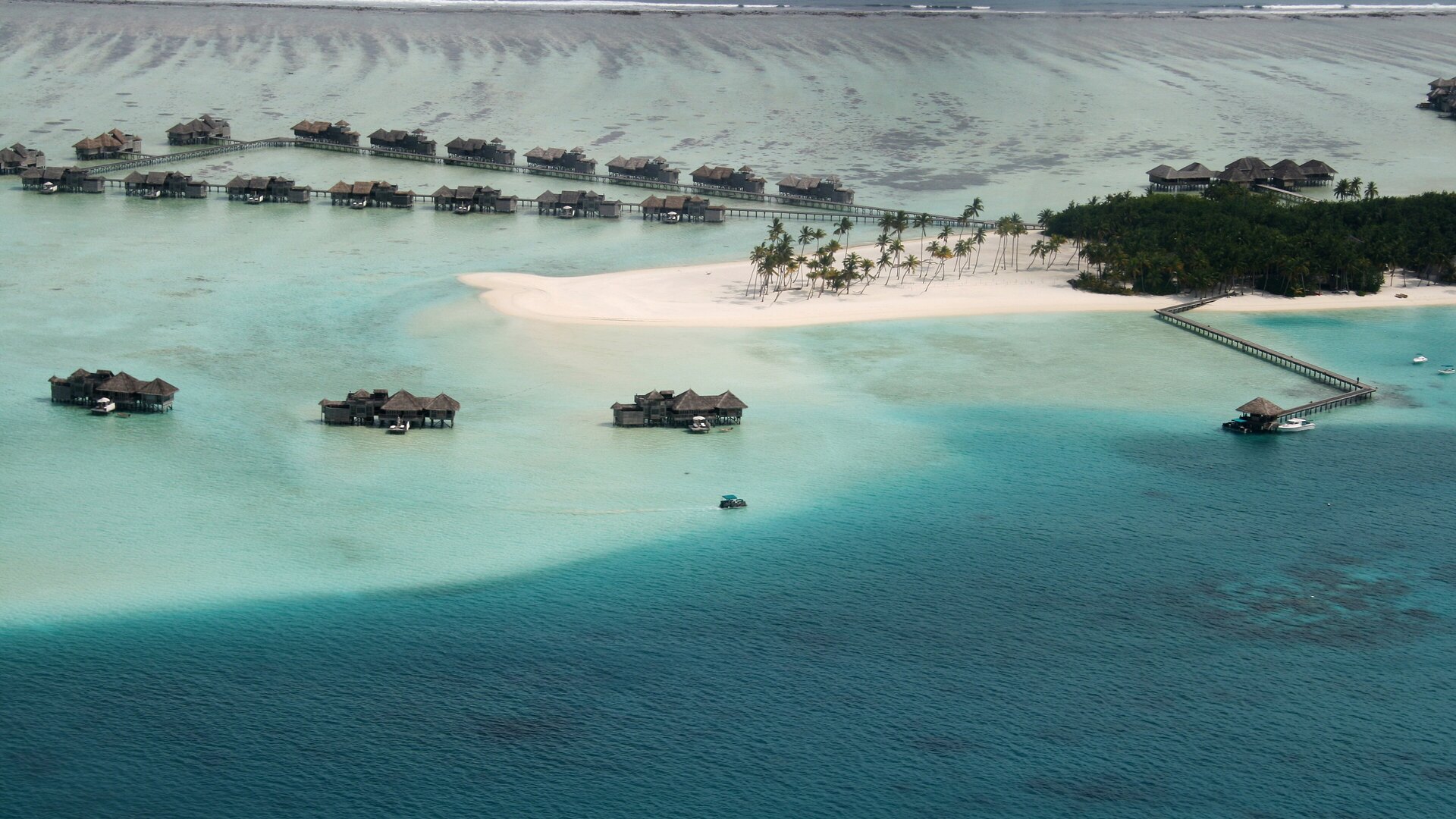
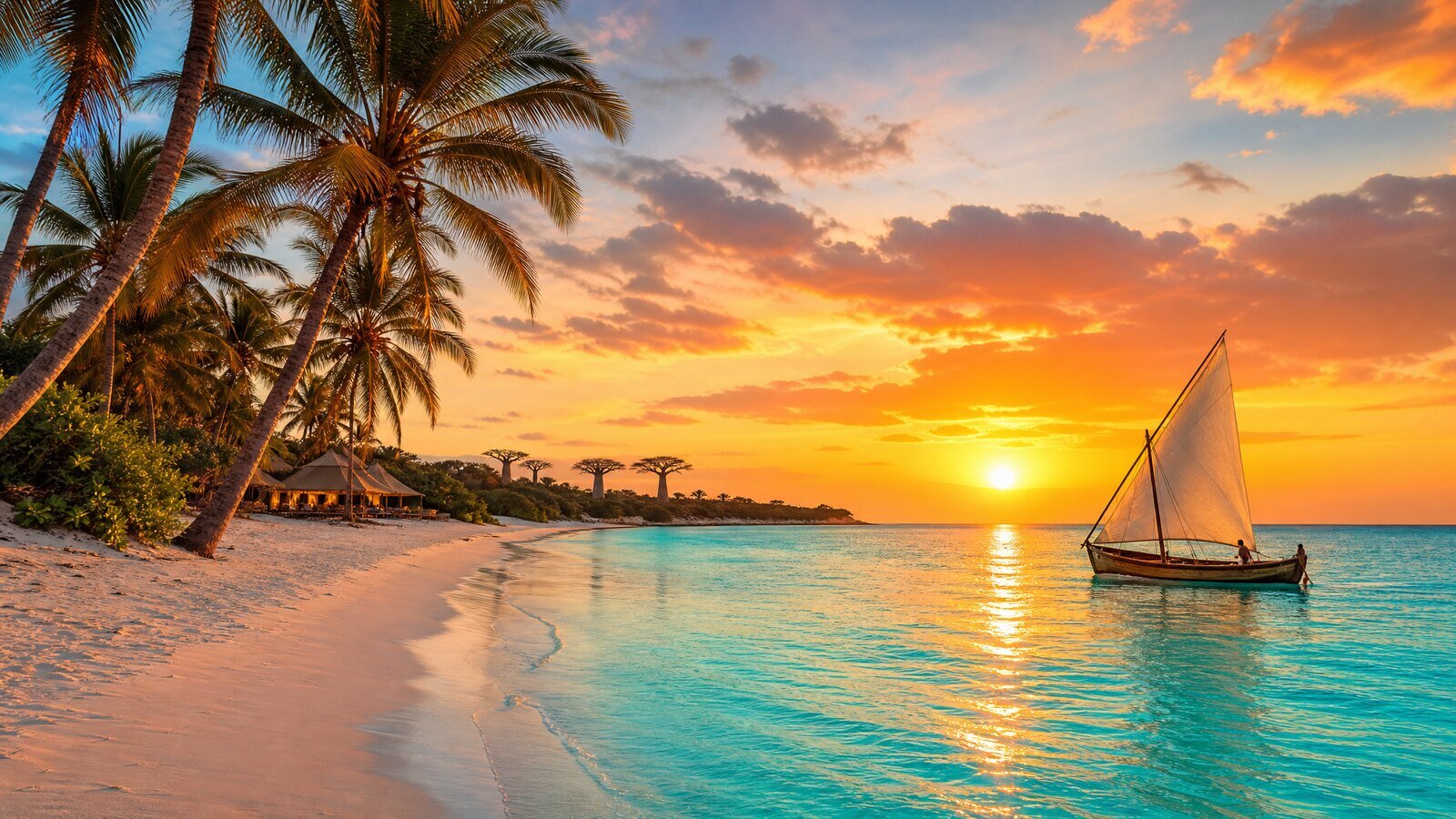
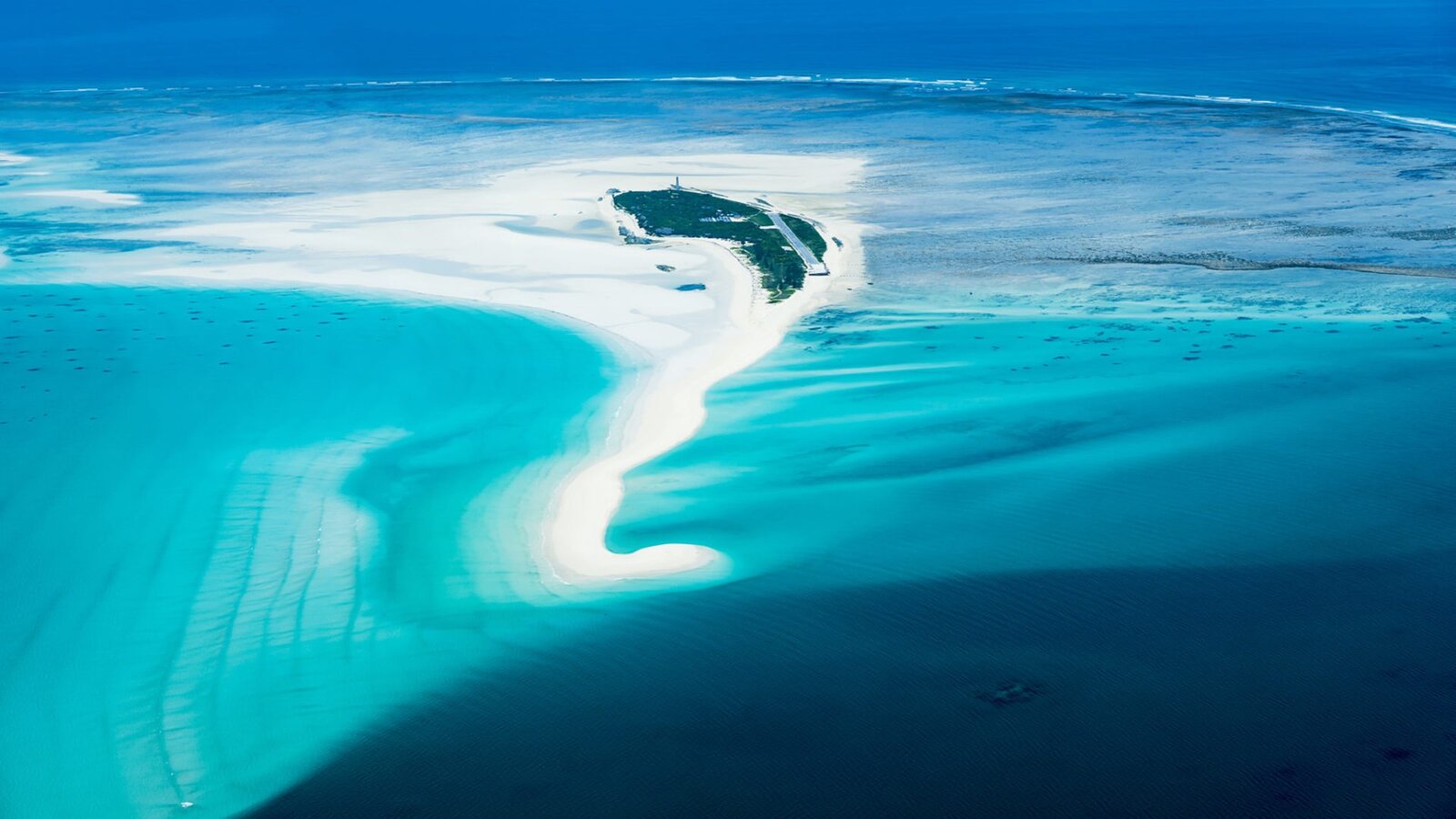
In short: the best time to visit Mozambique is the dry season, from April to November. These are the cooler, drier, less humid months, when the southeast trade winds ease, the Indian Ocean settles into its clearest and calmest, and the beaches of Bazaruto, Benguerra, the Quirimbas and Tofo are at their most idyllic. It is peak diving and snorkelling season, prime dhow-safari weather, and — for part of it — humpback whale season too. If you dream of barefoot island luxury, world-class reefs and reliable sunshine, this is your window.
But the story has a second chapter. The wet season, December to March, turns Mozambique hot, humid and tropical-green, with dramatic afternoon storms, a genuine cyclone risk in the peak of summer, and the lowest prices of the year. It is also when whale sharks and manta rays are most reliable off Tofo, when turtles haul out to nest, and when the bush parks flush green. This guide walks you through the whole calendar — month by month, marine season by marine season, and region by region — so you can choose the Mozambique that is right for you.
The Short Answer: Best Time to Visit Mozambique by Priority
| If your priority is... | Best months | Why |
|---|---|---|
| Best overall (beaches + weather) | April – November (peak Sep–Oct) | Warm, dry, sunny days; calm, clear seas; low humidity |
| Humpback whales | June – November (peak Aug–Oct) | Northbound migration past the whole coast; breaching & calving |
| Whale sharks & manta rays | October – March | Plankton blooms off Tofo & Bazaruto; warm water |
| Diving & snorkelling visibility | April – June & September – November | Calmest seas, least wind, best underwater clarity |
| Bush-and-beach safari combo | July – October | Peak dry-season game viewing meets peak beach weather |
| Turtle nesting | November – March | Loggerhead & leatherback nesting, esp. the far south |
| Best value & fewest visitors | December – March (rainy) | Lowest rates, green landscapes, whale sharks — but rain & cyclone risk |
Keep this table in mind as you read on. Below we unpack the two seasons in depth, lay out the all-important Marine Big Five calendar, then break the year down month by month so you can pin your dates with confidence.
The Dry Season (April–November): Sun, Calm Seas & Whales
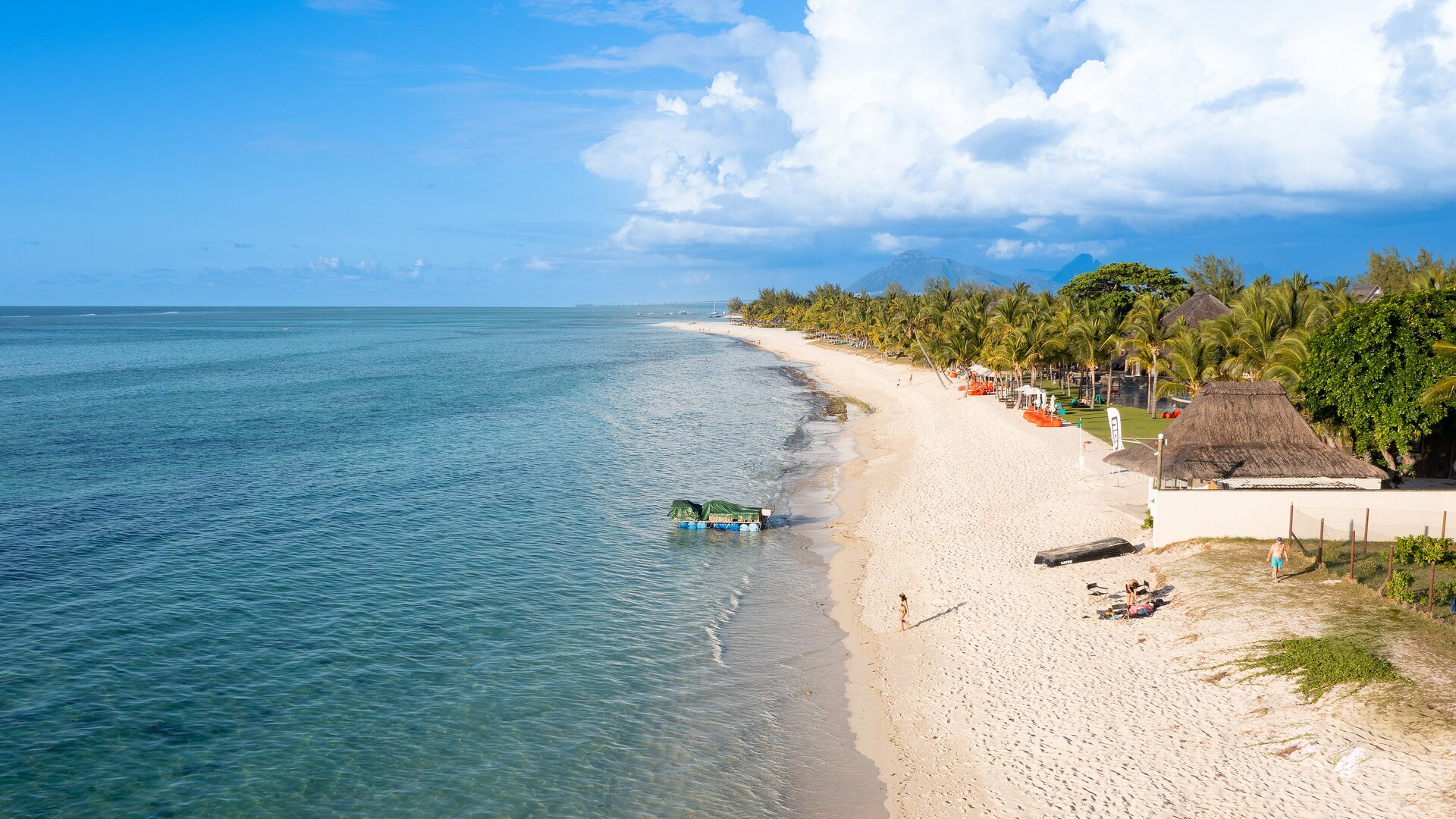
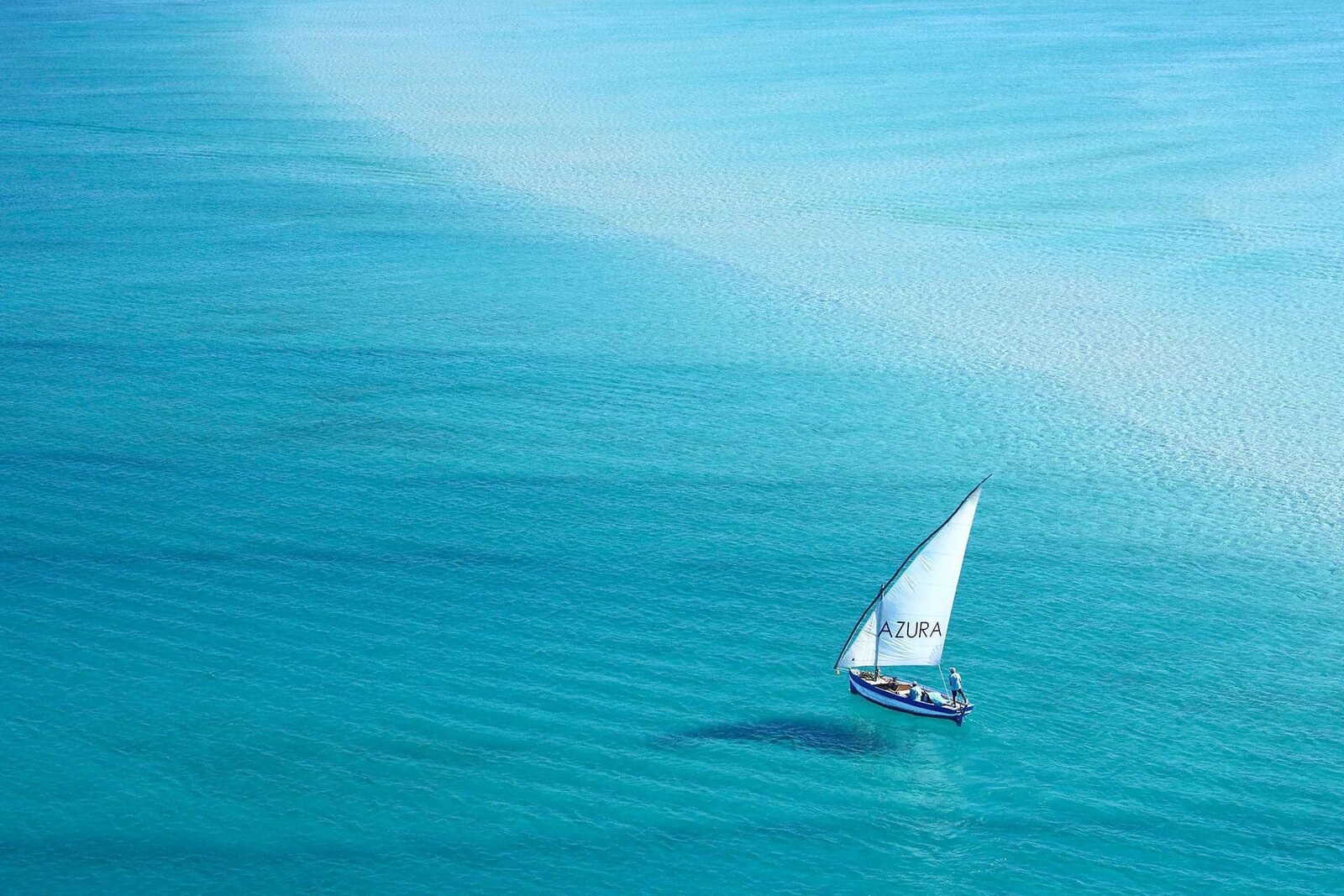
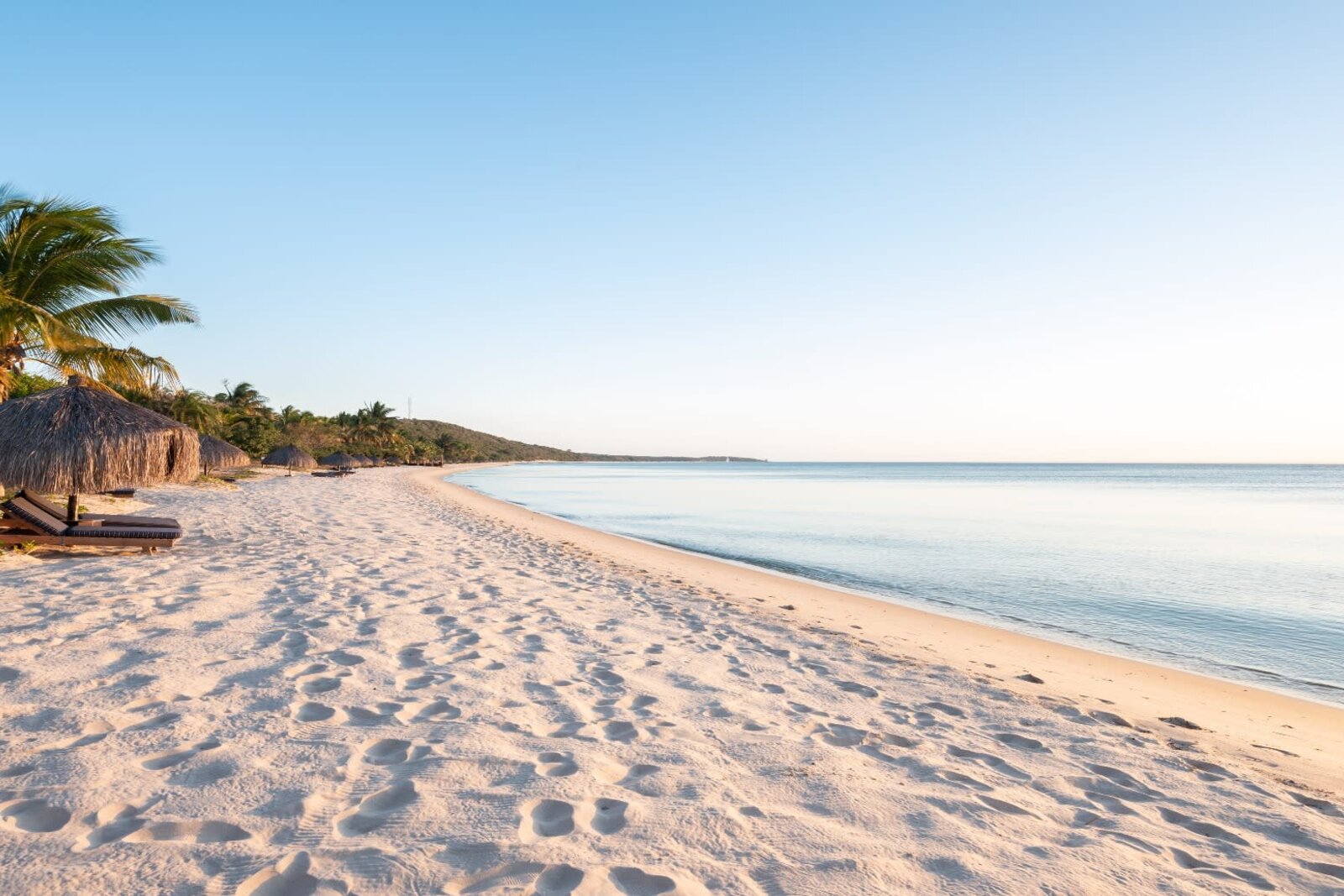
If there is a single best time to visit Mozambique, this is it. As the humid summer fades in April, the rains retreat, the air dries out and the Indian Ocean settles. From April right through to November the coast enjoys warm, sunny days, cooler comfortable nights, low humidity and — crucially for a country defined by its water — calm, clear seas. This is winter in the southern hemisphere, but on the tropical Mozambican coast it means near-perfect beach weather rather than cold.
Daytime temperatures through these months typically sit in the pleasant high-20s Celsius, climbing back towards 30°C as spring arrives in September and October. The deep midwinter of June, July and August brings the coolest, freshest conditions — glorious sunny days around 25–28°C and evenings cool enough for a light layer, especially on an exposed island or an open boat at dawn. Rain is scarce, the skies are clear, and the light is clean and golden: exactly the conditions the barefoot-luxury island lodges were built for.
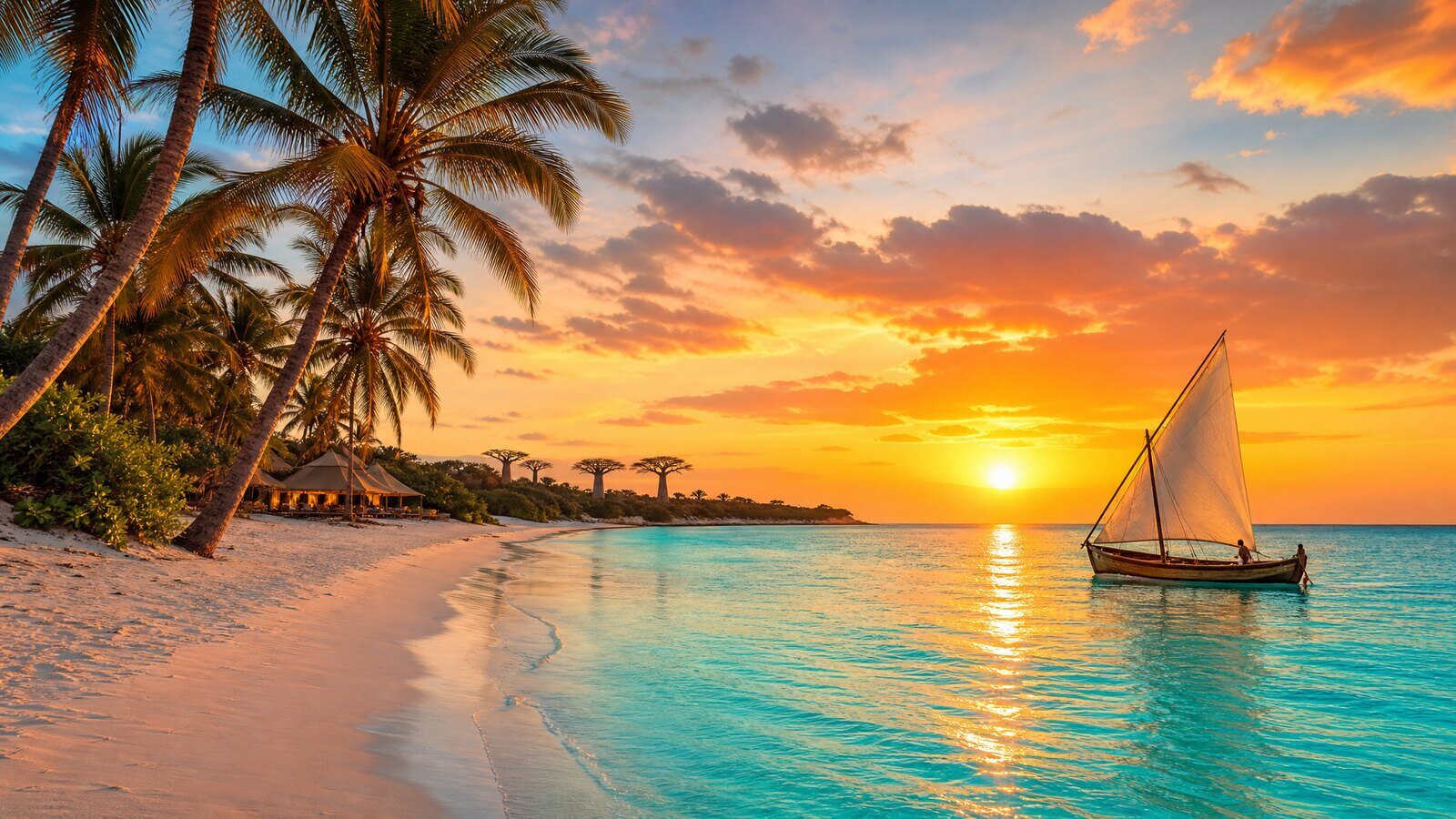
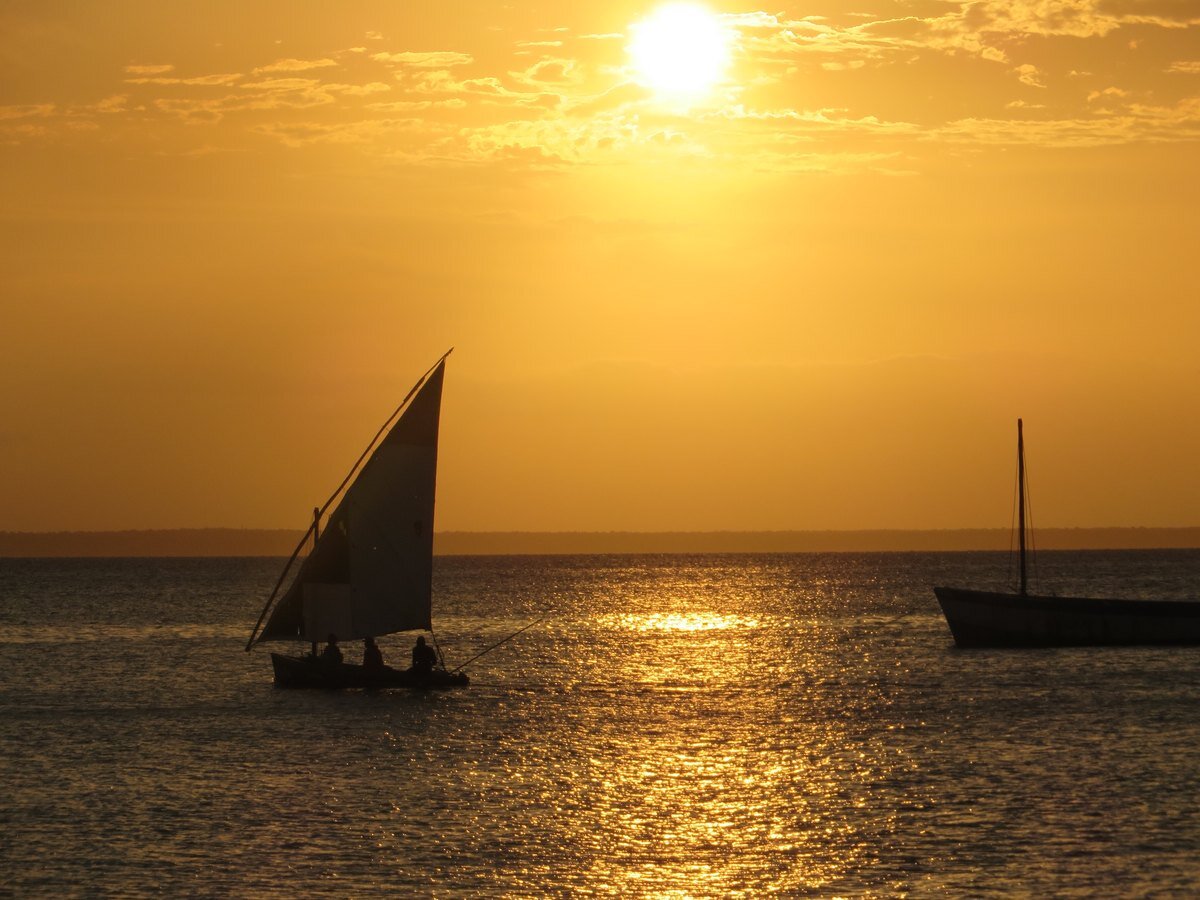
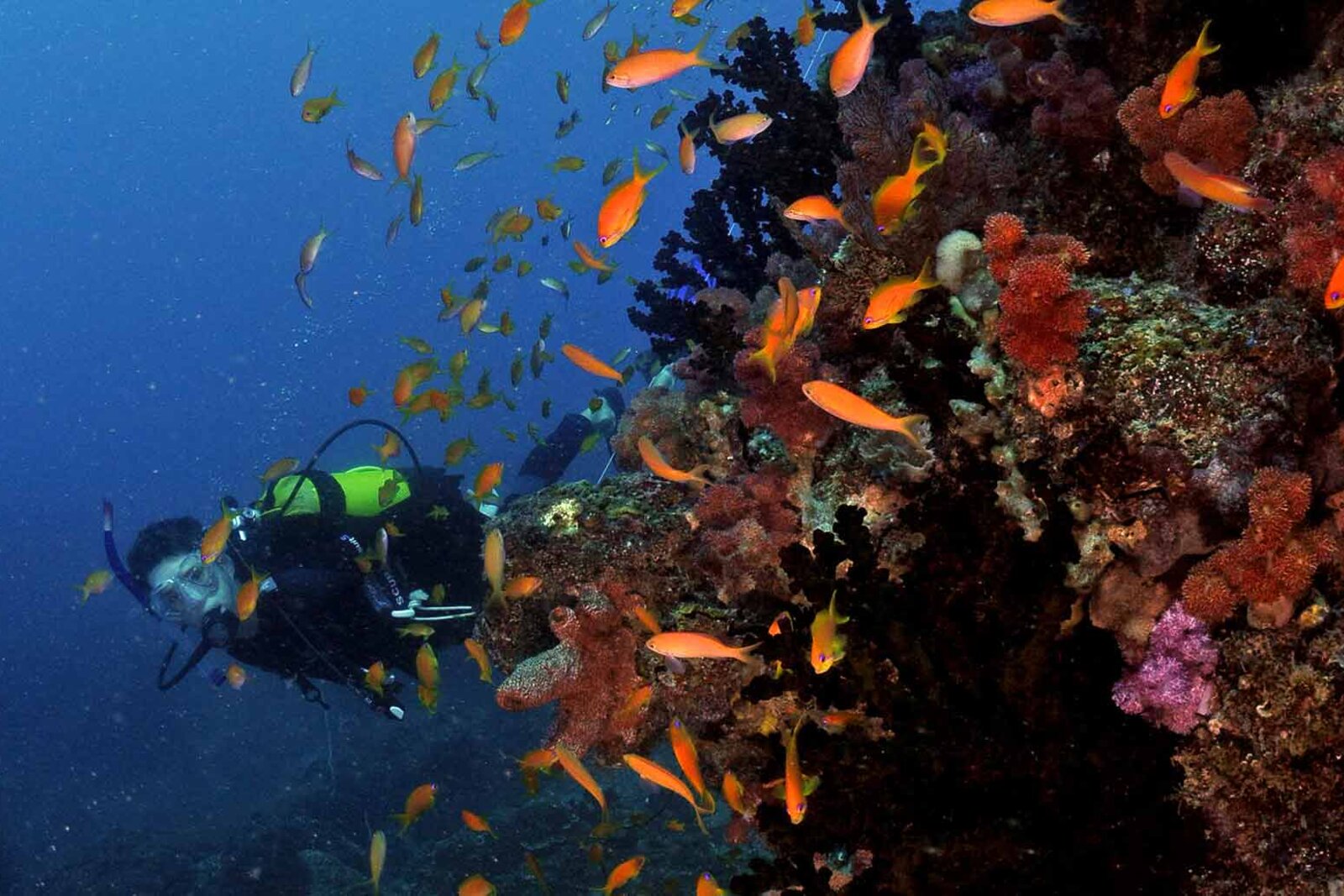
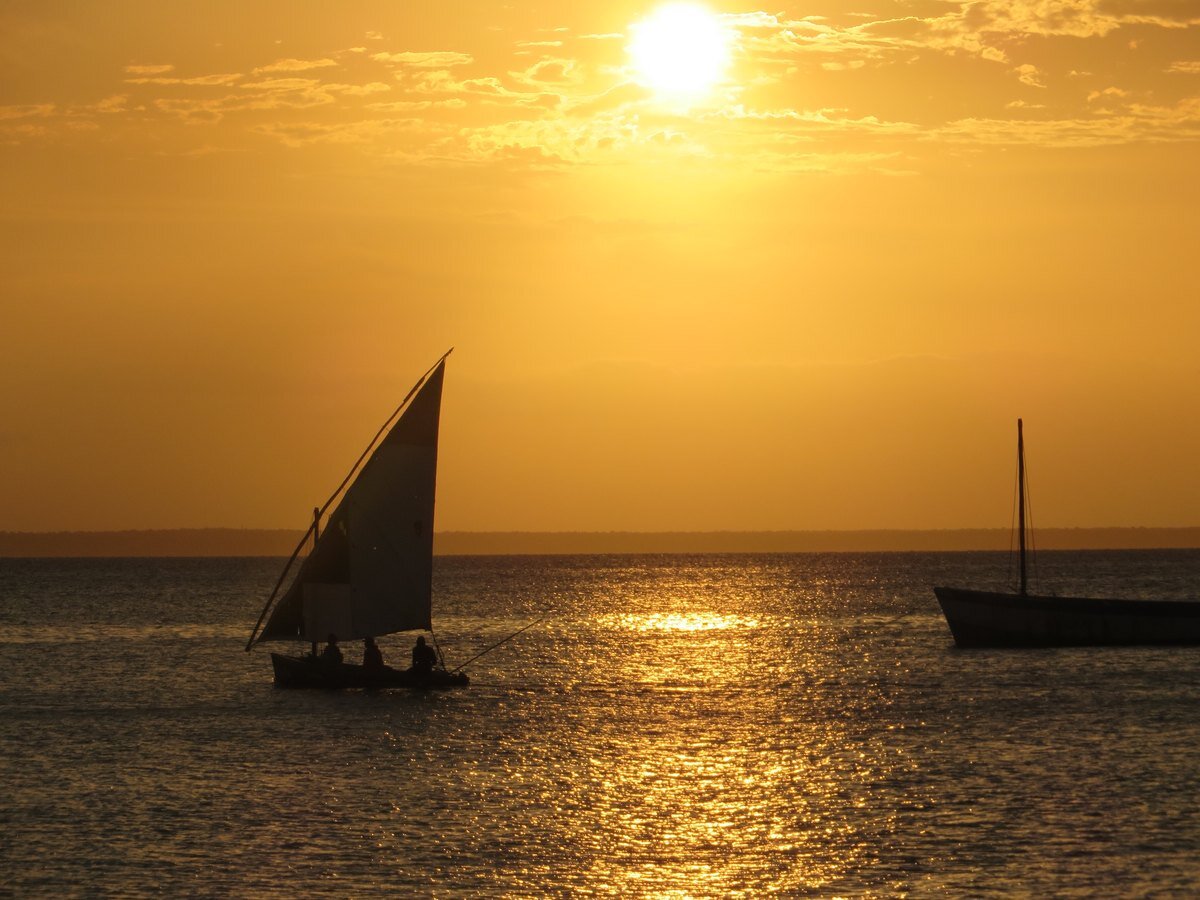
For anything that happens in or on the water, the dry season is prime. Calm seas and low wind mean the best underwater visibility of the year — often 20 to 30 metres on the outer reefs — making April to June and September to November the finest windows for diving and snorkelling. The famous reefs off Bazaruto, Benguerra, the Two Mile Reef and the Quirimbas are at their clearest, dhow trips glide rather than pitch, and island-hopping across the archipelagos is smooth and reliable.
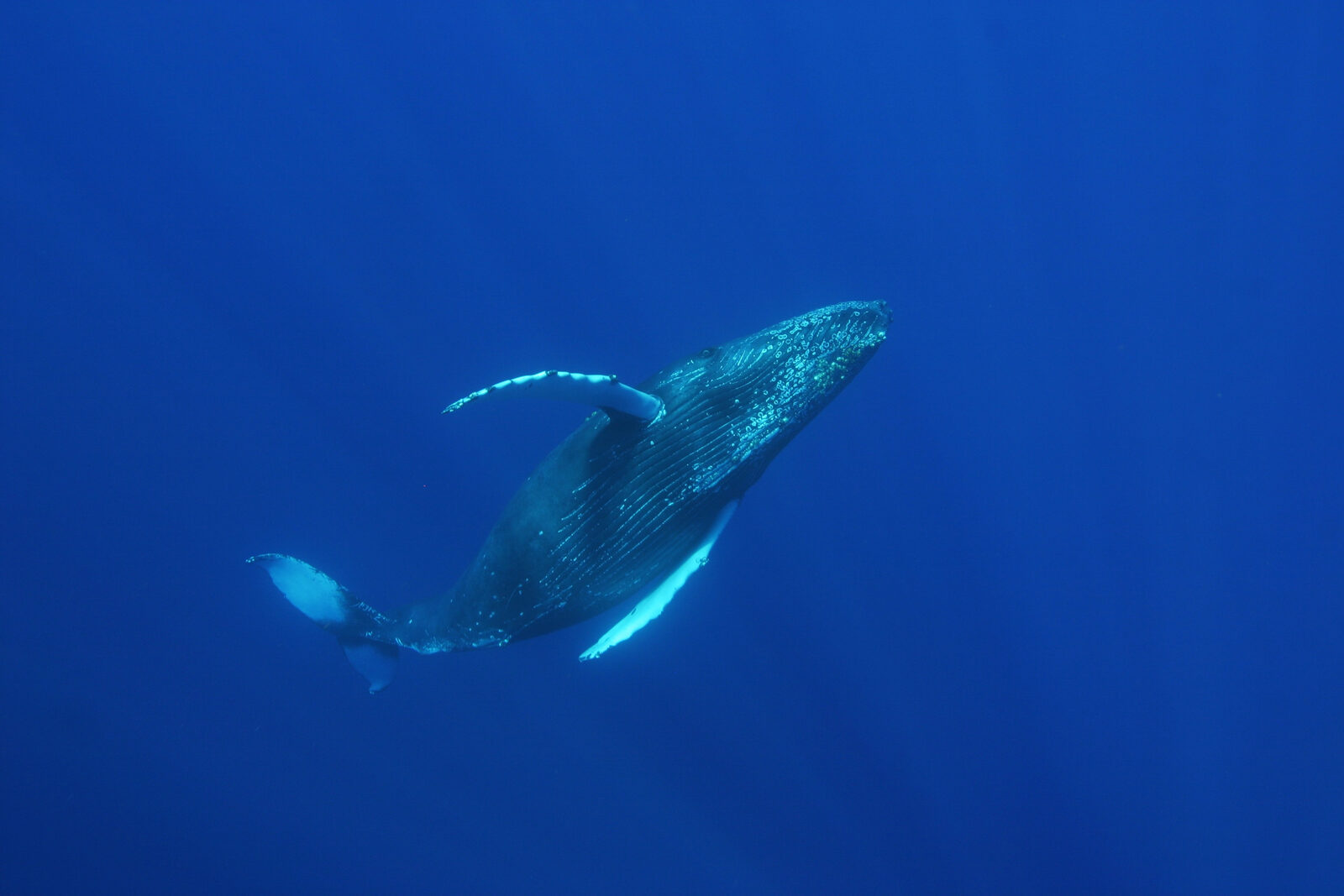
The dry season also delivers Mozambique's headline marine spectacle. Humpback whales migrate up the entire coast from roughly June to November, moving north from Antarctic feeding grounds to breed and calve in the warm tropical shallows. They are most reliably seen from August to October, when breaching, tail-slapping adults and newborn calves can be watched from the islands, from boats and sometimes from the beach itself. For many travellers, timing a trip to overlap whale season is reason enough to come in the dry months.
There is one important nuance. The middle of the dry season — particularly June through August — can bring the cacimbo and periods of brisk southeasterly trade winds, which occasionally kick up chop and can briefly disrupt boat transfers and diving on exposed coasts. It is rarely a deal-breaker, but if flat water and diving are your absolute priority, the shoulders of the dry season — April to June and September to November — are the sweet spot. And of all of them, September and October stand out as the best all-round months: peak sunshine, warming seas, superb visibility and the tail of whale season, all at once.
The Wet Season (December–March): Green, Hot & Full of Giants
When the first tropical rains arrive in late November or December, Mozambique changes character entirely. The bush flushes green, the air turns hot and heavy, and the afternoons build towards spectacular thunderstorms. This is the wet season, also called the green or low season — hotter, wetter and quieter than the dry months, and while it is less famous, it has real rewards for travellers who understand the trade-offs.
Daytime temperatures climb into the low-to-mid 30s Celsius, and the humidity can be sapping, especially in the far north around the Quirimbas and Pemba. Rain, when it comes, usually arrives as intense afternoon downpours rather than all-day grey, so mornings are often bright and usable, but you should expect genuine tropical weather. The single biggest caveat is cyclones: the tropical cyclone season peaks in January and February, and central and southern Mozambique — the Beira, Inhambane and Bazaruto coasts — can be affected by systems tracking in from the Mozambique Channel. Serious storms are not an every-year certainty, but the risk is real and worth planning around.
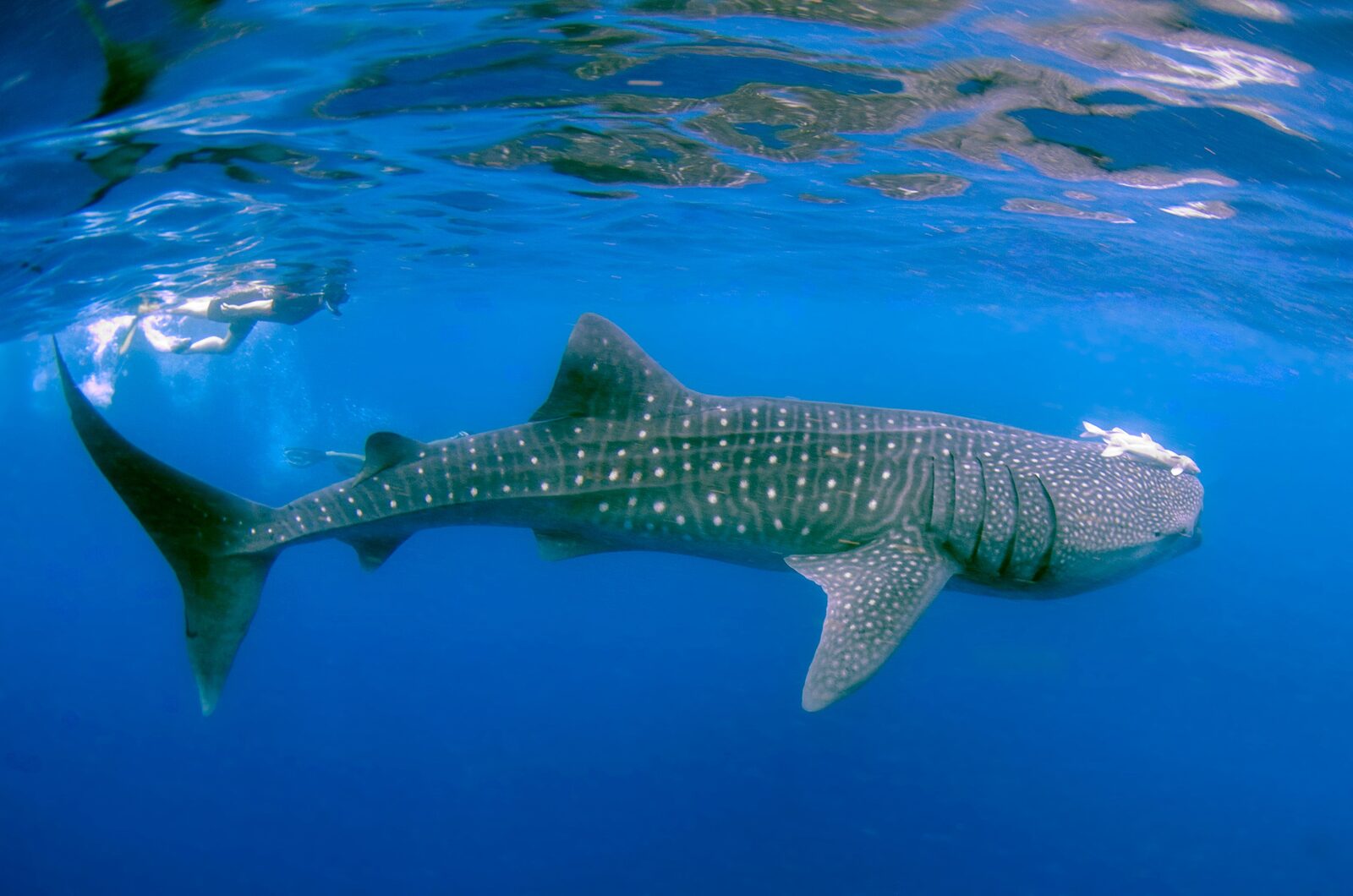
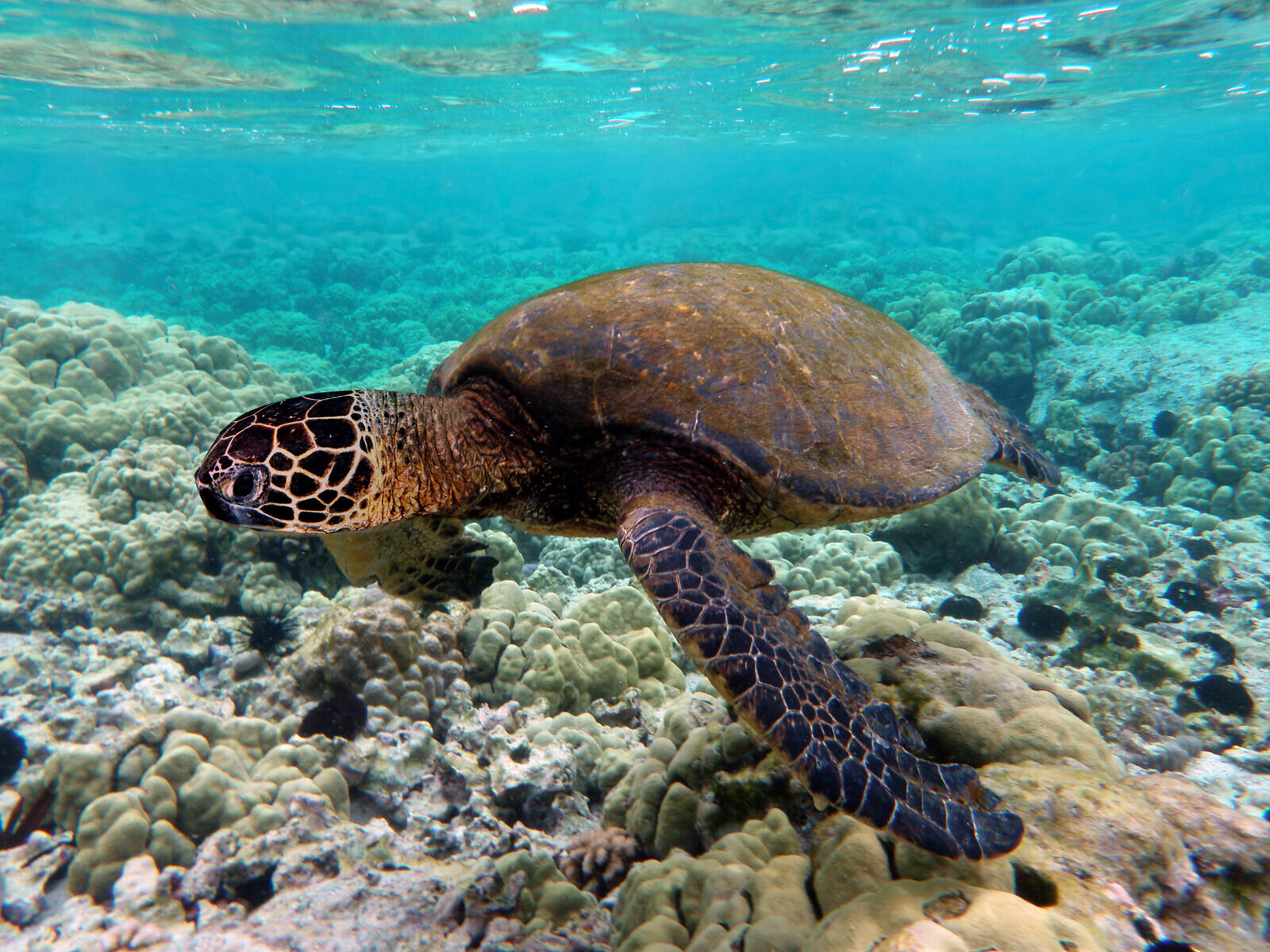
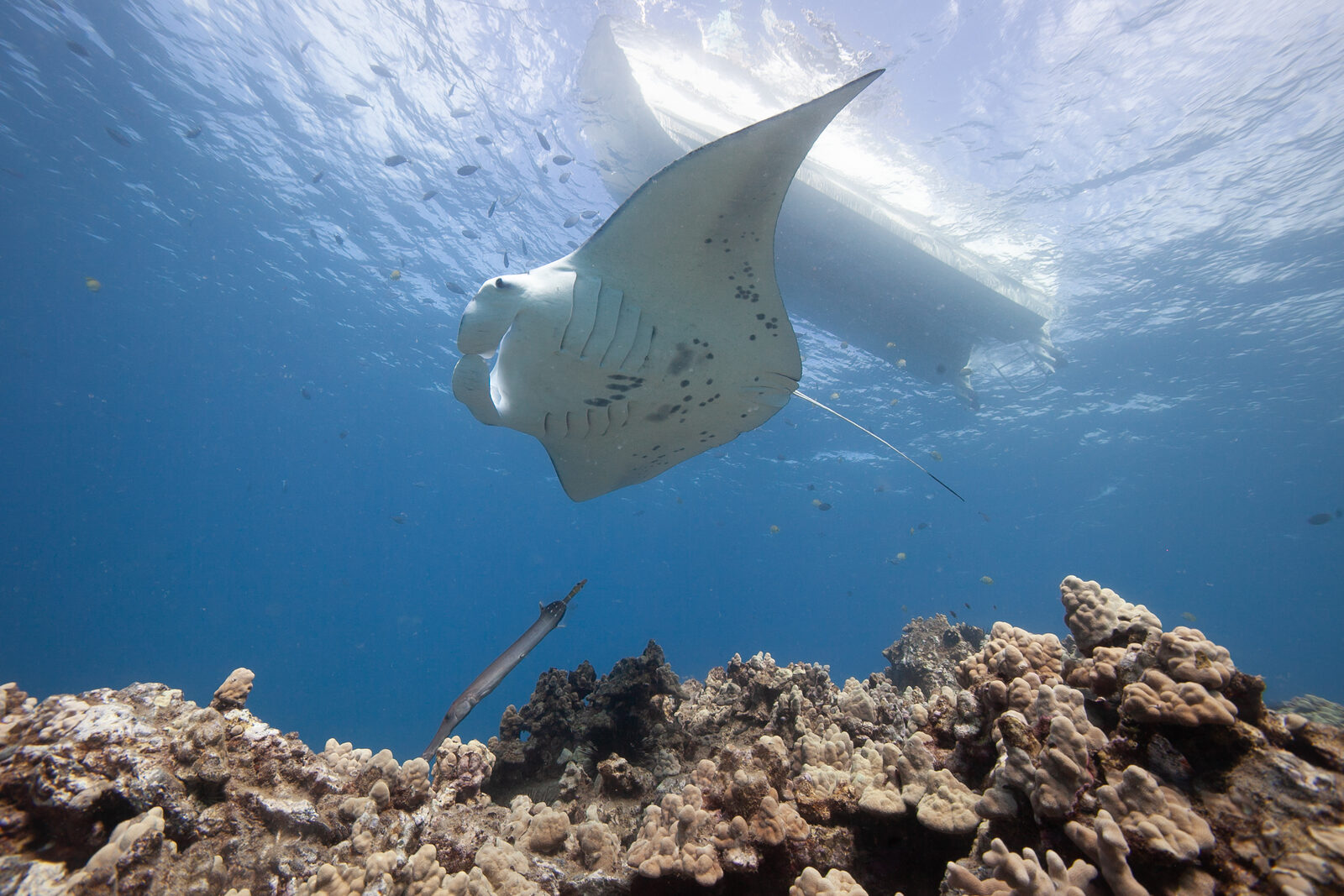
So why come in summer at all? Because the water fills with giants. The warm, plankton-rich seas of the wet season are the best time for two of Mozambique's most sought-after encounters: whale sharks and manta rays, most reliable from around October to March, especially off Tofo and Inhambane, where these gentle giants gather to feed. Snorkelling alongside a whale shark — the largest fish on Earth — is a bucket-list experience, and summer is your best shot at it. This is also turtle nesting season: from November to March, loggerhead and leatherback turtles haul up onto the beaches, particularly in the far south around Ponta do Ouro, to lay their eggs, with hatchlings emerging towards the end of the season.
The wet season carries other quiet advantages. It is the cheapest time to travel, with the lowest lodge rates and the fewest other visitors, so the islands feel gloriously empty. The landscapes — both the bush and the coastal dunes — are at their lush, photogenic best. And the fishing is excellent: Mozambique's game-fishing season for marlin, sailfish and other billfish runs strong from roughly October to January. If your priorities are whale sharks, value and solitude, and you can accept heat, humidity and the chance of a storm, the green season has a great deal to offer.
The Marine Big Five: A Season-by-Season Calendar
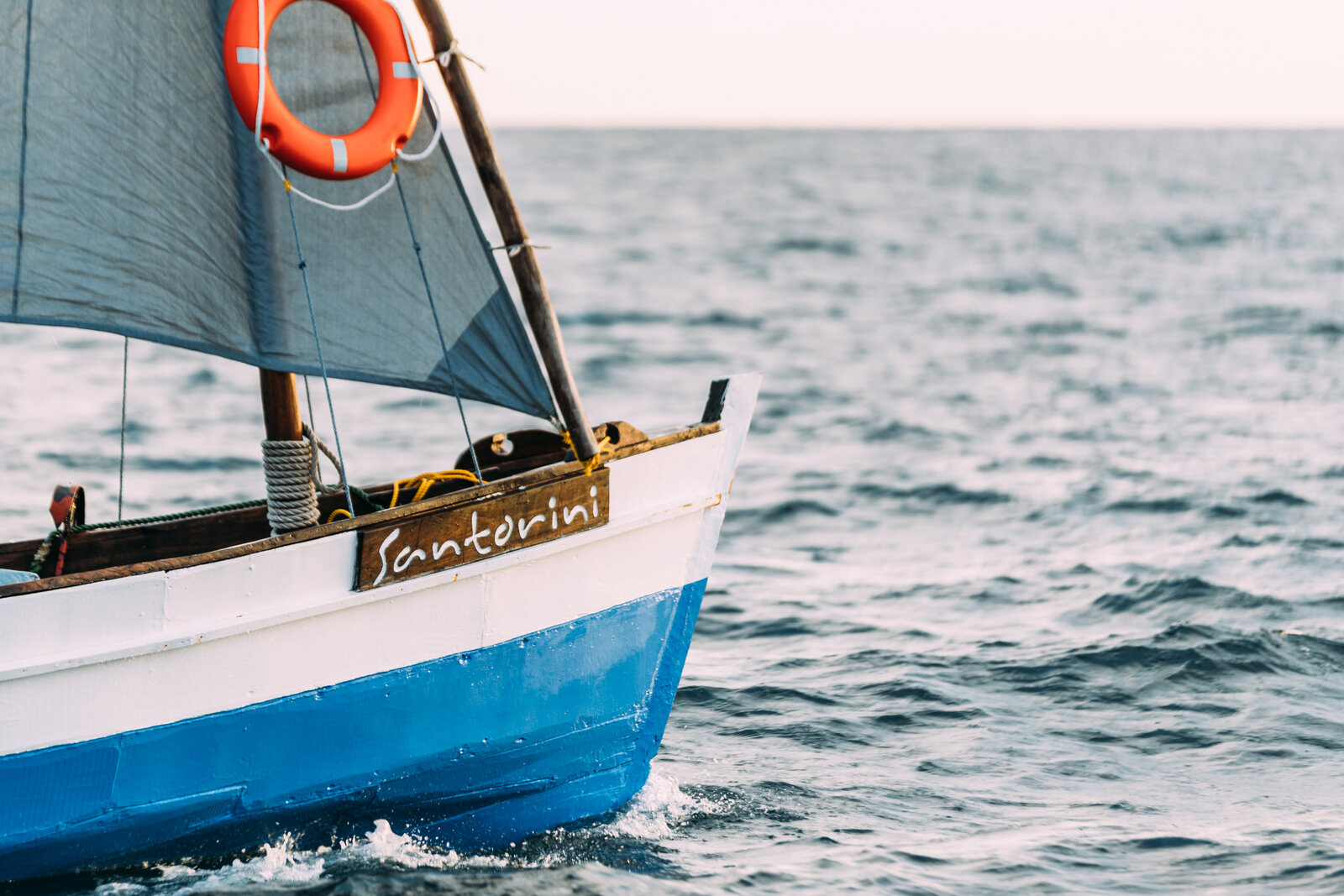
Mozambique's waters are its greatest asset, and each of its marine icons has its own season. If a particular encounter is the reason for your trip, use this calendar to pin your dates — then choose your region to match.
| Marine icon | Best months | Where & notes |
|---|---|---|
| Humpback whale | Jun – Nov (peak Aug–Oct) | Whole coast; superb off Bazaruto, Benguerra & Tofo. Breaching & calving |
| Whale shark | Oct – Mar (resident year-round) | Tofo/Inhambane are world-famous; snorkel-able all summer |
| Manta ray | Year-round (peak Oct–Mar) | Tofo's Manta Reef; cleaning stations reliable in warm months |
| Dugong | Year-round | Bazaruto seagrass beds — the last viable population in the region |
| Bottlenose dolphin | Year-round | Ponta do Ouro & the archipelagos; swim-with programmes in the south |
| Turtles (nesting) | Nov – Mar | Loggerhead & leatherback; far south (Ponta) best; hatchlings late season |
| Marlin & game fish | Oct – Jan (year-round fishing) | Bazaruto & Inhambane; marlin, sailfish, kingfish, barracuda |
The key insight is that Mozambique's two great marine spectacles sit at opposite ends of the year: humpback whales in the cool dry season and whale sharks and mantas in the warm wet season. The magic overlap is around October and November, when it is genuinely possible to see humpbacks and whale sharks in the same trip while still enjoying largely dry, warm, calm conditions — one of the strongest arguments for visiting in spring.
Mozambique Month by Month
Here is the year in detail, so you can match your available dates to conditions on the ground and in the water.
January
High summer: hot, humid and green, with heavy afternoon thunderstorms and the year's highest cyclone risk. The bush and islands are lush and empty, whale sharks and mantas are around off Tofo, turtles are nesting in the south, and rates are at their lowest. For sun-seekers it is a gamble; for divers chasing giants on a budget, it can pay off.
February
Still hot, wet and humid, and often the peak of cyclone season alongside January. The least predictable month for weather, but also among the quietest and cheapest. Whale sharks, mantas and nesting turtles remain the draw. Best suited to flexible, experience-driven travellers rather than those wanting guaranteed beach days.
March
The tail of the wet season. Heat and humidity begin to ease late in the month, the cyclone risk tapers, and the landscapes stay green. Whale sharks and mantas are still reliable and the crowds are thin. A transitional, better-value month that rewards a little flexibility with warm seas and emerging sunshine.
April
The dry season begins and conditions improve fast. Humidity drops, the rains retreat, the seas calm and underwater visibility climbs. Warm, increasingly sunny days with fewer visitors and shoulder-season rates make April one of the smartest-value months for diving, snorkelling and island beaches.
May
Firmly into the dry season: warm, sunny, low-humidity days, calm seas and excellent diving visibility. The first humpback whales begin to appear towards the end of the month. Comfortable, uncrowded and still keenly priced — many regulars rate May among the best-value months of the year.
June
Cooler, dry midwinter with fresh mornings and glorious clear days around the mid-20s Celsius. Humpback whale season gets under way, and diving is excellent, though brisk southeasterly winds can occasionally stir up the sea. A wonderful month for whales, beaches and value before the peak arrives.
July
Peak dry season: sunny, dry and comfortable by day, cool by night. Humpback whales are increasingly active, and it is prime time to combine the islands with a green-to-golden bush safari in Gorongosa or Kruger. Popular with families on the southern-hemisphere winter holidays, so book island lodges ahead.
August
Superb dry-season weather continues, and humpback whale sightings hit their stride. Warm sunny days, calm conditions on the sheltered coasts and excellent diving. This is high season on the islands and one of the best all-round months — reserve your lodge and villas early.
September
Arguably the best month of the year. Peak dry-season sunshine, warming seas, superb underwater visibility and the height of humpback whale season all converge. The islands are at their most idyllic and the bush parks at their driest and best for game. Demand is high; book well ahead.
October
The magic overlap. Warm, largely dry and calm, with humpback whales still around as whale sharks and mantas return to the warming water — a rare chance to see both. Outstanding diving, glorious beaches and the start of the game-fishing season. One of the very best times to visit Mozambique.
November
Late spring: hot and getting humid, with the first afternoon storms possible late in the month, but still largely dry and excellent. Whale sharks and mantas build, the last humpbacks pass through, and turtle nesting begins in the south. A brilliant, slightly-better-value alternative to peak September–October.
December
The wet season returns: hot, humid and green, with building afternoon thunderstorms. Whale sharks, mantas and nesting turtles are all active, and the game-fishing is strong. The festive holidays bring a busier, higher-priced pocket on the islands — book those dates early — while the wider month offers green-season atmosphere and warm seas.
Best Time by Region
Mozambique stretches some 2,700 kilometres from the South African border to Tanzania, so conditions and seasons shift as you move up the coast. Here is how the timing changes region by region.
Bazaruto & Benguerra Archipelago (Vilanculos)
The country's flagship island destination is at its best in the dry season, April to November, with calm turquoise channels, superb diving and reliable humpback whales from June to November. Dugong graze the seagrass year-round, and the game-fishing peaks October to January. September and October are ideal. December to March brings warm water, whale sharks nearby and low rates, but heat, rain and cyclone risk.
Tofo & Inhambane
Mozambique's diving capital marches to a slightly different drum. While the dry season offers the calmest seas and best visibility, Tofo is world-famous for whale sharks and manta rays, best from October to March, when the warm water blooms with plankton. Come in the dry months for whales and clarity; come in summer for the giants — spring (October–November) gives you the best of both.
Quirimbas Archipelago & the far north (Pemba, Ibo Island)
The remote, culturally rich north is more tropical and humid. The dry season, May to November, is the clear best time — pleasant, drier and ideal for diving, dhow safaris and exploring historic Ibo Island. The wet summer is hotter and stickier here than in the south, and access can be harder, so most travellers focus on the dry months.
Ponta do Ouro & the far south
Just over the South African border, Ponta is famous for its resident bottlenose dolphins (year-round) and for turtle nesting from November to March. Diving is good much of the year; the southern location makes it an easy, popular self-drive escape from KwaZulu-Natal, busiest over South African school holidays.
Gorongosa National Park & the bush
For Mozambique's remarkable inland safari, the dry season, July to October, is best: thinning bush and shrinking water concentrate wildlife and make the roads passable, with a peak in the late-dry months. Many of Gorongosa's tourism operations close during the height of the wet season (roughly December to March), when heavy rain makes tracks impassable — so a bush-and-beach trip is very much a dry-season undertaking.
Best Time for Specific Travellers
For beach & island honeymoons
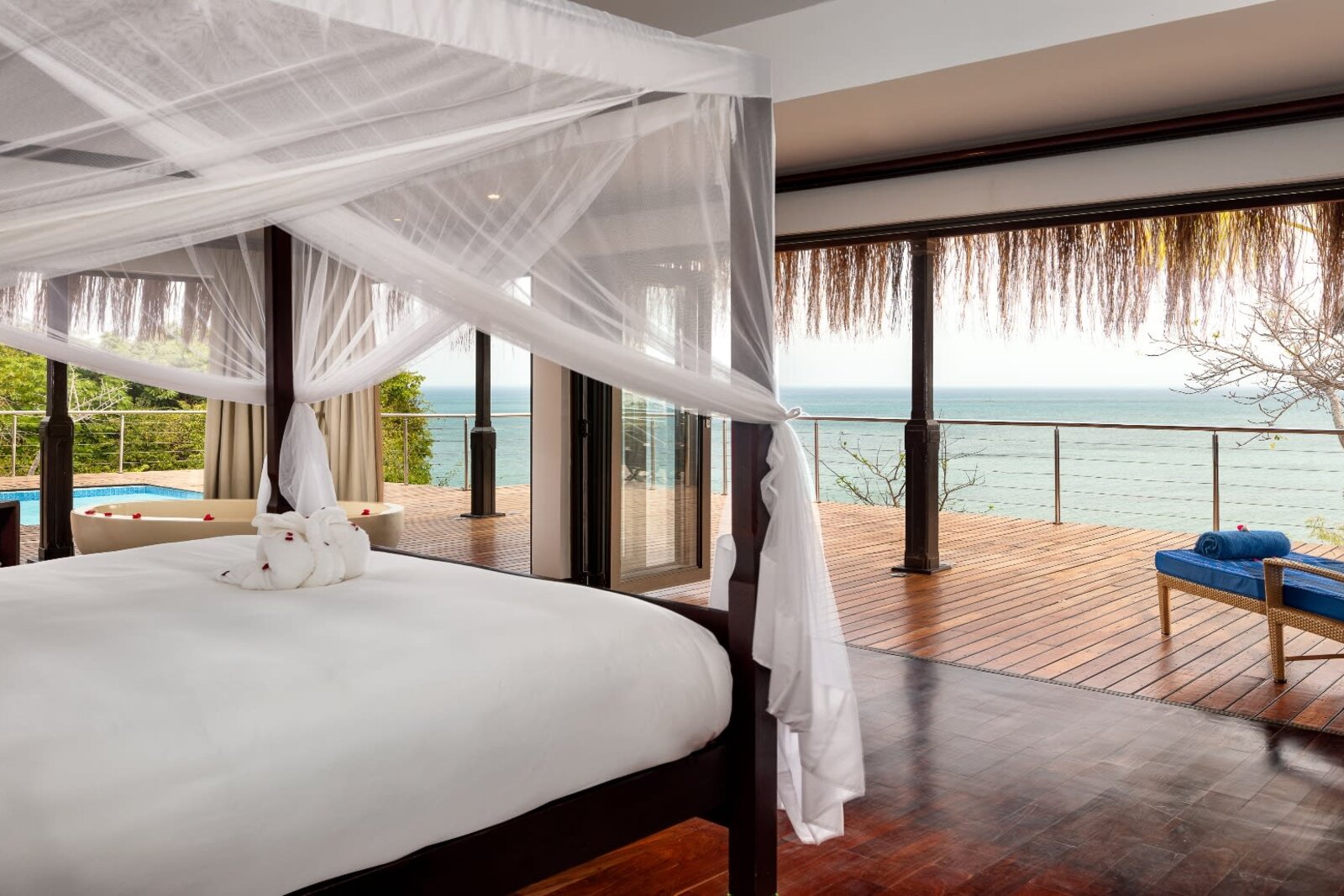
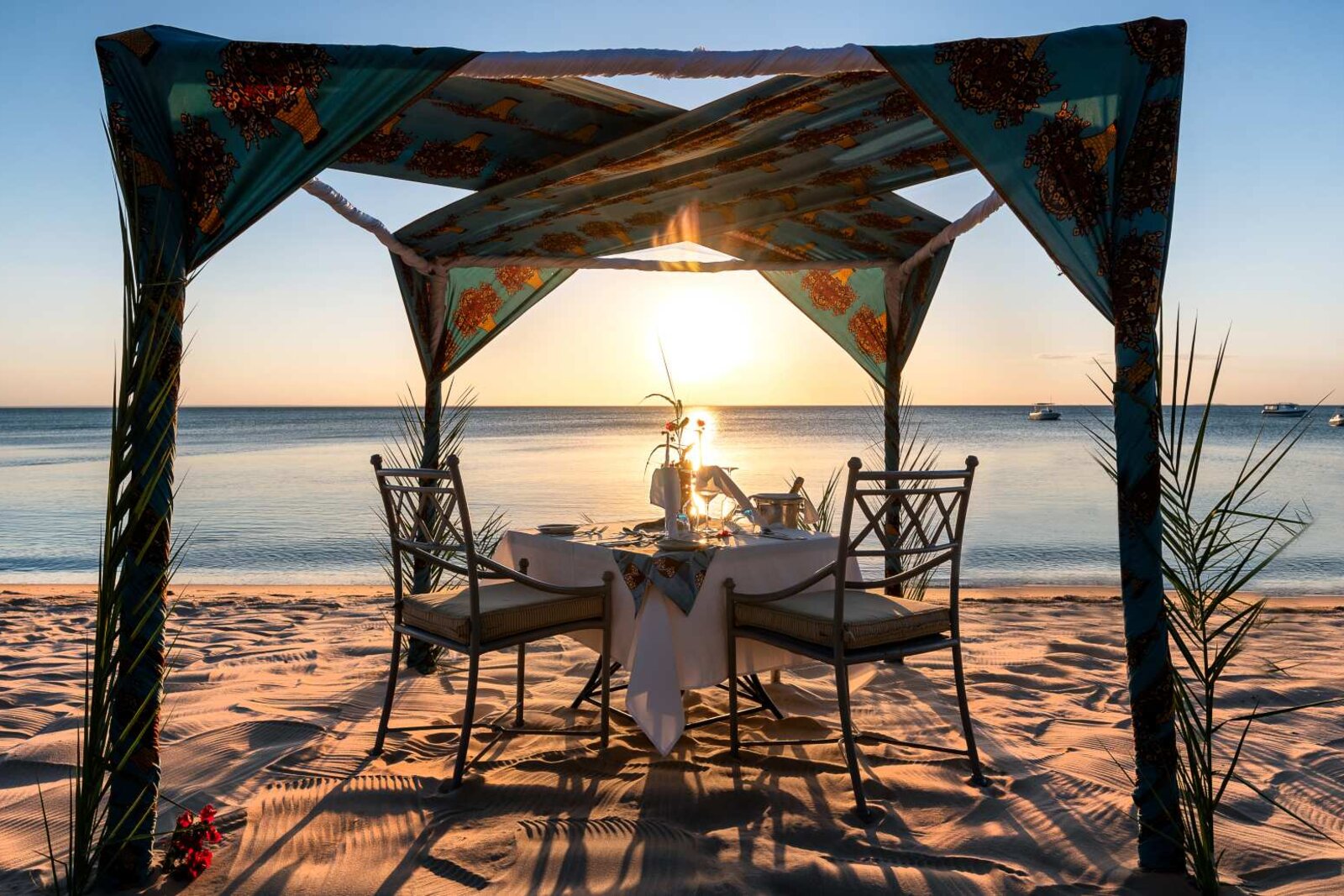
April to November, and ideally September–October, for warm, dry, calm days, glassy seas and golden light — everything a barefoot island honeymoon needs. The whale season is a romantic bonus. Read alongside our Bazaruto Archipelago honeymoon guide.
For divers & snorkellers
Two answers. For the calmest seas and best visibility, choose the dry season (April–June and September–November). For whale sharks and mantas, choose the warm summer (October–March), accepting more variable conditions. Spring (October–November) is the best compromise.
For whale watchers
June to November for humpbacks, peaking August to October, right along the coast and around the archipelagos. If you want humpbacks and whale sharks in one trip, aim for October–November.
For bush-and-beach safaris
July to October, when peak dry-season game viewing in Gorongosa or neighbouring Kruger lines up with peak beach and diving weather on the islands. This is the natural window for combining the two halves of Mozambique.
For families & value
The dry-season school holidays (July–August) suit families wanting reliable sun, while the green season (December–March, festive period aside) offers the lowest rates and the whale sharks — best for flexible, experience-led travellers who don't mind the heat and rain.
Weather & What to Pack by Season
Mozambique's tropical coastal climate gives it two clear packing profiles. Getting this right makes a real difference to your comfort, on the beach and out on the water.
| Season | Typical temps | Conditions | Pack essentials |
|---|---|---|---|
| Dry season (Apr–Nov) |
Night 17–22°C; day 25–30°C | Warm, sunny, dry, low humidity, calm seas; breezy midwinter | Light layers, a warm top for cool evenings/boats, reef-safe sunblock, hat, sunglasses |
| Wet season (Dec–Mar) |
Night 23–26°C; day 30–35°C+ | Hot, humid, afternoon storms; cyclone risk Jan–Feb | Light breathable clothes, light rain jacket, strong insect repellent, reef-safe sunblock, hat |
Year-round, pack for a beach and water trip: swimwear, a rash vest for snorkelling, quick-dry clothes, comfortable sandals and closed shoes for boats and reef walks, high-factor reef-safe sunscreen, a wide-brimmed hat and sunglasses. Because Mozambique is a malaria area, take antimalarial prophylaxis year-round and pack a good insect repellent — mosquito activity is highest in the warm, wet summer. A dry bag protects cameras and phones on dhow and boat trips, and a light windproof layer is welcome on early-morning whale-watching runs even in the dry season.
When to Book — and How Season Affects Price
Timing your booking matters almost as much as timing your trip. Mozambique's island lodges are limited in number and highly seasonal, so a little forward planning protects both your dates and your budget.
Broadly, the coast runs on three pricing tiers. Peak season covers the best dry-season months — roughly July to October, plus the festive holidays in late December and early January — when the islands are busiest and rates highest. Shoulder season, typically April to June and November, offers excellent weather and calmer seas at noticeably softer rates, and is where savvy travellers find the best balance of price and conditions. Green (low) season, the heart of summer from December to March (holidays aside), brings the year's lowest rates and the fewest visitors — along with the heat, rain and cyclone risk.
Because the islands have so few rooms, the best lodges and villas — especially over the dry-season peak and the festive period — book out many months in advance. As a rule of thumb, secure peak-season island dates six to nine months ahead, and further out still for the festive holidays or a specific honeymoon villa. For shoulder and green-season trips you can often book with less lead time, though the best value and villas still reward early planning. A deposit typically secures a booking, with the balance due closer to travel.
For the wider picture — how to reach the islands, visas, getting around, and what a trip costs — read our complete ultimate Mozambique travel guide. To shape the trip itself, explore our real bookable Bazaruto island journeys and bush-and-beach combinations below.
The Verdict: So When Should You Go?
There is no wrong time to visit Mozambique — only the right time for you. If your heart is set on warm, sunny days, calm turquoise seas, world-class diving and barefoot island beaches, come in the dry season, April to November, and build around September and October for the finest all-round conditions and the height of humpback whale season. Pack light layers for cool evenings, book your island lodge early, and expect Mozambique at its most idyllic.
If your dream is snorkelling beside a whale shark or a manta ray, watching turtles nest, or simply having a green, empty coast to yourself at the year's best prices, come in the wet summer, December to March — and accept heat, humidity and the chance of a storm as the price of a very special, low-season trip. And if you want the best of both worlds — whales and whale sharks, sun and warm water — target the October–November overlap, one of the most rewarding windows on the whole calendar.
Whichever season calls to you, Mozambique's islands and coast will deliver. When you are ready to turn a date into a journey, explore our Mozambique bush-and-beach safaris, read the full ultimate Mozambique travel guide, or contact our team to plan a privately guided trip built around the perfect time for you.