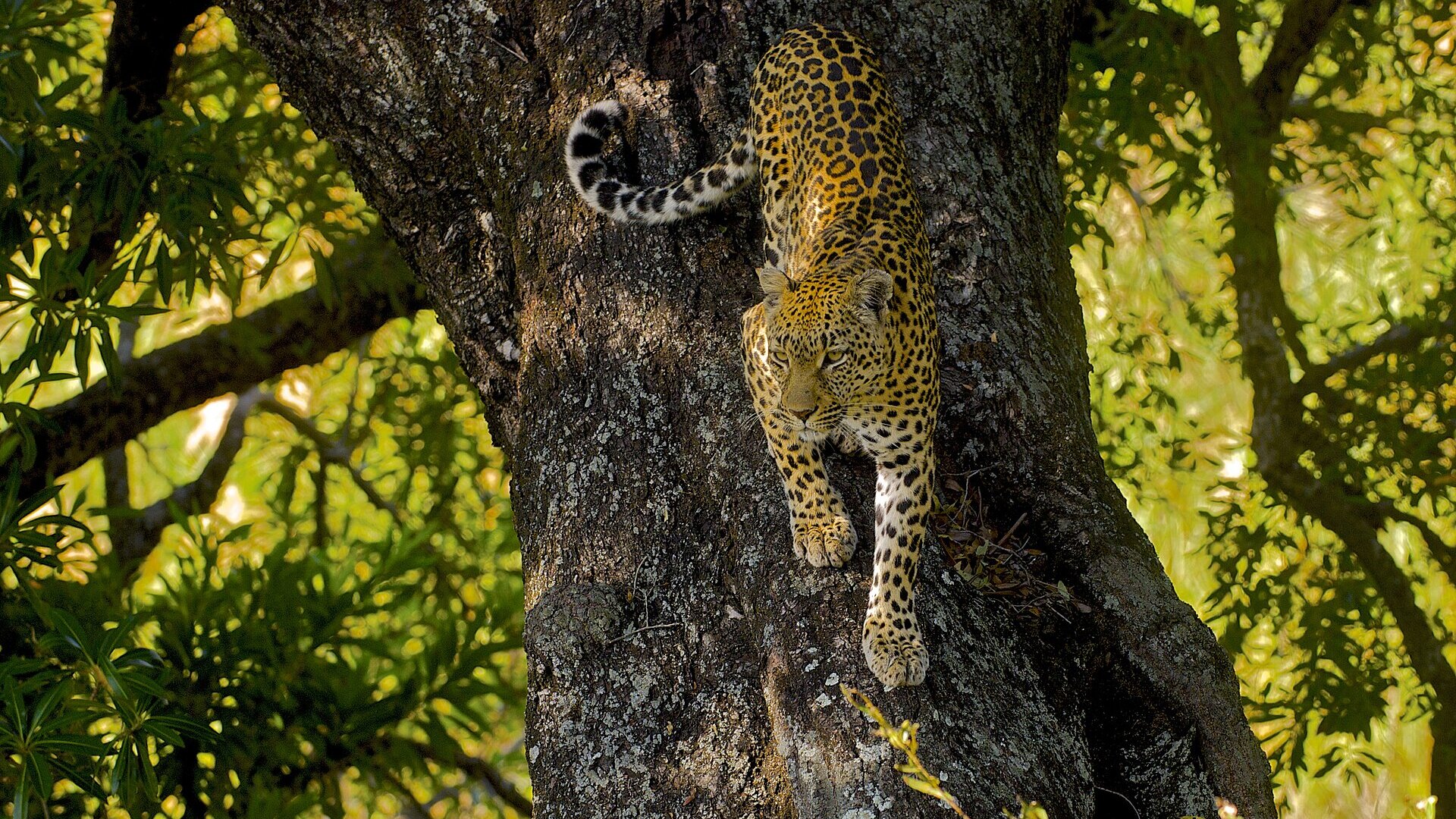
Of all Africa's big cats, none captivates quite like the leopard. Solitary, secretive and impossibly graceful, the leopard is the most elusive member of the famous Big Five and, for many safari-goers, the most thrilling to finally see. A leopard draped over the branch of a marula tree at golden hour, its rosetted coat glowing in the light, is one of the defining images of the African wilderness.
Yet there is one place on earth where this most secretive of cats is seen almost daily, often at astonishingly close range: the Sabi Sands reserve in South Africa — the leopard capital of the world. This complete leopard safari guide covers where to see leopards, why South Africa leads the world, how leopards live and hunt, the best reserves and times, photography tips, and how to plan a private leopard safari.
South Africa — home to Sabi Sands, the most reliable leopard-viewing destination on the planet.
Meet the African Leopard: The Phantom of the Bush
The leopard (Panthera pardus) is the most adaptable and widespread of the big cats, found from the deserts of Namibia to the forests of India. Smaller and stockier than a lion, an adult leopard weighs between 30 and 90 kilograms, with males considerably larger than females. Its golden coat, patterned with distinctive black rosettes, provides flawless camouflage in dappled light and long grass — the leopard can vanish before your eyes even in open country.
Pound for pound, the leopard is the strongest climber of all the big cats and astonishingly powerful, capable of hauling prey heavier than itself high into the branches of a tree. Unlike the social lion, the leopard is a loner, leading a solitary, territorial life and coming together with others only to mate or while a mother raises her cubs. This secretive nature is precisely what makes a leopard sighting so special.
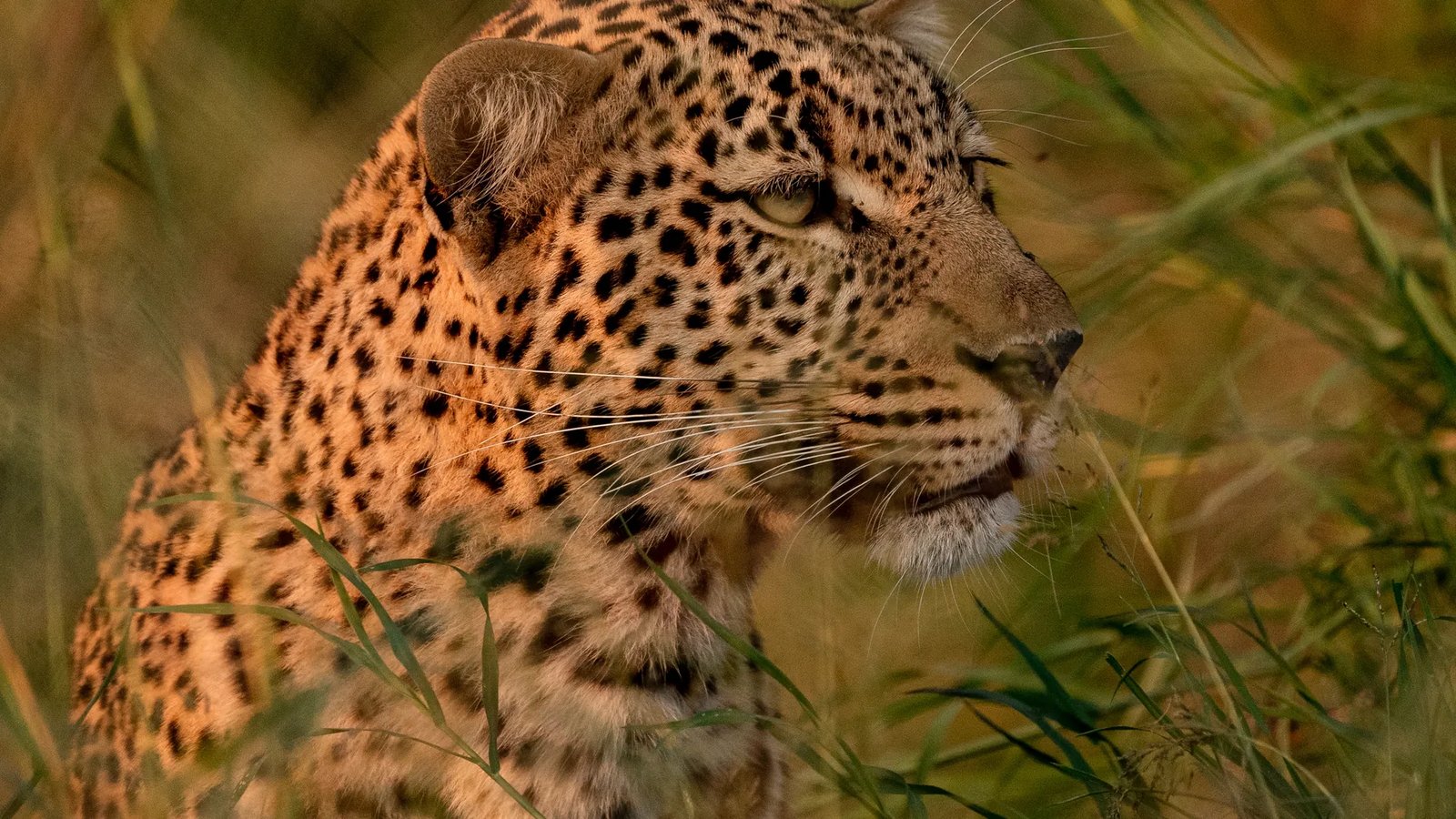
A leopard in its element — the most powerful climber of the big cats, often resting high in the branches.
Why Sabi Sands is the Leopard Capital of the World
The single most important fact for any leopard-lover is this: South Africa's Sabi Sands reserve offers the most reliable, intimate leopard viewing on earth. Nowhere else comes close.
Sabi Sands shares an unfenced boundary with the Greater Kruger ecosystem, giving wildlife complete freedom to roam. But what makes the leopards here so special is decades of careful, low-impact guiding. Generations of leopards have grown up entirely relaxed around safari vehicles, going about their lives — hunting, grooming, raising cubs, dragging kills into trees — as if the vehicle simply were not there. This habituation, combined with expert guide-and-tracker teams and the freedom to drive off-road, means guests routinely watch leopards from just metres away.
Many Sabi Sands leopards are known individuals, their lineages tracked across generations. Guests often see several different leopards on a single stay, including mothers with cubs — sightings that would be the trip of a lifetime almost anywhere else, but which happen here with remarkable consistency.
Quick Pick
If seeing a leopard is your dream, there is one clear answer: Sabi Sands in South Africa. A two- to three-night stay makes a leopard sighting close to certain, often at extraordinary close range — the best leopard viewing anywhere on the planet.
Where to See Leopards in Africa: The Best Destinations
1. Sabi Sands, South Africa — The Undisputed Leopard Capital
As covered above, Sabi Sands is in a class of its own. For consistent, close-up, relaxed leopard sightings — including cubs and hunting behaviour — nowhere on earth compares.
2. Kruger National Park, South Africa — Excellent Value Leopards
The wider Kruger National Park holds a healthy leopard population, and sightings are regular along rivers and rocky outcrops. While the leopards are shyer than in Sabi Sands, Kruger offers superb value and the chance to spot leopards while self-driving or on guided safaris.
3. Okavango Delta, Botswana — Wild, Pristine Sightings
The riverine forests and islands of the Okavango Delta support good leopard numbers, and the remote, low-density nature of the delta makes sightings feel wild and exclusive.
4. Masai Mara, Kenya — Riverine Leopards
The Masai Mara offers regular leopard sightings, particularly along the wooded watercourses and in the Mara Triangle. While not as reliable as Sabi Sands, leopards here can be seen against dramatic open-country backdrops.
5. South Luangwa, Zambia — Best for Night Drives
Zambia's South Luangwa is famous for its leopard density and its excellent night drives, which give a real chance of seeing leopards on the hunt after dark.
Best Leopard Safari Destinations Compared
| Destination | Country | Leopard Viewing | Best For |
|---|---|---|---|
| Sabi Sands | South Africa | World's best, close-up | Reliable, intimate sightings |
| Kruger N.P. | South Africa | Good, regular | Value & self-drive |
| Okavango Delta | Botswana | Good, wild | Remote, exclusive feel |
| Masai Mara | Kenya | Regular, riverine | Open-country backdrops |
| South Luangwa | Zambia | Very good, after dark | Night drives & hunting |
How Leopards Live and Hunt
A Solitary, Territorial Life
Leopards are solitary and fiercely territorial. Males hold large territories that overlap with those of several females, marking their range with scent and claw marks on trees. They communicate through a distinctive rasping call — often described as the sound of a saw cutting wood — most often heard at night. Adults come together only to mate, and a female raises her cubs entirely alone.
Ambush Masters
The leopard is the ultimate ambush hunter. Relying on stealth, patience and explosive power rather than speed, it stalks to within a few metres of its prey before launching a lightning attack. Leopards are opportunistic and astonishingly versatile, taking everything from antelope and warthog to birds, fish and even insects. After a kill, they often drag the carcass high into a tree, beyond the reach of lions and hyenas — creating the classic image of a leopard reclining beside its larder.
Cubs and Trees
A leopard mother hides her one to three cubs in dense cover, moving them frequently to avoid predators. Cubs stay with their mother for up to two years, learning to hunt and climb before claiming territories of their own. Watching a mother and cub interact — a frequent sight in Sabi Sands — is one of the most moving experiences a safari can offer.
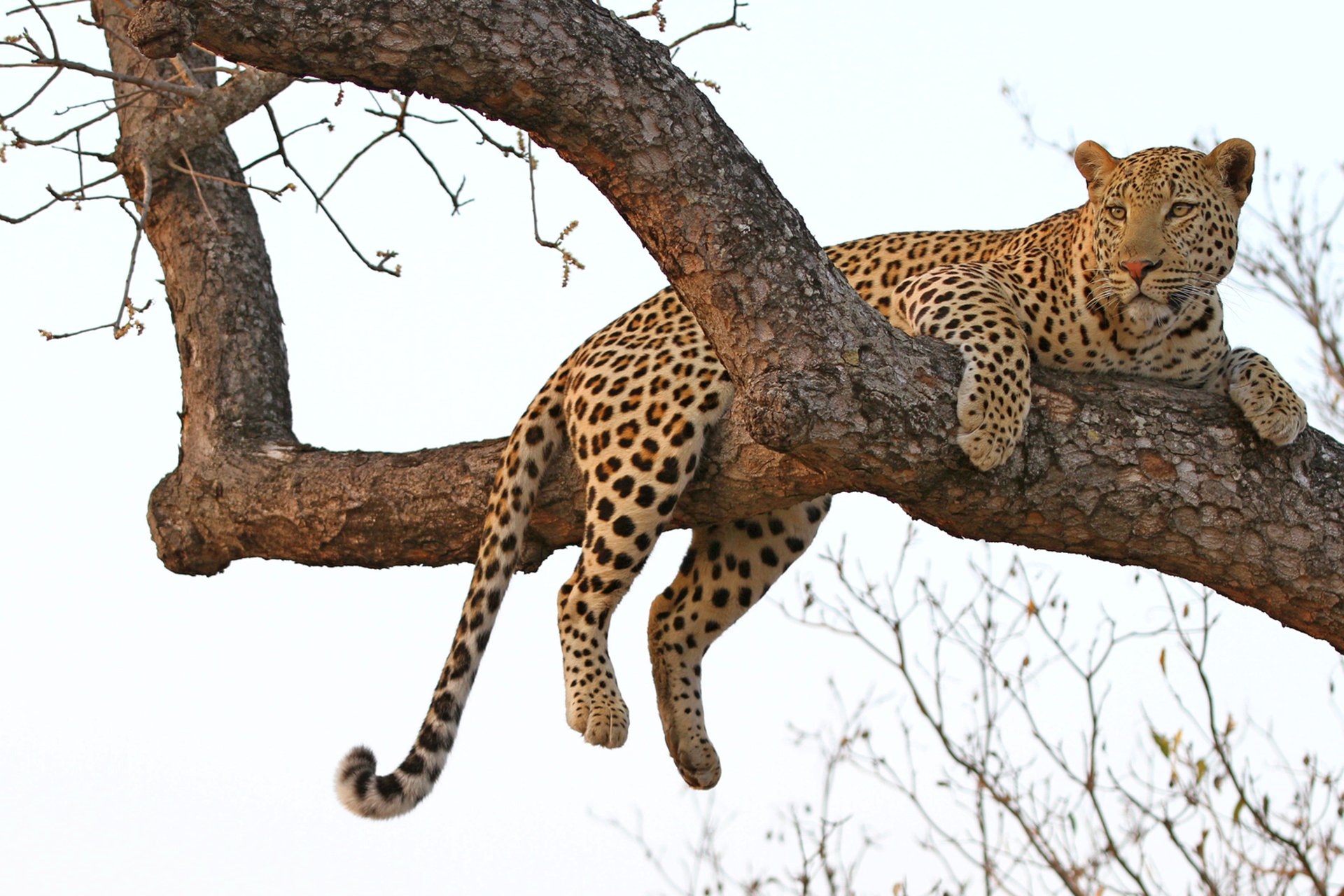
A leopard rests in the fork of a tree — supreme climbers, leopards haul their kills aloft and use high branches as both larder and lookout.
Best Time to See Leopards
Time of day: Leopards are most active at dawn, dusk and through the night. Early-morning and late-afternoon game drives offer the best chances, and night drives in private reserves like Sabi Sands give the added thrill of seeing leopards hunt under spotlight.
Time of year: The dry winter months from May to September are best across South Africa, when sparse vegetation makes leopards easier to spot and animals concentrate near water. That said, Sabi Sands delivers exceptional leopard viewing throughout the year, making it a superb destination in any season.
Photographing Leopards
The leopard is the dream subject for any wildlife photographer. To make the most of a sighting:
- Use a fast telephoto lens (300mm or longer) to fill the frame and capture detail.
- Shoot in the golden hours for warm, flattering light on the leopard's coat.
- Focus on the eyes — a sharp, catch-lit eye makes the image.
- Be ready for movement — leopards can descend a tree or move off in seconds.
- Keep quiet and still so the leopard stays relaxed and natural.
- Look for leopards in trees — a kill stashed in branches is a sign one is near.
For a full guide to safari photography, see our dedicated safari photography guide.
Leopard Conservation
While the leopard remains the most widespread big cat, populations are declining across much of its range due to habitat loss, conflict with farmers and illegal trade in skins. South Africa's well-protected reserves — above all the Greater Kruger and Sabi Sands ecosystem — are vital strongholds where leopards thrive and are studied by researchers. By choosing a responsible safari, you directly support the conservation of these magnificent cats and the wild places they depend on.
Plan Your Leopard Safari
The leopard is the ultimate safari prize, and South Africa offers the finest leopard viewing on the planet. Whether you long to watch a relaxed leopard in a Sabi Sands marula tree, photograph a mother and cub, or simply tick this most elusive of cats off your Big Five list, a well-planned private safari puts you exactly where the leopards are — with the expert guides and trackers who know them by name.
Plan Your Leopard Safari with Beyond Africa Safaris
We design private, tailor-made safaris to the world's greatest leopard destinations — above all the legendary Sabi Sands reserve, where leopard sightings are reliable, intimate and unforgettable. We handle every detail: expert guides and trackers, handpicked lodges, flawless logistics and the chance to watch the most elusive of the Big Five up close.
Contact us to start planning your leopard safari today.