Key Takeaways
- 🐾 A meerkat is a small mongoose (Suricata suricatta), not a rodent — roughly 700g and 25–35cm long, with a dark eye-patch that cuts desert glare.
- 🐾 They live only in the arid south-west of Africa: the Kalahari, Kgalagadi, Karoo and Makgadikgadi. You will not find them in Kruger, the Garden Route or any rainforest.
- 🐾 A mob of 10–30+ runs on teamwork — one sentry stands guard while the rest forage, and babysitters mind the pups underground.
- 🐾 Meerkats have real resistance to scorpion and some snake venom, so they eat prey that would kill most mammals their size.
- 🐾 The best wild viewing is Kgalagadi Transfrontier Park, Tswalu Kalahari and the Makgadikgadi pans — some gangs there are habituated to people.
What exactly is a meerkat?
A meerkat is a small, slender member of the mongoose family (Herpestidae), and the only species in its genus: Suricata suricatta. In Afrikaans it is the suricate or, confusingly, the “meerkat” — a name that once meant a different animal entirely. It is not a rodent and not related to prairie dogs, despite the upright stance that invites the comparison.
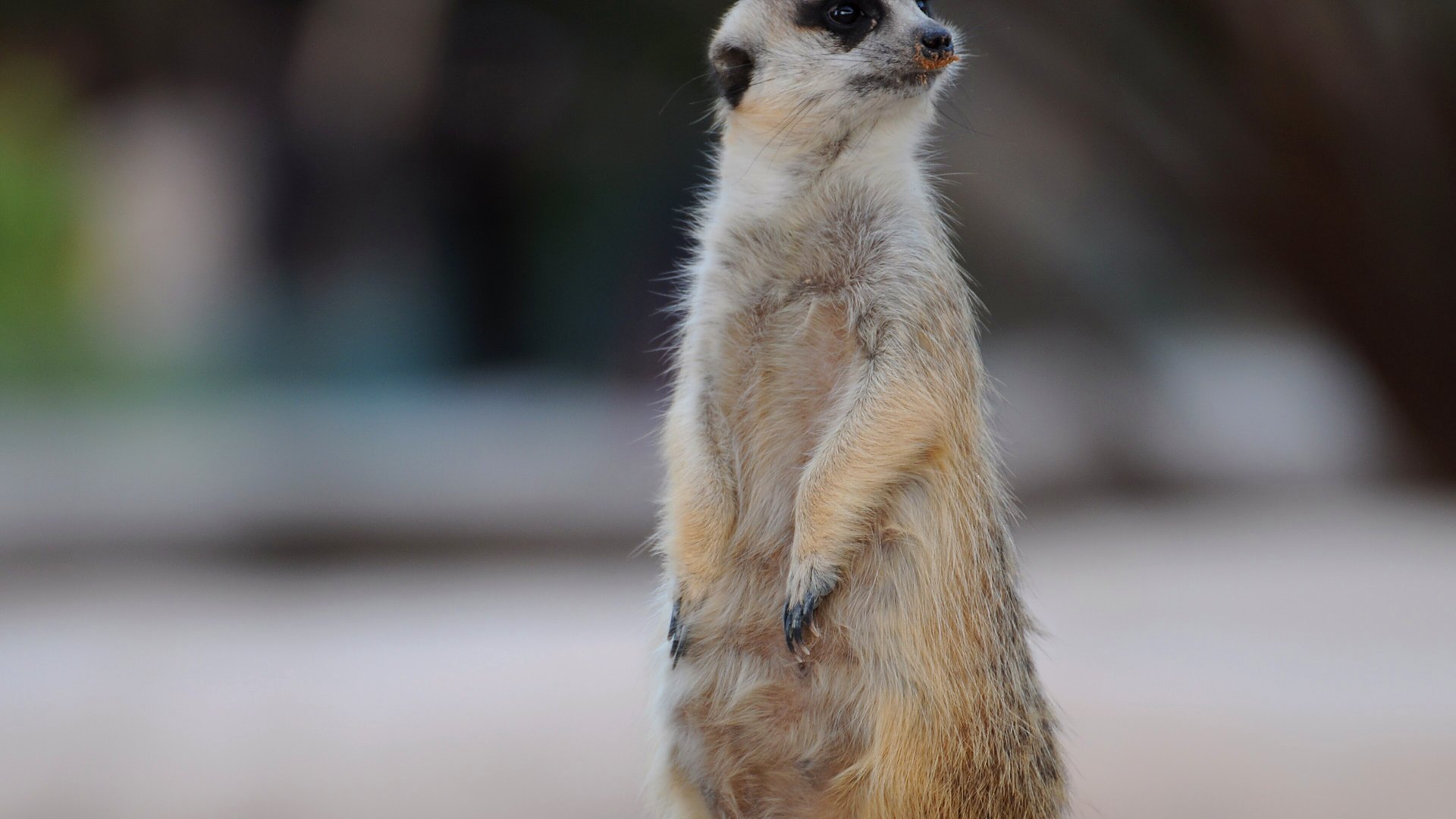
An adult weighs around 700 grams and measures about 25 to 35cm in the body, with a tapering tail of similar length that it uses as a prop when it stands. The coat is sandy to silver-grey with faint dark bars across the back — every animal’s bar pattern is slightly different, which is how researchers in the Kalahari tell individuals apart. Two features matter most for desert life: the dark patches around the eyes, which cut the fierce Kalahari glare the way an athlete’s eye-black does, and a thin belly with sparse fur, which the animal presses to warm sand or turns to the morning sun to heat up after a cold desert night.
Meerkats are strictly diurnal. They sleep underground through the freezing nights of the southern Kalahari winter, when air temperatures can drop below zero, and come above ground only once the sun is up.
Where meerkats live — and where they do not
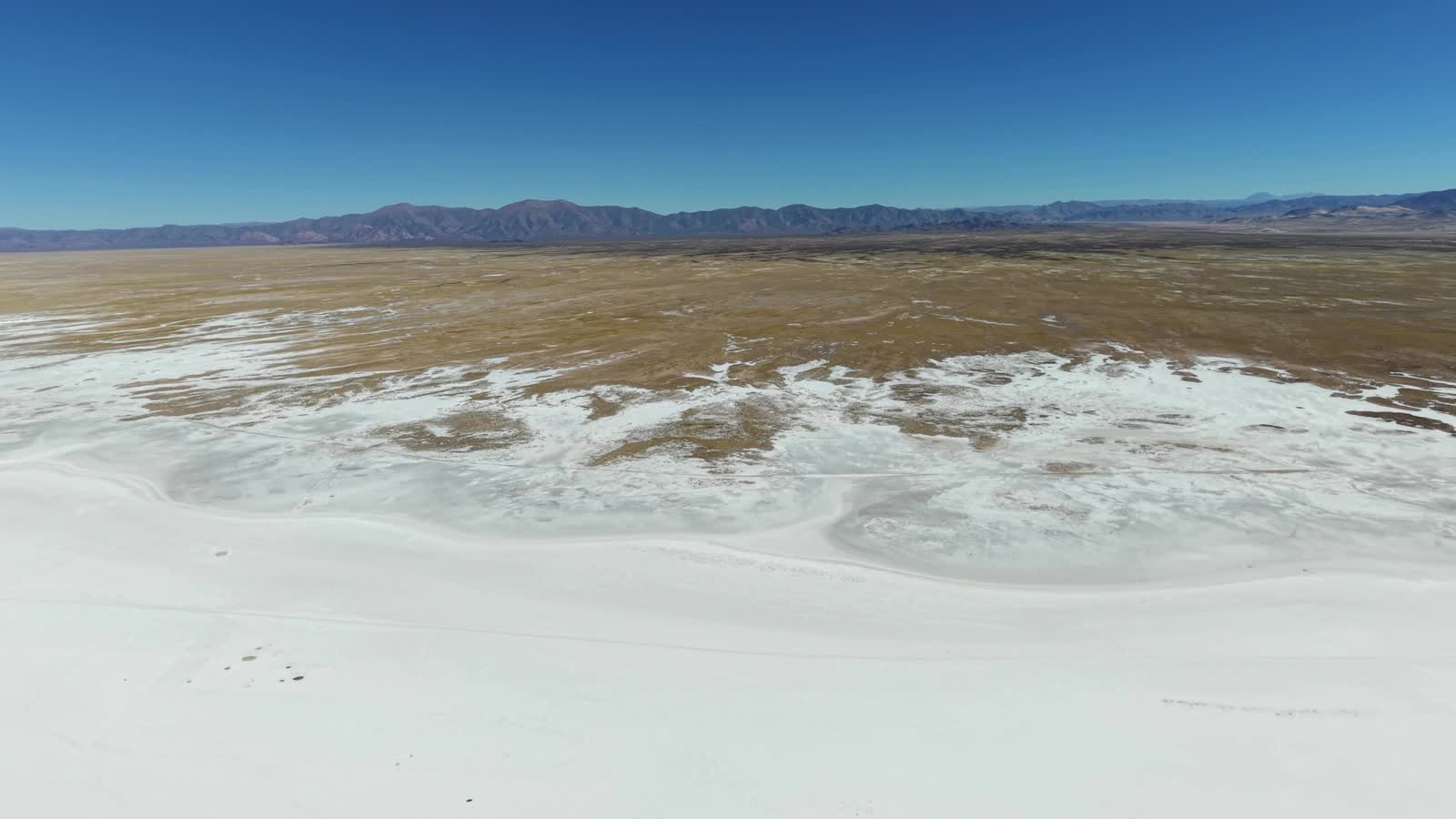
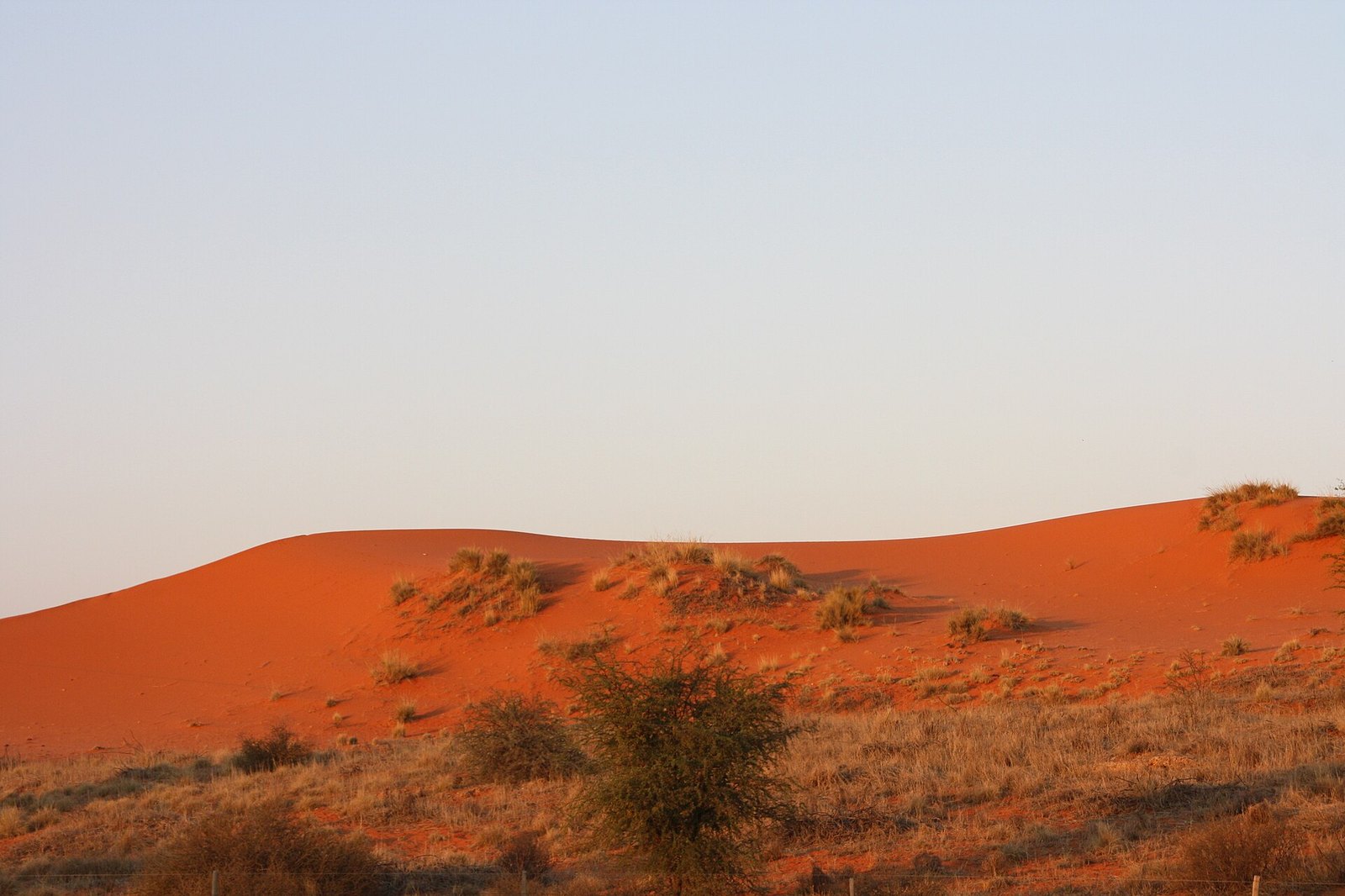
This is the part most guides get wrong, so let us be plain. Meerkats are arid-zone specialists. Their range runs across the dry south-west of the continent: the Kalahari of Botswana, South Africa and Namibia, the Kgalagadi Transfrontier Park, the Great Karoo, the Makgadikgadi salt-pan grasslands of northern Botswana, and the gravel plains of southern Namibia. They thrive in open, sparsely vegetated country with firm or sandy soil they can dig — exactly the terrain a wet, high-rainfall landscape does not provide.
So if you are planning a trip and hoping to see wild meerkats, understand what that means: they are not a Big Five animal, they do not live in Kruger, Sabi Sand or the Greater Kruger lowveld, and you will not meet one on the Garden Route, on Table Mountain or anywhere in the Cape forests. A Cape Town or Garden Route holiday is a wonderful trip — but for meerkats you need to point north and west, into the dry heart of the subcontinent. Our Kalahari desert safari guide and Makgadikgadi pans guide map out exactly how to get there.


The sentry system: how one meerkat keeps the mob alive
The image everyone knows — a meerkat standing bolt upright, paws folded, staring at the sky — is not a pose. It is a job. While the mob forages head-down in the sand, one animal climbs to a raised spot, a termite mound or a bush, and acts as sentinel. It scans constantly for the two things that kill meerkats: raptors overhead (martial eagles, tawny eagles, pale chanting goshawks) and predators on the ground (jackals, snakes).
The sentry keeps up a soft, running “watchman’s call” — a low, repeated peep that means “all clear, keep feeding.” The moment it falls silent or switches to a sharp bark, every meerkat reacts. There are different alarm calls for aerial versus ground threats, and even for how urgent the danger is; an aerial alarm sends the mob flat to the ground or bolting for the nearest bolt-hole, while a ground alarm often brings them together to mob the intruder. Sentinel duty rotates, and a meerkat usually takes a turn only after it has fed, so no single animal starves to stand guard. It is one of the clearest examples of cooperative vigilance in the mammal world.
Mob life and cooperative breeding
Meerkats live in groups called mobs or gangs, typically 10 to 30 animals and occasionally more. A mob is not a loose crowd — it is a tight family unit built around a single dominant breeding pair. In most mobs that pair produces the great majority of the pups, while the other adults, many of them their grown offspring, stay on as helpers.
This is where meerkats become genuinely remarkable. The helpers do the unglamorous work of raising young that are not their own:
- Babysitters stay below ground with newborn pups while the rest of the mob forages, going without food themselves for the day.
- Teachers bring live prey — including disabled scorpions with the sting removed — to pups and let them practise handling dangerous food safely, adjusting the lesson to the pup’s age. This is one of the few documented cases of active teaching in a non-human animal.
- Guards and sentries protect the whole group, and the mob will collectively mob a snake to drive it away from the burrow.
Breeding is tightly controlled by the dominant female, who may suppress or evict subordinate females who try to breed. It is a hard social system, but it is the reason a mob can hold a territory and push back rival gangs in a landscape where food is thin and danger is constant.


Diet: scorpions, venom and a cast-iron stomach
Meerkats are mostly insectivores. The bulk of the diet is beetles, beetle larvae, termites, spiders, millipedes and other invertebrates they dig out of the sand with long, curved foreclaws. They also take scorpions, small reptiles including geckos and lizards, the occasional snake, bird eggs, and plant tubers and roots for moisture — meerkats get most of their water from food and can go without drinking for long stretches.
The scorpion-eating is the famous part, and it is real. Meerkats have a degree of resistance to scorpion venom, and they handle the prey with skill — biting or rubbing off the stinger before eating, and teaching their pups to do the same. They also carry some resistance to snake venom, which lets a mob stand up to adders and other snakes that would be lethal to a mongoose relative of similar size. That resistance is partial, not total: a bad bite or sting can still kill a meerkat, so the caution they show is well earned.
Burrows: the engineering under the sand
A mob’s life runs underground. Meerkats dig extensive burrow systems with multiple entrances, several levels and separate chambers, often sharing or taking over the diggings of ground squirrels and yellow mongooses. A single territory may contain many boltholes scattered across it, so a foraging mob is rarely far from safety when an eagle’s shadow crosses the ground.
The burrow solves the desert’s hardest problem: temperature. Below ground stays cool through the furnace of a Kalahari afternoon and holds warmth through sub-zero nights, letting the mob survive extremes that would kill an animal forced to stay in the open. Meerkats move home regularly within their territory, partly to stay ahead of parasites and partly to follow the food. Defending that territory and its burrows against neighbouring gangs is a serious business, and border disputes between mobs can turn violent.
A day in the life of a mob
The meerkat day has a rhythm you can almost set a watch by, and it is the reason they are such rewarding animals to photograph. At first light the mob emerges, still cold and stiff, and lines up facing the sun — standing tall to warm their dark bellies before anyone has the energy to forage. This sunrise gathering at the burrow mouth is the classic meerkat scene, and the best photographic window of the entire day.
Once warm, the mob spreads out to feed, the sentry takes up its post, and the long foraging shift begins. Through the hottest part of the day they may rest in shade or shelter below ground. In the late afternoon they feed again, and as the light goes they file back to whichever burrow they are using that night and drop underground before dark, when the cold and the night predators take over. It is a short, intense, utterly cooperative working day — and it is why a dawn start is non-negotiable if you want to see it properly.
Where to see wild meerkats in Africa
Here is the honest answer, ranked by what actually delivers:
- Kgalagadi Transfrontier Park (South Africa / Botswana). The red-dune heart of meerkat country. Gangs forage along the Auob and Nossob riverbeds, and some near the camps are relaxed around vehicles. Self-drive or guided — see our Kgalagadi self-drive safari.
- Tswalu Kalahari Reserve (South Africa). South Africa’s largest private reserve, with habituated mobs that researchers have studied for years. The viewing is close, ethical and reliable, in genuine luxury. It also appears in our Tswalu Kalahari riding safari.
- Makgadikgadi (Botswana). The salt-pan grasslands hold gangs that some camps have patiently habituated, so a meerkat may use your knee as a lookout post — one of the most charming wildlife moments in Africa. Full detail in our Makgadikgadi meerkat experience.
- The Great Karoo and southern Namibia. Meerkats occur widely across these arid zones, though sightings are more a matter of luck than of habituated gangs.
Two honest cautions. First, habituated does not mean tame — the ethical camps keep a respectful distance and never feed or handle the animals, and so should you. Second, timing is everything: a sunrise visit, when the mob is sunning at the burrow, is worth more than a whole day of searching in the heat. If you tell us when and where you are travelling, we will build the meerkats into a wider Kalahari or Botswana route rather than chasing them in isolation — the Botswana 4x4 self-drive expedition is one way to string the pans and the desert together.
Conservation status
Meerkats are listed as Least Concern by the IUCN. They are widespread across their arid range, adapt well to the harsh country they live in, and are not currently threatened at the species level. The pressures that do exist are local: habitat loss at the edges of their range, persecution and the pet trade — and it is worth saying plainly that meerkats make poor pets. They are intensely social, they scent-mark, and a solitary meerkat kept by a person is a deeply unhappy animal. The right place to meet one is wild, in its mob, on its own red sand.
Watching a habituated gang at a well-run Kalahari reserve, where the income from responsible tourism helps protect the whole ecosystem, is the version of a meerkat encounter worth travelling for. If that is the trip you want, write to us at res@privatetourscapetown.com or through our contact page, and we will put the right desert, the right camp and the right season together for you.
Photo Credits
Hero: South African Tourism, Kalahari Red Dune Route (CC BY 2.0). Gallery: South African Tourism, Kalahari Trails (CC BY 2.0); Charles J. Sharp, three meerkats (CC BY-SA 3.0); Bernard Dupont (CC BY-SA 2.0); Alistair Dent (CC0); Andy Morffew (CC BY 2.0); Ranjith Chemmad (CC BY-SA 4.0). Images used under their respective Creative Commons licences.