Key Takeaways
- Zambia offers five kinds of travel in one country — a natural wonder, wild walking and canoe safaris, vast lakes, a great plains migration, and living Lozi and colonial history.
- Victoria Falls at Livingstone is the headline — one of the Seven Natural Wonders of the World, and Zambia's adventure capital.
- South Luangwa and the Lower Zambezi are the wildlife heart, where the walking safari was born and canoe safaris glide past elephants and hippos.
- For something rarer, drift on a Lake Kariba houseboat, witness Kasanka's great bat migration, or visit the eccentric Africa House at Shiwa Ng'andu.
- Best time: the dry season, May to October, is ideal for wildlife and the falls at a gentler flow; the falls are at full thunder from March to May.
Ask most travellers what they know about Zambia and they will say two words: Victoria Falls. They are right — but only partly. This is the country of the Zambezi River and the greatest curtain of falling water on Earth, yes, but it is also the birthplace of the walking safari; a land of canoe journeys past hippos in the Lower Zambezi; of houseboats drifting on Lake Kariba; of a great wildebeest migration on the Liuwa Plain; and of warm, welcoming people whose culture runs from the royal Kuomboka ceremony to the markets of Lusaka. Zambia is not one holiday. It is five.
This guide ranks the ten best places to visit in Zambia — not as a park checklist, but as a traveller's map of the whole country. For each place we tell you what it is genuinely best for, when to go, how easy it is to reach, and how it fits with the others. If your trip is purely about game drives and safari routing, our companion Top 10 Best Safari Destinations in Zambia covers the circuits in depth. This article is the bigger picture: everywhere worth going in Zambia, and why.
How to Read Zambia: Five Kinds of Place
Zambia is vast — larger than Texas, and cut by three of Africa's greatest rivers. The country divides naturally into five kinds of experience. Knowing them makes planning simple — most great trips combine two or three.
| Experience | Headline Places | Best For |
|---|---|---|
| Waterfalls & Adventure | Victoria Falls, Livingstone | First-timers, adrenaline, a natural wonder of the world |
| Wildlife Wilderness | South Luangwa, Lower Zambezi, Kafue | Walking and canoe safaris, leopards, remoteness |
| Lakes & Water | Lake Kariba, Lake Tanganyika & Nsumbu | Houseboats, fishing, beaches, relaxation |
| Plains & Culture | Liuwa Plain, the Kuomboka, the Lozi kingdom | Migration, royal ceremony, living culture |
| Cities & Heritage | Lusaka, Kasanka, Shiwa Ng'andu | Gateway, natural wonders, history and eccentricity |
The classic Zambia trip pairs Victoria Falls with a wildlife wilderness — the thunder of the Zambezi followed by walking safaris in the Luangwa Valley. But the country rewards imagination: add a Lake Kariba houseboat, the Liuwa migration, or the strange romance of the Africa House far in the north. Below, the ten places that should shape your trip.
The 10 Best Places to Visit in Zambia
1. Victoria Falls & Livingstone — The Smoke That Thunders
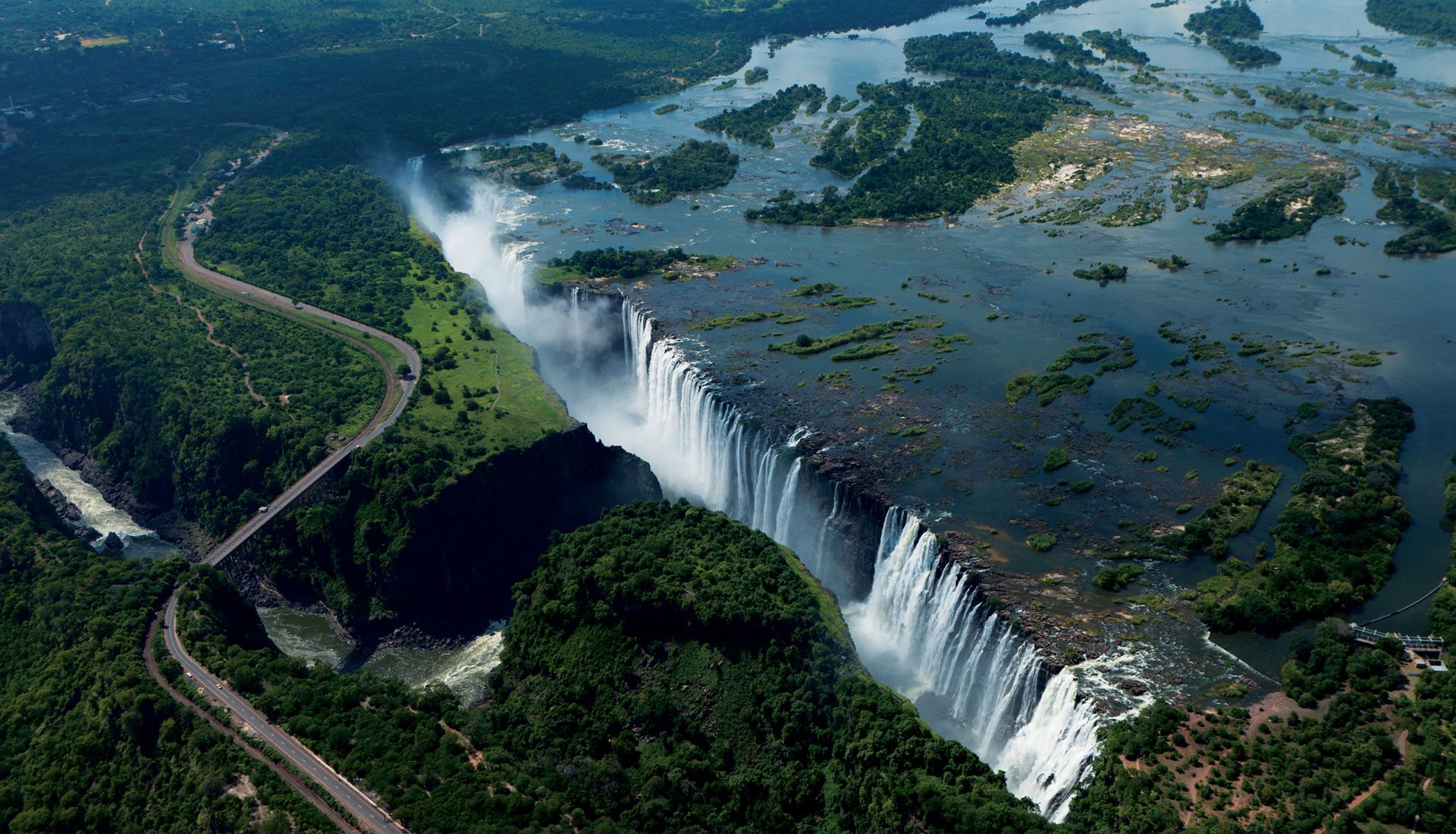
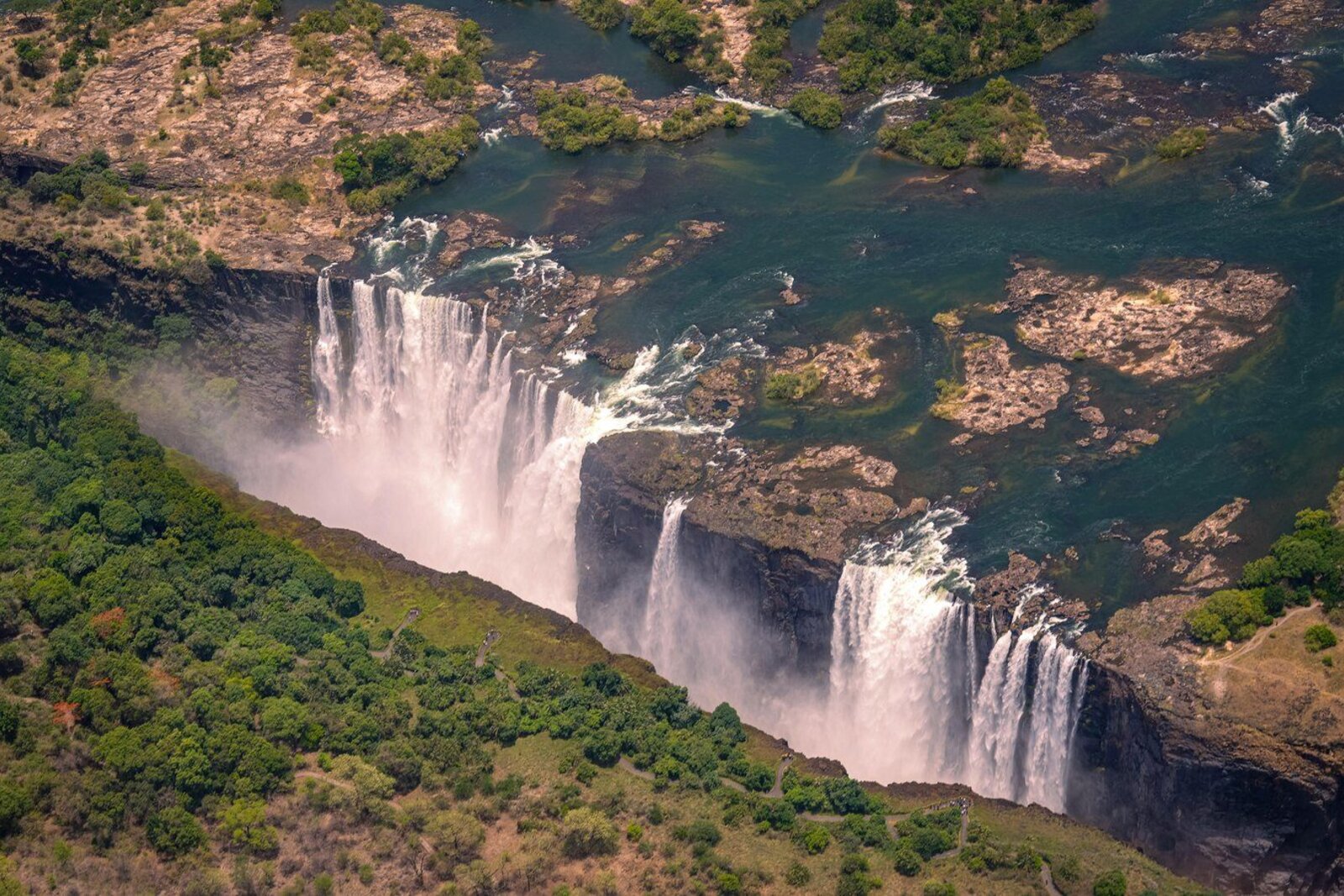
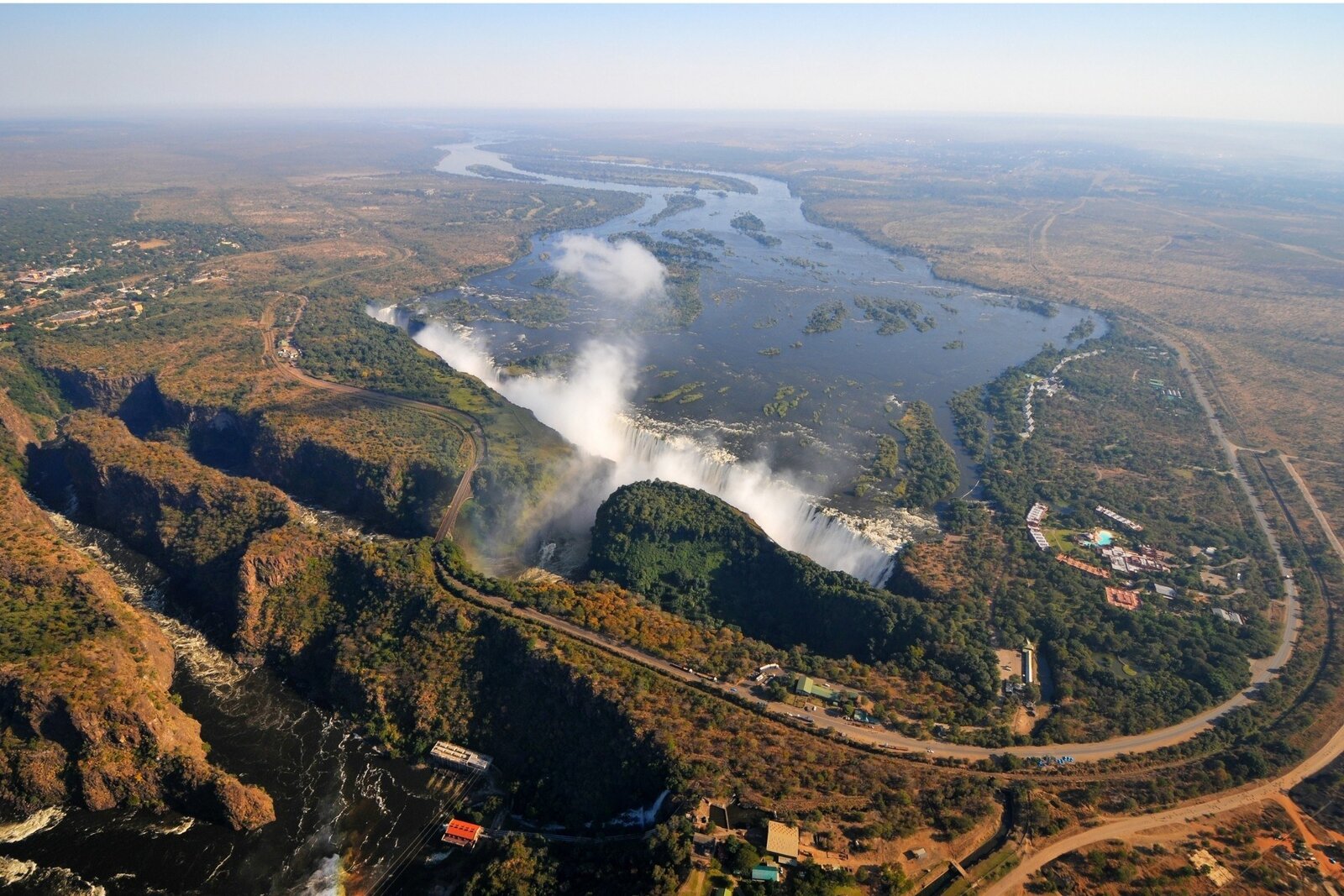
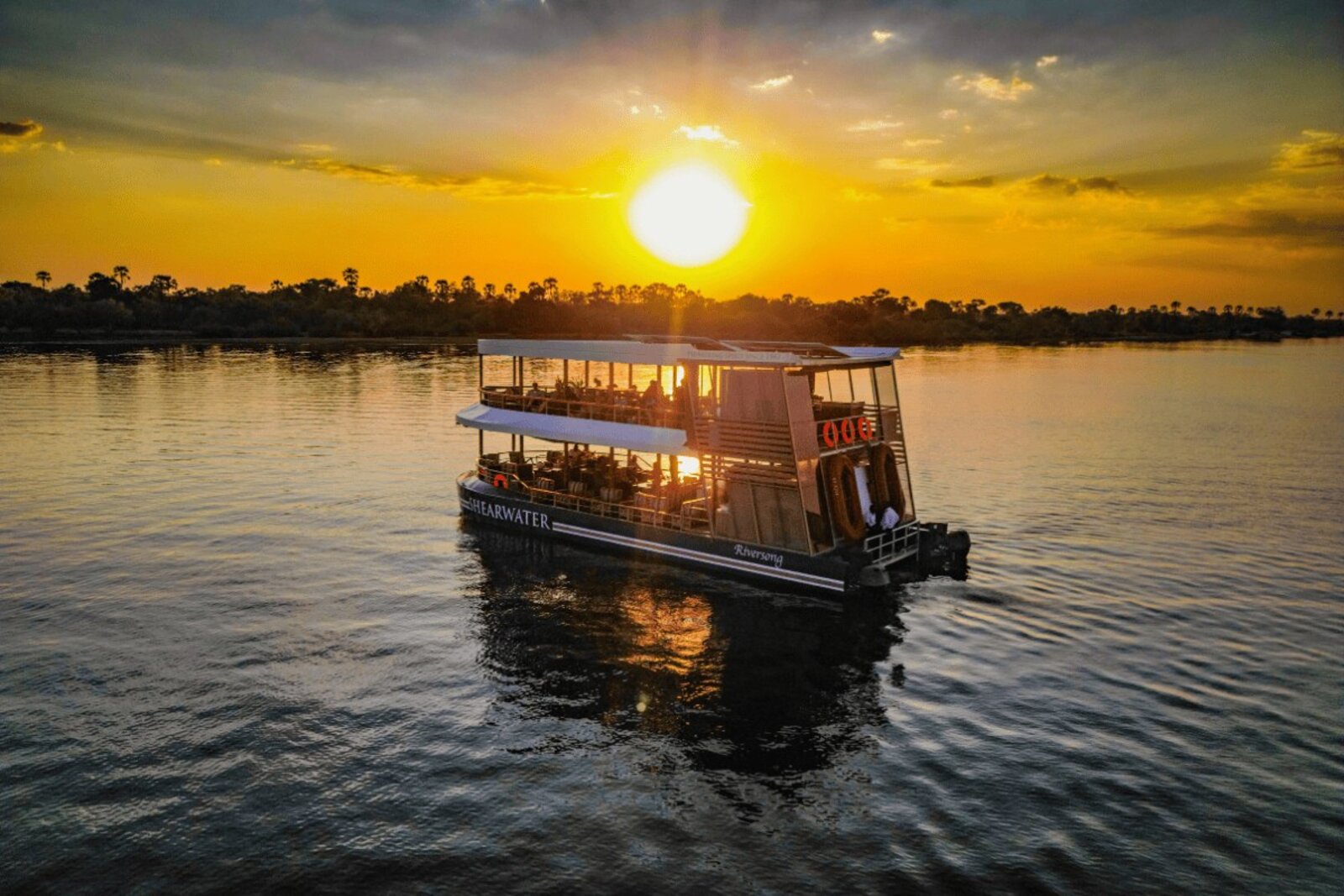
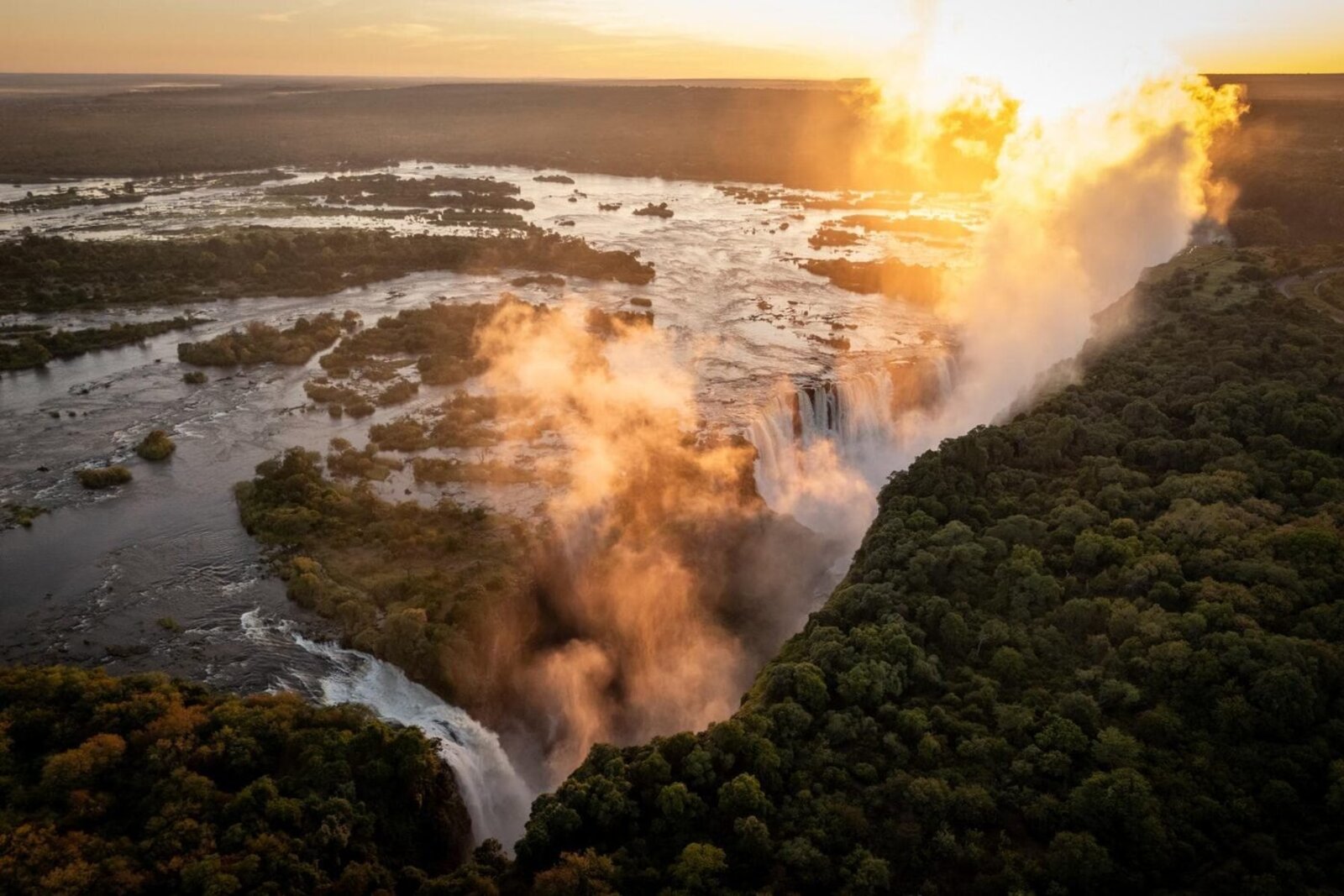
No place in Zambia is more famous, and the reputation is deserved. On the Zambezi at Livingstone, Victoria Falls — known to the local Kololo people as Mosi-oa-Tunya, "the Smoke that Thunders" — is the largest sheet of falling water on Earth and one of the Seven Natural Wonders of the World. On the Zambian side you can walk the Knife-Edge Bridge into the spray, and in the low-water months even swim to the very lip at Devil's Pool. Beyond the falls, Livingstone is Zambia's adventure capital — white-water rafting, bungee jumping, sunset river cruises and helicopter flights over the gorge.
- Best for: First-timers, adrenaline, honeymooners, a spectacular start or finish
- When to go: Full flood March–May for sheer power; June–October for clearer views and Devil's Pool
- Access: Easy — fly into Livingstone (Harry Mwaanga Nkumbula) airport, minutes from the falls
- Don't miss: A sunset cruise on the upper Zambezi and, in season, a swim at Devil's Pool.
2. South Luangwa National Park — Birthplace of the Walking Safari
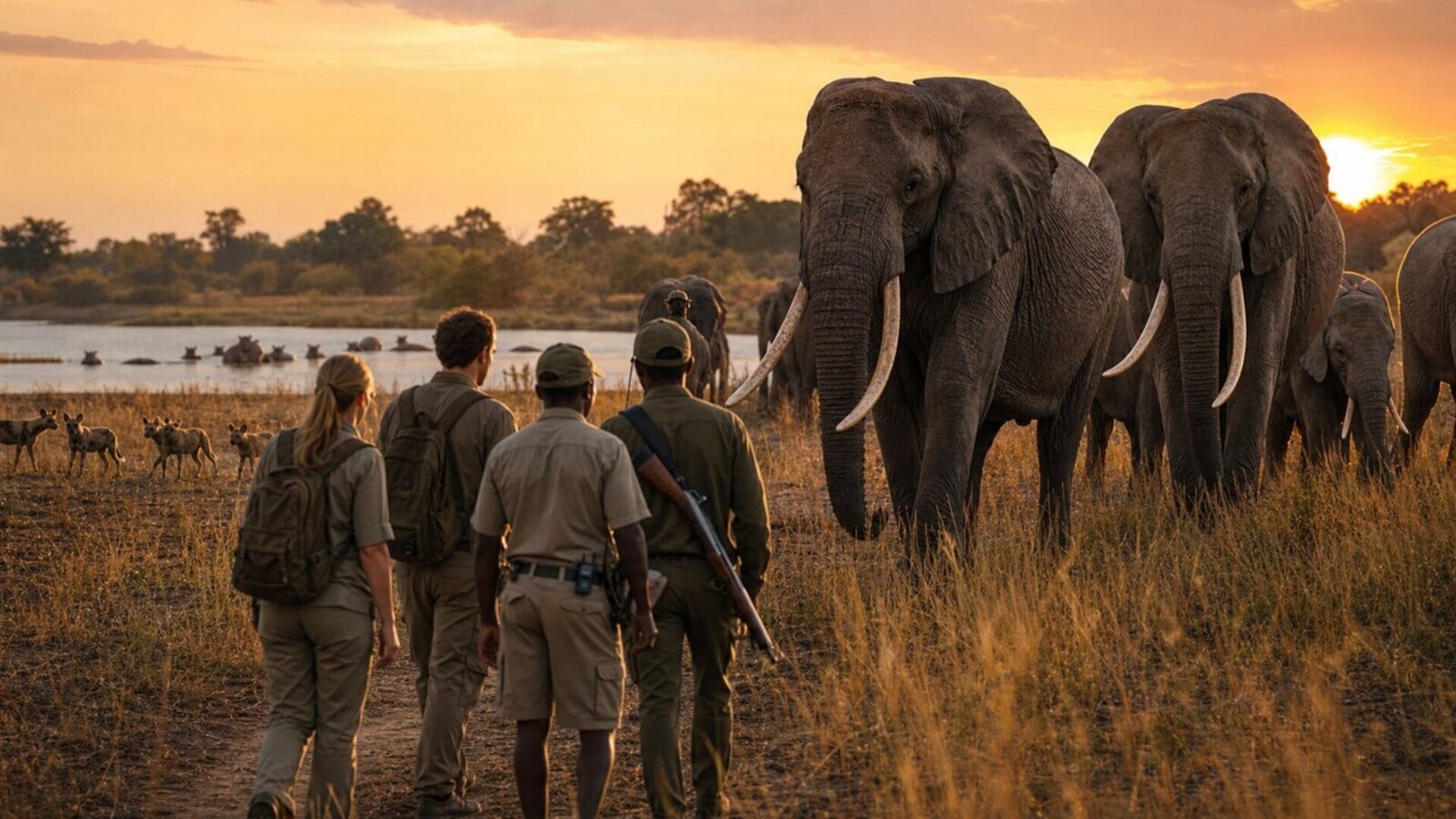
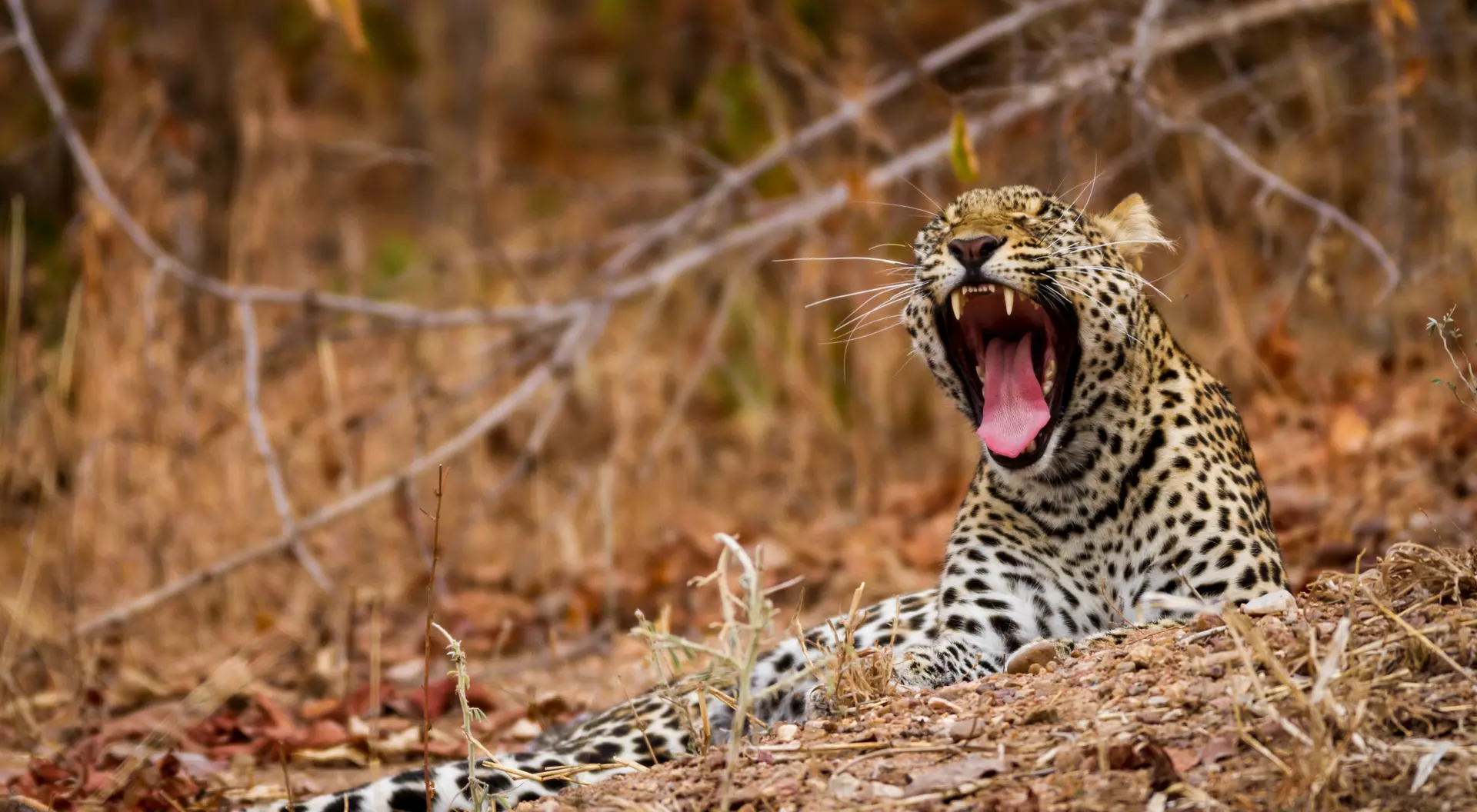
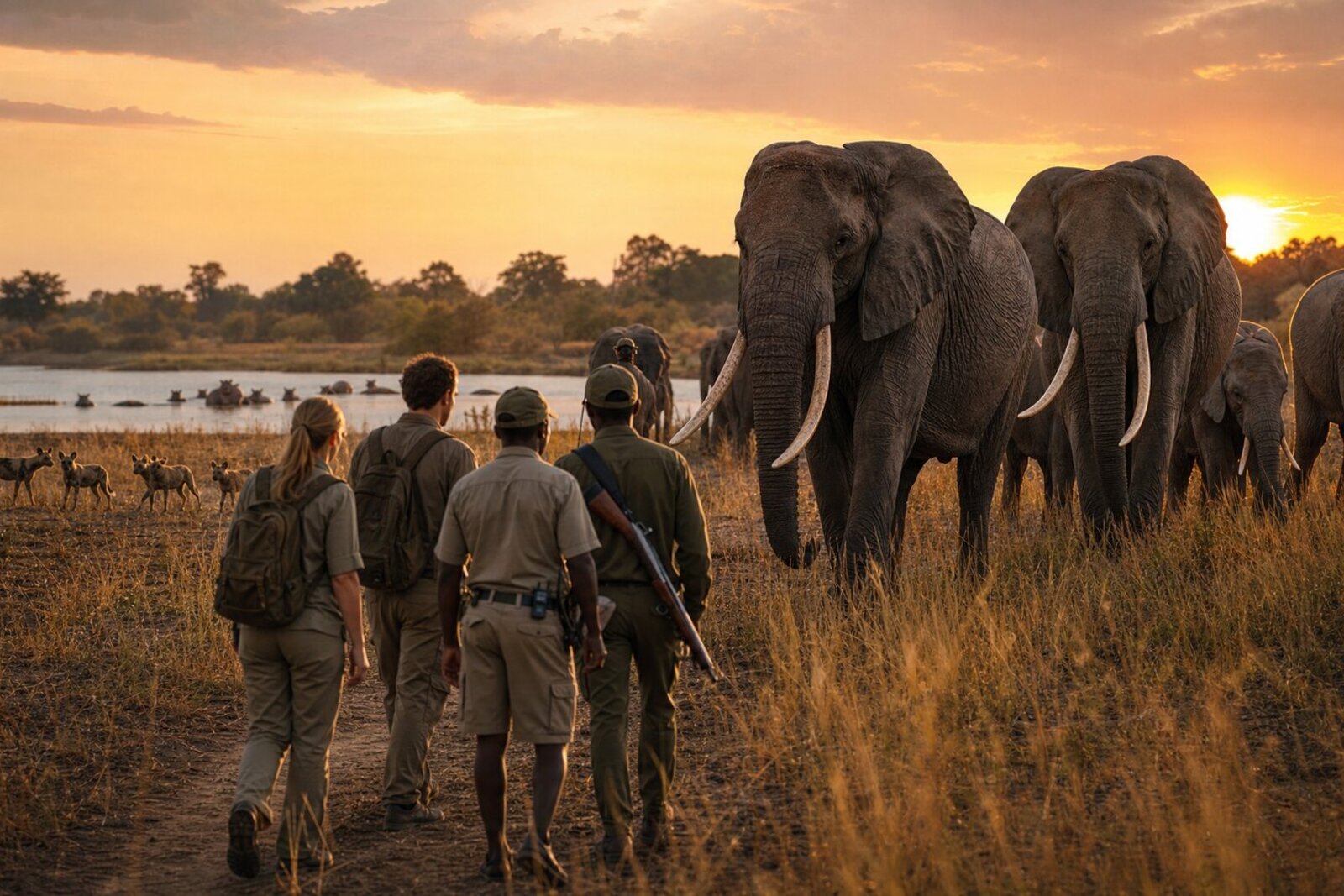
If Zambia has a wildlife soul, it is the Luangwa Valley. South Luangwa is where the modern walking safari was born, and it remains the finest place in Africa to explore on foot with an armed guide and scout. The oxbow lagoons of the meandering Luangwa River draw one of the continent's densest concentrations of leopard, along with lion, elephant, buffalo and huge pods of hippo. Night drives reveal genets, civets and hunting big cats rarely seen elsewhere.
- Best for: Walking safaris, leopards, night drives, authentic bush immersion
- When to go: May–October dry season for the best game; the green season is superb for birds and photography
- Access: Easy — fly to Mfuwe from Lusaka, then a short transfer to the camps
- Reality: This is walking-safari country at its purest — even one morning on foot changes how you see the bush.
3. Lower Zambezi National Park — Canoeing the Great River
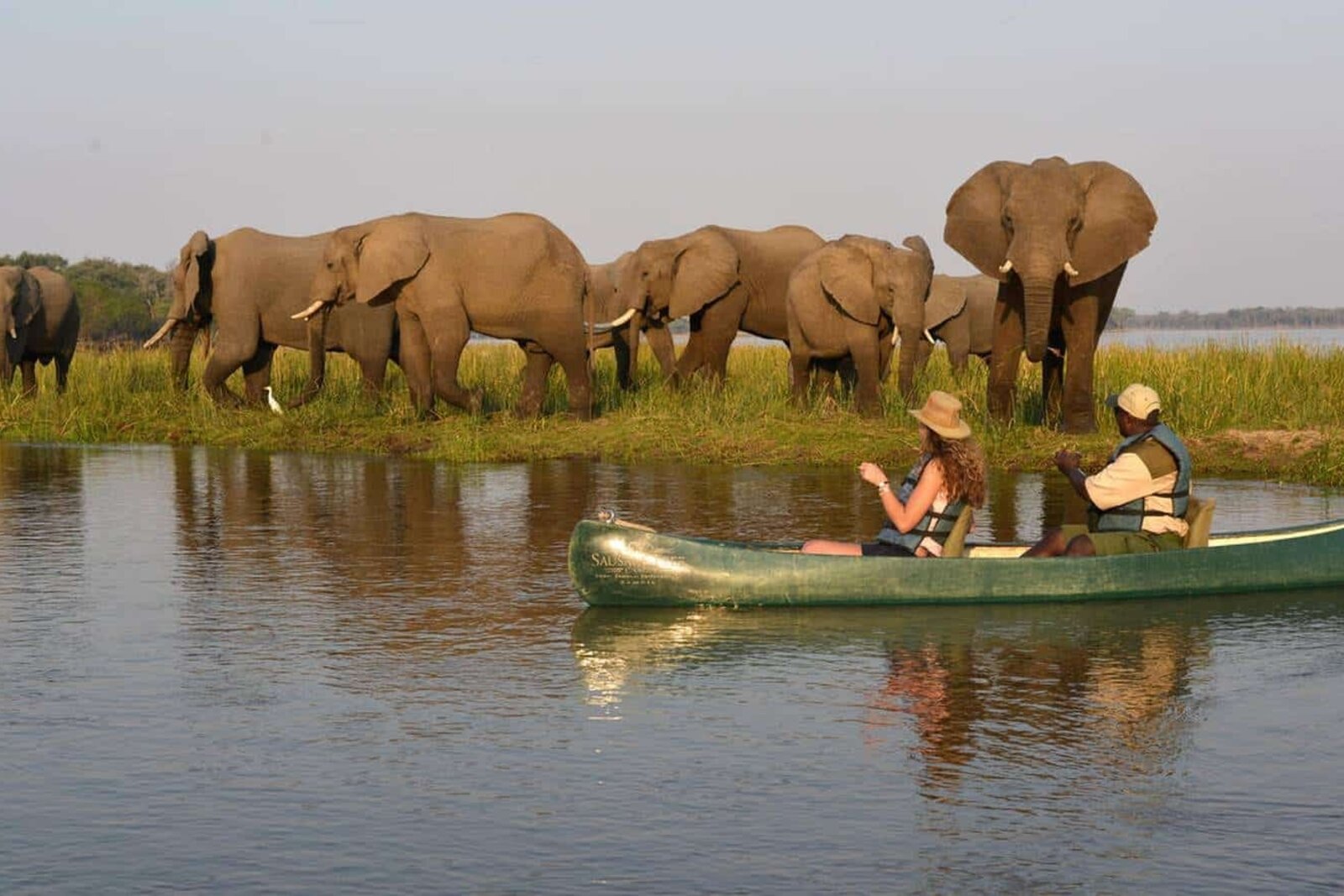
Across the country on the Zimbabwe border, the Lower Zambezi offers something few parks can: the chance to meet Africa's wildlife from the water. Drift in a canoe past elephants swimming between islands, glide within metres of yawning hippos, and cast for tigerfish beneath riverine forest, all against the backdrop of the blue Zambezi escarpment. Game drives and walking add to the mix, but it is the canoe safari — silent, low and intimate — that makes this place unforgettable.
- Best for: Canoe safaris, river fishing, elephants on the water, romance and calm
- When to go: May–October, when animals gather along the shrinking river
- Access: Fly-in to the park's airstrips, or drive and boat from Lusaka via Chirundu
- Reality: Pair it with South Luangwa for the definitive Zambian wildlife duo — walking valley and canoeing river.
The Zambezi & Victoria Falls
4. Lake Kariba — Houseboats & Endless Sunsets
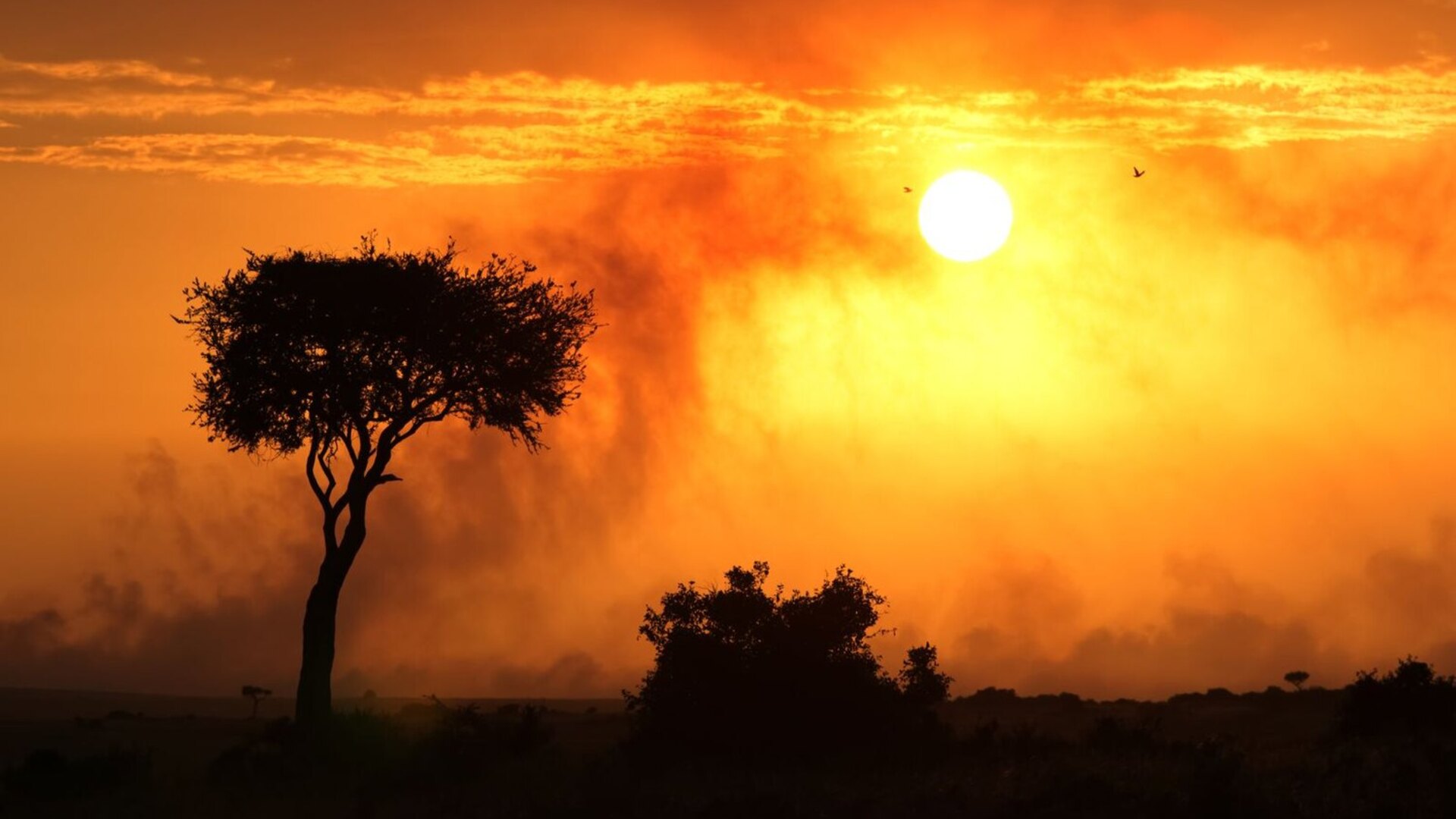
One of the world's largest man-made lakes, Lake Kariba stretches along the Zimbabwe border like an inland sea. This is Zambia at its most relaxed: houseboats drift between islands, anglers cast for tigerfish and bream, and every evening the sky burns orange over the drowned forest and distant hills. Elephants come down to drink at the shore, fish eagles call overhead, and nearby the Lower Zambezi begins. It is the country's great place to slow down.
- Best for: Houseboats, fishing, sunsets, relaxation and families
- When to go: April–October for warm, dry days; the fishing is good much of the year
- Access: Reached via Siavonga, a road transfer south of Lusaka
- Reality: A night or two on a Kariba houseboat is the perfect gentle counterpoint to an active safari.
5. Kafue National Park & the Busanga Plains — Zambia's Vast Wild Heart
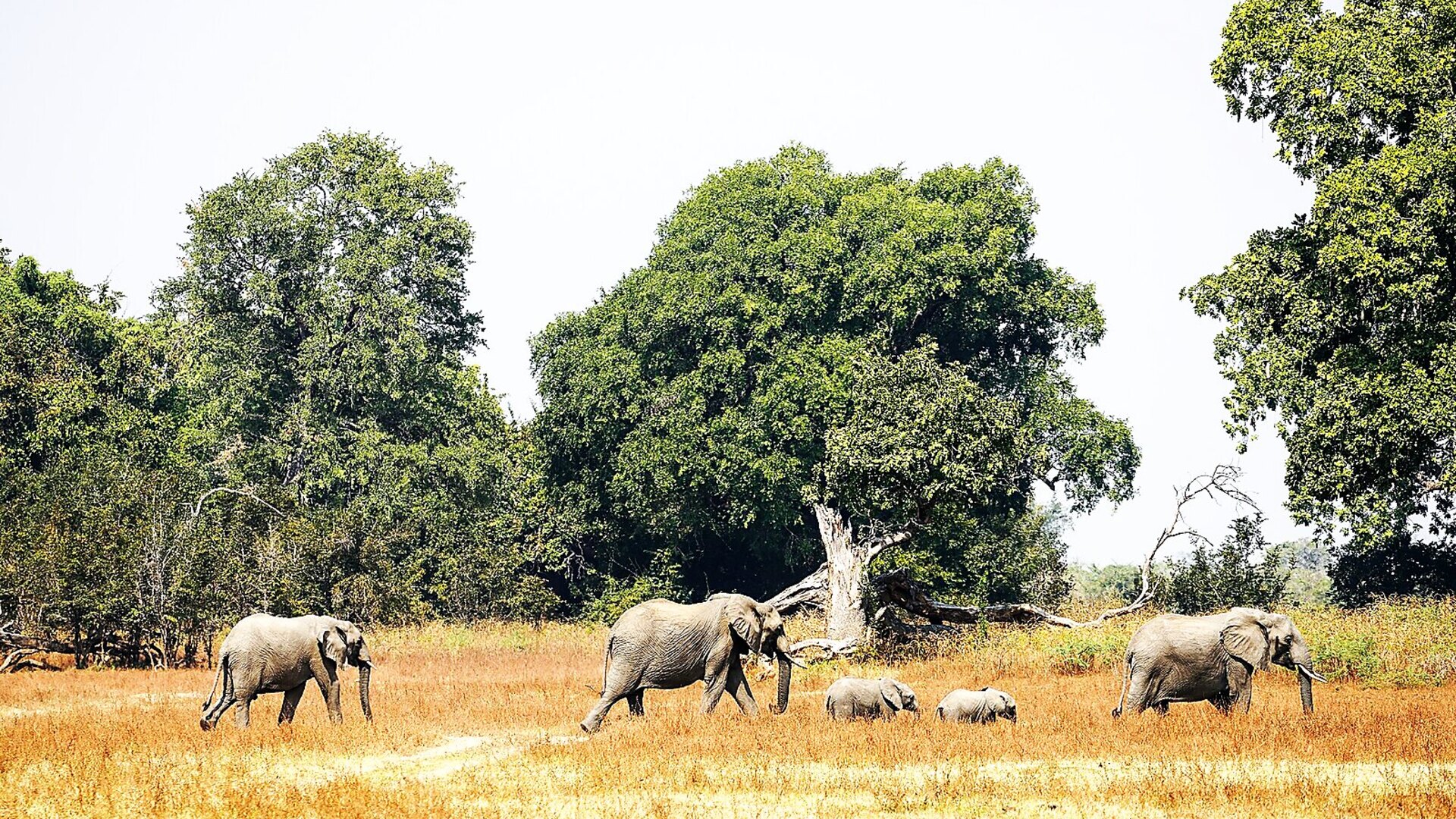
Bigger than Wales and gloriously uncrowded, Kafue is Zambia's oldest and largest national park. Its jewel is the Busanga Plains in the far north — a seasonal wetland where, as the floods recede, red lechwe, puku and buffalo gather in their thousands, drawing the famous Busanga lions and cheetah onto open grassland made for photography. Elsewhere, the Kafue and Lufupa rivers offer boating, and the leopard-rich woodlands rival any in Africa. You may go days without seeing another vehicle.
- Best for: Big cats on open plains, wilderness solitude, photography, boating
- When to go: The Busanga camps open roughly July–October, when the plains dry out
- Access: Fly-in to the northern airstrips, or drive from Lusaka to the southern sector
- Reality: For travellers who want space and few crowds, Kafue is one of Africa's last great secrets.
6. Lusaka — The Capital: Markets, Culture & Gateway
Most Zambian journeys pass through Lusaka, the friendly, fast-growing capital — and it deserves more than a night in transit. Browse the craft stalls and curios at markets like Kabwata and Sunday's Arcades, sample nshima and grilled fish at a local restaurant, visit the Lusaka National Museum for a grounding in Zambian history, and feel the warmth of a people known across Africa for their hospitality. It is the cultural and practical hub from which every region of the country radiates.
- Best for: Arrival and departure, markets and crafts, local food and culture
- When to go: Year-round; it is a transit and cultural stop rather than a seasonal one
- Access: Kenneth Kaunda International Airport is Zambia's main international gateway
- Reality: Build in a half-day at the start or end — it adds real texture to a wildlife trip.
7. Liuwa Plain & the Kuomboka — Migration Meets Lozi Culture
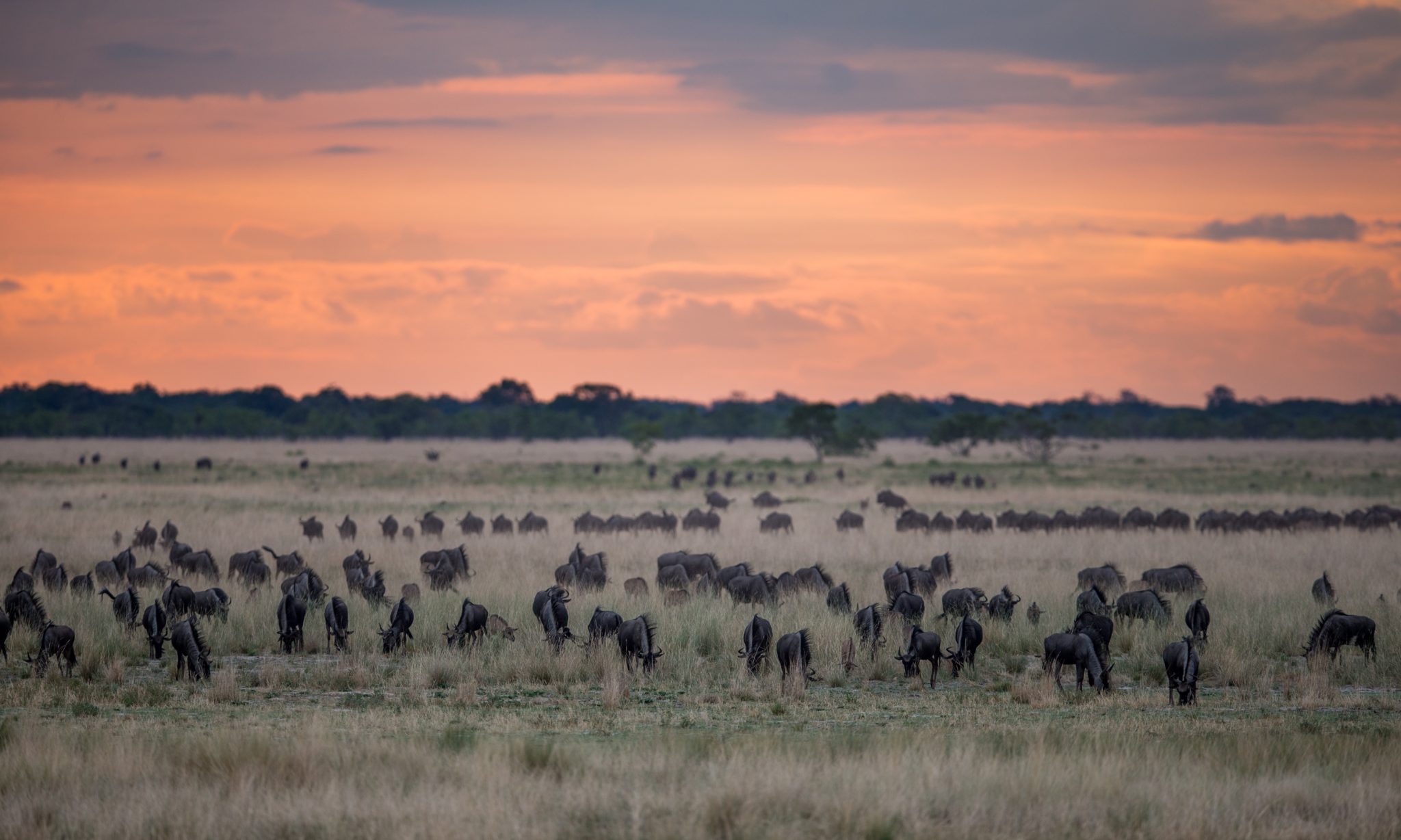
Far in Zambia's remote west lies one of Africa's great secrets: Liuwa Plain, where the second-largest wildebeest migration on the continent sweeps across a vast, treeless horizon, trailed by hyena clans and the descendants of the famous lioness "Lady Liuwa". The plains are also the heartland of the Lozi kingdom, home to the Kuomboka — one of Africa's most spectacular ceremonies, when the king is paddled in a great barge from the flooding plains to higher ground. Nature and culture meet here as almost nowhere else.
- Best for: Wildebeest migration, remote wilderness, Lozi culture and ceremony
- When to go: November–December for the migration and wildflowers; the Kuomboka falls around March–April with the floods
- Access: Fly-in to Kalabo, or a long adventurous drive — this is deep wilderness
- Reality: One of the last truly wild places in Africa; going there is a journey in itself.
Zambia's Great Wild Parks
8. Lake Tanganyika & Nsumbu — Remote Northern Beaches
In Zambia's far north lies a surprise: white-sand beaches and clear blue water on the world's second-deepest and second-largest freshwater lake. Lake Tanganyika here is fringed by the little-visited Nsumbu (Sumbu) National Park, where wilderness meets water — elephant and hippo along the shore, crocodiles in the bays, and some of the finest freshwater snorkelling and fishing in Africa. Nearby, the spectacular Kalambo Falls — one of the tallest uninterrupted waterfalls on the continent — plunges into a gorge on the Tanzanian border.
- Best for: Beaches, snorkelling and fishing, true off-the-map remoteness
- When to go: May–October for the driest, clearest lake conditions
- Access: Fly-in or a long overland journey to the northern lakeshore
- Reality: For the adventurous traveller who wants a lake, a beach and a park all at once, far from any crowd.
9. Kasanka National Park — The Great Bat Migration
Small, community-run Kasanka hosts one of the most astonishing wildlife spectacles on Earth. Each year, from roughly late October to December, up to ten million straw-coloured fruit bats pour into a tiny patch of swamp forest — the largest mammal migration on the planet by sheer number. At dawn and dusk the sky fills with wings in a swirling, roaring cloud. Beyond the bats, Kasanka offers the rare, water-loving sitatunga antelope, canoeing and gentle walking in a genuine conservation success story.
- Best for: The bat migration, birdwatching, sitatunga, a rare natural wonder
- When to go: Late October–December for the bats — the reason most travellers come
- Access: Reached by road or charter flight from Lusaka toward the Bangweulu region
- Reality: Time your visit to the bat season; outside it, Kasanka is quiet and green but far less dramatic.
10. Shiwa Ng'andu — The Africa House
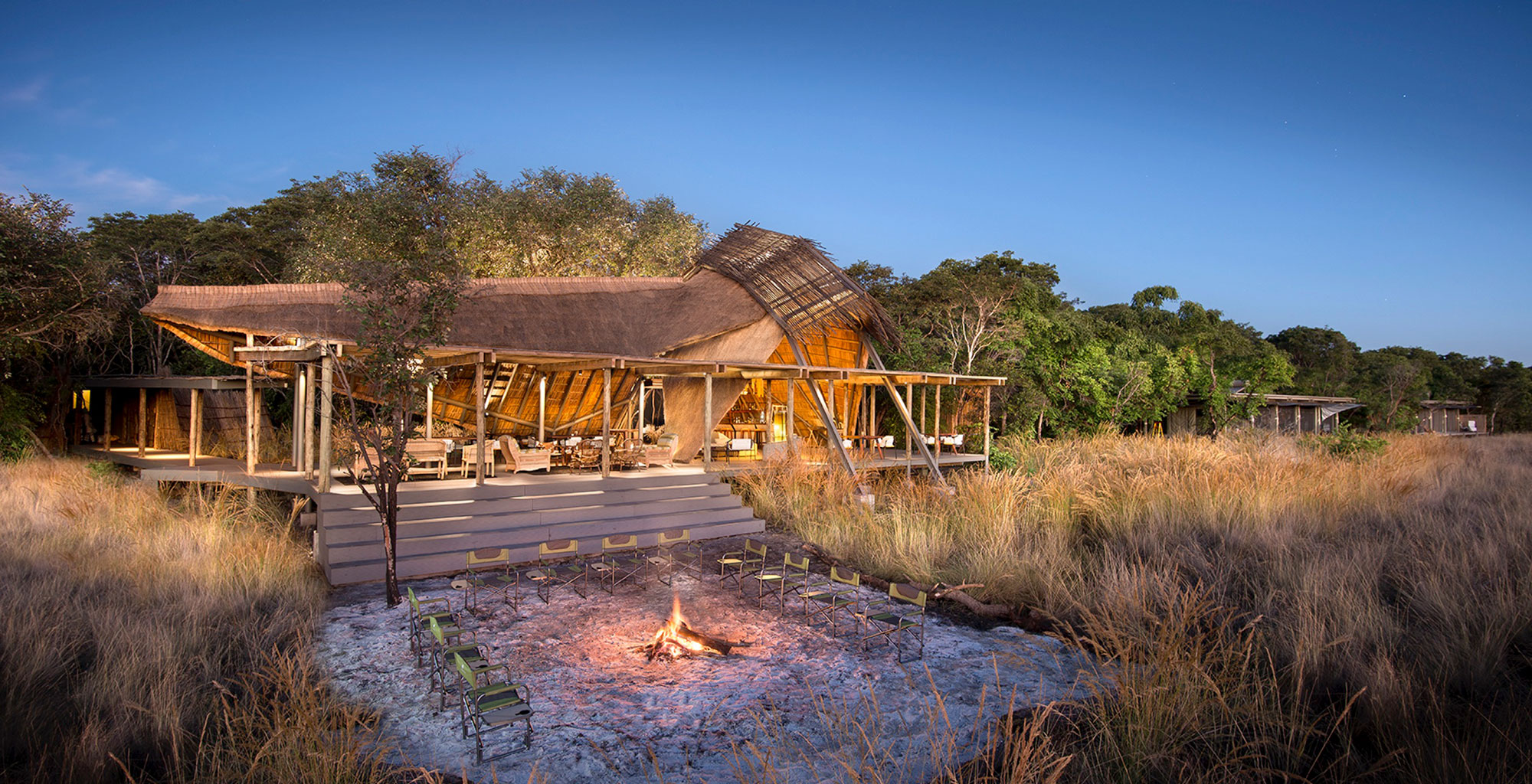
Deep in Zambia's northern bush stands one of Africa's most romantic and improbable places: Shiwa Ng'andu, the "Africa House" — a grand English-style country manor built in the early twentieth century by the eccentric aristocrat Sir Stewart Gore-Browne. Red-brick and rambling, surrounded by gardens, a working estate and a lake, it feels like a lost world. Guests can stay in the manor or nearby Kapishya Hot Springs, tour the estate and its history, and soak in natural thermal pools beneath the trees. It is a slice of living history unlike anywhere else on the continent.
- Best for: History and architecture, hot springs, a unique overnight, travellers who love a story
- When to go: Year-round; the dry season (May–October) makes the roads easiest
- Access: On the route through northern Zambia toward Kasanka and the northern lakes
- Reality: A magical stop to break a northern journey — as much a piece of theatre as a place to stay.
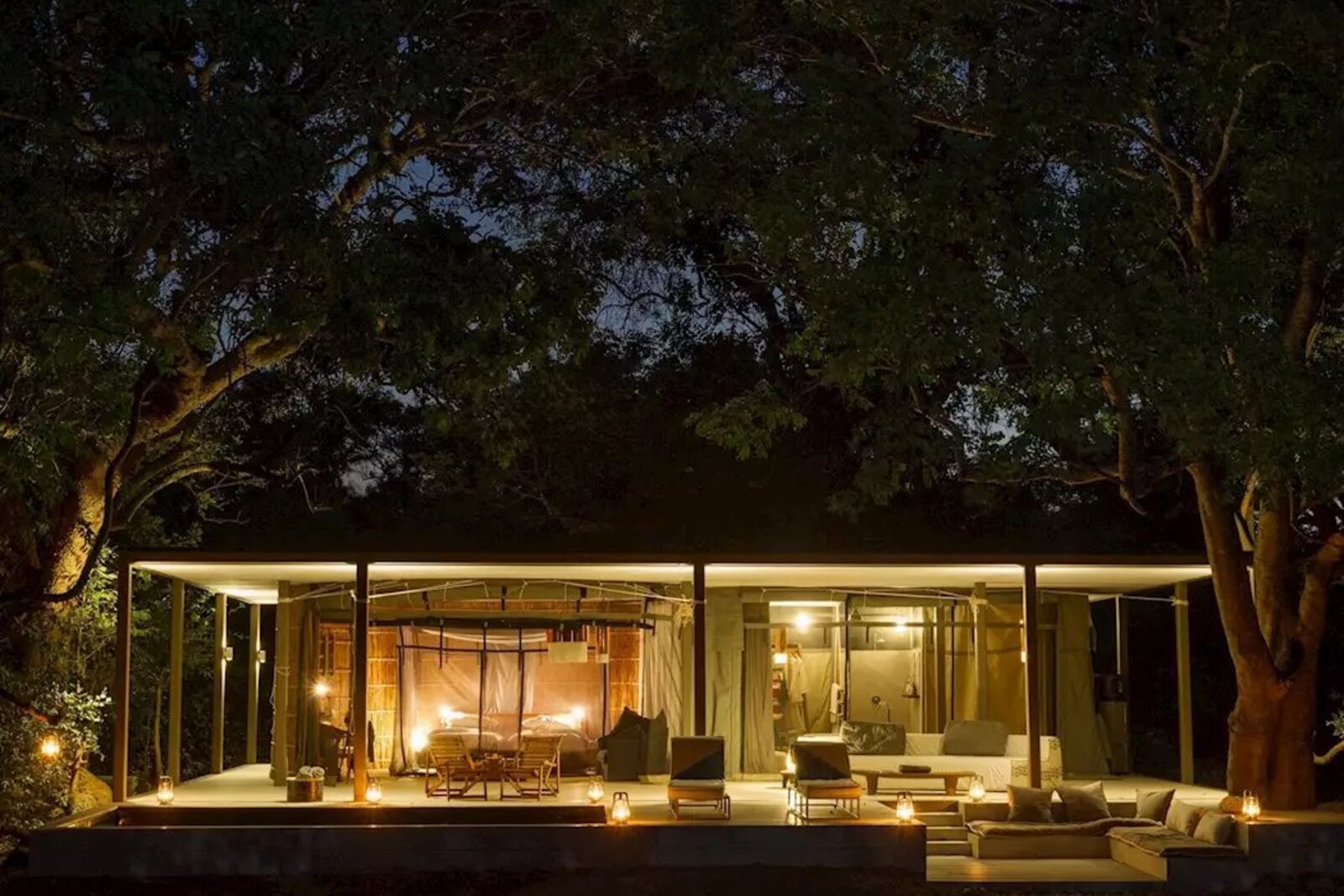
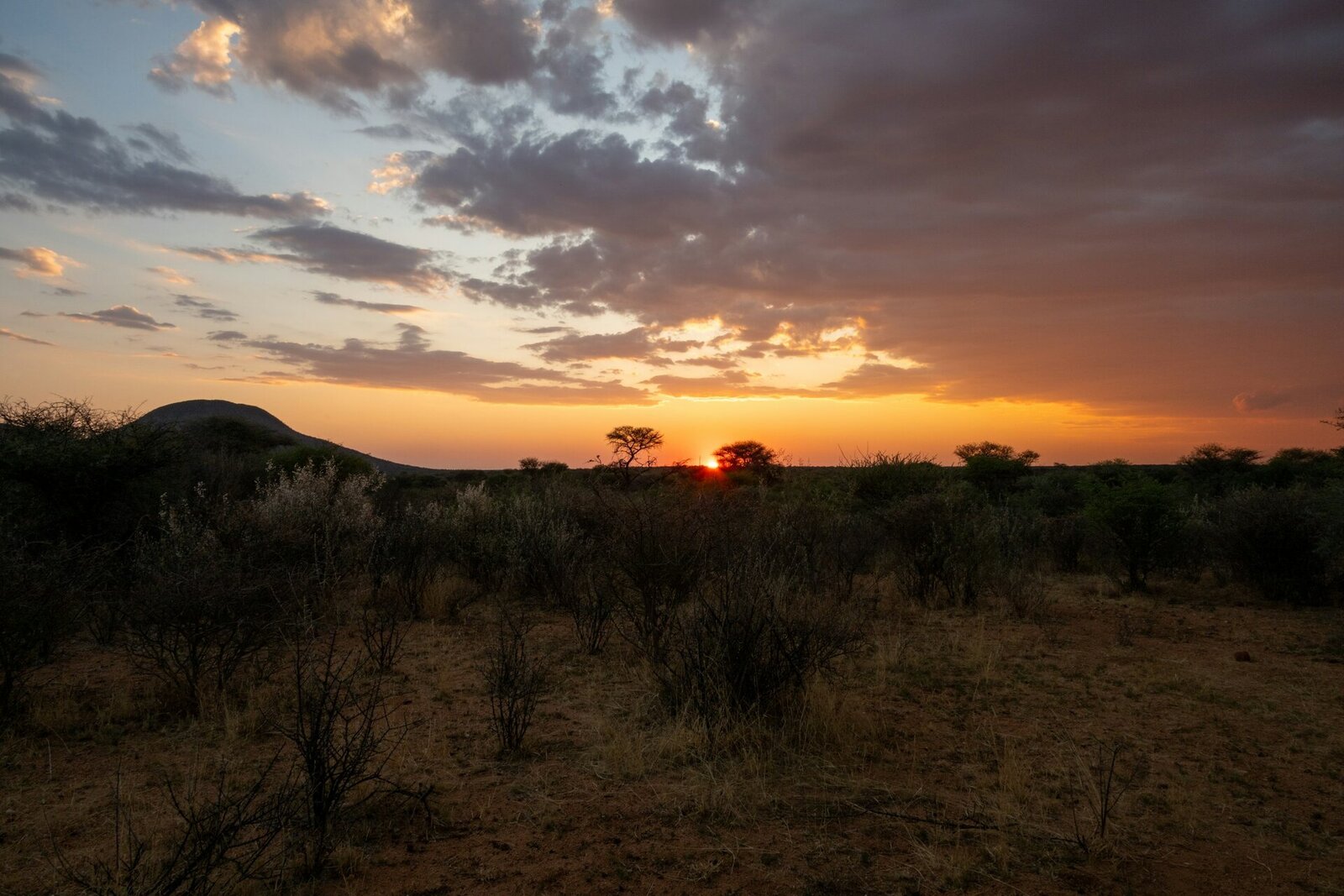
Wilderness, Water & Welcome
Building Your Trip: How to Combine Zambia's Best Places
The art of a Zambia trip is combination — pairing contrasting experiences so each one feels sharper. Here are the routes that work best, matched to how much time you have. For fully costed, pre-designed trips, see our Zambia Safari Tours guide, or design a tailor-made itinerary via Private Safari Tours Zambia.
The Classic (7–8 days): Victoria Falls & Livingstone → South Luangwa. The definitive first trip — the natural wonder, then the birthplace of the walking safari.
River & Falls (8–9 days): Victoria Falls → Lower Zambezi canoe safari → a Lake Kariba houseboat. Zambia by water, from the greatest falls on Earth to a drifting lake sunset.
Two-Valley Wilderness (9–10 days): South Luangwa walking safari → Lower Zambezi canoeing → optional Kafue. The purest wildlife route, on foot and by canoe.
The Explorer (10–14 days): Liuwa Plain, Kasanka's bats, Lake Tanganyika and Shiwa Ng'andu — for travellers who want Zambia's wildest, strangest and most remote corners.
💡 Planning Tip: Zambia is bigger than it looks, and its regions are reached by different flights. Rather than racing to tick every box, choose two or three complementary places — the falls, a wildlife valley, a lake — and give each enough time to breathe. For a realistic budget, see How Much Does a Zambia Safari Cost.
Best Time to Visit Zambia
| Season | Months | Best For | Notes |
|---|---|---|---|
| Peak Dry | Jul–Oct | ★★★★★ Wildlife, walking & canoe safaris | Best game viewing; Busanga camps open; clear views at the falls; book early |
| Full-Flood Falls | Mar–May | ★★★★★ Victoria Falls at full power | Thunderous falls and huge spray; the Kuomboka ceremony; lush green landscapes |
| Emerald / Green | Dec–Feb | ★★★★☆ Birds, bats, value & photography | Kasanka bat migration (to Dec); Liuwa migration; superb birding; some camps closed |
| Shoulder | Jun & Nov | ★★★★☆ All-rounder | Drying out (Jun) or first rains (Nov); good value, fewer vehicles |
Verdict: For a first Zambia trip covering the falls and wildlife, aim for the dry season (May–October). For Victoria Falls at its most powerful and the Kuomboka ceremony, come March to May; for Kasanka's bats and the Liuwa migration, November to December. For park-specific timing, see Best Time to Visit South Luangwa.
🦁 Ready to plan your Zambia trip? Browse pre-designed journeys in our Zambia Safari Tours guide, compare accommodation in the Best Zambia Safari Lodges, or design a tailor-made trip via Private Safari Tours Zambia. Focused on game drives? See the Top 10 Best Safari Destinations in Zambia.
Best Places to Visit in Zambia: Frequently Asked Questions
What is the number one place to visit in Zambia?
For most travellers Victoria Falls at Livingstone is the single best place to visit — one of the Seven Natural Wonders of the World and Zambia's adventure capital. But Zambia's magic is its range: South Luangwa for walking safaris and leopards, the Lower Zambezi for canoe safaris, Lake Kariba for houseboats, and Liuwa Plain for its great wildebeest migration. The best trips combine two or three contrasting places rather than chasing a single highlight.
How many days do you need to visit Zambia?
Plan on at least 7–8 days to combine Victoria Falls with one wildlife area such as South Luangwa. Add 2–3 nights for a Lower Zambezi canoe safari or a Lake Kariba houseboat, or build a 10–14 day explorer trip to reach the remote west (Liuwa Plain), the bat migration at Kasanka, and the northern lakes. Zambia rewards a slower, deeper journey.
What are the best non-safari places to visit in Zambia?
Beyond the wildlife parks, Zambia's standout non-safari places are Victoria Falls and Livingstone for the natural wonder and adventure sports, Lake Kariba for houseboats and fishing, Lake Tanganyika and Nsumbu in the far north for beaches and snorkelling, Kasanka for the great bat migration, and Shiwa Ng'andu — the "Africa House" — for a slice of eccentric colonial history and hot springs. Lusaka adds markets, museums and local culture.
Is Victoria Falls better on the Zambian or Zimbabwean side?
Both are superb and many travellers visit both, as they are linked by the bridge. The Zambian side at Livingstone offers the closest, most immersive experience — you can walk into the spray on the Knife-Edge Bridge and, in the low-water season, swim at Devil's Pool on the very lip of the falls. The Zimbabwean side offers the broader panoramic views. In full flood the Zambian side can be very misty, so timing matters.
Where is the walking safari in Zambia?
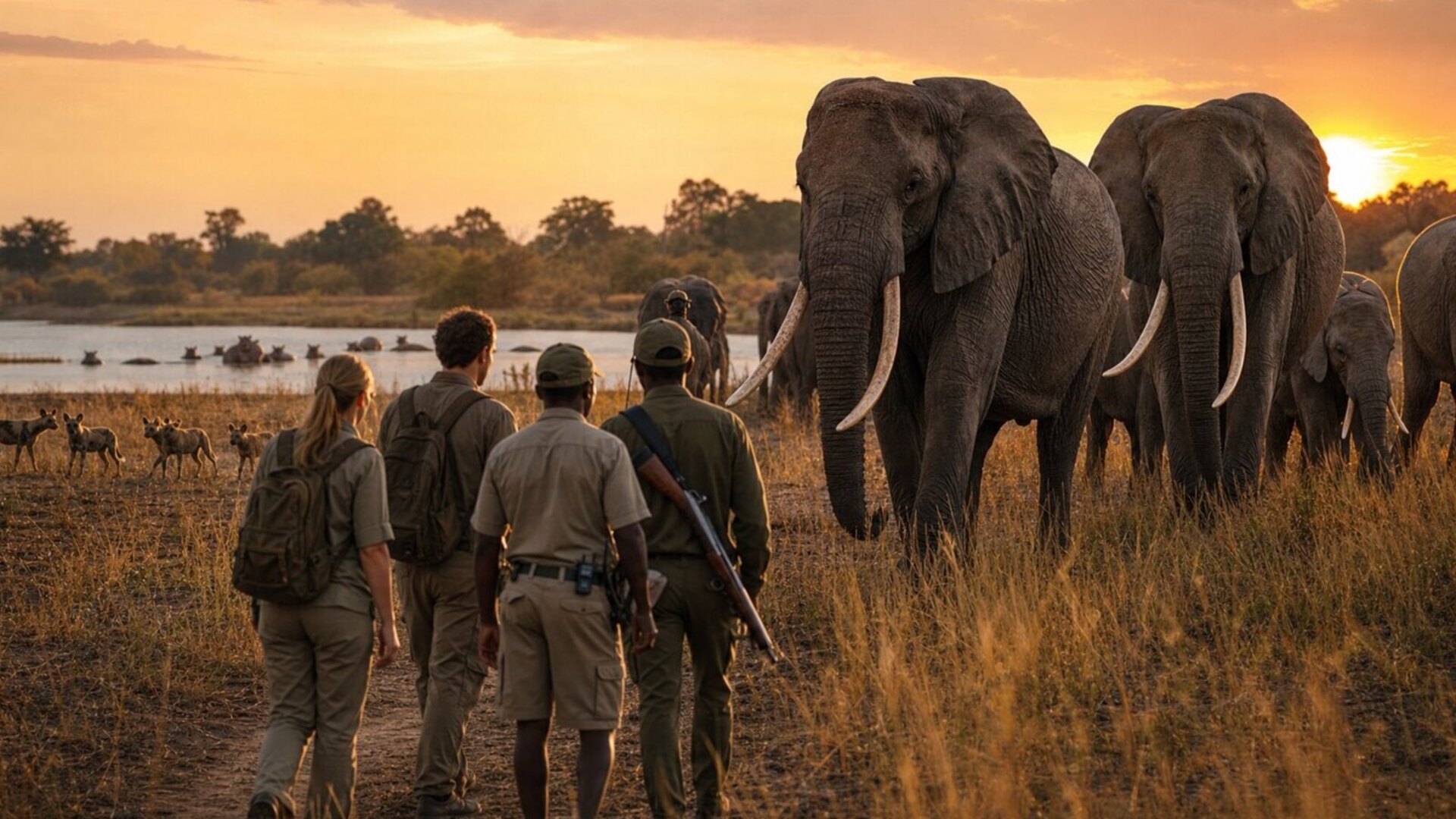
South Luangwa National Park is the birthplace of the modern walking safari and remains the best place in Africa to do it, with expert guides and armed scouts leading you on foot through the bush. The North Luangwa and Lower Zambezi parks also offer excellent walking. Walking safaris let you focus on tracks, plants, insects and the smaller stories of the wild that you miss from a vehicle.
When can you see the bat migration at Kasanka?
The straw-coloured fruit bat migration at Kasanka National Park runs roughly from late October to mid-December, peaking in November, when up to ten million bats gather in a small patch of swamp forest — the largest mammal migration on Earth by number. Dawn and dusk are the times to watch the sky fill with wings. Outside these months the spectacle is gone, so plan your visit around it.
Which places in Zambia are best for avoiding crowds?
Almost all of Zambia feels uncrowded compared with better-known safari countries, but the wildest corners are Kafue's Busanga Plains, the remote Liuwa Plain in the west, and Lake Tanganyika with Nsumbu National Park in the far north. Even flagship South Luangwa sees a fraction of the visitors of East Africa's parks. Zambia is the destination for travellers who want space and solitude.
Is Zambia safe to visit?
Zambia is widely regarded as one of the safer and most welcoming countries in Africa, known for its stable, peaceful reputation and friendly people. As anywhere, take normal precautions in Lusaka and Livingstone, use reputable operators, and follow guide advice on safari and around the water. Most visits are trouble-free, and Zambians' warmth is one of the highlights travellers remember most.
How much does a trip to Zambia cost?
Costs vary widely by style. Mid-range safaris typically run about $350–600 per person per night, while luxury and remote fly-in camps in places like the Busanga Plains or Liuwa can reach $1,000–1,700+ per night. Victoria Falls and Livingstone offer everything from budget guesthouses to high-end lodges, and internal charter flights add to the cost of reaching remote parks. For a detailed breakdown, see our How Much Does a Zambia Safari Cost guide.
Final Word: Choosing the Best Places to Visit in Zambia
Zambia's greatness lies in its range — and its space. In one country you can stand in the thunder of the largest falling water on Earth, walk the valley where the walking safari was born, canoe past elephants on the Zambezi, drift on a houseboat as the sky burns orange over Lake Kariba, and watch a great migration sweep across the remote Liuwa Plain. And you can do most of it with barely another traveller in sight.
- ✅ First visit? Victoria Falls and Livingstone, then walking safaris in South Luangwa
- ✅ Love the water? Canoe the Lower Zambezi and drift on a Lake Kariba houseboat
- ✅ Want something rarer? Kasanka's bat migration or the Liuwa Plain and Kuomboka
- ✅ Craving history and calm? The Africa House at Shiwa Ng'andu and the northern lakes
The honest advice: don't try to see everything. Choose the places that match who you are as a traveller, give each enough time, and let your trip tell one coherent story. Do that, and Zambia will give you the journey of a lifetime.
Ready to start planning? Explore our Zambia Safari Tours guide, browse the Best Zambia Safari Lodges, or begin with the comprehensive Ultimate Zambia Travel Guide.