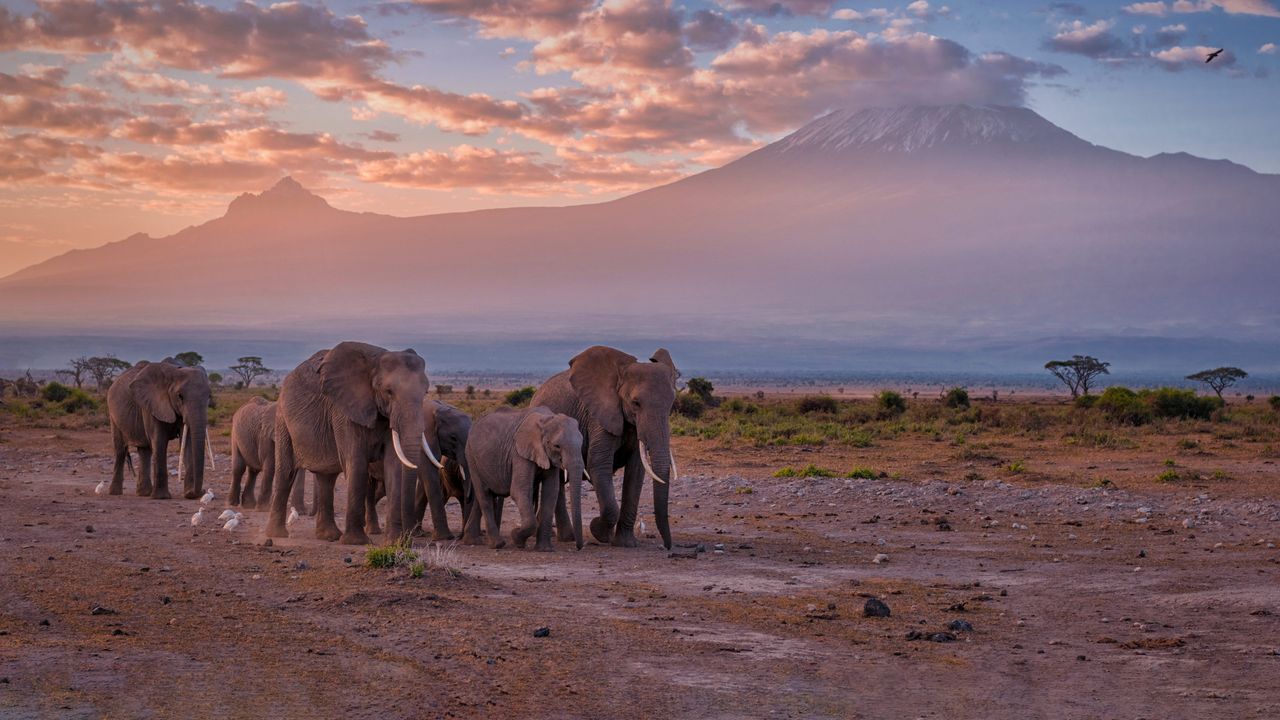
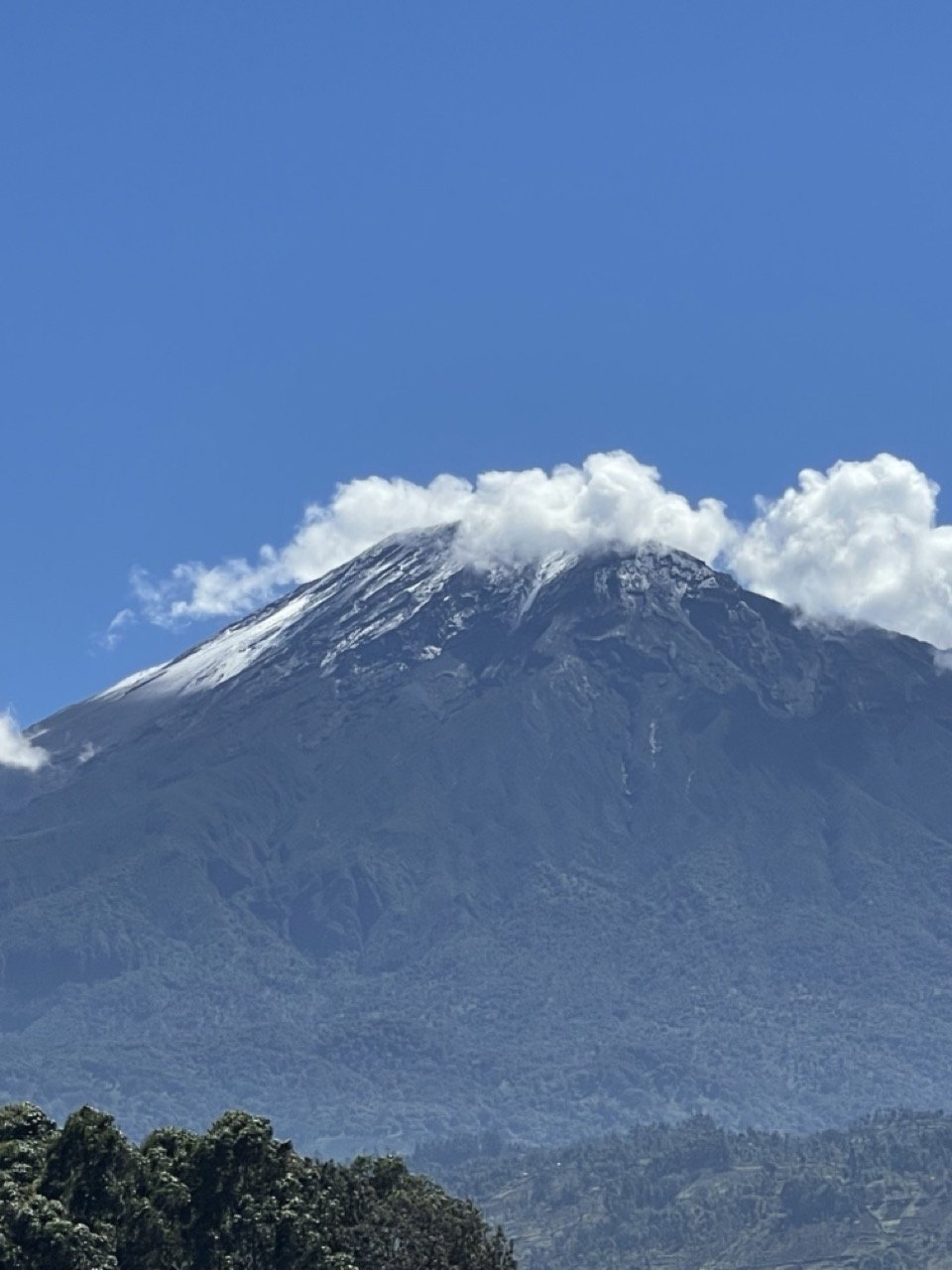
Iona National Park — Where the Namib Meets the Atlantic
There is a place at the very edge of Angola where the oldest desert on Earth walks straight into the cold Atlantic. This is Iona — roughly fifteen thousand square kilometres of dune, gravel plain and sea fog, and the largest national park in the country. It is not a polished safari of lodges and swimming pools. It is raw, remote wilderness of the kind that has almost vanished from the modern map: a park you cross by four-by-four, sleep in under canvas, and leave changed.
Iona lies in Angola’s far southwest, in Namibe Province, hard against the Namibian border. To the west is the Atlantic, chilled by the Benguela Current and wrapped most mornings in fog. To the south the Cunene River carves the frontier with Namibia. In between stretch the northern reaches of the Namib — the world’s oldest desert, a place of shifting dunes, wind-scoured plains, and plants that have stood for a thousand years. Few travellers ever come here. That is precisely the point.
This guide is the complete 2026 planning map for Iona: what the landscape actually is, the desert-adapted wildlife you can realistically see, the ancient Welwitschia and the fog-belt ecosystem, where you sleep (spoiler: canvas, not concierge), what it costs, when to travel, how to reach it from Namibe, the honest risks, and who this frontier is — and is not — for. Iona is the flagship of our wider Ultimate Angola Safari & Travel Guide, and for many serious travellers it is the single reason they finally book the country.
Iona at a Glance — Fast Facts for Planners
- Location: Namibe Province, far southwest Angola; Atlantic coast to the west, Cunene River (Namibia border) to the south.
- Size: approximately 15,150 square kilometres — Angola’s largest national park.
- Landscape: northern Namib Desert — dunes, gravel plains, rocky escarpments, dry riverbeds and a fog-fed coastal belt.
- Signature wildlife: oryx (gemsbok), springbok, Hartmann’s mountain zebra, ostrich, brown hyena, black-backed jackal; seals, dolphins and whales offshore.
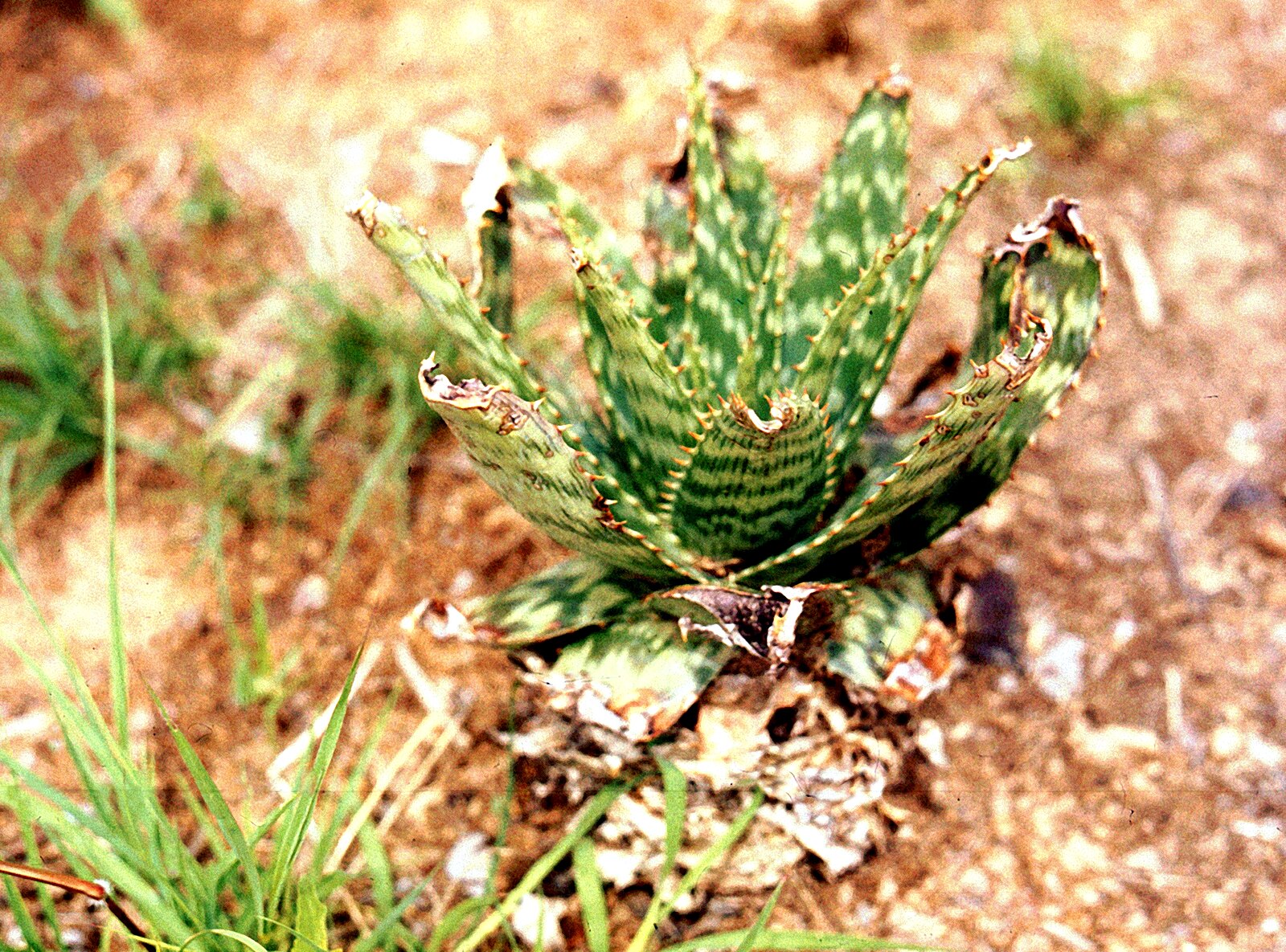
- Signature flora: Welwitschia mirabilis (plants that can live 1,000+ years), lithops and hardy desert succulents.
- Accommodation: no lodges inside the park — mobile/fly-camping and self-sufficient 4x4 camping only.
- Gateway: fly Luanda (LAD) → Namibe (Moçâmedes), then ~200 km by 4x4 south into the park.
- Best time: May–October (dry season); coastal fog possible year-round.
- Typical cost: USD 3,000–$6,000 per person for a 5–7 day guided expedition (excluding international flights and wider Angola circuit).
- Best for: adventurous travellers, photographers, desert lovers and second- or third-time safari-goers seeking true wilderness.
Why Iona? Four Reasons This Wilderness Is Unlike Anywhere Else
Iona is not for the checklist traveller counting lions before lunch. Its appeal is deeper and stranger, and it rests on four pillars:
- A landscape no other safari country combines. Iona is where the Namib — the oldest desert on the planet — meets the Atlantic Ocean. Coastal fog, running dunes, gravel plains, granite inselbergs and the Cunene River sit inside one protected area. It reads on camera like another planet.
- True solitude. Visitor numbers here are a rounding error next to Etosha, the Okavango or Kruger. You will not queue at a sighting. Most days you will not see another vehicle that is not part of your own convoy. That emptiness is real, not marketed.
- Desert-adapted wildlife and ancient plants. Oryx ghosting through the fog, springbok pronking across gravel, Hartmann’s mountain zebra picking through rock, brown hyena at dusk — and the Welwitschia, a living fossil older than most cathedrals. This is specialist wildlife, not a Big Five drive-through.
- Frontier scale. At over 15,000 square kilometres, Iona swallows you. There is a particular silence in the deep Namib — wind, then nothing — that changes how you think about distance and time. Few wildernesses left on Earth deliver it so completely.
If you want infinity pools and guaranteed leopard sightings on a schedule, book the Sabi Sand. If you want to stand on an empty Atlantic desert shore at dawn, watching oryx materialise out of the fog while the nearest other traveller is a hundred kilometres away, Iona is one of the last places on Earth that can still give you that.
The Landscape — Five Worlds in One Park
Understanding Iona’s terrain is the key to planning a route and setting expectations. The park is not one desert but several stitched together:
1. The gravel plains
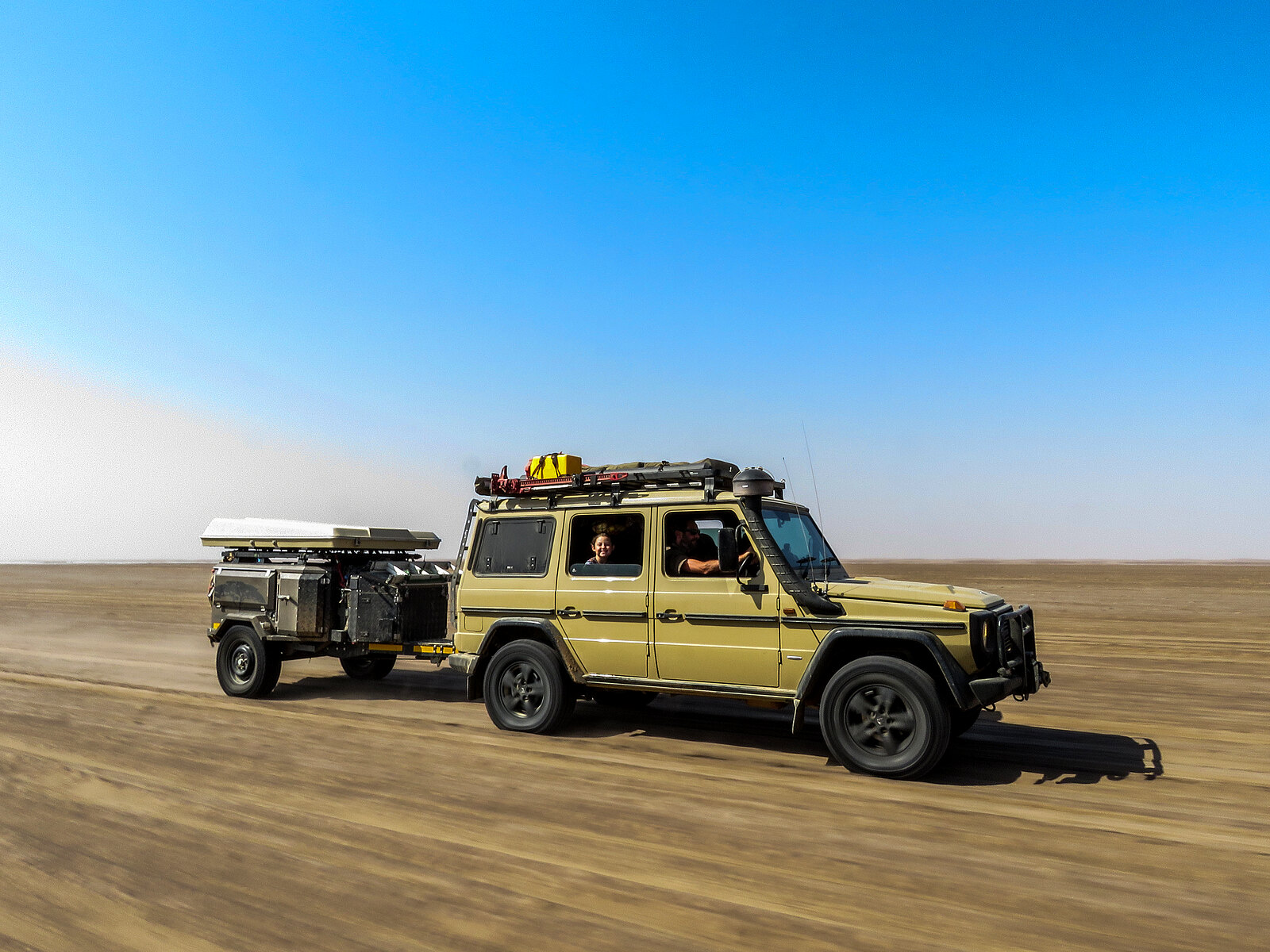
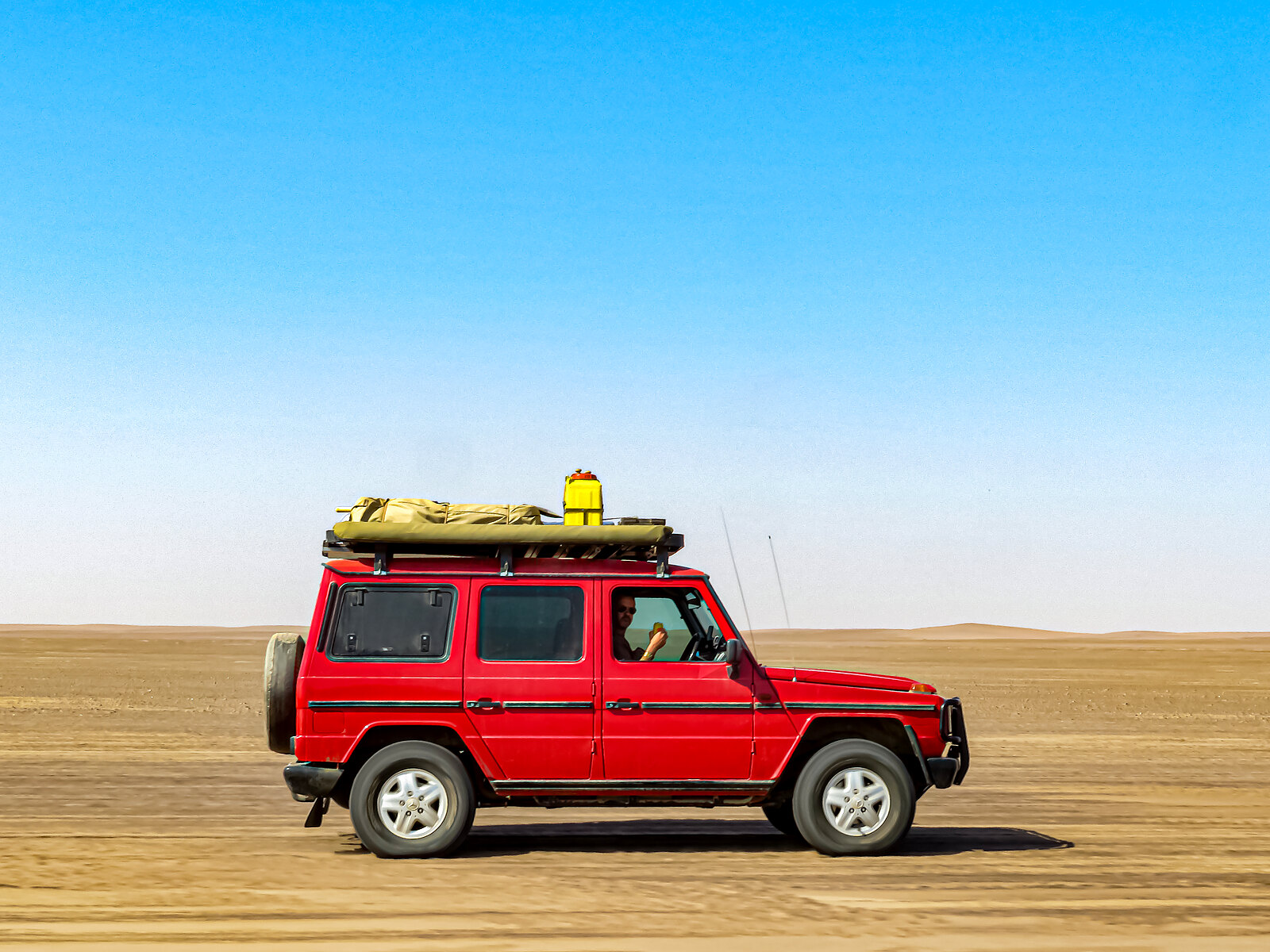
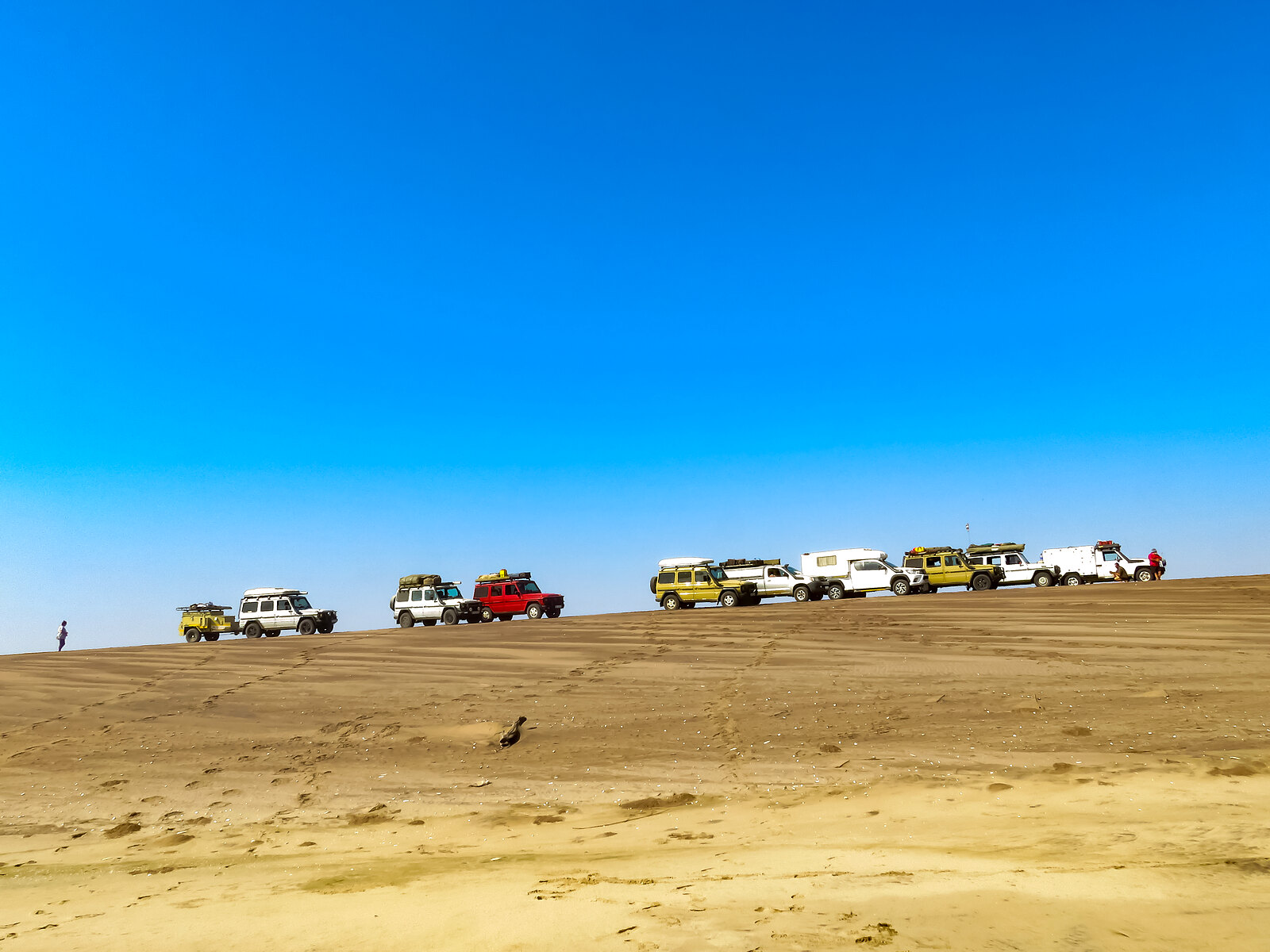
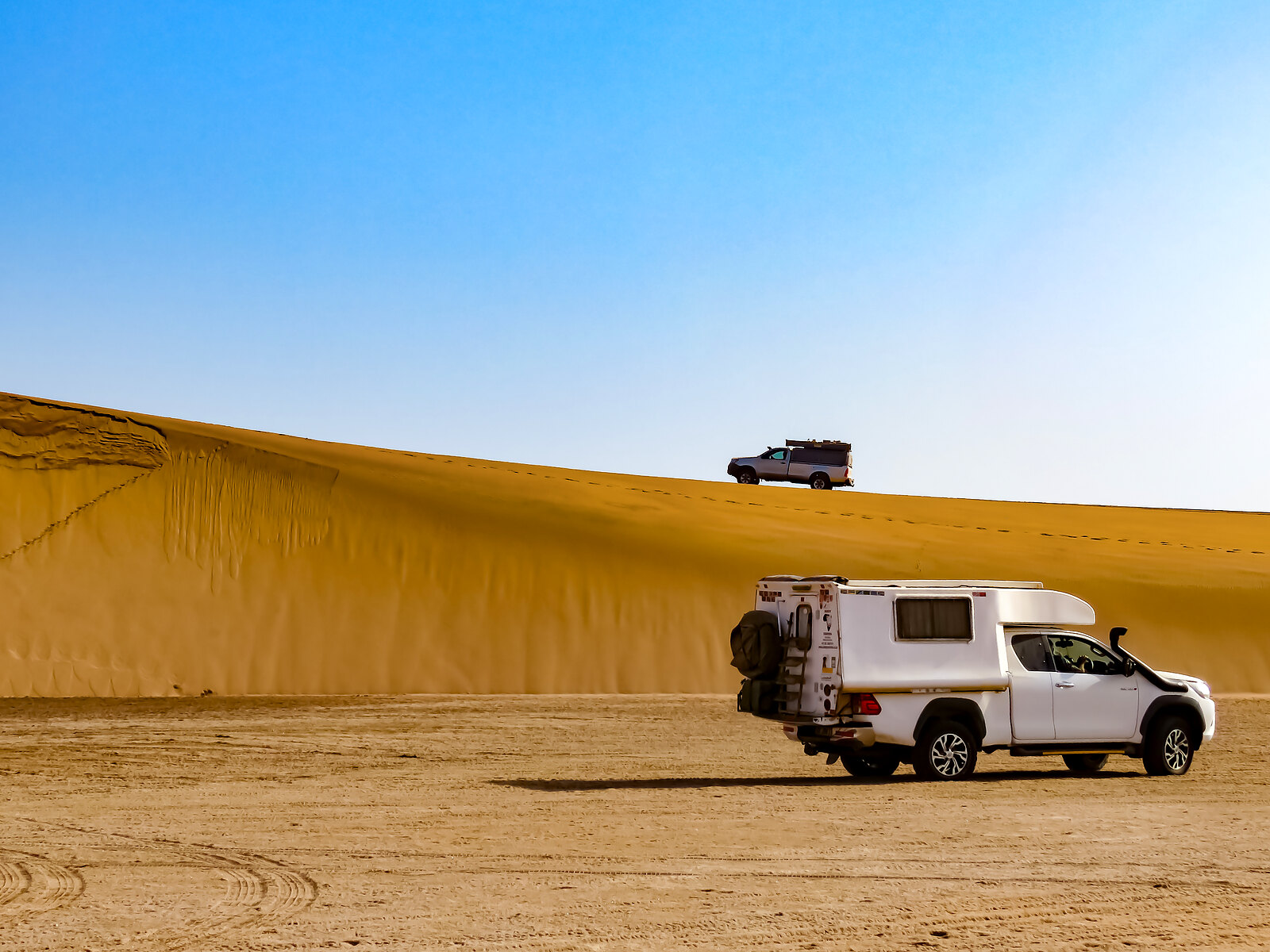
Vast, wind-scoured flats of dark gravel stretch to the horizon, broken by scattered clumps of grass and the occasional lone tree or vehicle for scale. This is where oryx and springbok drift in loose herds, and where the sheer emptiness of Iona hits hardest. Driving these plains, the eye loses all sense of distance — a truck ten kilometres off can look like a beetle.
2. The dune fields
Toward the coast and the Cunene, the Namib’s classic dune systems rise — sculpted, wind-carved and colour-shifting from pale gold at midday to deep amber at sunset. Driving experienced desert hands read the sand like water; for visitors, the dunes are the park’s most cinematic reward and the reason Iona photographs like the Namib’s untouched twin.
3. The coastal fog belt
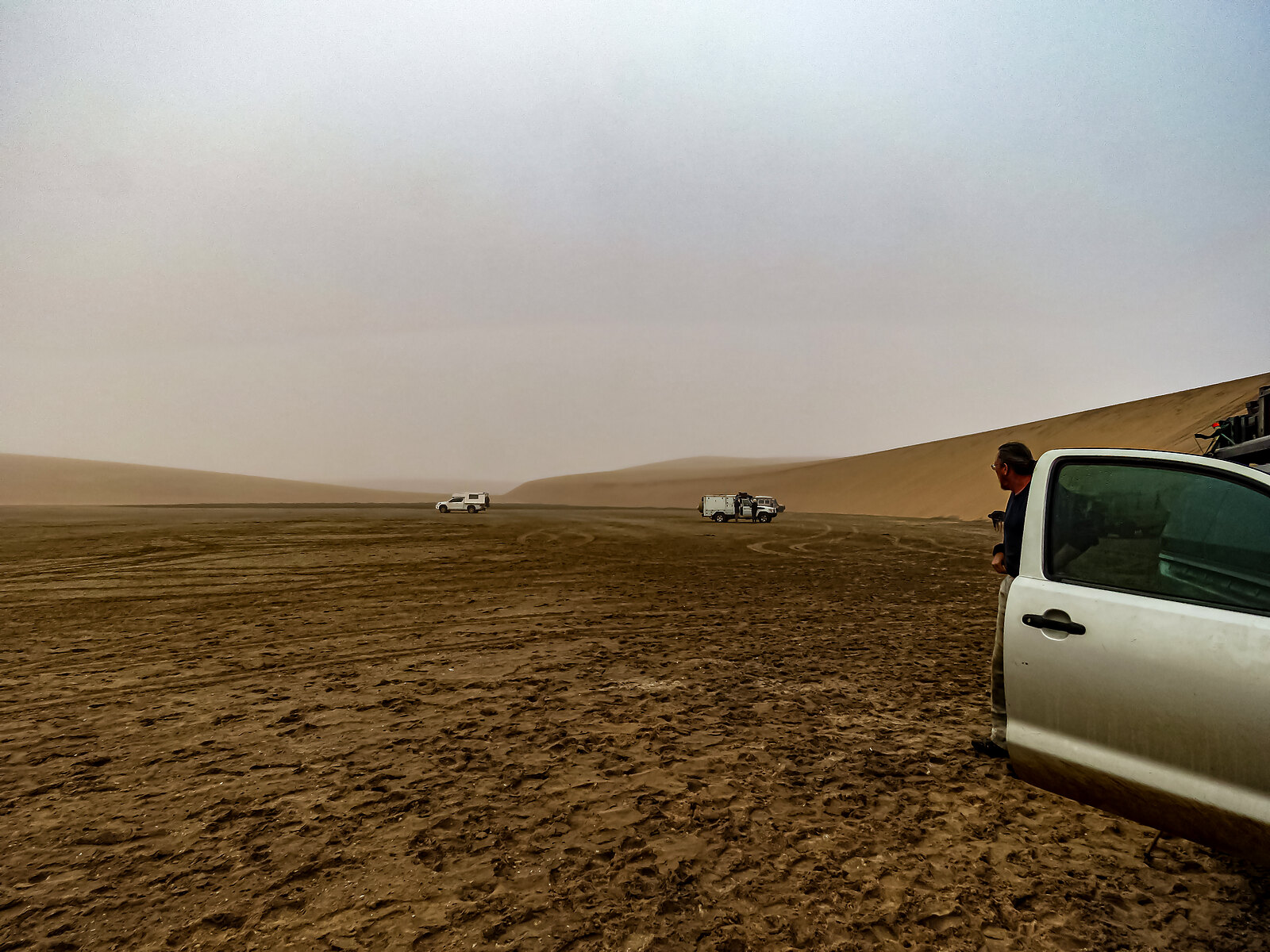
The cold Benguela Current chills the air and generates the famous Namib fog — a life-giving band of moisture that rolls inland most mornings. This fog is the secret engine of the whole ecosystem: it waters the Welwitschia, sustains lichen fields, and lets desert animals survive where rain almost never falls. On a foggy dawn the plains turn silver and every oryx becomes a silhouette.
4. The rocky escarpments and inselbergs
Inland, granite mountains and rocky ridges break the flats. This is the domain of Hartmann’s mountain zebra, which pick their way across terrain that would defeat most animals, and of raptors that ride the thermals. The escarpments also hold dry riverbeds — linear oases where a surprising amount of life concentrates.
5. The Cunene River frontier
On Iona’s southern edge, the Cunene River draws a green line between Angola and Namibia — one of the only permanent water sources in this desert world. Where the river meets the Atlantic, the contrast of freshwater, desert and cold ocean creates a dramatic, wildlife-rich frontier and a natural end-point to many Iona journeys.
Wildlife of Iona — What You Can Realistically See
Set your expectations correctly and Iona will exceed them; arrive expecting the Serengeti and you will be disappointed. This is a desert, and its wildlife is defined by extraordinary adaptation rather than density.
Plains specialists: The signature sight is the oryx (gemsbok) — a magnificent desert antelope with rapier horns, perfectly built to survive where water barely exists. Springbok move across the gravel in loose herds, pronking when startled. Both are the animals you are most likely to photograph against Iona’s vast, empty backdrops.
Mountain and rock dwellers: Hartmann’s mountain zebra, a hardy desert subspecies, work the rocky escarpments and dry riverbeds. Their presence in such terrain is one of the small miracles of Namib ecology.
Predators and scavengers: Iona’s carnivores are elusive and thrilling — brown hyena patrolling the coast and plains at dusk, black-backed jackal, and smaller cats and foxes. Sightings require patience and luck; a brown hyena at last light is a genuine trophy encounter.
Birds and reptiles: Ostriches stride the plains, raptors ride the escarpment thermals, and coastal and wetland birds gather along the Cunene. The desert also holds specialist reptiles and the extraordinary small creatures of the fog belt.
Marine life offshore: The cold Benguela Current makes Iona’s coast unexpectedly rich — Cape fur seals, dolphins and, in season, whales work the waters where the desert meets the sea. It is a safari-and-ocean combination almost no other park on the continent can offer.
Honest expectation setting: Iona is a landscape and endemics destination. Wildlife is spread thin across immense distances; you celebrate a herd of oryx in the fog, a mountain zebra on a ridge, a hyena at dusk — not a big-cat kill every drive. For the right traveller that scarcity makes each sighting unforgettable. For the wrong one it is a long way to drive for antelope. Be the right one.
The Welwitschia — Iona’s Thousand-Year-Old Living Fossil
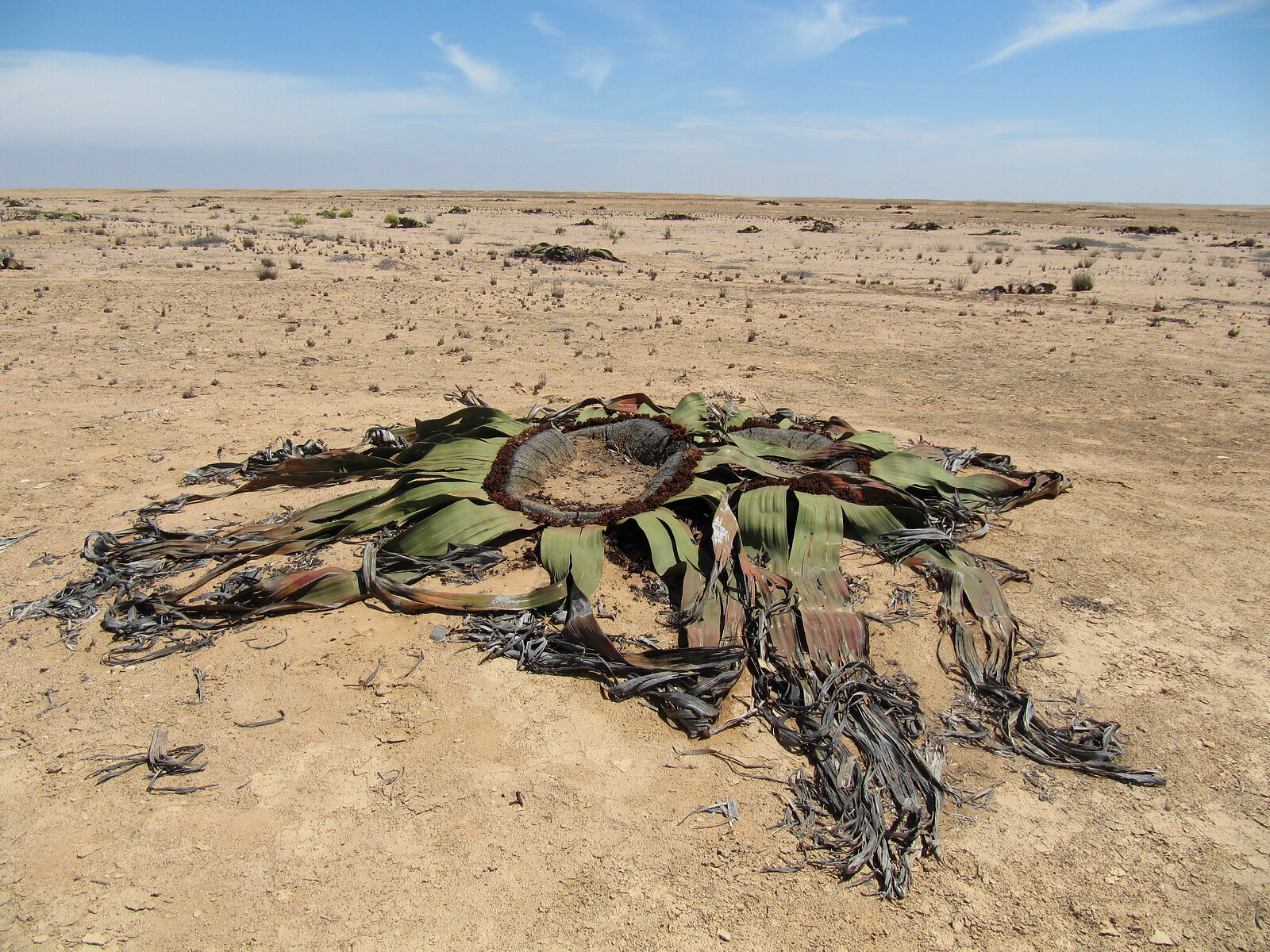
If Iona has a botanical mascot, it is Welwitschia mirabilis. This bizarre and wonderful plant grows only two leaves in its entire life — strap-like bands that split, curl and fray over the centuries into a tangled heap that can span several metres. It does not look alive so much as ancient, because it is: many Welwitschia are estimated to be over a thousand years old, and the oldest specimens may be far older still.
The Welwitschia survives on fog, not rain, drawing moisture from the Benguela mist through its leaves and shallow roots. It is a botanical link to the age of the dinosaurs, a true living fossil, and standing beside a giant, weathered plant that was already old when European cathedrals were being built is one of Iona’s quiet, profound moments. Good guides know where the finest specimens grow and treat them with the reverence they deserve — you look, you photograph, you do not touch or climb.
Signature Iona Experiences
- Dune and gravel-plain drives — long four-by-four traverses across the Namib’s shifting sands and endless flats, reading tracks and glassing for desert wildlife.
- Welwitschia walks — guided visits to ancient plants in the fog belt, one of the great botanical encounters on the continent.
- Coastal fog mornings — dawns when the Benguela mist turns the desert silver and oryx become silhouettes.
- The Namib meets the Atlantic — reaching the desert shore where dunes fall into cold surf, and Cape fur seals, dolphins and whales work the current.
- Cunene River frontier — journeying to the green ribbon of permanent water dividing Angola from Namibia.
- Star-bed desert nights — sleeping under a sky unpolluted by any city glow, with more stars than most travellers have ever seen.
- Brown hyena and dusk tracking — patient evening drives for Iona’s elusive coastal scavengers and predators.
- Landscape and astro photography — dunes, fog, inselbergs and the Milky Way over an empty desert.
Where to Stay — The Honest Reality (There Are No Lodges)
This is the single most important fact to absorb before you plan Iona: there are no luxury lodges inside the park. Anyone who tells you otherwise is selling something else. Accommodation in Iona is expedition-grade, and comes in three honest forms:
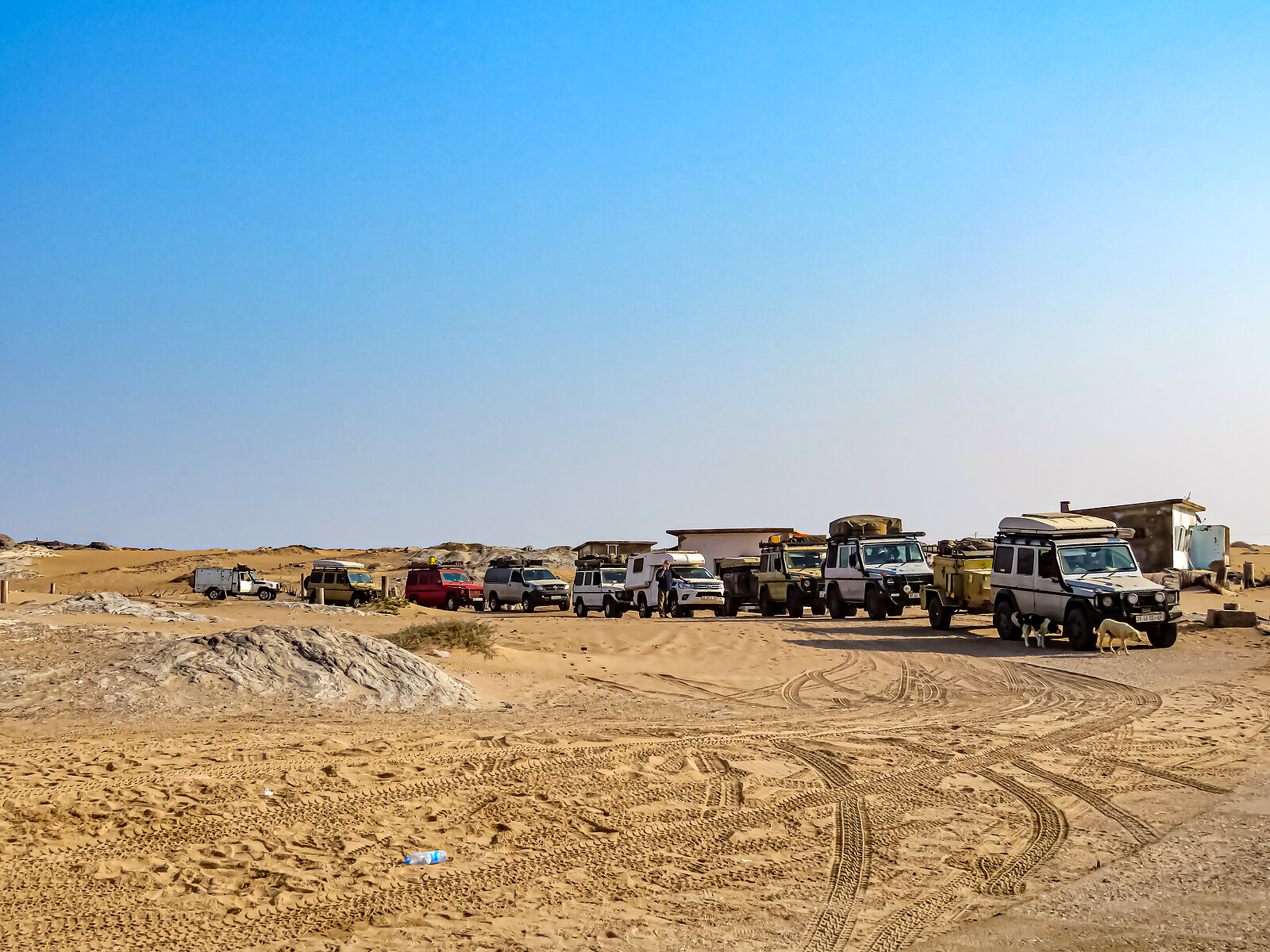
- Mobile / fly-camps — the best option for most travellers. Specialist desert operators set up quality canvas camps that move with your route, with proper bedding, a mess tent, a camp kitchen and, crucially, skilled guides and full logistics. Comfort here is measured in expertise and safety, not thread count.
- Self-sufficient 4x4 camping — for experienced, fully equipped overlanders travelling in convoy, carrying their own fuel, water, food and recovery gear. This is genuine self-reliance in one of Africa’s most remote parks and is not a casual undertaking.
- Namibe / Moçâmedes bases — the coastal city of Namibe, gateway to the park, has simple hotels and guesthouses. Most itineraries use Namibe to bookend the expedition with a bed, a shower and resupply before and after the desert.
Because there is no fixed luxury inventory, the quality of your Iona trip depends almost entirely on your operator and guide, not on a lodge brand. We design Iona journeys around the best desert outfits and mobile-camp specialists — the people who own the vehicles, know the fog, read the sand and carry the medical and recovery kit that makes remote desert travel safe. That is where the value is, and where a cheap quote quietly cuts corners.
Getting There & Around
Iona’s remoteness is part of its magic and the main planning challenge. The route in:
- International: fly into Luanda (Aeroporto Internacional 4 de Fevereiro, LAD), Angola’s capital and main gateway, typically via Lisbon, Johannesburg, Addis Ababa or other hubs. Arrange your Angola visa in advance.
- Domestic: take a domestic flight from Luanda south to Namibe (Moçâmedes), the coastal city that serves as the gateway to Iona.
- Overland: from Namibe it is roughly a 200-kilometre four-by-four journey south into the park. This is not a highway transfer — it is the beginning of the expedition, across increasingly wild desert terrain.
- Charters: light-aircraft charters can shorten the overland leg or link Iona into a wider Angola circuit, at additional cost.
Inside the park there are no fuel stations, no shops and no reliable phone signal. Everything you need must travel with you. This is why Iona is sold as a guided, packaged expedition rather than a self-assembled trip — the logistics are the safari.
Best Time to Visit Iona
- Dry season (May–October): the prime window. Firmer tracks, more reliable access, cooler daytime travel and the classic clear desert light. June to September is the sweet spot for most expeditions.
- Coastal fog year-round: the Benguela mist can blanket mornings in any month — atmospheric and beautiful, but pack warm layers even in a desert. Days can be hot; dawns can be genuinely cold.
- Wet season (November–April): the Namib receives very little rain even now, so the desert itself stays accessible, but supporting roads and logistics elsewhere in the region can be harder, and heat builds. Specialist trips still run.
Because Iona is about landscape and desert-adapted wildlife rather than migratory spectacle, timing is driven more by travel comfort and logistics than by animal movements. The dry season simply makes a hard place a little kinder.
How Much Does an Iona Expedition Cost?
Iona is priced by logistics, remoteness and specialist guiding — not by lodge luxury, because there is none. Realistic 2026 budgets for the Iona leg:
- 5–7 day guided Iona expedition: roughly USD 3,000–$6,000 per person, covering 4x4s, guiding, mobile camping, fuel, water and park logistics.
- Domestic flights (Luanda–Namibe): additional, and charters into the deep desert more so.
- Luanda and Namibe hotel nights (pre/post): budget business-hotel rates on either side of the expedition.
- Wider Angola circuit: combining Iona with Kissama, Kalandula Falls or Giant Sable tracking pushes the whole trip into the USD 8,000–$20,000 range covered in our Ultimate Angola guide.
Always demand a line-item quote. In a place with no fixed lodges, the difference between a safe, well-equipped expedition and a risky, under-resourced one hides in the details — vehicle numbers, recovery gear, water reserves, guide-to-guest ratio and evacuation cover. If a quote looks dramatically cheap, ask what safety margin was removed.
Iona vs Etosha vs Skeleton Coast vs Kgalagadi
Iona is best understood against the desert and semi-desert parks travellers already know:
| Feature | Iona (Angola) | Etosha (Namibia) | Skeleton Coast (Namibia) | Kgalagadi (SA/Botswana) |
|---|---|---|---|---|
| Signature draw | Namib meets Atlantic, total solitude, Welwitschia | Waterhole game viewing, high density | Shipwreck desert coast, dunes, seals | Red dunes, predators, black-maned lions |
| Wildlife density | Low — desert-adapted specialists | High — classic big game | Low — desert specialists | Moderate — excellent predators |
| Infrastructure | None inside — expedition camping only | Excellent — lodges and camps | Limited — fly-in camps | Good — rest camps and lodges |
| Crowds | Almost none | Moderate–high in peak | Low | Low–moderate |
| Best for | Adventurous wilderness & landscape seekers | First-timers wanting reliable game | Fly-in desert-coast exclusivity | Predator and dune photographers |
The closest cousin is Namibia’s Skeleton Coast — the same Namib desert-and-ocean system, across the Cunene. The difference is that Iona is emptier, wilder and far less developed. Many desert connoisseurs pair the two into one epic Namib journey.
Sample Iona Expedition — 6 Nights
- Day 1 — Luanda: arrive, overnight, briefing and final logistics.
- Day 2 — Namibe (Moçâmedes): fly south to the coast; provision, meet the expedition team, overnight in Namibe.
- Day 3 — into Iona: the ~200 km four-by-four journey south into the park; first camp on the gravel plains under the stars.
- Day 4 — dunes & fog belt: dune traverses, Welwitschia walks and desert wildlife on the plains; mobile camp deeper in the park.
- Day 5 — the coast & Cunene: reach the desert shore where the Namib meets the Atlantic and journey toward the Cunene River frontier; seals, dolphins and desert-coast drama.
- Day 6 — return to Namibe: a final desert dawn, then the drive out; hot shower and a real bed in Namibe.
- Day 7 — onward: fly Namibe → Luanda for international connections, or continue into a wider Angola or Namibia circuit.
Iona pairs beautifully with Kissama National Park for elephants near Luanda, with a Malanje extension for Kalandula Falls and Giant Sable, or with a Namibian desert extension across the Cunene. We build every Iona journey privately around charter availability and desert conditions.
Visas, Health & Practicalities
- Visa: most travellers need an Angola visa arranged in advance. Start early; your operator provides invitation support where required.
- Yellow fever: a valid yellow fever vaccination certificate is mandatory for entry. Carry the physical card.
- Malaria: the desert itself is low-risk, but risk exists elsewhere in Angola — take advice and prophylaxis for your full routing.
- Insurance: comprehensive travel insurance with medical evacuation is non-negotiable given Iona’s remoteness and distance from hospitals.
- Water & heat: the biggest real risks in Iona are environmental — dehydration, heat, soft-sand vehicle trouble and distance from help. Travel in convoy, carry generous water reserves, and never split from the group.
- Money: the kwanza (AOA) is local currency; USD is widely referenced in tourism pricing. Carry cash — there is nothing to spend it on in the park, but everything before and after runs on it.
- Language: Portuguese is the official language; English is limited outside tourism. Quality guiding teams bridge the gap.
- Connectivity: assume no signal inside the park. Satellite communication is carried by serious operators for emergencies.
What to Pack for Iona
- Neutral, lightweight long sleeves and trousers for sun protection.
- A warm fleece or down layer and windproof shell — cold Namib fog mornings are real.
- Broad-brim hat, high-SPF sunscreen and quality sunglasses (desert glare is fierce).
- Buff or scarf for wind-blown sand and dust.
- Broken-in closed shoes or boots plus camp sandals.
- Refillable water bottles and lip balm — hydration is safety here.
- Binoculars (8x or 10x), camera with serious dust protection, blower brush and spare batteries.
- Headtorch, power bank, universal adaptor.
- Personal medical kit including oral rehydration and blister care.
- Soft-sided duffel for charters and 4x4 packing — no hard suitcases.
Leave the hard-shell luggage, the daily-laundry expectations and the reliable-Wi-Fi assumptions at home. Iona rewards travellers who pack like an expedition, not like a resort.
Conservation — Protecting a Fragile Giant
Iona is enormous, ancient and surprisingly fragile. Decades of civil war left Angola’s parks under-resourced, and the desert’s slow-growing life — Welwitschia, lichen fields, delicate plains vegetation — recovers over centuries, not seasons. Vehicle tracks in the gravel can scar the landscape for decades; a crushed Welwitschia is a millennium undone.
Responsible tourism, even at Iona’s tiny visitor volumes, helps keep the park on the national and international radar, supports the case for management and anti-poaching, and gives local communities a stake in protecting rather than exploiting the wilderness. Transfrontier thinking increasingly links Iona with Namibia’s adjoining desert parks along the shared Cunene and Namib systems.
Travel lightly here. Stay on established routes, never drive over Welwitschia or lichen fields, take all waste out, keep a respectful distance from wildlife, and choose operators who pay park fees transparently and employ and train local Angolan guides. The emptiness that makes Iona magical is also what makes it vulnerable.
A Day on Expedition in Iona
The day starts colder than you expect. Coastal fog can sit on the desert until mid-morning, and you wake in canvas to a world drained of colour — grey plains, grey sky, the shapes of oryx moving like rumours through the mist. Coffee is brewed on a camp stove; there is no dining deck, no menu, just the enormous quiet of the Namib and the smell of dust and sea.
As the fog burns off, the expedition rolls out across the gravel. Your guide reads tracks in the soft sand, stops for a Welwitschia that looks prehistoric because it is, and times the run toward the dunes for when the light turns from flat white to warm gold. Lunch is a shaded stop in the lee of a vehicle or an inselberg, not a lodge. The afternoon belongs to longer traverses — toward the coast where dunes fall into cold surf, or the Cunene’s green ribbon, or a ridgeline where mountain zebra pick their way across the rock.
Evening is the reward. Camp goes up as the sun drops, the sky ignites, and the temperature falls fast. Dinner is simple and good. Then the real spectacle: a night sky so dense with stars it feels physical, the Milky Way arched over an empty desert, and somewhere out in the dark, perhaps, a brown hyena working the plains. There is no signal, no glow of any city, no sound but the wind. Iona gives you the thing modern travel has almost erased — genuine, humbling wilderness — and it does not ask you to dress it up.
Photography — Why Iona Is a Landscape Dream
Iona rewards landscape and light photographers above all. The park offers horizontal drama that few places can match: dune lines against fog banks, oryx as silhouettes on silver plains, the metallic light where cold ocean meets warm sand, and inselbergs glowing at last light. Bring a wide angle for the scale and a longer lens for the desert wildlife and the compression of distant dunes.
Dust is relentless — sealed bags, a blower brush and minimal lens changes matter more than a second body. The fog belt gives soft, moody dawns; midday is harsh and best spent travelling; the golden hours are extraordinary. And because there is zero light pollution, Iona is a world-class astrophotography location — pack a tripod-capable setup and shoot the Milky Way over the dunes. Confirm drone rules before you travel; use in national parks is typically restricted or prohibited.
Who Should Go — and Who Should Wait
Go to Iona if you: have safaried before and want something scarcer and wilder; love deserts, landscapes and endemic species more than guaranteed predators; are comfortable with expedition camping and real remoteness; are reasonably fit and adaptable; and value solitude over service.
Choose Etosha, the Kgalagadi or a Namibian lodge circuit instead if you: are on a first safari and want high wildlife density; need lodges, pools and daily comfort; are travelling with very young children or anyone needing medical proximity; or are uneasy with long distances, rough travel and total disconnection.
Iona is a destination for the adventurous heart. It is not the easiest safari in Africa, and it is emphatically not the most comfortable. It may, however, be the most unforgettable — the kind of place that recalibrates what you think wilderness means.
Our Honest Take
We will not oversell Iona, because it does not need it and because the wrong traveller here has a miserable time. There are no lodges. There is no spa, no pool, no reliable signal, no fine-dining deck. Wildlife is thin and hard-won. The drives are long, the heat is real, the fog is cold, and help is far away. If any of that sounds like a dealbreaker, book Etosha and be happy.
But if you have stood on the classic circuits and felt the itch for something the guidebooks have not colonised — if the idea of an empty Atlantic desert shore at dawn, oryx in the fog, a thousand-year-old plant and a sky drowning in stars stirs something in you — then Iona is one of the greatest wildernesses left on the planet. It is Angola’s crown jewel, the flagship of a country only now reopening to travellers, and for now you can have it almost entirely to yourself.
Come with patience, humility, a good operator and a spirit of adventure. Leave with sand in your boots, silence in your head, and photographs no one else you know will be able to place on a map. That is the Iona promise, and it is real.
Frequently Asked Questions
Where is Iona National Park?
In the far southwest of Angola, in Namibe Province — bordered by the Atlantic to the west and the Cunene River (the Namibia border) to the south. It sits at the northern end of the Namib Desert, about 200 km south of the coastal city of Namibe (Moçâmedes).
How big is Iona National Park?
Approximately 15,150 square kilometres — Angola’s largest national park, protecting the northern reaches of the Namib, the world’s oldest desert, where it meets the cold Atlantic.
What wildlife can you see in Iona?
Desert-adapted species: oryx (gemsbok), springbok, Hartmann’s mountain zebra, ostrich, brown hyena and black-backed jackal. Offshore the cold Benguela Current supports Cape fur seals, dolphins and seasonal whales. It is a landscape-and-endemics park, not a Big Five destination.
What is the Welwitschia plant?
Welwitschia mirabilis is an ancient Namib plant that grows just two leaves for its entire life and can live over a thousand years. It survives on fog rather than rain, and Iona’s fog belt is one of the places to see it in Angola — a true living fossil.
Are there lodges in Iona National Park?
No. There are no luxury lodges inside Iona. Visits are expedition-style — mobile or fly-camping, or fully self-sufficient 4x4 camping. The gateway city of Namibe has simple hotels to bookend the trip. Quality comes from your operator and guide, not a lodge brand.
How do you get to Iona?
Fly into Luanda (LAD), take a domestic flight to Namibe (Moçâmedes), then travel roughly 200 km south by 4x4 into the park. Charters can shorten the overland leg. Independent self-drive is only for very experienced desert travellers in convoy.
When is the best time to visit Iona?
May to October (dry season) for firmer tracks, cooler travel and reliable access, with June to September the sweet spot. Coastal fog can occur year-round, so pack warm layers even in the desert.
How much does an Iona expedition cost?
Roughly USD 3,000–$6,000 per person for a 5–7 day guided Iona expedition (4x4s, guiding, camping, fuel, logistics). Domestic flights, Luanda hotels and a wider Angola circuit are extra and can raise the total into the USD 8,000–$20,000 range.
Can you see the Giant Sable antelope in Iona?
No. The Giant Sable survives only in Angola’s central highlands — Cangandala National Park and the Luando Reserve in Malanje province — not in Iona. Iona’s signature species are desert-adapted oryx, springbok, mountain zebra and brown hyena.
How does Iona compare to the Skeleton Coast and Etosha?
Iona protects the same Namib desert-and-coast system as Namibia’s Skeleton Coast, but emptier and far less developed. Etosha is a classic high-density waterhole park with good lodges; Iona is raw wilderness of landscape, endemics and solitude. Many travellers combine Iona with a Namibian desert extension across the Cunene.