Key Takeaways — Karera Falls (Chutes de la Karera)
- What: Burundi's most spectacular waterfall — a four-tier cascade system.
- Where: Rutana Province, southeastern Burundi (~130-140 km / 3-4 hours from Bujumbura).
- Height: ~140 m total drop across four named falls (Nyakayi I & II, Mwaro, Karera).
- Setting: Highland forest at ~1,700 m — eucalyptus, wild fig, ferns and orchids.
- Activities: Short hikes between viewpoints, footbridges, natural pools, photography, picnics.
- Best Time: January–May for peak flow & rainbows; June–September for easy, dry hiking.
- Entry: ~10,000 BIF (~$5-10 USD); local guide ~$5-10.
- Combine With: Source of the Nile monument & the Nyakazu Fault (German Rift) nearby.
Why Visit Karera Falls?
Ask any Burundian to name the country's most beautiful natural sight, and sooner or later the answer is the same: Karera. Tucked into the green highlands of Rutana Province in the southeast, the Chutes de la Karera are a cluster of four waterfalls that spill down a staircase of ancient granite, throwing spray and rainbows into the forest air. Together they fall roughly 140 metres — making Karera comfortably the most spectacular waterfall in Burundi.
What makes Karera special is not just the drop, but the setting. The falls are woven together by shady footpaths, little wooden bridges and stone steps, so you can wander from one cascade to the next beneath a canopy of eucalyptus and wild fig, past ferns, orchids and the constant sound of falling water. There are natural pools cool enough to still the heat of the day, mossy boulders draped in green, and quiet picnic spots with views straight onto the water.
For travelers building a Burundi itinerary around the royal drummers of Gishora, the Source of the Nile, and the beaches of Lake Tanganyika, Karera is the country's natural crescendo — an easy, uncrowded highland escape that shows Burundi at its most serene and cinematic.
Karera Falls — At a Glance
| Attribute | Details |
|---|---|
| Local Name | Chutes de la Karera (Karera Falls) |
| Type | Four-tier waterfall system |
| Total Drop | ~140 m across four cascades |
| Named Falls | Nyakayi I, Nyakayi II, Mwaro, Karera |
| Location | Rutana Province, southeastern Burundi (near Musongati) |
| Elevation | ~1,700 m (highland forest) |
| Distance from Bujumbura | ~130-140 km / 3-4 hours (via Gitega & Rutana) |
| Distance from Rutana town | ~40 km |
| Entry Fee | ~10,000 BIF (~$5-10 USD) |
| Best Time | Jan–May (peak flow) / Jun–Sep (dry, easy hiking) |
| Time Needed | 2-3 hours on site; a full day from Bujumbura |
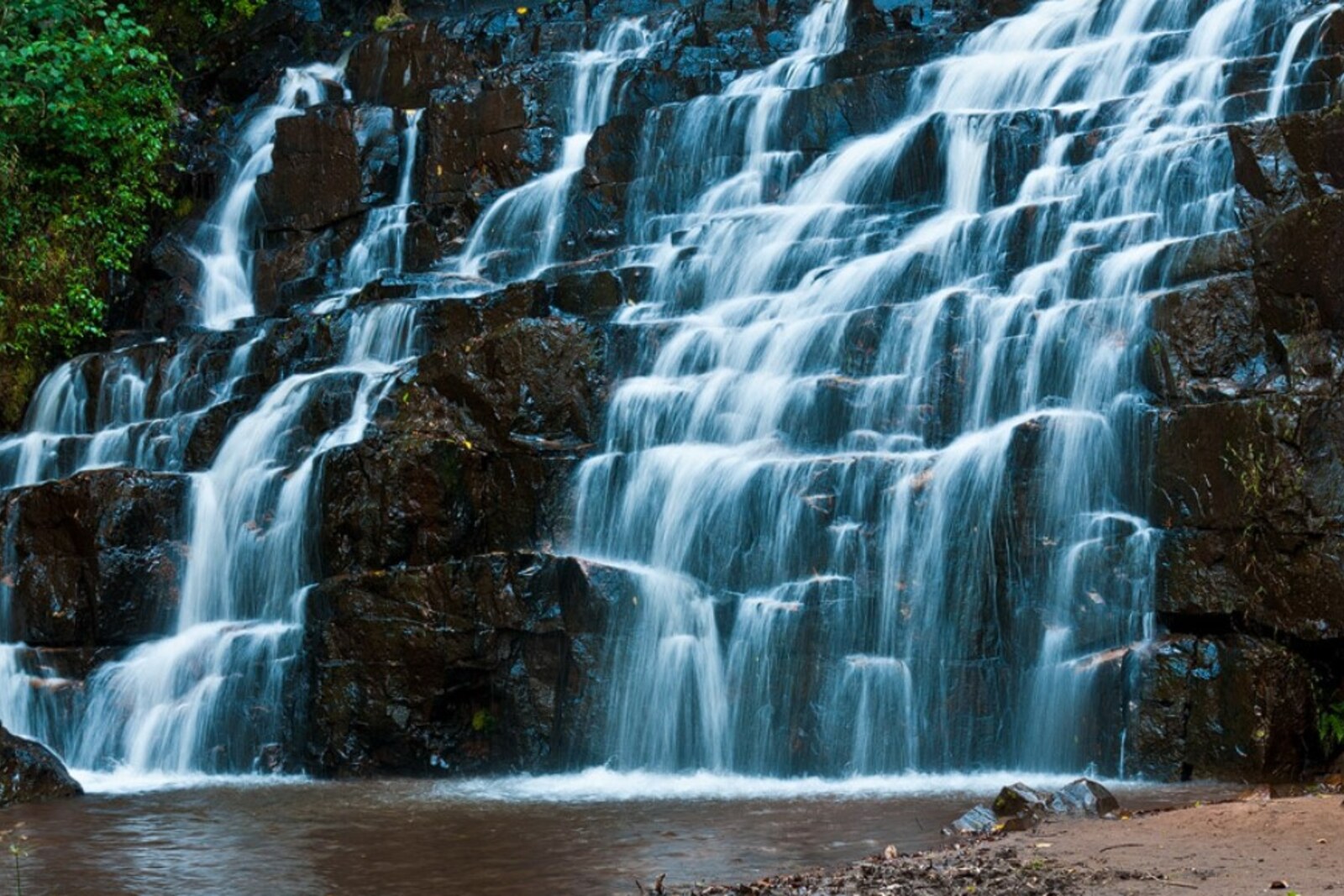
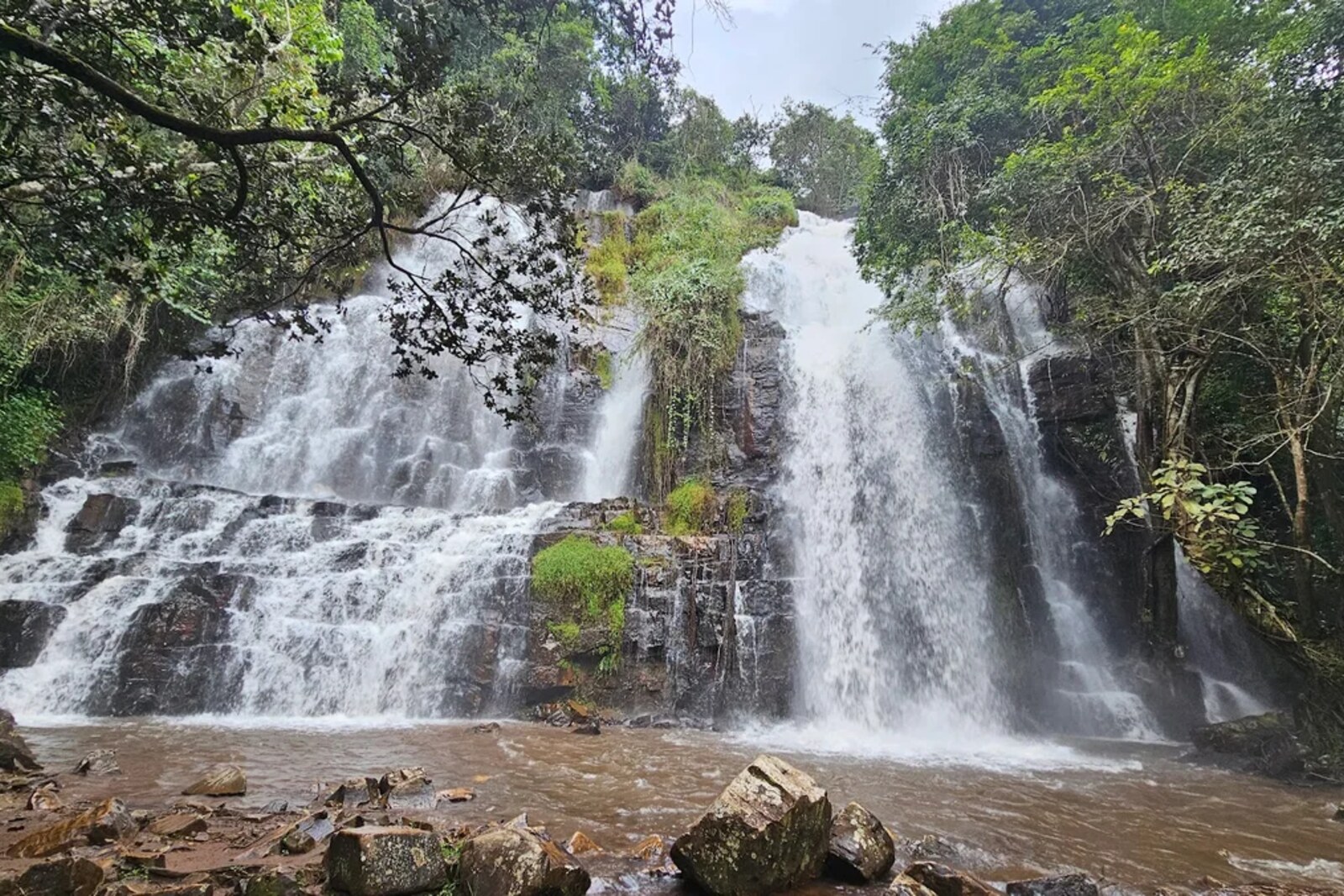
The four cascades each have their own character. The upper falls arrive as narrow ribbons through the trees; the middle tiers fan out across broad rock shelves; and the main Karera drop is the widest and most photogenic, curtains of white water sliding over dark granite into a pool below. Local guides can name each one and share the folklore attached to them — the hills around Karera have long been considered a place where spirits gather.
The Four Cascades of Karera
Karera is often described as "five waterfalls in one place" because of the way the tiers braid and split depending on the season. The four principal named falls are:
- Nyakayi I — one of the upper cascades, a clean vertical ribbon dropping into the forest.
- Nyakayi II — a companion fall close to the first, often merging with it in flood.
- Mwaro — a broader, stepped cascade fanning over rock shelves.
- Karera — the main event: the widest, tallest and most powerful drop, and the source of the whole system's name.
All three of the upper falls eventually pour into the same catchment before the water gathers and plunges over the main Karera cascade — which is why, in the rainy season, the whole hillside seems to be running with white water at once.
Things to Do at Karera Falls
1. Walk the Waterfall Trail
A network of well-trodden footpaths, stone steps and small footbridges connects the four cascades. The full circuit is short — most visitors complete it in 1-2 hours at a relaxed pace — but it takes you through changing forest, across streams, and to a series of viewpoints, each framing a different fall. Grippy shoes are essential; the rocks and steps stay wet from the spray.
2. Chase the Rainbows
On sunny mornings, sunlight catching the mist at the base of the main falls creates vivid rainbows in the spray. Photographers should arrive early (8-10 AM) when the sun is at the right angle and the light is soft — this is Karera at its most magical.
3. Cool Off in the Natural Pools
Shallow pools form at the foot of some of the lower cascades, and on a hot day it's tempting to wade in and cool your feet. Enjoy them carefully — rocks are slippery and currents pick up after rain. Ask your guide which pools are safe on the day.
4. Picnic in the Forest
There are shaded clearings and simple picnic spots near the falls. Bring your own food and water (there are few facilities on site), spread out under the trees, and let the sound of the water do the rest. It's one of the most peaceful lunch stops in Burundi.
5. Photography & Birdwatching
Beyond the falls themselves, the surrounding forest is alive with birds and butterflies. Bring binoculars and a long lens — sunbirds, weavers and forest species flit through the canopy, and the mossy rocks and ferns make gorgeous foregrounds for waterfall photography.
Best Time to Visit Karera Falls
| Season | Months | What to Expect |
|---|---|---|
| Long Rains | March – May | Peak flow — the falls thunder at full power, mist and rainbows at their best. Trails muddy and slippery; roads harder. |
| Long Dry Season | June – September | Easiest hiking, clear skies, comfortable temperatures. Cascades gentler but still lovely; best for combining multiple sites. |
| Short Rains | October – December | Water flow rebuilding, green landscapes, fewer visitors. Occasional afternoon showers. |
| Short Dry / Early Rains | January – February | Strong flow building toward the long rains; a good balance of dramatic water and workable weather. |
Recommendation: For the most dramatic Karera — full-flood cascades and rainbows — aim for January to May. For the easiest, driest hiking and the best chance of combining Karera with nearby sights in one trip, choose June to September. Whatever the season, come in the morning for the best light.
How to Get to Karera Falls
From Bujumbura
Karera is roughly 130-140 km southeast of Bujumbura, a 3-4 hour drive via Gitega and Rutana. The main roads are surfaced, but the final approach to the falls is on dirt tracks — a 4x4 is strongly recommended, especially in the wet season. Most visitors hire a private vehicle with a driver-guide for a full-day excursion.
From Rutana Town
If you're already in the southeast, the falls are about 40 km from Rutana town (under an hour). This makes Karera an easy addition to a southeastern Burundi loop.
Guides & Entry
Pay the modest entry fee (~10,000 BIF / $5-10) at the site. Hiring a local guide (~$5-10) is well worth it — they know the safe paths between cascades, the best viewpoints, and the folklore of each fall. Carry cash in Burundian francs; there are no card facilities.
Combine Karera With Nearby Highlights
Source of the Nile (Rutovu)
The southernmost source of the Nile, marked by the Caput Nili pyramid monument, lies in the same southeastern highlands — an easy pairing with Karera on a longer loop. See our Source of the Nile Burundi guide.
The Nyakazu Fault (Failles de Nyakazu / German Rift)
A dramatic escarpment and viewpoint over the Kumoso plain toward Tanzania, the Nyakazu Fault is one of Rutana's other great scenic stops and often visited on the same day as Karera.
Ruvubu National Park
Burundi's largest park — hippos, elephants and boat safaris — is within reach to the north. See our Ruvubu National Park guide.
Gishora Royal Drummers
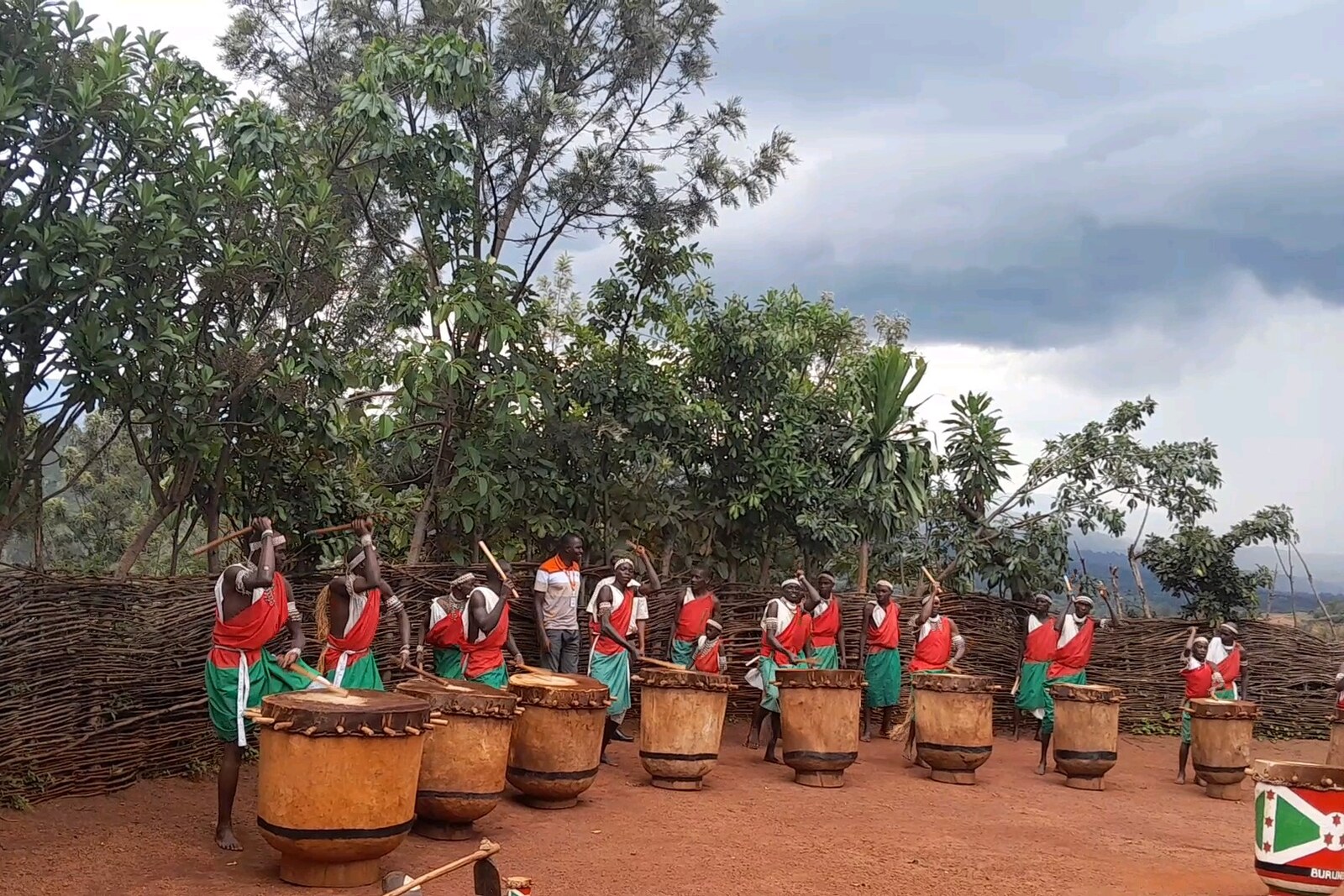
Near Gitega, on the road back to Bujumbura, the UNESCO-recognized Royal Drummers of Burundi at Gishora make a thunderous cultural counterpoint to Karera's natural spectacle.
Sample Itineraries Featuring Karera Falls
1-Day: Karera Falls from Bujumbura
- 06:00 — Depart Bujumbura by private 4x4, southeast via Gitega.
- 09:30 — Arrive Karera, meet guide, walk the cascade circuit (rainbows in morning light).
- 12:00 — Forest picnic beside the falls.
- 13:00 — Optional detour to the Nyakazu Fault viewpoint.
- 14:30 — Return to Bujumbura, arriving early evening.
2-Day: Southeastern Burundi Loop
Day 1: Bujumbura → Gitega (Gishora Royal Drummers) → Rutana → overnight in Rutana/Gitega.
Day 2: Karera Falls (morning) → Source of the Nile monument → Nyakazu Fault → return to Bujumbura.
3-Day: Highlands, Wildlife & Water
Day 1: Bujumbura → Gitega → Gishora → Ruvubu National Park (overnight near park).
Day 2: Ruvubu boat safari & game drive → drive south → overnight Rutana.
Day 3: Karera Falls → Source of the Nile → return to Bujumbura & Lake Tanganyika sunset.
Where to Stay Near Karera
There is no accommodation at the falls themselves. Most visitors base in Gitega or Bujumbura, or overnight simply in Rutana.
- Rutana: Basic guesthouses in town for those breaking the journey (~$20-40/night).
- Gitega (~150 km): Hotel Tropitel and mid-range guesthouses ($40-80/night) — a convenient halfway base.
- Bujumbura: Lakefront hotels such as Hotel Club du Lac Tanganyika and Tanganyika Blue Bay Resort ($80-180/night) for the start and end of the trip.
What to Bring
- Grippy footwear — trails and rocks stay wet and slippery from the spray.
- Light rain jacket — you will get misted near the main falls.
- Cash (Burundian francs) — for entry, guide and tips; no card facilities.
- Water & a picnic — few facilities on site.
- Camera with a cloth — to wipe spray off the lens; a polarizing filter helps.
- Insect repellent & sun protection — highland sun is strong, mosquitoes present.
- Binoculars — for the forest birdlife around the falls.
Safety & Responsible Visiting
Karera is a much-loved local excursion and generally a straightforward, rewarding visit — but a little care goes a long way in a remote highland setting:
- Go with a guide: The connecting paths cross wet rock and streams; a local guide keeps you on the safe routes and to the best viewpoints.
- Mind the edges: Keep well back from cliff edges and the tops of the falls, where footing is treacherous.
- Swim only where advised: Currents strengthen after rain — ask which pools are safe and never swim alone.
- Check advisories: Review your government's current travel advice for Burundi before you travel, and use a reputable operator who monitors local conditions.
- Health: A yellow fever vaccination certificate is required to enter Burundi; malaria prophylaxis and insect repellent are recommended.
- Drive by day: Highland roads are winding and the final tracks are rough — travel in daylight and avoid night driving.
Final Thoughts — Burundi's Wild Heart Made Visible
Karera Falls is the kind of place that stays with you: the cool of the forest, the roar building as you round the last bend, the sudden curtain of white water sliding over black granite, and — if the morning is kind — a rainbow hanging in the spray. For a country still finding its feet on the tourist map, Karera is a reminder of just how much natural beauty Burundi holds.
Pair it with the drums of Gishora, the pyramid at the Source of the Nile, the hippos of Ruvubu and the sunsets of Lake Tanganyika, and you have a Burundi journey that no one back home will have taken. Karera is Burundi's wild heart, made visible — unhurried, unspoiled, and utterly unforgettable.
Come stand where the water meets the light.