Key Takeaways
- The Big Five are lion, leopard, elephant, Cape buffalo and rhino — five very different encounters, not a single event.
- In a strong reserve, seeing all five on a four- to six-day safari is the normal outcome, not a stroke of luck.
- Leopard and rhino are the two that test your patience; the private Sabi Sand reserves solve the leopard, and reserve choice settles the rhino.
- South Africa is the most reliable country, with malaria-free Big Five country in the Eastern Cape and Madikwe.
- Four full days is the working minimum; five to seven turn a likely tally into a near-certain one.
A Big Five safari is one of the few travel ideas that lives up to the phrase. It is not a single moment but five of them, each completely different in feel — the stillness of a leopard you almost missed, the ground-shaking arrival of a buffalo herd, the quiet enormity of an elephant at arm's length from the vehicle. This guide walks through each of the five in turn: what the encounter is actually like, where it tends to happen, and the honest odds of logging it. Then it shows how the whole set comes together on one well-planned journey.
What "the Big Five" actually means
The term is older than photographic safaris. It began as a hunters' phrase for the five animals considered the most difficult and dangerous to pursue on foot: lion, leopard, elephant, Cape buffalo and rhino. The grouping had nothing to do with size — the hippo and giraffe are both larger than a leopard — and everything to do with how the animal behaved when cornered.
When the rifle gave way to the camera, the name stuck. Today the Big Five is the informal checklist almost every first-time guest arrives with, and a useful one: find all five and you have moved through open plains, dense riverine thicket, water's edge and rocky koppie, and seen the full cast of Africa's large mammals along the way. The five are a route through the whole ecosystem as much as a list of animals.
The lion — what to expect
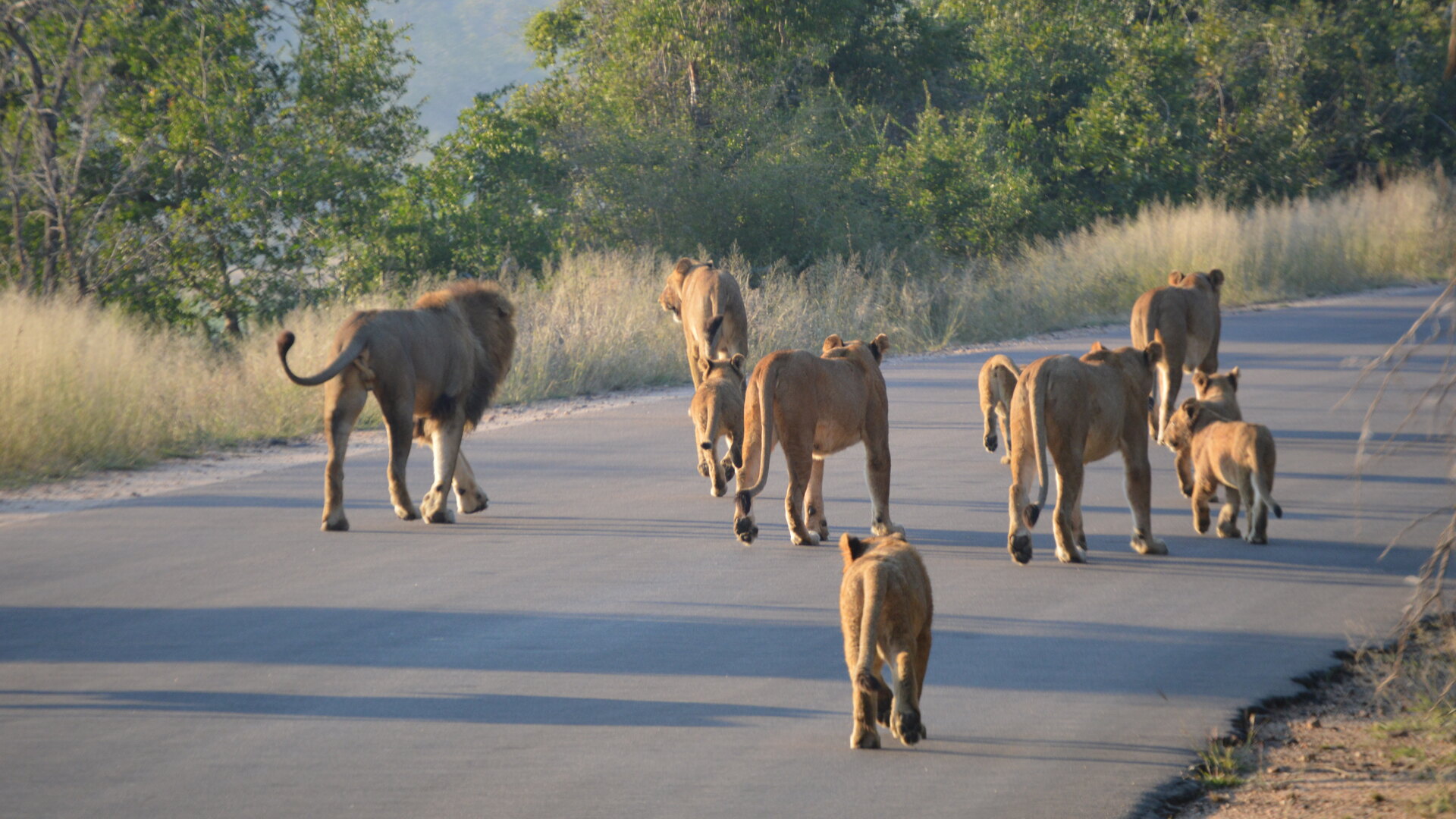
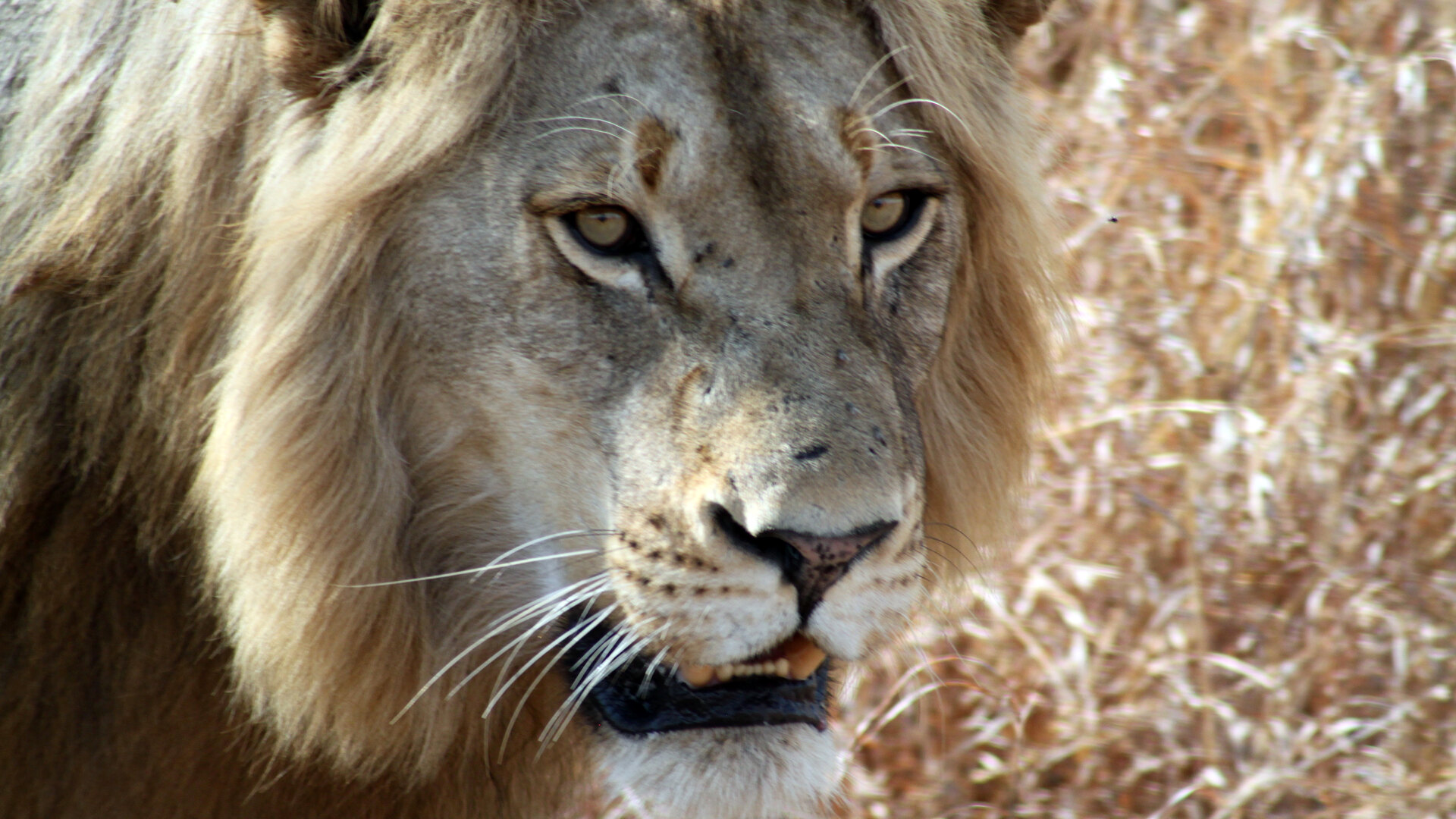
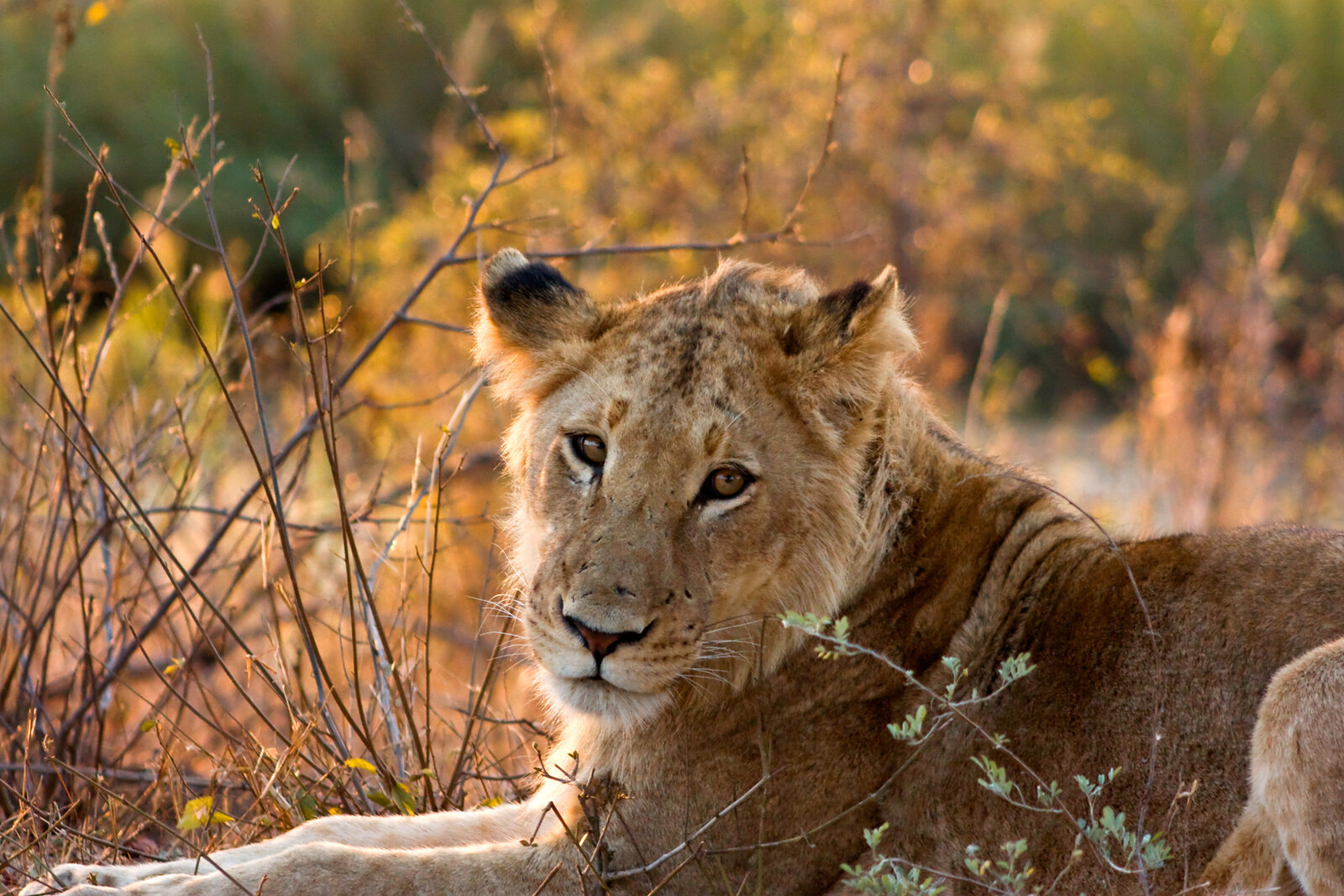
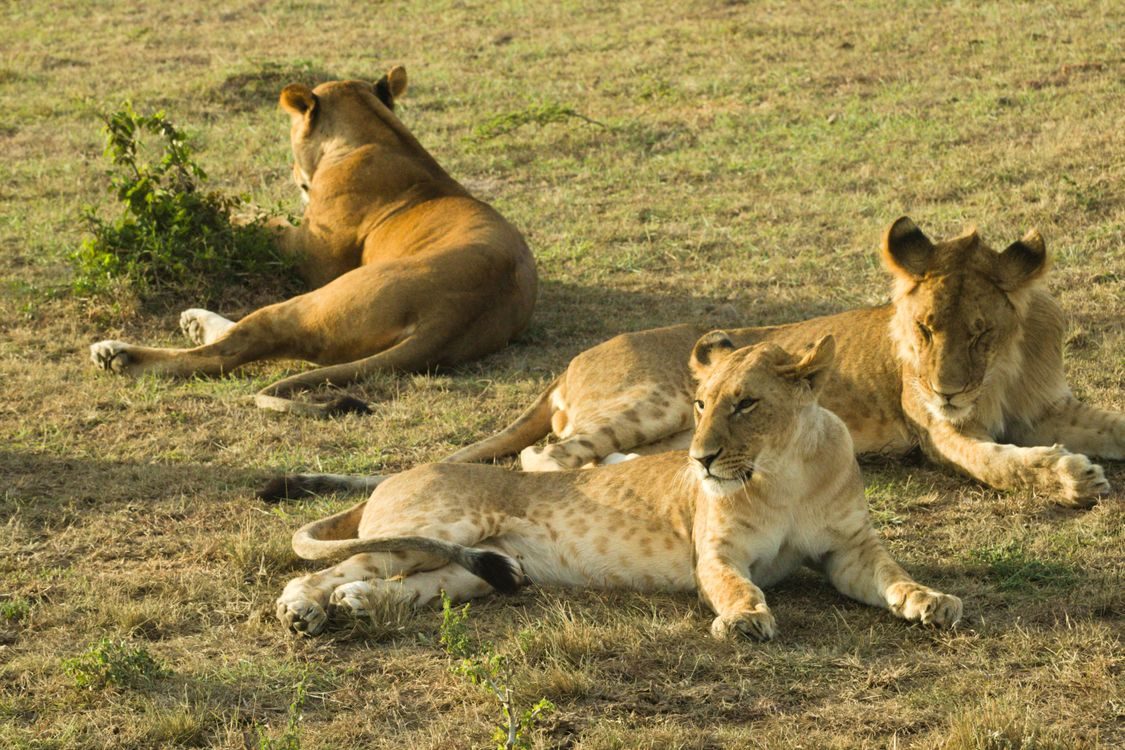
The lion is usually the first of the five you meet, and often the most relaxed about your presence. For much of the day a pride does very little: lions sleep up to twenty hours out of twenty-four, draped over one another in whatever shade they can find. Your first sighting is likely to be exactly that — a tawny heap under a tree, a flicked ear, the slow blink of an animal that has registered the vehicle and dismissed it.
The scene changes at the edges of the day. In the cool of early morning and late afternoon the pride stirs: cubs tumble, the lionesses stretch and move off to hunt, and if you are lucky the whole group walks straight down the road ahead of you, unhurried, passing within a few metres. The sound carries even further than the sight — a territorial roar at dawn is felt in the chest before it is understood by the ear, and it is the single noise most guests remember longest.
Odds: very high in any strong Big Five reserve. Lion is the animal most guests log on their first or second drive.
The leopard — what to expect
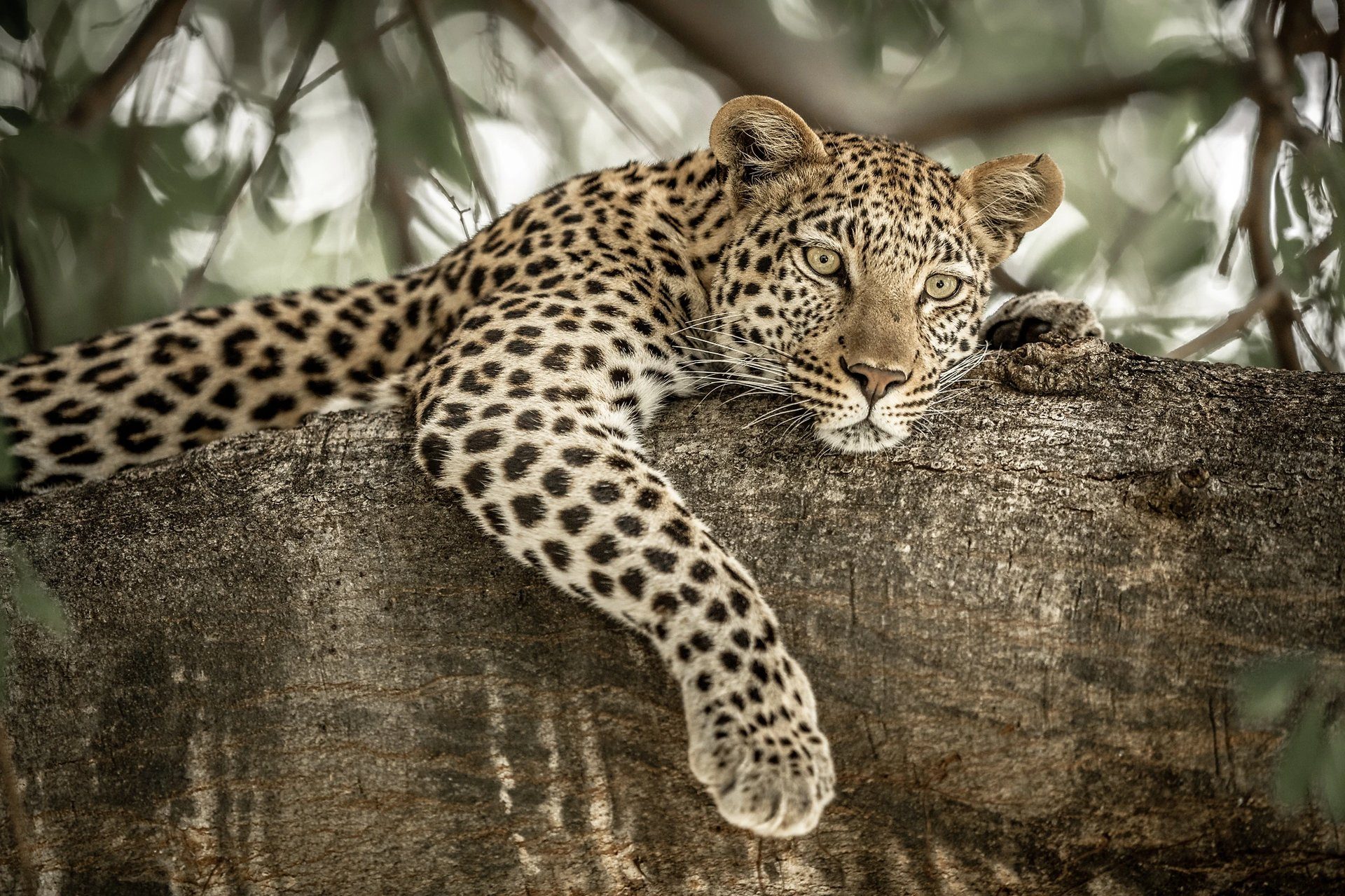
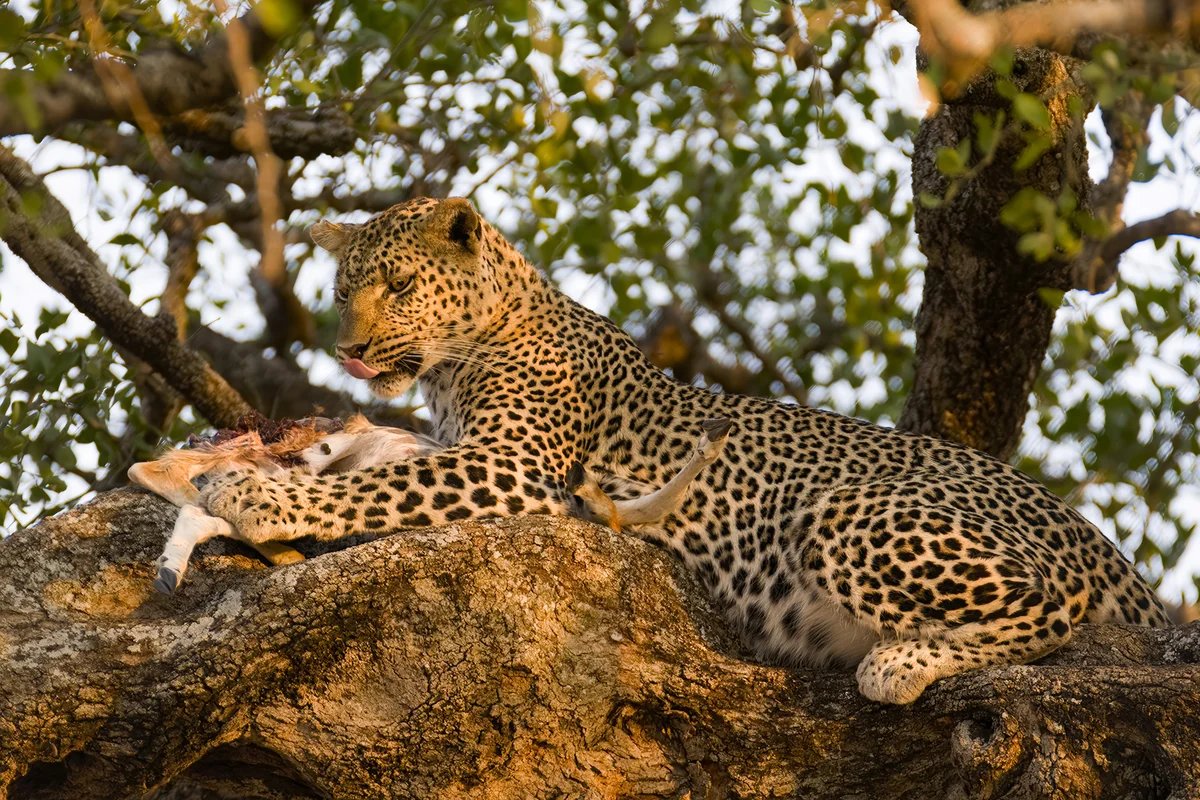
If the lion is the easy one, the leopard is the one that keeps you honest. It is solitary, largely nocturnal and so well camouflaged that guides find it as often by the alarm calls of other animals as by sight. The classic sighting is a leopard folded along a horizontal branch, a kill hoisted into the fork beside it, one leg hanging into the air — and the first time you see it, you will understand why it is the sighting guests most want.
Where you go matters more for leopard than for any other of the five. In most reserves a leopard is a patient reward. In the private Sabi Sand reserves it is close to a routine one: decades of careful, respectful game viewing have produced leopards entirely at ease with vehicles, and off-road traversing rights let your guide follow one on foot-tracking through the thicket until you are a few metres away in clear daylight. That is why the Sabi Sand is spoken of as the leopard capital of Africa.
Odds: moderate in general reserves over four days; very high in the Sabi Sand. The single biggest lever you can pull is reserve choice.
The elephant — what to expect
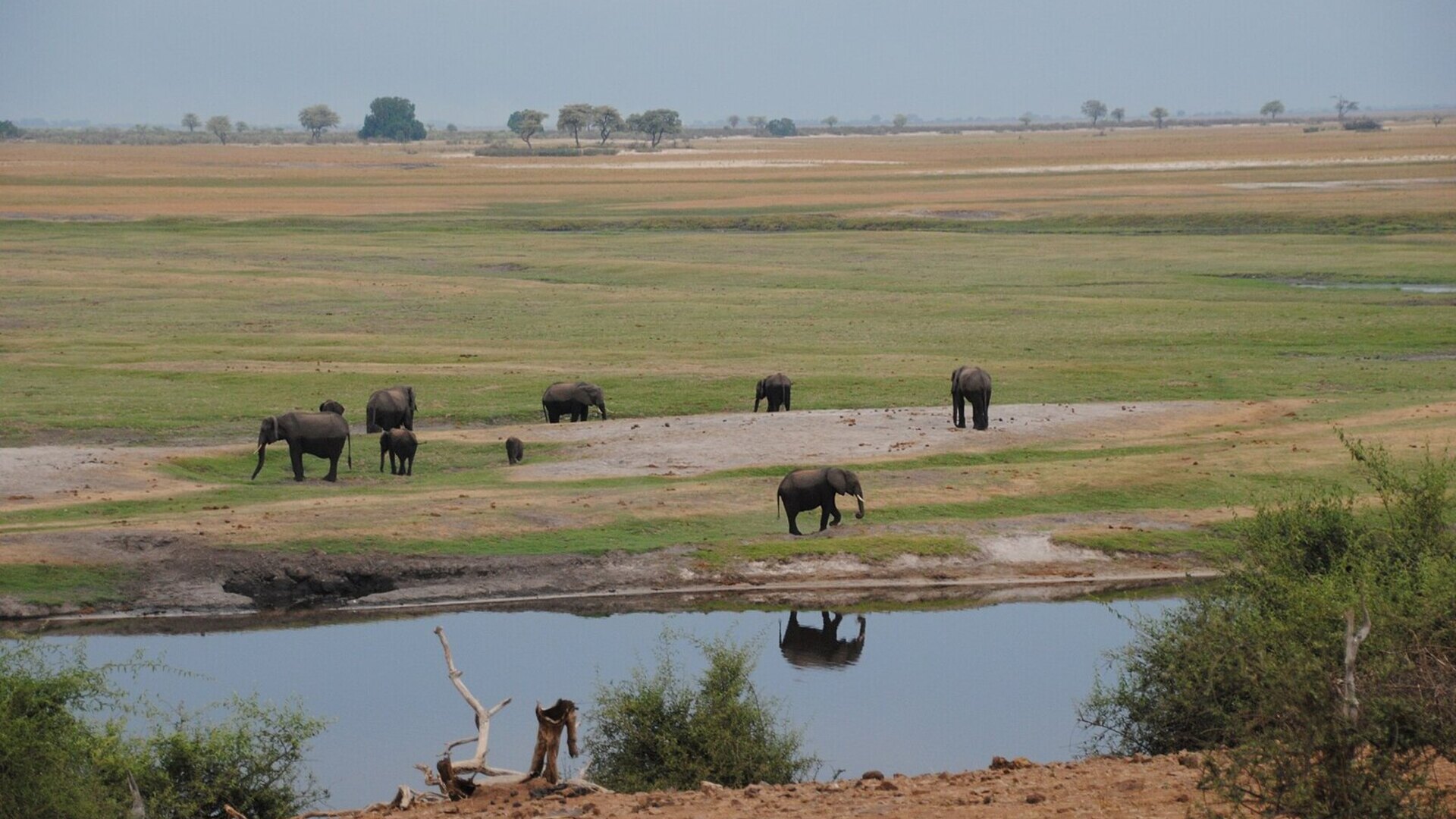
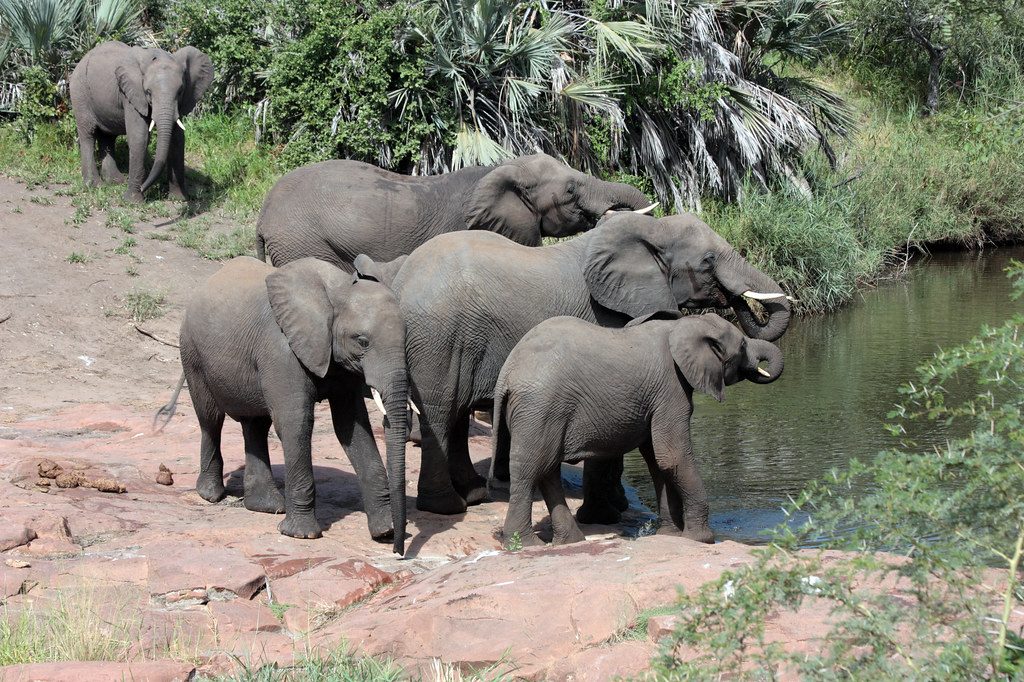
Nothing on a first safari prepares you for the scale of an elephant at close range. You hear a herd before you see it — the tearing of branches, the low rumble that passes between animals below the range of human hearing but is felt as a kind of pressure. Then the bush opens and a breeding herd is simply there: matriarch in front, calves tucked between the legs of the adults, the whole group moving as one careful unit toward water.
The encounter is usually calm, and that calm is the point. A relaxed herd will feed and drink around a stationary vehicle, sometimes crossing the road a few metres ahead, sometimes a young bull mock-charging to test you before wheeling away. Your guide reads the mood continuously; the right response is almost always to sit still and let the giants decide the distance. It is the sighting that most often leaves guests quiet rather than reaching for the camera.
Odds: very high. In elephant-rich country such as the greater Kruger and Botswana's north, the question is how many herds, not whether.
The Cape buffalo — what to expect
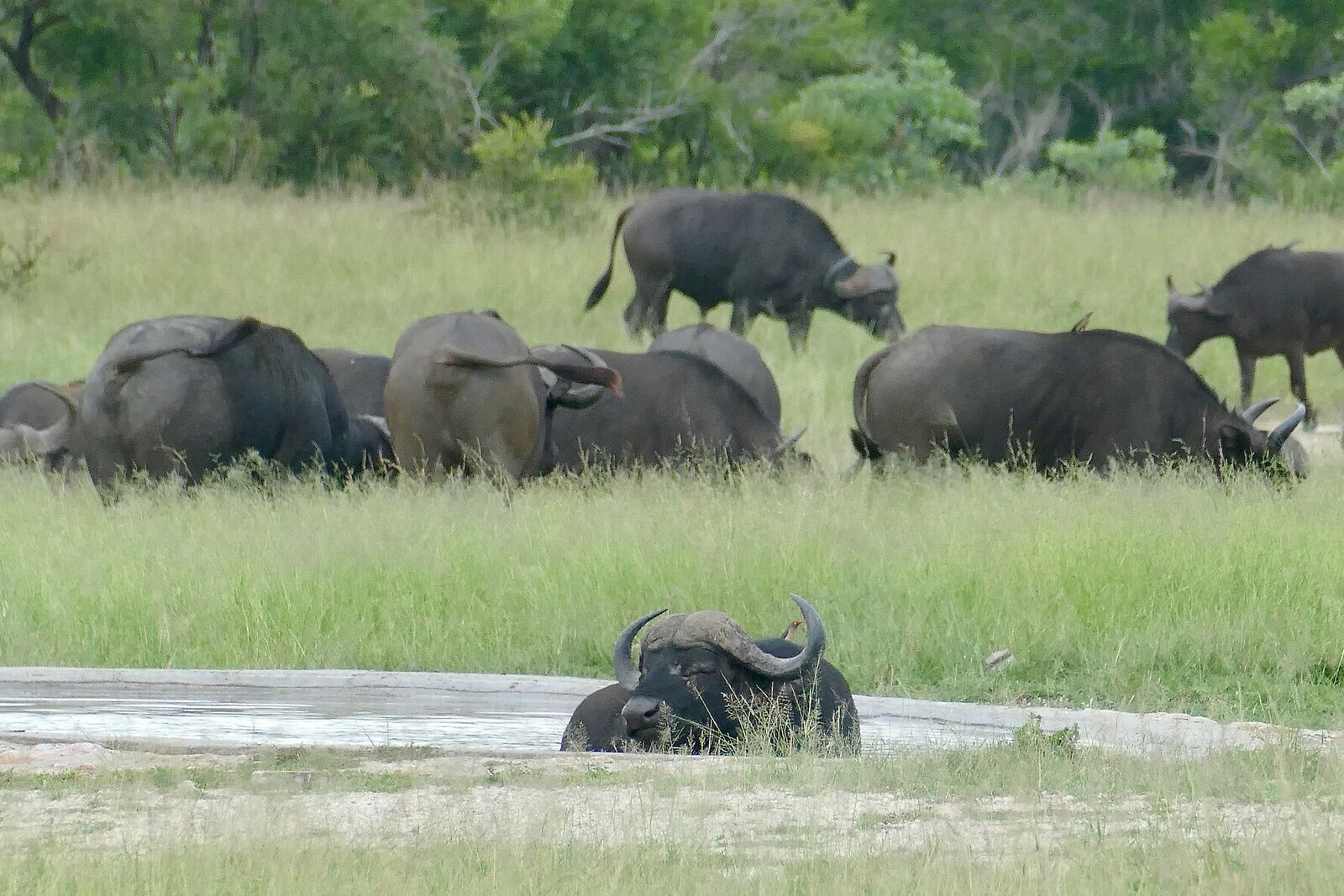
The buffalo is the most underestimated of the five. Seen singly, an old bull caked in mud looks placid, almost bovine. Seen as a herd — and buffalo gather in herds that can run to several hundred — it becomes one of the great spectacles of the bush: a slow, dark tide moving across open ground, egrets riding the backs, a wall of horn and muscle that parts reluctantly for the vehicle.
The sighting most guides watch for is the stand-off. Buffalo and lion are old adversaries, and a herd that scents a pride will bunch, lower its heads and advance rather than flee. If you happen on that moment — a ring of buffalo facing down lions over a waterhole at dusk — you are watching the single most dangerous animal in the group live up to its reputation. The lone old bulls, the "dagga boys" pushed out of the herd, are the ones to treat with respect.
Odds: very high. Buffalo herds are large and water-dependent, which makes them one of the most dependable of the five.
The rhino — what to expect
The rhino is the fifth, and often the quietest encounter of the set. A white rhino grazing head-down in open grassland has an almost prehistoric stillness to it; a black rhino, rarer and more irritable, is a tense, hook-lipped shape that melts into thick bush before most guests get a clear look. Both reward patience and a guide who knows the home ranges on the reserve.
It is also the one sighting where restraint is part of the experience. Rhino are under sustained pressure from poaching, and responsible operators withhold exact locations, avoid posting live positions and ask guests not to geotag photographs. You may notice your guide saying little over the radio about a rhino sighting; that silence is deliberate, and it is one of the quiet ways a good safari earns its keep.
Odds: high in well-managed reserves such as the greater Kruger, the Eastern Cape private reserves and Madikwe; lower and less predictable elsewhere. Of the five, rhino is the one most worth checking reserve by reserve before you book.
Your honest Big Five sighting odds
No one can promise an animal. What a good reserve can promise is the conditions that make the odds tip heavily in your favour over a few days. The table below is a realistic read for a four- to five-day guided safari in each region — not a single drive, but the full stay.
| Animal | Greater Kruger | Sabi Sand | Eastern Cape / Madikwe |
|---|---|---|---|
| Lion | Very high | Very high | Very high |
| Leopard | Moderate | Very high | Moderate |
| Elephant | Very high | Very high | High |
| Buffalo | Very high | Very high | High |
| Rhino | High | High | High |
The pattern is clear: lion, elephant and buffalo are near-givens in good country, rhino is reliable in well-managed reserves, and leopard is the variable that reserve choice controls. If a close leopard matters most to you, let that decide where you go.
Where you will see all five
South Africa is the most dependable single country for a full Big Five tally, which is why most of the journeys below are built there. The greater Kruger and the private Big Five reserves of South Africa hold all five at high density, and two regions — the Eastern Cape and Madikwe — offer the same set malaria-free, which matters for families and for anyone who would rather skip the tablets.
Beyond South Africa, the five are spread differently. Kenya and Tanzania deliver lion, elephant and buffalo in huge numbers but make rhino scarce and leopard harder; Botswana's north is superb for elephant, lion and buffalo. For a region-by-region ranking, see our guide to the best Big Five safari destinations, and for the specific question of where leopard, lion and the rest concentrate inside the park, where to see the Big Five in Kruger. If you are weighing one country against another, the Big Five countries compared guide sets them side by side.
How many days it takes
Four full days in a strong Big Five reserve is the working minimum, and it gives most guests the whole set. That is eight game drives — two a day, morning and late afternoon — which is enough time for the leopard or the rhino to come good even if they hold out at first. Three days can do it, but it leaves no margin: one quiet drive and the pressure mounts.
Five to seven days is the sweet spot. It turns the tally from likely into near-certain, and just as importantly it lets you stop treating the safari as a checklist. With the five in the bag by day three or four, the rest of the trip opens up — the smaller cats, the wild dogs, the birding, the long unhurried sit at a waterhole that is where many guests find their favourite moment. Timing within the year matters too; the dry winter months concentrate animals at water, and our best time for a Big Five safari guide sets it out month by month.
Malaria-Free Big Five — Eastern Cape (5 Days)
The gentlest introduction to all five, two hours from Port Elizabeth and entirely malaria-free. The Eastern Cape's big private reserves combine open country with relaxed game viewing, which makes this the route we most often recommend for a first safari or a family with children. Five days is time enough to log the full set at an easy pace. See the Eastern Cape Big Five safari »
Classic Kruger Big Five (4 Days)
The heartland. Four days of morning and evening drives across the greater Kruger, where all five animals share the same river systems and the density of game is as high as anywhere on the continent. The most efficient way to meet the five without a long itinerary. See the classic Kruger safari »
Luxury Sabi Sands (5 Days)
The surest route to a close leopard. The private Sabi Sand reserves share an unfenced boundary with Kruger but add off-road traversing and expert tracking, which lifts the leopard from a patient reward to a near-daily sighting. Five days gives you the full Big Five with leopard at the centre of it. See the luxury Sabi Sands safari »
Sabi Sands Leopard Capital — Ultimate (6 Days)
Six days in the Sabi Sand with two drives a day, expert trackers and time enough that nothing on the list is left to chance. Built for the guest who wants the five without hurry, and the leopard sightings the reserve is famous for. See the ultimate Sabi Sands safari »
Madikwe Luxury Big Five Fly-In (4 Days)
Malaria-free Madikwe reached by light aircraft, with the bonus of strong wild dog odds alongside the five. A short, high-comfort route that suits travellers who want the tally and the lodge experience without a long road transfer. See the Madikwe fly-in safari »
Big Five Luxury Safari (7 Days)
A full week across two complementary reserves so the five arrive at an easy rhythm and the trip never feels like a race. The extra days buy the smaller wildlife, the birding and the slow mornings that turn a good safari into a memorable one. See the seven-day Big Five safari »
Beyond the five
The Big Five are a fine frame, but they are not the whole picture, and the best moments of a safari are often off the list entirely. A cheetah stretched flat in a sprint, a pack of wild dogs — rarer than any of the five — pouring across a clearing at dusk, a pangolin in the headlights of a night drive. Give the trip a day or two of slack and the bush fills in around the headline animals.
Why book your Big Five safari with Beyond Africa
We are a Cape Town–based team who travel these reserves ourselves, and we build each Big Five safari around the one animal or experience that matters most to you — the close leopard, the malaria-free family trip, the quiet week rather than the rushed long weekend. We match the reserve to the tally you want, the season to the game viewing, and the lodge to how you like to travel. There is no call centre between you and the person planning your trip.
Tell us what you most want to see, who is travelling and roughly when, and we will come back with a Big Five itinerary shaped to it — honest about the odds, and built to put you in the right place at the right hour. Start planning your Big Five safari »