Key Takeaways
- Ngorongoro Crater = the world's largest intact volcanic caldera (~260 km²); a compact, enclosed natural amphitheatre with astonishing year-round wildlife density and Tanzania's best chance of the Big Five — including the rare black rhino — in a single day
- Serengeti = ~15,000 km² of endless plains; the stage of the Great Migration, the finest big-cat country in Africa (lions, cheetah, leopard) and a vast, dynamic, follow-the-herds wilderness
- Ngorongoro wins on reliability and density: guaranteed, close-up sightings of enormous variety in a small area, plus flamingos on the soda lake and Maasai grazing cattle alongside the game — the easiest Big Five day in Tanzania
- Serengeti wins on scale, drama and big cats: the wildebeest migration and Mara River crossings, kopje-lounging lions, cheetah on the plains, balloon safaris and a sense of true, uncrowded wilderness
- Ngorongoro is NOT part of the migration — its wildlife is resident and present all year; the Serengeti's headline spectacle is seasonal and moves with the herds across the ecosystem
- Crowds: the crater floor is small with one main descent road and can feel busy at peak times; the Serengeti's immensity absorbs vehicles and, in its quieter corners, can feel like you have Africa to yourself
- Cost: Ngorongoro carries Conservation Area entry plus a per-vehicle crater service fee, making a crater day pricey per hour; the Serengeti charges park fees but rewards longer, better-value multi-day stays
- The ultimate answer: do both. They sit on the same northern circuit from Arusha — the classic loop weaves Tarangire or Manyara, the Ngorongoro Crater and the Serengeti into one perfect Tanzanian safari
The Crater of Plenty Meets the Endless Plains
It is the question at the heart of every northern Tanzania safari. Ngorongoro, or Serengeti? A collapsed volcano whose vast, walled floor shelters one of the densest concentrations of large mammals anywhere on Earth — or an ocean of grass so wide that a million and a half wildebeest can pour across it and still leave the horizon empty. Two of the greatest wildlife arenas in Africa, less than half a day's drive apart, and yet as different from one another as a walled garden is from the open sea.
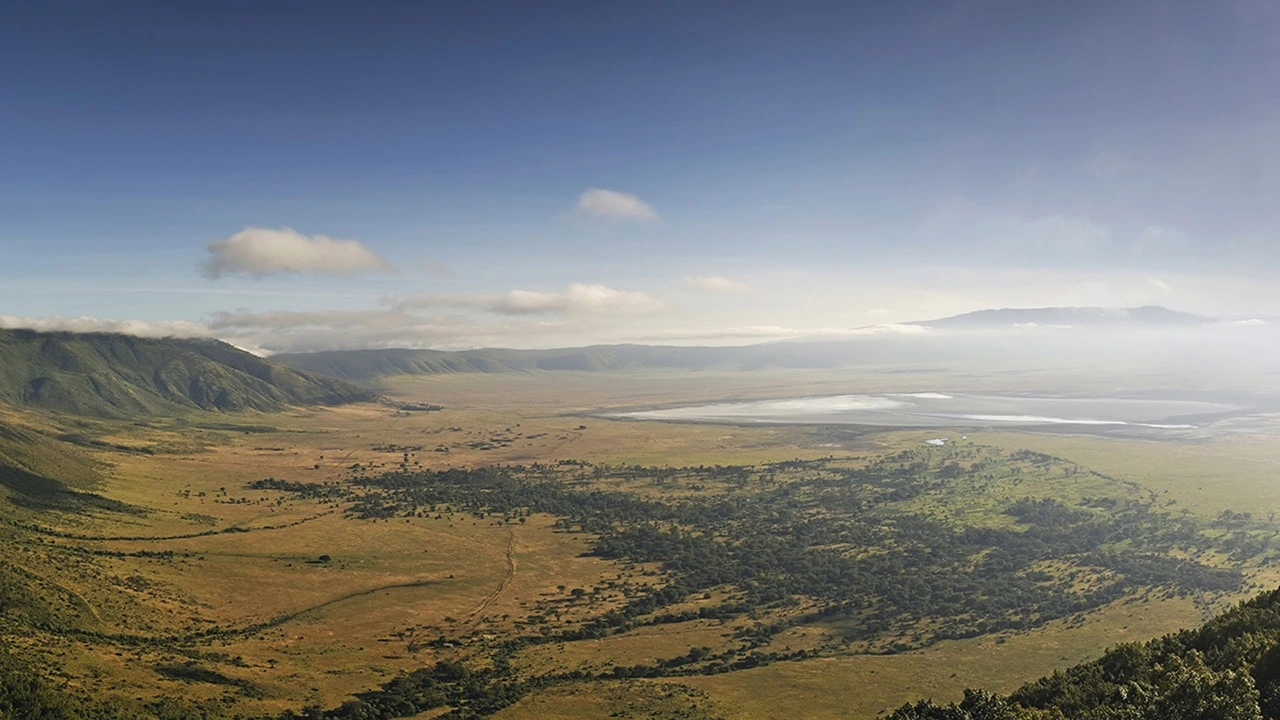
Both belong to the same magnificent corner of the world — Tanzania's fabled northern safari circuit, radiating out from the town of Arusha — and both are UNESCO-listed crown jewels. But they offer profoundly different experiences. The Ngorongoro Crater is the world's largest intact, unflooded volcanic caldera: a roughly 260-square-kilometre amphitheatre, its walls rising some 600 metres, cradling grasslands, a soda lake, forest and swamp — and within them an estimated 25,000 large animals, including the Big Five. It is compact, enclosed, reliable and jaw-droppingly concentrated: the single best place in Tanzania to see everything, including the critically endangered black rhino, in one day.
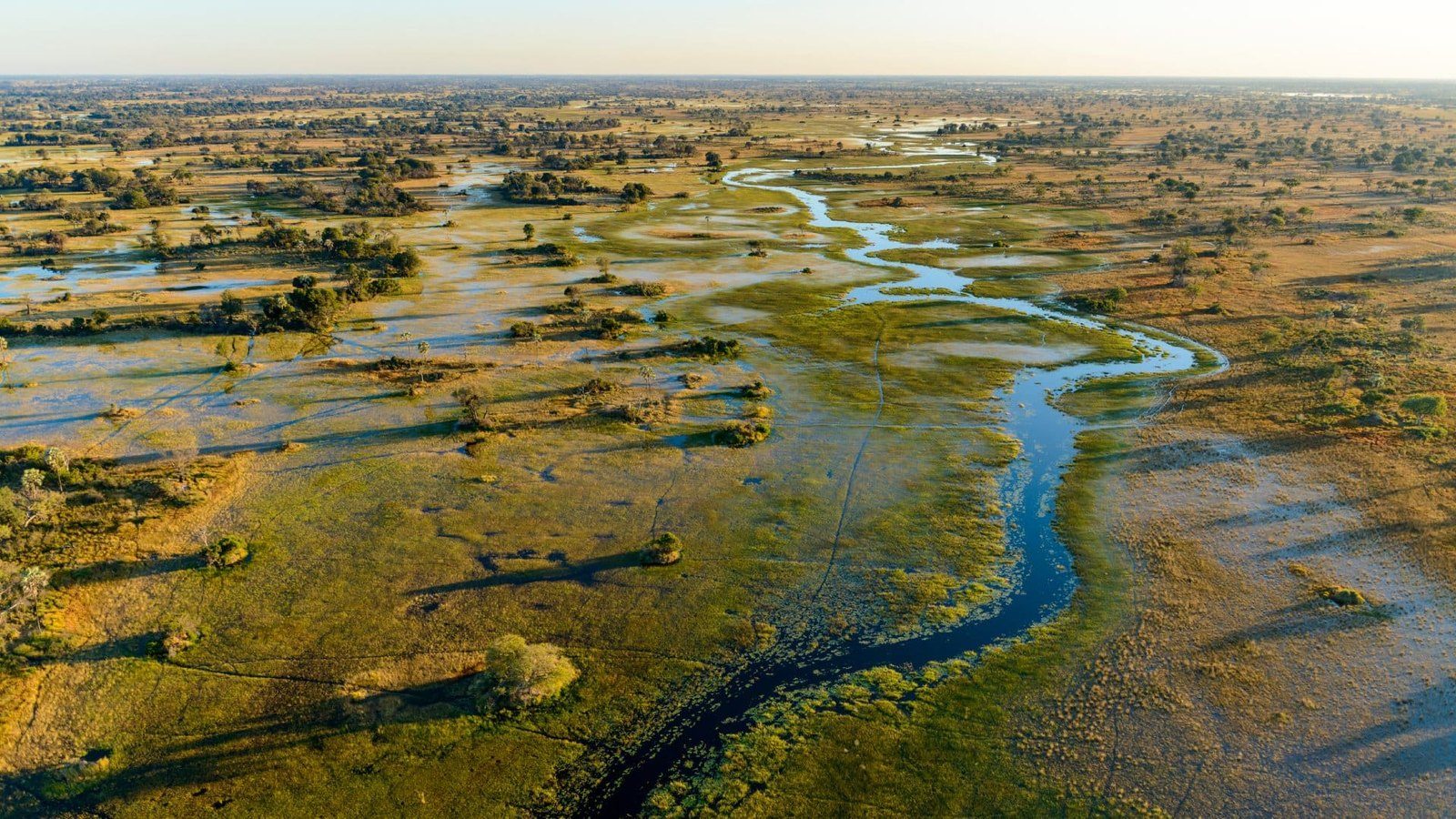
The Serengeti, by contrast, is scale made visible: some 15,000 square kilometres of rolling short-grass plains, acacia woodland, granite kopjes and river country, home to the greatest terrestrial spectacle on the planet — the Great Migration, the year-round movement of roughly two million wildebeest, zebra and gazelle, and the dramatic river crossings that go with it. It is also the finest big-cat country in Africa: lions draped over kopjes, cheetah hunting the open plains, leopard in the riverine trees. Where Ngorongoro is guaranteed and compact, the Serengeti is dynamic, vast and gloriously wild.
So which is better? Neither. They reward different priorities — density versus scale, guarantee versus drama, a single perfect day versus days of endless exploration — and because they lie on the same circuit, the real answer for most travellers is not to choose at all. Let's break it down, round by round.
Round 1: The Landscape & Setting
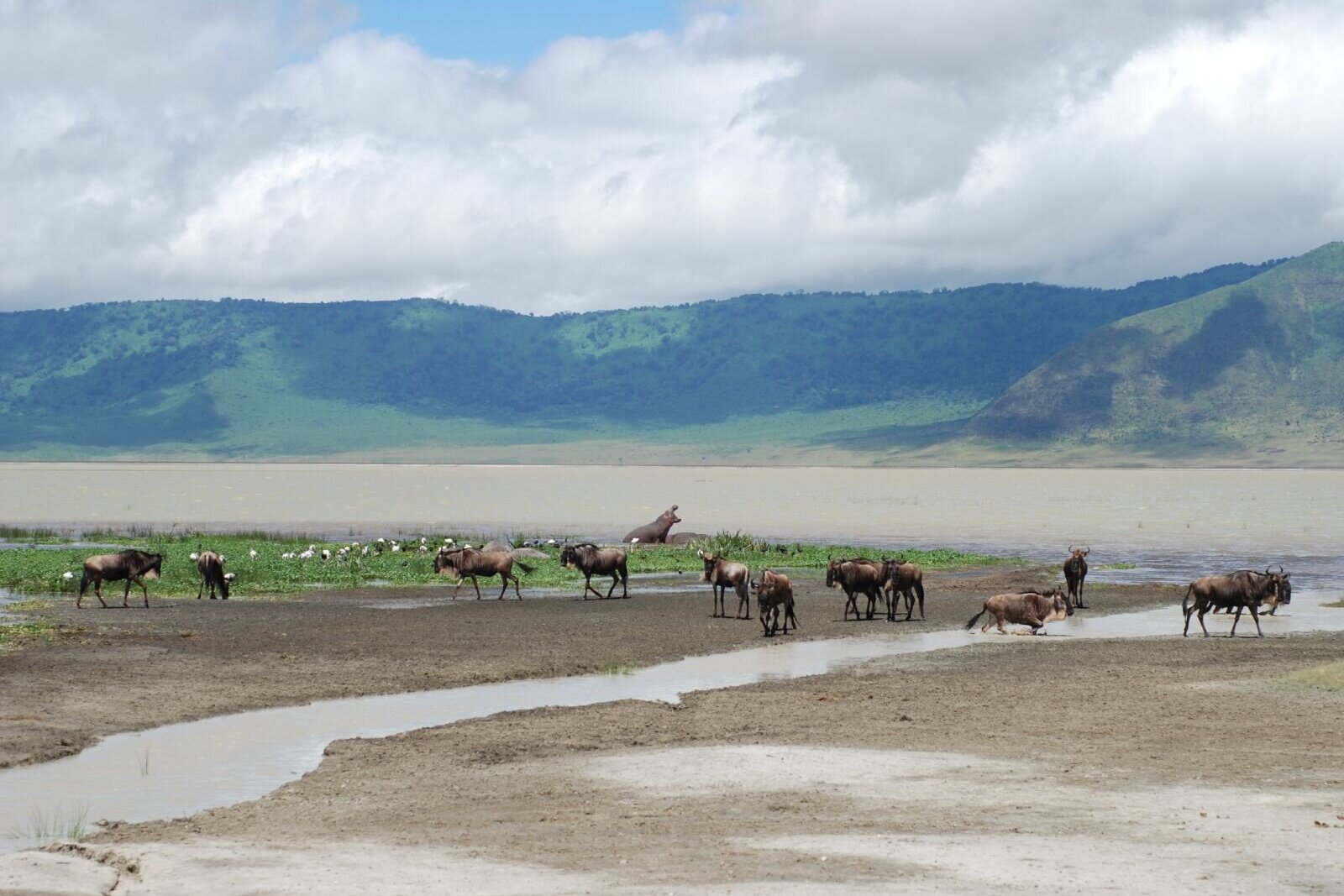
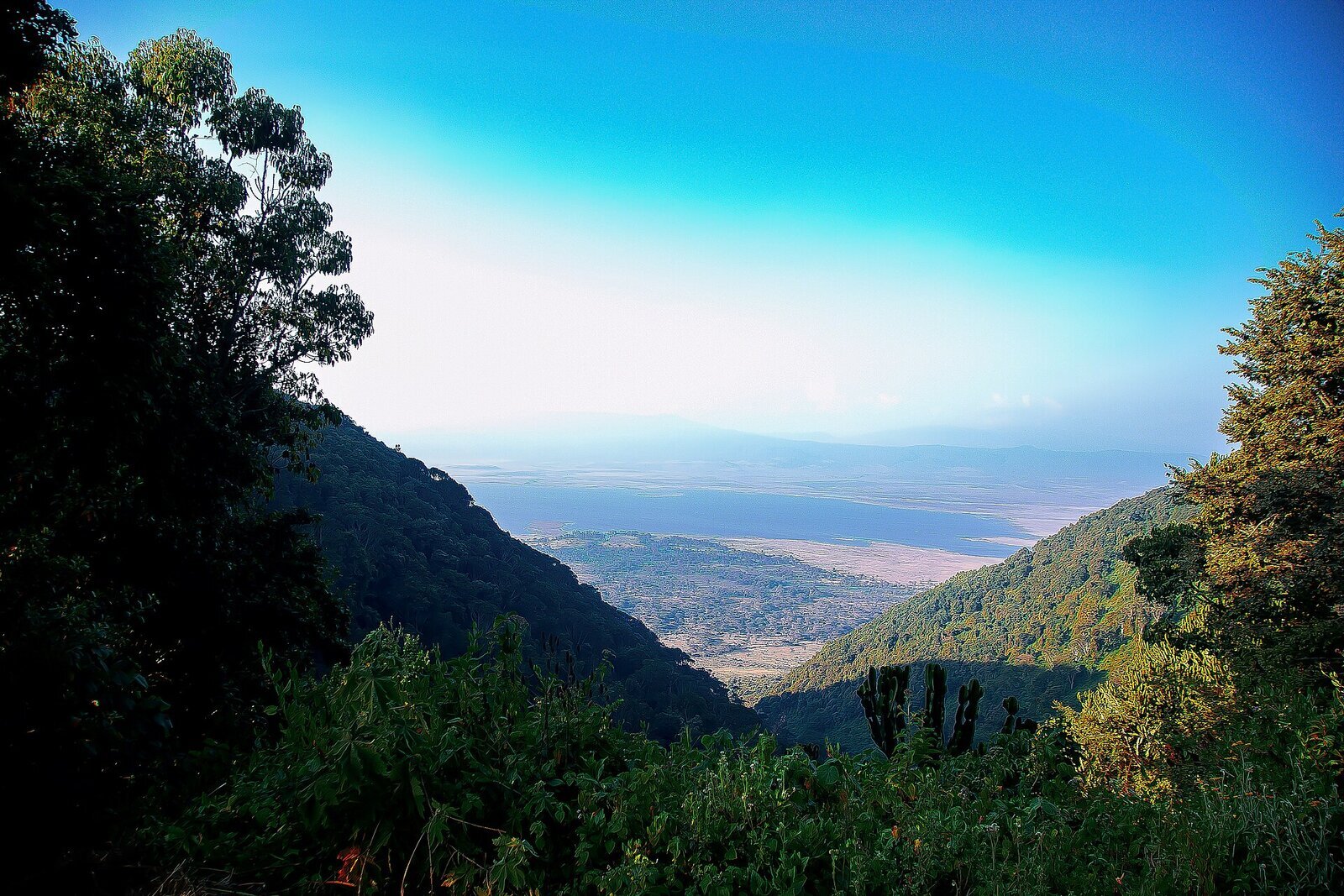
The single greatest difference between these two places is the shape of the land itself. Ngorongoro is enclosed — a natural amphitheatre. You approach along the forested rim, and then, quite suddenly, the world drops away beneath you: a vast bowl some 19 kilometres across, its floor a patchwork of golden grassland, the shining soda lake of Magadi, yellow-barked acacia forest and reed-fringed swamp, all ringed by sheer 600-metre walls. A single main road descends to the floor. The effect is intimate and almost surreal — a self-contained Eden where you can see, in one sweeping glance, much of the wildlife the crater holds.
The Serengeti is the opposite: openness without limit. Its name comes from the Maasai siringet — 'the place where the land runs on forever' — and it earns it. Here the plains roll unbroken to a horizon broken only by flat-topped acacias, the occasional ancient granite kopje, and the shimmer of heat. There are no walls, no edges; the ecosystem flows seamlessly into Kenya's Masai Mara to the north. Driving the Serengeti is an exercise in scale — you feel, gloriously, very small beneath an enormous sky.
Round 1 verdict: A tie of opposites. Ngorongoro wins for the sheer drama and intimacy of its enclosed, wildlife-packed crater; the Serengeti wins for the soul-stirring immensity of plains that genuinely run on forever. One you look down into; the other swallows you whole.
Round 2: The Great Migration — the Serengeti's Crown
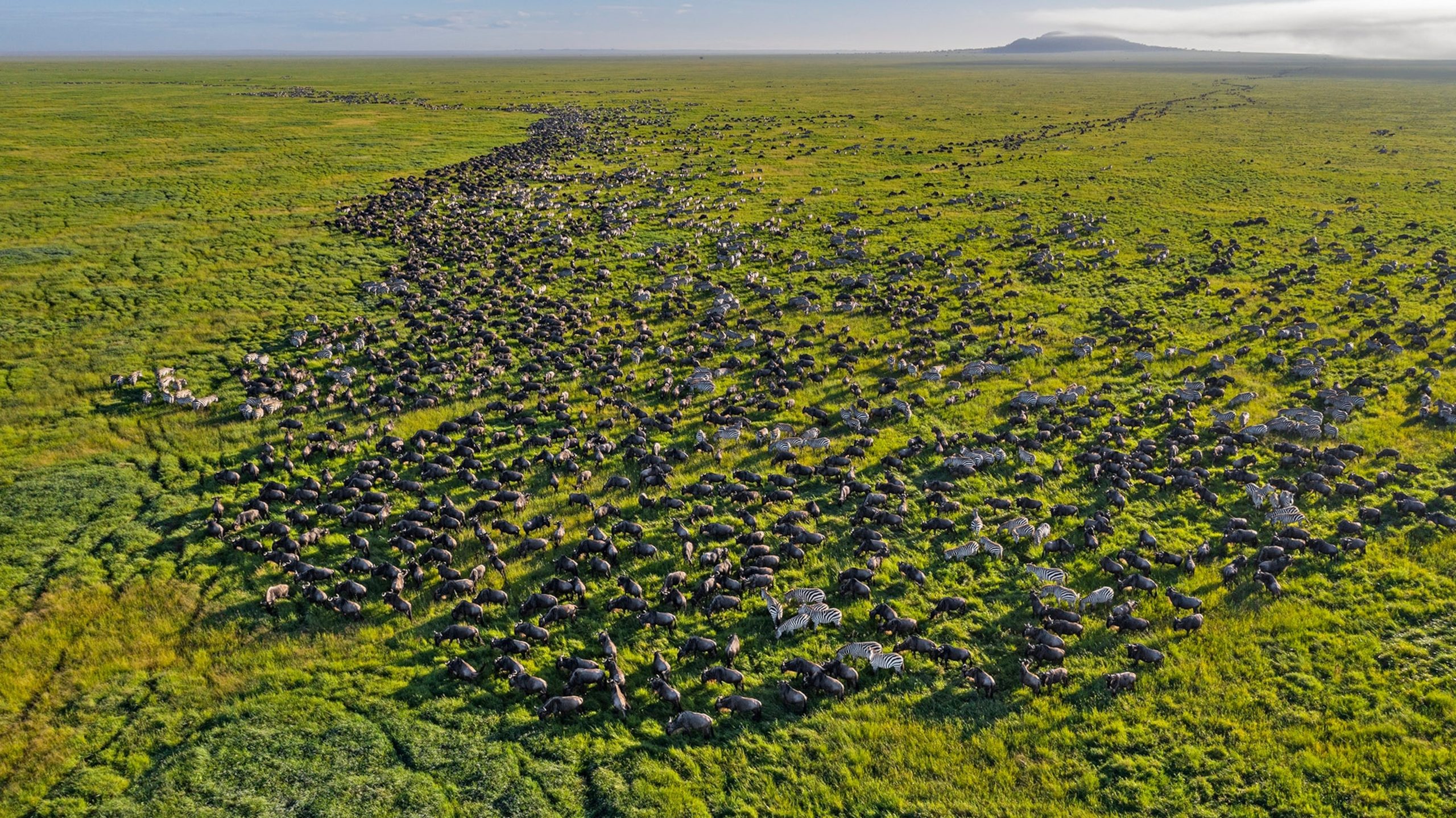
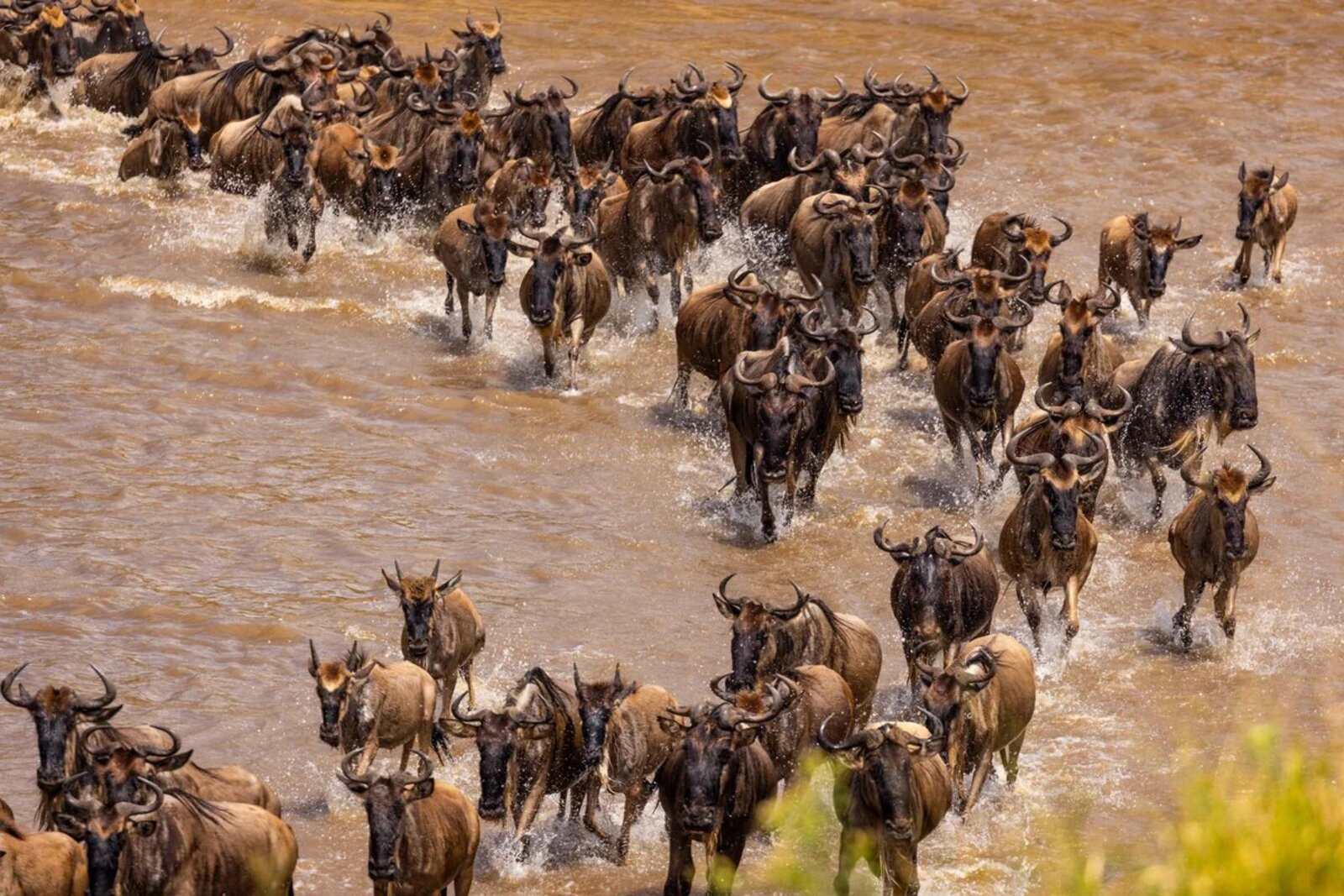
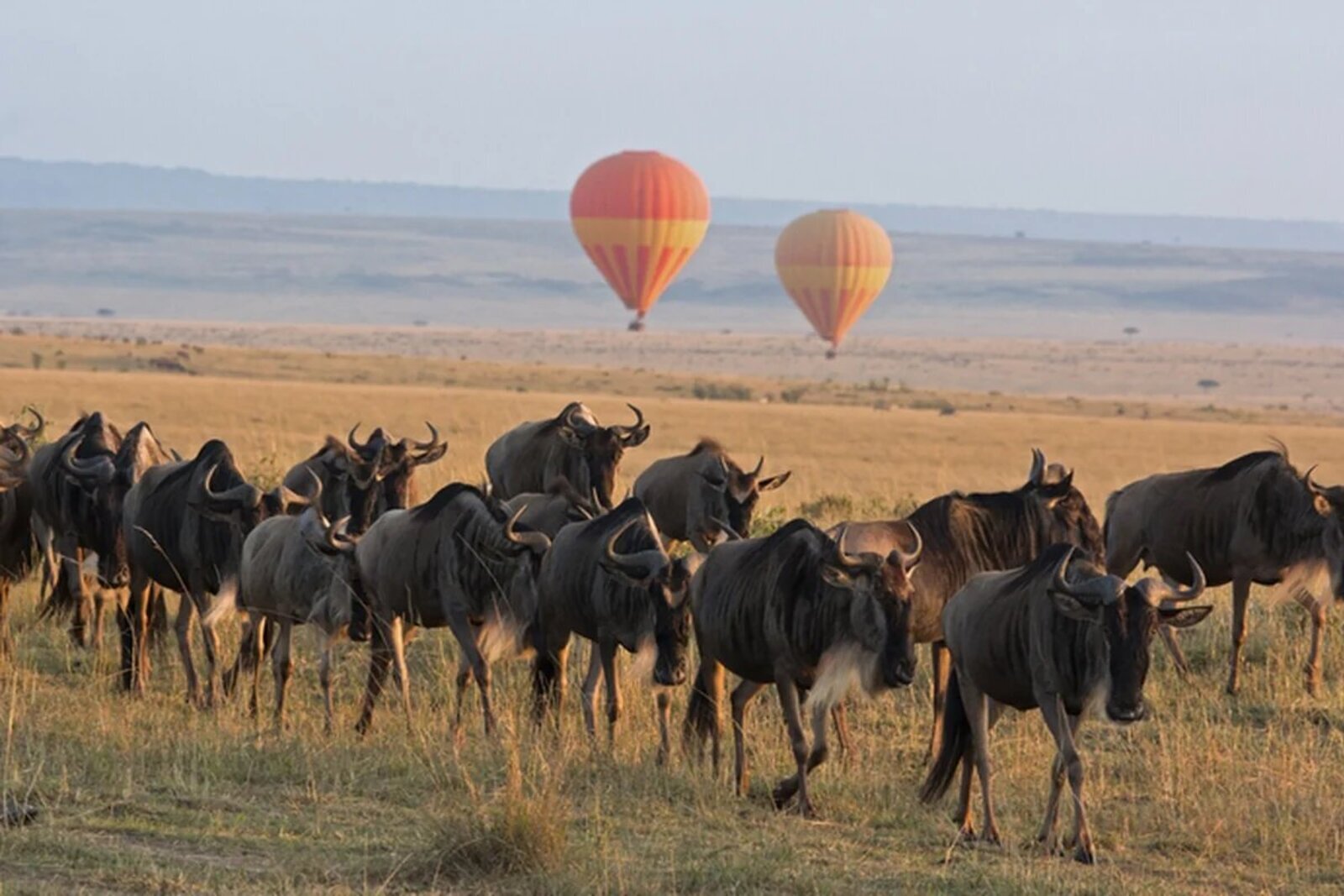
This round is not a contest — it is the Serengeti's crown, and Ngorongoro doesn't wear it. The Great Migration is the largest overland movement of animals on Earth: roughly 1.5 to 2 million wildebeest, joined by hundreds of thousands of zebra and gazelle, moving in a vast, year-round clockwise loop through the Serengeti–Mara ecosystem in search of fresh grazing and water. It is the reason many travellers come to Tanzania at all, and the Serengeti is its beating heart.
The migration is a moving feast, and where you find it depends on the season. Roughly: the herds mass on the southern Serengeti's short-grass plains for the dramatic calving season (around January–March), when hundreds of thousands of calves are born within weeks; they push north and west through the central and western Serengeti (around April–June); and from roughly July to October they gather in the north for the heart-stopping Mara River crossings, where the herds brave crocodile-filled waters in a churning, thunderous surge. Following the migration is the art of the Serengeti safari — and a great operator times your camp to be exactly where the herds are.
The Ngorongoro Crater, by contrast, is not part of the migration at all. Its wildlife is largely resident — the animals live on the crater floor year-round and do not move with the herds. (The wider Ngorongoro Conservation Area, up on the plains around the crater, does see migration herds pass through in the calving season — but the crater floor itself is a permanent, self-contained community.) This is not a weakness; it is precisely why Ngorongoro is so reliable. But if witnessing the migration is your dream, the Serengeti is non-negotiable.
Round 2 verdict: The Serengeti wins outright — the Great Migration and its river crossings are its singular, world-beating spectacle. Ngorongoro doesn't compete here, and doesn't need to; its strength lies elsewhere.
Round 3: Wildlife Density & the Big Five
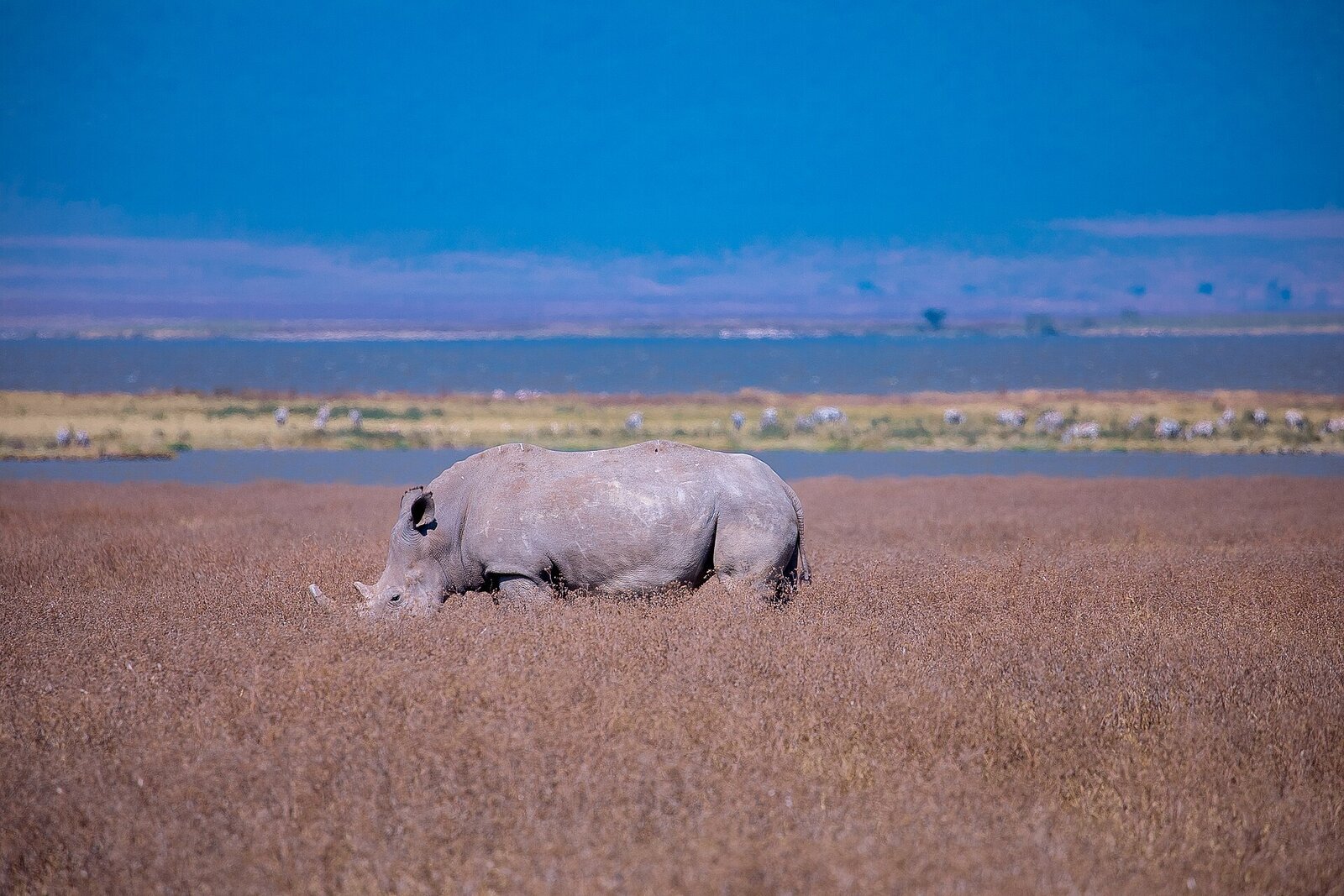
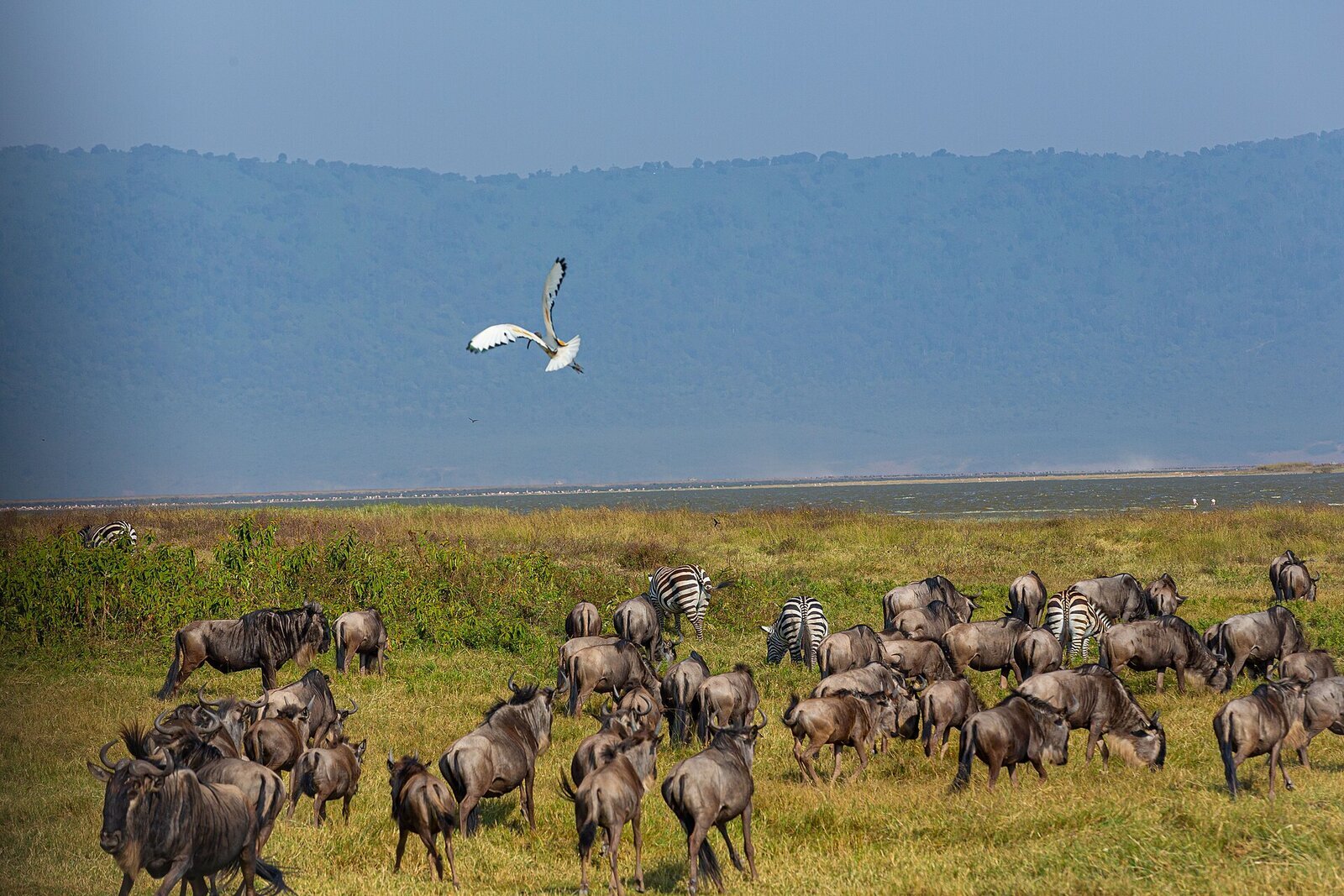
If the Serengeti owns the migration, Ngorongoro owns density. The crater floor holds an estimated 25,000 large animals in just 260 square kilometres, and because the walls concentrate them, the result is the most reliable, action-packed game viewing in Tanzania. In a single circuit of the floor you can realistically expect lion, elephant, buffalo, hippo, zebra, wildebeest, hyena, jackal, warthog, and huge numbers of grazers — often within minutes of each other. For sheer 'so much, so fast', nowhere in the country matches it.
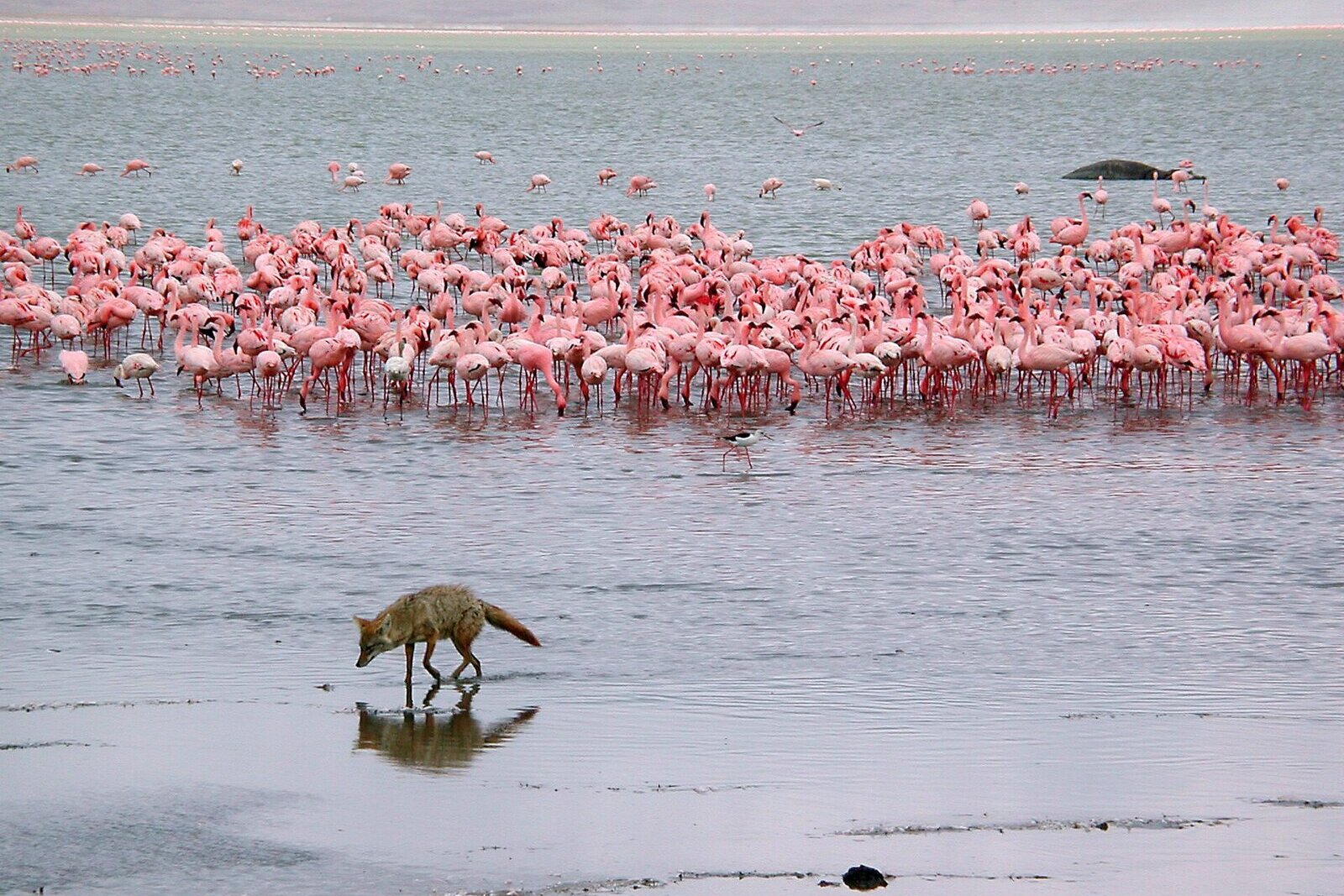
Crucially, Ngorongoro is the single best place in Tanzania to complete the Big Five — and the reason is the black rhino. This critically endangered animal is exceptionally rare across most of East Africa, but the crater shelters a small, carefully protected population, and a morning on the floor gives you a genuine chance of seeing one grazing in the open — often the missing piece that lets travellers tick off lion, leopard, elephant, buffalo and rhino in one extraordinary day. Add the pink shimmer of flamingos on Lake Magadi and the sight of Maasai herders grazing cattle among the wildlife, and the crater feels like a living wildlife documentary.
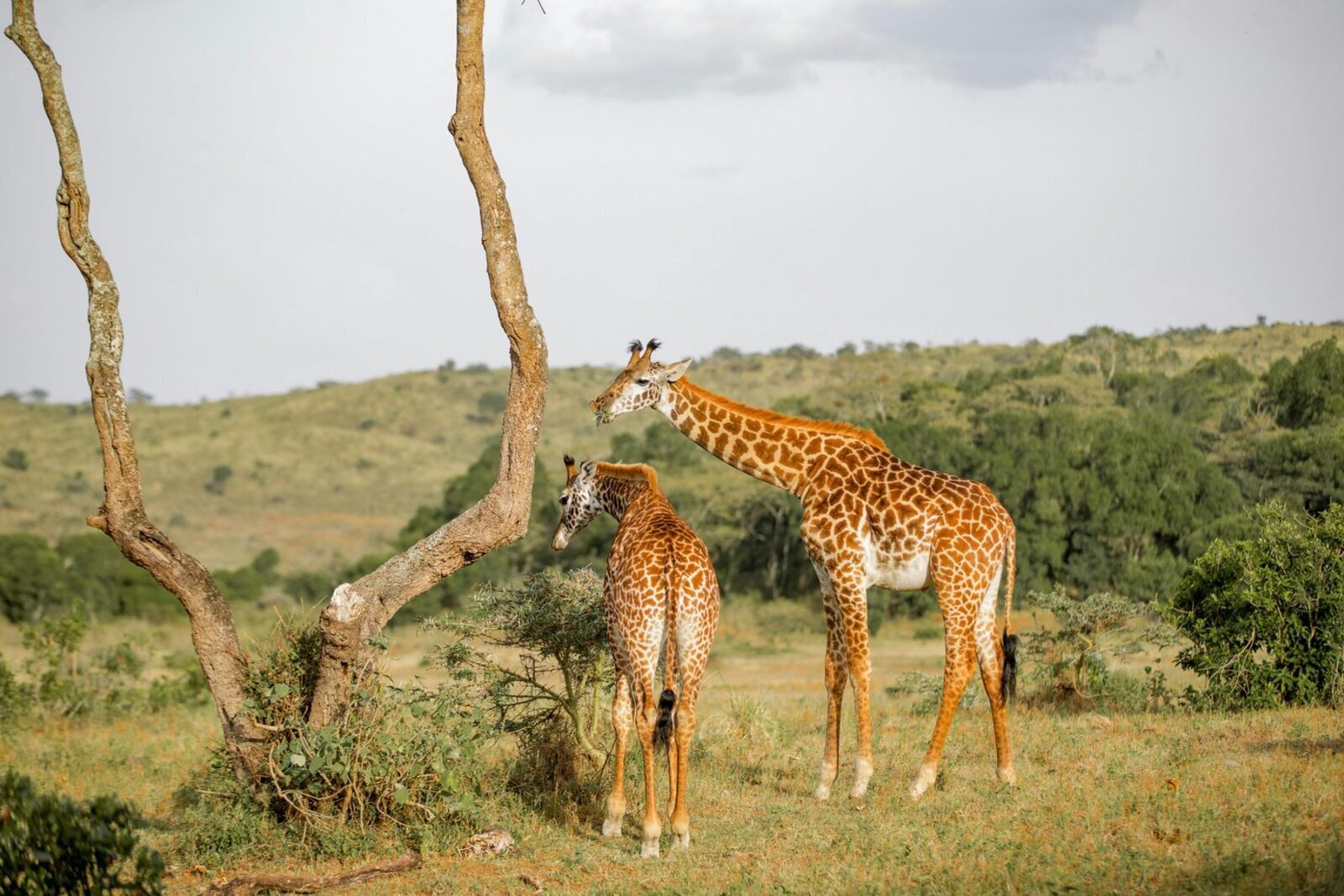
The Serengeti is no slouch — it holds enormous populations of everything, including all the Big Five (leopard are especially good along the rivers, and it has far more of them than the crater). But its animals are spread across 15,000 square kilometres, so sightings take more driving, more patience and more luck. You trade the crater's guaranteed density for the Serengeti's greater totals and the thrill of the search. Rhino, in particular, are far harder to find in the Serengeti than in Ngorongoro.
Round 3 verdict: Ngorongoro wins for density and the Big Five in a day — especially the black rhino. The Serengeti wins on total numbers and leopard, but its wildlife is spread thin across a vast area. For a guaranteed, everything-at-once game day, the crater is unbeatable.
Round 4: Big Cats & Predators
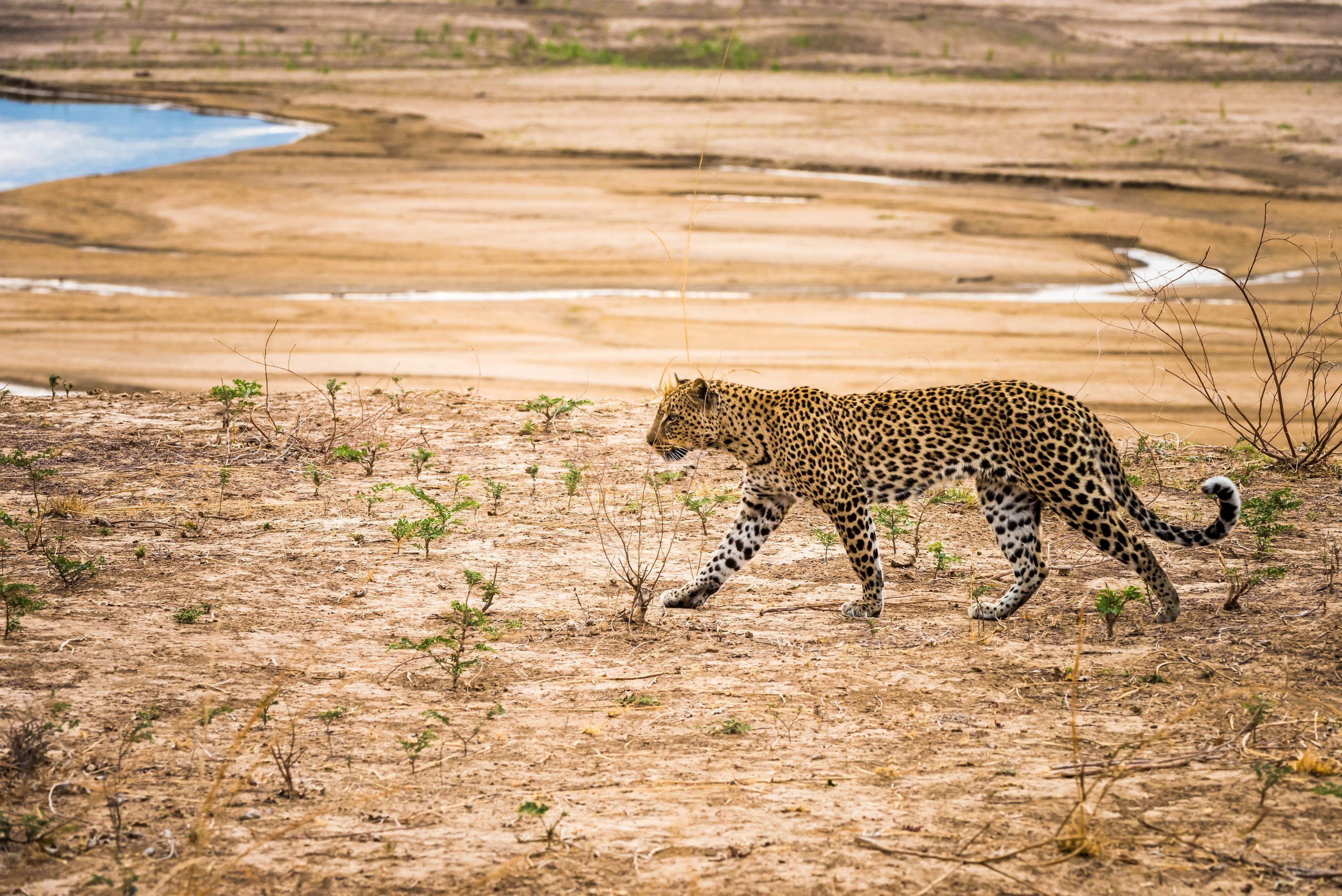
For predator lovers, this is a close and thrilling round. The Serengeti is, quite simply, the greatest big-cat country on the continent. It holds one of the largest lion populations in Africa — prides draped over its granite kopjes are an iconic image — and its open short-grass plains are the classic hunting ground of the cheetah, the world's fastest land animal, which needs exactly this kind of space to run. Its riverine forests and kopjes are excellent for leopard, and the migration draws dramatic predator-prey action, from lion ambushes to the frenzy of a river crossing. For sustained, wide-ranging big-cat viewing, the Serengeti is peerless.
The Ngorongoro Crater is superb for lions in particular — it holds one of the densest lion populations anywhere, and because the floor is enclosed, sightings are close and reliable, often of large, well-fed prides right beside the track. Spotted hyena are abundant and frequently seen hunting (the crater is a rare place to watch the lion–hyena rivalry play out). Cheetah and leopard, however, are much scarcer on the crater floor than out in the Serengeti — the enclosed grassland and heavy lion presence don't suit them as well.
Round 4 verdict: The Serengeti wins for the full big-cat spread — the best cheetah and leopard country, plus huge lion numbers across endless plains. Ngorongoro counters with wonderfully reliable, close-up lion and hyena action on its compact floor.
Round 5: Crowds & Exclusivity
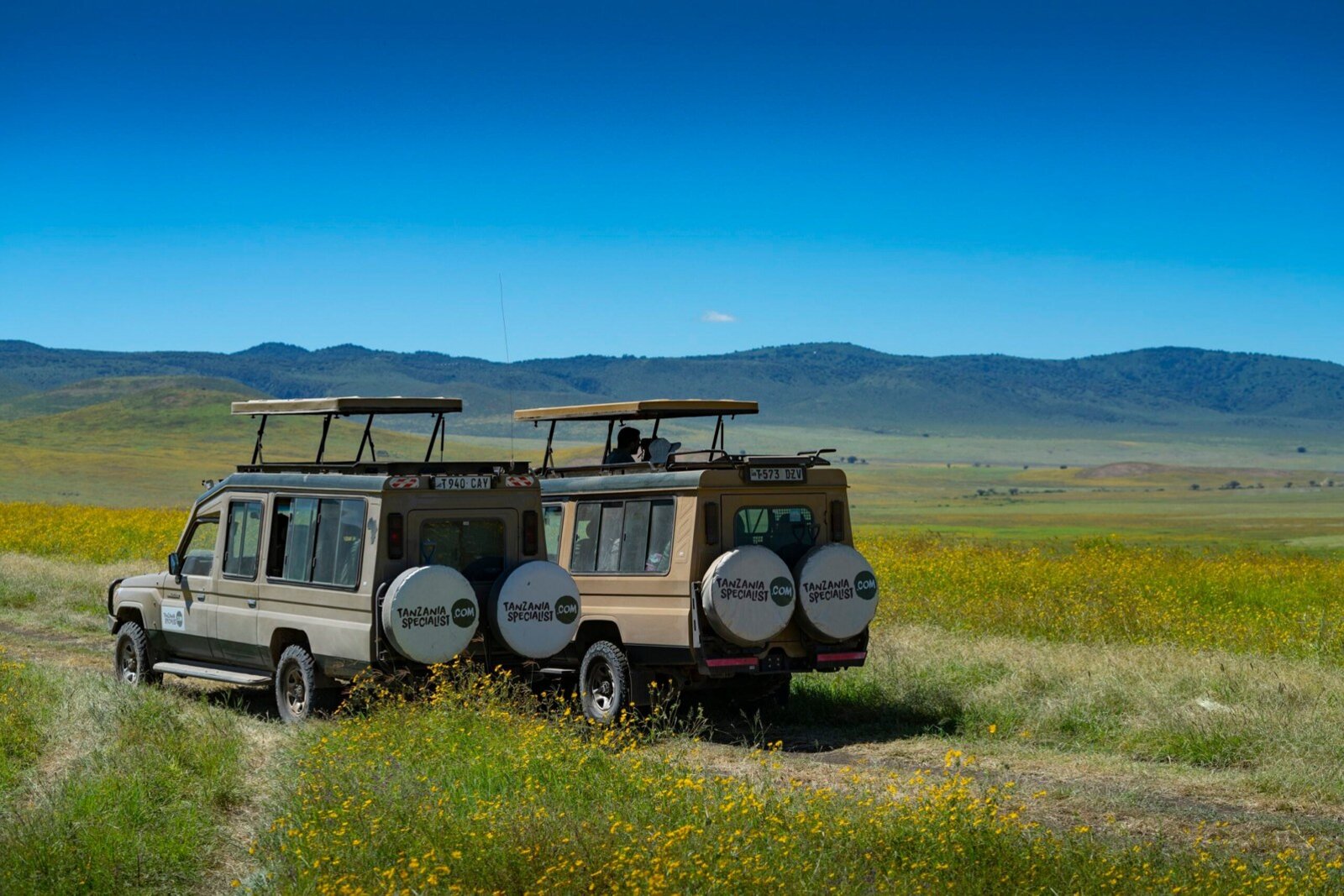
This is where the crater's greatest strength becomes its one real drawback. Because the Ngorongoro Crater floor is compact, has a single main descent road, and everyone wants to see the same concentrated wildlife, it can feel busy at peak times — a popular lion or rhino sighting in high season may gather a ring of vehicles, and the descent can queue mid-morning. It is still magnificent, but it is not a wilderness-solitude experience; a savvy operator counters this by getting you onto the floor at dawn, ahead of the day-trip crowds, when the crater is at its most magical and quiet.
The Serengeti is the antidote to crowds — its sheer immensity absorbs vehicles almost entirely. Even in peak season, and even at a good migration crossing, you can drive for long stretches and see no one; and in the remote northern, western and southern reaches, or on a private concession, you can have vast tracts of wilderness essentially to yourself. The trade-off is that the very best migration moments (a major river crossing) do draw vehicles — but the ecosystem is so large that solitude is always close at hand.
Round 5 verdict: The Serengeti wins for space, exclusivity and the feeling of true wilderness. Ngorongoro's compact floor can feel busy at peak times — best experienced at dawn, or as a single, spectacular day rather than a solitude-seeking one.
Round 6: Scenery & Photography
Both are photographers' dreams, in utterly different registers. Ngorongoro offers the most dramatic backdrops in Tanzania: the great crater walls rising behind every scene, the pink shimmer of flamingos on Lake Magadi, mist pooling on the floor at dawn, Maasai in red shukas herding cattle among zebra, and the extraordinary compression of so much life into one frame. The enclosed setting means wildlife is almost always set against a spectacular wall-and-lake background — a gift for landscape-and-wildlife composition.
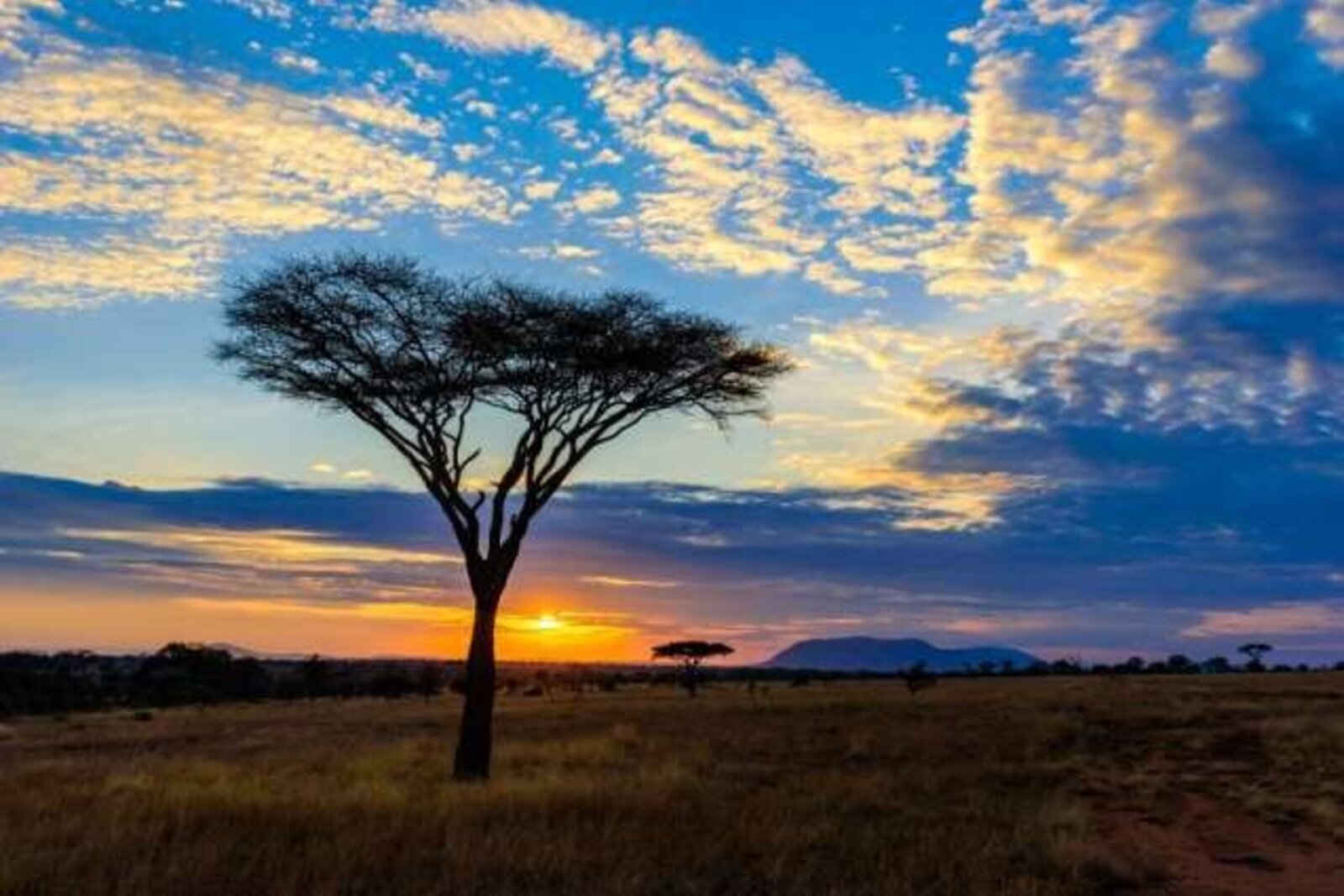
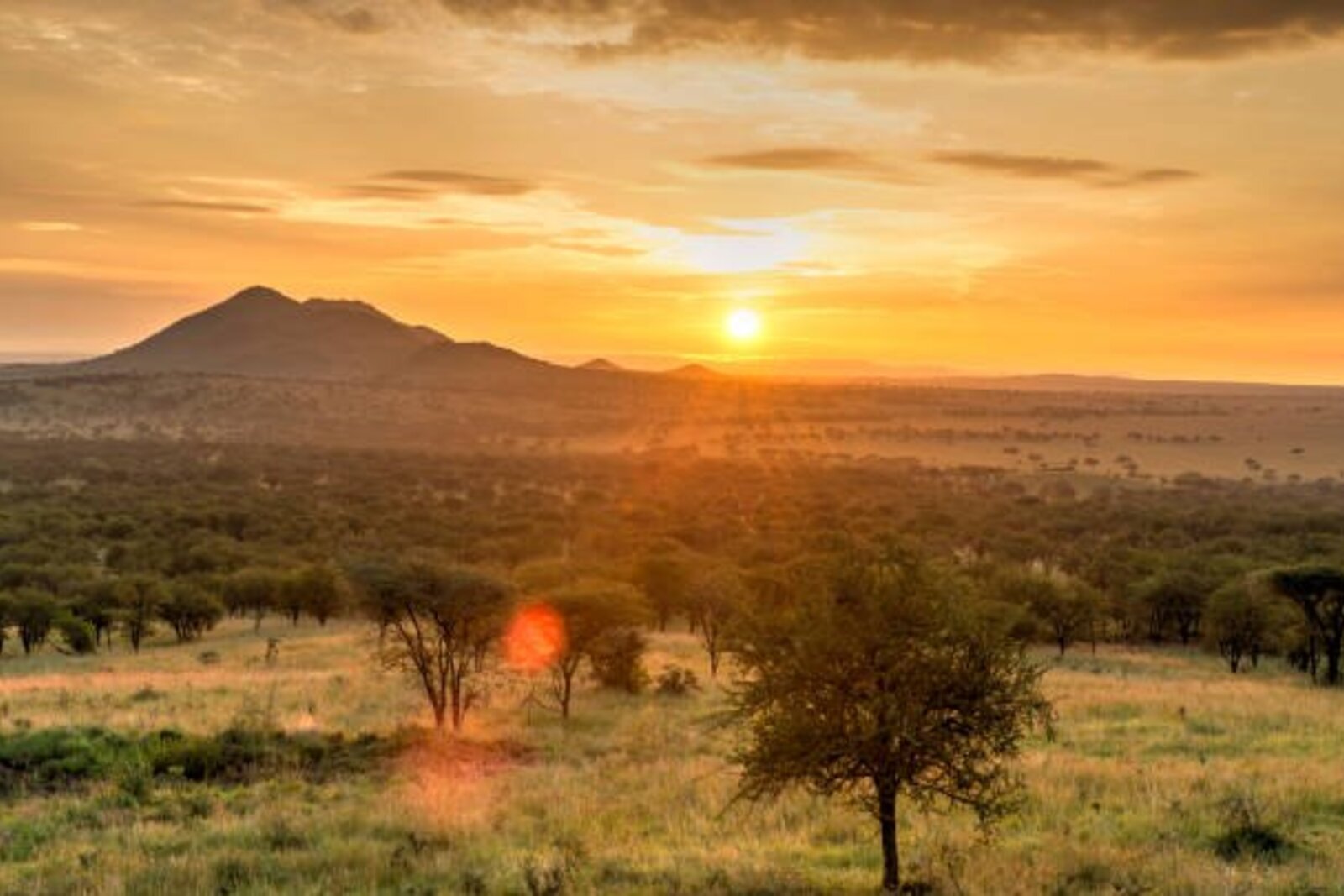
The Serengeti is the home of the classic African photograph: the lone flat-topped acacia against a blood-orange sunset, a cheetah scanning from a termite mound, a lion pride on a kopje with the plains rolling away behind, and — above all — the churning drama of a river crossing. Its light, its space and its big-cat action make it perhaps the most photographed wilderness on Earth. And uniquely, a dawn hot-air balloon safari over the plains delivers a perspective on scale and herds that nowhere else can match.
Round 6 verdict: A glorious tie. Ngorongoro wins for dramatic, compressed backdrops — crater walls, flamingos and Maasai among the game. The Serengeti wins for classic plains photography, big-cat action and the incomparable balloon-safari perspective.
Round 7: Best Time to Go
Here the two diverge completely, and it matters. The Ngorongoro Crater is a superb, reliable safari all year round — because its wildlife is resident and the floor is always full, there is no bad time to visit. The dry seasons (roughly June–October and January–February) bring easier driving, thinner grass and clearer sightings; the green seasons bring lush scenery, flamingos in force, dramatic skies and fewer vehicles. Whenever you come, the crater delivers.
The Serengeti, by contrast, is all about timing the migration. To catch the calving season and predator drama, aim for the southern plains around January–February; for the famous Mara River crossings, aim for the northern Serengeti around July–October. The western corridor peaks around May–June. The Serengeti is rewarding in any month — it holds vast resident wildlife regardless — but to witness its headline spectacle you must match your dates and your region to where the herds will be, which is exactly the sort of planning a specialist operator lives for.
Round 7 verdict: Ngorongoro wins for flexibility — it's brilliant whenever you come. The Serengeti wins for those willing to plan around the migration calendar, which unlocks the greatest wildlife show on Earth. Combining both, in the right season, gives you the best of both worlds.
Round 8: Cost & Park Fees
The fee structures differ in an important way. Ngorongoro is a Conservation Area, not a national park, and it carries both a Conservation Area entry fee (per person, per day) and a separate, notably steep crater service fee charged per vehicle for descending to the floor. Because most travellers spend just a single day (often only a morning) actually on the crater floor, the cost per hour of the crater experience is high — it is one of the pricier days on the northern circuit. The counter-argument is simple: no other single day in Tanzania delivers so much wildlife, so reliably, including the Big Five.
The Serengeti charges national-park entry fees (per person, per day, with concession fees in some private areas), which are significant but reward longer stays: the more days you spend, the better the value per sighting, because the Serengeti is a place to explore over three, four or more days as you follow the herds and search the plains. Broadly, a crater visit is a high-cost, high-reward single day, while the Serengeti is a multi-day investment that pays off in depth and variety.
It's also worth noting the crater's unique cultural dimension: as a Conservation Area, Ngorongoro is legally shared with the Maasai, who are permitted to graze their cattle on the floor alongside the wildlife — a living model of human–wildlife coexistence you won't see in the strictly protected Serengeti. Your fees help fund both conservation and these communities.
Round 8 verdict: The Serengeti offers better value over a multi-day stay; Ngorongoro is a premium, one-day splurge whose density justifies the price. Budget for the crater's per-vehicle service fee — it surprises many first-time visitors.
Round 9: Getting There & the Northern Circuit
Happily, these two are neighbours. Both sit on Tanzania's northern safari circuit, which begins in the town of Arusha (served by Kilimanjaro International Airport). Ngorongoro is roughly a 3–4 hour drive from Arusha, usually reached via Lake Manyara, and the crater rim is where many travellers overnight before a dawn descent. From the crater, the Serengeti lies a further scenic drive to the west (via the Naabi Hill gate and the southern plains), or a short hop by light aircraft to one of the Serengeti's many airstrips.
In practice, most itineraries combine them by road, driving the classic loop and enjoying Tarangire or Lake Manyara along the way; travellers short on time, or those who prefer to skip the long transfers, often fly into the Serengeti and combine it with a crater day at the start or end. Because the two are so close and so complementary, linking them is simple — and it turns a good safari into a great one.
Round 9 verdict: A tie, and a happy one — they're on the same circuit. Ngorongoro is the easier day-trip from Arusha; the Serengeti's vastness is best reached with a light-aircraft hop or built into a multi-day road loop. Either way, they belong together.
Round 10: Lodges & Safari Style
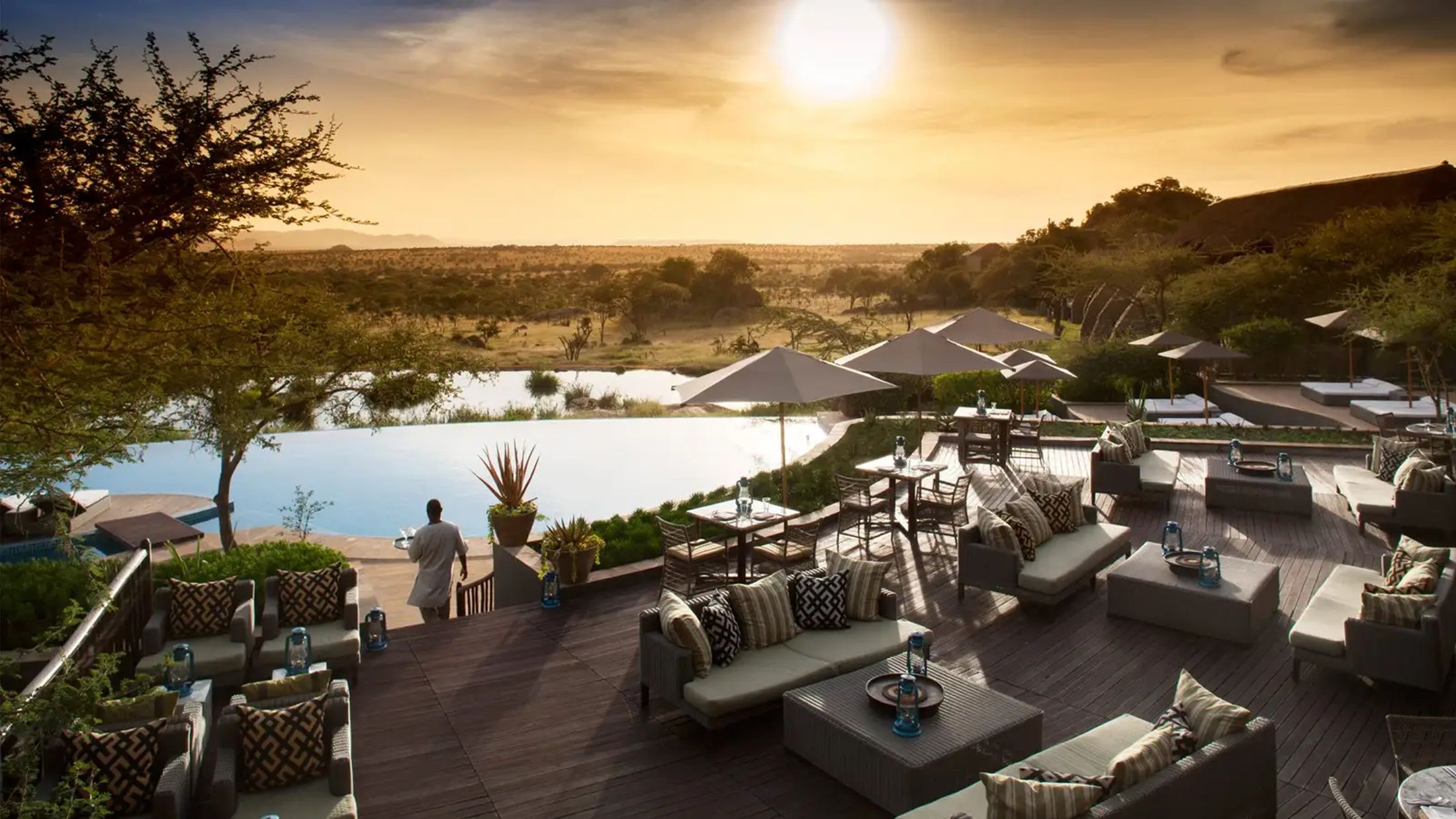
The two also offer different styles of stay. Ngorongoro's accommodation clusters along the crater rim, where lodges gaze down into the caldera — from grand classics to the legendary Ngorongoro Crater Lodge, whose theatrical 'Maasai-meets-Versailles' design is one of the most famous safari stays in Africa. Rim lodges make it easy to be first onto the floor at dawn, and the views are extraordinary; the trade-off is altitude (it can be cold and misty on the rim) and a focus on the single crater experience.
The Serengeti is the home of the classic mobile and permanent tented camp: intimate, canvas-walled camps that either stay put in a prime region or move seasonally to follow the migration, placing you right in the heart of the action. From simple, authentic bush camps to the most opulent lodges on the continent, the Serengeti's range is vast — and the joy of a mobile camp that tracks the herds is a very special kind of safari, waking to the sound of wildebeest just beyond the canvas.
Round 10 verdict: A tie of styles. Ngorongoro wins for dramatic crater-rim lodges with a view into the caldera and dawn access. The Serengeti wins for immersive, migration-following mobile camps set deep in the wild. Combining both gives your trip a wonderful contrast of atmospheres.
Round 11: The Do-Both Verdict — One Perfect Circuit
Here is the secret the debate so often misses: you don't have to choose. Ngorongoro and the Serengeti are two acts of the same show, sitting side by side on the northern circuit, and the overwhelming majority of our travellers do both — because together they tell the complete story of northern Tanzania. The crater gives you the guaranteed Big Five density and the black rhino in a single spectacular day; the Serengeti gives you the migration, the big cats and the boundless plains over several. One completes the other.
A classic route we build looks like this: fly into Kilimanjaro/Arusha, warm up with the elephants and baobabs of Tarangire or the birdlife of Lake Manyara, descend into the Ngorongoro Crater at dawn for the Big Five, then continue west into the Serengeti for several days following the herds and the cats — perhaps with a dawn balloon safari — before flying out. For the ultimate trip, extend to the Masai Mara next door in Kenya, or finish with the beaches of Zanzibar.
If you'd like to go deeper on each first, our Ngorongoro Crater safari guide and our Serengeti National Park safari guide cover everything in detail, while our Great Migration safari guide unpacks the herds month by month. To time each perfectly, see when to visit Ngorongoro and when to visit the Serengeti.
Related journey: Ngorongoro Crater & Serengeti Ultimate (7 days) — the crater floor and the endless plains in one seamless safari →
Round 11 verdict: The most magical answer of all — do both. On one northern-circuit loop you get the crater's guaranteed density and the Serengeti's migration and big cats. It is the definitive Tanzanian safari, and one we craft constantly.
| Aspect | Ngorongoro Crater | Serengeti |
|---|---|---|
| Type | Volcanic caldera / Conservation Area | National Park (plains ecosystem) |
| Size | ~260 km² crater floor | ~15,000 km² |
| Setting | Enclosed amphitheatre, walls 600 m high | Endless open plains to the horizon |
| Wildlife Density | Extraordinary — ~25,000 animals on the floor | Vast totals spread over a huge area |
| Great Migration | No (crater is resident wildlife) | Yes — the migration's beating heart |
| Big Five | Best in Tanzania in one day, incl. black rhino | All present; rhino very hard to find |
| Big Cats | Superb reliable lion & hyena; few cheetah/leopard | Africa's finest — lion, cheetah, leopard |
| Crowds | Can be busy — small floor, one descent | Immensity absorbs vehicles; true solitude |
| Best Time | Excellent all year (resident wildlife) | Depends on migration location & season |
| Fees | Conservation fee + steep per-vehicle crater fee | Park fees; better value over multiple days |
| Access | ~3–4 hrs drive from Arusha | Longer drive or light-aircraft hop |
| Lodges | Dramatic crater-rim lodges with caldera views | Mobile & permanent camps following the herds |
| Ideal Length | One spectacular day (often a morning) | Three to five-plus days of exploration |
| Best For | Guaranteed density & the Big Five in a day | Migration, big cats, scale & wilderness |
Which wins? Neither. Ngorongoro wins on reliable density and the Big Five — including the black rhino — in a single, jaw-dropping day. The Serengeti wins on scale, the Great Migration, the best big cats in Africa and true wilderness. They sit side by side on the northern circuit, so the ultimate answer is to do both — the crater for a day, the Serengeti for several.
When to Go: Ngorongoro vs Serengeti
Ngorongoro is a year-round safari. Because the crater's wildlife is resident and the floor is always densely populated, there is no wrong time to descend. The dry seasons (roughly June–October and January–February) offer easier driving and clearer sightings; the green seasons bring lush grass, flamingos in force and dramatic skies with fewer vehicles. Whenever you come, the crater delivers its Big Five spectacle.
The Serengeti is best matched to the migration. For the calving season and its predator drama, aim for the southern plains in January–February; for the famous Mara River crossings, aim for the northern Serengeti around July–October; the western corridor peaks around May–June. The park is superb in any month thanks to its huge resident wildlife, but timing your dates and region to the herds unlocks its greatest spectacle.
Because the crater is flexible and the Serengeti is seasonal, the smart move is to build your trip around the Serengeti's migration window and simply add a crater day at the start or end — a single dry-season or calving-season trip can deliver both, back-to-back, at their very best.
Why Book Your Tanzania Safari with Beyond Africa Safaris
We have spent decades crafting northern-circuit safaris across Tanzania, and we know both the Ngorongoro Crater and the Serengeti intimately — the best rim lodges for a dawn descent, the exact timing and region to intercept the migration, the quiet corners of the Serengeti where you'll have the plains to yourself, and how to weave Tarangire, Lake Manyara, the crater and the Serengeti into one seamless loop. Whether you want the crater's guaranteed density, the Serengeti's migration and big cats, or both, we build it around exactly what matters to you.
Many of our travellers don't choose between Ngorongoro and the Serengeti — they do both, and often extend to the Masai Mara next door in Kenya or the beaches of Zanzibar for the perfect finale. We time every leg to the season, secure the right camps in the right place before they fill, arrange your crater service fees and park permits, and handle every flight, transfer and detail so your safari runs effortlessly.
And because we are African-owned and operated from Cape Town, you plan directly with the experts who live and breathe this continent — not a distant middleman. Get in touch, and let's build your perfect Tanzanian safari, in the crater, on the plains, or across both.
Ready to Explore Tanzania's Crater and Plains?
Whether it's the guaranteed Big Five density of the Ngorongoro Crater, the Great Migration and big cats of the Serengeti, or the ultimate do-both northern-circuit safari, we'll build it perfectly — camps secured, timing dialled in, every detail handled. Reach out now.