Key Takeaways
- Namibia is a bucket-list country like no other - red dunes, desert wildlife, a wild Atlantic coast, Africa's greatest canyon and a diamond ghost town, all in one journey.
- Start with Sossusvlei and Etosha. The apricot dunes and the game-rich waterholes are the two pillars of every first Namibia trip.
- Add the coast and the south. Swakopmund, Walvis Bay, Fish River Canyon and Kolmanskop give the trip its variety and drama.
- Namibia is Africa's premier self-drive country - safe gravel roads, empty highways and easy logistics make it perfect for independent travel.
- Best time: May to October for wildlife and comfortable exploring; the desert photographs beautifully year-round.
Few countries pack as much wonder into one journey as Namibia. In a single trip you can watch the sun set fire to the world's tallest dunes, sit beside a floodlit waterhole as elephants and rhino come to drink, kayak with seals on a foggy Atlantic shore, stand on the rim of a canyon so vast it defies comprehension, and wander through a ghost town where the desert is swallowing grand old houses room by room. This is a land built for the bucket list.
This guide ranks the ten best places to visit in Namibia - the destinations worth building a trip around, whether you are here for wildlife, landscape, adventure or history. For each, we tell you what makes it special, when to go, how to reach it, and how it fits into a wider route. If your focus is purely wildlife, see our companion Top 10 Best Safari Destinations in Namibia. For the complete country picture, our Ultimate Namibia Travel Guide covers everything from visas to distances. This article answers the traveller's first big question: where should you go?
How to Plan Namibia: Three Regions to Weave Together
Namibia's must-see places fall into three broad areas. Understanding them makes route-planning simple - and helps you decide how many days you really need.
| Region | Headline Places | Best For |
|---|---|---|
| The Central Desert & Coast | Sossusvlei, Swakopmund, Walvis Bay, NamibRand | Iconic dunes, coastal adventure, stargazing, the essential highlights |
| The Wildlife North | Etosha, Damaraland, Twyfelfontein, Skeleton Coast | Waterhole game viewing, desert elephants, rock art, wild coast |
| The Deep South | Fish River Canyon, Kolmanskop, Lüderitz | Epic geology, ghost towns, history, dramatic road-trip scenery |
Most first-time visitors combine the central desert and coast with the wildlife north in a single loop from Windhoek - Sossusvlei, Swakopmund, Damaraland and Etosha. Those with more time, or a love of history and geology, add the deep south for Fish River Canyon and the ghost town of Kolmanskop. Below, the ten places that should shape your trip - ranked by how essential they are to a first Namibia journey.
The 10 Best Places to Visit in Namibia
1. Sossusvlei & Deadvlei - The Definitive Namibia
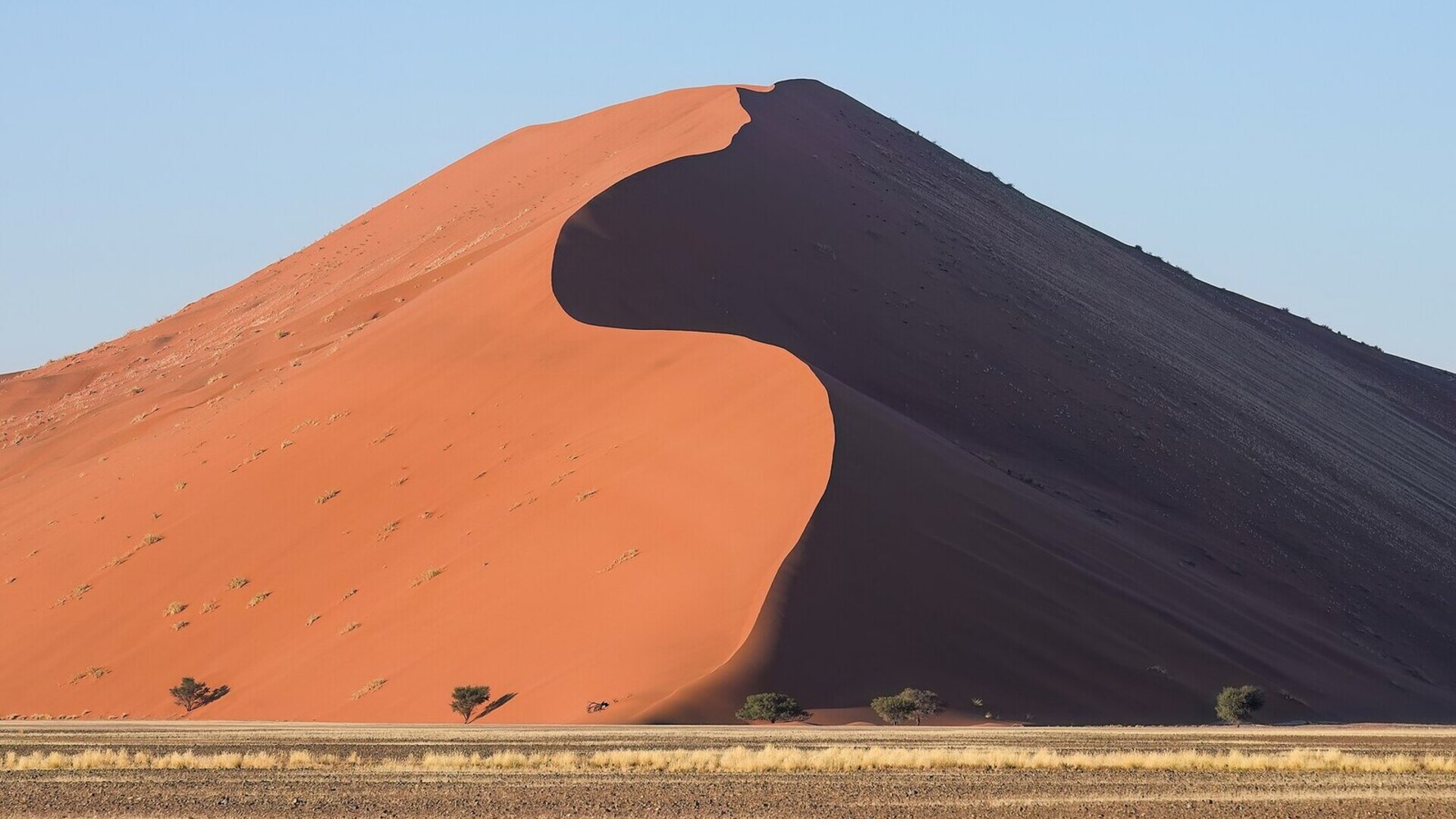
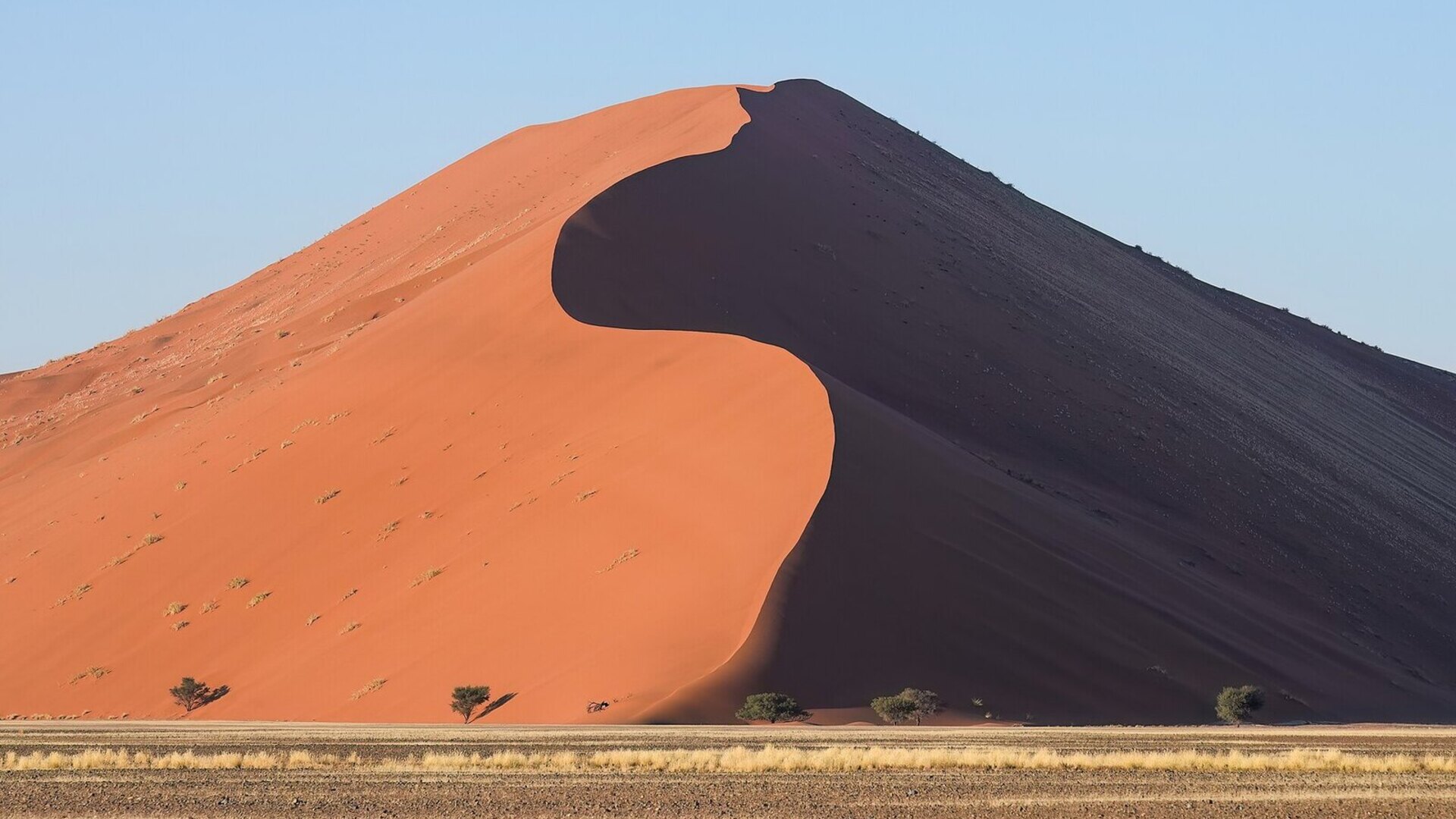
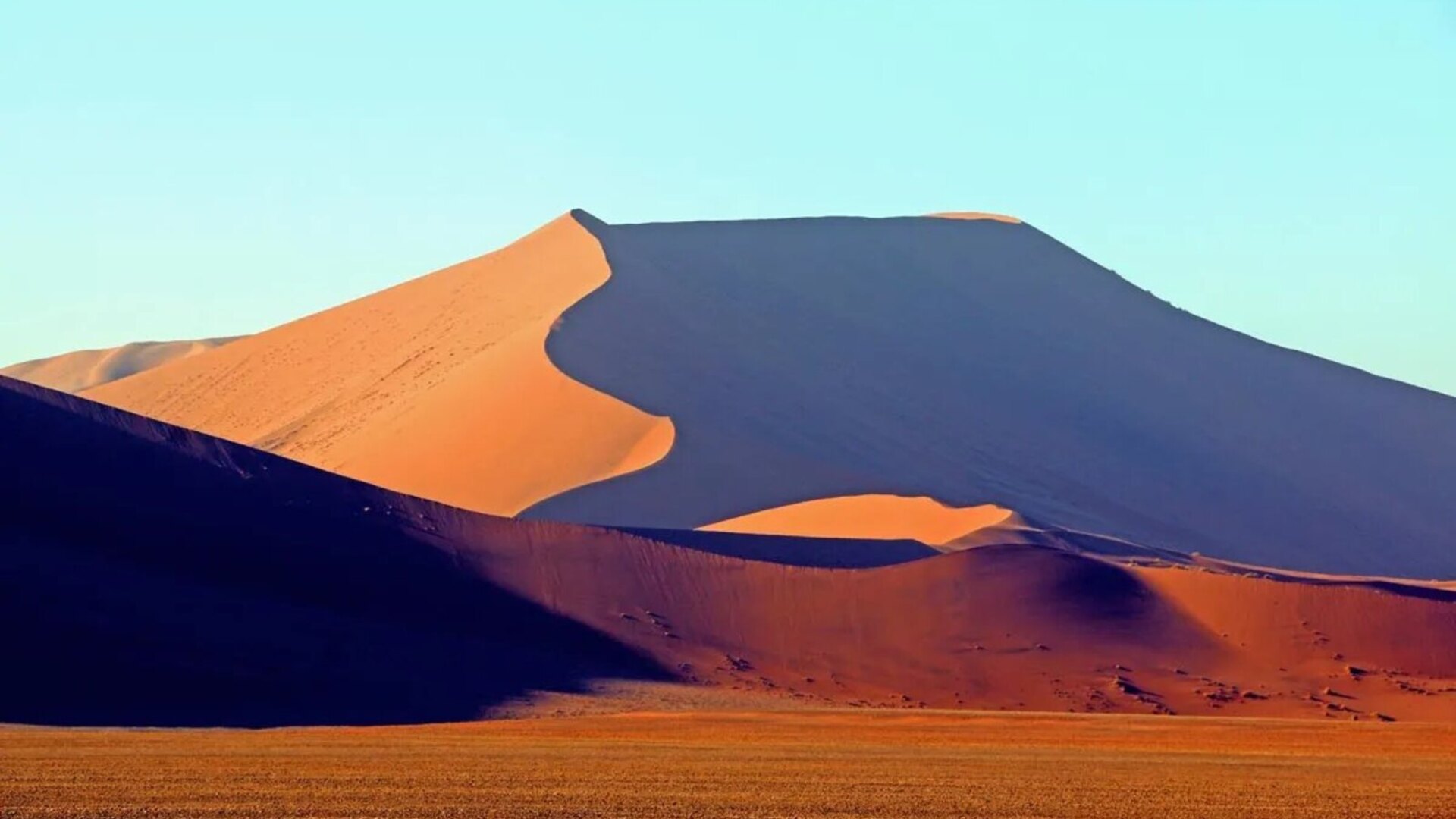
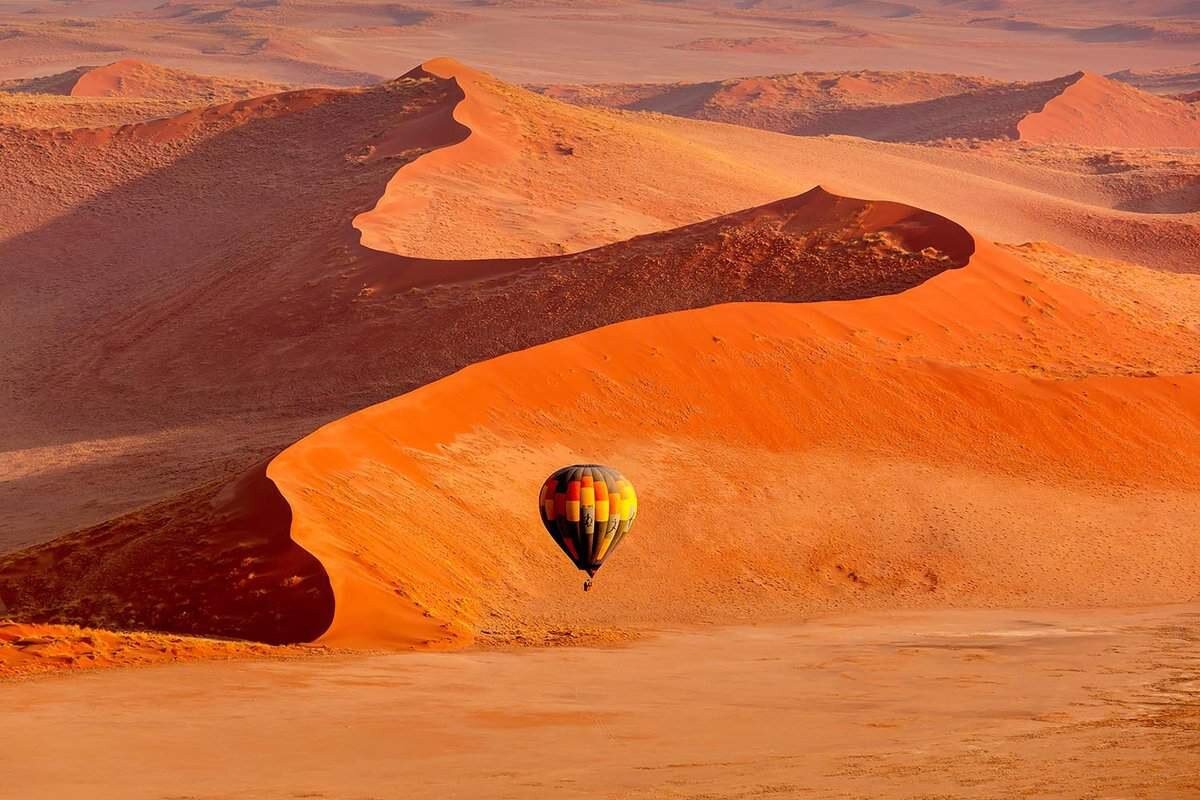
If you see one place in Namibia, make it Sossusvlei. Deep in the Namib-Naukluft, the world's tallest sand dunes rise more than 300 metres in waves of apricot and rust, glowing crimson at dawn and folding into shadow by mid-morning. At their heart sits Deadvlei - a blinding-white clay pan studded with 900-year-old camel-thorn trees, blackened by the sun and frozen in time. It is one of the most surreal, most photographed landscapes on Earth.
Climb Big Daddy or Dune 45 in the cool of morning, walk out across the cracked white floor of Deadvlei as the light shifts, and you will understand why this is the image the whole world associates with Namibia. Oryx, springbok and ostrich move across the sand, giving scale to a landscape that feels almost lunar.
- Best for: Iconic scenery, photography, dune climbing, the essential Namibia experience.
- When to go: Year-round; cooler months (May-September) for comfortable climbs and the clearest light.
- Access: Self-drive or fly-in to Sesriem, about 4-5 hours from Windhoek.
- Reality check: Enter the gate at dawn for the best light. It is a landscape, not a wildlife park - pair it with Etosha.
2. Etosha National Park - Namibia's Wildlife Stage
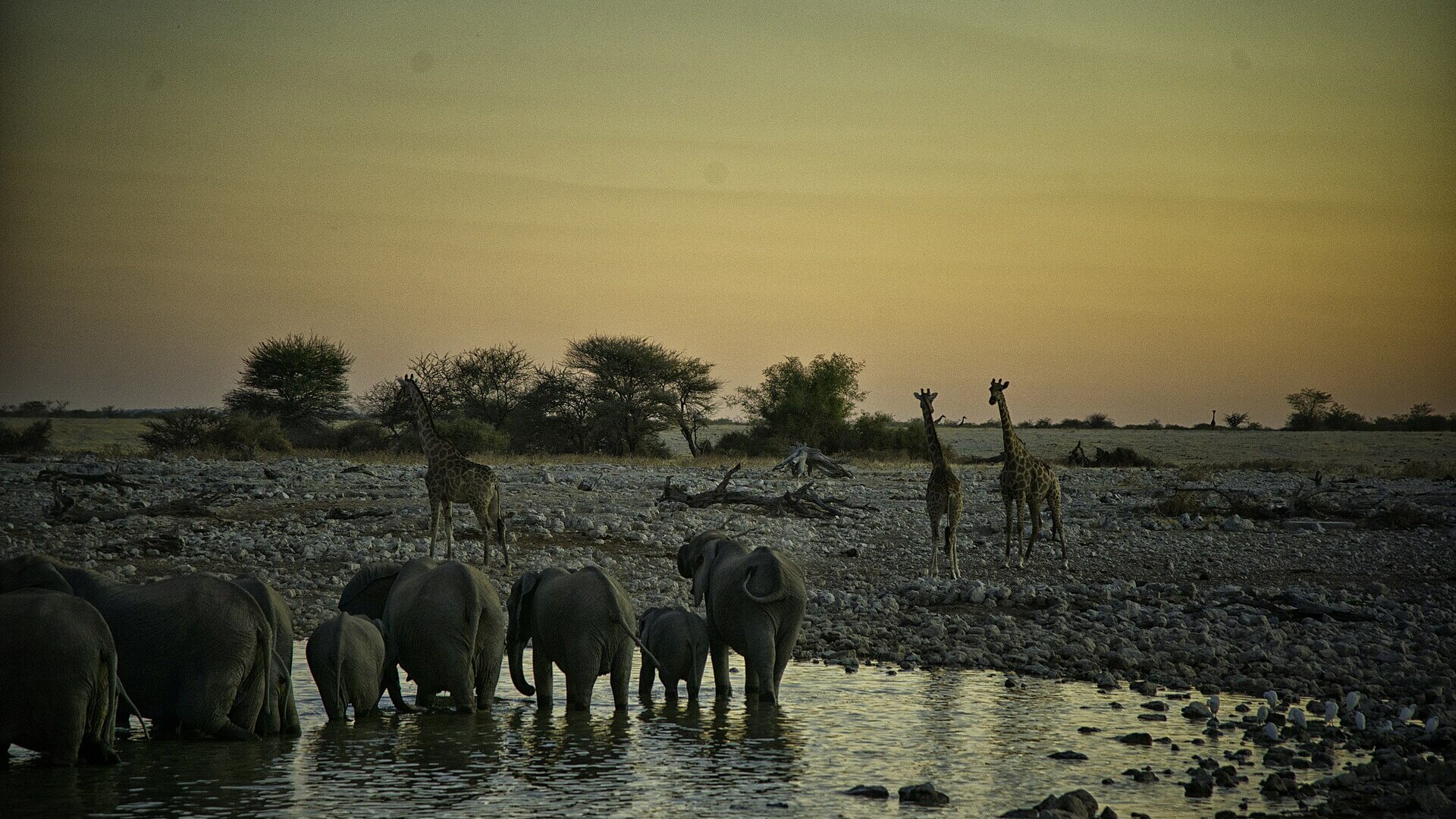
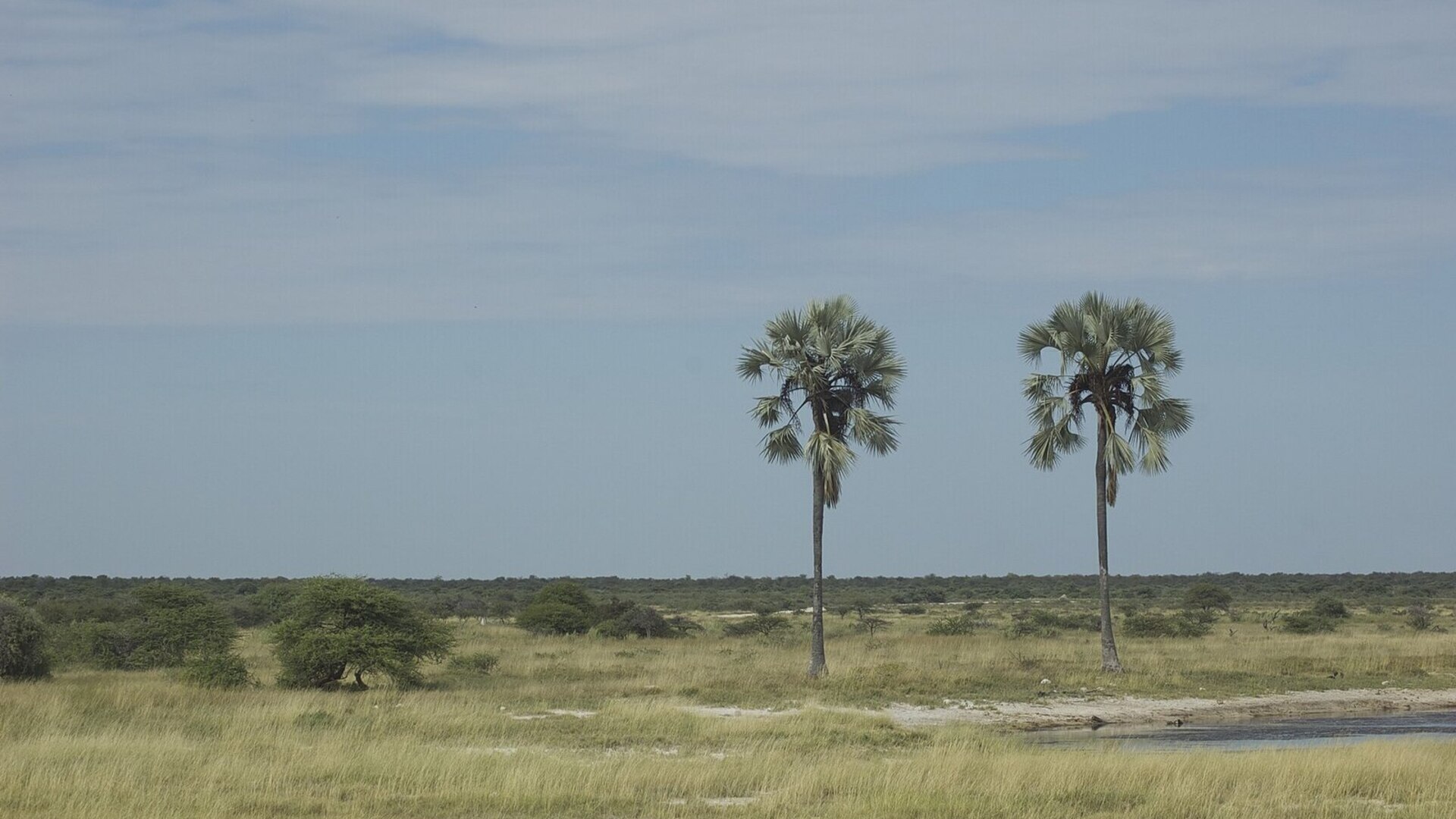
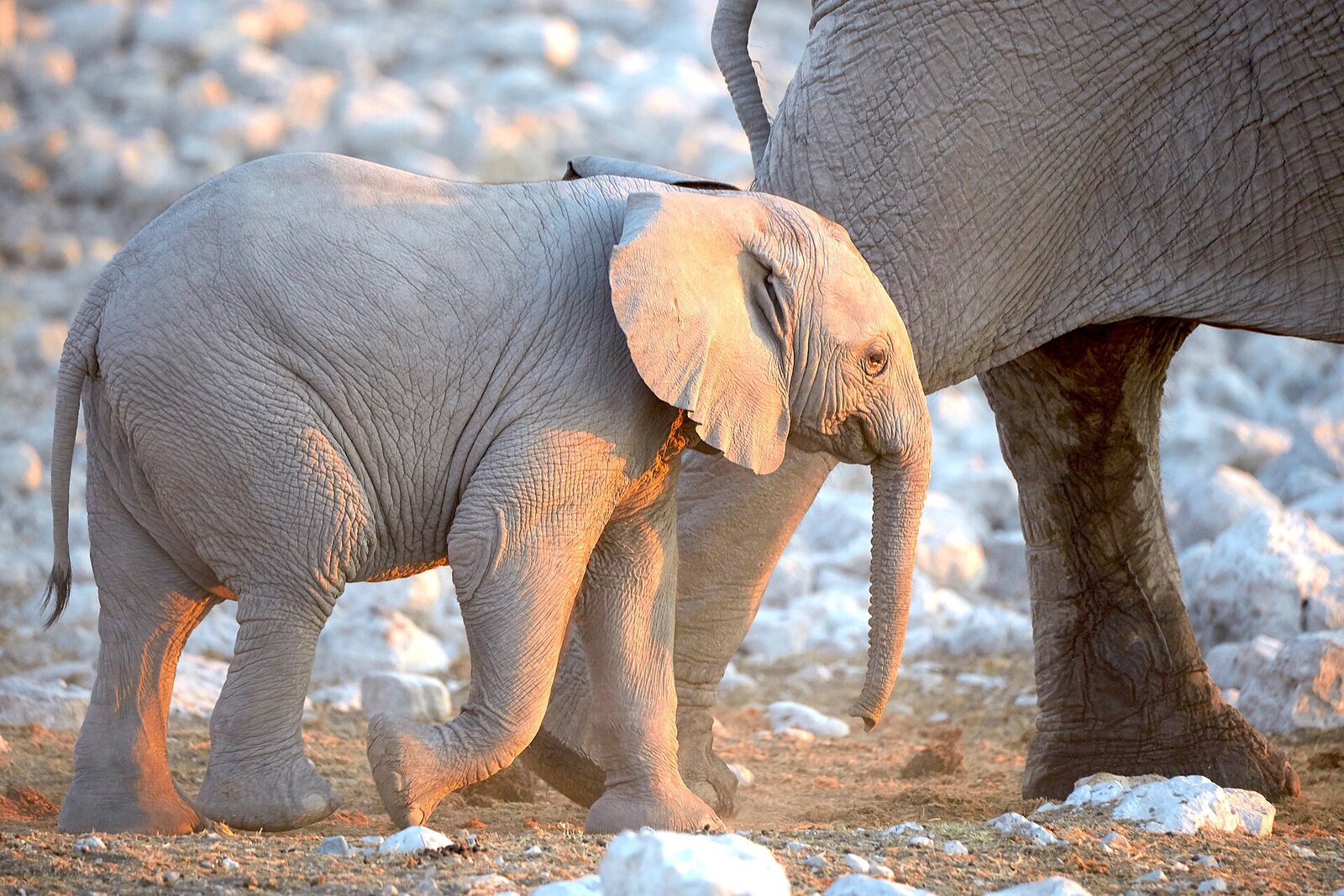
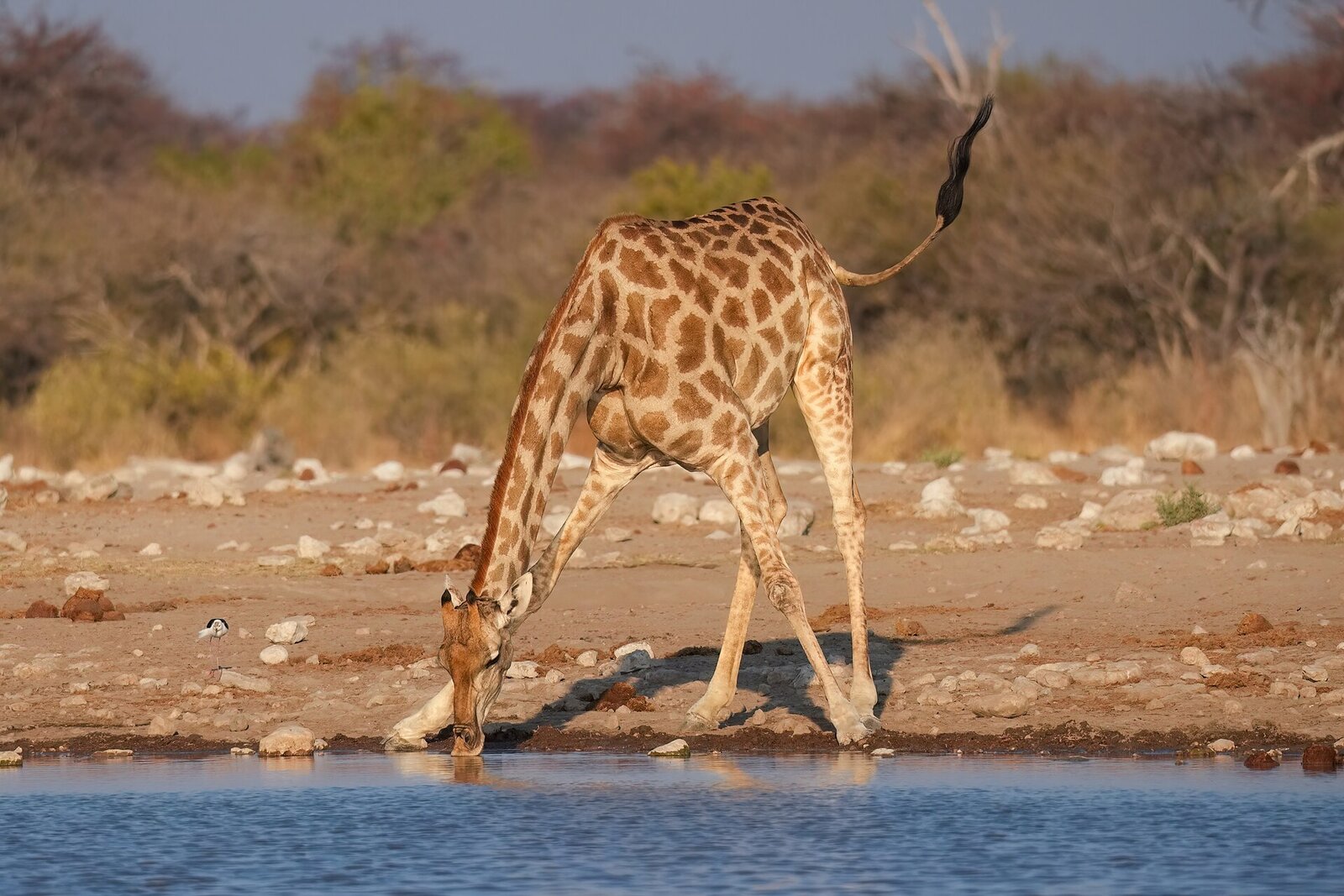
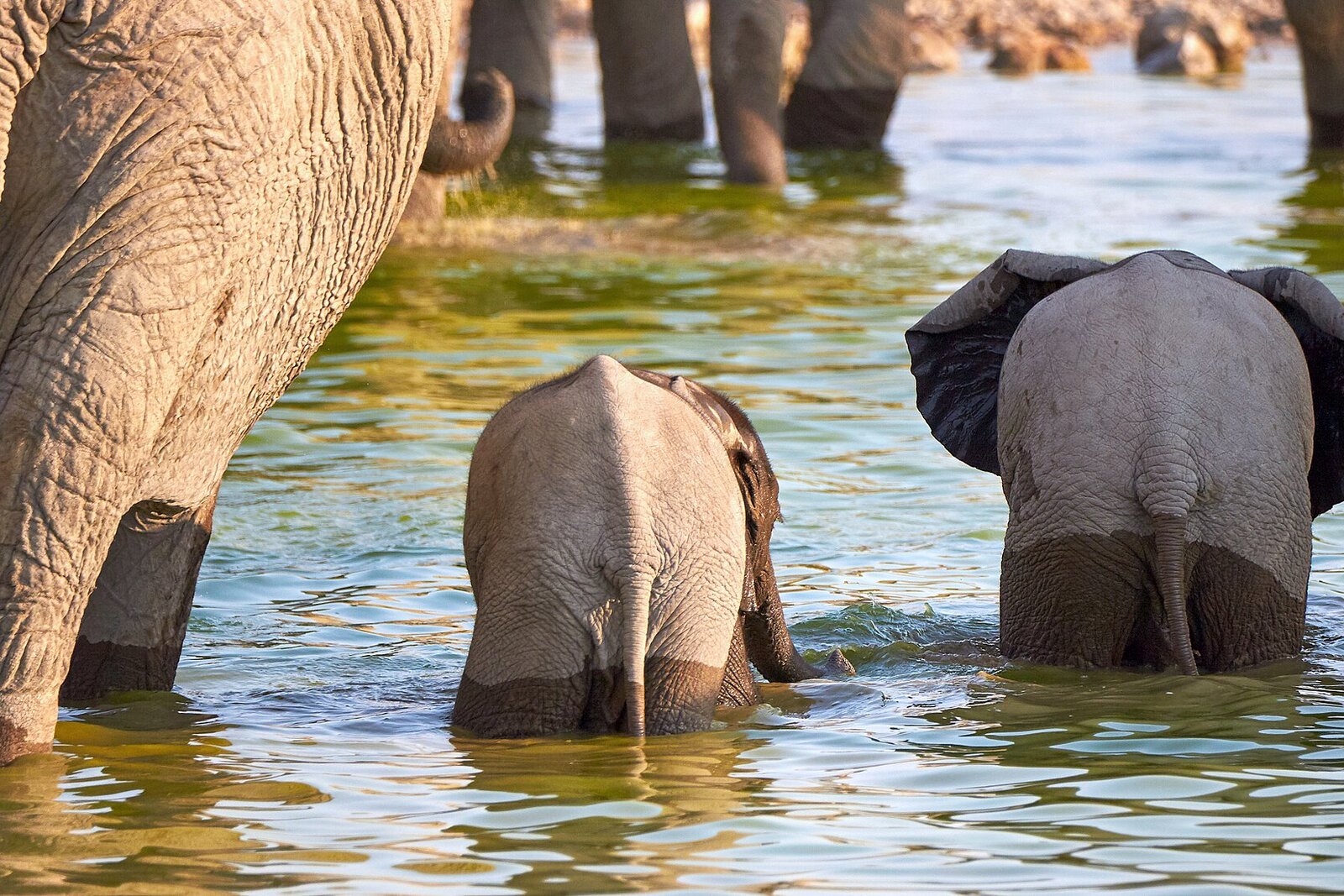
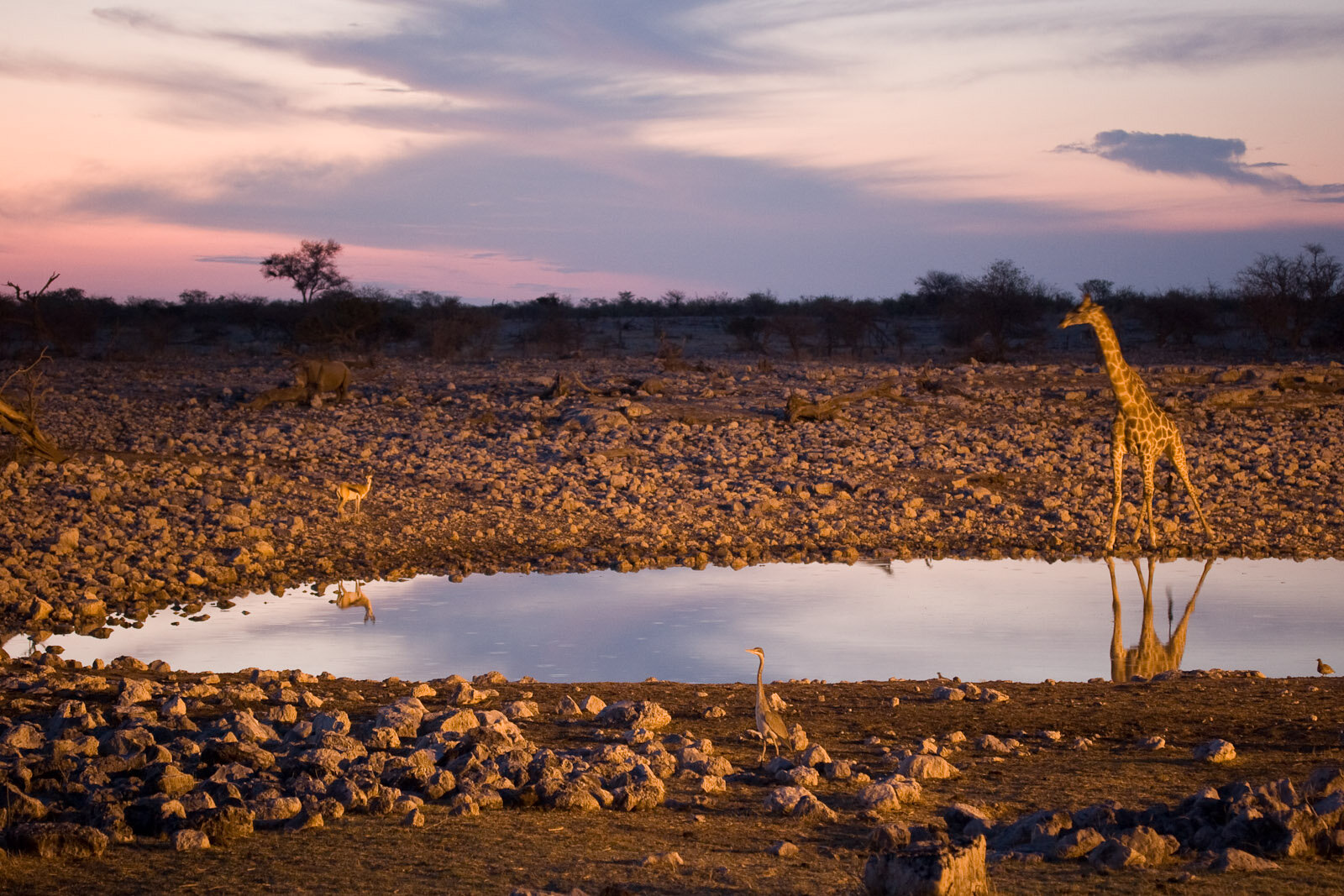
Etosha is where Namibia does wildlife on a grand scale. Its centrepiece is a vast salt pan so large it is visible from space, ringed by waterholes that become theatres for one of Africa's great dry-season spectacles. Rather than searching the bush, you settle at a waterhole and let the animals come - elephant, lion, giraffe, zebra, springbok, gemsbok and the black rhino that Etosha protects better than almost anywhere on Earth.
The floodlit waterholes at the rest camps keep the drama going after dark, when rhino and elephant arrive to drink beneath the stars. For families and first-time safari-goers, Etosha is as rewarding and accessible as African wildlife gets.
- Best for: Classic wildlife, elephant and rhino, families, first-time safari-goers.
- When to go: May-October, peaking September-October when game crowds the waterholes.
- Access: Self-drive from Windhoek (about 5 hours) or fly-in to camps on the park's edge.
- Reality check: Stay inside the park at least one night for the floodlit waterholes. No buffalo here - they live only in the northeast.
3. Swakopmund - The Adventure Capital
Where the Namib dunes meet the cold Atlantic sits Swakopmund, Namibia's charming German-colonial seaside town and adventure hub. With its palm-lined streets, seafront promenade, café culture and cool ocean air, it is the perfect place to catch your breath midway through a desert journey - and the launchpad for the country's biggest adrenaline menu.
From here you can sandboard and quad-bike the dunes, skydive over the desert-meets-ocean landscape, take a scenic flight along the Skeleton Coast, or head out on a "living desert" tour to find the extraordinary "little five" - chameleons, geckos and sidewinder snakes that survive in the sand. Add excellent restaurants and a laid-back seaside mood, and Swakopmund earns its place on every itinerary.
- Best for: Adventure activities, coastal relaxation, restaurants, a comfortable mid-trip base.
- When to go: Year-round; the coast is cool and often foggy even in summer.
- Access: Self-drive or fly-in; central on the classic Windhoek loop.
- Reality check: A town, not a game park - its wildlife is marine and coastal. Bring a warm layer; the coast is chilly.
4. Fish River Canyon - Africa's Grand Canyon
In the deep south, the earth cracks open into the Fish River Canyon - the largest canyon in Africa and the second largest on Earth. This colossal amphitheatre of ancient rock runs some 160 kilometres long, up to 27 kilometres wide and 550 metres deep. Standing on the rim at sunset, watching the light slide down its terraced walls, is one of the most humbling experiences in the country.
For the adventurous, the multi-day Fish River Hiking Trail is one of Africa's legendary treks - an 85-kilometre wilderness descent through the canyon, open in the cooler months only. Nearby, the hot springs of Ai-Ais provide the perfect reward, and the canyon pairs naturally with Kolmanskop and Lüderitz on a southern loop.
- Best for: Epic scenery, hiking, deep-south road trips, sunset photography.
- When to go: April-September (cooler months); the hiking trail runs May-September only.
- Access: Self-drive in the far south; a long haul from the central circuit, best on a dedicated southern route.
- Reality check: Scenery, not wildlife - and remote. Build it into a southern loop rather than a quick detour.
5. Damaraland & Twyfelfontein - Desert Wildlife & Ancient Art
Damaraland is Namibia at its most cinematic - rust-red rock, flat-topped mountains and dry riverbeds where wildlife survives against the odds. It is the realm of the famous desert-adapted elephants and of free-ranging black rhino, tracked on foot in one of Africa's great walking-safari experiences. The scenery alone justifies the journey.
It is also one of the continent's richest cultural landscapes. The rock engravings at Twyfelfontein, a UNESCO World Heritage Site, form one of Africa's largest concentrations of ancient San rock art, some over 6,000 years old. Add the geological curiosities of the Petrified Forest, the Organ Pipes and Burnt Mountain, and Damaraland rewards curiosity as much as adventure.
- Best for: Desert elephants, black rhino tracking, ancient rock art, dramatic scenery.
- When to go: May-October for wildlife; the light is superb year-round.
- Access: Self-drive or fly-in; it slots neatly between the coast and Etosha on the classic loop.
- Reality check: Wildlife is low-density and hard-won - this is about quality, setting and history, not big numbers.
Namibia's Wildlife & Waterholes
6. Walvis Bay - Flamingos, Dolphins & Dunes
Just south of Swakopmund, Walvis Bay wraps around one of southern Africa's most important coastal wetlands - a shallow lagoon that shimmers pink with thousands of flamingos and pelicans. It is the country's marine-wildlife capital, where the desert, the ocean and abundant birdlife meet in spectacular fashion.
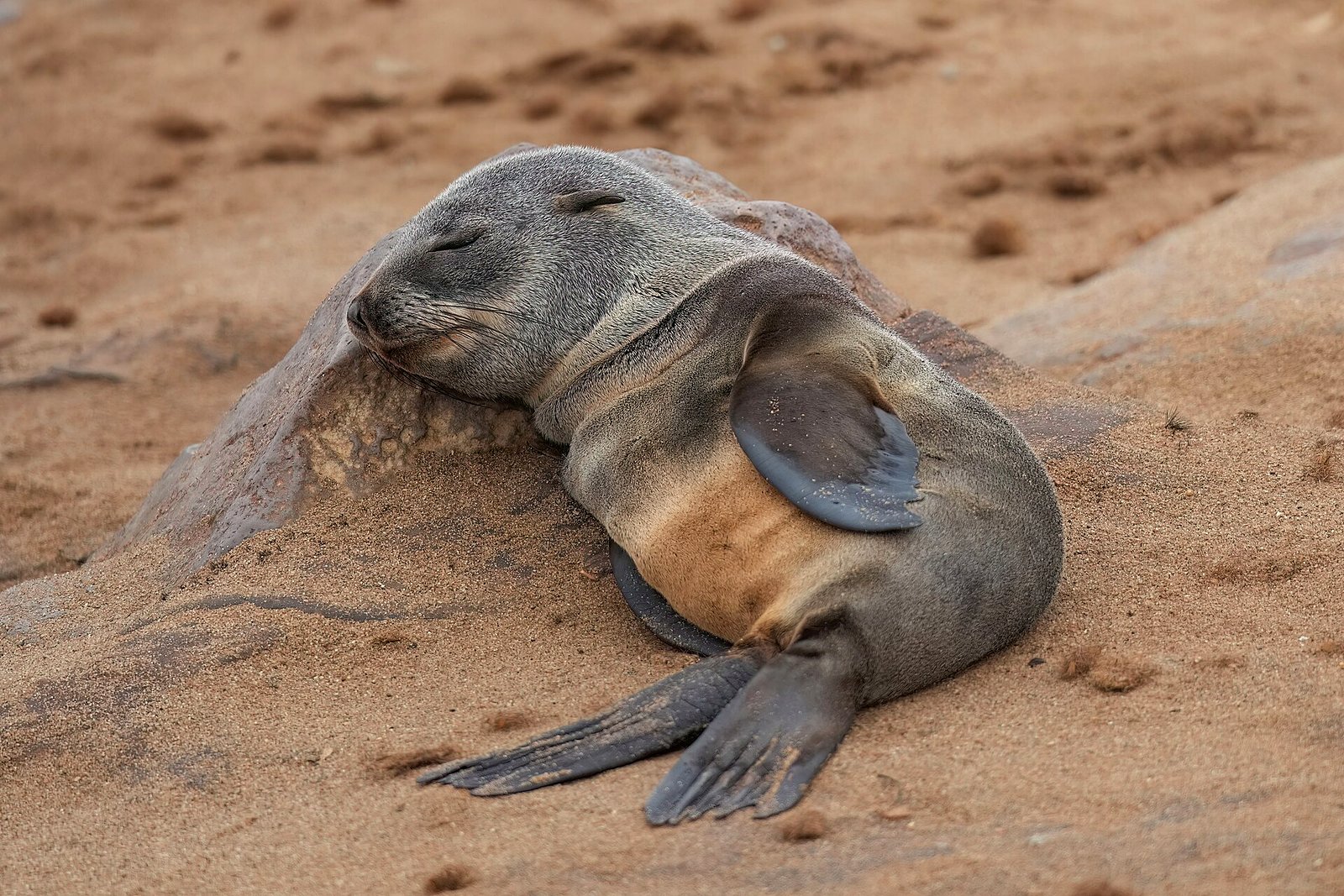
Take a catamaran cruise across the bay to meet playful Cape fur seals and bottlenose dolphins, kayak among the seal colonies at Pelican Point, or head inland to Sandwich Harbour, where the world's tallest coastal dunes plunge straight into the Atlantic - a 4x4 adventure that ranks among Namibia's most jaw-dropping drives.
- Best for: Flamingos and marine wildlife, dolphin cruises, kayaking, the Sandwich Harbour dunes.
- When to go: Year-round; flamingo numbers are highest in the warmer months.
- Access: A short drive south of Swakopmund; easy to combine.
- Reality check: Sandwich Harbour requires a guided 4x4 tour - do not attempt it alone. The coast is cool and breezy.
7. The Skeleton Coast - Africa's Most Haunting Shore
The Skeleton Coast is where the desert collides with the cold Atlantic in a world of fog, wind and silence. Named for the whale bones and shipwrecks scattered along its shores, this is one of the most remote and atmospheric coastlines on Earth - stranded vessels half-buried in sand, roaring dunes, and the largest Cape fur seal colonies in the world at Cape Cross.
Inland, the coast's dry river valleys shelter surprising life - desert lions, brown hyena, elephants and oryx. A fly-in safari to the far northern Skeleton Coast is one of the most exclusive wilderness experiences in Africa, delivering total solitude in a landscape that feels closer to another planet than another country.
- Best for: Wilderness atmosphere, shipwrecks, seal colonies, fly-in exclusivity.
- When to go: Year-round; morning fog is atmospheric and typical.
- Access: The southern section (Cape Cross) is drivable from Swakopmund; the far north is fly-in only.
- Reality check: Scenery and solitude first, wildlife second. The northern concessions are remote and priced accordingly.
8. Kolmanskop & Lüderitz - The Diamond Ghost Town
In the deep south, the desert is quietly reclaiming one of Namibia's most extraordinary sights. Kolmanskop was a booming diamond-mining town in the early 1900s - grand German houses, a ballroom, a hospital, even a bowling alley - abandoned when the diamonds ran out and the mining moved on. Today its once-elegant rooms stand knee-deep in sand, doors opening onto dunes, a hauntingly beautiful monument to boom and bust.
It sits beside Lüderitz, a windswept Art Nouveau harbour town clinging to the rocky coast, where colourful colonial buildings look out over a wild, cold sea. Together they make an unforgettable, photogenic detour for anyone drawn to history and atmosphere - and a natural pairing with Fish River Canyon on a southern loop.
- Best for: Photography, history, ghost-town atmosphere, off-the-beaten-track travel.
- When to go: Year-round; early morning light is best for photographing the sand-filled rooms.
- Access: Self-drive in the deep south; a permit is required to enter Kolmanskop.
- Reality check: Remote from the main circuit - visit as part of a dedicated southern route with Fish River Canyon.
9. NamibRand & Sesriem - The Darkest Skies on Earth
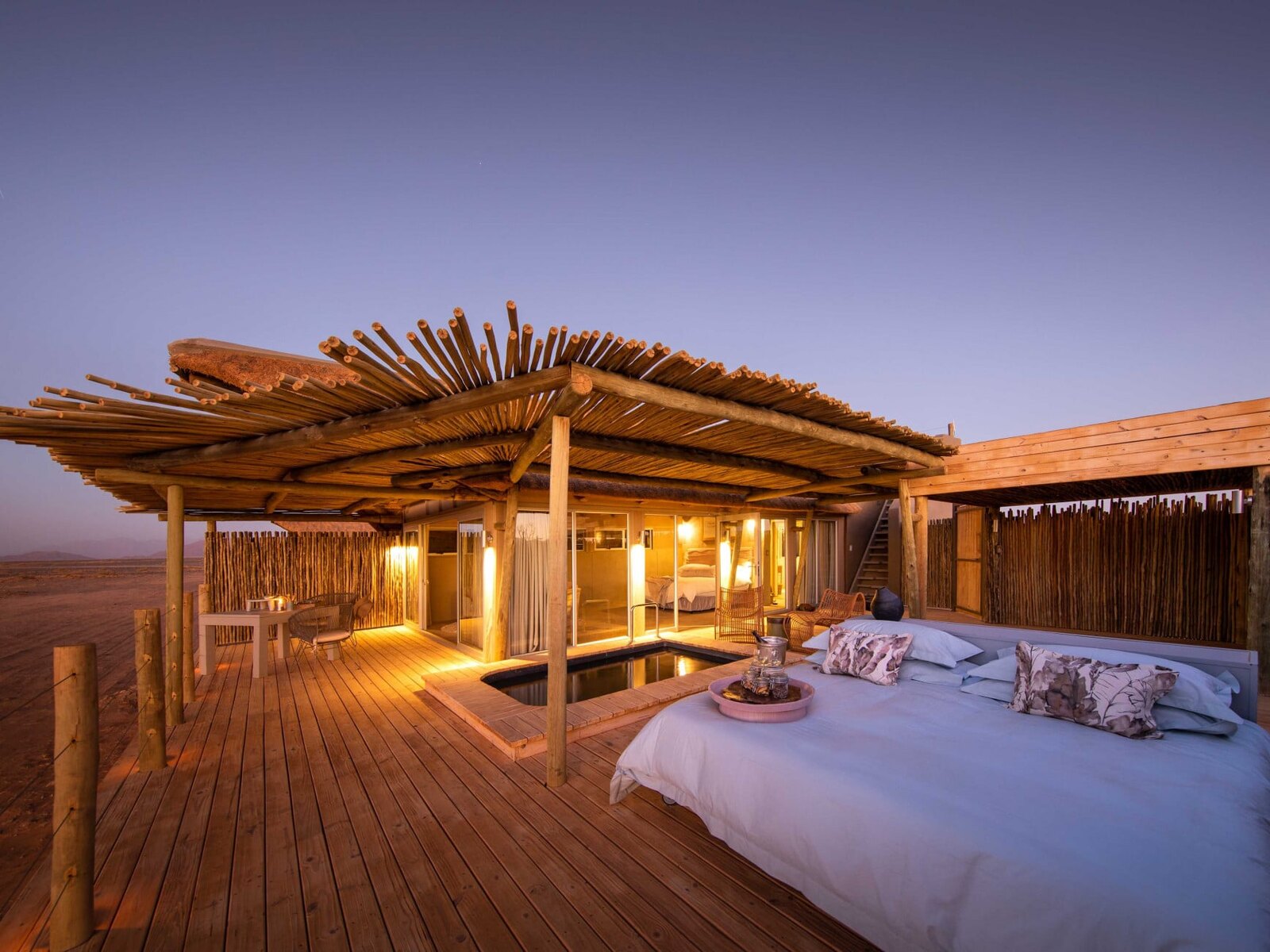
Just south of Sossusvlei, the NamibRand Nature Reserve is one of Africa's great private conservation successes - a vast wilderness of red dunes, grassy plains and island mountains, and a certified International Dark Sky Reserve. On a moonless night here, the Milky Way is bright enough to read by and casts a faint shadow on the sand. There is no better place in Namibia to look up.
By day it offers the classic Namib experience without the crowds - dune drives, nature walks and healthy populations of oryx, springbok and mountain zebra. Several lodges feature private observatories and open-air "star beds," turning a night's sleep into a front-row seat on the universe. The nearby Sesriem area is the gateway to Sossusvlei itself.
- Best for: Stargazing and astronomy, exclusive desert experiences, nature walks.
- When to go: Year-round; winter months (May-August) offer the clearest, darkest skies.
- Access: Self-drive or fly-in, immediately south of the Sossusvlei area.
- Reality check: A landscape-and-sky destination, not a Big Five park. Pair it with Sossusvlei for a complete southern-desert leg.
10. Windhoek - The Gateway City
Almost every Namibia journey begins and ends in Windhoek, the country's relaxed, leafy capital set in the central highlands. Compact, safe and easy to navigate, it is a pleasant place to shake off a long flight, stock up before a self-drive, and get a first taste of Namibia's blend of African, German and wider cultural influences.
Spend a day exploring its craft markets and museums, admire landmarks like the Christ Church and the Independence Memorial, and dine well - Windhoek's restaurants are famous for game meats and its namesake lager. It is not a wilderness destination, but as the hub that connects every region, it is where your Namibian adventure takes shape.
- Best for: Arrival and departure, markets and museums, dining, trip logistics.
- When to go: Year-round; pleasant highland climate.
- Access: International flights arrive at Hosea Kutako Airport, 45 minutes from the city.
- Reality check: A gateway city, not a wildlife stop - budget a day at the start or end, not a big chunk of your trip.
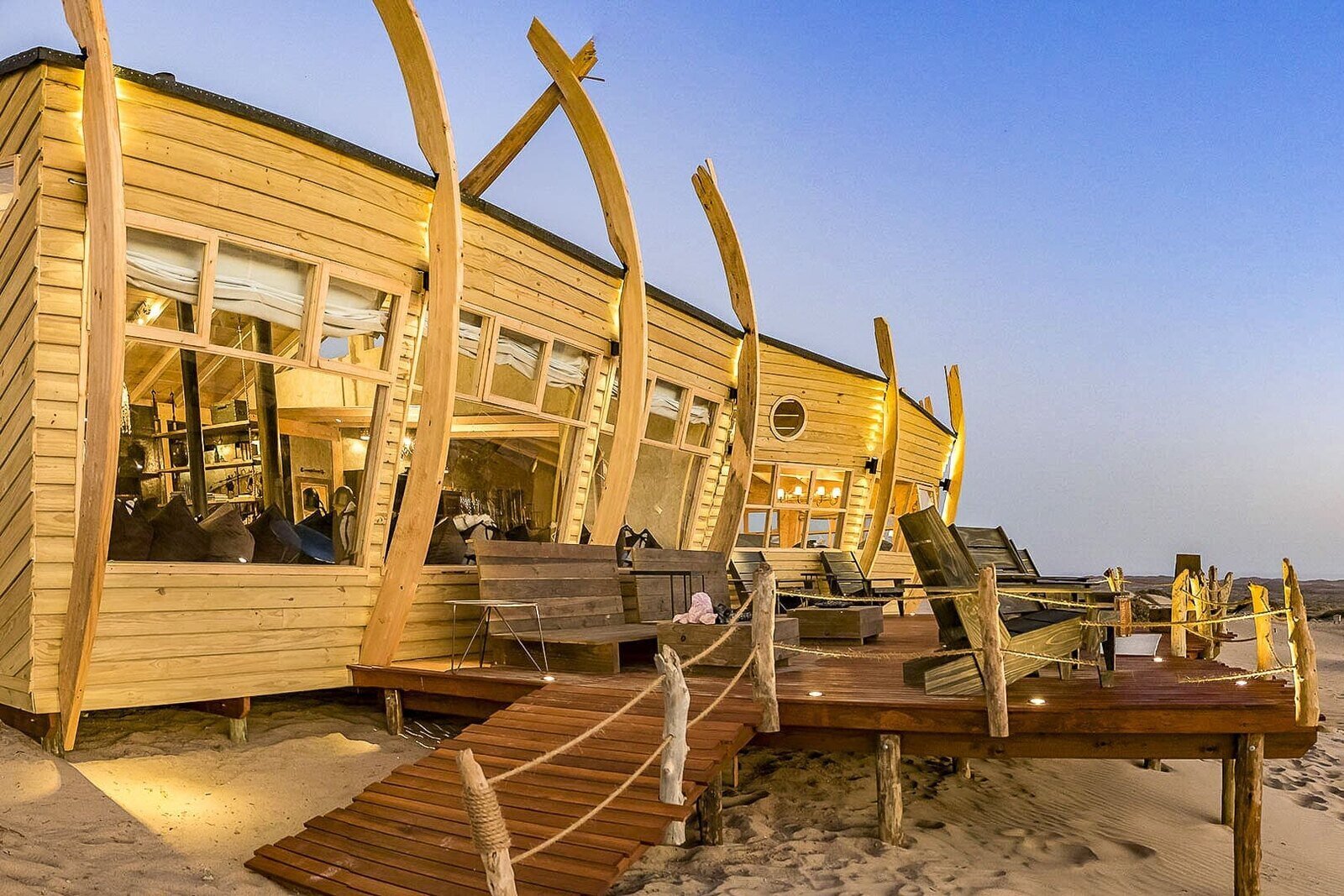
Namibia's Coast & Desert Wonders
How to Combine Namibia's Best Places Into One Trip
Namibia rewards the loop. The classic 10-12 day route runs clockwise from Windhoek: south to Sossusvlei for the dunes (and NamibRand for the stars), west to Swakopmund and Walvis Bay for the coast, north through Damaraland for desert wildlife and rock art, into Etosha for game viewing, then back to Windhoek. It captures the essence of the country and works beautifully as a self-drive.
Travellers drawn to history and geology can add a separate southern loop linking Fish River Canyon, Kolmanskop and Lüderitz. With two weeks - or a fly-in itinerary - you can combine both, or push north to the remote Skeleton Coast for true wilderness. For help mapping distances and pacing, our Self-Drive Safari Namibia guide and Ultimate Namibia Travel Guide are the place to start, and our Best Time to Visit Namibia guide helps you time it right.
Planning tip: Namibia's distances are deceptive - the country is large and much of the driving is on gravel. Build in no fewer than 8 days for a highlights loop, plan two nights at each key stop, and never drive after dark. If time is short, fly between the far-flung regions rather than trying to drive them all.
Best Time to Visit Namibia
Namibia is a year-round destination, but the experience shifts with the seasons. Here is the quick view - for the full month-by-month breakdown, see our Best Time to Visit Namibia guide.
| Season | Months | What to Expect |
|---|---|---|
| Peak Dry Season | August-October | Best wildlife - animals crowd Etosha's waterholes. Warm days, cool nights, minimal rain. Prime time. |
| Cool Dry Season | May-July | Clear skies, comfortable dune climbs, cold desert nights, superb stargazing. Excellent all-round. |
| Green Season | November-April | Dramatic skies, newborn animals, migratory birds, lower rates. Hotter, with occasional heavy rain on gravel roads. |
| Shoulder Months | April & November | A fine balance of decent wildlife, green landscapes and fewer visitors. Good value. |
Ready to Plan Your Namibia Trip?
Our specialists design private, tailor-made Namibia journeys - self-drive or fly-in - around every place in this guide.
Explore Namibia Safari PackagesFrequently Asked Questions
What is the number one place to visit in Namibia?
Sossusvlei is Namibia's single most iconic destination - the towering apricot dunes and the surreal white clay pan of Deadvlei are the images that define the country, and no first trip should miss them. That said, most travellers pair Sossusvlei with Etosha National Park for wildlife, because together they capture the two great faces of Namibia. If you can only choose one, choose Sossusvlei; if you have a week or more, do both.
How many days do you need to see the best of Namibia?
A focused highlights trip covering Sossusvlei, Swakopmund and Etosha works in 7-8 days. To add Damaraland, the Skeleton Coast or Fish River Canyon, allow 10-14 days. Namibia's distances are large and much of the driving is on gravel, so we recommend no fewer than 8 days. A two-week self-drive or fly-in loop is the sweet spot for seeing the country's greatest places without rushing.
Is Namibia good for a self-drive holiday?
Namibia is one of the best self-drive destinations in the world. Its gravel roads are well-maintained and safe, distances between fuel stops are manageable with planning, and the freedom of those empty desert highways is unforgettable. First-timers should stick to the main circuit, carry two spare tyres, and never drive at night. For remote regions like Kaokoland, a guided or fly-in trip is wiser.
What is Kolmanskop and is it worth visiting?
Kolmanskop is an abandoned diamond-mining town near Lüderitz in the far south, founded in the early-1900s diamond rush and left to the desert when the diamonds ran out. Today its grand German houses stand half-buried in sand, their rooms filled with dunes - a hauntingly beautiful, endlessly photogenic ghost town. It is absolutely worth visiting if your route takes you into the deep south, ideally paired with Lüderitz and Fish River Canyon.
Can you see wildlife outside Etosha in Namibia?
Yes. While Etosha is the premier wildlife park, Namibia offers superb game viewing elsewhere: desert-adapted elephants and black rhino in Damaraland, oryx and springbok across the Namib, Cape fur seals on the coast, flamingos at Walvis Bay, and buffalo, hippo and big elephant herds in the water-rich Zambezi Region. Many private reserves also offer excellent guided wildlife experiences.
When is the best time to visit Namibia?
The dry season (May to October) is the most popular time - wildlife concentrates at Etosha's waterholes, skies are clear and the desert is at its most comfortable to explore, with September and October the wildlife peak. The desert landscapes photograph beautifully year-round. The green season (November to April) brings dramatic skies, newborn animals and lower rates, though occasional heavy rain can affect gravel roads.
Is Namibia safe for tourists?
Namibia is one of Africa's safest and most stable countries to visit, with excellent infrastructure, friendly people and a well-established tourism industry. It is a favourite for families and first-time visitors to Africa. Normal precautions apply in Windhoek and towns, and your operator will brief you on gravel-road driving. Malaria risk is low to negligible across most of the country, with some seasonal risk only in the far north and the Zambezi Region.
How do you combine Namibia's best places into one trip?
The classic loop runs from Windhoek: south to Sossusvlei for the dunes, west to Swakopmund and Walvis Bay for the coast, north through Damaraland for desert wildlife and rock art, into Etosha for game viewing, then back to Windhoek - roughly 10-12 days. For the deep south, a separate loop links Fish River Canyon, Kolmanskop and Lüderitz. With two weeks or a fly-in itinerary you can combine both.
The Verdict: Namibia's Best Places
Namibia is a country of staggering variety - a place where you can climb the world's tallest dunes at dawn, watch elephants at a floodlit waterhole by night, kayak with seals on a foggy shore, and stand inside a ghost town being swallowed by the desert, all within a single trip. The red dunes of Sossusvlei, the wildlife of Etosha, the adventure of Swakopmund and the drama of Fish River Canyon together form one of the great journeys on Earth.
When you are ready to turn this list into a route, our specialists will design a private, tailor-made Namibia journey - self-drive or fly-in - around exactly the places that speak to you. To match these destinations to the right style of trip, continue to our Top 10 Best Safari Tours in Namibia, and for where to sleep along the way, see our Best Namibia Safari Lodges guide.