Key Takeaways
- Around 250,000 wildebeest die every year on the migration — from drowning, exhaustion, disease and predation. Out of a population of roughly 1.5 to 2 million, it is a staggering annual toll, and it is what keeps the whole ecosystem alive.
- Crocodiles are not the main killers. Research on the Mara River puts crocodile predation at only about 2% of crossing deaths. For every wildebeest a crocodile takes, roughly fifty more die from drowning, trampling and the sheer crush of the herd.
- The crossing itself is the real danger. Steep banks, bottlenecks, panic and sudden changes in current sweep away the young and the weak. Mass drownings on the Mara have killed between 3,250 and 9,250 animals in a single event.
- Every predator has its season. Lions and crocodiles work the rivers in the dry months; the calving season on the southern plains draws cheetah, hyena and lion to the most vulnerable newborns of all.
- The herd survives through numbers and strategy — swarm intelligence, the wildebeest–zebra partnership, calves that run within days of birth, and scent trails that hold splintered groups together. It is one of nature's great survival stories.
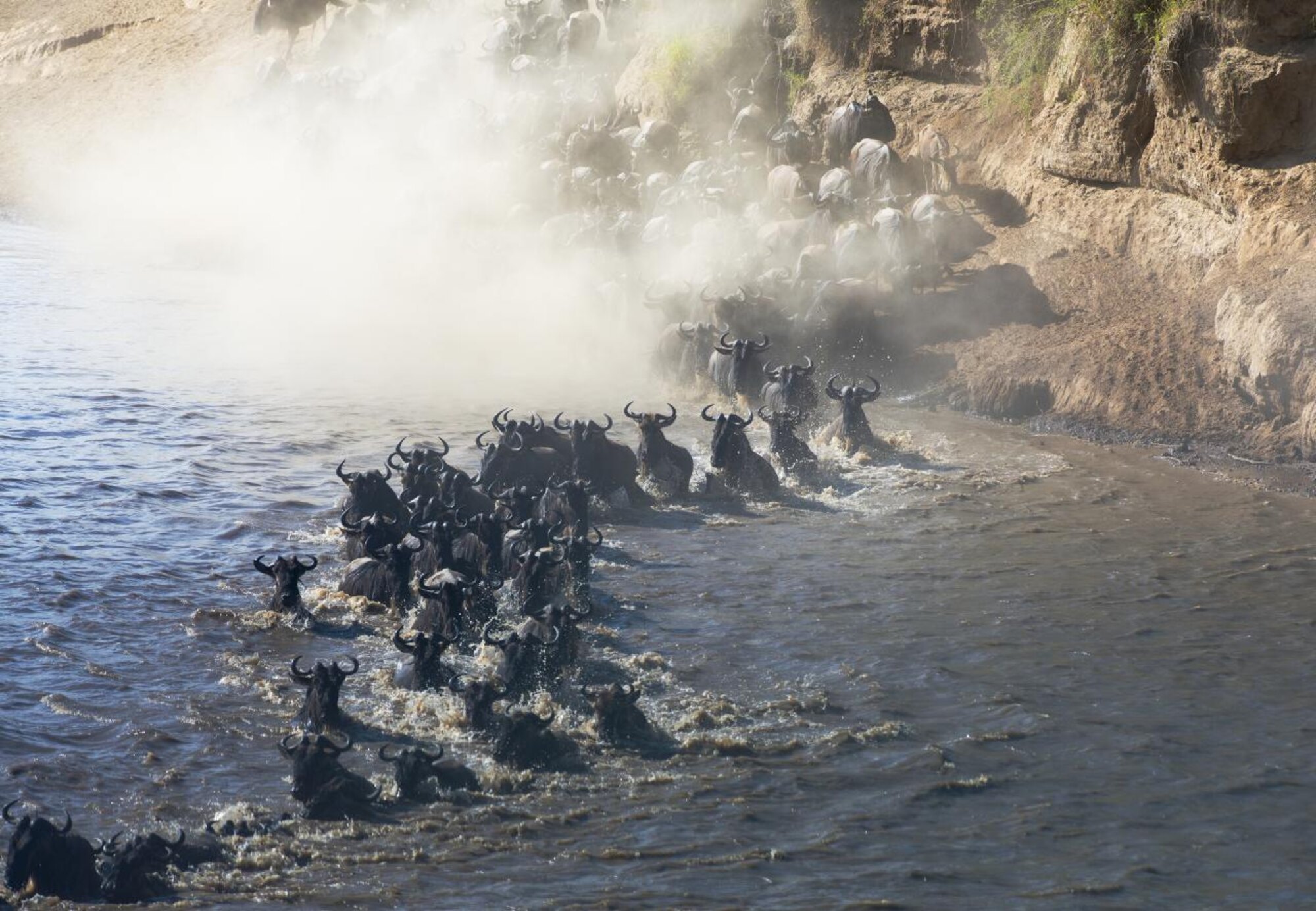
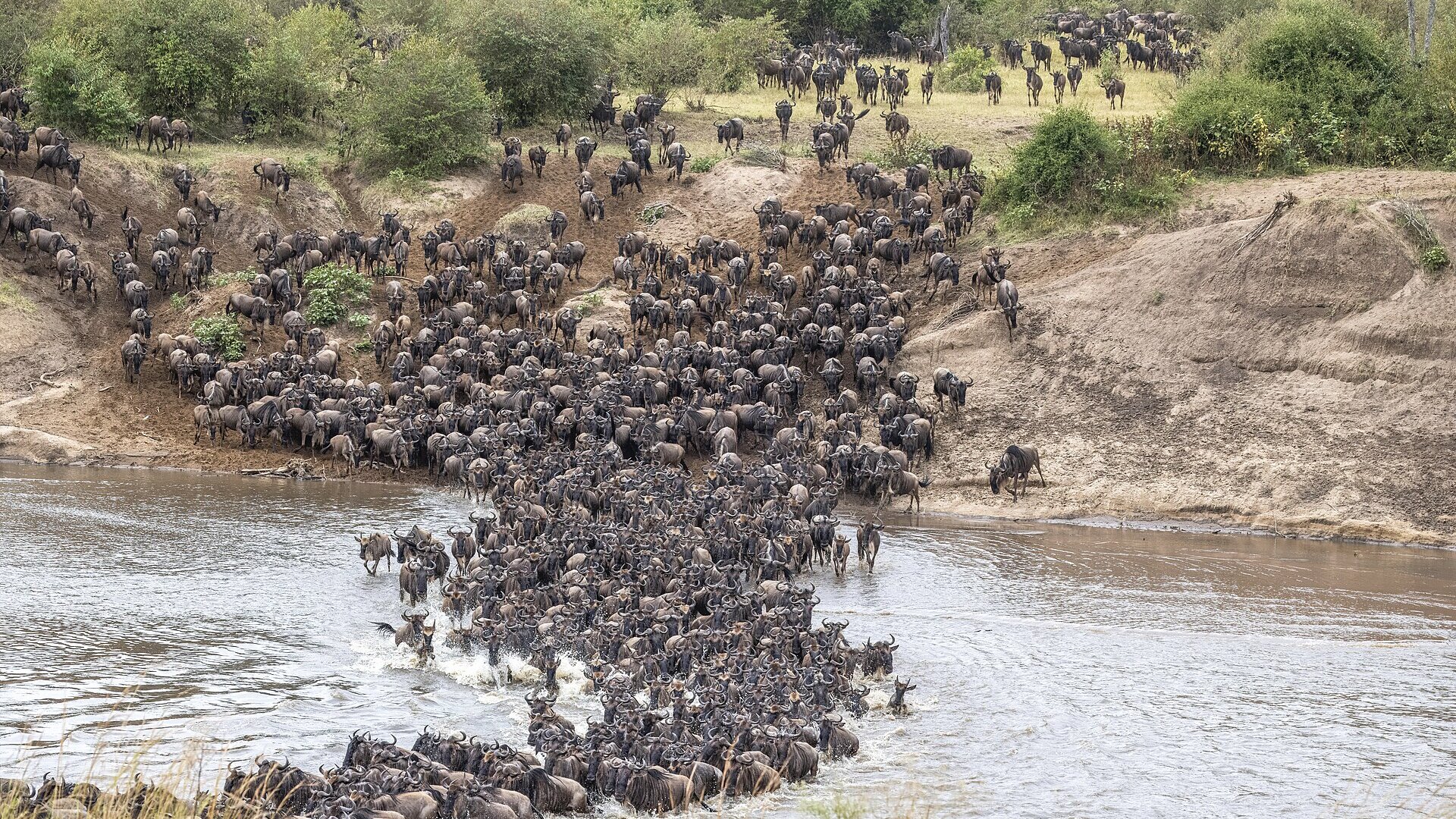
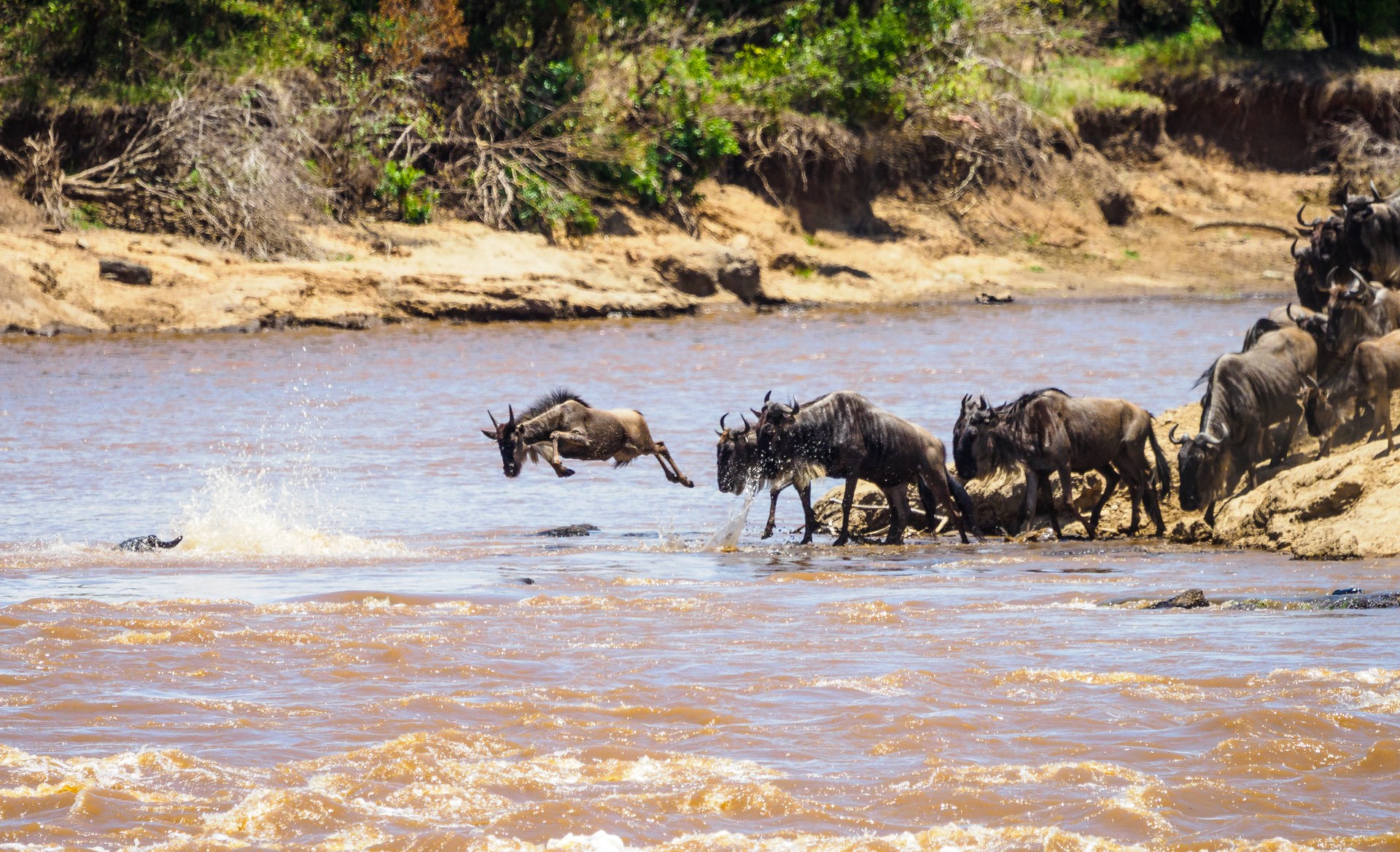
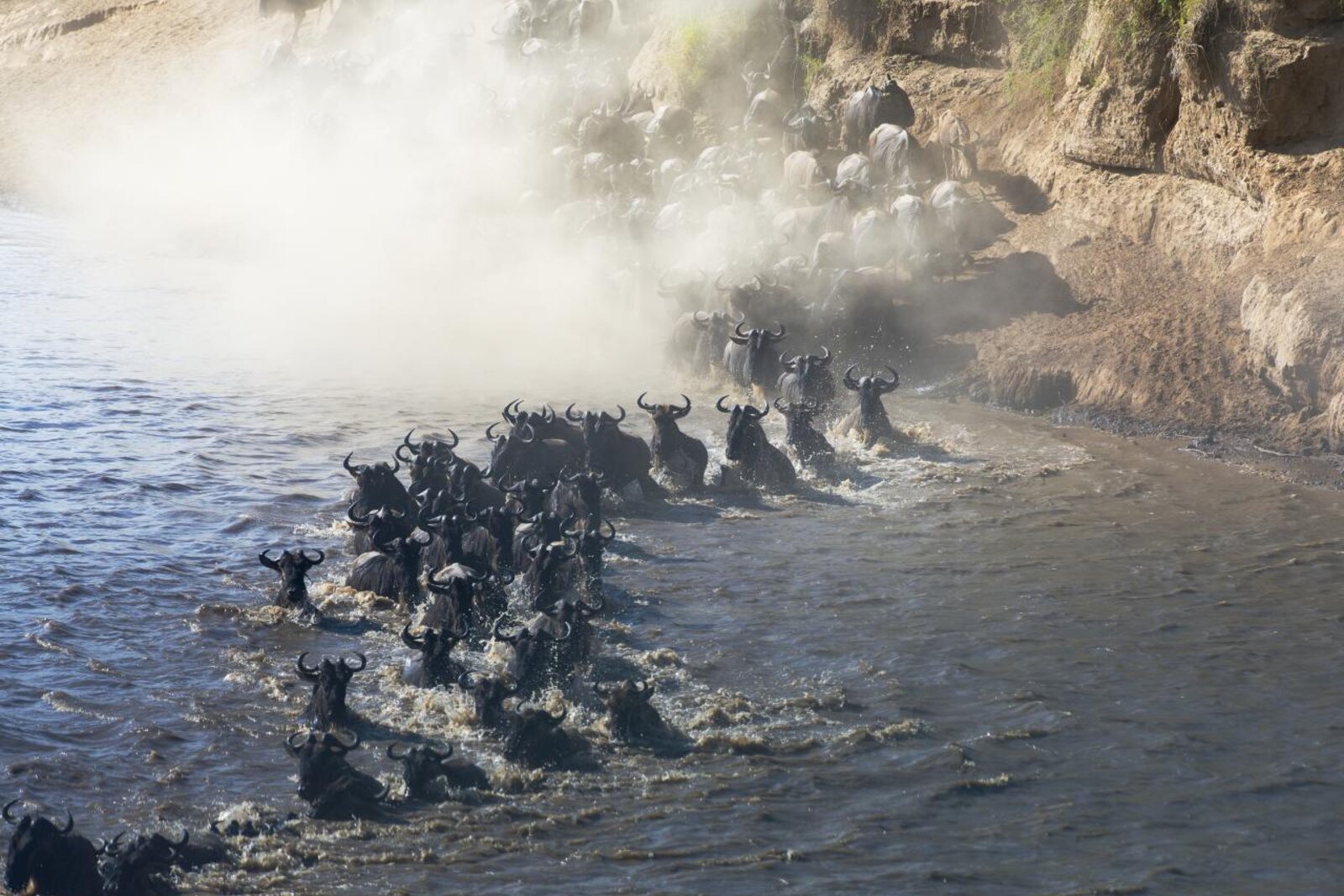
The herd has been standing on the bank for two hours. Thousands of wildebeest, grunting in a low, nervous thunder, packed shoulder to shoulder above a river the colour of milky tea. Nothing moves. Then, for no reason anyone can see, a single animal plunges over the edge — and the whole herd follows in a landslide of hooves, dust and spray. Within seconds the water is a churn of struggling bodies. Some are swimming strongly. Some are being swept sideways by a current they didn't expect. Some will not climb out the other side. This is the moment every wildlife film builds toward, and it is far more dangerous — and far more misunderstood — than the cameras let on.
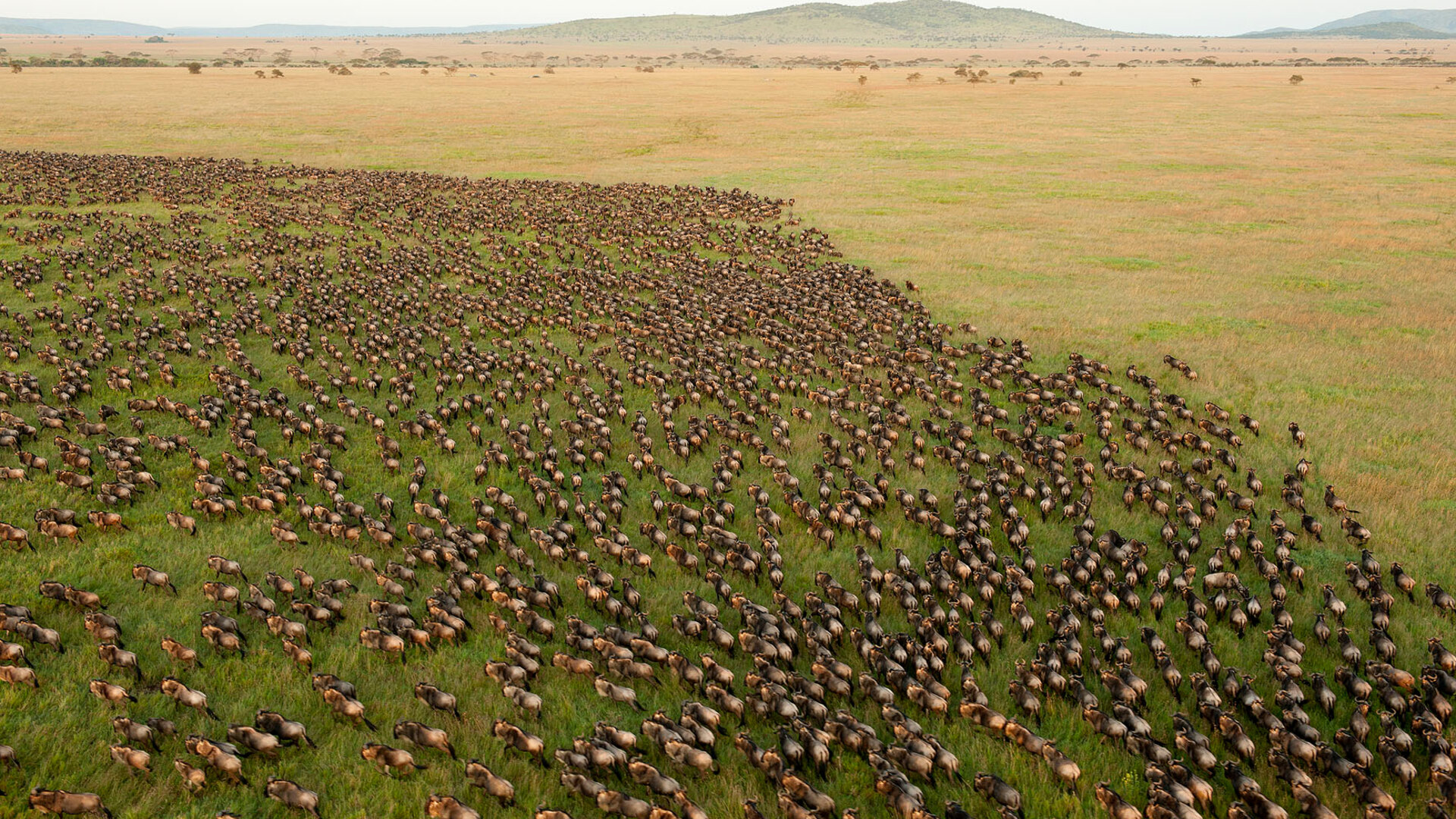
The Great Migration is the largest overland animal journey on Earth: up to two million wildebeest, along with hundreds of thousands of zebra and gazelle, moving in a vast clockwise loop across the Serengeti–Mara ecosystem in an endless chase for rain and fresh grass. It is magnificent. It is also brutal. Roughly a quarter of a million wildebeest die on the circuit every single year, and the way they die is almost never the way people imagine. This is the honest guide to the migration's dangers — what really kills the herds, how the predators work, how so many animals survive against those odds, and how you can witness the whole drama for yourself, responsibly and up close.
The scale of the gamble — how many die, and why
Start with the number, because it reframes everything: around 250,000 to 300,000 wildebeest die every year over the course of the migration. That is not a bad year or a drought figure — it is the annual baseline, roughly one in seven of the entire population, lost and replaced every twelve months. The migration is, in the coldest sense, a numbers game on a scale almost nothing else in nature can match.
The deaths are not concentrated in one dramatic moment. They accumulate across the whole loop: exhaustion on the long dry-season marches, disease in animals whose immune systems are worn down by stress, thirst when the rains fail, predation on the plains and at the water, and — most visibly of all — the river crossings. The crossings are where the losses cluster and where the cameras point, but they are only one chapter of a year-round attrition.
What makes the toll survivable for the species is the other side of the ledger. During the calving season, roughly 400,000 to 500,000 calves are born in a matter of weeks on the southern Serengeti plains. The migration runs on this brutal arithmetic: enormous birth rates against enormous mortality, with only the strongest, luckiest and best-positioned animals living to make the loop again. Understanding that balance is the key to understanding everything that follows.
The river crossing — the most dangerous ten minutes of a wildebeest's life
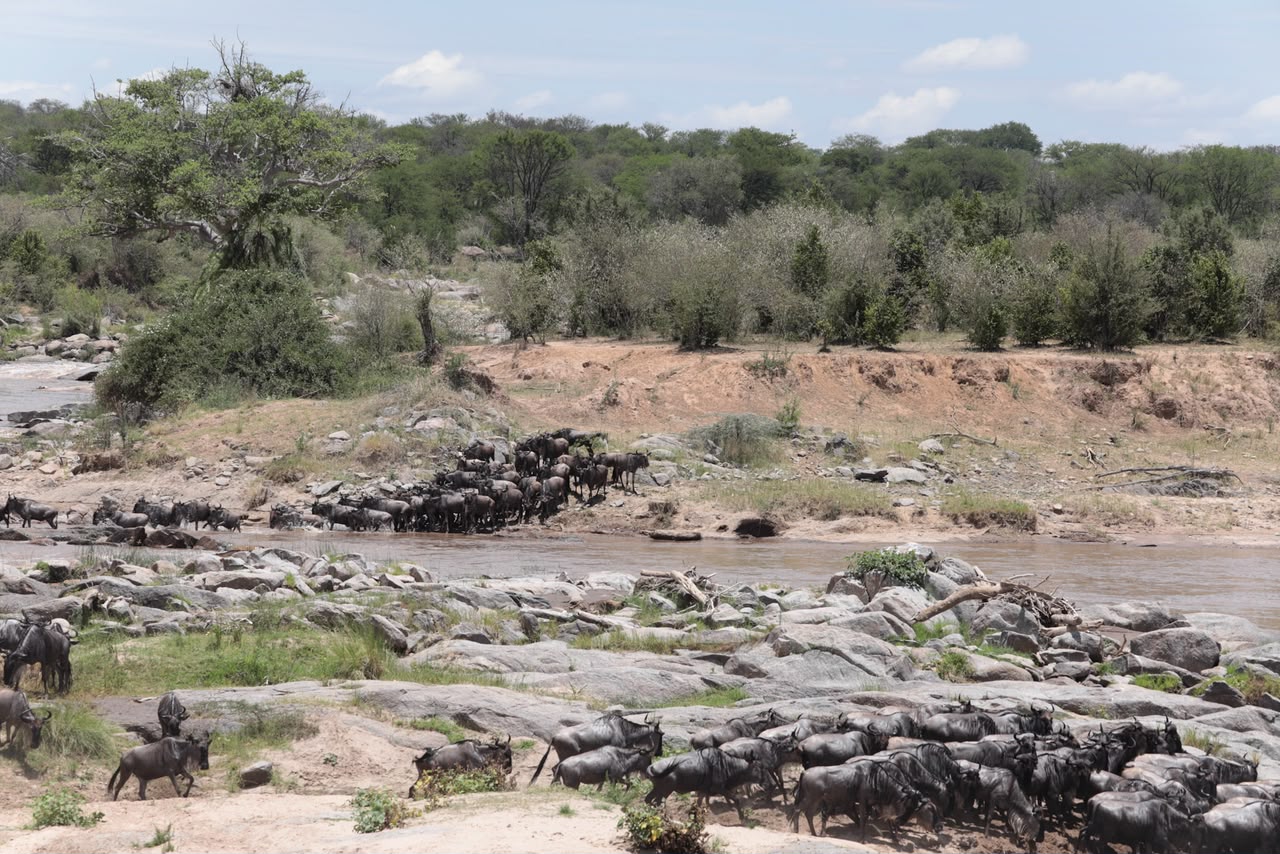
If you had to choose the single most lethal event in the migration, it would be the river crossing — and specifically the Mara and Grumeti crossings of the dry season. But here is the part most visitors get wrong: the crocodiles are not what kill the most animals. The crossing itself is.
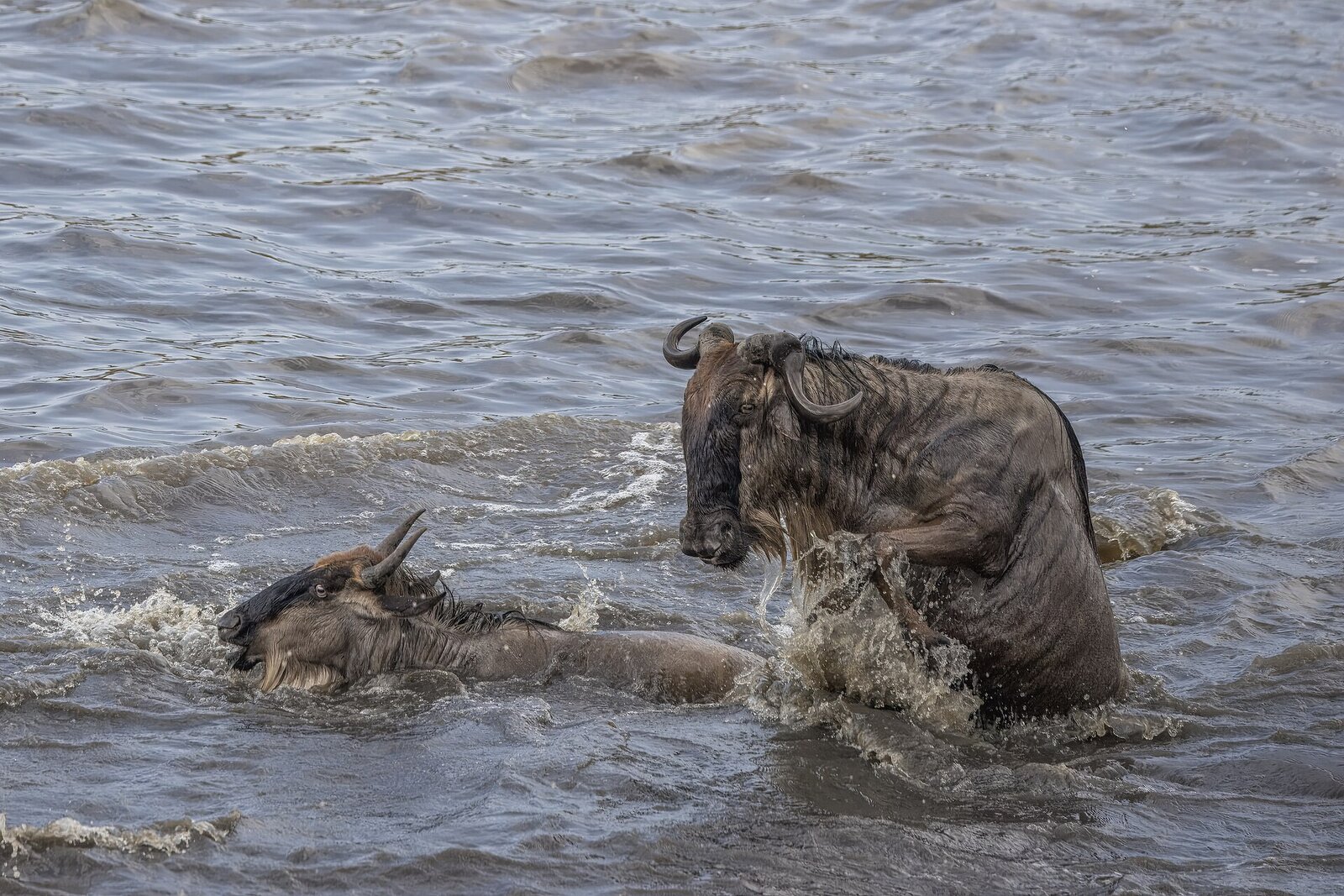
Picture the physics of it. Tens of thousands of animals funnel toward a narrow, habitual crossing point with steep, trampled, slippery banks. The pressure of the herd behind forces the front ranks over the edge whether they are ready or not. Animals leap from heights that break legs on the rocks below. In the water, the current is stronger and the channel deeper than it looks, and wildebeest — strong swimmers in calm water — are overwhelmed when thousands hit the river at once. They are pushed under by the animals behind them, trampled at the bottlenecks where the far bank rises too steeply to climb, and swept downstream if they tire. The young, the old and the injured go first.
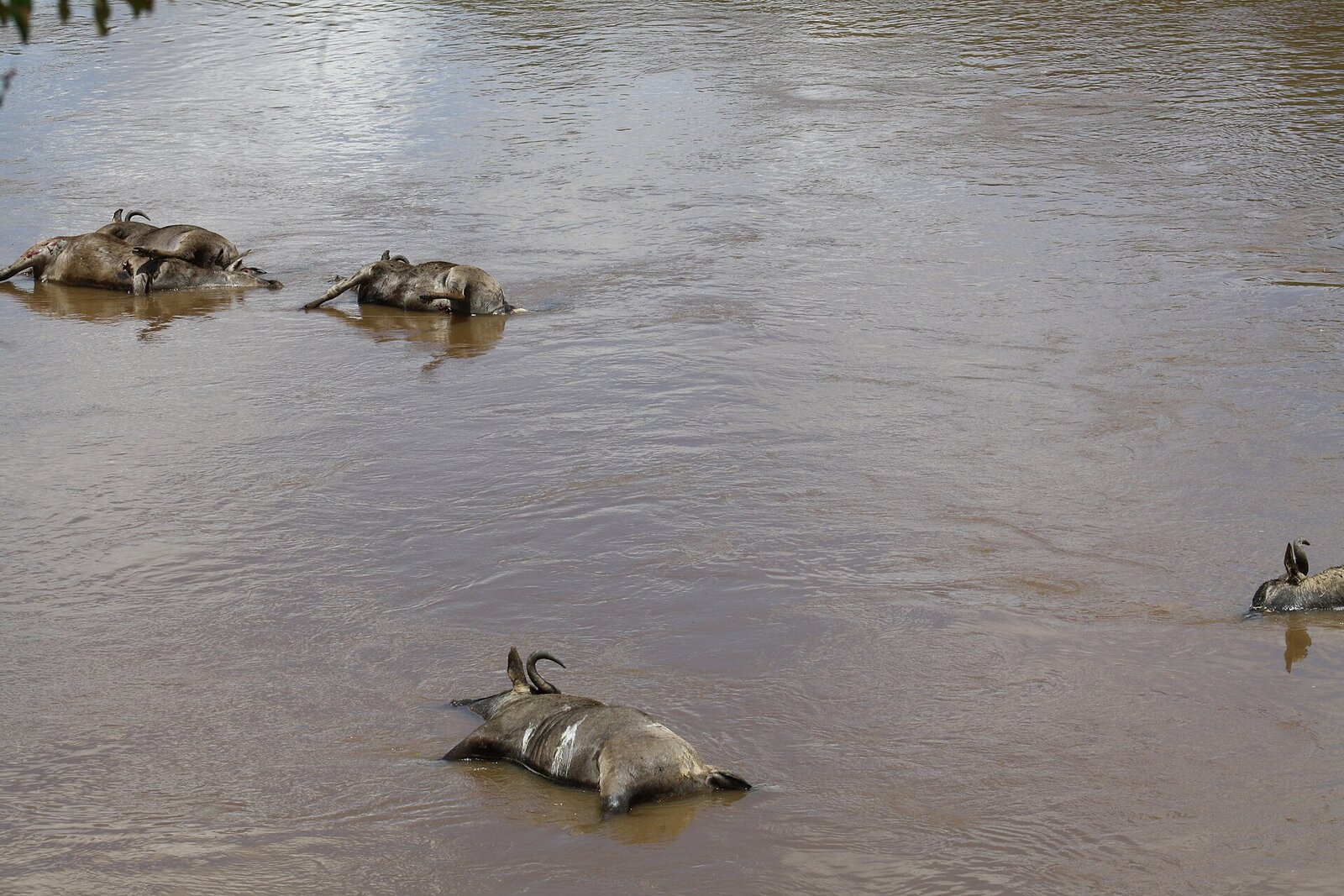
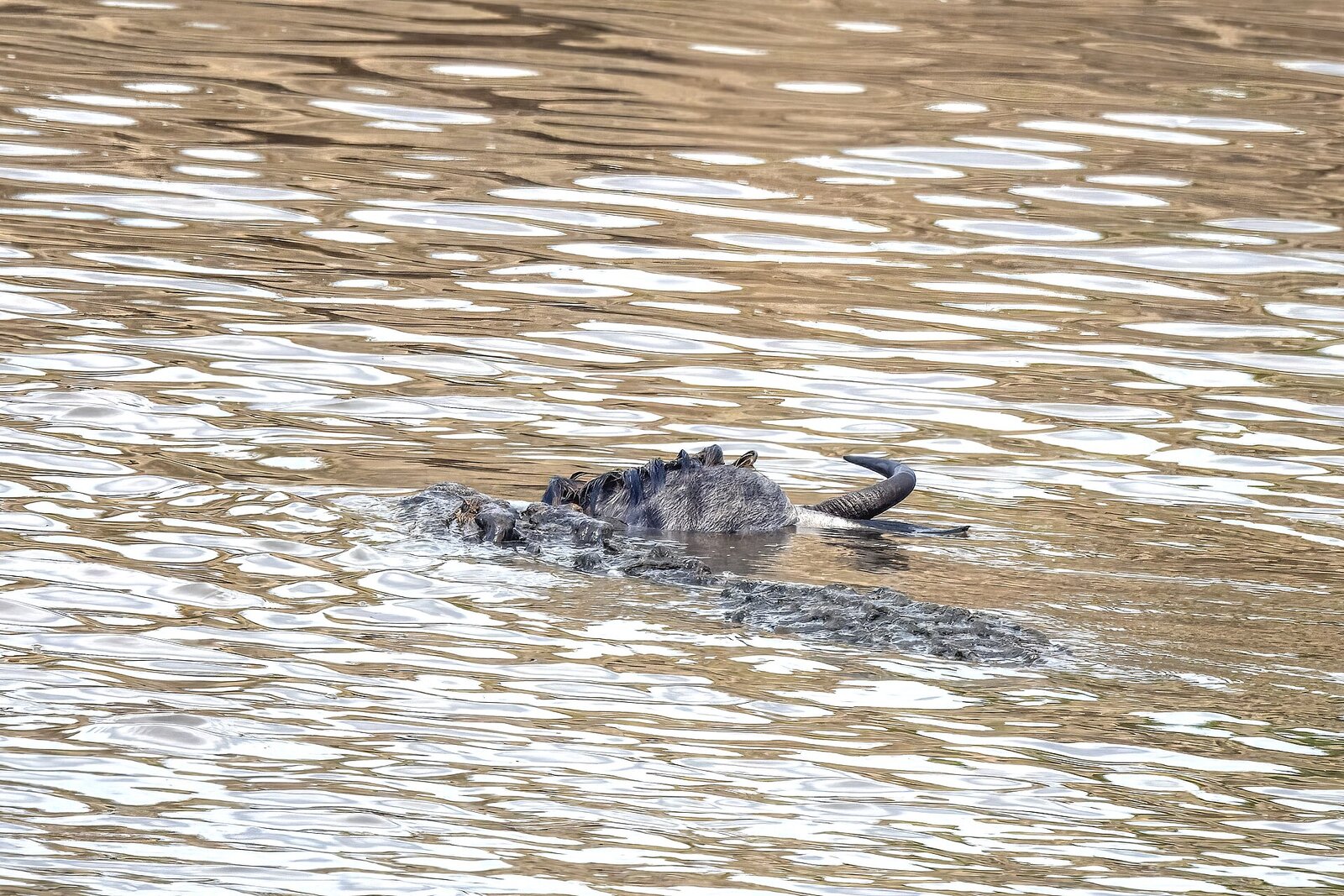
The research bears this out starkly. A study of the Mara River on the Kenyan side found mass drownings in 13 of 15 years between 2001 and 2015, with 23 separate mass-drowning events recorded between 2011 and 2015 alone. A single event killed anywhere from 3,250 to 9,250 wildebeest — not from crocodiles, but from the crush and the current. As one often-quoted rule of thumb puts it: for every wildebeest a crocodile takes, around fifty die from drowning and trauma. The crossing is dangerous because it is chaos, not because of what waits in the water.
The crocodile myth — why the icons kill so few
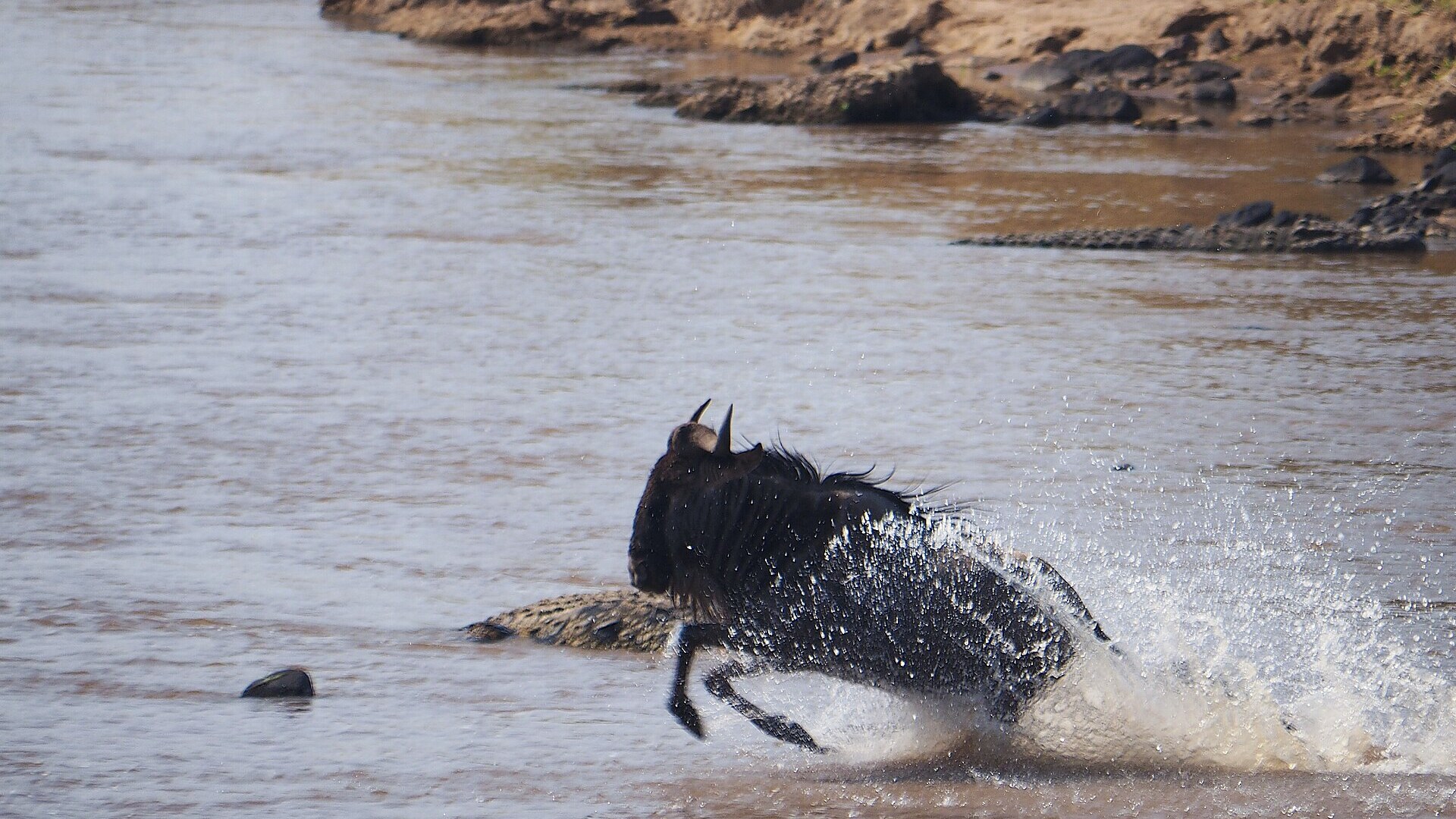
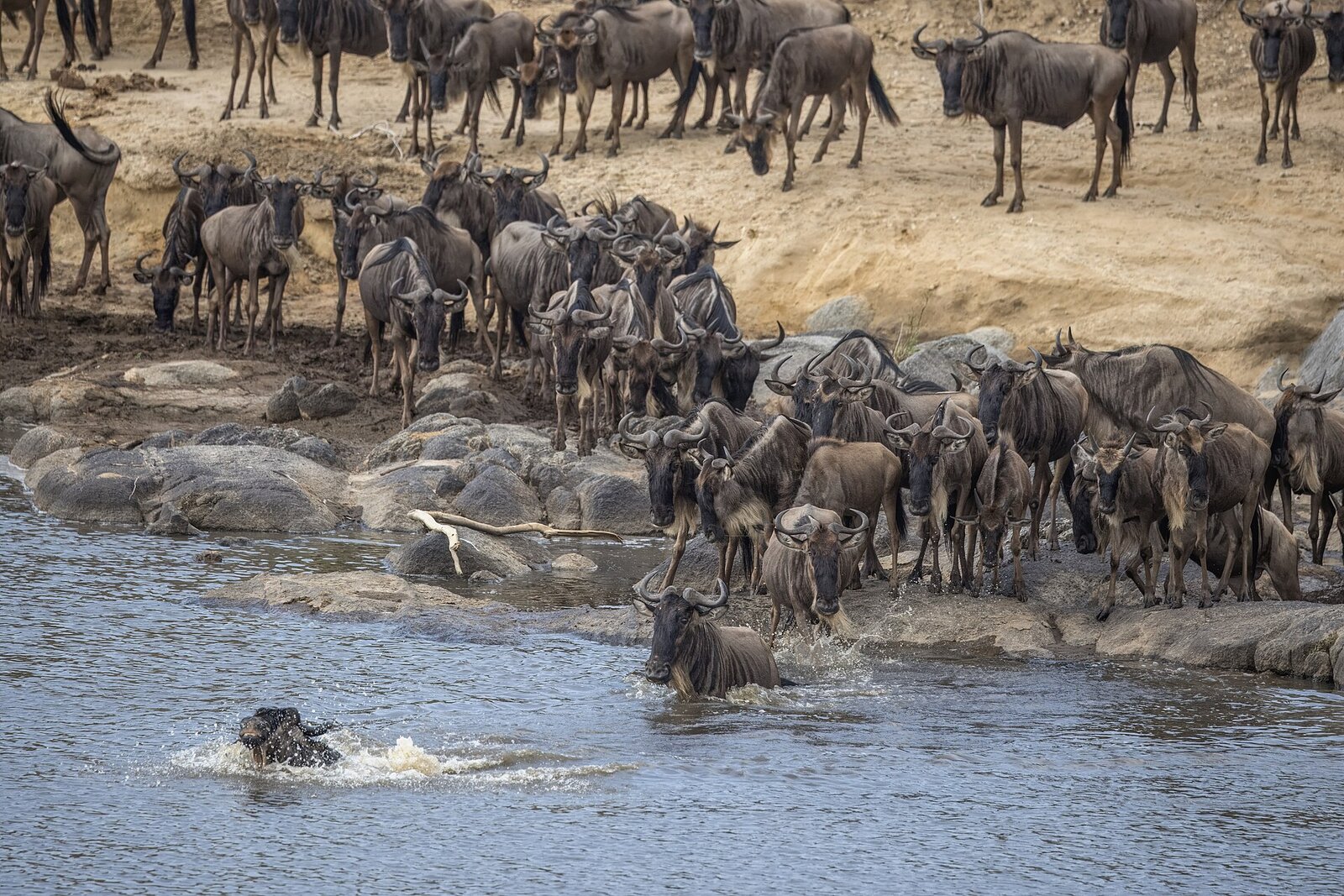
The Nile crocodiles of the Mara and Grumeti are the villains of every migration documentary, and it is easy to see why. Some are giants — up to 750 kilograms — and they have lived in these rivers for decades, waiting all year for the few weeks when two million meals arrive on their doorstep. When a crocodile explodes out of the water and drags a wildebeest under, it is one of the most primal scenes in nature.
And yet, measured against the total death toll, crocodiles account for only around 2% of crossing mortality. The reason is biology. Crocodiles are ambush predators with famously slow metabolisms; a large individual can survive on just one or two big feedings a year by shutting its system down after a kill. They simply cannot eat enough, fast enough, to make a dent in a herd of tens of thousands. A crocodile might take a handful of animals at a busy crossing — the rest of the losses happen without a single reptile involved.
This matters for more than trivia. It means the danger of a crossing is not lurking in the water so much as it is built into the event itself — the height of the bank, the strength of the current, the size of the herd and the panic of the moment. It also means the crocodiles, dramatic as they are, are opportunists at a feast, not the architects of it. The river is the killer. The crocodile is just the most photogenic beneficiary.
The predator gauntlet — lions, hyenas, cheetahs and leopards
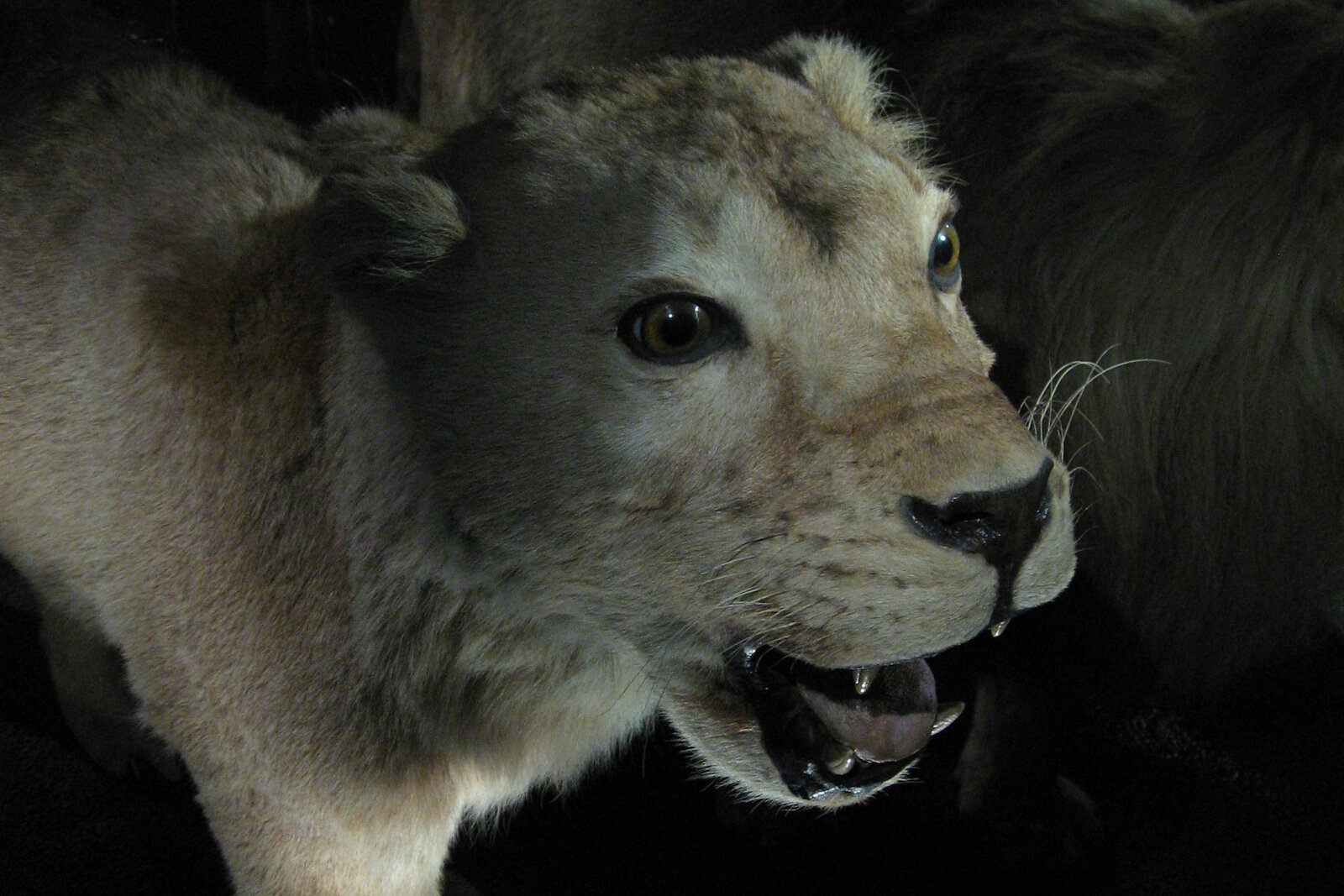
Away from the rivers, the herds run a different gauntlet every day of the year. The Serengeti supports one of the largest lion populations in Africa, and the migration is, in effect, a moving buffet that follows them across their territories. Lions are the apex threat: a coalition can bring down an adult wildebeest with ease, and a single male can eat up to 40 kilograms in one sitting — roughly a quarter of its own body weight. When the herds arrive, prides that have gone hungry gorge for weeks.
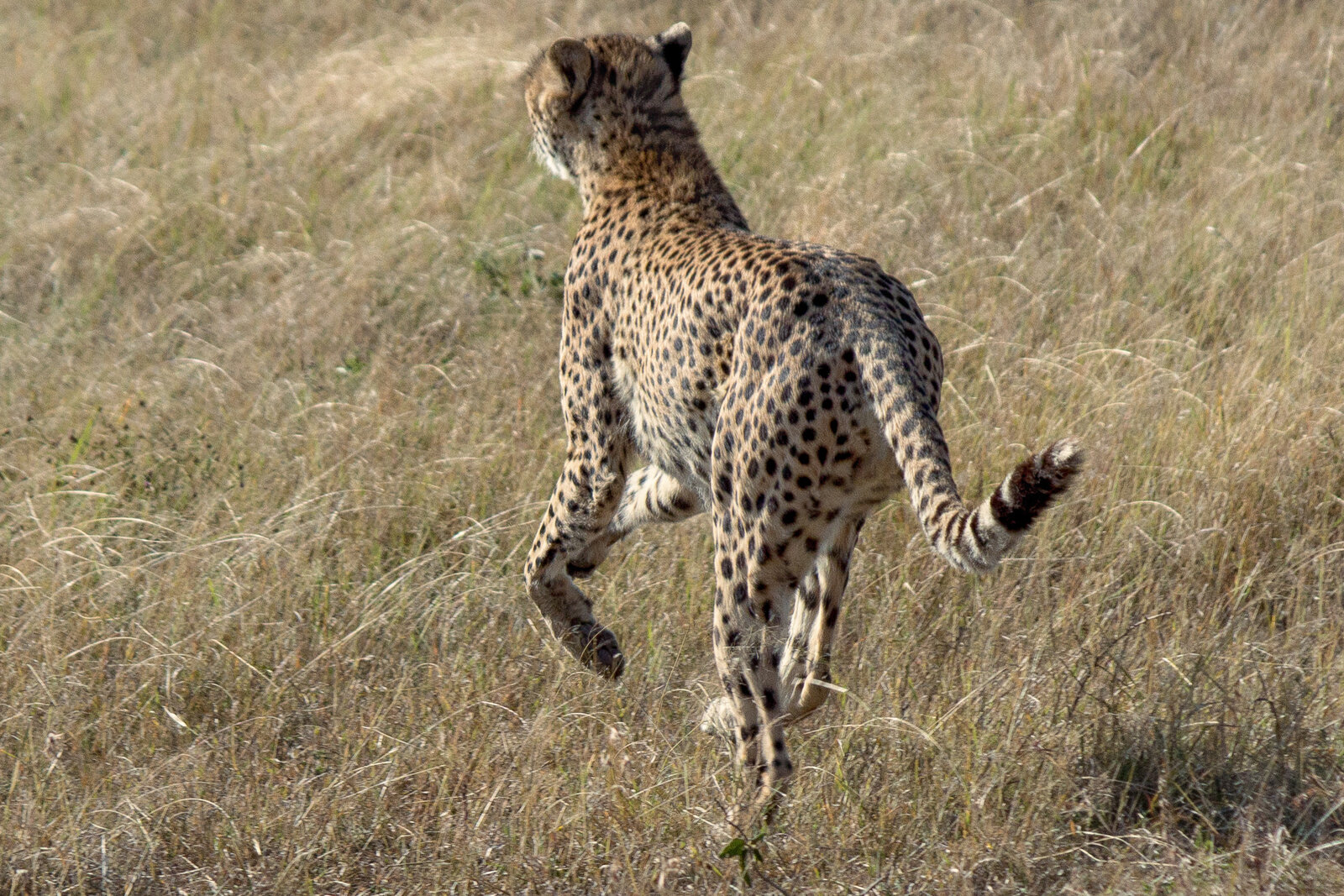
But lions are only the headline act. Spotted hyenas — hunters as much as scavengers, despite their reputation — account for around 10% of migration kills, working in clans to run down the weak and to steal what the cats leave behind. Cheetahs use raw speed on the open plains to take gazelle and young wildebeest, though they must eat fast before the bigger predators arrive to rob them. Leopards hunt by stealth in the wooded country and river lines, such as the Seronera Valley, dragging kills into trees to keep them from the mob.
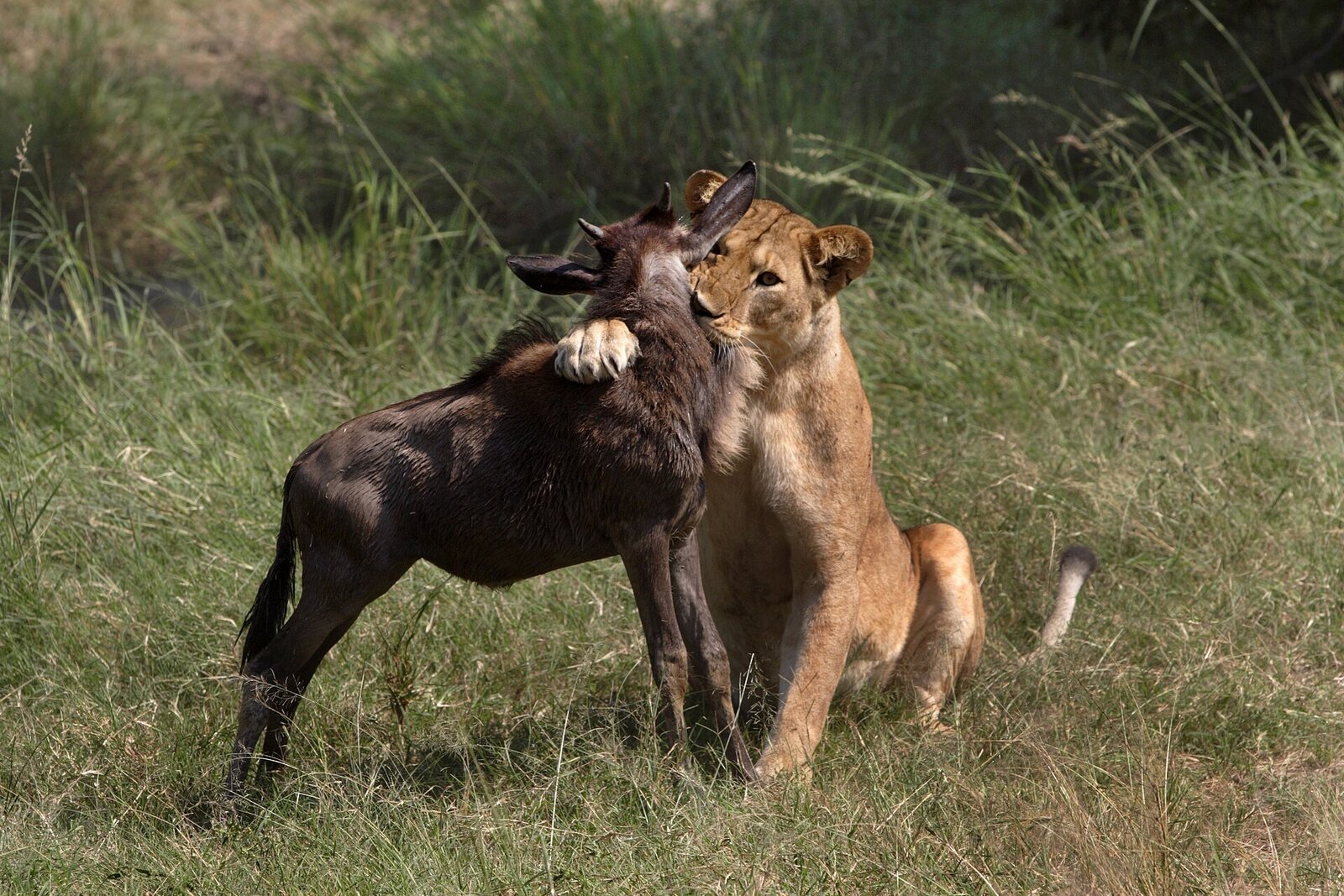
The single most dangerous time to be a wildebeest is not the river crossing at all — it is the first few weeks of life. During the calving season, the southern plains become an open nursery of half a million newborns, and every predator in the ecosystem converges on it. A wildebeest calf can stand within minutes and run within days, but the ones that stumble, that fall behind, that are born at the edge of the herd, feed the cats and the hyenas by the thousand. It is the most concentrated predation event on the calendar — and, for the same reason, one of the greatest wildlife spectacles on Earth.
How they survive — the strategies behind the herd
For all the death, the astonishing thing about the migration is how many animals live. The wildebeest is not a fast or a clever animal on its own — but the herd is one of the most successful survival machines in nature, and it works through a handful of remarkable strategies.
Safety in overwhelming numbers. This is the oldest trick of all. When two million animals move together, the odds that any single individual is the one taken drop dramatically, and predators are quickly satiated. The herd also uses what biologists call swarm intelligence — a kind of collective decision-making that steers the whole mass toward rain and grass without any leader, based on the movements of thousands of individuals at once.
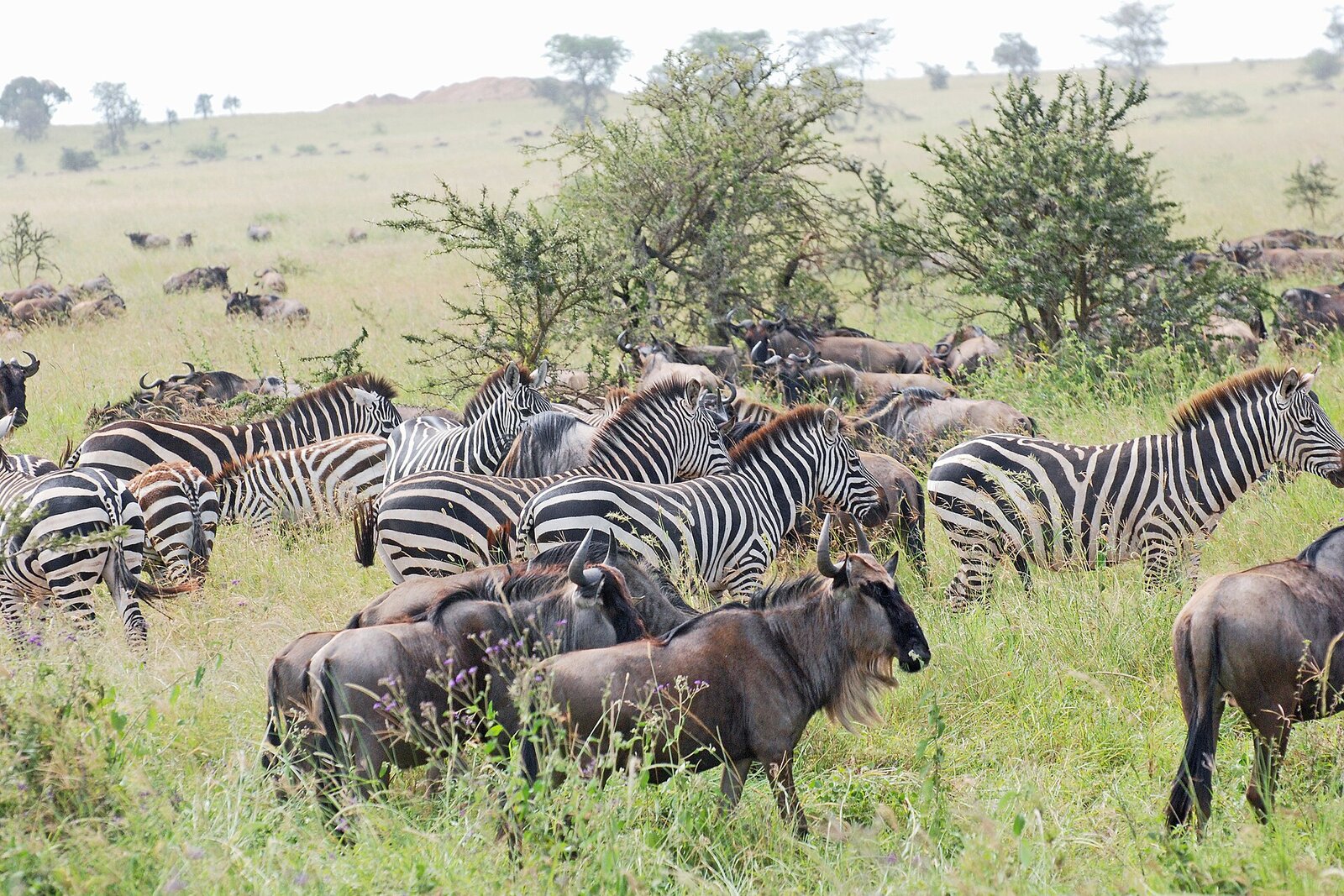
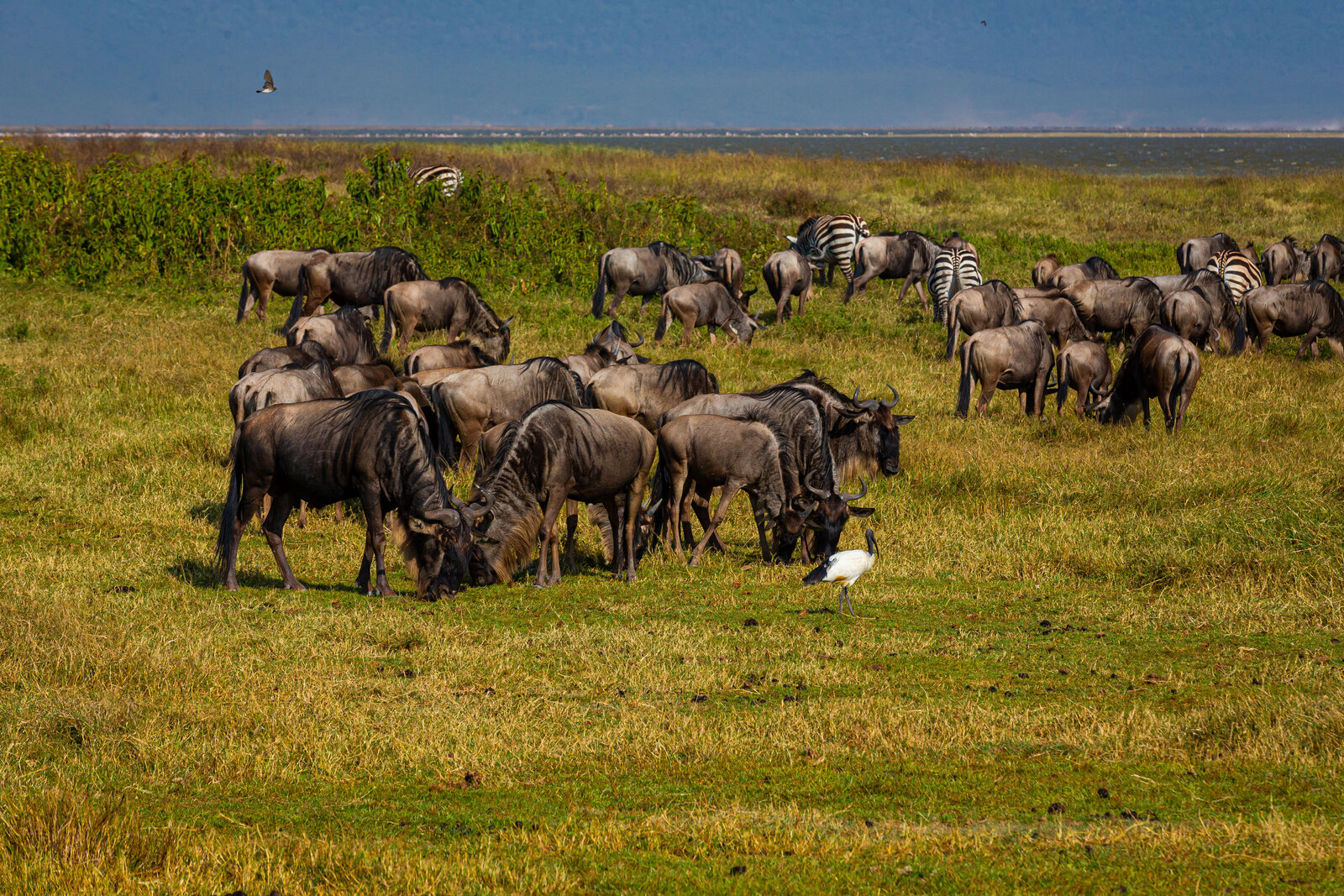
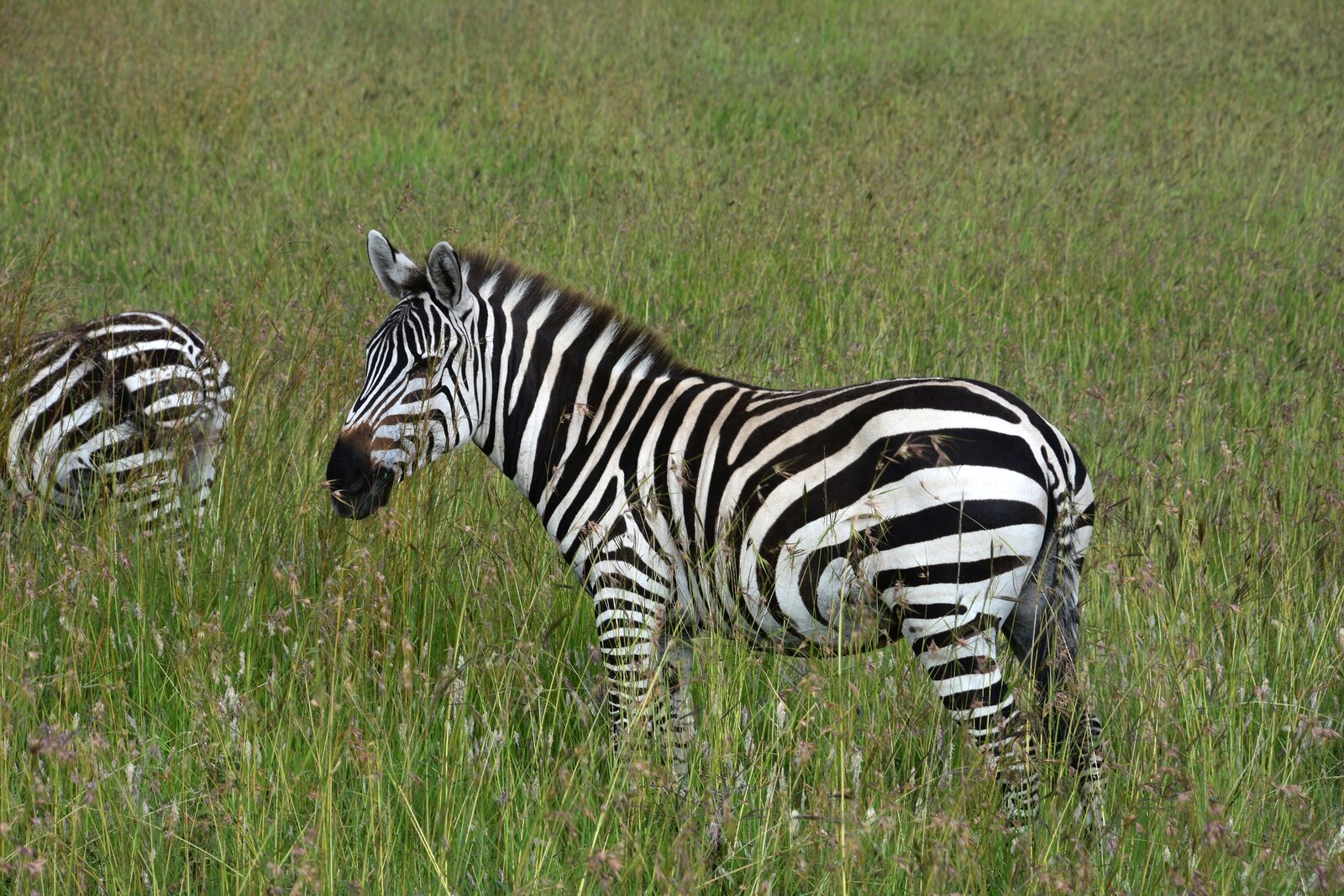
The wildebeest–zebra partnership. Zebra travel with the wildebeest for good reason on both sides. Zebra have sharper eyesight and often lead the way, spotting danger early; wildebeest have a keener sense of smell and are superb at finding water. Better still, the two graze differently — zebra eat the tall, coarse tops of the grass, exposing the shorter, more nutritious shoots underneath that the wildebeest prefer. It is a genuine alliance that makes both species safer and better fed.
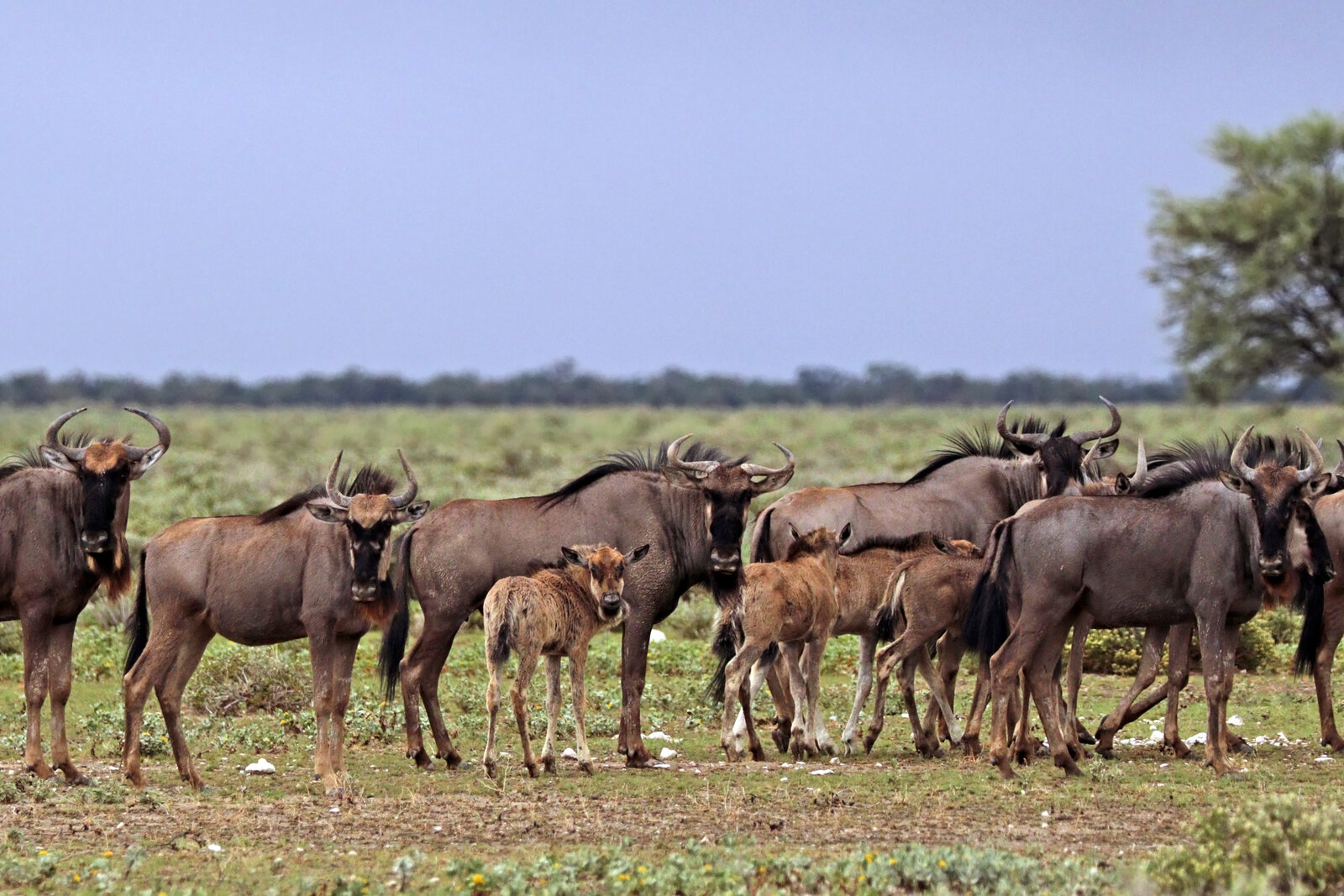
Calves built to run. Wildebeest calves are born precocial — able to stand within minutes and to keep pace with, and even outrun, many predators within days. This is why the calving is so tightly synchronised: by flooding the plains with newborns in a single short window, the herd swamps the predators' capacity to kill, so that the great majority of calves survive the critical first weeks simply because there are too many to catch.
Scent trails that hold the herd together. Recent research suggests wildebeest leave scent from glands in their hooves, laying down trails that allow groups splintered by a river or a predator to find one another and coalesce back into the safety of the larger herd. In a journey where being separated is a death sentence, that invisible thread is a quiet lifesaver.
Death that feeds a river — the hidden ecology of the toll
It is tempting to see all this loss as waste. It is the opposite. The mass deaths of the migration are one of the great nutrient engines of East Africa, and the science of it is genuinely astonishing.
The drowned wildebeest of the Mara River add more than 1,000 tonnes of biomass to the river every year. In the immediate term, the carcasses feed a huge cast of scavengers — crocodiles, of course, but also vultures, marabou storks, catfish and countless smaller creatures. But the deeper story is slower. The soft tissue is gone within weeks; the bones can take up to seven years to fully decay, and while they do, they become coated in a biofilm of algae, bacteria and fungi that fish graze on continuously. In other words, a single mass drowning fertilises the river's food web for the better part of a decade.
This is why researchers describe the wildebeest as a keystone species and the migration as a life-support system for the entire ecosystem, not just a spectacle. The grass the herds graze grows back stronger. The predators they feed maintain their numbers. The rivers they die in are enriched for years. Remove the migration and the whole Serengeti–Mara system would unravel. The 250,000 deaths a year are not a tragedy the ecosystem endures — they are the price it is built around, and the reason everything else lives.
Where and when to witness the drama — safely and ethically
You do not have to choose between wanting to see the migration and respecting what it is. The drama is real, it is wild, and it can be witnessed responsibly if you go to the right place at the right time with the right guide. Here is the honest calendar of where the danger — and the spectacle — concentrates.
| When | Where | The drama to witness |
|---|---|---|
| Jan–Mar | Southern Serengeti & Ndutu | Calving and the most intense big-cat predation of the year |
| Late May–Jun | Western Corridor (Grumeti) | The Grumeti crossings and their giant crocodiles — crowd-free |
| Jul–Oct | Northern Serengeti (Kogatende) & Masai Mara | The famous Mara River crossings — the peak of the danger and the spectacle |
| Nov–Dec | Eastern & southern Serengeti | The return south, predator activity on the move, gathering to calve |
Witnessing it ethically matters. A river crossing is unscripted wildlife behaviour, and the herds are genuinely skittish at the water's edge. Research has shown that even the presence and positioning of vehicles can influence whether and where a herd chooses to cross. That is why we insist on the responsible approach: keep a respectful distance from the crossing point, never crowd the banks or block the herds' line to the water, switch engines off, and let the animals dictate the moment. A good guide reads the herd and hangs back — because the reward for patience is the drama unfolding naturally, exactly as it should.
It also argues powerfully for going where the crowds are not. Forty vehicles jostling at a famous crossing is bad for the animals and bad for your experience. The quieter sectors — the Grumeti in June, the numbered crossings away from the honeypots, the calving plains in green season — give you the same raw spectacle with a fraction of the pressure on the wildlife. That is the migration at its best and most respectful, and it is exactly how we build our trips. For the full picture of when to go, see our guide to the best time to see the Great Migration in Tanzania, and for the crossings the crowds miss, our atlas of the hidden wildebeest migration crossings.
See it with us — the private, responsible way
Understanding the dangers of the migration is the first step to witnessing them properly. The travellers who come away with the deepest experience — and the best photographs — are the ones who go with a private vehicle and a crossing specialist, stay in a mobile or crossing-front camp right on the herds, give it several nights rather than one lucky afternoon, and follow the animals rather than a fixed itinerary.
That is exactly what we do. We are an owner-run South African team on the ground; we choose the camps, guides and vehicles ourselves, we watch the herds in real time through our live Great Migration Tracker, and we fold every flight and detail into one clear, honest price. Tell us when you can travel and we will point you at the river that will be firing — and put you at the water's edge, respectfully, for the greatest and most humbling wildlife show on Earth. To follow the whole loop, read our guide to the Great Migration from the Serengeti to the Masai Mara, and to understand the calving drama in depth, our Serengeti calving season guide.