Key Takeaways
- The Great Migration involves over 2 million animals — wildebeest, zebra, gazelle and the predators that follow them
- Zebra lead the migration, eating the tall grass so wildebeest can access the nutritious short-grass shoots beneath
- The dramatic Mara River crossings happen July–October — when Nile crocodiles up to 4 metres long patrol the crossing points
- Calving season (January–March, Ndutu, Tanzania) is equally spectacular and far less crowded than crossing season
- The migration never stops — it is a year-round circuit across the Serengeti-Mara ecosystem, driven by rainfall and grass
The Cast: 2 Million Animals, One Ancient Circuit
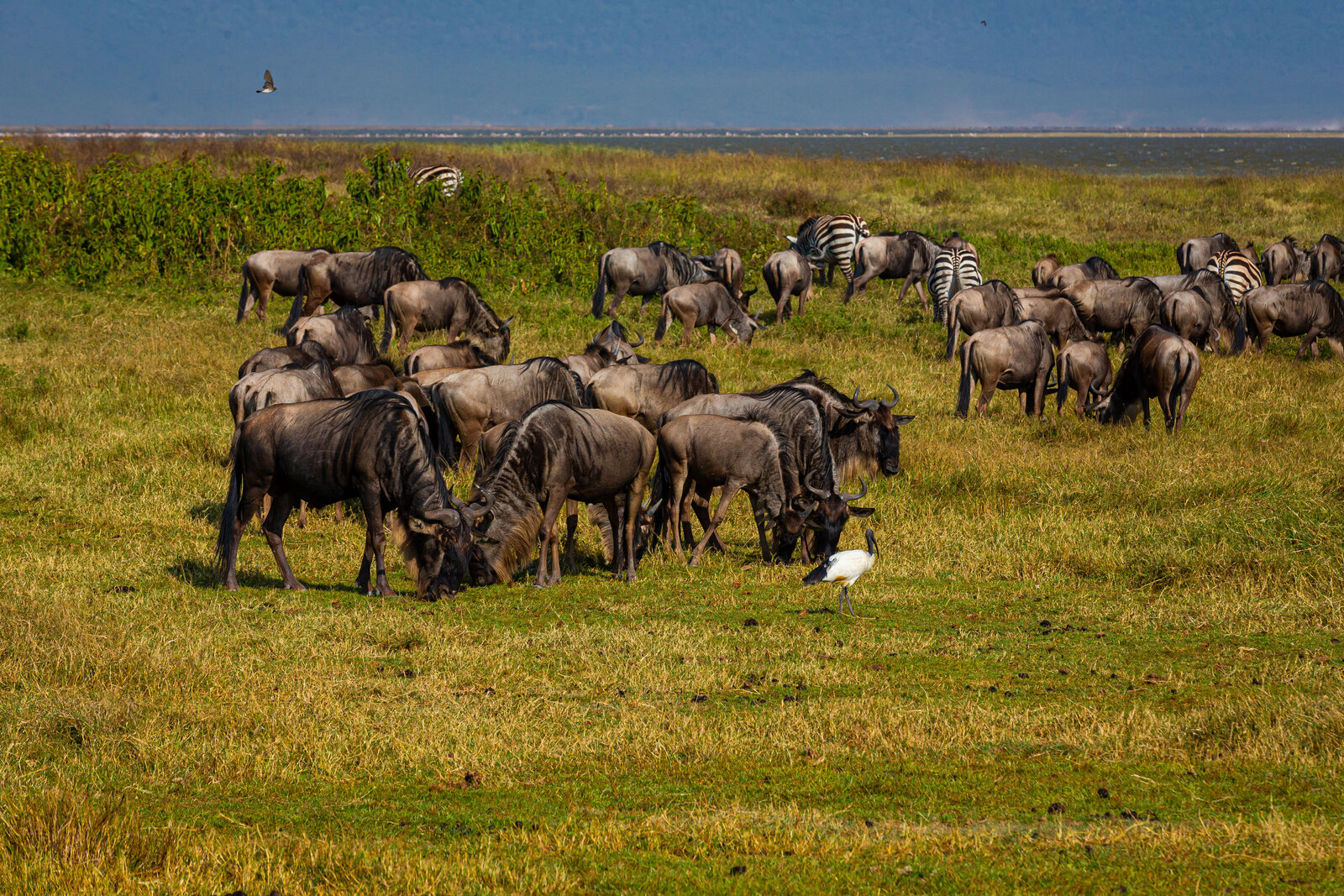
The Great Migration is not a single species on the move — it is an entire ecosystem in motion. Every year, more than two million animals travel a vast clockwise loop across the Serengeti-Mara ecosystem, drawn on by the rains and the green flush of new grass. Three grazing species form the engine of it all: roughly 1.5 million blue wildebeest, some 300,000 zebra, and around half a million Thomson's gazelle. Shadowing them at every step are the lion, cheetah, leopard, hyena and crocodile that turn this grazing march into the most dramatic wildlife event on the planet.
The circuit covers close to 1,800 kilometres round trip, from the calving grounds of the southern Serengeti in Tanzania, north-west through the Grumeti, across the international border into Kenya's Masai Mara, and back again. There is no start line and no finish line. The migration never stops — it is a year-round event, and each month wears a different face: newborns in February, long marching columns in spring, the thunder of river crossings in the dry season. To understand it fully, you first have to meet the animals, one by one. For the bigger planning picture, our ultimate Great Migration safari guide is the companion pillar to this species field guide.
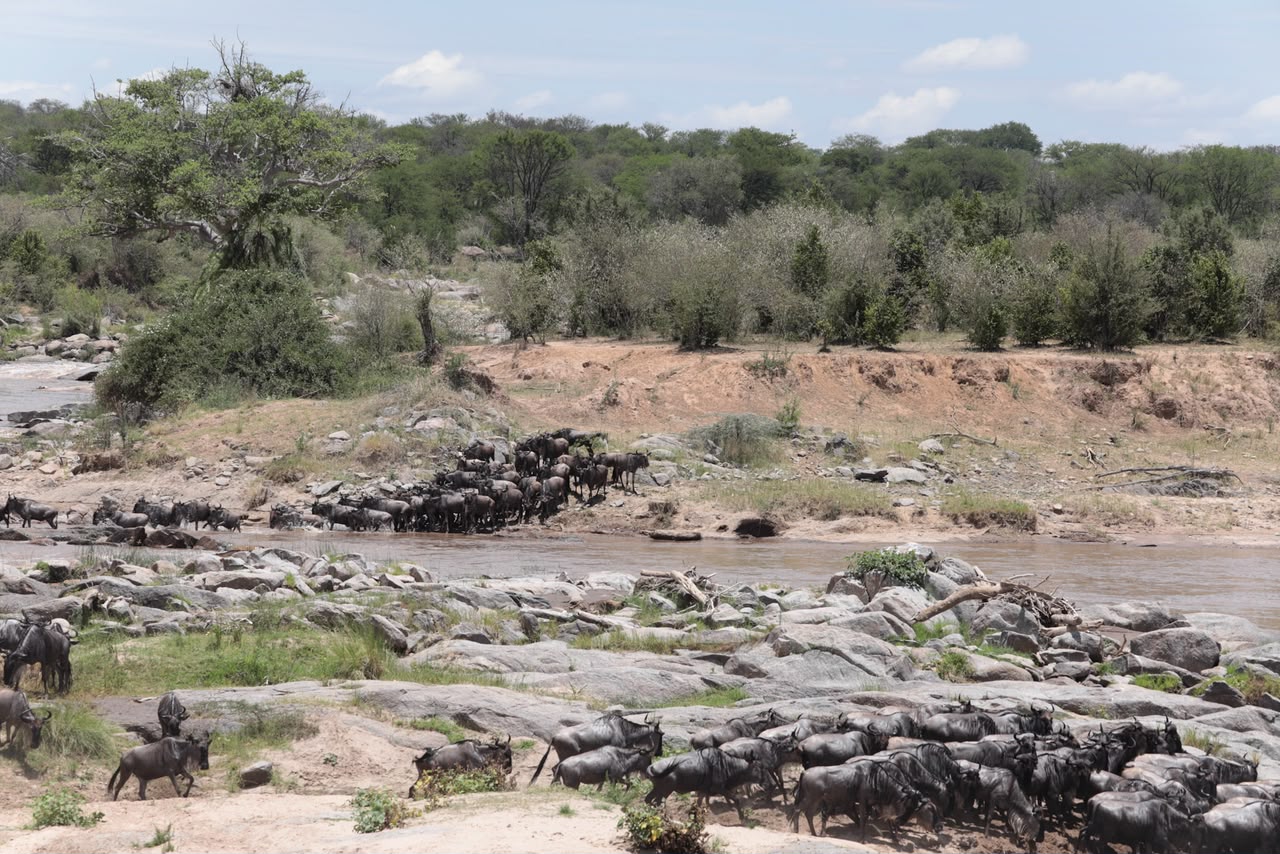
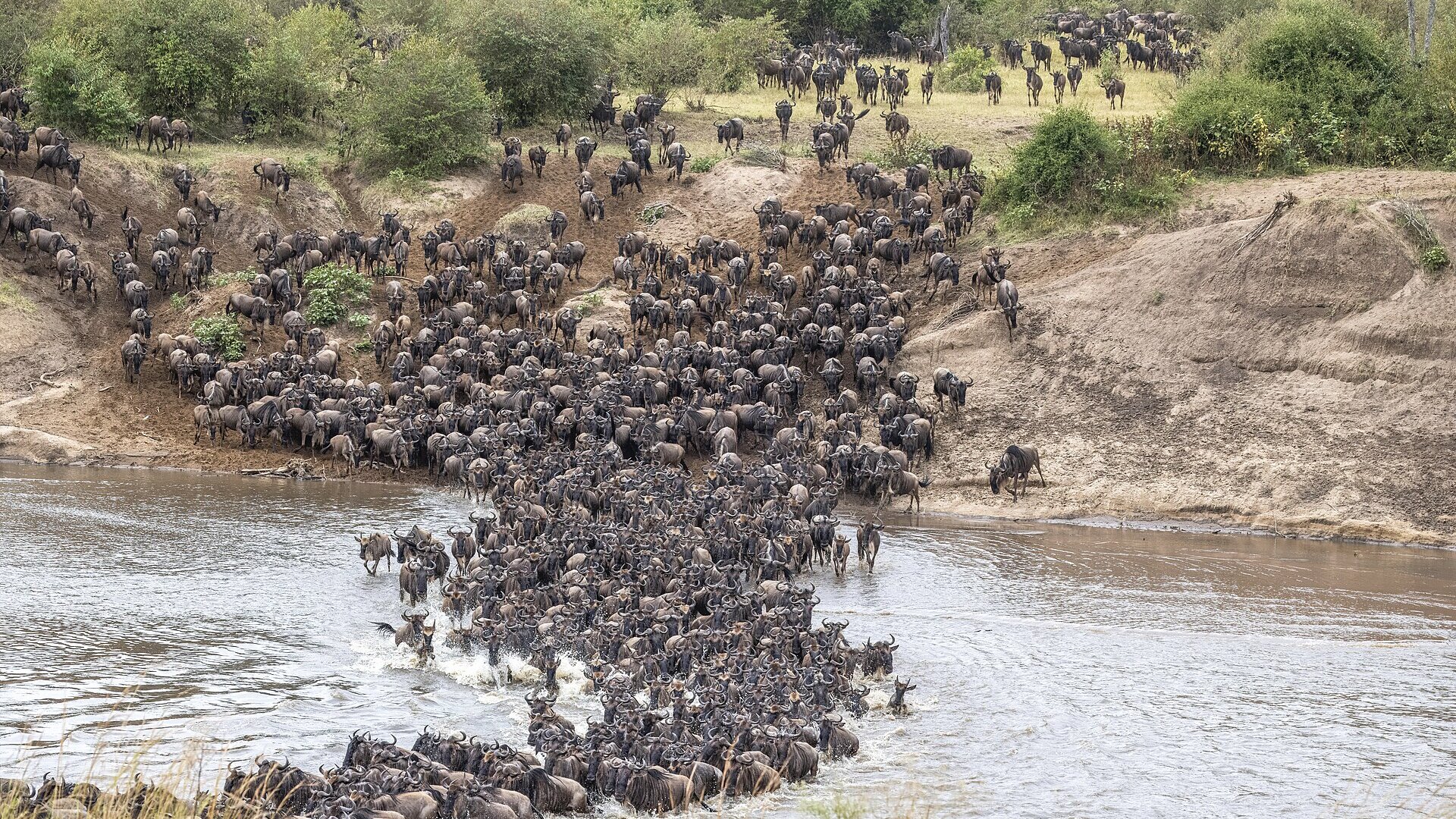
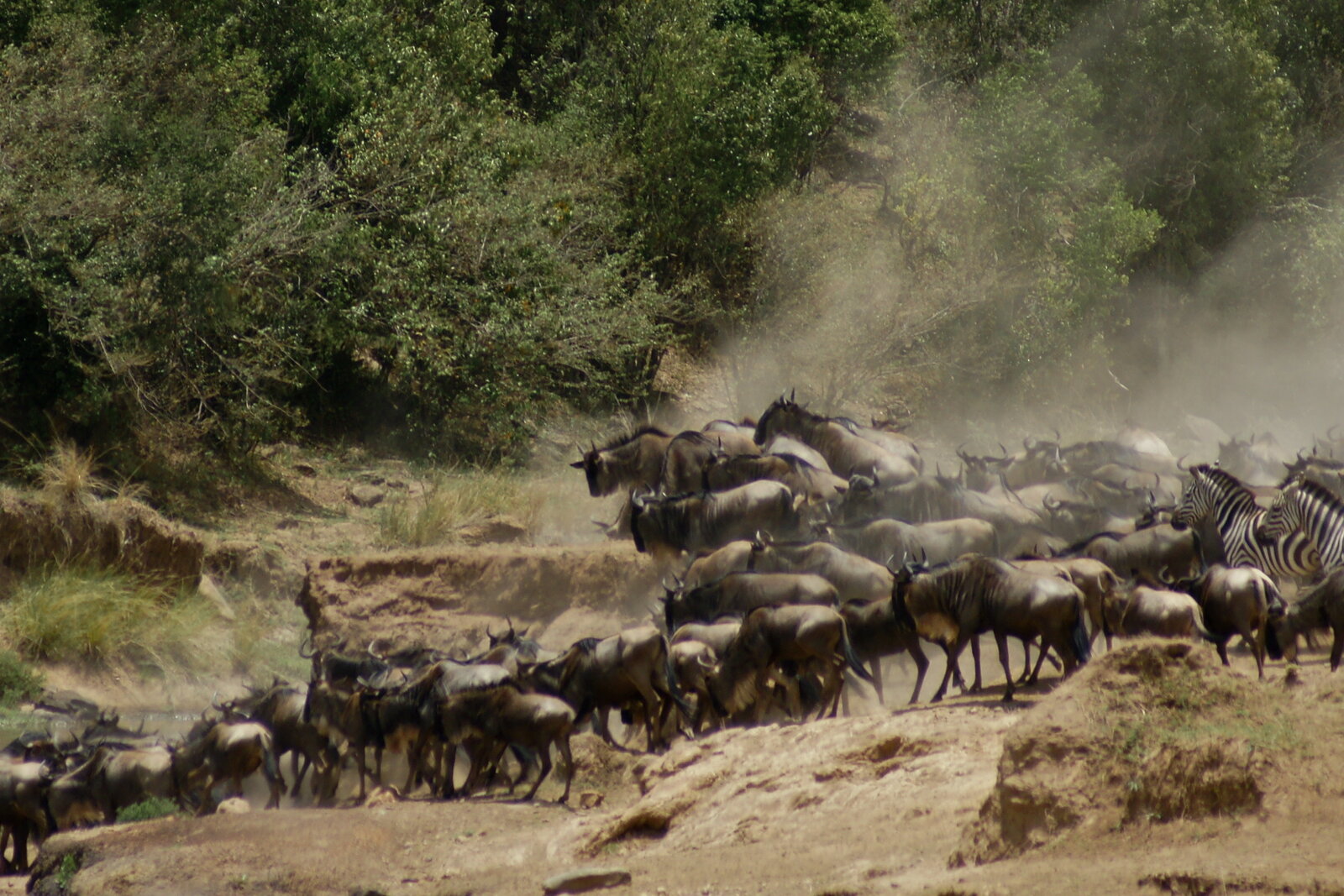
The migration in motion — wildebeest, zebra and gazelle streaming across the plains.
At a glance — the three grazers that drive the migration:
| Species | Approx. number | Role in the march |
|---|---|---|
| Blue wildebeest | ~1,500,000 | The engine — their numbers are why the migration exists. |
| Burchell's zebra | ~300,000 | The scouts — lead the way and clear the tall grass. |
| Thomson's gazelle | ~500,000 | The final wave — graze the short grass left behind. |
Wildebeest: The Engine That Powers the Migration
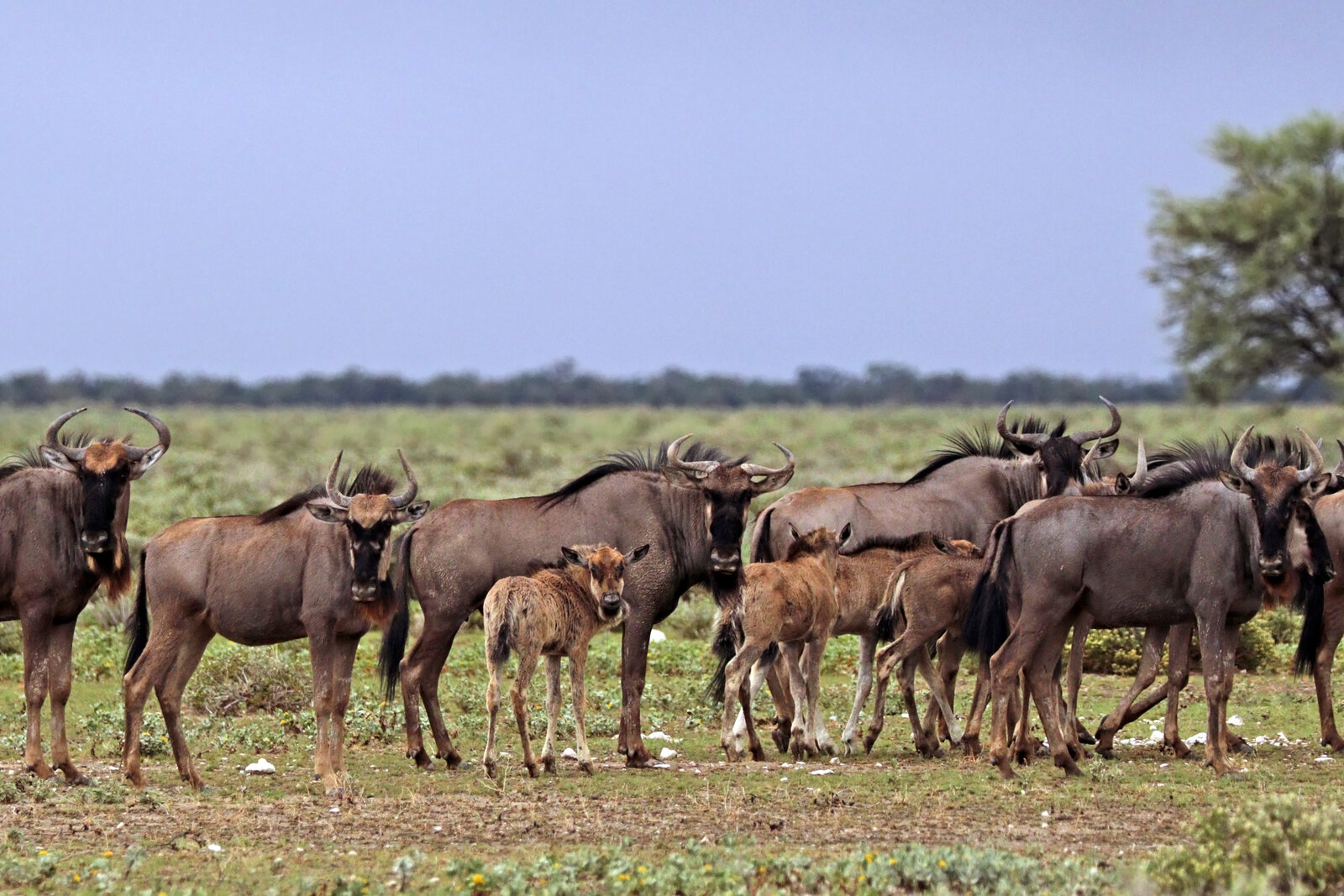
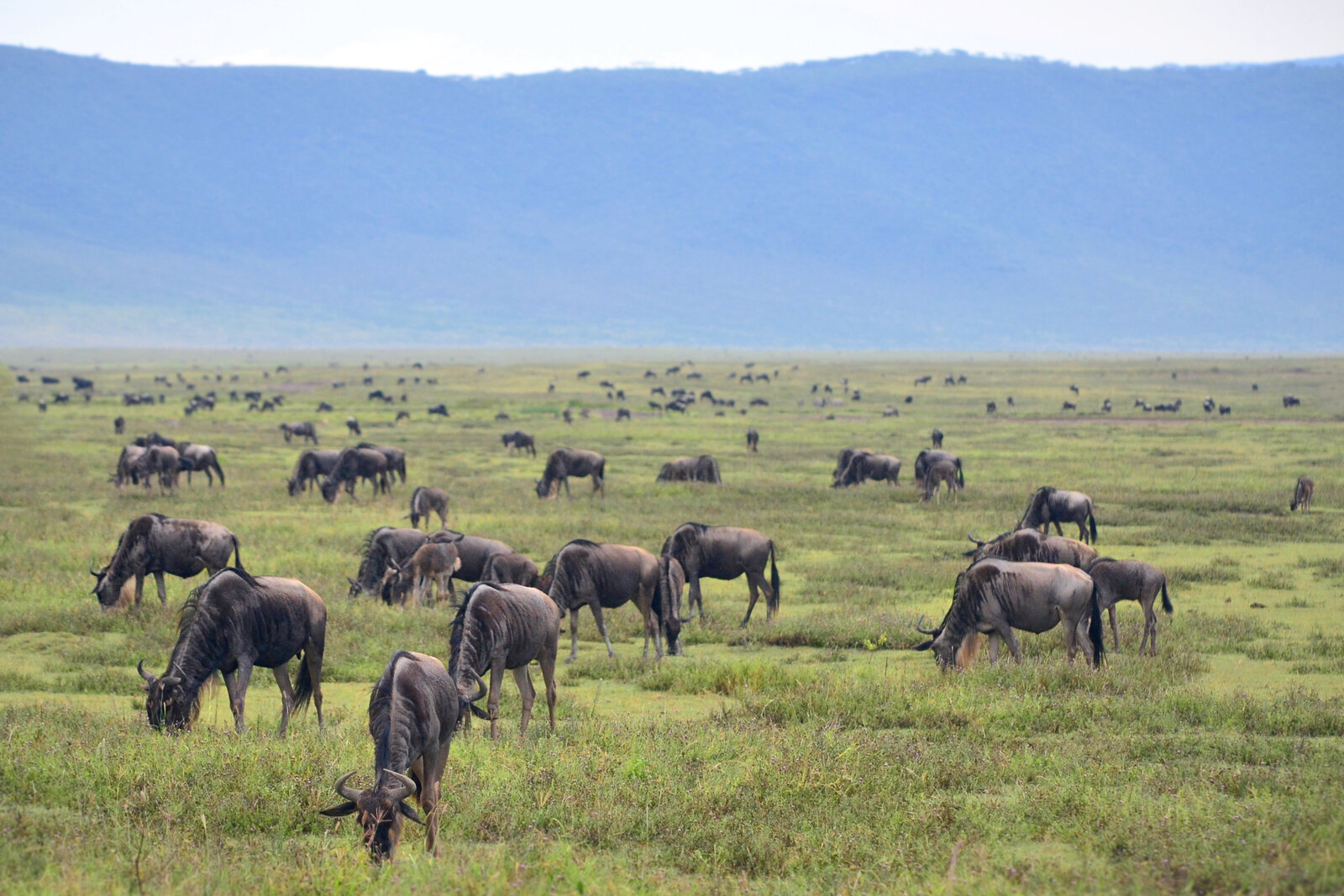
The blue wildebeest (Connochaetes taurinus) is the beating heart of the Great Migration. With roughly 1.5 million individuals, their sheer numbers are the reason the migration exists at all — no other herbivore gathers in quantities large enough to reshape an entire ecosystem as it moves. Ungainly at first glance, with a heavy forequarter and a mournful call, the wildebeest is in fact one of Africa's great survivors, superbly adapted to a life of perpetual movement.
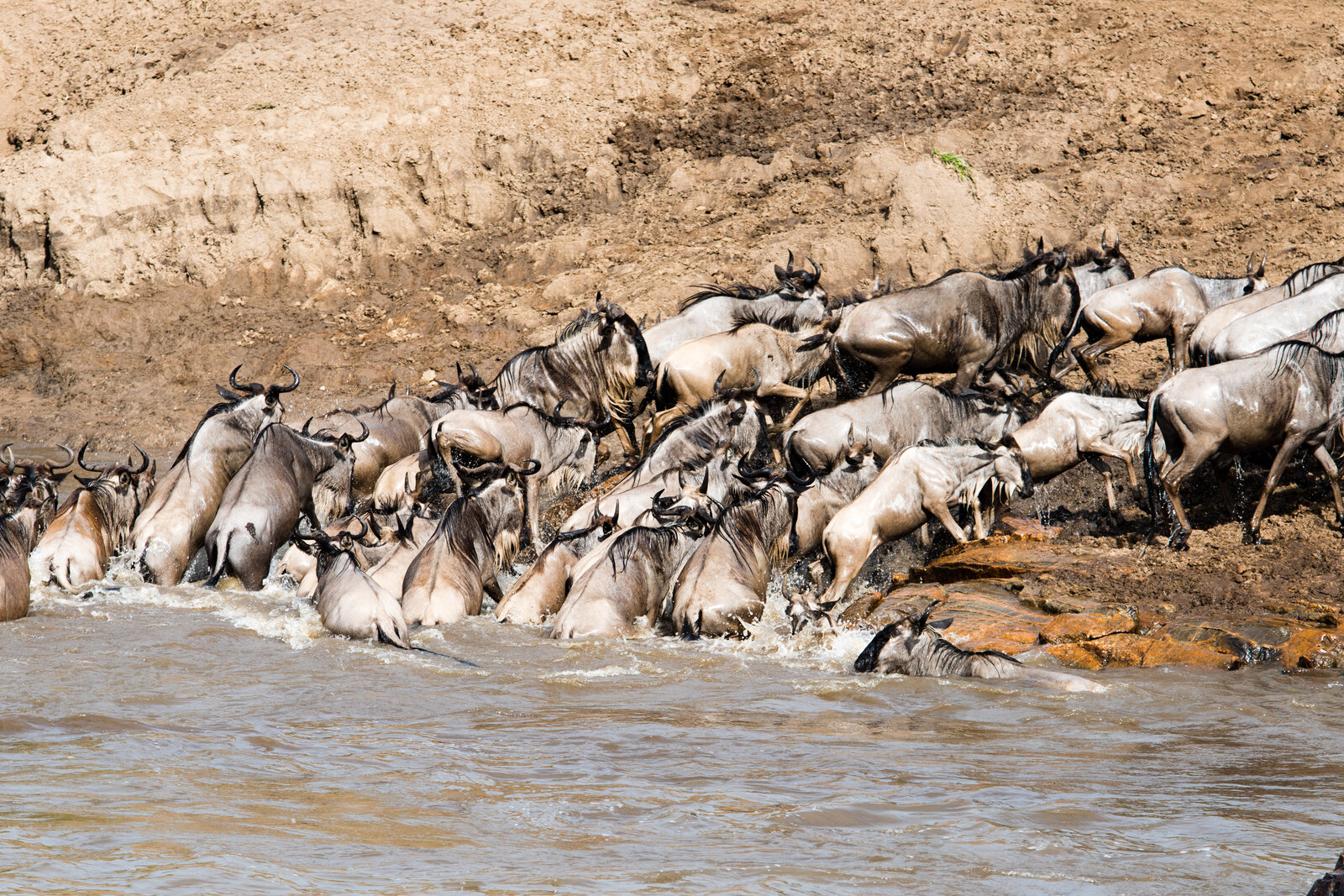
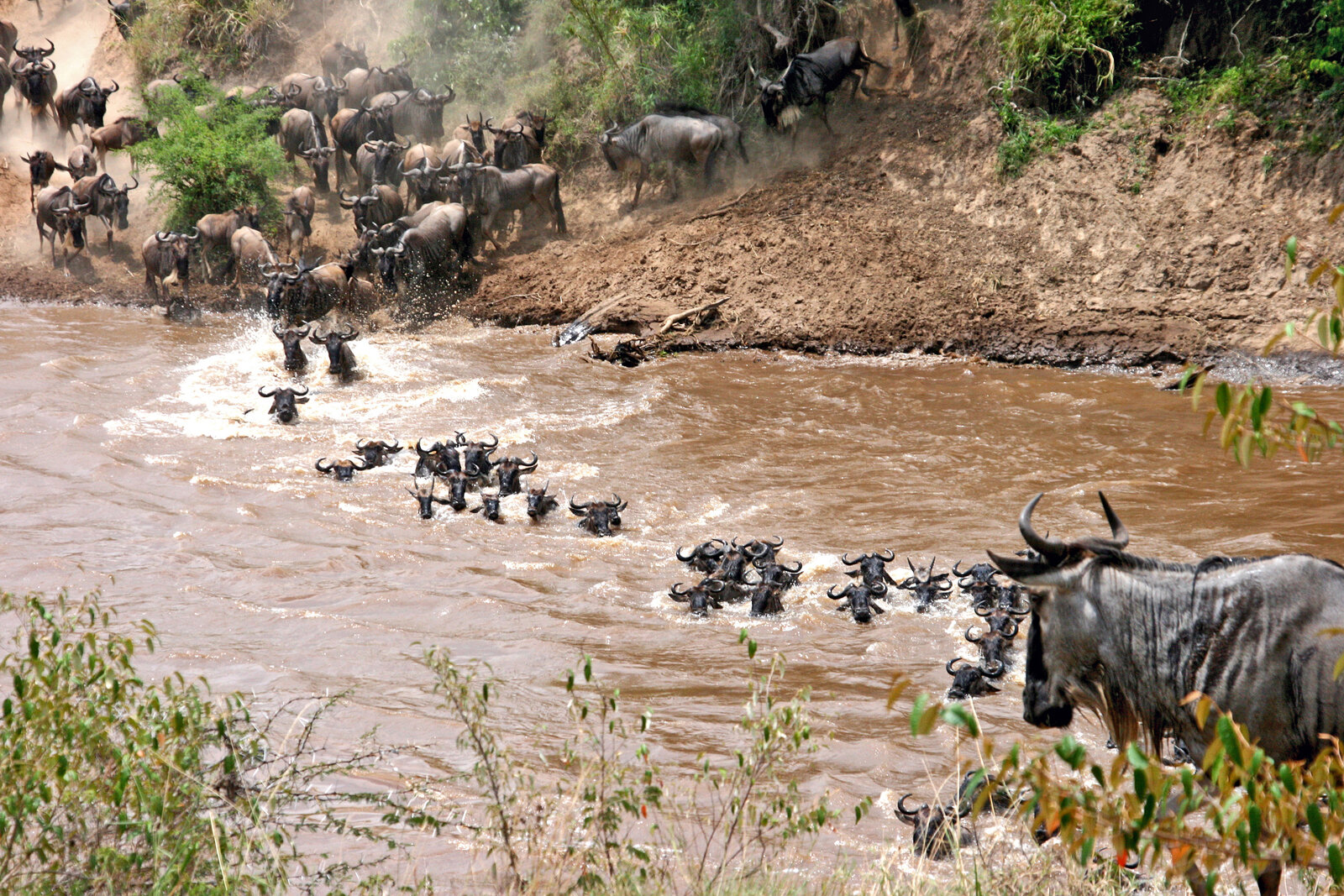
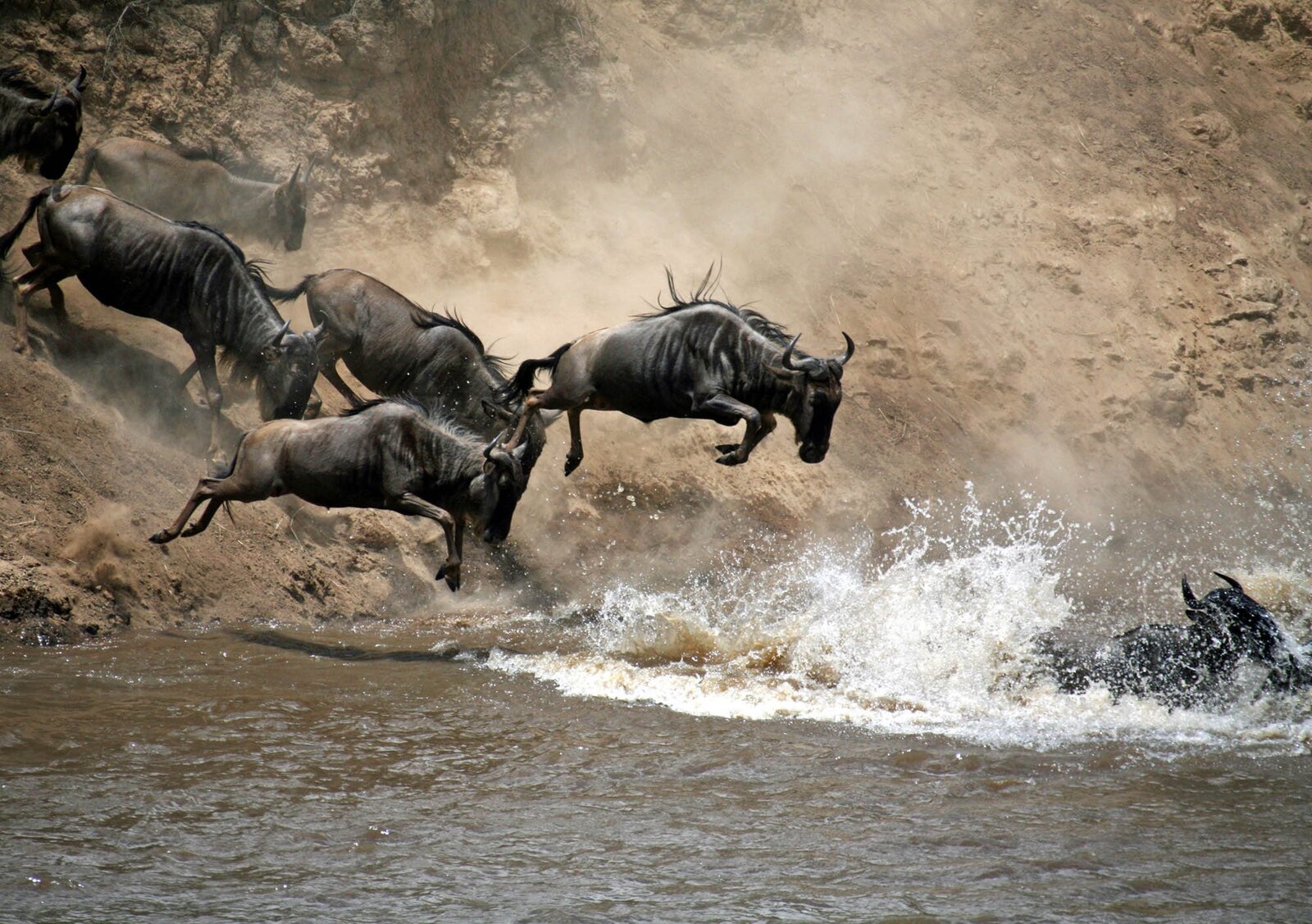
They move because they must follow the rain-greened grass. This is not blind instinct but a learned behaviour, passed down through generations, that reads the weather across a landscape the size of a small country. The two defining moments of their year are the calving in January–March at Ndutu in the southern Serengeti — where around 500,000 calves are born in barely three weeks, a survival strategy that overwhelms predators with sheer abundance — and the famous Mara River crossings of July to October, when the herds must brave crocodile-patrolled water to reach fresh grazing.
One detail captures the wildebeest's whole existence: a newborn calf can stand and run within minutes of birth. On these plains, it has no choice — it must keep up or be left behind. For the darker mechanics of survival at the river, see our companion guide to the dangers and predators of the crossing.
Zebra: The Scouts That Lead the Way
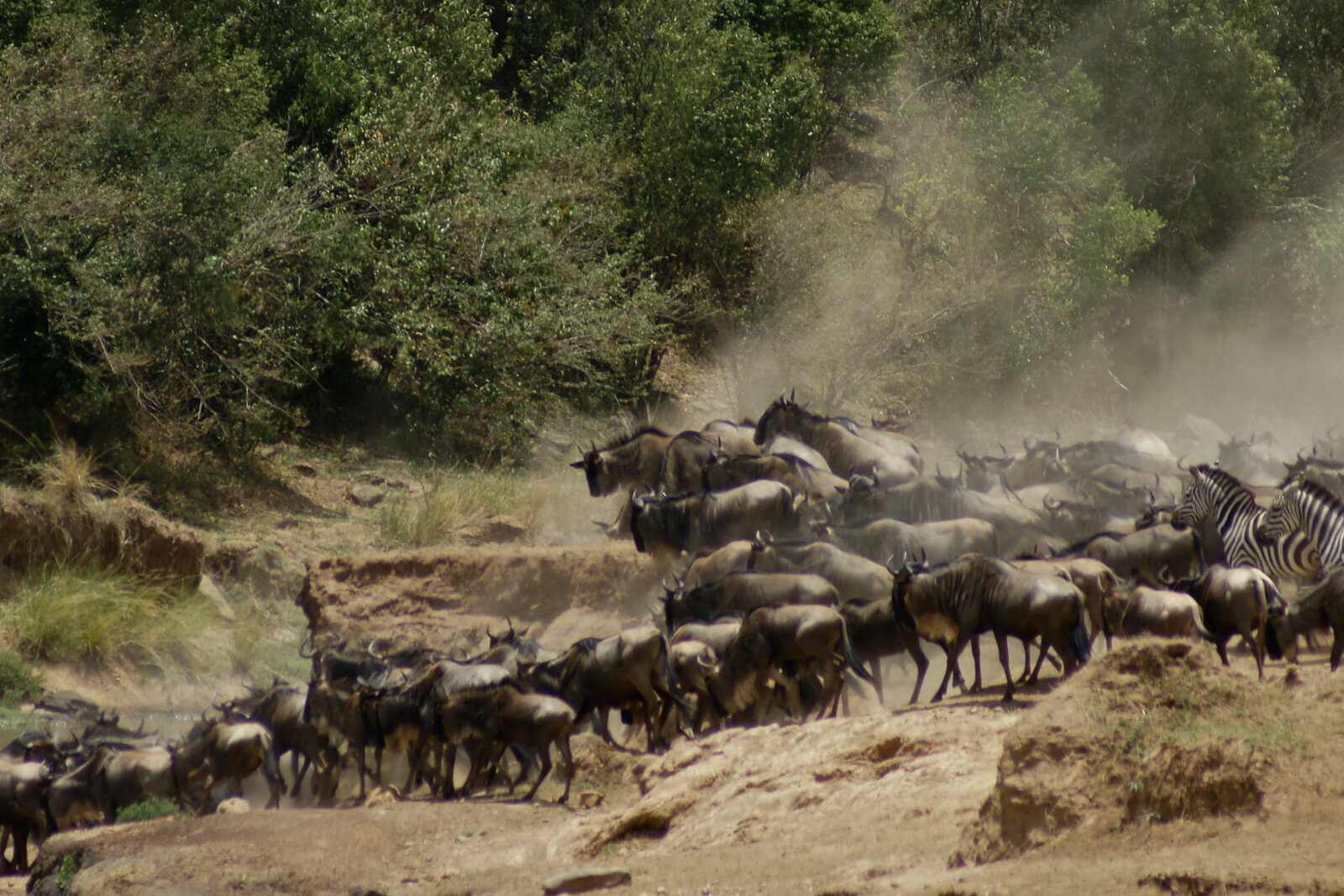
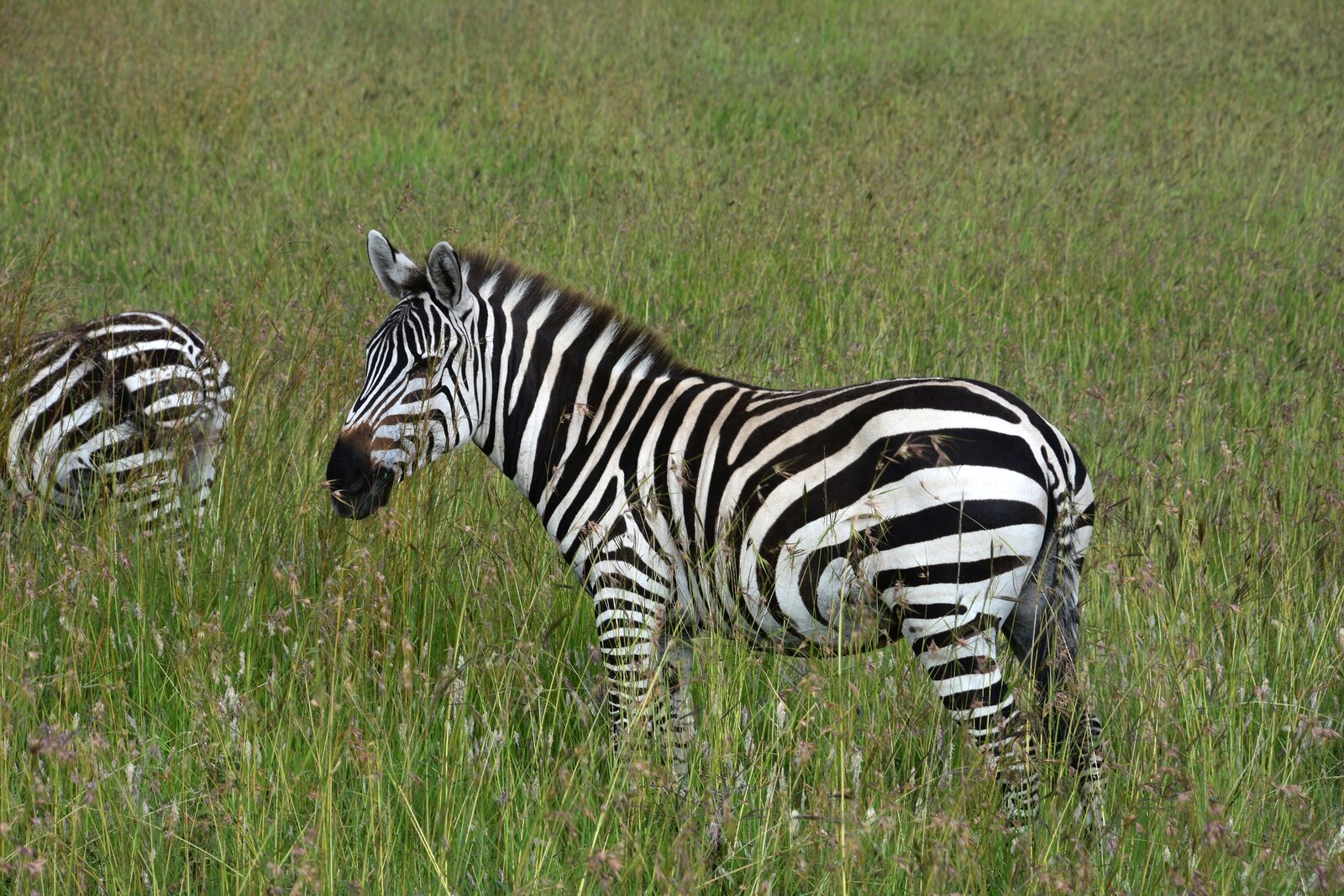
Burchell's zebra (Equus quagga burchellii), also called the plains zebra, are the unsung strategists of the migration. Numbering around 300,000, they typically move ahead of the wildebeest — the scouts of the great column. Far from competing with the wildebeest, they set the table for them: zebra prefer the taller, coarser top layer of grass, and by grazing it down they expose the shorter, more nutritious shoots beneath that wildebeest favour. It is a genuine mutualistic partnership, and it makes both species more successful than either would be alone.
Zebra bring two more advantages to the herd. First, memory: they possess excellent spatial recall and reliably navigate back to permanent water sources, an asset the whole migration benefits from. Second, social cohesion: within the vast mixed herd, zebra travel in tight, stable family units led by a stallion, which lends the column structure and vigilance.
And then there are the stripes. One long-standing theory holds that the bold pattern disrupts a predator's depth perception, making it harder to single out one animal from a stampeding, shimmering mass — a living optical illusion that buys precious seconds when a lion charges.
Thomson's Gazelle: The Final Wave
Thomson's gazelle (Eudorcas thomsonii) are the elegant rearguard of the migration. Around 500,000 of them follow behind the wildebeest, exploiting the very short, tender grass that remains once the larger grazers have passed through. They are easy to overlook when the plains are churning with wildebeest, yet half a million gazelle are always present — a permanent, essential part of the cast.
What defines the "tommy" is speed as survival. They can reach around 80 km/h, making them the fastest of the three primary migration species, and their real genius is not top speed but acceleration and the ability to change direction in an instant. This is why even the cheetah — the fastest land animal on Earth — succeeds against gazelle only about half the time. A hunt becomes a duel of angles and stamina, and the gazelle wins more often than most visitors expect.
Watch for their characteristic "stotting" — a stiff-legged, bouncing leap that signals to a predator, in effect, "I have seen you, and I am fit enough to outrun you." It is one of the most fascinating behaviours on the plains, and a sign of just how finely tuned life here is to the constant presence of hunters.
The Predators That Follow: Lion, Cheetah, Leopard & Hyena
Here is the detail most people get wrong: the great predators do not migrate. Lion, cheetah, leopard, hyena and wild dog are residents of the Serengeti-Mara ecosystem, holding territories year-round. What the migration does is bring their food to them, in numbers found nowhere else on Earth — a moving feast that turns these plains into the most intense predator theatre in Africa.
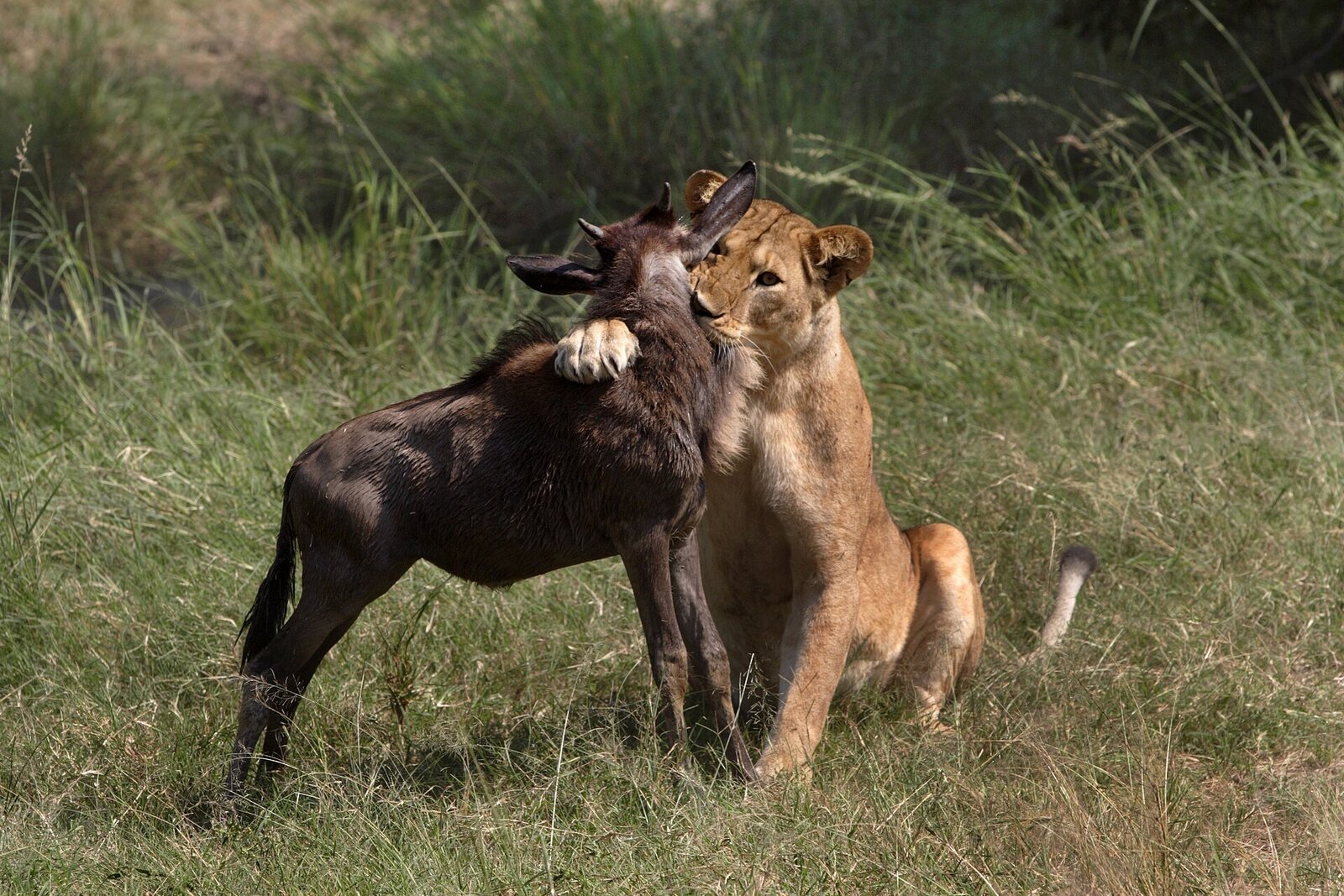
Lion. The Masai Mara holds one of the highest lion densities anywhere. Prides here hunt cooperatively, and during the crossings they position themselves at the river banks to ambush wildebeest and zebra as they scramble, exhausted, from the water.
Cheetah. The master of the open plain, the cheetah targets Thomson's gazelle almost exclusively during the migration. A hunt is a matter of seconds — the patient stalk, the explosive sprint, the trip and the kill, often over in under a minute.
Leopard. Solitary and secretive, the leopard works the tree lines and riverine forest, ambushing from cover. Often missed by visitors fixated on the herds, they are always present — a pair of eyes in the branches above the drama.
Spotted hyena. Far more than a scavenger, the spotted hyena is the ecosystem's most numerous large predator and a formidable cooperative hunter, taking wildebeest calves in quantity during the calving season.
African wild dog. Present in lower numbers in the conservancies around the Mara and in Laikipia, the wild dog is the most efficient pack hunter in Africa, with success rates approaching 80 percent — a rare and thrilling sighting for those who venture into the private conservancies.
The Mara River's Gatekeepers: Nile Crocodiles
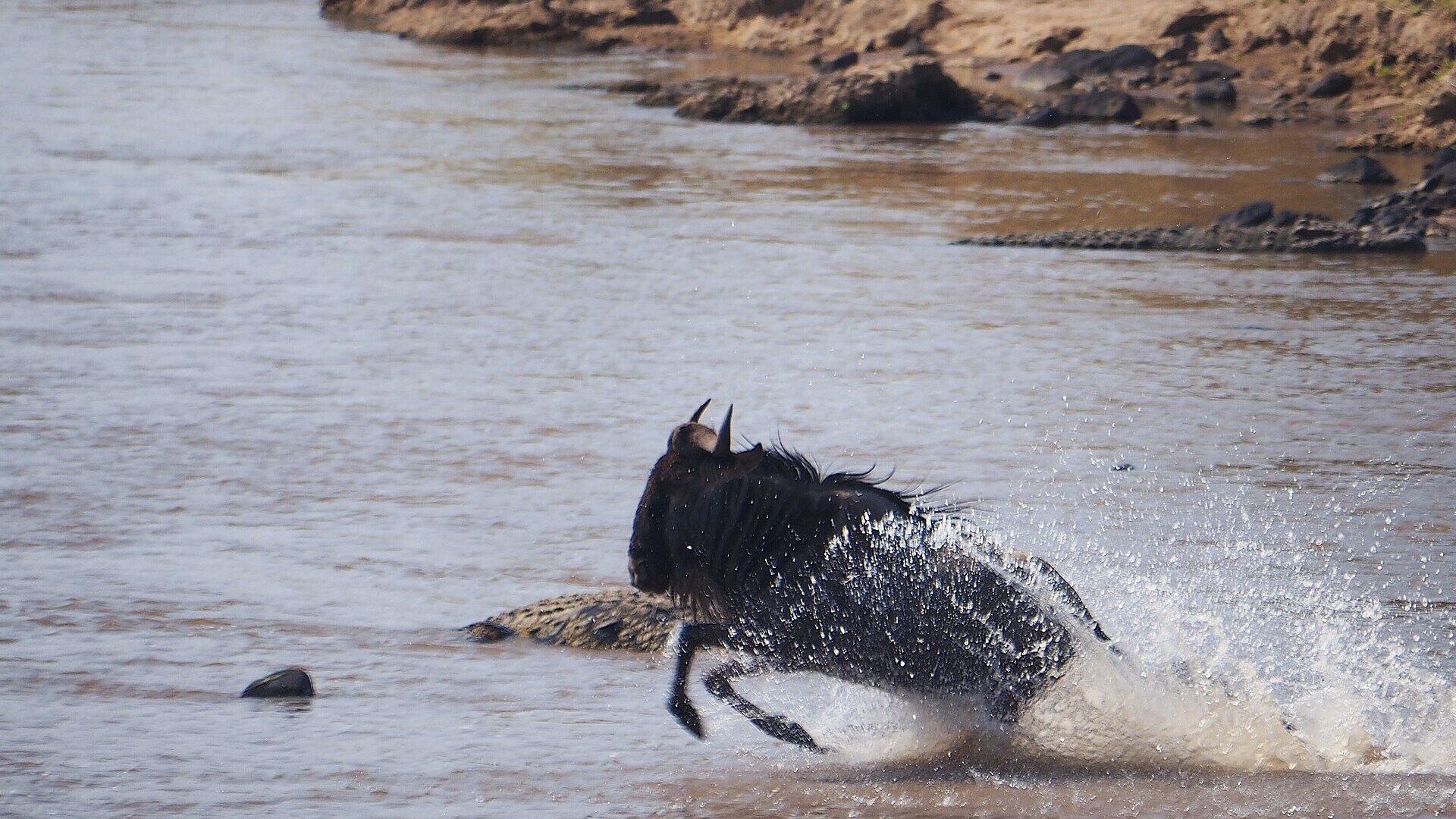
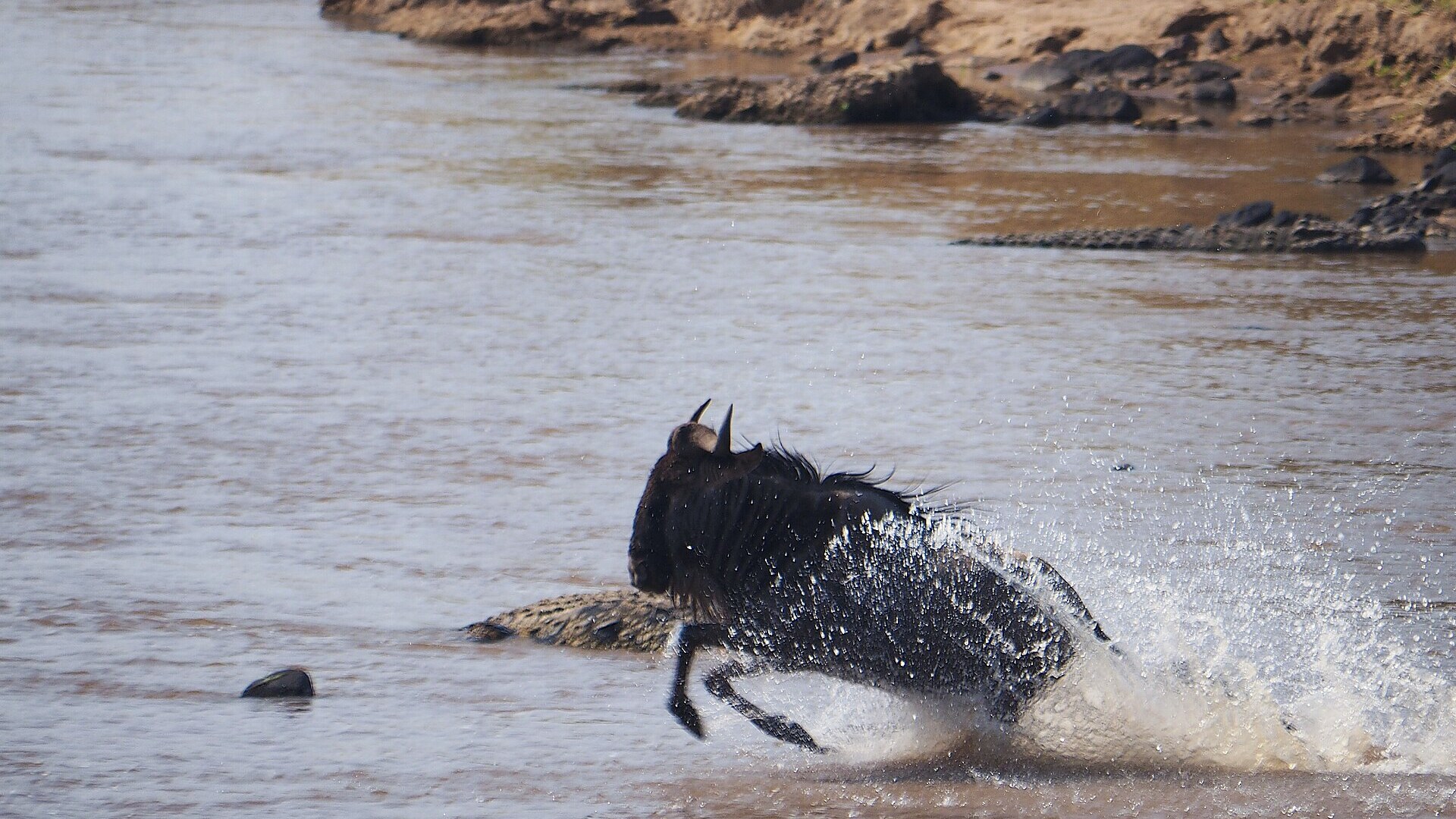
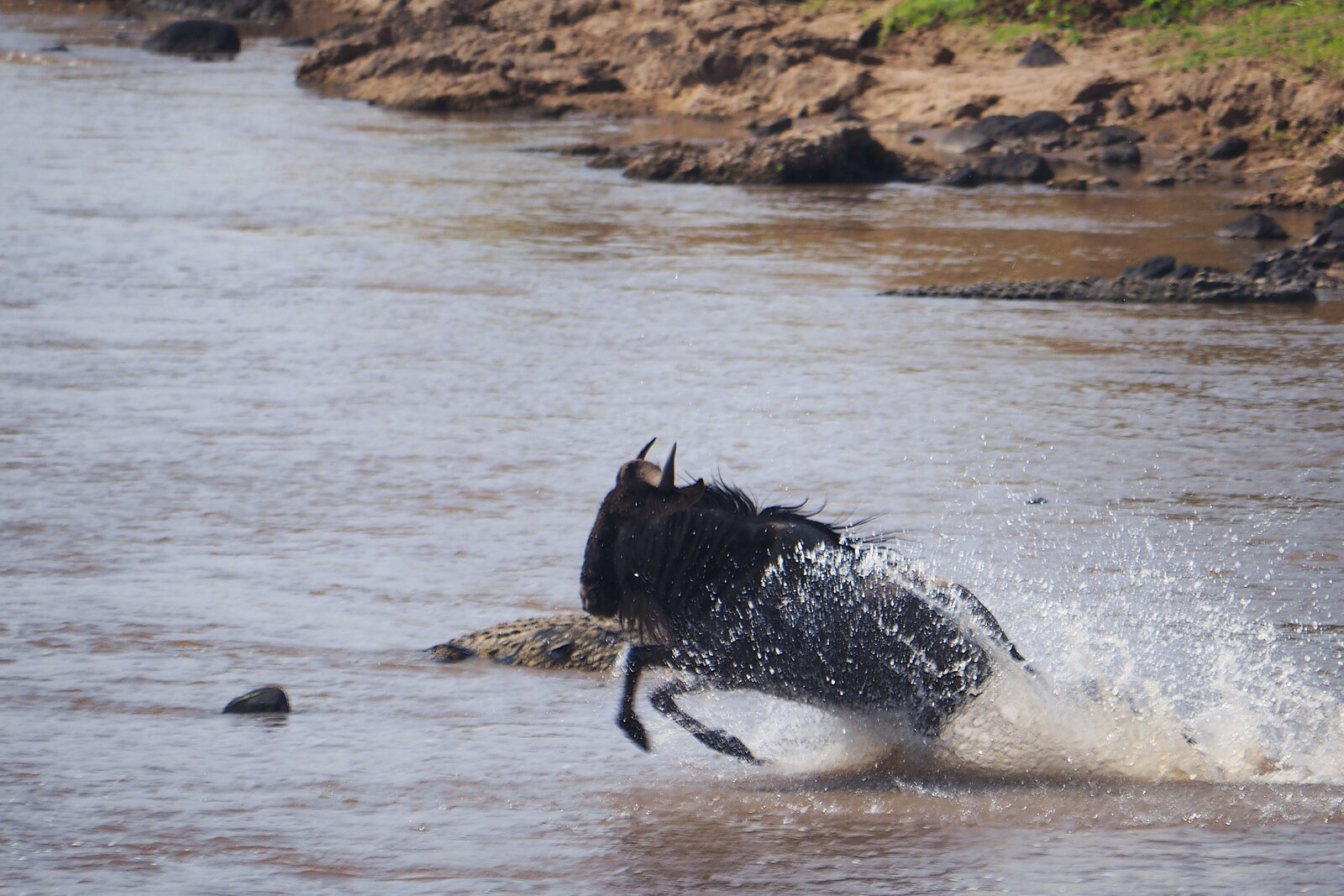
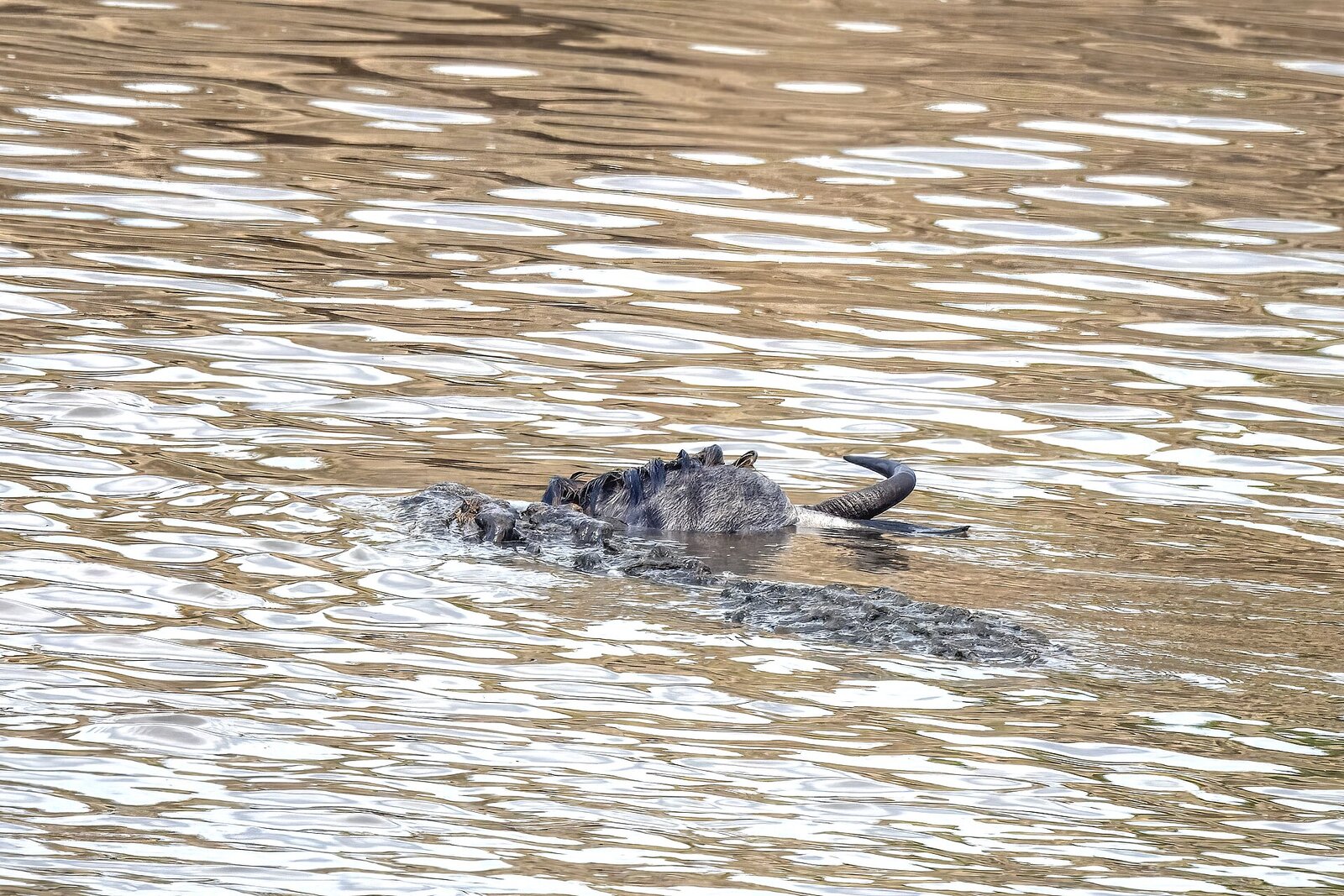
No animal embodies the drama of the crossings like the Nile crocodile (Crocodylus niloticus). Africa's largest reptile reaches up to five metres in length and 750 kilograms in weight, and the individuals that patrol the Mara River are among the most experienced ambush hunters alive. They station themselves at the traditional crossing points weeks before the herds arrive, holding position in the current, waiting.
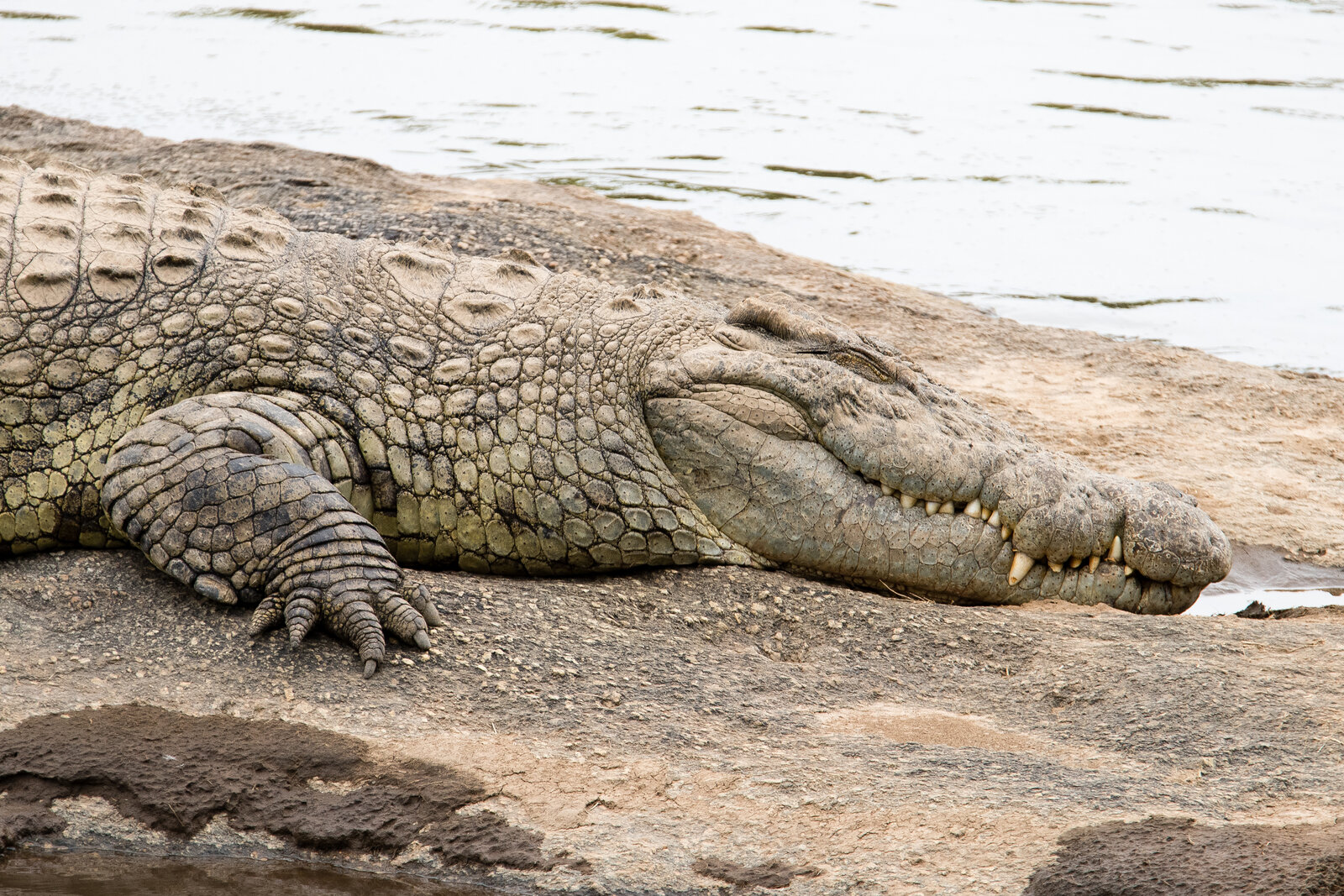
Some of the crocodiles at the Mara River are thought to be 50 to 70 years old, having worked the same bends for decades. The mechanics of the hunt are ruthless but selective: crocodiles target the stragglers, the weak and the young. A healthy, full-grown wildebeest is a serious opponent, and the great majority of animals that enter the water do in fact reach the far bank — but the crossing is never without cost.
To witness a crossing is to feel time collapse. The herds hesitate on the bank, sometimes for hours; then one animal commits and the rest pour after it in a chaos of dust, spray and noise, while the crocodiles move. It is one of the most primal spectacles in all of nature — and understanding the crocodile is the key to understanding why.
When and Where to See Each Species: The Annual Calendar
Because the migration is a year-round circuit, the animal you most want to see largely determines when and where you should travel. The herds move on rain rather than a calendar, so treat this as the reliable pattern we time safaris around, not a guarantee to the day. Zebra typically lead the wildebeest by one to two weeks, and the big cats — lion, cheetah and leopard — are present in both ecosystems all year.
| Month | Location | Key species | Spectacle |
|---|---|---|---|
| Jan–Mar | Ndutu, southern Serengeti | Wildebeest, lion, hyena | Calving season — 500K calves born |
| Apr–May | Central Serengeti | Wildebeest, zebra, gazelle | Long columns moving north |
| Jun | Western Corridor, Grumeti | Wildebeest, crocodile | Grumeti River crossings |
| Jul–Aug | Northern Serengeti & Masai Mara | All species | First Mara crossings |
| Sep–Oct | Masai Mara | All species, peak predators | Peak crossings & predator action |
| Nov | Masai Mara → Serengeti | Wildebeest, zebra, gazelle | Southward return |
| Dec | Central & southern Serengeti | Wildebeest, zebra, gazelle | Short rains, scattered herds |
If your heart is set on the river crossings, aim for the July–October window in the northern Serengeti and Masai Mara. If you would rather trade the crowds for newborn wildlife and intense predator drama, the January–March calving in the southern Serengeti is the connoisseur's choice. For the full month-by-month timing across both countries, see our best time for a Great Migration safari guide, and for the journey itself, our Serengeti-to-Masai Mara route guide.
Witness the Migration Animals With Beyond Africa Safaris
Knowing the cast is one thing; standing among them is another entirely. We are a Cape Town-based, tailor-made safari house, and following the Great Migration is one of the journeys we love most. We put you in a private vehicle with a guide who reads the herds each morning, in camps positioned close to the action — from the exclusive conservancies around the Masai Mara, where off-road viewing and quiet sightings of cheetah and wild dog are possible, to mobile camps that move with the herds in the Serengeti.
Whether you come for the calving in Ndutu or the crossings on the Mara, we time the trip around where the animals actually are, so you meet each species at the height of its moment — the wildebeest at the water's edge, the cheetah on the open plain, the crocodile in the current.
Ready to meet the animals of the Great Migration? 👉 Request a tailor-made migration safari quote → 👉 Browse our migration safari packages → 👉 WhatsApp us: +27 74 315 5782