🦍 Key Takeaways — Where Gorillas Live
- Two species, four subspecies. Mountain and Grauer's in the east; western lowland and Cross River in the west.
- Six parks you can actually visit across Rwanda, Uganda, the DRC, the Republic of the Congo and Gabon.
- Mountain gorillas are the famous ones — Rwanda's Volcanoes, Uganda's Bwindi and Mgahinga, and the DRC's Virunga.
- Grauer's gorilla lives only in eastern DRC and is visited at one park: Kahuzi-Biega.
- Western lowland gorillas are reached in the Congo Basin — Odzala-Kokoua in the Congo and Loango in Gabon.
- Permits run from about US$400 (DRC) to US$1,500 (Rwanda); the Congo and Gabon fold the visit into lodge packages.
Gorillas live in one place: equatorial Africa
Every wild gorilla on the planet lives in a single band of rainforest and mountain woodland that straddles the equator, from the western coast of Central Africa across the Congo Basin to the volcanoes of the Albertine Rift. That is the whole map. No gorillas in East Africa's savanna parks, none in Southern Africa, none anywhere outside this green belt.
About ten countries hold gorillas in the wild, but the list of places you can responsibly go and stand near a wild family is much shorter — six parks, in five countries. The rest are either closed to tourism, too unstable, or home to populations that researchers protect without opening them to visitors. Below is the honest version: which gorilla lives where, which parks you can book, what it costs, and how to choose between them.
If you already know you want the mountain gorillas and you are weighing Rwanda against Uganda, our Rwanda vs Uganda comparison goes deeper than this page. For the full four-country picture there is also Congo vs Uganda vs Rwanda vs DRC. This guide is the one that comes first — the map before the decision.
The four gorillas, and which ones you can meet
People say "gorilla" as if it were one animal. There are two species. The eastern gorilla (Gorilla beringei) and the western gorilla (Gorilla gorilla) separated more than a million years ago and now live a thousand kilometres apart. Each splits into two subspecies, giving four distinct gorillas — and only three of the four have any tourism at all.
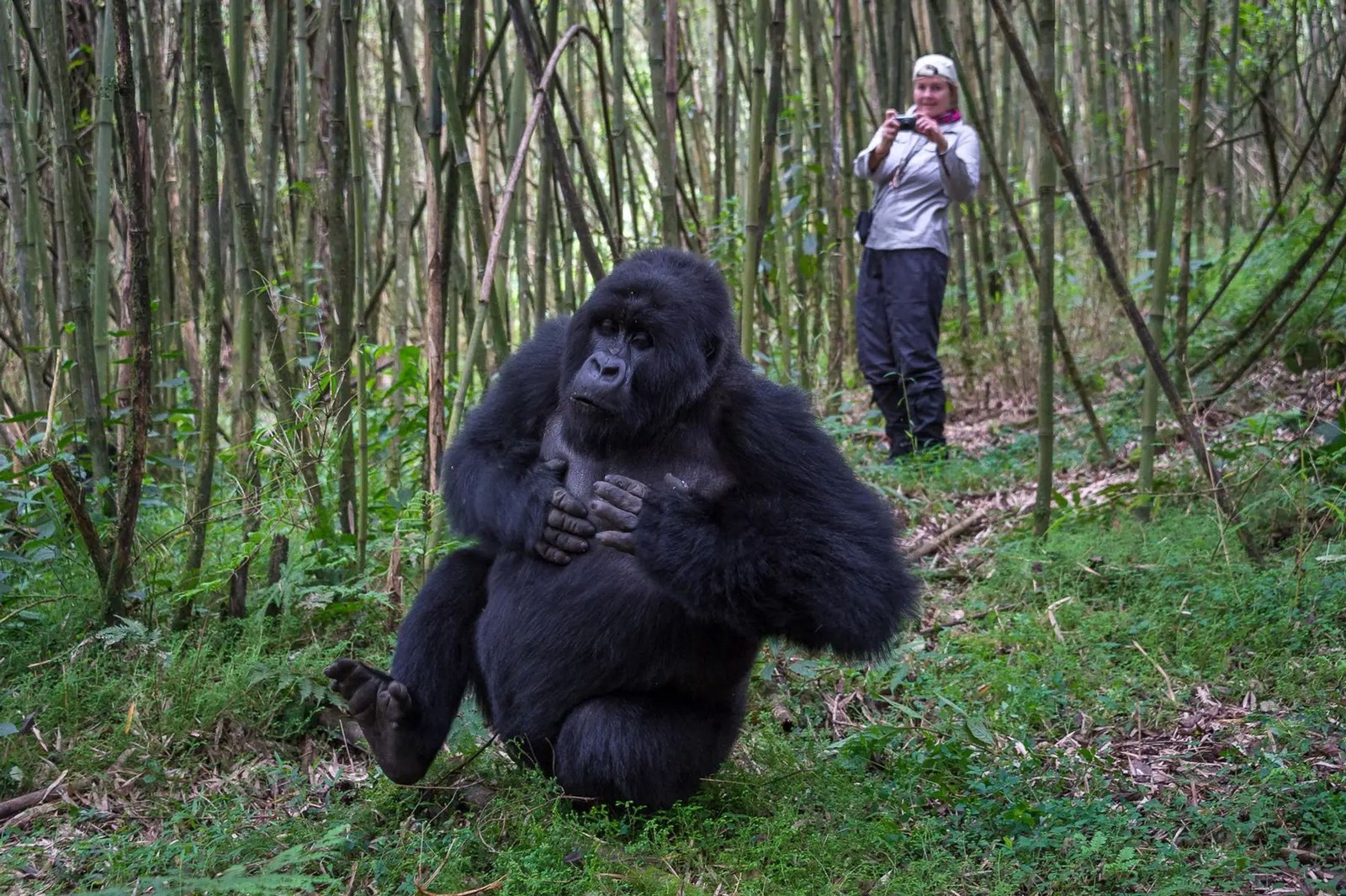
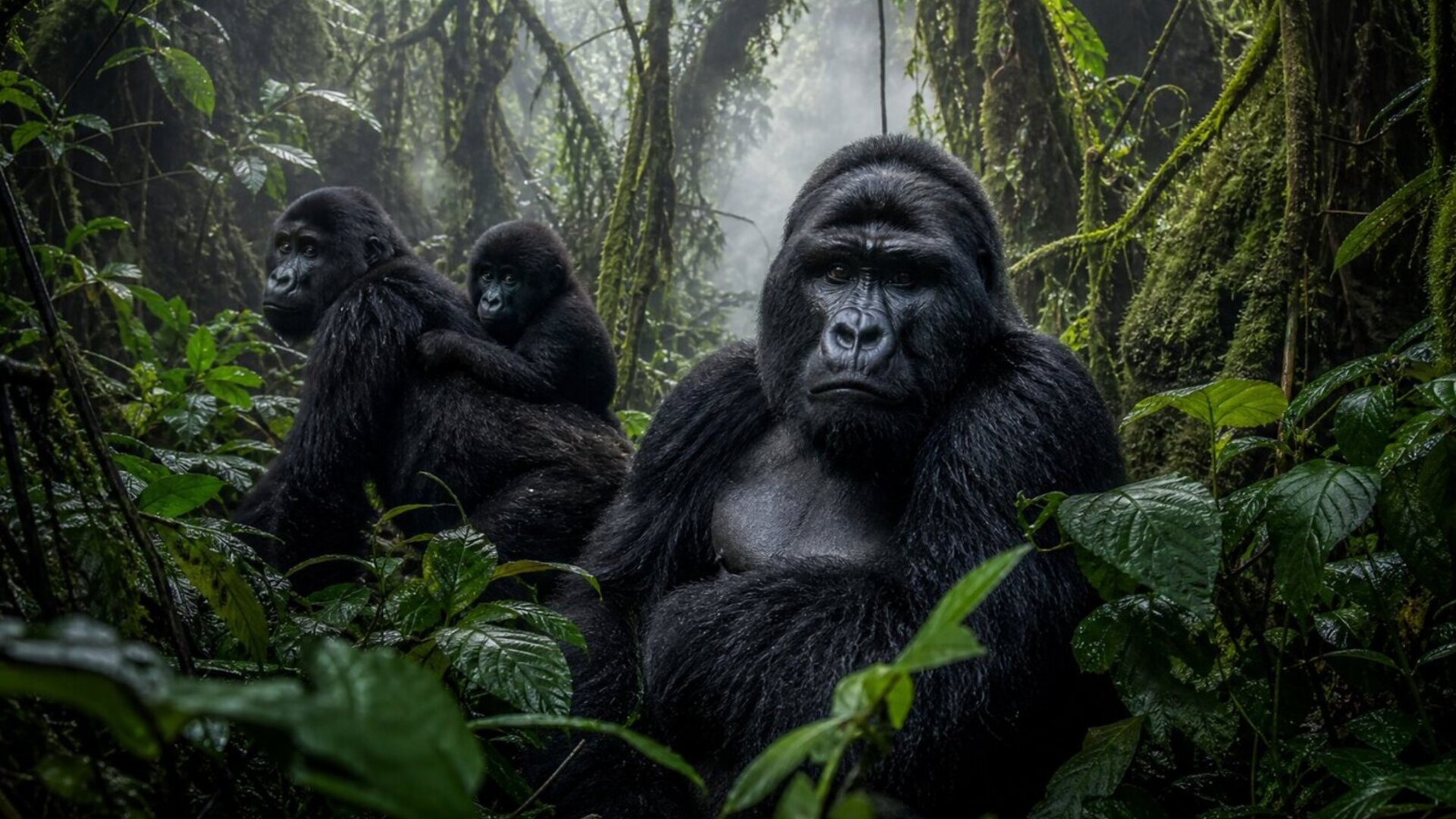
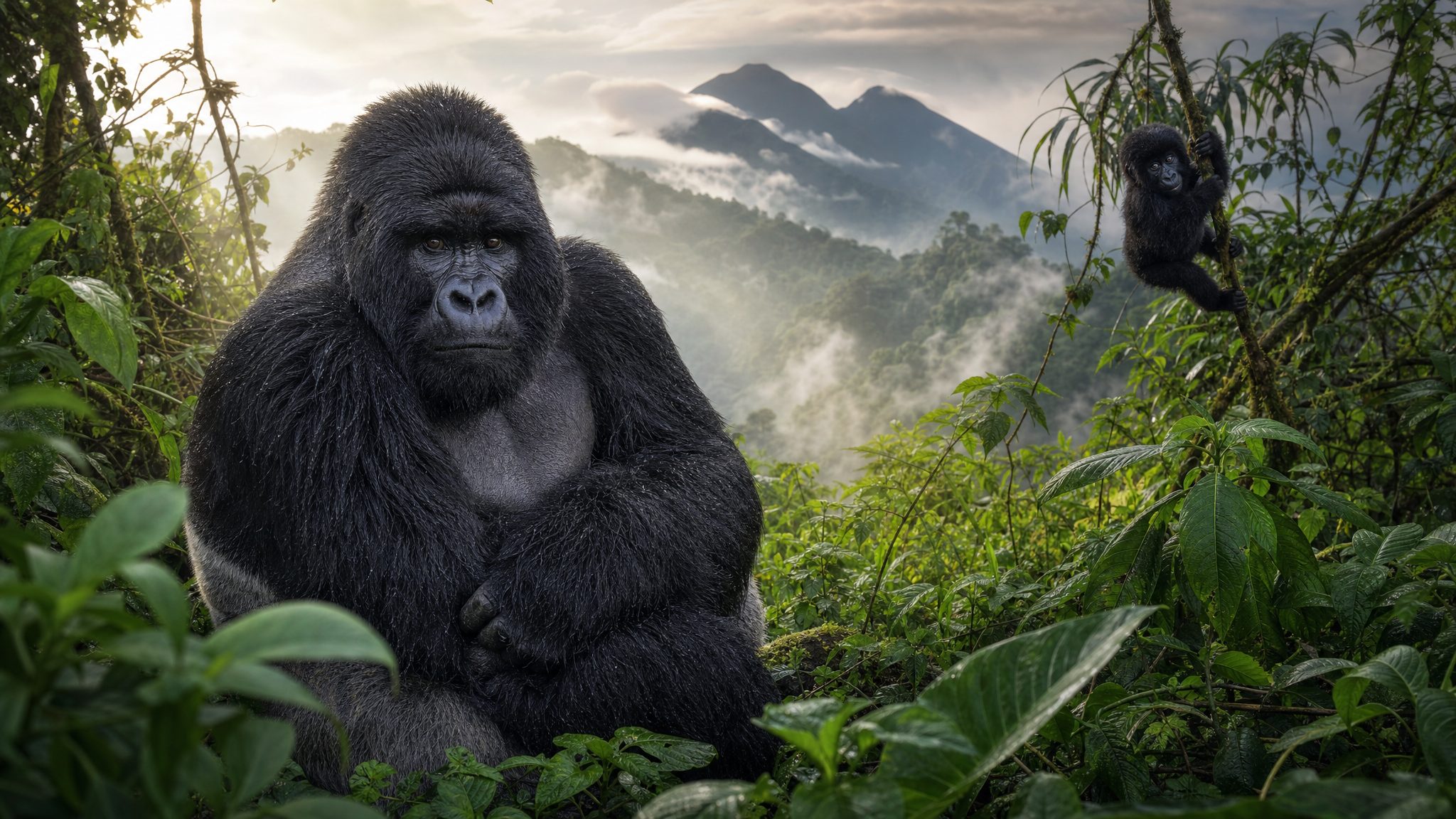
- Mountain gorilla — the celebrity. Just over a thousand animals, split between the Virunga Massif (shared by Rwanda, Uganda and the DRC) and Uganda's Bwindi forest. Thick-coated for the altitude and cold. This is the gorilla of the famous photographs.
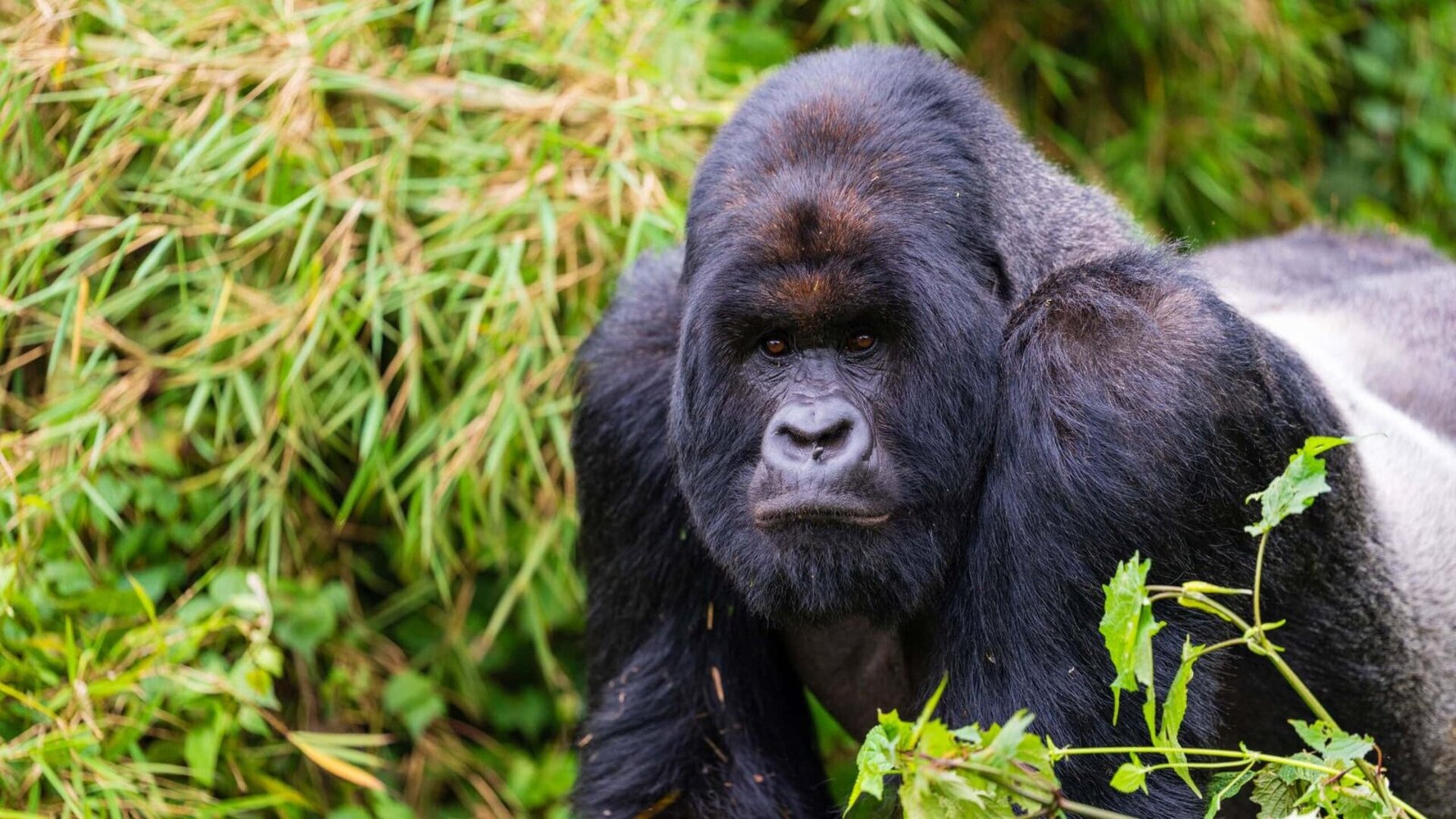
- Grauer's gorilla, also called the eastern lowland gorilla — the biggest of them all, a true heavyweight. It lives only in the eastern DRC and is critically endangered. One park accepts visitors: Kahuzi-Biega.
- Western lowland gorilla — the most numerous, spread across the Congo Basin forests of the Republic of the Congo, Gabon, Cameroon and beyond. Smaller, with a browner coat and a wider face. Seen at Odzala-Kokoua in the Congo and, remarkably, on beaches and lagoon edges at Loango in Gabon.
- Cross River gorilla — the rarest great ape in Africa, perhaps three hundred left in the forested hills of the Nigeria-Cameroon border. There is no tourism. They are too few and too wary, and the work there is pure protection.
So when someone asks where to see gorillas, the real answer depends on which gorilla. Here is the same information in one table.
| Gorilla | Where it lives | Can you visit? | Park(s) |
|---|---|---|---|
| Mountain gorilla | Virunga Massif + Bwindi | Yes | Volcanoes (Rwanda), Bwindi & Mgahinga (Uganda), Virunga (DRC) |
| Grauer's gorilla | Eastern DRC only | Yes — one park | Kahuzi-Biega (DRC) |
| Western lowland gorilla | Congo Basin | Yes | Odzala-Kokoua (Congo), Loango (Gabon) |
| Cross River gorilla | Nigeria-Cameroon border | No tourism | — |

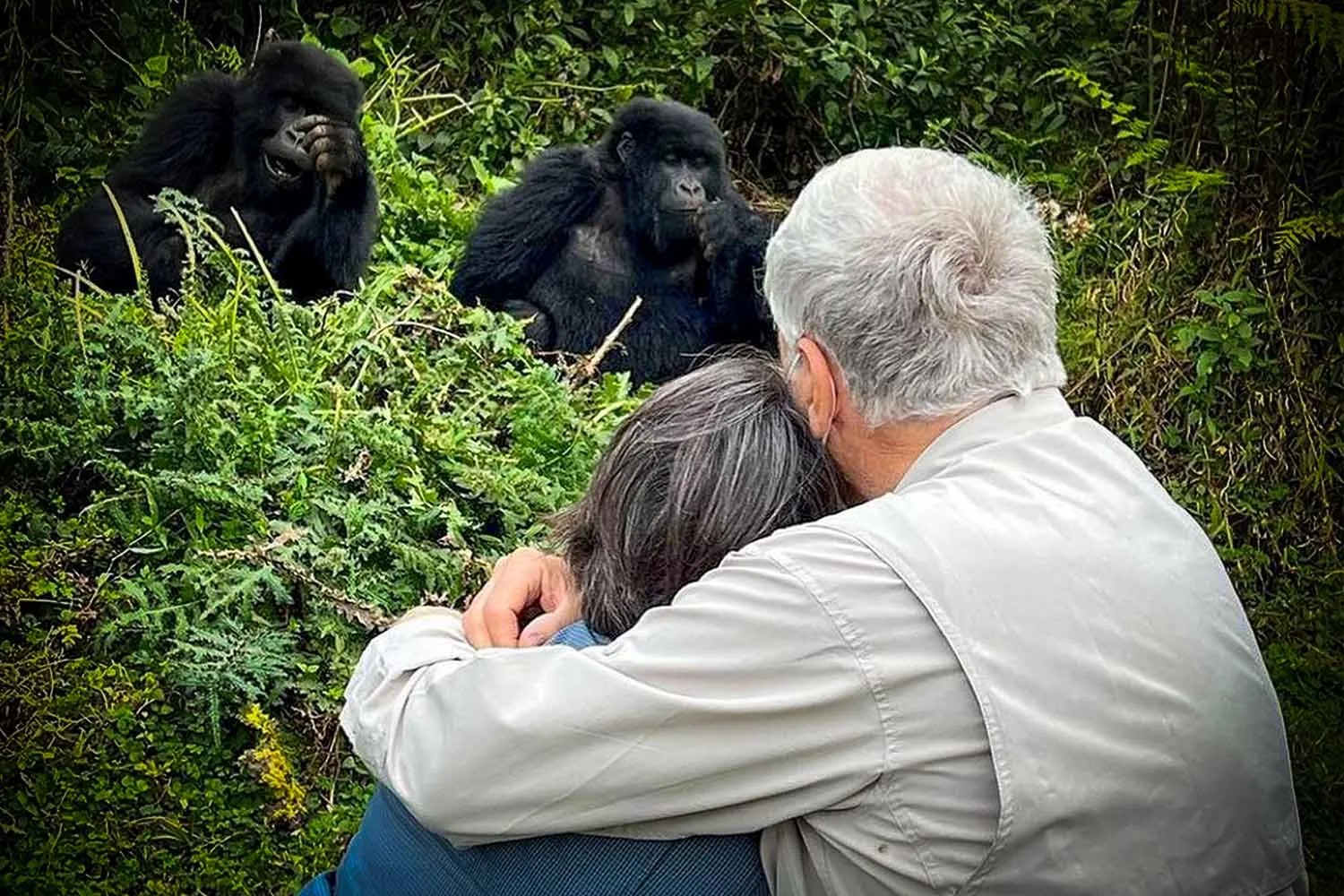
Rwanda — Volcanoes National Park (mountain gorilla)
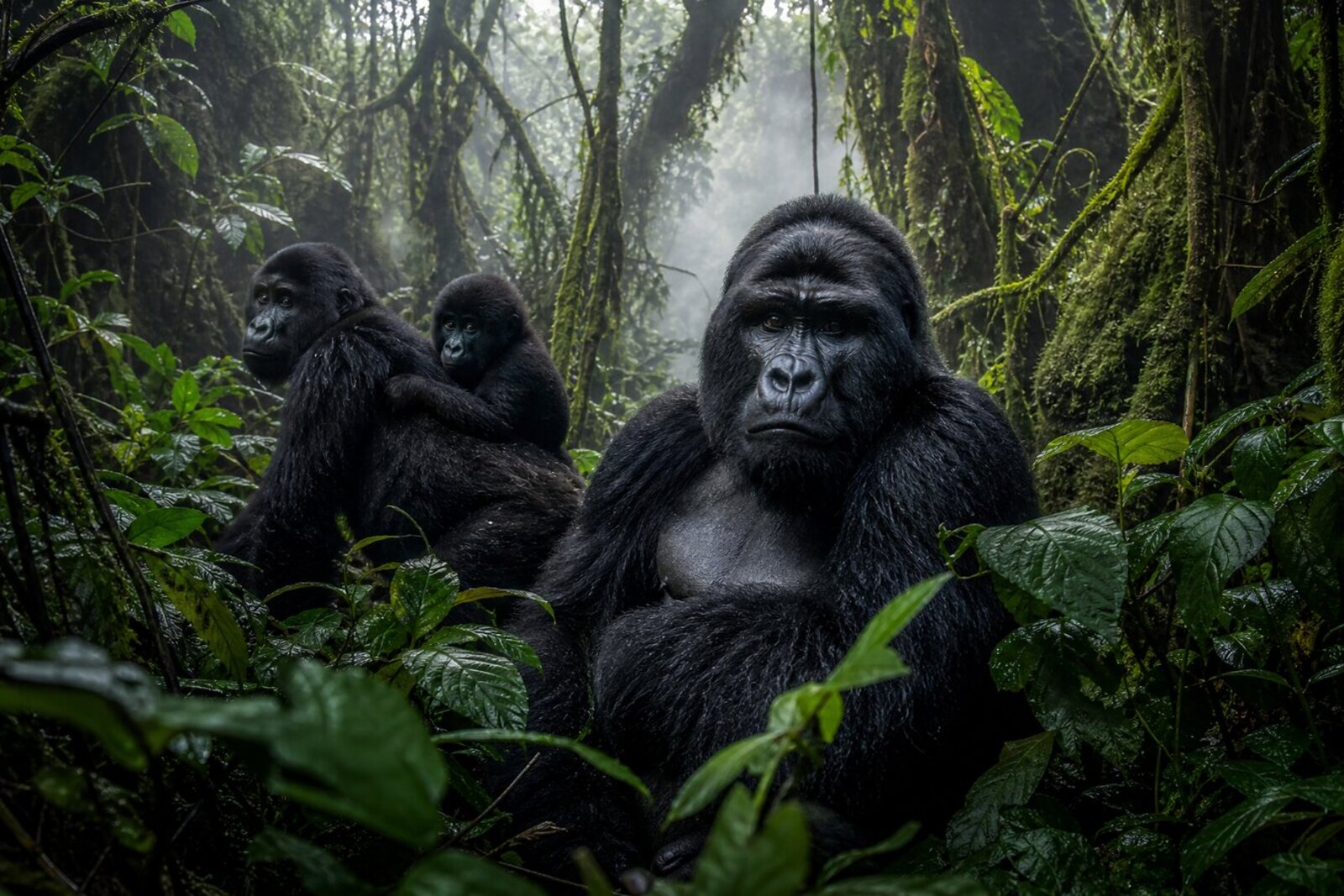
If you want the smoothest trip to a mountain gorilla, Rwanda is it. Volcanoes National Park sits in the far north-west, and the drive from Kigali airport to the trailhead lodges takes two to three hours on good tar. You brief at dawn at the park headquarters, drive to the forest edge, and walk up through farmland and then bamboo and Hagenia woodland on the flanks of the volcanoes.
The permit is US$1,500 per person. That is the headline figure people react to, and it buys genuine polish: short transfers, well-managed groups, a strong ranger network and some of the finest lodges on the continent a few minutes from the gate. For a traveller with limited days who wants one clean, high-quality trek, Rwanda is hard to beat. Read the full picture in our Volcanoes National Park trekking guide, and if cost is the deciding factor see how much Rwanda gorilla trekking costs.
Uganda — Bwindi & Mgahinga (mountain gorilla)
Uganda holds roughly half the world's mountain gorillas, almost all of them in Bwindi Impenetrable Forest — an ancient, tangled rainforest in the south-west that earns the word "impenetrable." A second, smaller option, Mgahinga, sits on the Virunga chain next door. The permit is US$800 for a standard trek, which is why Uganda is the value choice, and the country also offers the four-hour habituation experience at US$1,500, where you spend far longer with a family that is still getting used to people.
The trade-off is the walking. Bwindi is steep, often muddy, and the treks can be long. Travellers come away saying it felt wilder and more earned than the groomed trails elsewhere. Our Bwindi trekking guide covers the four trailhead sectors, and Bwindi vs Volcanoes puts the two flagship forests head to head. If you want to pair gorillas with the rest of the country, start with our Uganda safari packages.
DRC — Virunga & Kahuzi-Biega (mountain + the only Grauer's)
The Democratic Republic of the Congo is the only country where you can trek two different gorillas. Virunga National Park, in the east, protects mountain gorillas and carries a permit of around US$400 — the lowest of the mountain-gorilla trio. Virunga is also the park with the long conservation story and, at times, real security complications; access opens and closes with conditions on the ground, so it is booked with care and current advice.
Further south, Kahuzi-Biega is the one place on Earth you can walk to a Grauer's gorilla — the largest subspecies, found nowhere outside the eastern DRC. For a traveller who has already seen mountain gorillas and wants the heavyweight cousin, this is the park. We weigh the whole country against its neighbours in Congo vs Rwanda and the wider four-country comparison.

Republic of the Congo & Gabon — the western lowland forests
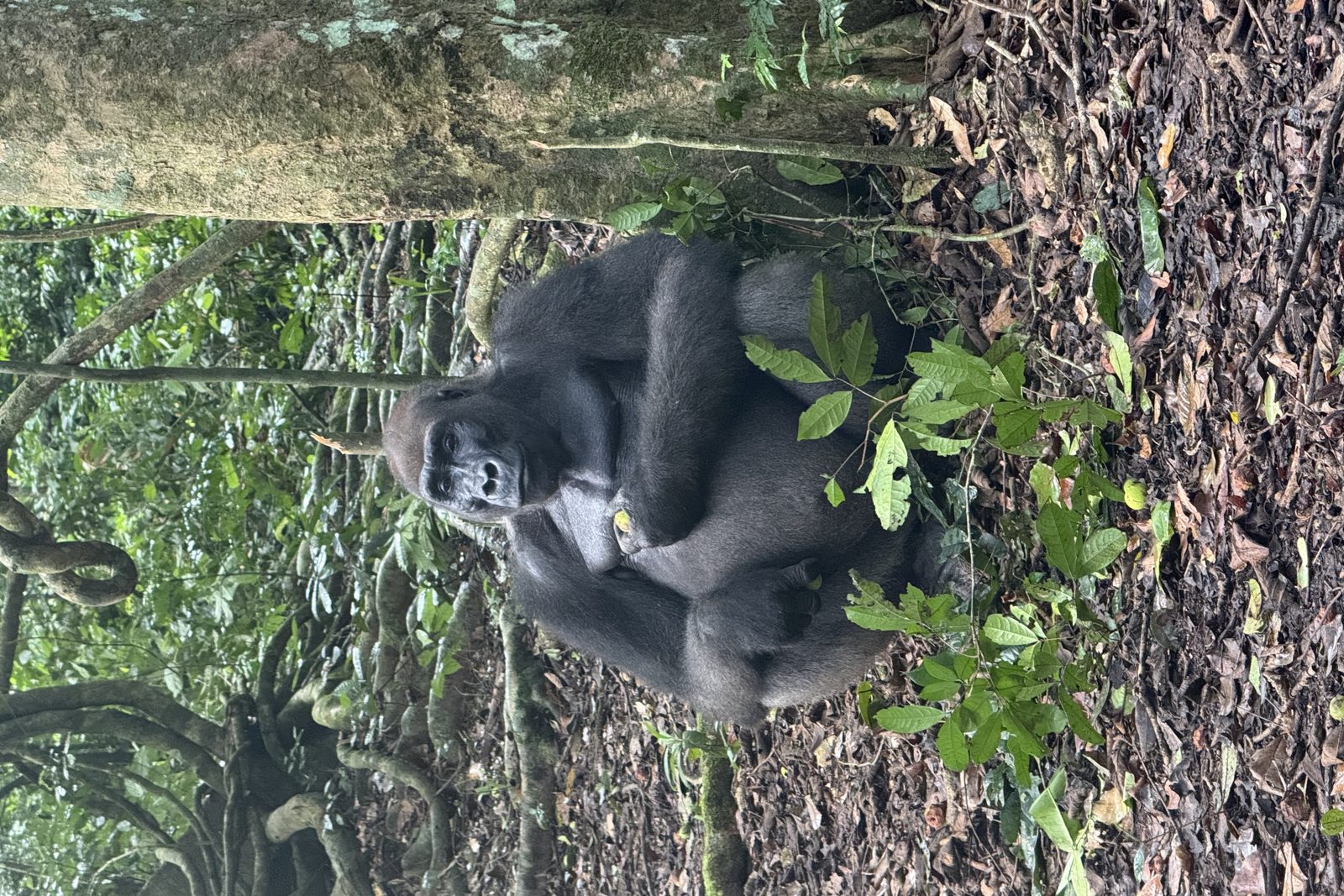
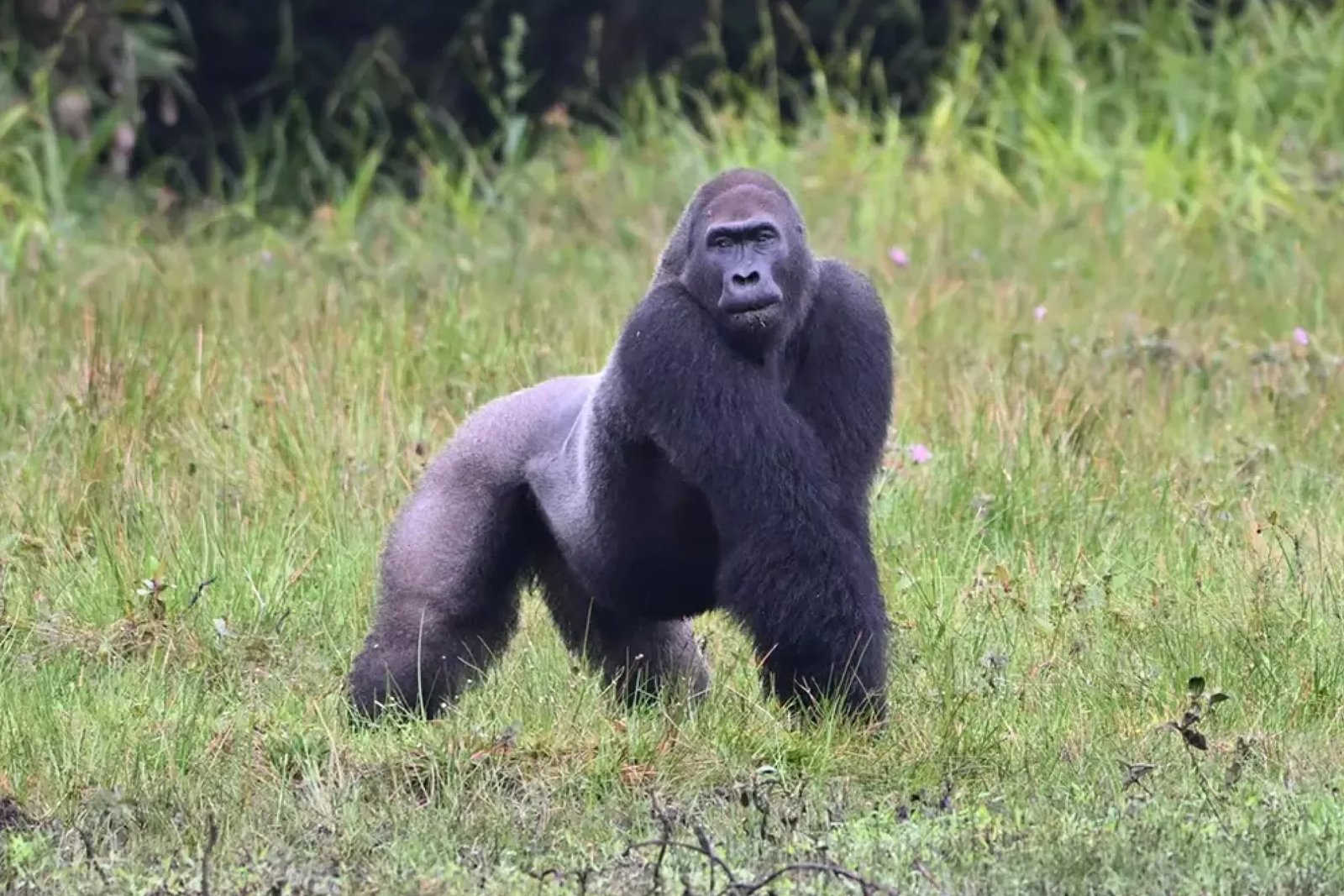
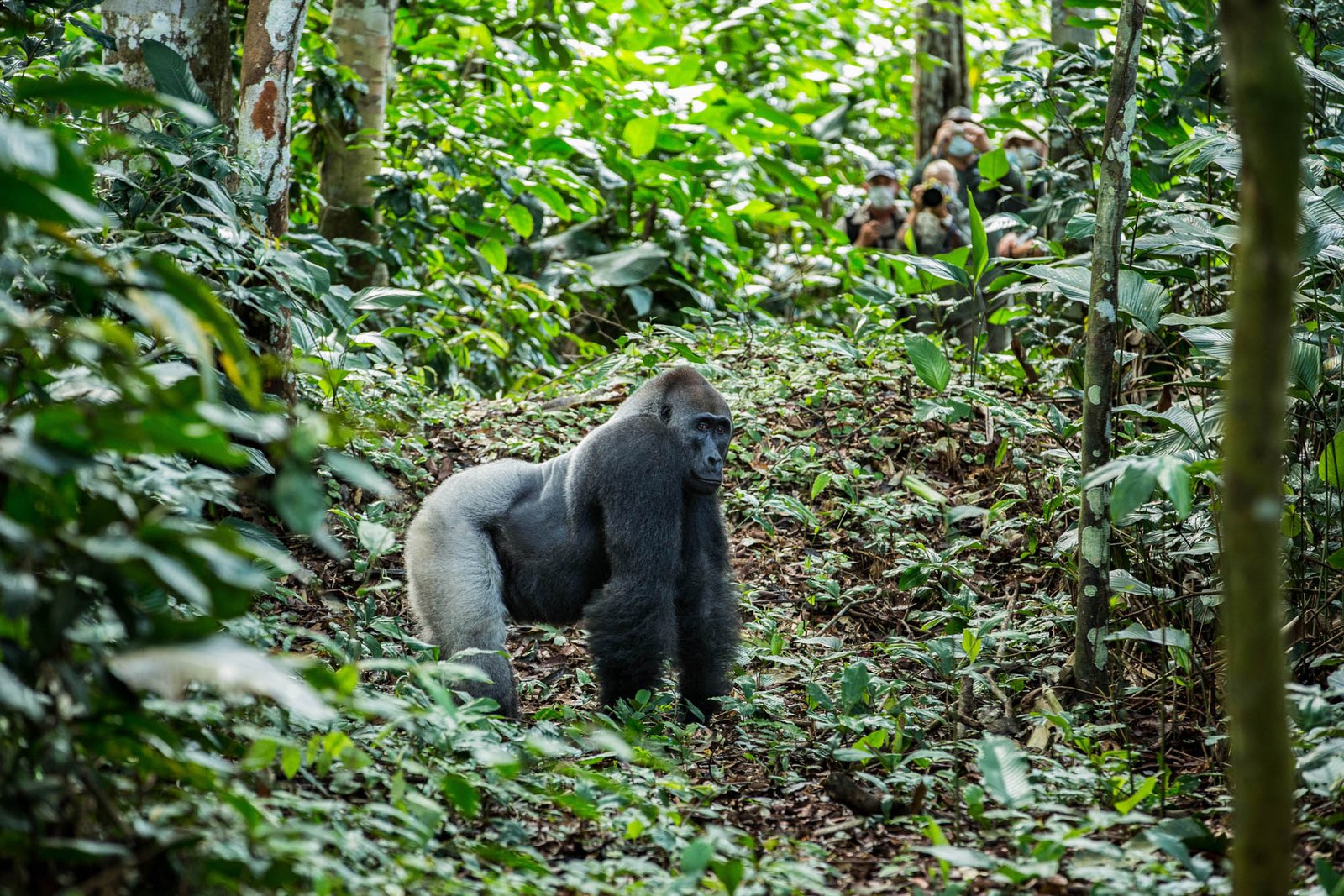
West of the great lakes, deep inside the Congo Basin, the forests belong to the western lowland gorilla. This is a different kind of trip — fewer travellers, deeper forest, and a focus on the whole rainforest rather than one headline animal.
In the Republic of the Congo, Odzala-Kokoua is the park that does it best: a handful of small camps, habituated western lowland families, and forest clearings called bais where gorillas, forest elephants and buffalo come into the open. Our Odzala-Kokoua guide and the broader western lowland gorilla trekking guide cover the detail. In Gabon, Loango is the park with the famous image of gorillas near the coast, where forest meets lagoon and beach; plan it alongside our Gabon travel guide. In these two countries the gorilla visit is built into the lodge package rather than sold as a separate permit.
Cross River gorilla — the one you cannot visit
For completeness, the fourth gorilla. The Cross River gorilla survives in a scatter of forested highlands on the Nigeria-Cameroon border — the rarest great ape in Africa, down to a few hundred animals across a dozen fragmented groups. There is no trekking, no permit, no camp. The groups are too small, too shy and too fragile, and the conservation effort there is about keeping them alive, not showing them to visitors. It belongs on the map so the picture is honest, not as somewhere to book.
So which country should you choose?
Strip it back to what actually decides a trip:
- Short on time, want it easy and polished — Rwanda. Two-hour drive from the capital, groomed trails, the best lodges a step from the gate.
- Want value, more time with gorillas, a wilder walk — Uganda. Half the world's mountain gorillas, an US$800 permit, and the habituation option.
- Want the lowest permit or a second, rarer gorilla — the DRC, booked with current advice. Virunga for mountain gorillas at around US$400, Kahuzi-Biega for the only Grauer's trekking anywhere.
- Want deep rainforest and far fewer people — the Republic of the Congo or Gabon, for western lowland gorillas.
Most first-time travellers land on Rwanda or Uganda, and that is the right instinct. The Rwanda vs Uganda piece is the next thing to read. Travellers who have already trekked once, and want something further off the map, are the ones we send to the Congo Basin.
When to go, and what a permit costs
Gorillas are tracked every day of the year, so there is no closed season. What changes is the forest floor. The drier stretches — roughly June to September and December to February — give firmer trails and shorter, easier walks, and they are the busiest. The wetter months mean mud and longer treks, but thinner crowds and, often, heavier feeding that keeps families lower down. For the mountain parks in particular, see when to visit Rwanda and Uganda for gorilla trekking.
Permit costs at a glance: Rwanda US$1,500; Uganda US$800 standard or US$1,500 for habituation; DRC Virunga around US$400; the Republic of the Congo and Gabon fold the western lowland visit into the lodge package. On top of the permit you budget for lodges, transfers and, usually, a scenic flight or two. We break down the full spend in the Rwanda cost guide, which applies the same logic to the other countries.
🦍 Want help choosing your gorilla country?
Tell us how many days you have, your budget and your fitness, and we will tell you honestly whether Rwanda, Uganda, the DRC, the Congo or Gabon fits you best — and secure the permit before it sells out.
Plan my gorilla trek →How we build a gorilla trip
A gorilla permit is one morning of a longer journey, and the best trips wrap the trek inside more of Africa. We pair Rwanda or Uganda gorillas with a few days on the plains — the trek itself on one side, the open savanna and the wider safari on the other. Our nine-day gorilla and migration journey is the clearest example of that pairing.
For lodges, we hold the best Rwanda gorilla lodges and the best Uganda gorilla lodges on direct terms, which matters when the finest rooms near the gates book out a year ahead. Everything runs private — your own guide, your own vehicle, your own pace. Start the full planning picture at our gorilla trekking hub.
🌍 Ready when you are
Permits are limited and the best months fill first. Send us your dates and we will build the trip around the gorilla morning — honestly costed, privately guided.
The map, in one line
Gorillas live in equatorial Africa and nowhere else. Mountain gorillas in Rwanda, Uganda and the DRC; the heavyweight Grauer's only at Kahuzi-Biega in the DRC; western lowland gorillas in the Congo and Gabon; and the Cross River gorilla, too rare to visit, on the Nigeria-Cameroon line. Pick the gorilla, and the country picks itself. We will handle the rest.