Key Takeaways
- Etosha = Namibia's flagship, built around a ~5,000 km² salt pan visible from space; the signature safari is waterhole game viewing where wildlife comes to you
- Kruger = South Africa's Big Five flagship, ~2 million hectares, the world's best self-drive safari with staggering biodiversity
- Etosha wins on waterhole theatre (incl. floodlit night viewing at rest camps), black rhino, salt-pan drama and being largely malaria-free — superb for families
- Kruger wins on the complete Big Five (Etosha has no buffalo), wildlife diversity, dense predators and world-class private concessions like Sabi Sands
- Both are outstanding, affordable self-drive parks with excellent rest camps — Etosha reached via Windhoek, Kruger via Johannesburg
- Etosha's arid climate makes it largely malaria-free; Kruger is a low-risk malaria area in the dry winter (malaria-free Big Five reserves exist elsewhere in SA)
- Best time: both peak in the dry season (May–October), when animals concentrate at shrinking water — Etosha's waterholes become natural theatres
- The ultimate answer for many: do both — Etosha (often with Namibia's dunes) and Kruger, woven into one grand Southern African journey
The Waterhole Wilderness Meets the Big Five Giant
It is a debate that surfaces whenever safari lovers plan a Southern African adventure. Etosha, or Kruger? Namibia's stark, sun-bleached wilderness, where a salt pan so vast it can be seen from space is ringed by waterholes that draw the wildlife to you, or South Africa's colossal, biodiverse flagship, where the complete Big Five roam varied bushveld and you set out across an endless wilderness to find them.
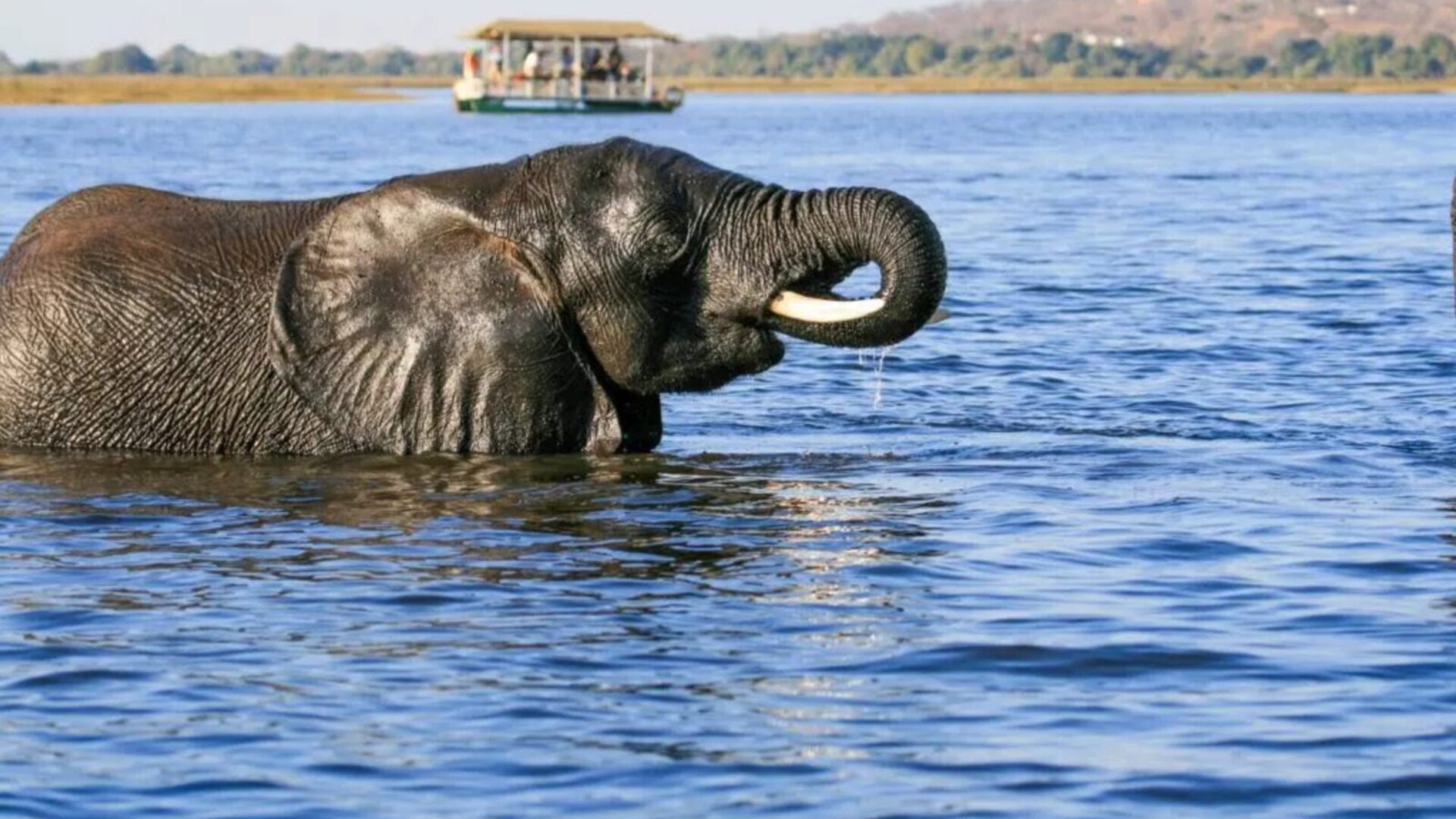
Both sit at the very top of Africa's self-drive safari hierarchy. Both offer superb value, excellent rest camps and the freedom to explore at your own pace. Yet they deliver strikingly different experiences. Etosha National Park, in northern Namibia, is defined by the Etosha Pan — a shimmering, ~5,000 km² salt flat, dry and blindingly white for most of the year — and by the waterholes scattered around its edges. In the dry season these waterholes become natural theatres: you simply park, wait, and watch as elephants, black rhino, lion, giraffe, oryx, springbok and zebra file in to drink. It is game viewing that comes to you, and at the rest-camp waterholes it continues, floodlit, deep into the night.
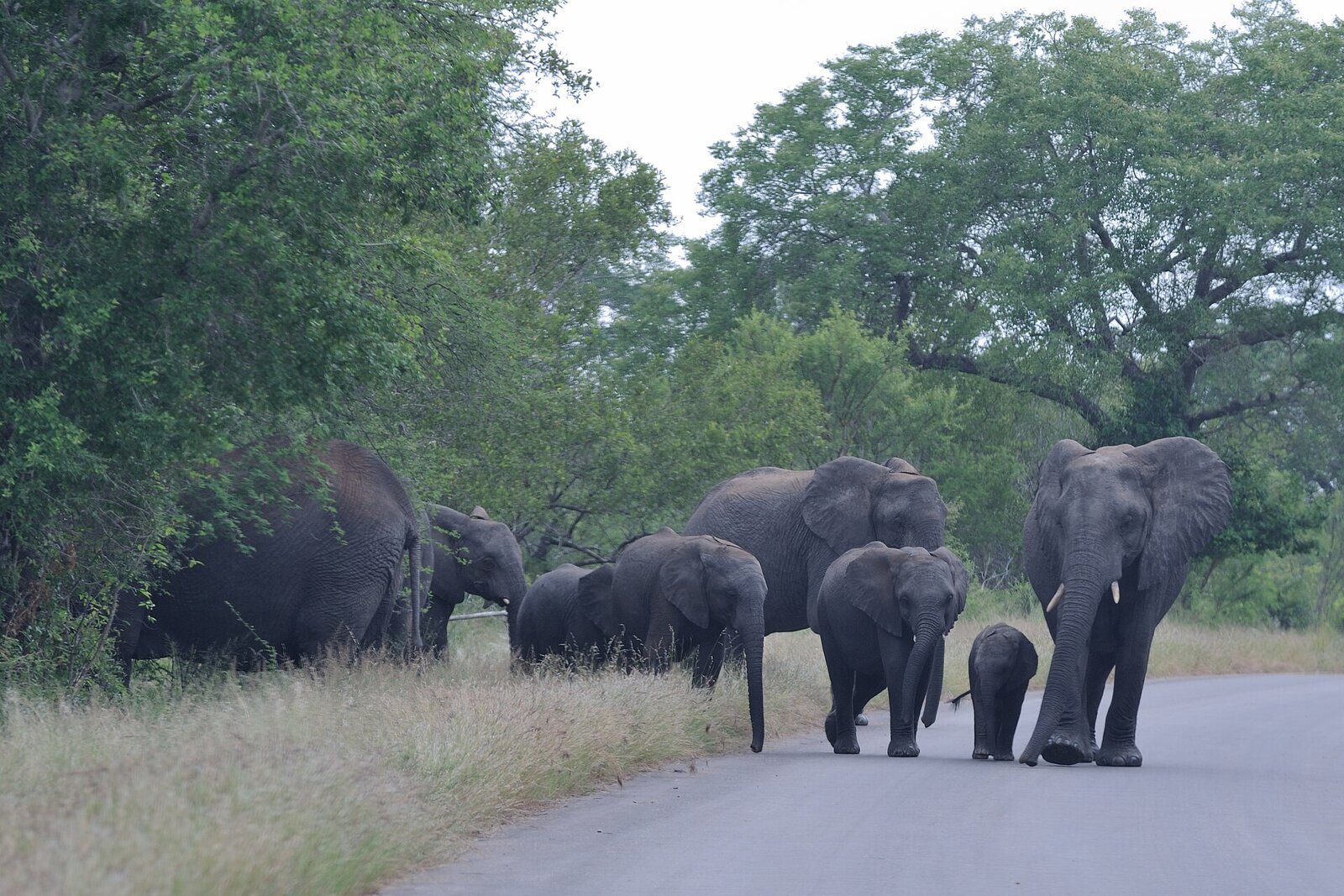
Kruger National Park, by contrast, is South Africa's nearly two-million-hectare flagship — one of the oldest, largest and most biodiverse reserves on the continent. It holds all of the Big Five (including buffalo and thriving rhino), more than 500 bird species, and one of the densest predator populations in Africa. It is also the world's greatest self-drive safari destination, with an outstanding road network, while its private concessions along the western boundary rival anywhere on Earth for luxury.
So which is better? Neither. They excel at completely different things, suit different priorities — from malaria concerns to the complete Big Five — and lie in different countries. Yet they combine beautifully, and many of our travellers do not choose at all: they pair Etosha (often with Namibia's iconic dunes) and Kruger across one grand Southern African journey. Let's break it down, round by round.
Round 1: Waterhole Game Viewing vs Bushveld Tracking
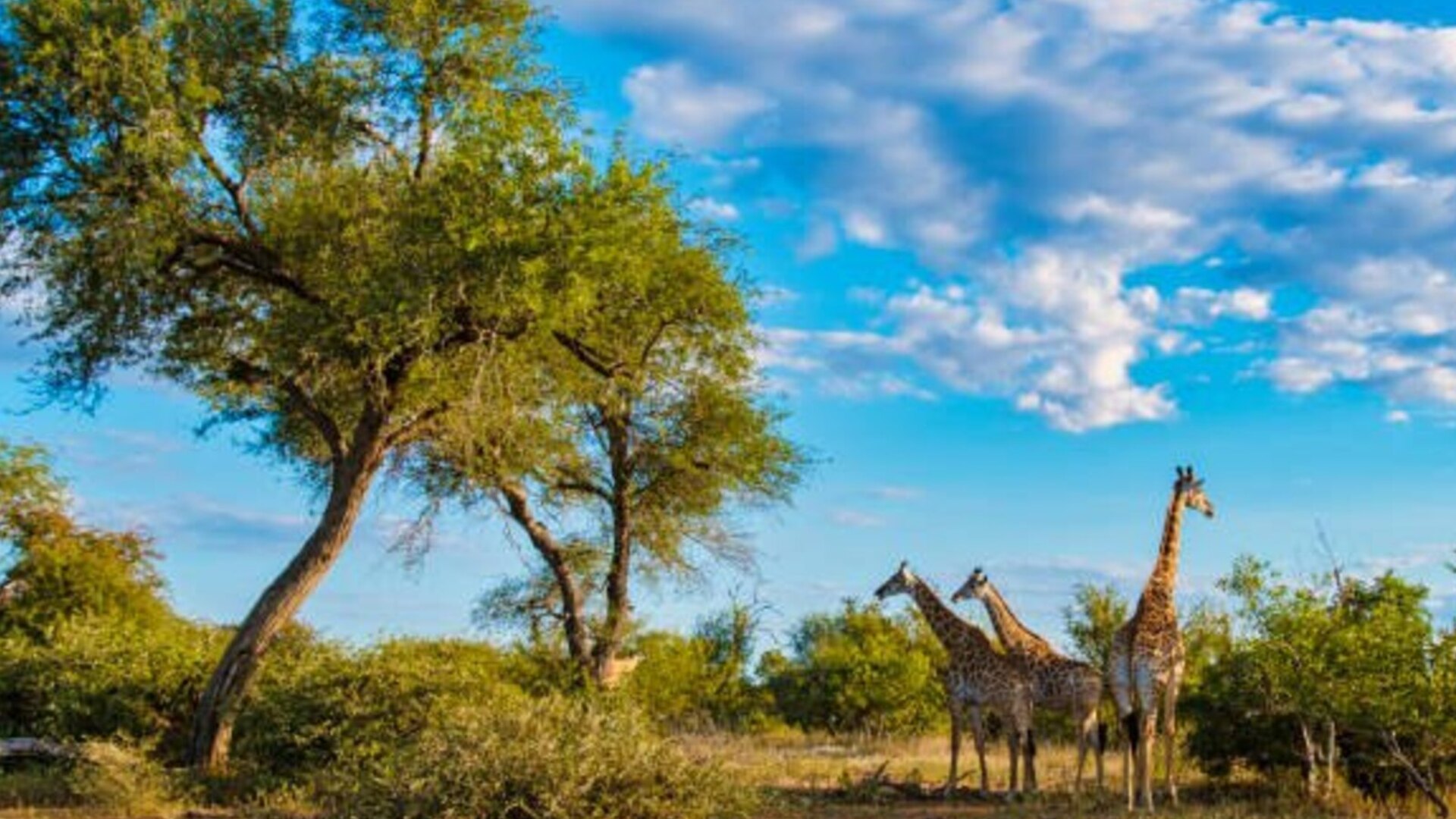
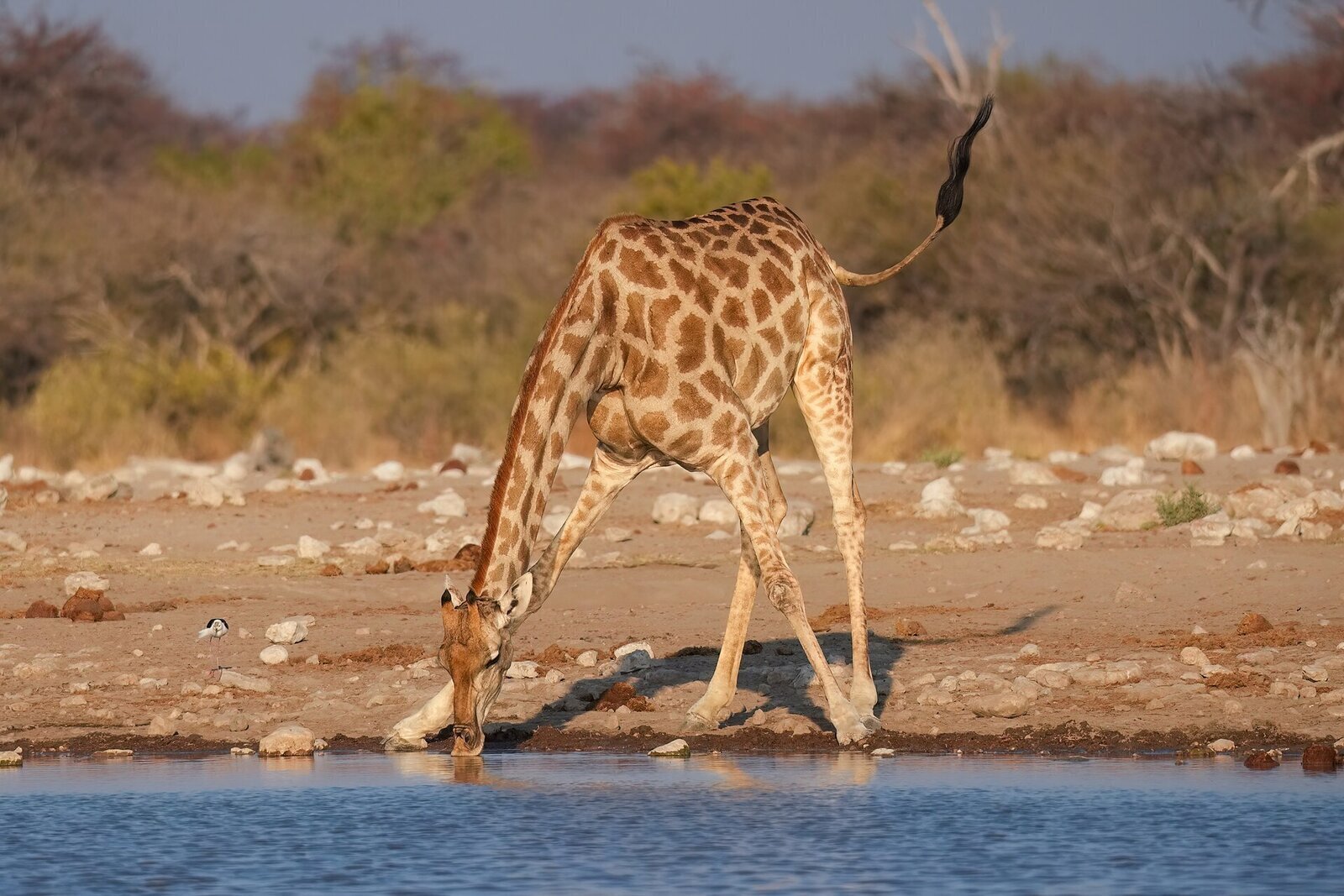
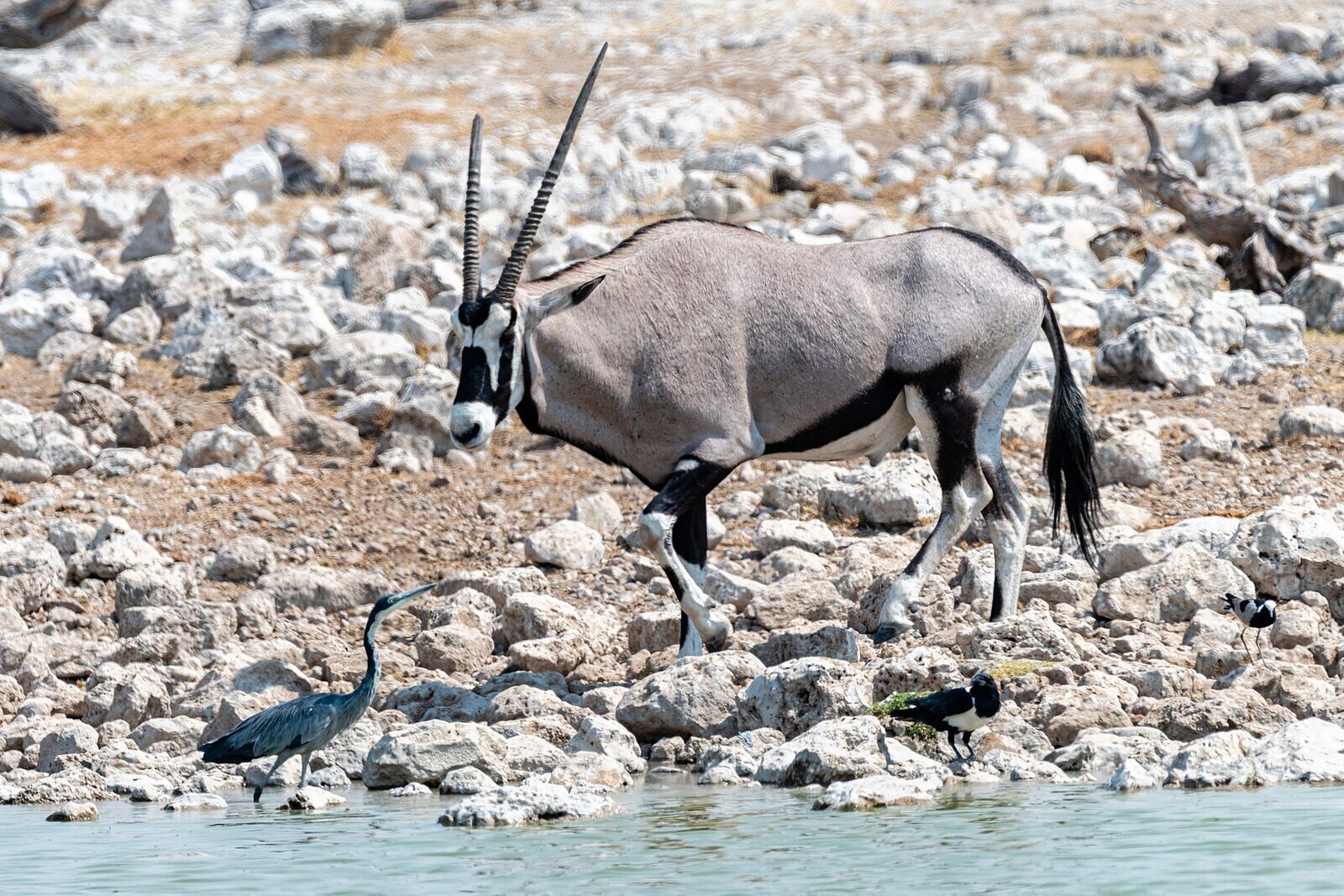
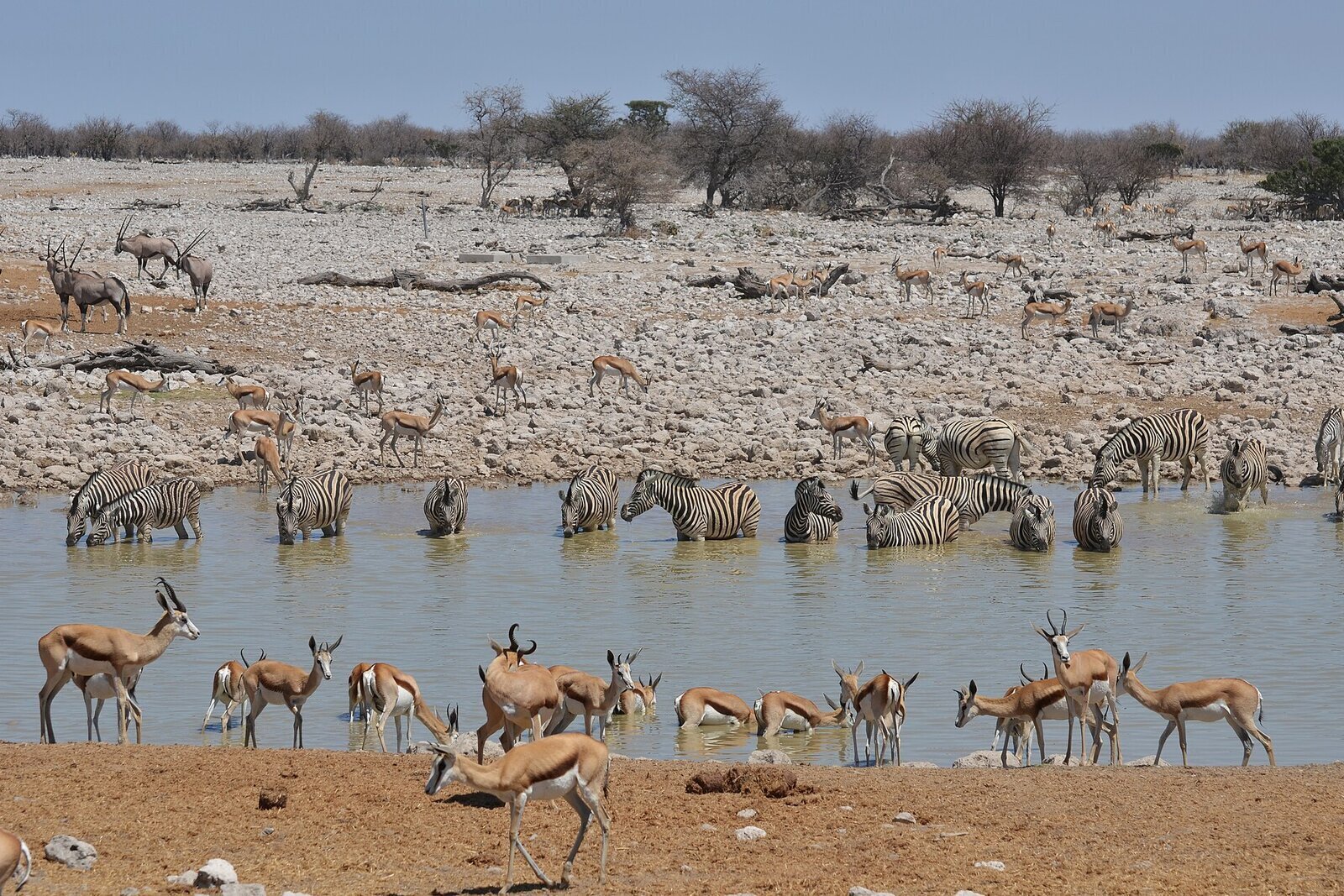
This is the defining difference between the two parks. Etosha's signature safari is the waterhole. In the arid dry season, when the surrounding bush offers little water, wildlife converges on Etosha's permanent and pumped waterholes in extraordinary numbers. The classic Etosha strategy is not to drive endlessly, but to pick a productive waterhole — Okaukuejo, Nebrownii, Chudop, Klein Namutoni — park, and let the theatre unfold: elephants shouldering in, giraffe splaying awkwardly to drink, black rhino emerging at dusk, lion lying in ambush, and great herds of zebra, springbok and oryx coming and going against a stark, pale backdrop. At the main rest camps, the waterholes are floodlit, so the drama continues after dark — a genuinely magical, uniquely Etosha experience.
Kruger is a bushveld-tracking destination. Its rivers, dams and waterholes are certainly wildlife magnets, but the park's dense, varied vegetation means the classic Kruger safari is an active search — driving the roads, scanning the bush, following fresh tracks and reacting to sightings. It is thrilling, immersive and endlessly varied, and the reward is a species list and Big Five completeness Etosha cannot match. But it asks more of you: in Kruger you go to the wildlife, whereas in Etosha, so often, the wildlife comes to you.
Round 1 verdict: A tie of styles. Etosha wins for the relaxed, high-yield magic of waterhole viewing (and floodlit night sightings); Kruger wins for the immersive thrill of tracking wildlife across a vast, varied bushveld.
Round 2: The Complete Big Five
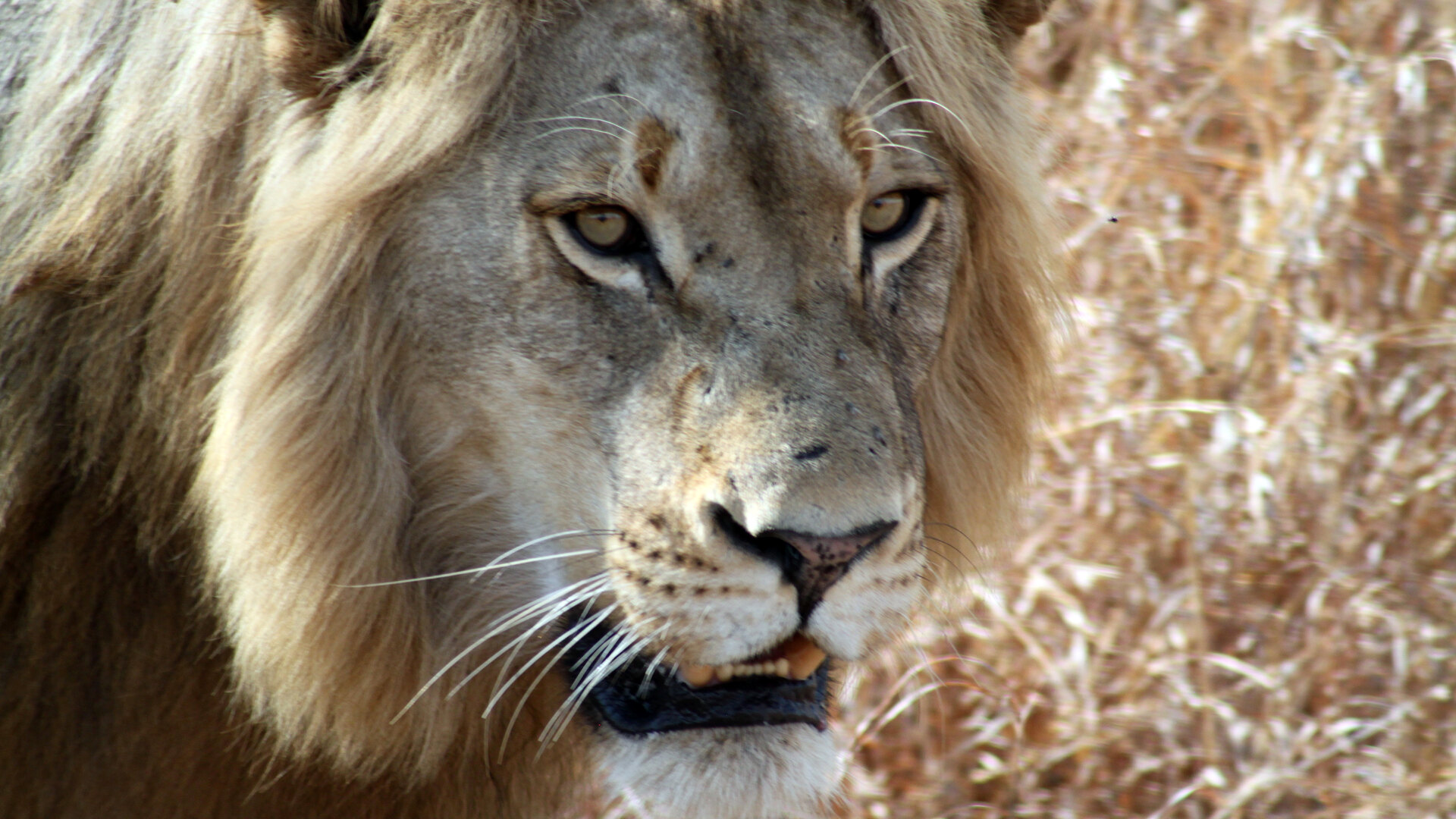
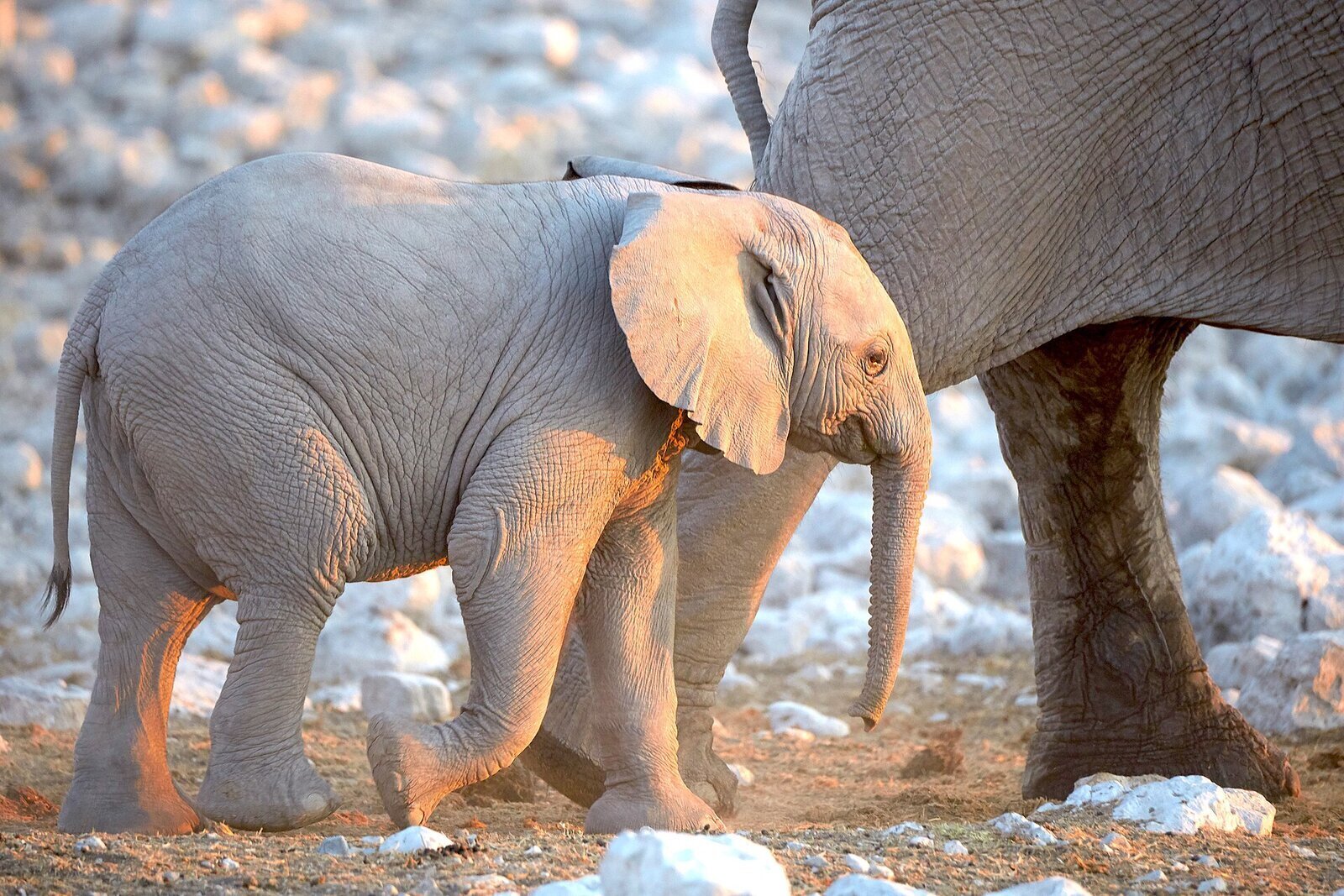
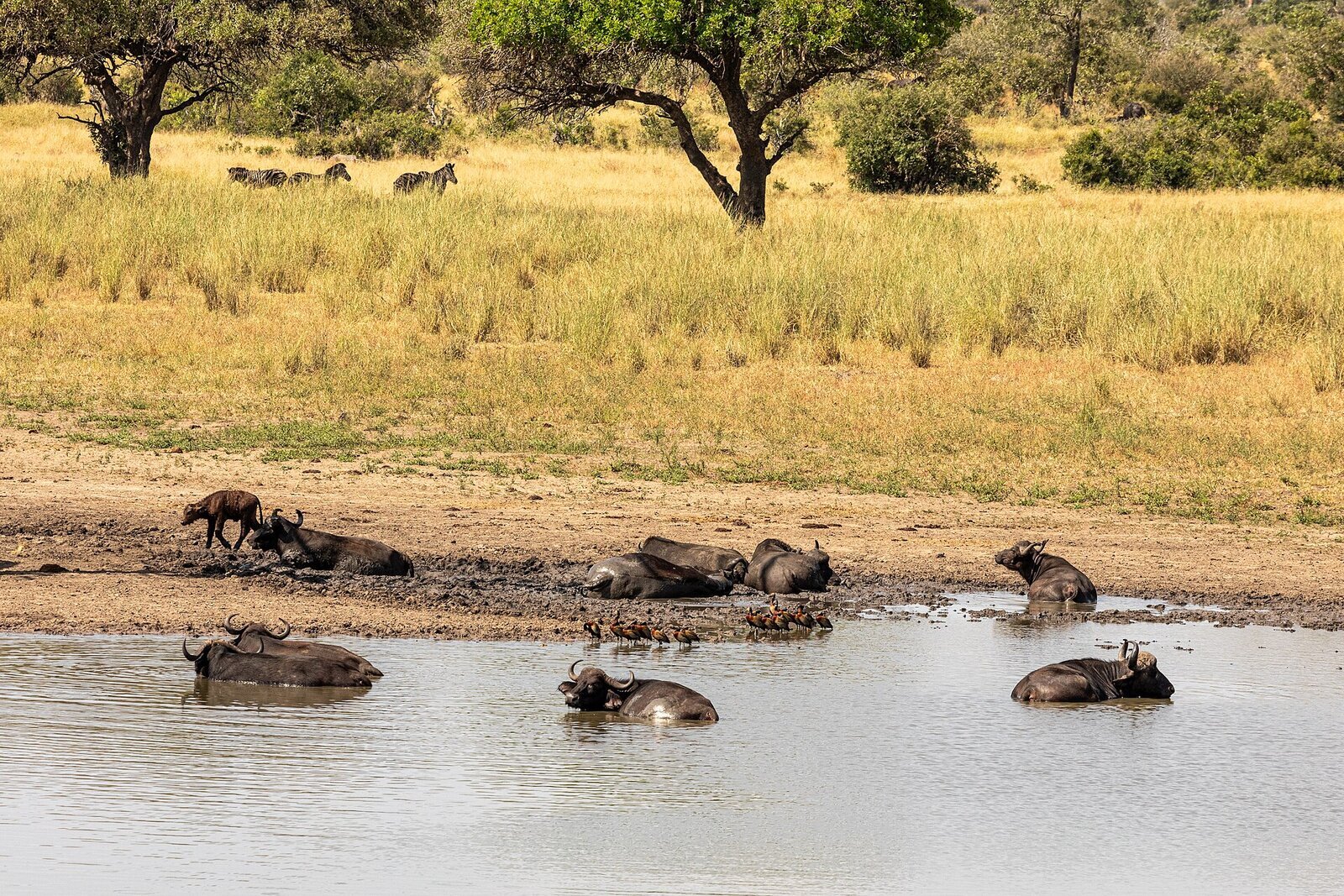
When it comes to the complete Big Five, Kruger wins clearly — and there's an important detail every safari planner should know. Etosha does not have buffalo. Due to historical veterinary controls and its arid environment, Cape buffalo are absent from the park, so Etosha offers four of the Big Five: lion, leopard, elephant and rhino. Kruger, by contrast, holds robust populations of all five — lion, leopard, elephant, buffalo and rhino (both white and black) — making it one of the most reliable places on Earth to complete the Big Five in a single trip, alongside 500+ birds and a mammal list approaching 150 species.
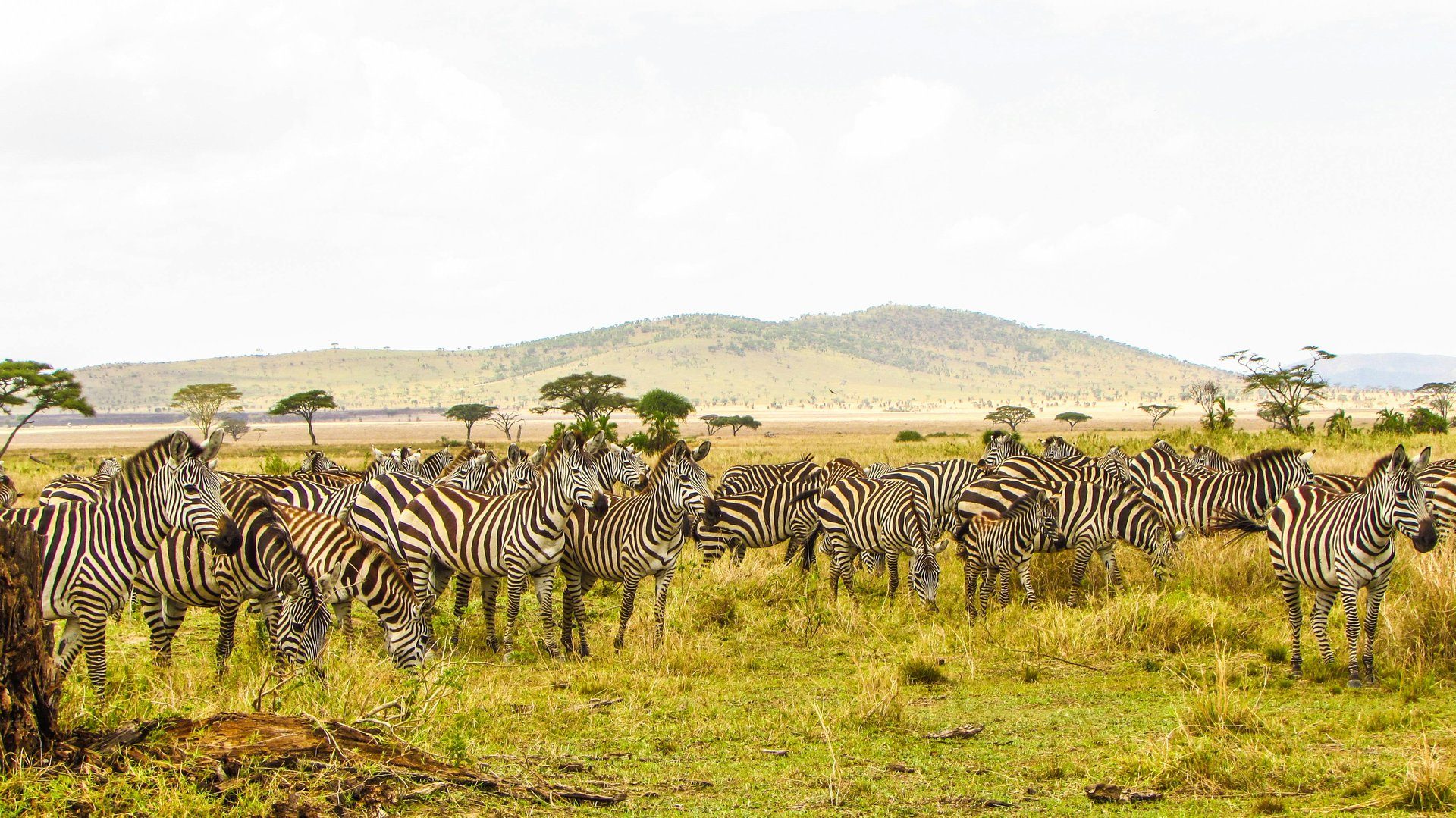
Etosha remains wonderfully wildlife-rich in its own right. Beyond its four Big Five members, it is famous for desert-adapted and specialist species you won't easily see in Kruger: gemsbok (oryx), springbok, the endemic black-faced impala, both Burchell's and mountain zebra, and great gatherings of giraffe. Its open terrain also makes for superb, unobstructed sightings. But if ticking off the complete Big Five — buffalo included — is a priority, particularly on a first African safari, Kruger is the surer bet.
Round 2 verdict: Kruger wins the complete Big Five decisively — Etosha has no buffalo. Etosha counters with unique desert-adapted species and wonderfully open, unobstructed viewing.
Round 3: Rhino — Etosha's Black-Rhino Crown
Here Etosha strikes back. While Kruger holds larger overall rhino numbers (both white and black), it has borne the brunt of Africa's poaching crisis, and sightings — especially of the shy, browsing black rhino — are far from guaranteed. Etosha, on the other hand, is one of the single most important black rhino strongholds on Earth. Namibia's conservation record with black rhino is world-leading, and Etosha's waterholes — particularly the floodlit ones at Okaukuejo — offer some of the most reliable black rhino sightings anywhere, often at close range after dark as they come cautiously in to drink.
For many travellers, watching a black rhino materialise out of the darkness at a floodlit Etosha waterhole is a bucket-list moment that even the great Kruger struggles to match for consistency. Kruger's rhino are magnificent when found — and white rhino, being grazers of open areas, are more visible than black rhino — but the reliability and intimacy of Etosha's black rhino encounters are a genuine, and often overlooked, Etosha win.
Round 3 verdict: Etosha wins for black rhino — one of the best and most reliable places on the planet to see this critically endangered giant, especially floodlit at night. Kruger has more rhino overall, but sightings are less predictable.
Round 4: Landscapes & Scenery
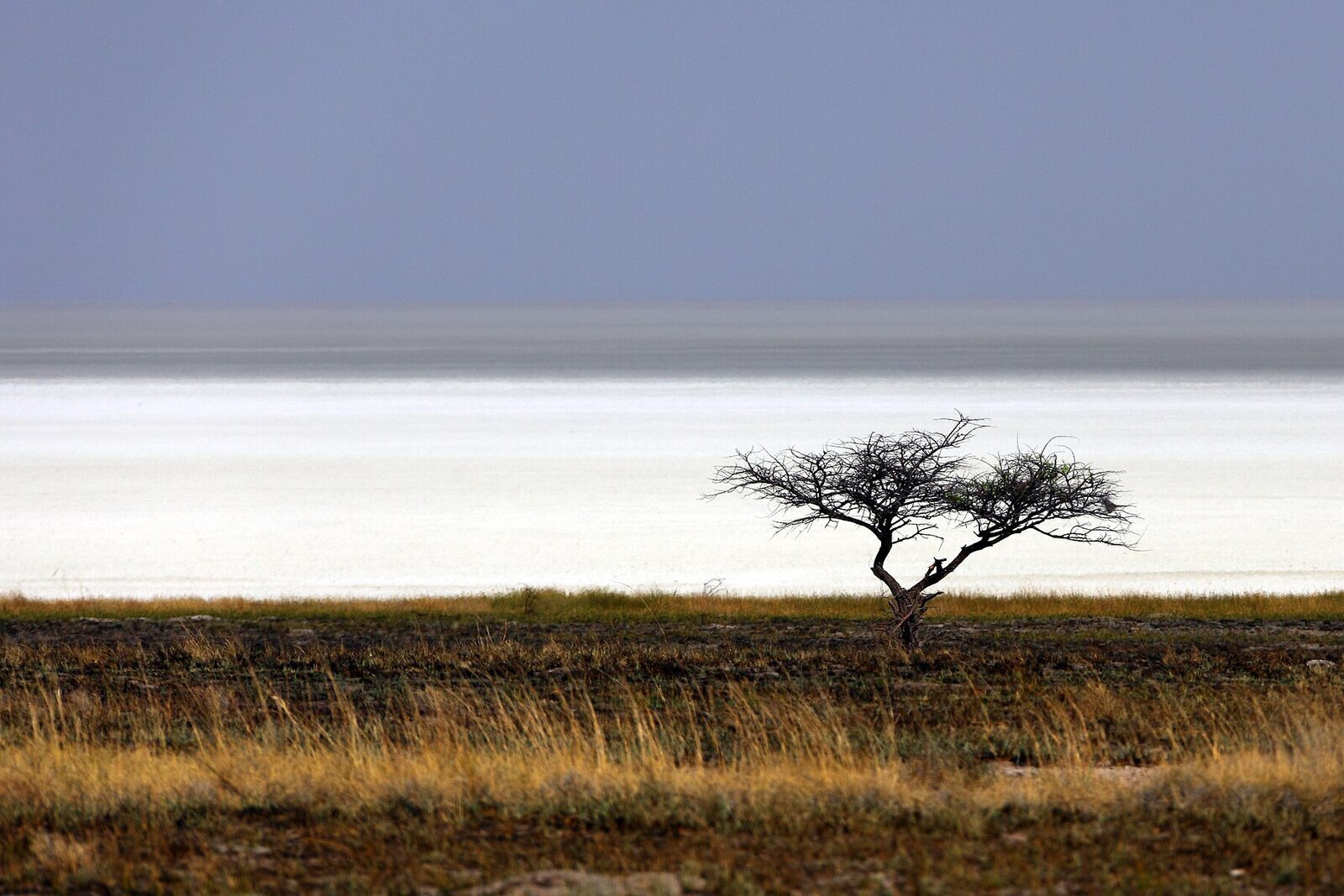
Etosha's scenery is stark, minimalist and utterly unlike anywhere else. The great salt pan dominates — a vast, shimmering white expanse, dry and cracked for most of the year, that stretches to a horizon lost in heat haze and, after rare rains, transforms into a shallow lagoon dotted with flamingos. Around it lie pale mopane and acacia savanna, calcrete plains and the life-giving waterholes. The light is extraordinary: harsh, clean and dramatic, producing photographs — dust-hazed elephants on white ground, animals mirrored in still waterholes — that are instantly recognisable as Etosha.
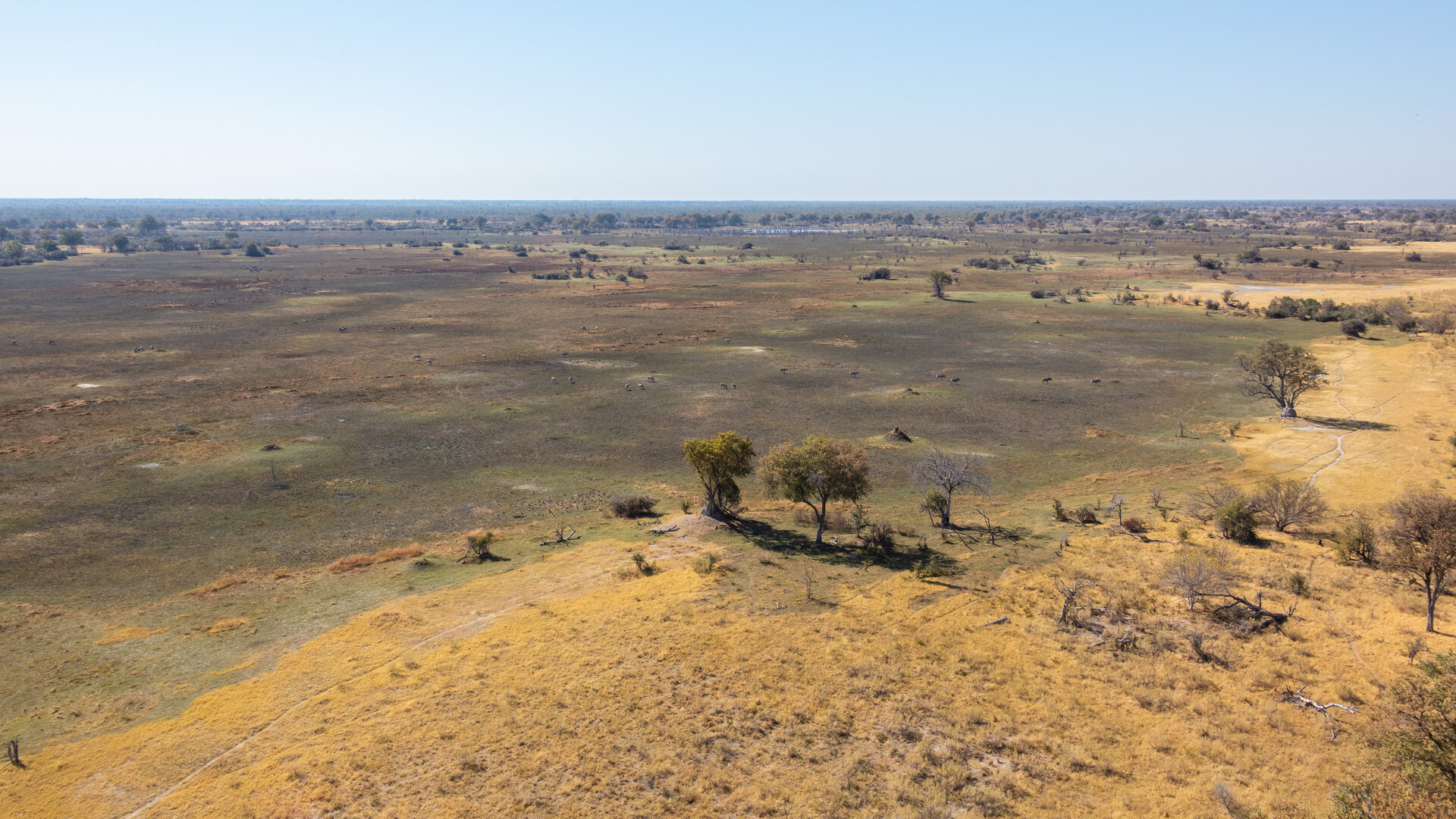
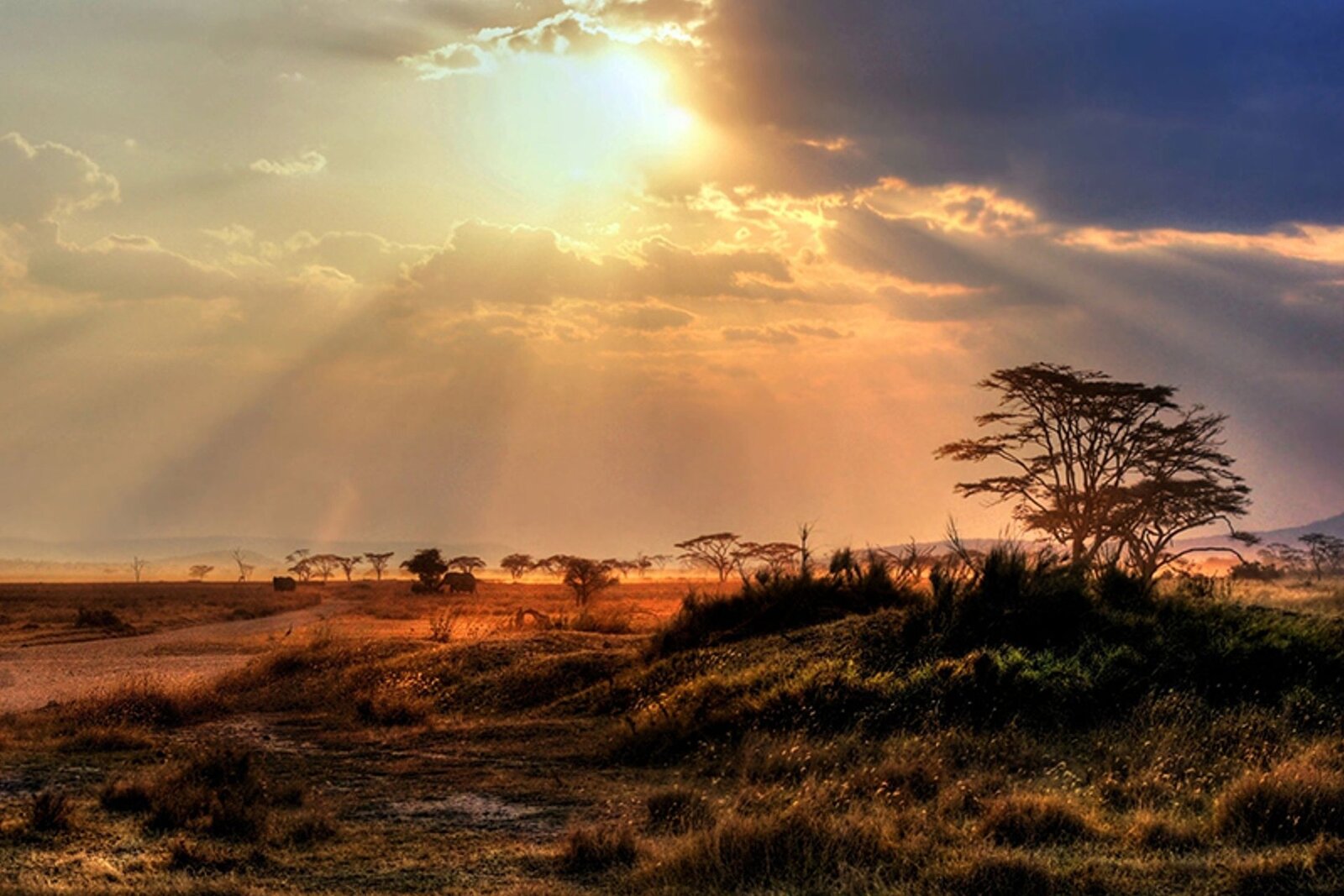
Kruger's landscapes are vast, green and varied. Spanning nearly two million hectares, it encompasses open savanna, dense bushveld, granite koppies, seasonal riverbeds and lush riverine forest along the great rivers — the Sabie, Olifants and Luvuvhu among them. The habitat diversity is part of what drives Kruger's biodiversity, and the sense of an endless, living wilderness — driving for hours through subtly changing country — is deeply immersive.
Round 4 verdict: A tie of opposites. Etosha wins for stark, otherworldly, uniquely photogenic salt-pan drama; Kruger wins for lush, varied, immersive bushveld on an epic scale. They could hardly look more different — which is exactly why they pair so well.
Round 5: Self-Drive & Accessibility
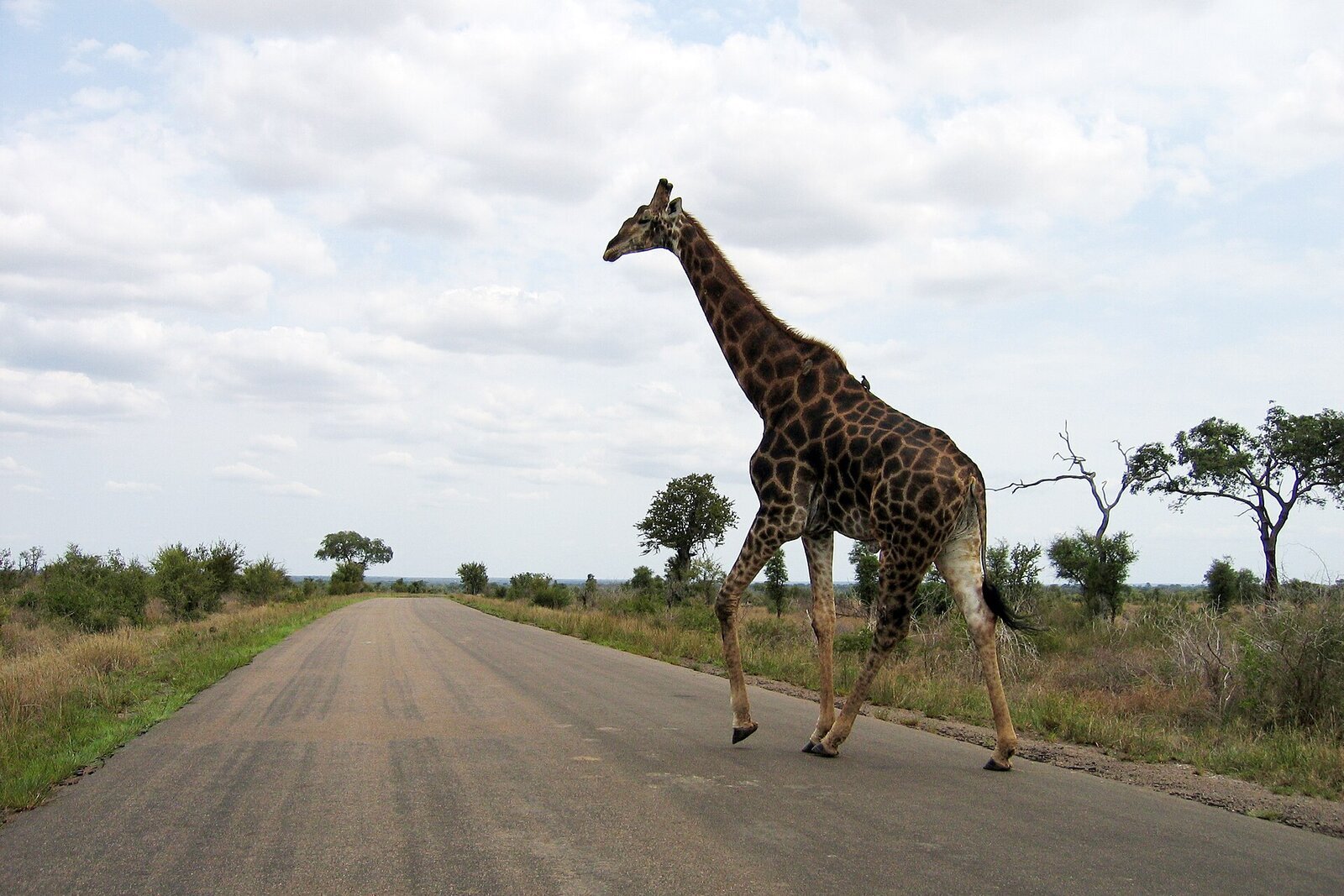
This is a rare round where both parks are outstanding. Kruger is, quite simply, the finest self-drive safari destination on Earth: an excellent network of tar and gravel roads, superb signage, well-run SANParks rest camps with everything from campsites to comfortable chalets, fuel, shops and restaurants. Hire a car in Johannesburg (a scenic 5-hour drive or quick 1-hour flight away), and you can run your own safari entirely at your own pace.
Etosha is also a wonderful, and famously easy, self-drive park. Its main routes are well-graded gravel, the three historic rest camps (Okaukuejo, Halali and Namutoni) are comfortable and characterful with their own floodlit waterholes, and the open terrain makes wildlife easy to spot from the car. Etosha is reached via a ~4–5 hour drive from Windhoek (or a fly-in), and it is very often combined with the rest of Namibia's self-drive icons — Sossusvlei's dunes, Swakopmund and the Skeleton Coast — on one epic road trip. Both parks, in short, reward the independent traveller superbly.
Round 5 verdict: A tie — both are among the world's best self-drive safaris. Kruger's network is unmatched and it sits closer to a major hub; Etosha is beautifully easy to self-drive and slots into an unforgettable Namibian road trip.
Round 6: Malaria & Family-Friendliness
For families — and for anyone anxious about anti-malarial medication — this round matters enormously. Etosha is largely malaria-free, especially in the dry season, thanks to its arid climate. That, combined with easy waterhole viewing that keeps restless children engaged (the animals come to you, and often quickly), comfortable rest camps and short-ish distances, makes Etosha one of the great family safari destinations in Africa.
Kruger, by contrast, lies in a low-risk malaria area. The risk is genuinely low, particularly in the dry winter months, and many families visit Kruger happily with sensible precautions — but it is not malaria-free, and some families with very young children prefer to avoid prophylactics altogether. (Worth knowing: South Africa also offers excellent malaria-free Big Five reserves elsewhere — such as the Eastern Cape and Madikwe — which we can factor into any family plan.) On the specific question of Etosha versus Kruger, though, Etosha's malaria-free status is a clear advantage for young families.
Round 6 verdict: Etosha wins for families and the malaria-conscious. Its largely malaria-free environment and come-to-you waterhole viewing make it especially reassuring and rewarding with children.
Round 7: Predators & Big Cats
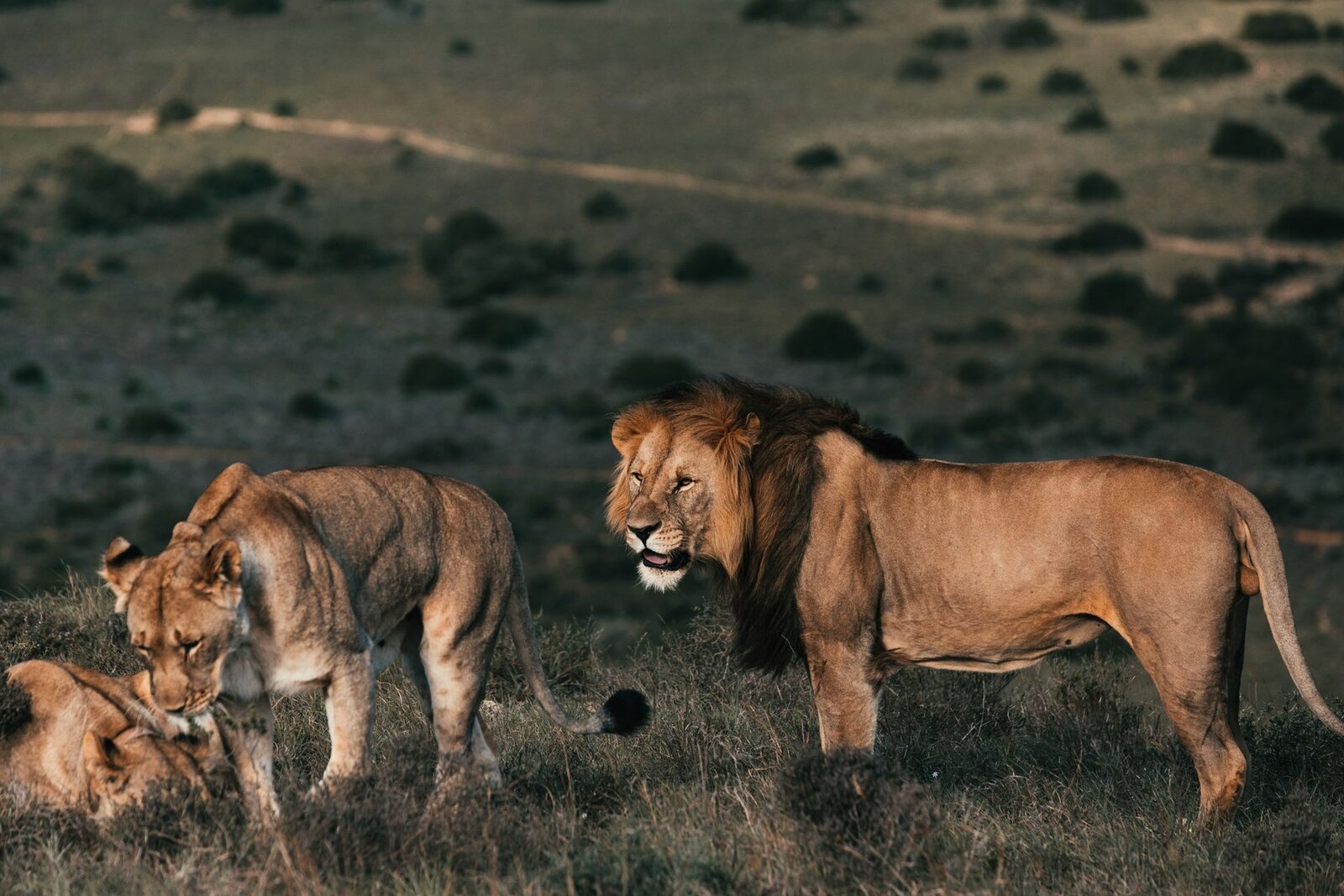
Both parks deliver thrilling predator action, with different signatures. Kruger holds one of the densest and most diverse predator populations in Africa: an estimated 1,600+ lions, exceptional leopard viewing (world-class in the Sabi Sands and other private concessions, where off-road tracking is permitted), plus cheetah, spotted hyena and the endangered African wild dog. The sheer reliability and variety of Kruger's big-cat sightings make it a predator-lover's dream.
Etosha's predator viewing has its own distinct appeal. Its open terrain and waterhole-focused game viewing produce dramatic, unobstructed sightings — lions lying up near waterholes waiting to ambush thirsty prey, cheetah hunting across the pale plains, and leopard and brown and spotted hyena also present. Lion sightings around productive waterholes can be superb, and the open ground means that when the cats do hunt, you often see the whole drama play out. Leopard, being a bush-loving cat, are trickier to see in Etosha than in Kruger's riverine thickets.
Round 7 verdict: Kruger edges it on predator density, diversity and world-class leopard viewing. Etosha counters with dramatic, wide-open lion and cheetah sightings at and around its waterholes.
Round 8: Cost & Value
Encouragingly, both parks offer outstanding value. Kruger is the more budget-flexible of the two: you can self-drive and stay in affordable SANParks rest camps, choose a mid-range guided lodge, or splurge on an ultra-luxury private concession — an enormous range, and exceptional value in the public park. It also benefits from being a short, cheap hop from Johannesburg, a major international hub with competitive flights.
Etosha's park fees are low and its NWR rest camps are affordable, so the in-park costs are very reasonable. The main variable is getting there: international flights into Windhoek can be pricier and less frequent than into Johannesburg, and Namibia's long distances mean a self-drive road trip (though wonderfully scenic) adds vehicle and fuel costs. That said, on a per-day basis an Etosha self-drive is very affordable, and pairing it with the rest of Namibia spreads the flight cost across an epic multi-stop trip.
Round 8 verdict: A narrow win for Kruger on pure budget flexibility and cheaper access, but both parks are superb value — this is not a round where either park disappoints.
Round 9: Lodges, Camps & Safari Style
Etosha offers a distinctive range of stays. Inside the park, the three historic NWR rest camps — Okaukuejo (famous for its floodlit waterhole and black rhino), Halali and Namutoni (a quirky old German fort) — let you watch wildlife drink from the comfort of camp, day and night. Just outside the boundaries sit excellent private lodges and reserves — Ongava, Onguma and others — that add guided drives, walking and higher luxury. The signature Etosha experience, though, is sitting at a floodlit camp waterhole after dinner, waiting for rhino.
Kruger spans the full spectrum. In the public park, SANParks rest camps offer everything from campsites to comfortable self-catering chalets — outstanding value for independent travellers. Along the western boundary, the private concessions house some of the most luxurious lodges on the continent — Singita, Londolozi, Lion Sands and their peers in the Sabi Sands — setting the global benchmark for safari luxury with private plunge pools, gourmet dining and one-vehicle exclusivity.
Round 9 verdict: A tie of styles. Etosha wins for the unique romance of floodlit-waterhole rest camps and its black-rhino night theatre; Kruger wins for range — from affordable rest camps to the world's most exclusive private lodges.
Round 10: Best Time to Go
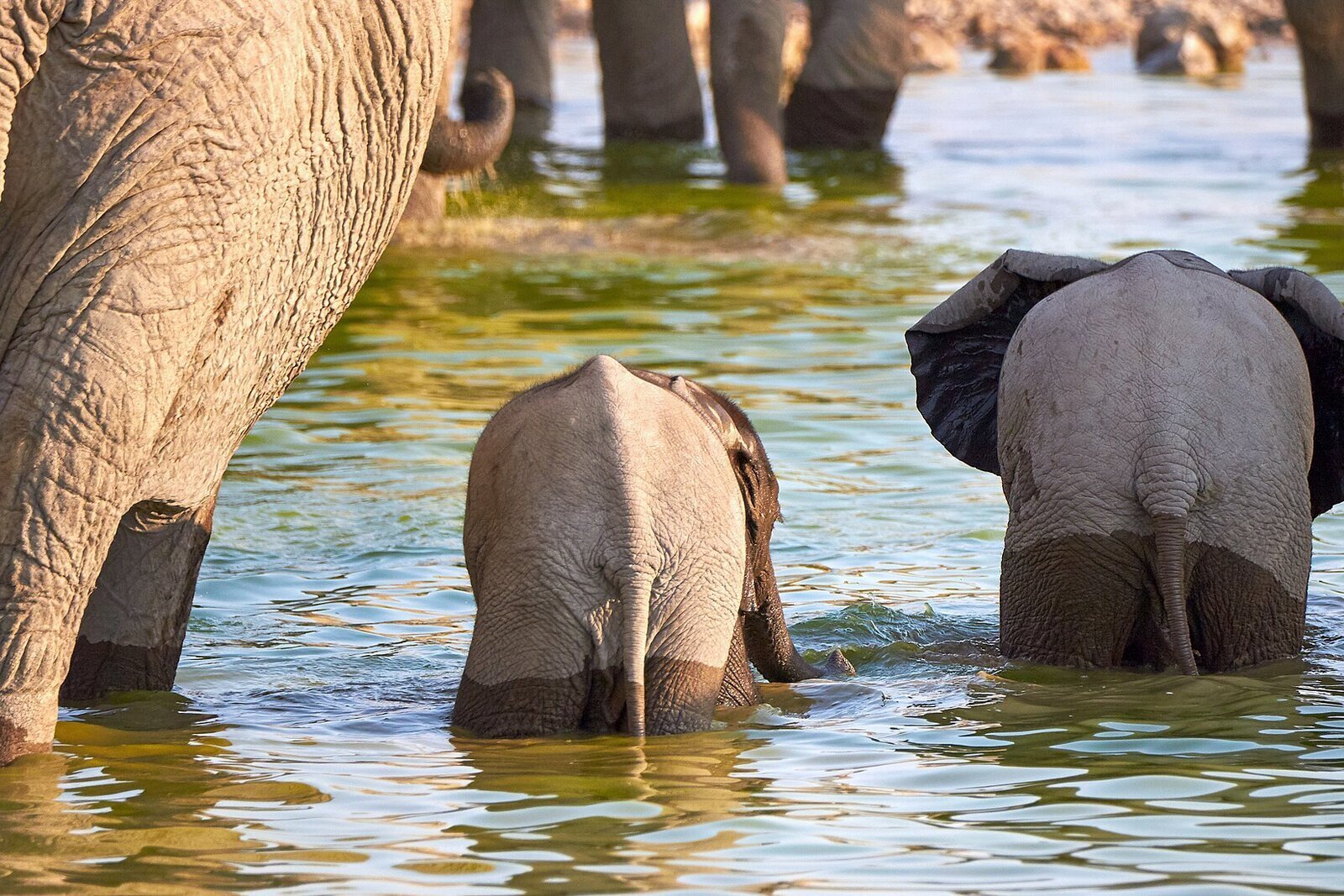
Etosha is at its jaw-dropping best in the dry season (May to October). As the land dries out, wildlife is forced to the waterholes in ever-greater numbers, and by the peak of the dry season (August to October) the waterhole theatres are extraordinary — dozens of species queuing to drink under a huge sky. The green season (November to April) brings dramatic skies, migratory birds, flamingos on the flooded pan and newborn animals, but wildlife disperses widely across the now-watered bush and sightings take more effort.
Kruger follows the same broad pattern: the dry winter months (May to September) are peak for game viewing, as thinning bush and shrinking water concentrate animals and make them easier to spot, with mild days, cold nights and active predators. The green summer (November to March) is lush, excellent for birding and baby animals, and quieter — though sightings take a little more effort and it can be hot and wet.
Round 10 verdict: A tie — both peak in the dry season (May–October). The happy consequence is that they combine perfectly: a single Southern African winter trip can deliver peak-season Etosha and peak-season Kruger on one itinerary.
Round 11: The Do-Both Verdict — One Grand Southern African Circuit
Here is the secret the debate so often misses: you don't have to choose. Etosha and Kruger excel at completely different things, peak in the same dry season, and — while they sit in different countries — connect effortlessly on one grand Southern African journey. That makes them a dream pairing, and the contrast between them is precisely what makes the combination so satisfying.
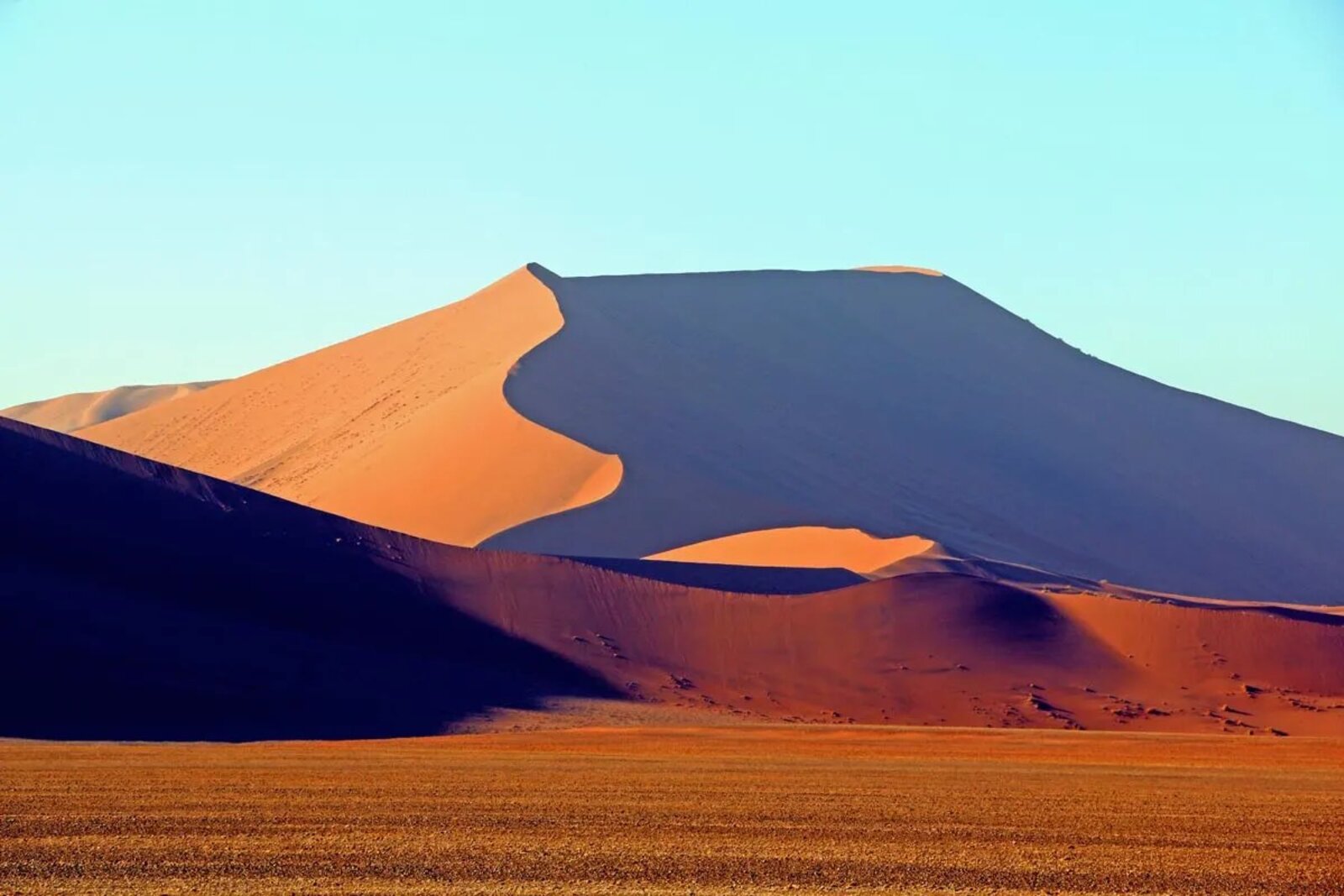
A classic circuit we build all the time looks like this: begin in Namibia with a self-drive or guided loop through Etosha's waterhole theatres and Namibia's unmissable dunes at Sossusvlei, then fly via Windhoek to Cape Town for a few days of mountain, ocean and winelands, before finishing in the Kruger (or the Sabi Sands) for the complete Big Five, dense predators and either self-drive freedom or luxury-lodge indulgence. Three completely different faces of Southern Africa — desert, coast and bushveld — woven into one seamless, perfectly-timed adventure.
If you'd like to go deeper on the individual parks first, our Etosha National Park safari guide covers everything Etosha, while our Kruger National Park safari guide unpacks the flagship in full. And if a self-drive Namibian road trip is calling you, see our Namibia & Etosha self-drive guide.
Related journey: Cape Town & Namibia Luxury Combo (11 days) — dunes, Etosha and the Mother City in one →
Round 11 verdict: The most satisfying answer of all — both, on one grand Southern African circuit that blends desert, coast and Big Five bushveld. It is a journey we craft constantly, and it is one of the finest introductions to the continent there is.
| Aspect | Etosha (Namibia) | Kruger (South Africa) |
|---|---|---|
| Location | Northern Namibia | North-eastern South Africa |
| Size | ~22,270 km² | ~19,485 km² (≈2 million hectares) |
| Signature Wildlife | Black rhino stronghold; desert-adapted game at waterholes | Complete Big Five incl. buffalo & rhino; 500+ birds |
| Signature Experience | Waterhole game viewing — the wildlife comes to you | World's best self-drive land safari across varied bushveld |
| Complete Big Five | Four — no buffalo (lion, leopard, elephant, rhino) | Yes — all five, incl. buffalo & rhino |
| Rhino | Outstanding black rhino (one of world's best & most reliable) | Both black & white; larger numbers, but sightings less certain |
| Self-Drive | Excellent — easy gravel roads, floodlit-waterhole rest camps | Outstanding — the world's best road network |
| Malaria | Largely malaria-free (esp. dry season) | Low-risk malaria area (dry winter safest) |
| Landscape | Vast white salt pan + stark arid savanna | Lush, varied bushveld, savanna & riverine forest |
| Access | ~4–5h drive or fly-in from Windhoek | 5h drive or 1h flight from Johannesburg |
| Cost & Value | Low park fees; pricier/less frequent flights | $ to $$$ — every budget, superb value, cheap access |
| Best Time | Dry season May–Oct (waterholes peak Aug–Oct) | Dry season May–Sep |
| Lodges | Floodlit-waterhole rest camps; private lodges (Ongava/Onguma) | Rest camps to world-class private lodges (Sabi Sands) |
| Verdict | Waterholes, black rhino, salt-pan drama, malaria-free | Complete Big Five, biodiversity, value & self-drive |
Which wins? Neither. Etosha wins on waterhole theatre, black rhino, salt-pan drama and its largely malaria-free, family-friendly wilderness. Kruger wins on the complete Big Five, biodiversity, predator density and unbeatable budget flexibility. Both are world-class self-drive parks — and because they peak in the same season, the ultimate answer is to combine them across one grand Southern African circuit.
When to Go: Etosha vs Kruger
Etosha: Dry season (May–October) is the headline period, peaking August–October when the land is at its most parched and wildlife pours to the waterholes in huge, varied numbers. The green season (November–April) brings dramatic skies, migratory birds, flamingos on the flooded pan and newborns, but wildlife disperses across the watered bush and sightings take more effort.
Kruger: Dry winter (May–September) is peak for game viewing as thinning bush and shrinking water make animals easier to spot, with active predators and mild days. Green summer (November–March) is lush, excellent for birds and baby animals, quieter and cheaper — but hotter, wetter, and sightings take more patience.
Because both parks peak in the same dry-season window, they combine beautifully: a single Southern African winter trip can deliver peak-season Etosha, Namibia's dunes, a stop in Cape Town, and peak-season Kruger — all in one perfectly-timed itinerary.
Why Book Etosha or Kruger with Beyond Africa Safaris
We have spent decades crafting safaris across Southern Africa, and we know both Etosha and Kruger intimately — every rest-camp waterhole and private lodge on Etosha's edges, every rest camp and exclusive concession in the Kruger. Whether you want to self-drive Etosha's waterhole theatres on a family-friendly, malaria-free trip, indulge in an ultra-luxury Sabi Sands lodge, or do both across two countries, we will match you to exactly the right experience and handle every flight, transfer and detail.
Many of our travellers don't choose between Etosha and Kruger — they combine them, often with Namibia's dunes and Cape Town, on one grand Southern African circuit. We time every leg to the dry-season peak, secure the best-positioned camps and lodges, and make the regional flights and border crossings effortless, so all you do is enjoy the wildlife.
And because we are African-owned and operated from Cape Town, you are planning directly with the experts who live and breathe this continent — not a distant middleman. Get in touch, and let's build your Etosha–Kruger adventure (or your do-both Southern African masterpiece).
Ready to Explore Etosha, Kruger — or Both?
Whether it's black rhino at a floodlit Etosha waterhole, the complete Big Five in the Kruger bushveld, or the ultimate combined Southern African circuit, we'll build it perfectly. Reach out now.