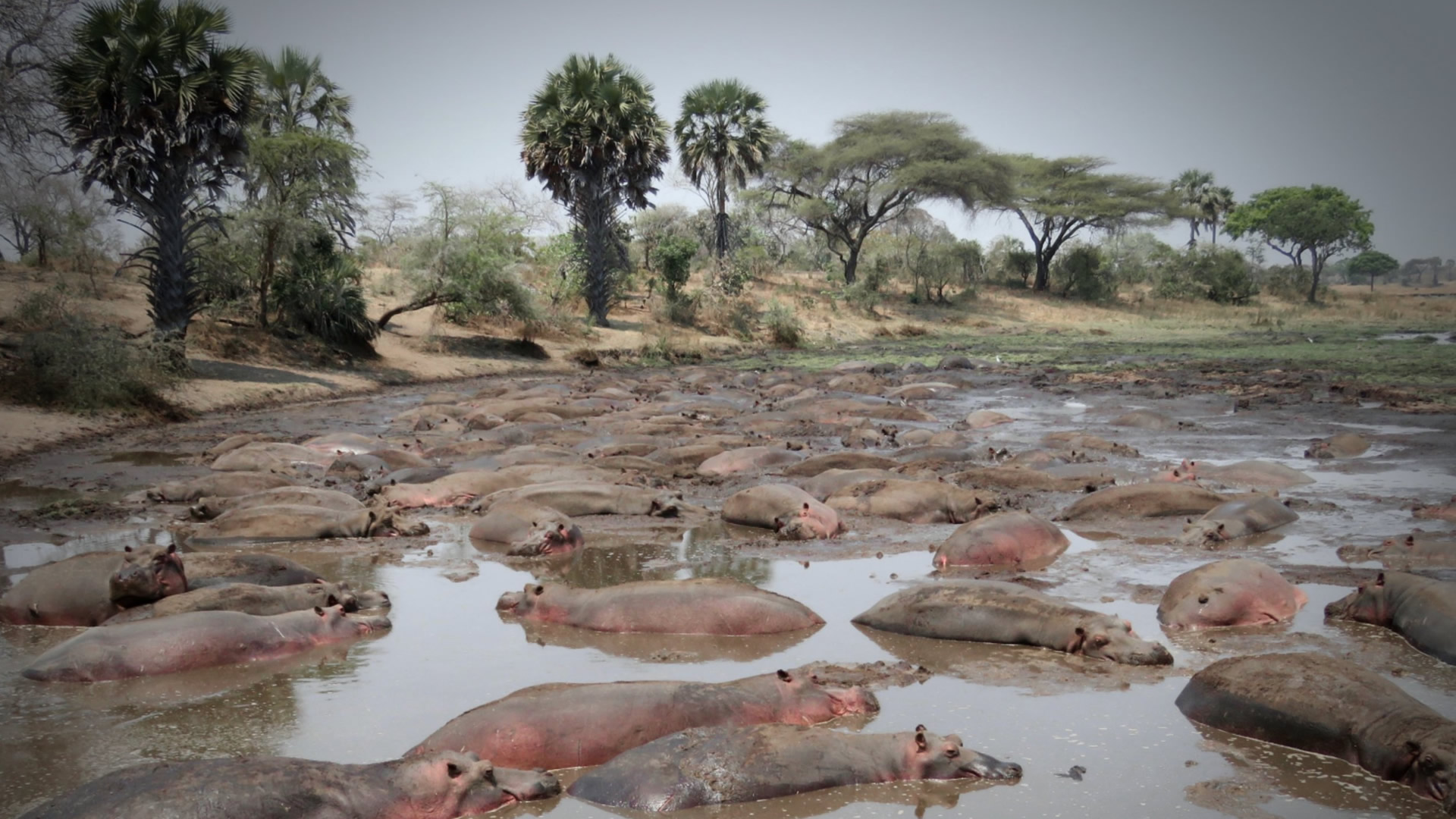
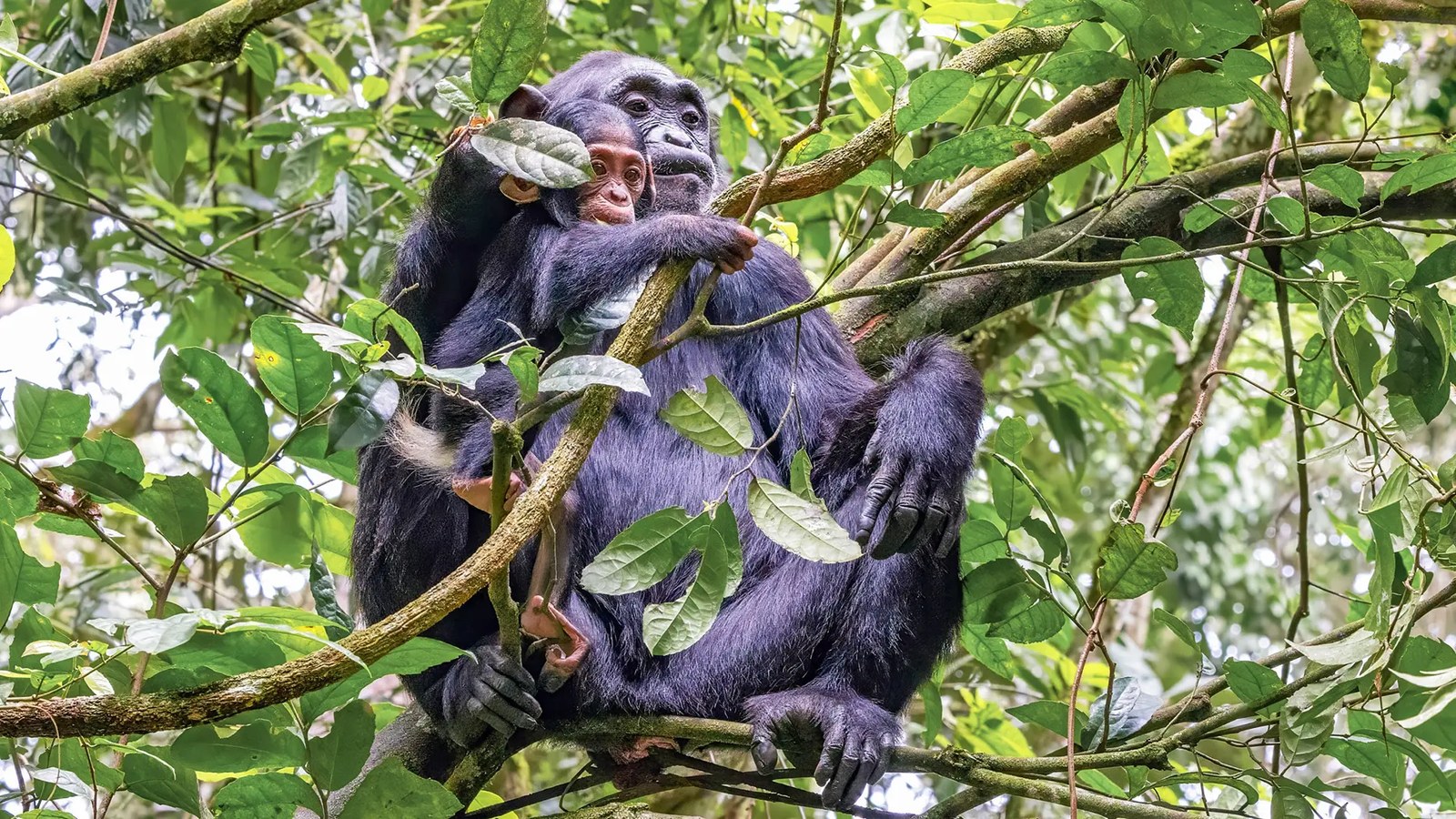
In the far north of the Republic of Congo, pressed against the borders of Cameroon and the Central African Republic, Nouabalé-Ndoki National Park protects over 4,000 square kilometres of lowland rainforest that has never been logged, never been farmed, never been commercially exploited. This is the Congo Basin at its most primordial — a place where forest elephants still gather in herds of over a hundred at the vast Mbeli Baï clearing, where western lowland gorillas at the Mondika research site have only recently grown accustomed to human observers, and where the canopy closes so completely that satellite imagery struggles to penetrate it.
If Odzala-Kokoua is the Congo’s accessible frontier, Nouabalé-Ndoki is its last truly wild heartland. Together with Dzanga-Sangha in the Central African Republic and Lobéké in Cameroon, it forms the Sangha Trinational UNESCO World Heritage Site — a 7,500 square-kilometre block of contiguous protected forest that is one of the most ecologically intact landscapes remaining on Earth.
Getting here takes effort. There are no luxury tented suites, no elevated treehouse decks overlooking baïs. The accommodation is basic, the logistics complex, the charter flights expensive. But what you find when you arrive is something that barely exists anywhere else on the planet: a wilderness that has genuinely never been disturbed by human industry, where the wildlife behaves as it has for millennia, and where the forest itself feels older than civilisation.
Location & Access
Nouabalé-Ndoki sits in the extreme north of the Republic of Congo, in the Sangha and Likouala departments. The park borders the Central African Republic to the north and Cameroon to the northwest, forming the Congolese component of the Sangha Trinational. The nearest town of any size is Ouesso, roughly 80 kilometres to the south, while the park’s main gateway is the small settlement of Bomassa at the southern edge.
Access is exclusively by charter flight from Brazzaville to the Bomassa airstrip — approximately two hours over unbroken canopy. There are no scheduled flights. Some multi-park itineraries approach overland from Ouesso or enter via the Sangha River from Bayanga in the Central African Republic, but these routes add days of travel and require careful planning.
This is significantly more remote than Odzala-Kokoua, which itself is accessible only by charter. If Odzala feels like the edge of the known world, Nouabalé-Ndoki feels like stepping beyond it. The remoteness is the point — it is precisely this inaccessibility that has kept the forest pristine.
The Park
Established in 1993 through a partnership between the Congolese government and the Wildlife Conservation Society (WCS), Nouabalé-Ndoki covers approximately 4,000 square kilometres of lowland tropical rainforest. It was the first site globally to meet the ecological integrity criteria under the Key Biodiversity Areas (KBA) standards — a scientific confirmation of what anyone who visits can feel intuitively: this forest has never been commercially disturbed.
The park is managed by the Fondation Nouabalé-Ndoki (FNN) under a public-private partnership, with WCS providing technical and operational support. Over 90% of the workforce is local, and the park’s anti-poaching programme — employing eco-guards, advanced technology and intelligence networks — has been remarkably effective at protecting the wildlife within its boundaries.
The landscape is dominated by dense lowland rainforest, threaded with rivers and punctuated by natural forest clearings known as baïs. These clearings are the park’s defining feature: mineral-rich sedge meadows where wildlife emerges from the forest to feed, drink and socialise. Mbeli Baï, the most famous, has been a continuous research site since 1995.
The Goualougo Triangle, a 260 km² section in the south of the park, is one of the last places on Earth where chimpanzees have never been hunted and still display naïve behaviour toward humans — approaching researchers with curiosity rather than fear. This is what a truly pristine ecosystem looks like.
Wildlife
Nouabalé-Ndoki is home to an extraordinary concentration of Congo Basin megafauna, thriving in genuinely undisturbed habitat.
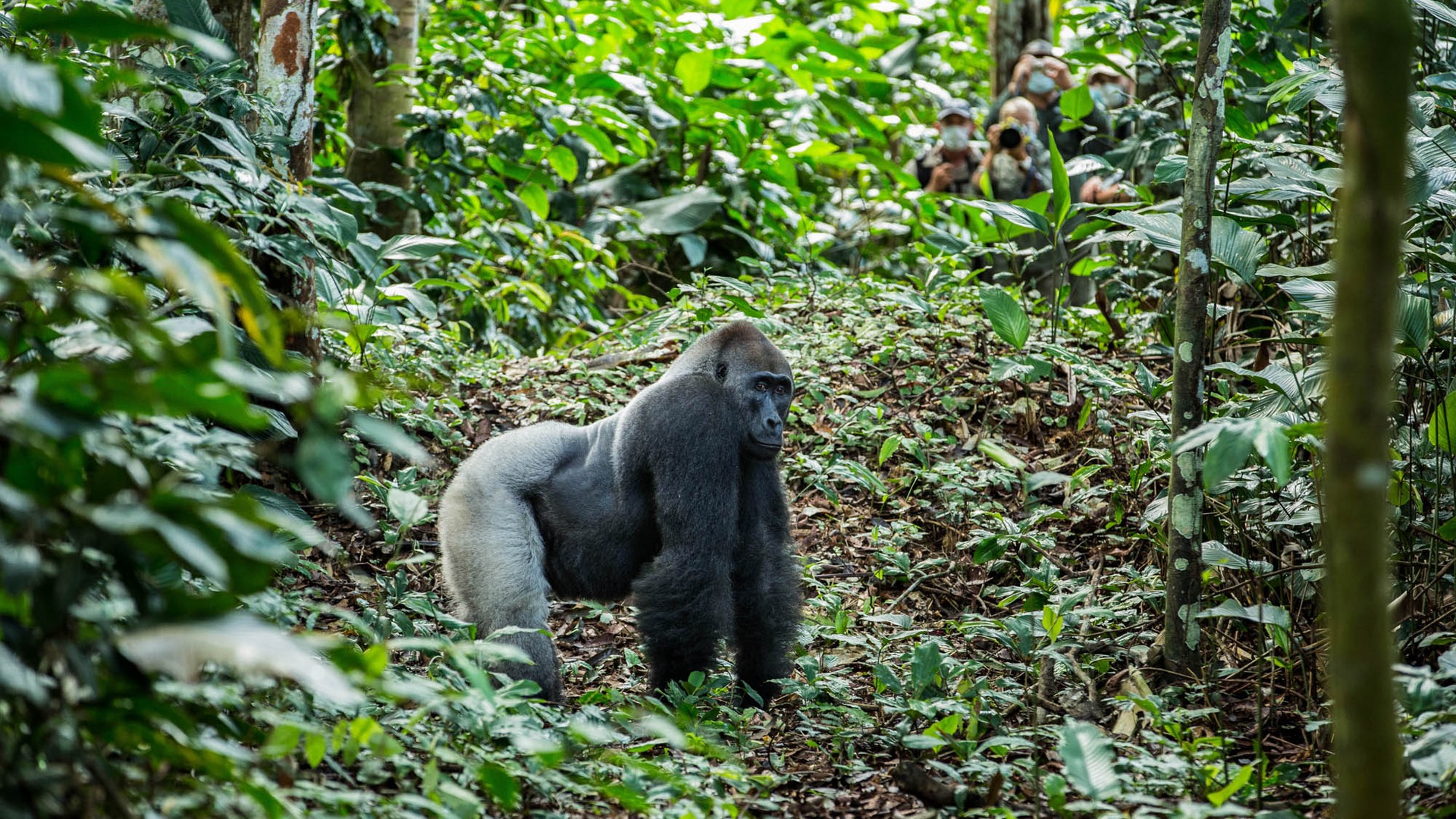
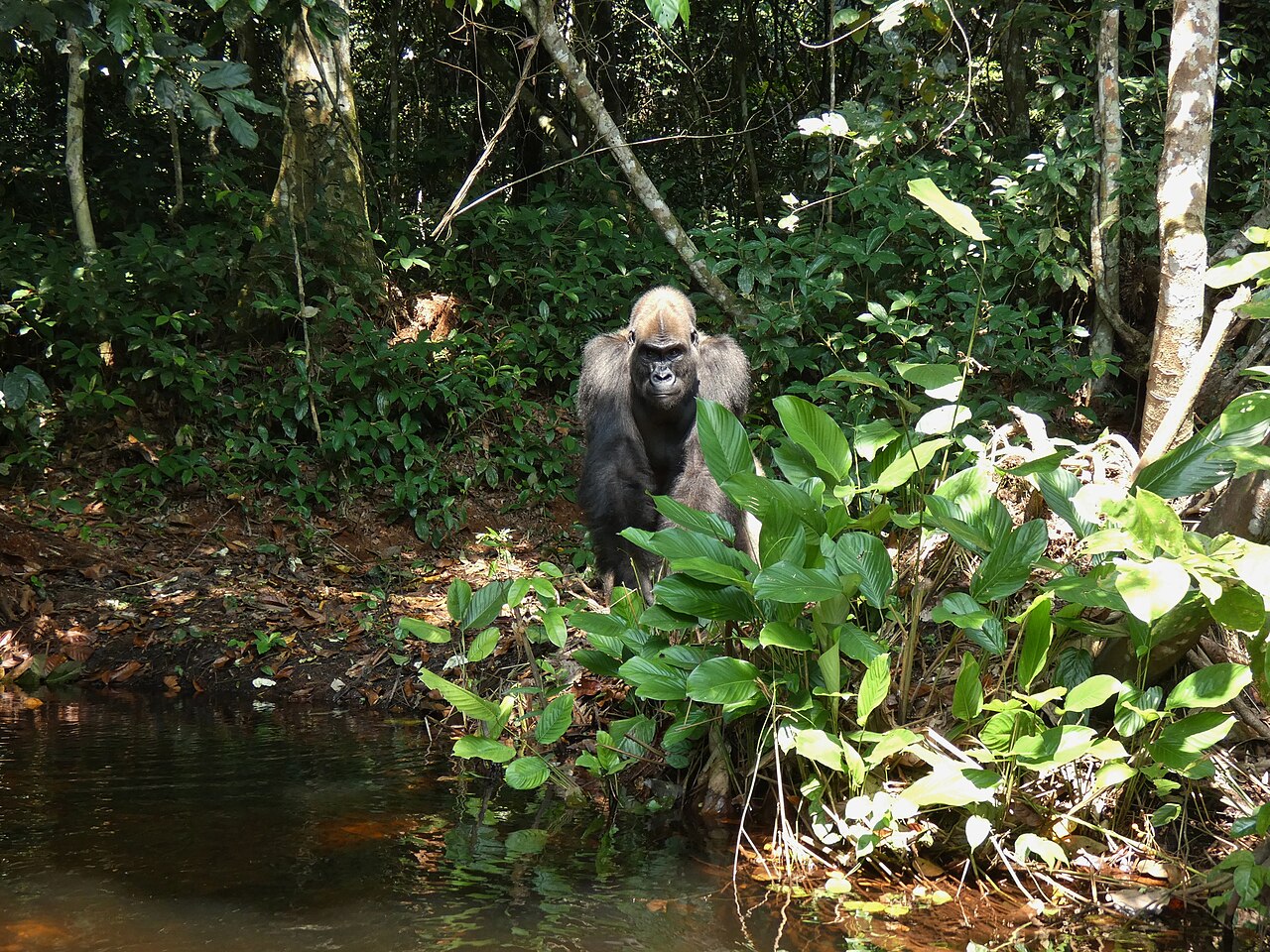
Western lowland gorillas are found throughout the park, with the Mondika research site on the western boundary hosting semi-habituated groups available for tourism. These are the same subspecies as Odzala’s gorillas, but the Mondika groups offer a different dynamic — research-oriented habituation means encounters can feel more intimate and less structured than commercial operations.
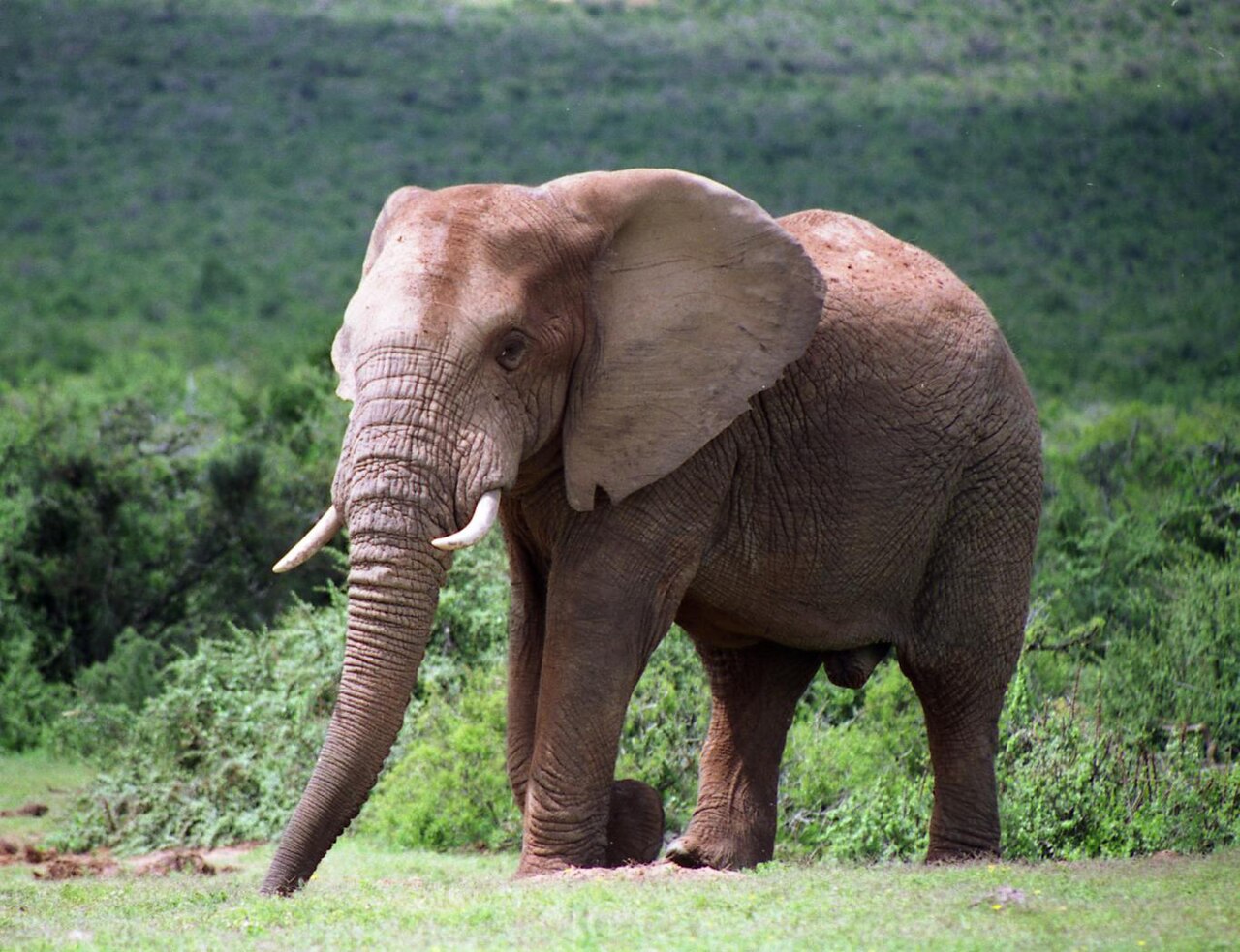
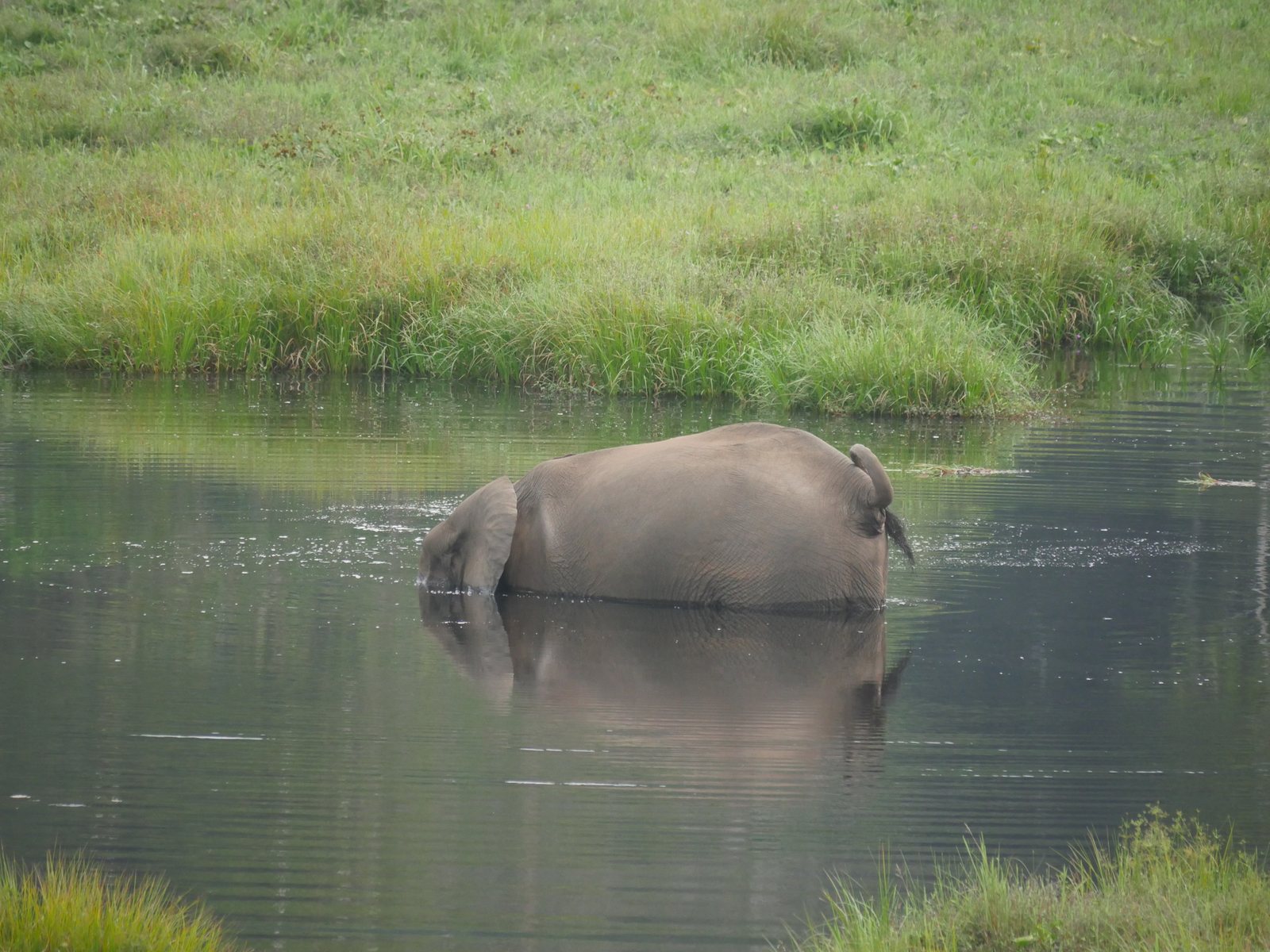
Forest elephants are the park’s flagship species. The African forest elephant (Loxodonta cyclotis) is smaller and more elusive than its savanna cousin, with straighter, downward-pointing tusks stained pink by mineral mud. At Mbeli Baï, they gather in numbers rarely seen elsewhere — sometimes 100 or more individuals in a single clearing, plunging their trunks into mineral-rich mud, feeding on sedges, and engaging in complex social interactions that researchers have been documenting for three decades.
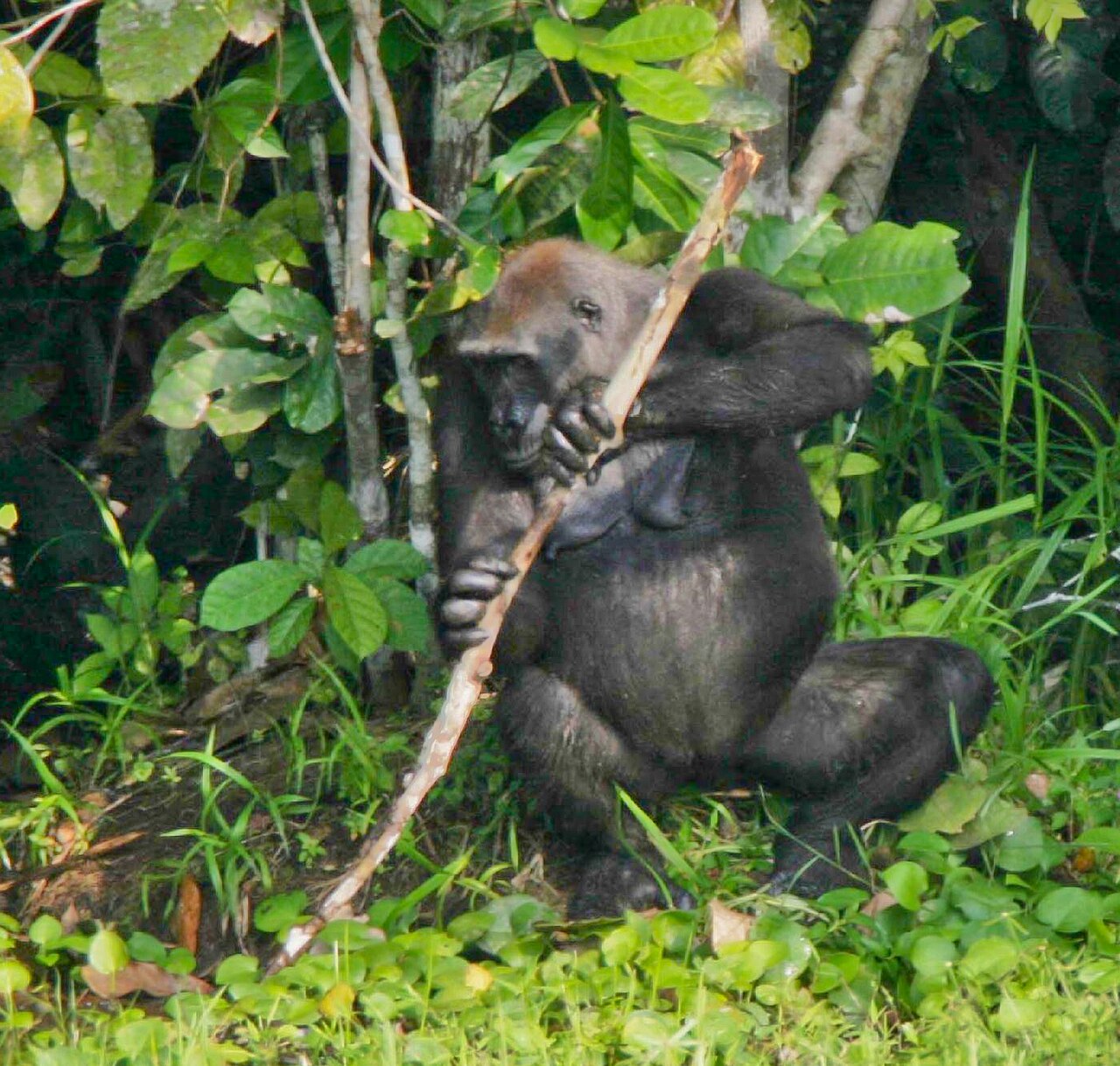
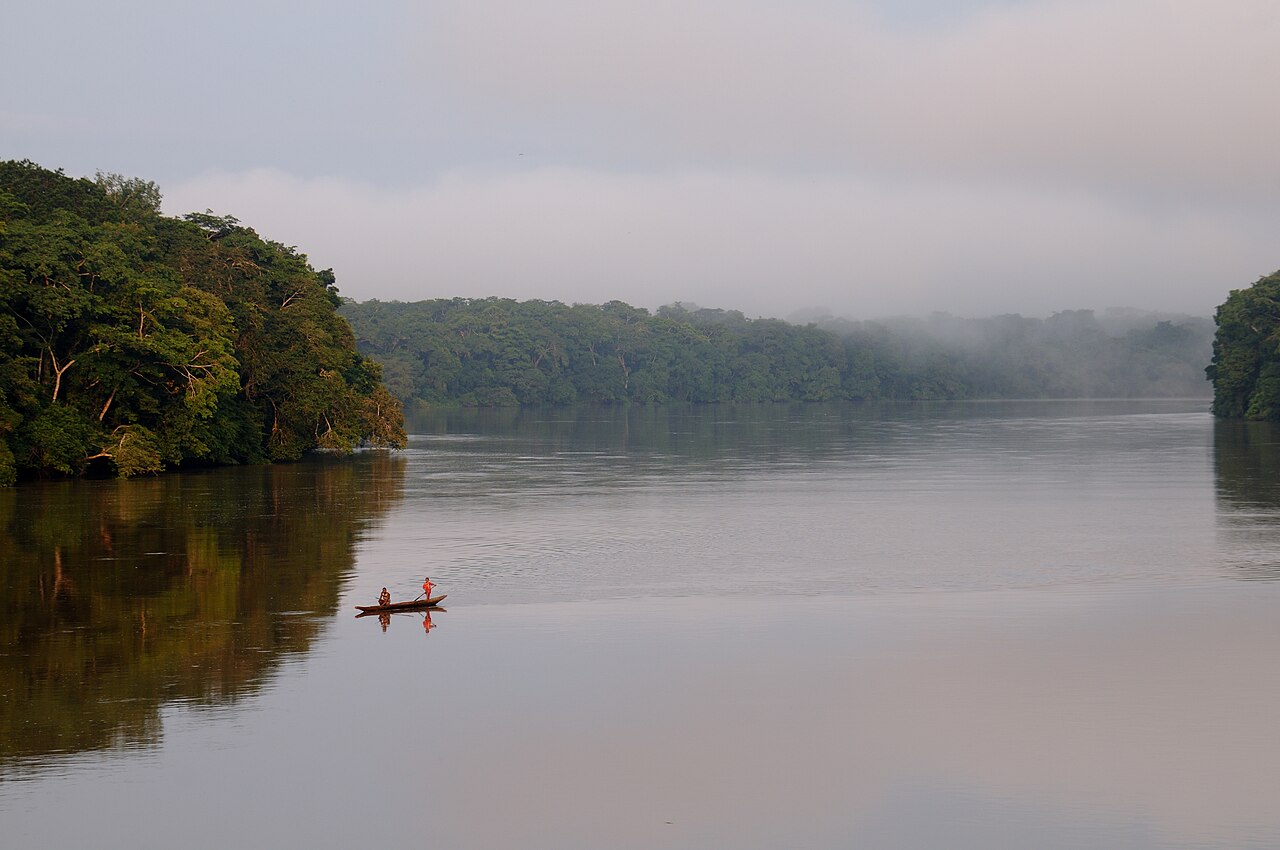
Chimpanzees inhabit the Goualougo Triangle in numbers estimated at several hundred. The Goualougo research programme has documented tool-use behaviours unseen elsewhere, including the use of herb stems to extract termites and the fashioning of different tool types for different tasks. These chimps have never experienced hunting pressure and remain remarkably tolerant of human presence.
Other notable species include bongo (the elusive spiral-horned forest antelope), sitatunga (semi-aquatic antelope), forest buffalo, red river hog, leopard (rarely seen but present), giant forest hog, and African golden cat. The park supports over 300 bird species, including African grey parrot, Congo serpent eagle, Dja River warbler and forest francolin. Over 1,000 plant species have been documented.
The Mbeli Baï Experience
Mbeli Baï is the jewel of Nouabalé-Ndoki — a 12.9-hectare natural forest clearing that is the largest of its kind in the Congo Basin. A baï is a swampy clearing where mineral-rich sedges grow, drawing wildlife out of the impenetrable forest to feed, drink and socialise in the open. Mbeli Baï has been a continuous research site since 1995, and the Mbeli Baï Study (MBS) is one of the longest-running primate and elephant research programmes in Central Africa.
A wooden observation platform sits at the edge of the clearing, elevated above the canopy line, offering unobstructed views across the entire baï. From this platform you watch the drama of the forest unfold below.
Forest elephants are the main event. They arrive in the early morning and late afternoon, sometimes alone, sometimes in groups of 20 or 30, occasionally in gatherings that exceed 100 individuals. They plunge their trunks deep into the mineral mud, extracting salts essential for digestion and reproduction. Calves play in the shallows. Bulls spar at the edges. The sounds — low rumbles, splashing, the snap of vegetation — carry across the clearing in stereo.
But it is not just elephants. Western lowland gorillas visit Mbeli Baï to feed on aquatic herbs — one of the few places where gorillas can be observed in open habitat rather than dense forest. Sitatunga wade through the shallows, their splayed hooves adapted to swamp conditions. Bongo appear at dawn, their chestnut coats striped white, before melting back into the treeline. Spot-necked otters hunt in the streams, and birds — fish eagles, palm-nut vultures, grey parrots — wheel overhead.
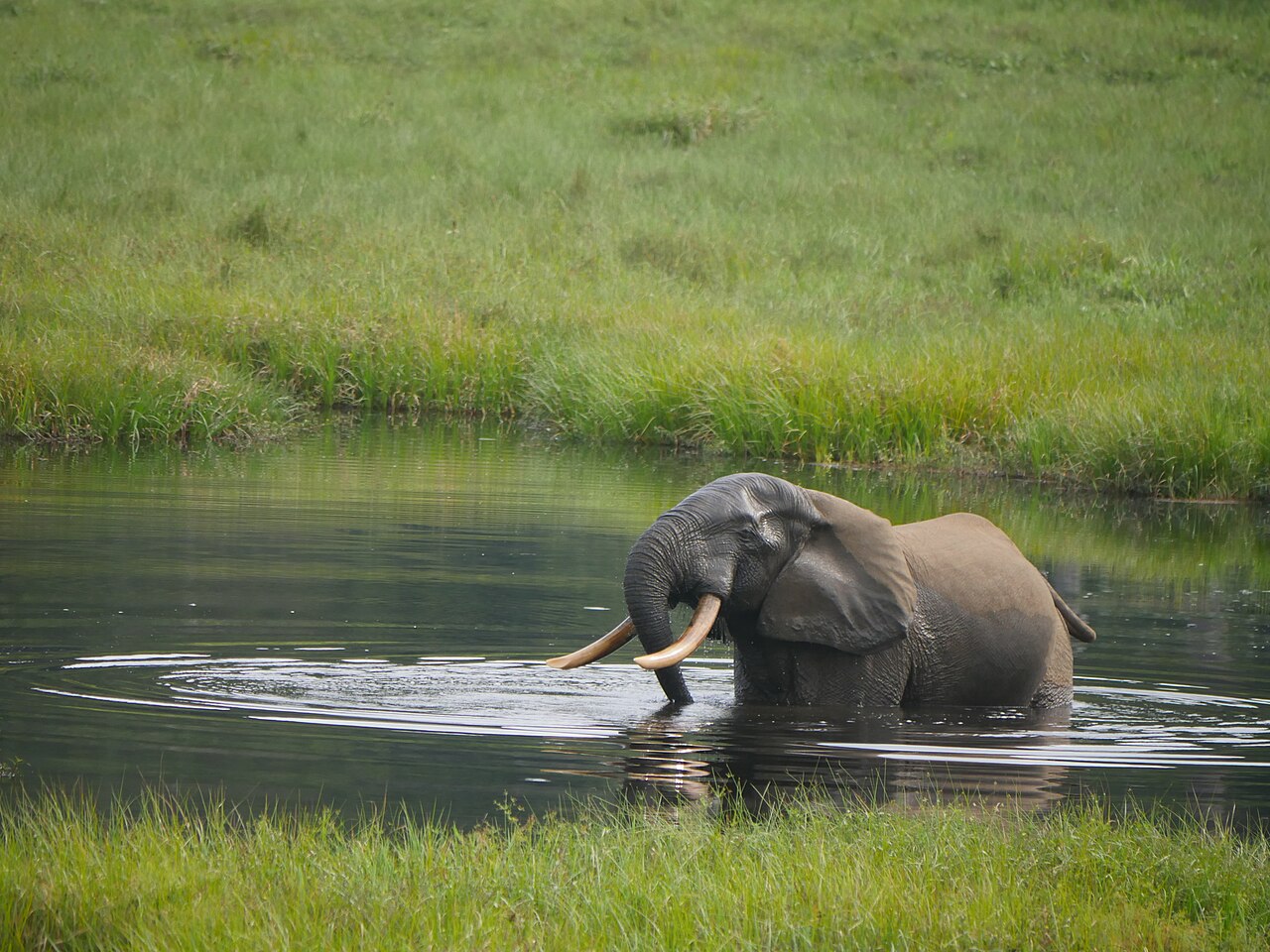
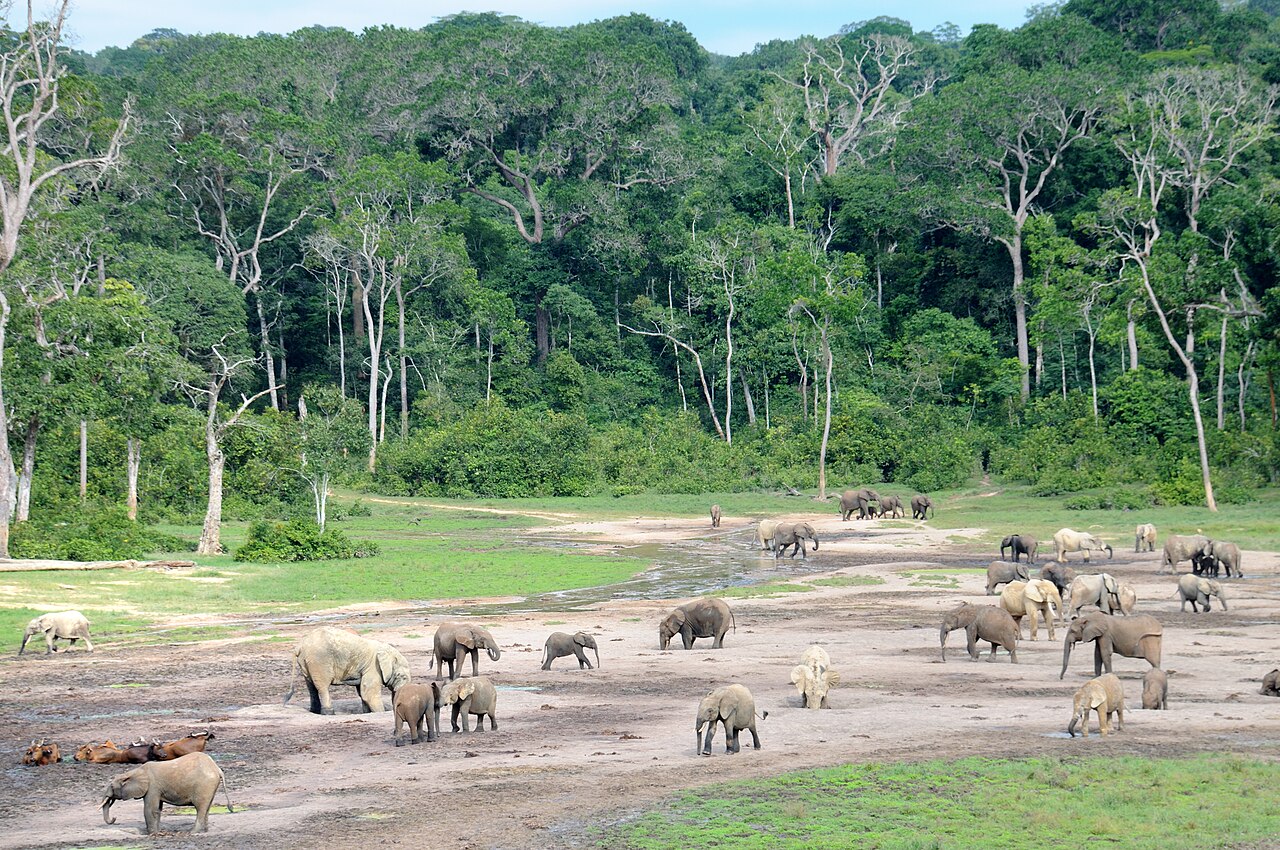
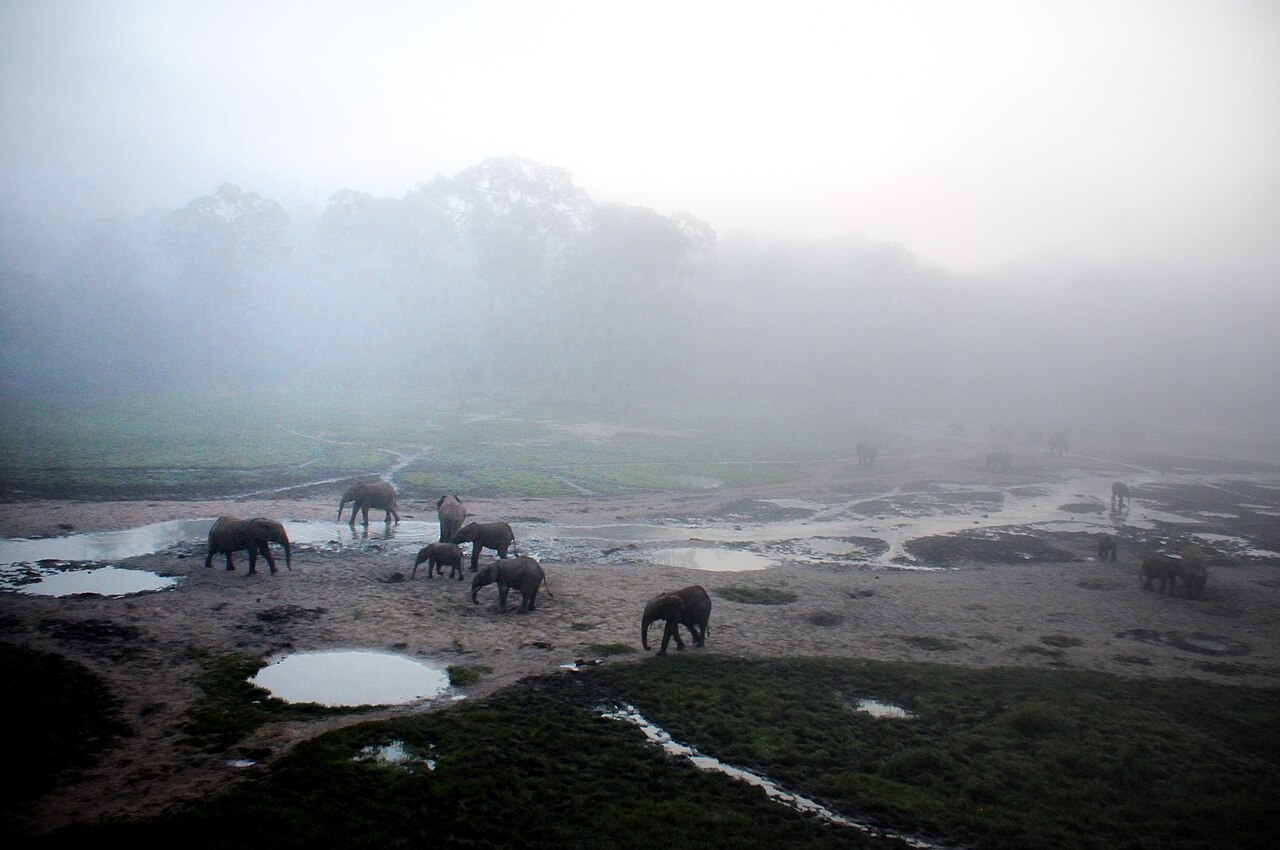
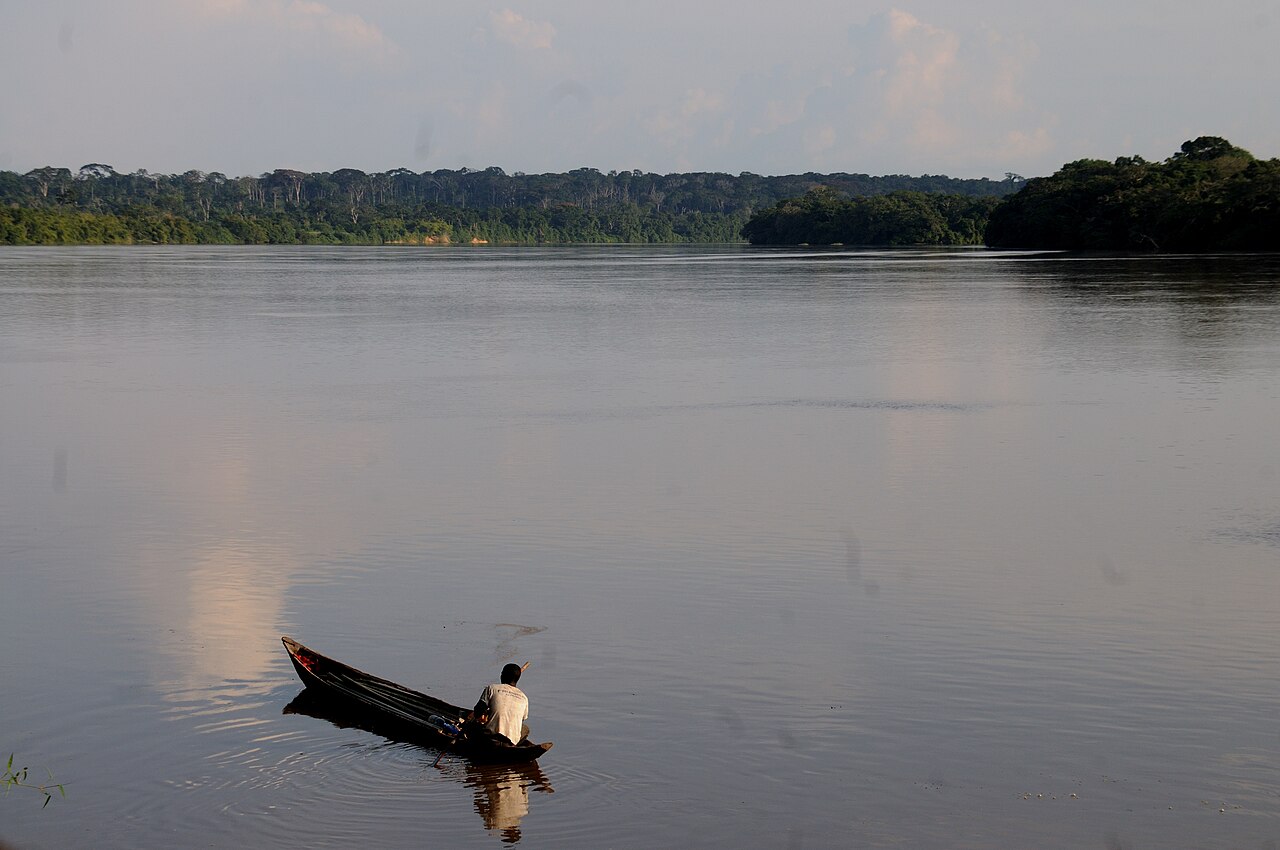
For photographers, Mbeli Baï is extraordinary. The open clearing provides natural light that is impossible to find in the closed-canopy forest. Long telephoto lenses capture elephants against a backdrop of untouched jungle. The platform’s elevation gives a perspective that combines intimate detail with sweeping landscape — the kind of shot that defines magazine covers.
The experience is profoundly different from a savanna safari. There is no vehicle, no engine noise, no dust. You sit on a wooden platform in absolute silence, watching wild animals that have no idea you are there, behaving exactly as they have for thousands of years. It is as close to witnessing an untouched natural world as any living person can get.
Gorilla Trekking at Mondika
The Mondika research site sits on the park’s western boundary, straddling the border with the Central African Republic. It has been a gorilla research station since the 1990s, and the habituation of western lowland gorilla groups here predates the commercial tourism operations in Odzala.
The Mondika gorilla groups are semi-habituated — accustomed to researchers and small numbers of visitors, but not as thoroughly habituated as Odzala’s Neptuno groups at Ngaga Camp. This means encounters can be less predictable but more raw. You may spend longer tracking through the forest, and when you find the group, the silverback may hold his distance rather than feeding within arm’s reach. For visitors who have already trekked in Odzala, this adds genuine variety.
The trekking itself is similar in difficulty to Odzala gorilla trekking — dense lowland rainforest, swampy sections, high humidity. Treks range from one to five hours depending on the group’s movement. Permits cost approximately $400 to $750, though pricing varies by season and operator.
What distinguishes Mondika from Odzala is the research context. You are trekking with scientists, not just guides. The knowledge they share about individual gorillas — their personalities, relationships, life histories — transforms the encounter from wildlife viewing into something closer to a field research experience. It is deeply immersive.
Where to Stay
This is where Nouabalé-Ndoki diverges most sharply from Odzala. There are no luxury tented camps, no treehouse suites, no elevated dining decks overlooking clearings. Accommodation is basic and functional, geared toward researchers and serious expeditionary travellers.
Bomassa Research Station at the park’s southern entrance offers simple rooms and shared facilities. It functions primarily as a WCS base but accommodates visitors on organised tours. Expect clean but spartan conditions: solid roofs, mosquito nets, cold-water showers, communal dining.
Mbeli Baï Camp provides basic forest accommodation near the baï observation platform. Tented or cabin-style, with bucket showers and camp-cooked meals. The location — walking distance from the platform — means you can be at the baï for dawn and dusk, the peak viewing hours.
Mondika Research Camp is similarly basic, oriented toward the gorilla trekking experience. Accommodation is tented with camp beds and communal areas.
Sangha Lodge across the border in Bayanga, Central African Republic, is the nearest comfortable lodge option. It offers proper rooms, good food and a more conventional base for exploring the Sangha Trinational — but it requires crossing an international border, which adds logistical complexity and visa requirements.
The honest reality: if luxury accommodation is important to you, Odzala’s camps are the answer. Nouabalé-Ndoki is for travellers who prioritise wildness over comfort. Most operators recommend combining both parks: Odzala for the luxury forest camp experience and gorilla trekking, Nouabalé-Ndoki for the expedition-grade baï wildlife and research immersion.
When to Visit
Nouabalé-Ndoki follows the same seasonal pattern as the broader Republic of Congo, but the remoteness amplifies seasonal impacts.
Long dry season (June to September) is the best window. Trails are passable, the Bomassa airstrip is reliably operational, and baï activity peaks as elephants concentrate at water sources. Humidity drops to more tolerable levels (though still intense by any standard). Gorilla trekking is at its most accessible.
Short dry season (December to February) is also excellent. Slightly wetter than the long dry but still very good for baï viewing and gorilla trekking. Some operators offer departures during this window as an alternative to the peak June–September period.
Wet seasons (March to May, October to November) are challenging. Heavy rains can make the airstrip unusable, trails become deeply muddy, and river crossings may be impassable. Most operators suspend Nouabalé-Ndoki departures during peak wet season. The forest is at its most lush and dramatic, but the logistics simply may not cooperate.
Costs & Logistics
Nouabalé-Ndoki is more expensive than Odzala, despite having simpler accommodation. The additional cost is driven almost entirely by logistics.
Charter flights from Brazzaville to Bomassa cost $2,000–$3,000 per person return, depending on aircraft type and group size. This is higher than the Odzala charter because Bomassa is further north and less frequently serviced.
Gorilla permits at Mondika run approximately $400–$750 per trek, similar to Odzala pricing.
Accommodation and guiding costs vary by operator, but expect $200–$500 per person per night for full-board research camp stays including guided activities. This is lower than Odzala’s $800–$1,200 per night but the experience is proportionally more basic.
Park and conservation fees add $50–$100 per day.
The typical Sangha Trinational multi-park circuit — combining Nouabalé-Ndoki with Odzala and potentially Dzanga-Sangha in CAR — runs $15,000 to $25,000 per person for 10–14 nights all-inclusive. Standalone Nouabalé-Ndoki visits of 5–7 nights typically cost $8,000–$15,000 per person. Minimum 5–7 nights is recommended to justify the access effort.
Compare this to Odzala alone at $10,575–$19,745 per person for 7–12 nights. The premium for adding Nouabalé-Ndoki is significant but delivers genuinely different experiences that cannot be replicated at Odzala.
How Nouabalé-Ndoki Compares to Odzala
| Feature | Nouabalé-Ndoki | Odzala-Kokoua |
|---|---|---|
| Size | ~4,000 km² | ~13,600 km² |
| Pristine status | Never logged or commercially exploited | Some historical logging in buffer zones |
| UNESCO status | Sangha Trinational World Heritage Site | UNESCO Tentative List |
| Management | WCS / Fondation Nouabalé-Ndoki | African Parks |
| Gorilla trekking | Mondika (semi-habituated, research-focused) | Ngaga Camp (well-habituated, commercial) |
| Elephant viewing | Mbeli Baï (largest clearing, 100+ elephants) | Lango Baï (smaller, excellent but fewer elephants) |
| Accommodation | Basic research camps | Luxury tented camps (Ngaga, Lango, Mboko) |
| Access | Charter to Bomassa (~2hrs from Brazzaville) | Charter to Odzala (~1.5hrs from Brazzaville) |
| Cost (7–10 nights) | $8,000–$15,000 pp | $10,575–$19,745 pp |
| Best for | Expedition purists, photographers, researchers | Luxury safari travellers, first-time Congo visitors |
The verdict: they are complementary, not competing. Odzala is the Congo’s showcase safari park with world-class camps and reliable gorilla trekking. Nouabalé-Ndoki is its wild, unpolished sibling — more pristine, more remote, with Mbeli Baï’s elephant spectacle as its trump card. Most travellers who have done both say the combination is the single greatest wildlife experience in Central Africa. For first-timers, start with Odzala. For returnees or serious adventurers, add Nouabalé-Ndoki. For the definitive Congo Basin safari, do both.
Conservation & Research
Nouabalé-Ndoki is arguably the most important conservation site in the Congo Basin. The Wildlife Conservation Society has maintained a presence here since before the park’s formal establishment in 1993, and the Fondation Nouabalé-Ndoki (FNN) now manages the park under a pioneering public-private partnership model.
The research output is remarkable. The Mbeli Baï Study has contributed groundbreaking data on forest elephant social behaviour, population dynamics and mineral ecology. The Goualougo Triangle Ape Project has documented chimpanzee tool use that rewrote assumptions about primate cognition. Mondika’s gorilla research has expanded understanding of western lowland gorilla family structures.
Anti-poaching efforts employ over 100 eco-guards drawn primarily from local communities. The park uses satellite monitoring, camera traps, bioacoustic sensors and intelligence networks to detect and deter threats. Ivory poaching, which devastated elephant populations across Central Africa in the 2000s and 2010s, has been effectively suppressed within the park’s boundaries, though regional pressures remain.
Visitor fees directly support conservation operations. By visiting Nouabalé-Ndoki, you contribute to one of the most effective protected area management programmes in Africa.
The Sangha Trinational Connection
Nouabalé-Ndoki forms the Congolese pillar of the Sangha Trinational UNESCO World Heritage Site, inscribed in 2012. The other two components are Dzanga-Ndoki National Park and Dzanga-Sangha Dense Forest Special Reserve in the Central African Republic, and Lobéké National Park in Cameroon.
Together, the three parks protect approximately 7,500 square kilometres of contiguous tropical forest — one of the largest intact forest blocks in Central Africa. Wildlife moves freely across borders: elephants tracked at Mbeli Baï have been recorded visiting Dzanga Baï in CAR, a 130-kilometre journey through unbroken canopy.
For adventurous travellers, a Sangha Trinational circuit combining Nouabalé-Ndoki with Dzanga-Sangha (where the famous Dzanga Baï hosts daily elephant gatherings of 50–150 individuals) creates one of the world’s great wildlife expeditions. Add Odzala for the luxury gorilla trekking component, and you have a 14–21 night itinerary that covers the full spectrum of Congo Basin wilderness.
The Honest Take
Why Nouabalé-Ndoki deserves the effort:
- The most pristine wilderness in the Congo Basin. This is not marketing language. The park has genuinely never been commercially exploited. The ecological integrity is verified by international scientific bodies.
- Mbeli Baï is unmatched. No other site in the Republic of Congo offers forest elephant gatherings on this scale. Lango Baï in Odzala is beautiful, but Mbeli Baï is bigger, wilder and draws more animals.
- Mondika gorillas add genuine variety. If you have already trekked at Ngaga Camp in Odzala, the Mondika experience is different enough to justify the additional cost and effort.
- True expedition feel. This is travel stripped to its essence — no luxury trappings, no other tourists, just you and the forest. For the right traveller, that is priceless.
- Sangha Trinational status. Being part of a UNESCO World Heritage Site that spans three countries gives the park a geopolitical and conservation significance that transcends any single national park.
Why it might not be right for you:
- Very remote and very expensive. Charter logistics are complex, and the cost premium over Odzala alone is substantial. If budget is constrained, Odzala delivers 80% of the experience at lower cost.
- Basic accommodation. If you expect Lango Camp treehouse suites or Mboko’s river dining deck, Nouabalé-Ndoki will disappoint. This is research-camp living.
- Logistics can be unpredictable. Weather delays, airstrip closures and limited infrastructure mean you need flexibility in your schedule. Fixed departure dates do not work well here.
- Only for serious adventurers. The physical demands, basic conditions and remoteness mean this is not suitable for families with young children, travellers with mobility limitations, or anyone expecting a conventional safari lodge experience.
Who should go: Expedition travellers who have done Odzala and want more. Wildlife photographers who need the Mbeli Baï shot. Conservation professionals. Anyone who reads “never been logged” and feels a pull in their chest. If you are the kind of person who counts countries or collects comfortable lodge experiences, look elsewhere. If you are the kind who seeks the last wild places on Earth, this is your destination.
Planning Your Visit
Nouabalé-Ndoki is not a park you visit on a whim. Planning requires 6–12 months of lead time, specialist operator knowledge and logistical flexibility.
Recommended itinerary structure:
- 5–7 nights standalone Nouabalé-Ndoki — Fly Brazzaville to Bomassa, split time between Mbeli Baï (3–4 nights) and Mondika gorilla trekking (2–3 nights). Best for those who have already visited Odzala.
- 10–14 nights Odzala + Nouabalé-Ndoki — The definitive Congo Basin safari. Start with 5–7 nights at Odzala’s Ngaga, Lango and Mboko camps, then charter to Bomassa for 5–7 nights at Mbeli Baï and Mondika.
- 14–21 nights Sangha Trinational Grand Circuit — Add Dzanga-Sangha in CAR for the complete three-country UNESCO wilderness experience. This is the ultimate Central African expedition.
Essential practicalities:
- Visa: Republic of Congo visa required (~$100–$150). If crossing to CAR, a separate CAR visa is needed.
- Health: Yellow fever vaccination mandatory. Malaria prophylaxis essential. Comprehensive travel insurance required.
- Packing: Waterproof boots, quick-dry clothing, long sleeves, insect repellent, personal medical kit, good binoculars, long telephoto lens if photographing.
- Connectivity: No mobile signal. No Wi-Fi. Satellite phones only. This is genuine off-grid travel.
Book through specialist Congo operators who have direct relationships with WCS/FNN and charter companies. This is not a destination where you can piece together logistics independently. The operator’s experience and contacts are as important as the park itself.
Continue Exploring the Republic of Congo
Nouabalé-Ndoki is part of our comprehensive Republic of Congo Safari & Travel Guide. Dive deeper into the Congo Basin with our complete article collection:
- Odzala-Kokoua National Park — The Congo’s flagship safari park and luxury camp experience
- Western Lowland Gorilla Trekking Guide — Everything you need to know about tracking gorillas in the Congo Basin
- Best Time to Visit Republic of Congo — Season-by-season breakdown
- Congo Safari Cost & Budget Guide — What to expect to pay
- Where to Stay in Odzala — Complete lodge and camp guide
- Ngaga Camp Review — The gorilla trekking epicentre
- Lango Camp Review — The baï-side treehouse
- Mboko Camp Review — River and savanna safari
- Best Congo Safari Lodges — Top 10 ranked guide
- Congo vs Rwanda Gorilla Trekking — Head-to-head comparison
- 4-Way Gorilla Trekking Comparison — Congo, Uganda, Rwanda and DRC
- Brazzaville Safari City Guide — Your gateway to the Congo Basin
Frequently Asked Questions
How does Nouabalé-Ndoki compare to Odzala-Kokoua?
Nouabalé-Ndoki is more remote and pristine, with Mbeli Baï offering larger elephant gatherings than any clearing in Odzala. However, Odzala has superior luxury camp infrastructure. Most serious travellers combine both parks for the definitive Congo Basin experience.
How do you get to Nouabalé-Ndoki?
Charter flight from Brazzaville to Bomassa airstrip, approximately 2 hours. Some itineraries enter via the Sangha River from CAR. There are no scheduled flights or paved roads to the park.
Where do you stay in Nouabalé-Ndoki?
Accommodation is basic: WCS research stations and forest camps at Bomassa and near Mbeli Baï. Sangha Lodge in CAR offers more comfort. Many visitors combine with Odzala luxury camps for the best of both worlds.
How much does a Nouabalé-Ndoki safari cost?
Standalone visits: $8,000–$15,000 per person for 5–7 nights. Sangha Trinational multi-park circuits: $15,000–$25,000 per person for 10–14 nights. Charter flights, permits, guiding and accommodation included.
Can you combine Nouabalé-Ndoki with Odzala?
Yes — this is the recommended approach. A 10–14 night itinerary combining Odzala’s luxury camps with Nouabalé-Ndoki’s Mbeli Baï and Mondika creates the ultimate Congo safari. Charter logistics connect both parks via Brazzaville.
Is Nouabalé-Ndoki better for gorillas or elephants?
The park’s unique draw is elephants at Mbeli Baï — the largest forest clearing in the Congo Basin. Mondika gorilla groups add variety if you have already trekked in Odzala. If you must choose one focus, visit for the elephant spectacle.
When is the best time to visit?
The long dry season (June to September) and short dry season (December to February) are best. Baï activity peaks and trails are passable. Wet seasons can make access extremely difficult.
What fitness level is required?
Moderate to high. Gorilla trekking involves dense forest walking and swamp wading. Reaching Mbeli Baï requires forest hikes. Humidity is 80–95%. This is expedition-grade travel, not a luxury lodge stay.
Can solo travellers visit?
Yes, but it is expensive. Charter and guide fees are shared, so solo travellers pay a premium. Most visitors join small-group departures. Book 6–12 months ahead through specialist Congo operators.
Is it worth the extra cost over Odzala alone?
For serious wildlife enthusiasts, absolutely. Mbeli Baï’s elephant gatherings are unmatched, and the Mondika gorillas offer a different experience. For first-time Congo visitors, Odzala alone is the better starting point. Add Nouabalé-Ndoki on a return trip or as part of an extended expedition.